- Product Description Description
- Table of Contents TOC
- List of Table & Figure LOT
- Get Free Sample PDF Sample PDF
Market Size, 2025
$101 BnMarket Estimate, 2026
$107 BnMarket Forecast, 2034
$160 BnCAGR, 2026–2034
5.20%Europe Frozen Ready Meals Market Report Summary
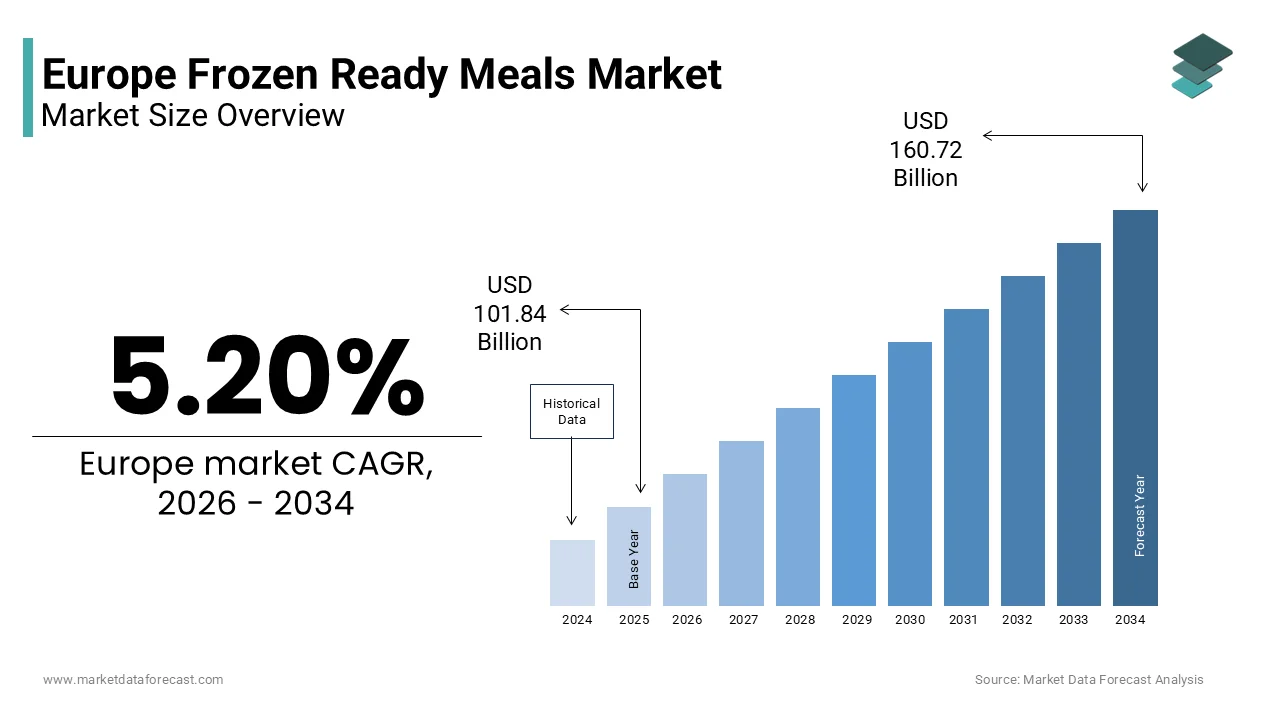
The Europe frozen ready meals market was valued at USD 101.84 billion in 2025, is estimated to reach USD 107.14 billion in 2026, and is projected to reach USD 160.72 billion by 2034, growing at a CAGR of 5.20% during the forecast period. Market growth is driven by increasing demand for convenient food solutions, rising urbanization, and changing consumer lifestyles. Frozen ready meals are widely preferred due to their ease of preparation, long shelf life, and variety of meal options. The expansion of retail distribution channels and growing demand for quick meal solutions are further supporting steady market growth across Europe.
Key Market Trends
- Rising demand for convenient and time saving meal solutions is driving market growth.
- Increasing urbanization and busy consumer lifestyles are boosting frozen meal consumption.
- Growing preference for long shelf life food products is supporting market expansion.
- Expansion of organized retail and supermarket chains is enhancing product accessibility.
- Innovation in healthier, premium, and ethnic frozen meal offerings is influencing consumer preferences.
Segmental Insights
- Based on category, the conventional frozen ready meals segment held a substantial share of the Europe frozen ready meals market in 2025. This dominance is attributed to affordability, broad product availability, and strong consumer familiarity.
- Based on distribution channel, the store based retailers segment accounted for 65.3% of the Europe frozen ready meals market share in 2025, driven by extensive retail networks and in store product accessibility.
- Based on end user, the household retail segment held 60.6% of the Europe frozen ready meals market share in 2025, supported by rising at home meal consumption and convenience driven purchasing behavior.
Regional Insights
- The Europe frozen ready meals market is experiencing steady growth across key countries, supported by changing dietary habits and convenience food demand.
- The United Kingdom was the leading contributor, accounting for 19.5% of the Europe frozen ready meals market share in 2025, driven by high frozen food consumption, developed retail infrastructure, and increasing demand for quick meal options.
Competitive Landscape
The Europe frozen ready meals market is highly competitive, with key players focusing on product innovation, flavor diversification, and expansion of retail distribution networks to strengthen their market position. Companies are investing in healthier meal formulations, sustainable packaging, and premium frozen food offerings. Prominent players in the Europe frozen ready meals market include Nomad Foods, Iceland Foods Ltd., Tyson Foods, Nestle SA, Dr Oetker, Frosta Aktiengesellschaft, McCain Foods Ltd., BRF Global, and Kraft Heinz Company.
Europe Frozen Ready Meals Market Size
The Europe frozen ready meals market size was valued at USD 101.84 billion in 2025, and the market size is expected to reach USD 160.72 billion by 2034 from USD 107.14 billion in 2026. The market is growing at a CAGR of 5.20%.
Frozen ready meals, also widely known as "TV dinners" or "microwave meals," are fully or partially precooked dishes that are portioned for individuals, packaged in containers, and preserved through deep freezing for later consumption. This market serves as a critical component of the modern European food landscape offering convenience without compromising on quality or taste. The market includes a diverse range of cuisines from traditional regional dishes to international flavors catering to varied consumer preferences. As per Eurostat the average household size in the European Union has decreased to approximately 2.3 persons reflecting a shift toward single person and smaller households that prioritize portion controlled and easy to prepare meal options. The industry operates under strict regulatory frameworks established by the European Food Safety Authority ensuring high standards for food safety labeling and hygiene. Consumer behavior is increasingly influenced by busy lifestyles and the desire for culinary diversity driving demand for premium and gourmet frozen options. The integration of advanced freezing technologies such as individual quick freezing helps maintain the texture and integrity of ingredients. Retail channels are evolving with significant growth in online grocery platforms and direct to consumer delivery services. Sustainability concerns regarding packaging and energy consumption are shaping product development and corporate strategies. The market reflects a balance between convenience and health consciousness with manufacturers focusing on clean label ingredients and reduced sodium content. This dynamic environment fosters innovation in product formulation and supply chain efficiency.
MARKET DRIVERS
Increasing Prevalence Of Dual Income Households And Time Poverty
The increasing prevalence of dual income households and the resulting time poverty drive the growth of the Europe frozen ready meals market. Modern European families often face demanding work schedules leaving limited time for meal planning shopping and preparation. As per the Organisation for Economic Co-operation and Development (OECD), individuals in OECD countries spend an average of approximately 3.4 hours per day on total unpaid work (including care and housework), with significant gender disparity (women: ~4.7 hours; men: ~2.5 hours). Frozen ready meals offer a practical solution by eliminating the need for ingredient sourcing and complex cooking processes. Consumers can enjoy home cooked style meals in minutes aligning with their fast paced lifestyles. The convenience factor is particularly appealing to urban professionals who value efficiency and variety in their dietary choices. Manufacturers respond to this demand by offering a wide array of cuisines and dietary options that cater to diverse tastes. The ability to store these meals for extended periods reduces food waste and provides flexibility in meal scheduling. This driver ensures sustained growth as more households seek to balance work life demands with nutritious eating habits. The perception of frozen meals as a time saving tool reinforces their popularity. The alignment with contemporary lifestyle needs supports long term market expansion.
Advancements In Freezing Technology And Product Quality
Advancements in freezing technology and improved product quality are greatly accelerating the expansion of the Europe frozen ready meals market. Modern techniques such as cryogenic freezing and individual quick freezing preserve the texture flavor and nutritional content of ingredients better than traditional methods. As per the International Institute of Refrigeration these technologies minimize the formation of large ice crystals which can damage cell structures and degrade food quality. Consumers are increasingly aware that frozen foods can retain nutrients comparable to fresh produce addressing previous misconceptions about inferior quality. The improvement in taste and presentation has elevated frozen ready meals from basic sustenance to gourmet dining experiences. Premium brands leverage these technological advantages to launch high end products featuring restaurant quality recipes and authentic ingredients. The enhanced shelf stability allows for broader distribution networks and reduced spoilage rates. Retailers benefit from consistent product availability and lower inventory risks. The focus on clean labels and natural ingredients further enhances consumer trust and acceptance. This driver transforms the market perception of frozen foods encouraging trial and repeat purchases. The commitment to quality innovation ensures competitiveness against fresh and chilled alternatives. The technical superiority supports premium pricing strategies.
MARKET RESTRAINTS
Negative Consumer Perception Regarding Health And Nutrition
Negative consumer perception regarding the health and nutritional value of frozen ready meals acts as a significant restraint on the Europe frozen ready meals market growth. Many consumers associate frozen foods with high levels of sodium preservatives and artificial additives which are perceived as detrimental to health. As per the European Heart Network excessive sodium intake is a major risk factor for cardiovascular diseases affecting millions of Europeans annually. Despite improvements in formulations the stigma persists among health conscious individuals who prefer fresh or homemade meals. The presence of processed ingredients in some ready meals reinforces concerns about calorie density and lack of essential nutrients. Regulatory requirements for clear labeling have increased transparency but also highlighted potentially unhealthy components. Consumers are increasingly scrutinizing ingredient lists and avoiding products with unrecognizable additives. This skepticism limits the adoption of frozen ready meals among fitness enthusiasts and those managing chronic health conditions. Manufacturers face challenges in reformulating products to meet strict nutritional guidelines without compromising taste and texture. The need for extensive consumer education to dispel myths about frozen food safety and nutrition requires significant investment. This restraint hinders market penetration in the wellness segment. The focus on health trends favors fresh and organic alternatives. Overcoming this barrier requires continuous innovation and transparent communication.
High Energy Costs And Environmental Concerns
High energy costs and environmental concerns related to cold chain logistics and storage constrain the expansion of the Europe frozen ready meals market. The production transportation and retail display of frozen foods require continuous refrigeration which consumes substantial amounts of electricity. As per the European Environment Agency (EEA), the emissions from fluorinated gases (used in refrigeration) and the energy consumption of cooling systems contribute significantly to greenhouse gas emissions, prompting EU-wide regulations to reduce F-gas impact and improve energy efficiency. Rising energy prices in Europe exacerbate operational costs for manufacturers and retailers leading to higher retail prices. Consumers are increasingly aware of the carbon footprint associated with frozen products and may opt for ambient or fresh alternatives with lower environmental impact. The reliance on plastic packaging for frozen meals further attracts criticism due to waste management issues. Regulatory pressures to reduce energy consumption and plastic use compel companies to invest in sustainable solutions which can be costly. The complexity of maintaining uninterrupted cold chains across diverse geographic regions increases logistical risks. Any disruption in power supply or equipment failure can result in product spoilage and financial losses. This restraint necessitates strategic investments in energy efficient technologies and eco friendly packaging. The balance between convenience and sustainability remains a critical challenge. The focus on green initiatives drives operational changes.
MARKET OPPORTUNITIES
Expansion Of Plant Based And Vegan Product Lines
The expansion of plant-based and vegan product lines offers a significant opportunity for the Europe frozen ready meals market. This growth is driven by surging consumer demand for meat-free options. Ethical considerations health benefits and environmental concerns are driving the adoption of plant based diets across Europe. As per the Good Food Institute Europe, sales of plant-based meats and ready meals grew substantially between 2020 and 2022, with millions of households purchasing them at least once. However, recent data (2023–2024) shows growth has decelerated or declined in some mature markets like the UK and Netherlands, while continuing to rise in Germany and France. Frozen ready meals offer an ideal platform for introducing innovative plant based recipes that mimic traditional meat dishes in taste and texture. Manufacturers can leverage advanced protein alternatives such as pea soy and mycoprotein to create satisfying and nutritious meals. The convenience of frozen formats allows consumers to explore diverse vegan cuisines without the hassle of preparing complex ingredients from scratch. Retailers are dedicating more shelf space to plant based frozen options reflecting their growing popularity. Marketing campaigns highlighting the sustainability and health benefits of these products resonate with younger demographics. Partnerships with celebrity chefs and influencers enhance brand visibility and credibility. This opportunity enables companies to tap into a rapidly expanding market segment. The focus on innovation and variety drives customer loyalty. The alignment with ethical trends supports long term growth.
Development Of Premium And Gourmet Frozen Meals
The development of premium and gourmet frozen meals paves the way for manufacturers to differentiate their offerings and capture higher value segments, which is expected to boost the expansion of the Europe frozen ready meals market. Consumers are increasingly seeking restaurant quality dining experiences at home driven by the rise of foodie culture and social media influence. As per a study, the premiumization trend in the food sector is evident with consumers willing to pay more for high quality authentic and exotic flavors. Frozen ready meals featuring artisanal ingredients ethnic cuisines and chef curated recipes appeal to discerning buyers looking for convenience without compromising on sophistication. The use of superior raw materials such as organic vegetables grass fed meats and rare spices enhances the perceived value of these products. Packaging innovations that emphasize elegance and sustainability further attract premium shoppers. Collaborations with renowned chefs and culinary institutions validate the quality and authenticity of gourmet frozen meals. The ability to offer consistent quality and unique flavor profiles distinguishes these products from standard offerings. Retailers benefit from higher margins and increased basket sizes. This opportunity fosters brand loyalty and encourages repeat purchases. The focus on culinary excellence supports market expansion. The emphasis on experience and quality drives adoption.
MARKET CHALLENGES
Supply Chain Volatility And Raw Material Sourcing
Supply chain volatility and difficulties in sourcing high quality raw materials impede the growth of the Europe frozen ready meals market. The industry relies on a consistent supply of agricultural products which are susceptible to weather fluctuations climate change and geopolitical disruptions. As per the Food and Agriculture Organization of the United Nations extreme weather events such as droughts and floods have impacted crop yields in key producing regions affecting availability and prices. Manufacturers face challenges in securing stable supplies of essential ingredients such as vegetables meats and grains leading to production delays and cost increases. The dependence on global supply chains exposes companies to risks such as trade barriers and transportation bottlenecks. Fluctuating commodity prices make it difficult to maintain stable retail pricing and profit margins. The need for specific quality standards limits the pool of eligible suppliers increasing vulnerability to shortages. Companies must invest in diversified sourcing strategies and long term contracts to mitigate these risks. However these measures often increase operational complexity and costs. The unpredictability of raw material availability affects production planning and inventory management. This challenge requires robust risk management frameworks. The focus on resilience and adaptability is crucial. The instability threatens operational efficiency.
Intense Competition From Fresh And Chilled Alternatives
Intense competition from fresh and chilled ready meals inhibits the expansion of the frozen ready meals market. This is because consumers increasingly prefer options they perceive as fresher. The chilled segment has expanded rapidly with supermarkets offering a wide variety of short shelf life meals that are marketed as healthier and more natural. As per research, sales of frozen ready meals in Europe have performed strongly and often dominated the market in recent years, driven by consumer demand for value, longer shelf life, and convenience during inflationary periods, while chilled meals have seen steady but comparatively slower growth. Fresh meals are often perceived as having superior taste and texture compared to frozen alternatives despite advancements in freezing technology. The convenience of chilled meals which require no thawing and have shorter reheating times appeals to busy consumers. Retailers prioritize chilled sections due to higher turnover rates and consumer demand. Frozen meal manufacturers must compete on price and variety to maintain market share. The perception of frozen foods as less premium than fresh options hinders growth in the upper market segments. Marketing efforts to highlight the benefits of freezing such as nutrient retention and reduced waste are essential but face an uphill battle. This challenge necessitates continuous innovation in product quality and positioning. The focus on differentiation is critical. The competition drives strategic adjustments.
REPORT COVERAGE
| REPORT METRIC | DETAILS |
| Market Size Available | 2025 to 2034 |
| Base Year | 2025 |
| Forecast Period | 2026 to 2034 |
| CAGR | 5.20% |
| Segments Covered | By Category, Distribution Channel, End User, and Region |
| Various Analyses Covered | Global, Regional, & Country Level Analysis; Segment-Level Analysis; DROC, PESTLE Analysis; Porter’s Five Forces Analysis; Competitive Landscape; Analyst Overview of Investment Opportunities |
| Regions Covered | UK, France, Spain, Germany, Italy, Russia, Sweden, Denmark, Switzerland, Netherlands, Turkey, and the Czech Republic |
| Market Leaders Profiled | Nomad Foods, Iceland Foods Ltd., Tyson Foods, Nestlé SA, Dr. Oetker, Frosta Aktiengesellschaft, McCain Foods Ltd., BRF Global, and The Kraft Heinz Company |
SEGMENTAL ANALYSIS
By Category Insights
The conventional frozen ready meals segment dominated the European market and accounted for a substantial share in 2025. This dominance of the segment is driven by its affordability widespread availability and established consumer acceptance. Also, this category includes standard products made with traditionally sourced ingredients without organic certification. Conventional frozen ready meals dominate the market because they offer a cost-effective solution. They cater to consumers seeking convenience without the premium price tag of organic alternatives. The lower production costs allow manufacturers to price these products competitively making them accessible to a broad demographic including budget conscious households and students. As per Eurostat the average household expenditure on food in Europe indicates that price remains a decisive factor for the majority of consumers particularly during periods of economic inflation. Conventional meals utilize standard agricultural inputs which are more readily available and cheaper than organic counterparts ensuring consistent supply and stable pricing. Retailers prioritize conventional options due to their higher turnover rates and broader appeal across diverse socioeconomic groups. The extensive distribution networks for conventional products ensure availability in supermarkets discount stores and convenience outlets across urban and rural areas. This accessibility drives high volume sales and reinforces market leadership. The ability to offer frequent promotions and bundle deals further enhances the value proposition for shoppers. The familiarity of conventional brands and flavors reduces the barrier to purchase for new users. This economic advantage ensures that conventional meals remain the staple choice for daily consumption. The focus on affordability and convenience sustains the segment's dominance. The established supply chains and large scale production capabilities of conventional frozen ready meals significantly contribute to their market domination. Decades of industry development have created robust infrastructure for sourcing processing and distributing conventional ingredients efficiently. Manufacturers leverage economies of scale to produce vast quantities of standardized meals ensuring consistent quality and availability. The reliability of conventional supply chains allows retailers to maintain steady inventory levels reducing the risk of stockouts. The integration of advanced freezing technologies in large facilities enhances product shelf life and safety standards. Consumers trust conventional brands for their consistent taste and texture which are maintained through rigorous quality control processes. The ability to rapidly adapt production lines to meet changing demand patterns supports market responsiveness. Retailers benefit from predictable margins and streamlined procurement processes associated with conventional products. The widespread acceptance of conventional manufacturing practices simplifies regulatory compliance and labeling requirements. This operational efficiency cements the leading position of the conventional segment. The focus on scalability and reliability ensures long term sustainability. The entrenched nature of conventional systems makes it difficult for niche segments to surpass its volume.
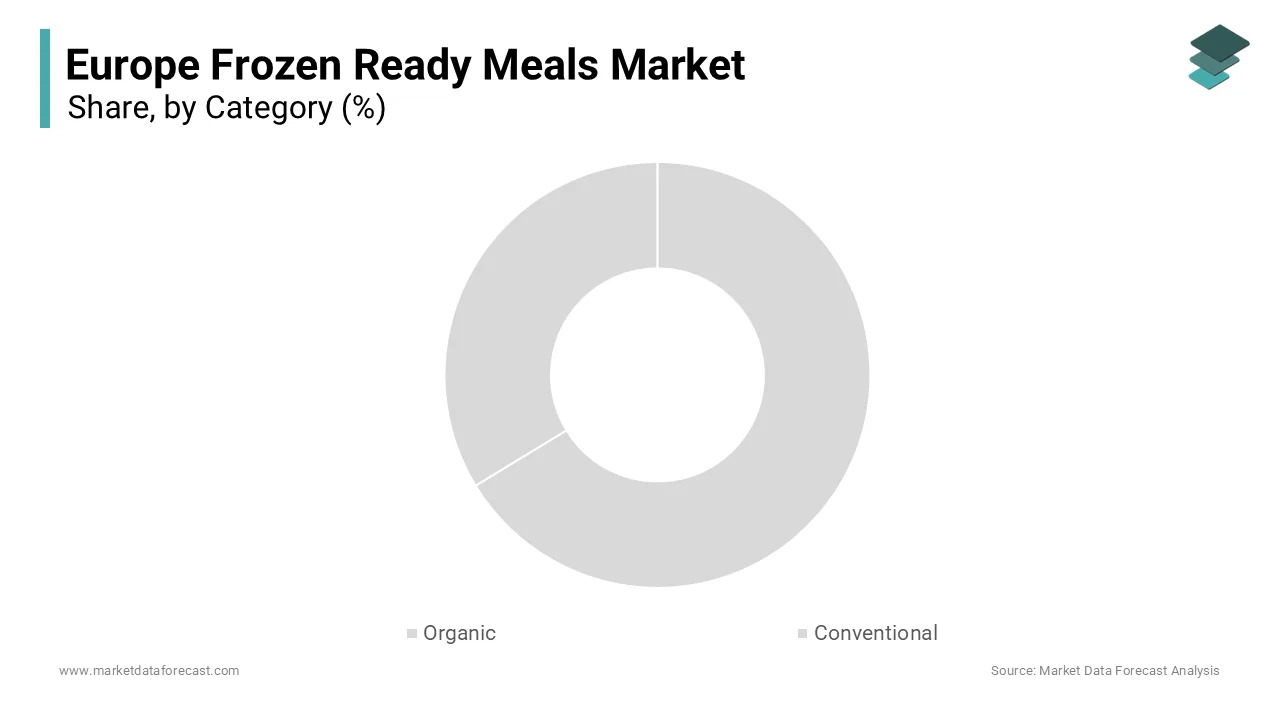
The organic frozen ready meals segment is predicted to witness the highest CAGR of 9.7% from 2026 to 2034 due to increasing health consciousness and environmental awareness among consumers. A surge in demand for clean label products is set to drive a strong compound annual growth rate in this segment. Organic frozen ready meals are growing rapidly due to the escalating consumer preference for healthy and chemical free food options. Individuals are increasingly aware of the potential risks associated with pesticide residues and synthetic additives found in conventional foods. As per the Research Institute of Organic Agriculture (FiBL), the organic food market in Europe has experienced mixed performance recently, with sales declining by 2.2% in 2022 and recovering to 3% growth in 2023, as high food prices impacted consumer willingness to pay a premium. Organic frozen meals appeal to health conscious buyers who seek nutritious options without compromising on convenience. The absence of artificial preservatives colors and flavors aligns with the clean label trend gaining traction across the continent. Parents prefer organic meals for their children to ensure safe and wholesome nutrition. The perception of organic ingredients as superior in quality and taste drives trial and repeat purchases. Retailers are expanding their organic sections to accommodate this growing demand placing frozen organic meals alongside fresh produce. Marketing campaigns highlighting the health benefits and purity of organic ingredients resonate with wellness oriented demographics. The alignment with preventive healthcare trends supports sustained growth for the segment. The focus on transparency and integrity builds consumer trust. This health driven demand ensures rapid market expansion. Environmental sustainability and ethical sourcing are key drivers of growth for the organic frozen ready meals segment. Consumers are increasingly concerned about the environmental impact of their food choices preferring products that support biodiversity and soil health. Organic frozen meals are perceived as contributing to reduced chemical runoff and lower carbon footprints compared to conventional agriculture. The emphasis on fair trade and ethical labor practices in organic supply chains appeals to socially responsible shoppers. Brands leverage certifications such as the EU Organic Logo to validate their sustainability claims and differentiate themselves in the market. The integration of sustainable packaging solutions further enhances the appeal of organic frozen meals. Retailers prioritize suppliers with strong environmental credentials to meet corporate social responsibility targets. The focus on holistic well being extends beyond personal health to planetary health driving adoption. This value driven purchasing behavior supports rapid growth. The alignment with global sustainability trends ensures long term viability. The emphasis on ethical practices strengthens brand loyalty.
By Distribution Channel Insights
The store based retailers segment led the Europe frozen ready meals market and captured a 65.3% share in 2025. This leading position of the segment is attributed to the widespread presence of supermarkets hypermarkets and convenience stores. This channel allows consumers to physically inspect products and make immediate purchases. Supermarkets and hypermarkets serve as the primary destination for food procurement offering a wide variety of frozen ready meals under one roof. As per the European Commerce Association the majority of food and beverage sales in Europe occur through physical retail channels reflecting consumer preference for tactile shopping experiences. The ability to see packaging check expiration dates and compare prices in person builds consumer confidence. Retailers dedicate significant freezer space to frozen ready meals ensuring high visibility and accessibility. Promotional displays and in store sampling events drive impulse purchases and trial of new products. The convenience of combining frozen meal purchases with other household needs enhances the appeal of store based shopping. Loyalty programs and personalized offers further incentivize visits to physical stores. The reliability of supply and consistent stock levels in major retail chains ensure customer satisfaction. This established infrastructure supports high volume sales and market leadership. The focus on convenience and variety sustains the dominance of store based retailers. The integration of digital tools in stores enhances the shopping experience. Immediate availability and consumer trust in physical retail environments significantly contribute to the dominance of the store based segment. Consumers value the ability to purchase frozen ready meals instantly without waiting for delivery which is crucial for unplanned meals or emergencies. The tangible nature of frozen products allows shoppers to assess package integrity and avoid damaged goods. Retailers invest in advanced freezer technology to maintain optimal storage conditions ensuring product quality. The presence of knowledgeable staff who can provide recommendations enhances the shopping experience. The ability to return or exchange products easily if issues arise builds long term trust. Store brands and private labels offered by major retailers provide affordable options that compete effectively with national brands. The consistency of service and product availability reinforces consumer loyalty. The integration of click and collect services bridges the gap between online and offline shopping. This hybrid approach leverages the strengths of physical retail. The focus on immediacy and reliability ensures continued leadership. The trust factor is paramount in food purchasing decisions.
The non store retailers segment is estimated to register the fastest CAGR of 12.4% during the forecast period owing to the increasing adoption of digital platforms and the convenience of home delivery services. Consumers are shifting towards online grocery shopping to save time and avoid the hassles of physical stores. As per sources, e commerce sales of food and beverages in Europe have surged with millions of households regularly ordering groceries online. The ability to browse a wide selection of frozen ready meals from the comfort of home appeals to busy professionals and families. Advanced logistics and cold chain solutions ensure that frozen products are delivered in optimal condition maintaining quality and safety. Subscription models and automated replenishment features enhance user convenience and encourage repeat purchases. The integration of mobile apps allows for easy ordering tracking and customer support. Personalized recommendations based on purchase history improve the shopping experience and drive sales. The expansion of delivery zones to include suburban and rural areas broadens market reach. The focus on speed and reliability enhances customer satisfaction. This digital shift ensures sustained growth for the non store segment. The convenience factor is a primary driver of adoption. The integration of technology streamlines the purchasing process. Expanded product variety and improved accessibility are key drivers of growth for the non store retailers segment. Online platforms offer a wider range of frozen ready meals including niche ethnic gourmet and dietary specific options that may not be available in local stores. This diversity appeals to adventurous eaters and individuals with specific dietary needs such as vegan gluten free or keto. The ability to read detailed product descriptions and customer reviews helps shoppers make informed decisions. Online retailers often feature exclusive launches and limited edition items creating excitement and urgency. The removal of geographic barriers allows consumers in remote areas to access premium frozen meals. The integration of social media marketing influences purchasing decisions and drives traffic to online stores. The focus on customer engagement through digital channels builds brand loyalty. The ease of comparing prices and features supports value driven shopping. This accessibility drives rapid market expansion. The focus on variety and inclusivity ensures growth. The digital ecosystem facilitates discovery and trial.
By End User Insights
The household retail segment held the majority share of 60.6% of the Europe frozen ready meals market in 2025. This is because it represents the largest volume of consumption driven by the need for daily meal solutions. In addition, this segment includes individual families and single person households. Families and individuals rely on frozen ready meals for quick and easy dinners lunches and snacks. Long-term trends cited in time-use studies indicate a historical decrease in food preparation time. However, recent Eurostat data notes that time spent on food activities actually increased or stabilized during the pandemic years (2020–2022) before normalizing. Frozen ready meals offer a practical solution for busy weekdays when cooking from scratch is time consuming. The ability to store these meals for extended periods reduces food waste and provides flexibility in meal planning. Households appreciate the variety of cuisines and portion sizes available catering to different family members. The cost effectiveness of frozen meals compared to dining out makes them an attractive option for budget management. Retailers target households with promotional campaigns and bundle offers driving high sales volumes. The integration of frozen meals into weekly grocery routines ensures consistent demand. The focus on convenience and affordability sustains the leadership of the household sector. The alignment with modern lifestyles drives continuous usage. The reliance on home consumption supports market stability. Customization and the ability to cater to diverse dietary preferences significantly contribute to the dominance of the household retail sector. Manufacturers offer a wide range of frozen ready meals tailored to specific needs such as low calorie high protein vegetarian and gluten free. Households can select meals that fit their nutritional requirements without the effort of preparing specialized dishes. The availability of international cuisines allows families to explore new flavors and expand their culinary horizons. The transparency of labeling enables shoppers to make informed choices regarding ingredients and allergens. Retailers organize products by dietary category facilitating easy navigation and selection. The focus on health and wellness drives demand for nutritious frozen options. The ability to mix and match different meals supports varied diets within the same household. This flexibility enhances customer satisfaction and loyalty. The emphasis on personalization ensures sustained growth. The focus on diverse needs drives market leadership.
The food service segment is anticipated to witness the fastest CAGR of 7.2% between 2026 and 2034. The food service sector is growing rapidly. This is because frozen ready meals offer significant operational efficiencies and cost reductions for businesses. Operators are seeking efficiency and consistency. Restaurants and catering services use these products to streamline kitchen operations and reduce labor costs. As per the European Hospitality Industry Association (HOTREC), the sector faces a critical shortage of skilled staff; industry analysts observe this has accelerated the adoption of labor-saving solutions, including semi-prepared and ready-to-heat products, to maintain operations. Frozen ready meals ensure consistent quality and portion control minimizing waste and variability. The ability to quickly serve customers during peak hours enhances turnover and revenue. The reduced need for extensive ingredient storage and preparation frees up kitchen space and resources. Operators benefit from predictable pricing and supply stability associated with industrial frozen products. The focus on efficiency allows businesses to maintain profitability in a competitive market. The integration of frozen components into menu items supports faster service times. This operational advantage drives rapid adoption in the food service sector. The focus on cost management ensures sustained growth. The reliance on consistency supports business scalability. Menu diversification and innovation are key drivers of growth for the food service sector in the frozen ready meals market. Establishments use high quality frozen components to introduce new and exotic dishes without the complexity of sourcing rare ingredients. Frozen ready meals provide a reliable base for creating innovative dishes that appeal to adventurous diners. Chefs can focus on presentation and garnishing while relying on consistent frozen bases for flavor and texture. The availability of gourmet and artisanal frozen options enables smaller establishments to offer premium dining experiences. The flexibility to update menus seasonally without significant retraining or restructuring supports agility. The focus on variety and novelty attracts customers and enhances brand reputation. The integration of frozen elements supports creative culinary expression. This innovation drives rapid market expansion. The focus on quality and creativity ensures growth. The ability to adapt to trends supports competitiveness.
REGIONAL ANALYSIS
United Kingdom Frozen Ready Meals Market Analysis
The United Kingdom outperformed other countries in the Europe frozen ready meals market and captured a 19.5% share in 2025. This position of the UK market is driven by high consumer acceptance and a mature retail landscape. The country is a leader in convenience food adoption. A deeply rooted culture of ready-to-eat meals, combined with modern retail logistics, keeps the UK in a strong position. According to the British Frozen Food Federation (BFFF), while frozen meat and poultry volumes declined by 7% in 2024 due to inflation, own-label frozen volumes grew by 2.2%, with the Federation emphasizing that consumers increasingly recognize the nutritional value and waste-reduction benefits of frozen meals. The busy lifestyles of urban populations drive demand for quick and easy meal solutions. Retailers offer a wide variety of premium and budget friendly options catering to diverse tastes. The focus on reducing food waste has enhanced the perception of frozen meals as a sustainable choice. The integration of online grocery shopping has further boosted accessibility and sales. The maturity of the market supports continuous innovation and product development. The focus on quality and convenience ensures sustained demand. The UK sets trends for other European markets. The strong distribution network supports market leadership.
France Frozen Ready Meals Market Analysis
France was the second largest country in the Europe frozen ready meals market and occupied a share of 16.5% in 2025. This growth of the French market is propelled by a growing appreciation for convenience amidst a strong culinary tradition. The country balances quality with ease. France maintains its market status through the evolution of consumer preferences towards convenient yet high quality meal options. Research indicates that French consumers are increasingly open to frozen ready meals that offer gourmet flavors and authentic ingredients, prioritizing quality even as INSEE reports show households managing budget constraints due to purchasing power pressures. The demand for French cuisine in frozen format supports domestic production and sales. Retailers focus on premium products that align with cultural expectations of taste and quality. The rise of single person households drives demand for portion controlled meals. The integration of organic and local ingredients enhances appeal. The focus on culinary excellence supports market growth. The balance of tradition and modernity defines the French market. The emphasis on quality drives premiumization.
Germany Frozen Ready Meals Market Analysis
Germany is another key player in the Europe frozen ready meals market due to high efficiency and strong private label presence. The country values practicality and cost effectiveness. Germany's strong position is supported by a high acceptance of private label frozen meals and a prominent discount retail presence. Data from the Federal Statistical Office (Destatis) confirms that high inflation has pressured household budgets, reinforcing the need for affordable food options, while industry analysts highlight a parallel sustained demand for convenient meal solutions. The efficiency of the German retail sector ensures wide availability and competitive pricing. Consumers value the reliability and quality of frozen products for daily consumption. The focus on sustainability and packaging reduction influences product development. The maturity of the market supports steady growth. The emphasis on value and practicality drives sales. The strong logistics network ensures consistent supply.
Spain Frozen Ready Meals Market Analysis
Spain is an emerging market for frozen ready meals owing to changing lifestyles and urbanization. The country is shifting towards greater convenience. Spain is experiencing growth due to increasing urbanization and the adoption of modern lifestyles that prioritize convenience. As per the National Statistics Institute of Spain the number of working women and dual income households has risen driving demand for time saving meal solutions. The traditional preference for fresh food is gradually complementing with frozen options for busy days. Retailers are expanding their frozen sections to include diverse and international cuisines. The focus on affordability and variety supports market expansion. The potential for growth is significant as habits evolve. The emphasis on convenience drives adoption. The market is transitioning towards higher acceptance.
Italy Frozen Ready Meals Market Analysis
Italy holds a notable share of the European market with a focus on quality and authentic flavors in frozen ready meals. The country values culinary heritage. Italy maintains its market position through the demand for high quality frozen meals that reflect traditional Italian cuisine. While ISTAT tracks general retail trade data, industry studies show that Italian consumers prioritize freshness and tradition for products like pasta and pizza, though the frozen food sector is evolving to focus on nutrition and waste reduction to appeal to health-conscious buyers. The focus on authenticity drives the popularity of regional specialties in frozen format. Retailers emphasize premium brands and artisanal products. The balance of convenience and tradition supports steady demand. The focus on quality ensures customer loyalty. The market values culinary integrity. The emphasis on taste drives sales.
COMPETITIVE LANDSCAPE
The competitive landscape of the Europe frozen ready meals market is characterized by intense rivalry among established multinational corporations and regional private label brands. Major players compete on product quality price and innovation to capture consumer attention in a saturated environment. The rise of private label offerings from large retail chains has intensified price competition forcing national brands to emphasize value and differentiation. Innovation in healthy and sustainable options provides a competitive edge for companies seeking to stand out. Retailers play a crucial role by deciding which brands gain prime shelf space and promotional support. Consumer preferences for convenience and quality shape market dynamics. Consolidation activities allow larger firms to expand portfolios and eliminate smaller competitors. Market dynamics require continuous adaptation to changing dietary trends and regulatory requirements. Brand loyalty is influenced by taste consistency and trust. This highly competitive environment forces companies to innovate constantly. Maintaining relevance requires strategic focus on sustainability and customer engagement. The balance between cost efficiency and premium positioning defines the current structure.
Key Market Players
Some of the key players in the Europe frozen ready meals market are
- Nomad Foods
- Iceland Foods Ltd.
- Tyson Foods
- Nestle SA
- Dr Oetker
- Frosta Aktiengesellschaft
- McCain Foods Ltd.
- BRF Global
- Kraft Heinz Company
Top Players in the Market
- Nomad Foods Limited is a leading provider of frozen foods in Europe with a strong portfolio of ready meal brands such as Findus and Iglo. The company focuses on delivering convenient and high quality meals to households across the continent. Recent actions include investing in sustainable packaging solutions to reduce plastic waste and enhance environmental credentials. Nomad has expanded its product range to include more plant based and organic options catering to changing consumer preferences. The company actively promotes responsible sourcing practices to ensure supply chain transparency. These efforts strengthen its position as a trusted brand in the frozen food sector. Nomad leverages its extensive distribution network to reach diverse markets efficiently. The focus on innovation and sustainability drives customer loyalty. This strategic approach ensures long term growth and market relevance. The commitment to quality reinforces its leadership status.
- Dr Oetker is a prominent family owned company with a significant presence in the Europe frozen ready meals market through brands like Ristorante and La Casa. The company emphasizes premium quality and authentic recipes to appeal to discerning consumers. Recent initiatives involve launching new gourmet varieties and expanding its vegetarian and vegan offerings. Dr Oetker has invested in advanced manufacturing technologies to improve production efficiency and product consistency. The company engages in marketing campaigns that highlight the convenience and taste of its frozen pizzas and meals. These actions enhance its reputation for culinary excellence and reliability. Dr Oetker focuses on localizing flavors to meet regional tastes across Europe. The emphasis on brand heritage and innovation supports market expansion. This strategy strengthens its competitive position in the premium segment. The dedication to customer satisfaction drives sustained success.
- Aryzta AG is a key player in the European food industry specializing in baked goods and frozen ready meals for both retail and food service sectors. The company supplies a wide range of products including sandwiches wraps and hot meals. Recent strategies include optimizing its operational footprint to enhance cost efficiency and sustainability. Aryzta has focused on developing healthier and cleaner label options to align with wellness trends. The company collaborates with major retail and hospitality chains to provide customized solutions. These efforts improve its market positioning and customer relationships. Aryzta invests in research and development to create innovative meal concepts. The focus on quality and service excellence drives growth. This approach ensures resilience in a competitive landscape. The commitment to operational excellence supports long term viability.
Top Strategies Used by Key Market Participants
Key players in the Europe Frozen Ready Meals Market employ diverse strategies to maintain competitiveness and drive growth. Product innovation is central as companies introduce plant based organic and gourmet options to attract health conscious consumers. Sustainability initiatives focus on eco friendly packaging and responsible sourcing to meet environmental goals. Strategic partnerships with retailers and food service providers enhance distribution and visibility. Digital marketing campaigns leverage social media to engage younger demographics and build brand loyalty. Operational efficiency programs optimize supply chains and reduce costs. Companies prioritize quality assurance and food safety to build trust. These combined approaches help operators navigate market dynamics while ensuring long term profitability in a mature industry landscape.
MARKET SEGMENTATION
This research report on the Europe frozen ready meals market has been segmented and sub-segmented into the following categories.
By Category
- Organic
- Conventional
By Distribution Channel
- Store Based Retailers
- Non – Store Retailers
By End User
- Household/ Retail sector
- Food Service Sector
By Country
- Germany
- UK
- France
- Spain
- Italy
- Russia
- Rest of Europe