- Product Description Description
- Table of Contents TOC
- List of Table & Figure LOT
- Get Free Sample PDF Sample PDF
Market Size, 2025
$63.75 MnMarket Estimate, 2026
$67.81 MnMarket Forecast, 2034
$111.13 MnCAGR, 2026–2034
6.37%Executive Summary: Europe Functional Food Market
- Market Scope: Comprehensive regional analysis of the European functional food market covering product categories, active ingredient segments, demographic end-user groups, EFSA regulatory compliance, and personalized nutrition trends.
- Market Valuation: Valued at USD 130.39 billion (2025), estimated at USD 142.36 billion (2026), and projected to reach USD 287.45 billion by 2034, registering a robust CAGR of 9.18% (2026–2034).
- Primary Growth Drivers: An aging European population (over 20% aged 65+), rising chronic disease prevalence necessitating preventive nutrition, and stringent regulatory frameworks like EFSA’s Novel Food Regulation. Key opportunities are backed by personalized DNA-based formulation integration and digital health subscription models.
Key Market Segment Metrics (2026–2034)
| Category | Leading Segment (2025 Position) | Fastest-Growing Segment |
|---|---|---|
| By Product Type & Ingredient | Functional Beverages (dominated with a 38.6% share) & Probiotics (captured 32.4% share) | Functional Snacks (CAGR of 11.4%) & Omega-3 Fatty Acids (CAGR of 10.8%) |
| By End User & Application | Adult Consumers (led end-user segments with 62.1% share in 2025) | Pediatric Formulations (gaining traction for immune support) |
| By Region / Country | Germany (occupied 22.4% of the regional market in 2025 supported by manufacturing infrastructure and pharmacy networks) | France (anticipated to witness the fastest national growth at a CAGR of 10.7% through 2034) |
Major Market Players & Market Structure
Market Structure: Highly competitive European health science and food manufacturing landscape featuring multinational corporations and wellness enterprises competing intensely on EFSA health claim approvals, clinical efficacy validation, and telehealth personalization partnerships.
Key Companies: Nestlé Health Science, Danone S.A., Bayer AG, Herbalife Nutrition Ltd., Amway Corporation, DSM-Firmenich AG, Lonza Group AG, Glanbia plc, Ingredion Incorporated, and ADM Company.
Europe Functional Food Market Size
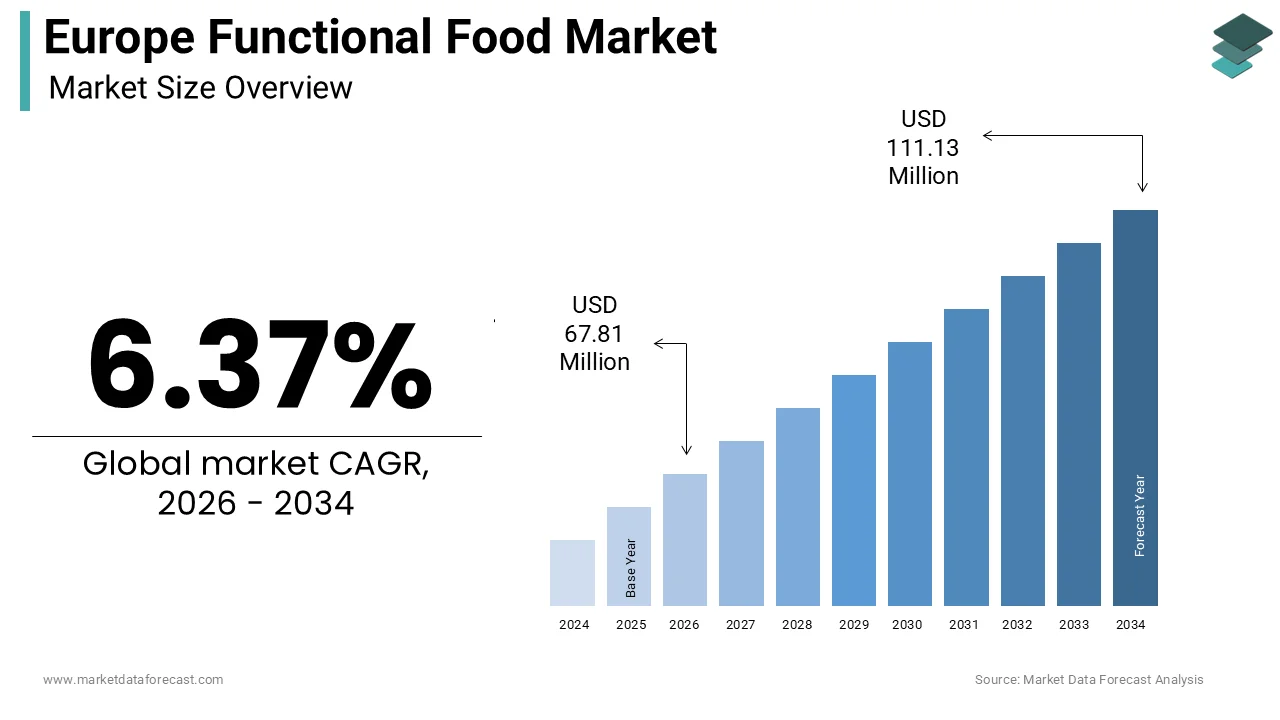
The Europe Functional Food Market Size was calculated to be USD 63.75 million in 2025 and is anticipated to be worth USD 111.13 million by 2034, from USD 67.81 million in 2026, growing at a CAGR of 6.37% during the forecast period.
Functional foods in Europe are defined as food products that deliver health benefits beyond basic nutrition by incorporating bioactive compounds such as probiotics, omega-3 fatty acids, plant sterols, or added vitamins and minerals. These products are designed to support specific physiological functions, including immune modulation, digestive health, cardiovascular protection, and cognitive performance. The European market distinguishes itself through a science-driven regulatory environment where health claims must undergo rigorous evaluation by the European Food Safety Authority before commercial use. According to the European Commission, several nutrition and health claims have been authorized under Regulation EC 1924/2006. Of these, around 265 are health claims, and 30 are nutrition claims. As per Eurostat, more than a third (35.3%) of adults in the European Union reported having a long-standing (chronic) health problem in 2025. Apart from these, the World Health Organization’s European regional office notes that non-communicable diseases account for around 80 percent of all deaths in the region, supporting the societal shift toward preventive nutrition. This confluence of regulatory clarity, public health burden, and rising consumer literacy positions functional foods as an important component of Europe’s evolving wellness ecosystem.
MARKET DRIVERS
Escalating Burden of Lifestyle-Related Chronic Diseases
The rising prevalence of non-communicable diseases linked to diet and sedentary behavior surges the growth rate of the Europe functional food market. Research indicates that cardiovascular and metabolic disorders represent a growing health concern across Europe, driving heightened interest in preventive nutrition and functional food innovations. In response, consumers increasingly seek food-based interventions that complement medical treatment. Functional ingredients such as plant sterols, probiotics, and beta-glucans are increasingly integrated into everyday food products aimed at supporting heart health, cholesterol management, and gut microbiome balance, as per sources. Similarly, Public health initiatives and awareness campaigns continue to encourage the consumption of nutrient-enriched foods, which contribute to the expansion of the functional dairy and plant-based product segments. National health agencies have amplified this trend. This alignment between clinical evidence, public health policy, and consumer behavior creates a sustained demand pipeline for scientifically substantiated functional foods across diverse therapeutic areas.
Growing Consumer Emphasis on Preventive and Personalized Nutrition
Regional consumers are increasingly shifting from reactive healthcare to proactive wellness strategies, with nutrition at the core of this transformation, a trend that propels the expansion of the Europe functional market. The trend toward personalized nutrition is gaining momentum in Europe, with a growing number of adults actively choosing foods aimed at preventing future health issues, according to research. This mindset is particularly pronounced in Nordic and Benelux countries, where digital health literacy is high. Innovations in nutrigenomics and gut microbiome analysis have further enabled personalized functional food recommendations. For example, companies in the Netherlands now offer DNA-based dietary plans that include tailored probiotic blends or polyphenol-rich snacks. As per studies, individuals following personalized nutrition advice show greater adherence to healthy eating patterns compared to those following generic guidelines. Apart from these, research initiatives funded by European institutions are exploring the relationship between dietary components and cognitive resilience in aging populations, highlighting increasing scientific and market interest in tailored nutritional approaches. The demand for functional foods is growing as consumers, equipped with accessible at-home health diagnostics and AI-powered nutrition apps, increasingly expect their diets to provide specific, measurable health benefits.
MARKET RESTRAINTS
Stringent Regulatory Restrictions on Health Claims
The European Union’s rigorous regulatory framework for nutrition and health claims restrains the growth of the Europe functional food market. Any health claim suggesting a food product reduces disease risk or supports a bodily function must receive prior authorization from the European Commission and Member States, following a scientific assessment by the European Food Safety Authority (EFSA). As of early 2026, EFSA reported that more than 70% of health claims evaluated since 2010 were rejected due to a lack of scientific evidence. This high evidentiary threshold disproportionately affects small and medium enterprises that lack resources for large-scale clinical studies. For instance, despite promising in vitro results, claims linking certain berry anthocyanins to improved vascular function remain unauthorized due to inconsistent outcomes in human cohorts as per the EFSA Panel on Dietetic Products. Consequently, manufacturers often resort to vague phrasing such as supports wellness which fails to communicate specific benefits and diminishes consumer trust. The regulatory barrier not only delays product launches but also discourages investment in novel bioactive ingredients, limiting the diversity of functional offerings available to European consumers compared to less restrictive markets like the United States or Asia.
Consumer Skepticism Toward Artificial Fortification and Processing
Many European consumers remain wary of products perceived as overly processed or artificially enhanced, which creates a paradox for functional food developers, and thereby impedes the expansion of the Europe functional food market. According to a study, in Germany and France, a significant portion of shoppers associate the term “functional” with unnatural products, reflecting cautious consumer perceptions in these markets. This sentiment is amplified by clean label movements that prioritize ingredient transparency and minimal processing. Across several European Union countries, there is considerable reluctance among consumers to purchase foods containing synthetic vitamins or isolated bioactives unless justified by medical necessity. This skepticism is particularly acute among younger demographics. As per sources, younger adults in Sweden show lower trust in fortified breakfast cereals as nutrient sources, preferring naturally nutrient-rich foods such as nuts and legumes. As a result, companies face the dual challenge of delivering clinically effective doses of functional ingredients while maintaining sensory appeal and perceived naturalness. This tension often leads to subtherapeutic formulations that fail to produce measurable health outcomes, affecting the core value proposition of functional foods and slowing mainstream adoption.
MARKET OPPORTUNITIES
Integration of Functional Ingredients into Everyday Staple Foods
Incorporating health-boosting bioactive compounds directly into commonplace foods, allowing consumers to improve their wellness without changing their behavior, which provides the growth of the Europe functional food market. Leading food manufacturers are reformulating bread, dairy, and breakfast items to include clinically validated ingredients such as beta-glucan, probiotics, and plant sterols. For example, the bakery and dairy sectors in Scandinavia and Germany are increasingly focusing on functional products, with new launches featuring ingredients such as oat beta-glucan and probiotics, as per studies. Similarly, research indicates that specific probiotic strains have demonstrated health benefits, including reduced incidence of infections among children. This strategy aligns with public health goals by leveraging existing consumption patterns to improve population-level nutrition, particularly in regions where dietary gaps persist despite food abundance.
Expansion of Mental Wellness and Cognitive Health-Positioned Products
The rising recognition of the role in brain health gives a potential perspective for the expansion of the Europe functional food market. Mental health disorders continue to impact a significant portion of the population within the European Union, emphasizing the critical need for enhanced healthcare strategies and support services, according to research. Omega-3 fatty acids, particularly DHA, are now widely incorporated into milk, eggs, and spreads due to their established role in neuronal membrane integrity. As per sources, consuming DHA-fortified yogurt daily can improve cognitive functions such as working memory in middle-aged to older adults, which showcases opportunities for functional foods targeting brain health. Besides, adaptogenic botanicals such as ashwagandha and saffron are gaining traction in functional beverages and snack bars, supported by emerging evidence of cortisol modulation. Certain probiotic strains are increasingly recognized for their potential to reduce stress, which reflects growing interest and scientific validation of gut-brain health connections, with specific acknowledgment from health authorities in France. The expansion of mental health initiatives and wellness programs is creating a new market for accessible, food-based cognitive support tools, with significant growth projected among city dwellers and older individuals.
MARKET CHALLENGES
Inconsistent Scientific Consensus on Efficacy of Emerging Bioactives
Regulatory rejection and consumer confusion, which is caused by the lack of robust and reproducible clinical evidence for many novel bioactive ingredients, challenge the growth of the Europe functional food market. While traditional fortificants like vitamin D and calcium enjoy broad scientific acceptance, newer compounds such as resveratrol, curcumin, and certain polyphenol blends often yield conflicting results in human trials. According to sources, only a portion of randomized controlled trials on curcumin supplementation reported statistically significant anti-inflammatory effects, with variability attributed to differences in bioavailability formulations and dosing protocols. This inconsistency complicates health claim applications and deters large-scale investment. As a result, manufacturers face difficulty differentiating products in a crowded marketplace, and consumers struggle to discern credible offerings from those based on preliminary or anecdotal evidence, which ultimately erodes trust in the functional food category as a whole.
Supply Chain Vulnerability for Natural Functional Ingredients
Mounting burden from supply chain instability affecting key natural ingredients such as omega-3 oils, probiotic cultures, and botanical extracts, which in turn slows down the expansion of the Europe functional food market. Climate change-induced disruptions have significantly impacted raw material availability. For instance, as per research, prolonged drought conditions in Southern Europe have significantly impacted olive production, highlighting ongoing challenges in agricultural resilience amidst climate change. Similarly, the European Union has implemented stricter quotas under its fisheries policy to address issues of overfishing and changing marine ecosystems, which reflects a strategic shift towards sustainable resource management. Probiotic production is also vulnerable. The importance of robust food safety and stable supply chains has been brought to light following a contamination outbreak at a Danish fermentation facility that led to temporary dairy shortages for numerous European brands. These disruptions not only increase input costs but also compromise product consistency and shelf life. Given the EU’s strict labeling requirements mandating ingredient origin and purity, manufacturers cannot easily substitute alternatives without reformulation and reapproval, which creates operational barriers that hinder innovation and scalability in the functional food sector.
REPORT COVERAGE
| REPORT METRIC | DETAILS |
| Market Size Available | 2025 to 2034 |
| Base Year | 2025 |
| Forecast Period | 2026 to 2034 |
| CAGR | 6.73% |
| Segments Covered | By Ingredient, Product, Application, and Region |
| Various Analyses Covered | Global, Regional & Country Level Analysis; Segment-Level Analysis; DROC, PESTLE Analysis; Porter’s Five Forces Analysis; Competitive Landscape; Analyst Overview of Investment Opportunities |
| Regions Covered | UK, France, Spain, Germany, Italy, Russia, Sweden, Denmark, Switzerland, Netherlands, Turkey, and the Czech Republic |
| Market Leaders Profiled | Glanbia PLC, Danone, Mars, Hearthside Food Solutions LLC, Meiji Co., Ltd., Incorporated, Raisio PLC, Nestlé S.A., Sanitarium Health Food Company, Royal frieslandcampina N.V, and The Kraft Heinz Company. |
SEGMENTAL ANALYSIS
By Ingredient Insights
The vitamins segment dominated the Europe functional food market and accounted for 28.1% share in 2025. The growth of the vitamins segment is driven by widespread consumer awareness, established regulatory acceptance, and integration into everyday dietary staples. Vitamin D and B complex vitamins are particularly prominent due to their roles in immune modulation and energy metabolism. The high prevalence of micronutrient insufficiencies across the region is also a pivotal factor sustaining this dominance. According to studies, vitamin D deficiency during winter months remains a significant health concern in Northern and Central Europe, leading to the widespread fortification of dairy products, cereals, and spreads. Health authorities across these regions endorse this practice. For instance, national health agencies recommend daily vitamin D supplementation during the colder months to support overall well-being. Furthermore, the ease of incorporating synthetic or natural vitamins into existing food matrices without altering taste or texture enables seamless reformulation. This scientific legitimacy, public health alignment, and technical compatibility collectively cement vitamins as the cornerstone of Europe’s functional food landscape.
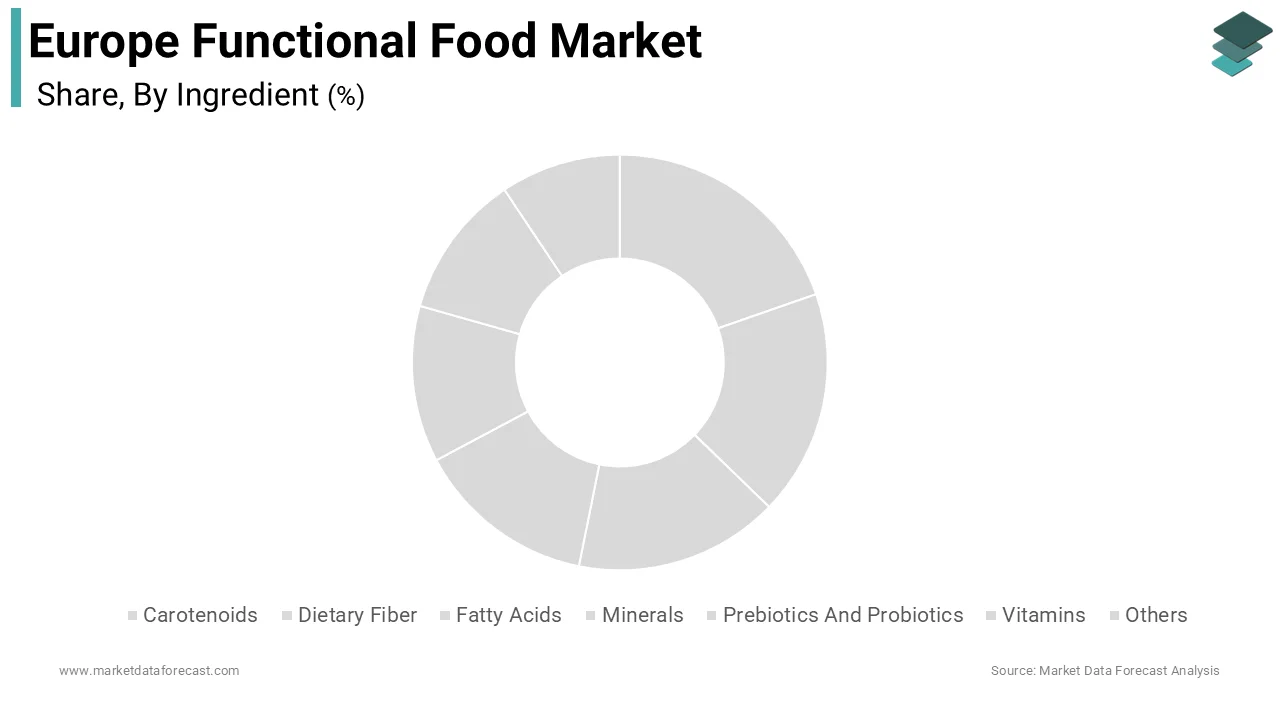
The prebiotics and probiotics segment is on the rise and is expected to be the fastest-growing segment in the global market by witnessing a CAGR of 9.8% from 2026 to 2034. The rapid expansion of the prebiotics and probiotics segment is fuelled by mounting scientific validation of the gut microbiome’s influence on systemic health, including immunity, mental well-being, and metabolic regulation. According to Research, probiotics are increasingly recognized for their efficacy, supported by numerous clinical trials in recent years. Consumer behavior reflects this evidence. As per sources, Consumer interest in gut health and probiotic benefits has notably grown, reflecting a broader market trend toward functional foods that promote digestive health. Regulatory progress has also been instrumental. Regulatory approval of new prebiotic ingredients derived from natural sources like chicory root signals ongoing innovation and expanding application in infant nutrition, as per studies. Furthermore, major dairy and beverage companies across France, Germany, and Sweden have launched synbiotic products combining prebiotic fibers with clinically studied probiotics, which enhance survival through the gastrointestinal tract. This convergence of robust science, regulatory clarity, and product innovation positions prebiotics and probiotics as the vanguard of next-generation functional foods in Europe.
By Product Insights
The dairy products segment led the Europe functional food market and captured a 32.4% share in 2025. Their natural compatibility with probiotics, calcium, vitamin D, and protein fortification has significantly contributed to the dairy products segment. Yogurts, fermented milks, and cheese variants serve as ideal delivery matrices for bioactive ingredients without compromising sensory attributes. The cultural entrenchment of dairy in daily diets across Northern and Central Europe is also a key driver of this segment. National dietary guidelines further strengthen this dominance. Apart from these, technological advances in microencapsulation have enabled the stabilization of sensitive probiotics in shelf-stable formats, expanding distribution beyond refrigerated aisles. This blend of dietary habits, regulatory support, and technical feasibility ensures dairy remains the primary vehicle for functional food delivery in Europe.
By Application Insights
The digestive health segment was the largest segment in the Europe functional food market and accounted for a 26.7% share in 2025. The growth of the digestive health segment is driven by high consumer awareness and strong clinical backing for gut-targeted ingredients. Functional foods addressing bloating, irregularity, and microbiome balance resonate deeply with European consumers, particularly in aging populations where gastrointestinal motility declines. According to sources, millions of adults in the EU suffer from functional gastrointestinal disorders, creating a substantial addressable need. Probiotic yogurts, fiber-enriched cereals, and prebiotic beverages have become mainstream solutions, supported by authorized health claims. Retail penetration amplifies impact. Public health messaging also plays a role. Campaigns by Italy’s Ministry of Health and Sweden’s National Food Agency emphasize fiber intake for colon health, aligning functional food use with national nutrition strategies. This ecosystem of clinical relevance, regulatory validation, and retail visibility sustains digestive health as the leading application pillar.
The immunity segment is estimated to register the fastest CAGR of 10.2% from 2026 to 2034. The growth of the immunity segment is because to heightened health consciousness following the pandemic and ongoing concerns about seasonal respiratory threats. Consumers now view daily nutrition as a frontline defense, driving demand for foods fortified with vitamin C, zinc, selenium, and probiotics known to modulate immune response. According to the World Health Organization, a portion of adults in the region report taking proactive steps to strengthen immunity through diet, a behavior sustained well beyond acute health crises. Clinical evidence strengthens this trend. Regulatory approvals have kept pace. The European Food Safety Authority has authorized many immunity-related claims, including those for vitamin D’s role in normal immune function. Major brands have responded with targeted innovations; Danone’s Actimel+ Immunity line in France and Nestlé’s Boost Opti Immune shakes in Germany exemplify this shift. The emphasis on preventive health by European public health systems has led consumers to adopt immunity-focused functional foods as year-round staples, rather than seasonal products.
REGIONAL ANALYSIS
Germany Functional Food Market Analysis
Germany was the top performer in the Europe functional food market and accounted for a 24.1% share in 2025. The dominance of Germany is primarily driven by a mature health food culture, stringent quality expectations, and a dense network of pharmacies and health food stores that serve as primary distribution channels for functional products. According to studies, a portion of German consumers regularly purchase foods with added health benefits, with digestive and heart health being top priorities. The country’s robust scientific infrastructure further supports innovation. Besides, Germany’s statutory health insurance system indirectly promotes preventive nutrition by covering nutritional counseling for chronic conditions, which increases physician recommendations for evidence-based functional foods. Retailers like dm drogerie Markt and Rossmann have dedicated “functional nutrition” aisles featuring hundreds of SKUs, reflecting deep market integration. This combination of consumer sophistication, scientific rigor, and retail infrastructure strengthens Germany’s role as the functional food epicenter of Europe.
France Functional Food Market Analysis
France is the next prominent region in the Europe functional food market due to its strong dermocosmetic and nutraceutical heritage and emphasis on natural, plant-derived actives. French consumers exhibit high trust in pharmacy-exclusive functional foods, with thousands of pharmacies serving as key points of sale for brands like Arkopharma and Superdiet. According to research, a share of adults actively seek functional foods containing polyphenols, omega-3s, or probiotics for long-term wellness rather than acute symptom relief. The country also leads in clinical substantiation. Regulatory alignment with EU standards ensures swift market access, while cultural preferences for plaisir et santé (pleasure and health) drive innovation in palatable formats like functional chocolates and fruit juices. This unique fusion of scientific tradition, retail specialization, and sensory expectation sustains France’s influential market position.
United Kingdom Functional Food Market Analysis
The United Kingdom is moving ahead moderately in the European functional food market, with high digital engagement, strong private label innovation, and post-Brexit regulatory agility. Despite NHS constraints, UK consumers demonstrate proactive health behaviors. Supermarkets such as Tesco and Sainsbury’s have launched extensive private label ranges, including immunity-boosting smoothies and probiotic oat drinks, often developed in collaboration with nutritionists. The UK’s Medicines and Healthcare products Regulatory Agency has also fast-tracked approvals for novel ingredients under its post-Brexit innovation pathway, enabling quicker commercialization than in some EU states. Furthermore, the rise of personalized nutrition startups like ZOE, which combines gut microbiome testing with functional food recommendations, reflects a tech-integrated approach to wellness. This blend of retail dynamism, regulatory flexibility, and digital health adoption ensures the UK remains a high-growth, innovation-led market within Europe.
Italy Functional Food Market Analysis
Italy is likely to grow in the Europe functional food market from 2026 to 2034, owing to Mediterranean dietary traditions and rising interest in natural, food-first solutions. Italian consumers prefer functional benefits derived from whole foods rather than synthetic fortification. According to sources, a portion of shoppers favor products enhanced with olive polyphenols, citrus bioflavonoids, or fermented dairy over those with added vitamins. This preference aligns with national health campaigns promoting the Mediterranean diet as a model for chronic disease prevention. The country also hosts a thriving nutraceutical sector. Many Italian companies produce functional foods compliant with both EU and national guidelines, many exporting across Europe. Clinical research supports local innovation.
Netherlands Functional Food Market Analysis
The Netherlands is predicted to expand in the Europe functional food market, and is emerging as a hub for scientific innovation and sustainable functional food development. Dutch consumers exhibit high trust in science-backed claims. According to studies, a percentage of adults are willing to pay a premium for foods with proven health benefits validated by independent research. The country hosts leading ingredient innovators such as DSM and FrieslandCampina, which invest heavily in clinical trials for probiotics, omega-3s, and plant-based proteins. The Dutch Nutrition Center actively promotes functional dairy and fiber-rich products as part of national dietary guidelines by supporting public acceptance. Apart from these, the Netherlands serves as a logistics and regulatory gateway to Northern Europe, with the Dutch Food and Consumer Product Safety Authority known for efficient health claim evaluations. This synergy of research excellence, regulatory efficiency, and public health integration positions the Netherlands as a forward-looking functional food leader.
COMPETITION OVERVIEW
The Europe functional food market features intense competition among multinational nutrition companies, specialized nutraceutical firms, and agile regional brands, all operating within a highly regulated environment. Differentiation hinges on scientific validation, regulatory compliance, and alignment with evolving consumer values such as naturalness, sustainability, and personalization. Large players leverage extensive R and D capabilities and established distribution networks to dominate pharmacy and retail channels, while smaller innovators focus on niche applications like cognitive health or sports nutrition using novel botanicals or fermentation-derived ingredients. The barrier to entry remains high due to the European Food Safety Authority’s rigorous health claim evaluation process, which demands robust human clinical data. Consequently, many companies invest significantly in clinical trials and partner with universities to generate credible evidence. Cross-category convergence is also evident as dairy beverage and bakery segments increasingly overlap in functional positioning. Despite fragmentation, the market rewards those who combine scientific integrity with sensory appeal and transparent communication, supporting a competitive landscape centered on trust and efficacy rather than marketing alone.
KEY MARKET PLAYERS
A few major players of the Europe functional food market include
- Glanbia PLC
- Danone
- Mars
- Hearthside Food Solutions LLC
- Meiji Co., Ltd
- Incorporated
- Raisio PLC
- Nestlé S.A
- Sanitarium Health Food Company
- Royal FrieslandCampina N.V
- The Kraft Heinz Company
Top Strategies Used by the Key Market Participants
Key players in the Europe functional food market prioritize science-backed product development to align with stringent regulatory requirements and discerning consumer expectations. Strategic collaborations with academic institutions and healthcare professionals enhance clinical credibility and facilitate health claim approvals. Companies increasingly reformulate existing products to incorporate natural functional ingredients while maintaining clean label standards. Geographic expansion is pursued through localized innovation that respects regional dietary habits and health priorities across Northern, Southern, and Eastern Europe. Digital engagement strategies, including personalized nutrition apps and AI-driven dietary tools, deepen consumer relationships and improve adherence. Sustainability integration from sourcing to packaging also serves as a key differentiator, appealing to environmentally conscious European shoppers. These coordinated strategies ensure long-term relevance in a highly scrutinized and competitive market.
Leading Players in the Market
Nestlé SA
Nestlé SA is a pivotal force in the Europe functional food market through its science-driven brands such as Nestlé Health Science and Garden of Life. The company integrates clinical research with product development to deliver solutions targeting digestive health, immunity, and metabolic wellness. Nestlé has strengthened its European presence by expanding its medical nutrition portfolio with condition-specific formulas backed by human trials. Besides, Nestlé invested in digital health platforms that connect consumers with personalized nutrition advice, enhancing engagement and adherence. These initiatives emphasize its commitment to evidence-based innovation and preventive health positioning across the region.
Danone SA
Danone SA exerts significant influence in the Europe functional food market primarily through its Activia and Actimel probiotic dairy lines, which are widely recognized for digestive and immune support. The company leverages decades of research on gut health to substantiate its product claims and maintain consumer trust. To strengthen its position, Danone has diversified into plant-based functional formats, including oat and almond-based probiotic drinks tailored for lactose-intolerant consumers. Furthermore, Danone enhanced its sustainability credentials by introducing recyclable packaging across its functional dairy range, aligning with European consumer preferences for eco-conscious health products.
DSM Firmenich AG
DSM Firmenich AG plays a vital role in the Europe functional food market as a leading supplier of vitamins, prebiotics, omega-3s 3s and other bioactive ingredients to food manufacturers. The company combines nutritional science with sensory expertise to enable effective and palatable functional formulations. It has strengthened its market position by launching clinically validated ingredient solutions such as Life’s DHA algal omega-3 and DelvoPro probiotics tailored for European regulatory and dietary needs. Its investment in human intervention studies and regulatory support services further empowers clients to navigate the EU’s stringent health claim landscape successfully.
MARKET SEGMENTATION
This research report on the European functional food market is segmented and sub-segmented into the following categories.
By Ingredient
- Carotenoids
- Dietary Fiber
- Fatty Acids
- Minerals
- Prebiotics And Probiotics
- Vitamins
- Others
By Product
- Fruits And Vegetables
- Beverages
- Dairy
- Others
By Application
- Weight Management
- Sports Nutrition
- Digestive Health
- Immunity
- Heart Health
- Clinical Nutrition
- Others
By Region
- UK
- France
- Spain
- Germany
- Italy
- Russia
- Sweden
- Denmark
- Switzerland
- Netherlands
- Turkey
- Czech Republic
- Rest of Europe