- Product Description Description
- Table of Contents TOC
- List of Table & Figure LOT
- Get Free Sample PDF Sample PDF
Market Size, 2025
$0.87 BnMarket Estimate, 2026
$1 BnMarket Forecast, 2034
$3.07 BnCAGR, 2026–2034
14.99%Europe Gene Synthesis Market Summary
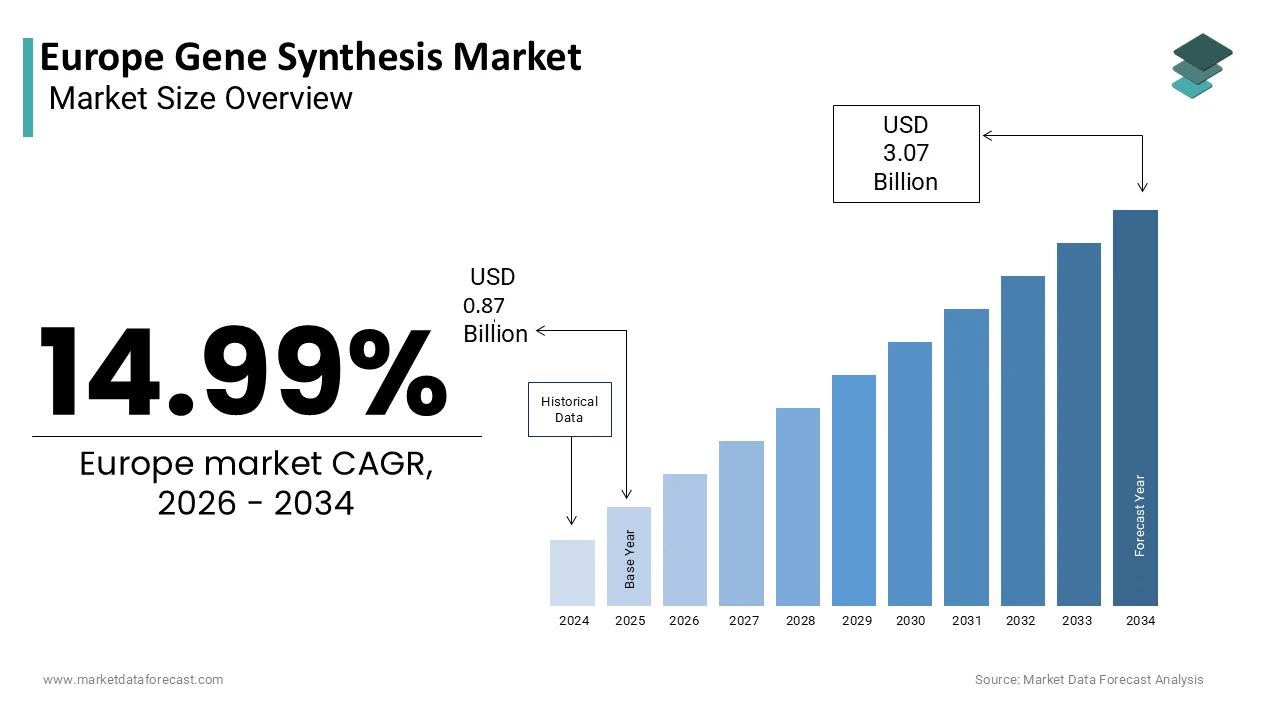
The Europe gene synthesis market was valued at USD 0.87 billion in 2025 and is projected to reach USD 3.07 billion by 2034, growing at a CAGR of 14.99% from 2026 to 2034, driven by accelerated advanced therapy development, EU-backed biofoundry expansion, and AI-enabled DNA design platforms.
Market Snapshot
2025 Market Size: USD 0.87 billion
2026 Market Size: USD 1.00 billion
2034 Forecast: USD 3.07 billion
CAGR (2026–2034): 14.99%
Base Year: 2025
Forecast Period: 2026–2034
Quick Growth Drivers
- Rapid expansion of advanced therapy medicinal products (ATMPs), including CAR-T and gene editing platforms
- Horizon Europe and national bioeconomy funding for synthetic biology infrastructure
- Rising demand for GMP-grade synthetic DNA in vaccine and mRNA development
- Growth of automated biofoundries enabling high-throughput design-build-test cycles
- Increasing adoption of AI-driven codon optimization and sequence validation tools
Principal Restraints
- Stringent EU dual-use and biosecurity screening regulations (EU Regulation 2021/821)
- High cost of long, GC-rich, and high-fidelity gene synthesis
- Administrative delays due to pathogen and toxin sequence screening
- Limited commercial availability of next-generation enzymatic synthesis platforms
High-Value Opportunities
- AI-integrated gene design and predictive expression modeling
- Expansion of gene synthesis for sustainable industrial biotechnology and bio-based chemicals
- Growth in DNA data storage requiring long-sequence, error-free synthesis
- Decentralized GMP-grade synthesis for hospital-based gene therapy production
- EU Green Deal-driven demand for engineered microbial pathways
Key Market Challenges
- Fragmented dual-use implementation across EU member states
- Shortage of skilled synthetic biology and bioautomation professionals
- High validation requirements for therapeutic-grade constructs
- Technical complexity of synthesizing long (>3 kb) or repetitive sequences
- Biosecurity compliance burden increasing turnaround times
Fastest-Growing Segments
- Complex Gene Synthesis – fastest CAGR driven by cell & gene therapy, metabolic pathway engineering, and viral vector backbones
- Therapeutics & Antibodies Applications – accelerated by engineered biologics and personalized medicine pipelines
- Chip-Based DNA Synthesis – high-growth method due to parallel oligonucleotide production and CRISPR library demand
- Biotech & Pharmaceutical End Users – strongest expansion from GMP-grade synthesis requirements
Regional Leadership & Dynamics
- Germany (23.4%) – Strong bioeconomy strategy, biofoundry investments, and leading mRNA developers
- United Kingdom (17.8%) – Historic leadership in genomics, synthetic biology hubs, and ATMP commercialization
- France – Centralized funding model and strong agritech and vaccine research ecosystem
- Switzerland – High concentration of multinational pharma and precision biotech firms
- Netherlands – Advanced therapy manufacturing hubs and agri-biotech innovation clusters
What Wins Commercially
- High-fidelity, long-sequence synthesis capability
- Integrated AI-driven design and biosecurity screening systems
- GMP-compliant manufacturing aligned with EMA requirements
- GDPR-compliant data handling and digital ordering platforms
- Strategic alignment with EU-funded synthetic biology initiatives
Top Strategic Ask for Executives
Prioritize AI-enabled design automation, GMP-grade long-sequence synthesis capabilities, and harmonized biosecurity compliance frameworks to secure leadership in Europe’s fast-scaling synthetic biology and advanced therapy ecosystem.
Leading Players
Some of the companies that are playing a dominating role in the Europe gene synthesis market include
- Eurofins Genomics
- Thermo Fisher Scientific
- Merck KGaA
- GenScript Biotech Corporation
- Eurogentec
Europe Gene Synthesis Market Size
The Europe Gene Synthesis Market was valued at USD 0.87 billion in 2025, is estimated to reach USD 1 billion in 2026, and is projected to reach USD 3.07 billion by 2034, growing at a CAGR of 14.99% from 2026 to 2034.
Gene synthesis is the artificial construction of DNA sequences from digital templates without reliance on natural templates by enabling the creation of novel genes, pathways, or entire genomes for research, therapeutic, and industrial applications. In Europe, this technology underpins advancements in synthetic biology, vaccine development, cell and gene therapies, and agricultural biotechnology. The market encompasses oligonucleotide synthesis, full gene assembly, codon optimization, and sequence verification services delivered by specialized providers adhering to stringent quality and biosecurity standards. According to the European Molecular Biology Organization, over 1200 academic and industrial laboratories across the EU routinely commission synthetic genes for functional genomics and protein engineering. As per the European Commission’s 2023 Bioeconomy Strategy, gene synthesis is identified as a key enabling technology for achieving health sovereignty and sustainable industrial innovation.
MARKET DRIVERS
Accelerated Development of Advanced Therapy Medicinal Products (ATMPs)
The rapid expansion of cell and gene therapies has significantly intensified demand for high fidelity gene synthesis services, which is propelhigh-fidelityth of Europe gene synthesis market. These therapies, including CAR T cells, gene editing tools, and mRNA-based treatments, require precisely synthesized DNA constructs for vector design, guide RNA production, and transgene insertion. According to the European Medicines Agency, 37 advanced therapy medicinal products received marketing authorization between 2020 and 2025, with over 600 additional candidates in clinical trials. Companies like Novartis in Switzerland and Oxford Biomedica in the UK rely on custom-synthesized genes for lentiviral vector production, often requiring sequences exceeding 5 kilobases with 99.9% accuracy. The European Commission’s Innovative Health Initiative allocated 1.8 billion euros in 2023 to support ATMP manufacturing hubs, each requiring integrated gene synthesis capabilities. Furthermore, the EU’s Hospital Exemption framework allows hospitals to produce bespoke gene therapies by creating decentralized demand for GMP-grade synthetic DNA.
EU Funding for Synthetic Biology and Biofoundry Infrastructure
The strategic public investment in synthetic biology infrastructure is eventually accelerating the growth of Europe gene synthesis market. The Horizon Europe program has committed over 2.1 billion euros between 2021 and 2027 to bioeconomy and health innovation, including the establishment of national biofoundries. In 2025, Germany launched its National Bioeconomy Strategy with a 450 million euro fund to build three automated biofoundries capable of high-throughput gene design-build-test cycles. Similarly, the UK’s Synthetic Biology Research Centre network operates six regional hubs that collectively synthesize over 15000 gene constructs annually for academic and industrial partners. According to the European Research Council, 78% of ERC-funded life science projects in 2023 included gene synthesis as a core methodology. The EU’s Joint Undertaking on Key Digital Technologies also supports DNA data storage initiatives requiring error-free long-sequence synthesis. These coordinated investments create stable, large-scale demand beyond individual lab budgets, embedding gene synthesis into Europe’s scientific and industrial fabric.
MARKET RESTRAINTS
Stringent Dual Use and Biosecurity Regulations Limiting Access and Speed
The robust biosecurity framework imposes significant procedural delays and access restrictions on gene synthesis for sequences associated with pathogens or toxins, which is limiting the growth of Europe gene synthesis market. The EU Regulation on Dual Use Items (2021/821) mandates screening of all DNA orders against pathogen databases and verification of end-user legitimacy by adding 5 to 10 business days to standard turnaround times. According to the European Commission’s 2023 Implementation Report, 12 member states require additional national licenses for synthesizing sequences longer than 200 base pairs if they match select agents. In France, the General Directorate for Armaments reviews all orders involving viral envelope genes, while Germany’s Federal Office of Economics and Export Control enforces strict end-use declarations. These measures, while essential for preventing misuse, deter time-sensitive academic collaborations and increase administrative burden.
High Cost and Technical Complexity of Long and High Fidelity Gene Synthesis
The synthesis of long (>3 kb), GC rich, or repetitive DNA sequences remains technically challenging and prohibitively expensive for many European academic and small biotech users. Error rates in standard phosphoramidite chemistry necessitate extensive sequencing validation and cloning corrections, driving costs to 0.30–0.50 euros per base pair for complex constructs. European startups like Meatable and Bit.Bio reports that gene synthesis accounts for up to 25% of their R&D budgets, limiting experimental scope. Although new enzymatic synthesis methods promise higher fidelity, they are not yet commercially available in Europe. This cost-performance gap restricts access to cutting-edge applications such as whole pathway assembly or genome recoding, confining advanced synthesis primarily to well-funded institutions and multinational corporations.
MARKET OPPORTUNITIES
Integration of AI-Driven Design and Automated Synthesis Platforms
The emergence of artificial intelligence and robotic biofoundries to enhance speed, accuracy,y and accessibility is contributing to creating new opportunities for the growth of Europe's gene synthesis market. Machine learning algorithms can now predict optimal codon usage, secondary structure avoidance, and expression efficiency, reducing trial and error in construct design. In 2025, the German Center for Infection Research launched an AI platform that cut gene design time by 70% while improving protein yield by 2.3-fold in validation studies. Concurrently, automated synthesis platforms like those at the Edinburgh Genome Foundry enable 24/7 oligo assembly with integrated QC, reducing human error and turnaround time. The European Innovation Council awarded a 12 million euro grant in 2023 to the SynBio4Flav consortium to develop closed-loop design, build, andtest systems for flavonoid pathway synthesis.
Expansion of Gene Synthesis for Sustainable Industrial Biotechnology
The circular bioeconomy is driving demand for synthetic genes to engineer microbial strains that produce bio-based chemical materials and fuels, which is also escalating the growth of Europe gene synthesis market. The European Green Deal targets 20% of chemical production from biological sources by 2030, requiring novel metabolic pathways designed through gene synthesis. In 2025, the Finnish company Solar Foods used synthesized genes to optimizehydrogen-oxidizingg bacteria for protein production, now scaled to industrial levels. Similarly, the Dutch startup Genomatica partnered with BASF to synthesize 12 gene cassettes forbio-basedd butanediol production. According to the European Bioplastics Association, many industrial biotech projects funded under Horizon Europe since 2022 rely on custom DNA constructs for strain development. The EU’s Carbon Removal Certification Framework further incentivizes CO₂-utilizing microbes whose genomes require extensive synthetic redesign.
MARKET CHALLENGES
Fragmented Regulatory Landscape Across Member States
The dual-use regulations' significant disparities in national implementation create operational uncertainty for gene synthesis providers and users. This factor is likely to inhibit the growth of Europe gene synthesis market. While the EU Screening Framework Agreement encourages harmonized screening, countries like Sweden and the Netherlands permit self-certification for academic institutions, whereas Italy and Poland require third-party verification for all orders. A gene construct approved in Belgium may be blocked in Hungary due to differing interpretations of “toxin-related” domains. This fragmentation increases compliance costs for pan-European vendors, who must maintain multiple screening protocols and legal reviews. Moreover, the lack of mutual recognition of institutional biosafety certifications delays cross-border collaborations.
Shortage of Skilled Workforce in Synthetic Biology and Bioautomation
The rapid advancement of gene synthesis technologies outpaces the availability of trained personnel capable of designing, validating, and integrating synthetic constructs into complex biological systems. The shortage of skilled workforce is additionally hindering the growth of Europe gene synthesis market. According to the European Skills Agenda, there is a projected shortfall of 350000 biotechnology professionals in the EU by 2025, with synthetic biology expertise among the most acute gaps. Universities in Southern and Eastern Europe rarely offer dedicated courses in DNA design or biofoundry operations, limiting local capacity. This skills deficit slows athe doption of advanced synthesis services even when funding is available. While initiatives like the EU’s BioExcel training network aim to bridge this gap, scaling education to meet industrial demand remains a structural bottleneck. Without urgent investment in interdisciplinary training, Europe risks falling behind in translating gene synthesis capabilities into commercial and therapeutic innovations.
REPORT COVERAGE
| REPORT METRIC | DETAILS |
| Market Size Available | 2025 to 2034 |
| Base Year | 2025 |
| Forecast Period | 2026 to 2034 |
| Segments Covered | By Method, Services, Application, End-use, and Region. |
| Various Analyses Covered | Global, Regional, and Country-Level Analysis, Segment-Level Analysis, Drivers, Restraints, Opportunities, Challenges; PESTLE Analysis; Porter’s Five Forces Analysis, Competitive Landscape, Analyst Overview of Investment Opportunities |
| Countries Covered | UK, France, Spain, Germany, Italy, Russia, Sweden, Denmark, Switzerland, Netherlands, Turkey, Czech Republic, Rest of Europe |
| Market Leaders Profiled | Eurofins Genomics, Thermo Fisher Scientific, Merck KGaA, GenScript Biotech Corporation, Eurogentec |
SEGMENTAL ANALYSIS
By Component Insights
The consumables segment was the largest by holding 58.3% of the European gene synthesis market share in 2025, with the recurring demand for reagents, nucleotides, enzymes, and purification kits essential for both in-house and outsourced synthesis workflows. According to the European Molecular Biology Organization, over 1200 laboratories in the EU conduct gene synthesis experiments annually, each consuming an average of 8000 euros worth of reagents per year. The rise of automated biofoundries, such as those at the Edinburgh Genome Foundry and the German Center for Infection Research,h further amplifies demand, as high-throughput platforms require standardized, high-purity consumables to maintain fidelity. Additionally, the shift toward enzymatic synthesis methods, though still emerging, increases reliance on specialized polymerases and cofactors not used in traditional phosphoramidite chemistry. This recurring, volume-driven nature ensures consumables remain the financial backbone of the market.
The software and services segment is projected to grow at a CAGR of 13.7% from 2025 to 2033. The integration of artificial intelligence, cloud-based design platforms, and regulatory-compliant biosecurity screening is majorly fuelling the growth of the segment. Modern gene synthesis increasingly relies on computational tools for codon optimization, secondary structure prediction, and off-target effect analysis tasks impractical to perform manually. In 2025, the European Innovation Council funded the GenoAI platform, which reduced gene design errors by 65% in pilot studies across six EU countries. Additionally, EU Regulation 2021/821 mandates that all commercial gene synthesis providers implement sequence screening against pathogen databases, creating demand for integrated compliance software. Companies like Benchling and TeselaGen have expanded their European operations to offer GDPR-compliant cloud environments with built-in dual-use screening. According to the European Federation of Biotechnology, 74% of academic labs now use digital design suites, up from 48% in 2021. As synthesis shifts from artisanal assembly to predictive engineering, software becomes the intellectual core of the workflow, driving rapid adoption beyond traditional wet-lab boundaries.
By Gene Type Insights
The standgeneenes segment was the largest by holding a prominent share of tEuropeanope gene synthesis market in 2025 due to its widespread use in basic research, plasmid construction, and protein expression studies. These constructs form the foundation of molecular biology workflows in universities and diagnostic labs, where cost efficiency and turnaround time are prioritized over complexity. According to the European Nucleotide Archive, over 85% of synthetic gene submissions from academic institutions in 2023 fell into the standard category, averaging 1.4 kilobases in length. The affordability of standard synthesis, often priced below 0.10 euros per base pair, enables high-volume usage in undergraduate teaching labs and CRISPR guide RNA libraries. Furthermore, core facilities at institutions like the Max Planck Society and CNRS routinely batch-order standard genes for distribution across multiple research groups. Their simplicity allows for high automation and minimal validation, reducing failure rates and supporting just-in-time delivery models. This combination of accessibility, reliability, and educational utility sustains standard genes as the workhorse of the European market.
The complex gene synthesis segment is anticipated to grow at the fastest CAGR of 15.2% during the forecast period, with the advanced therapeutic and industrial applications. These constructs are essential for engineering full metabolic pathways, viral vectors, and synthetic chromosomes. According to the European Medicines Agency, advanced therapy medicinal products approved since 2020 required complex gene synthesis for lentiviral or AAV vector backbones exceeding 4.5 kilobases. The Swiss company Amazentis used a 6.2 kb synthesized gene to produce a mitochondrial-targeted peptide now in Phase III trials. Similarly, the Dutch startup Ginkgo Bioworks Europe commissioned over 200 complex pathway assemblies in 2023 for sustainable fragrance production. As cell and gene therapies mature and industrial biotechnology scales, demand for error-free, large-scale synthesis will continue to outpace standard gene growth, positioning complex genes as the frontier of innovation.
By Application Insights
The synthetic biology segment was the largest by capturing 42.3% of the European gene synthesis market for DNA construction in pathway engineering, chassis development, and biosensor design. European initiatives like the EU Bioeconomy Strategy and national biofoundry programs rely heavily on synthesized genes to build standardized biological parts. Academic hubs such as the University of Manchester’s Synthetic Biology Research Centre synthesize more than 3000 gene constructs annually for prototyping novel circuits. The UK’s Industrial Biotechnology Catalyst has supported 78 companies since 2021, all requiring custom DNA for strain optimization. Unlike therapeutic applications constrained by regulation, synthetic biology thrives on iterative design-build-test cycles, generating high-volume, diverse synthesis demand. This culture of open innovation and public-private collaboration cements synthetic biology as the dominant and most dynamic application segment.
The therapeutics and antibodies segment is expected to grow at the fastest CAGR of 16.8% from 2025 to 203,3 with the surge in engineered biologics, bispecific antibodies, and cell therapies requiring precisely synthesized genetic components. Monoclonal antibodies often involve humanized variable regions synthesized de novo to avoid immunogenicity, while CAR T cells require synthetic transgenes encoding chimeric receptors. According to the European Medicines Agency,y over 600 advanced therapy trials were active in the EU in 2023, with 72% involving synthetic DNA constructs for vector or receptor design. In 2025, Novartis Switzerland used synthesized genes to develop a next-generation TCR therapy targeting solid tumors, now in Phase II. Similarly, Oxford Biomedica relies on custom-synthesized gag-pol and VSV-G sequences for lentiviral vector production. As personalized medicine advances and regulatory pathways mature, this segment will increasingly dominate high-value synthesis demand.
By Method Insights
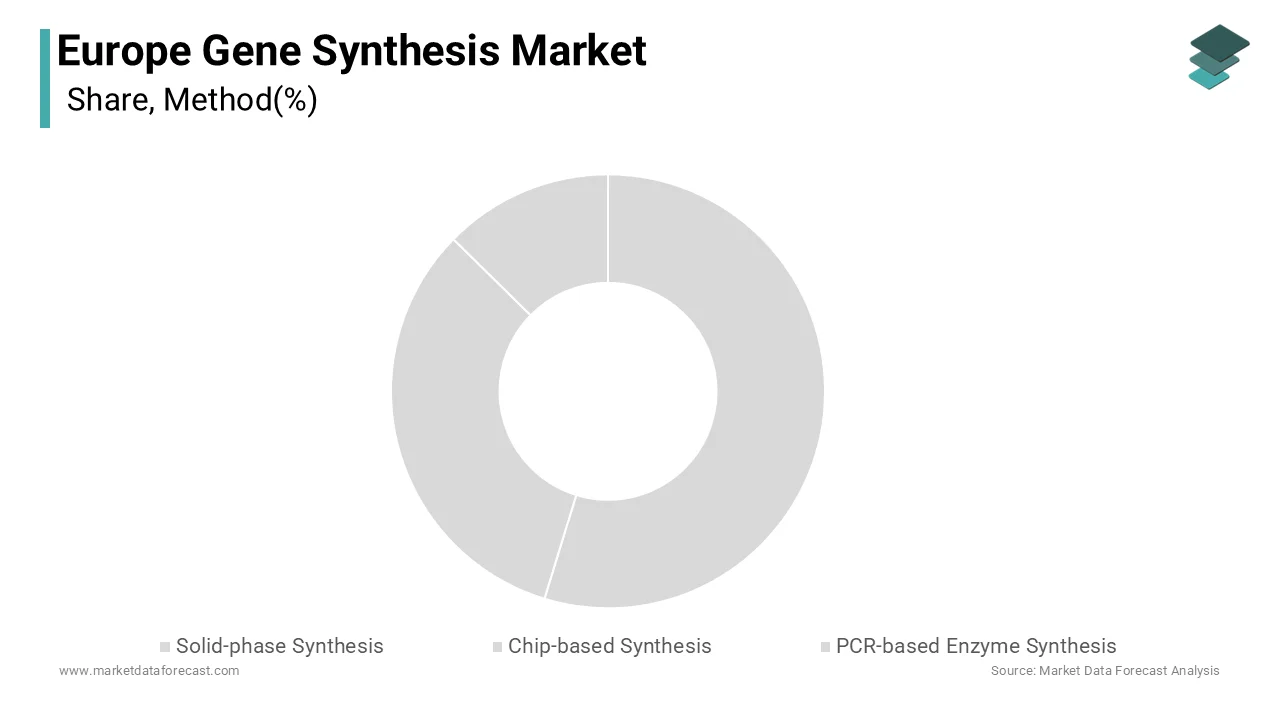
The solid phase phosphoramidite synthesis segment was the largest by accounting for a significant share of the European gene synthesis market in 2025 due to its maturity, scalability, and compatibility with automated platforms. This chemistry, developed in the 1980s, enables rapid oligonucleotide assembly on controlled-pore glass supports and is the backbone of commercial gene synthesis services. Core facilities at institutions like EMBL and CRUK routinely use 96-well synthesizers to produce primer libraries and gene fragments. The method’s robustness allows for high throughput and integration with downstream PCR assembly by making it ideal for academic and diagnostic applications. Despite limitations in length and error rates, decades of optimization have made it the default choice for cost-sensitive, high-volume users. Its entrenched position in laboratory infrastructure and supply chains ensures continued dominance despite emerging alternatives.
The chip-based DNA synthesis segment is projected to grow at the fastest CAGR of 18.3% during the forecast period, with its ability to produce thousands of unique oligonucleotides in parallel at dramatically lower cost per base. This technology uses semiconductor-like photolithography or electrochemical arrays to synthesize DNA directly on microchips by enabling massive scale for applications like CRISPR library construction and DNA data storage. As per the European Innovation Council, awarded a 15 million euro grant to the DNArt consortium to develop EU-based chip synthesis for archival data storage using synthetic DNA. Companies like CustomArray (now part of Twist Bioscience) have established European partnerships to supply high-complexity oligo pools for vaccine epitope screening. According to the European Research Council, chip-based methods reduced oligo costs by 90% compared to traditional synthesis in 2023 pilot studies.
By End User Insights
The academic and research institutes segment was the largest by holding 48.3% of the European gene synthesis market share in 2025, with extensive public funding, teaching requirements, and fundamental research in genetics and molecular biology. Universities across Germany, France, and the UK operate hundreds of labs that routinely commission synthetic genes for cloning, mutagenesis, and functional studies. The German Research Foundation allocated 1.1 billion euros in 2023 for molecular biology infrastructure, including gene synthesis services. Core facilities like the EMBL GeneCore process over 5000 constructs annually for internal and external collaborators. The integration of gene synthesis into undergraduate curricula, such as the iGEM team project, ts ensures consistent baseline demand.
The biotech and pharmaceutical companies segment is expected to grow at the fastest CAGR of 17.1% during the forecast period with the commercialization of gene and cell therapies, mRNA vaccines, and engineered biologics. Unlike academic users focused on discovery, these firms require GMP-compliant, high-fidelity synthesis for regulated clinical and manufacturing workflows. According to the European Federation of Pharmaceutical Industries, over 220 advanced therapy trials were sponsored by EU biotechs in 2023, each requiring multiple synthetic constructs for vector design and quality control. BioNTech Germany commissioned over 500 GMP-grade genes for its personalized cancer vaccine pipeline. Similarly, Sweden’s AstraZeneca uses synthesized DNA for antibody humanization and Fc engineering. The EU’s Innovative Health Initiative and national innovation vouchers further subsidize synthesis costs for SMEs.
COUNTRY LEVEL ANALYSIS
Germany Gene Synthesis Market Analysis
Germany was the top performer of the European gene synthesis market by holding 23.4% of the share in 2025 with itsworld-classs research infrastructure, strong biotech cluster, and national bioeconomy strategy. The country hosts over 180 universities, 80 Max Planck and Helmholtz institutes, and a dense network of biotech firms in clusters like Munich and Berlin. According to the German Federal Ministry of Education and Research, 1.1 billion euros were allocated in 2023 for synthetic biology and gene technology projects. The newly launched National Bioeconomy Strategy includes 450 million euros for automated biofoundries capable of high-throughput gene synthesis. Companies like CureVac and BioNTech rely on domestic synthesis providers for mRNA and vector development. Additionally, Germany enforces strict but clear dual-use regulations, providing legal certainty for commercial providers. This blend of scientific excellence, public investment, and industrial demand solidifies Germany’s leadership in both volume and innovation.
United Kingdom Gene Synthesis Market Analysis
The United Kingdom gene synthesis market was ranked second by holding 17.8% of the market share in 2025, with its historic strength in genomics, synthetic biology, and advanced therapy development. The country maintains leading institutions like the Francis Crick Institute, the Sanger Institute, and the Cell and Gene Therapy Catapult, all heavy users of gene synthesis. The UK’s Medicines and Healthcare products Regulatory Agency has approved 14 advanced therapy products since 2020, many developed by firms like Orchard Therapeutics and Autolus that depend on custom DNA constructs. Post Brexit, the government’s Life Sciences Vision emphasizes health sovereignty, accelerating domestic synthesis capacity.
France Gene Synthesis Market Analysis
France's gene synthesis market growth is propelled by the centralized research funding and strategic focus on health and agritech innovation. Institutions like the Pasteur Institute and INRAE operate high-throughput synthesis facilities supporting both public health and agricultural projects. The French Alternative Energies and Atomic Energy Commission runs a biofoundry in Evry, producing standardized genetic parts for industrial partners. Additionally, Sanofi’s R&D center in Paris commissions hundreds of synthetic genes annually for antibody and vaccine development. France’s dual-use regulations are stringent but well defined, fostering trust among commercial providers. This coordinated ecosystem of public investment, industrial application, and regulatory clarity ensures steady and high-quality demand.
Switzerland Gene Synthesis Market Analysis
Switzerland's gene synthesis marketshaped by its concentration of global pharmaceutical leaders and precision-focused biotech startups. According to the Swiss Biotech Association, over 400 biotech firms operate in Switzerland, many specializing in cell therapy and protein engineering. The Swiss National Science Foundation funded 87 synthetic biology projects in 2023, including gene synthesis for mitochondrial therapies and DNA-encoded libraries. ETH Zurich and EPFL run advanced biofoundries that serve both academia and industry with ISO-certified workflows. Switzerland’s non-EU status allows flexible yet rigorous oversight, attracting international synthesis providers seeking regulatory agility. This unique combination of pharma density, scientific excellence, and operational efficiency makes Switzerland a high-value niche leader.
Netherlands Gene Synthesis Market Analysis
The Netherlands gene synthesis market growth is likely to grow with collaborative innovation, strong agri-biotech, and advanced therapy manufacturing. The country hosts the Amsterdam-based Cell Therapy Facility, one of Europe’s largest GMP vector production sites, requiring continuous gene synthesis for lentiviral backbones. Wageningen University leads in agricultural synthetic biology, using synthesized genes to engineer nitrogen-fixing microbes and climate-resilient crops. The Leiden Bio Science Park houses over 300 life science companies, many outsourcing synthesis to local providers like GenScript Europe. The Dutch government actively supports biofoundry development under its National Growth Fund, emphasizing circularity and digital integration. This ecosystem of cross-sector collaboration and forward-looking policy positions the Netherlands as a scalable and sustainable market leader.
COMPETITIVE LANDSCAPE
The European gene synthesis market features intense competition among global leaders and specialized regional providers with deep scientific and regulatory expertise. Dominated by companies like Twist Biosciences,e Eurofins Genomics, cs and GenScript,ipt the landscape is characterized by high differentiation based on synthesis, accuracy, length capability, biosecurity compliance,e and GMP readiness. Competition is not price-driven but revolves around technical performance, turnaround, reliability, ty and adherencdual-usedual use and data protection regulations. Barriers to entry remain high due to complex quality control requirements, extensive validation protocols,s and the need for accredited biosecurity screening systems. While low-cost Asian vendors offer competitive pricing, ng they often lack localized support, ort GDPR compliant data handling, ling and GMP certification required for therapeutic applications. Innovation focuse AI-drivenriven design, enzymatic synthesis, thesis chip-based parallelization to improve fidelity and scalability. Long term success depends on maintaining engineering excellence, navigating fragmented national regulations,s and building trust inthe environment, where sequence errors or security lapses carry significant scientific and legal consequences.
KEY PLAYERS MARKET
Some of the notable companies in the European gene synthesis market.
- Eurofins Genomics
- Thermo Fisher Scientific
- Merck KGaA
- GenScript Biotech Corporation
- Eurogentec
TOP LEADING PLAYERS IN THE MARKET
- Twist Bioscience is a global leader in silicon-based DNA synthesis with a strong European presence through its Amsterdam facility and partnerships with academic and biopharmaceutical institutions. The company leverages proprietary semiconductor platform technology to produce high-quality oligonucleotides at scale, enabling applications in synthetic biology, vaccine development, and next-generation sequencing. Twist actively supports EU research initiatives, including Horizon Europe-funded consortia focused on pandemic preparedness and sustainable biomanufacturing. The company expanded its GMP-compliant gene synthesis services from its Netherlands hub to meet rising demand for clinical-grade constructs in cell and gene therapy. It also integratedAI-drivenn design tools into its European customer portal, allowing real-time codon optimization and biosecurity screening aligned with dual-use regulations.
- Eurofins Genomics is a European headquartered provider offering end-to-end gene synthesis solutions with facilities in Germany FranceF, rance and the UK, servingacademic biotechec,,h and pharmaceutical clients across the continent. The company specializes in high fidelity synthesis of complex genes, including those with high GC content,t repetitive sequences,ences and toxic domains. Eurofins adheres to ISO 13485 standards and providesGMP-compliantt services for advanced therapy medicinal product development. The company launched its SmartGene AI platform, featuring automated sequence validation, on codon optim,ization and regulatory compliance checks tailored to EU biosafety frameworks. It also strengthened its partnership with the German Center for Infection Research to support rapid pathogen gene synthesis for emerging disease response.
- GenScript is a global gene synthesis pioneer with significant operations in Europe, including service centers in the Netherlands and Germany, catering to both industrial and academic users. The company offers a comprehensive portfolio ranging from standard gene synthesis to complex pathway assembly and CRISPR library construction. GenScript emphasizes speed, accuracy,cy and regulatory compliance, including providing EN ISO certified workflows and dual-use screening in line with EU Regulation 2021/821. In 2025, the company inaugurated a dedicated GMP gene synthesis suite in Leiden to support European advanced therapy developers requiring clinical-grade DNA constructs. It also introduced a cloud-based design portal with GDPR compliant data handling and real-time biosecurity alerts.
TOP STRATEGIES USED BY THE KEY MARKET PARTICIPANTS
Key players in the European gene synthesis market pursue strategies centered on regulatory compliance,e technological differentiation, and ecosystem integration. Companies invest heavily in AI-powered design platforms that embed codon optimization, off-target prediction, and EU-mandated dual-use screening directly into the ordering workflow. GMP-compliant manufacturing capabilities are prioritized to serve the rapidly expanding advanced therapy sector requiring clinical-grade DNA. Strategic partnerships with national biofoundries, research consortia, and regulatory bodies ensure alignment with public health and bioeconomy priorities. Localization of production and data handling addresses GDPR and sovereignty concerns while reducing turnaround times. Additionally, firms focus on complex and long gene synthesis to differentiate from low-cost competitors and capture high-value therapeutic applications. These approaches collectively strengthen scientific credibility, operational reliability,y, and long-term customer retention in a precision-driven market where accuracy and ethics are paramount.
MARKET SEGMENTATION
This research report on the Europe gene synthesis market has been segmented and sub-segmented into the following categories.
By Method
- Solid-phase Synthesis
- Chip-based Synthesis
- PCR-based Enzyme Synthesis
By Services
- Antibody DNA Synthesis
- Viral DNA Synthesis
- Others
By Application
- Gene & Cell Therapy Development
- Vaccine Development
- Disease Diagnosis
- Others
By End-use
- Biotechnology & Pharmaceutical Companies
- Academic & Government Research Institutes
- Contract Research Organizations
By Country
- UK
- France
- Spain
- Germany
- Italy
- Russia
- Sweden
- Denmark
- Switzerland
- Netherlands
- Turkey
- Czech Republic
- Rest of Europe