- Product Description Description
- Table of Contents TOC
- List of Table & Figure LOT
- Get Free Sample PDF Sample PDF
Market Size, 2025
$2.60 BnMarket Estimate, 2026
$3.20 BnMarket Forecast, 2034
$17.01 BnCAGR, 2026–2034
23.21%Europe Synthetic Biology Market Report Summary
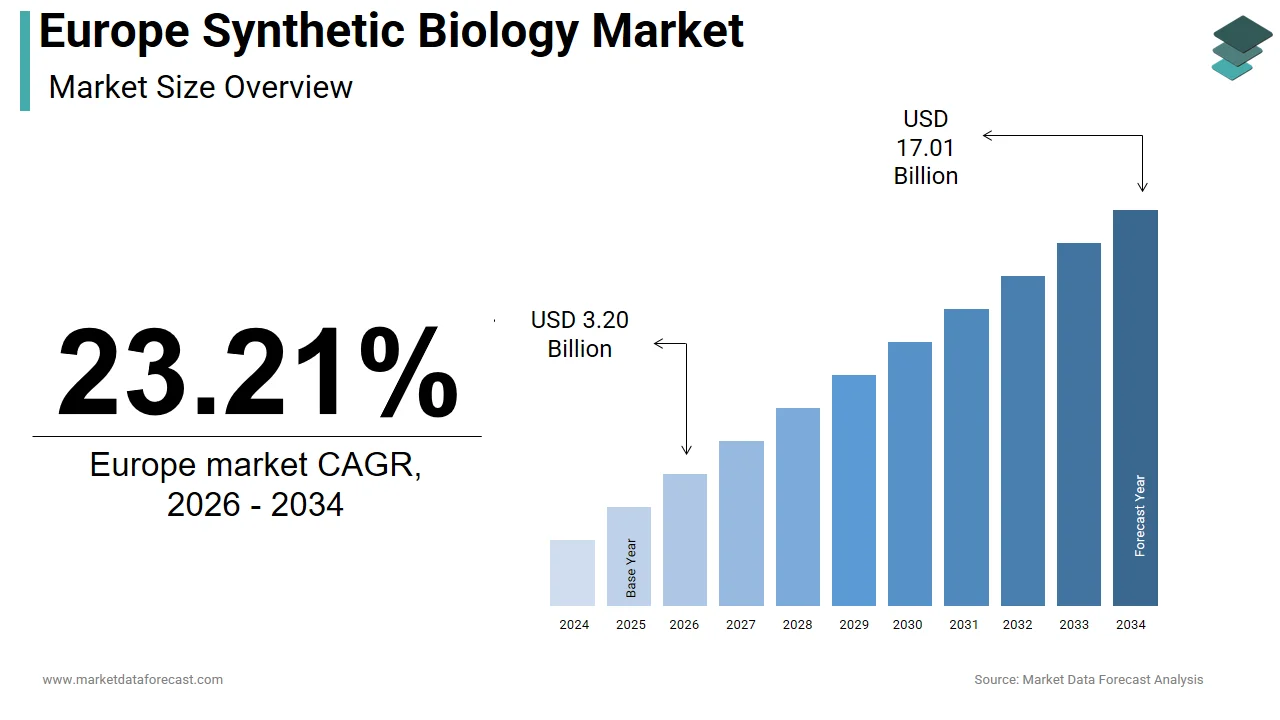
The Europe synthetic biology market was valued at USD 2.60 billion in 2025, is estimated to reach USD 3.20 billion in 2026, and is projected to reach USD 17.01 billion by 2034, exhibiting a CAGR of 23.21% from 2026 to 2034. Growth is driven by the integration of synthetic biology into precision medicine and advanced therapies, strong public and private investment in bio-R&D, and accelerating adoption of bio-based industrial solutions aligned with the EU Green Deal and broader bioeconomy strategies.
Key Market Trends
- Increasing use of synthetic biology in precision medicine, including engineered cell therapies, programmable gene editing, and synthetic diagnostics for oncology and rare diseases.
- Rapid expansion of bio-based industrial production, with engineered microbes used for bioplastics, biofuels, specialty chemicals, and sustainable materials.
- Strong policy and funding support through EU bioeconomy, Green Deal, and national innovation programs that prioritize biomanufacturing and biofoundry infrastructure.
- Growing AI–synthetic biology convergence, using machine learning and high-performance computing for predictive design of gene circuits, enzymes, and metabolic pathways.
- Intensifying focus on biosafety, biosecurity, and ethics, as regulators and stakeholders respond to dual-use, environmental, and societal concerns.
Segmental Insights
- Based on tools, the enzymes segment held the largest share of the Europe synthetic biology market in 2024, at 33.5%, underpinned by their essential role in DNA manipulation, gene editing, amplification, and pathway engineering across research labs and industrial bioprocesses. High-fidelity polymerases, CRISPR-associated nucleases, and engineered biocatalysts continue to see strong and recurring demand.
- The xeno nucleic acid (XNA) segment is the fastest-growing tool category, projected to grow at a CAGR of 22.5% over the forecast period, driven by XNAs’ superior stability, nuclease resistance, and unique binding properties that support next-generation therapeutics, diagnostics, biosensors, and data storage applications.
- Based on technology, enabling technologies (DNA synthesis, genome editing, bioinformatics, and automation) dominated the Europe synthetic biology market in 2024, reflecting their foundational role in design–build–test–learn workflows across academia and industry. The enabled technologies segment—comprising deployed applications such as engineered microbes, synthetic foods, and programmable probiotics—is expected to record the fastest growth (CAGR 18.5%), as the market shifts from tools to commercial products.
- By application, the medical segment led the market with a 31.5% share in 2024, supported by Europe’s strong biopharma base, expanding pipelines of cell and gene therapies, and investments in synthetic vaccine and ATMP platforms. The environmental applications segment is anticipated to grow at the fastest CAGR of 22.5%, as engineered organisms are deployed for pollution control, carbon sequestration, resource recovery, and broader climate and soil health initiatives.
Regional Insights
The Europe synthetic biology market is anchored by a few highly advanced innovation hubs with strong research capacity, industrial integration, and supportive public funding.
- Germany dominated the regional market in 2024, with 22.7% share, driven by world-class research institutions, a deep industrial biotechnology base, and leading companies in mRNA, enzymes, and biobased chemicals.
- The United Kingdom held the second-largest share, underpinned by excellence in clinical translation, cell and gene therapy infrastructure, and a supportive regulatory and venture ecosystem despite being outside the EU.
- France is expected to grow at a promising pace, backed by the France 2030 program, strong public–private partnerships, and leading roles in sustainable chemistry, enzymatic recycling, and vaccine R&D.
- Switzerland is projected to maintain a prominent share due to its high-value pharma industry, intensive investment in synthetic biology and XNA research, and strong translational pathways.
- The Netherlands is forecast to post a healthy CAGR, supported by its leadership in circular bioeconomy, urban biomanufacturing pilots, and a dense ecosystem of synthetic biology startups linked to Wageningen and Delft.
Competitive Landscape
The Europe synthetic biology market features a highly dynamic mix of global chemical and pharmaceutical majors, specialized enzyme and tools providers, and fast-growing biotech startups. Competition centers on platform breadth (from tools to applications), biofoundry and automation capabilities, IP positioning in gene editing and design, and alignment with EU health and sustainability agendas. While collaboration through EU-funded consortia remains strong, rivalry is intensifying in high-value segments such as therapeutic platforms, industrial biocatalysts, and circular bioeconomy solutions.
Major companies operating in the Europe synthetic biology market include Dupont, Intrexon Corporation, Amyris, Inc., BASF SE, Genscript USA, Inc., Integrated DNA Technologies (IDT), Inc., Novozymes, Royal DSM N.V, New England Biolabs, Inc., Synthetic Genomics, Inc., BioNTech SE, and Thermo Fisher Scientific, Inc.
Europe Synthetic Biology Market Size
The synthetic biology market size in Europe was valued at USD 2.60 billion in 2025. The European market is estimated to be worth USD 17.01 billion by 2034 from USD 3.20 billion in 2026, growing at a CAGR of 23.21% from 2026 to 2034.
Synthetic biology encompasses the design, construction, and redesign of biological components, systems, and organisms to perform novel functions or enhance existing biological processes for applications in healthcare, agriculture, industrial biotechnology, and environmental sustainability. As of 2025, the discipline has evolved beyond foundational genetic engineering into predictive, programmable, and scalable biological systems enabled by advances in DNA synthesis, CRISPR technologies, and computational modeling. Europe remains a hub of academic excellence and biotech innovation, with leading research institutions in Germany, the United Kingdom, France, and the Nordic countries contributing significantly to foundational and applied synthetic biology. According to the European Commission, synthetic biology has become a rapidly expanding field in Europe, with more than 700 life science startups engaged in related activities across the EU in 2024. As per Eurostat, public investment in biotechnology R&D exceeded €5.8 billion in 2023, which indicates the strategic importance of bio‑innovation for the region. Additionally, the European Molecular Biology Laboratory (EMBL) documented a 22% year‑on‑year increase in collaborative synthetic biology projects between academia and industry during 2024, which reflects strong translational momentum and growing alignment between research and commercialization.
MARKET DRIVERS
Accelerated Adoption of Precision Medicine Drives Market Expansion
The integration of synthetic biology into precision medicine frameworks is transforming therapeutic development across Europe, which is one of the major factors propelling the European synthetic biology market growth. Synthetic biological tools enable the engineering of cell-based therapies, programmable diagnostics, and personalized gene editing solutions tailored to individual genomic profiles. In oncology alone, engineered T cell therapies using synthetic receptors have demonstrated remission rates exceeding 60% in certain hematologic malignancies, as per the American Society of Hematology in 2024. This therapeutic success has spurred regulatory facilitation. As per the European Medicines Agency, 114 new medicines were recommended for approval in 2024, including advanced therapy medicinal products (ATMPs). National healthcare systems are increasingly investing in genomic infrastructure to support such interventions. For instance, as per NHS England, the United Kingdom’s National Health Service launched its Genomic Medicine Service to sequence 500,000 whole genomes by 2023/24. As per Germany’s Federal Ministry of Education and Research, significant funding programs were allocated in 2024 to advance synthetic biology applications in personalized therapeutics. These coordinated efforts underscore a structural shift toward biologically programmable medicine, which is creating sustained demand for synthetic biology-derived platforms across clinical and diagnostic domains in Europe.
Rising Industrial Demand for Sustainable Bio-Based Alternatives Fuels Growth
Industrial sectors across Europe are increasingly leveraging synthetic biology to develop bio-based alternatives to petrochemical-derived products as part of decarbonization mandates under the European Green Deal, which is further boosting the synthetic biology market expansion in Europe. Companies are engineering microbial strains to produce biodegradable plastics, biofuels, specialty chemicals, and textile precursors with significantly lower carbon footprints. According to the European Environment Agency, biomanufacturing processes utilizing synthetic organisms contribute to reducing greenhouse gas emissions compared to conventional chemical synthesis routes. As per the European Bioeconomy Strategy, the EU aims to expand a sustainable bioeconomy and reduce reliance on fossil inputs in industrial production with synthetic biology–enabled bioproduction playing a key role. As per France 2030, the French government committed significant funding in 2023 to biotechnology and biomanufacturing initiatives, including support to scale biofoundries for industrial strain development. As per the Dutch Ministry of Economic Affairs, the Netherlands hosted dozens of synthetic biology startups focused on circular bioeconomy applications by early 2025. Major chemical producers such as BASF and Novozymes have integrated synthetic biology pipelines to accelerate sustainable product development, which is further embedding the technology into Europe’s industrial transformation agenda.
MARKET RESTRAINTS
Stringent and Fragmented Regulatory Frameworks Impede Commercialization
Despite scientific advancement, the Europe Synthetic Biology Market faces significant headwinds from complex and inconsistent regulatory oversight across member states. The European Union’s precautionary principle underpins biosafety legislation, resulting in protracted approval timelines for genetically engineered organisms. According to a 2024 analysis by the European Academies’ Science Advisory Council, regulatory approval timelines for synthetic biology products in Europe are significantly longer than in the United States, often exceeding two years compared to just over a year in the U.S. Moreover, the 2018 European Court of Justice ruling reaffirmed that organisms developed through gene editing fall under the restrictive 2001 GMO Directive, which is creating legal uncertainty for developers of non‑transgenic synthetic constructs. For instance, a majority of European biotech firms report delays or cancellations of commercialization plans due to regulatory ambiguity. National discrepancies further complicate matters. For example, Sweden permits certain gene‑edited crops under national provisions, while Austria maintains a near‑complete ban. This lack of harmonization deters investment, as per the European Investment Bank, which has indicated regulatory risk as a key factor limiting venture capital flows into synthetic biology scale‑ups. Until a unified, science‑based framework is adopted, regulatory fragmentation will continue to stifle innovation and market entry.
Public Skepticism and Ethical Concerns Constrain Societal Acceptance
Public perception remains a critical restraint for the Europe Synthetic Biology Market with persistent ethical concerns and low trust in genetic manipulation technologies. According to the 2024 Eurobarometer survey on Biotechnology, public confidence in the safety of synthetic biology applications remains limited, with less than half of EU citizens expressing trust. Opposition is particularly strong in consumer‑facing domains such as food and agriculture. As per the European Consumer Organisation, a majority of respondents opposed the use of synthetic biology in food production, citing fears of unintended ecological and health consequences. Media narratives often amplify these concerns, as seen in controversies surrounding pilot projects using engineered microbes for soil remediation, which faced public protests and were suspended pending additional risk assessments. Ethical debates around biosecurity and “bio hacking” further fuel apprehension. As per the Nuffield Council on Bioethics, many European policymakers identified public opposition as a top barrier to funding synthetic biology initiatives. Without robust science communication strategies and inclusive public dialogue, societal resistance will continue to limit market penetration, especially in sensitive sectors requiring consumer buy‑in.
MARKET OPPORTUNITIES
Expansion of Biofoundry Infrastructure Creates Scalable Innovation Pathways
Europe’s strategic investment in biofoundry ecosystems is unlocking high-throughput capabilities for strain design, prototyping, and validation, which is dramatically accelerating the synthetic biology innovation cycle. Biofoundries integrate automation, machine learning, and standardized biological parts to enable rapid iteration of engineered organisms. As per the European Innovation Council, the EU funded the establishment of regional biofoundries between 2022 and 2024 to expand synthetic biology capacity, enabling high‑throughput automated biological experimentation. As per the UK’s SynbiCITE facility, integrated design‑build‑test‑learn workflows have significantly reduced development timelines for industrial biocatalysts, which is cutting processes that once took well over a year to under six months. As per Germany’s Bioeconomy Science Center, a pan‑European biofoundry network was launched in 2023, which is connecting academic and industrial labs to share protocols and data, which has already increased collaborative project output. These infrastructures lower barriers for small and medium enterprises, which represent the majority of Europe’s synthetic biology startups. By standardizing biological design and de‑risking scale‑up, biofoundries are transforming synthetic biology from a research curiosity into an industrial engineering discipline, which is offering unprecedented opportunity for market growth across pharmaceuticals, agri‑tech, and green chemistry sectors.
Integration with Artificial Intelligence Enables Predictive Biological Design
The convergence of synthetic biology and artificial intelligence is catalysing a paradigm shift from trial-and-error experimentation to predictive and in-silico biological engineering, which is another promising opportunity for the European synthetic biology market. Advanced machine learning models trained on vast genomic and phenotypic datasets now enable accurate prediction of gene circuit behaviour, protein folding, and metabolic pathway efficiency. According to researchers at the Swiss Federal Institute of Technology, deep learning algorithms have been used to design biosynthetic pathways for vanillin production, which is demonstrating high yield performance in early experimental iterations. As per the European Laboratory for Learning and Intelligent Systems, AI‑driven design has reduced experimental failure rates in synthetic biology projects across numerous European institutions. As per the European High Performance Computing Joint Undertaking, substantial funding was allocated in 2023 to support AI platforms dedicated to biological simulation, including efforts to develop digital twins for microbial factories. For instance, startups across the continent have emerged to commercialize AI-synthetic biology integrations, drawing significant venture funding by mid‑2025. This synergy accelerates R&D cycles while enhancing reliability and reproducibility, which is making AI integration one of the most transformative opportunities in the European synthetic biology market.
MARKET CHALLENGES
Biosafety and Biosecurity Gaps Pose Systemic Risks
The rapid pace of innovation in Europe’s synthetic biology sector has outstripped the development of comprehensive biosafety and biosecurity protocols, which is creating vulnerabilities in both research and industrial settings and a significant challenge to the European market growth. While the EU’s Directive 2009 41 EC governs the contained use of genetically modified microorganisms, it does not fully address emerging risks from gene drives, self-replicating systems, or DNA synthesis without physical handling. For instance, a significant proportion of academic labs working with engineered organisms have been found to lack updated risk assessment procedures for novel synthetic constructs. Furthermore, commercial DNA synthesis providers are not uniformly required to screen orders against pathogen databases; as per investigations by European scientific organizations, only a portion of EU‑based synthesis firms have implemented mandatory sequence screening. The absence of a centralized monitoring mechanism increases the risk of accidental release or deliberate misuse. As per the European Commission, a biosecurity task force was initiated in early 2025, though implementation remains fragmented. Until harmonized biosafety standards and real‑time threat detection systems are mandated across member states, the sector will face reputational and operational risks that could trigger stricter regulatory backlash.
Intellectual Property Fragmentation Hinders Collaborative Innovation
The Europe Synthetic Biology Market is impeded by a complex and inconsistent intellectual property landscape that discourages cross-border collaboration and commercial scale-up. Unlike the United States, where patent eligibility for engineered biological systems is relatively clear, European patent law under the European Patent Convention excludes “essentially biological” processes, creating ambiguity for synthetic biology inventions that straddle natural and engineered domains. According to the European Patent Office, synthetic biology–related patent applications face higher rejection rates due to subject matter eligibility disputes, with recent analyses showing that approval timelines and acceptance rates remain more restrictive in Europe compared to other regions. As per the European IPR Helpdesk, many early‑stage synthetic biology firms have opted for trade secret protection instead of patents, limiting knowledge sharing and follow‑on innovation. Moreover, licensing frameworks for foundational tools like CRISPR remain fragmented as multiple European institutions hold overlapping rights, leading to costly and protracted negotiations. The lack of a unified IP strategy not only increases legal overhead but also reduces Europe’s attractiveness to global investors seeking clear ownership structures, thereby constraining the market’s ability to translate scientific leadership into commercial leadership.
REPORT COVERAGE
| REPORT METRIC | DETAILS |
| Market Size Available | 2025 to 2034 |
| Base Year | 2025 |
| Forecast Period | 2026 to 2034 |
| Segments Covered | By Tool, Technology, Application, and Region. |
| Various Analyses Covered | Global, Regional, and Country-Level Analysis, Segment-Level Analysis, Drivers, Restraints, Opportunities, Challenges; PESTLE Analysis; Porter’s Five Forces Analysis, Competitive Landscape, Analyst Overview of Investment Opportunities |
| Countries Covered | UK, France, Spain, Germany, Italy, Russia, Sweden, Denmark, Switzerland, Netherlands, Turkey, the Czech Republic, and the Rest of Europe. |
| Market Leaders Profiled | Dupont, Intrexon Corporation, Amyris, Inc., BASF SE, Genscript USA, Inc., Integrated DNA Technologies (IDT), Inc., Novozymes, Royal DSM N.V., New England Biolabs, Inc., Synthetic Genomics, Inc., BioNTech SE, and Thermo Fisher Scientific, Inc. |
SEGMENTAL ANALYSIS
By Tool Insights
The enzymes segment dominated the European synthetic biology market in 2024 and held 33.5% of the regional market share. The dominance of the enzymes segment in the European market is attributed to their indispensable role in DNA manipulation, gene editing, and metabolic pathway engineering across both research and industrial applications. Restriction enzymes, polymerases, ligases, and CRISPR-associated nucleases are foundational to nearly every synthetic biology protocol. According to the European Industrial Biotechnology Association, the majority of European biotech laboratories used engineered enzymes in routine workflows during 2024. For instance, the demand is further propelled by the rise of high‑fidelity polymerases for error‑free DNA amplification, with sales of such enzymes continuing to grow year on year in Europe. Industrial‑scale biomanufacturing also relies heavily on enzyme cocktails to optimize yield. For example, Novozymes’ engineered cellulase blends have been shown to improve bioethanol production efficiency in pilot plants across Denmark and the Netherlands. As per ISO 20395, the standardization of enzyme performance metrics further enhances reproducibility, reinforcing their central role in both academic and commercial synthetic biology pipelines.
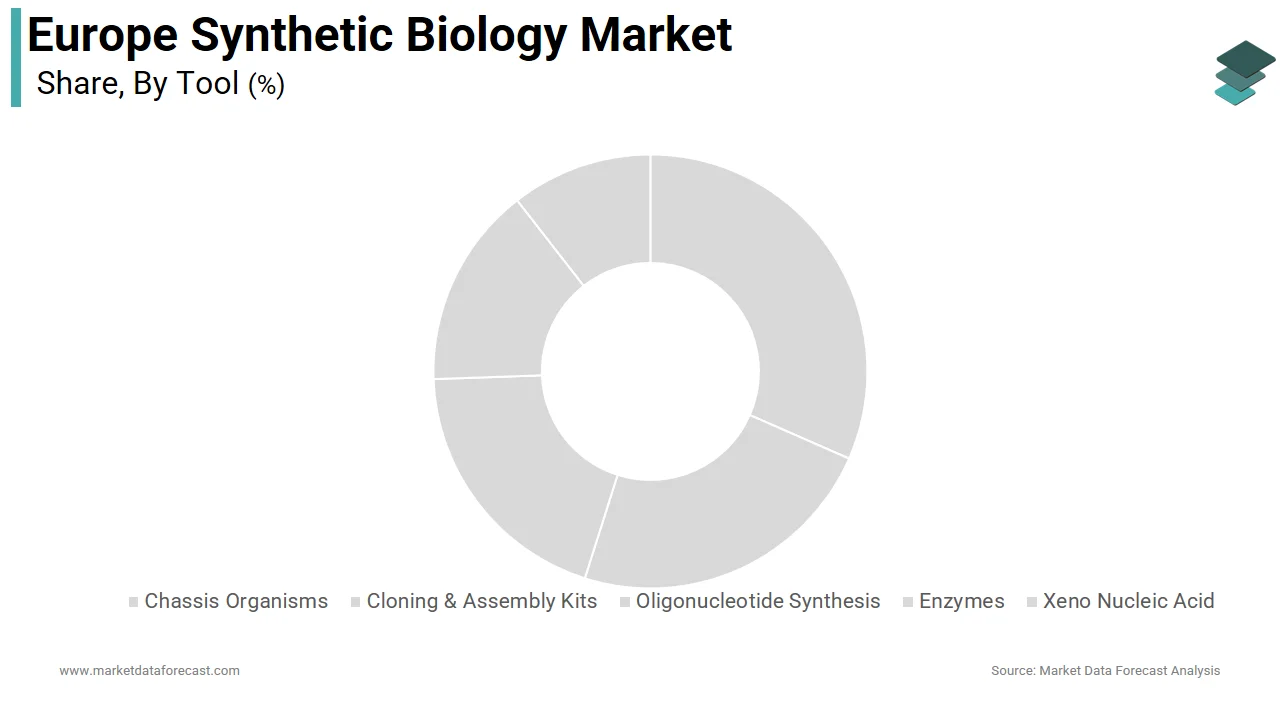
The Xeno nucleic acid segment is the fastest-growing tool segment in Europe and is expected to grow at a CAGR of 22.5% over the forecast period in this regional market. Unlike natural DNA or RNA, XNAs offer enhanced stability, resistance to nucleases, and novel binding properties, which make them ideal for therapeutic aptamers, biosensors, and orthogonal genetic systems. The rapid growth of the Xeno nucleic acid segment in the European market is fuelled by breakthroughs in XNA replication and transcription machinery developed at institutions like the University of Oxford and ETH Zurich. In 2024, a Franco‑German consortium demonstrated an XNA‑based diagnostic platform capable of detecting SARS‑CoV‑2 variants with high specificity, which is accelerating regulatory interest. As per the European Medicines Agency, XNA‑based drug candidates entered Phase I trials in 2024, which is marking progress from earlier years when none had advanced to clinical testing. As per the European Innovation Council, significant funding was awarded in 2024 to startups developing XNA tools for synthetic genomics, reflecting strong institutional backing. The convergence of chemical biology and information storage, where XNAs can encode digital data with higher density than DNA, is further expanding their market potential beyond biomedicine into next‑generation bio‑computing.
By Technology Insights
The enabling technologies segment dominated the market and accounted for 655% of the regional market share in 2024. Enabling technologies include DNA synthesis, genome editing, bioinformatics, and automation platforms that provide the foundational infrastructure for designing and constructing biological systems. Advanced DNA synthesis and CRISPR-based editing tools have become ubiquitous in European labs, underpinning progress across all application domains. As per Eurostat, European research institutions have significantly increased procurement of custom gene fragments in recent years, primarily for pathway prototyping and gene circuit testing. As per the German Research Foundation, the integration of robotic liquid handling systems has accelerated construct assembly with many funded synthetic biology projects utilizing automated workflows by 2024. Furthermore, as per the European Bioinformatics Institute, cloud‑based bioinformatics platforms processed vast volumes of synthetic genomics data in 2024, which is enabling real‑time design validation. As per France’s “BioDesign 2030” initiative, substantial funding was allocated to strengthen enabling technology infrastructure, directly linking public investment to market dominance. This foundational layer not only supports academic discovery but also de‑risks industrial scale‑up, which ensures sustained leadership of enabling technologies in the European ecosystem.
The enabled technologies segment is the fastest-growing segment and is projected to advance at a CAGR of 18.5% over the forecast period. Enabled technologies refer to end applications built using synthetic biology tools, such as engineered microbes for bioremediation, cell-based meat, or programmable probiotics. Their rapid growth reflects the maturation of the field from tool development to product commercialization. In 2024, the European Food Safety Authority received its first dossier for a synthetic biology‑derived food ingredient, which is signalling regulatory readiness. As per the European Environment Agency, synthetic biology applications such as bio‑based insect pheromones are being scaled to reduce reliance on chemical pesticides in EU pilot farms. Additionally, as per the UK’s Advanced Therapy Medicinal Products Catapult, clinical trials using engineered cell therapies have continued to increase in 2024. This transition from lab to market is accelerating, driven by climate mandates, healthcare innovation, and consumer demand for sustainable alternatives, which is positioning the enabled technologies segment as the growth engine of the next decade.
By Application Insights
The medical segment led the market by holding 31.5% of the regional market share in 2024. The dominance of the medical segment in the European market is rooted in Europe’s strong biopharmaceutical sector, robust clinical research frameworks, and growing investment in advanced therapies. Cell and gene therapies, synthetic vaccines, and engineered diagnostics constitute the core of medical synthetic biology in Europe. According to the European Medicines Agency, several advanced therapy medicinal products were approved in 2024, with many relying on synthetic biology for chassis design or payload delivery. As per the European Society of Gene and Cell Therapy, hundreds of clinical trials involving synthetic gene circuits were active across EU member states in early 2025. Germany hosts the highest number of such trials in Europe and is supported by substantial public funding from the Federal Ministry of Health. Furthermore, pandemic preparedness initiatives have accelerated mRNA and viral vector platforms; as per the EU’s HERA Incubator, major investments between 2022 and 2024 were directed toward building rapid‑response synthetic vaccine capabilities. Startups such as MeiraGTx in the UK and Vivet Therapeutics in France have advanced adeno‑associated virus‑based gene therapies for rare diseases, attracting significant cross‑border venture capital. These developments affirm medicine as the primary commercialization corridor for synthetic biology in Europe.
The environmental applications segment is the fastest-growing segment and is projected to expand at a CAGR of 22.5% over the forecast period, owing to the urgent policy mandates to address pollution, biodiversity loss, and climate change through biological solutions. Engineered microbes for plastic degradation, biosensors for water quality monitoring, and synthetic consortia for soil restoration are gaining traction. In 2024, a Dutch consortium led by Delft University of Technology explored the use of engineered Pseudomonas strains with PET hydrolase genes to address microplastic contamination in European waterways, demonstrating promising reductions in polymer load during pilot studies. As per the European Union’s Mission on Soil Health, substantial funding was allocated in 2024 to projects using synthetic biology for carbon sequestration and nutrient cycling. Additionally, as per the European Space Agency, collaborations with Italian and Swedish labs advanced cyanobacteria‑based life support systems for lunar missions, highlighting dual‑use potential. With the EU Green Deal mandating a 55% emissions cut by 2030, environmental synthetic biology is transitioning from niche experiments to scalable planetary health infrastructure.
COUNTRY-LEVEL ANALYSIS
Germany Synthetic Biology Market Analysis
Germany dominated the synthetic biology market in Europe in 2024 by occupying 22.7% of the European market share 2024. The dominance of Germany in the European market is attributed to its world-class research ecosystem, industrial biotech integration, and federal funding mechanisms. Home to institutions like the Helmholtz Centre for Infection Research and the Max Planck Society, Germany leads in both foundational science and translational development. According to the German Federal Ministry of Education and Research, public investment in synthetic biology has continued to grow, with a significant share directed toward health and sustainability applications. The country also hosts BioNTech and CureVac, pioneers in synthetic mRNA platforms, which remain major contributors to Europe’s R&D expenditures in this field. Industrial adoption is equally robust; BASF and Evonik operate biofoundries in Ludwigshafen and Marl, respectively, producing engineered enzymes and biomonomers at a commercial scale. As per Germany’s dual vocational training system, a steady pipeline of bioprocess engineers is ensured, reinforcing its position as Europe’s synthetic biology anchor.
United Kingdom Synthetic Biology Market Analysis
The United Kingdom occupied the second biggest share of the European market in 2024 due to its leadership in clinical translation and regulatory agility. Despite Brexit, the UK remains deeply integrated into European research networks through associate membership in Horizon Europe. As per the UK’s Cell and Gene Therapy Catapult, supported by Innovate UK, significant funding in 2024 accelerated synthetic biology‑based therapies into Phase I and II trials. According to the Medicines and Healthcare products Regulatory Agency, the UK approved several synthetic biology‑derived medicinal products in 2024, among the highest in Europe. Academic excellence at institutions like Imperial College London and the University of Cambridge fuels discovery; their joint synthetic genomics program successfully engineered a synthetic E. coli genome in 2023. Additionally, as per the UK BioDesign Forum, more than a hundred startups focused on DNA data storage and biosensors attracted substantial private investment in 2024. This synergy between regulation, academia, and venture capital solidifies the UK’s role as Europe’s clinical gateway.
France Synthetic Biology Market Analysis
France is estimated to grow at a promising CAGR in the European synthetic biology market over the forecast period due to its national bioeconomy strategy and centralized innovation funding. As per the France 2030 investment plan, substantial funding has been committed to biotechnology through 2025, with synthetic biology positioned as a core pillar. As per the French National Research Agency, numerous public‑private partnerships in synthetic biology were launched in 2024, focusing on sustainable chemistry and alternative proteins. Companies like Global Bioenergies and Carbios have advanced bio‑based isobutene and PET‑degrading enzymes, respectively, with Carbios’ facility in Clermont‑Ferrand scaling enzymatic recycling capacity. As per the Pasteur Institute, leadership in pathogen engineering for vaccine development continues with collaborations alongside the European Vaccine Initiative on rapid‑response platforms. Moreover, France’s carbon border adjustment mechanism incentivizes domestic biomanufacturing, creating a favorable demand pull for synthetic biology solutions in industrial decarbonization.
Switzerland Synthetic Biology Market Analysis
Switzerland is predicted to account for a prominent share of the European market over the forecast period due to its neutrality, world-leading pharmaceutical industry, and elite academic institutions. Home to ETH Zurich and EPFL, Switzerland excels in high-precision genetic circuit design and XNA research. According to the Swiss State Secretariat for Education, Research and Innovation, Switzerland has continued to channel substantial federal funding into synthetic biology with emphasis on therapeutic safety and bio‑computation. Multinationals such as Roche and Novartis operate dedicated synthetic biology units in Basel, advancing next‑generation CAR‑T cells and RNA switches. In 2024, a spin‑off from ETH Zurich secured major investment to develop a tRNA‑based protein modulation platform. Switzerland’s stable regulatory environment and proximity to EU markets enable rapid transitions from pilot to commercial scale. Its focus on quality over scale positions it as Europe’s premium innovation node in synthetic biology.
Netherlands Synthetic Biology Market Analysis
The Netherlands is expected to showcase a healthy CAGR in the European synthetic biology market over the forecast period. The leadership of the Netherlands in circular bioeconomy and open innovation models is fuelling the market growth in the Netherlands. Wageningen University and Delft University of Technology form one of Europe’s strongest academic axes in synthetic biology, consistently driving patent activity and innovation. As per the Dutch Ministry of Economic Affairs, the Netherlands has become a hub for synthetic biology startups with dozens of firms collectively valued in the billions of euros. The national Bio‑based Economy Coalition coordinates cross‑sector deployment; for example, DSM’s bio‑based succinic acid plant in Geleen has demonstrated measurable CO₂ reductions using engineered yeast. The Netherlands also leads in urban biomanufacturing with Amsterdam’s “Bio City” initiative, integrating biofoundries into municipal waste processing. In 2024, a national consortium launched a wastewater treatment system using synthetic microbial consortia to recover phosphorus and nitrogen, achieving high nutrient recovery efficiency. This systemic integration of biology into infrastructure defines the Dutch advantage, positioning the country as a model for how synthetic biology can be embedded into industrial and urban ecosystems.
COMPETITIVE LANDSCAPE
Competition in the Europe Synthetic Biology Market is characterized by a dynamic interplay between established industrial giants and agile biotechnology startups. Large chemical and pharmaceutical firms leverage their scale and regulatory expertise to commercialize synthetic biology applications in health and sustainability. Meanwhile, specialized startups drive disruptive innovation in areas like Xeno nucleic acids biosensors and programmable consortia. The competitive landscape is further shaped by national innovation policies, with countries like Germany, France, and the Netherlands offering targeted grants and incubation support. Intellectual property positioning is critical as companies race to secure foundational patents in gene editing and bio design. Although collaboration remains common through EU-funded consortia, the pressure to achieve first-mover advantage in high-value applications intensifies rivalry, particularly in therapeutic and circular economy segments.
KEY MARKET PLAYERS
The leading companies operating in the Europe synthetic biologics market include:
- Dupont
- Intrexon Corporation
- Amyris, Inc.
- BASF SE
- Genscript USA, Inc.
- Integrated DNA Technologies (IDT), Inc.
- Novozymes
- Royal DSM N.V
- New England Biolabs, Inc.
- Synthetic Genomics, Inc.
- BioNTech SE
- Thermo Fisher Scientific, Inc.
TOP PLAYERS IN THE MARKET
- BASF SE is a German multinational chemical company that has integrated synthetic biology into its industrial biotechnology division to develop sustainable alternatives to petrochemical products. The company engineers microbial strains for the production of bio-based chemicals, enzymes, and biodegradable polymers. In 2024, BASF expanded its bio foundry capabilities at its Ludwigshafen site, enabling high-throughput strain screening for specialty chemical synthesis. It also partnered with the European Bioeconomy Cluster to scale carbon-neutral production processes. These initiatives reinforce BASF’s leadership in applying synthetic biology to circular economy goals and strengthen its influence across global green chemistry markets.
- Novozymes A S headquartered in Denmark, is a global leader in industrial enzymes and microbial solutions powered by synthetic biology. The company designs engineered microbes for applications in biofuels, agriculture, and detergents using advanced gene editing and metabolic modeling. In early 2025, Novozymes launched a next generation cellulase platform that improves lignocellulosic ethanol yields by over 20%. It also deepened collaborations with European biorefineries under the EU’s Circular Bio-based Europe Joint Undertaking. These strategic moves enhance its technological edge and solidify its role in decarbonizing heavy industry through biological innovation.
- BioNTech SE, based in Germany, leverages synthetic biology to pioneer mRNA-based therapeutics and vaccines. Its proprietary platform uses programmable nucleic acid constructs to instruct human cells to produce target antigens or therapeutic proteins. In 2024, BioNTech initiated clinical trials for a synthetic biology-derived personalized cancer vaccine in partnership with European oncology centers. It also established a modular manufacturing network across Germany and Belgium to accelerate response to emerging pathogens. Through continuous platform refinement and strategic clinical deployment, BioNTech extends its global impact in precision medicine and pandemic preparedness.
TOP STRATEGIES USED BY THE KEY MARKET PARTICIPANTS
Key players in the Europe Synthetic Biology Market pursue strategic collaborations with academic institutions to access cutting-edge research and talent. They invest heavily in automated biofoundry infrastructure to accelerate design, build test cycles. Companies acquire niche startups to integrate novel gene editing or DNA synthesis capabilities. Several firms align product development with the EU Green Deal and health policy frameworks to secure public funding and regulatory support. Others focus on vertical integration by linking strain engineering with downstream bioprocessing to ensure scalability and cost efficiency. These strategies collectively enhance technological leadership and market resilience.
MARKET SEGMENTATION
This Europe synthetic biology market research report is segmented and sub-segmented into the following categories.
By Tool
- Chassis Organisms
- Cloning & Assembly Kits
- Oligonucleotide Synthesis
- Enzymes
- Xeno Nucleic Acid
By Technology
- Enabling technologies
- Gene Synthesis
- Cloning and Sequencing
- Genome Engineering
- Bioinformatics
- Nanotechnology
- Site-Directed Mutagenesis
- Microfluidics
- Measurement and Modelling
- Enabled technologies
- Next-Generation Sequencing
- Pathway Engineering
By Application
- Medical
- Environmental
- Industrial
By Country
- UK
- France
- Spain
- Germany
- Italy
- Russia
- Sweden
- Denmark
- Switzerland
- Netherlands
- Turkey
- Czech Republic
- Rest of Europe