Europe Gummy Vitamins Market Research Report – Segmented By Source (Plant And Animal), End User (Children And Adult), Packaging Type (Bottles & Jars And Pouches), Product Type (Multivitamins And Single Vitamins), Distribution Channel (Online And Store-Based), And Country (UK, France, Spain, Germany, Italy, Russia, Sweden, Denmark, Switzerland, Netherlands, Turkey, Czech Republic And Rest Of Europe) - Industry Analysis On Size, Share, Trends & Growth Forecast (2026 To 2034)
Market Size, 2025
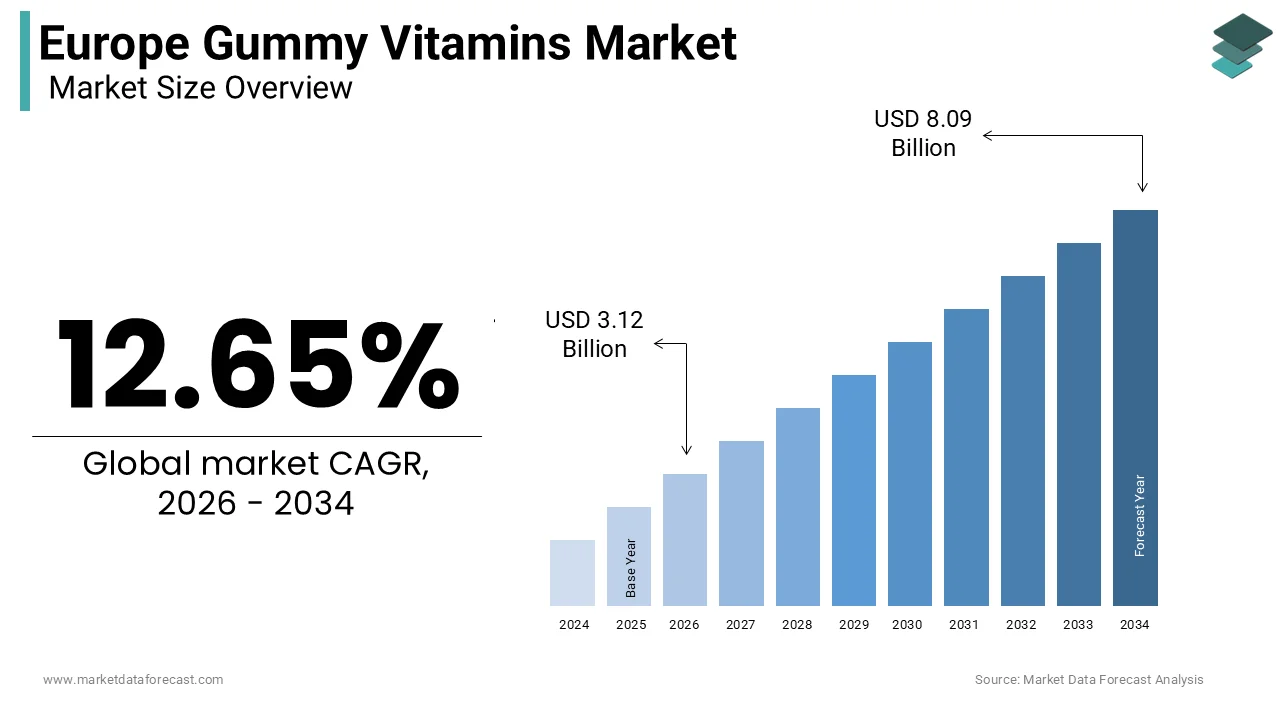
$2.77 BnMarket Estimate, 2026
$3.12 BnMarket Forecast, 2034
$8.09 BnCAGR, 2026–2034
12.65%Europe Gummy Vitamins Market Size
The size of the Europe gummy vitamins market was calculated to be USD 2.77 billion in 2025 and is anticipated to be worth USD 8.09 billion by 2034, from USD 3.12 billion in 2026, growing at a CAGR of 12.65% during the forecast period.
Gummy vitamins are chewable dietary supplements formulated to deliver essential micronutrients in a palatable confectionery format typically composed of gelatin or pectin, natural or artificial flavors, and added vitamins or minerals. Unlike traditional tablets or capsules, gummy vitamins prioritize sensory appeal and ease of consumption, making them particularly attractive to children, elderly populations, and adults with pill aversion. In Europe, this category has evolved beyond basic multivitamins to include targeted formulations for immunity, sleep, skin health, and cognitive support. According to studies, a significant portion of the adult population (e.g., an average of over 40% across several studies) has insufficient vitamin D status, particularly in Nordic and Central European countries during winter months, highlighting a public health concern. Concurrently, as per Eurostat data, the European population is aging, with over one-fifth (21.6% in 2025) of the population aged 65 years or older, a demographic with specific nutritional needs and a high prevalence of supplement use. According to recent consumer surveys, there has been a high prevalence of food supplement use among Europeans, with a key trend being a preference for convenient formats and a focus on general well-being and preventative health. These behavioral and demographic currents support the growing integration of gummy vitamins into daily wellness routines across the region, positioning them at the intersection of nutrition, convenience, and preventive health.
MARKET DRIVERS
Rising Prevalence of Micronutrient Deficiencies Across Age Groups
Micronutrient inadequacies are widespread in the region, creating a sustained demand for accessible supplementation formats, which encourages the growth of the Europe gummy vitamins. Vitamin D insufficiency is a significant public health issue in Europe, with a large percentage of adults across countries like Germany (over 50% in winter) and the UK having low vitamin D levels during autumn/winter due to limited sunlight exposure, as per studies. Similarly, Iron deficiency anemia prevalence in women of reproductive age in France and Italy is generally much lower, typically ranging from 2-5% (France 4.4%), although overall anemia (which has multiple causes) can be around 15-18%, according to sources. These gaps are exacerbated by dietary shifts. Data consistently show a significant gap between fruit and vegetable intake and recommendations across Europe. Gummy vitamins offer a practical solution by delivering bioavailable forms of essential nutrients in a format that encourages consistent adherence. Elderly populations also benefit. As per studies, alternative forms of supplements (like chewables) can improve compliance in older adults. This convergence of nutritional need and behavioral compliance solidifies gummy vitamins as a critical intervention tool in Europe’s public health landscape.
Strong Consumer Preference for Functional Confectionery Over Traditional Supplements
European consumers increasingly reject the clinical perception of supplements in favor of products that blend wellness with everyday enjoyment, a trend accelerating the expansion of the Europe gummy vitamins market. According to research, there has been a growing perception of these products as part of a daily self-care ritual rather than purely medicinal intake. This sentiment is echoed across Western Europe. Many supplement users prioritize taste and texture over dosage form efficacy. The appeal lies in the sensory experience—gummies mimic popular candies yet carry functional benefits, reducing the psychological barrier to daily use. In addition, as per studies, a notable share of parents found gummy vitamins more effective for nutrient intake compared to syrups or tablets due to higher acceptance rates. Retailers have responded by expanding gummy sections in pharmacies and supermarkets. This evolving consumer preference is reflected in increased shelf space dedicated to these formats by retailers. Gummy vitamins flourish as a delightful yet nutritious option, which perfectly blends pleasure with essential nutrients.
MARKET RESTRAINTS
Stringent Regulatory Frameworks Governing Health Claims and Ingredient Use
The European Union imposes rigorous regulations on dietary supplements that significantly slow the growth of the Europe gummy vitamins market. This limits brands’ ability to communicate functional benefits such as “supports immunity” or “enhances focus” without scientific dossiers approved by the European Food Safety Authority. Apart from these, the EU Novel Foods Catalog restricts the use of certain botanical extracts and bioactive compounds commonly found in global gummy formulations. For instance, ashwagandha and lion’s mane mushroom, popular in US gummies, are not yet approved for use in EU supplements. These constraints stifle product differentiation and delay time to market, particularly for smaller players lacking regulatory expertise.
High Sugar Content and Dental Health Concerns Among Pediatric and Adult Users
Persistent criticism over sugar content and potential dental implications further hampers the expansion of the Europe gummy vitamins market. According to the European Academy of Pediatric Dentistry, frequent consumption of chewable supplements and other products containing free sugars (such as sucrose or glucose syrup) contributes to enamel demineralization, which can lead to early childhood caries, particularly when consumed between main meals. As per data from the Office for Health Improvement and Disparities, in recent years, approximately a quarter of five-year-olds in England have experienced tooth decay, with significant regional variations. Even sugar-free variants often rely on sugar alcohols like maltitol, which the European Food Safety Authority notes can cause gastrointestinal discomfort in sensitive individuals at doses above 20 grams per day, easily exceeded with multiple gummy servings. Furthermore, consumer watchdogs are increasingly scrutinizing labeling. These health and transparency concerns weaken the category’s wellness positioning and compel manufacturers to reformulate, often at higher cost and reduced palatability.
MARKET OPPORTUNITIES
Expansion into Personalized and Condition-Specific Gummy Formulations
European consumers are shifting from generic multivitamins toward targeted nutritional solutions, and this shift is creating new opportunities for the growth of the Europe gummy vitamins market. According to research, many adults expressed interest in supplements tailored to individual needs, such as stress management, hair health, or joint support. This demand is amplified by digital health integration. Brands are responding with science-backed formulations. Some startups launched gummies with collagen peptides and biotin for skin elasticity, while UK-based Zenii introduced magnesium L-threonate and L-theanine gummies for cognitive calmness. Regulatory pathways are also evolving. "The increasing use of genetic testing and wearable tech is paving the way for a market shift toward hyper-personalized gummy offerings that perfectly align an individual's biomarkers and life stage needs with specific micronutrient delivery.
Integration of Clean Label and Plant-Based Positioning
The clean label movement, with consumers demanding transparency, natural ingredients, and ethical sourcing, provides fresh opportunities for the Europe gummy vitamins market. There is a strong consumer preference for natural, clean-label supplements, with many consumers actively avoiding artificial ingredients and animal-derived products like gelatin. This has accelerated the adoption of pectin, a plant-based gelling agent, as a substitute for bovine or porcine gelatin. Brands emphasize certifications such as organic, vegan, and non-GMO on packaging to build trust. Besides, as per studies, there has been a notable percentage of European adults who identify as flexitarian or vegetarian, which reflects a growing consumer interest in plant-based diets. Companies are also sourcing vitamins from fermentation rather than synthetic processes. This alignment with ethical consumption and ingredient integrity positions clean-label gummies as a premium and future-proof segment.
MARKET CHALLENGES
Intensifying Competition from Private Label and Retailer Exclusive Brands
Mounting burden from private label offerings leverages retailer scale to undercut branded players on price and placement, which challenges the growth of the Europe gummy vitamins market. Major retailers have launched their own gummy lines featuring basic multivitamins and immune support blends at lower price points than national brands. These store brands benefit from guaranteed shelf space, promotional support, and consumer trust in retailer quality standards. Furthermore, retailers control customer data and loyalty programs, enabling targeted marketing that branded players cannot match. This dynamic compresses margins for independent supplement companies and forces them into costly innovation races to justify premium pricing. The growing dominance of retailers in the marketplace, combined with the absence of robust brand identities or clinical proof, puts many niche gummy brands at risk of being displaced.
Supply Chain Vulnerability Due to Geopolitical and Climate-Related Disruptions
Its production is increasingly exposed to raw material instability originating from geopolitical tensions and climate volatility, which in turn holds back the expansion of the Europe gummy vitamins market. According to sources, the EU is highly import-dependent for many raw materials, and China is a dominant supplier for some, highlighting supply chain vulnerabilities. Geopolitical conflicts and shipping disruptions can lead to significant increases in shipping times and costs by impacting supply chains for various goods, including potential ingredients for vitamins. Climate change further threatens key inputs. Climate change and extreme weather events, such as prolonged droughts in Southern Europe, are a genuine threat to agricultural production and food supply chains. Similarly, rising temperatures in Scandinavian forests reduced wild berry harvests used for natural colorants in Nordic gummy brands. These systemic vulnerabilities disrupt production continuity, inflate costs, and limit the ability to meet surging demand during health crises or seasonal peaks.
REPORT COVERAGE
| REPORT METRIC | DETAILS |
| Market Size Available | 2025 to 2034 |
| Base Year | 2025 |
| Forecast Period | 2026 to 2034 |
| CAGR | 12.65% |
| Segments Covered | By Source, End User, Distribution Channel, and Region |
| Various Analyses Covered | Global, Regional & Country Level Analysis; Segment-Level Analysis; DROC, PESTLE Analysis; Porter’s Five Forces Analysis; Competitive Landscape; Analyst Overview of Investment Opportunities |
| Regions Covered | UK, France, Spain, Germany, Italy, Russia, Sweden, Denmark, Switzerland, Netherlands, Turkey, and the Czech Republic |
| Market Leaders Profiled | Pfizer Inc., Bayer AG, The Honest Company, Inc., Church & Dwight, Inc., SmartyPants Vitamins, Pharmavite LLC., Hero Nutritionals LLC., Bettera Wellness, Olly. It is. Public Benefit Corporation and Ion Labs, Inc. |
SEGMENTAL ANALYSIS
By Source Insights
The animal source segment continued to dominate the Europe gummy vitamins market and accounted for a substantial share in 2025. Factors such as established manufacturing infrastructure, superior texture, and cost efficiency are driving the dominance of the animal source segment. According to studies, a notable share of gummy supplements produced relies on animal-based gelatin owing to its optimal gelling strength and thermal stability during production. This technical advantage ensures consistent product quality, vital for large-scale brands requiring uniformity across batches. Furthermore, decades of regulatory acceptance mean animal gelatin is fully compliant with EU food additive regulations by streamlining approval timelines. Major manufacturers like Bayer and Nestlé Health Science continue to use animal gelatin in core formulations due to its proven shelf life and consumer familiarity. Despite ethical concerns, the segment remains entrenched because reformulation requires significant capital investment and revalidation of stability and bioavailability, barriers that deter mass transition in the short term.
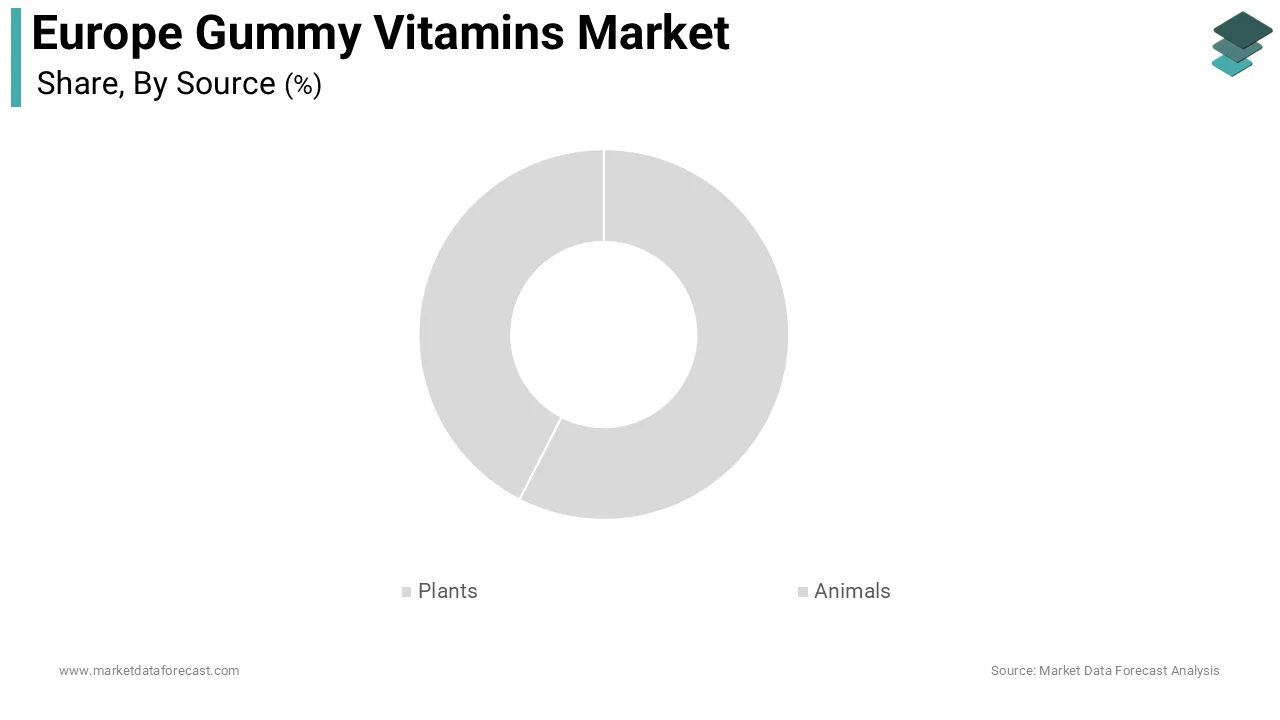
The plant source segment is anticipated to witness the fastest CAGR of 16.8% from 2026 to 2034 due to rising veganism, religious dietary requirements, and clean label demand. According to sources, the number of people identifying as vegan or vegetarian in the EU has increased over the years. This shift is particularly pronounced among younger consumers. Pectin, sourced from citrus peels and apples, and starch-based gelling agents now offer viable alternatives with improved texture. Regulatory support also accelerates adoption. Brands have fully transitioned to plant-based lines, citing higher repeat purchase rates among eco-conscious buyers. These converging ethical, demographic, and technological forces propel plant-sourced gummies as the highest growth segment.
By End User Insights
The adult segment captured the majority share of the Europe gummy vitamins market in 2025. The growth of the adults segment is propelled by broader trends in preventive health and self-care among working-age and aging populations. According to Eurostat, the median age of the EU population was 44.5 years in 2023, meaning half the population was older than this age, highlighting a demographic increasingly focused on managing chronic conditions and maintaining vitality through supplementation. Unlike children’s formulations limited to basic multivitamins, adult gummies encompass targeted blends for immunity, stress, sleep, and joint health, categories experiencing robust demand. Retailers strengthen this dominance. As per studies, a share of gummy vitamin shelf space in pharmacies is dedicated to adult formulations. The convergence of aging demographics, functional health awareness, and product diversification solidifies adults as the primary end user segment.
The children segment is likely to experience the fastest CAGR of 14.2% during the forecast period. The swift expansion of the children is because of parental concerns over nutrition gaps and picky eating behaviors. Gummy formats dramatically improve compliance. Regulatory frameworks support this trend; EFSA permits specific nutrient levels for children’s supplements, enabling safe formulation. Retailers have expanded dedicated children’s gummy sections with cartoon branding and fruit flavors. Apart from these, social media parenting communities amplify awareness. These factors collectively accelerate growth in the children segment despite its smaller current share.
By Distribution Channel Insights
The store-based retail segment led the Europe gummy vitamins market by occupying a significant share in 2025. The growth of the store-based retail segment is because to gummy vitamin sales in Europe due to consumer trust, immediate availability, and tactile product evaluation. According to sources, many Europeans aged 35 and above prefer purchasing supplements in physical stores where they can consult pharmacists or read labels in person. Pharmacies are especially influential. As per research, a share of gummy vitamin sales occurs through apothecaries, which are legally permitted to provide health advice on supplements. Supermarkets also play a key role. Store-based channels benefit from impulse purchases and seasonal promotions. The entrenched role of physical retail in Europe’s health and wellness ecosystem ensures continued dominance despite digital advances.
The online distribution segment is on the rise and is expected to be the fastest-growing segment in the regional market by witnessing a CAGR of 19.5% from 2026 to 2034, owing to digital health engagement, subscription models, and personalized e-commerce experiences. According to sources, many EU households made at least one online health product purchase, with supplements among the top three categories. Direct-to-consumer brands leverage data analytics to offer tailored regimens. Subscription services further drive retention. Marketplaces like Amazon and Zalando Health have expanded supplement categories. Besides, younger consumers drive digital adoption. These dynamics position online as the highest growth distribution avenue.
REGIONAL ANALYSIS
Germany Gummy Vitamins Market Analysis
Germany was the top performer in the Europe gummy vitamins market and accounted for a 26.5% share in 2025. The domination of Germany is primarily driven by its robust healthcare infrastructure, high supplement usage, and strong regulatory clarity. According to studies, a notable share of adults use dietary supplements regularly, with gummies gaining traction due to their user-friendly format. The country’s apothecary system, comprising a large number of pharmacies, serves as a trusted distribution backbone, with pharmacists often recommending specific gummy brands for targeted needs. Domestic manufacturers have invested in clean-label reformulations, removing artificial colors in response to consumer demand. Furthermore, Germany’s strict adherence to EU supplement regulations ensures product safety, supporting consumer confidence. The convergence of health literacy, retail trust, and domestic production capability cements Germany’s dominance in the regional market.
The United Kingdom Gummy Vitamins Market Analysis
The United Kingdom was the second largest in the Europe gummy vitamins market and captured 20.4% share in 2025. The growth of the United Kingdom is led by high health awareness, liberal retail access, and strong e-commerce penetration. According to research, a considerable number of adults took supplements in the UK, with gummies preferred by a portion of users for their convenience and taste. The UK’s departure from the EU has allowed more agile regulatory pathways. Retailers dedicate extensive shelf space to gummy vitamins, often featuring private label and premium imported brands side by side. Online channels thrive. So, the UK remains a dynamic and influential market owing to a culture that blends scientific health guidance and wellness experimentation.
France Gummy Vitamins Market Analysis
France continues to be a major region in the European gummy vitamins market, with growing openness to supplementation amid traditionally food-centric health views. Pharmacies remain the dominant channel, but supermarkets like Monoprix and Carrefour have expanded wellness aisles featuring gummy vitamins alongside organic snacks. Seasonal demand spikes are notable. During winter 2023, vitamin C and zinc gummy sales increased. Apart from these, French consumers show a strong interest in beauty from within formulations, and collagen gummies have grown. This blend of aesthetic wellness and preventive health drives sustained market expansion.
Italy Gummy Vitamins Market Analysis
Italy grew consistently in the Europe gummy vitamins market due to aging demographics and rising interest in immune and bone health. According to studies, a portion of the population is aged 65 or older, creating strong demand for easy-to-consume supplements. Despite a traditional reliance on the Mediterranean diet for nutrition, younger Italians are embracing supplementation. Pharmacies and parapharmacies dominate distribution, with outlets offering curated supplement selections. Domestic brands have introduced fruit-based gummies using Sicilian citrus extracts, resonating with local pride. The steady development of the Italian market is a result of both greater health awareness and the diminishing stigma associated with supplements.
Sweden Gummy Vitamins Market Analysis
Sweden is likely to grow in the European gummy vitamins market owing to its progressive health policies, high digital adoption, and focus on preventive care. According to sources, many adults use dietary supplements, with gummies favored for their alignment with minimalist and functional lifestyles. The Swedish Food Agency has streamlined approval for plant-based gummy formulations, enabling rapid innovation. E-commerce is highly developed. Public health campaigns also play a role. Domestic brands like Nutrilab and Gevita emphasize sustainability and transparency, using Nordic berry extracts and recyclable packaging. These factors position Sweden as a forward-looking and influential market in Northern Europe.
COMPETITION OVERVIEW
The Europe gummy vitamins market features intense competition among multinational health companies, regional supplement brands, and agile direct-to-consumer startups. Established players like Bayer Haleon and Nestlé Health Science dominate through pharmaceutical credibility, extensive distribution, and regulatory expertise, while newer entrants compete on innovation, sustainability, and digital engagement. The absence of harmonized EU standards for botanical ingredients creates both opportunity and risk as brands navigate country-specific approval processes. Private label offerings from major retailers such as dm drogerie and Boots exert pricing burden, particularly in basic multivitamin segments. Differentiation hinges on formulation purity, functional claims, packaging sustainability, and alignment with local dietary preferences. Consumer trust remains paramount, with pharmacists and health professionals serving as key influencers in purchase decisions. As demand grows for personalized and preventive nutrition, the competitive landscape continues to evolve through strategic partnerships, clean label commitment, and science-backed storytelling that bridges food and pharma paradigms.
KEY MARKET PLAYERS
A few major key market players of the Europe gummy vitamins market include
- Pfizer Inc
- Bayer AG
- The Honest Company, Inc
- Church & Dwight, Inc
- Smarty-pants Vitamins
- Pharmavite LLC
- Hero Nutritionals LLC
- Bettera Wellness
- Olly
- Public Benefit Corporation and Ion Labs, Inc
Top Strategies Used by the Key Market Participants
Key players in the Europe gummy vitamins market prioritize clean label reformulation by replacing artificial additives with natural colors, flavors, and plant-based gelling agents to meet consumer demand for transparency. They invest in condition-specific product development targeting immunity, sleep, cognitive health, and beauty from within to differentiate in a crowded marketplace. Strategic expansion into plant-based and vegan certified offerings addresses rising ethical and dietary preferences across Northern and Western Europe. Companies strengthen retail partnerships with pharmacies and supermarkets to secure premium shelf placement and leverage pharmacist recommendations for credibility. Digital transformation through personalized e-commerce platforms, subscription models, and health data integration enhances customer retention and lifetime value. Regulatory compliance and scientific substantiation remain central to brand positioning, ensuring alignment with EFSA and national health authority guidelines.
Leading Players in the Europe Gummy Vitamins Market
Bayer AG
Bayer AG plays a pivotal role in the Europe gummy vitamins market through its One A Day and Berocca gummy lines, which emphasize science-backed formulations and pharmaceutical-grade quality. The company leverages its deep healthcare heritage to build consumer trust, particularly in Germany and the United Kingdom, where regulatory scrutiny is high. It also launched targeted variants, including sleep support and immune defense gummies enriched with vitamin D and zinc. Bayer’s integration of clinical research into product development strengthens its global reputation as a leader in evidence-based nutritional supplements, while its distribution through pharmacies ensures premium positioning across Europe.
Nestlé Health Science
Nestlé Health Science has established a strong foothold in the European gummy vitamins segment under its Garden of Life and Vital Proteins brands, which focus on organic plant-based and functional nutrition. The company capitalizes on its global R and D infrastructure to introduce innovative blends such as collagen gummies for skin health and adaptogen-infused formulas for stress resilience. It also enhanced digital engagement through personalized nutrition platforms that recommend gummy regimens based on lifestyle data. By aligning with Europe’s clean label and sustainability trends, Nestlé Health Science supports its contribution to the global shift toward food-like supplements that merge wellness with everyday consumption.
GlaxoSmithKline Consumer Healthcare (now Haleon)
Haleon drives significant innovation in the Europe gummy vitamins market through its Centrum and Supradyn brands, which offer age-specific and condition-targeted formulations. The company utilizes its legacy in consumer health to ensure compliance with stringent EU regulations while delivering palatable and effective products. It also invested in sustainable packaging using recyclable materials and launched educational campaigns in partnership with pharmacies to improve supplement literacy. These initiatives reflect Haleon’s strategic focus on trust, transparency, and accessibility, which extend its influence beyond Europe into global markets seeking regulated and reliable nutritional solutions.
MARKET SEGMENTATION
This research report on the Europe gummy vitamins market has been segmented and sub-segmented based on source, end user, distribution channel, and region.
By Source
- Plants
- Animals
By End User
- Children
- Adults
By Distribution Channel
- Online
- In-store
By Region
- UK
- France
- Spain
- Germany
- Italy
- Russia
- Sweden
- Denmark
- Switzerland
- Netherlands
- Turkey
- Czech Republic
- Rest Of Europe
Frequently Asked Questions
1. What factors are driving market growth?
Key drivers include increasing health awareness, preference for convenient supplement formats, and rising demand for preventive healthcare.
2. Which segment dominates the market?
Multivitamin gummies hold the largest share due to their broad health benefits and consumer preference.
3. What age groups consume gummy vitamins the most?
Both children and adults consume gummy vitamins, with growing adoption among adults due to ease of intake.
4. What are the key trends in the market?
Trends include vegan gummies, sugar-free formulations, and personalized nutrition products.
5. What role does the dietary supplements industry play?
Gummy vitamins are a fast-growing segment within the broader dietary supplements market in Europe.
6. What challenges does the market face?
Challenges include high sugar content, regulatory concerns, and dosage inconsistencies.
7. How is innovation impacting the market?
Innovation in flavors, formulations, and functional ingredients is attracting new consumers.
8. Which countries lead the market in Europe?
Germany, the UK, and France are the leading markets due to high supplement consumption and strong distribution networks.
9. What opportunities exist in the market?
Opportunities include expansion in personalized nutrition, immunity-boosting products, and e-commerce channels.
10. What is the future outlook of the Europe gummy vitamins market?
The market is expected to grow rapidly due to increasing health consciousness, product innovation, and rising demand for convenient supplements.
Related Reports
Access the study in MULTIPLE FORMATS
Purchase options starting from
$ 2000
Didn’t find what you’re looking for?
TALK TO OUR ANALYST TEAM
Need something within your budget?
NO WORRIES! WE GOT YOU COVERED!
Call us on: +1 888 702 9696 (U.S Toll Free)
Write to us: sales@marketdataforecast.com