- Product Description Description
- Table of Contents TOC
- List of Table & Figure LOT
- Get Free Sample PDF Sample PDF
Market Size, 2025
$2.78 BnMarket Estimate, 2026
$2.9 BnMarket Forecast, 2034
$4.09 BnCAGR, 2026–2034
4.4%Executive Summary: Europe Hair Care Products Market
- Market Scope: Comprehensive regional analysis of the European hair care products market covering product categories, end-user segments, regulatory frameworks (EU Cosmetic Regulation 1223/2009), scalp diagnostics innovations, and sustainable formulation trends.
- Market Valuation: Valued at USD 2.78 billion (2025), estimated at USD 2.90 billion (2026), and projected to reach USD 4.09 billion by 2034, registering a steady CAGR of 4.4% (2026–2034).
- Primary Growth Drivers: Increasing consumer awareness of scalp health, rising demand for dermatologically tested hair care products, growing preference for clean-label and sustainable formulations, and stringent European ingredient safety regulations. Key opportunities persist in personalized hair care, AI scalp diagnostics, and premium dermocosmetics.
Key Market Segment Metrics (2026–2034)
| Category | Leading Segment (Position) | Fastest-Growing / Opportunity Segment |
|---|---|---|
| By Product Type | Shampoos, Conditioners & Traditional Hair Care Formulations | Scalp Care Solutions, Specialized Hair Treatments & Clinical Dermocosmetics |
| By End User & Demographic | General Consumer Retail & Salon Professional Segments | Men's Grooming Products & Customized Personalized Hair Care |
| By Technology & Formulation | Standard Commercial Hair Care Offerings | Clean-Label, Sustainable Packaging & AI-Powered Scalp Diagnostics |
| By Region / Country | Germany, France, United Kingdom, Italy & Spain (Core Regional Markets) | Rest of Europe (Expanding Pharmacy, E-commerce & Premium Retail Channels) |
Market Structure & Industry Dynamics
Market Structure: Highly competitive European beauty and personal care landscape influenced by strict EU compliance standards, ingredient transparency, and rising private-label competition across pharmacy, retail, and digital channels.
Key Market Focus: Beauty brands and manufacturers prioritizing clinically proven formulations, recyclable eco-friendly packaging, digital diagnostics, and strategic omnichannel expansion.
Europe Hair Care Products Market Size
The Europe Hair Care Products Market is projected to grow from USD 2.78 billion in 2025 to USD 2.90 billion in 2026 and reach USD 4.09 billion by 2034, registering a CAGR of 4.40% from 2026 to 2034.
Hair care products include a diverse portfolio of shampoos, conditioners, treatments, ts styling agents, and scalp health solutions formulated in compliance with the EU Cosmetic Regulation 1223 2009. Unlike regions where hair care is driven primarily by aesthetics, European demand is increasingly shaped by dermatological concerns, environmental consciousness, and ingredient transparency. Products are categorized not only by function but by scalp condition, with many positioned at the intersection of cosmetics and medical skincare. For instance, a significant share of adults in Western Europe report chronic scalp issues requiring specialized care. The European Commission’s Chemicals Strategy for Sustainability has restricted over 30 substances commonly used in legacy hair care formulations, including certain parabens and formaldehyde releasers. As per Eurostat, 73% of EU consumers now check ingredient lists before purchasing personal care items, which reflects increased scrutiny. National health systems in countries like Germany and France increasingly recognize scalp health as part of overall dermatological wellness, influencing consumer behaviour and product development toward efficacy‑backed, gentle formulations that align with both scientific validation and ecological responsibility.
MARKET DRIVERS
Rising Prevalence of Scalp Disorders and Dermatological Awareness
The growing incidence of scalp conditions across Europe is a key driver of demand for specialized hair care solutions backed by clinical validation. According to the European Academy of Dermatology and Venereology, a large share of the adult population experiences dandruff, seborrheic dermatitis, or scalp psoriasis at some point, with a significant proportion reporting persistent symptoms requiring medical or dermocosmetic intervention. Germany’s Robert Koch Institute documented a notable increase in outpatient dermatology visits for scalp disorders between 2020 and 2023, which is linked to stress, pollution, and hard water exposure. In response, national health authorities have integrated scalp health into public dermatology education as France’s National Dermatology Society launched a nationwide “Healthy Scalp” campaign in 2023, which is distributing diagnostic tools to pharmacies. Consumers increasingly seek products with active ingredients such as pyrithione zinc, piroctone olamine, and salicylic acid, which are approved under EU biocidal product regulations for anti‑dandruff claims. The European Commission’s guidelines on cosmetic claims require clinical proof for terms like “soothes” or “balances,” compelling brands to invest in controlled studies. This medicalization of hair care transforms routine cleansing into targeted therapy, reinforcing demand for pharmacy‑distributed dermocosmetic lines over mass‑market alternatives.
Shift Toward Clean and Sustainable Formulations Driven by Regulation
The European hair care market is experiencing accelerated transformation due to stringent regulatory mandates and consumer demand for environmentally responsible products. The EU Chemicals Strategy for Sustainability has placed dozens of ingredients under restriction, including microplastics, certain silicones, and allergenic fragrances, which are directly impacting formulation architecture. According to the European Chemicals Agency (ECHA), all rinse‑off hair care products must be free of intentionally added microplastics by 2027, which is a rule accelerating innovation in biodegradable alternatives. Additionally, the EU Packaging and Packaging Waste Directive mandates that all plastic packaging contain at least 30% recycled content by 203,0, and this is pushing brands toward mono‑material bottles and refill systems. L’Oréal reported in 2023 that more than four‑fifths of its new hair care launches in Europe used recyclable or refillable packaging, demonstrating industry alignment with sustainability goals. Consumer behavior reinforces this shift as Eurostat data shows that over two‑thirds of EU citizens aged 18 to 45 prefer brands with verifiable sustainability credentials. This dual pressure from legislation and values‑based consumption is reshaping product development toward transparency, biodegradability, and circular design.
MARKET RESTRAINTS
Regulatory Restrictions on Functional Ingredients and Claim Substantiation
A significant restraint in the European hair care products market results from the EU’s rigorous approval process for functional ingredients and strict enforcement of cosmetic claims. Unlike other regions where hair thickening or anti‑hair loss claims can be made based on in vitro data, the EU requires substantial clinical evidence for any product implying g physiological impact. According to the Scientific Committee on Consumer Safety (SCCS), claims such as “reduces hair fall” or “stimulates growth” are classified as borderline medicinal and often trigger reclassification as a medical device. As a result, many actives widely used elsewhere, such as caffeine or redensyl, face limited application in Europe unless supported by full dossiers. The European Commission’s 2022 review of borderline products led to the removal of dozens of hair care items for unsubstantiated efficacy claims, as reported by the European Chemicals Agency (ECHA). Furthermore, the ban on over 1,300 substances under Annex II of the EU Cosmetic Regulation eliminates common conditioning and preservative agents, forcing reformulation with less proven alternatives. These constraints slow innovation, increase compliance costs, and create asymmetry between European and global product portfolios, limiting the competitiveness of EU‑focused brands.
Consumer Confusion Over Natural and Organic Labeling Standards
The lack of harmonized definitions for “natural,” “organic,” or “clean” in EU cosmetic legislation creates significant market confusion that undermines trust and hampers product differentiation, which is further hindering the hair care products market growth in Europe. While private certification bodies such as COSMOS and NATRUE offer voluntary standards, these are not legally binding and vary widely in stringency. According to the European Consumer Organisation (BEUC), a majority of EU consumers believe “natural” on a label means the product contains no synthetic ingredients, yet the term has no regulatory meaning under EU law. This ambiguity enables greenwashing, as Germany’s Federal Office of Consumer Protection issued dozens of cease‑and‑desist orders to hair care brands in 2023 for misleading natural claims. Simultaneously, the European Commission’s Green Claims Directive, set to take effect in 2026, will require third‑party verification for all environmental assertions, which will increase compliance burdens. Until harmonization occurs, brands face a paradox where consumer demand for clean formulations clashes with legal uncertainty and discourages investment in truly sustainable innovation and fragmenting marketing strategies across member states.
MARKET OPPORTUNITIES
Integration of Digital Diagnostics and Personalized Hair Care
A major opportunity in the European hair care products market lies in the convergence of digital health tools and customized product regimens driven by advances in AI and consumer demand for precision solutions. Several EU‑based brands now offer online scalp analysis via smartphone cameras or questionnaires that generate personalized recommendations. According to the European Society of Cosmetic Scientists, around one‑third of new hair care launches in 2023 included a digital diagnostic component, with brands like Kérastase and Davines leading adoption. The European Commission’s Digital Europe Programme supports such innovations through funding for AI in health and wellness applications, creating a favorable ecosystem. In Sweden, digital dermatology platforms such as Dermatology AI partner with pharmacies to prescribe tailored hair care bundles based on algorithmic assessments validated against clinical datasets. Moreover, the General Data Protection Regulation (GDPR) ensures strict privacy standards, building consumer confidence in data sharing. With Kantar reporting that more than half of European millennials expressed interest in personalized beauty in 2023, this tech‑enabled approach transforms hair care from generic routines to individualized health strategies.
Expansion of Men’s Grooming and Scalp Wellness Segments
The men’s hair care segment is emerging as a high‑potential growth area in Europe and is fuelled by shifting grooming norms and targeted dermocosmetic development. According to Eurostat, a majority of European men aged 25 to 45 now use at least two hair care products regularly, which has increased significantly from the late 2010s. This trend is amplified by rising awareness of androgenetic alopecia, which affects a large share of men by age 35, as documented by the European Hair Research Society. Brands respond with gender‑specific formulations focusing on scalp health, density, and ease of use, as Beiersdorf’s NIVEA MEN Scalp Balance line reported double‑digit sales growth in 2023 across Germany and the UK. Pharmacies play a pivotal role, with the German Dermatological Society noting that over half of men prefer professional advice for hair loss concerns. Additionally, workplace wellness programs in Nordic countries now include scalp health screenings as part of preventive care. Unlike women’s hair care, which emphasizes aesthetics, men’s demand centers on efficacy, discretion, and clinical credibility, creating a distinct innovation pathway aligned with Europe’s medicalized beauty culture.
MARKET CHALLENGES
Intensifying Competition from Private Label and Retailer Brands
The growing pressure from high‑quality private label offerings that replicate premium formulations at lower price points and eroding brand loyalty is one of the major challenges to the European hair care products market. Major retailers such as dm in Germany, Rossmann in Austria, and Carrefour in France have invested heavily in in‑house R&D to develop dermocosmetic‑grade hair care lines that meet EU safety standards while leveraging their distribution scale. According to the European Retail Roundtable, private label hair care grew by double digits in 2023, which is outpacing branded counterparts. These products often carry identical active ingredients, such as zinc pyrithione or panthenol, but omit costly marketing and fragrance complexity. Consumer trust in retailer brands is rising as Kantar data shows that nearly half of German shoppers consider dm’s Balea Hair Expert line as effective as leading dermocosmetic brands. This value‑for‑efficacy proposition is particularly potent amid cost‑of‑living pressures, with inflation reducing discretionary beauty spending. As a result, branded players must justify premium pricing through demonstrable clinical results, digital engagement, or sustainability credentials, or risk volume erosion in mass channels.
Fragmented Consumer Expectations Across Geographic and Cultural Regions
The stark divergence in consumer needs, preferences, and hair types across northern, southern, eastern, and western regions complicates pan‑European product strategies and is another notable challenge to the regional market. Hard water affects the majority of households in the UK and Germany, according to the European Environment Agency, which requires chelating shampoos rarely needed in soft‑water regions like Scandinavia. Meanwhile, Mediterranean populations favor lightweight non‑greasy textures due to humidity, whereas Eastern Europeans prioritize intense hydration in colder climates. Ethnic diversity adds further complexity as France and the UK host tens of millions of residents of African or mixed heritage, whose coily or curly hair requires specialized formulations largely absent from mainstream European portfolios. According to the European Federation of Black Haircare Professionals, fewer than 15% of EU hair care products are suitable for type 4 hair, underscoring the gap in inclusive innovation. This heterogeneity forces brands to either fragment their innovation pipelines or risk irrelevance in key sub‑markets, undermining economies of scale and market efficiency. Without harmonized strategies that balance regional specificity with pan-European scalability, companies face structural barriers to growth and long‑term competitiveness.
REPORT COVERAGE
| REPORT METRIC | DETAILS |
| Market Size Available | 2025 to 2034 |
| Base Year | 2025 |
| Forecast Period | 2026 to 2034 |
| Segments Covered | By Product, End User, and Region. |
| Various Analyses Covered | Global, Regional, and Country-Level Analysis, Segment-Level Analysis, Drivers, Restraints, Opportunities, Challenges; PESTLE Analysis; Porter’s Five Forces Analysis, Competitive Landscape, Analyst Overview of Investment Opportunities |
| Countries Covered | UK, France, Spain, Germany, Italy, Russia, Sweden, Denmark, Switzerland, Netherlands, Turkey, Czech Republic, Rest of Europe |
| Market Leaders Profiled | L’Oréal S.A., Unilever PLC, Procter & Gamble Co., Henkel AG & Co. KGaA, Johnson & Johnson Services, Inc., Kao Corporation, Coty Inc., Estée Lauder Companies Inc., Revlon, Inc., Shiseido Company, Limited, Wella Company, Amway Corporation, Oriflame Holding AG, Beiersdorf AG, Avon Products, Inc., Pierre Fabre Dermo-Cosmétique, Moroccanoil Israel Ltd., Davines S.p.A., Natura &Co, LVMH Moët Hennessy Louis Vuitton SE |
SEGMENTAL ANALYSIS
By Product Insights
The hair care products segment dominated the European hair care products market by occupying 76.7% of the European market share in 2025. The dominance of this segment in the European market is attributed to daily usage patterns, regulatory integration with dermatological health, and consistent consumer replenishment. This category includes shampoos, colorants, treatments, and scalp therapeutics that address both aesthetic and medical needs. According to the European Academy of Dermatology and Venereology, specialized shampoos for dandruff, sensitivity, or seborrheic dermatitis are widely used among adults, which indicates their quasi‑medical role. The EU Cosmetic Regulation (EC) No 1223/2009 governs all formulations, ensuring safety while allowing functional claims when clinically substantiated, and this framework has elevated dermocosmetic shampoos from brands such as La Roche‑Posay and Eucerin to pharmacy staples. As per the German Federal Statistical Office (Destatis), shampoo sales through pharmacies and drugstores remain among the highest in Europe, reflecting entrenched consumer demand. According to France’s National Institute of Statistics (INSEE), the cultural prevalence of hair coloring, that a majority of women over 30 use permanent or semi‑permanent colorants annually. The routine nature of cleansing, conditioning, and color maintenance ensures high‑frequency repurchase, far exceeding the occasional acquisition of styling tools. In the next few years, the hair care products segment is expected to sustain dominance owing to the regulatory compliance, cultural practices, and consumer preference for dermatologically aligned formulations.
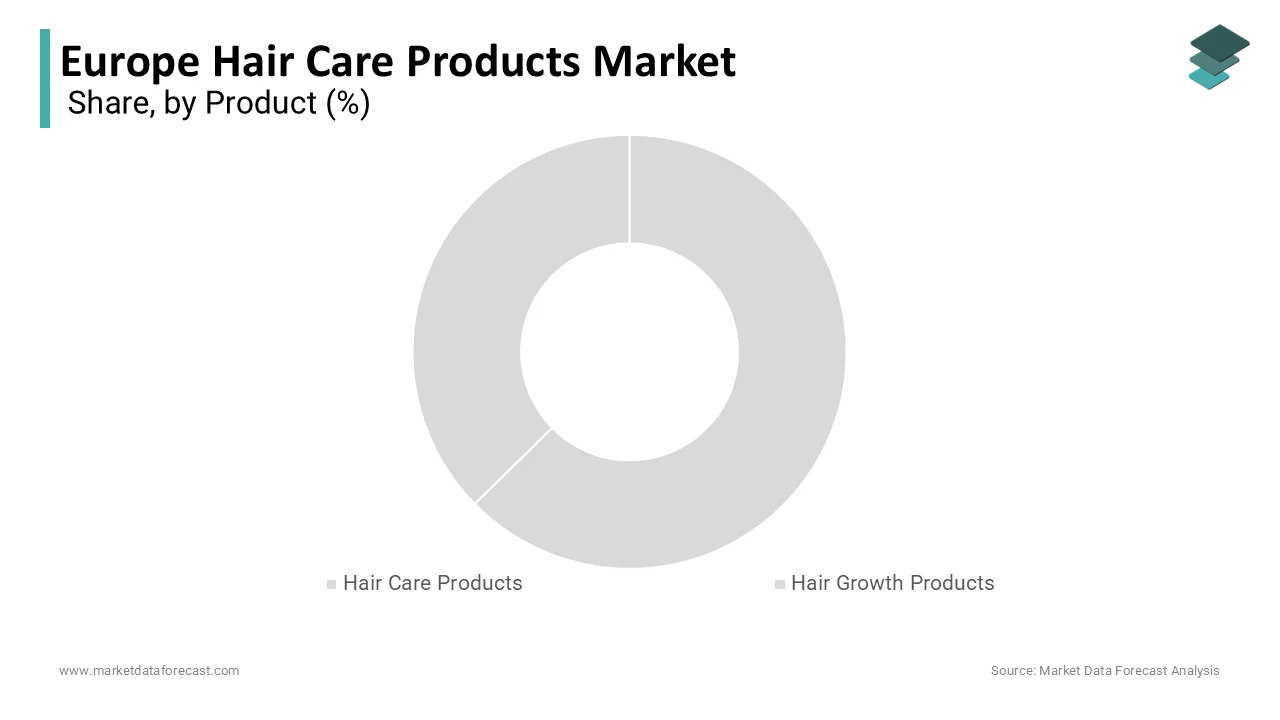
The hair growth products segment is expected to register the fastest CAGR of 9.8% over the forecast period in the European market. The balance of rising androgenetic alopecia prevalence, shifting male grooming norms, and regulatory pathways for borderline dermocosmetic claims is propelling the growth of hair growth products in this European market. According to the European Hair Research Society, more than half of men aged 35 and above experience clinically significant hair thinning, which indicates the scale of unmet need. According to Germany’s Dermatological Society, increasing consultations for hair loss in recent years, which is promoting growing consumer willingness to seek treatment. Digital health platforms across Europe, including AI‑enabled dermatology services, are amplifying this trend by offering discreet scalp diagnostics and product recommendations. The European Commission’s 2023 update to borderline product guidelines clarified that claims such as “supports hair density” are acceptable when supported by clinical or in vitro data, which is enabling brands like Alpecin and DS Laboratories to position products as science‑backed. According to Eurostat, men’s grooming expenditure continues to grow steadily across Western Europe, which is reinforcing demand for targeted solutions. Over the next few years, the hair growth products segment is expected to expand rapidly, merging medical need, aesthetic concern, and regulatory legitimacy to fuel accelerated growth.
By End User Insights
The women’s segment dominated the European hair care products market by accounting for 68.2% of the regional market share in 2025, owing to their higher frequency of product use, broader category engagement, and cultural norms around hair aesthetics. According to Eurostat, women in the EU consistently report higher expenditure on personal care categories, including shampoos, conditioners, treatments, colorants, and styling agents, compared to men. According to France’s National Institute of Statistics (INSEE), hair coloring is particularly prevalent among women, with a majority of women aged 25 to 60 using permanent or semi‑permanent colorants annually. The European Hairdressers Federation confirms that salon services such as coloring and care treatments remain heavily female‑driven, with Italy and Spain among the largest markets for professional services. As per the Robert Koch Institute, women represent the majority of anti‑dandruff and scalp soothing product users in Germany, which reflects stronger dermocosmetic engagement. This multifaceted involvement across cleansing, coloring, care, and styling creates a structurally larger and more diverse consumption footprint that sustains women’s market dominance despite rising male participation. In the next few years, the women’s segment is expected to remain the primary consumers of hair care products, supported by cultural practices, professional service demand, and dermocosmetic engagement.
The men’s segment is expected to register the fastest CAGR of 8.5% over the forecast period in the European market. The balance of evolving masculinity norms, increased awareness of scalp health, and targeted product innovation is propelling the growth of men’s hair care in this European market. According to Eurostat, rising male participation in personal care, with men reporting increased use of multiple hair care products compared to earlier years. As per the Kantar consumer insights (2023), the role of digital platforms such as YouTube and Instagram is in shaping men’s grooming routines. According to the European Hair Research Society, androgenetic alopecia affects a significant proportion of men by age 35, which is driving demand for caffeine‑based shampoos and density serums. Retailers are responding with gender‑specific lines, such as Balea MEN Scalp Care in Germany, which has reported strong growth. As per the German Dermatological Society, men increasingly seek professional advice for hair thinning, which indicates a shift toward health‑oriented engagement. Unlike women’s usage, which is often aesthetic, men’s engagement is increasingly health‑driven, making it more consistent and less seasonal. Over the next few years, the men’s hair care segment is expected to expand rapidly, driven by health concerns, digital influence, and targeted product innovation.
COUNTRY LEVEL ANALYSIS
Germany Hair Care Products Market Analysis
Germany dominated the market in Europe in 2025 by accounting for 22.7% of the regional market share. The dominating position of Germany in the European market is driven by its health consciousness, strong pharmacy retail, and regulatory precision. The demand for hair and scalp care products in Germany is growing rapidly. Over 65% of hair care sales occur through pharmacies and drugstores such as dm and Rossmann, which reflects consumer trust in professional endorsements. The Federal Institute for Risk Assessment recalled 28 hair care products in 2023 for undeclared allergens or misleading claims, ensuring market integrity. Environmental awareness also shapes demand, with 79% of new launches in 2023 featuring recyclable packaging or biodegradable formulas. Germany is expected to sustain its mature yet dynamic market anchored in efficacy, transparency, and sustainability.
France Hair Care Products Market Analysis
France represents a promising regional segment in the European hair care market. French brands such as Kérastase, Vichy Dercos, and La Roche‑Posay dominate pharmacy channels. 64% of French women use hair colorants at least twice a year, which reflects deep cultural engagement. The French National Dermatology Society runs annual scalp health campaigns, while ANSM enforces strict cosmetic claims regulations to prevent exaggerated efficacy statements. Men’s grooming is also notable, with sales of men’s hair care growing by 12% in 2023. France is expected to remain influential, blending scientific innovation, cultural ritual, and regulatory trust.
United Kingdom Hair Care Products Market Analysis
The United Kingdom plays a key role in Europe’s hair care products market. Ethnic diversity drives demand, with 18% of the UK population identifying as Black, Asian, or Mixed Heritage, creating strong demand for textured hair solutions. Brands such as Bouclème and Mielle saw UK sales rise by 45% in 2023. Men’s grooming is robust, with 61% of British men using dedicated shampoos with anti‑dandruff or thickening claims. Despite economic pressures, 72% of UK consumers maintained their hair care routines during the cost‑of‑living crisis. The UK is expected to remain resilient and evolving, sustained by diversity and functionality.
Italy Hair Care Products Market Analysis
Italy represents a high‑value and volume‑driven segment in Europe’s hair care market. Italy has over 64,000 registered hair salons employing hundreds of thousands of stylists. Hair colouring is a cultural staple, with 62% of Italian women over 30 using permanent dyes. Rising interest in scalp wellness is evident, with nearly half of consumers aged 25–50 reporting sensitivity or flaking issues. Local brands such as Davines leverage “Made in Italy” craftsmanship and sustainable sourcing to command premium positioning. Italy is expected to sustain its influence through salon culture and sustainable innovation.
Spain Hair Care Products Market Analysis
Spain is emerging as a structurally resilient market in Europe’s hair care sector. Climate factors drive demand for hair care products in Spain, with 53% of Spaniards reporting a greasy scalp or flaking. Pharmacies account for 58% of hair care sales, reinforcing consumer trust. Tourism also plays a role, with 85 million international visitors in 2023 boosting demand for travel‑size and hotel‑supplied products. Men’s grooming expanded rapidly, with sales growing by 18% in 2023. Spanish consumers show a strong preference for natural formulas, with 71% seeking plant‑based ingredients. Spain is expected to strengthen its role in high‑frequency usage and clean beauty adoption.
COMPETITIVE LANDSCAPE
The European hair care products market features a multifaceted competitive environment where multinational corporations, dermocosmetic specialists, professional salon brands, and agile clean beauty startups coexist. Large players dominate through scientific credibility, regulatory compliance, and integrated distribution across pharmacies, salonssaloe-commerceommerce, while niche brands gain traction via transparency, ethnic hair expertise, and sustainable storytelling. Competition is increasingly defined by clinical proof of efficacy rather than fragrance or packaging, with the EU Cosmetic Regulation demanding rigorous substantiation for functional claims. The rise of scalp wellness as a health category has blurred lines between cosmetics and medical care, favoring brands with dermatological partnerships. Simultaneously, your private label offerings from retailers like dm and Carrefour challenge pricing with comparable formulations. Digital disruption further intensifies rivalry as AI diagnostics and subscription models reshape discovery and loyalty. Ultimately, success hinges on balancing scientific legitimacy, sustainability, and personalization in a market where consumers demand both performance and planetary responsibility.
KEY MARKET PLAYERS
Some of the companies that are playing a dominating role in the europe Hair Care Products Market include
- L’Oréal S.A.
- Unilever PLC
- Procter & Gamble Co.
- Henkel AG & Co. KGaA
- Johnson & Johnson Services, Inc.
- Kao Corporation
- Coty Inc.
- Estée Lauder Companies Inc.
- Revlon, Inc.
- Shiseido Company, Limited
- Wella Company
- Amway Corporation
- Oriflame Holding AG
- Beiersdorf AG
- Avon Products, Inc.
- Pierre Fabre Dermo-Cosmétique
- Moroccanoil Israel Ltd.
- Davines S.p.A.
- Natura &Co
- LVMH Moët Hennessy Louis Vuitton SE
TOP LEADING PLAYERS IN THE MARKET
- L’Oréal Group maintains a dominant presence in the European hair care market through its diversified portfolio spanning professional salon brands like Kérastase and Redken to mass and dermocosmetic lines such as Elvive and La Roche Posay Dercos. The company integrates trichological research with sustainable innovation, operating hair biology labs in France and Germany. In 202,4, L’Oréal launched a new generation of scalp care shampoos featuring microbiome-balancing prebiotics and postbiotics, clinically tested in partnership with European dermatologists. It also expanded its waterless hair care formats, including solid shampoos and conditioners, across EU retail channels to align with the EU Packaging and Packaging Waste Directive. These initiatives reinforce L’Oréal’s leadership in science-backed efficacy and circular beauty while strengthening consumer trust across pharmacy and e-commerce platforms.
- Beiersdorf AG contributes significantly to the European hair care landscape through its NIVEA Hair and Eucerin Scalp lines, which combine dermatological credibility with accessible pricing. The company leverages its expertise in skin barrier science to develop scalp-focused formulations addressing dandruff sensitivity and irritation. In early 2024, Beiersdorf introduced a new Eucerin Scalp Treatment range with piroctone olamine and panthenol, validated through clinical studies conducted with the University of Hamburg. It also transitioned all NIVEA Hair bottles to 100 percent recyclable mono material plastic ahead of EU regulatory deadlines. These actions demonstrate Beiersdorf’s commitment to high-grade care sustainability and compliance with Europe’s stringent cosmetic safety framework.
- Henkel AG & Co KGaA plays a pivotal role in the European hair care market through its Schwarzkopf Professional and Schwarzkopf Gliss brands, which serve both salon and retail channels. The company invests heavily in color care and hair repair technologies with dedicated R&D centers in Düsseldorf. In late 202,3, Henkel reformulated its entire Gliss Ultimate Repair line to remove silicones and incorporate biodegradable conditioning agents derived from renewable sources. It also launched a digital hair diagnosis tool in partnership with European salons, offering personalized product recommendations based on hair fiber analysis. These moves position Henkel at the intersection of professional performance sustainability and digital personalization, enhancing its relevance across diverse consumer and stylist communities.
TOP STRATEGIES USED BY THE KEY MARKET PARTICIPANTS
Key players in the European hair care products market prioritize dermatological validation by collaborating with trichologists and universities to clinically substantiate scalp and hair claims under EU cosmetic regulations. Companies invest in sustainable formulation science, eliminating restricted substances like microplastics and non-biodegradable silicones, while adopting recyclable or refillable packaging aligned with EU circular economy mandates. Product differentiation through microbiome-friendly prebiotic and postbiotic actives addresses rising consumer interest in scalp ecosystem health. Strategic distribution through pharmacies, salons, and premium online platforms ensures credibility and targeted reach. Additionally, our firms leverage digital diagnostic hair analysis, and personalized regimens to enhance consumer engagement and drive loyalty in an increasingly science-driven and values-oriented market landscape.
MARKET SEGMENTATION
This research report on the europe hair care products market is segmented and sub-segmented into the following categories.
By Product
- Hair Care Products
- Hair Growth Products
By End User
- Women
- Men
By Country
- Germany
- France
- United Kingdom
- Italy
- Spain
- Rest of Europe