- Product Description Description
- Table of Contents TOC
- List of Table & Figure LOT
- Get Free Sample PDF Sample PDF
Market Size, 2025
$95.75 BnMarket Estimate, 2026
$103.60 BnMarket Forecast, 2034
$194.62 BnCAGR, 2026–2034
8.20%Europe Healthcare Facilities Management Market Report Summary
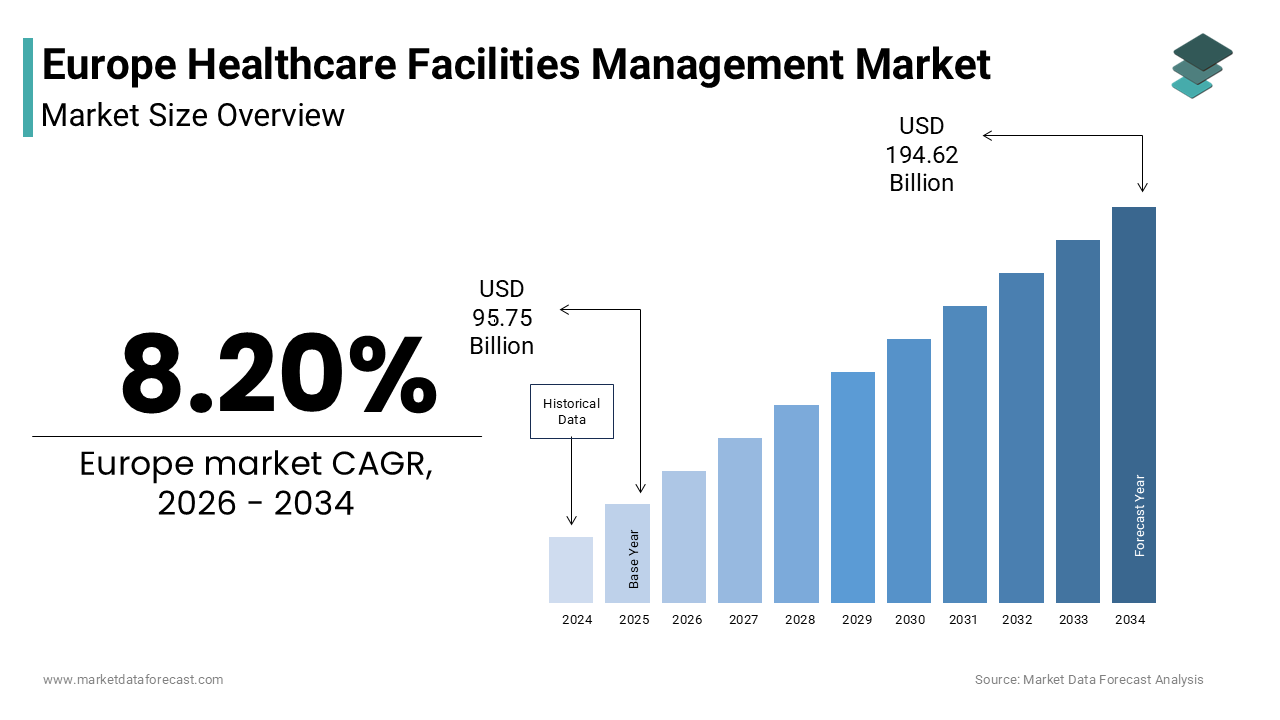
The Europe healthcare facilities management market was valued at USD 95.75 billion in 2025 and is anticipated to reach USD 103.60 billion in 2026 from USD 194.62 billion by 2034, growing at a CAGR of 8.20% during the forecast period from 2026 to 2034. The growth of the Europe healthcare facilities management market is driven by the rapidly aging population, increasing healthcare infrastructure investments, and growing demand for efficient facility operations across hospitals and healthcare institutions. Expanding adoption of outsourced facility management services, increasing regulatory requirements related to hygiene and safety compliance, and rising focus on patient-centered healthcare environments are further accelerating market growth. Moreover, advancements in smart building technologies, integration of Internet of Things-enabled facility monitoring systems, and increasing emphasis on sustainability and energy optimization are supporting the expansion of the Europe healthcare facilities management market.
Key Market Trends
-
Rising adoption of smart building technologies and IoT-enabled facility monitoring solutions.
-
Increasing outsourcing of non-core healthcare facility operations.
-
Growing focus on infection prevention and environmental hygiene management.
-
Rising implementation of sustainable and energy-efficient healthcare infrastructure.
-
Increasing integration of predictive maintenance and data-driven facility management systems.
Segmental Insights
- Based on product, the cleaning services segment dominated the Europe healthcare facilities management market and held the largest share in 2025. The dominance of the segment is attributed to stringent infection control requirements, increasing focus on patient safety, growing regulatory scrutiny, and the critical role of sanitation in preventing healthcare-associated infections. Continuous demand for specialized cleaning solutions and compliance-driven hygiene standards continue to support segment growth.
- The technical support services segment is projected to witness the fastest CAGR during the forecast period owing to increasing adoption of smart healthcare infrastructure, growing complexity of medical equipment and building systems, rising demand for predictive maintenance solutions, and expanding integration of digital facility management technologies. The need for uninterrupted operation of critical hospital infrastructure is further accelerating growth in this segment.
- Based on end users, the hospitals and clinics segment accounted for the leading share of the Europe healthcare facilities management market in 2025. The growth of the segment is driven by large-scale healthcare operations, increasing patient volumes, extensive infrastructure requirements, and growing demand for integrated facility management services. Hospitals continue to represent the primary consumers of healthcare facility management solutions due to their complex operational environments.
- The long-term healthcare facilities segment is anticipated to register the fastest CAGR during the forecast period due to the rapidly aging population, increasing prevalence of chronic diseases, rising demand for assisted living facilities, and growing investments in elderly care infrastructure. The expansion of specialized care facilities and increasing focus on resident comfort and safety are further supporting segment growth.
- The other end-users segment continues to maintain a significant share of the market owing to increasing utilization of facility management services across diagnostic centers, rehabilitation facilities, ambulatory care centers, and specialty healthcare institutions.
Regional Insights
- Germany dominated the Europe healthcare facilities management market in 2025 and accounted for the largest regional share owing to its advanced healthcare infrastructure, high healthcare expenditure, stringent regulatory framework, and widespread adoption of outsourced facility management services. The country also benefits from increasing investments in hospital modernization, energy efficiency initiatives, and digital healthcare infrastructure.
- The United Kingdom held a substantial share of the Europe healthcare facilities management market due to ongoing modernization of National Health Service facilities, increasing demand for integrated facility management solutions, growing sustainability initiatives, and rising investments in healthcare infrastructure upgrades. The expansion of private healthcare services further contributes to market growth.
- France continues to maintain a significant position in the European market owing to strong government investments in healthcare infrastructure, increasing demand for hospital renovation projects, growing adoption of outsourced services, and rising focus on environmental sustainability and operational efficiency.
- Italy is witnessing steady growth supported by increasing healthcare infrastructure modernization, rising adoption of outsourced facility management services, growing demand for energy-efficient healthcare facilities, and expanding long-term care infrastructure.
- Spain is expected to experience notable growth during the forecast period due to increasing healthcare investments, expanding private healthcare networks, rising demand for integrated facility management services, and growing focus on improving patient care environments through advanced facility management solutions.
Competitive Landscape
The Europe healthcare facilities management market is highly competitive and characterized by the presence of multinational facility management providers, specialized healthcare support service companies, and regional service providers competing through service integration, technological innovation, operational efficiency, and sustainability initiatives. Leading companies are focusing on expanding smart facility management capabilities, integrating predictive maintenance technologies, enhancing infection control services, and strengthening digital facility management platforms. Strategic partnerships with healthcare providers, investments in workforce development, acquisitions of specialized service providers, and expansion of environmentally sustainable service offerings are further strengthening market positioning across the European healthcare facilities management ecosystem. The key players operating in the Europe healthcare facilities management market include ABM Industries Inc., Medxcel Facilities Management, Ecolab Inc., Aramark Corporation, Vanguard Resources Inc., ISS World Services A/S, Serco Group plc, Mitie Group plc, Sodexo, OCS Group, and Siegel-Gallagher Management Company, Inc.
 Download Free Sample Report
Europe Healthcare Facilities Management Market Size
The Europe healthcare facilities management market size was valued at USD 95.75 billion in 2025 and is anticipated to reach USD 103.6 billion in 2026 from USD 194.62 billion by 2034, growing at a CAGR of 8.20% during the forecast period from 2026 to 2034.
Healthcare Facilities Management (HFM) is the maintenance, operations, and administration of the physical buildings and grounds where medical care is delivered. This specialized sector extends beyond traditional cleaning and maintenance to include critical services such as medical equipment management, waste disposal, energy optimization, and patient transport. The primary objective is to ensure operational continuity, regulatory compliance, and a safe healing environment for patients while optimizing costs for healthcare providers. According to Eurostat's official report on healthcare spending, current healthcare expenditure across the EU stood at 10.4% of GDP in 2022. The World Health Organization (WHO) explicitly projects that 1 in 6 people will be 60 or older by 2030. Therefore, the organization warns that rapidly aging populations require major healthcare system adaptations. Consequently, the demand for efficient facility operations intensifies as hospitals handle higher patient volumes and more complex medical procedures. Regulatory frameworks such as the European Union Medical Device Regulation impose strict standards on facility hygiene and equipment safety, driving the need for professional management services. The shift toward outpatient care and decentralized health services further diversifies the types of facilities requiring management expertise. Technological advancements in building automation and Internet of Things sensors enable real time monitoring of environmental conditions, enhancing infection control measures. This market plays a pivotal role in supporting the broader healthcare ecosystem by ensuring that physical infrastructures meet the rigorous demands of modern medical practice and patient expectations.
MARKET DRIVERS
Aging Population Driving Infrastructure Expansion And Maintenance Needs
The rapidly aging population across the region is a key driver for the expansion and intensified maintenance requirements of healthcare facilities, which contributes to the growth of the Europe healthcare facilities management market. This directly boosts demand for specialized facilities management services. According to the United Nations Department of Economic and Social Affairs, the share of persons aged 65 years or above in Europe is expected to rise from 19 percent in 2020 to nearly 30 percent by 2050. This demographic shift results in a higher prevalence of chronic diseases and multi morbidity, requiring prolonged hospital stays and frequent outpatient visits. Healthcare institutions must expand their capacity and upgrade existing infrastructure to accommodate increased patient flows and specialized geriatric care units. Older buildings often require significant retrofitting to meet accessibility standards and modern medical equipment specifications, creating sustained demand for construction and maintenance services. Facilities managers are tasked with ensuring that these upgraded environments remain sterile, functional, and compliant with stringent health regulations. The complexity of caring for elderly patients necessitates advanced environmental controls, including precise temperature and humidity regulation to prevent infections. Additionally, the rise in dementia care facilities requires specialized design and maintenance approaches to ensure patient safety and comfort. As public healthcare systems face pressure to deliver high quality care efficiently, outsourcing facilities management becomes an attractive option to reduce operational burdens. Professional service providers bring expertise in managing complex infrastructure lifecycles, ensuring that aging facilities do not compromise patient outcomes. This demographic inevitability ensures a steady and growing baseline demand for comprehensive facilities management solutions across the continent.
Stringent Regulatory Compliance and Infection Control Standards
Rigorous regulatory frameworks governing hygiene, safety, and environmental standards in the regional healthcare settings fuel the adoption of professional services in the Europe healthcare facilities management market. The European Centre for Disease Prevention and Control emphasizes that healthcare associated infections affect millions of patients annually, costing healthcare systems billions of euros and causing significant morbidity. To mitigate these risks, healthcare facilities must adhere to strict protocols for cleaning, waste management, and air quality control, which are often too complex for internal staff to manage effectively. Regulations such as the Clinical Waste Directive mandate specific handling and disposal procedures for hazardous materials, requiring specialized knowledge and certified processes. Facilities management companies invest in trained personnel and advanced technologies to ensure compliance with these evolving standards. For instance, the implementation of ISO 14001 for environmental management and ISO 45001 for occupational health and safety is increasingly common among leading service providers. Regular audits and certifications are necessary to maintain operational licenses, prompting hospitals to partner with experts who can guarantee adherence. The recent global health crises have further heightened scrutiny on ventilation systems and surface sanitation, accelerating the adoption of touchless technologies and antimicrobial surfaces. Non compliance can result in severe penalties, legal liabilities, and reputational damage, making professional management a risk mitigation strategy. Healthcare providers recognize that specialized firms possess the scalability and expertise to respond quickly to regulatory changes, ensuring continuous compliance without disrupting clinical operations. This regulatory pressure creates a non discretionary demand for high quality facilities management services.
MARKET RESTRAINTS
High Operational Costs And Budgetary Constraints In Public Healthcare
Persistent budget limits restrict public healthcare systems from upgrading their internal facilities, which is an impediment to the Europe healthcare facilities management market. Moreover, this lack of investment hinders market growth for premium healthcare services. According to the Organisation for Economic Co operation and Development, public spending on health in many European countries has stagnated or grown slower than demand, forcing hospitals to prioritize clinical expenditures over infrastructure maintenance. This financial pressure leads to deferred maintenance, which can result in higher long term costs due to equipment failure and inefficient energy use. Healthcare administrators often view facilities management as a cost center rather than a value driver, leading to aggressive price negotiations with service providers. The fragmentation of public procurement processes across different regions and countries adds complexity and administrative burden, increasing transaction costs for providers. Smaller healthcare facilities may lack the economies of scale to attract top tier management firms, resulting in suboptimal service levels. Additionally, the rigid labor laws in many European countries make it difficult to adjust workforce sizes in response to fluctuating demand, limiting flexibility. While outsourcing offers potential savings, the initial transition costs and contract management overheads can be prohibitive for cash strapped institutions. The focus on short term budget balancing often overrides long term strategic investments in smart building technologies that could yield significant efficiencies. These financial limitations restrict the scope of services that healthcare providers can afford, potentially compromising the quality of the care environment and hindering the adoption of innovative facilities management solutions.
Labor Shortages And Workforce Retention Issues
Acute labor shortages and high turnover rates among non clinical staff impacts service delivery and operational efficiency, which hinders the expansion of the Europe healthcare facilities management market. As per the European Federation of Public Service Unions, the healthcare sector struggles to recruit and retain workers for roles such as cleaning, portering, and maintenance, which are often perceived as low status and physically demanding. The aging workforce in these trades exacerbates the problem, with many experienced workers retiring without adequate replacements. Younger generations are less inclined to enter these professions, leading to a skills gap that affects the quality of service. High turnover rates increase training costs and disrupt continuity, which is critical in maintaining strict hygiene standards. Wage pressures and competition from other sectors further complicate recruitment efforts, forcing facilities management companies to operate with leaner teams. This understaffing can lead to burnout among existing employees, reducing productivity and increasing the risk of errors in critical tasks such as waste disposal or sterilization. The reliance on temporary agency staff introduces variability in service quality and increases administrative complexity. Language barriers and cultural differences in multicultural workforces can also hinder effective communication and teamwork. Addressing these issues requires significant investment in employee welfare, career development pathways, and automation technologies. However, the margin pressures in the industry limit the ability of providers to offer competitive compensation packages. This structural labor challenge poses a persistent threat to the reliability and scalability of facilities management services in the European healthcare sector.
MARKET OPPORTUNITIES
Integration Of Smart Building Technologies And IoT Solutions
The adoption of Internet of Things (IoT) and smart building technologies offers a significant opportunity for innovation and efficiency gains in the Europe healthcare facilities management market. As per sources, the global smart building landscape is expected to grow substantially, with healthcare facilities being early adopters due to their complex operational needs. IoT sensors can monitor real time data on air quality, temperature, humidity, and occupancy levels, enabling predictive maintenance and optimized energy consumption. This proactive approach reduces downtime for critical equipment such as HVAC systems and medical gas supplies, enhancing patient safety and comfort. Smart lighting and climate control systems can adjust automatically based on usage patterns, leading to significant cost savings and reduced carbon footprints. Digital twins allow facilities managers to simulate scenarios and optimize space utilization, improving workflow efficiency for clinical staff. The integration of these technologies with computer aided facility management software provides a holistic view of building performance, facilitating data driven decision making. Healthcare providers are increasingly interested in sustainability credentials, and smart technologies help achieve green building certifications such as BREEAM or LEED. Service providers that offer integrated tech enabled solutions can differentiate themselves and command premium pricing. The ability to demonstrate measurable improvements in operational efficiency and patient experience strengthens value propositions. Furthermore, remote monitoring capabilities allow for centralized management of multiple facilities, enhancing scalability. The healthcare sector is experiencing an acceleration in digital transformation. This convergence of facilities management and technology is generating new revenue streams and strategic partnerships.
Expansion Of Outsourcing Models For Non Core Activities
The trend toward outsourcing non-core activities allows healthcare providers to focus on clinical excellence while leveraging the specialized expertise of facilities management companies, which creates substantial growth prospects for the Europe healthcare facilities management market. According to a survey, over 60 percent of European healthcare organizations plan to increase outsourcing of support services to improve efficiency and reduce costs. This shift enables hospitals to convert fixed costs into variable costs, providing greater financial flexibility in uncertain economic conditions. Specialized facilities management firms bring best practices, advanced technologies, and economies of scale that individual hospitals cannot replicate internally. They offer comprehensive service bundles including cleaning, security, catering, and technical maintenance, simplifying vendor management for healthcare administrators. The standardization of service level agreements ensures consistent quality across multiple sites, which is particularly beneficial for large hospital groups. Outsourcing also facilitates access to a broader talent pool and specialized skills, addressing labor shortage challenges. Providers can innovate more rapidly by adopting new technologies and processes introduced by their partners. The focus on core competencies allows clinical staff to dedicate more time to patient care, potentially improving outcomes and satisfaction scores. Strategic partnerships rather than transactional contracts foster collaboration and continuous improvement. As healthcare systems become more complex, the value of integrated facilities management grows. This model supports the modernization of aging infrastructure and the adoption of sustainable practices without heavy capital investment from healthcare providers. The maturity of the outsourcing market in Europe provides a robust foundation for further expansion and specialization.
MARKET CHALLENGES
Cybersecurity Risks in Connected Facility Systems
The increasing connectivity of building management systems introduces significant cybersecurity risks that pose a major obstacle for the Europe healthcare facilities management market. As per the European Union Agency for Cybersecurity, healthcare is one of the most targeted sectors for cyberattacks, with ransomware incidents disrupting critical operations. Smart building devices, such as HVAC controllers and access control systems, often lack robust security features, creating vulnerabilities that attackers can exploit to gain entry to hospital networks. A breach in facilities management systems can compromise patient data, disrupt medical equipment, and even endanger lives by altering environmental conditions. Ensuring the security of these interconnected devices requires specialized expertise and continuous monitoring, which many traditional facilities management providers lack. The complexity of integrating legacy systems with new IoT technologies further exacerbates security gaps. Compliance with the General Data Protection Regulation adds another layer of complexity, as any data breach can result in severe fines and reputational damage. Healthcare providers are hesitant to adopt connected solutions without guaranteed security assurances, slowing down digital transformation initiatives. Facilities management companies must invest heavily in cybersecurity infrastructure and training to mitigate these risks. However, the cost of implementing robust security measures can be prohibitive, especially for smaller providers. The lack of standardized security protocols for building automation systems creates inconsistency and uncertainty. Addressing these challenges requires close collaboration between IT departments, facilities managers, and cybersecurity experts. Failure to adequately protect connected systems can undermine trust in smart facilities management solutions and hinder market growth.
Fragmentation Of Service Providers And Lack Of Standardization
A high degree of fragmentation, with numerous small and medium-sized enterprises competing alongside a few large multinational players, leads to inconsistencies in service quality and pricing, which slows down the expansion of the Europe healthcare facilities management market. As per Eurostat, the majority of businesses in the facilities services sector employ fewer than 50 people, limiting their ability to invest in advanced technologies and training. This fragmentation results in a lack of standardization across service delivery, making it difficult for healthcare providers to benchmark performance and ensure consistent quality across different locations. Regional differences in regulations, labor laws, and cultural expectations further complicate the establishment of uniform service standards. Large healthcare groups seeking pan European contracts often struggle to find single providers capable of delivering seamless services across multiple countries. The absence of industry wide standards for key performance indicators makes it challenging to evaluate provider effectiveness objectively. Price competition among fragmented players can lead to a race to the bottom, compromising service quality and employee wages. Mergers and acquisitions are occurring but have not yet resulted in significant consolidation. This disjointed landscape hinders the adoption of best practices and slows down innovation. Healthcare administrators face increased administrative burdens in managing multiple vendors and contracts. The lack of scale prevents many providers from achieving the efficiencies needed to invest in sustainability and digital transformation. Overcoming this fragmentation requires stronger industry collaboration and the development of common standards to enhance professionalism and reliability in the sector.
SEGMENTAL ANALYSIS
By Product Insights
The cleaning services segment led the Europe healthcare facilities management market and captured a 26.8% share in 2025. This leading position of the segment was attributed to stringent regulatory requirements and the high frequency of cleaning needed in clinical environments. Such market share is due to the critical role of hygiene in preventing healthcare associated infections and ensuring patient safety. According to the European Centre for Disease Prevention and Control, healthcare associated infections affect approximately 4 million patients annually in the European Union, resulting in significant morbidity and mortality. This statistic underscores the non negotiable need for rigorous and continuous cleaning protocols in hospitals and clinics. Healthcare facilities require specialized cleaning agents and techniques to eliminate pathogens such as methicillin resistant Staphylococcus aureus and Clostridium difficile. The complexity of modern medical equipment and sensitive surfaces necessitates trained personnel who understand infection control principles. Regulatory bodies mandate regular audits and compliance with standards such as ISO 15189 for medical laboratories, which includes strict cleanliness criteria. The labor intensive nature of cleaning ensures it remains a substantial portion of facilities management budgets. Outsourcing allows hospitals to access specialized expertise and advanced cleaning technologies without maintaining large internal staffs. The visibility of cleanliness directly impacts patient satisfaction scores and hospital reputations. Consequently, healthcare providers prioritize high quality cleaning services to mitigate legal risks and enhance clinical outcomes. The recurring nature of these services provides stable revenue streams for facilities management companies, reinforcing their market leadership.
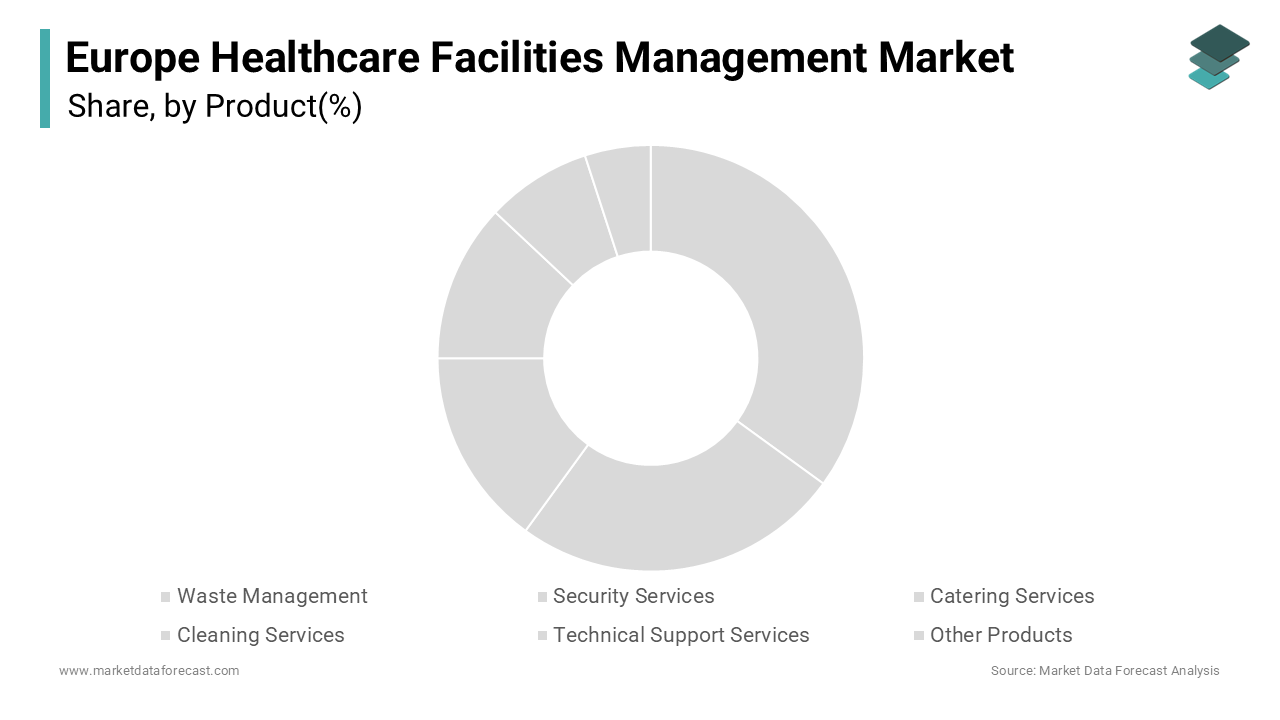
However, the technical support services segment is anticipated to witness the fastest CAGR of 7.8% from 2026 to 2034. This rapid growth of the segment is fueled by the increasing complexity of medical infrastructure and the integration of smart building technologies. As per research, healthcare facilities are increasingly adopting Internet of Things sensors and automated systems to monitor environmental conditions and equipment performance. These technologies require specialized technical expertise for installation, maintenance, and troubleshooting. Modern hospitals rely on sophisticated HVAC systems to maintain precise temperature and humidity levels crucial for operating theaters and intensive care units. Failure in these systems can compromise patient safety and lead to costly procedure cancellations. The rise of telemedicine and digital health records also demands robust IT infrastructure support within physical facilities. Technical support extends to medical gas systems, electrical backups, and elevator maintenance, all of which are critical for uninterrupted healthcare delivery. Regulatory standards for medical equipment safety are becoming more stringent, requiring regular certified inspections. Healthcare providers prefer outsourcing technical support to ensure access to skilled engineers and rapid response times. The shift toward predictive maintenance using data analytics further drives demand for advanced technical services. This segment benefits from higher margins compared to labor intensive services like cleaning. The continuous upgrade of hospital infrastructure to meet modern standards ensures sustained growth in technical support requirements.
By End User Insights
In 2025, the hospitals and clinics segment held the majority share of the Europe healthcare facilities management market because of its large scale operations, complex infrastructure needs, and high patient volumes. These facilities operate twenty four hours a day, requiring continuous management of cleaning, security, catering, and technical services. According to the Organisation for Economic Co operation and Development, acute care hospitals in Europe account for the majority of health spending, reflecting their central role in the healthcare system. The sheer size of hospital campuses necessitates comprehensive facilities management solutions to ensure operational efficiency and regulatory compliance. High foot traffic from patients, visitors, and staff increases wear and tear on facilities, driving frequent maintenance and cleaning needs. Hospitals must adhere to strict infection control protocols, making professional cleaning and waste management essential. The presence of specialized departments such as operating rooms, laboratories, and imaging centers requires tailored technical support and environmental controls. Public hospitals often face budget pressures, leading them to outsource non core activities to reduce costs and improve service quality. Private clinics focus on patient experience and aesthetics, investing in premium facilities management services to attract clientele. The consolidation of healthcare providers into larger networks creates opportunities for integrated facilities management contracts across multiple sites. The critical nature of hospital operations means that any facility failure can have severe consequences, prioritizing reliability and expertise in service providers. This segment’s dominance is sustained by the constant demand for high quality care environments.
On the other hand, the long-term healthcare facilities segment is likely to experience the fastest CAGR of 8.2% during the forecast period, mainly due to the aging population and the increasing prevalence of chronic diseases requiring extended care. As per Eurostat, the number of people aged 80 and over in the European Union is projected to double by 2050, significantly increasing the demand for nursing homes and assisted living facilities. These facilities require specialized management services focused on resident comfort, safety, and dignity. Unlike acute care hospitals, long term facilities emphasize homelike environments, requiring different approaches to catering, cleaning, and activity management. Residents often have specific dietary needs, driving demand for specialized catering services. Safety and security are paramount to prevent falls and manage residents with cognitive impairments, increasing the need for professional security and monitoring services. Regulatory standards for long term care are evolving to ensure higher quality of life, prompting facilities to invest in better infrastructure and management. The shift from institutional to community based care models creates new types of facilities requiring flexible management solutions. Family expectations for high quality care drive competition among providers, leading to greater investment in facilities management. Outsourcing allows these facilities to access professional expertise without the burden of direct employment. The sustainable growth of this demographic ensures long term demand for specialized facilities management services.
COUNTRY ANALYSIS
Germany Healthcare Facilities Management Market Analysis
Germany dominated the Europe healthcare facilities management market and accounted for a 22.1% share in 2025. This prominence of the German market was driven by its robust healthcare infrastructure, high spending, and strict regulatory environment. German hospitals are known for their advanced technology and high standards of care, necessitating sophisticated facilities management services. The aging population increases demand for both acute and long term care facilities, driving continuous investment in infrastructure maintenance and upgrades. Strict hygiene regulations enforced by the Robert Koch Institute require rigorous cleaning and infection control measures, boosting demand for professional cleaning services. The trend toward outsourcing non core activities is well established in Germany, with many hospitals partnering with specialized facilities management firms to improve efficiency. Energy efficiency is a major focus due to high energy costs and environmental regulations, driving adoption of smart building technologies. The presence of leading facilities management companies in Germany fosters innovation and competition. Labor shortages in the service sector challenge providers, but automation and digitalization help mitigate these issues. Public procurement processes are transparent but competitive, favoring providers with proven track records and certifications. The integration of digital health solutions requires robust IT infrastructure support, expanding the scope of technical services. Germany’s strong economy supports sustained investment in healthcare infrastructure, ensuring steady market growth.
United Kingdom Healthcare Facilities Management Market
The United Kingdom followed closely behind in the Europe healthcare facilities management market and captured a 18.8% share in 2025. This position of the country’s market was propelled by ongoing efforts to modernize aging hospital estates. The UK market’s growth shows a mix of public National Health Service providers and private healthcare operators. According to data from the NHS Estates Returns Information Collection (ERIC) and analysis by The King's Fund, the cost to clear the structural NHS maintenance backlog has grown to £15.9 billion, with deep funding limitations historically forcing reactive fixes rather than comprehensive annual backlog clearances. The Private Finance Initiative model has led to long term facilities management contracts for many hospitals, creating stable demand for integrated services. The focus on patient experience and waiting time reduction drives investment in efficient facility operations. Cleaning and hygiene remain top priorities following high profile infection control concerns. The UK is a leader in adopting sustainable practices in healthcare facilities, with targets for net zero carbon emissions driving energy management initiatives. Labor challenges are acute, with shortages in cleaning and portering staff affecting service delivery. Digital transformation is accelerating, with smart hospitals implementing IoT solutions for predictive maintenance. The private sector is growing, particularly in elective care, demanding high quality facilities to attract patients. Regulatory oversight by the Care Quality Commission ensures high standards, influencing procurement decisions. Brexit has impacted supply chains and labor availability, prompting providers to adapt strategies. The market is mature but evolving with a strong emphasis on value for money and sustainability.
France Healthcare Facilities Management Market Analysis
France maintains a strong position in the Europe Healthcare Facilities Management Market, supported by a comprehensive public healthcare system and growing private sector involvement. Modernization programs drive its steady growth. According to the French Ministry of Health, significant investments are being made to renovate hospital infrastructure and improve energy efficiency. Under the umbrella of France's national Ma Santé 2022 framework and its corresponding "Plan Investir pour l'hôpital", billions were injected to restructure hospital frameworks, bolster healthcare worker working conditions, and optimize patient care pathways, increasing demand for modern facilities management. Hygiene standards are strictly enforced, with regular inspections ensuring compliance. The aging population increases demand for long term care facilities, which require specialized management services. Outsourcing is increasingly accepted as a way to manage costs and access expertise. French providers emphasize social responsibility and local employment in their contracts. Sustainability is a key driver, with hospitals aiming to reduce their environmental footprint through waste management and energy conservation. The integration of digital tools for facility monitoring is gaining traction. Labor laws protect workers but can limit flexibility, requiring careful workforce planning. The market is characterized by long term partnerships between healthcare providers and facilities management companies. Innovation in catering and patient hospitality services differentiates providers. The centralized nature of the public system allows for standardized procurement processes, benefiting large providers.
Italy Healthcare Facilities Management Market Analysis
Italy holds a notable position in the Europe Healthcare Facilities Management Market, with growth driven by regional healthcare disparities and modernization efforts. There is significant variation between its northern and southern regions. Likewise, national macroeconomic reports outline that while Italy's National Health Fund (FSN) budgets a nominal funding climb through 2027, public health spending relative to GDP dropped from roughly 9% down to 8.5%, leaving ongoing infrastructural gaps and regional healthcare distribution imbalances. Older hospital buildings in many regions require extensive renovation and maintenance, creating demand for technical support and construction management services. Hygiene and infection control are critical priorities, especially after recent health crises. The decentralization of healthcare management to regional authorities leads to diverse procurement practices and service standards. Outsourcing is common for cleaning and catering services, allowing hospitals to focus on clinical care. Energy efficiency is a growing concern due to high utility costs, driving adoption of smart building solutions. The private healthcare sector is expanding, particularly in specialized treatments, demanding high quality facilities. Labor shortages affect service delivery, prompting investment in training and automation. Regulatory compliance with European standards influences service quality. The market is fragmented but consolidating as larger providers acquire local firms. Sustainability initiatives are gaining momentum, with hospitals seeking green certifications. The focus on patient centered care drives improvements in hospitality and environmental comfort.
Top Players In The Europe Healthcare Facilities Management Market
Mitie Group
Mitie Group stands as a premier provider of integrated facilities management services with a strong footprint across the European healthcare sector. The company delivers comprehensive solutions including cleaning, security, and technical maintenance tailored to the stringent requirements of hospitals and clinics. Recent strategic initiatives focus on digital transformation through the deployment of smart building technologies that enhance operational efficiency and patient safety. Mitie has invested heavily in sustainability programs aimed at reducing carbon emissions within healthcare estates aligning with European environmental goals. The company actively partners with NHS trusts and private healthcare providers to develop customized service models that improve clinical outcomes. By leveraging data analytics Mitie optimizes resource allocation and predictive maintenance schedules ensuring minimal disruption to critical care services. Their commitment to workforce training ensures high standards of hygiene and compliance with infection control protocols. This holistic approach strengthens their reputation as a trusted partner in maintaining safe and efficient healthcare environments throughout the region.
Sodexo
Sodexo is a global leader in quality of life services with significant involvement in the Europe Healthcare Facilities Management Market through its integrated facility management offerings. The company provides essential services such as catering, cleaning, and patient support that directly impact the healing environment. Recent actions include the expansion of its digital platform Connect which enables real time communication between staff and patients enhancing service responsiveness. Sodexo has prioritized sustainable practices by implementing waste reduction programs and energy efficient systems in healthcare facilities. They collaborate closely with healthcare administrators to design patient centered services that improve satisfaction scores. The company invests in employee development to address labor shortages and ensure consistent service delivery. Sodexo’s focus on diversity and inclusion fosters a supportive workplace culture that translates into better patient care. Their ability to integrate soft and hard facilities management services creates seamless operational experiences for healthcare providers. This comprehensive service model reinforces their position as a key enabler of modern healthcare infrastructure in Europe.
ISS Facility Services
ISS Facility Services operates as a leading workplace experience and facilities management company with a robust presence in the European healthcare sector. The company specializes in delivering integrated services that combine cleaning, catering, and technical support to create safe and comfortable healthcare environments. Recent strategies involve the adoption of Internet of Things sensors to monitor environmental conditions and optimize cleaning schedules based on real time data. ISS has strengthened its market position by forming strategic alliances with technology providers to enhance digital capabilities in facility management. They focus on sustainability by helping healthcare clients achieve green building certifications and reduce their ecological footprint. The company emphasizes employee engagement and training to ensure high levels of service quality and compliance with health regulations. ISS leverages its global expertise to introduce best practices and innovative solutions to local markets. Their customer centric approach ensures that services are aligned with the specific needs of healthcare providers. This dedication to innovation and excellence solidifies their role as a vital partner in the European healthcare ecosystem.
COMPETITIVE LANDSCAPE
The Europe Healthcare Facilities Management Market features intense competition characterized by a mix of large multinational corporations regional specialists and local service providers. Established players leverage economies of scale advanced technologies and comprehensive service portfolios to secure long term contracts with major hospital groups and public health authorities. Smaller firms compete through specialization in niche areas such as medical waste disposal or sterile cleaning offering personalized service and flexibility. The market structure encourages continuous innovation as companies strive to differentiate their offerings through digital solutions sustainability credentials and enhanced patient experience metrics. Price competition remains significant particularly in public procurement processes but value based differentiation through quality and reliability is increasingly important. Consolidation trends are evident as larger entities acquire smaller competitors to expand capabilities and geographic coverage. Cross border operations within the European Union facilitate competitive dynamics by enabling efficient resource allocation and knowledge sharing. New entrants face barriers related to regulatory compliance and established relationships yet digital platforms lower entry thresholds for tech enabled startups. Competitive advantage increasingly depends on the ability to integrate technology with human services to deliver measurable improvements in efficiency and safety. Collaboration alongside competition defines the landscape as stakeholders work together on industry wide challenges such as staffing shortages and environmental standards while vying for market leadership.
KEY MARKET PARTICIPANTS
Some of the notable players operating in the European healthcare facilities management market include
- ABM Industries Inc.
- Medxcel Facilities Management
- Ecolab Inc.
- Aramark Corporation
- Vanguard Resources Inc.
- ISS World Services A/S
- Serco Group plc
- Mitie Group plc
- Sodexo
- OCS Group
- Siegel-Gallagher Management Company, Inc.
Top Strategies Used By Key Market Participants
Key players in the Europe Healthcare Facilities Management Market employ integration strategies to combine soft and hard services into unified contracts that enhance operational efficiency and reduce administrative burdens for healthcare providers. Companies invest heavily in digital transformation by adopting Internet of Things sensors and artificial intelligence to enable predictive maintenance and real time monitoring of facility conditions. Sustainability initiatives form a core strategic pillar as firms implement energy efficient technologies and waste reduction programs to help healthcare clients meet environmental regulations and corporate social responsibility goals. Strategic partnerships with technology vendors and healthcare specialists allow companies to develop specialized solutions that address unique clinical requirements and infection control standards. Workforce development programs focus on upskilling employees in hygiene protocols and customer service to mitigate labor shortages and improve service quality. Mergers and acquisitions enable larger entities to expand geographic reach and acquire niche capabilities in areas such as medical waste management or specialized cleaning. These multifaceted strategies ensure competitiveness and long term viability in a highly regulated and demanding market environment.
MARKET SEGMENTATION
This research report on the European healthcare facilities management market has been segmented and sub-segmented based on the following categories
By Product
- Waste Management
- Security Services
- Catering Services
- Cleaning Services
- Technical Support Services
- Other Products
By End-User
- Hospitals and Clinics
- Long-term Healthcare Facilities
- Other End Users
By Country
- UK
- France
- Spain
- Germany
- Italy
- Russia
- Sweden
- Denmark
- Switzerland
- Netherlands
- Turkey
- Czech Republic
- Rest of Europe