- Product Description Description
- Table of Contents TOC
- List of Table & Figure LOT
- Get Free Sample PDF Sample PDF
Market Size, 2025
$318.3 BnMarket Estimate, 2026
$348.2 BnMarket Forecast, 2034
$714.4 BnCAGR, 2026–2034
9.4%
Global Healthcare Facilities Management Market Report Summary
The global healthcare facilities management market was valued at USD 318.28 billion in 2025, is estimated to reach USD 348.20 billion in 2026, and is projected to reach USD 714.44 billion by 2034, growing at a CAGR of 9.4% from 2026 to 2034. Market growth is driven by the increasing need for efficient hospital operations, rising healthcare infrastructure investments, and growing demand for outsourcing non-core services. Healthcare providers are increasingly focusing on improving patient experience, operational efficiency, and regulatory compliance, which is boosting demand for integrated facilities management services. Additionally, the adoption of smart facility solutions, energy-efficient systems, and digital monitoring technologies is further supporting market expansion.
Key Market Trends
- Increasing adoption of outsourced facility management services in healthcare.
- Growing demand for cleaning, hygiene, and infection control services.
- Integration of smart building technologies and IoT-based monitoring systems.
- Rising focus on energy efficiency and sustainability in healthcare facilities.
- Expansion of healthcare infrastructure globally.
Segmental Insights
- Based on service type, the cleaning services segment dominated the global healthcare facilities management market by capturing 28.5% share in 2025, driven by stringent hygiene and infection control requirements.
- Based on end-user, the hospitals and clinics segment led the market with 65.4% share in 2025, supported by high patient volumes and complex facility management needs.
Regional Insights
The global healthcare facilities management market is witnessing strong growth across major regions due to expanding healthcare infrastructure and operational needs.
- North America led the market in 2025 with 38.6% share, supported by advanced healthcare systems and high outsourcing adoption.
- Europe followed with 27.3% share in 2025, driven by strict regulatory standards and well-established healthcare infrastructure.
- Asia-Pacific is the fastest-growing region due to rapid urbanization, increasing healthcare investments, and rising demand for quality care.
- Latin America holds a promising position, supported by improving healthcare access, increasing privatization, and focus on operational efficiency.
Competitive Landscape
The global healthcare facilities management market is highly competitive, with a mix of global service providers and specialized facility management companies. Market players are focusing on expanding service portfolios, integrating digital technologies, and forming strategic partnerships to enhance service delivery and operational efficiency.
Prominent companies operating in the global healthcare facilities management market include ABM Industries Inc., Medical Facilities Management, Ecolab Inc., Compass Group, Aramark Corporation, Vanguard Resources Inc., ISS World Services A/S, Serco Group plc, Mitie Group plc, Sodexo, OCS Group, and Siegel-Gallagher Management Company, Inc.
Global Healthcare Facilities Management Market Size
The size of the global healthcare facilities management market was worth USD 318.28 billion in 2025. The global market is anticipated to grow at a CAGR of 9.4% from 2026 to 2034 and be worth USD 714.44 billion by 2034 from USD 348.20 billion in 2026.
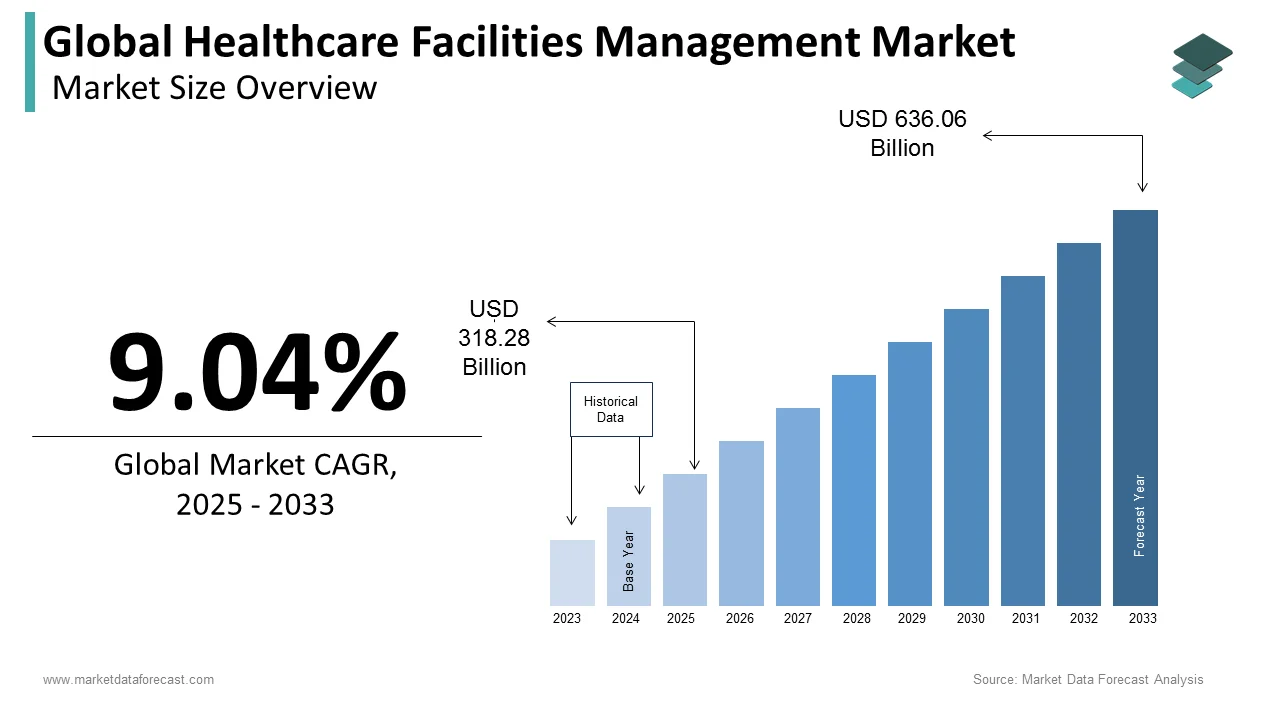
Healthcare Facilities Management (HFM) is the comprehensive, behind-the-scenes administration of healthcare environments, including hospitals, clinics, and long-term care facilities, to ensure safety, compliance, and operational efficiency. This market covers critical functions such as biomedical engineering, environmental hygiene, energy management, security, and infrastructure maintenance, all designed to create a healing environment that directly influences patient outcomes. The significance of this domain extends beyond mere building upkeep to become a strategic pillar of public health safety. According to the World Health Organization, approximately 7 percent of patients in developed countries acquire at least one healthcare-associated infection during their treatment, a statistic that places immense pressure on facility managers to maintain rigorous sanitation and air quality standards. Furthermore, data from the U.S. Energy Information Administration (EIA) indicates that hospitals are among the most energy-intensive commercial buildings, consuming 2.5 times more energy per square foot than typical office spaces, which drives the urgent need for specialized energy management solutions. Research emphasizes that the aging infrastructure in many nations requires substantial retrofitting to meet modern regulatory codes, forcing healthcare administrators to prioritize professional facility management services. Consequently, this market functions as the backbone of healthcare delivery, ensuring that clinical staff can focus on patient care while specialized teams manage the complex physical and technological ecosystems of modern medical facilities.
MARKET DRIVERS
Stringent Regulatory Compliance and Infection Control Mandates
The escalating stringency of global regulatory frameworks regarding infection control and hospital accreditation is a core booster for the growth of the healthcare facilities management market. Governments and health authorities are enforcing rigorous standards to minimize healthcare-associated infections, which necessitate specialized cleaning protocols, advanced air filtration systems, and continuous environmental monitoring that general facility management cannot provide. According to the Joint Commission, accreditation standards now require hospitals to demonstrate continuous compliance with infection prevention protocols, with non-compliance effectively barring access to essential federal reimbursement and state licensure. The European Centre for Disease Prevention and Control reports that comprehensive infection prevention and control programs can significantly reduce infection rates, encouraging healthcare providers to adopt rigorous hygiene management strategies. Furthermore, the Food and Drug Administration enforces strict sterility assurance, requiring adherence to specific air change rates and pressure differentials defined by pharmacopeial standards that necessitate sophisticated engineering oversight. Data from the World Health Organization and OECD emphasize that a substantial portion of hospital expenditure in high-income countries is consumed by treating preventable adverse events and infections, creating a strong economic incentive for robust management. The complexity of compliance, driven by evolving regulations for real-time reporting and digital tracking, forces institutions to act. They now rely on dedicated facilities management firms with the latest technology and trained personnel to mitigate legal and clinical risks effectively.
Rising Operational Costs and the Shift Toward Core Competency Focus
The intensifying pressure to reduce operational expenditures while improving patient care quality is driving healthcare organizations to outsource non-clinical functions to specialized facilities management providers, which in turn propels the expansion of the healthcare facilities management market. Hospitals face shrinking margins due to fixed reimbursement rates and rising supply costs, compelling administrators to redirect resources toward direct patient care activities rather than infrastructure maintenance. According to the American Hospital Association, drugs, supplies, infrastructure, and utility costs account for nearly 60 percent of total hospital expenses, prompting a strategic shift toward outsourcing models that offer predictable pricing and efficiency gains. Research into healthcare facilities indicates that organizations adopting comprehensive management services often experience a notable decrease in administrative and operational spending compared to those handling such tasks internally, benefiting from increased purchasing power and advanced technical tools. By partnering with external experts, healthcare providers can leverage advanced predictive maintenance tools and energy-saving technologies without significant capital investment. Multiple studies show that a substantial portion of major healthcare providers have expanded their use of external partners for administrative functions in recent years to better adapt to market changes and focus on patient care. This trend allows clinical staff to focus entirely on medical outcomes while ensuring that the physical environment remains safe and efficient through professional management, thereby driving sustained demand for comprehensive facilities management solutions across the global healthcare sector.
MARKET RESTRAINTS
Critical Shortage of Skilled Technical Workforce and Specialized Training Gaps
A pervasive shortage of skilled technicians and the lack of specialized training programs for healthcare-specific facility management act as a significant restraint on service quality and the healthcare facilities management market. Managing healthcare infrastructure requires unique expertise in biomedical equipment, hazardous waste handling, and isolation room maintenance, yet the global labor market faces a deficit of professionals with these niche qualifications. According to the World Health Organization, the global health and care sector is on track to experience a massive workforce deficit by the end of the decade, with technical support roles and facility operations facing significant recruitment challenges. The Association for the Advancement of Medical Instrumentation reports that a low proportion of the current biomedical workforce holds the specialized credentials needed to manage advanced network-integrated hospital technology, which often results in slower repair times and reduced equipment availability. Furthermore, the high turnover rate in low-wage facility roles such as environmental services exacerbates the problem, as constant retraining drains resources and compromises consistency. Data from the Bureau of Labor Statistics indicates that the demand for skilled maintenance professionals in medical settings is outstripping the supply, leading many healthcare systems to postpone essential facility improvements or hire staff with less specialized experience. This talent gap limits the ability of management firms to scale operations effectively and maintain the high standards required for patient safety, thereby restraining the overall expansion and reliability of the market.
High Capital Investment Requirements for Advanced Technology Integration
Implementing advanced technologies, such as Internet of Things sensors, building automation systems, and predictive analytics platforms, requires substantial capital investment, which limits the growth of the healthcare facilities management market. This acts as a barrier for many healthcare institutions, particularly smaller community hospitals. While these technologies offer long-term efficiency gains, the upfront costs for hardware, software licensing, and integration with legacy systems are often prohibitive for organizations operating on tight budgets. According to the Healthcare Financial Management Association, the substantial capital investment required to modernize existing hospital infrastructure with intelligent building systems often competes with urgent clinical needs for limited funding. The World Bank observes that in emerging economies, a lack of available credit and funding options prevents many medical facilities from adopting digital infrastructure management, keeping them reliant on less efficient traditional methods. Additionally, the rapid obsolescence of technology requires continuous reinvestment, creating a cycle of expenditure that deters long-term commitment. A study shows that a significant number of healthcare executives identify financial limitations as the main hurdle preventing the implementation of new digital technologies within their facility operations. This financial hesitation slows the widespread deployment of innovative solutions, limiting the market's potential to deliver maximum efficiency and safety improvements across the diverse landscape of global healthcare providers.
MARKET OPPORTUNITIES
Integration of Artificial Intelligence and Predictive Maintenance Ecosystems
The incorporation of artificial intelligence and machine learning into facility management systems creates major possibilities for the growth of the healthcare facilities management market. This shift allows for proactive predictive maintenance, significantly enhancing operational reliability. AI algorithms can predict equipment failures before they occur by analyzing data from sensors embedded in HVAC systems, medical gas lines, and power grids. As a result, this prevents costly downtime and ensures uninterrupted patient care. Research indicates that implementing predictive maintenance technology can substantially decrease the frequency of medical equipment breakdowns and lower overall repair expenses, providing a strong financial incentive for hospital leadership. Leading health systems have shown that applying intelligent analytics to hospital infrastructure enhances energy conservation and increases the operational lifespan of high-cost facilities and equipment. Furthermore, these systems can optimize staffing schedules based on real-time occupancy and usage patterns, further reducing operational waste. Forecasts from the International Data Corporation suggest that investment in AI-powered facility management within the medical sector will see rapid year-over-year growth as providers embrace the advantages of data-informed operational strategies. The adoption of intelligent ecosystems will become standard practice as technology costs decrease and interoperability standards improve. Consequently, this will open vast revenue streams for providers who can offer these advanced analytical capabilities as part of their service portfolios.
Adoption of Green Building Standards and Sustainable Energy Solutions
The global imperative to reduce carbon emissions and achieve sustainability goals offers a substantial opportunity for the healthcare facilities management market. Specifically, they can lead in green building certifications and renewable energy integration. Hospitals are under increasing pressure from regulators and stakeholders to minimize their environmental footprint, driving demand for energy-efficient retrofits, solar installations, and waste reduction programs. According to the United Nations Environment Programme, the construction and operation of buildings represent a major portion of global energy-related carbon output, with medical centers being among the most intensive users due to their continuous operational requirements. The Leadership in Energy and Environmental Design program has seen a marked rise in registrations for healthcare projects in recent years, demonstrating a growing commitment within the industry to environmentally responsible building standards. Facilities management companies that specialize in implementing net-zero strategies, such as geothermal heating and water recycling systems, are well-positioned to capture this growing demand. Data from the World Green Building Council indicates that environmentally optimized hospitals can substantially lower their consumption of energy and water, leading to significant financial savings over the life of the facility. The market for eco-friendly facility management services is poised for exponential growth, aligning financial benefits with environmental stewardship. This boom is driven by government-introduced tax incentives and grants for sustainable upgrades.
MARKET CHALLENGES
Complexity of Integrating Legacy Infrastructure with Modern Smart Systems
The profound difficulty of integrating cutting-edge smart building technologies with aging and heterogeneous legacy infrastructure poses a serious challenge for the healthcare facilities management market. Many hospitals operate in buildings constructed decades ago, featuring outdated electrical wiring, incompatible HVAC controls, and fragmented communication protocols that resist seamless connection to modern Internet of Things networks. According to the American Society for Health Care Engineering, a majority of hospital facilities in North America were constructed several decades ago, resulting in significant infrastructure challenges that hinder the implementation of modern digital and technological upgrades. The lack of standardized interfaces between old mechanical systems and new digital platforms often leads to data silos and integration failures, undermining the effectiveness of predictive maintenance and real-time monitoring tools. The National Institute of Standards and Technology cautions that failing to properly secure the connection between different hospital systems can create gaps in security, leaving vital medical operations open to external digital threats. Professional facility management research suggests that a notable portion of intelligent building initiatives in the healthcare sector experience significant setbacks or increased costs because of difficulties in making new technology work with older, existing building systems. This technical fragmentation forces facility managers to navigate a complex maze of proprietary systems, hindering the realization of full operational efficiency and slowing the adoption of innovative management solutions across the sector.
Cybersecurity Vulnerabilities in Connected Building Management Networks
The increasing connectivity of building management systems to hospital networks introduces severe cybersecurity risks that threaten patient safety and data privacy, which poses a further constraint to the healthcare facilities management market. As facilities adopt smart thermostats, connected elevators, and automated lighting controls, each device becomes a potential entry point for malicious actors seeking to disrupt hospital operations or steal sensitive information. The Department of Health and Human Services reports that digital attacks on medical infrastructure have surged in recent years, with building control systems becoming a new target for malicious software that can disrupt essential hospital environments. Moreover, the Food and Drug Administration has released guidance regarding the security risks of network-connected medical and facility tools, highlighting the importance of using strong data protection methods and keeping software updated to prevent unauthorized access. However, many legacy building systems lack the computational power to support modern security protocols, leaving them exposed to exploitation. Research into digital security indicates that the financial impact of a data theft incident in the medical field is the highest of any industry, a cost that causes some organizations to hesitate in adopting fully connected facility technologies. Balancing the benefits of digital integration with the imperative of impenetrable security remains a complex and evolving hurdle that the market must overcome to ensure safe and resilient healthcare environments.
REPORT COVERAGE
| REPORT METRIC | DETAILS |
| Market Size Available | 2026 to 2034 |
| Base Year | 2024 |
| Forecast Period | 2026 to 2034 |
| Segments Covered | By Product, End-user, and Region. |
| Various Analyses Covered | Global, Regional, and Country-Level Analysis, Segment-Level Analysis, Drivers, Restraints, Opportunities, Challenges; PESTLE Analysis; Porter’s Five Forces Analysis, Competitive Landscape, Analyst Overview of Investment Opportunities |
| Regions Covered | North America, Europe, Asia Pacific, Latin America, Middle East & Africa |
| Market Leaders Profiled | ABM Industries Inc., Medical Facilities Management, Ecolab Inc., Aramark Corporation, Vanguard Resources Inc., ISS World Services A/S, Serco Group plc, Mitie Group plc, Sodexo, OCS Group, and Siegel-Gallagher Management Company, Inc. |
SEGMENTAL ANALYSIS
By Product Insights
The Cleaning Services segment captured the majority share of 28.5% of the global healthcare facilities management market in 2025. This prominence of the segment is credited to the non-negotiable requirement for sterile environments to prevent infections and the rigorous regulatory mandates that dictate frequent and specialized cleaning protocols across all healthcare settings. The main pillar of this segment is its direct correlation with patient safety and the prevention of healthcare-associated infections, which remain a leading cause of morbidity globally. Unlike other support services, environmental hygiene serves as the first line of defense against pathogen transmission, making it a priority for hospital administrators and regulators alike. Furthermore, the Joint Commission accreditation standards mandate strict documentation of cleaning frequencies and efficacy, forcing facilities to invest heavily in professional cleaning teams rather than relying on general staff. The clinical necessity ensures that cleaning services remain the most critical and heavily funded component of facility management, securing their dominant market position. Stringent government regulations and the standardization of hygiene protocols across the healthcare industry act as a powerful driver for the continued dominance of the cleaning services segment. Regulatory bodies worldwide have established comprehensive guidelines that require healthcare facilities to adhere to specific cleaning frequencies, use approved chemical agents, and employ trained personnel certified in infection control. As per sources, member states are required to implement national surveillance systems for healthcare-associated infections, which indirectly enforces high standards for environmental cleaning to avoid penalties and public scrutiny. The Food and Drug Administration has also issued guidance on cleaning validation for compounding areas and surgical suites, necessitating specialized expertise that general janitorial services cannot provide. Non-compliance can result in substantial fines, loss of reimbursement eligibility, and reputational damage, compelling healthcare providers to outsource to professional firms that guarantee adherence to these complex standards. This regulatory landscape creates a consistent and inelastic demand for high-quality cleaning services, reinforcing its status as the largest segment in the market.
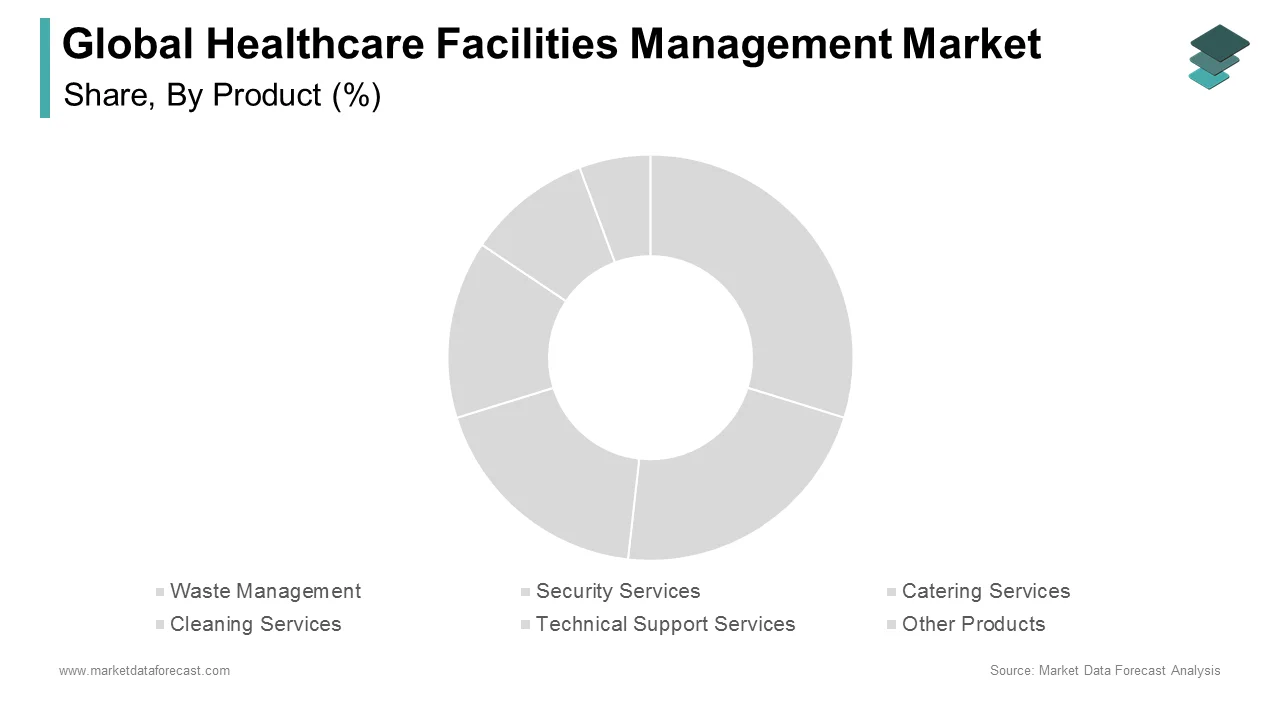
The Technical Support Services segment is predicted to witness the highest CAGR of 9.2% during the forecast period due to the increasing complexity of medical equipment, the rapid adoption of smart building technologies, and the critical need for uninterrupted operation of life-support systems. This fast growth is mainly from the exponential increase in the number and sophistication of medical devices and building management systems within healthcare facilities, all of which require specialized maintenance and calibration. Modern hospitals rely on intricate networks of imaging equipment, robotic surgical systems, and connected patient monitors that demand highly skilled technicians for upkeep to ensure accuracy and safety. The Internet of Things has further complicated this landscape, as building systems like HVAC and power grids are now interconnected with clinical operations, requiring cross-disciplinary technical expertise. The shift toward predictive maintenance models, which utilize data analytics to foresee equipment failures before they occur, is also driving demand for advanced technical services. As healthcare delivery becomes increasingly technology-dependent, the need for robust technical support infrastructure grows at a pace surpassing traditional facility services. The stringent requirement for maximum equipment uptime and adherence to evolving safety standards works as a strong booster for the fast growth of the technical support segment. Downtime of critical equipment such as MRI machines, ventilators, or backup power generators can lead to cancelled procedures, delayed diagnoses, and potentially life-threatening situations, making reliable technical support indispensable. The National Fire Protection Association codes mandate rigorous inspection schedules for emergency power systems and fire suppression units, which fall under the purview of technical support services. Consequently, facility managers are shifting from reactive repair models to comprehensive managed service agreements that guarantee response times and performance metrics. The rising cost of medical equipment replacement further incentivizes organizations to extend asset lifecycles through professional technical support. This convergence of regulatory pressure, financial risk mitigation, and operational necessity propels the technical support segment to become the fastest-growing area in the market.
By End-User Insights
In 2025, the Hospitals and Clinics segment led the healthcare facilities management market and occupied a 65.4% share. This leading position of the segment is attributed to the sheer scale of infrastructure, the 24/7 operational nature of acute care facilities, and the intense regulatory scrutiny applied to these high-risk environments. Moreover, the top contributor here is the massive scale of their physical infrastructure and the requirement for uninterrupted service delivery around the clock, which necessitates comprehensive and robust facilities management. Hospitals operate as mini-cities with complex utilities, including medical gas systems, specialized ventilation, large-scale laundries, and extensive food service operations that must function flawlessly at all times. Research notes that hospitals consume more energy per square foot than commercial office buildings due to their intensive operational needs, driving significant spending on energy management and technical support. Furthermore, the high volume of patient traffic and the critical nature of services mean that any failure in facility systems can have immediate and severe consequences, forcing administrators to prioritize professional management. The sheer magnitude of these requirements ensures that hospitals and clinics remain the largest consumers of facilities management services globally. The intense level of regulatory oversight and accreditation requirements specific to hospitals and clinics further cements their position as the leading end-user segment. These facilities are subject to rigorous inspections by bodies such as the Joint Commission, the Centers for Medicare and Medicaid Services, and various state health departments, which enforce strict standards for safety, sanitation, and infrastructure integrity. Failure to meet these standards can result in the loss of licensure or reimbursement, creating a powerful incentive for hospitals to engage professional facilities management firms. The complexity of complying with overlapping federal, state, and local regulations requires specialized expertise that internal teams often lack, driving the trend toward outsourcing. This regulatory burden ensures that hospitals consistently invest in high-level facilities management solutions to mitigate risk and maintain their operational licenses, sustaining their dominance in the market.
The Long-term Healthcare Facilities segment is estimated to register the fastest CAGR of 8.7% between 2026 and 2034, owing to the rapidly aging global population, the shift toward home-like care environments, and increasing regulatory focus on quality of life and safety in residential care settings. In addition, the surging demographic shift toward an older population is the fundamental engine driving the rapid growth of facilities management in long-term care settings, as the number of individuals requiring assisted living and nursing home care reaches historic highs. As life expectancy increases and birth rates decline, the proportion of elderly citizens who need round-the-clock support in residential facilities is expanding exponentially. The demographic wave necessitates the construction of new facilities and the upgrading of existing ones, all of which require professional management to ensure safety and comfort. As this demographic trend accelerates, the long-term care sector will continue to outpace other segments in growth potential. The tightening of regulatory standards and the growing emphasis on creating homelike, safe environments for residents act as a potent factor for the expansion of facilities management services in long-term care. Regulators are increasingly holding nursing homes and assisted living facilities accountable for environmental conditions, including air quality, cleanliness, and safety features, linking these factors directly to resident health outcomes. The World Health Organization emphasizes the importance of age-friendly environments that support mobility and independence, requiring specialized maintenance of accessibility features and communal spaces. Data from the Agency for Healthcare Research and Quality shows that facilities with professional management teams report higher resident satisfaction scores and lower incidence of accidents such as falls. Furthermore, families are becoming more discerning in their choice of care facilities, prioritizing those that offer superior environmental standards. This combination of regulatory pressure and consumer demand drives long-term care providers to adopt comprehensive facilities management practices, fueling the segment's rapid growth.
REGIONAL ANALYSIS
North America Healthcare Facilities Management Market Analysis
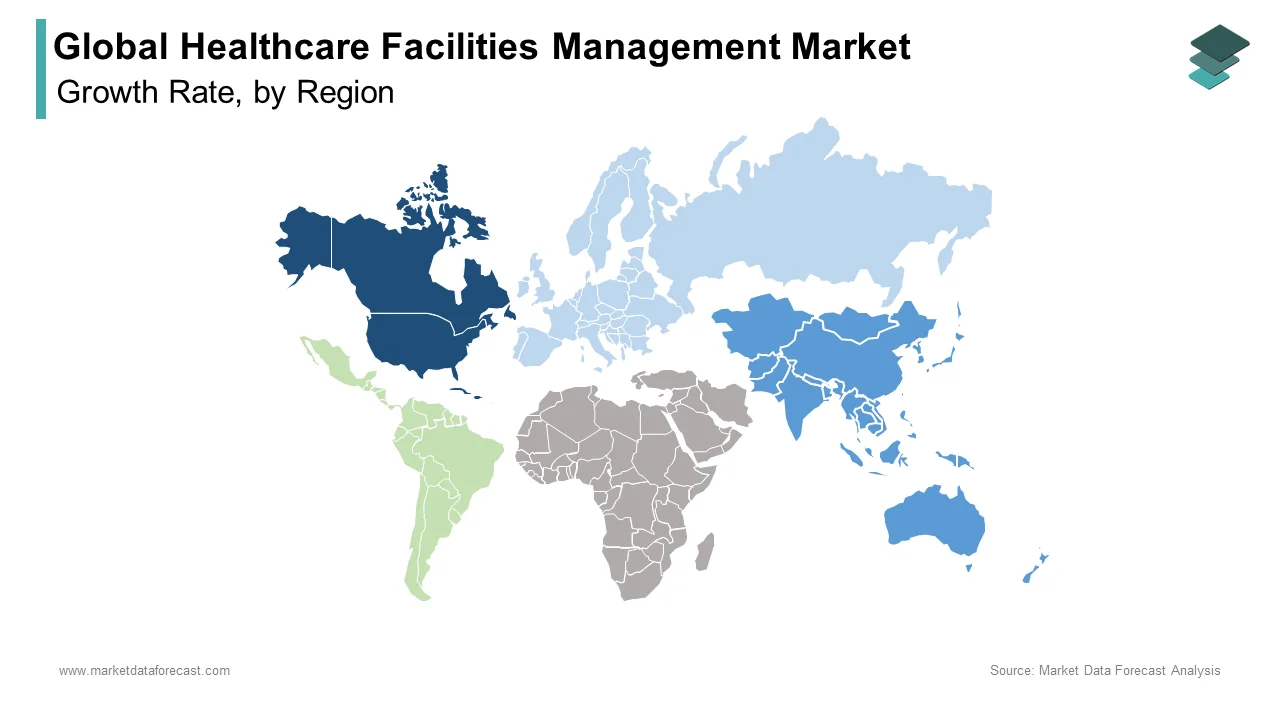
North America dominated the global healthcare facilities management market and accounted for a 38.6% share in 2025. The growth of HFM in this region is supported by a highly mature healthcare infrastructure, stringent regulatory frameworks, and a strong culture of outsourcing non-clinical services. The region’s market sees widespread adoption of integrated facility management solutions and advanced technologies such as predictive maintenance and smart building systems. One of the major factors is the rigorous enforcement of accreditation standards by organizations like the Joint Commission and the Centers for Medicare and Medicaid Services, which compel hospitals to maintain impeccable facility conditions to retain funding. The high cost of labor and the complexity of managing aging infrastructure further incentivize the adoption of efficient management strategies. Additionally, the prevalence of large multi-hospital systems allows for economies of scale in contracting facility services. The region's early adoption of sustainability initiatives and energy efficiency programs also drives demand for green facility management. These factors combine to solidify North America's position as the largest and most sophisticated market globally.
Europe Healthcare Facilities Management Market Analysis
Europe was the next prominent region in the global healthcare facilities management market and captured a 27.3% share in 2025. This position of the European market is driven by its strong emphasis on public health standards, aggressive sustainability goals, and a fragmented yet cohesive regulatory environment. The market in Europe shows a high degree of public sector involvement, with many healthcare facilities owned and operated by government entities that are increasingly turning to private partners for efficiency. The central force behind the region’s growth is the European Union's Green Deal and various energy efficiency directives that mandate significant reductions in carbon emissions for public buildings, including hospitals. The European Centre for Disease Prevention and Control maintains strict guidelines on infection control, forcing facilities to upgrade cleaning and waste management protocols. A study highlights that budget constraints in public health systems are accelerating the trend toward outsourcing to reduce operational costs while maintaining quality. Countries like Germany, France, and the UK are leading the adoption of smart facility technologies to manage aging infrastructure efficiently. The region's commitment to social responsibility and environmental stewardship ensures that Europe remains a key growth engine for sustainable and compliant facilities management solutions.
Asia Pacific Healthcare Facilities Management Market Analysis
The Asia Pacific region emerges as the fastest-growing market globally due to rapid urbanization, massive investments in healthcare infrastructure, and a burgeoning middle class demanding higher quality care. The market exhibits a wide spectrum of development, ranging from advanced economies in Japan and Australia to accelerating growth sectors in China, India, and Southeast Asia. The dominant driving factor is the extensive construction of new hospitals and clinics to meet the needs of growing populations, with the Asian Development Bank estimating that the region requires trillions of dollars in infrastructure investment over the next decade. Rising awareness of infection control and patient safety following recent pandemics has also spurred demand for professional cleaning and waste management services. Governments in countries like China and India are actively promoting public-private partnerships to improve healthcare delivery, bringing international standards of facility management to the region. The increasing adoption of digital technologies and smart hospital concepts in major metropolitan areas further accelerates market growth. These converging trends position the Asia Pacific as the most vibrant and high-potential frontier for the healthcare facilities management market.
Latin America Healthcare Facilities Management Market Analysis
Latin America occupies a promising position in the global market owing to gradual improvements in healthcare access, increasing privatization of health services, and a growing focus on operational efficiency amidst economic challenges. The market status is characterized by a mix of advanced private hospital networks that utilize sophisticated facility management solutions and public institutions that are slowly adopting outsourcing models to cope with budget limitations. A primary driving factor is the rise of medical tourism in countries like Brazil, Mexico, and Costa Rica, which compels private facilities to adhere to international standards of cleanliness, safety, and comfort to attract foreign patients. According to sources, the region faces a significant burden of infectious diseases, prompting greater investment in waste management and sanitation services to prevent outbreaks. Research notes that ongoing efforts to modernize public health infrastructure are creating opportunities for facility management firms to enter the market through government contracts. Economic volatility remains a challenge, but the relentless demand for improved healthcare quality and the expansion of insurance coverage are driving steady growth. Local manufacturers and service providers are increasingly partnering with global firms to transfer knowledge and technology, enhancing the overall maturity of the market in this region.
Middle East and Africa Healthcare Facilities Management Market Analysis
The Middle East and Africa region is likely to grow in the global market over the forecast period. It displays unique growth dynamics fueled by ambitious government vision plans, massive infrastructure projects in the Gulf, and international aid-driven improvements in African health systems. The market status is heavily concentrated in Gulf Cooperation Council countries, where high per capita income enables the development of world-class medical cities equipped with state-of-the-art facility management systems. A significant driving factor is the strategic diversification efforts of nations like Saudi Arabia and the UAE, which include healthcare as a pillar of their economic transformation agendas, leading to billions of dollars in investment for new hospitals and research centers. A study highlights that initiatives to combat infectious diseases and strengthen primary care are driving demand for basic but essential facility services such as cleaning and waste disposal in sub-Saharan Africa. The influx of international hotel-style hospitality standards into healthcare facilities in the Middle East is also raising the bar for catering and housekeeping services. Although the market is currently smaller due to economic disparities in parts of Africa, the focused investment in health security and the push for self-sufficiency are laying the groundwork for substantial future expansion in this diverse region.
COMPETITIVE LANDSCAPE
The competition in the global healthcare facilities management market is characterized by intense rivalry among large multinational corporations and specialized regional providers striving to secure long-term contracts with major health systems. The landscape is moderately consolidated with key players dominating through extensive service offerings and global reach, yet fragmented by numerous niche firms focusing on specific areas like biomedical engineering or hazardous waste disposal. Competitive dynamics are driven by the ability to demonstrate measurable improvements in patient outcomes, operational efficiency, and sustainability metrics rather than price alone. Regulatory compliance acts as a significant barrier to entry, ensuring that only firms with robust quality management systems and trained workforces can sustain operations. Mergers and acquisitions are frequent as larger entities seek to absorb innovative startups and integrate advanced technologies to broaden their capabilities. The shift toward integrated facilities management models forces competitors to continuously innovate their service delivery mechanisms and digital tools. This dynamic environment fosters continuous improvement in service quality and encourages the adoption of smart technologies that transform traditional facility management into a strategic asset for healthcare providers globally.
KEY MARKET PARTICIPANTS
A few of the noteworthy companies operating in the global healthcare facilities management market covered in this report are
- ABM Industries Inc.
- Medical Facilities Management
- Ecolab Inc.
- Compass Group
- Aramark Corporation
- Vanguard Resources Inc.
- ISS World Services A/S
- Serco Group plc
- Mitie Group plc
- Sodexo
- OCS Group
- Siegel-Gallagher Management Company, Inc.
TOP PLAYERS IN THE MARKET
- Sodexo stands as a global leader in the healthcare facilities management sector by delivering integrated solutions that encompass cleaning, catering, technical maintenance, and energy management. The company significantly contributes to global health outcomes by creating healing environments that directly support patient recovery and staff efficiency. Recent actions to strengthen its market position include the acquisition of specialized firms focused on clinical engineering and the launch of digital platforms for real-time facility monitoring. Sodexo has also committed to ambitious sustainability goals, aiming to reduce carbon emissions across its managed healthcare sites through innovative energy solutions. By leveraging data analytics to optimize resource allocation and improve hygiene standards, the company enhances operational resilience for hospitals worldwide. Their holistic approach combines human expertise with technology to address complex infrastructure challenges, solidifying their reputation as a trusted partner for healthcare institutions seeking to improve the quality of care while controlling costs.
- Compass Group operates as a premier provider of support services in the healthcare industry with a strong emphasis on hospitality-led facilities management, including catering, housekeeping, and portering. The company plays a vital role in the global market by tailoring its services to meet the unique regulatory and operational demands of medical environments. Recent strategic moves involve the expansion of their "Healthy Living" initiatives, which integrate nutritional expertise with facility services to promote patient well-being. Compass Group has also invested heavily in automation technologies such as robotic cleaning units and smart inventory systems to enhance efficiency and consistency. Their focus on developing bespoke contracts that align with hospital sustainability targets has attracted major health systems seeking green solutions. By prioritizing staff training in infection control and patient interaction, the company ensures high service standards that complement clinical care. These efforts reinforce their position as a key driver of innovation and quality in the global healthcare facilities management landscape.
- Aramark is a dominant force in the healthcare facilities management market, known for its comprehensive suite of services ranging from environmental services to clinical equipment management and food delivery. The company contributes extensively to the global sector by partnering with leading health systems to drive operational excellence and improve patient satisfaction scores. Recent efforts to strengthen its position include the deployment of advanced predictive maintenance tools that minimize equipment downtime and the introduction of sustainable waste reduction programs. Aramark has also launched specialized training academies to upskill workers in critical areas like biohazard handling and energy conservation. Their integration of digital dashboards allows hospital administrators to monitor facility performance in real time, fostering transparency and accountability. Aramark continues to set industry benchmarks for reliability and service quality by focusing on customized solutions that address specific institutional challenges. As a result, they remain a top choice for healthcare providers worldwide.
TOP STRATEGIES USED BY KEY MARKET PARTICIPANTS
Key players in the healthcare facilities management market primarily focus on strategic acquisitions to expand their service portfolios and gain access to specialized technologies such as clinical engineering and smart building systems. Companies heavily invest in digital transformation by deploying Internet of Things sensors and artificial intelligence platforms to enable predictive maintenance and real-time monitoring of facility assets. Sustainability represents another major approach where firms develop green solutions, including energy efficiency programs and waste reduction initiatives to meet evolving environmental regulations and client goals. Market participants are increasingly adopting integrated service models that combine multiple functions like cleaning, catering, and technical support into single contracts to improve coordination and cost efficiency. Partnerships with technology vendors help firms innovate faster and offer cutting-edge solutions that enhance patient safety and operational productivity. Additionally, companies prioritize workforce development through extensive training programs to ensure staff comply with strict infection control standards. These combined strategies allow leading firms to maintain competitive advantages and drive growth in a highly regulated and demanding landscape.
MARKET SEGMENTATION
This research report on the global healthcare facilities management market has been segmented and sub-segmented based on the product, end-user, and region.
By Product
- Waste Management
- Security Services
- Catering Services
- Cleaning Services
- Technical Support Services
- Other Products
By End-User
- Hospitals and Clinics
- Long-term Healthcare Facilities
- Other End Users
By Region
- North America
- Europe
- Asia-Pacific
- Latin America
- The Middle East and Africa