- Product Description Description
- Table of Contents TOC
- List of Table & Figure LOT
- Get Free Sample PDF Sample PDF
Market Size, 2025
$234.06 BnMarket Estimate, 2026
$256.62 BnMarket Forecast, 2034
$535.85 BnCAGR, 2026–2034
9.64%Europe Healthy Foods Market Report Summary
The European healthy foods market was valued at USD 234.06 billion in 2025, is estimated to reach USD 256.62 billion in 2026, and is projected to reach USD 535.85 billion by 2034, growing at a CAGR of 9.64% during the forecast period from 2026 to 2034. The growth of the European healthy foods market is driven by increasing consumer awareness of health and wellness, a shift toward natural and organic food consumption, and the rising prevalence of lifestyle-related diseases that are encouraging preventive dietary choices. The market is also being shaped by innovation in plant-based and fortified food products, supportive government regulations, and growing demand for sustainable and ethically sourced ingredients across Europe.
Key Market Trends
- Rapid expansion of organic and plant-based food categories across Europe’s retail chains.
- Growing consumer preference for clean-label, non-GMO, and minimally processed foods.
- Rising demand for functional foods enriched with probiotics, vitamins, and antioxidants.
- Acceleration of e-commerce and direct-to-consumer (D2C) models in healthy food distribution.
- Increasing adoption of eco-friendly packaging and sustainable farming practices to align with EU environmental standards.
Segmental Insights
- Based on product, the organic foods segment dominated the European healthy foods market, capturing 58.2% of the regional market share in 2025. The growth of this segment is driven by increasing awareness about chemical-free food production, concerns over pesticide use, and the growing availability of certified organic options in supermarkets and specialty stores.
- Based on distribution channel, the supermarkets and hypermarkets segment held a dominant position by occupying 63.6% share of the European healthy foods market in 2025. The segment’s leadership is attributed to the presence of well-established retail networks, expanded shelf space for healthy and organic food brands, and the growing integration of private-label health-oriented products by leading European retailers.
Regional Insights
The Europe healthy foods market shows strong growth across both Western and Northern European countries, supported by a growing emphasis on preventive health and sustainability.
- Germany was the top performer in the Europe healthy foods market, accounting for 24.6% share in 2025, driven by a mature organic food ecosystem, advanced retail infrastructure, and strong consumer awareness about nutrition and eco-friendly consumption.
- France and the United Kingdom follow closely, with rising demand for functional foods and fortified beverages backed by robust regulatory support and growing online grocery adoption.
- Italy and Spain show significant growth potential, fueled by increasing demand for Mediterranean diet-based healthy products and plant-based alternatives.
- The Nordic countries are emerging as trendsetters in sustainability and natural ingredient adoption, with high per-capita spending on organic and healthy food categories.
Competitive Landscape
The European healthy foods market is highly competitive, featuring multinational corporations and regional health-focused food producers. Key players are focusing on product diversification, clean-label innovation, and sustainable sourcing practices to align with consumer expectations. Strategic collaborations, acquisitions, and partnerships are becoming common as companies expand their presence across retail and online platforms. Major players in the Europe healthy foods market include Nestlé S.A., Danone S.A., PepsiCo Inc., General Mills Inc., The Kraft Heinz Company, Mondelez International Inc., GlaxoSmithKline PLC, Abbott Laboratories, Herbalife Nutrition Ltd., Archer Daniels Midland Company, Chobani Global Holdings LLC, Clif Bar & Company, Dairy Farmers of America Inc., Glanbia PLC, and Yakult Honsha Co., Ltd.
Europe Healthy Foods Market Size
The Europe healthy foods market size was calculated to be USD 234.06 billion in 2025 and is anticipated to be worth USD 535.85 billion by 2034, from USD 256.62 billion in 2026, growing at a CAGR of 9.64% during the forecast period.
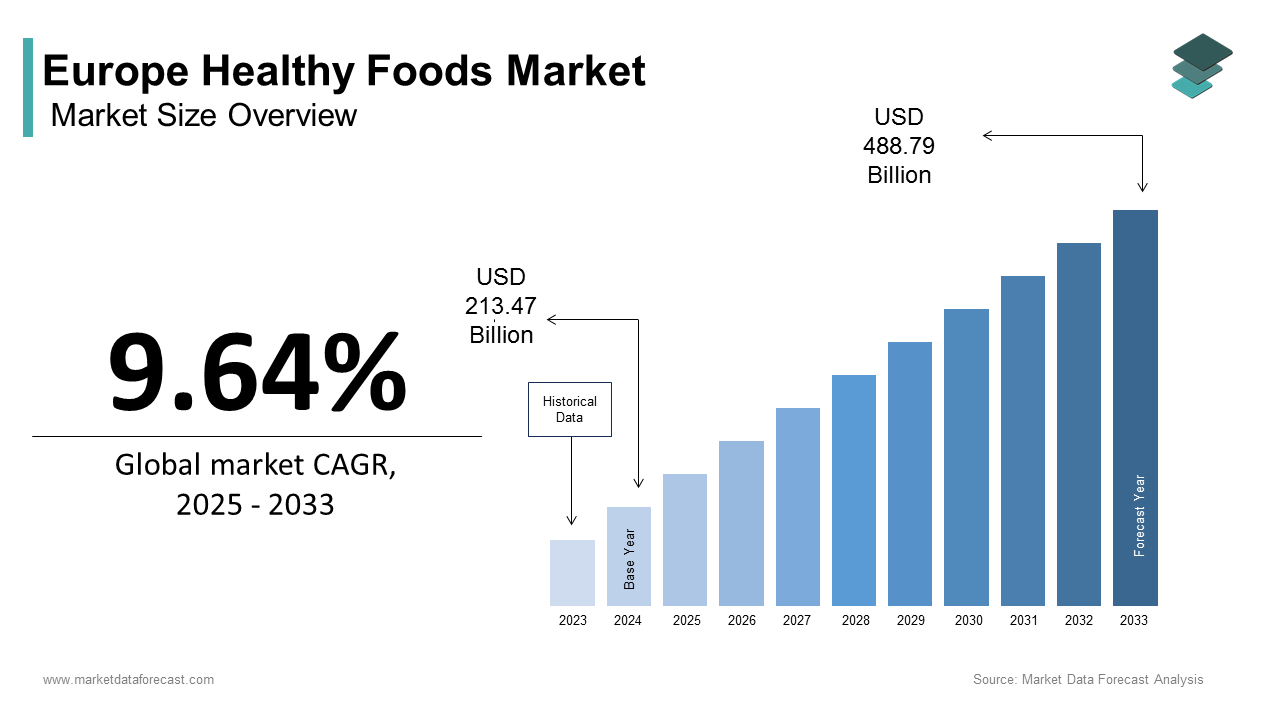
Healthy foods are nutritionally balanced, minimally processed, and functionally beneficial food products. This includes categories such as organic produce plant plant-based alternatives, fortified foods, clean-label snacks, and products with reduced sugar, salt, or saturated fats. The market is shaped not by transient wellness fads but by structural shifts in public health awareness, regulatory frameworks, and demographic pressures. A substantial portion of the adult population across the European Union continues to struggle with weight-related health challenges, particularly in certain member states, according to studies. Concurrently, chronic diseases associated with unhealthy eating habits remain a leading cause of premature mortality across the region, as per sources. These health burdens have catalyzed policy interventions such as front-of-pack nutrition labeling proposals and stricter advertising rules for high-fat, high-sugar foods. Consumer behavior reflects this urgency with most citizens in Europe reporting making conscious efforts to adopt healthier diets and improve their overall nutrition, according to research. This confluence of epidemiological data, public policy, and conscious consumption forms the bedrock of the Europe healthy foods market.
MARKET DRIVERS
Rising Prevalence of Diet-Related Chronic Diseases
The escalating burden of diet-linked non-communicable diseases is a key driver of growth of the Europe healthy foods market. Cardiovascular conditions, type 2 diabetes, and certain cancers are increasingly tied to poor dietary patterns characterized by excessive intake of processed sugars, saturated fats, and sodium. According to the World Health Organization, non-communicable diseases (NCDs) are the leading cause of death in the European Region, with poor nutrition identified as a primary modifiable risk factor. This public health crisis has prompted both individual behavioral change and institutional action. Some schools have revised meal standards to prioritize whole grains, legumes, and seasonal vegetables, while workplace wellness programs in the Netherlands now subsidize healthy meal deliveries. Consumers are responding by scrutinizing ingredient lists. Health-driven vigilance translates into sustained demand for transparently labeled nutrient-dense foods that support long-term well-being.
Strong Regulatory Push for Nutritional Transparency and Reformulation
European Union policy frameworks are actively reshaping the food landscape by mandating greater nutritional transparency and incentivizing product reformulation, which further bolsters the expansion of the Europe healthy foods market. The nationwide adoption of the voluntary Nutri-Score in key markets like France, Belgium, and Spain has prompted manufacturers to reformulate products for better ratings. Apart from these, the EU’s updated regulations on health claims require rigorous scientific substantiation, ensuring that evidence-based functional benefits can be marketed. This regulatory environment compels food companies to invest in cleaner formulations, such as replacing palm oil with sustainable alternatives or using natural sweeteners like stevia. These policies not only protect consumers but also create a level playing field that rewards innovation in genuinely healthy product development.
MARKET RESTRAINTS
Persistent Price Premium and Affordability Barriers
Persistent price differential between conventional and healthier alternatives limits accessibility for lower-income households is a key restraint on the Europe healthy foods market. This disparity is particularly acute in Southern and Eastern Europe, where disposable incomes are lower and food inflation has eroded purchasing power. Retailers attempt to bridge this gap through private label healthy ranges, yet these remain concentrated in urban centers and premium supermarkets. Consequently, healthy eating is increasingly perceived as a privilege rather than a universal right, which contradicts public health objectives. The affordability gap will continue to limit market access for low-income populations, an issue that will persist until production efficiencies are scaled or targeted subsidies are provided.
Consumer Skepticism Toward Marketing Claims and Greenwashing
Distrust in food labeling and perceived greenwashing practices hinders consumer adoption, which holds back the growth of the Europe healthy foods market. Despite regulatory oversight, many shoppers remain uncertain about the authenticity of terms such as natural, clean label orplant-basedt based which lack standardized legal definitions in several jurisdictions. This skepticism is amplified by social media, where influencers often promote products without disclosing sponsorship, leading to regulatory scrutiny from bodies like the UK’s Advertising Standards Authority. In response, some consumers resort to extreme simplification, avoiding all packaged foods regardless of actual nutritional value. This behavioral backlash undermines legitimate innovation in functional foods and fortified products. Consumer hesitation will continue to impede market growth until harmonized labeling standards are implemented and deceptive marketing is more strictly enforced.
MARKET OPPORTUNITIES
Expansion of Healthy Private Label Offerings by Major Retailers
Strategic expansion of retailer-owned healthy private labels, which combine affordability with quality assurance, is a potential opportunity for the Europe healthy foods market. Leading supermarket chains such as Carrefour in France, Edeka in Germany, and Tesco in the United Kingdom have launched dedicated sub-brands focused on organic, reduced sugar, sugar-free, and free-from formulations. These offerings benefit from in-store placement, loyalty program integration, and trust in the retailer’s quality control. Retailers also leverage their supply chain influence to enforce sustainable sourcing and transparent labeling. This channel offers a high-growth, scalable, and inclusive path forward for the healthy foods sector by meeting the market demand for cost-effective, healthy options.
Integration of Personalized Nutrition Through Digital Health Platforms
The convergence of digital health technology and food retail is generating a key prospect for the expansion of the Europe healthy foods market. Advances in at-home DNA testing, gut microbiome analysis, and AI-driven dietary apps enable consumers to receive tailored food recommendations based on genetic predispositions, metabolic health, and lifestyle data. Companies partner with retailers to curate personalized healthy food boxes and digital meal plans. This trend is supported by the EU’s Digital Health Action Plan, which promotes interoperability between health data systems and consumer services. Startups are responding with functional foods enriched with specific nutrients such as omega-3-3 for cognitive support or prebiotics for digestive health, targeted to individual needs. Industry-wide shift toward preventive health, combined with a consumer demand for proven efficacy, is driving personalized nutrition to transform healthy food product development, marketing, and retail strategy.
MARKET CHALLENGES
Supply Chain Vulnerability to Climate and Geopolitical Shocks
Supply chain fragility exacerbated by climate volatility and geopolitical instability continues to be a major challenge for the growth of the Europe healthy foods market. Many core ingredients for healthy products, such as quinoa, chia seeds, almonds, and avocados, are imported from regions highly susceptible to droughts, floods, and trade disruptions. The war in Ukraine further disrupted sunflower oil and grain supplies, which are essential for clean-label cooking oils and whole-grain products. These pressures force manufacturers to reformulate or raise prices, undermining the affordability and consistency of healthy offerings. Local sourcing initiatives exist, but cannot yet replace the scale of global ingredient networks. Product availability and cost structures will remain at risk until resilient and diversified sourcing, as well as climate-adaptive agriculture, are implemented across the entire value chain.
Regulatory Fragmentation in Health and Sustainability Labeling
The lack of harmonized standards for health and sustainability claims across European Union member states creates operational and marketing challenges, which affect the expansion of the Europe healthy foods market. Despite being regulated by the EU under Regulation EC 1924/2006, the interpretation and enforcement of nutrition and health claims diverge significantly across member states, with Italy requiring further national approvals and Sweden implementing stricter sugar limits for children's products. Similarly, eco-labeling schemes such as Germany’s Bio seal, France’s AB label, and the EU Organic logo coexist without full mutual recognition, causing confusion and compliance costs. This fragmentation discourages small innovators from scaling across borders and leads to inconsistent consumer understanding. This regulatory patchwork will impede market integration and consumer trust until the European Commission achieves full harmonization of front-of-pack labeling and sustainability certification.
REPORT COVERAGE
| REPORT METRIC | DETAILS |
| Market Size Available | 2025 to 2034 |
| Base Year | 2025 |
| Forecast Period | 2026 to 2034 |
| CAGR | 9.64% |
| Segments Covered | By Product, Distribution Channel, and Region |
| Various Analyses Covered | Global, Regional & Country Level Analysis; Segment-Level Analysis; DROC, PESTLE Analysis; Porter’s Five Forces Analysis; Competitive Landscape; Analyst Overview of Investment Opportunities |
| Regions Covered | UK, France, Spain, Germany, Italy, Russia, Sweden, Denmark, Switzerland, Netherlands, Turkey, and the Czech Republic |
| Market Leaders Profiled | Nestlé S.A., Danone S.A., PepsiCo Inc., General Mills Inc., Kraft Heinz Company, Mondelez International, Inc., GlaxoSmithKline PLC, Abbott Laboratories, Herbalife Nutrition Ltd., Archer Daniels Midland Company, Chobani Global Holdings LLC, Clif Bar & Company, Dairy Farmers of America Inc., Glanbia PLC, Yakult Honsha Co., Ltd |
SEGMENTAL ANALYSIS
By Product Insights
In 2025, the organic foods segment led the Europe healthy foods market by capturing 58.2% of the regional market. The dominance of the organic foods segment is largely propelled by decades of policy support, consumer trust, and deeply institutionalized sustainability values across the continent. The EU’s stringent organic certification standards, which prohibit synthetic pesticides, genetically modified organisms, and routine antibiotics, have fostered high consumer confidence. Germany, France, and Italy alone account for a portion of total organic retail sales in Europe, as per sources. Retailers such as Edek, Carrefour, and Coop have dedicated organic aisles and private label ranges that normalize premium pricing through consistent availability. Public procurement policies further bolster demand. This ecosystem of regulation, retail integration, and cultural alignment ensures organic foods remain the cornerstone of Europe’s healthy eating movement.
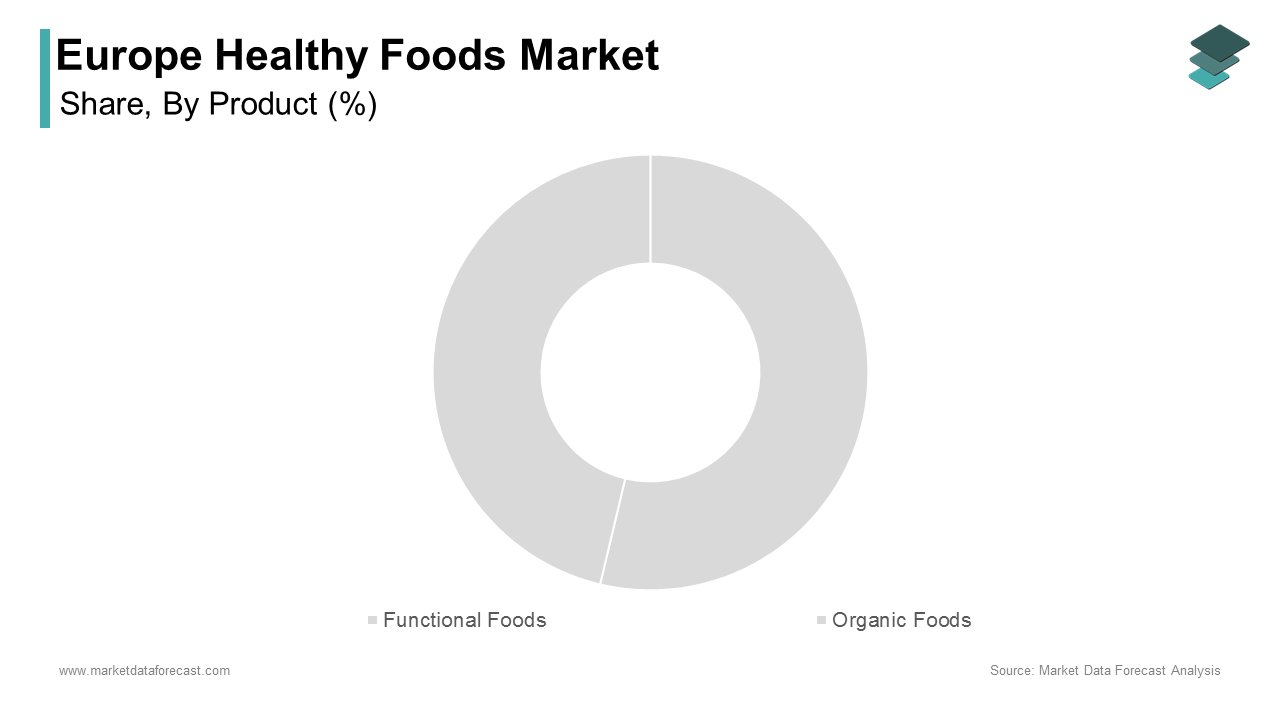
The functional foods segment is anticipated to witness the fastest CAGR of 9.7% from 2026 to 2034 due to the rising consumer interest in foods that deliver targeted health benefits beyond basic nutrition, such as immune support, gut heal, and cognitive enhancement. Probiotic yogurts, plant-based protein, and mega-fortified eggs are gaining traction as preventive health tools amid aging populations and chronic disease burdens. Regulatory clarity under the EU Nutrition and Health Claims Regulation has enabled compliant innovation. Companies like Nestlé and Danone have invested heavily in clinical validation of their functional products. The increasing personalization of dietary advice, powered by digital health platforms, is driving a surge in demand for science-backed functional foods, which is outpacing growth in conventional healthy food categories.
By Distribution Channel Insights
The supermarkets and hypermarkets segment dominated by occupying 63.6% share of the Europe healthy foods market in 2025. The prominence of the supermarkets and hypermarkets segment is mainly driven by its ability to offer scale, variety, and trust under one roof while integrating healthy options into mainstream shopping routines. Major retailers have transformed their fresh produce, dairy, and pantry sections to prioritize organic, clean-label, and locally sourced items, often using color-coded signage and dedicated zones to signal health credentials. The logistical advantage of centralized supply chains allows these retailers to maintain consistent stock and competitive pricing even for premium products. Loyalty programs and digital coupons further incentivize trial. This embedded retail infrastructure ensures supermarkets remain the backbone of healthy food accessibility.
The convenience stores segment is likely to experience the fastest CAGR of 7.2% during the forecast period. The rapid expansion of the convenience stores segment is fueled by urbanization, time poverty, and the redefinition of convenience to include wellness. Chains such as REWE To Go in Germany, SPAR Express in Austria, and Londis Local in the United Kingdom have overhauled their offerings to include fresh salad,,s protein pots, cold-pressed juices, and organic snack bars. The rise of hybrid formats such as healthy kiosks in Stockholm and Amsterdam that combine grab-and-go meals with digital ordering has further accelerated relevance. Retailers are also leveraging smart fridges and AI-driven inventory systems to reduce waste and ensure freshness. This channel is carving out a vital position for itself within Europe's healthy food ecosystem, driven by the expanding expectations of urban consumers for quick and nutritious food options.
REGIONAL ANALYSIS
Germany Healthy Food Market Analysis
Germany was the top performer in the Europe healthy foods market by accounting for 24.6% share in 2025. The domination of Germany is primarily driven by a mature organic sector, strong environmental consciousness, and robust policy frameworks such as the National Strategy on Biological Diversity. Consumers exhibit a high willingness to pay for organic products, commanding price premiums yet still achieving growth. Discounters have played a pivotal role by offering affordable organic private labels, making healthy eating accessible beyond premium segments. Berlin, Munich, and Hamburg serve as innovation hubs for plant-based startups with government grants supporting alternative protein research. The combination of regulatory rigor, retail democratization, and consumer vigilance ensures Germany remains the anchor of Europe’s healthy foods landscape.
France Healthy Food Market Analysis
France is the next prominent region in the Europe healthy foods market by capturing 19.5% share in 2025. The market in France is led by its emphasis on gastronomic quality, nutritional balance, and the “plaisir et santé” philosophy that merges pleasure with well-being. The government’s National Nutrition and Health Program has successfully reduced salt and sugar consumption through voluntary industry agreements and public education. Carrefour and Auchan lead retail innovation. Urban centers like Lyon and Bordeaux have seen a surge in zero-waste stores and short supply chain cooperatives. France’s unique blend of culinary tradition, scientific nutrition guidance, and policy coherence positions it as a model for holistic healthy eating.
United Kingdom Healthy Food Market Analysis
The United Kingdom is moving ahead steadfastly in the Europe healthy foods market. Despite Brexit-related regulatory divergence, the UK maintains strong consumer demand for clean-label plant-based and fortified food, driven by high health literacy and digital engagement. The National Health Service’s Eatwell Guide shapes public understanding of balanced diets while initiatives like the Soft Drinks Industry Levy have demonstrably reduced sugar intake. Retailers have pioneered health scoring systems. London serves as a launchpad for functional food startups. The rise of subscription meal kits like Mindful Chef further integrates healthy eating into daily routines. The UK market is evolving through science-led innovation and behavioral nudges in response to the ongoing public health priority of high obesity rates.
Italy Healthy Food Market Analysis
Italy is gradually expanding in the Europe healthy foods market. The growth of Italy is influenced by the Mediterranean diet, recognized by UNESCO as intangible cultural heritage, which emphasizes olive oil, legumes, whole grains, and seasonal vegetables. This cultural foundation has facilitated organic adoption. Consumer trust in traditional foodways translates into strong demand for minimally processed products. Retailers like Conad and Coop Italia have integrated local organic cooperatives into their supply chain, ensuring freshness and traceability. Urban centers such as Milan and Bologna lead in-plant-based innovation, while southern regions champion heritage grains and cold-pressed oils. Government programs promote healthy eating among children, reinforcing lifelong habits. Italy’s fusion of tradition, authenticity, and modern health awareness sustains its influential market position.
Sweden Healthy Food Market Analysis
Sweden is likely to grow in the Europe healthy foods market due to its progressive public health policies, high environmental standards, and early adoption of plant-based and functional foods. The Swedish Food Agency’s labeling system, which identifies healthier choices within food categories, is used by consumers as a trusted guide. Organic penetration is among the highest in Europe. Retailers like ICA and Coop have committed to climate-positive product lines with full carbon footprint labeling on thousands of SKUs. Stockholm and Gothenburg host numerous food tech incubators focused on sustainable protein and cellular agriculture. Sweden’s integration of climate action, nutritional science, and consumer transparency makes it a forward-looking leader in the healthy foods transition.
COMPETITION OVERVIEW
The Europe healthy foods market is characterized by intense competition among multinational corporations, regional specialists, and agile niche brands, all vying for consumer trust in an environment defined by high scrutiny and evolving expectations. Incumbents compete not only on nutritional quality but also on environmental impact,,t ethical sourcing, and scientific credibility. The market is highly fragmented due to diverse national dietary cultures, regulatory interpretations, and retail landscapes, which necessitate localized strategies. Large players leverage scale and R and D to drive reformulation and functional innovation, while smaller brands differentiate through authenticity, heritage, and hyper specialization, such as asallergen-freee or keto-certified products. Retailers exert significant influence by curating private label healthy ranges and setting sustainability criteria for suppliers. Regulatory bodies, including the European Food Safety Authority, closely monitor health claims, creating a high barrier to misleading marketing.
KEY MARKET PLAYERS
A few of the dominating players in the Europe healthy foods market include
- Nestlé S.A
- Danone S.A
- PepsiCo Inc
- General Mills Inc
- Kraft Heinz Company
- Mondelez International Inc
- GlaxoSmithKline PLC
- Abbott Laboratories
- Herbalife Nutrition Ltd
- Archer Daniels Midland Company
- Chobani Global Holdings LLC
- Clif Bar & Company
- Dairy Farmers of America Inc
- Glanbia PLC
- Yakult Honsha Co., Ltd
Top Strategies Used by the Key Market Participants
Key players in the Europe healthy foods market prioritize product reformulation to reduce sugar, salt, and artificial additives while enhancing protein, fiber, and micronutrient content. They invest in clean label and organic certifications to align with consumer demand for transparency and naturalness. Strategic acquisitions of plant-based and functional food startups accelerate innovation and category expansion. Companies integrate environmental metrics such as carbon and water footprints into packaging to meet EU sustainability expectations. They collaborate with farmers to implement regenerative agricultural practices, ensuring ethical sourcing. Digital engagement through nutrition apps, personalized meal planning, and e-commerce partnerships enhances consumer loyalty. Retailer co-development of private label healthy ranges strengthens shelf presence. Compliance with evolving EU health claim regulations ensures marketing credibility and legal safety across diverse national markets.
LEADING PLAYERS IN THE MARKET
Nestlé
Nestlé is a pivotal player in the Europe healthy foods market with a broad portfolio spanning medical nutrition, fortified cereals, plant-based alternatives, and functional beverages. The company leverages its global R and D infrastructure to develop science-backed products aligned with European dietary guidelines and sustainability goals. It has also invested in personalized nutrition through partnerships with digital health platforms and acquired startups focused on gut health and protein innovation to meet evolving consumer demands for preventive wellness solutions.
Danone
Danone operates as a leading force in Europe’s healthy foods sector through its core businesses in dairy alternatives, medical nutrition, and early life nutrition. The company champions the One Planet One Health vision, integrating health and environmental stewardship across its value chain. Recent strategic moves include the expansion of Alpro’s oat and pea-based product lines, the introduction of carbon-labeled yogurts in France and Germany, and the divestment of non-core assets to focus exclusively on health-focused categories. Danone has also strengthened its position by collaborating with European farmers to promote regenerative agriculture and by enhancing transparency through detailed nutritional and environmental scoring on packaging to build consumer trust.
Dr Oetker
Dr Oetker has established a strong presence in the Europe healthy foods market through its commitment to clean-label baking ingredients plant plant-based desserts, and fortified convenience foods. Headquartered in Germany, the company emphasizes natural ingredients, minimal processing, and family-oriented nutrition. In response to rising demand for healthier indulgences, Dr Oetker has reformulated its cake mixes to remove artificial additives, launched a range of vegan ready-to-eat desserts, and introduced whole-grain pizza bases across major European retailers. The company also supports nutritional education through school programs and digital cooking platforms that promote balanced home cooking, thereby embedding itself in the daily health routines of European households.
MARKET SEGMENTATION
This research report on the Europe healthy foods market has been segmented and sub-segmented based on product, distribution channel, and region.
By Product
- Functional Foods
- Organic Foods
By Distribution Channel
- Supermarket & Hypermarket
- Convenience Stores
By Region
- UK
- France
- Spain
- Germany
- Italy
- Russia
- Sweden
- Denmark
- Switzerland
- Netherlands
- Turkey
- Czech Republic
- Rest of Europe