- Product Description Description
- Table of Contents TOC
- List of Table & Figure LOT
- Get Free Sample PDF Sample PDF
Market Size, 2025
$108.87 BnMarket Estimate, 2026
$116.27 BnMarket Forecast, 2034
$196.81 BnCAGR, 2026–2034
6.8%Global Healthy Snacks Market Report Summary
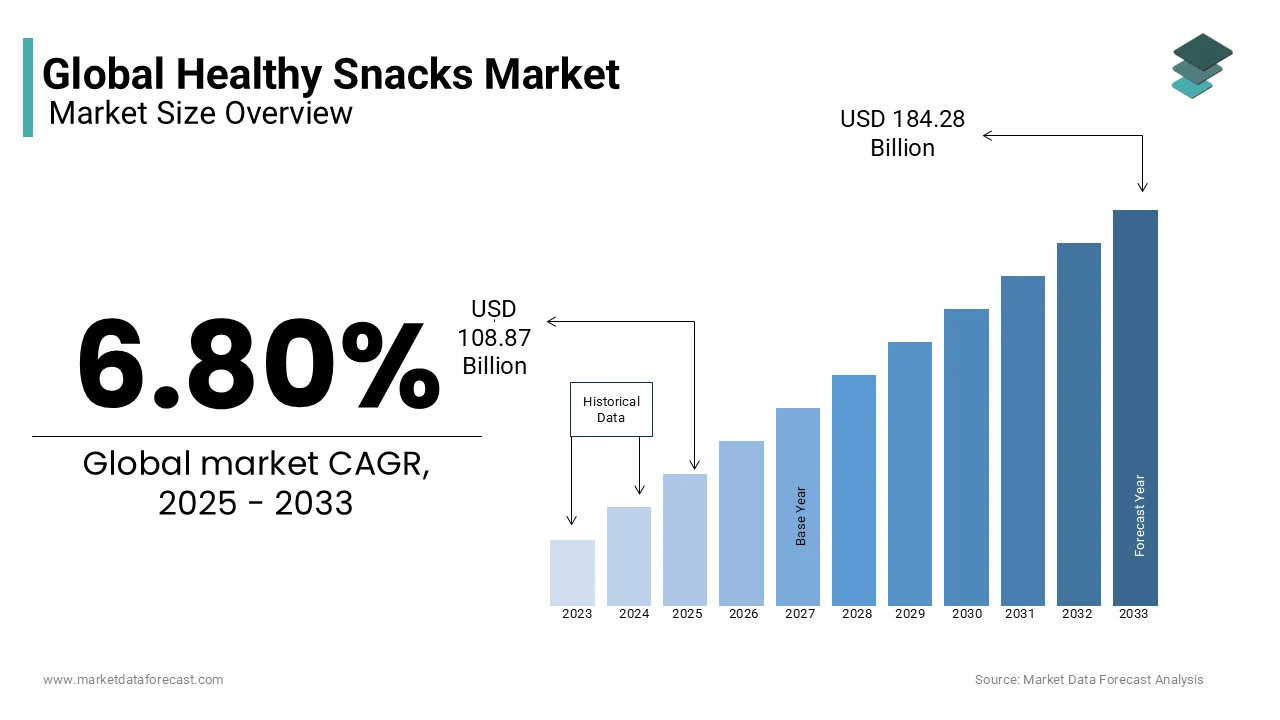
The global healthy snacks market size was valued at USD 108.87 billion in 2025, is projected to reach USD 116.27 billion in 2026, and is expected to rise to USD 196.81 billion by 2034, growing at a steady CAGR of 6.80% during the forecast period. Market growth is driven by rising health consciousness, increasing demand for nutrient-rich, low-sugar snack alternatives, and the growing shift toward clean-label, plant-based, and functional snacks. Expanding retail availability, evolving dietary preferences, and strong adoption of convenience foods across developed and emerging markets continue to accelerate global healthy snack consumption.
Key Market Trends
- Increasing consumer preference for high-protein, fiber-rich, and low-calorie snacks.
- Rising demand for plant-based snacks, organic ingredients, and clean-label formulations.
- Expansion of healthy snacking options across supermarkets, convenience stores, and e-commerce platforms.
- Innovation in functional snacks featuring probiotics, superfoods, and immunity-boosting ingredients.
- Strong marketing focus on wellness, portion control, and lifestyle-oriented snacking.
- Growth of on-the-go and ready-to-eat healthy snack formats, especially in urban markets.
Segmental Insights
- Based on product, the cereal and granola bars segment dominated the global healthy snacks market in 2025, capturing 36.8% of total product segment value. Growth is supported by rising demand for convenient, nutritious, and high-energy snack options among fitness enthusiasts and working professionals.
Regional Insights
- North America led the global healthy snacks market, commanding 35.3% of total market share in 2025. Growth is fueled by strong consumer purchasing power, increased focus on wellness-oriented diets, and widespread availability of premium healthy snack brands across the U.S. and Canada.
Competitive Landscape
The global healthy snacks market features strong competition driven by continuous product innovation, premiumization, and expansion across retail and online channels. Major companies dominating the market include Nestlé S.A, PepsiCo, Inc., Kellogg Company, Tyson Foods, Inc., General Mills, Inc., Hormel Foods Corporation, Kind LLC, B&G Foods, Inc., The Hain Celestial Group, Inc., Calbee, Inc., and Select Harvests
Global Healthy Snacks Market Size
The global healthy snacks market size was valued at USD 108.87 billion in 2025. The global market size is expected to reach USD 196.81 billion by 2034 from USD 116.27 billion in 2026. The market's promising CAGR for the predicted period is 6.80%.
Healthy Snacks are portable, nutrient-dense food products designed to deliver functional benefits such as improved digestion, sustained energy, and enhanced immunity, while minimizing added sugars, artificial ingredients, and unhealthy fats. These products include plant-based bars, protein-enriched bites, fermented snacks, and minimally processed whole-food options that align with evolving dietary preferences. As per the World Health Organization, non-communicable diseases account for 71% of global deaths annually, with poor diet being a leading risk factor, amplifying consumer demand for healthier eating alternatives. In parallel, the Global Nutrition Report 2024 indicates that over 3 billion people worldwide cannot afford a diet meeting minimum nutritional standards, underscoring the urgency for accessible, fortified snack solutions. This shift is further reinforced by rising public awareness of gut health, metabolic wellness, and clean-label transparency, which are redefining snack formulation and consumption patterns across demographics.
MARKET DRIVERS
Rising Prevalence of Lifestyle-Related Metabolic Disorders
The escalating global burden of metabolic conditions such as obesity, type 2 diabetes, and insulin resistance is a pivotal force reshaping consumer behavior toward healthier snacking. According to the International Diabetes Federation, 537 million adults were living with diabetes in 2021, a figure projected to rise to 783 million by 2045. In the United States, as per the Centers for Disease Control and Prevention, more than 41% of adults are obese, prompting a shift toward low-sugar, high-fiber, and protein-rich alternatives. Functional snacks containing ingredients like resistant starch, plant protein, and natural sweeteners such as monk fruit or allulose are increasingly adopted to manage glycemic response. This medical and behavioral shift is driving product innovation and accelerating demand for scientifically backed snack formulations.
Expansion of Health-Conscious Millennial and Gen Z Consumer Bases
Millennials and Generation Z are redefining snack consumption by prioritizing nutritional integrity, ingredient transparency, and ethical sourcing. These cohorts exhibit strong skepticism toward artificial additives. Their preference for plant-based, allergen-free, and sustainably packaged snacks has catalyzed the launch of clean-label brands like KIND, RXBAR, and Oatly Snacks. Besides, social media platforms amplify peer-driven health narratives. This digitally native, values-led demographic is compelling manufacturers to reformulate legacy products and introduce functional claims backed by nutritional science.
MARKET RESTRAINTS
High Cost of Clean-Label and Functional Ingredients
The incorporation of premium ingredients such as organic proteins, non-GMO sweeteners, and probiotic cultures significantly inflates production costs, limiting affordability and mass-market penetration. As per the Organic Trade Association, organic almond flour can cost up to 2.5 times more than conventional wheat flour, while clean-label preservatives like rosemary extract are priced higher than synthetic alternatives. In middle-income economies such as India and Indonesia, such price premiums restrict consumer adoption. Consequently, many health-oriented products remain confined to urban, high-income segments, undermining scalability and inclusivity in emerging markets despite growing health awareness.
Regulatory Fragmentation in Health Claim Substantiation
Divergent global regulations governing nutrient content and health claims hinder standardized product development and cross-border marketing. In the European Union, the European Food Safety Authority has approved only 220 health claims out of over 4,600 submitted under Regulation (EC) No 1924/2006, creating significant barriers for brands making functional assertions. Conversely, the U.S. Food and Drug Administration permits structure-function claims without pre-approval, leading to inconsistencies in claim legitimacy. In Australia, the Therapeutic Goods Administration requires rigorous evidence for any product implying disease risk reduction, whereas in Southeast Asia, regulatory oversight remains underdeveloped, enabling misleading labeling. This regulatory asymmetry increases compliance complexity, delays product launches, and erodes consumer trust, particularly for multinational brands seeking uniform branding strategies.
MARKET OPPORTUNITIES
Integration of Personalized Nutrition into Snack Formulation
Advancements in nutrigenomics and digital health monitoring are enabling the development of personalized snack solutions tailored to individual metabolic profiles, dietary restrictions, and activity levels. As per the Personalized Nutrition Project at the Weizmann Institute of Science, glycemic responses to identical foods vary by up to 30% between individuals, underscoring the need for customized nutrition. Companies like Zoe and Nourish Bio are leveraging AI-driven algorithms and microbiome testing to recommend snack formulations optimized for gut health and energy balance. Hence, there is growing potential to embed biomarker-responsive ingredients, such as prebiotic fibers or adaptogens, into scalable snack formats, transforming them from convenience items into precision health tools.
Growth of E-commerce and Direct-to-Consumer Subscription Models
Digital platforms are revolutionizing access to healthy snacks by enabling niche brands to bypass traditional retail gatekeepers and engage consumers through data-driven personalization. According to the United Nations Conference on Trade and Development, global e-commerce sales reached $3.4 trillion in 2024, with food and wellness products among the fastest-growing categories. Subscription services like Graze (UK) and NatureBox (USA) have demonstrated sustained success. This shift allows brands to collect real-time consumer feedback, iterate product offerings rapidly, and build loyalty through customized experiences, particularly appealing to younger, tech-savvy demographics seeking convenience without compromising health integrity.
MARKET CHALLENGES
Difficulty in Balancing Taste, Texture, and Nutritional Efficacy
Despite strong demand for health-oriented snacks, many consumers reject products that compromise sensory appeal. Also, replacing refined sugars with natural alternatives like stevia or erythritol often results in cooling mouthfeel or delayed sweetness onset, diminishing palatability. As per the Institute of Food Technologists, fiber enrichment beyond 5g per serving can lead to gassiness and reduced consumer compliance. Achieving optimal mouthfeel with clean-label binders, such as tapioca starch instead of carrageenan, remains a technical hurdle. This sensory-performance gap limits repeat purchases, particularly among mainstream consumers who prioritize taste over nutritional metrics, forcing brands to invest heavily in food science R&D to harmonize health benefits with indulgence.
Greenwashing and Consumer Skepticism Toward Health Claims
An oversaturation of vague or unsubstantiated claims such as “natural,” “wholesome,” or “energy-boosting” has led to widespread consumer distrust. This erosion of credibility undermines legitimate brands investing in clinical validation and transparent sourcing Overcoming this skepticism requires not only regulatory compliance but also proactive transparency through blockchain traceability and open-access nutritional data.
REPORT COVERAGE
| REPORT METRIC | DETAILS |
| Market Size Available | 2025 to 2034 |
| Base Year | 2025 |
| Forecast Period | 2026 to 2034 |
| CAGR | 6.80% |
| Segments Covered | By Product,and Region. |
| Various Analyses Covered | Global, Regional and Country Level Analysis; Segment-Level Analysis; DROC; PESTLE Analysis; Porter’s Five Forces Analysis; Competitive Landscape; Analyst Overview of Investment Opportunities |
| Regions Covered | North America, Europe, APAC, Latin America, Middle East & Africa |
| Market Leaders Profiled | Nestlé S.A, PepsiCo, Inc., Kellogg Company, Tyson Foods, Inc., General Mills, Inc., Hormel Foods Corporation, Kind LLC, B&G Foods, Inc., The Hain Celestial Group, Inc., Calbee, Inc., Select Harvests. |
SEGMENTAL ANALYSIS
By Product Insights
The cereal and granola bars segment dominated the global healthy snacks market by capturing an estimated 36.8% of total product segment value in 2025. This lead position is primarily driven by their convenience, portability, and versatility in formulation to meet diverse dietary needs. The segment benefits from extensive product innovation, including gluten-free, keto-friendly, and plant-protein variants. Besides, institutional procurement by schools, corporate wellness programs, and gyms has institutionalized their role in daily nutrition, reinforcing consistent demand across demographics and geographies. Their integration into structured dietary regimens is a key factor underpinning the dominance of cereal and granola bars. Also, individuals who consumed fortified cereal bars as part of a weight management plan exhibited greater adherence to calorie-controlled diets several weeks compared to those relying on whole foods alone. The bars’ standardized portioning and nutrient labeling simplify caloric tracking, a critical feature for health-conscious consumers. This functional positioning, bridging convenience, satiety, and measurable nutritional input, solidifies their status as a staple in modern snacking ecosystems.
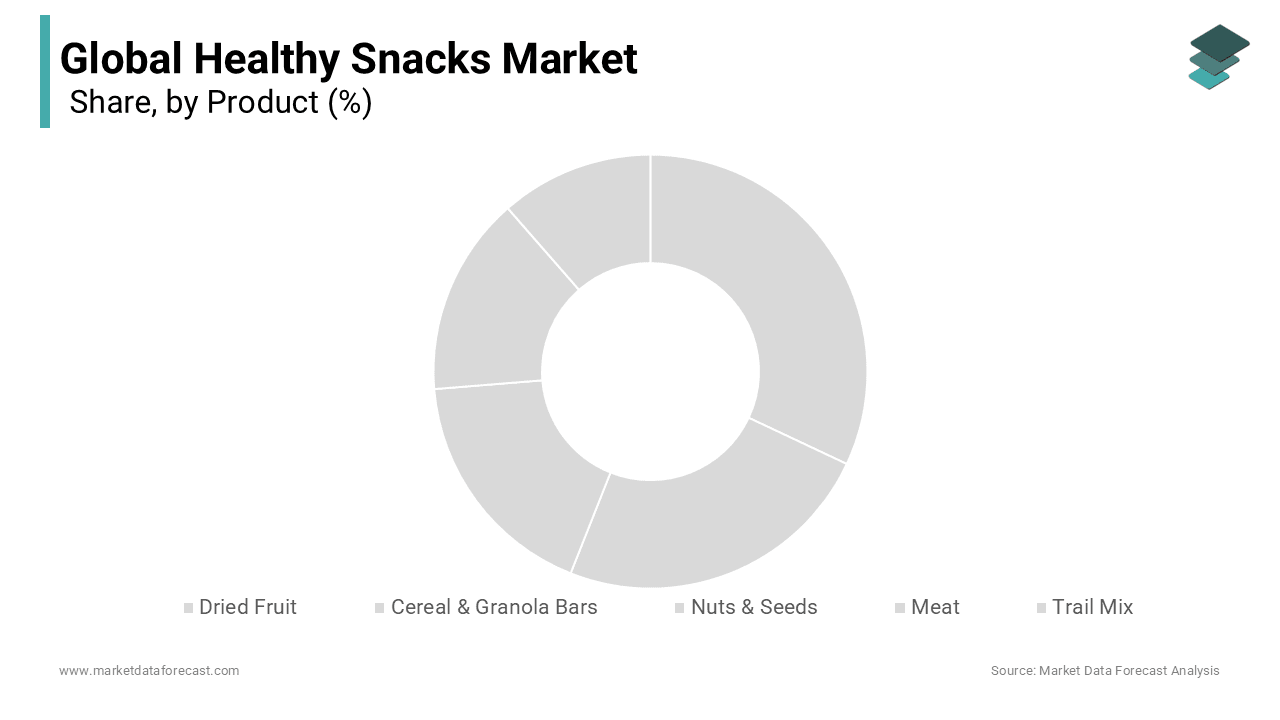
The meat snacks segment is expanding at the fastest compound annual growth rate of 9.8% in the healthy snacks market. It is propelled by rising demand for high-protein, low-carbohydrate, and satiating alternatives among active and aging populations. Innovations such as biltong, turkey sticks, and plant-animal hybrid blends have broadened appeal beyond traditional demographics, particularly among athletes and ketogenic diet followers. The increasing focus on sarcopenia prevention and age-related muscle loss is a primary driver of this rapid growth. Meat-based snacks offer a concentrated protein source, typically 10–15 grams per serving, with high bioavailability of essential amino acids. Furthermore, clean-label positioning, minimal ingredients, no artificial preservatives, and grass-fed sourcing, has elevated consumer trust.
REGIONAL ANALYSIS
North America Market Analysis
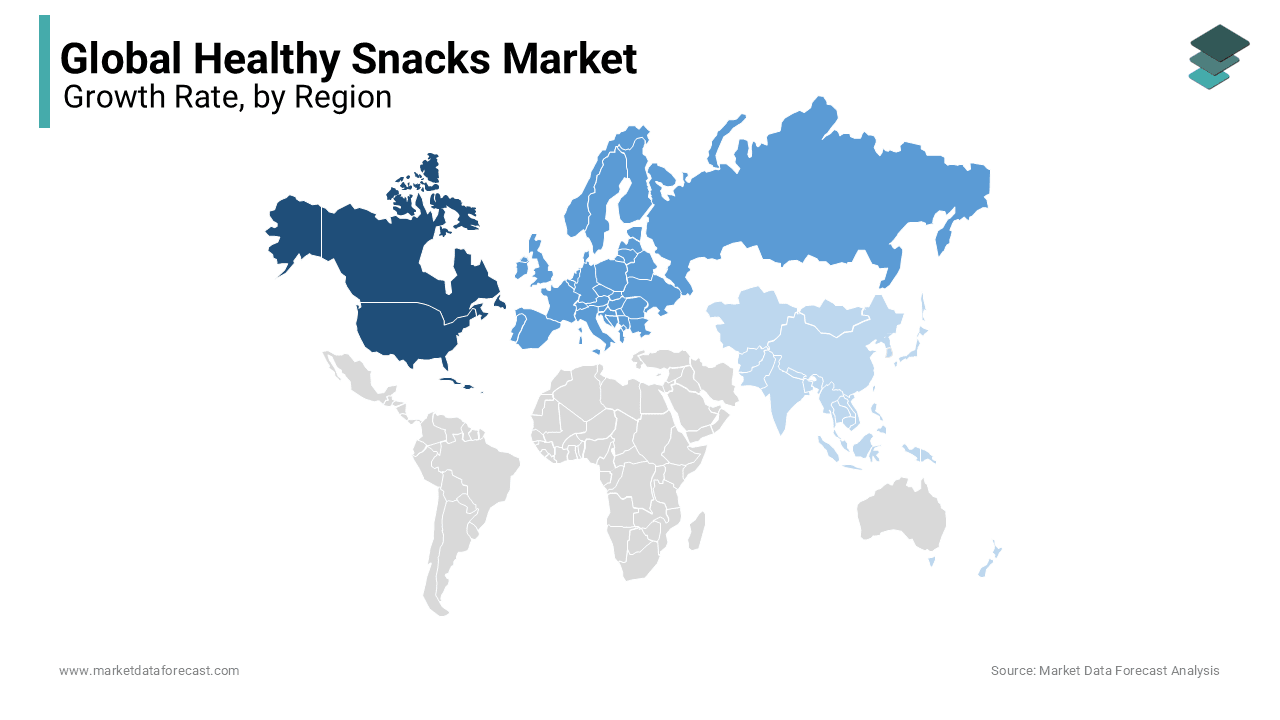
North America led the market by commanding 35.3% share of the global healthy snacks market. It is driven by high consumer health literacy and a mature functional foods ecosystem. The rise of workplace wellness programs and insurance-backed nutrition incentives has further institutionalized demand. Retail penetration is extensive, with Walmart and Kroger dedicating entire store sections to “better-for-you” snacks. Digital platforms like Amazon Fresh and Thrive Market have also accelerated access, with online healthy snack sales growing.
Europe Market Analysis
Europe is characterized by stringent food regulations and a strong cultural emphasis on clean labels and sustainability. Germany, the UK, and France lead in consumption, where 57% of consumers prioritize ingredient origin when purchasing snacks, as per the European Consumer Organisation (BEUC). Plant-based and allergen-free snacks are particularly prevalent, with the vegan snack market in Europe growing annually. Additionally, the EU’s Farm to Fork Strategy has incentivized the use of organic and regeneratively farmed ingredients, reinforcing consumer confidence in premium health snacks.
Asia Pacific Market Analysis
Asia Pacific is undergoing a profound transformation fueled by urbanization and rising disposable incomes. China and India are emerging as key growth engines. In urban China, the functional snack market grew, driven by demand for immunity-boosting and energy-sustaining products post-pandemic. Japanese consumers favor low-sugar, fermented snacks like miso-flavored nuts and seaweed bars, reflecting traditional dietary principles aligned with longevity. E-commerce platforms such as JD.com and Flipkart are accelerating distribution, enabling niche brands to reach previously inaccessible consumers.
Latin America Market Analysis
Latin America holds a significant share of the global healthy snacks market, with Brazil and Mexico serving as primary hubs of innovation and consumption. Despite lower overall penetration, urban populations are increasingly adopting health-conscious behaviors, particularly among younger demographics. In Brazil, sales of protein-enriched and gluten-free snacks grew, driven by rising gym membership and social media influence. Mexico’s government launched the “Mexican Strategy for the Prevention and Control of Overweight, Obesity and Diabetes” in 2021, imposing taxes on high-sugar and high-fat snacks, which redirected consumer spending toward healthier alternatives. Chile’s front-of-package warning labels have also reshaped purchasing habits. These policy interventions are catalyzing product reformulation and creating space for functional snack expansion.
Middle East & Africa Market Analysis
The Middle East and Africa collectively account for a small share of the global healthy snacks market, with the Gulf Cooperation Council (GCC) nations leading adoption. In Saudi Arabia, the Vision 2030 initiative includes national wellness targets, prompting a surge in demand for fortified and halal-certified functional snacks. Dubai launched the program in public schools, distributing nutrient-dense snack packs to students. Although infrastructure and affordability remain challenges, premium imports and local startups are gradually expanding access to health-oriented products.
COMPETITIVE LANDSCAPE
The competition in the healthy snacks market is intensifying as legacy food manufacturers, specialized wellness brands, and agile startups converge on a rapidly evolving consumer landscape. Incumbents leverage scale, distribution, and R&D resources to reformulate products and enter functional categories, while niche players differentiate through clean labels, novel ingredients, and digital-first branding. The Asia Pacific region has become a critical battleground, where rising health awareness, urbanization, and government nutrition initiatives are accelerating demand. Differentiation increasingly hinges on scientific substantiation of health benefits, transparency in sourcing, and alignment with lifestyle trends such as plant-based diets and metabolic wellness. Mergers, innovation labs, and public-private partnerships are redefining competitive dynamics, making agility and authenticity key determinants of long-term market relevance.
KEY MARKET PLAYERS
Some of the major players in the global healthy snacks market are
-
Nestlé S.A.
-
PepsiCo, Inc.
-
Kellogg Company
-
Tyson Foods, Inc.
-
General Mills, Inc.
-
Hormel Foods Corporation
-
Kind LLC
-
B&G Foods, Inc.
-
The Hain Celestial Group, Inc.
-
Calbee, Inc.
-
Select Harvests
TOP STRATEGIES USED BY THE KEY MARKET PLAYERS
Key players in the healthy snacks market are deploying multifaceted strategies to gain competitive advantage, including product innovation, strategic acquisitions, geographic expansion, digital engagement, and sustainability integration. Companies are reformulating existing products to reduce sugar, sodium, and artificial additives while enhancing protein, fiber, and functional ingredients such as probiotics and adaptogens. Partnerships with health institutions and clinical validation of health claims are being used to bolster credibility. Expansion into e-commerce and direct-to-consumer models enables personalized offerings and real-time consumer insights. Sustainability is also a priority, with brands adopting compostable packaging and regenerative agriculture practices. Moreover, localization of flavors and nutritional profiles ensures cultural relevance, particularly in diverse markets like Asia Pacific, where dietary habits vary significantly across countries.
TOP PLAYERS IN THE MARKET
- PepsiCo has significantly expanded its footprint in the Asia Pacific healthy snacks market through strategic repositioning of its portfolio under the "Better-for-You" initiative. The company has localized offerings such as baked variants of Lay’s and nutrient-fortified Quaker Oats bars tailored to Indian and Southeast Asian palates. It also invested in sustainable sourcing of millets in India under its "Farm to Future" program, supporting 25,000 smallholder farmers while introducing high-fiber, gluten-free snack options. By leveraging its vast distribution network and R&D capabilities, PepsiCo is transitioning from a traditional snack giant to a science-backed nutrition provider, aligning with regional dietary shifts toward whole grains and functional ingredients.
- Nestlé has emerged as a pivotal player in the Asia Pacific healthy snacks market by integrating nutritional science with localized product development. The company launched its "Nestlé for Healthier Kids" initiative across 15 countries in the region, reformulating existing products to reduce sugar by up to 30% and fortify them with essential micronutrients. In Japan, Nestlé introduced protein-enriched KitKat Chocolatory bars with added collagen and B vitamins, targeting active aging consumers. Through its Garden Gourmet and NesFit brands, Nestlé is expanding into plant-powered bites and portion-controlled energy bars, emphasizing clinical validation and transparent labeling to build consumer trust in a market increasingly skeptical of health claims.
- Universal Robina Corporation, a leading Philippine-based food and beverage conglomerate, has strengthened its position in the Asia Pacific healthy snacks market by introducing region-specific, nutritionally enhanced products. The company also introduced baked, low-sodium variants of its popular crackers to align with rising health consciousness. Partnering with the Philippine Department of Health, URC supports public nutrition programs that distribute healthy snack bundles in underserved areas. Additionally, its acquisition of Australian snack brand Snackbrands in 2022 enabled access to premium, clean-label markets in Australia and New Zealand. By balancing affordability, fortification, and regulatory compliance, URC is bridging the gap between mass-market appeal and nutritional integrity in emerging economies.
RECENT HAPPENINGS IN THE MARKET
- In March 2025, Nestlé launched a clinical trial in partnership with the National University of Singapore to evaluate the impact of its prebiotic-fortified snack bars on gut microbiome diversity in Asian adults, reinforcing its science-led approach to functional nutrition.
- In July 2024, PepsiCo introduced a new line of millet-based, gluten-free snacks in India under its Quaker brand, developed in collaboration with the Indian Institute of Millets Research to support both consumer health and sustainable agriculture.
- In January 2025, Universal Robina Corporation expanded its Nutri-Plus program to Indonesia, distributing 500,000 fortified snack packs to schoolchildren in Jakarta and Surabaya in coordination with local health authorities to address micronutrient deficiencies.
- In May 2024, Nestlé opened a state-of-the-art R&D innovation hub in Singapore dedicated to developing plant-based, low-sugar, and high-protein snack formulations tailored to Asian dietary preferences and metabolic needs.
- In September 2025, PepsiCo partnered with Australia’s CSIRO to develop next-generation protein snacks using native Australian legumes, aiming to enhance nutritional density while supporting biodiversity and indigenous farming communities.
MARKET SEGMENTATION
This research report on the global healthy snacks market has been segmented and sub-segmented based on product and region.
By Product
- Dried Fruit
- Cereal & Granola Bars
- Nuts & Seeds
- Meat
- Trail Mix
By Region
- North America
- Europe
- Asia Pacific
- Latin America
- Middle East and Africa