- Product Description Description
- Table of Contents TOC
- List of Table & Figure LOT
- Get Free Sample PDF Sample PDF
Market Size, 2025
$456.06 BnMarket Estimate, 2026
$471.61 BnMarket Forecast, 2034
$616.7 BnCAGR, 2026–2034
3.4%Global Snack Products Market Report Summary
The global snack products market was valued at USD 456.06 billion in 2025, is estimated to reach USD 471.61 billion in 2026, and is projected to reach USD 616.71 billion by 2034, growing at a CAGR of 3.41% during the forecast period. Market growth is driven by increasing demand for convenient food options, changing consumer lifestyles, and rising preference for on the go consumption. Snack products are widely consumed due to their accessibility, variety, and ability to meet diverse taste preferences. Continuous product innovation and expansion of retail channels are further supporting steady global market growth.
Key Market Trends
- Rising demand for convenient and ready to eat snack products is driving market growth.
- Increasing preference for on the go consumption is boosting demand.
- Growing innovation in healthier and functional snack options is supporting market expansion.
- Expansion of retail and supermarket channels is enhancing product accessibility.
- Rising consumer spending on premium and indulgent snacks is influencing market trends.
Segmental Insights
- Based on type, the salted snacks segment held the dominant share of the global snack products market in 2025. This dominance is attributed to strong consumer preference for savory snacks such as chips and extruded products.
- Based on distribution channel, the supermarkets and hypermarkets segment held the leading share of the global snack products market in 2025, driven by extensive reach, wide product assortment, and competitive pricing.
Regional Insights
- The global snack products market is experiencing steady growth across regions, supported by evolving consumption patterns and retail expansion.
- The United States is expected to remain the largest consumer market globally through the forecast period, driven by established snacking culture, high product innovation, and strong retail infrastructure.
Competitive Landscape
The global snack products market is highly competitive, with key players focusing on product innovation, brand differentiation, and expansion of distribution networks to strengthen their market position. Companies are investing in healthier snack alternatives, premium offerings, and sustainable packaging. Prominent players in the global snack products market include Kellogg’s Company, Nestle Inc, ConAgra Foods Inc, Calbee, Inc, Frito Lay’s, Cadbury Schweppes PLC, Ferrero Group, Hershey Foods, Meridian Foods, and PepsiCo.
Global Snack Products Market Size
The Global snack products market size was valued at USD 456.06 billion in 2025, and the global market size is expected to be USD 471.61 billion in 2026, and it is estimated to reach USD 616.71 billion by 2034, with a registering CAGR of 3.41% during the forecast period 2026 to 2034.
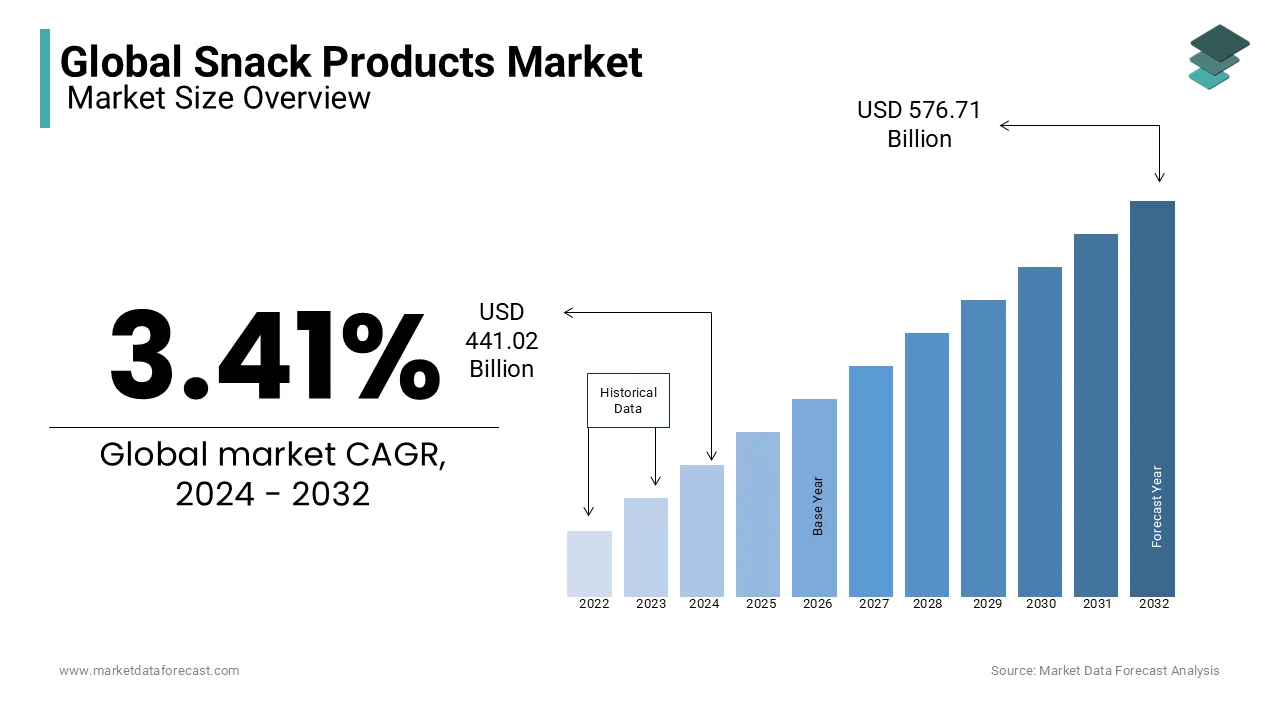
Snack products encompasses a diverse array of ready to eat food items consumed between main meals, ranging from savory chips and crackers to sweet confectionery and baked goods. This sector has evolved significantly from offering mere convenience to providing functional nutrition and indulgent experiences. In Europe, snacking has become an integral part of daily dietary habits, driven by busy lifestyles and changing social patterns. The definition of snacks now extends beyond traditional junk food to include health oriented options such as protein bars, nut mixes, and dried fruits. According to the European Commission, the food and beverage industry remains the largest manufacturing sector in the EU in terms of turnover and value added which highlights its role in employing millions and contributing substantially to the economy. The cultural shift towards on the go consumption is evident in urban centers where time poverty influences eating behaviors. As per Eurostat, the average household expenditure on food and non-alcoholic beverages in the EU accounted for 14.3% of total consumption expenditure in 2022. This financial allocation underscores the importance of affordable and accessible food options. Furthermore, the rise of single person households has increased the demand for smaller portion sizes and individual packaging. The market is characterized by rapid innovation in flavors, textures, and ingredients to cater to discerning palates. Regulatory frameworks regarding labeling and nutritional content also play a pivotal role in shaping product development. The interplay between tradition and modernity defines the current landscape of the snack industry.
MARKET DRIVERS
Accelerated Urbanization and Busy Lifestyles Fuel Convenience Demand
The rapid pace of urbanization and increasingly busy lifestyles is majorly propelling the growth of the global snack products market. Modern consumers, particularly in metropolitan areas, face time constraints that limit their ability to prepare elaborate meals. This demographic shift necessitates convenient food options that can be consumed quickly without compromising on taste or satisfaction. According to the United Nations, 55% of the world’s population lives in urban areas, a proportion that is expected to increase to 68% by 2050. This concentration of people in cities correlates with higher demand for ready to eat foods. The prevalence of dual income households further reduces the time available for cooking, making snacks a viable substitute for traditional meals. As per the Organisation for Economic Cooperation and Development, people in member countries spend an average of only 47 minutes per day on food preparation and cleanup. Consequently, consumers prioritize portability and ease of access when selecting food items. Retailers respond by placing snack aisles prominently in stores and expanding online delivery services for immediate gratification. The integration of snacks into workplace culture, such as afternoon breaks, also sustains demand. Manufacturers innovate with resealable packaging and single serve portions to align with these lifestyle needs. The psychological association of snacking with stress relief and reward mechanisms further reinforces consumption patterns. Thus, the structural changes in living and working environments directly propel the growth of the snack industry.
Rising Health Consciousness and Demand for Functional Ingredients
The growing health consciousness among consumers drives the demand for nutritious and functional snack products, which is another significant market driver. Individuals are increasingly aware of the impact of diet on long term well being, prompting a shift away from high sugar and high fat options. This trend is supported by widespread public health campaigns and accessible information on nutrition. According to the World Health Organization, worldwide obesity has nearly tripled since 1975, which acts as a major driver influencing dietary choices. Consumers actively seek snacks fortified with proteins, fibers, vitamins, and minerals to support their health goals. As per the International Food Information Council, 52% of consumers followed a specific diet or eating pattern in 2023. The popularity of plant based diets has also spurred innovation in vegan and gluten free snacks. Manufacturers incorporate superfoods such as quinoa, chia seeds, and kale to enhance nutritional profiles. The clean label movement encourages transparency, with buyers preferring products with recognizable and natural ingredients. Retailers dedicate shelf space to health focused brands, reflecting this consumer preference. Social media influencers and fitness experts promote healthy snacking habits, further amplifying the trend. The availability of low calorie and keto friendly options caters to specific dietary regimes. This alignment with wellness trends ensures that health oriented snacks capture a growing segment of the market. The evolution from indulgence to functionality marks a significant transformation in consumer behavior.
MARKET RESTRAINTS
Stringent Regulations on Sugar and Salt Content Limit Formulations
Stringent government regulations on sugar and salt content is a significant restraint to the snack products market. Public health authorities worldwide are implementing policies to combat obesity and related health issues by restricting unhealthy ingredients in processed foods. These regulations often mandate reformulation of existing products, which can alter taste and texture, potentially alienating loyal customers. According to the European Commission, a series of front of pack nutrition labeling schemes have been evaluated to ensure consumers receive clear information on saturated fats, sugars, and salt. Compliance with these standards increases production costs and complexity. As per the World Cancer Research Fund, more than 50 jurisdictions globally have implemented a tax on sugar sweetened beverages as of 2024. Such fiscal measures impact sales volumes, particularly for price sensitive demographics. Manufacturers must invest heavily in research and development to create healthier alternatives that maintain palatability. The transition to natural sweeteners and reduced sodium formulations requires technical expertise and new supply chains. Additionally, varying regulations across different countries create challenges for multinational companies seeking standardized products. The fear of negative public perception associated with high sugar or salt content also restricts marketing strategies. Brands face scrutiny from consumer advocacy groups and health organizations, limiting promotional freedom. These regulatory pressures constrain innovation and profitability, forcing companies to navigate a complex compliance landscape. The balance between health mandates and consumer preference remains a delicate operational challenge.
Volatility in Raw Material Prices Impacts Profit Margins
Volatility in raw material prices significantly impacts the profit margins of snack product manufacturers, which is further impeding the expansion of the global snack products market. The industry relies heavily on agricultural commodities such as wheat, corn, potatoes, sugar, and cocoa, whose prices fluctuate due to weather conditions, geopolitical tensions, and supply chain disruptions. According to the Food and Agriculture Organization of the United Nations, the Food Price Index reached an all time high in 2022 which caused substantial volatility in input costs for processors. Climate change exacerbates this issue by causing unpredictable harvests and reducing crop yields. As per the World Bank, agricultural prices are expected to remain high through 2025 due to supply risks and high production costs. Companies often struggle to pass these increased costs onto consumers without risking demand elasticity. Long term contracts with suppliers may offer some stability but do not fully shield against market shocks. The reliance on imported ingredients further exposes manufacturers to currency exchange rate fluctuations. Small and medium sized enterprises are particularly vulnerable to these financial pressures due to limited bargaining power. Supply chain bottlenecks, such as those seen during global crises, also delay procurement and increase logistics costs. The need for consistent quality despite variable raw material sources adds another layer of complexity. Manufacturers must adopt sophisticated hedging strategies and diversify sourcing to mitigate risks. However, these resources require capital and expertise, posing a barrier to efficient operations. This economic uncertainty restrains market growth and investment in new product development.
MARKET OPPORTUNITIES
Expansion into Plant Based and Alternative Protein Snacks
The expansion into plant based and alternative protein snacks presents a lucrative opportunity for market players. The rising adoption of vegetarian and vegan lifestyles, driven by ethical, environmental, and health concerns, has created a robust demand for non animal derived snacks. According to ProVeg International, the European plant based food sector grew by 21% between 2020 and 2022. Manufacturers can leverage this trend by developing snacks using ingredients such as peas, lentils, chickpeas, and nuts. These products appeal to flexitarians who seek to reduce meat consumption without eliminating it entirely. As per the Good Food Institute, retail sales of plant based meat reached $1.4 billion in the U.S. during 2022 which demonstrates the substantial scale of the alternative protein market. Plant based snacks often perceive as healthier and more sustainable, aligning with contemporary values. The versatility of plant proteins allows for creative formulations, including crispy chips, crunchy bars, and savory bites. Retailers are increasingly dedicating shelf space to plant based options, enhancing visibility. Collaborations with chefs and influencers can help educate consumers about the benefits of these alternatives. The use of upcycled ingredients, such as fruit pulps and vegetable peels, further enhances sustainability credentials. This approach resonates with environmentally conscious buyers who prioritize waste reduction. By tapping into this growing segment, companies can diversify their portfolios and attract new customer bases. The potential for premium pricing on innovative plant based products also offers higher margin opportunities. Strategic positioning in this niche can establish brand leadership in the evolving snack landscape.
Integration of Sustainable and Eco Friendly Packaging Solutions
The integration of sustainable and eco-friendly packaging solutions offers significant opportunities for differentiation in the snack market. Consumers are increasingly concerned about the environmental impact of plastic waste, prompting demand for biodegradable and recyclable packaging. According to the European Environment Agency, the EU generated 190.3 kg of packaging waste per inhabitant in 2021. Manufacturers can capitalize on this by adopting materials such as paper, cardboard, and compostable films. As per the Ellen MacArthur Foundation, over 20% of plastic packaging could be replaced by reusable systems, offering a significant economic opportunity. Brands that commit to sustainable packaging enhance their corporate image and build loyalty among environmentally conscious shoppers. Innovation in packaging technology allows for maintaining product freshness while minimizing environmental footprints. Clear labeling on recyclability helps consumers dispose of packaging correctly, fostering trust. Retailers prefer partners with strong sustainability credentials, facilitating better shelf placement. Government incentives for green initiatives further support this transition. The use of minimal packaging designs reduces material usage and costs. Collaborations with packaging suppliers to develop novel solutions can lead to proprietary advantages. Marketing campaigns highlighting sustainability efforts resonate with modern values. This strategic shift not only addresses regulatory requirements but also appeals to a growing segment of eco aware consumers. By leading in sustainability, snack brands can secure a competitive edge and contribute to global environmental goals.
MARKET CHALLENGES
Intense Competition from Private Label and Generic Brands
Intense competition from private label and generic brands is majorly challenging the global snack products market expansion. Retailers have expanded their own label offerings, providing high quality snacks at lower prices compared to national brands. According to the Private Label Manufacturers Association, private label market shares have reached record levels in 17 European countries. These alternatives often mimic popular branded products, offering similar tastes and textures at a fraction of the cost. As per NielsenIQ, private label sales grew by 12.2% in 2023, outpacing the growth of national brands. National brands struggle to justify premium pricing when perceived value differences diminish. The agility of retailers in responding to trends allows them to launch new private label snacks quickly, bypassing traditional development cycles. Marketing budgets for private labels are supported by in store promotions and loyal customer bases. Established companies face pressure to innovate continuously to maintain relevance. The saturation of the market with similar products leads to brand dilution. Consumer loyalty becomes fragile when price becomes the primary decision factor. Manufacturers must invest heavily in branding and unique value propositions to differentiate themselves. However, these efforts require substantial resources and may not always yield desired returns. The dominance of large retail chains gives them significant bargaining power, squeezing supplier margins. This competitive landscape forces constant adaptation and strategic restructuring for survival.
Supply Chain Disruptions and Logistics Complexities
Supply chain disruptions and logistics complexities present ongoing challenges for the snack products market. The global nature of ingredient sourcing makes the industry vulnerable to geopolitical tensions, trade restrictions, and transportation bottlenecks. According to the World Trade Organization, the volume of world merchandise trade grew by only 0.8% in 2023 which reflects persistent supply chain pressures. Delays in shipping and increased freight costs impact production schedules and inventory management. As per the International Chamber of Commerce, trade financing gaps have widened to $2.5 trillion in 2023 which hinders the smooth flow of goods. Perishable ingredients require careful handling and temperature control, adding layers of complexity. Any disruption in the cold chain can result in product spoilage and financial losses. The reliance on single source suppliers increases vulnerability to localised issues such as crop failures or labor strikes. Manufacturers must diversify sourcing strategies to mitigate risks, but this requires extensive coordination and quality assurance. Inventory holding costs rise as companies buffer against uncertainties. The unpredictability of demand further complicates logistics planning. Retailers demand just in time delivery, leaving little room for error. Technological investments in supply chain visibility are necessary but costly. Small manufacturers lack the resources to build resilient supply networks. These operational hurdles constrain efficiency and profitability. The need for agility in response to dynamic global conditions remains a persistent challenge for industry participants.
REPORT COVERAGE
| REPORT METRIC | DETAILS |
| Market Size Available | 2025 to 2034 |
| Base Year | 2025 |
| Forecast Period | 2026 to 2034 |
| CAGR | 3.41% |
| Segments Covered | By Type, Distribution Channel And Region |
| Various Analyses Covered | Global, Regional and Country Level Analysis; Segment-Level Analysis; DROC; PESTLE Analysis; Porter’s Five Forces Analysis; Competitive Landscape; Analyst Overview of Investment Opportunities |
| Regions Covered | North America, Europe, APAC, Latin America, Middle East & Africa |
| Market Leaders Profiled | Kellogg’s Company, Nestle Inc, ConAgra Foods Inc, Calbee, Inc, Frito Lay’s, Cadbury Schweppes PLC, Ferrero Group, Hershey Foods, Meridian Foods, PepsiCo. |
SEGMENTAL ANALYSIS
By Type Insights
The salted snacks segment dominated the market by holding the highest share of the global snack products market in 2025. The dominance of salted snacks segment in the global market can be credited to their widespread acceptance across diverse demographics and cultural boundaries. This category includes potato chips, extruded snacks, nuts, and seeds, which are perceived as affordable and convenient options for daily consumption. According to Statista, the salted snacks segment is expected to generate a revenue of $250.30 billion in 2024. The versatility of salted snacks allows them to be consumed on their own or as accompaniments to beverages and meals, enhancing their utility. As per the International Potato Center, potatoes are the third most important food crop in the world which ensures a consistent and cost effective supply chain for chip manufacturers. The availability of various flavors and textures caters to evolving consumer palates, from classic salted to spicy and herb infused variants. Retailers prioritize shelf space for salted snacks due to their high turnover rates and long shelf life. The impulse purchase behavior associated with these products further boosts sales in convenience stores and vending machines. Manufacturers leverage economies of scale to keep prices competitive, making salted snacks accessible to lower income segments. The integration of salted snacks into social gatherings and entertainment events sustains demand. Innovation in healthier frying techniques and reduced sodium formulations helps retain health conscious consumers. This combination of affordability, variety, and accessibility ensures that salted snacks maintain their dominance in the market landscape.
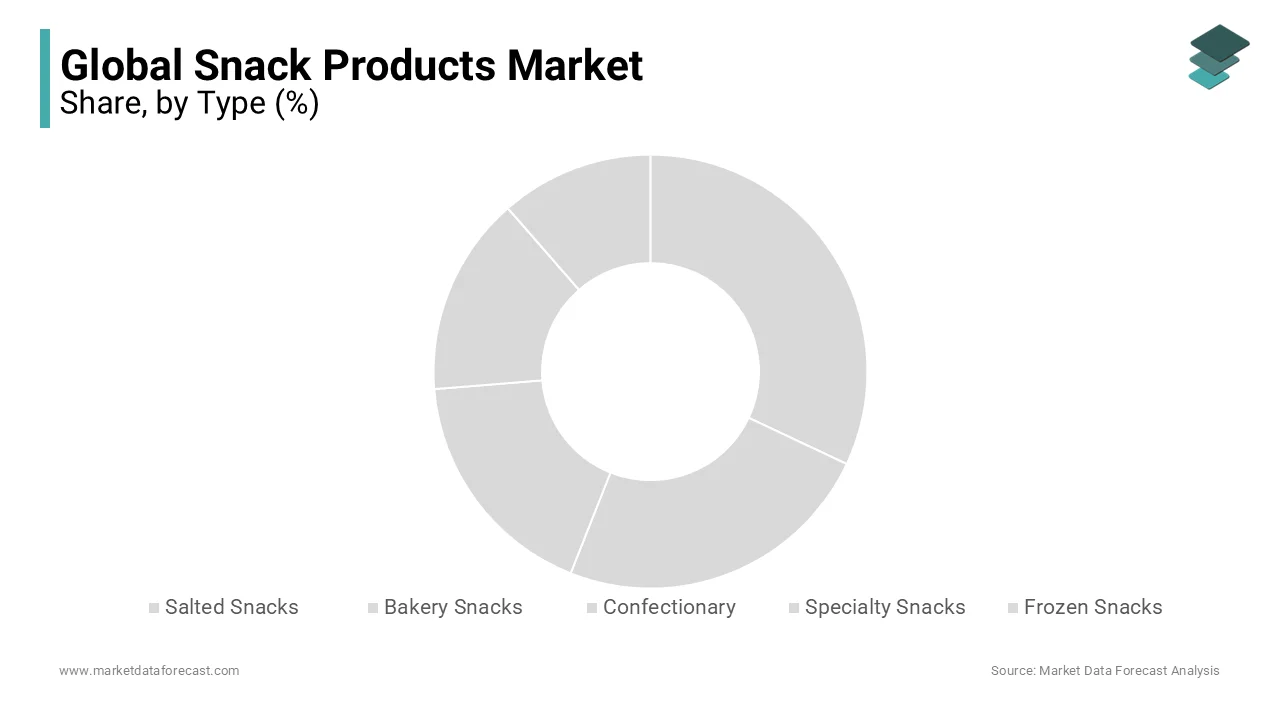
However, the specialty snacks segment is on the rise and is estimated to record the highest CAGR in the global market during the forecast period owing to the growing demand for premium, organic, and functional food options. Consumers are increasingly willing to pay a premium for snacks that offer unique ingredients, artisanal production methods, and specific health benefits. For instance, 1 in 3 consumers worldwide have increased their intake of snacks with functional benefits over the past year. Specialty snacks include gluten free, keto friendly, vegan, and protein enriched products that cater to niche dietary needs. As per the Organic Trade Association, organic food sales in the United States reached a record $63.8 billion in 2023. The growth is also fueled by the exploration of exotic flavors and international cuisines, appealing to adventurous eaters. Social media platforms play a crucial role in popularizing trendy specialty snacks, driving trial and adoption among younger demographics. Manufacturers focus on clean labels and transparent sourcing to build trust with discerning buyers. The expansion of specialty sections in mainstream supermarkets enhances visibility and accessibility. Collaborations with celebrity chefs and influencers further elevate brand prestige. The higher profit margins associated with specialty snacks encourage investment in innovation and marketing. This segment benefits from the broader trend of foodies seeking experiential consumption. The alignment with wellness and sustainability values positions specialty snacks for sustained rapid expansion in the global market.
By Distribution Channel Insights
The supermarkets and hypermarkets segment dominated the market with the leading market share in 2025 due to their extensive reach, wide product assortment, and competitive pricing strategies. These retail formats serve as one stop shops for consumers, offering convenience and the ability to compare multiple brands and types of snacks in a single visit. According to Eurostat, 72% of food and drink purchases in the EU take place in supermarkets and hypermarkets. The large floor space allows for prominent displays and promotional activities that drive impulse purchases. As per NielsenIQ, promotional sales account for nearly 30% of total snack category revenue in major European markets. The established cold chain and logistics infrastructure ensure consistent product availability and freshness. Private label snacks offered by these retailers provide affordable alternatives, attracting price sensitive shoppers. The trust associated with established retail chains enhances consumer confidence in product quality and safety. Loyalty programs and digital apps integrated with supermarket shopping further engage customers and encourage repeat visits. The ability to stock both mainstream and niche brands caters to diverse consumer preferences. Retailers collaborate closely with manufacturers to optimize shelf placement and inventory management. This strategic advantage ensures that supermarkets and hypermarkets remain the primary channel for snack product distribution globally.
On the other hand, the internet sales segment is growing exponentially and is expected to exhibit a promising CAGR during the forecast period owing to the increasing adoption of e commerce and the convenience of home delivery. The pandemic accelerated the shift towards online grocery shopping, a trend that has persisted as consumers value time saving solutions and contactless transactions. According to Statista, e commerce share of total retail sales worldwide reached 19.4% in 2023. Online platforms offer a wider variety of products, including niche and imported snacks that may not be available in local stores. As per McKinsey and Company, 45% of consumers globally now use omnichannel methods for their grocery shopping. Direct to consumer models allow brands to gather valuable data on consumer preferences and tailor marketing efforts accordingly. Social media integration facilitates seamless discovery and purchase of trending snacks. Improved logistics and packaging solutions ensure product integrity during transit. The ability to read reviews and compare prices empowers consumers to make informed decisions. Flash sales and exclusive online deals attract bargain hunters. The expansion of quick commerce services further reduces delivery times, meeting immediate cravings. This digital transformation enables brands to reach remote audiences and expand their market presence efficiently.
REGIONAL ANALYSIS
United States Snack Products Market Analysis
The United States is projected to maintain its position as the largest snack consumer globally through 2030, supported by an established culture of on the go eating and continuous product innovation. The United States and Canada are characterized by busy lifestyles that favor ready to eat foods, making snacks a staple in daily diets. According to the USDA, Americans consume an average of 2.2 snacks per day which supports a multibillion dollar industry. The region is a hub for innovation, with manufacturers frequently launching new flavors and functional variants to meet evolving consumer demands. As per the SNAC International association, nearly 50% of U.S. consumers replaced at least one meal with a snack in 2023. The presence of major multinational corporations ensures widespread availability and aggressive marketing campaigns. High disposable incomes allow consumers to experiment with premium and specialty snacks. The influence of social media and celebrity endorsements drives trends and boosts sales. Retailers invest heavily in shelf space and promotional activities to capture market share. The integration of snacks into workplace and school environments further sustains demand. Regulatory frameworks regarding labeling and nutrition are well established, providing clarity for consumers. The mature market structure supports steady growth through product differentiation and brand loyalty. North America remains a benchmark for global snack trends and innovations.
Europe Snack Products Market Analysis
The European region is likely to see a surge in the adoption of sustainable and health focused snack products over the coming years as stringent EU regulations on packaging and nutrition take full effect. Countries such as Germany, the United Kingdom, and France have deep rooted snacking cultures, with biscuits, chocolates, and savory items being popular choices. According to the European Snack Association, the sector includes over 700 companies across the continent. Consumers in Europe are increasingly aware of the health implications of their dietary choices, leading to a rise in demand for low sugar and organic options. As per Euromonitor International, the health and wellness snack category in Europe grew by 5.6% in 2023. The premiumization trend is evident, with shoppers willing to pay more for artisanal and sustainably sourced snacks. Regulatory standards for food safety and labeling are stringent, ensuring high product quality. The diversity of culinary traditions across European countries offers opportunities for localized product offerings. Retailers focus on sustainability and ethical sourcing to appeal to environmentally conscious buyers. The growth of private label brands provides affordable alternatives without compromising quality. Urbanization and changing work patterns continue to drive convenience demand. The region benefits from established supply chains and strong retail infrastructure. Europe's emphasis on quality and sustainability shapes global trends and influences manufacturer strategies worldwide.
Asia Pacific Snack Products Market Analysis
The Asia Pacific region is expected to lead global growth in the snack sector for the next decade as rapid urbanization in China and India creates massive new consumer bases for convenience foods. Countries such as China, India, and Japan are experiencing a shift in dietary habits, with increased adoption of Western style snacks alongside traditional favorites. According to the Food and Agriculture Organization, the Asia Pacific region is home to 60% of the world’s population which provides a massive scale for market expansion. The young population in the region is highly influenced by global trends and social media, driving demand for innovative and trendy snacks. As per Nielsen, 65% of consumers in the Asia Pacific region prefer to buy local brands, though international snacks are gaining ground in urban centers. Local manufacturers are adapting global recipes to suit regional tastes, incorporating familiar flavors and spices. The e commerce sector is thriving, facilitating access to a wide variety of snacks in remote areas. Government initiatives promoting food processing industries support market growth. The increasing prevalence of dual income households reduces time for meal preparation, boosting snack consumption. Cultural festivals and celebrations also drive seasonal demand for specific snack items. The region offers vast potential for expansion due to its large population and evolving consumer preferences. International brands are investing heavily in Asia Pacific to capture this growing market.
Latin America Snack Products Market Analysis
Latin America is anticipated to experience robust growth in savory snack categories over the next few years as retail infrastructure expands into smaller metropolitan areas across Brazil and Mexico. Countries such as Brazil, Mexico, and Argentina have vibrant street food cultures that translate into strong demand for packaged snacks. According to the Inter American Institute for Cooperation on Agriculture, Latin America and the Caribbean account for 13% of the global production of agricultural goods. Consumers in the region prefer bold flavors and spicy profiles, influencing product formulations. As per Statista, the retail sales value of snacks in Mexico alone is expected to reach $11.4 billion by 2024. Economic challenges in some countries may limit premium product sales, but basic snacks remain affordable and popular. The young demographic is open to trying new brands and flavors, driven by digital marketing and influencer campaigns. Local producers compete effectively with international brands by offering tailored products. The growth of convenience stores in urban centers enhances availability. Social gatherings and family events are central to Latin American culture, driving bulk purchases of snacks. The region benefits from a warm climate that encourages outdoor activities and on the go consumption. Manufacturers focus on value for money propositions to appeal to price sensitive consumers. Latin America presents opportunities for growth through localized strategies and product innovation.
Middle East and Africa Snack Products Market Analysis
The Middle East and Africa region is likely to witness significant growth in the premium and halal snack segments as tourism and economic diversification efforts in the Gulf states continue to accelerate. Saudi Arabia, the United Arab Emirates, and South Africa are leading markets where modern retail infrastructure supports snack consumption. According to the World Bank, the urban population in Sub Saharan Africa is growing at a rate of 4.1% per year. The young population is increasingly adopting convenience foods due to busy schedules and western influences. As per Nielsen, 70% of consumers in the Middle East and Africa are willing to pay a premium for products with high quality standards. Local manufacturers are emerging to cater to regional tastes, often incorporating halal certified ingredients. The hot climate influences the preference for shelf stable and packaged snacks. Religious considerations play a significant role in product acceptance and marketing strategies. The expansion of shopping malls and supermarkets provides platforms for brand visibility. E commerce is gaining traction, offering convenience to tech savvy consumers. Economic diversification efforts in Gulf countries support the growth of the food and beverage sector. However, infrastructure challenges in some African countries limit widespread distribution. The region offers opportunities for premium and niche products in wealthy urban centers. Strategic partnerships with local distributors are essential for market entry and expansion.
COMPETITIVE LANDSCAPE
The competition in the snack products market is characterized by a fierce rivalry between multinational conglomerates and agile niche brands vying for consumer attention and loyalty. Large corporations leverage their extensive distribution networks and substantial marketing budgets to dominate shelf space in major retail outlets globally. These entities often compete on brand recognition and product consistency while investing heavily in research and development to innovate continuously. Smaller artisanal brands differentiate themselves through unique flavor profiles organic certifications and local sourcing practices that appeal to discerning consumers. They target individuals who prioritize transparency and sustainability in their food choices strongly. The barrier to entry remains moderate due to the relatively low capital requirements for small scale production. Price competition is evident in the standard segment while premium products command higher margins through value added features and branding. Innovation plays a crucial role as companies introduce plant based alternatives and functional ingredients to capture diverse demographic segments efficiently. Strategic alliances with retailers and online platforms further intensify rivalry among key participants significantly. The market sees frequent product launches and promotional activities aimed at educating consumers about benefits. This dynamic environment fosters continuous improvement in product quality and accessibility driving overall market expansion steadily across all regions.
KEY MARKET PLAYERS
Some of the key players in the global snack products market are
- Kellogg’s Company
- Nestle Inc
- ConAgra Foods Inc
- Calbee, Inc
- Frito Lay’s
- Cadbury Schweppes PLC
- Ferrero Group
- Hershey Foods
- Meridian Foods
- PepsiCo.
Top Players in the Market
- PepsiCo Inc stands as a global leader in the snack products market with its iconic Frito Lay brand portfolio. The company dominates the salted snacks category through extensive distribution networks and strong brand recognition worldwide. PepsiCo continuously innovates by introducing healthier options such as baked chips and reduced sodium variants to align with consumer health trends. Recent actions include investing in sustainable packaging solutions and expanding production facilities in emerging markets to enhance supply chain efficiency. The company leverages data analytics to understand consumer preferences and tailor product offerings accordingly. Strategic partnerships with retailers ensure prominent shelf placement and visibility. PepsiCo also focuses on digital marketing campaigns to engage younger demographics. Their commitment to positive agriculture practices supports raw material sourcing stability. These initiatives reinforce their market leadership and drive sustained growth in the competitive snacking landscape without relying on specific market share metrics for validation of their success.
- Mondelez International Inc is a powerhouse in the global confectionery and biscuit segments with brands like Oreo and Cadbury. The company drives growth through innovation in indulgent snacks and premium chocolate products. Mondelez emphasizes sustainability by sourcing cocoa responsibly and reducing environmental impact across its operations. Recent strategies involve acquiring niche healthy snack brands to diversify its portfolio and appeal to health conscious consumers. The company invests heavily in digital transformation to enhance direct to consumer engagement and personalized marketing. Expansion in emerging markets such as Asia Pacific and Latin America strengthens its global footprint. Mondelez collaborates with local manufacturers to adapt flavors to regional tastes. Their focus on e commerce channels ensures accessibility and convenience for modern shoppers. Continuous product innovation and strategic acquisitions help Mondelez maintain its competitive edge and resonate with diverse consumer bases globally while fostering long term brand loyalty.
- Nestlé S.A. holds a significant position in the snack products market through its diverse portfolio including KitKat and other confectionery items. The company focuses on nutrition health and wellness by reformulating products to reduce sugar and salt content. Nestlé invests in plant based snack alternatives to cater to the growing vegan demographic. Recent actions include expanding its manufacturing capabilities in key regions to improve supply chain resilience. The company prioritizes sustainable sourcing and packaging initiatives to meet environmental goals. Nestlé leverages its strong research and development capabilities to create innovative textures and flavors. Strategic collaborations with technology firms enhance digital marketing efforts and consumer insights. The brand emphasizes transparency in ingredient labeling to build consumer trust. Nestlé’s global reach allows it to adapt quickly to local trends and preferences. These efforts ensure that Nestlé remains a dominant player in the evolving snack industry by meeting changing consumer demands effectively.
Top Strategies Used by the Key Market Participants
Key players in the snack products market primarily employ product innovation and strategic acquisitions to strengthen their competitive positions effectively. Companies frequently launch healthier variants such as low sugar or high protein options to cater to evolving consumer preferences and dietary needs. Expansion into emerging markets through localized production facilities helps reduce operational costs and improves supply chain efficiency significantly. Brands invest heavily in digital marketing and social media campaigns to raise awareness and drive consumer trial rates among younger demographics. Collaborations with influencers and celebrities enhance brand credibility and extend market reach substantially. Sustainability initiatives including eco friendly packaging are increasingly adopted to appeal to environmentally conscious buyers who prioritize ethical consumption habits. Mergers and acquisitions allow larger corporations to integrate niche brands and broaden their product portfolios rapidly to capture new segments. Retailers prioritize shelf space for premium and organic snack products to attract high value customers seeking quality and uniqueness. Subscription models via online platforms ensure recurring revenue streams and foster deeper customer loyalty over time in this dynamic sector.
Snack Products Market News
- In March 2023, PepsiCo Inc launched a new line of baked potato chips with reduced sodium to expand its healthy portfolio and strengthen the Snack Products Market presence
- In June 2023, Mondelez International Inc acquired a majority stake in a plant based snack startup to innovate alternative protein options and strengthen the Snack Products Market presence
- In September 2023, Nestlé S.A. opened a new manufacturing facility in Vietnam to enhance Asian distribution capabilities and strengthen the Snack Products Market presence
- In January 2024, PepsiCo Inc introduced a direct to consumer subscription service for custom snack boxes to improve customer retention and strengthen the Snack Products Market presence
- In May 2024, Mondelez International Inc partnered with a major e commerce platform to increase digital visibility and accessibility of its premium biscuits and strengthen the Snack Products Market presence
MARKET SEGMENTATION
This research report on the global snack products market has been segmented and sub-segmented based on type, distribution channel, & region.
By Type
- Salted Snacks
- Bakery Snacks
- Confectionary
- Specialty Snacks
- Frozen Snacks
By Distribution Channel
- Specialist Retailers
- Internet Sales
- Supermarkets/Hypermarkets
- Convenience Stores
- Others
By Region
- North America
- Europe
- Asia Pacific
- Latin America
- Middle East and Africa