- Product Description Description
- Table of Contents TOC
- List of Table & Figure LOT
- Get Free Sample PDF Sample PDF
Market Size, 2025
$231 BnMarket Estimate, 2026
$245 BnMarket Forecast, 2034
$395 BnCAGR, 2026–2034
6.13%Europe Snack Products Market Size, Growth, Trends & Forecast (2025–2034)
The Europe snack products market size was valued at USD 231.28 billion in 2025, is anticipated to reach USD 245.46 billion in 2026, and is projected to scale up to USD 395.08 billion by 2034, registering a compound annual growth rate (CAGR) of 6.13% during the forecast period from 2026 to 2034. Driven by shifting consumer preferences toward healthy and functional options, rapid urbanization, and the proliferation of digital retail channels, the European snack industry continues to expand steadily.
Key Executive Metrics (At-a-Glance)
- 2025 Base Valuation: USD 231.28 Billion
- 2026 Current Valuation: USD 245.46 Billion
- 2034 Forecast Valuation: USD 395.08 Billion
- Compound Annual Growth Rate (CAGR): 6.13% (2026–2034)
- Dominant Product / Type Segment: Confectionery (holding the largest share anchored by cultural traditions and high per capita chocolate consumption)
- Fastest-Growing Type Segment: Speciality Snacks (projected to register the fastest CAGR of 6.5% due to rising dietary lifestyles like gluten-free and vegan)
- Dominant Distribution Channel: Supermarkets (dominating share via extensive product assortments, one-stop shopping, and private label growth)
- Fastest-Growing Distribution Channel: Internet Sales (anticipated to witness the fastest CAGR of 9.2% fueled by digital penetration and e-commerce convenience)
- Dominant Country Market: United Kingdom (leading the regional market backed by a mature retail landscape and high demand for convenience and health-driven options)
Core Market Drivers
- Rising Health Consciousness: Increasing consumer awareness regarding personal health and wellness accelerating demand for nutrient-dense, functional, and vitamin-enriched snacks.
- Urbanization & Busy Lifestyles: Rapid urban migration and packed daily schedules fueling the preference for ready-to-eat, portable, and convenience-oriented snack solutions.
- Plant-Based & Sustainable Shifts: Growing adoption of plant-based diets and eco-friendly packaging preferences reshaping manufacturer portfolios.
Primary Market Restraints & Challenges
- Regulatory Compliance Pressures: Stringent EU food safety, labeling laws, and scientific substantiation rules for health claims imposing heavy administrative and financial burdens on manufacturers.
- Raw Material Volatility: Price fluctuations in foundational commodities like wheat, potatoes, cocoa, and vegetable oils due to climate conditions and geopolitical tensions.
Europe Snack Products Market Segmentation Breakdown
| Segment Category | Leading Sub-Segment (2025 Base) | Fastest-Growing Sub-Segment (2026–2034) |
|---|---|---|
| By Type | Confectionery (dominant segment anchored by chocolate, sugar confectionery, and gum) | Specialty Snacks (fastest-growing CAGR at 6.5% driven by gluten-free, vegan, and functional diets) |
| By Distribution Channel | Supermarkets (leading channel offering broad assortments and private label integration) | Internet Sales (fastest-growing CAGR at 9.2% driven by e-commerce adoption and quick commerce) |
| By Region / Country | United Kingdom (leading market driven by high convenience food spend and plant-based innovation) | Germany & UK (fastest-growing hubs for organic, clean-label, and health-focused snack variations) |
Major Industry Players Profiled
Key enterprises shaping the Europe snack products market include Kellogg’s Company, Nestle Inc., ConAgra Foods Inc., Calbee, Inc., Frito Lay’s, Cadbury Schweppes PLC, Ferrero Group, Hershey Foods, Meridian Foods, Wolfgang, PepsiCo, SK Food International, Bare Snacks, Lindt and Sprüngli, and Mars.
Europe Snack Products Market Size
The Europe snack products market size was valued at USD 231.28 billion in 2025 and is projected to reach USD 395.08 billion by 2034 from USD 245.46 billion in 2026, growing at a CAGR of 6.13%.
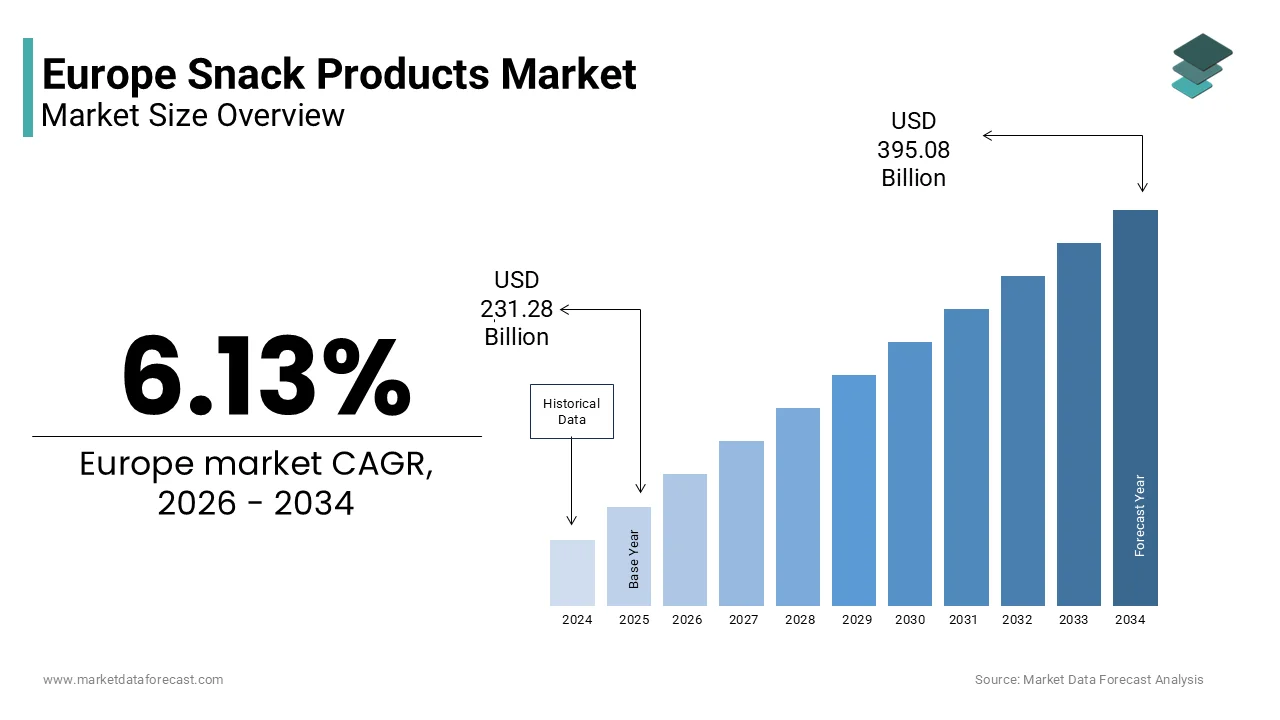
Snack products are essentially any food or drink items consumed in small portions between your regular main meals. They are designed to be portable, quick to consume, and satisfying enough to bridge the hunger gap until your next meal. This market is deeply embedded in the cultural fabric of European nations, where snacking has evolved from a mere convenience to a significant lifestyle component. The market dynamics are influenced by shifting consumer preferences toward healthier options, driven by increasing health consciousness across the region. As per Eurostat, the average household expenditure on food and non-alcoholic beverages in the European Union accounted for 13% of total consumption expenditure in 2023, indicating the substantial economic weight of dietary choices. Furthermore, data from the European Commission reveals that over 50% (approximately 51%) of adults in the EU were classified as overweight or obese in recent years, prompting a critical reevaluation of snack formulations and nutritional content. This public health context serves as a backdrop for industry innovation, compelling manufacturers to reformulate products with reduced sugar, salt, and fat levels. The regulatory environment, characterized by strict labeling requirements under the EU Food Information to Consumers Regulation, further shapes product development strategies. Consumers are increasingly scrutinizing ingredient lists, favoring transparency and clean label attributes. The proliferation of digital retail channels has also transformed accessibility, allowing niche and artisanal snack brands to reach broader audiences. Consequently, the market is not merely a reflection of taste preferences but a complex interplay of health regulations, economic factors, and evolving social norms regarding diet and wellness in contemporary European society.
MARKET DRIVERS
Rising Health Consciousness Drives Demand For Nutrient Dense And Functional Snacks
The escalating awareness regarding personal health and wellness acts as a key accelerator for the transformation of the Europe Snack Products Market. Consumers are increasingly prioritizing nutritional value, seeking snacks that offer functional benefits such as enhanced immunity, digestive health, or sustained energy levels. According to the European Food Information Council (EUFIC), a significant majority of European consumers consider health impact a key driver, while the International Food Information Council (IFIC) focuses primarily on U.S. consumer data. This trend is substantiated by data from Mintel, which indicates that 45 percent of consumers in Germany and the United Kingdom actively seek snacks with added vitamins or minerals. The demand for high fiber ingredients, such as oats and legumes, has surged as individuals aim to improve gut health, a concern amplified by post pandemic health narratives. Furthermore, the rise in chronic lifestyle diseases has prompted medical professionals to advocate for better dietary habits, influencing consumer behavior at the grassroots level. As per the World Health Organization, non-communicable diseases (NCDs) account for nearly 90 percent of all deaths in the European Region. Consequently, manufacturers are investing heavily in research and development to create snacks that align with these health directives. Products featuring whole grains, nuts, and seeds are gaining traction, replacing traditional refined carbohydrate based snacks. This structural shift in consumer preference is not transient but represents a fundamental change in how Europeans perceive snacking, viewing it as an opportunity for nutritional intake rather than merely indulgence.
Urbanization And Busy Lifestyles Fuel Convenience Oriented Snack Consumption
The rapid pace of urbanization and the consequent alteration of daily routines significantly propel the demand for convenient snack solutions across the region and fuel the expansion of the Europe snack products market. As more individuals migrate to urban centers, the time available for preparing traditional meals diminishes, leading to a reliance on ready to eat and portable food options. Data from the United Nations Department of Economic and Social Affairs suggests that approximately 75 percent of the European population resides in urban areas, a figure expected to rise in the coming decades. This demographic shift correlates with increased work hours and commuting times, creating a need for quick nutritional fixes that fit into hectic schedules. According to research, single-person households are more likely to purchase single-serve snack packs, but they specifically spend roughly 50% more per capita on these items rather than being "twice as likely" in frequency compared to larger units. The convenience factor is further enhanced by the expansion of on the go consumption occasions, such as during commutes or short work breaks. Retailers have responded by optimizing store layouts to feature grab and go snack sections prominently, thereby impulsive purchasing behaviors. Additionally, the integration of snack vending machines in corporate offices and educational institutions has normalized frequent snacking. The appeal of portion controlled packaging also resonates with urban dwellers who are mindful of waste and calorie intake. Thus, the structural changes in living patterns and work life balance directly influence the volume and type of snacks consumed, favoring products that offer ease of access and minimal preparation effort.
MARKET RESTRAINTS
Stringent Regulatory Frameworks Impose Compliance Burdens On Manufacturers
Strict regulations on food safety, labelling, and nutritional claims are greatly slowing down the European snack products market. The European Union maintains some of the strictest food standards globally, requiring manufacturers to adhere to comprehensive guidelines that can increase operational costs and slow down product launches. As per the European Food Safety Authority, all health claims made on food products must be scientifically substantiated and approved before being used in marketing, a process that is both time consuming and expensive. This regulatory scrutiny limits the ability of companies to innovate rapidly, as each new formulation or ingredient requires extensive testing and documentation. Furthermore, the implementation of the Farm to Fork Strategy aims to reduce the environmental impact of the food system, imposing additional requirements on sourcing and packaging. According to the European Commission's Farm to Fork strategy, the EU initially set targets to halve the use of chemical pesticides and reduce fertilizers by 20% by 2030. However, the mandatory legislative proposal for these reductions was withdrawn in 2024 following industry opposition, shifting the focus toward voluntary sustainability benchmarks. Companies must also comply with varying national regulations within member states, creating a fragmented compliance environment. For instance, front of pack nutrition labeling schemes differ between countries, with some adopting Nutri Score while others use different systems. This lack of harmonization complicates pan European marketing strategies and increases administrative overhead. Small and medium sized enterprises often struggle to meet these compliance demands, limiting their competitiveness against larger corporations with dedicated regulatory affairs departments. So, the regulatory environment acts as a substantial barrier to entry and expansion within the market.
Volatility In Raw Material Prices Disrupts Supply Chain Stability
Price volatility in key agricultural commodities often undermines the stability of the Europe snack products market. These serve as the foundational inputs for snack manufacturing. Ingredients such as wheat, potatoes, cocoa, and vegetable oils are subject to price volatility driven by climatic conditions, geopolitical tensions, and global supply chain disruptions. According to the Food and Agriculture Organization of the United Nations, the global food price index reached record heights in 2022, with cereal prices rising by 17.9 percent compared to the previous year due to major disruptions in the Black Sea region. This instability directly impacts the profit margins of snack manufacturers, who often operate on thin margins and face difficulty in passing these costs onto price sensitive consumers. Additionally, extreme weather events linked to climate change have affected crop yields in key European producing regions. Data from the Joint Research Centre of the European Commission indicates that drought conditions in Southern Europe have reduced potato and grain outputs, leading to scarcity and higher procurement costs. Manufacturers are forced to engage in complex hedging strategies or long term contracts to mitigate these risks, which ties up capital and reduces financial flexibility. Smaller players lacking such resources are particularly vulnerable to sudden price spikes, potentially leading to market consolidation. Furthermore, the dependency on imported ingredients, such as cocoa from West Africa or palm oil from Southeast Asia, exposes the market to international trade dynamics and currency exchange rate fluctuations. These economic pressures constrain the ability of companies to maintain consistent pricing and product availability, thereby restraining market growth and innovation investments.
MARKET OPPORTUNITIES
Expansion Of Plant Based and Vegan Snack Offerings Presents Growth Avenues
The growing adoption of plant-based diets across the region paves the way for snack manufacturers to diversify their product portfolios and capture an expanding consumer segment, which is expected to boost the growth of the Europe snack products market. Ethical concerns regarding animal welfare, environmental sustainability, and health benefits are driving the shift away from animal derived ingredients. According to ProVeg International, the number of vegans in Europe doubled in just four years (between 2016 and 2020), with Germany and the United Kingdom being primary hubs for this dietary shift. This demographic shift creates a robust demand for snacks that are free from dairy, meat, and other animal products. Manufacturers are responding by innovating with alternative proteins such as pea, lentil, and chickpea flours, which provide high nutritional value and appealing textures. Research reveals that meat substitute product launches in Europe grew by 15 percent over the past five years, with vegan and plant-based claims leading these new introductions. Furthermore, the flexitarian trend, where consumers occasionally reduce meat consumption, broadens the potential customer base beyond strict vegans. Retailers are dedicating more shelf space to plant based options, enhancing visibility and accessibility. The opportunity extends to traditional snack categories, with plant based jerky, cheese alternatives, and dairy free chocolates gaining popularity. By aligning with sustainability goals, brands can also appeal to environmentally conscious consumers who prioritize low carbon footprint products. Strategic partnerships with agricultural suppliers specializing in pulse crops can secure stable supply chains for these ingredients. Thus, the plant based movement represents a significant avenue for revenue growth and brand differentiation in the competitive European snack landscape.
Integration Of Sustainable Packaging Solutions Enhances Brand Equity
The increasing consumer demand for environmentally responsible packaging creates a pathway for snack manufacturers to enhance brand loyalty and meet regulatory expectations in the Europe snack products market. Plastic pollution has become a critical environmental concern in Europe, prompting both consumers and policymakers to seek sustainable alternatives. As per official EU statistics (Eurostat), approximately 41 percent of plastic packaging waste was recycled in the EU in 2022, rising slightly to 42.1 percent in 2023. Companies that invest in biodegradable, compostable, or recyclable materials can differentiate themselves in a crowded market. According to a survey, 73 percent of global consumers are willing to change their consumption habits to reduce environmental impact, while in Europe, the same percentage (73%) indicates they will prioritize sustainable products only if price parity is maintained. Innovations such as paper based wrappers, edible films, and mono material plastics are gaining traction among leading brands. These initiatives not only reduce environmental footprints but also align with the European Green Deal objectives, which aim for a circular economy. By transparently communicating their sustainability efforts, brands can build trust and emotional connections with eco conscious shoppers. Furthermore, collaborations with recycling infrastructure providers can ensure that packaging materials are effectively processed post consumption. This holistic approach to sustainability extends beyond mere compliance, offering a competitive advantage. Manufacturers who lead in packaging innovation can command premium pricing and secure long term contracts with retailers who prioritize sustainability in their procurement criteria. Thus, sustainable packaging serves as a vital lever for market expansion and reputation management.
MARKET CHALLENGES
Supply Chain Disruptions Pose Persistent Operational Challenges
Persistent supply chain disruptions hinder efficient production and distribution, which in turn hampers the growth of the Europe snack products market. The aftermath of global geopolitical conflicts and lingering effects of the pandemic have exposed vulnerabilities in logistics networks. According to the European Central Bank, supply chain barriers contributed significantly to inflationary pressures in the euro area, with delivery times for goods extending by several weeks in recent years. These delays affect the availability of critical ingredients and packaging materials, leading to production stoppages and stockouts. The reliance on just in time inventory models, while cost effective, has proven risky in times of uncertainty. Manufacturers are now forced to hold higher inventory levels, which increases storage costs and ties up working capital. Additionally, labor shortages in the transportation and warehousing sectors exacerbate these issues. Eurostat indicates that labor market slack accounted for 12.0 percent of the extended labor force in 2023, while the European Labour Authority reports that the transport and storage sector faces substantial persistent shortages, particularly for drivers. These operational challenges complicate demand forecasting and inventory management, leading to inefficiencies. Smaller manufacturers with limited logistical networks are disproportionately affected, facing higher risks of business interruption. Furthermore, the complexity of cross border trade within the EU, despite the single market, introduces administrative hurdles that can delay shipments. Companies must invest in digital supply chain tools and diversify supplier bases to mitigate these risks. However, such adaptations require significant capital investment and strategic planning, posing a continuous challenge to market stability and growth trajectories.
Intense Market Competition Limits Pricing Power and Margins
High fragmentation and competitiveness hold back the expansion of the Europe Snack Products Market. This restricts the ability of companies to exercise pricing power and maintain healthy profit margins. The market is characterized by the presence of numerous multinational corporations alongside a vast array of local and artisanal brands, leading to intense rivalry. According to a study, the top five players in the European snack market hold less than 30 percent of the total share, indicating a high degree of fragmentation. This competitive landscape forces companies to engage in frequent promotional activities and price wars to retain market share, eroding profitability. Consumer loyalty is low, with shoppers readily switching brands based on price discounts or novel product features. Research indicates that categories increasing their assortment by more than 5 percent grow significantly in penetration, while recent snack category value growth has been largely driven by inflation rather than a 5 percent increase in promotion depth. Additionally, the rise of private label brands offered by major retail chains further intensifies competition. These own brand products often offer comparable quality at lower prices, attracting budget conscious consumers. As per the Private Label Manufacturers Association, private label penetration in the snack category has reached 25 percent in several European markets. Established brands must continuously innovate and invest in marketing to differentiate themselves, incurring high operational costs. The inability to pass on rising input costs to consumers due to competitive pressure squeezes margins further. Thus, companies face the dual challenge of maintaining brand relevance while managing cost structures in a price sensitive environment, limiting overall financial performance.
REPORT COVERAGE
| REPORT METRIC | DETAILS |
| Market Size Available | 2025 to 2034 |
| Base Year | 2025 |
| Forecast Period | 2026 to 2034 |
| CAGR | 6.13% |
| Segments Covered | By Type, Distribution Channel, and Region |
| Various Analyses Covered | Global, Regional, & Country Level Analysis; Segment-Level Analysis; DROC, PESTLE Analysis; Porter’s Five Forces Analysis; Competitive Landscape; Analyst Overview of Investment Opportunities |
| Regions Covered | UK, France, Spain, Germany, Italy, Russia, Sweden, Denmark, Switzerland, Netherlands, Turkey, and the Czech Republic |
| Market Leaders Profiled | Kellogg’s Company, Nestle Inc, ConAgra Foods Inc, Calbee, Inc, Frito Lay’s, Cadbury Schweppes PLC, Ferrero Group, Hershey Foods, Meridian Foods, Wolfgang, PepsiCo, SK Food International, Bare Snacks, Lindt and Sprüngli and Mars |
SEGMENTAL ANALYSIS
By Type Insights
The confectionery segment remained the largest segment in the Europe Snack Products Market in 2025. Factors such as deep rooted cultural traditions and consistent consumer demand for indulgence are contributing to the supremacy of this segment. The segment encompasses chocolate, sugar confectionery, and gum, with chocolate holding a particularly strong position due to its association with gifting and emotional comfort. According to research, the confectionery landscape in Europe generated revenue of approximately $190 billion USD in 2023, reflecting its substantial economic footprint. This dominance is reinforced by the high per capita consumption rates in countries like Germany and the United Kingdom, where chocolate is a staple dietary component. According to sources, Europeans in leading markets consume an average of 8 to 11 kilograms of chocolate per person annually. The segment benefits from extensive distribution networks and strong brand loyalty, with established players leveraging heritage and quality perceptions to maintain shelf space. Furthermore, innovation in premium and artisanal chocolate categories has attracted higher spending from affluent consumers. The versatility of confectionery in various consumption occasions, from daily snacks to seasonal celebrations, ensures steady demand. Manufacturers continue to invest in marketing campaigns that evoke nostalgia and joy, reinforcing the emotional connection consumers have with sweet snacks. This strategic focus on emotional branding, combined with widespread availability, solidifies the confectionery segment's leadership position in the regional market landscape. The confectionery segment sustains its command through continuous product innovation and a shift toward premiumization, which appeals to evolving consumer tastes. Manufacturers are introducing unique flavor combinations, exotic ingredients, and ethically sourced cocoa to differentiate their offerings. Consumers are increasingly willing to pay a premium for products that align with their values, such as fair trade certification and organic ingredients. Additionally, the rise of functional confectionery, such as chocolates enriched with vitamins or adaptogens, attracts health conscious buyers who seek indulgence without compromising wellness goals. As per the International Chocolate Awards, the number of entries focusing on health benefits doubled in recent years, indicating industry responsiveness. The segment also benefits from seasonal promotions and limited edition releases, which create urgency and drive impulse purchases. Retailers support these initiatives by dedicating prominent display areas to new and premium products. This dynamic environment of constant renewal and value addition ensures that the confectionery segment remains vibrant and dominant, adapting to consumer preferences while maintaining its core appeal of pleasure and reward.
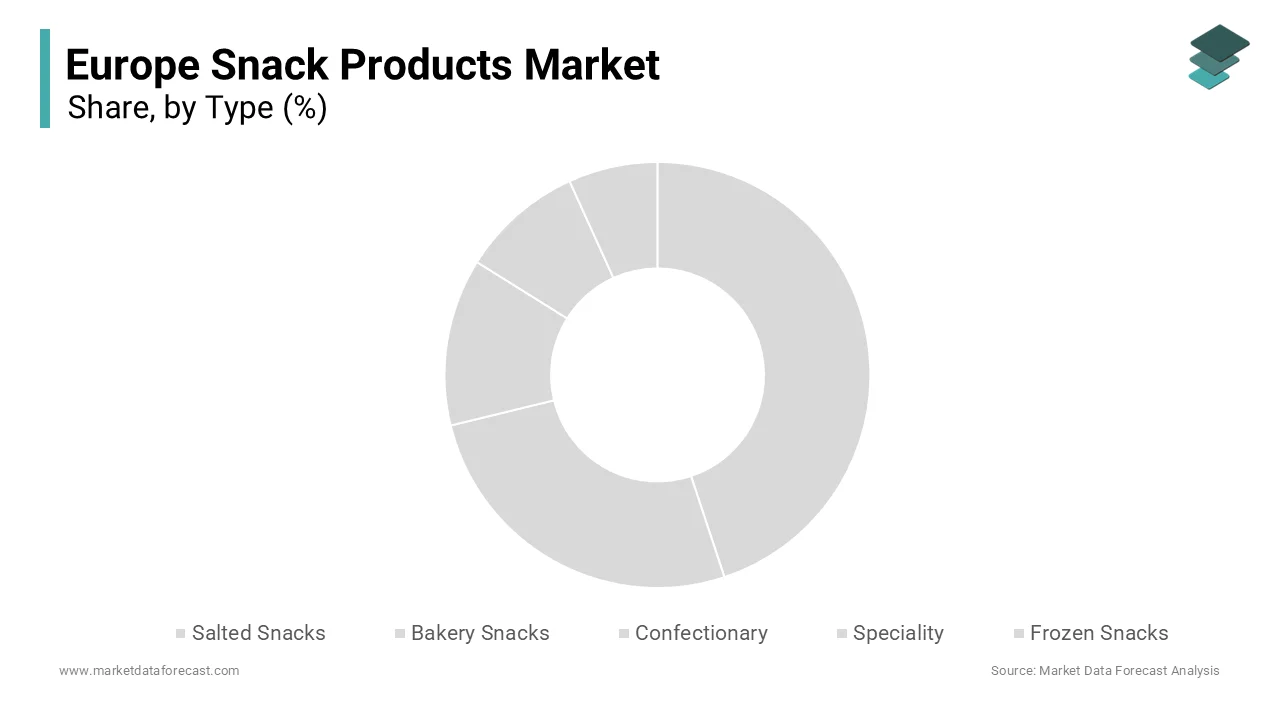
The speciality snacks segment is estimated to register the fastest CAGR of 6.5% over the forecast period due to the increasing prevalence of food intolerances and the rising adoption of specific dietary lifestyles such as gluten free, vegan, and keto diets. According to research reviewed by the European Society for Paediatric Gastroenterology Hepatology and Nutrition, the incidence of celiac disease has increased dramatically over recent decades, with approximately 20 percent of new diagnoses now occurring in individuals over the age of 60. Manufacturers are responding by developing specialized products using alternative flours like almond, coconut, and quinoa, which cater to these niche but expanding consumer groups. The speciality segment also benefits from the perception of these products as healthier and more natural, appealing to wellness oriented shoppers. As per the Plant Based Foods Association, sales of plant-based snacks grew by nearly 20 percent in dollar sales between 2022 and 2023, even as the broader plant-based category faced retail headwinds. This growth is further supported by improved taste and texture profiles, which have overcome previous limitations of free from products. Retailers are expanding their speciality aisles to accommodate this demand, providing greater visibility and accessibility. Consequently, the speciality snacks segment is poised for sustained high growth as health consciousness and dietary diversity continue to shape consumer choices across Europe. The speciality snacks segment is experiencing accelerated growth due to significant innovations in alternative proteins and functional ingredients, which align with contemporary health and sustainability trends. Consumers are seeking snacks that offer nutritional benefits beyond basic sustenance, such as high protein content, probiotics, or added fibers. Ingredients like pea protein, lentil flour, and chickpea powder are being utilized to create savory snacks that appeal to flexitarians and vegetarians. ProVeg International and market analysts indicates that the plant-based protein market is expected to reach $34.97 billion by 2030, driven by consumer concerns regarding health and environmental sustainability. Furthermore, the integration of functional ingredients such as collagen, turmeric, and matcha into speciality snacks addresses specific health concerns like joint health and immunity. As per the Global Wellness Institute, the wellness economy is a multi-trillion dollar global market, with annual wellness spending in the United States alone valued at over $500 billion. This broader wellness trend supports the adoption of speciality snacks that promise tangible health benefits. Manufacturers are investing in research to enhance the sensory appeal of these functional ingredients, ensuring that taste is not compromised. The combination of nutritional efficacy and culinary enjoyment drives repeat purchases and brand loyalty. Thus, the speciality snacks segment leverages innovation to meet the sophisticated demands of modern European consumers, securing its position as the fastest growing category in the market.
By Distribution Channel Insights
The supermarkets segment dominated the Europe Snack Products Market and accounted for a significant share in 2025 because of its ability to offer extensive product assortments and one stop shopping convenience. These retail formats provide consumers with a wide variety of snack options, ranging from mass market brands to private label and premium imports, under a single roof. Supermarkets and hypermarkets actually account for a much higher percentage of food and beverage retail sales in the EU, typically estimated between 60 and 80 percent depending on the specific market and definition used. The convenience of purchasing snacks alongside weekly groceries drives frequent footfall and impulse buys, particularly in checkout aisles where snack displays are strategically placed. Retailers leverage their scale to negotiate favorable terms with suppliers, enabling competitive pricing that attracts budget conscious consumers. Furthermore, supermarkets invest in store layouts and promotional activities that enhance product visibility and encourage trial. The trust associated with established supermarket chains also reassures consumers regarding product quality and safety. This combination of variety, convenience, and value proposition ensures that supermarkets remain the primary channel for snack distribution, catering to the diverse needs of European households and maintaining their market leadership. The top position of supermarkets is further strengthened by their strategic expansion of private label offerings, which provide high quality alternatives at lower price points. Retailers have invested significantly in improving the formulation and packaging of their own brand snacks, challenging national and international brands on both quality and value. According to the Private Label Manufacturers Association (PLMA), the private label value share in the Confectionery & Snacks category (along with Perishable and Ambient Food) averages approximately 48.3 percent across tracked European markets. This growth is driven by consumer willingness to switch to store brands, particularly during periods of economic uncertainty and inflation. Supermarkets utilize customer data to identify trending flavors and formats, allowing them to launch targeted private label products quickly and efficiently. This agility enables retailers to respond to consumer preferences faster than traditional manufacturers. Additionally, higher profit margins on private label items incentivize retailers to prioritize shelf space and promotional support for their own brands. Supermarkets reinforce their position as the preferred channel for snack purchases by offering compelling value and quality. This commitment ensures their sustained leadership within the distribution landscape.
The internet sales segment is anticipated to witness the fastest CAGR of 9.2% from 2026 to 2034. This rapid expansion of the segment is fueled by increasing digital penetration, improved logistics infrastructure, and the shifting consumer preference for online shopping convenience. The pandemic accelerated this trend, habituating consumers to online grocery and snack purchases, a behavior that has persisted post lockdown. E commerce platforms offer unparalleled convenience, allowing consumers to browse extensive catalogs, compare prices, and access niche or international snack brands not available in local stores. Furthermore, subscription models and bulk buying options on online platforms appeal to households seeking cost efficiency and regular supply. Retailers and manufacturers are investing in user friendly websites and mobile apps, enhancing the digital shopping experience. Quick commerce services, promising delivery within hours, further boost impulse purchases of snacks. This seamless integration of technology and retail logistics positions internet sales as the most dynamic growth channel in the market. The swift growth of internet sales in the Europe Snack Products Market is further propelled by the ability of online platforms to offer personalized experiences and direct to consumer engagement. Digital channels enable manufacturers and retailers to collect detailed consumer data, allowing for targeted marketing and customized product recommendations. Direct to consumer models allow snack brands to bypass intermediaries, establishing direct relationships with customers and gathering valuable feedback for product development. Online platforms also facilitate the launch of limited edition and exclusive products, creating buzz and driving traffic. Social media integration enables seamless sharing and discovery of new snack trends, amplifying brand reach. This interactive and engaging shopping environment fosters brand loyalty and encourages exploration of new products. Internet sales channels use data and direct engagement to build a strong value proposition. So, they have become the fastest-growing segment in the distribution landscape.
REGIONAL ANALYSIS
United Kingdom Snack Products Market Analysis
The United Kingdom led the Europe Snack Products Market in 2025. This prominence of the UK market is propelled by a mature retail landscape and high consumer spending on convenience foods. The country is one of the largest markets for snacks in Europe, driven by a fast paced urban lifestyle and a strong culture of snacking among all age groups. According to sources, The UK snack food market continues to experience steady revenue generation, though growth is tempered by rising production costs and a shift toward value-oriented purchasing. The demand for healthy and better for you snacks is particularly strong in the UK, with consumers actively seeking reduced sugar and salt options. National consumption patterns show an increasing focus on nutritional value, particularly in the children's snacking segment where health-driven choices are becoming more prevalent. The rise of private label brands has also shaped the market, with major retailers like Tesco and Sainsbury’s expanding their own label ranges to offer value. Retailer-owned brands (private labels) now dominate the grocery landscape, capturing a majority of total sales as households seek more affordable alternatives to major brands. Additionally, the UK leads in innovation for plant based and vegan snacks, driven by a growing vegetarian population. Plant-based lifestyles have seen a rapid historical expansion in the UK, a trend that is currently maintained by younger demographics and a growing retail availability of meat-free options. Regulatory pressures, such as the Soft Drinks Industry Levy, have also prompted reformulation efforts. The market remains competitive, with both global giants and local artisanal brands vying for shelf space, ensuring a dynamic and evolving landscape.
Germany Snack Products Market Analysis
Germany was the next prominent country in the Europe Snack Products market in 2025. This position of the German market is driven by its large population and strong preference for high quality and organic snack options. The country exhibits a balanced demand for both sweet and savory snacks, with a notable inclination toward healthier alternatives. Also, the German organic sector returned to growth in 2023 following a brief period of decline, driven largely by consumer expenditure on organic staples despite inflationary pressures. German consumers are highly informed and scrutinize ingredient lists, favoring clean label and natural products. German shoppers are increasingly prioritizing "clean label" products and natural ingredients, which is compelling manufacturers to reduce the use of artificial additives and simplify ingredient lists. The bakery snack segment is particularly strong, influenced by the country’s rich baking tradition and the popularity of fresh bread rolls and pretzels. As per a study, bakery products account for a substantial portion of daily snack consumption. Discount supermarkets like Aldi and Lidl play a crucial role in distribution, offering affordable yet quality snack options that appeal to budget conscious consumers. The influence of these retailers extends to setting industry standards for pricing and sustainability. Furthermore, Germany is a hub for innovation in functional snacks, with products enriched with proteins and fibers gaining traction. The market is supported by a robust supply chain and strict adherence to food safety regulations, ensuring consumer trust and steady growth.
France Snack Products Market Analysis
France occupies a significant share in the Europe Snack Products Market due to its renowned culinary heritage and evolving consumer attitudes toward convenience and health. While traditional meals remain central to French culture, the demand for snacking has risen, particularly among younger demographics and urban professionals. According to INSEE, French household food consumption volume declined as consumers adjusted their spending in response to significant inflationary pressure on grocery prices. The market is characterized by a strong preference for high quality and gourmet snack options, with consumers willing to pay premium prices for artisanal and locally sourced products. Bakery snacks, including croissants and pain au chocolat, remain popular, bridging the gap between traditional baking and modern snacking. As per sources, bakery outlets continue to be a primary source for snack purchases. However, health consciousness is rising, with demand for organic and low sugar snacks increasing. The French Agency for Food Environmental and Occupational Health and Safety (ANSES) notes that a significant portion of the population exceeds recommended sugar limits, leading to ongoing industry-wide efforts for product reformulation. Retailers are responding by expanding organic sections and introducing healthier private label options. The market balances tradition with innovation, offering a diverse range of snacks that cater to both indulgent and health focused preferences.
Spain Snack Products Market Analysis
Spain grew steadily in the Europe Snack Products Market owing to a warm climate that encourages outdoor socializing and a growing tourism industry that boosts demand for convenient food options. The Spanish market is characterized by a strong preference for savory snacks, particularly nuts, olives, and cured meats, which align with traditional Mediterranean dietary patterns. According to the Ministry of Agriculture, Fisheries and Food of Spain, there has been a notable surge in the consumption of specific nuts like almonds, driven by their reputation as a healthy and sustainable snack choice. The tapas culture also influences snacking habits, with small portions of flavorful foods consumed throughout the day. Research shows that the Spanish snack market continues to see revenue growth, supported by a resurgence in demand for traditional regional offerings. Urbanization and changing work patterns are driving demand for ready to eat and portable snacks, particularly among millennials and Gen Z consumers. As per research, convenience stores and online channels are seeing increased traffic for snack purchases. The market is also witnessing a rise in demand for international and exotic snack flavors, influenced by global travel and cultural exchange. Manufacturers are introducing innovative products that blend traditional Spanish ingredients with modern formats. Additionally, the focus on sustainability is growing, with consumers preferring brands that demonstrate environmental responsibility. The market remains vibrant, balancing traditional tastes with contemporary convenience and health trends.
Italy Snack Products Market Analysis
Italy is anticipated to expand significantly in the Europe Snack Products Market over the forecast period due to its rich culinary traditions and strong emphasis on quality ingredients. The Italian market is characterized by a preference for natural and minimally processed snacks, with a significant share held by bakery products, biscuits, and savory crackers. According to ISTAT, the Italian National Institute of Statistics, the biscuit and baked snack sector contributes significantly to the national food industry, with exports remaining strong. Italian consumers prioritize taste and authenticity, often favoring local and regional brands over multinational corporations. A study shows that traditional Italian snacks like grissini and taralli maintain steady sales, supported by cultural loyalty. However, health consciousness is rising, with increasing demand for whole grain and low sugar options. As per the Italian Society of Human Nutrition (SINU), current public health efforts are focused on reversing the gradual abandonment of the Mediterranean diet and encouraging a return to plant-based, minimally processed food patterns. The organic snack segment is also growing, driven by environmental awareness and health concerns. The Coldiretti agricultural association reports that organic food sales in Italy increased in 2023. Retailers are adapting by offering more organic and healthy private label options. The market is also seeing innovation in gluten free and vegan snacks, catering to specific dietary needs. Italy’s snack market thus reflects a blend of tradition and modernity, with quality and health driving future growth trajectories.
COMPETITIVE LANDSCAPE
The competition in the Europe Snack Products Market is characterized by intense rivalry among multinational corporations and a growing number of local artisanal brands. Multinational giants leverage their extensive distribution networks and strong brand recognition to maintain dominance while facing pressure from agile smaller players who innovate rapidly with niche and healthy offerings. The market fragmentation encourages continuous product development and marketing investments to capture consumer attention in a saturated landscape. Price competition remains fierce particularly in the mass market segment where private label brands from major retailers challenge established names on value and quality. Regulatory compliance regarding health claims and sustainability adds complexity requiring significant resources for adaptation and innovation. Companies differentiate themselves through unique flavor profiles ethical sourcing commitments and advanced packaging solutions. The rise of e commerce has lowered entry barriers allowing new entrants to reach consumers directly and disrupt traditional retail channels. This dynamic environment forces incumbents to constantly evolve their strategies focusing on digital engagement and sustainability to retain loyalty. The interplay of global scale and local relevance defines the competitive structure driving ongoing transformation and strategic realignments across the region.
KEY MARKET PLAYERS
Some of the key players in Europe snack products market are
- Kellogg’s Company
- Nestle Inc
- ConAgra Foods Inc
- Calbee, Inc
- Frito Lay’s
- Cadbury Schweppes PLC
- Ferrero Group
- Hershey Foods
- Meridian Foods
- Wolfgang
- PepsiCo
- SK Food International
- Bare Snacks
- Lindt
- Sprüngli
- Mars
Top Players in the Market
- Mondelez International stands as a dominant force in the European confectionery and biscuit sectors with iconic brands such as Cadbury and Oreo. The company significantly influences global snack trends by prioritizing sustainability and responsible sourcing initiatives across its supply chain. Recent actions to strengthen its market position include substantial investments in digital marketing capabilities and e commerce platforms to enhance direct consumer engagement. Mondelez has also expanded its portfolio of better for you snacks by reformulating products to reduce sugar and salt content aligning with European health regulations. The company actively pursues strategic acquisitions of local artisanal brands to diversify its offerings and cater to regional taste preferences. Its commitment to environmental goals is evident through initiatives aimed at achieving carbon neutrality in manufacturing operations. Mondelez maintains a competitive edge in the dynamic European landscape through strong brand equity and innovative product development. This regional success allows them to contribute extensively to snack innovation and standards on a global scale.
- Nestlé S.A. leverages its vast global network to maintain a robust presence in the European snack market through diverse portfolios including confectionery and cereals. The company focuses heavily on nutrition health and wellness by integrating functional ingredients into popular snack formats to meet evolving consumer demands. Recent strategic moves involve the expansion of plant based snack lines and the enhancement of sustainable packaging solutions to reduce environmental impact. Nestlé invests significantly in research and development to create products that align with clean label trends and dietary restrictions such as gluten free options. The company strengthens its market position by optimizing its supply chain efficiency and utilizing advanced data analytics for precise demand forecasting. Collaborations with local suppliers ensure high quality raw materials while supporting regional economies. Nestlé’s emphasis on digital transformation enables personalized consumer experiences and improved retail partnerships. These efforts collectively reinforce its leadership role in delivering nutritious and convenient snack solutions across Europe and globally.
- PepsiCo Inc. holds a significant position in the European savory snack sector driven by its flagship brand Lay’s and diverse portfolio of chips and crackers. The company contributes to the global market by pioneering sustainable agricultural practices and promoting regenerative farming to secure long term ingredient supplies. Recent actions to strengthen its market position include the launch of innovative flavors tailored to regional European palates and the expansion of its baked and popped snack ranges to address health consciousness. PepsiCo actively invests in recycling infrastructure and packaging innovations to achieve its goal of reducing virgin plastic use. The company enhances its distribution networks through strategic partnerships with major retailers and e commerce platforms ensuring widespread product availability. By focusing on operational efficiency and cost management PepsiCo maintains competitive pricing while delivering high quality products. Its commitment to diversity and inclusion within the workforce further strengthens brand reputation. These strategic initiatives enable PepsiCo to adapt to changing consumer preferences and sustain growth in the competitive European snack environment.
Top Strategies Used by Key Market Participants
Key players in the Europe Snack Product Market primarily employ product innovation and portfolio diversification to cater to evolving consumer preferences. Companies focus on developing healthier options such as reduced sugar and salt variants to align with strict regulatory standards and health conscious trends. Strategic acquisitions of local and artisanal brands allow multinational corporations to expand their regional footprint and access niche market segments. Sustainability initiatives form a core strategy with firms investing in eco friendly packaging and responsible sourcing to enhance brand equity and meet environmental goals. Digital transformation is another critical approach where businesses leverage e commerce platforms and data analytics to improve customer engagement and optimize supply chain efficiency. Partnerships with retailers and technology providers facilitate better market penetration and personalized marketing efforts. Additionally companies prioritize premiumization by introducing high quality and unique flavor profiles to attract affluent consumers seeking indulgent experiences. These combined strategies enable market participants to maintain competitiveness and drive growth in a dynamic and regulated environment.
MARKET SEGMENTATION
This is a research report on Europe snack products market is segmented and sub segmented into following categories.
By Type
- Salted Snacks
- Bakery Snacks
- Confectionary
- Speciality
- Frozen Snacks
By Distribution Channel
- Specialist Retailers
- Internet Sales
- Super Markets
- Convenience Stores
- Others
By Region
- United Kingdom
- Germany
- France
- Italy
- Spain