- Product Description Description
- Table of Contents TOC
- List of Table & Figure LOT
- Get Free Sample PDF Sample PDF
Market Size, 2025
$40.28 BnMarket Estimate, 2026
$42.01 BnMarket Forecast, 2034
$58.83 BnCAGR, 2026–2034
4.30%Executive Summary: Potato Chips and Crisps Market
- Market Scope: Global potato chips and crisps market analysis covering taste preferences, product types, distribution channels, regional leadership frameworks, and adoption metrics.
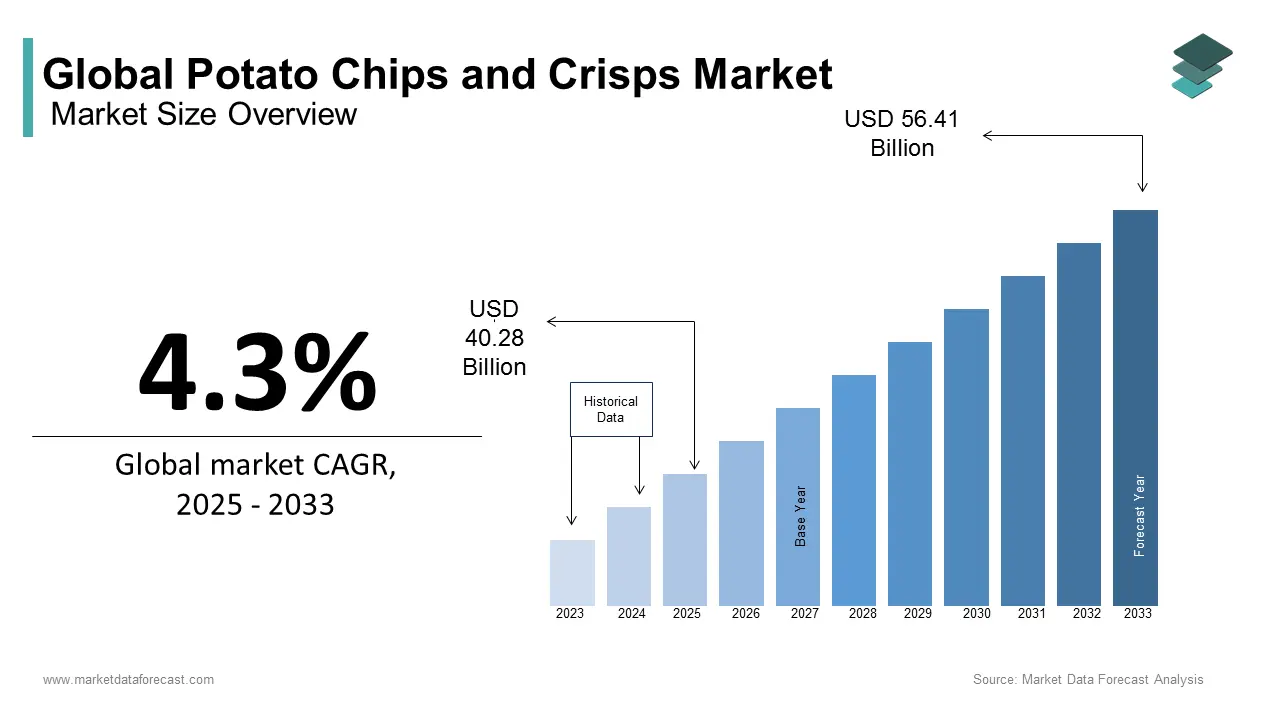
- Market Valuation: Valued at USD 40.28 billion (2025), estimated at USD 42.01 billion (2026), and projected to reach USD 58.83 billion by 2034, growing at a robust CAGR of 4.30% (2026–2034).
- Primary Growth Drivers: Urbanization, on-the-go snacking trends, expanding modern retail and e-commerce, localized flavors, and rising demand for healthier formulations (such as baked and reduced-sodium products). Key operational factors include health-driven reformulations (baked chips containing 30–50% less fat than deep-fried alternatives, India mandating trans-fat levels below 2% by 2022, and excessive sodium intake contributing to >1.8 million cardiovascular deaths annually worldwide).
Key Market Segment Metrics (2026–2034)
| Category | Leading Segment (2025 Position) | Fastest-Growing Segment |
|---|---|---|
| By Taste / Flavor | Flavoured chips (dominated the taste segment with 46.3% market share in 2025) | Chilli-flavoured products (identified as a high-growth category with a cited 9.4% CAGR) |
| By Product / Processing Type | Sliced potato chips (accounted for 54.5% of total market volume in 2025) | Baked chips (projected to expand at an 8.7% CAGR) |
| By Distribution Channel | Supermarkets (commanded 46.3% share in 2025) | Convenience stores (projected to register a 10.2% CAGR driven by impulse buying and on-the-go availability) |
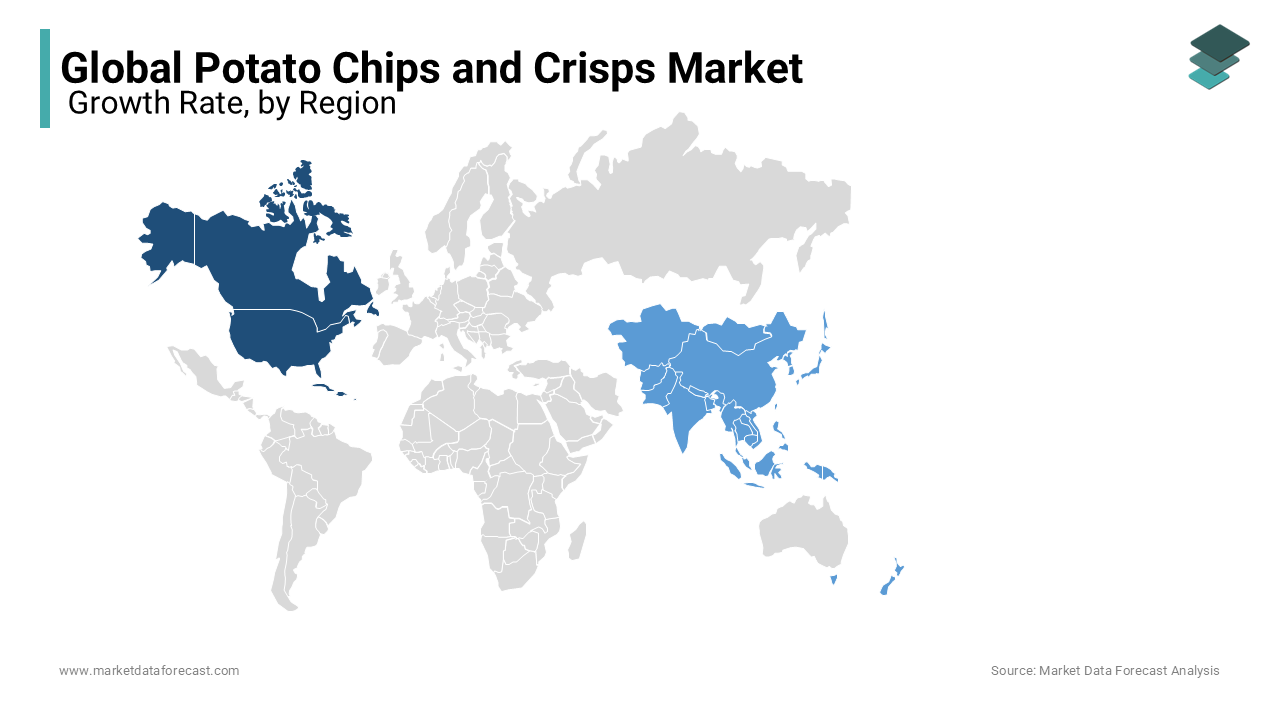
| By Region | North America (maintained the leading regional position, supported by high per-capita consumption, established snacking culture, strong distribution networks, and major manufacturers) | Asia-Pacific (identified as the fastest-growing regional market driven by rapid urbanization and expanding retail infrastructure) |
Major Market Players & Market Structure
Market Structure: Highly competitive global potato chips and crisps landscape featuring 6 major market leaders competing on flavor innovation, healthier formulations, premiumization, sustainable packaging, localized products, and wider retail and e-commerce distribution.
Key Companies: Calbee Foods, Herr, Intersnack Group, PepsiCo, Snyder’s-Lance, and UTZ Quality Foods.
Global Potato Chips and Crisps Market Size
The global potato chips and crisps market size was estimated at USD 40.28 billion in 2025. The global market size is expected to grow at a CAGR of 4.30% from 2026 to 2034 and be worth USD 58.83 billion by 2034 from USD 42.01 billion in 2026.
Potato Chips and Crisps are a variety of thinly sliced, fried or baked potato-based snacks that are seasoned and packaged for mass consumption, available in formats ranging from traditional kettle-cooked and extruded crisps to artisanal and ready-to-eat gourmet variants. These products are deeply embedded in global snacking culture, serving as convenient, palatable options for on-the-go consumption, social gatherings, and impulse purchases. While often perceived as indulgent, their formulation has evolved in response to shifting dietary preferences, with manufacturers increasingly exploring alternative cooking methods, reduced sodium content, and non-GMO or organic sourcing.
The crop’s adaptability to diverse climates and its role as a staple food in regions such as Asia, Eastern Europe, and parts of Africa underscore its strategic importance in food manufacturing. These trends shows the dual role of potatoes as both a nutritional staple and a raw material for industrial snack production, positioning the chips and crisps segment at the intersection of agricultural economics, food technology, and consumer behavior.
MARKET DRIVERS
Urbanization and Changing Lifestyle Patterns Driving On-the-Go Snacking Behavior
The accelerating pace of urbanization, particularly in emerging economies, is fundamentally reshaping dietary habits and fueling demand for convenient, ready-to-eat snack options such as potato chips and crisps. As populations migrate to cities, time constraints, longer commutes, and dual-income households have diminished reliance on home-cooked meals in favor of portable, shelf-stable foods. The proliferation of convenience stores, e-grocery platforms, and automated vending machines in transit hubs further facilitates access. As urban lifestyles continue to prioritize speed and convenience, the structural shift toward processed snacking is cementing potato chips and crisps as a dietary staple, particularly among younger demographics.
Expansion of Retail Infrastructure and E-Commerce Penetration in Emerging Markets
The proliferation of modern retail networks and digital commerce platforms is significantly enhancing the accessibility and visibility of potato chips and crisps, particularly in geographies previously underserved by organized distribution. In regions such as Southeast Asia, Africa, and Latin America, the rise of hypermarkets, convenience stores, and online grocery services has created new avenues for brand exposure and consumer engagement. These infrastructural advancements not only expand market reach but also support premiumization, as consumers gain access to flavored, imported, and health-oriented variants, thereby elevating overall category demand.
MARKET RESTRAINTS
Rising Health Awareness and Government Regulations Targeting High Sodium and Trans Fat Content
Growing public awareness of diet-related health risks and increasing regulatory scrutiny on processed foods are constraining the unbridled growth of the potato chips and crisps market. Health authorities worldwide are emphasizing the reduction of sodium, saturated fats, and acrylamide—a potential carcinogen formed during high-temperature frying. According to the World Health Organization, excessive sodium intake contributes to over 1.8 million cardiovascular deaths annually, prompting governments to implement front-of-pack warning labels and reformulation mandates. Similarly, India’s Food Safety and Standards Authority mandated a reduction in trans fats to less than 2% by 2022. These behavioral shifts, combined with mandatory reformulation costs and potential flavor compromises, are pressuring manufacturers to innovate under tighter constraints, limiting the appeal of traditional high-salt, high-fat variants.
Volatility in Raw Material Supply and Climate-Induced Potato Crop Instability
The potato chips and crisps industry faces significant supply chain vulnerabilities due to the agricultural sensitivity of its primary raw material—potatoes. Climate change, erratic rainfall, and temperature fluctuations are increasingly disrupting potato cultivation cycles, affecting both yield and quality. According to the Intergovernmental Panel on Climate Change, global potato production is projected to decline 2050 under high-emission scenarios. In 2022, the European Environment Agency reported that drought conditions across France, Germany, and Poland led to a drop in potato harvests. In India, the Central Potato Research Institute noted that unseasonal rains in Uttar Pradesh and West Bengal during the 2022–2023 rabi season damaged hectares of potato farms. Additionally, potatoes require specific starch and sugar profiles for optimal frying; deviations caused by heat stress can lead to undesirable darkening and off-flavors, rendering crops unsuitable for crisp production. These supply instabilities not only elevate production risks but also challenge the consistency and scalability of industrial snack manufacturing.
MARKET OPPORTUNITIES
Product Innovation Through Health-Centric Formulations and Functional Ingredients
The development of health-enhanced and functionally fortified products that align with evolving consumer wellness priorities is a transformative opportunity within the potato chips and crisps market. Manufacturers are increasingly reformulating offerings to include reduced sodium, baked or air-fried processing, and fortification with vitamins, fiber, or plant-based proteins. In the United States, the FDA’s updated Nutrition Facts labeling requirements have prompted brands to highlight protein content and absence of artificial additives. In Japan, Calbee has introduced a line of crisps enriched with calcium and vitamin D. The European Commission’s approval of health claims for fiber and heart health has further incentivized innovation. As consumers seek snacks that contribute to dietary goals rather than merely satisfy cravings, the integration of functional ingredients positions the category for premiumization and long-term relevance in a health-conscious marketplace.
Expansion into Underserved Rural and Semi-Urban Markets via Affordable Packaging and Localized Flavors
The penetration of rural and semi-urban populations across developing economies, where rising disposable incomes and improved distribution networks are unlocking latent demand, is a significant growth avenue for the potato chips and crisps market. Companies are leveraging small-format, low-cost packaging and region-specific flavor profiles to drive affordability and cultural resonance. These strategies not only increase accessibility but also foster brand loyalty among first-time consumers. As rural infrastructure improves and digital literacy expands, the convergence of affordability, localization, and aggressive distribution is transforming previously untapped geographies into high-potential markets for sustained category growth.
MARKET CHALLENGES
Balancing Flavor and Texture with Health-Oriented Reformulations
Maintaining sensory appeal, particularly crunch, saltiness, and mouthfeel, while complying with health-driven reformulations, is one of the most persistent challenges in the potato chips and crisps market. Reducing sodium, eliminating trans fats, or switching from deep-frying to baking often compromises the gustatory experience that defines consumer satisfaction. Moreover, alternative ingredients such as sweet potato or cassava, while marketed as healthier, exhibit different starch gelatinization properties, leading to inconsistent texture and breakage rates. The challenge is further compounded by regional taste expectations; what is considered “lightly salted” in Scandinavia may be deemed bland in Southeast Asia. As regulatory and consumer pressures mount, manufacturers face a delicate balancing act between nutritional compliance and sensory fidelity, requiring substantial investment in food science and consumer testing to avoid brand erosion.
Environmental Impact of Packaging Waste and Pressure for Sustainable Alternatives
The potato chips and crisps industry faces mounting scrutiny over its reliance on multi-layered, non-recyclable packaging, which contributes significantly to plastic pollution and contradicts global sustainability goals. Most crisp bags are composed of laminated films combining aluminum and polyethylene, making them difficult to separate and recycle through conventional waste streams. Also, flexible plastic packaging is major contributor to municipal plastic waste in urban centers. In the European Union, the Single-Use Plastics Directive has prompted member states to impose extended producer responsibility (EPR) schemes, requiring manufacturers to fund recycling initiatives. In UK less share of crisp packets are effectively recycled, despite public awareness campaigns. In response, companies like PepsiCo and Intersnack have invested in bio-based and compostable films; however, technical barriers remain. As consumers and regulators demand circular economy solutions, the industry must reconcile functional packaging requirements with environmental accountability, a challenge that demands innovation in material science and supply chain logistics.
REPORT COVERAGE
| REPORT METRIC | DETAILS |
| Market Size Available | 2025 to 2034 |
| Base Year | 2025 |
| Forecast Period | 2026 to 2034 |
| CAGR | 4.3% |
| Segments Covered | By Taste, Type, Distribution Channel, And Region |
| Various Analyses Covered | Global, Regional and Country Level Analysis; Segment-Level Analysis; DROC; PESTLE Analysis; Porter’s Five Forces Analysis; Competitive Landscape; Analyst Overview of Investment Opportunities |
| Regions Covered | North America, Europe, APAC, Latin America, Middle East & Africa |
| Market Leaders Profiled | Calbee Foods, Herr, Intersnack Group, PepsiCo, Snyder’s-Lance, and UTZ Quality Foods. |
SEGMENTAL ANALYSIS
By Taste Insights
The flavoured segment dominated the global potato chips and crisps market by capturing 46.3% share in 2025. This position is due to the growing consumer appetite for sensory variety and culturally resonant taste experiences that transcend basic saltiness. One of the primary drivers is the success of region-specific seasoning innovation, which allows manufacturers to tailor products to local palates. A further critical factor is the role of brand differentiation through flavour novelty. These examples illustrate how flavour innovation not only enhances consumer engagement but also enables premium pricing and brand loyalty, solidifying the segment’s market dominance.
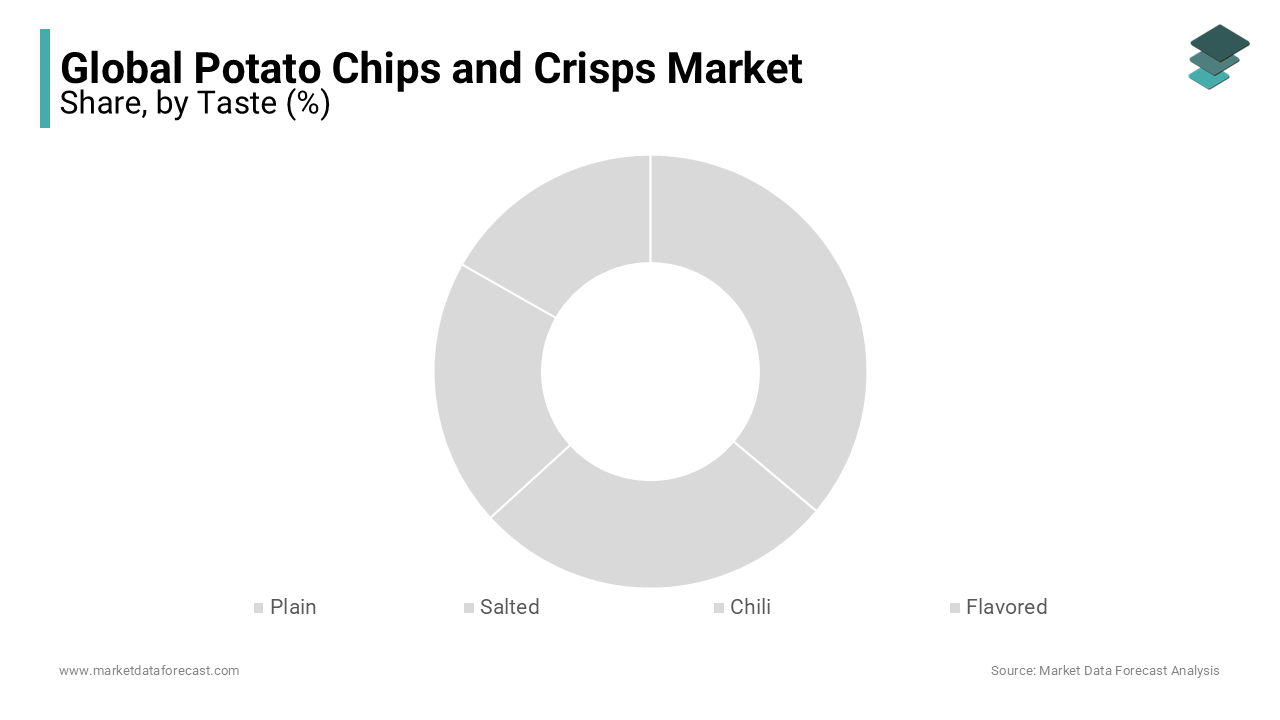
The chilli-taste segment is emerging as the fastest-growing category within the potato chips and crisps market, projected to expand at a CAGR of 9.4% from 2023 to 2030, according to the Global Flavour and Fragrance Market Review published by the International Organization of the Flavor Industry. This surge is driven by the rising global popularity of spicy foods, particularly among younger demographics seeking intense sensory stimulation. The trend is even more pronounced in Asia, where spicy flavours are deeply embedded in culinary traditions. Additionally, social media challenges and viral food trends, such as the “One Chip Challenge” by Paqui, have amplified exposure and demand for extreme heat variants. As heat tolerance becomes a badge of culinary daring, the chilli segment is evolving from a niche preference to a mainstream growth engine.
By Type Insights
The sliced potato chips segment led the global market by accounting for 54.5% of total volume in 2025, as documented by the European Snack Association in its annual industry compendium. This dominance is rooted in consumer preference for the traditional texture and sensory experience associated with thinly cut, deep-fried potato discs. The appeal lies in the crisp’s structural integrity, uniform frying, and consistent mouthfeel, which are difficult to replicate in extruded or dehydrated forms. A further contributing factor is the compatibility of sliced chips with premiumization strategies; brands such as Kettle Foods and Tyrrells use thick-cut, hand-cooked methods to justify higher price points. Additionally, sliced chips are the primary format used in limited-edition and gourmet flavour launches, reinforcing their centrality in marketing campaigns. The format’s adaptability to both mass-market and artisanal production, combined with entrenched consumer habits, ensures its continued leadership in the product-type segmentation.
The baked potato chips segment is experiencing the most rapid expansion in the market and is anticipated to grow at a CAGR of 8.7%. This acceleration is primarily driven by shifting consumer preferences toward lower-fat, calorie-conscious snack alternatives without complete compromise on taste. Baked chips typically contain 30–50% less fat than their deep-fried counterparts, making them a preferred choice for health-aware demographics. Major manufacturers have responded with reformulated offerings. Furthermore, regulatory pressure to reduce trans fats and saturated oils has incentivized baking as a cleaner-label processing method. As consumers increasingly scrutinize nutritional profiles, the baked segment is positioned as a viable bridge between indulgence and wellness, fueling its accelerated adoption.
By Distribution Channel Insights
The supermarkets segment represented the prominent distribution channel for potato chips and crisps by commanding a 46.3% in 2025. This dominance is underpinned by the extensive shelf space, promotional visibility, and consumer trust associated with organized retail environments. These outlets offer a curated selection of national brands, private labels, and premium variants, enabling consumers to compare price, flavour, and health claims before purchase. A further key driver is the integration of supermarkets into weekly shopping routines, where impulse purchases are amplified by strategic product placement near checkouts and beverage sections. With robust supply chain integration and consumer footfall, supermarkets remain the cornerstone of mass-market distribution for the category.
The convenience stores segment is emerging as the fastest-growing distribution channel for potato chips and crisps and is projected to expand at a CAGR of 10.2% in the coming years. This growth is fueled by the rising demand for immediate, on-the-go consumption in urban environments where time scarcity and mobility define purchasing behaviour. These stores, often open 24/7 and located near transit hubs, offices, and residential complexes, cater to spontaneous snacking needs. Moreover, partnerships with food delivery platforms such as Grab, Zomato, and Uber Eats have extended the reach of convenience stores, enabling same-day crisp deliveries. As urbanization and digital delivery ecosystems advance, convenience stores are evolving into critical micro-distribution nodes for instant gratification snacking.
REGIONAL ANALYSIS
North America
North America maintained a leading position in the global potato chips and crisps market. The region’s dominance is anchored in high per capita consumption, deeply ingrained snacking culture, and the presence of major multinational manufacturers such as PepsiCo and Utz Quality Foods. The market is characterized by product innovation, with brands frequently launching limited-edition flavours and health-focused variants like reduced-sodium and baked options. Canada mirrors this trend. The integration of digital retail and subscription models, such as Amazon’s “Subscribe & Save” for snack packs, has further entrenched consumption habits. Additionally, regulatory frameworks like the FDA’s Nutrition Innovation Strategy are pushing manufacturers toward cleaner labels and transparent sourcing. With strong brand loyalty, advanced distribution networks, and continuous R&D investment, North America remains the most mature and influential market for potato-based snacks globally.
Europe
Europe holds a significant regional share in the potato chips and crisps market. The region exhibits a diverse snacking landscape shaped by national preferences, with the UK, Germany, and France serving as primary consumption hubs. The EU’s Farm to Fork Strategy has prompted manufacturers to adopt sustainable sourcing and reduce acrylamide levels, influencing production methods across the bloc. In Scandinavia, there is a growing preference for organic and non-GMO crisps. Eastern European markets like Poland and Hungary are witnessing rising demand due to increasing disposable incomes and Western-style retail expansion. With strong brand heritage, regulatory coherence, and evolving consumer sophistication, Europe remains a dynamic and resilient market for both traditional and innovative crisp products.
Asia Pacific
The Asia Pacific region is rapidly emerging as a pivotal force in the global potato chips and crisps market. This growth is propelled by a vast and youthful population, rising urbanization, and the expansion of organized retail and e-commerce. China and India are the primary growth engines. In Southeast Asia, countries like Indonesia and Vietnam are witnessing a surge in local crisp brands using indigenous flavours such as shrimp paste and lemongrass. The region’s snack culture is increasingly influenced by social media, with viral trends amplifying product visibility. With rising disposable incomes and aggressive marketing by multinational and domestic players, APAC is poised to become the next frontier of volume and innovation in the global crisp market.
Latin America
Latin America holds a modest yet growing share of the global potato chips and crisps market, estimated at 8% in 2023, according to the Inter-American Institute for Cooperation on Agriculture. The region’s market is characterized by strong regional preferences for bold, spicy flavours and the increasing influence of urban consumerism. Brazil and Mexico are the largest markets. Local manufacturers such as Elma Chips in Argentina and Margarita in Colombia have successfully leveraged national taste profiles to build brand loyalty. However, economic volatility and inflation have constrained premium product adoption, pushing companies to focus on small-serve packaging. Despite infrastructural challenges, rising middle-class populations and retail modernization are creating opportunities for sustained growth in both traditional and health-oriented crisp segments.
Middle East and Africa
The Middle East and Africa collectively represent 5% of the global potato chips and crisps market in 2023, as reported by the Dubai Chamber of Commerce and Industry. Within this, the Gulf Cooperation Council (GCC) nations lead in consumption due to high disposable incomes and expatriate-driven demand for Western-style snacks. Saudi Arabia’s Vision 2030 initiative has spurred investment in food manufacturing, including potato processing facilities to reduce import dependency. In contrast, Sub-Saharan Africa faces significant access barriers. However, urban centers like Nairobi, Johannesburg, and Lagos are witnessing rising demand for packaged crisps, driven by youth demographics and retail formalization. While the region starts from a low base, increasing urbanization, foreign investment, and changing dietary patterns suggest long-term potential for market expansion.
KEY MARKET PLAYERS AND COMPETITIVE LANDSCAPE
Companies playing a leading role in the global potato chips and crisps market include Calbee Foods, Herr, Intersnack Group, PepsiCo, Snyder’s-Lance, and UTZ Quality Foods.
The competition in the potato chips and crisps market is intensifying as global giants and regional players vie for consumer attention in a category defined by taste, convenience, and evolving health perceptions. Multinational corporations like PepsiCo and Calbee leverage brand equity, extensive distribution, and R&D capabilities to maintain dominance, while local manufacturers capitalize on cultural familiarity and cost-effective production. The battleground extends beyond flavour to include health claims, sustainability, and packaging innovation, with consumers increasingly scrutinizing ingredients and environmental impact. Private labels are gaining traction in supermarkets across Europe and Asia, offering lower-priced alternatives that challenge branded players on value. The rise of e-commerce and direct-to-consumer models has lowered entry barriers, enabling niche brands to reach audiences without traditional retail shelf space. Product differentiation is achieved through limited-edition launches, exotic seasonings, and functional benefits such as added fiber or reduced acrylamide. However, rising input costs, regulatory pressures on salt and fat content, and climate-related crop instability pose shared challenges. Companies are investing in vertical integration, from farm partnerships to in-house flavour development, to secure supply and enhance quality control. As consumer preferences fragment across health, indulgence, and sustainability, the competitive edge lies in agility, localization, and the ability to deliver both sensory satisfaction and ethical credibility in a single crisp.
TOP PLAYERS IN THE MARKET
PepsiCo (Lay’s, Kurkure, Walkers)
PepsiCo maintains a formidable presence in the Asia Pacific potato chips and crisps market through its globally recognized brands Lay’s, Kurkure, and Walkers. The company has tailored its product portfolio to align with regional taste preferences, introducing localized flavours such as Indian masala, Thai tom yum, and Australian salt and vinegar. In 2023, PepsiCo launched a sustainable farming initiative in Punjab, India, partnering with over 10,000 farmers to improve potato yield and quality for crisp production. The company expanded its manufacturing footprint in Vietnam and Indonesia to enhance supply chain resilience and reduce import dependency. PepsiCo also invested in digital marketing campaigns across Southeast Asia, leveraging social media influencers to engage younger consumers. Its acquisition of regional snack brands and integration of e-commerce platforms like Flipkart and Shopee have strengthened distribution. By combining global brand equity with hyper-local customization and sustainability commitments, PepsiCo continues to shape consumer preferences and set industry benchmarks across the Asia Pacific region.
Calbee Holdings Co., Ltd.
Calbee has established a distinctive footprint in the Asia Pacific market by emphasizing high-quality ingredients, innovative textures, and health-conscious formulations. Originating in Japan, the company has expanded its reach to China, Australia, and Southeast Asia through strategic joint ventures and localized production. In 2022, Calbee launched its Jagabee brand in Australia, featuring thick-cut, baked potato sticks marketed as a premium snacking alternative. The company introduced reduced-sodium and non-GMO potato crisps in response to rising health awareness, aligning with Japan’s Ministry of Health guidelines. Calbee also partnered with Australian agricultural cooperatives to source locally grown potatoes, enhancing freshness and reducing carbon emissions. Its acquisition of a majority stake in Snack Brands Australia in 2023 enabled broader distribution of its products across supermarkets and convenience stores. The company has invested in R&D to develop functional snacks fortified with fiber and vitamins, appealing to wellness-focused consumers. Through a blend of product innovation, regional sourcing, and strategic expansion, Calbee is positioning itself as a leader in premium, nutritious snacking across Asia Pacific.
Universal Robina Corporation (URC)
Universal Robina Corporation (URC) is a dominant player in the Asia Pacific potato chips and crisps market, particularly in the Philippines, Thailand, and Papua New Guinea, where it leverages deep cultural insights and aggressive distribution networks. The company’s flagship brand, ChizCurls, has become synonymous with affordable, flavourful snacking, with variants like cheese, sour cream, and spicy tomato tailored to local palates. In 2023, URC inaugurated a new integrated food complex in Cebu, Philippines, dedicated to snack production, enhancing manufacturing efficiency and scalability. The company expanded its rural outreach through micro-distribution models, ensuring product availability in remote barangays. URC also introduced biodegradable packaging trials in partnership with the Philippines’ Department of Science and Technology to address environmental concerns. Digital campaigns and collaborations with local influencers have strengthened youth engagement. By combining localized product development, extensive retail penetration, and sustainability initiatives, URC has solidified its reputation as a homegrown leader capable of competing with multinational brands while maintaining strong regional relevance.
TOP STRATEGIES USED BY KEY MARKET PLAYERS
Key players in the potato chips and crisps market are deploying multifaceted strategies to maintain competitive advantage and capture evolving consumer demand. A primary approach is product differentiation through flavour innovation, with companies launching region-specific, limited-edition, and culturally resonant variants to enhance appeal. Brands are increasingly investing in health-oriented formulations, including baked, reduced-sodium, and non-GMO options, to align with wellness trends. Strategic localization of manufacturing and sourcing is critical, enabling cost efficiency, fresher products, and compliance with regional agricultural policies. Companies are expanding distribution through modern retail, e-commerce platforms, and convenience stores, particularly in high-growth urban centers. Digital marketing and influencer collaborations are being leveraged to engage younger demographics and amplify brand visibility. Sustainability is emerging as a core strategic pillar, with firms adopting eco-friendly packaging, reducing acrylamide levels, and promoting responsible farming practices. Partnerships with local farmers ensure consistent raw material supply and support corporate social responsibility goals. Additionally, mergers and acquisitions are being used to consolidate market presence and integrate complementary capabilities. Consumer data analytics are increasingly utilized to anticipate trends and personalize offerings. These strategies collectively enable manufacturers to balance tradition with innovation, ensuring relevance in a dynamic, competitive landscape shaped by taste, health, and environmental consciousness.
RECENT HAPPENINGS IN THE MARKET
- In March 2022, PepsiCo launched Lay’s Wavy in Thailand with locally inspired flavours such as green mango and chili lime, targeting young urban consumers and expanding its textured chip portfolio in Southeast Asia to diversify beyond classic thin-sliced offerings.
- In August 2022, Calbee introduced its baked potato stick brand Jagabee in Australia, emphasizing high-quality local ingredients and minimal processing, positioning the product as a premium, healthier alternative in the competitive snack aisle.
- In January 2023, Universal Robina Corporation inaugurated a new integrated food manufacturing complex in Cebu, Philippines, enhancing production capacity for ChizCurls and other savoury snacks while improving supply chain efficiency and reducing reliance on imported raw materials.
- In June 2023, PepsiCo partnered with India’s National Agricultural Innovation Project to train 12,000 potato farmers in Punjab on sustainable cultivation techniques, ensuring a stable supply of high-starch potatoes for crisp manufacturing and improving crop yield by 22%.
- In November 2023, Calbee acquired a 70% stake in Snack Brands Australia, gaining full control over distribution networks and production facilities to accelerate its expansion across Oceania and strengthen its presence in the premium baked snack segment.
MARKET SEGMENTATION
This research report on the global potato chips and crisps market has been segmented and sub-segmented based on taste, type, distribution channel, & region.
By Taste
- Plain
- Salted
- Chili
- Flavored
By Type
- Sliced
- Compound
- Baked
- Dehydrated
By Distribution Channel
- Supermarkets
- Convenience stores
- Independent retailers
By Region
- North America
- Europe
- Asia Pacific
- Latin America
- Middle East and Africa