- Product Description Description
- Table of Contents TOC
- List of Table & Figure LOT
- Get Free Sample PDF Sample PDF
Market Size, 2025
$218.89 MnMarket Estimate, 2026
$226.33 MnMarket Forecast, 2034
$295.74 MnCAGR, 2026–2034
3.4%Executive Summary: Europe Hemodialysis Catheters Market
- Market Scope: Comprehensive European regional market evaluation of the hemodialysis catheters sector covering product types, tip configurations, materials, end-user settings, and country-level distribution frameworks.
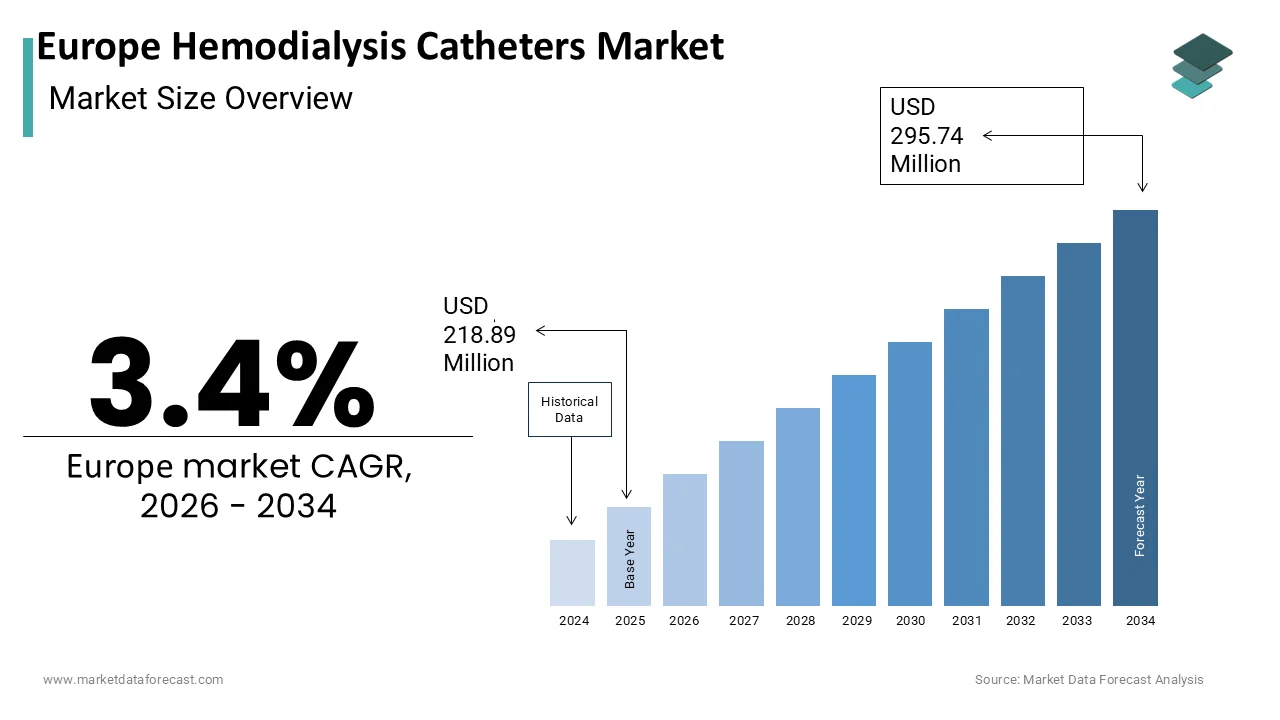
- Market Valuation: Valued at USD 218.89 million in 2025, estimated at USD 226.33 million in 2026, and projected to reach USD 295.74 million by 2034, registering a steady CAGR of 3.4% from 2026 to 2034.
- Primary Growth Drivers: Rising prevalence of end-stage renal disease driven by aging demographics and chronic conditions, alongside clinical reliance on central venous catheters for unplanned dialysis initiations.
Key Market Segment Metrics (2026–2034)
| Category | Leading Segment (2025 Position) | Fastest-Growing / Preferred Segment |
|---|---|---|
| By Product | Cuffed Tunneled Catheters (accounted for a 48.7% share in 2025 due to suitability for intermediate to long-term vascular access) | Non-Tunneled Catheters (predicted to witness the highest CAGR of 6.8% from 2025 to 2033 driven by acute care needs and unplanned initiations) |
| By Tip Configuration | Split Tip Catheters (captured a 42.7% share in 2025 fuelled by superior hemodynamic performance and reduced recirculation rates) | Step Tip Catheters (estimated to register the fastest CAGR of 7.3% owing to ease of insertion and ultrasound-guided compatibility) |
| By Material | Polyurethane (occupying a 65.1% share in 2025 driven by an optimal balance of flexibility, tensile strength, and biocompatibility) | Silicone Segment (anticipated to witness the fastest CAGR of 6.5% due to superior biocompatibility and reduced thrombogenicity) |
| By End User | Hospitals (held a substantial share in 2025 acting as key referral hubs for emergency care and immediate vascular access) | Home Dialysis (likely to experience the fastest CAGR of 9.1% over the forecast period driven by decentralized care initiatives) |
| By Country | Germany (outperformed other regions with a 22.7% share in 2025 backed by extensive dialysis infrastructure and health coverage) | France & Spain (expanding steadily via centralized renal care models, regional healthcare investments, and satellite units) |
Major Market Players & Market Structure
Market Structure: Highly competitive European market featuring established global multinational corporations and specialized medtech firms competing on technological innovation, antimicrobial coatings, and stringent compliance with the EU Medical Device Regulation (EU MDR).
Key Companies: Becton Dickinson, Teleflex Incorporated, Medtronic plc, B. Braun Melsungen AG, Nipro Medical Corporation, Asahi Kasei Medical Co Ltd, Baxter International Inc, Nikkiso Co. Ltd, Fresenius Medical Care AG & Co. KGaA, and Toray Medical Co Ltd.
Europe Hemodialysis Catheters Market Size
The europe hemodialysis catheters market size was valued at USD 218.89 million in 2025, is expected to have a 3.4% CAGR from 2026 to 2034 and be worth USD 295.74 million by 2034 from USD 226.33 million in 2026.
Hemodialysis catheters serve as critical vascular access devices for patients with end-stage renal disease requiring extracorporeal blood purification. In Europe, these catheters are predominantly utilized in acute care settings and as a bridge to permanent vascular access, such as arteriovenous fistulas. The European market encompasses tunneled and non-tunneled catheter variants designed for short-term or long-term use, with an increasing emphasis on infection-resistant and thrombosis-minimizing technologies. The prevalence of chronic kidney disease continues to rise due to aging demographics and the escalating burden of diabetes and hypertension. As per Eurostat, more than 20 percent of the European Union population was aged 65 years or older in 2023, a cohort particularly vulnerable to renal complications. These demographic and clinical realities underpin sustained demand for hemodialysis catheters across the region, which necessitates continuous innovation in device safety and performance.
MARKET DRIVERS
Rising Prevalence of End-Stage Renal Disease Drives Catheter Utilization
The escalating incidence of end-stage renal disease across European nations is a major propellant for the Europe hemodialysis catheters market. End-stage renal disease necessitates immediate renal replacement therapy, and in many clinical scenarios, particularly in emergency or unplanned dialysis initiation, central venous catheters become the default vascular access. According to the ERA Registry Annual Report 2022, the point prevalence of patients on renal replacement therapy in Europe reached 1074 per million population. Countries such as Germany, Italy, and Spain report some of the highest absolute numbers of dialysis-dependent patients, directly correlating with catheter consumption. This epidemiological shift intensifies the urgency for reliable short-term vascular access solutions. According to the European Renal Association, up to 80 percent of new hemodialysis patients start treatment with a central venous catheter. Consequently, the burden of end-stage renal disease leads directly to heightened catheter utilization in acute and transitional care settings.
Preference for Immediate Vascular Access in Unplanned Dialysis Initiation
A significant proportion of patients in Europe commence hemodialysis, compels clinicians to rely on central venous catheters as the initial modality, which drives the expansion of the Europe hemodialysis catheters market. As per sources, a portion of incident hemodialysis patients in Western Europe initiate therapy using a catheter due to late nephrology referral or rapid clinical deterioration. This unplanned start phenomenon is particularly pronounced in elderly populations and those with comorbid conditions that delay surgical access planning. Consequently, catheters fulfill an indispensable role in ensuring uninterrupted dialysis delivery during the critical early phase of therapy. This clinical reality, rooted in systemic delays in pre-dialysis care coordination, sustains robust demand for both non-tunneled and tunneled hemodialysis catheters as essential components of renal care infrastructure.
MARKET RESTRAINTS
High Rates of Catheter-Related Bloodstream Infections Impede Adoption
Catheter-related bloodstream infections represent a formidable clinical and economic barrier, which restricts the growth of the Europe hemodialysis catheters market. These infections not only compromise patient outcomes but also trigger stringent regulatory scrutiny and increased healthcare expenditures. According to the European Centre for Disease Prevention and Control, central line-associated bloodstream infections occur at a notable rate in European dialysis units, with mortality rates ranging from 12 to 25 percent among affected individuals. These complications have prompted national health authorities, including Germany’s Robert Koch Institute and the United Kingdom’s National Health Service, to implement strict catheter use reduction protocols. Consequently, clinicians increasingly favor arteriovenous fistulas or grafts whenever feasible, limiting catheter deployment to unavoidable scenarios. This infection risk perception, reinforced by clinical guidelines from the European Best Practice Guidelines for Vascular Access, constrains market expansion despite underlying patient demand.
Stringent Regulatory Requirements for Medical Device Approval
A highly rigorous regulatory framework that significantly influences product development timelines and market entry strategies, and thereby obstructs the expansion of the Europe hemodialysis catheters market. Since the full implementation of the European Union Medical Device Regulation in May 2021, manufacturers must adhere to enhanced clinical evidence requirements, post-market surveillance obligations, and stricter conformity assessment procedures. As per the European Commission, over 30 percent of legacy hemodialysis catheter devices faced delays or withdrawals during the transition to the new regulatory regime due to insufficient clinical data or inadequate risk management documentation. The notified body capacity constraints have further prolonged approval cycles. Apart from these, the requirement for unique device identification and comprehensive post-market performance tracking imposes substantial operational costs, particularly on small and medium-sized enterprises. These regulatory complexities deter innovation and limit the availability of next-generation catheters, and thereby constrain market responsiveness to evolving clinical needs across diverse European healthcare systems.
MARKET OPPORTUNITIES
Advancements in Antimicrobial and Antithrombotic Catheter Coatings
Innovations in surface modification technologies offer new opportunities for the growth of the European hemodialysis catheters market. Next-generation catheters incorporating antimicrobial and antithrombotic coatings are gaining clinical traction due to their proven efficacy in mitigating device-related complications. Similarly, heparin-bonded catheters have demonstrated a reduction in thrombotic occlusion rates, as per sources. These clinical benefits align with the European Commission’s strategic focus on reducing healthcare-associated infections. Regulatory bodies such as the French National Authority for Health have begun incorporating coating efficacy data into reimbursement assessments, incentivizing adoption. Moreover, leading European academic medical centers in the Netherlands and Sweden have integrated coated catheters into standard protocols for high-risk patients, signaling a shift toward value-based procurement. This convergence of clinical evidence, policy support, and institutional endorsement creates a fertile environment for premium coated catheter technologies to capture expanded market share.
Expansion of Home Hemodialysis Programs Across Northern and Western Europe
The gradual but steady adoption of home hemodialysis models in several European countries is opening prospects for the expansion of the Europe hemodialysis catheters market. While home dialysis traditionally favors permanent vascular access, certain patient subgroups, including those with failed fistulas or limited surgical options, require tunneled cuffed catheters compatible with self-care environments. According to research, home hemodialysis prevalence has grown annually, with Sweden, Denmark, and the Netherlands leading adoption, where home modalities constitute a portion of all dialysis treatments. These programs demand catheters engineered for durability, ease of handling, and reduced infection risk during unsupervised use. National health strategies, such as the United Kingdom’s Home Dialysis Transformation Programme, aim to double home dialysis uptake by 2025, which further amplifies demand for catheters tailored to decentralized care. Manufacturers responding with patient-centric designs, such as low-profile hubs and kink-resistant lumens, are well-positioned to benefit from this policy-driven shift toward home-based renal therapy, which enhances patient autonomy while alleviating pressure on hospital dialysis units.
MARKET CHALLENGES
Persistent Shortage of Nephrology Specialists Across Key European Regions
The uneven distribution and shortage of trained nephrologists and dialysis nurses challenge the growth of the Europe hemodialysis catheters market. According to the European Renal Association, Southern and Eastern European countries face a deficit in nephrology workforce capacity relative to patient load, which directly impacts timely fistula creation and catheter stewardship. This scarcity leads to delayed pre-dialysis planning, resulting in higher reliance on catheters as a default access method. Furthermore, inadequate training in catheter insertion and maintenance among general practitioners and emergency physicians exacerbates complication rates. These systemic workforce gaps not only perpetuate catheter dependence but also hinder the implementation of best practice guidelines, and thereby impede efforts to reduce catheter-associated morbidity and constrain market evolution toward safer and more sustainable access solutions.
Fragmented Reimbursement Policies Across European Healthcare Systems
The lack of harmonized reimbursement mechanisms remains a persistent commercial and clinical problem, which in turn hampers the expansion of the Europe hemodialysis catheters market. Reimbursement decisions are made at national or even regional levels, leading to significant disparities in coverage, pricing, and access to advanced catheter technologies. The fragmentation discourages manufacturers from launching innovative products in lower reimbursement markets, limiting patient access to safer devices. Moreover, the absence of cross-border pricing transparency complicates market entry strategies and inflates administrative costs for multinational suppliers. These inconsistencies not only distort competitive dynamics but also perpetuate inequities in vascular access quality, which ultimately affects patient outcomes and constrains the uniform adoption of next-generation hemodialysis catheters across the European landscape.
REPORT COVERAGE
| REPORT METRIC | DETAILS |
| Market Size Available | 2025 to 2034 |
| Base Year | 2025 |
| Forecast Period | 2026 to 2034 |
| Segments Covered | By Product, Tip Configuration, Material, End User, and Region. |
| Various Analyses Covered | Global, Regional, and Country-Level Analysis, Segment-Level Analysis, Drivers, Restraints, Opportunities, Challenges; PESTLE Analysis; Porter’s Five Forces Analysis, Competitive Landscape, Analyst Overview of Investment Opportunities |
| Countries Covered | UK, France, Spain, Germany, Italy, Russia, Sweden, Denmark, Switzerland, Netherlands, Turkey, Czech Republic, and the Rest of Europe |
| Market Leaders Profiled | B. Braun Melsungen AG, Nipro Medical Corporation, Asahi Kasei Medical Co Ltd, Baxter International Inc, Nikkiso Co. Ltd, Fresenius Medical Care AG & Co. KGaA, Toray Medical Co Ltd. |
SEGMENTAL ANALYSIS
By Product Insights
The cuffed tunneled catheters segment dominated the European hemodialysis catheters market by accounting for 48.7% share in 2025. The dominance of the cuffed tunneled catheters segment is due to their suitability for intermediate to long-term vascular access in patients awaiting permanent fistula maturation or those ineligible for surgical access. Their design, featuring a subcutaneous Dacron cuff that promotes tissue ingrowth, significantly reduces infection and dislodgement risks compared to non-tunneled alternatives. According to the European Best Practice Guidelines for Vascular Access, cuffed tunneled catheters are recommended for use beyond three weeks of dialysis therapy, a protocol widely adopted across national renal networks. Besides, national registries in Germany and the Netherlands indicate that cuffed catheters account for a portion of all tunneled catheter placements in outpatient dialysis centers. This clinical preference is supported by robust reimbursement for long-term access devices in Western Europe and growing adoption in aging populations with multiple comorbidities, which strengthens the segment’s market dominance.
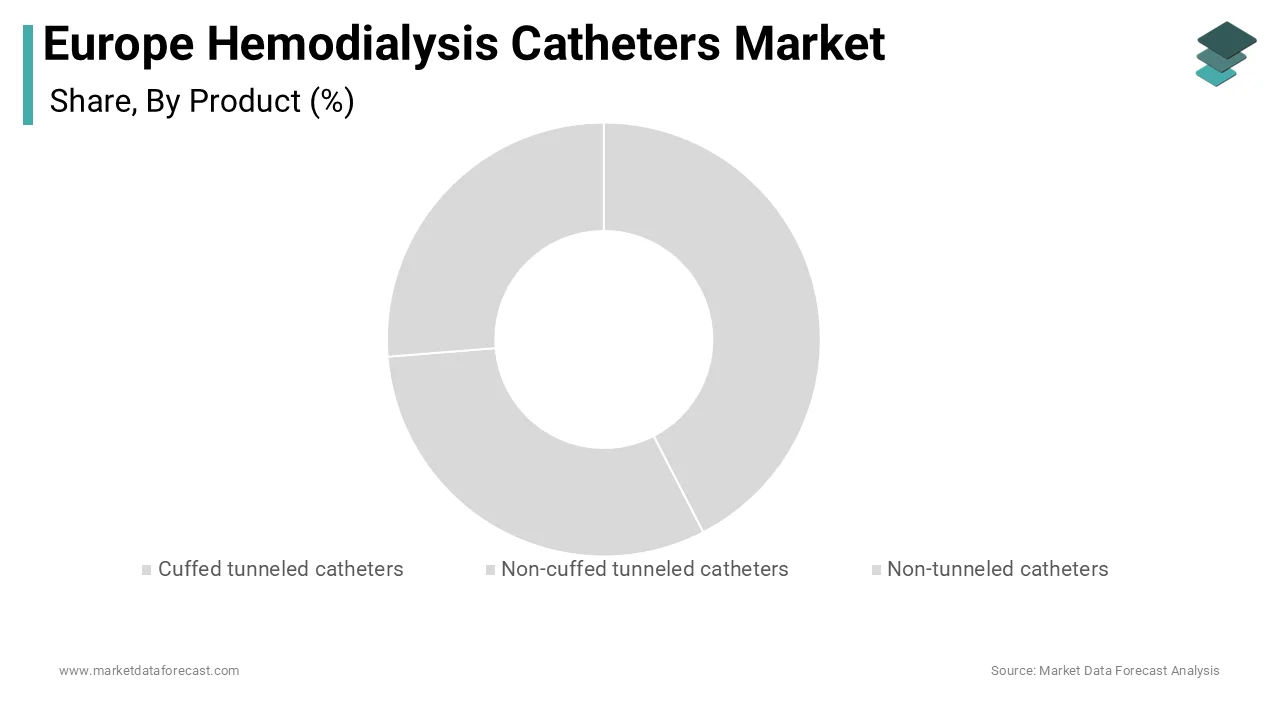
The non-tunneled catheters segment is predicted to witness the highest CAGR of 6.8% from 2025 to 2033. The growth of the non-tunneled catheters segment is driven by the rising incidence of acute kidney injury in critical care settings and unplanned dialysis initiations. In such scenarios, non-tunneled catheters are the only viable immediate access option due to their rapid bedside insertion capability. The segment’s growth is also accelerated by the expansion of emergency nephrology services in Eastern Europe and the integration of rapid response dialysis protocols in tertiary hospitals, which makes non-tunneled catheters indispensable in time-sensitive clinical pathways.
By Tip Configuration Insights
The split tip catheters segment led the European hemodialysis catheters market by capturing 42.7% share in 2025. The prominence of the split tip catheters segment is fuelled by their superior hemodynamic performance and reduced recirculation rates. The dual lumen design, with tips separated at the distal end, minimizes blood flow interference and enhances dialysis efficiency, a critical factor in achieving prescribed urea clearance targets. The performance advantage has led to widespread adoption in high-volume dialysis centers across Germany and the United Kingdom, where treatment efficacy metrics directly influence facility accreditation. Apart from these, leading manufacturers such as Medtronic and Becton Dickinson have optimized split-tip catheters with antimicrobial coatings and kink-resistant materials, aligning with regional infection control mandates. These clinical and technological synergies emphasize the segment’s sustained dominance.
The step tip catheters segment is estimated to register the fastest CAGR of 7.3% during the forecast period, owing to their enhanced ease of insertion and compatibility with ultrasound-guided placement techniques now standard in many European hospitals. The asymmetric tip design allows for smoother navigation through central veins, reducing vessel trauma and procedure time. The advantage is particularly valued in elderly patients with tortuous vasculature, a demographic that constitutes a portion of new dialysis starts in countries. Moreover, national training programs in Sweden and the Netherlands have incorporated step-tip catheter handling into interventional nephrology curricula, accelerating clinician familiarity. These procedural and regulatory tailwinds are propelling rapid segment expansion.
By Material Insights
The polyurethane segment maintained its prominence in the European hemodialysis catheters market by occupying 65.1% share in 2025. Factors such as its optimal balance of flexibility, tensile strength, and biocompatibility have significantly contributed to the growth of the polyurethane segment in the regional market. Its mechanical resilience allows for thinner catheter walls without compromising lumen size, enabling higher blood flow rates essential for efficient dialysis. According to the European Pharmacopoeia, medical-grade polyurethane used in catheters meets stringent leachables and extractables standards, ensuring patient safety during prolonged exposure. The durability is critical in high turnover dialysis units in France and Germany, where catheter longevity directly impacts operational efficiency. Furthermore, polyurethane’s compatibility with antimicrobial impregnation technologies, such as chlorhexidine and silver sulfadiazine, has made it the material of choice for infection-resistant catheters, which now constitute a portion of tunneled catheter sales in the EU. These functional and regulatory advantages cement polyurethane’s market leadership.
The silicone segment is anticipated to witness the fastest CAGR of 6.5% from to 2033. The rapid expansion of the silicone segment is propelled by its superior biocompatibility and reduced thrombogenicity in long-term applications. Unlike polyurethane, silicone elicits minimal foreign body reaction, making it ideal for patients requiring extended catheter dwell times due to failed fistulas or vascular exhaustion. As per sources, silicone catheters exhibit a lower incidence of fibrin sheath formation over several days compared to polyurethane counterparts. This attribute is increasingly valued in Nordic countries, where home hemodialysis programs prioritize patient comfort and complication avoidance. Apart from these, recent innovations in reinforced silicone formulations, blended with barium sulfate for radiopacity and platinum cure technology for enhanced elasticity, have addressed historical concerns about stiffness and fracture. These clinical and material science advances are fueling accelerated growth.
By End User Insights
In 2025, the hospitals segment held a substantial share of the Europe hemodialysis catheter market. Their role as referral centers for complex renal cases, emergency care, and post-surgical recovery, all of which necessitate immediate vascular access, fuels the growth of the hospitals segment. National health systems in Germany and Italy operate integrated nephrology wards within tertiary hospitals, where multidisciplinary teams manage vascular access planning, which results in high procedural volumes. Furthermore, stringent infection control protocols in hospital environments enable safer use of tunneled catheters by supporting institutional reliance. This concentration of clinical expertise, infrastructure, and patient acuity ensures hospitals remain the cornerstone of catheter demand.
The home dialysis segment is likely to experience the fastest CAGR of 9.1% over the forecast period, owing to national policy initiatives promoting decentralized care and patient autonomy. Countries such as the Netherlands and Denmark have implemented structured home dialysis pathways that include catheter-based options for patients unsuitable for self-cannulation. Apart from these, telehealth integration and remote monitoring systems now allow safe catheter management outside hospitals, reducing caregiver burden. These systemic shifts are transforming home settings into a high-growth frontier for specialized catheter solutions.
COUNTRY LEVEL ANALYSIS
Germany Hemodialysis Catheters Market
Germany outperformed other regions in the Europe hemodialysis catheters market in 2025 by accounting for a 22.7% share in 2025. The domination of Germany is mainly propelled by its extensive dialysis infrastructure and high prevalence of chronic kidney disease. The country’s statutory health insurance system provides comprehensive coverage for advanced catheter technologies, including antimicrobial-coated tunneled devices, fostering rapid adoption. Academic medical centers in Berlin and Munich lead in implementing evidence-based vascular access protocols aligned with European Renal Association guidelines. Furthermore, Germany hosts several major catheter manufacturers and contract research organizations, facilitating clinical trials and localized product development.
France Hemodialysis Catheters Market
France followed closely in the Europe hemodialysis catheters market by capturing 16.8% share in 2025. The growth of France is driven by a centralized renal care model and strong public investment in dialysis services. As per research, a large number of patients in France continue to rely on hemodialysis, with catheters commonly used during the initial stages of treatment. The national health authorities have introduced strategies aimed at minimizing catheter dependency while recognizing their essential role in managing urgent and temporary cases. Regional dialysis networks in Île de France and Provence-Alpes-Côte d'Azur operate high-throughput units that consume significant catheter volumes. Besides, France’s robust medtech innovation ecosystem, supported by Bpifrance funding, has spurred domestic development of coated and kink-resistant catheters. The national emphasis on reducing healthcare-associated infections has also driven procurement of premium catheters by consolidating France’s role as a key growth market.
Italy Hemodialysis Catheters Market
Italy witnessed steady growth in the European hemodialysis catheters market, with demand shaped by an aging population and regional disparities in nephrology care. Southern regions such as Sicily and Campania face shortages of vascular surgeons. Conversely, northern regions like Lombardy have advanced fistula programs but still require catheters for acute cases. Furthermore, Italy’s participation in the European Renal Association’s quality improvement initiatives has standardized catheter insertion protocols, enhancing safety and utilization. These demographic and systemic factors sustain Italy’s significant market presence.
United Kingdom Hemodialysis Catheters Market
The United Kingdom expanded gradually in the Europe hemodialysis catheters market and is driven by its publicly funded National Health Service and rising renal disease burden. A significant number of patients in the United Kingdom continue to receive hemodialysis treatment, with catheters frequently used in emergency or unplanned cases, according to sources. Efforts to promote home-based dialysis under national healthcare policies have, interestingly, led to higher use of specialized catheters among patients unable to perform the procedure independently. Academic centers in London and Edinburgh lead in catheter-related research, influencing national practice. Apart from these, post-Brexit regulatory alignment with the EU MDR has maintained access to innovative catheter technologies. These policies and clinical dynamics ensure the UK remains a stable and evolving market.
Spain Hemodialysis Catheters Market
Spain is anticipated to be in the European hemodialysis catheters market, with growth influenced by improving renal care access and regional health autonomy. According to studies, a large number of patients undergo hemodialysis, and catheter use at initiation remains at a notable level due to late referrals. Autonomous communities such as Catalonia and Madrid have invested in dialysis satellite units, increasing procedural volumes and catheter consumption. The Spanish Agency of Medicines and Medical Devices has streamlined approvals for CE-marked catheters, facilitating market entry. Moreover, Spain’s participation in the ERA Registry has enhanced data-driven vascular access management, promoting appropriate catheter use. The aging population further fuels demand for reliable short-term access. These structural and demographic trends position Spain as a resilient and gradually expanding market within Southern Europe..
COMPETITIVE LANDSCAPE
The Europe hemodialysis catheters market features intense competition among established multinational corporations and specialized medtech firms. Leading companies differentiate themselves through technological superiority, clinical evidence generation, and compliance with evolving regulatory standards. The implementation of the EU Medical Device Regulation has raised entry barriers favoring incumbents with strong quality systems and post-market surveillance capabilities. Competition is further shaped by national reimbursement policies, which influence product selection in public healthcare systems. Companies actively engage in health technology assessments to demonstrate the cost-effectiveness of advanced catheters, particularly those that reduce infection rates. Innovation materials, design, and coating technologies serve as a key battleground with firms racing to launch safer, more durable devices. Collaborations with nephrology societies and participation in European renal registries also enhance credibility and market access. This dynamic environment drives continuous improvement in vascular access solutions across the region.
KEY MARKET PLAYERS
Prominent Companies operating in the Europe hemodialysis Catheters Market Profiled in the Report are
- B. Braun Melsungen AG
- Nipro Medical Corporation
- Asahi Kasei Medical Co Ltd
- Baxter International Inc
- Nikkiso Co. Ltd
- Fresenius Medical Care AG & Co. KGaA
- Toray Medical Co Ltd.
TOP LEADING PLAYERS IN THE MARKET
- Becton Dickinson is a leading global medical technology company with a significant presence in the Europe hemodialysis catheters market. The company offers a comprehensive portfolio of vascular access devices, including tunneled and non-tunneled hemodialysis catheters engineered for safety and performance. Becton Dickinson has reinforced its position through continuous innovation in antimicrobial coatings and catheter design. In recent years, the company has expanded its European distribution network and invested in clinical education programs to support proper catheter insertion and maintenance. These initiatives align with regional infection control mandates and enhance clinician adoption of its advanced catheter solutions across diverse healthcare settings in Europe.
- Teleflex Incorporated plays a pivotal role in the European hemodialysis catheters landscape through its Arrow brand of vascular access products. The company specializes in tunneled cuffed catheters featuring proprietary antimicrobial technology and ergonomic designs tailored for long-term dialysis. Teleflex has strengthened its European footprint by enhancing regulatory compliance under the EU Medical Device Regulation and establishing partnerships with dialysis service providers. Recent efforts include launching next-generation catheters with improved thrombosis resistance and supporting multicenter clinical studies in Germany and the Netherlands. These actions demonstrate Teleflex’s commitment to addressing unmet clinical needs and advancing vascular access standards across the region.
- Medtronic plc contributes significantly to the Europe hemodialysis catheters market through its VascuLogic and Mahurkar catheter platforms. The company integrates advanced materials and tip configurations to optimize blood flow and reduce complications. Medtronic has intensified its focus on European markets by aligning product development with local clinical guidelines and expanding training programs for nephrology and interventional radiology teams. In recent years, the company has introduced catheters with enhanced radiopacity and kink resistance specifically designed for elderly patients. Apart from these, Medtronic collaborates with academic institutions to generate real-world evidence supporting the safety and efficacy of its vascular access devices throughout Europe.e
TOP STRATEGIES USED BY THE KEY MARKET PARTICIPANTS
Key players in the Europe hemodialysis catheters market employ several strategic approaches to maintain a competitive advantage. Product innovation remains central, with companies investing heavily in antimicrobial and antithrombotic catheter technologies to address infection and clotting risks. Regulatory compliance is another critical strategy as firms adapt to the stringent requirements of the European Union Medical Device Regulation through robust clinical data generation and quality management systems. Strategic partnerships with dialysis centers and healthcare networks enable direct engagement with end users and facilitate rapid adoption of new devices. Companies also prioritize clinician education by conducting workshops and simulation-based training to promote best practices in catheter insertion and care. Geographic expansion within Eastern and Southern Europe further strengthens market presence by tapping into underserved regions with growing renal disease burdens..
MARKET SEGMENTATION
This research report on the europe hemodialysis catheters market has been segmented and sub-segmented into the following categories.
By Product
- Cuffed tunneled catheters
- Non-cuffed tunneled catheters
- Non-tunneled catheters
By Tip Configuration
- Step-tip catheters
- Split-tip catheters
- Symmetric catheters
By Material
- Silicone
- Polyurethane
By End User
- Hospitals
- Clinics
- Home Dialysis
By Country
- UK
- France
- Spain
- Germany
- Italy
- Russia
- Sweden
- Denmark
- Switzerland
- Netherlands
- Turkey
- Czech Republic
- Rest of Europe