- Product Description Description
- Table of Contents TOC
- List of Table & Figure LOT
- Get Free Sample PDF Sample PDF
Market Size, 2025
$945.63 BnMarket Estimate, 2026
$985.34 BnMarket Forecast, 2034
$1,369.39 BnCAGR, 2026–2034
4.2%Global Hemodialysis Catheters Market Size, Growth, Trends & Forecast (2025–2034)
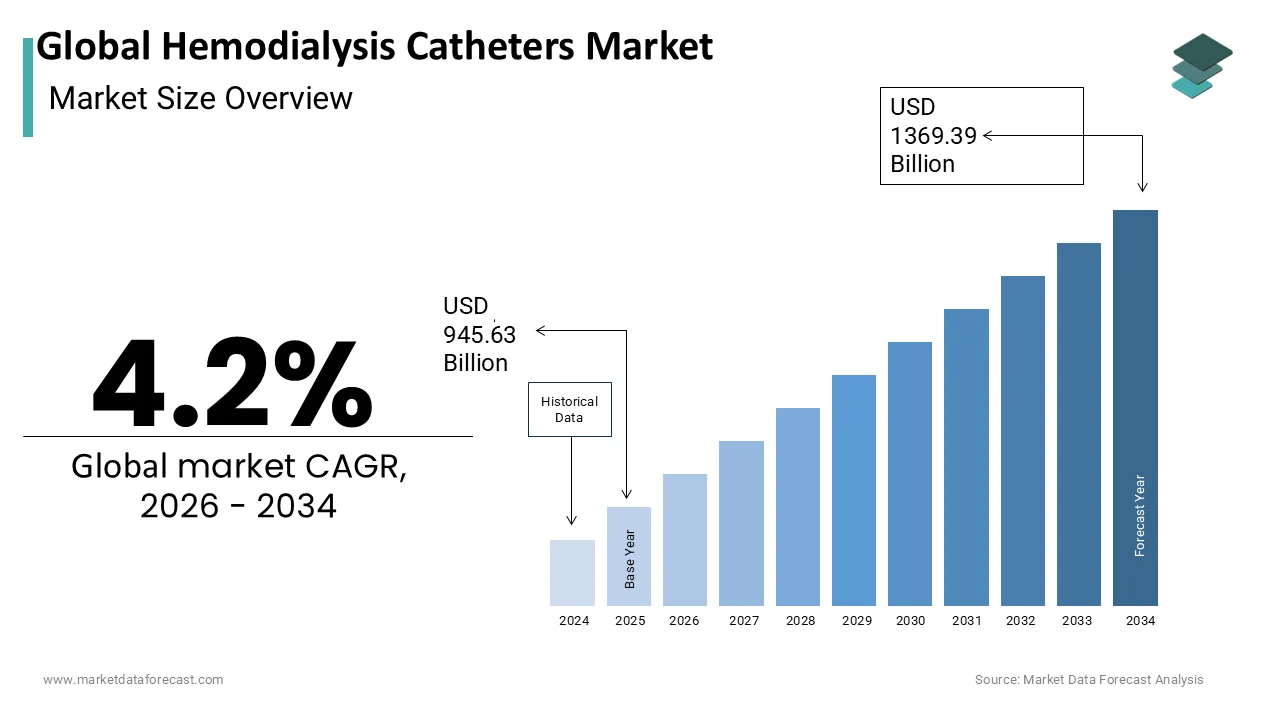
The global hemodialysis catheters market size was valued at USD 945.63 billion in 2025, is estimated to reach USD 985.34 billion in 2026, and is anticipated to expand up to USD 1,369.39 billion by the end of 2034, registering a compound annual growth rate (CAGR) of 4.2% during the forecast period from 2026 to 2034. Driven by escalating cases of end-stage renal disease (ESRD), rising diabetic and hypertensive populations, a severe shortage of kidney donors, and continuous design innovations in vascular access devices, the market maintains a steady commercial trajectory.
Key Executive Metrics (At-a-Glance)
- 2025 Base Valuation: USD 945.63 Billion
- 2026 Current Valuation: USD 985.34 Billion
- 2034 Forecast Valuation: USD 1,369.39 Billion
- Compound Annual Growth Rate (CAGR): 4.2% (2026–2034)
- Dominant Product Segment: Cuffed Tunneled Catheters (widely adopted for long-term renal replacement therapies)
- Dominant Tip Configuration Segment: Step-Tip Catheters (leading market share in tip design configurations)
- Dominant Material Segment: Polyurethane (exhibiting the highest material adoption and growth rate compared to silicone)
- Fastest-Growing End-User Segment: Home Dialysis (projected for high growth driven by user convenience and home-care equipment developments)
- Dominant Region: North America (anchored by robust healthcare infrastructure, high disease awareness, and advanced treatment access)
Core Market Drivers
- Surge in Chronic Kidney Disorders & ESRD: Rising global incidence of lifestyle-related ailments like diabetes, hypertension, and obesity directly escalating renal failure rates.
- Donor Shortages & Dialysis Preference: Limited availability of viable kidney donors driving long-term reliance on extracorporeal renal replacement therapy and home hemodialysis options.
Primary Market Restraints & Challenges
- Catheter-Related Complications: High risks of bloodstream infections, thrombosis, low blood pressure, muscle cramps, and procedural side effects.
- Knowledge & Coverage Gaps: Limited awareness of advanced technology in developing economies alongside reimbursement or medical coverage shortages for dialysis care in specific regions.
Global Hemodialysis Catheters Market Segmentation Breakdown
| Segment Category | Leading Sub-Segment | Fastest-Growing Sub-Segment |
|---|---|---|
| By Product | Cuffed Tunneled Catheters (standard choice for intermediate to long-term vascular access) | Non-Tunneled Catheters (essential for emergency short-term extracorporeal therapies) |
| By Tip Configuration | Step-Tip Catheters (leading historical configuration preference among practitioners) | Split-Tip & Symmetric Catheters (engineered to minimize recirculation and thrombosis) |
| By Material | Polyurethane (favored for superior tensile strength and kink resistance) | Silicone (utilized for biocompatibility and flexibility in long-term indwelling use) |
| By End User | Hospitals & Clinics (primary settings for acute insertions and managed care) | Home Dialysis (expanding rapidly due to patient autonomy, convenience, and remote monitoring) |
| By Region | North America & Europe (North America leads revenue share; Europe occupies second place) | Latin America & Asia-Pacific (Latin America shows fast growth; Asia-Pacific anchors large patient volumes) |
Major Industry Players Profiled
Key medical device manufacturers shaping the global hemodialysis catheters market include Fresenius Medical Care AG & Co. KGaA, Nikkiso Co. Ltd., Baxter International Inc., B. Braun Melsungen AG, Nipro Medical Corporation, Toray Medical Co., Ltd., Asahi Kasei Medical Co., Ltd., Outset Medical, Inc., and Allmed Medical Corporation.
Global Hemodialysis Catheters Market Size
The global hemodialysis catheters market was valued at USD 945.63 billion in 2025 and it is expected to reach USD 1369.39 billion by 2034 from USD 985.34 billion in 2026, growing at a CAGR of 4.2%. From 2026 to 2034.
Hemodialysis is a medical procedure to remove fluid and waste products from the blood and correct electrolyte imbalances. It is also called an artificial kidney. Hemodialysis is used to treat both acute and chronic kidney failure. Hemodialysis catheters are artificially indwelling transcutaneous conduits used to access the intravascular space or the intraperitoneal space for renal replacement therapy (RRT). There are two types of catheters non – tunneled and tunneled. The non – tunneled catheters are used for short – term extracorporeal renal replacement therapy, it is inserted with the help of ultrasound guidance.
MARKET DRIVERS
The growing incidence of ESRD and an increasing number of chronic kidney disorders are majorly expanding the global hemodialysis catheters market growth.
The global hemodialysis catheters market growth is attributed to the increase in the prevalence of end-stage renal diseases (ESRD) and rises in the number of patients suffering from chronic kidney disorders. Also, rising awareness about blood infections is driving the Hemodialysis catheter market globally. The growing number of patients suffering from diabetes and hypertension is more likely to globally fuel the chronic hemodialysis catheter market. In addition, Technological advancements in hemodialysis catheters and dialysis equipment and the rise in demand for hemodialysis amongst chronic kidney disorders further improve the market growth.Furthermore, the demand is expected to grow due to a lack of available kidney donors for transplantation and technical advancements in dialysis equipment. Hemodialysis catheters are designed to fulfill the health needs of patients undergoing hemodialysis, infusion, apheresis, central venous pressure control, and those receiving high-pressure contrast injections. However, the insertion of intravascular products, especially catheters, is the leading cause of health-care-associated bloodstream infections, which is expected to push the market for hemodialysis catheters. According to many clinical trials, optimal placement of the catheter tip inside the right atrium improves the efficiency and stability of hemodialysis catheters.In addition, the scarcity of kidney donors raises the need for hemodialysis from CKD patients all over the world. As a result, the demand for hemodialysis catheters grows. According to the American Kidney Fund's kidney disease estimates, more than 31 million people in the United States, or 10% of the adult population, have chronic kidney disease. With age, the chances of developing CKD increase. Rising R&D expenditure for developing new hemodialysis products and the rise in preference for home hemodialysis (HHD) treatment, and increasing investments by government and private organizations encourage market growth.The death rate due to kidney diseases is increasing across the world. According to WHO, around 10 million people die every year from kidney disease. Changes in lifestyle and rise in several obesity cases, hypertension, and diabetes patients propel the market growth. An increase in the awareness about the benefits of dialysis products is boosting the hemodialysis catheters market growth. There is continuous development in technology related to dialysis.
MARKET RESTRAINTS
Some of the patients experience side effects such as low blood pressure, anemia, muscle cramps, and sleep problem, which is a significant factor hampering the market growth.
Lack of proper knowledge over the latest technologies, especially in underdeveloped countries, further impedes market growth.Shortages hamper the market's development in medical coverage for dialysis procedures in developed countries and a rise in the risk of blood poisoning and thrombosis. Low blood pressure, anemia, muscle cramps, and sleep problems are among the side effects of certain patients, which is a major factor impeding business development. Market growth is further hampered by a lack of proper awareness of the latest technology, especially in developing countries.
REPORT COVERAGE
| REPORT METRIC | DETAILS |
| Market Size Available | 2025 to 2034 |
| Base Year | 2025 |
| Forecast Period | 2026 to 2034 |
| Segments Covered | By Product, Tip Configuration, Material, End User, and Region |
| Various Analyses Covered | Global, Regional & Country Level Analysis, Segment-Level Analysis, Drivers, Restraints, Opportunities, Challenges, PESTLE Analysis, Porter’s Five Forces Analysis, Competitive Landscape, Analyst Overview on Investment Opportunities |
| Regions Covered | North America, Europe, Asia Pacific, Latin America, Middle East, and Africa |
| Market Leaders Profiled | Fresenius Medical Care AG & Co. KGaA, Nikkiso Co. Ltd, Baxter International Inc., |
SEGMENTAL ANALYSIS
By Product Insights
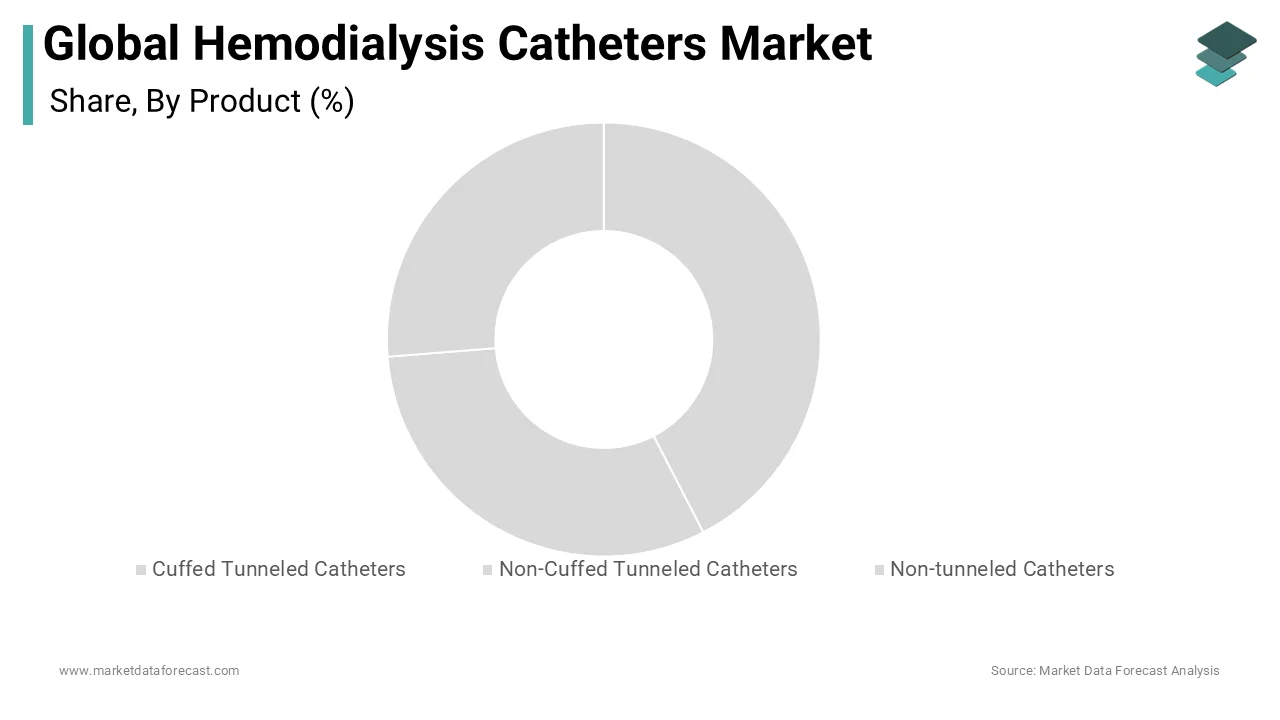
Based on the product type, the cuffed tunneled segment is expected to have the largest market share over the analysis period. The growth is due to the growing number of hemodialysis patients. The growing acquisition of tunneled catheters in the hemodialysis process is boosting the market growth.
By tip configuration Insights
Based on the tip configuration analysis, the step-tip catheters segment is estimated to account for the largest market during the forecast period.
By Material Insights
Based on the material, the polyurethane segment is expected to have the highest growth rate compared with the silicone segment.
By End User Insights
Based on the end-user, the home dialysis segment is estimated to grow at the highest CAGR rate, showcasing a CAGR of 5.3% from 2024 to 2029. The factors responsible for the growth are user convenience and profits provided by the home dialysis machines.
REGIONAL ANALYSIS
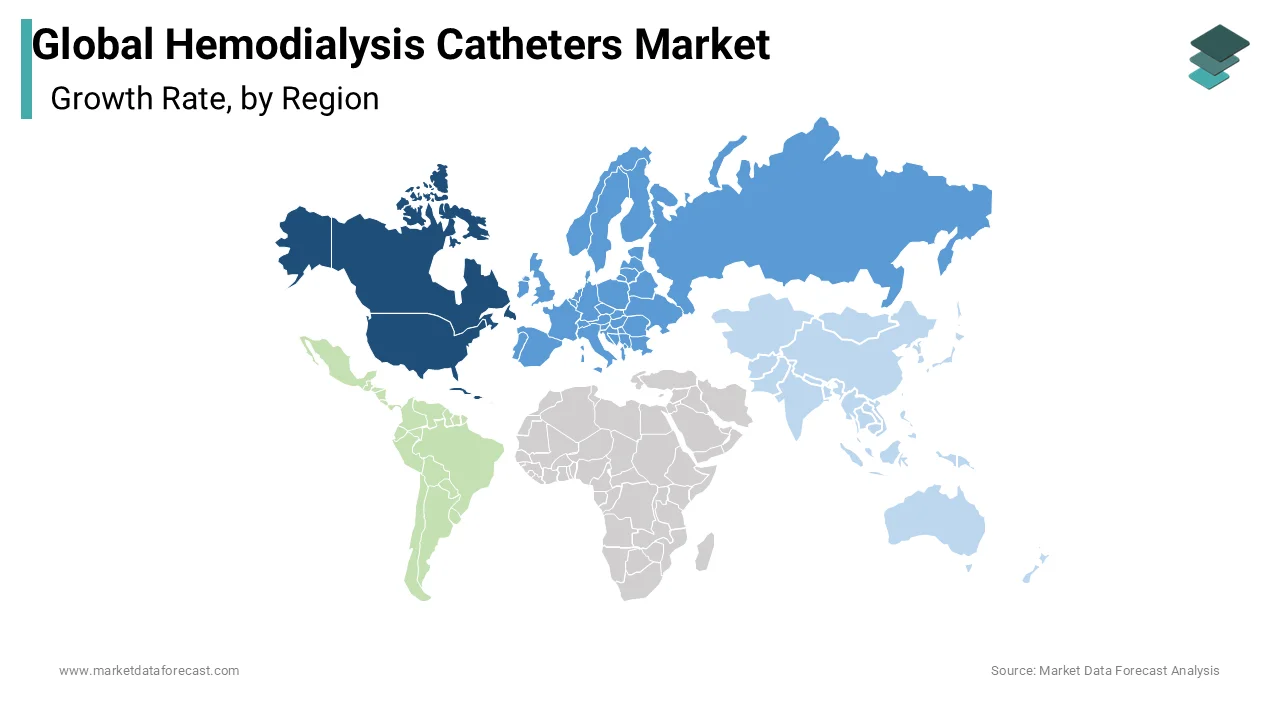
Regionally, the North American region accounted for the maximum share in the global market in 2024. The U.S. market is currently ruling the global market occupying leading shares. The market in North America is primarily driven by factors such as the well-established healthcare sector, growing awareness about the diseases associated with kidney, improved access to healthcare facilities, and supportive government policies that fuelled the market growth.
The European market has occupied the second largest share of the hemodialysis catheter market due to increasing occurrences of chronic diseases like diabetes, high blood pressure, kidney failure, etc. The market in Europe is expected to grow at a CAGR value of 4.2% over the forecast period.
The Asia Pacific is expected to dominate the market, while Latin America is anticipated to have the fastest growth. Factors like increasing demand for dialysis products and rising awareness are driving these regions. Asia-Pacific has dominated the market that accounts for 5.1% of the hemodialysis catheters market. The growth is due to the accessibility of efficient hemodialysis and favorable reimbursement policies in developing countries such as the U.K. and Germany. Increasing the medical tourism industry is accelerating market growth.
Latin America is to have a steady growth rate over the analysis period due to factors such as the existence of a vast patient pool and growing awareness against the benefits of dialysis. This region provides many opportunities in the dialysis market to surge up the hemodialysis catheters market.
The Middle East & Africa region is expected to grow and expand slowly in the coming years. Also, increasing occurrences of kidney diseases and the increasing number of patient populations suffering from end-stage renal diseases are propelling the market's growth rate. Growing demand for dialysis equipment is also driving the market growth.
KEY MARKET PLAYERS
Some prominent companies operating in the global hemodialysis catheter market profiled in the report are Fresenius Medical Care AG & Co. KGaA, Nikkiso Co. Ltd, Baxter International Inc., B. Braun Melsungen AG, Nipro Medical Corporation, Toray Medical Co., Ltd., Asahi Kasei Medical Co., Ltd., NxStage Medical, Inc., Outset Medical, Inc, and Allmed Medical Corporation.
RECENT HAPPENINGS IN THE MARKET
-
On June 2, 2020, Citius Pharmaceutical announced that it had received positive feedback from the US Food and Drugs Administration on its proposed catheter compatibility studies for its Mino–Lok therapy.
-
On March 3, 2020, Access Vascular, Inc. announced it had received FDA clearance for the second generation of its HydroPICC peripherally inserted central catheter. Its accumulation rate is 30 times less than traditional PICCSs, and it could reduce catheter occlusions.
- On February 13, 2020, CloudCath, a maker of remote monitoring devices for catheter treatment, raised 12 million USD for its new home monitoring devices.
MARKET SEGMENTATION
This market research report on the global hemodialysis catheters market has been segmented based on the product, tip configuration, material, end-user, and region.
By Product
- Cuffed Tunneled Catheters
- Non-Cuffed Tunneled Catheters
- Non-tunneled Catheters
By tip configuration
- Step-tip catheters
- Split-tip catheters
- Symmetric catheters
By Material
- Silicone
- Polyurethane
By End User
- Hospitals
- Clinics
- Home Dialysis
By Region
- North America
- Europe
- Asia Pacific
- Latin America
- The Middle East and Africa