- Product Description Description
- Table of Contents TOC
- List of Table & Figure LOT
- Get Free Sample PDF Sample PDF
Market Size, 2025
$5.30 BnMarket Estimate, 2026
$5.72 BnMarket Forecast, 2034
$10.52 BnCAGR, 2026–2034
7.32%Europe High Throughput Screening Market Report Summary
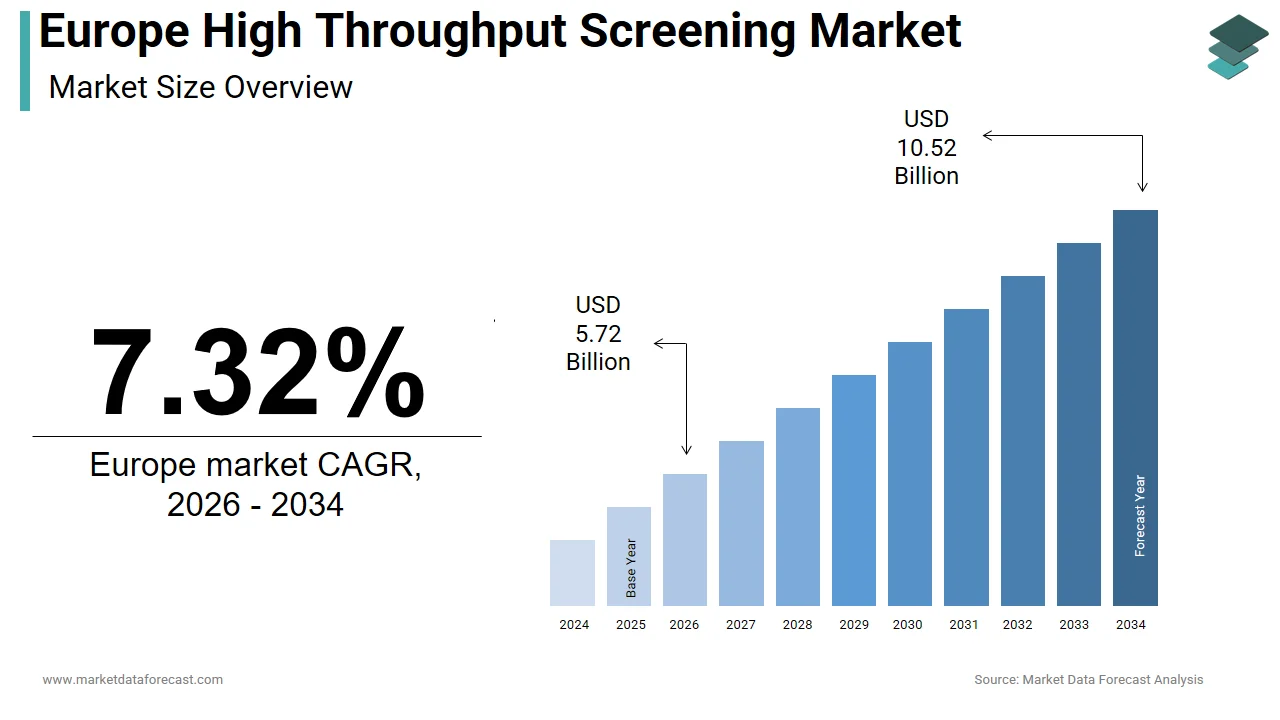
The Europe high-throughput screening (HTS) market was valued at USD 5.30 billion in 2025, is estimated to reach USD 5.72 billion in 2026, and is projected to reach USD 10.52 billion by 2034, growing at a CAGR of 7.32% from 2026 to 2034. Market growth is driven by increasing demand for rapid drug discovery, expanding pharmaceutical research activities, and advancements in automated laboratory technologies. High-throughput screening enables researchers to analyze large numbers of biological samples simultaneously, significantly accelerating the identification of potential drug candidates. The rising investment in biotechnology research, growing adoption of automation in laboratories, and increasing focus on precision medicine are further supporting market expansion across Europe.
Key Market Trends
- Increasing adoption of automated screening technologies in drug discovery and development.
- Rising demand for advanced assay technologies and high-content screening platforms.
- Growing investment in biotechnology research and pharmaceutical innovation.
- Expansion of precision medicine and personalized therapy development.
- Integration of AI, robotics, and data analytics in laboratory screening workflows.
Segmental Insights
- Based on technology, the cell-based assays segment dominated the Europe high throughput screening market by accounting for 41.4% share in 2025, supported by their ability to provide biologically relevant insights during drug discovery and toxicity testing.
- Based on end user, the pharmaceutical and biotechnology companies segment held the largest share of 61.6% in 2025, driven by increasing research and development activities and strong investments in drug discovery programs.
Regional Insights
The Europe high throughput screening market is witnessing steady growth across major countries due to expanding pharmaceutical research infrastructure and increasing biotechnology innovation.
- Germany dominated the regional market in 2025 with 24.4% share, supported by a strong pharmaceutical industry and advanced research facilities.
- The United Kingdom held a significant share in the market in 2025, driven by strong academic research institutions and biotechnology innovation.
- Switzerland is expected to account for a notable share over the forecast period due to its position as a global hub for major pharmaceutical companies, strong tradition of precision engineering, and highly specialized scientific workforce.
Competitive Landscape
The Europe high throughput screening market is characterized by strong competition among laboratory technology providers, biotechnology companies, and research equipment manufacturers. Market participants are focusing on developing automated screening systems, advanced assay technologies, and integrated data analysis platforms to improve research efficiency. Strategic collaborations with pharmaceutical companies and research institutions are shaping competitive dynamics across the region.
Prominent companies operating in the Europe high throughput screening market include Agilent Technologies Inc., Danaher Corporation, Thermo Fisher Scientific Inc., PerkinElmer Inc., Tecan Group Ltd., MilliporeSigma, Bio-Rad Laboratories, Hamilton Company, Axxam S.p.A., and Aurora Biomed.
Europe High Throughput Screening Market Size
The size of the Europe high throughput screening market was valued at USD 5.30 billion in 2025. This market is expected to grow at a CAGR of 7.32% from 2026 to 2034 and be worth USD 10.52 billion by 2034 from USD 5.72 billion in 2026.
High-throughput screening represents a critical infrastructure within the pharmaceutical and biotechnology sectors, utilizing automated robotics, sensitive detectors, and data processing software to conduct millions of chemical, genetic, or pharmacological tests rapidly. This technology serves as the primary engine for drug discovery, enabling researchers to identify active compounds that modulate specific biological targets with unprecedented speed and precision. The European landscape is uniquely shaped by a robust network of public research institutions and a strong regulatory framework driven by the European Medicines Agency, which mandates rigorous safety and efficacy data before clinical trials can commence. According to Eurostat, the European Union invests a notable share of its gross domestic product in research and development, with a significant portion directed toward life sciences and health technologies. As per the European Commission, the population aged sixty-five and older is expected to rise considerably by 2050, which intensifies the urgency to discover treatments for age-related diseases such as Alzheimer's and cardiovascular conditions. This convergence of substantial public funding, an aging demographic requiring novel therapeutics, and a mature scientific ecosystem positions high-throughput screening not merely as a laboratory tool but as a strategic asset essential for maintaining Europe's competitiveness in global healthcare innovation.
MARKET DRIVERS
Surging Prevalence of Chronic Diseases and Orphan Disorders Driving Drug Discovery
The escalating burden of chronic diseases and rare orphan disorders across the continent, which requires the rapid identification of novel therapeutic candidates to address unmet medical needs, is one of the notable factors propelling the growth of the European high-throughput screening market. Europe is witnessing a dramatic rise in non-communicable diseases, which is placing immense pressure on healthcare systems and demanding a faster pipeline of effective medications. According to the World Health Organization Regional Office for Europe, chronic conditions such as cancer, diabetes, and respiratory diseases account for a significant majority of deaths in the region, which is creating an urgent demand for new drug entities that can alter disease progression. Traditional drug discovery methods are often too slow and costly to keep pace with this growing health crisis, making high-throughput screening indispensable for its ability to test hundreds of thousands of compounds against specific disease targets in a matter of days. Furthermore, the European Union has implemented strong incentives for orphan drug development, including market exclusivity and protocol assistance, to encourage research into rare diseases. As per the European Medicines Agency, orphan drug designations have been steadily increasing, reflecting a strategic shift toward targeted therapies that require highly specialized screening assays.
Integration of Artificial Intelligence and Advanced Data Analytics in Screening Workflows
The transformative integration of artificial intelligence and machine learning algorithms into high-throughput screening workflows that dramatically enhance the efficiency and predictive power of drug discovery campaigns is further aiding the expansion of the high-throughput screening market in Europe. The sheer volume of data generated by modern screening platforms exceeds the capacity of traditional manual analysis, necessitating advanced computational tools to extract meaningful insights. As per the European Laboratory for Learning and Intelligent Systems, the adoption of AI-driven models in life sciences is accelerating, allowing researchers to predict compound toxicity, optimize assay conditions, and identify promising hits with greater accuracy. European research consortia, such as those funded under the Horizon Europe program, are actively developing open-source AI platforms specifically tailored for biomedical data, fostering a collaborative environment that accelerates innovation. The ability of these technologies to learn from historical screening data and refine future experiments creates a virtuous cycle of improvement, making the screening process faster and more reliable.
MARKET RESTRAINTS
Prohibitive Costs of Implementation and Maintenance for Small Entities
The exorbitant capital expenditure and ongoing operational costs associated with establishing and maintaining state-of-the-art high-throughput screening facilities are a significant restraint on the growth of the European high-throughput screening market. The acquisition of advanced robotic liquid handlers, high-content imaging systems, and sophisticated detection instruments requires multimillion-euro investments, which are often beyond the financial reach of small and medium-sized enterprises and academic laboratories. According to the European Biopharmaceutical Enterprises, the average cost of setting up a fully automated screening core is extremely high, excluding the substantial recurring expenses for reagents, consumables, and specialized technical staff. Furthermore, the rapid pace of technological obsolescence means that equipment may need frequent upgrades or replacement to remain competitive, adding to the total cost of ownership. For smaller biotech firms, these financial barriers can limit their ability to conduct independent screening campaigns, forcing them to rely on external contract research organizations or delay their drug discovery programs.
Shortage of Skilled Personnel and Complexity of Data Interpretation
The critical shortage of skilled professionals capable of operating complex high-throughput screening systems and interpreting the massive datasets they generate is further impeding the expansion of the European high-throughput screening market. The operation of these advanced platforms requires a multidisciplinary skill set encompassing robotics, biology, chemistry, and data science, a combination that is increasingly rare in the current European labor market. As per the European Commission's Skills Panorama, there is a growing gap between the demand for highly specialized life science technicians and the supply of qualified graduates, leading to recruitment difficulties for many research institutions. The complexity of modern screening assays demands operators who can troubleshoot technical issues instantly to prevent costly experiment failures. Moreover, the interpretation of high-dimensional data requires expertise in bioinformatics and statistical modeling, skills that are in short supply across the continent. Without adequate human capital, even the most advanced screening facilities cannot operate at optimal efficiency, leading to bottlenecks in drug discovery pipelines. This workforce deficit limits the scalability of screening operations and hampers the ability of the European sector to fully leverage its technological investments.
MARKET OPPORTUNITIES
Expansion of Phenotypic Screening and Three-Dimensional Cell Culture Models
The shifting paradigm from target-based screening to phenotypic screening using three-dimensional cell culture models and organoids that offer more physiologically relevant predictions of drug efficacy and safety is a significant opportunity in the European high-throughput screening market. Traditional two-dimensional monolayer cultures often fail to replicate the complex microenvironment of human tissues, leading to high attrition rates in later clinical stages. As per the European Research Council, there is a growing emphasis on developing miniaturized three-dimensional models that mimic human organ function, providing a more accurate platform for high-throughput screening. These advanced models allow researchers to observe the holistic effects of compounds on cellular behavior, tissue architecture, and intercellular signaling, thereby identifying candidates with higher potential for clinical success. The ability to screen against patient-derived organoids also opens avenues for personalized medicine, where therapies can be tailored to individual genetic profiles. European biotechnology firms are increasingly adopting these sophisticated models to de-risk their pipelines and attract investment by demonstrating higher predictive validity.
Growth of Contract Research Organizations and Shared Screening Facilities
The burgeoning role of Contract Research Organizations and the establishment of shared screening facilities offer a substantial opportunity for the regional market. Many small biotech startups and academic groups lack the resources to build in-house capabilities, which is creating a robust demand for external partners who can provide screening services on a project basis. As per the European Association of Research-based Pharmaceutical Companies, outsourcing of early-stage drug discovery activities is accelerating, driven by the need for cost efficiency and access to specialized expertise. CROs in Europe are expanding their portfolios to include diverse assay formats, offering flexible solutions that cater to specific client needs. Furthermore, government-funded initiatives are promoting the creation of open-access screening centers equipped with cutting-edge instrumentation, allowing researchers to utilize world-class facilities without the burden of capital ownership. These shared resources foster collaboration between academia and industry, which is accelerating the translation of basic research into therapeutic applications.
MARKET CHALLENGES
Standardization Issues and Reproducibility Crises in Screening Assays
The persistent lack of standardization in assay protocols and the resulting reproducibility crisis that undermines confidence in screening data is one of the major challenges to the growth of the European high-throughput screening market. Variability in reagent quality, cell line characteristics, and operational procedures across different laboratories often leads to inconsistent results, making it difficult to compare findings or validate hits across multiple studies. According to European research publications, a significant portion of preclinical research findings cannot be reproduced, leading to wasted resources and delayed drug development timelines. The absence of universally accepted standards for high-throughput screening assays complicates regulatory submissions, as authorities require robust and reproducible data to approve clinical trials. Efforts to harmonize protocols are ongoing but face resistance due to the proprietary nature of many assays and the diverse range of biological targets being investigated.
Data Management Bottlenecks and Integration of Heterogeneous Systems
The management of vast and heterogeneous data streams generated by high-throughput screening platforms poses a significant technical challenge that threatens to overwhelm existing infrastructure and hinder decision-making processes. Modern screening facilities produce data in various formats from disparate sources, creating silos that impede seamless data flow. As per European data infrastructure projects, the inability to efficiently integrate and analyze these diverse datasets in real time leads to delays in identifying promising compounds and optimizing assay conditions. The sheer volume of data requires high-performance computing resources and scalable storage solutions, which many institutions struggle to provision adequately. Additionally, ensuring data security and compliance with strict European privacy regulations, such as the General Data Protection Regulation, adds further complexity. Without robust data governance frameworks and advanced integration tools, the potential of high-throughput screening to accelerate discovery remains unrealized. Overcoming these bottlenecks is essential to unlock the full value of screening investments and maintain the pace of innovation in the European pharmaceutical sector.
REPORT COVERAGE
| REPORT METRIC | DETAILS |
| Market Size Available | 2025 to 2034 |
| Base Year | 2025 |
| Forecast Period | 2026 to 2034 |
| Segments Covered | By Product, Technology, Application, End User, and Country. |
| Various Analyses Covered | Global, Regional, and Country-Level Analysis, Segment-Level Analysis, Drivers, Restraints, Opportunities, Challenges; PESTLE Analysis; Porter’s Five Forces Analysis, Competitive Landscape, Analyst Overview of Investment Opportunities |
| Countries Covered | UK, France, Spain, Germany, Italy, Russia, Sweden, Denmark, Switzerland, Netherlands, Turkey, Czech Republic, and the Rest of Europe. |
| Market Leaders Profiled | Agilent Technologies Inc., Danaher Corporation, Thermo Fisher Scientific Inc., PerkinElmer Inc., Tecan Group Ltd., Millipore, Bio-Rad Laboratories, Hamilton Company, Axxam S.p.A., and Aurora Biomed. |
SEGMENTAL ANALYSIS
By Technology Insights
The cell-based assays segment dominated the market with 41.4% of the European market share in 2025. The dominating position of the cell-based assays segment in the European market is driven by their superior ability to mimic physiological conditions, predict toxicity early, and evaluate complex cellular mechanisms that biochemical assays cannot capture. The capacity of cell-based assays to provide a more accurate representation of human biology compared to traditional target-based biochemical screens, thereby reducing attrition rates in later clinical stages, is further contributing to the dominance of the cell-based assays segment in the European market. Unlike isolated protein assays, cell-based systems allow researchers to observe compound effects within the context of intact cellular machinery, including membrane permeability, metabolic stability, and off-target interactions. According to the European Federation of Pharmaceutical Industries and Associations, drug candidates often fail during clinical development due to a lack of efficacy or unexpected toxicity not detected in simpler preclinical models. This has forced pharmaceutical companies to shift their focus toward phenotypic screening using live cells to identify failures earlier in the pipeline. The ability to monitor multiple parameters simultaneously, such as cell viability, morphology, and signaling pathway activation, provides a holistic view of drug action that is critical for developing treatments for complex diseases. As European regulatory bodies increasingly demand robust preclinical data demonstrating safety and mechanism of action, reliance on cell-based assays has become indispensable, securing their position as the primary technology platform in the region.
The label-free technology segment is projected to witness a promising CAGR of 14.4% over the forecast period in the European market due to its ability to measure native biological interactions without fluorescent or radioactive tags, thereby preserving natural protein function and reducing assay development time. The growing need to eliminate artifacts caused by labeling procedures that can alter biomolecule structure or binding kinetics, which leads to false positives or negatives, is also boosting the expansion of the label-free technology segment in the European market. According to the European Molecular Biology Organization, label-free methods such as surface plasmon resonance and impedance spectroscopy provide real-time kinetic data on molecular interactions in their native state, offering superior accuracy for characterizing drug-target engagement. This capability is particularly vital for studying difficult targets like G-protein coupled receptors and ion channels, where labeling often disrupts function. As drug discovery moves toward more complex and nuanced targets, demand for techniques that preserve biological authenticity is surging. European research institutions and pharmaceutical companies are increasingly adopting label-free platforms to de-risk their pipelines and ensure that only truly effective compounds advance, driving rapid expansion of this segment.
By End User Insights
The pharmaceutical and biotechnology companies segment held the 61.6% of the regional market share in 2025. The leading position of pharmaceutical and biotechnology companies in the European market is attributed to their massive R&D budgets, the urgent need to replenish drug pipelines, and the competitive imperative to discover first-in-class therapies. Facing the patent cliff where blockbuster drugs lose exclusivity, these companies must continuously discover new entities to sustain revenue growth and market position. According to the European Federation of Pharmaceutical Industries and Associations, the pharmaceutical industry in Europe invests billions annually in R&D, with a significant portion dedicated to early-stage discovery activities powered by high-throughput screening. The sheer volume of compounds in corporate libraries necessitates automated systems capable of testing vast numbers of samples efficiently. The rising complexity of therapeutic areas such as oncology and immunology requires sophisticated screening campaigns that only well-resourced organizations can support. This ensures pharmaceutical and biotechnology companies remain the primary consumers of high-throughput screening services and equipment, securing their dominant market share.
The contract research organizations (CROs) segment is poised to witness a CAGR of 12.2% over the forecast period due to the increasing trend of outsourcing non-core activities, the rise of virtual biotech startups, and the need for specialized expertise without capital expenditure. The rapid expansion of the CRO segment is directly correlated with the strategic shift among pharmaceutical and biotechnology companies to outsource early-stage discovery activities to enhance operational flexibility and focus internal resources on core competencies. According to the European Association of Contract Research Organizations, outsourcing rates for drug discovery services have been rising, with many firms viewing CROs as strategic partners rather than just vendors. CROs offer access to state-of-the-art instrumentation and diverse assay formats without the need for clients to invest in expensive infrastructure or hire specialized staff. This model allows sponsors to scale their screening efforts up or down based on project needs, mitigating the risk of underutilized capacity. Furthermore, CROs often possess niche expertise in specific therapeutic areas or technologies that may not exist in-house at the sponsor company. The ability to access global networks and accelerated timelines through CROs makes outsourcing an attractive option, driving robust growth in this segment as more companies adopt leaner and more agile R&D models.
COUNTRY-LEVEL ANALYSIS
Germany High Throughput Screening Market Analysis
Germany held the dominating position in the European high-throughput screening market in 2025 with 24.4% of the regional market share. The dominance of Germany in the European market is driven by its robust pharmaceutical industry, world-class research infrastructure, and strong government support for life sciences innovation. The German market is characterized by the presence of global pharmaceutical giants like Bayer and Merck KGaA, which operate extensive in-house screening facilities and drive significant demand for advanced technologies. According to the German Association of Research-Based Pharmaceutical Companies (VFA), Germany accounts for the largest portion of pharmaceutical R&D expenditure in Europe, with substantial investments made annually in discovering new therapies for chronic and rare diseases. The nation also hosts a dense network of prestigious research institutes, such as the Max Planck Society and Helmholtz Association, which utilize high-throughput screening for basic biological research and translational medicine. The German government's High-Tech Strategy actively funds projects integrating artificial intelligence and automation in drug discovery, fostering a conducive environment for technological adoption. Furthermore, the strong manufacturing base for laboratory instruments and reagents within Germany supports a localized supply chain that enhances efficiency. The combination of industrial scale, academic excellence, and proactive policy frameworks cements Germany's position as the primary engine of the European high-throughput screening sector.
United Kingdom High Throughput Screening Market Analysis
The United Kingdom accounted for a prominent share of the European high-throughput screening market in 2025. The growth of the UK in the European market can be driven by its historic strength in biomedical research, a vibrant biotechnology startup scene, and favorable regulatory environments that encourage innovation. The UK market is distinguished by the presence of the "Golden Triangle" of research comprising London, Oxford, and Cambridge, which serves as a global hub for drug discovery and high-throughput screening activities. According to the Association of the British Pharmaceutical Industry, the UK life sciences sector attracts significant foreign direct investment, with many multinational corporations establishing their European discovery centers there to leverage local talent and infrastructure. The country is home to numerous spin-out companies from leading universities that rely heavily on contract research organizations and shared screening facilities to advance their pipelines. The Medical Research Council and Wellcome Trust provide substantial grants specifically for developing and utilizing high-throughput technologies in addressing unmet medical needs. Additionally, the post-Brexit regulatory reforms aim to streamline clinical trial approvals and research protocols, further enhancing the attractiveness of the UK for R&D activities. The synergy between academic brilliance, entrepreneurial dynamism, and supportive funding mechanisms ensures the UK remains a critical pillar of the regional high-throughput screening landscape.
Switzerland High Throughput Screening Market Analysis
Switzerland is anticipated to account for a notable share of the European high-throughput screening market over the forecast period due to its status as a global headquarters for major pharmaceutical corporations, a tradition of precision engineering, and a highly specialized workforce. The Swiss market is uniquely influenced by the presence of industry titans like Roche and Novartis, who operate some of the most advanced high-throughput screening centers in the world, setting global standards for efficiency and innovation. According to the Swiss Federation of Biotechnologies, Switzerland consistently ranks among the top globally for innovation indices, driven by close collaborations between industry and elite institutions like ETH Zurich and the University of Basel. The Swiss focus on high-value, niche therapeutics, particularly in oncology and immunology, demands sophisticated screening capabilities that push the boundaries of current technology. The stable political environment, strong intellectual property protection, and generous tax incentives for R&D further reinforce its appeal as a location for high-stakes drug discovery. The concentration of specialized instrument manufacturers in Switzerland also facilitates the rapid adoption of cutting-edge screening hardware. This blend of corporate power, academic rigor, and a business-friendly ecosystem ensures Switzerland maintains a disproportionately large influence on the European high-throughput screening market relative to its size.
France High Throughput Screening Market Analysis
France is predicted to showcase a healthy CGAR in the European high-throughput screening market over the forecast period, owing to its strong public research sector, strategic government initiatives to boost biotech, and a growing cluster of innovative small and medium-sized enterprises. The French market is supported by major pharmaceutical players like Sanofi, who maintain substantial screening operations, but also by a dynamic network of public laboratories and technology platforms accessible to academia and industry. According to France Biotech, the government has launched ambitious plans such as "France 2030" to invest heavily in health innovation, including the development of next-generation screening technologies and AI-driven drug discovery platforms. The country boasts several dedicated high-throughput screening facilities, such as those within the Institut Pasteur and CNRS, which serve as national resources for the scientific community. The emphasis on translational research encourages the application of screening results to clinical problems, bridging the gap between basic science and therapy. Furthermore, France's strong presence in the cosmetics and agrochemical sectors creates additional demand for screening services beyond human health. The combination of state support, institutional depth, and diversified industrial applications sustains France's robust position in the European market.
Sweden High Throughput Screening Market Analysis
Sweden is expected to exhibit a steady CAGR in the European high-throughput screening market over the forecast period due to its exceptional per capita investment in R&D, a highly digitized society, and a strong tradition of collaboration between academia and the life sciences industry. The Swedish market is characterized by the presence of innovative companies like AstraZeneca, which, despite being Anglo-Swedish, maintains significant research operations in the country, driving demand for advanced screening solutions. According to the Swedish Agency for Economic and Regional Growth, Sweden consistently invests a high proportion of its GDP in research and development, with a significant portion directed toward life sciences. The country is a pioneer in integrating big data and artificial intelligence into biological research, enhancing the capabilities of high-throughput screening through advanced analytics. Swedish universities and science parks, such as Medicon Village in Lund, foster a collaborative environment where startups and established firms share resources and expertise. The national focus on personalized medicine and rare diseases aligns perfectly with the capabilities of modern phenotypic screening. This culture of innovation, combined with strong governmental backing and a tech-savvy workforce, ensures Sweden remains a key contributor to the advancement of high-throughput screening in Europe.
COMPETITIVE LANDSCAPE
The competition in the Europe high throughput screening market is intensely dynamic and characterized by a fierce rivalry between established multinational corporations and agile niche technology providers vying for dominance in innovation and service quality. Large global players leverage their extensive distribution networks and comprehensive product ecosystems to offer integrated solutions that cover every step of the drug discovery process. However, specialized startups are gaining traction by offering disruptive technologies such as label-free detection and organ-on-chip models that address specific limitations of traditional screening methods. Competitive pressure is heightened by the increasing demand for cost-effective solutions, forcing companies to continuously improve throughput and reduce operational expenses for their clients. The race to integrate artificial intelligence and machine learning into screening workflows has become a key differentiator, with firms competing to provide the most accurate predictive analytics and data visualization tools. Regulatory compliance and data security standards in Europe add another layer of complexity, favoring companies with robust quality management systems. Strategic collaborations and mergers are common as organizations seek to expand their capabilities and market reach. This volatile environment demands constant adaptation and significant investment in research to sustain market relevance and profitability in the rapidly transforming European life sciences sector.
KEY MARKET PLAYERS
The leading companies operating in the Europe high throughput screening market include:
- Agilent Technologies Inc.
- Danaher Corporation
- Thermo Fisher Scientific Inc.
- PerkinElmer Inc.
- Tecan Group Ltd.
- Millipore, Bio-Rad Laboratories
- Hamilton Company
- Axxam S.p.A.
- Aurora Biomed.
TOP PLAYERS IN THE MARKET
- PerkinElmer Inc stands as a global leader in life sciences and diagnostics, making significant contributions to the Europe high throughput screening market through its comprehensive portfolio of automated liquid handling systems and detection instruments. The company actively supports drug discovery initiatives across European pharmaceutical hubs by providing integrated solutions that combine robotics with advanced imaging technologies. Recently, PerkinElmer has strengthened its market position by launching next-generation cellular analysis platforms designed specifically for three-dimensional cell models and organoids. The corporation invests heavily in artificial intelligence-driven software to enhance data interpretation and workflow efficiency for researchers. Their strategic partnerships with leading European academic institutions facilitate the development of novel assay formats tailored to complex disease mechanisms. By focusing on sustainability and reducing reagent consumption through miniaturization technologies, PerkinElmer addresses critical cost concerns while maintaining high data quality. These continuous innovations ensure the company remains at the forefront of enabling faster and more accurate drug discovery processes throughout the region.
- Agilent Technologies Inc operates as a pivotal force in the Europe high throughput screening sector, delivering precise instrumentation and consumables that empower researchers to accelerate their drug discovery pipelines globally. The company is renowned for its robust plate readers, imaging systems, and bioanalytical tools that meet the rigorous demands of modern phenotypic and target-based screening. Recent actions include the expansion of its cellular analysis portfolio with new label-free detection capabilities that preserve native biological interactions during experiments. Agilent actively collaborates with European contract research organizations to optimize screening workflows and reduce time to results for critical therapeutic programs. The firm prioritizes digital transformation by integrating cloud-based data management solutions that allow seamless collaboration across distributed research teams. Their commitment to training and technical support ensures that European laboratories can maximize the utility of their advanced equipment. Through continuous investment in research and development, Agilent drives innovation in assay sensitivity and throughput, solidifying its reputation as an essential partner for scientific breakthroughs in the European life sciences community.
- Thermo Fisher Scientific Inc exerts substantial influence in the European high-throughput screening market by offering an end-to-end ecosystem of instruments, reagents, and services that streamline the entire drug discovery workflow. The company contributes globally by supplying high-quality cell lines, assay kits, and automated storage systems that are fundamental to large-scale screening campaigns. Recently, Thermo Fisher has enhanced its offerings by introducing ultra-high throughput platforms capable of processing hundreds of thousands of samples daily with minimal error rates. The corporation focuses on expanding its presence in personalized medicine by developing screening solutions compatible with patient-derived cells and genetic models. Strategic acquisitions of specialized biotech firms have allowed Thermo Fisher to integrate cutting-edge gene editing technologies into its screening portfolios. Their dedication to customer success is evident through the establishment of application centers across Europe, where scientists can test new methodologies before implementation. By combining deep scientific expertise with technological innovation, Thermo Fisher continues to enable researchers to uncover novel therapeutics more efficiently than ever before.
TOP STRATEGIES USED BY KEY MARKET PARTICIPANTS
Key players in the Europe high throughput screening market primarily employ strategic acquisitions of innovative startups to rapidly integrate emerging technologies such as artificial intelligence and microfluidics into their existing product portfolios. Companies are increasingly investing in research and development to create miniaturized assay formats that reduce reagent costs and sample volumes while maintaining data integrity. Strategic partnerships with academic institutions and pharmaceutical giants serve as another vital tactic to co-develop specialized assays for complex diseases like cancer and neurodegenerative disorders. Major participants focus heavily on expanding their service offerings by establishing dedicated application centers and training facilities to support customer adoption of advanced screening platforms. Digitalization efforts include the integration of cloud-based data analytics and laboratory information management systems to streamline workflow efficiency and enhance collaboration. Furthermore, firms are prioritizing sustainability by designing energy-efficient instruments and promoting green chemistry practices in assay development. These multifaceted strategies enable market leaders to maintain technological superiority and drive growth in a highly competitive and rapidly evolving industry landscape.
MARKET SEGMENTATION
This research report has been segmented and sub-segmented into the following categories.
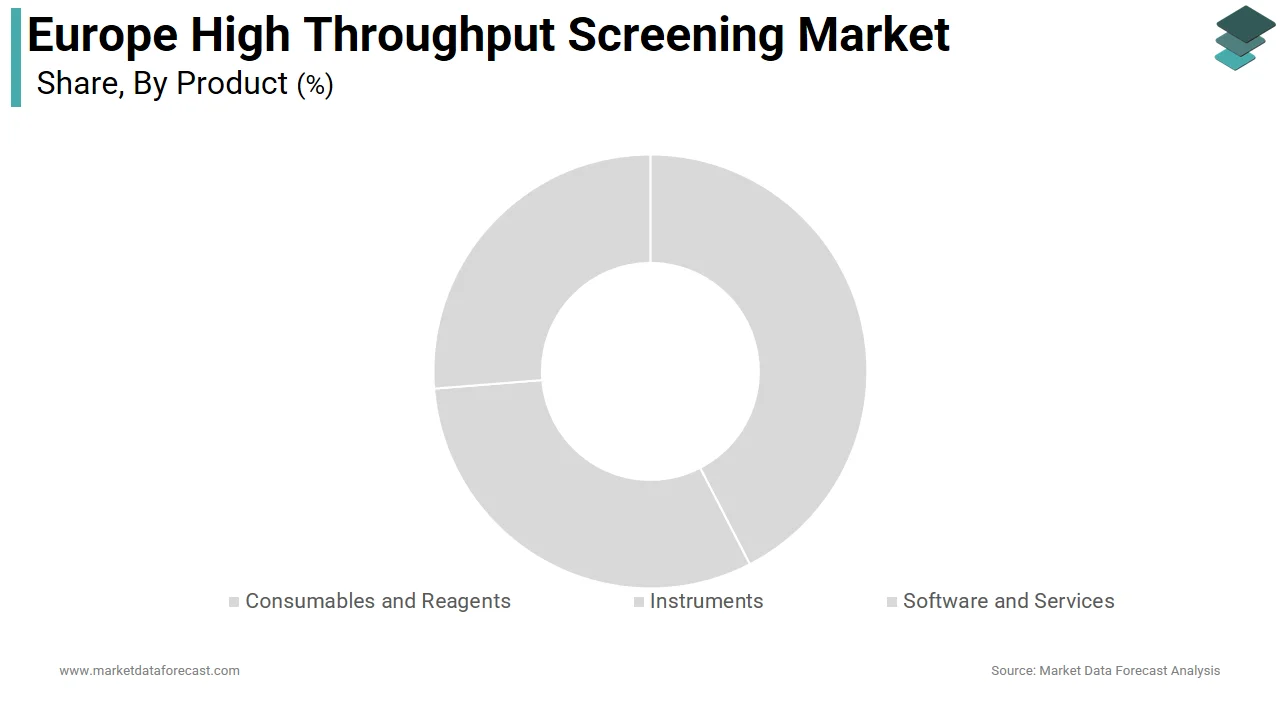
By Product
- Consumables and Reagents
- Instruments
- Software and Services
By Technology
- Cell-based Assays
- Lab-on-a-chip
- Ultra-High-Throughput Screening
- Label-Free Technology
- Bioinformatics
By Application
- Target Identification
- Primary Screening
- Toxicology
- Others
By End User
- Pharmaceutical and Biotechnology Companies
- Academic and Government Research Institutes
- Contract Research Organizations
- Other End Users
By Country
- UK
- France
- Spain
- Germany
- Italy
- Russia
- Sweden
- Denmark
- Switzerland
- Netherlands
- Turkey
- Czech Republic
- Rest of Europe