- Product Description Description
- Table of Contents TOC
- List of Table & Figure LOT
- Get Free Sample PDF Sample PDF
Market Size, 2025
$2.44 BnMarket Estimate, 2026
$2.53 BnMarket Forecast, 2034
$3.37 BnCAGR, 2026–2034
3.66%Europe Hip Replacement Implants Market Report Summary
The Europe hip replacement implants market was valued at USD 2.44 billion in 2025, is anticipated to reach USD 2.53 billion in 2026, and is projected to reach USD 3.37 billion by 2034, growing at a CAGR of 3.66% from 2026 to 2034. Market growth is driven by the rising prevalence of osteoarthritis, an increasing aging population, and growing demand for joint replacement procedures to restore mobility and improve quality of life. Advancements in implant materials, minimally invasive surgical techniques, and improved implant longevity are further supporting market expansion. Increasing healthcare access and rising adoption of advanced orthopedic solutions across Europe are also contributing to steady market growth.
Key Market Trends
- Rising prevalence of osteoarthritis and degenerative joint disorders.
- Increasing adoption of advanced implant materials such as ceramics and polyethylene.
- Growing demand for minimally invasive hip replacement procedures.
- Expansion of robot-assisted orthopedic surgery systems.
- Strengthening focus on long-lasting and biocompatible implant designs.
Segmental Insights
- Based on product, the total hip implants segment dominated the market in 2025, driven by widespread use in treating advanced joint degeneration and improving long-term mobility outcomes.
- Based on application, the metal-on-polyethylene segment led the market by capturing 52.8% share in 2025, supported by its durability, cost-effectiveness, and long clinical track record.
- Based on end use, the hospitals and surgery centers segment held the largest share in 2025, reflecting their specialized orthopedic infrastructure and high procedure volumes.
Regional Insights
The Europe hip replacement implants market is witnessing steady growth across major economies, supported by aging populations, strong healthcare systems, and increasing orthopedic procedure volumes.
- Germany led the regional market in 2025 with 22.7% share, driven by advanced orthopedic care infrastructure and high surgical procedure rates.
- The United Kingdom followed with 16.2% share in 2025, supported by National Health Service programs and increasing access to joint replacement surgeries.
- France maintains a significant position, supported by a balanced public-private healthcare system and strong adoption of advanced implant technologies, including ceramic bearing surfaces.
Competitive Landscape
The Europe hip replacement implants market is characterized by strong competition among global orthopedic device manufacturers and implant technology providers. Market players are focusing on improving implant durability, enhancing surgical precision, and expanding robotic-assisted orthopedic solutions. Strategic product innovations, clinical research, and partnerships with healthcare providers are shaping competitive dynamics across the region.
Prominent companies operating in the Europe hip replacement implants market include B. Braun Melsungen AG, ConMed Corporation, Aesculap Implant Systems, DJO Global, Exactech, Inc., MicroPort Scientific Corporation, Smith & Nephew plc, Stryker Corporation, and Johnson & Johnson.
 Download Free Sample Report
Europe Hip Replacement Implants Market Size
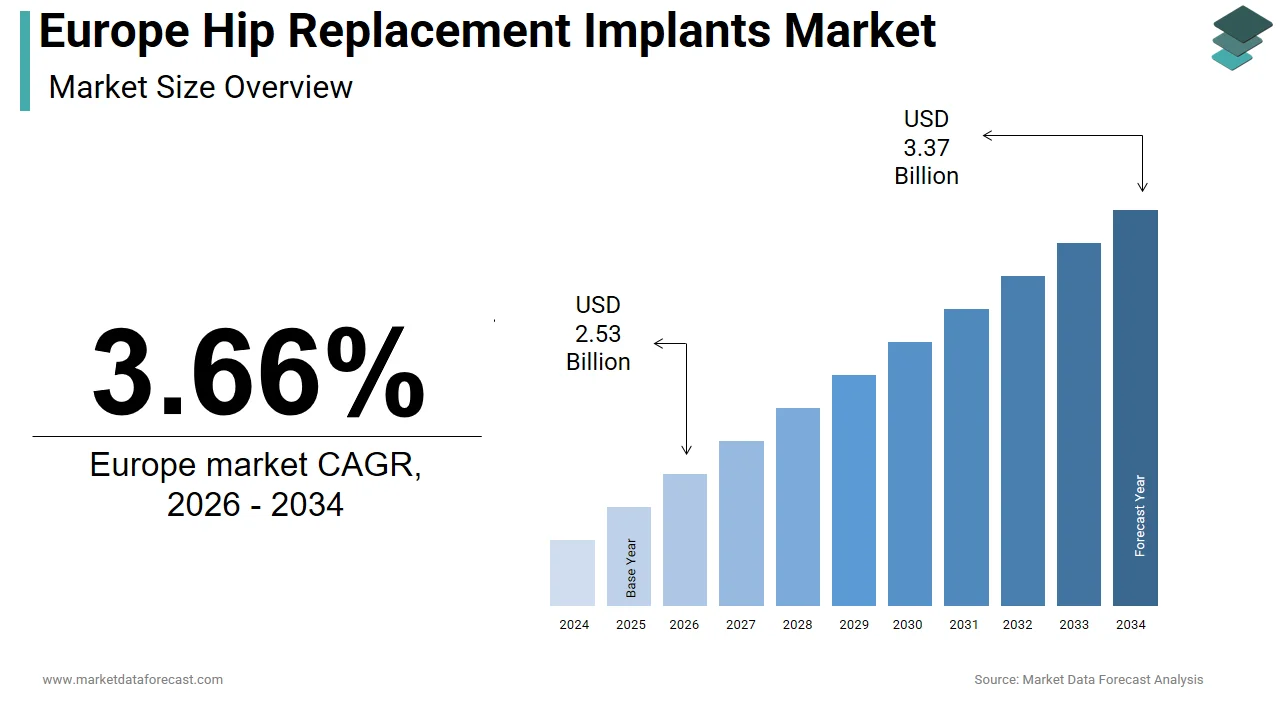
The size of the Europe hip replacement implants market was valued at USD 2.44 billion in 2025. This market is expected to grow at a CAGR of 3.66% from 2026 to 2034 and be worth USD 3.37 billion by 2034 from USD 2.53 billion in 2026.
Hip replacement implants, also known as hip prostheses, are medical devices used to replace a damaged or diseased hip joint during a surgical procedure called hip arthroplasty. These implants include primary total hip arthroplasties, revision systems, and minimally invasive short stem designs, all regulated under the European Union Medical Device Regulation (EU MDR 2017/745), which mandates rigorous clinical evidence and post-market surveillance. The clinical relevance of this market is underscored by Europe’s aging demographics and high prevalence of degenerative joint disease. Eurostat reports a significant and steady increase in the ageing EU population, resulting in a growing proportion of older citizens who are particularly susceptible to hip osteoarthritis. The World Health Organization emphasizes that musculoskeletal disorders are a leading contributor to the burden of disability among older adults in Western Europe, reflecting a high, persistent impact on quality of life. Furthermore, data from national joint registries across Europe, such as in Sweden and the UK, reflect a high and sustained volume of primary hip replacements, indicating a persistent clinical demand for treating severe osteoarthritis in an aging population. This intersection of demographic pressure, regulatory rigor, and functional necessity defines the structural foundation of the Europe hip replacement implants market.
MARKET DRIVERS
Aging Population and Rising Prevalence of Osteoarthritis
The progressive aging of the region’s population is a fundamental driver of the Europe hip replacement implants market. This is because age remains the strongest epidemiological risk factor for hip osteoarthritis. Eurostat points out that the population of older individuals in Europe constitutes a significant and rising proportion of the total population, with projections showing a continued, substantial increase in the number of Europeans aged 65 and over throughout the current decade. Concurrently, the European League Against Rheumatism indicates that symptomatic hip osteoarthritis is a widespread chronic condition affecting older Europeans, with a higher prevalence in women, resulting in a large and growing number of individuals who are potential candidates for joint replacement surgery across the EU. National health systems increasingly recognize early surgical intervention as cost-effective. The UK’s National Institute for Health and Care Excellence updated its guidelines to recommend hip arthroplasty for patients with moderate to severe pain unresponsive to conservative therapy, regardless of age. This shift reduces waiting times and expands eligibility beyond traditional frailty thresholds. Rising life expectancy combined with the desire for active lifestyles among seniors ensures that durable hip implants are a sustained demand, driven by demographics rather than trends.
Advancement of Minimally Invasive and Short Stem Implant Technologies
The adoption of minimally invasive surgical techniques and short stem hip implants is accelerating procedure volumes by broadening eligibility to younger and more active patients, which propels the growth of the Europe hip replacement implants market. Unlike conventional stems that replace the entire femoral canal, short stem designs preserve proximal bone stock and enable faster recovery, making them suitable for patients in their 50s and even 40s with localized joint damage. According to research, the Swedish Hip Arthroplasty Register indicates that the adoption of short stem implants for primary hip replacements has significantly increased over the past five years. Orthopedic centers in Germany and Italy are pioneering the widespread adoption of bone-conserving implant options, establishing them as a standard treatment approach. These technologies align with patient preferences for quicker rehabilitation and return to work. Research indicates that patients receiving short stem implants experience a faster return to daily activities compared to those receiving conventional implants. The integration of these approaches into training, combined with registry data proving long-term durability, is shifting minimally invasive hip arthroplasty from a specialized technique to standard care, thereby broadening the patient base and advancing market evolution.
MARKET RESTRAINTS
Stringent Regulatory Requirements Under EU MDR Delay Product Approvals
The implementation of the European Union Medical Device Regulation has significantly extended approval timelines and increased compliance costs for hip implant manufacturers, which constrains innovation and market entry. This hampers the growth of the Europe hip replacement implants market. Unlike the previous directive, EU MDR mandates comprehensive clinical evaluation reports, post-market clinical follow-up plans, and unique device identification for every implant variant. The transition to the European Medical Device Regulation has significantly increased the time required to secure CE certification for hip systems compared to the previous directive, primarily due to heightened clinical data requirements and limited, overburdened Notified Bodies. Many small and medium enterprises have withdrawn their applications due to the financial burden. Driven by the high cost of compliance, clinical data requirements, and re-certification efforts under MDR, manufacturers are heavily pruning their product portfolios, resulting in the discontinuation of a significant portion of legacy hip implants. This regulatory bottleneck limits surgeon choice, delays access to next-generation materials like vitamin E-infused polyethylene, and disproportionately affects novel entrants, stifling competitive diversity in a market where incremental innovation is clinically vital.
Persistent Disparities in Reimbursement and Access Across Member States
Significant variation in national healthcare funding and reimbursement policies creates unequal access to advanced hip implants across the region, which hinders the expansion of the Europe hip replacement implants market. This disparity suppresses overall market potential. Reimbursement for high-end orthopedic bearings is nearly universal in Germany and the Netherlands, contrasting with Greece and Romania, where limited budgets restrict options to basic implants. Statutory healthcare systems in Germany and the Netherlands widely support the adoption of advanced orthopedic bearings for arthroplasty, whereas economic constraints in Greece and Romania tend to restrict implant choices to more cost-effective, standard alternatives. Even within countries, disparities exist. In Italy, regional health authorities in the south approve fewer advanced procedures per capita than their northern counterparts. These inconsistencies discourage manufacturers from launching high-value innovations in lower reimbursement markets and force surgeons to compromise on implant selection based on administrative criteria rather than clinical need. The continued absence of a unified financial framework will impede the widespread adoption of hip arthroplasty and prevent fair access to high-quality care until standardization initiatives take effect.
MARKET OPPORTUNITIES
Integration of 3D Printing and Patient-Specific Implant Design
The emergence of additive manufacturing enables the production of patient-specific hip implants tailored to individual anatomy, offering a major opportunity in complex primary and revision cases, as well as the Europe hip replacement implants market. Using preoperative CT scans, companies can design custom stems and acetabular cups that match bone geometry precisely, reducing intraoperative complications and improving osseointegration. European specialized orthopedic centers in France, Switzerland, and the UK are increasingly adopting customized, 3D-printed titanium implants as a routine solution for patients facing severe bone loss or complex dysplasia. The use of 3D-printed titanium implants is rapidly evolving from experimental to standard practice for managing severe bone defects. These implants allow for customized, porous structures that improve biological fixation (osseointegration) over traditional, mass-produced implants. 3D printing is expanding beyond niche applications, driven by greater surgeon confidence and dropping production expenses. The refined EU MDR regulatory landscape allows custom device manufacturers to justify premium pricing through clear clinical differentiation.
Expansion of Robotic-Assisted Hip Arthroplasty Programs
The rollout of robotic-assisted surgical platforms across European hospitals creates a synergistic prospect for compatible implant systems designed for precision placement, which is expected to boost the expansion of the Europe hip replacement implants market. Robots like MAKO and ROSA enhance acetabular cup positioning accuracy within 2 degrees of planned orientation, directly influencing implant longevity and dislocation risk. European orthopaedic associations have observed a significant rise in the adoption of robotic-assisted surgical systems across major medical centers in Western Europe, leading to a high volume of joint replacement procedures being performed with these advanced technologies. Implant manufacturers are responding by developing instrument-free or robot-optimized kits that reduce tray complexity and sterilization costs. Recent advancements from Stryker highlight an industry shift toward integrated robotic platforms that streamline complex surgical workflows and provide surgeons with more precise intraoperative guidance for both primary and revision hip surgeries. The growth in robotic surgery is accelerating the need for specialized implants, creating new opportunities for digital integration and value-based care.
MARKET CHALLENGES
High Rates of Revision Surgery Due to Aseptic Loosening and Periprosthetic Fractures
Revision hip surgeries remain a persistent clinical and economic burden, despite advances in materials and techniques, which inhibits the growth of the Europe hip replacement implants market. This is driven primarily by aseptic loosening and periprosthetic fractures. The Nordic Arthroplasty Register Association reports that long-term survival for primary hip replacements remains high, though osteolysis resulting from wear debris remains a significant factor for revision. Younger patients face additional risks. Data from the Dutch Arthroplasty Register indicates that younger patients undergoing primary hip arthroplasty face a higher risk of revision, with factors often linked to increased physical activity levels. These complications necessitate complex revision implants with modular augments and longer stems, which are costlier and technically demanding. Moreover, revisions consume disproportionate hospital resources. The UK’s National Joint Registry estimates that one revision case equals the workload of three primary procedures. The fear of revision surgery will continue to hinder patient and payer trust until biomaterials are more durable or biological solutions mature.
Shortage of Trained Orthopedic Surgeons and Surgical Backlogs
A critical shortage of specialized orthopedic surgeons, exacerbated by pandemic-induced backlogs, is limiting the timely delivery of hip replacement care across the region, which poses a major barrier to the Europe hip replacement implants market. European medical organizations project that the growing demand for musculoskeletal care, driven by an aging population, will significantly outpace the available supply of orthopedic specialists, with particularly acute staffing shortages anticipated in rural areas of Southern and Eastern Europe. The British Orthopaedic Association and NHS data indicate that the number of patients waiting for elective orthopedic procedures, including hip replacements, continues to exceed national waiting time standards, with high numbers of patients waiting well beyond the established goal for treatment. This delay not only worsens pain and disability but also increases the complexity of eventual procedures as joint deterioration progresses. Training new surgeons takes several years, and many experienced practitioners are nearing retirement. In Germany, a notable portion of orthopedic consultants are over 55. Realizable market growth will remain constrained by limited surgical capacity, independent of technological or product advancements, unless addressed through faster training pathways, delegation to physician assistants, or strategic immigration policies.
REPORT COVERAGE
| REPORT METRIC | DETAILS |
| Market Size Available | 2025 to 2034 |
| Base Year | 2025 |
| Forecast Period | 2026 to 2034 |
| Segments Covered | By Product, Application, End-Use, and Country. |
| Various Analyses Covered | Global, Regional, and Country-Level Analysis, Segment-Level Analysis, Drivers, Restraints, Opportunities, Challenges; PESTLE Analysis; Porter’s Five Forces Analysis, Competitive Landscape, Analyst Overview of Investment Opportunities |
| Countries Covered | UK, France, Spain, Germany, Italy, Russia, Sweden, Denmark, Switzerland, Netherlands, Turkey, Czech Republic, and the Rest of Europe. |
| Market Leaders Profiled | B. Braun Melsungen AG, ConMed Corporation, Aesculap Implant Systems, LLC, DJO Global, Inc., OMNIlife Science, Inc., Exactech, Inc., MicroPort Scientific Corporation, Smith & Nephew plc, Stryker Corporation, Johnson & Johnson, and Zimmer Biomet |
SEGMENTAL ANALYSIS
By Product Insights
The total hip implants segment held the majority share of the Europe hip replacement implants market in 2025. The leading position of the total hip implants segment is driven by the comprehensive nature of total hip arthroplasty, which replaces both the femoral head and acetabular socket to address advanced osteoarthritis, avascular necrosis, and post-traumatic joint destruction. Further support for this segment comes from the high prevalence of end-stage degenerative joint disease among Europe’s aging population. According to EULAR and European studies, symptomatic hip osteoarthritis represents a major, increasing cause of mobility impairment across Europe, with surgical replacement recognized as the primary treatment for pain relief and restoring function in advanced cases. National joint registries consistently validate their efficacy. The Swedish Hip Arthroplasty Register indicates that cemented total hip implants demonstrate exceptional long-term durability in older patients, with a vast majority remaining in place and functional after a decade. Furthermore, healthcare systems prioritize total hip procedures due to their predictable outcomes and cost-effectiveness over long-term conservative management. According to the German Society for Orthopaedics and Trauma Surgery, total hip replacement is a frequent, high-volume surgical procedure in Germany, with total numbers remaining elevated and significant for patients with advanced hip degeneration. The combination of clinical necessity, proven durability, and systemic reimbursement ensures total hip implants remain the cornerstone of hip arthroplasty across Europe.
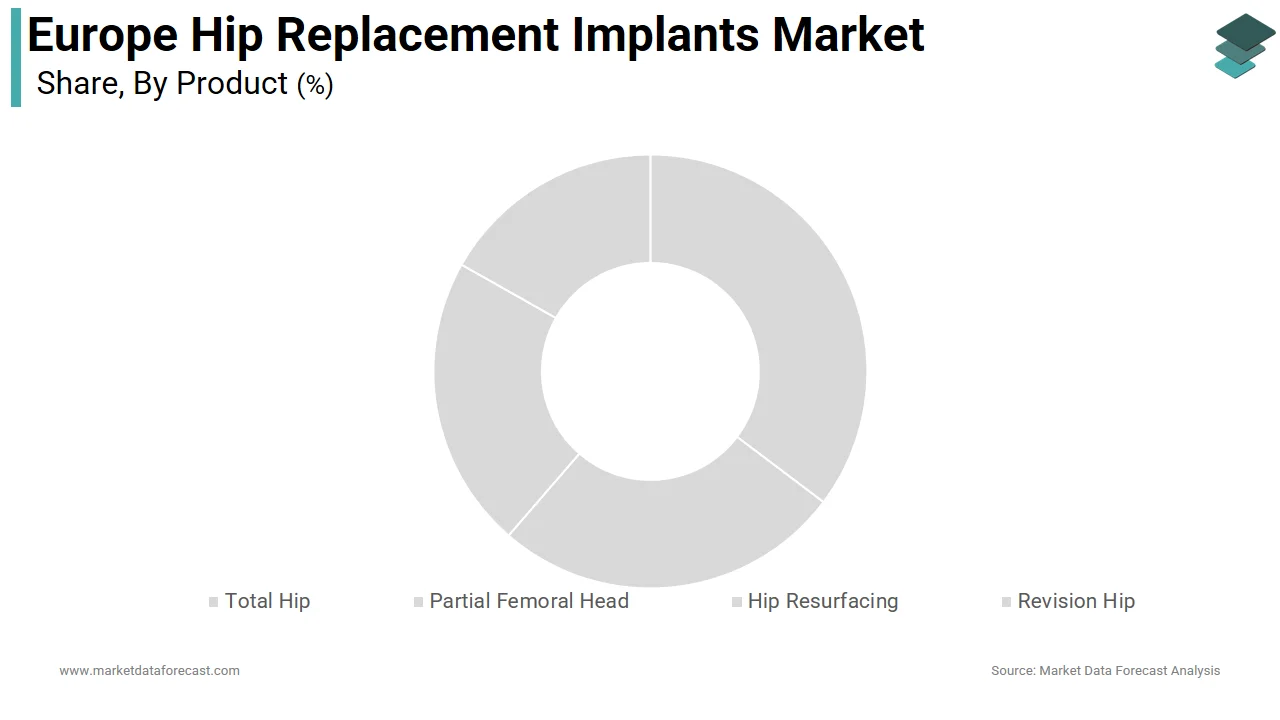
The revision hip segment is likely to experience the fastest CAGR of 6.9% between 2026 and 2034 due to the rising burden of failed primary implants and an expanding pool of aging arthroplasties requiring complex reintervention. As Europe’s first wave of hip replacements, performed en masse since the 1980s, reaches the end of its functional lifespan, revision demand intensifies. Data from Nordic registries confirms that revision hip surgeries continue to rise across Europe, driven largely by osteolysis and aseptic loosening of the implant. Additionally, younger patients receiving primary implants in their 50s now present for revision earlier due to higher activity levels and material fatigue. According to national joint registries, the proportion of revision hip surgeries in the UK and Italy has increased significantly compared to a decade ago, making it a growing portion of total hip procedures. The persistent prevalence of hip replacements implanted before 2010 ensures continued growth in the revision segment, marking it as the most active area of development in the European hip landscape.
By Application Insights
The metal on polyethylene segment remained the largest segment in the Europe hip replacement implants market by capturing a 52.8% share in 2025. The supremacy of the metal on the polyethylene segment is attributed to decades of clinical validation cost effectiveness and suitability for elderly, low-activity patients who constitute the majority of recipients. Highly cross-linked polyethylene introduced in the early 2000s significantly reduced wear rates compared to conventional variants, extending implant longevity without the complications associated with alternative bearings. Long-term data from the Dutch national registry indicate that hip replacements using metal-on-highly cross-linked polyethylene provide durable, high-survival outcomes in older patients. National health systems favour this pairing due to lower upfront costs and predictable performance. In publicly funded health systems in Spain and Portugal, orthopaedic procurement guidelines and practice favor the use of metal-on-highly cross-linked polyethylene as a primary bearing surface for total hip arthroplasty due to its superior wear characteristics. Moreover, it avoids the risks of metal ion release seen in metal-on-metal designs and the fracture potential of ceramics, making it the default choice for routine cases. This balance of safety, affordability, and reliability sustains its dominance despite the emergence of premium alternatives.
The ceramic on polyethylene bearing segment is on the rise and is expected to be the fastest-growing segment in the market by witnessing a CAGR of 7.4% during the forecast period, owing to its optimal balance of wear resistance, biocompatibility, and fracture safety, particularly for active middle-aged patients. Ceramic femoral heads generate significantly less polyethylene wear than metal counterparts while avoiding the catastrophic failure risks of ceramic-on-ceramic pairings. Long-term follow-up studies indicate that modern hip replacements using ceramic heads paired with highly cross-linked polyethylene significantly reduce wear rates compared to traditional metal-on-polyethylene bearings. Data from national registries in France and Germany show that ceramic heads on cross-linked polyethylene are the preferred choice for primary hip replacements in patients under sixty-five, reflecting a strong shift toward this bearing surface. Surgeons increasingly recommend this option for patients seeking long-term durability without metal ion concerns or ceramic brittleness. The transition of ceramic-on-polyethylene from a niche product to a standard for intermediate-risk patients, facilitated by reduced manufacturing costs and greater surgeon adoption, is accelerating across Western and Central Europe.
By End Use Insights
The hospitals & surgery centers segment led the Europe hip replacement implants market and occupied a substantial share in 2025. The prominence of the hospitals & surgery centers segment is credited to the procedural complexity, regulatory requirements, and resource intensity of hip arthroplasty, which necessitates operating theaters, sterile processing units, and multidisciplinary teams. Hip replacement remains predominantly an inpatient procedure in most EU countries due to anesthesia protocols, postoperative monitoring, and rehabilitation needs. According to trends observed within European orthopaedic registries, the vast majority of primary and revision hip surgeries continue to be performed in inpatient, hospital-based settings rather than as same-day outpatient procedures, despite a gradual increase in same-day discharge protocols for selected patients. National health systems reinforce this model; in Sweden and the Netherlands, centralized orthopedic centers of excellence handle the majority of volume to ensure quality and cost control. Even in countries embracing ambulatory surgery, such as the UK, only select low-risk total hips are performed in standalone centers, typically under strict patient selection criteria. The infrastructure dependency, ranging from implant sterilization to blood bank access, makes hospitals the indispensable hub for hip arthroplasty delivery across the region.
The orthopedic clinics segment is expected to exhibit a noteworthy CAGR of 8.1% between 2026 and 2034. The rapid growth of the orthopedic clinics segment is fueled by the rise of specialized ambulatory surgery centers offering streamlined care pathways for low-risk patients. Driven by cost containment pressures and patient demand for convenience, countries like Germany, France, and Switzerland are increasingly approving outpatient hip replacements for healthy individuals under 65 with strong social support. The German Society for Orthopaedic and Trauma Surgery (DGOU) reports that hip procedures are increasingly shifting from traditional inpatient hospital settings to specialized ambulatory orthopedic clinics, driven by improvements in techniques and fast-track rehabilitation. These clinics leverage minimally invasive techniques, short stem implants, and enhanced recovery protocols to enable same-day discharge. Recent European studies, including research supported by regional institutions, suggest that carefully selected patients undergoing elective hip replacements experience similar 90-day complication rates in outpatient/ambulatory settings compared to traditional hospital inpatients. Orthopedic clinics are gaining market share in primary hip procedures in affluent urban areas, driven by improved efficiency and adaptable reimbursement models.
COUNTRY-LEVEL ANALYSIS
Germany Hip Replacement Implants Market Analysis
Germany dominated the Europe hip replacement implants market by capturing a 22.7% share in 2025. The supremacy of the German market is driven by high procedure volumes, advanced healthcare infrastructure, and early adoption of innovative implant technologies. According to the German Society for Orthopaedics and Trauma Surgery (DGOU), Germany continues to lead Europe in the volume of hip replacements, reflecting sustained high rates of joint reconstruction due to demographic changes. The country’s statutory health insurance system provides near universal coverage for both primary and revision surgeries, ensuring consistent demand. German surgeons are pioneers in bone-conserving short-stem implants and robotic-assisted arthroplasty, with numerous hospitals operating MAKO or ROSA platforms. Additionally, Germany hosts major implant manufacturers like Aesculap and Waldemar Link, fostering close clinician-industry collaboration. This blend of volume expertise, reimbursement stability, and technological leadership solidifies Germany’s position as the regional epicenter of hip arthroplasty innovation and delivery.
United Kingdom Hip Replacement Implants Market Analysis
The United Kingdom was the next prominent player in the Europe hip replacement implants market and occupied a 16.2% share in 2025. The expansion of the UK market is propelled by its world-renowned National Joint Registry, which tracks every implant and outcome since 2002. NHS England data indicates that despite high-volume orthopedic activity, which has returned to or exceeded pre-pandemic levels, a large number of patients continue to wait for hip replacement procedures, with the total trauma and orthopaedic waiting list remaining significantly high as the NHS works to clear the pandemic-driven backlog. The registry’s real-time data influences both clinical practice and procurement; hospitals avoid implants with higher revision signals, creating a performance-driven market. The UK also leads in value-based healthcare models, with bundled payments covering 90-day postoperative care. Recent initiatives like the Elective Recovery Plan allocate dedicated funding to clear backlogs using independent sector treatment centers. This data transparency, operational innovation, and systemic pressure to restore capacity make the UK a unique and influential market in the European hip implant landscape.
France Hip Replacement Implants Market Analysis
France continues to be a significant region in the Europe hip replacement implants market owing to a balanced mix of public and private provision and strong uptake of ceramic bearing surfaces. According to French health authorities and orthopedic industry trends, France remains a prominent European leader in hip replacement procedures, heavily utilizing advanced bearing surfaces like ceramics to enhance long-term implant durability, maintaining one of the most advanced utilization rates of these materials in Europe. The national healthcare system reimburses both standard and premium implants based on clinical indication, enabling access to advanced materials without high out-of-pocket costs. French surgeons emphasize anatomical restoration and soft tissue preservation, driving the adoption of collarless tapered wedge stems. Additionally, France maintains rigorous post-market surveillance through its national implant registry, ensuring rapid detection of adverse events. This combination of equitable access, technical sophistication, and regulatory vigilance positions France as a benchmark for balanced and high-quality hip arthroplasty care.
Italy Hip Replacement Implants Market Analysis
Italy is moving ahead steadfastly in the Europe hip replacement implants market due to high overall procedure volume, but significant north-south disparities in access and technology adoption. In Italy, the volume of hip replacement procedures continues to rise, yet the national health system faces significant regional disparities, with northern areas maintaining much faster access to surgery compared to extended, year-long waits in southern regions. Northern hospitals lead in robotic surgery and custom implants, while southern facilities often rely on basic metal-on-polyethylene systems due to budget constraints. Despite these gaps, Italy has one of Europe’s highest per capita hip replacement rates, reflecting strong cultural acceptance of joint surgery among aging populations. The government’s National Recovery Plan includes targeted funding to reduce regional inequities, potentially unlocking latent demand. This duality of high utilization and uneven modernization defines Italy’s complex yet substantial role in the market.
Sweden Hip Replacement Implants Market Analysis
Sweden is likely to grow in the Europe hip replacement implants market from 2026 to 2034, owing to its pioneering Swedish Hip Arthroplasty Register, the world’s oldest, established in 1979. The Swedish Hip Arthroplasty Register, supported by data from the Karolinska Institute, indicates that Sweden performs a high volume of annual hip replacements, achieving some of the lowest long-term revision rates globally, particularly for cemented techniques. The registry’s granular data guides national guidelines, implant selection, and surgeon training, creating a culture of evidence-based continuous improvement. Sweden favors cemented implants even in younger patients due to long-term registry evidence, diverging from global trends toward uncemented fixation. Public funding ensures universal access, and waiting times are tightly controlled. Though small in volume, Sweden’s scientific rigor, methodological transparency, and outcome focus make it a critical reference point for best practices across the entire European hip replacement ecosystem.
COMPETITIVE LANDSCAPE
The competition in the Europe hip replacement implants market is characterized by a handful of global medtech leaders competing on technological differentiation, clinical evidence, and digital integration rather than price alone. While all major players offer comprehensive portfolios spanning primary revision and specialty implants, the battlefield has shifted toward robotics, advanced materials, and data-driven outcomes. European surgeons increasingly select implants based on registry performance, national reimbursement status, and compatibility with hospital digital infrastructure. Smaller regional players struggle to meet EU MDR requirements, creating consolidation pressure. Competition also extends to service models, including surgical training, implant tracking, and value-based contracting. As healthcare systems demand greater accountability for long-term results, companies that combine proven implant durability, seamless digital workflow integration, and transparent real-world evidence are gaining a decisive advantage in this highly regulated and clinically sophisticated market.
KEY MARKET PLAYERS
The leading companies operating in the Europe hip replacement implants market include:
- Braun Melsungen AG
- ConMed Corporation
- Aesculap Implant Systems, LLC
- DJO Global, Inc.
- OMNIlife Science, Inc.
- Exactech, Inc.
- MicroPort Scientific Corporation
- Smith & Nephew plc
- Stryker Corporation
- Johnson & Johnson
TOP PLAYERS IN THE MARKET
- Zimmer Biomet maintains a strong presence in the Europe hip replacement implants market through its comprehensive portfolio of primary revision and robotic-compatible hip systems. The company’s ROSA Hip robotic platform is widely adopted across German, French, and UK hospitals, enabling precise acetabular cup placement and personalized surgical planning. Zimmer Biomet actively collaborates with European joint registries to validate long-term outcomes of its Continuum and Taperloc implant lines. Its innovation aligns with European demand for durable bearing surfaces and reinforces Zimmer Biomet’s commitment to evidence-based implant design in the Europe Hip Replacement Implants Market.
- Stryker contributes significantly to the Europe hip replacement implants market with its Mako robotic arm-assisted surgery ecosystem and differentiated implant platforms, including the Tritanium and Accolade stems. The company has established strategic partnerships with numerous European hospitals to deploy its Mako system, which integrates preoperative planning, intraoperative guidance, and real-time feedback. Stryker emphasizes bone-conserving solutions and offers a full range of short stem and revision options tailored to European surgical preferences. The initiatives strengthen Stryker’s integration into digital orthopedic workflows and solidify its position in the Europe Hip Replacement Implants Market.
- Smith & Nephew plays a pivotal role in the Europe hip replacement implants market through its focus on cementless fixation technologies and advanced materials such as OXINIUM oxidized zirconium femoral heads. The company’s CFP and R3 hip systems are widely used in the UK, Germany, and Scandinavia, where surgeons prioritize bone preservation and long-term survivorship. Smith & Nephew leverages data from national joint registries to refine implant design and support clinical education programs across the region. Its development addresses growing clinical needs and enhances Smith & Nephew’s relevance in high-value segments of the Europe Hip Replacement Implants Market.
TOP STRATEGIES USED BY THE KEY MARKET PARTICIPANTS
Key players in the Europe hip replacement implants market focus on integrating robotic and computer-assisted surgical platforms to enhance precision and reproducibility. They invest heavily in advanced biomaterials such as vitamin E-stabilized polyethylene and oxidized zirconium to improve wear resistance and longevity. Companies actively collaborate with national joint registries to generate real-world evidence supporting implant safety and performance. Strategic partnerships with hospitals and surgical centers facilitate rapid adoption of digital surgery ecosystems. Additionally, they prioritize regulatory compliance under EU MDR by maintaining robust post-market surveillance and clinical evaluation programs to ensure uninterrupted market access and surgeon trust.
MARKET SEGMENTATION
This research report on the European hip replacement implants market has been segmented into the following categories.
By Product
- Total Hip
- Partial Femoral Head
- Hip Resurfacing
- Revision Hip
By Application
- Metal-on-Metal
- Metal-on-Polyethylene
- Ceramic-on-Polyethylene
- Ceramic-on-Metal
- Ceramic-on-Ceramic
By End-Use
- Orthopedic Clinics
- Hospitals & Surgery Centers
- Others
By Country
- UK
- France
- Spain
- Germany
- Italy
- Russia
- Sweden
- Denmark
- Switzerland
- Netherlands
- Turkey
- Czech Republic
- Rest of Europe