- Product Description Description
- Table of Contents TOC
- List of Table & Figure LOT
- Get Free Sample PDF Sample PDF
Market Size, 2025
$1.58 BnMarket Estimate, 2026
$1.66 BnMarket Forecast, 2034
$2.52 BnCAGR, 2026–2034
5.31%Europe Orthobiologics Market Report Summary
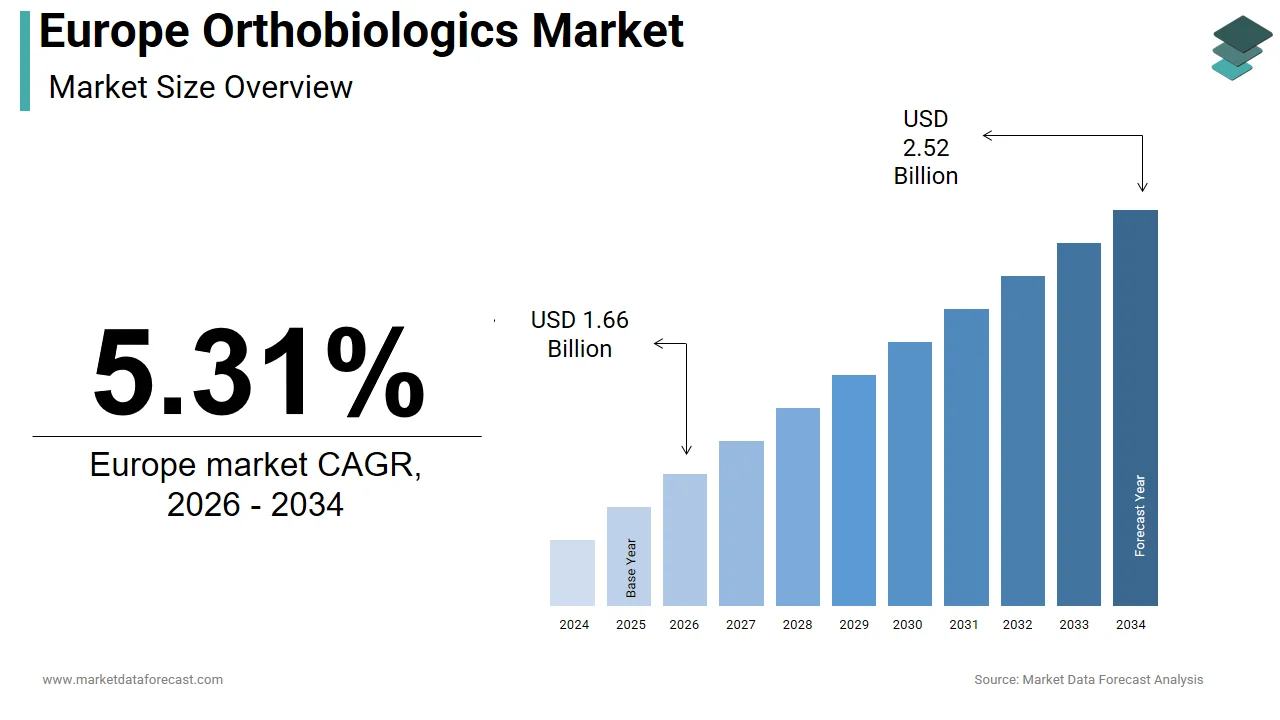
The Europe orthobiologics market was valued at USD 1.58 billion in 2025, is projected to reach USD 1.66 billion in 2026, and is expected to reach USD 2.52 billion by 2034, growing at a CAGR of 5.31% from 2026 to 2034. Growth is driven by an aging population with rising rates of osteoarthritis and spinal degeneration, increasing adoption of biologic augmentation in orthopedic and spine surgeries, and expanding use of regenerative injections in sports medicine and minimally invasive procedures.
Key Market Trends
- Rising use of orthobiologic adjuvants in joint preservation and spinal fusion to improve fusion rates, reduce revisions, and support bone and soft tissue healing.
- Growing demand for regenerative injections (PRP, BMAC) in sports medicine and outpatient orthopedic clinics to enable faster recovery and tissue preservation.
- Increased focus on value-based and bundled payment models, where orthobiologics are evaluated for their ability to reduce complications and long-term costs.
- Expansion of point-of-care processing systems that standardize autologous preparations, improve sterility, and shorten procedure times.
- Ongoing regulatory and reimbursement scrutiny, especially for ATMP-classified products and higher-cost biologics, is shaping adoption speed and indication focus.
Segmental Insights
- Based on product, the viscosupplementation segment held the largest share of the Europe orthobiologics market in 2024, at 28.7%, driven by its widespread use as a non-surgical treatment for knee osteoarthritis in aging populations, clear regulatory status, and frequent delivery in outpatient settings.
- Based on application, the osteoarthritis and degenerative arthritis segment led the Europe orthobiologics market in 2024 with a 39.7% share, as viscosupplementation and PRP injections are increasingly used to manage joint pain and delay joint replacement, particularly in knees and hips.
- By end user, hospitals accounted for the largest share of the Europe orthobiologics market in 2024, at 54.7%, reflecting their role as primary centers for complex joint, trauma, and spine surgeries where biologic augmentation is routine and reimbursed.
Regional Insights
The Europe orthobiologics market is anchored by high-volume, high-income healthcare systems with advanced orthopedic capabilities and varying reimbursement models.
- Germany led the regional market with a 24.6% share in 2024, supported by high joint and spine surgery volumes, established guidelines for viscosupplementation and graft use, and statutory insurance coverage for selected orthobiologics.
- France held an 18.6% share, underpinned by a large aging population, a strong public health system, and active use of injections and biologics in both osteoarthritis management and elite sports medicine.
- The United Kingdom maintains a significant share, with NHS-driven conservative care pathways, rising private-clinic adoption of PRP and BMAC, and growing demand for biologics to bridge long waiting times for joint replacement.
- Italy is growing steadily, combining a high osteoarthritis burden, strong orthopedic and spine surgery expertise, and increasing use of viscosupplementation and graft materials, particularly in major northern centers.
Competitive Landscape
The Europe orthobiologics market is highly competitive, featuring a mix of global orthopedic leaders, specialized biologics firms, and hospital-based providers. Competition centers on clinical evidence, regulatory compliance (including tissue and ATMP rules), ease of integration into surgical workflows, and the ability to support value-based care with long-term outcome data. Large implant companies increasingly bundle orthobiologics with their joint and spine systems, while niche players differentiate via proprietary matrices, grafts, and point-of-care platforms. Fragmented reimbursement and non-uniform regulatory interpretations across countries create both barriers and localized opportunities.
Major companies operating in the Europe orthobiologics market include Medtronic, DePuy Synthes, Zimmer Biomet Holdings Inc., Bioventus, Stryker Corporation, Harvest Technologies, Globus Medical, Exactech Inc., Orthofix International, RTI Surgical, K2M Group, and Kuros Biosciences.
Europe Orthobiologics Market Size
The size of the orthobiologics market in Europe was valued at USD 1.58 billion in 2025. This market is expected to grow at a CAGR of 5.31% from 2026 to 2034 and be worth USD 2.52 billion by 2034 from USD 1.66 billion in 2026.
Orthobiologics refers to the therapeutic products derived from natural biological substances, such as cells, proteins, growth factors, and extracellular matrices, used to support the healing of musculoskeletal tissues, including bones, cartilage, tendons, and ligaments. In Europe, these include platelet-rich plasma, bone morphogenetic proteins, allografts, autografts, demineralized bone matrix, and cell-based therapies deployed primarily in orthopedic trauma, spinal fusion, and sports medicine procedures. Unlike synthetic implants, orthobiologics harness the body’s innate regenerative mechanisms to accelerate recovery and improve functional outcomes. According to sources, a substantial number of orthopedic surgical procedures were performed in the European Union in 2023, with a portion involving some form of biologic augmentation. As per research, the use of orthobiologic adjuvants is increasing in certain joint preservation and spine fusion surgeries to potentially enhance fusion rates and minimize the need for revisions. Furthermore, the European Medicines Agency (EMA) classifies specific cell-based orthobiologics as Advanced Therapy Medicinal Products (ATMPs), which fall under a dedicated and complex regulatory pathway due to their innovative nature and significant clinical potential. This integration of regenerative science into standard orthopedic care underscores orthobiologics as pivotal enablers of modern musculoskeletal health strategies across Europe.
MARKET DRIVERS
Aging Population and Rising Burden of Degenerative Musculoskeletal Disorders Drive Clinical Adoption
The region’s rapidly aging demographic escalates the growth of the Europe orthobiologics market. This is a primary enabler for orthobiologics demand as older adults face elevated risks of osteoarthritis, osteoporosis, and spinal degeneration requiring surgical intervention with biologic support. According to research, the share of older people in the European Union population is consistently increasing. The aging trend in the EU population is a long-term pattern, evident in the rising median age and the growing proportion of individuals over 65 years old. Also, the overall number of spinal surgical procedures in Italy has increased significantly over nearly two decades, driven primarily by an increase in implant-related procedures. In Germany, the demand for spinal fusion procedures, particularly among patients aged 75 years and older, is projected to increase substantially in the coming decades, primarily due to an aging population and associated degenerative conditions. As life expectancy extends and activity expectations remain high among seniors, the reliance on biologically enhanced solutions to restore mobility and reduce reoperation risk continues to intensify across European healthcare systems.
Expansion of Sports Medicine and Minimally Invasive Orthopedic Procedures Fuels Growth
The proliferation of sports-related injuries and patient preference for tissue-preserving interventions propel the expansion of the Europe orthobiologics market. These have accelerated the use of orthobiologics in outpatient and arthroscopic settings across the region. According to studies, Musculoskeletal injuries associated with sports are a significant burden in the EU, driving a growing demand among both elite and amateur athletes for effective and faster recovery solutions. Platelet-rich plasma and bone marrow aspirate concentrate are now routinely injected during arthroscopic rotator cuff repairs or meniscal surgeries to stimulate healing. The use of orthobiologic therapies, such as platelet-rich plasma (PRP) and stem cell treatments, for tendon and cartilage pathologies is an increasing trend in orthopedic centers across Europe. National health insurance systems in countries like Germany offer coverage for established cell-based cartilage regeneration procedures, though coverage for many novel orthobiologic treatments remains highly selective and dependent on robust clinical evidence of efficacy. This convergence of athletic demand, technological advancement, and partial reimbursement is transforming orthobiologics from experimental adjuncts into standard components of modern joint preservation strategies.
MARKET RESTRAINTS
Lack of Harmonized Reimbursement and Coverage Policies Across EU Member States Limits Access
Inconsistent and often restrictive reimbursement frameworks across the region hinder widespread patient access to orthobiologic therapies, and thereby degrade the growth of the Europe orthobiologics market. According to research, Reimbursement policies for platelet-rich plasma (PRP) injections vary significantly across European Union countries, with coverage often limited to specific clinical indications. In Southern and Eastern Europe, including Spain, Italy, and Poland, orthobiologics are largely classified as self-pay services due to budget constraints and the absence of formal health technology assessments. Surveys among orthopedic surgeons in Europe indicate that patient financial concerns regarding out-of-pocket expenses for advanced biologic treatments present a significant barrier to care. Moreover, national health technology appraisal bodies often require long-term randomized controlled trial data, which many orthobiologics, particularly autologous preparations, lack due to their personalized nature. This fragmented reimbursement landscape not only creates inequity in care but also suppresses market potential and innovation investment across significant portions of the continent.
Stringent Regulatory Classification Under EU ATMP Framework Delays Market Entry
The European Union’s regulatory treatment of certain orthobiologics as Advanced Therapy Medicinal Products under Regulation EC No 1394 2007 imposes significant barriers to development and commercialization, which in turn obstructs the expansion of the Europe orthobiologics market. The process for approving cell-based orthobiologics, when classified under the current regulatory framework, involves substantial requirements. These requirements include extensive data collection regarding manufacturing processes, clinical data, and long-term monitoring plans. So, this approach is consistent with the process for traditional pharmaceuticals. Moreover, there is a perspective that this extensive process may be disproportionate when applied to products that involve minimal manipulation of a patient's own tissues. The general time frame for gaining market approval can be lengthy. A limited number of orthobiologic products have received final authorization recently. These aspects point to challenges in bringing certain regenerative medicine products to the market. Furthermore, national competent authorities apply divergent interpretations of what constitutes “substantial manipulation,” leading to regulatory uncertainty. In France, for instance, bone marrow concentrate is regulated as a medical device, while in Italy the same preparation falls under ATMP rules. This inconsistency discourages small biotech firms from entering the market and forces clinicians to rely on hospital exemption pathways that limit scale and standardization. Consequently, patient access to innovative regenerative solutions remains fragmented and delayed across the EU.
MARKET OPPORTUNITIES
Integration of Orthobiologics into Value-Based Care and Bundled Payment Models
Emerging value-based healthcare frameworks in the region are creating major opportunities for the Europe orthobiologics market. They are linking their use to improved outcomes and reduced long-term costs. According to sources, the use of orthobiologic augmentation in spinal fusion is a growing area of medical research, with studies exploring its potential to improve fusion rates and potentially reduce the need for subsequent corrective surgeries over time. In response, countries like the Netherlands and Denmark have begun incorporating biologic use into bundled payment models for joint replacement, where hospitals bear financial risk for readmissions. As per sources, orthopedic centers and national health institutes, such as the Zorginstituut Nederland, consistently work to develop and implement standardized protocols and quality frameworks to enhance patient outcomes and minimize postoperative complications. Additionally, the UK’s National Institute for Health and Care Excellence is evaluating orthobiologics for inclusion in its MedTech Funding Mandate, which guarantees NHS uptake for cost-saving innovations. These policy shifts position orthobiologics not as cost add-ons but as value generators that align with Europe’s broader push toward accountable and outcome-driven care delivery.
Advancements in Point of Care Processing and Automation Enhance Clinical Feasibility
Technological innovations in bedside and operating room processing systems are overcoming historical barriers of complexity and variability in orthobiologic delivery, which ultimately offers new prospects for the Europe orthobiologics market. The European market has seen a consistent introduction of new point-of-care devices for platelet-rich plasma and bone marrow concentration. These newer systems often feature technological advancements such as closed sterile systems, increased automation, and efforts toward more standardized output metrics to improve consistency and safety. Companies in Switzerland and Germany now offer fully integrated platforms that process autologous blood or marrow in under twenty minutes with real-time quality indicators displayed on digital interfaces. Furthermore, regulatory bodies have streamlined approval for such devices under the Medical Device Regulation when used for minimally manipulated autologous preparations. These technologies are making orthobiologics more accessible, reliable, and scalable in diverse European clinical settings by offering enhanced reproducibility, reduced contamination risk, and shorter procedural times.
MARKET CHALLENGES
High Out-of-Pocket Costs and Limited Insurance Coverage Create Patient Access Disparities
The majority of orthobiologic procedures in Europe remain self-funded, despite growing clinical evidence. This situation creates significant socioeconomic barriers to access and represents a major obstacle for the Europe orthobiologics market. The cost of a single platelet-rich plasma injection varies across different countries, while procedures involving bone marrow concentrate in private clinics can exceed a certain price point. A patient survey indicated that many individuals diagnosed with early knee osteoarthritis are interested in regenerative options, but a majority choose not to pursue them due to financial concerns. In countries like Spain and Greece, where public health systems do not cover orthobiologics, even middle-income patients face financial strain. This payment gap not only limits therapeutic choice but also drives medical tourism to countries with more favorable coverage, such as Germany or Switzerland, exacerbating inequities. Access to orthobiologics across Europe will remain limited until reimbursement policies more adequately reflect their long-term cost savings and the significant improvements they offer in patient quality of life.
Lack of Standardized Clinical Guidelines and Outcome Metrics Undermines Evidence Consensus
The absence of harmonized protocols for orthobiologic preparation administration and outcome assessment continues to fuel skepticism among clinicians and payers across the region, which constrains the expansion of the Europe orthobiologics market. Platelet-rich plasma (PRP) formulations used in clinical practice show notable differences in composition and preparation. Methodological inconsistencies in studies make it challenging to reach definitive conclusions about PRP's effectiveness for many musculoskeletal conditions. Furthermore, national orthopedic societies issue divergent recommendations. This lack of consensus impedes large-scale randomized trials and delays health technology assessments required for reimbursement. The full promise of orthobiologics, both clinically and economically, depends on Europe implementing unified standards; persistent evidence fragmentation will continue until common measures for cell concentration, delivery timing, and functional outcomes are adopted.
REPORT COVERAGE
| REPORT METRIC | DETAILS |
| Market Size Available | 2025 to 2034 |
| Base Year | 2025 |
| Forecast Period | 2026 to 2034 |
| Segments Covered | By Product, Application, End-User, and Region. |
| Various Analyses Covered | Global, Regional, and Country-Level Analysis, Segment-Level Analysis, Drivers, Restraints, Opportunities, Challenges; PESTLE Analysis; Porter’s Five Forces Analysis, Competitive Landscape, Analyst Overview of Investment Opportunities |
| Countries Covered | UK, France, Spain, Germany, Italy, Russia, Sweden, Denmark, Switzerland, Netherlands, Turkey, Czech Republic, and the Rest of Europe |
| Market Leaders Profiled | Medtronic, DePuy Synthes, Zimmer Biomet Holdings Inc., Bioventus, Stryker Corporation, Harvest Technologies, Globus, Exactech Inc., Orthofix International, RTI Surgical, K2M Group, Kuros Biosciences, among others. |
SEGMENTAL ANALYSIS
By Product Insights
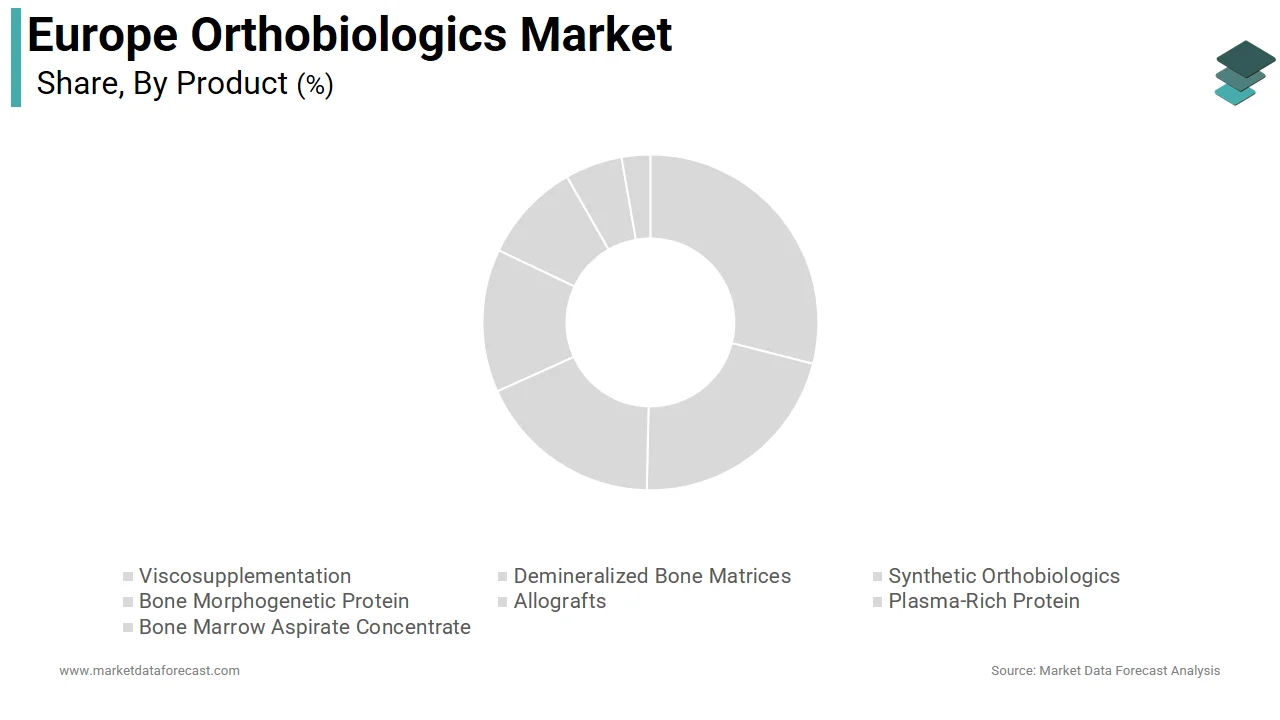
The viscosupplementation segment held the majority share of 28.7% of the Europe orthobiologics market in 2024. The supremacy of the viscosupplementation segment is driven by its widespread use as a non-surgical intervention for knee osteoarthritis in aging populations. Osteoarthritis is prevalent among adults, frequently affecting the knee joint. Clinical guidance in some countries suggests hyaluronic acid injections as an option for therapy after initial non-surgical treatments have not been effective. The use in certain stages of the condition is supported by some professional organizations. Various viscosupplement products are available, offering different characteristics for potential treatment protocols. A notable number of viscosupplementation procedures are carried out in outpatient settings, suggesting acceptance by healthcare providers and individuals receiving care. Treatment adoption is potentially influenced by partial health coverage in some regions. The combination of high disease burden, regulatory clarity, and accessible delivery solidifies viscosupplementation as the market’s leading product segment.
The bone marrow aspirate concentrate segment is expected to exhibit a noteworthy CAGR of 11.2% from 2025 to 2033. The rapid expansion of the bone marrow aspirate concentrate segment is fuelled by its expanding role in regenerative orthopedics and enhanced accessibility through point-of-care technologies. Bone Marrow Aspirate Concentrate (BMAC) procedures are widely utilized in healthcare across Europe, primarily for cartilage repair, non-union fractures, and enhancing spinal fusion outcomes. Automated processing systems are increasingly common, significantly reducing preparation time while helping to ensure consistent cell yields across different medical centers. Regulatory bodies are adapting coverage policies to include BMAC for specific conditions, and funding initiatives are supporting further clinical research into the use of BMAC for managing early osteoarthritis. The proven reproducibility of automation and promising early clinical data on reoperation rates are propelling this autologous therapy from a niche treatment into mainstream European musculoskeletal care.
By Application Insights
The osteoarthritis and degenerative arthritis segment led the Europe orthobiologics market and captured a share of 39.7% in 2024. The prominence of the osteoarthritis and degenerative arthritis segment is credited to Europe’s aging demographics and the prevalence of knee and hip joint degeneration. A significant portion of the elderly population in Europe experiences persistent joint discomfort. Osteoarthritis is recognized as a primary cause of mobility impairment among older individuals. The use of non-surgical injection treatments, such as viscosupplementation and platelet-rich plasma therapy, is a prevalent approach for managing osteoarthritis symptoms. National treatment algorithms in Germany and the Netherlands prioritize biologic interventions before joint replacement to delay surgery and preserve native tissue. The escalating patient desire for mobility preservation, coupled with strong clinical support for early use of biologics, firmly establishes this application as a key driver for orthobiologics adoption across the European market.
The spinal fusion segment is predicted to witness the highest CAGR of 9.8% from 2025 to 2033, owing to rising surgical volumes for degenerative disc disease and the critical need for reliable bone graft alternatives. Spinal fusion procedures are frequently performed in the EU. Certain materials, such as demineralized bone matrix and bone morphogenetic proteins, are often used in lumbar cases to enhance spinal fusion outcomes. There has been an increase in the number of fusion surgeries for older patient demographics. This increase is likely influenced by demographic shifts towards a longer life expectancy and a general desire for higher activity levels among the elderly population. Some health technology assessments acknowledge that using materials to augment fusions can be a cost-effective approach. The effectiveness may come from a reduction in complication rates and the need for subsequent corrective procedures. Furthermore, bundled payment models in the Netherlands incentivize hospitals to adopt biologic protocols that lower complication rates. The increasing volume of spinal surgeries and the growth of value-based reimbursement models are accelerating the demand for fusion-enhancing orthobiologics.
By End Users Insights
The hospitals segment dominated the Europe orthobiologics market and accounted for a share of 54.7% in 2024. The dominance of the hospitals segment is driven by its role as primary sites for complex orthopedic surgeries, spinal fusions, and trauma interventions requiring biologic augmentation. Hospitals across the European Union perform millions of orthopedic procedures each year, frequently utilizing advanced orthobiologics during surgeries. A majority of spinal and joint revision surgeries take place within hospital environments. Hospital settings provide the necessary infrastructure for sterile processing, imaging guidance, and comprehensive postoperative monitoring. Besides, national health systems in Germany, France, and Italy reimburse orthobiologic use only when administered within certified hospital facilities, ensuring centralized consumption. Hospitals also serve as referral centers for multidisciplinary care involving orthopedic surgeons, radiologists, and rehabilitation specialists, which supports integrated biologic treatment planning. This concentration of surgical volume, regulatory oversight, and reimbursement control solidifies hospitals as the dominant end-user segment.
The orthopedic clinics segment is estimated to register the fastest CAGR of 10.4% during the forecast period, owing to the shift toward outpatient care and the expansion of regenerative injection therapies for early-stage joint disease. Countries like Switzerland and the UK allow direct patient access to specialist clinics without hospital referral, accelerating adoption. The proliferation of point-of-care processing devices has enabled clinics to offer same-day autologous therapies. Furthermore, patient demand for personalized non-invasive options has fueled clinic-based biologic programs focused on early osteoarthritis and tendon pathologies. Orthopedic clinics are rapidly transforming into agile, patient-centric hubs for regenerative musculoskeletal care, driven by the expansion of reimbursements and digital platforms that track patient outcomes.
COUNTRY-LEVEL ANALYSIS
Germany Orthobiologics Market Analysis
Germany was the top performer in the Europe orthobiologics market and captured a share of 24.6% in 2024. The leading position of the German market is driven by its advanced orthopedic care infrastructure, high surgical volumes, and progressive regulatory stance on biologic therapies. A significant number of joint replacement and spinal fusion procedures occur annually in the relevant region. Orthobiologics are frequently utilized in a majority of complex surgical cases. Clinical guidelines exist that endorse specific applications, such as the use of viscosupplementation for knee osteoarthritis and demineralized bone matrix for spinal fusion. These established guidelines help standardize the adoption and use of these materials across many orthopedic centers. Statutory health insurance covers select orthobiologics, including hyaluronic acid, under defined indications, reducing patient out-of-pocket costs. Besides, Germany hosts leading orthobiologic manufacturers and research hospitals that conduct pivotal clinical trials. Supported by scientific rigor, reimbursement clarity, and clinical scale, Germany remains the undisputed leader in both volume and innovation within the European orthobiologics landscape.
France Orthobiologics Market Analysis
France followed closely in the Europe orthobiologics market and held an 18.6% share in 2024 because of its large aging population, robust public healthcare system, and active promotion of non-surgical joint preservation strategies. There is an observable increase in the application of orthobiologic injections across patient care. These injections are frequently used as a treatment option for conditions such as knee osteoarthritis. France also leads in sports medicine, with national teams and regional clinics routinely using autologous therapies for athlete recovery. Public hospitals in Paris, Lyon, and Marseille serve as innovation hubs for BMAC and allograft applications in trauma and revision surgery. This blend of accessible care, clinical standardization, and sports medicine integration sustains France’s strong market position.
United Kingdom Orthobiologics Market Analysis
The United Kingdom maintains a significant share of the Europe orthobiologics market due to its centralized NHS system, growing private orthobiologics sector, and emphasis on cost-effective musculoskeletal interventions. Viscosupplementation procedures have become routine practice within the healthcare system. Access to hyaluronic acid treatments is determined locally by different clinical groups for patients who do not qualify for surgery. Regulatory bodies are assessing emerging treatments like platelet-rich plasma to determine their place within standard access frameworks. The private healthcare sector has grown significantly, with numerous specialized clinics providing various orthobiologic treatments like bone marrow aspirate concentrate and platelet-rich plasma, often available as same-day procedures across major cities. The UK’s Medicines and Healthcare products Regulatory Agency maintains a pragmatic approach to minimally manipulated autologous products, enabling faster clinical adoption than in some EU countries. The prolonged waiting periods for joint surgery, sometimes over two years, are driving an increased demand for outpatient biologic treatments, which in turn solidifies the existing dynamic dual-channel market structure in the UK.
Italy Orthobiologics Market Analysis
Italy is growing steadily in the Europe orthobiologics market, with a high prevalence of osteoarthritis among its elderly population and a strong tradition of orthopedic excellence in spinal and trauma surgery. A significant portion of the elderly population in Italy experiences symptomatic knee osteoarthritis. This condition is leading to an increased demand for treatment options such as viscosupplementation and regenerative injections. Certain bone matrix products are widely utilized in orthopedic procedures, including complex fracture repairs and spinal surgeries. These procedures are consistently performed at major medical centers across key Italian cities. Northern Italian private clinics attract Eastern European medical tourists by offering sophisticated autologous therapies, despite public reimbursement limitations. Additionally, Italian universities lead EU-funded research on synthetic orthobiologics. This combination of clinical need, academic innovation, and private sector agility positions Italy as a high-potential market within Southern Europe.
Switzerland Orthobiologics Market Analysis
Switzerland is predicted to expand notably in the Europe orthobiologics market from 2025 to 2033, owing to its high healthcare expenditure, advanced medical technology adoption, and early reimbursement of innovative orthobiologics. Orthobiologic procedures, such as those utilizing bone marrow aspirate concentrate (BMAC) for knee cartilage defects and bone morphogenetic protein (BMP) for spinal fusion, have increasingly become eligible for partial coverage under mandatory health insurance. There is a significant per capita utilization of these interventions, indicating their integration into standard orthopedic care practices. Swiss clinics are globally recognized for precision regenerative protocols using proprietary point-of-care systems and outcome tracking. Furthermore, Switzerland’s regulatory alignment with the EU MDR, while maintaining faster national approval pathways, enables rapid clinical access to new devices. Switzerland is a key and progressive player in the European orthobiologics ecosystem because its strong insurance framework and focus on preventive orthopedics result in minimal patient out-of-pocket expenses compared to other European nations.
COMPETITIVE LANDSCAPE
The Europe orthobiologics market features intense competition among multinational orthopedic corporations, specialized biologics firms, and hospital-based compounding services. Competition is driven less by price and more by clinical evidence, regulatory compliance, ease of use, and integration with existing surgical workflows. Large players like Stryker and Zimmer Biomet leverage their implant dominance to embed biologics into comprehensive procedural solutions while niche companies differentiate through proprietary tissue processing or scaffold technologies. The market remains fragmented due to divergent national reimbursement policies and inconsistent adoption of advanced therapy regulations, which create both barriers and opportunities. Academic medical centers further complicate the landscape by producing in-house preparations under hospital exemption clauses limiting commercial scalability. As value-based care models expand and automation improves reproducibility, the competitive edge is shifting toward companies that can demonstrate long-term cost savings, functional improvement, and seamless clinical integration across diverse European healthcare settings.
KEY MARKET PLAYERS
The leading companies operating in the Europe orthobiologics market include:
- Medtronic
- DePuy Synthes
- Zimmer Biomet Holdings Inc.
- Bioventus
- Stryker Corporation
- Harvest Technologies
- Globus Medical
- Exactech Inc.
- Orthofix International
- RTI Surgical
- K2M Group
- Kuros Biosciences
TOP PLAYERS IN THE MARKET
- Stryker Corporation is a global medical technology leader with a significant footprint in the Europe orthobiologics market through its comprehensive portfolio of bone graft substitutes, demineralized bone matrices, and viscosupplementation products. The company supplies hospitals and orthopedic centers across the continent with biologic solutions integrated into its spinal and trauma surgical ecosystems. Stryker contributes globally by investing in next-generation allograft processing and synthetic scaffold technologies that enhance fusion predictability. It also launched a new line of low immunogenic demineralized bone matrix products compliant with EU tissue directive requirements. These initiatives reinforce Stryker’s commitment to clinical education and regulatory excellence in the European regenerative orthopedics landscape.
- Zimmer Biomet Holdings Inc maintains a strong presence in the Europe orthobiologics market through its differentiated offerings in viscosupplementation, bone morphogenetic proteins, and autologous cell therapies. The company leverages its extensive orthopedic implant network to bundle biologic solutions with joint replacement and spinal systems, enhancing procedural integration. Globally, Zimmer Biomet advances regenerative science through its Biologics Innovation Center in France, which focuses on point-of-care processing and scaffold-enhanced therapies. It also partnered with university hospitals in Sweden and the Netherlands to launch a real-world evidence registry tracking long-term outcomes of PRP in knee osteoarthritis. These efforts position Zimmer Biomet as a data-driven partner committed to demonstrating clinical and economic value across European healthcare settings.
- Exactech Inc. is a US-based but Europe-active orthopedic company with a growing orthobiologics segment centered on its proprietary GRAFTJACKET acellular tissue matrix and viscosupplementation portfolio. The company serves European markets with a focus on soft tissue repair and joint preservation, particularly in sports medicine and foot and ankle surgery. Exactech contributes globally by pioneering acellular dermal matrix technologies that support tendon and ligament regeneration without donor site morbidity. In early 2 t4 the company enhanced its European regulatory team in Brussels to accelerate compliance with the EU Medical Device Regulation for its biologic products. It also initiated a pan-European surgeon training program on biologic augmentation in rotator cuff repair in collaboration with orthopedic societies in Germany and Italy. These strategic investments underscore Exactech’s dedication to clinical support and sustainable market growth in Europe’s evolving regenerative orthopedics sector.
TOP STRATEGIES USED BY THE KEY MARKET PARTICIPANTS
Key players in the Europe orthobiologics market focus on integrating biologics into surgical ecosystems by bundling them with implants and instrumentation to enhance procedural efficiency. They invest in point-of-care automation to standardize autologous cell and plasma preparation, ensuring reproducibility and regulatory compliance. Companies expand clinical evidence through real-world registries and health technology assessment collaborations to support reimbursement applications across diverse EU countries. Strategic training academies and surgeon education programs in major markets like Germany and France build clinical confidence and adoption. Additionally, they align product development with EU tissue and advanced therapy regulations by implementing traceability, sterility, and donor screening protocols that meet the highest safety standards, thereby strengthening trust among hospitals, payers, and regulatory bodies.
MARKET SEGMENTATION
This Europe orthobiologics market research report is segmented and sub-segmented into the following categories.
By Product
-
Viscosupplementation
- Demineralized Bone Matrices
- Synthetic Orthobiologics
- Bone Morphogenetic Protein
- Allografts
- Plasma-Rich Protein
- Bone Marrow Aspirate Concentrate
By Application
-
Osteoarthritis and Degenerative Arthritis
-
Spinal Fusion
- Fracture Recovery
- Soft Tissue Injuries
- Maxillofacial & Dental Applications
By End Users
-
Hospitals
-
Orthopedic Clinics
- Ambulatory Care Centres
- Research and Academic Institutes
- Dental Clinics & Facilities
By Country
- UK
- France
- Spain
- Germany
- Italy
- Russia
- Sweden
- Denmark
- Switzerland
- Netherlands
- Turkey
- Czech Republic
- Rest of Europe