- Product Description Description
- Table of Contents TOC
- List of Table & Figure LOT
- Get Free Sample PDF Sample PDF
Market Size, 2025
$3.17 BnMarket Estimate, 2026
$3.52 BnMarket Forecast, 2034
$8.21 BnCAGR, 2026–2034
11.16%Europe Homeopathy Market Report Summary
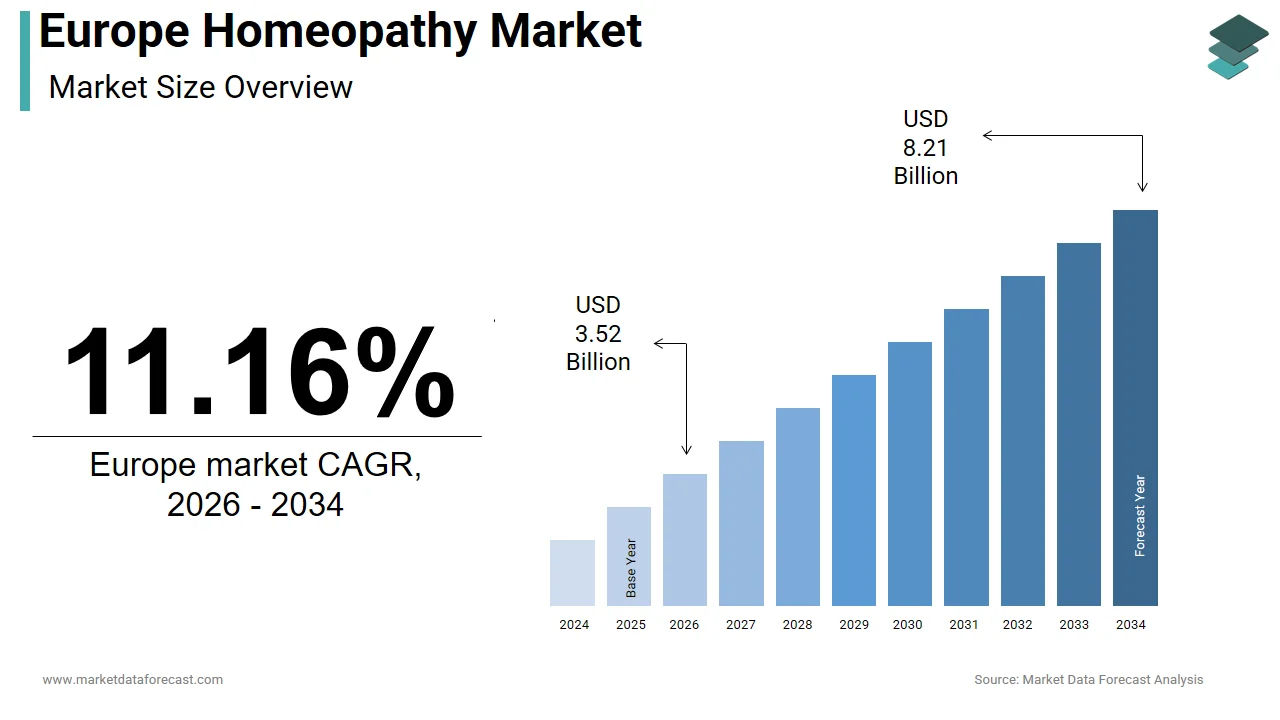
The Europe homeopathy market was valued at USD 3.17 billion in 2025, is estimated to reach USD 3.52 billion in 2026, and is projected to reach USD 8.21 billion by 2034, growing at a CAGR of 11.16% from 2026 to 2034. Market growth is driven by increasing consumer preference for natural and alternative therapies, rising awareness of holistic healthcare approaches, and growing demand for minimally invasive treatments with fewer side effects. Homeopathic products are widely used for managing chronic conditions, respiratory disorders, and lifestyle-related ailments. The expansion of wellness trends, supportive regulatory frameworks in select countries, and increasing availability of homeopathic remedies are further contributing to market growth across Europe.
Key Market Trends
- Rising preference for natural and alternative healthcare solutions.
- Increasing use of homeopathic remedies for chronic and respiratory conditions.
- Growing consumer awareness of holistic and preventive healthcare.
- Expansion of over-the-counter homeopathic products.
- Supportive regulatory frameworks in select European countries.
Segmental Insights
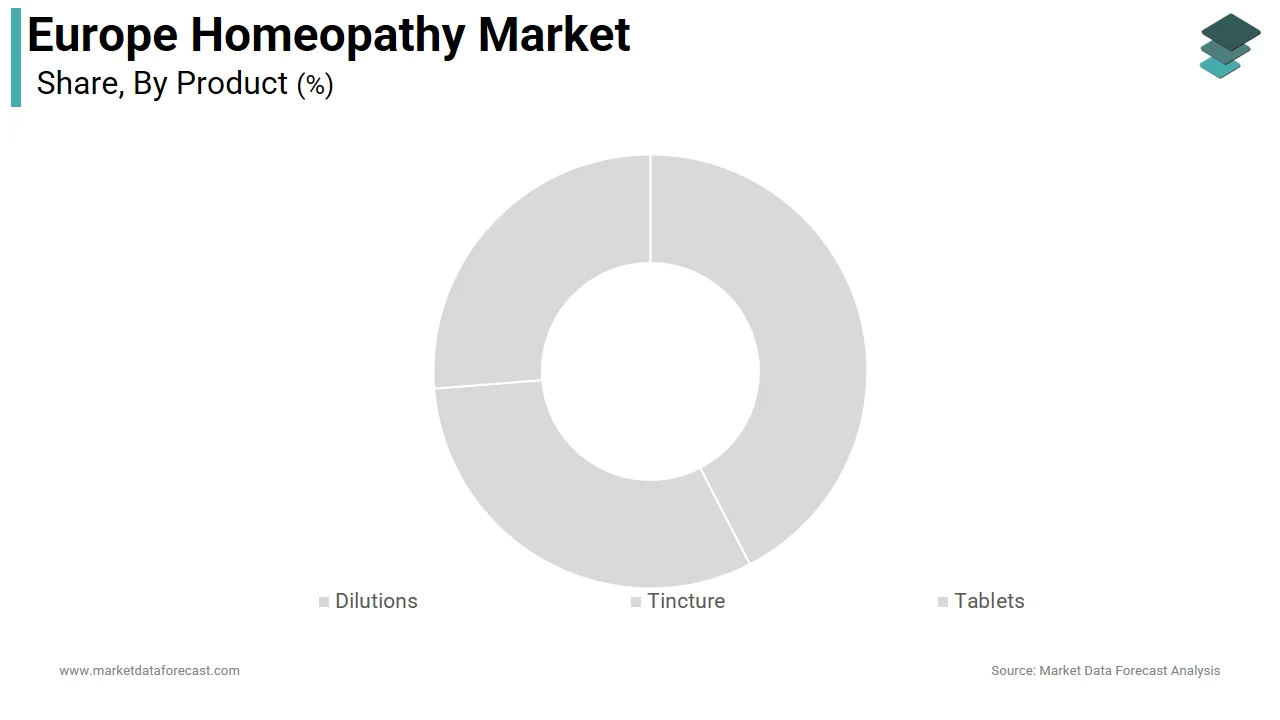
- Based on product, the tablets segment dominated the Europe homeopathy market by capturing 48.5% share in 2025, driven by ease of use and widespread availability.
- Based on application, the respiratory segment led the market with 42.3% share in 2025, supported by high demand for treatment of respiratory conditions.
Regional Insights
The Europe homeopathy market is witnessing steady growth across key countries due to cultural acceptance and regulatory support.
- Germany led the regional market in 2025 with 24.3% share, supported by strong consumer acceptance and established homeopathy practices.
- France followed with 19.3% share in 2025, driven by widespread usage and integration into healthcare systems.
- Switzerland holds a significant position due to its progressive regulatory framework that includes homeopathy in basic health insurance coverage.
Competitive Landscape
The Europe homeopathy market is moderately competitive, with the presence of established manufacturers and regional players focusing on product innovation and expansion. Companies are investing in expanding product portfolios, strengthening distribution networks, and enhancing brand presence. Regulatory approvals and consumer trust play a crucial role in shaping competitive dynamics.
Prominent companies operating in the Europe homeopathy market include Boiron, Ainsworths Ltd., Biologische Heilmittel, Powell Laboratories Pvt. Ltd., Heel GmbH, A Nelson & Co Ltd., Homeocan, SBL, Hahnemann Laboratories, Medisynth, Hevert-Arzneimittel GmbH & Co. KG, DHU-Arzneimittel GmbH and Co KG, Dr. Reckeweg & Co., and Dr. Willmar Schwabe GmbH & Co. KG.
Europe Homeopathy Market Size
The size of the Europe homeopathy market was worth USD 3.17 billion in 2025. The regional market is anticipated to grow at a CAGR of 11.16% from 2026 to 2034 and be worth USD 8.21 billion by 2034 from USD 3.52 billion in 2026.
Homeopathy is a system of alternative medicine, founded on the principle of "like cures like," occupies a unique cultural and therapeutic niche across the continent, particularly in nations with deep historical ties to its practice. The market is characterized by a diverse range of products including pellets, tablets, liquid dilutions, and ointments derived from botanical, mineral, and animal sources. Unlike conventional pharmaceuticals, homeopathic remedies are often sought for chronic conditions, preventive care, and mild acute ailments where patients desire to avoid the side effects of synthetic drugs. According to data from the European Social Survey (ESS), approximately 26 percent (25.9%) of the general European population utilizes complementary and alternative medicine (CAM). Homeopathy represents a notable portion of this usage, particularly in Western and Central European nations such as Germany and Switzerland, where overall CAM prevalence reaches nearly 40%. The European Medicines Agency oversees the regulatory landscape through simplified registration procedures that acknowledge the long-standing traditional use of these products, although classification varies by member state. Public perception remains a critical driver, with surveys indicating that over 60 percent of citizens in countries like France and Germany view homeopathy as a credible option for managing everyday health issues. The market operates within a complex framework of national reimbursement policies and evolving scientific scrutiny, balancing widespread consumer demand with ongoing debates regarding clinical efficacy and standardization.
MARKET DRIVERS
High Prevalence of Chronic Diseases and Desire for Holistic Management
The escalating burden of chronic non-communicable diseases across the region fuels the growth of the Europe homeopathy market. As the population ages and lifestyle-related conditions such as arthritis, allergies, and digestive disorders become more common, patients increasingly seek long-term management strategies that minimize the adverse effects associated with prolonged conventional drug use. Data from the World Health Organization indicates that chronic diseases now account for 90 percent of all deaths in the European region, creating a vast patient population with increasing needs for long-term supportive and palliative care. Homeopathy offers a holistic approach that addresses the physical, emotional, and mental aspects of illness, appealing to individuals who feel underserved by the symptom-focused nature of allopathic medicine. Clinical surveys reveal that approximately 40 percent of patients with chronic pain report that their condition is not adequately controlled by standard medical treatments, a gap that frequently motivates the search for alternative and complementary therapies. The gentle nature of homeopathic remedies makes them particularly suitable for vulnerable demographics, including the elderly and those with multiple comorbidities who are sensitive to polypharmacy. Furthermore, the rising incidence of autoimmune disorders and allergic reactions, which affect a notable share of the European population, drives consumers toward natural interventions that aim to modulate the immune system rather than suppress it. This shift towards integrative care models, where homeopathy complements conventional treatment, ensures a steady and growing demand base driven by the urgent need for safer, sustainable health solutions.
Growing Consumer Preference for Natural and Non-Toxic Therapies
A profound shift in consumer behaviour towards natural, organic, and non-toxic health products acts as a significant accelerator for the expansion of the Europe homeopathy market. Modern European consumers are increasingly health-conscious and skeptical of synthetic chemicals, prioritizing wellness solutions that align with environmental sustainability and personal safety. Consumer research emphasizes that a significant majority of European citizens, approximately 73 percent, actively seek out healthcare and nutrition products featuring recognizable, natural ingredients, associating them with better safety and biological compatibility. This sentiment is particularly strong among millennials and Generation Z, who actively research ingredient lists and avoid products containing artificial additives or potential toxins. Homeopathy, with its roots in plant and mineral extracts processed through natural dilution methods, fits perfectly into this "clean label" trend. The perception that homeopathic remedies do not cause dependency or organ damage reinforces their appeal as a first-line defense for minor ailments. Additionally, the broader wellness movement, which emphasizes prevention and natural living, has normalized the use of alternative medicines in daily life. A study shows that the sector for natural health products and dietary supplements in Europe continues to expand, with projections indicating a steady annual growth rate of roughly 7 to 8 percent as demand for preventive health solutions rises. This cultural pivot towards naturality ensures that homeopathy remains a relevant and preferred choice for a large segment of the population seeking to maintain health without compromising their values or safety.
MARKET RESTRAINTS
Stringent Regulatory Scrutiny and Lack of Standardized Efficacy Proof
Intensifying regulatory scrutiny and the persistent demand for robust clinical evidence of efficacy constitute a major constraint on the growth of the Europe homeopathy market. Some nations have historically supported homeopathy. However, the European scientific community and regulatory bodies are increasingly demanding rigorous proof of therapeutic benefit comparable to conventional drugs. The European Academies' Science Advisory Council has issued statements emphasizing the lack of high-quality evidence supporting homeopathy, urging governments to reconsider funding and reimbursement policies. Consequently, several countries have begun to deregister homeopathic products or remove them from public health insurance coverage. The requirement for extensive clinical trials to prove efficacy beyond the placebo effect poses a substantial financial and logistical barrier for manufacturers, many of whom are small to medium-sized enterprises. Without definitive scientific validation accepted by the broader medical establishment, homeopathy struggles to gain legitimacy in mainstream healthcare settings. This regulatory uncertainty creates a volatile environment where market access can be revoked based on shifting political and scientific winds. The absence of a unified European stance further complicates matters, forcing companies to navigate a patchwork of conflicting national regulations that hinder cross-border trade and scale.
Limited Integration into Mainstream Medical Education and Practice
The restricted integration of homeopathy into formal medical education and mainstream clinical practice is an impediment to its broader adoption and the expansion of the European homeopathy market. Unlike conventional medicine, which is the cornerstone of university curricula, homeopathy is rarely taught as a core subject in medical schools across the continent. Data indicates that only a handful of European universities offer dedicated courses or degrees in homeopathy, resulting in a shortage of formally trained practitioners who can prescribe these remedies with confidence . This educational gap leads to skepticism among conventionally trained physicians, many of whom are reluctant to recommend or support homeopathic treatments due to a lack of understanding of its principles and mechanisms. Surveys reveal that a notable share of general practitioners in Europe do not feel adequately informed about homeopathy to discuss it with patients, creating a barrier to referral and integration. Without the endorsement and active participation of the medical community, homeopathy remains marginalized as a self-care option rather than a recognized therapeutic modality. The lack of standardized training also raises concerns about the quality of practice and patient safety, further fueling criticism from scientific bodies. This disconnect between the homeopathic industry and the established medical infrastructure limits the market's ability to reach patients through official healthcare channels, restricting growth to niche retail and direct-to-consumer segments.
MARKET OPPORTUNITIES
Expansion into Veterinary Medicine and Animal Health Sector
The burgeoning field of veterinary homeopathy opens doors for the European homeopathy market growth. This is driven by the increasing tendency of pet owners to seek natural treatment options for their animals. The humanization of pets in Europe has led to a surge in demand for holistic and non-invasive therapies that avoid the side effects of conventional veterinary drugs. Homeopathic remedies are gaining traction for treating chronic conditions in animals such as arthritis, anxiety, and skin disorders, where long-term use of steroids or antibiotics is undesirable. The regulatory pathway for veterinary homeopathic products is often less stringent than for human medicines in certain jurisdictions, facilitating faster market entry. Studies suggest that a portion of pet owners in countries like Germany and the UK have used alternative therapies for their animals, indicating a substantial addressable market. Manufacturers are responding by developing specialized formulations for various species, ranging from dogs and cats to horses and livestock. The success of homeopathy in animal health also serves as a gateway to broader acceptance, as positive outcomes in pets often influence owners to try these remedies for themselves. This segment offers a high-growth avenue that diversifies revenue streams and taps into the emotionally driven spending habits of pet owners.
Digitalization and Direct-to-Consumer Telehealth Platforms
The rapid digitalization of healthcare and the rise of telehealth platforms offer a transformative opportunity for the homeopathy market. This shift allows the industry to bypass traditional barriers and reach a wider audience. The proliferation of online consultation services allows patients to access qualified homeopaths remotely, overcoming the geographical scarcity of practitioners in many regions. Digital platforms enable personalized remedy selection through AI-driven algorithms and detailed questionnaires, replicating the individualized approach of in-person consultations. This convenience appeals to younger, tech-savvy demographics who prefer managing their health via smartphones. Furthermore, e-commerce channels facilitate the direct delivery of remedies to patients, ensuring consistent access even in areas without local pharmacies stocking homeopathic products. Social media and online communities also play a crucial role in educating consumers and building trust through peer reviews and expert content. By leveraging digital tools, homeopathic brands can create engaged ecosystems that support patient adherence and loyalty. This technological shift democratizes access to homeopathy, expanding the market beyond traditional strongholds and fostering a new generation of users who value convenience and personalized care.
MARKET CHALLENGES
Scientific Skepticism and the Placebo Effect Debate
The enduring scientific skepticism regarding its mechanism of action and the attribution of its benefits to the placebo effect limits the growth of the Europe homeopathy market. The fundamental principle of homeopathy, which involves extreme dilution often to the point where no molecules of the original substance remain, contradicts established laws of chemistry and physics, leading to intense criticism from the global scientific community. Major medical journals and research institutions frequently publish studies concluding that homeopathy performs no better than placebos in controlled clinical trials . This narrative significantly influences public policy and funding decisions, as seen in the withdrawal of support by national health services in several European countries. The stigma associated with being labeled "unscientific" hampers efforts to integrate homeopathy into evidence-based medicine frameworks. Patients influenced by this discourse may hesitate to rely on homeopathy for serious conditions, limiting its use to minor ailments. The constant pressure to defend its validity diverts resources away from product development and marketing towards defensive advocacy. The market has yet to produce universally accepted mechanistic explanations or irrefutable clinical data that satisfy rigorous scientific standards. Consequently, this skepticism remains a formidable obstacle to legitimacy and widespread institutional adoption.
Inconsistency in Reimbursement Policies Across Member States
The fragmented and inconsistent landscape of reimbursement policies across European Union member states poses a significant operational and financial barrier for the Europe homeopathy market. While countries like Germany and Switzerland maintain partial reimbursement schemes for homeopathic treatments under specific conditions, others such as France and Belgium have moved to eliminate public funding entirely. This lack of harmonization creates a volatile market environment where demand can fluctuate drastically based on political decisions rather than consumer preference. According to researchs, the removal of reimbursement can lead to an immediate drop in sales volume in affected regions, as price sensitivity becomes a deciding factor for patients . Manufacturers must navigate a complex web of national regulations, pricing controls, and insurance criteria, which increases administrative costs and complicates strategic planning. The uncertainty surrounding future reimbursement status discourages long-term investment in research and infrastructure. Furthermore, the disparity in access creates inequities where patients in some nations can afford treatment while others cannot, undermining the market's potential for uniform growth. This policy fragmentation prevents the formation of a cohesive European market strategy, forcing companies to adopt a country-by-country approach that limits economies of scale and hinders the overall development of the sector.
REPORT COVERAGE
| REPORT METRIC | DETAILS |
| Market Size Available | 2025 to 2034 |
| Base Year | 2025 |
| Forecast Period | 2026 to 2034 |
| Segments Covered | By Product, Application, Source, and Country. |
| Various Analyses Covered | Global, Regional, and Country-Level Analysis, Segment-Level Analysis, Drivers, Restraints, Opportunities, Challenges; PESTLE Analysis; Porter’s Five Forces Analysis, Competitive Landscape, Analyst Overview of Investment Opportunities |
| Countries Covered | UK, France, Spain, Germany, Italy, Russia, Sweden, Denmark, Switzerland, Netherlands, Turkey, Czech Republic, and the Rest of Europe. |
| Market Leaders Profiled | Boiron, Ainsworths Ltd., Biologische Heilmittel, Powell Laboratories Pvt. Ltd, Heel GmbH, A Nelson & Co Ltd, Homeocan, SBL, Hahnemann Laboratories, Medisynth, Hevert - Arzneimittel GmbH & Co. KG., Dr.Reckeweg & Co, Dr. Willmar Schwabe GmbH & Co. KG. |
SEGMENTAL ANALYSIS
By Product Insights
The tablets segment led the Europe homeopathy market and occupied a 48.5% share in 2025. This prominence of the segment is mainly driven by the superior convenience, precise dosing, and enhanced portability of tablet formulations compared to liquid dilutions or tinctures, making them the preferred choice for both patients and practitioners. The key factor for this segment is the unparalleled convenience they offer to modern European consumers who lead busy and active lifestyles. Unlike liquid dilutions that require careful measurement, droppers, and often contain alcohol, tablets are pre-dosed, solid, and easy to carry in pockets or bags without risk of leakage. Studies indicates that a notable share of Europeans prefer solid dosage forms for over-the-counter remedies due to their ease of administration while traveling or at work . The stability of tablets also eliminates the need for special storage conditions, such as protection from light or temperature fluctuations, which is often required for liquid tinctures. This robustness makes tablets ideal for distribution through vending machines, online subscriptions, and retail shelves where shelf life is a critical factor. Furthermore, the tasteless nature of sucrose-based homeopathic tablets addresses palatability issues, particularly among children and the elderly who may reject the strong alcoholic taste of tinctures. The ability to take a dose discreetly in public settings without drawing attention further enhances their appeal. As the demand for self-care solutions that fit seamlessly into daily routines grows, the practical advantages of tablets ensure their continued leadership in the product landscape. The demand for precise dosing and standardized manufacturing processes significantly bolsters the dominance of the tablets segment. Regulatory bodies in Europe, such as the European Medicines Agency, emphasize the importance of consistent potency and quality control in medicinal products, areas where tablet manufacturing excels compared to liquid preparations. Modern tablet pressing technologies allow for exact quantification of the active impregnated substance on each unit, reducing the variability often associated with drop-by-drop administration of liquids. The precision is crucial for maintaining patient trust and ensuring therapeutic reliability, especially in countries with strict pharmacovigilance standards. Additionally, the automated production lines for tablets offer higher throughput and lower contamination risks, enabling manufacturers to meet large-scale demand efficiently. The standardization of tablet sizes and strengths facilitates clearer labeling and easier understanding for consumers, reducing the risk of misuse. Tablets are cementing their position as the market's most reliable, widely accepted product. This is driven by the need for pharmaceutical-grade consistency as healthcare systems integrate homeopathy into broader care protocols.
The dilutions segment is estimated to register the fastest CAGR of 6.9% between 2026 and 2034. This swift expansion of the segment is fuelled by the deep-rooted tradition of classical homeopathy in Europe, where high-potency liquid dilutions are considered the gold standard for individualized constitutional treatment. The enduring preference of classically trained homeopaths for liquid dilutions is the primary catalyst for the segment's robust growth. In the European tradition, particularly in Germany, France, and Switzerland, serious chronic cases are often treated with high-potency remedies administered in liquid form to allow for dynamic adjustment of the dose. Surveys of homeopathic practitioners reveal that a notable portion of senior homeopaths in Europe exclusively prescribe liquid dilutions for complex constitutional cases, believing that liquids offer greater flexibility in potency modification and succussion (shaking) before administration. This professional endorsement drives significant volume in the B2B sector, as pharmacies compound these dilutions based on physician prescriptions. The belief that liquid forms retain a more "vital energy" or dynamic action compared to static tablets persists strongly within the core user base. Furthermore, the ability to prepare specific potencies on demand allows for a level of customization that mass-produced tablets cannot match. As the number of certified classical homeopaths remains steady and their influence on patient choices remains high, the demand for raw dilutions and mother tinctures for compounding continues to rise, propelling the segment's expansion despite the convenience of tablets. The versatility of liquid dilutions in treating vulnerable populations such as infants and the elderly contributes significantly to their rapid growth. Liquid remedies can be easily dissolved in water, milk, or juice, making them ideal for patients who have difficulty swallowing solid tablets or who require very small, fractional doses. Pediatric guidelines in several European countries recommend liquid homeopathic preparations for children under the age of four to prevent choking hazards and ensure accurate micro-dosing. Similarly, in geriatric care, liquid dilutions allow caregivers to administer medication to patients with dysphagia without crushing tablets, which could alter the remedy's integrity. The flexibility to adjust the frequency of dosing simply by changing the interval of spoonfuls offers a therapeutic nuance that is highly valued in palliative and chronic care settings. This adaptability to specific physiological needs ensures that liquid dilutions remain indispensable in clinical practice, driving sustained demand and fostering the segment's status as the fastest-growing category.
By Application Insights
The respiratory segment was the largest segment in the Europe homeopathy market and captured a share of 42.3% in 2025 because of the high prevalence of seasonal allergies, asthma, and recurrent upper respiratory tract infections across the continent, for which homeopathy is widely sought as a safe and effective alternative. The staggering prevalence of allergic rhinitis and asthma in Europe serves as the primary engine for the respiratory segment's dominance. Conventional treatments often involve corticosteroids and antihistamines that can cause drowsiness or other side effects, prompting many patients to seek homeopathic alternatives for long-term management. Homeopathic remedies such as Allium cepa, Sabadilla, and Arsenicum album are extensively prescribed for hay fever and perennial rhinitis, offering relief without the sedative effects of conventional drugs. The chronic nature of these conditions requires ongoing therapy, ensuring recurring sales of respiratory-specific remedies. Furthermore, the rising pollution levels in urban European centers exacerbate respiratory issues, expanding the pool of potential users. As awareness of the safety profile of homeopathy for respiratory conditions grows, its adoption as a first-line defense against seasonal symptoms continues to solidify its market leadership. The high frequency of recurrent upper respiratory infections among the European pediatric population significantly boosts the consumption of homeopathic respiratory remedies. Children in daycare and school settings are prone to frequent colds, coughs, and otitis media, leading parents to seek treatments that avoid the overuse of antibiotics. Homeopathy offers a compelling solution for managing symptoms and potentially reducing the frequency of recurrent infections through constitutional treatment. Studies indicate that a portion of European parents use homeopathic medicines for their children's colds and flu, valuing the gentle approach and lack of toxicity . Pediatricians who practice integrative medicine frequently recommend specific respiratory complexes for acute episodes, driving volume in both prescription and over-the-counter channels. The psychological comfort parents feel when using a non-invasive treatment for their sick children further reinforces brand loyalty. This persistent cycle of seasonal illness combined with the desire to protect children from drug side effects ensures that the respiratory application remains the largest and most stable segment of the market.
The analgesic and antipyretic segment is likely to experience the fastest CAGR of 7.4% from 2026 to 2034 due to growing concerns regarding the side effects of conventional painkillers, the opioid crisis, and the increasing adoption of homeopathy for managing chronic pain and fever. Rising safety concerns surrounding the long-term use of Non-Steroidal Anti-Inflammatory Drugs (NSAIDs) and opioids are the primary drivers for the accelerated growth of the analgesic and antipyretic segment. Widespread media coverage and medical warnings about the gastrointestinal, cardiovascular, and renal risks associated with chronic NSAID use have prompted patients to seek safer alternatives. Homeopathic remedies like Arnica, Rhus tox, and Bryonia are increasingly recognized for their efficacy in treating musculoskeletal pain, arthritis, and post-surgical discomfort without these severe risks. The opioid crisis, while less severe in Europe than in North America, has still led to stricter prescribing guidelines, pushing patients toward non-addictive options. Surveys show that a notable share of chronic pain patients are willing to try alternative therapies to reduce their reliance on conventional analgesics . This shift in patient preference, driven by a desire for safety and holistic care, is rapidly expanding the addressable market for homeopathic pain relievers, making it the fastest-growing application sector. The escalating incidence of musculoskeletal disorders due to aging populations and sedentary lifestyles is significantly boosting the demand for homeopathic analgesics. Europe has one of the oldest populations globally, with a portion of citizens aged 65 or older, a demographic highly susceptible to osteoarthritis, back pain, and rheumatic conditions . These chronic pain conditions require long-term management, and the cumulative toxicity of conventional painkillers makes homeopathy an attractive option for sustained use. Homeopathic treatments are increasingly integrated into occupational health programs and sports medicine protocols for their ability to reduce inflammation and accelerate recovery without masking symptoms dangerously. The growing acceptance of homeopathy by physiotherapists and orthopedic specialists further validates its use, driving referrals and product sales. The burden of pain-related disability is increasing. As a result, the demand for effective, safe, and natural analgesic solutions will continue to surge, propelling this segment to the forefront of market growth.
COUNTRY-LEVEL ANALYSIS
Germany Homeopathy Market Analysis
Germany dominated the Europe homeopathy market and accounted for a 24.3% share in 2025. This position of the German market is attributed to its deep historical roots, strong manufacturing base, and partial reimbursement within the statutory health insurance system. Germany's healthcare system is unique in that it formally integrates homeopathy, backed by a strong infrastructure of specialized pharmacies and physicians. The country is home to major global homeopathic manufacturers like DHU-Arzneimittel and Heel, which drive innovation and ensure high-quality supply. A study indicates that a considerable share of German physicians have some training in complementary medicine, and a significant portion actively prescribes homeopathic remedies. Although full reimbursement is not universal, many private insurers and some public sickness funds still cover homeopathic treatments, sustaining high patient access. The cultural acceptance of "Naturheilkunde" (natural healing) is profound. The regulatory environment, governed by the German Medicines Act, provides a clear pathway for registration, fostering a stable market. Furthermore, the strong presence of homeopathy in veterinary medicine adds another layer of demand. The combination of industrial strength, medical endorsement, and cultural affinity ensures Germany remains the undisputed leader and primary growth engine for the European homeopathy sector.
France Homeopathy Market Analysis
France followed closely behind in the Europe homeopathy market and held a 19.3% share in 2025. Historically a stronghold for homeopathy, the nation is currently navigating a period of transition following recent changes in reimbursement policies. The French market is propelled by a historically high penetration rate, with brands like Boiron being household names, although it faces headwinds from the government's decision to cease reimbursement for homeopathic products starting in 2021. Despite this policy shift, consumer demand remains resilient due to deep-seated cultural habits and strong brand loyalty. The French population's skepticism towards conventional pharmaceuticals and preference for "douceur" (gentleness) in treatment continues to drive over-the-counter sales. Recent data indicates that while volume dipped initially, sales have stabilized as consumers absorb the cost, viewing homeopathy as a valuable investment in their health. The country also hosts significant research institutions dedicated to studying homeopathy, maintaining a level of scientific discourse. The strong presence of homeopathy in maternal and child health sectors further sustains usage, as parents remain committed to gentle treatments for their children. France's market status is thus defined by a mature, loyal consumer base adapting to a new economic reality while maintaining its position as a key European hub.
Switzerland Homeopathy Market Analysis
Switzerland secures a significant spot in the European market. This is supported by a progressive regulatory framework that includes homeopathy in the basic compulsory health insurance scheme. The Swiss market is uniquely driven by its constitutional mandate, established via a 2009 referendum and enacted in 2017, which requires basic health insurance to cover five complementary therapies including homeopathy. This legislative backing ensures unparalleled access and affordability for the Swiss population, fostering high utilization rates. The country boasts a high density of certified homeopathic physicians, and the quality of training is rigorously regulated, ensuring professional standards. The Swiss consumer is highly affluent and willing to pay for high-quality, personalized healthcare, supporting a premium market segment. Furthermore, the presence of renowned research institutes and a supportive political climate encourages continuous innovation. The integration of homeopathy into university hospitals and conventional clinics normalizes its use across all demographics. This supportive ecosystem, combining legal protection, financial coverage, and high professional standards, makes Switzerland one of the most advanced and stable markets for homeopathy in Europe.
United Kingdom Homeopathy Market Analysis
The United Kingdom witnessed a steady growth in the Europe homeopathy market due to a vibrant private market and strong consumer demand despite the withdrawal of funding from the National Health Service. In addition, the UK market operates primarily as a private sector endeavor following the NHS decision in 2017 to stop funding homeopathy, yet it remains robust due to strong public interest and a well-established retail network. British consumers exhibit a high degree of health consciousness and openness to alternative therapies. The market is driven by a dense network of independent pharmacies and health food stores that cater to this demand, alongside a thriving online retail sector. The UK is also a hub for homeopathic education and professional organizations that maintain high standards of practice. The cultural trend towards "wellness" and natural living has rejuvenated interest in homeopathy among younger demographics who seek drug-free solutions for stress, sleep, and minor ailments. Additionally, the veterinary sector in the UK is a significant contributor, with many pet owners opting for homeopathic treatments for their animals. The resilience of the UK market demonstrates that strong consumer pull can sustain growth even in the absence of state sponsorship, relying on brand strength and direct-to-consumer engagement.
Italy Homeopathy Market Analysis
Italy is predicted to expand notably in the European over the forecast period by leveraging its rich tradition of natural medicine, a strong pharmacy network, and growing regional recognition of homeopathic practices. Moreover, the Italian market is fueled by a cultural predisposition towards natural remedies and a healthcare system where regions have the autonomy to recognize and regulate homeopathy. Several Italian regions officially recognize homeopathy, allowing for its integration into local health services and fostering a professional environment for practitioners. The pharmacy channel is dominant in Italy, with pharmacists playing a key role in recommending homeopathic remedies for common conditions like flu, allergies, and digestive issues. The presence of major domestic manufacturers and a strong tradition of compounding in pharmacies ensures wide availability. Furthermore, the rising cost of conventional healthcare and long waiting times for specialists push patients towards accessible over-the-counter alternatives. The Italian market is also seeing growth in the veterinary sector, particularly for livestock and pets. The combination of regional support, strong pharmacy influence, and cultural acceptance ensures Italy remains a significant and growing player in the European homeopathy landscape.
COMPETITIVE LANDSCAPE
The competition in the Europe homeopathy market is characterized by a mix of established multinational corporations and numerous small to medium-sized enterprises vying for dominance in a fragmented landscape. Large players leverage their extensive distribution networks, strong brand recognition, and substantial research budgets to maintain market leadership and influence regulatory frameworks. In contrast, smaller niche manufacturers differentiate themselves through specialized formulations, local sourcing, and personalized customer service tailored to specific regional preferences. The market sees intense rivalry in terms of product quality, with companies striving to meet stringent European Union manufacturing standards to gain consumer trust. Price competition is moderate but intensifies in the over-the-counter segment where generic alternatives are available. Regulatory changes regarding reimbursement and labeling create a dynamic environment where adaptability is key to survival. Brand loyalty remains high among long-term users, yet companies must continuously innovate to attract younger demographics skeptical of traditional medicine. The rise of e-commerce has lowered barriers to entry, allowing new competitors to reach customers directly. Overall, the competitive dynamics require participants to balance scientific validation with traditional values while navigating complex political and economic shifts across diverse European nations.
KEY MARKET PLAYERS
The leading companies operating in the Europe homeopathy market include:
- Boiron
- Ainsworths Ltd.
- Biologische Heilmittel
- Powell Laboratories Pvt. Ltd.
- Heel GmbH
- A Nelson & Co Ltd.
- Homeocan
- SBL
- Hahnemann Laboratories
- Medisynth
- Hevert-Arzneimittel GmbH & Co. KG
- DHU-Arzneimittel GmbH and Co KG
- Reckeweg & Co.
- Willmar Schwabe GmbH & Co. KG.
TOP PLAYERS IN THE MARKET
- Boiron S.A. stands as a global leader in the Europe homeopathy market, renowned for its extensive portfolio of single-ingredient and combination remedies. The company contributes significantly to the worldwide sector by setting manufacturing standards and promoting homeopathic education across continents. Recent actions include heavy investment in digital health platforms to facilitate direct consumer access and teleconsultation services. Boiron actively engages in scientific research partnerships to validate the efficacy of its products, aiming to bridge the gap between traditional use and modern evidence-based medicine. The firm has also expanded its production facilities in France to ensure supply chain resilience and meet rising demand for natural treatments. By launching innovative packaging solutions and sustainable sourcing initiatives, Boiron reinforces its commitment to environmental responsibility. These strategic moves enhance brand loyalty and solidify its position as a trusted household name in holistic healthcare throughout Europe and beyond.
- DHU-Arzneimittel GmbH and Co KG is a pivotal player in the Europe homeopathy market, specializing in high-quality single remedies and complex preparations manufactured in Germany. The company plays a crucial role globally by supplying raw materials and finished products to pharmacies and practitioners worldwide. Recent strategies involve expanding its range of certified organic homeopathic tablets and dilutions to cater to the growing demand for clean label products. DHU actively collaborates with medical associations to promote the integration of homeopathy into conventional care settings. The firm has upgraded its manufacturing processes to adhere to the strictest Good Manufacturing Practice standards, ensuring product purity and consistency. Additionally, DHU focuses on educational initiatives for pharmacists and physicians to deepen their understanding of homeopathic principles. By maintaining a strong presence in the veterinary sector and developing specialized animal health lines, DHU diversifies its revenue streams. These efforts strengthen its reputation for excellence and reliability in the competitive European and global markets.
- Heel GmbH operates as a major force in the Europe homeopathy market, known for its unique biotherapeutic agents and complex homeopathic formulations. The company contributes to the global landscape by pioneering research into the mechanisms of action of homeopathic medicines and their application in integrative medicine. Recent actions include the launch of new digital tools for healthcare professionals to support personalized treatment planning and patient monitoring. Heel actively participates in international clinical trials to generate robust data supporting the efficacy of its products in treating chronic conditions. The firm has strengthened its distribution network across emerging markets while consolidating its position in established European regions through strategic partnerships. Heel also invests in sustainability projects to reduce its carbon footprint and promote eco-friendly manufacturing practices. By focusing on innovation in drug delivery systems and expanding its portfolio of injectable homeopathic solutions, Heel continues to drive growth. These initiatives enhance its clinical credibility and market presence in the evolving healthcare ecosystem.
TOP STRATEGIES USED BY KEY MARKET PARTICIPANTS
Key players in the Europe homeopathy market primarily focus on product innovation and diversification to meet evolving consumer demands for natural and organic remedies. Companies frequently invest in research and development to validate the efficacy of their formulations through clinical studies and scientific publications. Another major strategy involves expanding distribution channels by strengthening partnerships with pharmacies, online retailers, and integrative health clinics to improve accessibility. Manufacturers also prioritize digital transformation by launching telehealth platforms and mobile applications that connect patients with qualified homeopaths for remote consultations. Strategic acquisitions of niche brands allow large corporations to enter specific therapeutic segments or geographic markets quickly. Furthermore, firms emphasize sustainability by adopting eco-friendly packaging and sourcing raw materials from certified organic farms. Educational initiatives targeting healthcare professionals and consumers are crucial to building trust and dispelling skepticism regarding homeopathic treatments. Cost optimization through automated manufacturing ensures competitive pricing while maintaining high quality standards essential for regulatory compliance.
MARKET SEGMENTATION
This research report on the Europe homeopathy market has been segmented and sub-segmented into the following categories.
By Product
- Dilutions
- Tincture
- Tablets
By Application
- Analgesic and Antipyretic
- Respiratory
- Neurology
By Source
- Plants
- Minerals
- Animals
By Country
- United Kingdom
- France
- Spain
- Germany
- Italy
- Russia
- Sweden
- Denmark
- Switzerland
- Netherlands
- Rest of Europe