- Product Description Description
- Table of Contents TOC
- List of Table & Figure LOT
- Get Free Sample PDF Sample PDF
Market Size, 2025
$58.62 BnMarket Estimate, 2026
$66.98 BnMarket Forecast, 2034
$194.58 BnCAGR, 2026–2034
14.26%Europe Intragastric Balloon Market Report Summary
The Europe intragastric balloon market was valued at USD 58.62 billion in 2025, is estimated to reach USD 66.98 billion in 2026, and is projected to reach USD 194.58 billion by 2034, growing at a CAGR of 14.26% during the forecast period from 2026 to 2034. The growth of the Europe intragastric balloon market is driven by the rising prevalence of obesity, increasing demand for minimally invasive weight management procedures, and growing awareness of bariatric treatment options. Expanding healthcare infrastructure, technological advancements in intragastric balloon systems, and increasing acceptance of non-surgical obesity treatments are further supporting market growth. Additionally, favorable clinical outcomes and rising healthcare expenditure are contributing to the rapid adoption of intragastric balloon therapies across Europe.
Key Market Trends
-
Rising prevalence of obesity and obesity-related chronic diseases is driving demand for minimally invasive weight-loss procedures.
-
Increasing preference for non-surgical bariatric treatments is supporting market expansion.
-
Technological advancements in swallowable and endoscopically placed balloon systems are improving patient outcomes and safety.
-
Growing awareness among healthcare professionals and patients regarding obesity management options is accelerating market adoption.
-
Expansion of specialized bariatric clinics and obesity treatment centers is creating new growth opportunities.
Segmental Insights
-
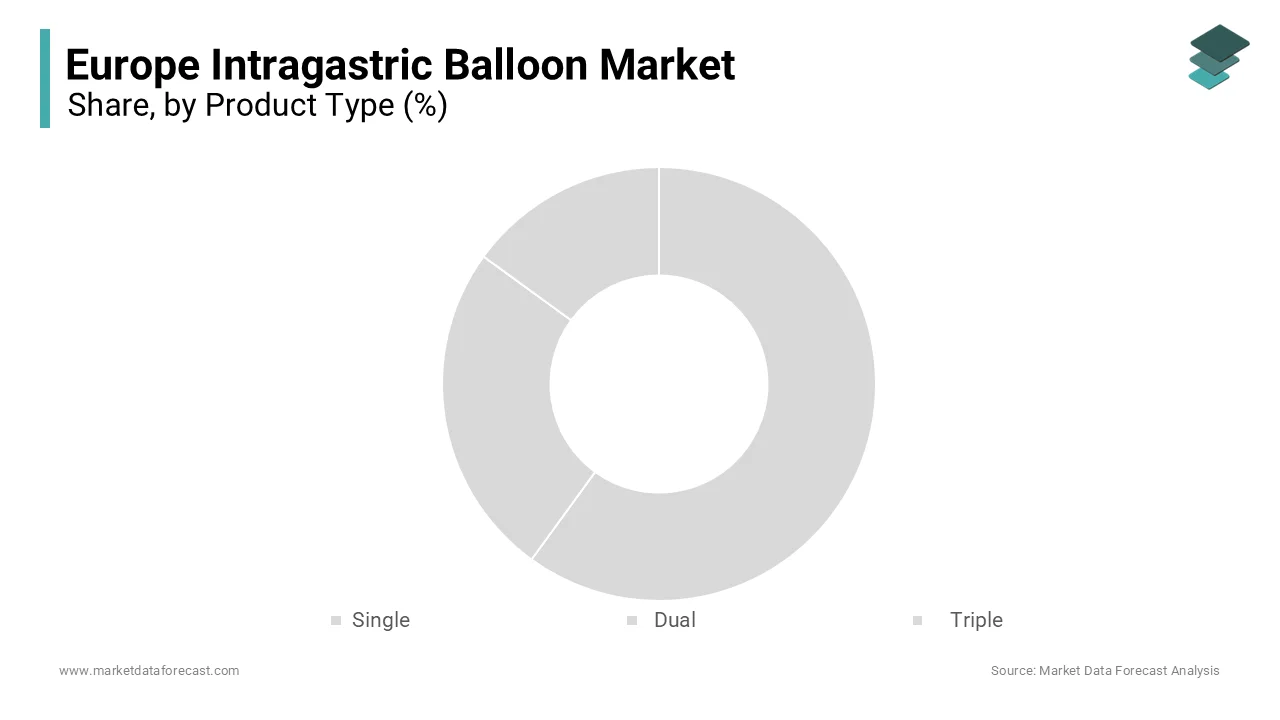
Based on product type, the single balloons segment dominated the Europe intragastric balloon market by accounting for 60.3% of the market share in 2025. The segment's leadership is attributed to its proven clinical effectiveness, lower procedural complexity, and widespread adoption for temporary weight management.
-
Based on administration, the endoscopic placement segment held the largest share of the Europe intragastric balloon market in 2025. The segment's dominance is driven by the extensive use of endoscopic procedures for accurate balloon placement, improved patient safety, and established clinical protocols.
-
Based on filling material, the saline-filled balloons segment accounted for the largest share of the Europe intragastric balloon market in 2025. The segment's growth is supported by its well-established safety profile, ease of detection in case of leakage, and broad clinical acceptance.
-
Based on end user, the hospitals and clinics segment held a significant share of the Europe intragastric balloon market in 2025. The segment's leadership is attributed to the availability of specialized bariatric care, experienced healthcare professionals, and advanced endoscopic facilities.
Regional Insights
-
The Europe intragastric balloon market is witnessing strong growth due to increasing obesity rates, growing awareness of minimally invasive weight-loss procedures, and expanding access to bariatric care.
-
Germany dominated the Europe intragastric balloon market by accounting for 28.5% of the regional market share in 2025. The country's leadership is supported by advanced healthcare infrastructure, increasing obesity management programs, high adoption of innovative medical technologies, and strong reimbursement support for selected bariatric treatments.
-
The United Kingdom remains a significant market due to growing awareness of obesity treatment options, increasing demand for minimally invasive procedures, and expanding bariatric healthcare services.
Competitive Landscape
The Europe intragastric balloon market is moderately competitive, with manufacturers focusing on product innovation, patient safety, and advanced minimally invasive technologies to strengthen their market positions. Companies are investing in clinical research, regulatory approvals, strategic collaborations, and next-generation balloon systems to meet the growing demand for obesity management solutions across hospitals and specialized clinics. Key players operating in the Europe intragastric balloon market include Allurion Technologies, Apollo Endosurgery, Medispar NV, Endalis, Districlass Medical, ReShape Lifesciences, Spatz Medical, Lexel SRL, Silimed Brazil, and Suzhou Shenyun Medical Equipment.
Europe Intragastric Balloon Market Size
The Europe intragastric balloon market size was valued at USD 58.62 billion in 2025. The European market size is estimated to reach USD 194.58 billion by 2034 from USD 66.98 billion in 2026, growing at a CAGR of 14.26% from 2026 to 2034.
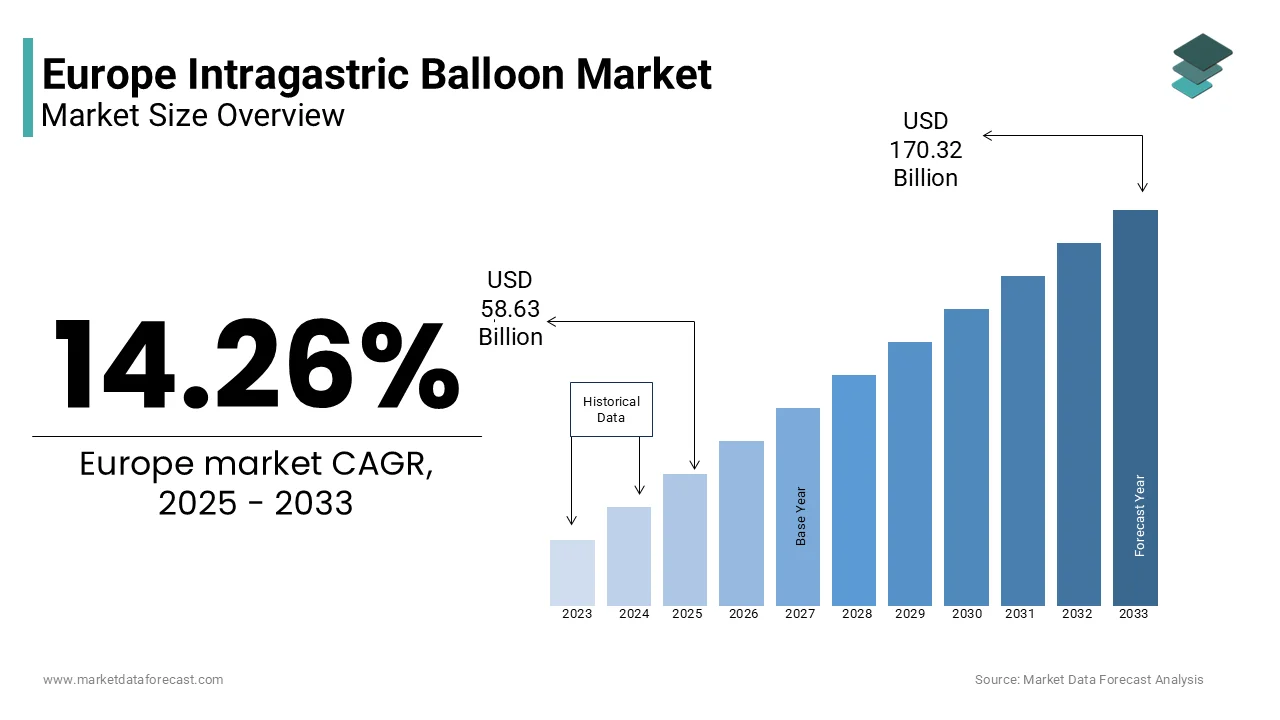
The Europe intragastric balloon market is witnessing steady growth with the rising obesity rates and an increasing preference for non-surgical weight management solutions. According to the World Health Organization, over 50% of adults in Europe are classified as overweight or obese, creating a significant demand for minimally invasive interventions like intragastric balloons. Additionally, reimbursement policies in countries like the UK and Spain have further bolstered accessibility to these devices. As per the European Association for the Study of Obesity, approximately 30% of eligible patients opt for intragastric balloons due to their cost-effectiveness compared to bariatric surgeries.
MARKET DRIVERS
Rising Prevalence of Obesity
Obesity has emerged as a critical public health concern across Europe. The surge in obesity rates has fueled the adoption of intragastric balloons, which offer a non-invasive alternative to traditional weight loss surgeries. Intragastric balloons are particularly appealing because they provide immediate volume restriction without requiring permanent anatomical changes. Studies indicate that patients using these devices achieve an average weight loss of 10-15% within six months by making them highly effective for short-term interventions. Moreover, government initiatives aimed at combating obesity, such as the UK’s National Health Service (NHS) weight management programs, have further normalized the use of intragastric balloons.
Advancements in Device Technology
Technological innovations have significantly enhanced the safety and efficacy of intragastric balloons, contributing to their growing popularity. For instance, newer models now feature biodegradable materials by reducing the need for surgical removal and minimizing risks associated with prolonged device retention. According to the European Medical Devices Regulation Authority, over 40% of recently approved intragastric balloons incorporate smart features like real-time monitoring systems, allowing healthcare providers to track patient progress remotely. Furthermore, clinical trials conducted by leading manufacturers demonstrate a reduction in adverse events by 25% compared to older versions. These advancements not only improve patient compliance but also expand the addressable market by attracting individuals who may have previously been hesitant due to perceived risks.
MARKET RESTRAINTS
High Procedure Costs
Despite their benefits, intragastric balloons remain relatively expensive are limiting their accessibility for many patients. The average cost of the procedure ranges from €3,000 to €5,000 is depending on the country and healthcare provider. According to the European Obesity Management Task Force, less than 20% of eligible patients can afford the treatment without financial assistance. This economic barrier is particularly pronounced in Eastern European nations, where healthcare budgets are constrained, and out-of-pocket expenses deter widespread adoption. While some countries like Germany offer partial reimbursements, inconsistent insurance coverage across Europe exacerbates affordability issues.
Risk of Complications
Post-procedural complications, including nausea, vomiting, and balloon deflation, pose another challenge to market growth. In severe cases, complications such as gastric ulcers or intestinal obstruction necessitate emergency interventions will deter the patient confidence in the technology. Although improvements in material science have mitigated some risks, the perception of potential side effects continues to deter prospective users.
MARKET OPPORTUNITIES
Expansion into Emerging Markets
Eastern European countries represent untapped opportunities for intragastric balloon manufacturers. Nations like Poland and Romania exhibit rapidly increasing obesity rates, with prevalence surpassing 25% in urban areas, according to the European Regional Obesity Observatory. However, limited access to advanced weight management solutions creates a gap that intragastric balloons can fill. Additionally, lower operational costs in these regions enable competitive pricing strategies, making the devices more affordable for patients.
Collaborations with Digital Health Platforms
Integrating intragastric balloons with digital health platforms presents another lucrative opportunity. Wearable devices and mobile apps that monitor dietary habits and physical activity can complement the effectiveness of these devices. According to research published in the Journal of Obesity & Weight Loss Therapy, combining intragastric balloons with digital coaching programs results in a 20% higher success rate compared to standalone treatments. Leading tech firms in Europe are already exploring collaborations with medical device manufacturers to develop comprehensive weight management ecosystems. Companies can enhance patient engagement and differentiate their offerings in a crowded marketplace by leveraging these synergies.
MARKET CHALLENGES
Regulatory Hurdles
Navigating stringent regulatory frameworks poses a significant challenge for intragastric balloon manufacturers. Each European country has unique approval processes, often requiring extensive clinical trials and documentation. According to the European Medicines Agency, obtaining CE certification for new devices can take up to two years is delaying market entry and increasing development costs. Furthermore, recent revisions to the Medical Device Regulation (MDR) mandate stricter compliance standards by forcing companies to invest heavily in quality assurance.
Competition from Alternative Treatments
Intragastric balloons face stiff competition from other weight loss interventions, including pharmaceuticals and lifestyle modification programs. According to the European Pharmaceutical Market Research Association, prescription medications like semaglutide have gained traction due to their convenience and proven efficacy. Similarly, personalized diet plans offered by wellness startups attract budget-conscious consumers seeking non-invasive options. These alternatives erode the market share of intragastric balloons among younger demographics. To remain competitive, manufacturers must emphasize the unique advantages of their products while addressing gaps in patient education and awareness.
REPORT COVERAGE
| REPORT METRIC | DETAILS |
| Market Size Available | 2025 to 2034 |
| Base Year | 2025 |
| Forecast Period | 2026 to 2034 |
| CAGR | 14.26% |
| Segments Covered | By Product Type, Administration, Filling Material, End-User, and Region |
| Various Analyses Covered | Global, Regional, & Country Level Analysis; Segment-Level Analysis; DROC; PESTLE Analysis; Porter’s Five Forces Analysis; Competitive Landscape; Analyst Overview of Investment Opportunities |
| Regions Covered | UK, France, Spain, Germany, Italy, Russia, Sweden, Denmark, Switzerland, Netherlands, Turkey, Czech Republic, Rest of Europe |
| Market Leaders Profiled | Allurion Technologies, Apollo Endosurgery, Medispar NV, Endalis, Districlass Medical, ReShape Lifesciences, Spatz Medical, Lexel SRL, Silimed Brazil, Suzhou Shenyun Medical Equipment, and others. |
SEGMENT ANALYSIS
By Product Type Insights
The single balloons segment dominated the Europe intragastric balloon market with 60.3% of the total share in 2025 with the simplicity in design and ease of insertion by making them ideal for first-time users. Additionally, single balloons are cost-effective, with prices averaging €2,500, compared to dual or triple configurations. A survey conducted by the European Society for Clinical Nutrition highlighted that 70% of patients prefer single balloons due to fewer procedural risks and quicker recovery times.
The triple balloons segment is projected to grow at a CAGR of 9.5% in the next foreseen years driven by their superior efficacy in achieving sustained weight loss. According to findings presented at the European Bariatric Conference, triple balloons result in an additional 5-7% weight reduction compared to single or dual options. This advantage appeals to severely obese patients seeking more aggressive interventions. Furthermore, technological advancements enabling customizable filling volumes enhance their adaptability to individual needs. Triple balloons are poised to become a cornerstone of advanced weight management strategies with growing emphasis on personalized medicine.
By Administration Insights
The endoscopic placement segment was accounted in holding prominent share of the Europe intragastric balloon market in 2025 owing to the precise positioning and reduced risk of migration by ensuring optimal therapeutic outcomes. Endoscopy-based procedures also allow for real-time adjustments, enhancing patient safety. According to clinical data from the European Obesity Surgery Network, endoscopically placed balloons demonstrate a complication rate of less than 10% by reinforcing their reliability.
The Pill-based intragastric balloons segment is likely to gain huge traction with a CAGR of 11.2% in the next coming years due to their non-invasive nature and minimal discomfort. According to a study published in the European Journal of Gastroenterology, pill-based systems reduce procedure time by 50% compared to endoscopic methods. Their appeal extends to patients with needle phobia or those seeking outpatient solutions. Manufacturers are investing in R&D to refine pill designs that is accelerating adoption rates among diverse demographic groups.
By Filling Material Insights
The saline-filled balloons held prominent share of the Europe intragastric balloon market in 2025. Their biocompatibility and ease of adjustment make them a popular choice among practitioners. Clinical evidence shows that saline-filled balloons cause fewer gastrointestinal irritations is improving patient tolerability. According to the European Obesity Research Institute, saline solutions are preferred for their stability and compatibility with imaging techniques by facilitating accurate monitoring.
The gas-filled balloons segment is estimated to witness a CAGR of 8.8% in the forecast period driven by their lightweight design and enhanced durability. According to the European Society for Bariatric Surgery, gas-filled variants reduce pressure on gastric walls that minimizes the risk of erosion. Their ability to maintain consistent volume over time also enhances long-term effectiveness. This segment is expected to witness exponential growth in the coming years as manufacturers focus on refining gas compositions.
By End-User Insights
The hospitals and clinics were accounted in holding significant share of the Europe intragastric balloon market with the advanced infrastructure and multidisciplinary teams capable of managing complex cases. These institutions also benefit from economies of scale by enabling them to offer competitive pricing and attract a larger patient base.
The outpatient surgical centres segment is projected to be the top performer in the market with a CAGR of 10.3% in the next coming years with their cost-efficiency and convenience. According to the European Ambulatory Surgery Association, outpatient settings reduce overall treatment costs by 30% by making them attractive to budget-conscious patients. Additionally, shorter wait times and flexible scheduling enhance patient satisfaction.
REGIONAL ANALYSIS
Germany dominated the Europe intragastric balloon market by holding a 28.5% of share in 2025 with the country’s robust healthcare infrastructure and high obesity prevalence, with over 23% of adults classified as obese. The government’s proactive stance on obesity management, including subsidies for non-surgical interventions, has bolstered adoption. According to the Robert Koch Institute, approximately 15,000 intragastric balloon procedures were performed in Germany in 2023, with its importance as a regional leader.
Spain is projected to grow at a CAGR of 9.2% during the forecast period with increasing awareness about minimally invasive weight loss solutions. The obesity rates have risen by 12% over the past decade by prompting greater investment in advanced treatments. Public health campaigns promoting early intervention have significantly boosted demand for intragastric balloons. Additionally, favorable reimbursement policies introduced in 2022 have made these devices more accessible among middle-income groups.
COMPETITIVE LANDSCAPE
The Europe intragastric balloon market is characterized by intense competition, with established players like Apollo Endosurgery and emerging firms vying for dominance. The market exhibits moderate fragmentation, allowing smaller innovators to carve niche positions through specialized offerings. Apollo Endosurgery leverages its extensive clinical trial data and brand recognition to maintain its position, while ReShape Lifesciences disrupts traditional paradigms with dual-balloon systems. Meanwhile, Spatz FGIA focuses on differentiation via adjustable designs catering to individual needs. Regional distributors also contribute to competitive dynamics by expanding access in underserved areas. Pricing wars occasionally arise, particularly in cost-sensitive markets like Eastern Europe, where affordability influences purchasing decisions. Regulatory frameworks further intensify rivalry, as companies must continuously adapt to evolving compliance requirements.
KEY MARKET PLAYERS
Some of the key players in the Europe intragastic balloon market are
- Allurion Technologies
- Apollo Endosurgery
- Medispar NV
- Endalis
- Districlass Medical
- ReShape Lifesciences
- Spatz Medical
- Lexel SRL
- Silimed Brazil
- Suzhou Shenyun Medical Equipment
TOP PLAYERS IN THIS MARKET
- Apollo Endosurgery led the Europe intragastric balloon market with its flagship Orbera device. The company’s focus on clinical validation and partnerships with European hospitals has strengthened its market position.
- ReShape Lifesciences contributes significantly through its innovative dual-balloon system, which addresses safety concerns associated with single balloons. As per the European Obesity Surgery Network, ReShape’s devices achieve an average weight loss of 12-15% by enhancing their appeal.
- Spatz FGIA specializes in adjustable balloons, offering unparalleled customization for patients. The company emphasizes patient-centric designs that will promote the marketplace position.
TOP STRATEGIES USED BY THE KEY MARKET PLAYERS
Key players in the Europe intragastric balloon market employ diverse strategies to maintain competitiveness and drive growth. Product innovation remains a cornerstone, with companies investing heavily in R&D to enhance device functionality and safety. For instance, Apollo Endosurgery launched biodegradable balloons to reduce risks associated with surgical removal. Strategic collaborations also play a vital role. ReShape Lifesciences partnered with European wellness platforms to integrate digital coaching programs, improving patient outcomes. Pricing strategies further differentiate players, as seen in Spatz FGIA’s tiered pricing models tailored to regional affordability levels. Additionally, regulatory compliance is prioritized, with manufacturers aligning products to meet stringent EU Medical Device Regulation standards. Marketing efforts focus on raising awareness through educational campaigns targeting both healthcare providers and patients. These multifaceted approaches ensure sustained market presence and foster trust among stakeholders by enabling key players to navigate challenges effectively.
RECENT HAPPENINGS IN THE MARKET
- In March 2025, Apollo Endosurgery launched its next-generation Orbera 365 balloon in Europe. This initiative aims to extend treatment duration and improve weight loss outcomes.
- In May 2025, ReShape Lifesciences partnered with Vitality Wellness Solutions, a UK-based platform. This collaboration seeks to integrate digital health tools with intragastric balloon therapies.
- In July 2025, Spatz FGIA announced a distribution agreement with MedLife Group in Italy. This move enhances accessibility to adjustable balloons across Southern Europe.
- In September 2025, Apollo Endosurgery secured expanded reimbursement coverage in France. This development ensures broader patient access to its devices under national healthcare programs.
- In November 2025, ReShape Lifesciences initiated a clinical trial in Germany to validate the efficacy of its dual-balloon system for adolescent obesity.
MARKET SEGMENTATION
This research report on the Europe intragastric balloon market is segmented and sub-segmented into the following categories.
By Product Type
- Single
- Dual
- Triple
By Administration
- Pill
- Endoscopy
By Filling Material
- Saline-Filled
- Gas-Filled
By End-User
- Hospitals & Clinics
- Outpatient Surgical Centers
- Others
By Country
- UK
- France
- Spain
- Germany
- Italy
- Russia
- Sweden
- Denmark
- Switzerland
- Netherlands
- Turkey
- Czech Republic
- Rest of Europe