- Product Description Description
- Table of Contents TOC
- List of Table & Figure LOT
- Get Free Sample PDF Sample PDF
Market Size, 2025
$5.89 BnMarket Estimate, 2026
$6.12 BnMarket Forecast, 2034
$8.34 BnCAGR, 2026–2034
3.95%Europe Kosher Foods Market Report Summary
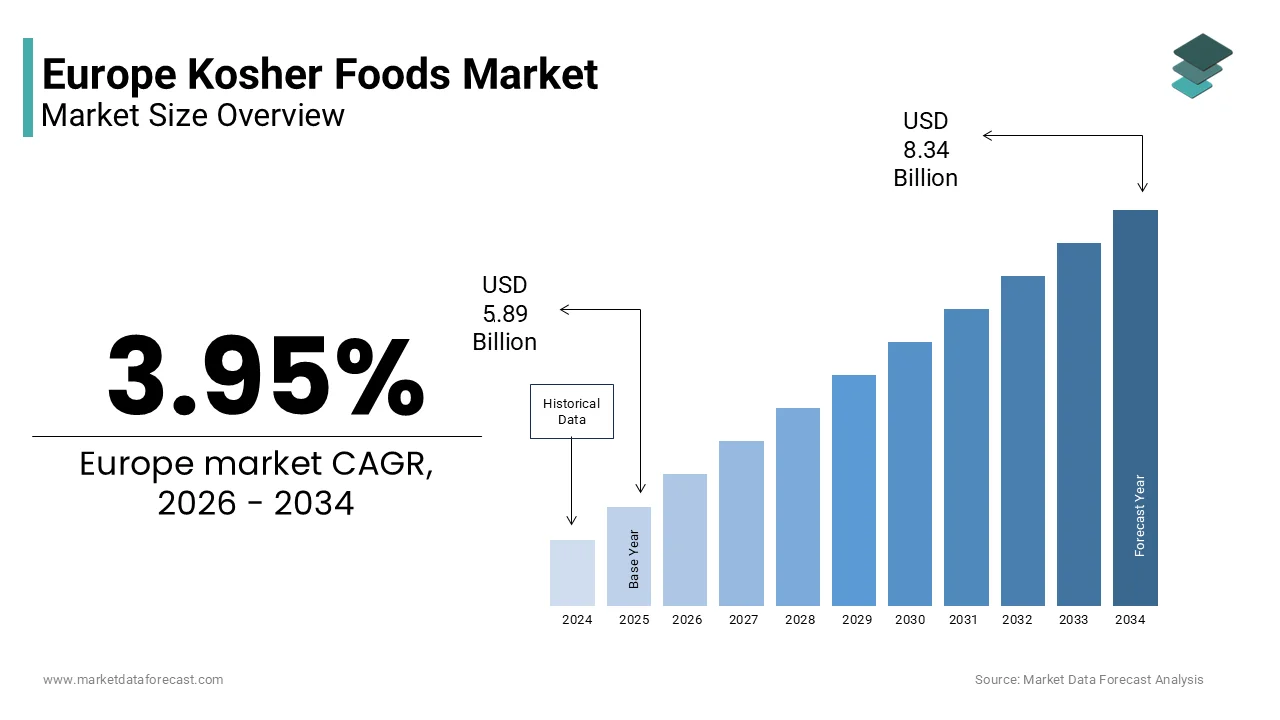
The Europe kosher foods market was valued at USD 5.89 billion in 2025, is estimated to reach USD 6.12 billion in 2026, and is projected to reach USD 8.34 billion by 2034, growing at a CAGR of 3.95% during the forecast period. Market growth is driven by increasing consumer preference for certified and high quality food products, rising awareness of dietary standards, and the expanding appeal of kosher foods beyond religious communities. The growing demand for clean label, ethically sourced, and premium food products is further supporting market expansion. Additionally, the rising availability of kosher certified products across mainstream retail channels is enhancing market accessibility across Europe.
Key Market Trends
- Growing consumer preference for clean label and certified food products is driving demand for kosher foods across diverse consumer groups.
- Increasing adoption of kosher foods beyond religious consumers is expanding the market base.
- Rising demand for premium and ethically sourced food products is supporting product innovation.
- Expansion of organized retail and e commerce platforms is improving product availability and accessibility.
- Seafood is emerging as the fastest growing segment due to rising health awareness and demand for protein rich diets.
Segmental Insights
- Based on type, the others segment was the largest and held a 44.7% share of the Europe kosher foods market in 2025. This dominance is attributed to the wide variety of processed and packaged kosher food products available across multiple categories. The seafood segment is expected to witness the fastest growth due to increasing consumer inclination toward healthier dietary options.
- Based on application, the culinary products segment accounted for 36.3% of the Europe kosher foods market share in 2025. The segment’s growth is driven by increasing use of kosher ingredients in cooking, food service, and ready to eat meal preparations.
- Based on distribution channel, the supermarkets and hypermarkets segment dominated with 56.1% of the Europe kosher foods market share in 2025, supported by strong retail presence, product visibility, and consumer convenience.
Regional Insights
The Europe kosher foods market is experiencing steady growth across key countries, supported by rising demand for certified food products and expanding retail networks.
France was the largest contributor, accounting for 35.3% of the Europe kosher foods market share in 2025, driven by a well established kosher consumer base, strong retail infrastructure, and increasing demand for premium food products.
Competitive Landscape
The Europe kosher foods market is moderately competitive, with major players focusing on product diversification, certification standards, and expansion of distribution networks. Companies are investing in innovation, branding, and partnerships to strengthen their presence across both traditional and mainstream consumer segments. Key players in the Europe kosher foods market include Nestlé S A, Unilever PLC, General Mills Inc, Conagra Brands Inc, The Kraft Heinz Company, Cargill Incorporated, Mondelez International, Kellogg Company, The Hain Celestial Group Inc, and Manischewitz Company.
Europe Kosher Foods Market Size
The Europe kosher foods market size was valued at USD 5.89 billion in 2025 and is projected to reach USD 8.34 billion by 2034 from USD 6.12 billion in 2026, growing at a CAGR of 3.95%.
Kosher foods are prepared in strict accordance with Jewish dietary laws known as Kashrut. This sector is defined not merely by religious adherence but by a rigorous certification process that governs every stage of the supply chain, from ingredient sourcing to processing equipment sanitation. The market includes a diverse array of categories such as meat, dairy, pareve (neutral) items, baked goods, and beverages, all bearing the seal of recognized rabbinical authorities. According to the European Jewish Congress, the Jewish population in Europe provides a foundational demographic baseline for demand. However, the definition of this market extends beyond the Jewish community, as kosher certification is increasingly perceived by non-Jewish consumers as a mark of quality, safety, and ethical production. As per the European Food Safety Authority, the stringent inspection protocols required for kosher certification often exceed standard regulatory requirements, which is appealing to consumers with specific dietary restrictions or allergies. The market landscape is further shaped by the presence of major certification bodies like the London Beth Din and the Consistoire in France, which oversee compliance across thousands of products. Recent demographic shifts indicate that while the overall Jewish population remains stable, migration patterns have concentrated communities in key urban centers, influencing regional distribution dynamics. As per Eurostat, cities like Paris, London, and Brussels host significant Jewish populations, creating localized hubs of high demand that drive the specialized logistics and retail networks essential to this niche yet resilient market sector.
MARKET DRIVERS
Growing Perception of Kosher as a Marker of Quality and Safety
The expanding perception among non-Jewish consumers that kosher certification serves as a reliable indicator of superior food quality, hygiene, and safety, which is one of the key factors propelling the Europe kosher foods market growth. In an era where food scandals and contamination fears are prevalent, the rigorous oversight inherent in the kosher certification process offers a layer of trust that resonates with the broader European public. According to the European Consumer Organisation, non-Jewish consumers in Western Europe actively seek out kosher-labeled products, which is associating the symbol with stricter sanitary controls and higher ingredient standards. This driver is particularly potent among individuals with specific dietary needs, such as those avoiding shellfish or pork due to allergies or religious beliefs other than Judaism. As per retail analytics firms, kosher-certified dairy and poultry products have shown consistent growth in countries like Germany and the Netherlands, driven largely by this cross-demographic appeal. Furthermore, the prohibition of mixing meat and dairy in kosher laws provides clear labeling that assists consumers managing lactose intolerance or seeking specific protein sources without cross-contamination risks. As per industry observations, manufacturers increasingly pursue kosher certification not solely to access the Jewish market but to leverage this halo effect to differentiate their brands in a crowded marketplace. The psychological assurance provided by the kosher seal transforms it from a religious marker into a universal badge of excellence, significantly expanding the total addressable market beyond its traditional boundaries.
Increasing Demand for Ethical and Transparent Food Production
The rising consumer demand for ethical food production and supply chain transparency, values that are intrinsically embedded in the principles of Kashrut is further driving the expansion of the Europe kosher foods market. Modern European consumers are increasingly conscious of animal welfare, sustainable sourcing, and the ethical treatment of workers, and the kosher certification process addresses many of these concerns through its detailed regulations on slaughter methods and ingredient origins. According to the European Institute for Food Law, kosher slaughter involves specific humane handling practices and immediate post-slaughter inspections that align closely with growing animal welfare sentiments among the general public. This alignment has led to a surge in interest from ethically minded consumers who view kosher products as a viable alternative to conventional options. As per market studies in the United Kingdom and France, millennials prefer brands that demonstrate clear ethical standards, with kosher certification often serving as a proxy for such commitments. Additionally, the strict prohibition against certain additives and the requirement for pure ingredients appeal to the clean-label movement. According to the Sustainable Food Trust, the traceability mandated by kosher authorities ensures that every component of a product can be tracked back to its source, which is satisfying the demand for transparency. This convergence of religious tradition and modern ethical consumption creates a powerful demand vector, which is driving growth as consumers seek foods that reflect their moral values alongside their dietary needs.
MARKET RESTRAINTS
High Costs Associated with Certification and Compliance
The substantial financial burden imposed by the certification process and the ongoing costs of maintaining compliance with kosher standards are primarily hampering the Europe kosher foods market growth. Obtaining and retaining kosher certification involves fees for rabbinical supervision, regular facility inspections, and the rigorous cleaning or kashering of production lines, which can be prohibitively expensive for small and medium-sized enterprises. According to the European Food Manufacturing Federation, kosher certification can significantly increase operational expenses, which is a factor that discourages many producers from entering the market or expanding their kosher product lines. This cost is further exacerbated by the need for dedicated equipment or separate production runs to prevent cross-contamination between meat, dairy, and pareve items, which is leading to inefficiencies and reduced economies of scale. For instance, potential kosher manufacturers in Southern and Eastern Europe cite high compliance costs as the primary barrier to entry. Furthermore, the recurring nature of these fees means that companies must continuously justify the investment through sales volume, which can be challenging in regions with smaller Jewish populations. According to financial reports from certification agencies, the complexity of auditing global supply chains for kosher ingredients adds another layer of expense, particularly for processed foods with multiple components. These financial hurdles limit the diversity and availability of kosher products, keeping prices higher than conventional alternatives and restricting market penetration among price-sensitive consumers.
Complex Regulatory Landscape and Varying Standards Across Nations
The fragmented regulatory landscape regarding kosher certification and the lack of a unified European standard that creates confusion and logistical challenges for manufacturers and retailers are also impeding the expansion of the Europe kosher foods market. Unlike the Halal market which has seen moves towards standardization in some regions, the kosher market in Europe relies on a multitude of independent rabbinical authorities, each with potentially different interpretations of Kashrut and varying levels of recognition. According to legal experts specializing in European food law, the absence of a single governing body means that a product certified by one authority in France may not be accepted by the Jewish community or retailers in the United Kingdom or Germany, which is forcing manufacturers to seek multiple certifications to access the entire European market. This fragmentation increases administrative burdens and complicates supply chain management. As per trade associations, kosher products often face delays in cross-border distribution due to discrepancies in certification acceptance. Furthermore, national regulations regarding religious slaughter methods vary significantly, with some countries imposing strict restrictions that limit the local production of kosher meat, thereby increasing reliance on imports and raising costs. According to the European Parliament, ongoing debates about animal welfare laws continue to create uncertainty for kosher producers, threatening the stability of local supply chains. This regulatory inconsistency hinders the seamless flow of goods and stifles market growth by creating barriers to entry and expansion.
MARKET OPPORTUNITIES
Expansion into the Allergen-Free and Special Dietary Needs Sector
A promising opportunity lies in strategically positioning kosher foods within the rapidly growing allergen-free and special dietary needs sector, leveraging the inherent restrictions of Kashrut to appeal to consumers with specific health requirements. The kosher prohibition of mixing meat and dairy, along with the strict separation of equipment, naturally results in products that are free from cross-contamination, a critical concern for individuals with severe allergies to milk, soy, or shellfish. According to the European Academy of Allergy and Clinical Immunology, food allergies affect a significant portion of children and adults in Europe, which is creating a vast market for safe, reliably labeled food options. Manufacturers can capitalize on this by marketing kosher-certified products as inherently safer for allergy sufferers, thus tapping into a demographic far larger than the Jewish community. The "free-from" market in Europe is projected to grow at a CAGR of 9%, and kosher labels can serve as a trusted verification tool within this space. Furthermore, the pareve classification offers a ready-made solution for vegans and vegetarians seeking guaranteed dairy-free options without scrutinizing complex ingredient lists. For instance, parents with allergic children actively look for third-party certifications to ensure safety, and kosher symbols are widely recognized. By aligning kosher attributes with health and safety benefits, companies can unlock new revenue streams and broaden their consumer base significantly.
Development of Premium and Gourmet Kosher Product Lines
The development of premium and gourmet kosher product lines offers a lucrative opportunity in the Europe kosher foods market. Historically, the kosher market was dominated by basic staples, but there is a shifting demand for artisanal, organic, and chef-driven kosher offerings that reflect contemporary culinary trends. According to Euromonitor, the premium food sector in Europe is experiencing robust growth, with consumers willing to pay a premium for unique flavors, organic ingredients, and sophisticated packaging. Kosher manufacturers can seize this opportunity by launching high-end ranges such as craft kosher wines, gourmet smoked fishes, artisanal cheeses, and organic ready-meals that compete with luxury conventional brands. As per specialty food retailers in London and Paris, upscale kosher products have shown notable increases in sales, which is driven by a younger, wealthier demographic that refuses to compromise on quality for religious compliance. Additionally, the rise of kosher tourism and culinary festivals across Europe creates platforms to showcase these premium offerings to a wider audience. For instance, collaborations between renowned chefs and kosher certifiers can elevate the status of these products, which is breaking stereotypes of kosher food as bland or utilitarian. This pivot towards premiumization allows manufacturers to improve margins and establish strong brand loyalty in a competitive landscape.
MARKET CHALLENGES
Supply Chain Vulnerabilities for Specific Kosher Ingredients
The fragility of the supply chain for specific ingredients that require kosher certification, particularly in an environment of global logistical disruptions is primarily challenging the growth of the Europe kosher foods market. Sourcing kosher-certified raw materials, such as specific enzymes, flavourings, and emulsifiers, is often more difficult and costly than sourcing conventional equivalents, as the pool of approved suppliers is limited. According to the European Food Drink Federation, dependency on a small number of certified global suppliers for key additives creates bottlenecks, where a disruption at a single facility can halt production for multiple kosher manufacturers. This vulnerability was evident during recent global crises, where lead times for kosher ingredients increased significantly, which is causing shortages and price volatility. For instance, kosher food producers struggle to maintain consistent inventory levels due to these supply constraints. Furthermore, the requirement for end-to-end kosher supervision means that any break in the chain, such as non-kosher transport or storage, can invalidate the certification, adding layers of complexity to logistics. For instance, the lack of local European production for certain niche kosher ingredients forces reliance on imports from the Americas or Israel, exposing the market to currency fluctuations and trade barriers. These structural weaknesses in the supply chain threaten product availability and price stability, which is posing a persistent challenge to market expansion.
Sociopolitical Tensions and Security Concerns Affecting Retail Presence
The impact of rising sociopolitical tensions and antisemitic incidents in parts of Europe that can affect the visibility and accessibility of kosher products in mainstream retail environments is further challenging the growth of the Europe kosher foods market. Security concerns for Jewish communities and institutions have occasionally led to the discreet placement or removal of kosher sections in supermarkets to avoid targeting, thereby reducing product visibility and convenience for consumers. According to the Fundamental Rights Agency of the European Union, the increase in hate crimes and discrimination in certain regions has created an atmosphere of caution among retailers who may hesitate to prominently display kosher labels or stock extensive ranges in areas perceived as high-risk. As per retail security audits, in some urban centers, the shelf space allocated to kosher products has been optimized for security rather than maximized for sales, which is limiting consumer access. Furthermore, the psychological impact of these tensions can dampen the public celebration of Jewish culture and cuisine, indirectly suppressing the broader cultural adoption of kosher foods. For instance, the fear of harassment can discourage non-Jewish consumers from purchasing kosher items if they perceive it as a political statement rather than a dietary choice. This challenging sociopolitical climate complicates market development efforts, which is requiring manufacturers and retailers to balance commercial goals with safety and sensitivity, often at the expense of optimal market penetration and growth.
REPORT COVERAGE
| REPORT METRIC | DETAILS |
| Market Size Available | 2025 to 2034 |
| Base Year | 2025 |
| Forecast Period | 2026 to 2034 |
| CAGR | 3.95% |
| Segments Covered | By Type, Application, Distribution Channel, and Region |
| Various Analyses Covered | Global, Regional, & Country Level Analysis; Segment-Level Analysis; DROC, PESTLE Analysis; Porter’s Five Forces Analysis; Competitive Landscape; Analyst Overview of Investment Opportunities |
| Regions Covered | UK, France, Spain, Germany, Italy, Russia, Sweden, Denmark, Switzerland, Netherlands, Turkey, and the Czech Republic |
| Market Leaders Profiled | Nestlé S.A., Unilever PLC, General Mills Inc., Conagra Brands Inc., The Kraft Heinz Company, Cargill Incorporated, Mondelez International, Kellogg Company, The Hain Celestial Group Inc., and Manischewitz Company |
SEGMENTAL ANALYSIS
By Type Insights
The "Others" segment dominated the market by holding 44.7% of the European market share in 2025. This dominance is driven by the fundamental dietary requirements of Kashrut, where dairy and poultry serve as the primary protein sources for daily consumption due to the strict separation from meat and the widespread availability of these items compared to kosher red meat. The growth of the segment is further driven by the indispensable role of dairy products in the daily diet of observant Jewish households, who rely on milk, cheese, yogurt, and butter as staple food groups that must be strictly certified. According to the European Jewish Congress, the majority of kosher meals consumed in Europe are either dairy or pareve, as meat consumption is often reserved for specific occasions or requires more complex preparation protocols. As per the London Beth Din, dairy accounts for a significant portion of kosher certification requests in the United Kingdom, reflecting its high usage in households and institutions. The necessity for separate dairy equipment and the prohibition of mixing dairy with meat create a distinct and massive market category that operates independently of the meat sector. Furthermore, the versatility of dairy allows it to be used in breakfast, snacks, and desserts, ensuring consistent demand throughout the day. The reliance on certified dairy for nutritional needs, especially for children and the elderly within the community, secures this segment's leading position as the backbone of the European kosher food supply chain.
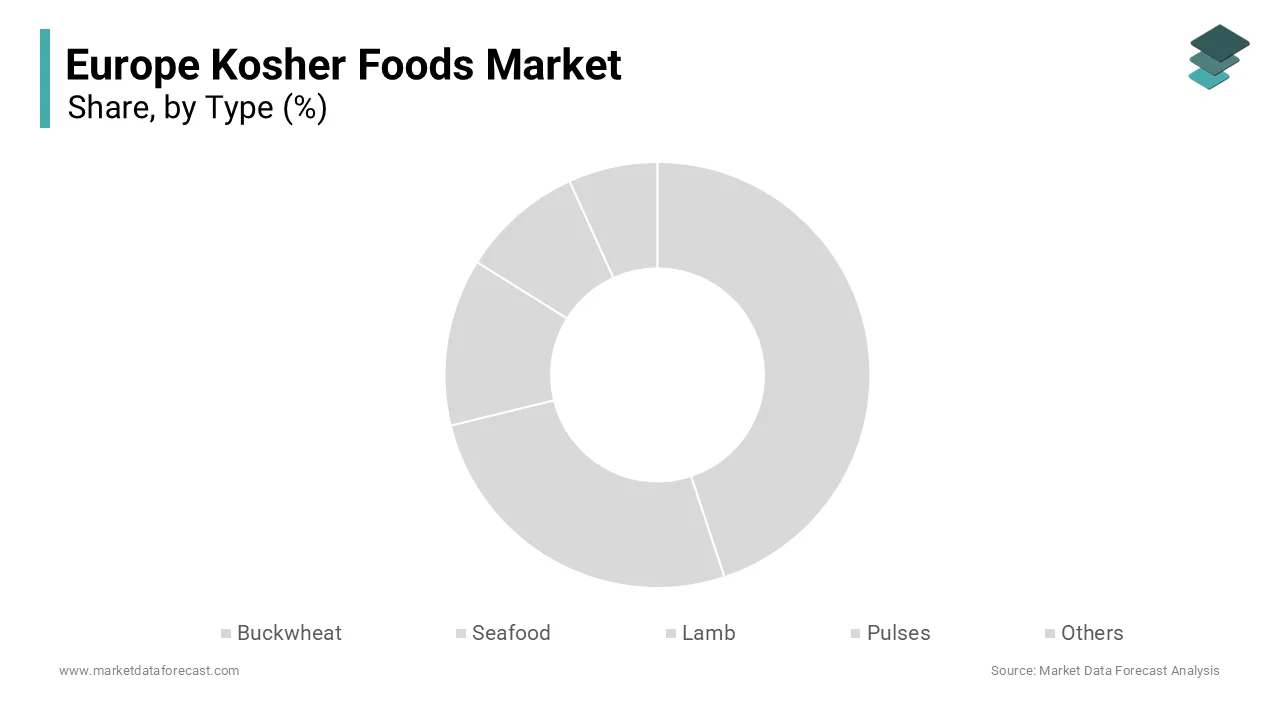
However, the seafood segment is projected to be the fastest-growing type within the Europe kosher foods market and is estimated to register a CAGR of 9.2% over the forecast period owing to the increasing consumer preference for healthy, lean proteins and the specific kosher advantages of fish as a pareve-compatible protein. The escalating health consciousness among both Jewish and non-Jewish European consumers who are actively seeking lean and heart-healthy protein sources rich in omega-3 fatty acids is further propelling the growth of the seafood segment in the European market. Fish naturally fits the kosher diet without the need for ritual slaughter, provided it has fins and scales, making it an inherently compliant and convenient option. According to the European Food Safety Authority, recommendations for increased fish consumption to prevent cardiovascular diseases have influenced dietary habits across the continent, which is benefiting the kosher sector where fish is a central component. For instance, European Jews increasingly incorporate fish into their diets several times a week, a figure that has risen steadily over the last decade. The perception of seafood as a premium yet healthy alternative to red meat aligns perfectly with modern wellness trends. Furthermore, the ability to consume fish with both dairy and pareve meals offers unparalleled culinary flexibility, encouraging its use in diverse recipes. Market observations from retail chains in the Netherlands and Scandinavia show that kosher-certified salmon and tuna have become leading protein categories. This alignment with health goals and dietary versatility positions seafood as the most dynamic growth engine in the market.
By Application Insights
The culinary products segment held the dominant position in the Europe kosher foods market in 2025 with 36.3% of the regional market share. The growth of the culinary products segment in the European market can be credited to the busy lifestyles of modern European families who seek convenient yet compliant solutions for daily dining. The intensifying demand for convenient meal solutions among working Jewish families who struggle to balance professional commitments with the time-intensive requirements of preparing kosher meals from scratch is further driving the dominance of the culinary products segment in the European market. The strict separation of meat and dairy and the need for thorough ingredient verification make home cooking laborious, creating a strong pull towards pre-prepared kosher options. According to the Institute for Jewish Policy Research, a large proportion of Jewish women in Western Europe are part of the workforce, significantly reducing the time available for traditional meal preparation. As per retail data in London and Paris, kosher ready-meals and sauce bases have shown consistent growth, correlating directly with rising employment rates. The availability of high-quality, microwaveable kosher dinners allows families to maintain dietary observance without sacrificing time or convenience. Furthermore, the proliferation of dual-income households has shifted consumption patterns towards quick-fix solutions that do not compromise on religious standards. Consumer behavior reports indicate that kosher households increasingly purchase ready-to-eat meals weekly, establishing culinary products as a staple category. This structural shift in lifestyle ensures the continued dominance of the culinary segment.
On the other hand, the dietary supplements segment is emerging as the fastest-growing application and is anticipated to record a CAGR of 11.4% over the forecast period owing to the intersection of the global wellness boom and the specific need for certified vitamins and nutraceuticals within the kosher community. The converging trend of heightened health awareness and the strict requirement for religious compliance in all ingested products, including pills and powders are further contributing to the expansion of the dietary supplements segment in the European market. Many conventional supplements contain gelatin capsules derived from non-kosher animals or use equipment shared with non-compliant substances, rendering them unsuitable for observant Jews. According to the European Federation of Associations of Dietitians, the uptake of vitamins and minerals in Europe has surged, yet a significant portion of the Jewish population remains underserved due to lack of certification. As per health surveys, kosher consumers actively seek certified supplements, creating a pent-up demand that is now being addressed by manufacturers. The perception that kosher certification ensures purity and absence of forbidden additives appeals strongly to health-conscious individuals beyond the Jewish community. Market reports highlight that kosher-certified omega-3, vitamin D, and probiotic supplements have gained significant traction in major European markets. As the wellness industry expands, the niche for certified products is growing proportionally faster, driven by a demographic that refuses to compromise on either health or faith.
By Distribution Channel Insights
The supermarkets and hypermarkets segment represented the leading distribution channel for the Europe kosher foods market by capturing 56.1% of the regional market share due to the one-stop shopping convenience they offer and the increasing integration of kosher sections into mainstream retail environments. The dominance of the supermarkets and hypermarkets segment in the European market is further driven by the consumer preference for consolidating grocery shopping into single trips, which is facilitated by the presence of dedicated kosher aisles within large retail chains. Observant families prefer to purchase both kosher-specific items and general household goods in one location to save time and effort. According to the European Retail Round Table, a majority of European households conduct their primary weekly shop at hypermarkets, making these venues the natural default for food procurement. Major retailers like Carrefour in France, Tesco in the UK, and Rewe in Germany have expanded their kosher offerings in response to localized demand, placing these sections prominently near fresh produce or international foods. As per footfall analytics, stores with well-stocked kosher sections see higher retention rates among Jewish customers, who are willing to travel longer distances to access these specific hubs. The ability of supermarkets to leverage their massive supply chains to keep prices competitive further enhances their appeal. Basket size studies show that kosher shoppers in hypermarkets spend more per visit compared to those in smaller specialty stores due to the breadth of available categories. This convenience and economic efficiency cement the position of supermarkets as the primary conduit for kosher food distribution.
However, the online stores segment is growing the fastest and is projected to expand at a CAGR of 15.4% over the forecast period owing to the digital transformation of grocery shopping, the ability to access a vast array of niche products, and the convenience of home delivery for heavy or bulky items. The unparalleled access it provides to a wide variety of niche, imported, and hard-to-find kosher products that are often unavailable in local physical stores is further contributing to the expansion of the online retail segment in the European market. Online platforms can stock thousands of SKUs from Israel, the US, and across Europe without the constraints of shelf space, catering to specific dietary needs and taste preferences. According to Digital Commerce 360, kosher consumers in Europe increasingly use online channels to source specific brands or items not carried by their local supermarket. The ability to search by certification agency, ingredient, or dietary restriction empowers consumers to make informed choices that match their strict religious standards. Market observations reveal that specialized kosher items such as wines, holiday foods, and gluten-free products perform significantly better online than in brick-and-mortar stores. Furthermore, online retailers often provide detailed product information and certification documents, building trust and reducing the anxiety of purchasing compliant goods. This depth of assortment and informational transparency makes online stores the preferred channel for discerning shoppers, which is driving exceptional growth rates.
REGIONAL ANALYSIS
France Kosher Foods Market Analysis
France dominated the kosher foods market in Europe in 2025 with 35.3% of the regional market share. The position of France in the European market is bolstered by hosting the largest Jewish population in Europe, concentrated heavily in Paris and surrounding regions, which creates a massive and consistent baseline demand for kosher products. The French market is characterized by a highly developed infrastructure of kosher bakeries, butchers, and supermarkets, with entire neighbourhoods dedicated to Jewish life and commerce. According to the Fund for Social Unity of the Jewish People, France is home to a large Jewish population, providing a critical mass that supports a diverse and competitive kosher industry. The presence of the Consistoire, one of the oldest and most respected certification bodies, ensures rigorous standards and wide availability of certified goods. Retail audits confirm that kosher sections in French hypermarkets are among the most extensive in the world, reflecting the mainstream integration of these products. Furthermore, the strong cultural emphasis on gastronomy in France extends to kosher cuisine, driving demand for high-quality wines, cheeses, and gourmet items. The government's recognition of Jewish holidays and the accommodation of dietary needs in public institutions further stabilize the market. This unique combination of demographic density, institutional support, and culinary excellence secures France's dominance as the central hub of the European kosher food landscape.
United Kingdom Kosher Foods Market Analysis
The United Kingdom had a promising share of the Europe kosher foods market in 2025. The growth of the UK in the European market is attributed to a highly organized community structure, particularly in London and Manchester, and a sophisticated retail environment that seamlessly blends kosher products into mainstream shopping. British kosher consumers benefit from the oversight of the London Beth Din, a globally recognized authority that certifies a vast array of domestic and imported products. As per the Board of Deputies of British Jews, the community is deeply integrated into British society, leading to high levels of acceptance and availability of kosher foods in major supermarket chains like Marks & Spencer and Sainsbury's. Industry reports highlight that the UK leads Europe in the innovation of kosher convenience foods and ready-meals, catering to the busy lifestyles of its urban population. The presence of numerous kosher restaurants, delis, and caterers further stimulates demand for high-quality ingredients. Additionally, the UK serves as a key entry point for kosher products from the Americas and Israel, leveraging its robust logistics networks. The combination of strong communal organization, retail innovation, and strategic trade positioning makes the UK a vital and dynamic pillar of the European market.
Germany Kosher Foods Market Analysis
Germany is anticipated to record a prominent CAGR in the Europe kosher foods market during the forecast period owing to a rapidly growing Jewish community and a strong commitment to supporting Jewish life following historical tragedies. The German market is characterized by significant government and societal efforts to rebuild Jewish infrastructure, including the expansion of kosher food availability in major cities like Berlin, Munich, and Frankfurt. According to the Central Council of Jews in Germany, the Jewish population has increased steadily due to immigration, driving a corresponding rise in demand for certified products. The market is supported by a network of specialized kosher butchers and bakeries, alongside increasing shelf space in mainstream retailers like Rewe and Edeka. Economic analyses confirm that the German kosher sector is experiencing strong growth, fueled by both the returning diaspora and interest from non-Jewish consumers seeking quality-assured foods. The country's strict food safety regulations align well with kosher standards, enhancing consumer trust. Furthermore, Germany acts as a logistical hub for distributing kosher goods to Eastern and Central Europe. The convergence of demographic recovery, societal support, and economic strength positions Germany as a crucial growth engine for the kosher market in Central Europe.
Belgium Kosher Foods Market Analysis
Belgium is estimated to showcase a healthy CAGR in the Europe kosher foods market over the forecast period by leveraging its strategic location and the presence of one of the most traditional and tightly knit Jewish communities in Europe, particularly in Antwerp. The Belgian market status is unique due to the high percentage of strictly observant residents who adhere to rigorous dietary laws, creating a demand for premium and traditionally certified products. According to community estimates, Antwerp hosts a significant proportion of Europe's Haredi population, driving a specialized market for high-quality kosher meat, poultry, and Passover supplies. The city is renowned for its diamond district, which supports a wealthy demographic willing to pay for top-tier kosher certifications. Local trade associations confirm that Belgium is a key importer and distributor of kosher foods to neighbouring countries. The presence of multiple competing certification bodies ensures a high level of scrutiny and variety. Furthermore, Belgium's central geography makes it an ideal distribution center for reaching France, the Netherlands, and Germany. The blend of deep religious tradition, economic affluence, and logistical advantage secures Belgium's position as a specialized and influential market within the region.
Netherlands Kosher Foods Market Analysis
The Netherlands is projected to witness a notable CAGR in the Europe kosher foods market over the forecast period. The Netherlands is distinguishing itself through a long history of Jewish tolerance and a modern, progressive approach to kosher consumption. The Dutch market status is characterized by a well-integrated Jewish community in Amsterdam and a retail sector that is highly responsive to diverse dietary needs. According to the Dutch Jewish Community, the population is active and engaged, with a strong preference for organic and sustainable kosher products that align with broader Dutch values. The market benefits from the presence of major food multinationals headquartered in the Netherlands, many of which obtain kosher certification for their export lines, increasing local availability. Retail scans confirm that Dutch supermarkets offer a wide range of kosher items, often indistinguishable from regular shelves due to high integration. The country's advanced logistics infrastructure facilitates efficient import and distribution of kosher goods from Israel and the US. Additionally, the Netherlands serves as a gateway for kosher products entering Northern Europe. The combination of historical inclusivity, corporate presence, and supply chain efficiency makes the Netherlands a dynamic and strategically important market for kosher foods in Northern Europe.
COMPETITIVE LANDSCAPE
The competition in the Europe kosher foods market is characterized by a dynamic mix of large multinational corporations and specialized niche producers who vie for dominance in a sector driven by strict religious adherence and growing quality consciousness. Major global players leverage their extensive resources and established distribution networks to maintain widespread availability while smaller regional brands compete by offering authentic traditional recipes and personalized service. The market sees intense rivalry in the premium segment where differentiation is achieved through superior ingredient quality, innovative flavor profiles, and impeccable certification credentials. New entrants often focus on specific dietary niches such as vegan kosher or allergen free products to carve out distinct positions against broader offerings. Established companies continuously invest in supply chain transparency and technology to ensure absolute compliance with Kashrut laws, which is paramount for maintaining consumer trust. The competitive landscape is further shaped by the increasing acceptance of kosher labels among non-Jewish consumers who view them as a mark of safety and purity. Success in this environment requires a delicate balance between honouring religious traditions, driving culinary innovation, and building strong emotional connections with diverse consumer groups through effective branding and community engagement.
KEY MARKET PLAYERS
Some of the notable key players in the Europe kosher foods market are
- Nestlé S.A.
- Unilever PLC
- General Mills Inc.
- Conagra Brands Inc.
- The Kraft Heinz Company
- Cargill Incorporated
- Mondelez International
- Kellogg Company
- The Hain Celestial Group Inc.
- Manischewitz Company
Top Players in the Market
- Strauss Group stands as a leading international food manufacturer with a profound impact on the Europe kosher foods market through its extensive portfolio of dairy, coffee, and water products. The company contributes significantly to the global sector by maintaining rigorous kosher certification standards across all its production lines, ensuring accessibility for observant consumers worldwide. In Europe, Strauss has strengthened its position by expanding its distribution networks in key markets like France and the United Kingdom to serve growing Jewish communities. Recent actions include the launch of new plant based dairy alternatives that carry reliable kosher pareve certification, catering to both religious and vegan demographics. The company actively invests in research and development to create innovative flavors and textures that appeal to modern tastes while adhering to strict dietary laws. By leveraging its strong brand reputation for quality and compliance, Strauss continues to drive growth and set benchmarks for excellence in the European kosher food industry.
- Osem Investments operates as a major force in the Europe kosher foods market, renowned for its diverse range of soups, snacks, pasta, and ready meals that adhere to strict Kashrut laws. The company contributes to the global market by exporting authentic Israeli and Mediterranean flavors to European consumers, bridging cultural culinary gaps with certified products. In Europe, Osem has focused on enhancing its supply chain efficiency to ensure consistent availability of fresh and dry kosher goods across major retail chains. Recent actions to strengthen their market position involve the introduction of gluten free and organic product lines that also carry kosher certification, addressing multiple dietary needs simultaneously. They have expanded partnerships with local distributors in Germany and the Netherlands to increase shelf presence in mainstream supermarkets. By prioritizing sustainability and ethical sourcing alongside religious compliance, Osem reinforces its commitment to quality. This dual focus allows the company to attract a broader consumer base beyond the Jewish community, solidifying its role as a key player in the evolving European food landscape.
- Lieber s Kosher serves as a prominent specialist in the Europe kosher foods market, offering a wide array of traditional Jewish foods including gefilte fish, matzah balls, and various condiments. The company contributes to the global market by preserving authentic recipes and making them accessible to diaspora communities through robust export channels. In Europe, Lieber s has strengthened its footprint by collaborating with major certification bodies to ensure every product meets the highest standards of kashrut, fostering deep trust among consumers. Recent actions include the modernization of packaging to extend shelf life and improve convenience for busy families without compromising tradition. They have also launched targeted marketing campaigns during Jewish holidays to boost visibility and sales in key regions like the United Kingdom and France. By focusing on heritage and authenticity while embracing modern manufacturing technologies, Lieber s maintains its status as a beloved brand. Their dedication to quality and cultural preservation ensures they remain a cornerstone of the European kosher food sector.
Top Strategies Used by Key Market Participants
Key players in the Europe kosher foods market primarily employ strategies focused on obtaining multiple certifications from respected rabbinical authorities to maximize consumer trust and market access across different countries. Companies are heavily investing in product innovation to develop health-conscious options such as organic, gluten free, and plant-based items that align with both kosher laws and modern wellness trends. Another major strategy involves expanding distribution channels by securing shelf space in mainstream supermarkets and hypermarkets alongside specialized kosher stores to reach a wider audience. Market participants are also leveraging digital platforms to educate consumers about kosher benefits and offer convenient online shopping experiences with home delivery services. Furthermore, firms are engaging in strategic partnerships with local suppliers to ensure a steady stream of certified raw materials and reduce logistical costs. Sustainability initiatives including eco-friendly packaging and ethical sourcing are increasingly used to appeal to environmentally conscious buyers. These combined approaches allow companies to navigate regulatory complexities and capture growth in a competitive landscape.
MARKET SEGMENTATION
This research report on the European kosher foods market has been segmented and sub-segmented based on categories.
By Type
- Buckwheat
- Seafood
- Lamb
- Pulses
- Others
By Application
- Culinary Products
- Snacks and Savory
- Bakery and Confectionery Products
- Meat
- Beverages
- Dietary Supplements
By Distribution Channel
- Supermarkets and Hypermarkets
- Grocery Stores
- Online Stores
By Country
- UK
- France
- Spain
- Germany
- Italy
- Russia
- Sweden
- Denmark
- Switzerland
- Netherlands
- Turkey
- Czech Republic
- Rest of Europe