- Product Description Description
- Table of Contents TOC
- List of Table & Figure LOT
- Get Free Sample PDF Sample PDF
Market Size, 2025
$2.24 BnMarket Estimate, 2026
$2.38 BnMarket Forecast, 2034
$3.72 BnCAGR, 2026–2034
6.25%Executive Summary: Europe Lentil Market
- Market Scope: Comprehensive Europe lentil market analysis covering product types, forms, end-use applications, regional leadership frameworks, and adoption metrics.
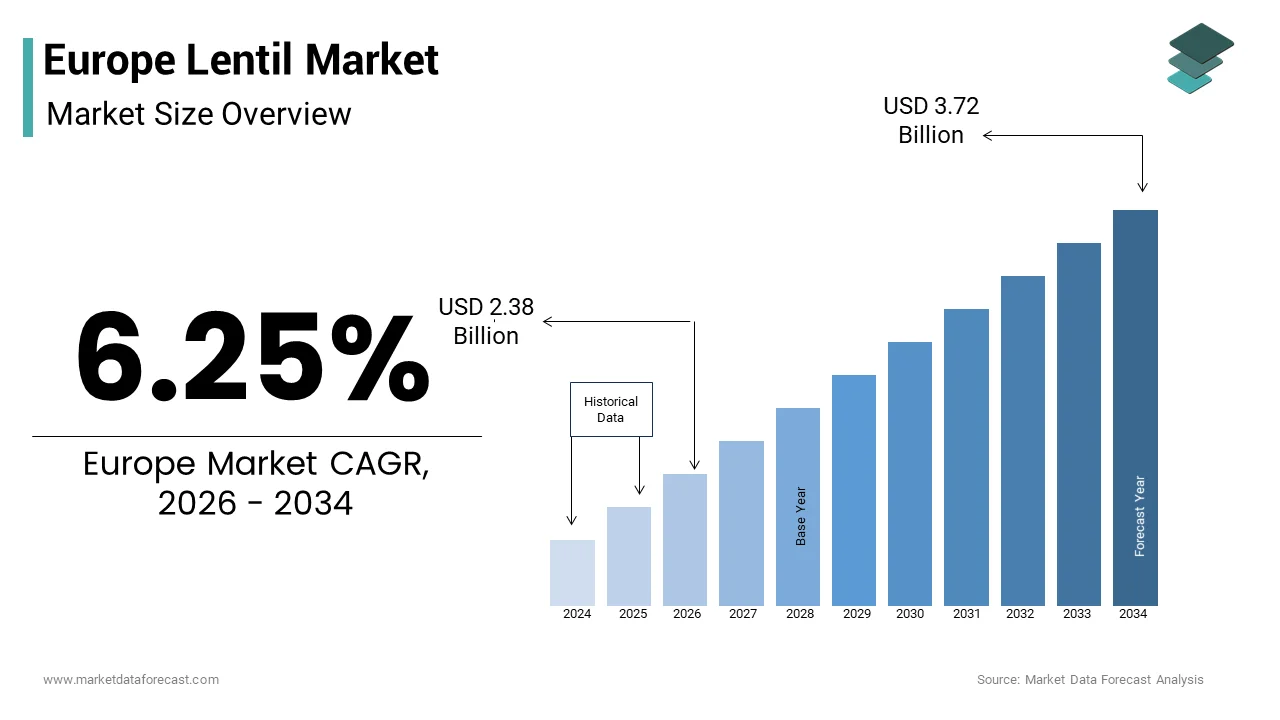
- Market Valuation: Valued at USD 2.24 billion (2025), estimated at USD 2.38 billion (2026), and projected to reach USD 3.72 billion by 2034, registering a robust CAGR of 6.25% (2026–2034).
- Primary Growth Drivers: Rising adoption of plant-based and flexitarian diets, regulatory incentives supporting sustainable agriculture and protein-crop cultivation, and growing consumer demand for convenient, nutritious, and value-added lentil products. Key market trends include expanding organic and specialty varieties, lentil-based meat alternatives, ready-to-eat items, and innovative applications of lentil flour and protein isolates.
Key Market Segment Metrics (2026–2034)
| Category | Leading Segment (2025 Position) | Fastest-Growing Segment |
|---|---|---|
| By Type | Red lentils (accounted for 48.1% of Europe lentil market share in 2025) | Black and brown lentils (projected to grow at the fastest CAGR of 8.5%) |
| By Form | Dried and whole lentils (held a significant dominant market share in 2025) | Lentil flour and protein isolates (projected to expand at a CAGR of 11.2%) |
| By End Use | Food and beverage (held the largest market share at 32.8% in 2025) | Industrial and others (projected to record the fastest CAGR of 9.8%) |
| By Region | France (led the regional market with a 33.4% share in 2025, followed by Germany at 20.2%) | Germany & emerging European markets (driven by robust adoption of plant-based foods and sustainable agriculture policies) |
Major Market Players & Market Structure
Market Structure: Highly competitive European pulse and lentil supply landscape featuring major international agricultural traders, food processors, and ingredient innovators competing on sustainable sourcing, high-purity protein fractions, organic varieties, and expansive distribution networks.
Key Companies: AGT Food and Ingredients, Cargill, Archer Daniels Midland (ADM), Simpson Seeds, Scoular Company, Agrocorp International Inc, Bühler Group, ETG (Export Trading Group), Louis Dreyfus Company, Ingredion Incorporated, Murad Foods, Saskcan Pulse Trading, and Eston Lentil Processors.
Europe Lentil Market Size
The Europe lentil market size was valued at USD 2.24 billion in 2025 and is anticipated to reach a valuation of USD 2.38 billion in 2026 and USD 3.72 billion in 2034, growing at a CAGR of 6.25%, from 2026 to 2034.
Introduction to the Europe Lentil Market
Lentils are valued for their high protein content, rich fiber profile, and ability to fix atmospheric nitrogen by making them essential for both human nutrition and soil health regeneration. In recent years, the European Union has intensified efforts to reduce dependency on imported plant proteins by promoting domestic pulse production. The European Green Deal and the Farm to Fork strategy explicitly target an increase in the cultivation of protein crops to enhance agricultural biodiversity and reduce carbon footprints. Consumer dietary shifts toward plant-based nutrition have further accelerated demand, with lentils becoming a staple in vegetarian and vegan diets across the continent. According to Eurostat, the area harvested for lentils in the European Union has shown gradual expansion, although it remains modest compared to other cereals. The integration of lentils into modern culinary trends, such as meat alternatives and ready to eat meals that promotes their growing relevance.
MARKET DRIVERS
Escalating Adoption of Plant Based Diets and Flexitarian Lifestyles
The widespread adoption of plant-based diets and flexitarian lifestyles is the primary factor bolstering the growth of the Europe lentil market. Consumers are increasingly reducing their intake of animal derived proteins due to health concerns, ethical considerations, and environmental awareness. As per the study, the number of individuals identifying as vegetarian or vegan in the European Union has risen significantly, with estimates suggesting that up to 10% of the population now follows a plant based diet. Lentils are favored for their high protein density, containing approximately 25 grams of protein per 100 grams of dry weight, making them an ideal substitute for meat. The versatility of lentils allows them to be incorporated into diverse dishes, from traditional soups in Mediterranean countries to modern burgers and patties in Northern Europe. Retailers have responded by expanding their ranges of lentil based products, including pre cooked packs and seasoned varieties, to cater to time constrained consumers. Public health campaigns promoting the benefits of pulse consumption have further reinforced this trend. The rise of food service establishments offering plant-based menus has also contributed to increased lentil consumption outside the home.
Regulatory Incentives for Sustainable Agriculture and Protein Crop Cultivation
The strong regulatory incentives for sustainable agriculture and protein crop cultivation is significantly promoting the growth of the Europe lentil market. The European Union’s Common Agricultural Policy provides direct payments and eco scheme rewards to farmers, who cultivate protein crops, including lentils, to improve soil health and reduce reliance on synthetic fertilizers. As per the European Environment Agency, legumes like lentils can fix up to 100 kilograms of nitrogen per hectare, substantially lowering the need for chemical inputs and reducing greenhouse gas emissions associated with fertilizer production. The Farm to Fork strategy aims to increase the share of organic farming to 25% of total agricultural land by 2030, creating a favorable environment for lentil production which aligns well with organic practices. National governments in countries, such as France and Germany have implemented specific action plans to boost domestic lentil outputby offering technical support and financial grants to encourage farmers to include lentils in their crop rotations. These policy measures help mitigate the economic risks associated with transitioning to new crops and enhance the profitability of lentil farming. The alignment of lentil cultivation with broader sustainability goals, such as biodiversity conservation and water protection, further strengthens regulatory support.
MARKET RESTRAINTS
High Dependency on Imports and Supply Chain Volatility
The high dependency on imports and supply chain volatility is impeding the growth of the Europe lentil market. Despite efforts to increase domestic production, Europe relies heavily on imports to meet its consumption needs, with Canada and Turkey being the primary suppliers. As per data, fluctuations in global harvests due to climate change events, such as droughts in Canada or political instability in exporting regions can lead to sudden price spikes and supply shortages. The logistical challenges associated with long distance transportation, including shipping delays and increased freight costs, further exacerbate supply chain vulnerabilities. Recent geopolitical tensions have disrupted trade routes and increased energy costs by impacting the affordability and availability of imported lentils. Domestic production faces challenges related to variable yields caused by unpredictable weather patterns, limiting the ability to fully replace imports. Small scale European farmers often struggle to compete with the lower production costs of large scale exporters, which is hindering the growth of local supply. These structural weaknesses create uncertainty for processors and retailers, leading to inconsistent product availability and pricing.
Consumer Perception Issues and Preparation Convenience Barriers
Consumer perception issues and preparation convenience barriers is additionally inhibiting the growth of the Europe lentil market. Many consumers still perceive lentils as time consuming to prepare, requiring soaking and long cooking times, which conflicts with the fast-paced modern lifestyle. Additionally, some consumers associate lentils with digestive discomfort such as bloating, which discourages regular inclusion in their diets. In Northern and Central European countries, where lentils are not traditionally central to the cuisine, there is a lack of familiarity with diverse varieties and cooking methods. This cultural gap limits culinary experimentation and repeat purchases. Although ready to eat options are available, they often carry a premium price tag that deters budget conscious shoppers. The perception of lentils as bland or monotonous further hinders their appeal among younger demographics who prefer varied and flavorful meal options. Marketing efforts have historically focused more on convenience foods than on educating consumers about the versatility and ease of preparing modern lentil varieties.
MARKET OPPORTUNITIES
Expansion of Value Added Lentil Based Product Innovations
The expansion of value-added lentil based product innovations is to create new opportunities for the growth of the Europe lentil market. Food manufacturers are increasingly developing convenient and appealing products such as lentil pasta, crackers, snacks, and ready to eat meals to meet consumer demand for healthy and easy options. Lentil flour is being used to fortify baked goods and pasta, enhancing their protein and fiber content, while maintaining a gluten free status. The development of extruded lentil snacks offers a healthier alternative to traditional potato chips by appealing to health conscious consumers. Retailers are introducing private label lines of marinated and seasoned lentils, providing variety and flavor diversity that encourages trial and repeat purchases. The use of advanced processing technologies allows for the creation of lentil-based meat analogs with improved texture and taste, catering to the flexitarian demographic. Collaborations between agricultural producers and food tech startups facilitate the development of specialized lentil varieties optimized for processing. This synergy between agriculture and food technology creates new value chains and revenue streams for lentil growers.
Growth in Organic and Specialty Lentil Varieties
The growth in organic and specialty lentil varieties is also to elevate the growth of the Europe lentil market. Consumers are increasingly seeking organic produce due to concerns about pesticide residues and environmental sustainability, driving demand for certified organic lentils. As per Eurostat, the area under organic cultivation in the European Union has increased steadily, with pulses representing a growing share of this expansion. Specialty , such as Puy lentils from France and Beluga lentils from Italy command premium prices due to their unique flavors and textures, appealing to gourmet consumers and high end restaurants. The Protected Geographical Indication status for certain regional lentil varieties enhances their value and protects local producers from competition. The trend toward clean label products supports the growth of organic lentils, as consumers prefer minimally processed and naturally grown ingredients. Export opportunities for European specialty lentils to other global markets also provide additional revenue streams. The focus on biodiversity and heritage crops aligns with consumer interest in sustainable and ethically sourced food.
MARKET CHALLENGES
Climate Change Impact on Yield Stability and Quality
Climate change is affecting yield stability and crop quality, which is likely to pose as a major challenge for the growth of the Europe lentil market. Lentils are sensitive to extreme weather conditions such as heatwaves, droughts, and heavy rainfall, which are becoming more frequent in Europe. As per the study, rising temperatures can disrupt the flowering and pod setting stages of lentil crops, leading to significant yield reductions and inferior grain quality. Drought stress particularly affects rain fed lentil production in Southern Europe, where water scarcity is a growing concern. Conversely, excessive rainfall in Northern regions can cause waterlogging and increase the prevalence of fungal diseases such as root rot and anthracnose. These climatic variations make it difficult for farmers to predict harvest outcomes and plan production schedules. The lack of resilient crop varieties adapted to changing climatic conditions exacerbates the problem. Insurance costs for farmers are rising due to increased risk exposure, impacting profitability. The variability in supply affects downstream processors and retailers, leading to price volatility and potential shortages. Adapting to climate change requires substantial investment in irrigation infrastructure, breeding programs for drought tolerant varieties, and sustainable farming practices.
Limited Processing Infrastructure and Technical Expertise
The limited processing infrastructure and technical expertise is also a challenge for the growth of the Europe lentil market. Unlike cereals and oilseeds, which have well established processing networks, the lentil sector lacks sufficient facilities for cleaning, splitting, milling, and protein extraction. Many European countries rely on exporting raw lentils and importing processed products, resulting in lost economic value and job opportunities. The absence of specialized processing equipment tailored to different lentil types hinders the development of high value ingredients, such as flours, starches, and isolates. Technical expertise in optimizing processing parameters to maintain nutritional quality and functional properties is scarce. Small scale processors face high capital costs for acquiring advanced machinery, limiting their ability to compete with larger international players. The fragmentation of the supply chain, with numerous small producers and limited coordination, further complicates the establishment of efficient processing hubs. Regulatory requirements for food safety and quality add complexity to processing operations, requiring rigorous testing and certification. The lack of standardized protocols for lentil processing leads to inconsistencies in product quality, affecting consumer trust.
REPORT COVERAGE
| REPORT METRIC | DETAILS |
| Market Size Available | 2025 to 2034 |
| Base Year | 2025 |
| Forecast Period | 2026 to 2034 |
| CAGR | 6.25% |
| Segments Covered | By Type, Form, End-Use, By Country |
| Various Analyses Covered | Global, Regional & Country Level Analysis; Segment-Level Analysis, DROC, PESTLE Analysis, Porter’s Five Forces Analysis, Competitive Landscape, Analyst Overview of Investment Opportunities |
| Regions Covered | UK, France, Spain, Germany, Italy, Russia, Sweden, Denmark, Switzerland, Netherlands, Turkey, Czech Republic,c & Rest of Europe |
| Market Leaders Profiled | AGT Food and Ingredients, Cargill, Archer Daniels Midland (ADM), Simpson Seeds, Scoular Company, Agrocorp International Inc, Bühler Group, ETG (Export Trading Group), Louis Dreyfus Company, Ingredion Incorporated, Murad Foods, Saskcan Pulse Trading, Eston Lentil Processors |
SEGMENTAL ANALYSIS
By Type Insights
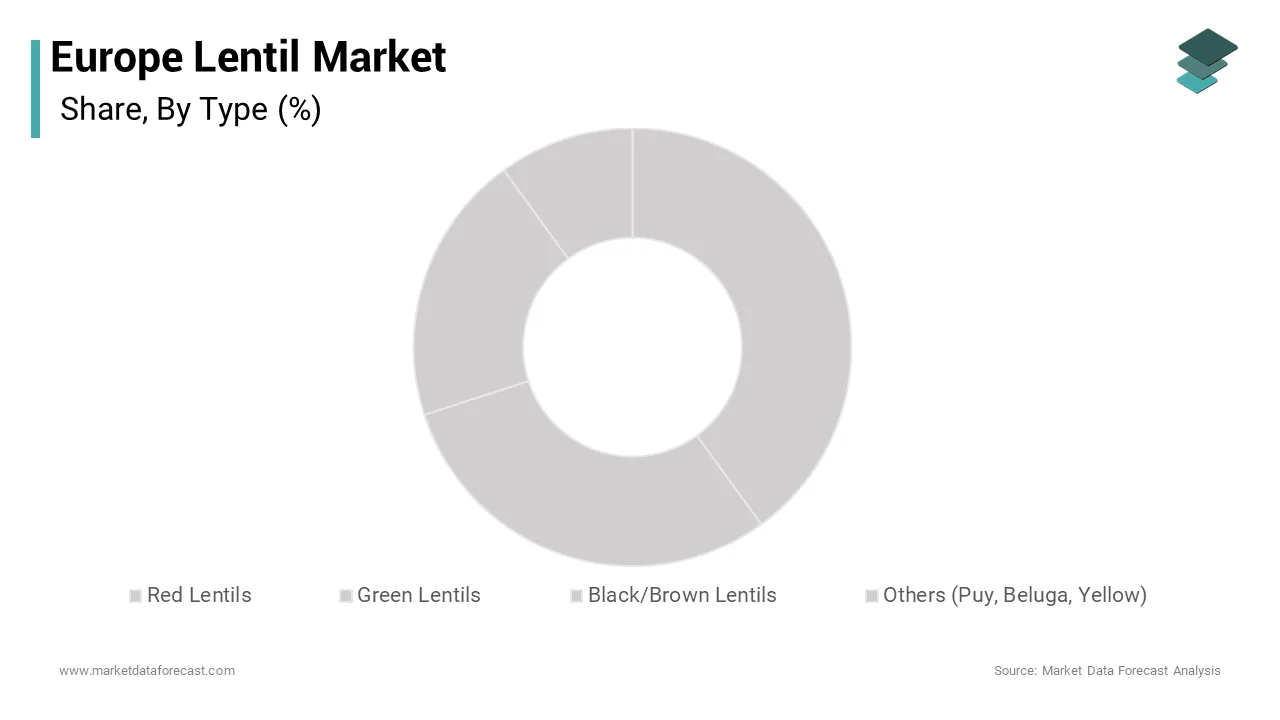
The red lentils segment was accounted in holding 48.1% of the Europe lentil market share in 2025 due to their rapid cooking time, mild flavor, and versatility in various culinary applications. This segment includes split red lentils, which are widely used in soups, stews, purees, and increasingly in plant based meat alternatives. The consumer preference for convenience and ease of preparation, as red lentils do not require soaking and cook within 15 to 20 minutes. The red lentils account for a significant portion of global lentil trade, with Europe being a major importer due to limited domestic production of this specific variety. The popularity of Indian and Middle Eastern cuisines in Europe has further boosted demand, as red lentils are a staple ingredient in dishes such as dal and hummus. Retailers stock red lentils extensively in both conventional and organic formats, ensuring wide accessibility. The food industry favors red lentils for processing into flours and protein isolates due to their high solubility and neutral taste profile. The affordability of red lentils compared to other pulse varieties also contributes to their widespread adoption among budget conscious consumers.
The black and brown lentils segment is likely to grow at a fastest CAGR of 8.5% from 2026 to 2034 owing to the increasing popularity of gourmet and specialty cuisines, as well as the perception of these varieties as premium health foods. Black lentils, also known as Beluga lentils, and brown lentils retain their shape after cooking by making them ideal for salads, side dishes, and upscale restaurant menus. Consumers are drawn to their rich, earthy flavor and firm texture, which offer a sophisticated dining experience compared to softer varieties. The rise of foodie culture and social media influence has introduced European consumers to diverse lentil preparations, driving demand for unique and visually appealing ingredients. Retailers are expanding their offerings of specialty lentils, including organic and heritage varieties, to cater to discerning shoppers. The nutritional profile of black and brown lentils, which is high in antioxidants and fiber, aligns with the growing focus on functional foods. Chefs and home cooks appreciate the culinary versatility of these lentils, using them in warm salads, grain bowls, and vegetarian mains.
By Form Insights
The dried and whole lentils segment held a significant share of the Europe lentil market in 2025 with their long shelf life, cost effectiveness, and traditional usage in household cooking. This form includes whole red, green, brown, and black lentils that are sold in bulk or packaged bags. Consumers prefer dried lentils for their affordability and flexibility in portion control, allowing them to cook according to their needs. As per data, dried lentils account for the majority of lentil sales in European supermarkets, supported by their presence in both conventional and organic aisles. The familiarity of dried lentils in traditional European cuisines, particularly in Southern countries that ensures steady demand. Households value the ability to store dried lentils for extended periods without refrigeration, reducing food waste and ensuring pantry stability. The lower price point of dried lentils compared to processed forms makes them accessible to a broad demographic, including budget conscious families. Retailers promote dried lentils through multi pack offers and staple food promotions, driving volume sales. The simplicity of dried lentils appeals to consumers who prefer minimally processed ingredients and enjoy the cooking process.
Fastest Growing Segment: Lentil Flour & Protein Isolates
Lentil flour and protein isolates are the fastest growing segment in the Europe lentil market, projected to expand at a compound annual growth rate of 11.2% from 2026 to 2033. This rapid growth is driven by the booming plant based food industry and the demand for gluten free alternatives in baking and snacking. Lentil flour is used to fortify bread, pasta, and crackers, enhancing their nutritional profile while maintaining a gluten free status. Protein isolates are essential ingredients in meat analogs, protein bars, and beverages, offering a clean and sustainable protein source. As per industry reports, the number of new product launches featuring lentil protein in Europe has increased significantly, reflecting manufacturer confidence in this ingredient. The neutral flavor and high solubility of lentil isolates make them versatile for various applications. Consumer interest in high protein, low carbohydrate diets further accelerates demand for lentil derived ingredients. Food technologists are innovating with lentil flour to improve texture and moisture retention in baked goods.
By End Use Insights
The food and beverage segment was the largest by holding 32.8% of the Europe lentil market share in 2025 with the direct human consumption in households and the food service industry. Lentils are a staple ingredient in soups, salads, curries, and side dishes across European cuisines. As per consumption data, the majority of lentils purchased in Europe are intended for direct human consumption, reflecting their role as a primary source of plant-based protein. The versatility of lentils allows them to be used in both traditional and modern culinary applications, ensuring broad appeal. Retailers dedicate significant shelf space to lentil products, ranging from bulk bins to premium packaged varieties. The food service sector, including restaurants and cafes, incorporates lentils into menus to cater to vegetarian and vegan customers. The rise of meal kit services has further boosted lentil consumption, as these platforms often feature lentil based recipes for their ease of preparation and nutritional value. Consumer awareness of the health benefits of lentils reinforces their position as a dietary staple. The cultural significance and status of lentils as a dietary staple are primary drivers for the dominance of the food and beverage segment.
The industrial and others segment is projected to witness a fastest CAGR of 9.8% from 2026 to 2034 with the increasing use of lentil derivatives in non-food applications such as cosmetics, pharmaceuticals, and biodegradable plastics. Lentil starch and protein are being explored for their functional properties in personal care products, offering natural and sustainable alternatives to synthetic ingredients. The pharmaceutical industry utilizes lentil extracts for their potential health benefits and bioactive compounds. As per research, the demand for bio based materials is rising, with lentil biomass being investigated for use in packaging and composite materials. The circular economy model encourages the utilization of lentil byproducts, reducing waste and creating new value streams. Innovations in biotechnology are unlocking new applications for lentil components, attracting investment from diverse industries. This diversification beyond food uses positions the industrial segment as a high growth area, leveraging the multifunctional nature of lentils to meet sustainability and performance requirements in various sectors.
COUNTRY LEVEL ANALYSIS
France Lentil Market Analysis
France was the top performer in the Europe lentil market by holding 33.4% of share in 2025 with its high-quality specialty lentils, such as the Green Lentil of Le Puy. The country is a significant producer and consumer of lentils, with a strong culinary tradition that values local and authentic ingredients. As per data, France has implemented policies to support pulse cultivation, aiming to reduce protein crop imports. French consumers prefer premium lentil varieties for their superior taste and texture, driving demand for protected geographical indication products. The restaurant sector in France features lentil dishes prominently, reflecting their cultural importance. Retailers offer a wide range of conventional and organic lentils, catering to diverse consumer preferences. The export of French specialty lentils to other European countries adds to the market value. Government initiatives promote sustainable farming practices, encouraging the use of lentils in crop rotation. The focus on quality and origin distinguishes the French market, with consumers willing to pay for superior products.
Germany Lentil Market Analysis
Germany lentil market was positioned second by occupying 20.2% of the share in 2025 with the high demand for plant-based proteins and organic products. The country has a large vegetarian and vegan population, driving substantial consumption of red, green, and brown lentils. Germany is one of the largest contributors for plant based food products in Europe, with lentils serving as key ingredients. German retailers have expanded their organic lentil offerings, responding to consumer preference for sustainable and chemical free foods. The food industry in Germany invests heavily in research and development of lentil-based alternatives to meat and dairy. Domestic production of lentils is increasing, supported by government initiatives to promote sustainable agriculture. However, Germany still relies on imports to meet its high demand, particularly for red lentils. The strong logistical infrastructure in Germany facilitates efficient distribution of lentils across the country and to other European markets. Consumer awareness campaigns promote the health benefits of lentils, encouraging regular consumption.
Spain Lentil Market Analysis
Spain lentil market is likely to have prominent growth opportunities in coming years with a leading producer of high quality lentils, particularly in regions like Castilla y Leon. The country’s climate and traditional farming practices support the cultivation of diverse lentil varieties, including the prized Pardina lentil. As per production data, Spain is a top exporter of lentils in the European Union, supplying both domestic and international markets. Spanish consumers have a long standing tradition of consuming lentils in stews and salads by ensuring steady domestic demand. The quality of Spanish lentils is highly regarded, with several varieties holding protected geographical indication status. The Spanish government supports lentil farmers through subsidies and research programs aimed at improving yield and disease resistance. The export sector benefits from Spain’s strategic location and trade agreements with other European countries. Retailers in Spain offer a diverse range of local and imported lentils, catering to evolving consumer tastes.
Italy Lentil Market Analysis
Italy is a significant contributor to the Europe lentil market, known for its high-quality specialty lentils and strong culinary heritage. The country produces renowned varieties, such as the Lentil of Castelluccio and the Brown Lentil of Altamura, which are prized for their flavor and texture. As per reports, Italy has seen a resurgence in lentil cultivation, driven by consumer interest in traditional and healthy foods. Italian consumers value locally sourced and authentic products, supporting small scale farmers and cooperatives. The restaurant industry in Italy incorporates lentils into classic dishes, maintaining their cultural relevance. Retailers emphasize the origin and quality of lentils, appealing to discerning shoppers. The Italian government promotes sustainable farming practices, encouraging the use of lentils in crop rotation to improve soil fertility. Export of premium Italian lentils to other European countries adds to the market value.
United Kingdom Lentil Market Analysis
The United Kingdom lentil market growth is likely to grow with the rising health consciousness and the popularity of plant-based diets. The UK has a growing number of vegetarians and vegans, increasing demand for red, green, and brown lentils. As per statistics, sales of lentil-based products have increased significantly in recent years, with retailers expanding their ranges. Domestic production of lentils is modest, with the UK relying heavily on imports from Canada and Turkey. The food service sector in the UK offers diverse lentil based meals, reflecting changing dietary preferences. Government initiatives promote sustainable agriculture, encouraging farmers to grow more protein crops. Consumer education campaigns highlight the environmental and health benefits of lentils. The strong presence of major supermarket chains facilitates wide distribution and accessibility. The trend toward convenience drives sales of ready to eat lentil products.
Turkey Lentil Market Analysis
Turkey lentils market growth is likely to grow with its favorable climate and agricultural heritage. The country produces a wide variety of lentils, including red and green types, which are integral to Turkish cuisine. As per data, Turkey supplies fresh and dried lentils to many European countries, leveraging its geographical proximity and competitive production costs. Domestic consumption is high, with lentils featuring prominently in traditional dishes, such as soups and pilafs. The Turkish market is seeing a gradual shift toward modern retail formats, with supermarkets expanding their fresh produce sections. Organic farming is gaining momentum, driven by export demand and growing local awareness. The government supports the agricultural sector through subsidies and infrastructure improvements. Turkey’s role as a bridge between Europe and Asia facilitates trade and knowledge exchange in agricultural practices. The abundance of arable land and favorable weather conditions allow for multiple harvests per year.
KEY MARKET PLAYERS
A few of the dominating market players that are in the Europe lentil market
- AGT Food and Ingredients
- Cargill
- Archer Daniels Midland (ADM)
- Simpson Seeds
- Scoular Company
- Agrocorp International Inc
- Bühler Group
- ETG (Export Trading Group)
- Louis Dreyfus Company
- Ingredion Incorporated
- Murad Foods
- Saskcan Pulse Trading
- Eston Lentil Processors
Top Players In The Market
- Agrocorp International Inc plays a pivotal role in the European lentil sector by facilitating large scale trade and distribution of high-quality pulses. The company sources red, green, and brown lentils from global producers to supply European manufacturers and retailers. Recent initiatives, include expanding its logistics network in Northern Europe to ensure faster delivery times and reduced carbon emissions. Agrocorp has invested in advanced cleaning and sorting facilities to meet stringent European food safety standards. The company actively collaborates with local farmers to promote sustainable cultivation practices and secure reliable supply chains. By focusing on traceability and quality assurance, Agrocorp strengthens trust among business partners and consumers. Its strategic partnerships with food processors enable the development of customized lentil ingredients for plant-based products.
- Louis Dreyfus Company is a major contributor to the Europe lentil market through its extensive agricultural origination and processing capabilities. The company manages a robust supply chain for various lentil varieties, supporting both domestic consumption and export activities across the continent. Recently, Louis Dreyfus has strengthened its position by investing in protein extraction technologies to cater to the growing demand for plant based ingredients. The company emphasizes sustainability by working closely with farmers to implement regenerative agriculture practices that improve soil health. It has also expanded its storage infrastructure to mitigate supply chain disruptions and ensure year round availability. Louis Dreyfus engages in strategic collaborations with research institutions to develop improved lentil varieties.
- Scoular Company maintains a strong presence in the European lentil market by specializing in the sourcing and merchandising of dry lentils. The company leverages its global network to provide consistent quality and volume to European buyers. Scoular has focused on developing value added services such as custom blending and packaging to meet specific client requirements. The company actively promotes the benefits of pulse crops to farmers by encouraging increased production in key European regions. By prioritizing customer service and supply chain reliability, Scoular builds long term relationships with processors and retailers. Its investment in sustainable sourcing initiatives aligns with European regulatory expectations and consumer preferences.
Top Strategies Used By The Key Market Participants
Key players in the Europe lentil market primarily employ vertical integration strategies to control supply chains and ensure product quality. Companies invest heavily in sustainable farming practices to meet regulatory requirements and consumer expectations for eco-friendly products. Innovation in processing technology is an important strategy to extract high value proteins and create diverse ingredient options. Strategic partnerships with local farmers help secure consistent supply and support regional economies. Diversification into organic and specialty lentil varieties allows companies to capture higher margins and appeal to niche markets. Digital transformation through supply chain tracking enhances transparency and builds consumer trust. Marketing campaigns focusing on health benefits and culinary versatility drive consumer engagement. Expansion into online retail channels increases accessibility and convenience for shoppers.
COMPETITIVE LANDSCAPE
The competition in the Europe lentil market is characterized by a mix of global trading houses and specialized regional processors vying for market influence. Large multinational corporations leverage their extensive distribution networks and financial resources to dominate bulk trading and ingredient supply. Local producers compete on the basis of quality sustainability and unique regional varieties that appeal to discerning consumers. The market exhibits moderate fragmentation with numerous small and medium sized enterprises contributing to supply diversity. Competitive intensity is driven by the increasing consumer demand for organic and sustainably sourced lentils. Companies differentiate themselves through innovative processing solutions that enhance nutritional value and functional properties. Price competition remains significant but is often secondary to quality and reliability assurances. Strategic alliances between growers and retailers facilitate efficient supply chains and reduce logistical costs. The rise of private label brands by supermarket chains adds pressure on branded manufacturers to offer superior value.
MARKET SEGMENTATION
This research report on the Europe lentil market is segmented and sub-segmented into the following categories.
By Type
- Red Lentils
- Green Lentils
- Black/Brown Lentils
- Others (Puy, Beluga, Yellow)
By Form
- Dried/Whole Lentils
- Split Lentils
- Lentil Flour & Protein Isolates
By End Use
- Food & Beverage
- Animal Feed
- Industrial & Others
By Country