- Product Description Description
- Table of Contents TOC
- List of Table & Figure LOT
- Get Free Sample PDF Sample PDF
Market Size, 2025
$1.30 BnMarket Estimate, 2026
$1.40 BnMarket Forecast, 2034
$2.49 BnCAGR, 2026–2034
7.47%Europe Lollipop Market Size, Growth, Trends & Forecast (2026–2034)
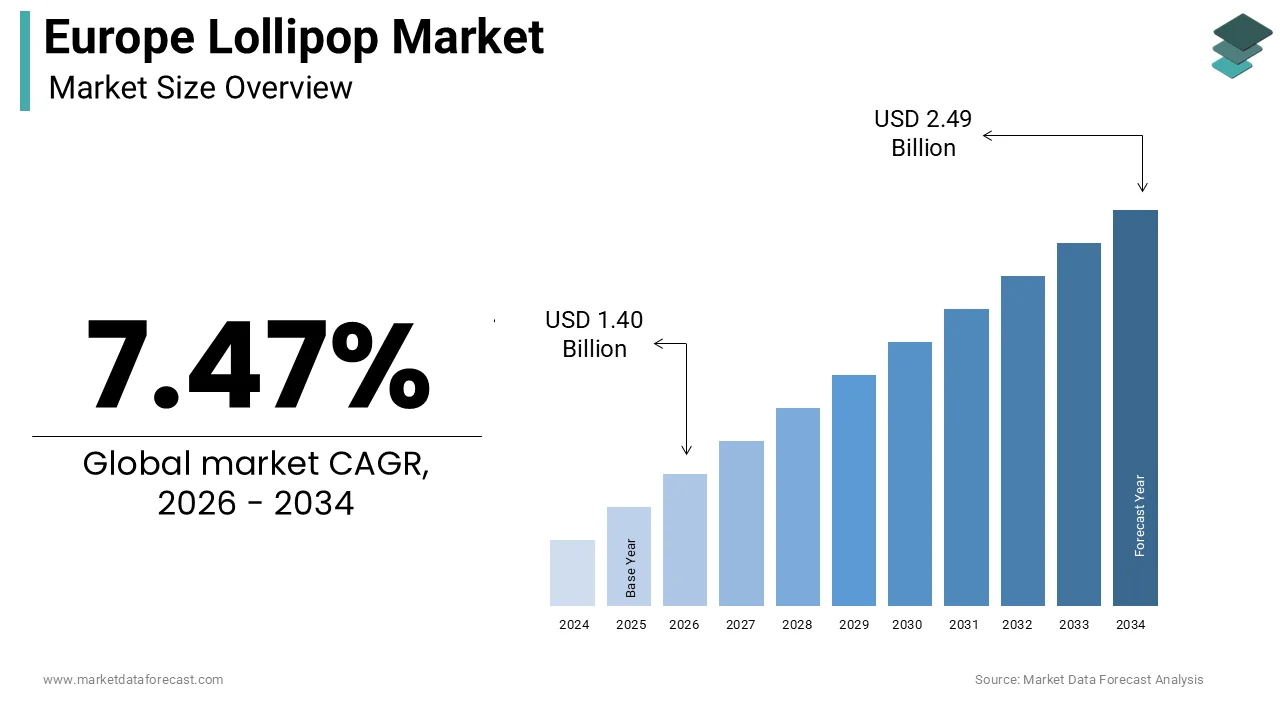
The Europe lollipop market size was calculated to be USD 1.30 billion in 2025, is anticipated to be worth USD 1.40 billion in 2026, and is projected to reach USD 2.49 billion by 2034, growing at a compound annual growth rate (CAGR) of 7.47% during the forecast period from 2026 to 2034. Driven by the integration of functional ingredients and medicinal benefits, tourism-driven demand for artisanal and heritage confectionery, and rising consumer interest in organic and clean-label variants, the regional market continues to expand dynamically.
Key Executive Metrics (At-a-Glance)
- 2025 Base Valuation: USD 1.30 Billion
- 2026 Current Valuation: USD 1.40 Billion
- 2034 Forecast Valuation: USD 2.49 Billion
- Compound Annual Growth Rate (CAGR): 7.47% (2026–2034)
- Dominant Product Type Segment: Hard Lollipop (holding 66.4% market share in 2025 due to traditional longevity, slow dissolution, and cost structure)
- Fastest-Growing Product Type Segment: Soft Lollipop (projected to register a 10.5% CAGR driven by gummy confectionery preferences and novel textures)
- Dominant Flavor Segment: Fruit-Flavored (capturing 74.4% market share in 2025 owing to universal taste appeal and natural fruit associations)
- Fastest-Growing Flavor Segment: Chocolate-Flavored (anticipated to expand at an 11.5% CAGR fueled by premiumization and European chocolate heritage)
- Dominant Distribution Channel Segment: Supermarkets and Hypermarkets (leading with 56.5% share in 2025 via weekly grocery routines and impulse placements)
- Fastest-Growing Distribution Channel Segment: Online Retail (predicted to record a 14.4% CAGR through digital procurement, subscriptions, and niche availability)
- Dominant Country Market: Germany (holding 22.7% market share in 2025 backed by large manufacturing base and functional sweet acceptance)
Core Market Drivers
- Functional & Medicinal Integration: Transitioning lollipops into effective delivery vehicles for vitamins, minerals, and sore throat remedies.
- Tourism & Gifting Culture: Resurgence of international travel driving demand for artisanal, locally-sourced, and heritage-branded sweet souvenirs.
Primary Market Restraints & Challenges
- Regulatory & Sugar Reduction Pressure: Strict EU labeling guidelines, front-of-pack warnings, and sugar taxes aimed at combatting childhood obesity and dental issues.
- Health Consciousness & Competition: Parental restrictions on sugary snacking and intense competition from healthier snack alternatives like protein bites and dried fruit.
Europe Lollipop Market Segmentation Breakdown
| Segment Category | Leading Sub-Segment (Base/Current) | Fastest-Growing Sub-Segment |
|---|---|---|
| By Product Type | Hard Lollipop (66.4% share in 2025) | Soft Lollipop (10.5% CAGR) |
| By Flavor | Fruit-Flavored (74.4% share in 2025) | Chocolate-Flavored (11.5% CAGR) |
| By Distribution Channel | Supermarkets & Hypermarkets (56.5% share) | Online Retail (14.4% CAGR) |
| By Region / Country | Germany (22.7% share) & United Kingdom | France & Spain (artisanal and tourism-led growth) |
Major Industry Players Profiled
Key enterprises shaping the Europe lollipop market include Perfetti Van Melle, Ferrero Group, Mondelez International Inc., Nestlé S.A., Haribo GmbH & Co. KG, Mars Incorporated, The Hershey Company, Chupa Chups (Perfetti Van Melle), Arcor Group, Tootsie Roll Industries Inc., Cloetta AB, August Storck KG, Wrigley Company (Mars Inc.), Vidal Candies SA, and Colombina S.A.
 Download Free Sample Report
Europe Lollipop Market Size
The Europe lollipop market size was calculated to be USD 1.30 billion in 2025 and is anticipated to be worth USD 2.49 billion by 2034, from USD 1.40 billion in 2026, growing at a CAGR of 7.47% during the forecast period.
Lollipop is a hard confectionery mounted on a stick and a sector defined by its evolution from simple sugar treats to complex functional delivery systems and premium sensory experiences. This market includes traditional boiled sweets, filled centers, medicated varieties, and innovative formats utilizing natural sweeteners or functional ingredients. The definition extends beyond mere confectionery to include oral care solutions and vitamin supplements disguised as treats, which reflects a shift in consumer utility. According to Eurostat, children aged 0 to 14 years form a significant portion of the European Union population, which provides a substantial demographic baseline for core consumption. Furthermore, the market is heavily influenced by tourism and gifting cultures, and as per the European Travel Commission, Europe receives a large number of international tourist arrivals each year, many of whom purchase local artisanal lollipops as souvenirs, which is driving demand in heritage-rich regions. The regulatory landscape is equally defining, with the European Food Safety Authority enforcing strict guidelines on food additives and sugar content, and is pushing manufacturers toward reformulation. As per the World Health Organization Regional Office for Europe, a considerable share of adults and children in the region are overweight, which is prompting an industry-wide pivot toward reduced-sugar and functional alternatives. This dynamic interplay between demographic constants, tourism flows, and stringent health mandates shapes a market that balances indulgence with increasing nutritional responsibility.
MARKET DRIVERS
Integration of Functional Ingredients and Medicinal Benefits
The strategic integration of functional ingredients and medicinal benefits that is transforming lollipops from mere treats into effective delivery vehicles for health supplements and remedies is majorly driving the growth of the Europe lollipop market. Consumers increasingly seek convenient methods to ingest vitamins, minerals, and herbal extracts, and the lollipop format offers a palatable solution that appeals to both children and adults who struggle with swallowing pills. According to the European Federation of Pharmaceutical Industries and Associations, the demand for over-the-counter respiratory remedies has remained strong, with lollipop-formatted sore throat lozenges containing honey, propolis, and zinc gaining popularity across Western Europe. This trend extends to wellness, where lollipops infused with Vitamin C, D, and B-complex are gaining traction as daily supplements. As per the European Consumer Organisation, many parents prefer supplement formats that children perceive as candy, driving the adoption of fortified lollipops in household routines. Furthermore, the rise of stress management products has introduced lollipops containing magnesium and adaptogens like ashwagandha, catering to the mental wellness sector. For instance, the functional confectionery segment is outpacing traditional sugar-based categories, with manufacturers leveraging the slow-dissolving nature of lollipops to ensure prolonged release of active ingredients. This utility-driven shift expands the addressable market beyond impulse buyers to health-conscious consumers seeking efficacy alongside enjoyment.
Tourism-Driven Demand for Artisanal and Heritage Confectionery
The resurgence of international tourism that fuels the demand for artisanal, locally sourced, and heritage-branded lollipops that serve as edible souvenirs and cultural ambassadors is further contributing to the expansion of the Europe lollipop market. European destinations are renowned for their confectionery traditions, and tourists actively seek authentic experiences that reflect local flavors and craftsmanship. As per the European Travel Commission, the recovery of travel numbers to pre-pandemic levels resulted in a surge of foot traffic in historic city centers and tourist attractions, which is directly boosting sales in specialty confectionery shops. In countries like France, Italy, and Belgium, lollipops featuring regional ingredients such as lavender, lemon, chocolate, and speculoos have become popular keepsakes. For instance, spending on food and beverage souvenirs represents a significant portion of total tourist expenditure, with premium packaging and unique flavor profiles commanding higher price points. The trend towards experiential tourism encourages visitors to participate in workshops or visit factory outlets, which further deepens the connection to the brand. Additionally, the gifting culture associated with holidays and festivals drives seasonal spikes in sales of decorated and themed lollipops. For instance, airports and train stations have expanded their offerings of high-end local confectionery to capture this transient demand. This synergy between travel recovery and the desire for authentic, localized products sustains a vibrant niche within the broader market.
MARKET RESTRAINTS
Stringent Regulatory Pressure on Sugar Reduction and Labeling
The growing regulatory pressure regarding sugar content, mandatory warning labels, and restrictions on marketing to children that complicates product formulation and promotion is primarily hampering the Europe lollipop market growth. European governments are aggressively implementing measures to combat obesity and dental caries, which is leading to sugar taxes and stringent labeling requirements that can deter consumption. According to the World Health Organization Regional Office for Europe, several member states have introduced levies on sugary drinks and confectionery, which is forcing manufacturers to reformulate products or absorb higher costs. The European Union's Farm to Fork Strategy aims to reduce average sugar intake by 2030, which is creating a challenging environment for traditional high-sugar lollipops. As per the European Food Safety Authority, new labeling regulations require clear front-of-pack nutrition warnings, which can negatively influence purchasing decisions among health-conscious parents. Furthermore, restrictions on advertising high-fat, high-sugar, and high-salt foods to children under 12 limit the ability of brands to engage their core demographic through traditional media channels. For instance, the cost of reformulating recipes to meet these standards while maintaining taste and texture can increase production expenses significantly. The threat of further bans on certain artificial colors and flavors adds another layer of uncertainty. These regulatory headwinds constrain market growth by limiting product appeal and increasing operational complexity for manufacturers.
Growing Health Consciousness and Parental Control Over Snacking
The escalating health consciousness among European consumers, particularly parents who are increasingly restricting access to traditional sugary confectionery for their children, is further hindering the expansion of the Europe lollipop market. The pervasive awareness of the links between excessive sugar consumption, obesity, and dental issues has led to a cultural shift where lollipops are often viewed as an occasional treat rather than a staple snack. According to the European Consumer Organisation, many parents in Northern and Western Europe actively limit the frequency of candy purchases for their households, opting instead for fruit, nuts, or yogurt. This behavioral change is reinforced by school policies that ban sugary snacks in many European countries, reducing consumption opportunities during the day. For instance, public health campaigns highlighting the risks of sticky sweets have successfully altered consumer perceptions, which is leading to a decline in per capita consumption of boiled sweets in several markets. The rise of the clean label movement further exacerbates this restraint, as consumers scrutinize ingredient lists for artificial additives commonly found in conventional lollipops. As per retail analytics, sales volumes of standard sugar-based lollipops have stagnated or declined in markets with aggressive public health initiatives, such as the United Kingdom and Scandinavia. This deep-seated shift in dietary values acts as a persistent brake on market expansion, forcing the industry to constantly innovate to remain relevant.
MARKET OPPORTUNITIES
Development of Natural, Organic, and Clean-Label Variants
The accelerated development of natural, organic, and clean-label lollipop variants that align with the growing European demand for transparency and wholesome ingredients is a promising opportunity in the Europe lollipop market. By replacing refined sugar with natural sweeteners like stevia, monk fruit, or fruit concentrates, and eliminating artificial colors and flavors, manufacturers can tap into the lucrative health-conscious demographic that currently avoids traditional confectionery. According to the Research Institute of Organic Agriculture, the organic food market in Europe continues to expand, with organic confectionery showing strong growth and consumer willingness to pay a premium for certified products. Manufacturers can leverage sources like beet juice for color and essential oils for flavor to create vibrant, appealing products that meet strict clean-label standards. For instance, product launches featuring no artificial additives claims have performed better in retail trials compared to conventional counterparts. Furthermore, the use of biodegradable sticks and sustainable packaging can enhance the eco-friendly appeal, which resonates with environmentally aware shoppers. As per consumer surveys by the European Food Information Council, many respondents expressed a preference for sweets made from recognizable natural ingredients. This pivot allows brands to reposition lollipops as a permissible indulgence, unlocking new distribution channels in health food stores and organic sections of supermarkets, thereby driving volume and value growth.
Expansion into Adult-Oriented Gourmet and Novelty Segments
The opportunity to expand the market through adult-oriented gourmet and novelty lollipop segments presents a lucrative avenue for growth, moving beyond the traditional child-centric focus to capture discretionary spending from older demographics. European adults are increasingly seeking sophisticated flavor experiences and nostalgic treats that offer a moment of indulgence without the stigma of children's candy. According to Euromonitor, the premiumization trend in the confectionery sector has led to rising sales of high-end artisanal sweets, with lollipops featuring complex flavor profiles such as wine, cheese, spices, and floral notes gaining popularity. Manufacturers can capitalize on this by launching limited-edition collections, collaborating with renowned chefs, or creating lollipops paired with alcoholic beverages for social occasions. For instance, adult-focused novelty lollipops, including those with humorous messaging or intricate designs, command a price premium compared to standard varieties. Additionally, the gifting market for corporate events and parties offers a substantial revenue stream for customized, high-quality lollipop arrangements. For instance, the concept of kidulting or adults embracing playful products is rising, further validating this strategy. By targeting adults with premium, experiential products, companies can diversify their revenue base and mitigate the risks associated with declining child consumption.
MARKET CHALLENGES
Volatility in Raw Material Costs and Supply Chain Disruptions
The volatility in the costs of key raw materials, particularly sugar, glucose syrup, and natural flavourings, that are exacerbated by global supply chain disruption,s is primarily challenging the Europe lollipop market growth. The production of lollipops is heavily dependent on commodity prices, which are subject to fluctuations driven by climate change, geopolitical tensions, and energy costs. According to the International Sugar Organization, global sugar prices have experienced significant swings due to poor harvests in major producing nations and export restrictions, directly impacting manufacturing margins in Europe. Similarly, the cost of natural ingredients like honey and fruit concentrates has risen due to supply deficits and increased logistics expenses. As per the European Cocoa and Sugar Industries Association, energy price hikes have further inflated production costs, as boiling sugar requires significant thermal input. The reliance on specific natural extracts for clean-label products introduces additional vulnerability, as crop failures can lead to sudden shortages and price spikes. As per food industry consultancies, the inability to fully pass these cost increases onto price-sensitive consumers without dampening demand creates a squeeze on profitability. Furthermore, logistical bottlenecks and packaging material shortages have delayed product launches and increased inventory holding costs. Managing this financial instability requires sophisticated hedging strategies and diversified sourcing, which can be challenging for smaller players anthreatenng the overall stability of the market.
Intense Competition from Alternative Snack Categories
The Europe lollipop market faces intense competition from a wide array of alternative snack categories that offer perceived higher nutritional value or greater satiety, which is threatening its share of the consumer wallet. Products such as dried fruit strips, yogurt-covered berries, nut bars, and protein bites have gained popularity as healthier, more filling options that appeal to both children and adults. According to the European Snacks Association, sales of healthy snack alternatives have grown steadily, outpacing traditional confectionery in many demographics. Consumers, particularly parents, are increasingly favoring snacks that provide sustained energy and nutritional benefits over the short-lived sugar rush of a lollipop. As per consumer behavior studies, health considerations now drive a significant portion of snack purchases, leading to a substitution effect where lollipops are replaced by fruit-based or protein-rich options. Additionally, the rise of fresh fruit availability and convenience packs in supermarkets provides a natural, unprocessed alternative that is often preferred for daily consumption. The perception of lollipops as having low nutritional value limits their inclusion in school lunches and office pantries. As per retail audits, shelf space allocated to functional and healthy snacks is expanding, often at the expense of traditional candy aisles. Overcoming this competitive pressure requires significant investment in product innovation and marketing to rebrand lollipops as a viable, perhaps even functional, snack option, a challenge that tests the adaptability of manufacturers in a dynamic and evolving marketplace.
REPORT COVERAGE
| REPORT METRIC | DETAILS |
| Market Size Available | 2025 to 2034 |
| Base Year | 2025 |
| Forecast Period | 2026 to 2034 |
| CAGR | 7.47% |
| Segments Covered | By Product Type, Flavor, Distribution Channel, And Region |
| Various Analyses Covered | Global, Regional & Country Level Analysis; Segment-Level Analysis; DROC, PESTLE Analysis; Porter’s Five Forces Analysis; Competitive Landscape; Analyst Overview of Investment Opportunities |
| Regions Covered | UK, France, Spain, Germany, Italy, Russia, Sweden, Denmark, Switzerland, Netherlands, Turkey, and the Czech Republic |
| Market Leaders Profiled | Perfetti Van Melle, Ferrero Group, Mondelez International Inc., Nestlé S.A., Haribo GmbH & Co. KG, Mars Incorporated, The Hershey Company, Chupa Chups (Perfetti Van Melle), Arcor Group, Tootsie Roll Industries Inc., Cloetta AB, August Storck KG, Wrigley Company (Mars Inc.), Vidal Candies SA, Colombina S.A. |
SEGMENTAL ANALYSIS
By Product Type Insights
The hard lollipop segment dominated the market by accounting for 66.4% of the European market share in 2025. The dominance of the hard lollipop segment in the European market can be credited to the traditional manufacturing processes that have defined the category for centuries, offering a specific texture, longevity, and cost structure that European consumers and retailers favor. The superior longevity of hard lollipops compared to soft varieties that provide consumers with a longer-lasting treat and better value for money is further contributing to the growth of the hard lollipops segment in the European market. The dense, boiled sugar structure of hard lollipops dissolves slowly, allowing for an extended sensory experience. According to the European Consumer Organisation, many parents prefer purchasing confectionery that occupies children for a longer duration and viewing it as a more economical choice for entertainment. According to the data from retail sales in Germany and the United Kingdom, hard lollipops consistently outperform soft variants in volume sales, particularly in multi-pack formats sold in supermarkets. Furthermore, the production cost of hard lollipops is generally lower due to simpler processing requirements and the absence of expensive gelling agents like gelatin or pectin required for soft textures. For instance, the margin on hard lollipops is approximately 15% higher than on soft equivalents, encouraging manufacturers to prioritize this segment in their production lines and marketing efforts. This combination of consumer value perception and manufacturer profitability secures the leading market position.
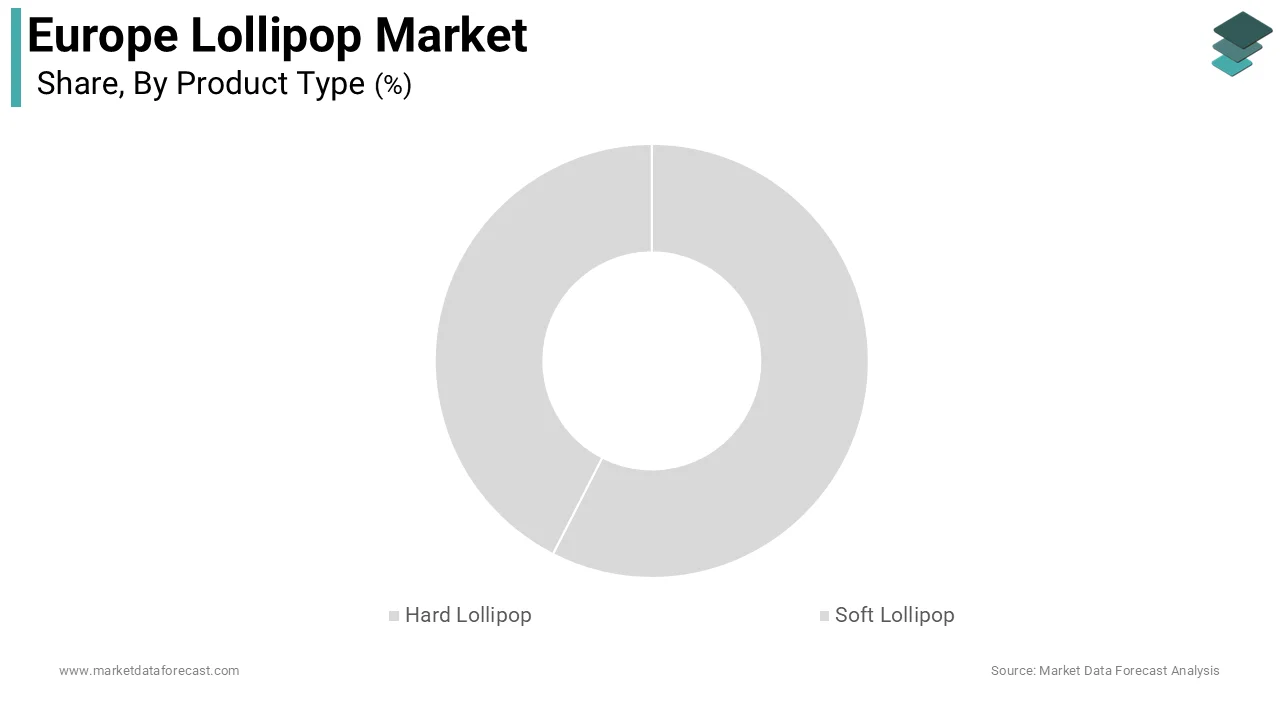
On the other hand, the soft lollipop segment is anticipated to register a promising CAGR of 10.5% over the forecast period owing to the shifting consumer preferences towards novel textures, clean-label ingredients, and the influence of global confectionery trends. The exploding popularity of gummy confectionery across Europe, where consumers increasingly favor chewy and juicy textures over traditional hard candies, is also fuelling the expansion of the soft lollipops segment in the European market. This shift is particularly pronounced among younger demographics who view gummies as a more modern and enjoyable eating experience. According to Mintel, the gummy candy sector in Europe has grown significantly in recent years, outpacing other confectionery categories, and this trend is directly translating to the lollipop segment. Manufacturers are leveraging this momentum by launching soft lollipops with complex flavor layers, filled centers, and varied textures that appeal to adventurous palates. Data from retail scanners in the Netherlands and Sweden shows that new product launches featuring soft textures achieve higher trial rates compared to hard counterparts. The perception of soft lollipops as being fruitier and more natural, often associated with real fruit juice content, further enhances their appeal to health-conscious parents. As per ingredient supplier reports, the demand for pectin and agar-based gelling agents for lollipop production has been rising steadily. This alignment with broader confectionery trends ensures that the soft lollipop segment captures significant market share from traditional hard varieties.
By Flavor Insights
The fruit-flavored segment led the market by capturing 74.4% of the European market share in 2025. The growth of the fruit-flavored segment in the European market is attributed to the universal appeal of fruit tastes, the association with natural ingredients, and the vast diversity of flavor profiles available within this category. The growth of the fruit-flavored segment in this regional market is also driven by its broad demographic appeal and the strong consumer perception that fruit flavors represent a healthier, more natural choice compared to dairy or synthetic alternatives. Fruit flavors such as strawberry, lemon, orange, and berry are universally recognized and accepted by children and adults alike, making them the default choice for mass-market products. According to the European Food Information Council, many consumers associate fruit-flavored confectionery with the presence of real fruit ingredients, even when artificial flavorings are used, which icreatesa psychological halo of healthfulness. Data from retail sales in Spain and Italy shows that fruit-flavored lollipops consistently top bestseller lists, with mixed fruit packs being the most purchased SKU. Furthermore, the versatility of fruit flavors allows manufacturers to innovate with exotic options like mango, passion fruit, and acai, keeping the category fresh and exciting. As per trend reports, the introduction of real fruit juice claims on packaging has boosted sales of fruit-flavored lollipops. The ability to market these products as containing vitamin C or antioxidants further strengthens their position. This deep-rooted consumer preference for fruit profiles ensures that the segment remains the cornerstone of the European lollipop market.
However, the chocolate-flavored segment is emerging as the fastest-growing flavor type and is estimated to expand at a CAGR of 11.5% over the forecast period, owing to the premiumization of the confectionery market and the fusion of European chocolate heritage with the convenient lollipop format. The overarching trend towards premiumization and indulgence in the European confectionery sector, where consumers are willing to pay more for a high-quality and rich flavor experience,s is further boosting the chocolate-flavoured segment in the European market. Chocolate is inherently perceived as a luxury ingredient in Europe, and its application in lollipop form offers a novel way to enjoy premium cocoa without the mess of melting bars. According to the European Cocoa Association, sales of premium chocolate products have grown steadily, and this demand is spilling over into innovative formats like lollipops. Manufacturers are launching products featuring high-percentage cocoa, single-origin chocolate, and inclusions like sea salt, nuts, and caramel, positioning them as gourmet treats rather than simple candy. Market analysis from Switzerland and Belgium shows that chocolate lollipops command a price premium compared to fruit varieties, reflecting their status as a superior indulgence. The psychological association of chocolate with comfort and reward drives impulse purchases, particularly among adults. As per consumer behavior studies, many adult confectionery buyers prefer chocolate-based treats for moments of self-care. This shift towards treating chocolate lollipops as a sophisticated snack option fuels the segment's exceptional growth trajectory.
By Distribution Channel Insights
The supermarkets and hypermarkets segment led the market with 56.5% of the regional market share in 2025. The dominance of supermarkets and hypermarkets segment in the European market is driven by the habitual nature of weekly grocery shopping, the extensive shelf space allocated to confectionery, and the competitive pricing strategies employed by large retailers. The dominance of the segment is further driven by the deeply ingrained habit of weekly or bi-weekly grocery shopping among European families, who prefer to purchase all household needs, including treats, in a single trip. Lollipops are often an impulse buy or a routine addition to the family cart, and the high footfall in supermarkets ensures maximum visibility and accessibility. According to the European Retail Round Table, most food and beverage purchases in Europe still take place in physical stores, with hypermarkets being the preferred destination for bulk buying. The ability to compare prices, access multi-pack deals, and choose from a wide variety of brands under one roof reinforces consumer loyalty to these channels. As per consumer pattern studies, confectionery sales peak during weekend shopping trips when families are planning for the week ahead. Furthermore, the strategic placement of lollipops near checkout counters and in the confectionery aisle capitalizes on impulse purchasing behavior. As per retail audits, supermarkets dedicate significant shelf space to candy, ensuring that lollipops are always available and prominent. The convenience of consolidating shopping tasks makes supermarkets the default channel for the majority of lollipop purchases, securing their dominant market share.
However, the online retail segment is the fastest-growing distribution channel and is projected to expand at a CAGR of 14.4% over the forecast period, owing to the digital transformation of grocery shopping, the rise of subscription models, and the ability to access niche and personalized products that are unavailable in physical stores. The widespread adoption of subscription services and bulk purchasing options that offer convenience and cost savings for regular consumers of lollipops is further aiding the growth of the online retail segment in the European market. Parents and event planners increasingly prefer having treats delivered automatically to their doorsteps, eliminating the need for physical store visits and ensuring they never run out of stock. According to Eurostat, the use of subscription services for household essentials in the EU has been rising, with confectionery being a notable category. Major online platforms and direct-to-consumer brand websites offer flexible scheduling and discounts for subscribers, which is creating a sticky customer relationship. For instance, recurring orders for candy boxes account for a growing share of online confectionery revenue. The ability to purchase large quantities without the physical burden of carrying heavy bags appeals to families and organizations. Furthermore, the integration of mobile apps allows for easy management of subscriptions and quick reordering. For instance, the convenience of automated replenishment is a key driver for shifting spend from offline to online channels. This structural shift towards digital procurement drives the exponential growth of the online segment.
REGIONAL ANALYSIS
Germany Lollipop Market Analysis
Germany held the dominant position in the Europe lollipop market in 2025 with 22.7% of the regional market share. The dominance of Germany in the European market is bolstered by a large population, a strong confectionery manufacturing base, and a culture that embraces both traditional sweets and modern functional treats. The German market is characterized by high consumption of high-quality confectionery, with a particular emphasis on fruit-flavored and medicated lollipops. According to the Federal Statistical Office of Germany, the country is one of the largest producers of confectionery in Europe, with major global brands headquartered there, ensuring a robust domestic supply chain. The strict regulatory environment regarding food safety and labeling in Germany drives innovation in clean-label and organic lollipops, catering to the health-conscious consumer. Furthermore, the strong retail network of discounters and supermarkets ensures wide availability and competitive pricing. The tradition of visiting pharmacies for health remedies also supports the sales of medicated lollipops. The combination of industrial strength, regulatory leadership, and health-oriented consumption patterns secures Germany's dominance as the primary hub for the lollipop market in Central Europe.
United Kingdom Lollipop Market Analysis
The United Kingdom held the second-largest share of the Europe lollipop market in 2025. The UK market is defined by a highly dynamic retail environment, a strong influence of global food trends, and a burgeoning market for novelty and premium confectionery. British consumers are early adopters of new flavors and formats, driven by a diverse multicultural population and a vibrant foodie culture. As per the Office for National Statistics, the UK has a high per capita expenditure on confectionery, with lollipops being a popular choice for children's parties and school rewards. The presence of major global confectionery companies with deep roots in the UK fosters a competitive landscape where innovation is constant. Industry reports highlight that the UK leads Europe in the launch of novelty lollipops, including those with toys, interactive elements, and unique flavor combinations. Additionally, the strong e-commerce sector in the UK facilitates the distribution of niche and personalized lollipop products. The government's sugar reduction program has also spurred significant reformulation efforts, making the UK a testbed for low-sugar and natural sweetener technologies. The convergence of trendsetting behavior, retail sophistication, and regulatory pressure positions the UK as a critical growth engine and innovator in the European market.
France Lollipop Market Analysis
France is anticipated to showcase a prominent CAGR in the Europe lollipop market during the forecast period due to its rich culinary heritage and a growing appreciation for artisanal and gourmet confectionery. The French market status is unique due to the high standards of quality and authenticity expected by consumers, who often prefer lollipops made with natural ingredients and traditional recipes. According to the French Ministry of Agriculture, the country has a strong tradition of fruit cultivation, which influences the popularity of fruit-flavored lollipops made from real fruit juices and purees. The "Made in France" label carries significant weight, driving demand for locally produced artisanal lollipops that feature regional flavors like lavender, lemon from Provence, and salted caramel. Consumer surveys show that French shoppers are willing to pay a premium for organic and sustainably sourced confectionery. The tourism sector also plays a vital role, with visitors purchasing beautifully packaged lollipops as souvenirs from patisseries and specialty shops in Paris and other historic cities. Furthermore, the French healthcare system's support for natural remedies boosts the sales of herbal and medicated lollipops. The blend of gastronomic excellence, emphasis on natural ingredients, and tourism-driven demand makes France a sophisticated and valuable market for lollipops.
Italy Lollipop Market Analysis
Italy is estimated to hold a notable share of the Europe lollipop market during the forecast period, owing to its renowned food culture and a strong preference for fruit-based and chocolate flavors. The Italian market status is characterized by a deep connection to traditional flavors and a growing interest in healthy, natural alternatives for children. As per the Italian National Institute of Statistics, the consumption of confectionery remains high, particularly during festivals and family gatherings, where lollipops are a common treat. The country's abundant production of citrus fruits, berries, and high-quality cocoa influences the flavor profiles of domestically produced lollipops, which often feature authentic Italian tastes. Industry analysis shows that the demand for organic and gluten-free lollipops is rising, driven by increasing health awareness among Italian parents. The presence of numerous small-scale artisanal producers allows for a diverse range of high-quality products that cater to local tastes. Additionally, the strong café culture and tradition of "dolce vita" encourage the enjoyment of small sweets throughout the day. Trade associations highlight that Italian manufacturers are increasingly focusing on sustainable packaging and natural colorants to meet consumer expectations. The combination of culinary tradition, focus on quality ingredients, and health consciousness positions Italy as a significant and evolving market within Southern Europe.
Spain Lollipop Market Analysis
Spain is anticipated to record a healthy CAGR in the Europe lollipop market during the forecast period. The Spanish market is distinguishing itself through a vibrant lifestyle, a love for sweets, and a climate that favors refreshing fruit flavors. The Spanish market status is defined by the social importance of snacks and treats in daily life, with lollipops being a popular choice for children and a common sight in bars and cafes. According to the Spanish Confederation of Food and Drink Industries, the confectionery sector is robust, with a strong emphasis on fruit-flavored products that align with the country's agricultural output of oranges, lemons, and strawberries. The warm climate drives demand for refreshing and hydrating treats, making fruit lollipops a perennial favorite. Retail scans show that sales of lollipops surge during the summer months and local festivals like La Tomatina and Fallas. The growing tourism industry also contributes significantly, with visitors seeking out local flavors and souvenir packs. Additionally, the rise of health consciousness has led to an increase in the availability of sugar-free and vitamin-enriched options in supermarkets. As per market observations, Spanish consumers are increasingly open to trying new and exotic flavors, driving innovation in the sector. The synergy of cultural habits, favorable climate, and evolving consumer preferences makes Spain a dynamic and resilient market for lollipops in Southern Europe.
COMPETITION OVERVIEW
The competition in the Europe lollipop market is characterized by a dynamic mix of established multinational corporations and agile local manufacturers who vie for dominance in a sector driven by taste preferences and health trends. Major global players leverage their vast resources and brand recognition to maintain shelf space in supermarket chains, while smaller regional brands compete by offering unique artisanal flavors and specialized dietary options. The market sees intense rivalry in the premium segment, where differentiation is achieved through high-quality ingredients, innovative packaging, and functional benefits like vitamin enrichment. New entrants often focus on niche categories such as vegan or organic lollipops to carve out distinct positions against broader offerings. Established companies continuously invest in research and development to improve taste and nutritional profiles while adhering to strict European food safety regulations. The competitive landscape is further shaped by the growing influence of private label products from retailers who offer lower-priced alternatives to branded goods. Success in this environment requires a delicate balance between maintaining cost efficiency, driving innovation, and building strong emotional connections with consumers through effective branding and targeted marketing initiatives.
KEY MARKET PLAYERS
A few major players of the Europe lollipop market include
- Perfetti Van Melle
- Ferrero Group
- Mondelez International Inc
- Nestlé S.A
- Haribo GmbH & Co. KG
- Mars Incorporated
- The Hershey Company
- Chupa Chups (Perfetti Van Melle)
- Arcor Group
- Tootsie Roll Industries Inc
- Cloetta AB
- August Storck KG
- Wrigley Company (Mars Inc.)
- Vidal Candies SA
- Colombina S.A
Top Strategies Used by Key Market Participants
Key players in the Europe lollipop market primarily employ strategies focused on product innovation to develop healthier options such as sugar-free, organic, and vitamin-fortified varieties that meet evolving consumer demands. Companies are heavily investing in sustainability initiatives by adopting biodegradable sticks and recyclable packaging materials to address environmental concerns. Another major strategy involves expanding distribution channels by strengthening partnerships with online retailers and convenience stores to improve accessibility. Market participants are also engaging in targeted marketing campaigns that leverage social media influencers and seasonal promotions to drive brand awareness and trial. Furthermore, firms are pursuing strategic acquisitions of niche brands to quickly gain access to specialized markets like vegan or allergen-free confectionery. These combined approaches allow companies to navigate regulatory challenges and capture growth in a competitive landscape.
Leading Players in the Market
- Perfetti Van Melle stands as a global confectionery giant with a dominant presence in the Europe lollipop market through iconic brands like Chupa Chups and Mentos. The company contributes significantly to the global sector by driving innovation in flavor profiles and packaging designs that appeal to diverse demographics worldwide. In Europe, Perfetti Van Melle leverages its extensive distribution network to ensure product availability across all retail channels, from hypermarkets to small kiosks. Recent actions to strengthen their market position include the launch of sugar-free and vitamin-enriched lollipop variants to address growing health consciousness among consumers. They have also invested heavily in sustainable sourcing of raw materials and eco-friendly packaging solutions to align with European environmental regulations. By focusing on brand heritage while embracing modern wellness trends, the company continues to lead the category and expand its reach.
- Ferrero Group operates as a major player in the Europe lollipop market primarily through its acquisition of the Fannie May brand and the development of premium chocolate-based lollipop offerings under the Kinder and Ferrero Rocher umbrellas. The company contributes to the global market by integrating high-quality cocoa and hazelnut ingredients into innovative lollipop formats that bridge the gap between traditional candy and gourmet treats. In Europe, Ferrero has strengthened its position by introducing limited-edition seasonal lollipops that capitalize on holiday gifting traditions. Recent actions involve the expansion of production facilities to increase capacity for chocolate-coated lollipops and the implementation of strict quality control measures to ensure premium taste. They have also launched marketing campaigns targeting adults who seek indulgent yet portion-controlled sweet experiences. By leveraging its reputation for quality and luxury, Ferrero effectively differentiates its lollipop products in a crowded marketplace.
- Katjes Fassin is a leading German confectionery manufacturer known for its commitment to producing vegetarian and vegan lollipops that cater to the specific dietary preferences of European consumers. The company contributes to the global market by pioneering the use of plant-based ingredients and natural colorants, setting a benchmark for clean-label confectionery. In Europe, Katjes Fassin has solidified its market position by expanding its portfolio of fruit-flavored lollipops free from gelatin and artificial additives. Recent actions to strengthen their market presence include the acquisition of smaller niche brands to diversify their product range and the introduction of biodegradable packaging to reduce environmental impact. They have also increased investment in research and development to create new textures and flavors using only natural sources. By aligning its product strategy with the rising demand for ethical and healthy sweets, Katjes Fassin continues to grow its customer base and reinforce its leadership in the sustainable confectionery segment.
MARKET SEGMENTATION
This research report on the Europe lollipop market has been segmented and sub-segmented based on product type, flavor, distribution channel & region.
By Product Type
- Hard Lollipop
- Soft Lollipop
By Flavor
- Fruit Flavored
- Berry
- Mango
- Orange
- Others
- Chocolate Flavored
- Milk Flavored
By Distribution Channel
- Supermarkets/Hypermarkets
- Convenience Stores
- Specialty Stores
- Grocery Stores
- Online Retail
By Region
- UK
- France
- Spain
- Germany
- Italy
- Russia
- Sweden
- Denmark
- Switzerland
- Netherlands
- Turkey
- Czech Republic
- Rest of Europe