- Product Description Description
- Table of Contents TOC
- List of Table & Figure LOT
- Get Free Sample PDF Sample PDF
Market Size, 2025
$0.54 BnMarket Estimate, 2026
$0.59 BnMarket Forecast, 2034
$1.35 BnCAGR, 2026–2034
10.86%Europe Macadamia Market Size, Growth, Trends & Forecast (2026–2034)
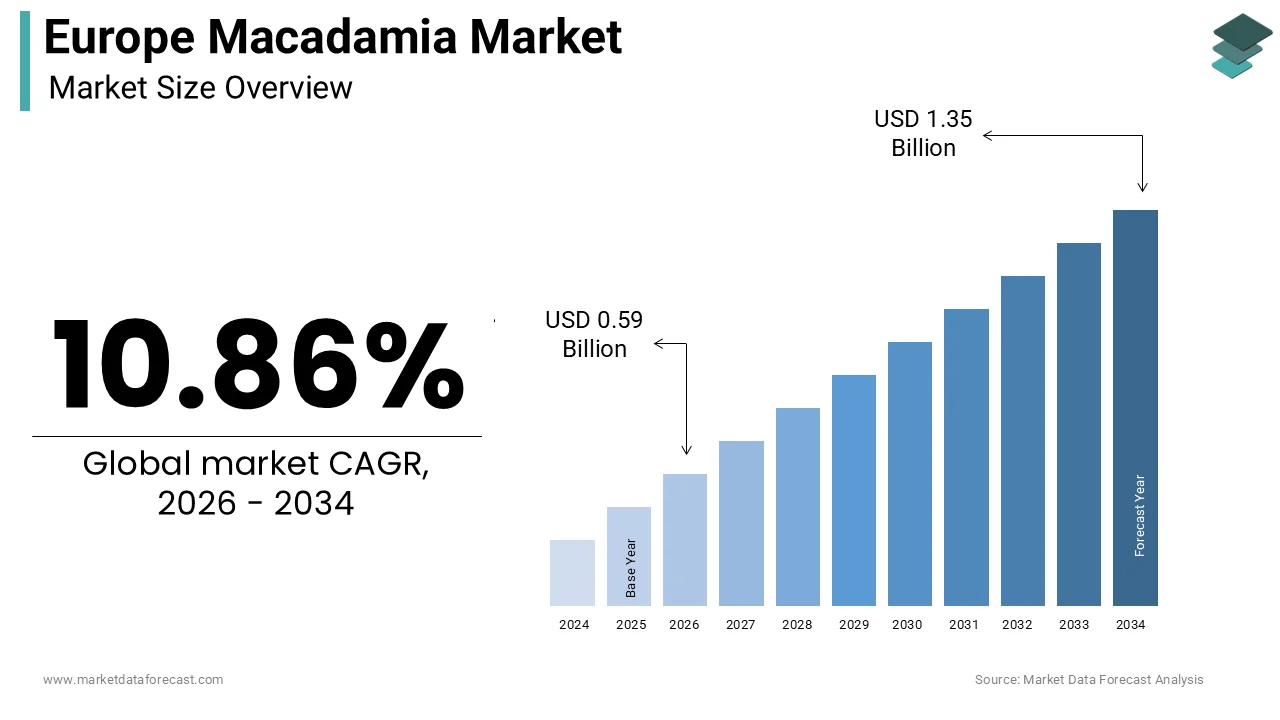
The Europe macadamia market size was calculated to be USD 0.54 billion in 2025, is anticipated to be worth USD 0.59 billion in 2026, and is projected to reach USD 1.35 billion by 2034, growing at a compound annual growth rate (CAGR) of 10.86% during the forecast period from 2026 to 2034. Driven by escalating consumer preference for heart-healthy monounsaturated fats, premiumization of the confectionery and gourmet food sectors, and expanding applications in natural cosmetics, the regional market continues to expand dynamically.
Key Executive Metrics (At-a-Glance)
- 2025 Base Valuation: USD 0.54 Billion
- 2026 Current Valuation: USD 0.59 Billion
- 2034 Forecast Valuation: USD 1.35 Billion
- Compound Annual Growth Rate (CAGR): 10.86% (2026–2034)
- Dominant Source Segment: Conventional (holding 77.4% market share in 2025 due to cost efficiency and high global availability)
- Fastest-Growing Source Segment: Organic (projected to record a 12.2% CAGR driven by clean-label and strict pesticide regulations)
- Dominant Product Type Segment: Raw Nuts (leading with 56.1% market share in 2025 as a fundamental ingredient for food manufacturing)
- Fastest-Growing Product Type Segment: Roasted Nuts (anticipated to expand at a 10.5% CAGR propelled by ready-to-eat convenience and enhanced flavor profiles)
- Dominant Distribution Channel Segment: Supermarkets and Hypermarkets (holding 46.4% share in 2025 via physical store accessibility and weekly grocery routines)
- Fastest-Growing Distribution Channel Segment: E-commerce (predicted to record a 15.4% CAGR through digital transformation and niche product access)
- Dominant End-Use Segment: Retail (capturing 51.5% share in 2025 supported by healthy snacking and home cooking trends)
- Fastest-Growing End-Use Segment: Cosmetics (projected to grow at a 13.3% CAGR fueled by natural beauty and macadamia oil skincare demand)
- Dominant Country Market: Germany (leading with 24.4% market share in 2025 backed by a strong health-conscious consumer base and confectionery industry)
Core Market Drivers
- Functional Nutrition: Growing consumer preference for heart-healthy fats, ketogenic snacks, and monounsaturated-rich diets.
- Premiumization: Integration of macadamias as a hallmark of luxury and exclusivity in European gourmet confectionery.
Primary Market Restraints & Challenges
- Supply Chain Fragility & Price Volatility: Heavy reliance on long-distance imports from Australia and South Africa, making the market vulnerable to weather shocks and geopolitical disruptions.
- Regulatory & Compliance Hurdles: Strict EU maximum residue limits for pesticides, aflatoxin checks, and new deforestation tracing requirements.
Europe Macadamia Market Segmentation Breakdown
| Segment Category | Leading Sub-Segment (Base/Current) | Fastest-Growing Sub-Segment |
|---|---|---|
| By Source | Conventional (77.4% share in 2025) | Organic (12.2% CAGR) |
| By Product Type | Raw Nuts (56.1% share in 2025) | Roasted Nuts (10.5% CAGR) |
| By Distribution Channel | Supermarkets & Hypermarkets (46.4% share) | E-commerce (15.4% CAGR) |
| By End Use | Retail (51.5% share in 2025) | Cosmetics (13.3% CAGR) |
| By Region / Country | Germany (24.4% share) & United Kingdom | France & Switzerland (luxury and confectionery growth) |
Major Industry Players Profiled
Key enterprises shaping the Europe macadamia market include Marquis Macadamias, Macadamia Processing Company (MPC), Green Farms Nut Company, Golden Macadamias, Ivory Macadamias, Royal Macadamia Pty Ltd, Kenya Nut Company, Nambucca Macnuts Pty Ltd, Eastern Produce Kenya Ltd, South African Macadamia Growers’ Association, Macadamias Australia Pty Ltd, Nutworks Australia Pty Ltd, Hamakua Macadamia Nut Company, MacFarms LLC, and Buderim Group Limited.
Europe Macadamia Market Size
The Europe macadamia market size was calculated to be USD 0.54 billion in 2025 and is anticipated to be worth USD 1.35 billion by 2034, from USD 0.59 billion in 2026, growing at a CAGR of 10.86% during the forecast period.
Macadamia is derived from Macadamia integrifolia and Macadamia tetraphylla and is positioning itself as the premium segment within the broader tree nut industry. Unlike other nuts with established European cultivation, this market is defined almost exclusively by its reliance on long-distance supply chains originating from Australia, South Africa, Kenya, and Hawaii, as commercial production within Europe remains negligible due to climatic incompatibility. The sector is characterized by high value density, with macadamias consistently commanding the highest price per kilogram among all commercial nuts, and is driven by their unique creamy texture, high monounsaturated fat content, and scarcity. According to Eurostat, the European Union imported macadamia nuts in shell and kernel form in 2023, whichreflectsg a steady upward trajectory in demand despite global supply constraints. The market definition extends beyond raw kernels to include value‑added derivatives such as cold‑pressed macadamia oil for the cosmetic and culinary sectors, as well as confectionery inclusions. As per the International Nut and Dried Fruit Council, Europe accounts for a significant portion of global macadamia consumption, with Germany, France, and the United Kingdom serving as primary entry points. The regulatory landscape is heavily influenced by the European Food Safety Authority, which enforces strict maximum residue limits for pesticides and aflatoxins, shaping import protocols. Furthermore, the market is increasingly shaped by sustainability certifications, as per the European Commission's deforestation regulations, which require rigorous traceability from orchard to shelf to ensure ethical sourcing in a market where provenance is a key driver of consumer trust.
MARKET DRIVERS
Escalating Consumer Preference for Heart‑Healthy Fats and Functional Nutrition
The intensifying consumer shift towards functional foods rich in heart‑healthy monounsaturated fats, specifically oleic and palmitoleic acids, which are abundant in macadamia kernels, is majorly propelling the expansion of the Europe macadamia market. European consumers are increasingly educated about the link between dietary fats and cardiovascular health, which is leading them to prioritize nuts that offer superior lipid profiles over traditional options. According to the European Society of Cardiology, cardiovascular diseases remain the leading cause of death in Europe, which is prompting public health campaigns that advocate for the replacement of saturated fats with unsaturated alternatives. As per the European Food Information Council, a large proportion of European shoppers actively seek products labeled as heart‑healthy or cholesterol‑lowering, which is driving the inclusion of macadamias in daily diets. Furthermore, the rising prevalence of ketogenic and low‑carb diets across the continent has amplified demand for high‑fat, low‑carbohydrate snacks, which is a niche where macadamias excel. As per nutritional surveys conducted in Germany and the UK, consumption of premium nuts has been increasing among health‑conscious demographics, with macadamias often cited as the preferred choice for their nutrient density. This alignment with prevailing wellness trends and medical recommendations creates a robust and sustained demand driver that transcends seasonal fluctuations.
Premiumization of the Confectionery and Gourmet Food Sectors
The relentless premiumization of the European confectionery and gourmet food sectors, where macadamias are utilized as a hallmark ingredient to signify luxury and exclusivity, is further boosting the expansion of the Europe macadamia market. European chocolatiers and artisanal bakers increasingly incorporate macadamia kernels into high‑end truffles, pralines, and pastries to differentiate their offerings in a saturated market. According to the European Association of Craft Chocolatiers, the market for super‑premium chocolate has been growing, with macadamia being a top inclusion alongside sea salt and rare spices. The unique buttery texture and mild flavor of the nut complement dark and white chocolate without overpowering delicate flavor notes, which is making it a favourite among master chocolatiers in Belgium, France, and Switzerland. As per retail analytics, gift boxes featuring macadamia‑based confections command a notable price premium compared to those with almonds or hazelnuts, which reflects their status as a luxury good. Furthermore, the rise of affordable luxury spending habits among millennials and Gen Z consumers fuels the demand for gourmet snacks containing macadamias. For instance, sales of macadamia‑infused gourmet items surge during holiday seasons, indicating their entrenched role in celebratory gifting cultures. This integration into the luxury food narrative ensures a consistent and high‑value demand stream for macadamia kernels across the continent.
MARKET RESTRAINTS
Extreme Price Volatility and Supply Chain Fragility
A major restraint facing the Europe macadamia market is the extreme volatility in global pricing and the inherent fragility of its long‑distance supply chains, which are susceptible to geopolitical disruptions and climate shocks. As Europe relies entirely on imports, any fluctuation in production yields in key exporting nations like Australia or South Africa immediately impacts availability and cost in European ports. According to the International Nut and Dried Fruit Council, global macadamia prices have experienced spikes due to adverse weather conditions and logistical bottlenecks, which are rendering the nut prohibitively expensive for mass‑market applications. The concentration of supply in a few geographic regions creates a bottleneck, where labor strikes or droughts can sever the flow of goods to Europe for weeks. As per the European Commission's trade monitoring systems, freight costs for perishable high‑value nuts have been rising, which is further eroding margins for importers and retailers. This price instability forces many manufacturers to substitute macadamias with cheaper alternatives like cashews or hazelnuts, which is stifling market penetration in the mid‑tier segment. As per economic analyses from European food processors, the inability to forecast raw material costs accurately discourages long‑term product development involving macadamias. The lack of local production buffers means European buyers have no leverage against global supply shocks, which is making the market highly reactive and vulnerable to external pressures that limit consistent growth.
Stringent Regulatory Compliance and Contaminant Risks
The rigorous regulatory framework enforced by the European Union regarding pesticide residues, aflatoxins, and foreign matter that poses significant compliance challenges for exporters and importers is further hindering the Europe macadamia market growth. The European Food Safety Authority maintains some of the strictest maximum residue limits globally, and macadamias, often grown in tropical environments with varying pest pressures, are frequently subject to increased scrutiny. According to the Rapid Alert System for Food and Feed, notifications regarding excessive pesticide levels or aflatoxin contamination in nut shipments from non‑EU countries have been rising, which is leading to costly border rejections and destruction of cargo. The complexity of meeting these standards requires exporters to invest heavily in advanced testing and sorting technologies, costs that are often passed down the supply chain, which is inflating retail prices. As per industry compliance reports, a portion of macadamia shipments entering EU ports face delays or rejection due to non‑compliance, creating uncertainty for suppliers. Furthermore, the upcoming EU Deforestation Regulation mandates comprehensive geolocation tracing for all imported agricultural commodities, which is adding a layer of administrative burden that smaller exporters may struggle to meet. As per legal assessments from trade federations, the risk of non‑compliance acts as a deterrent for new market entrants and limits the diversity of supply sources. These regulatory hurdles create a high barrier to entry and operational friction that constrains market fluidity and expansion.
MARKET OPPORTUNITIES
Expansion into the Natural Cosmetics and Personal Care Sector
The strategic expansion of macadamia oil into the rapidly growing natural cosmetics and personal care sector is a promising opportunity in the Europe macadamia market. Macadamia oil is rich in palmitoleic acid, an omega‑7 fatty acid that naturally occurs in human sebum but diminishes with age, making it a highly effective ingredient for anti‑aging and moisturizing formulations. According to the European Cosmetic Toiletry and Perfumery Association, the market for natural and organic cosmetics in Europe is projected to reach 25 billion euros by 2027, which is driven by consumer demand for clean beauty products. For instance, products highlighting single‑origin and cold‑pressed botanical oils are experiencing stronger growth compared to synthetic alternatives. Furthermore, the versatility of macadamia oil allows for its use in diverse applications ranging from luxury spa treatments to mass‑market skincare lines. For instance, a majority of European women prefer plant‑based ingredients in their beauty routines, which is creating a vast addressable market for macadamia derivatives. By diversifying beyond the food sector, the industry can unlock new revenue streams and reduce dependency on the volatile edible nut market, and position macadamia as a dual‑purpose commodity with enhanced value potential.
Development of Sustainable and Regenerative Supply Chains
The opportunity to develop and market macadamia products through verified, sustainable, and regenerative supply chains presents a lucrative avenue for differentiation in an environmentally conscious European marketplace. Consumers are increasingly willing to pay a premium for products that demonstrate positive environmental impact, such as carbon sequestration, biodiversity conservation, and fair labor practices. According to the European Commission's Green Deal initiatives, there is a strong policy push towards supporting supply chains that align with climate goals, offering potential subsidies or preferential market access for certified sustainable goods. Companies can leverage this by obtaining certifications like Rainforest Alliance or Organic, and by implementing blockchain technology to provide transparent traceability from the orchard to the consumer. As per sustainability surveys, a large proportion of European consumers consider environmental impact a key factor in their purchasing decisions, particularly for imported luxury foods. Furthermore, regenerative agriculture practices in macadamia farming, such as cover cropping and reduced tillage, can enhance soil health and yield stability, appealing to B2B buyers seeking long‑term supply security. Case studies from leading European retailers show that private label lines featuring sustainably sourced nuts have outperformed conventional brands in sales volume. By positioning macadamias as a flagship crop for ethical consumption, stakeholders can capture the loyalty of values‑driven consumers and secure a competitive advantage in the premium market.
MARKET CHALLENGES
Climatic Vulnerability of Global Production Bases
The extreme sensitivity of global macadamia production to climate change, which threatens the stability of the entire supply base upon which Europe depends, is a significant challenge to the growth of the Europe macadamia market. Macadamia trees require specific subtropical conditions with consistent rainfall and moderate temperatures, which makes them highly vulnerable to droughts, heatwaves, and cyclones that are becoming more frequent in key producing regions like Australia and South Africa. According to the Intergovernmental Panel on Climate Change, agricultural zones suitable for macadamia cultivation are projected to shrink significantly by 2050 due to shifting climate patterns, which poses a long‑term threat to supply volumes. For instance, severe droughts in Australia have previously reduced national macadamia yields, which is sending shockwaves through the global market and causing shortages in Europe. The long maturation period of macadamia trees, which takes years to reach full production, limits the ability of growers to quickly adapt or relocate orchards in response to changing climates. Risk assessments from commodity traders highlight that the increasing frequency of extreme weather events introduces unpredictability that makes long‑term supply contracts difficult to honour. This climatic fragility means that Europe faces perpetual supply insecurity, with the constant risk of crop failures abroad translating directly into scarcity and inflated prices domestically, which is hindering market stability and growth planning.
Intense Competition from Established Local and Alternative Nuts
The Europe macadamia market faces intense competition from well‑established local nut varieties and other imported alternatives that offer similar nutritional benefits at lower price points, limiting its market share expansion. Europe is the world's leading producer of hazelnuts and a significant producer of almonds and walnuts, crops that are deeply embedded in local culinary traditions and supply chains, offering freshness and lower logistics costs. According to the European Nut Association, hazelnut production in Turkey and Europe alone exceeds hundreds of thousands of metric tons annually, creating a massive, cost‑effective supply that dominates the confectionery and snack sectors. Consumers often perceive macadamias as an occasional luxury rather than a staple, restricting their consumption frequency compared to more affordable options like peanuts or cashews. As per retail price comparisons, macadamias are typically priced several times higher than almonds, a disparity that restricts their adoption in mass‑market products and everyday snacking. Furthermore, the rise of seed‑based snacks and alternative proteins provides additional competition for the health‑conscious demographic. Consumer behavior studies show that while awareness of macadamia health benefits is high, actual purchase rates are constrained by price sensitivity, with many shoppers opting for cheaper nuts when budget is a primary concern. Overcoming this entrenched preference for local and affordable alternatives requires significant marketing investment to justify the premium, a challenge that tests the resilience of macadamia brands in a crowded and price‑competitive landscape.
REPORT COVERAGE
| REPORT METRIC | DETAILS |
| Market Size Available | 2025 to 2034 |
| Base Year | 2025 |
| Forecast Period | 2026 to 2034 |
| CAGR | 10.86% |
| Segments Covered | By Source, Product Type, Distribution Channel, End User, And Region |
| Various Analyses Covered | Global, Regional & Country Level Analysis; Segment-Level Analysis; DROC, PESTLE Analysis; Porter’s Five Forces Analysis; Competitive Landscape; Analyst Overview of Investment Opportunities |
| Regions Covered | UK, France, Spain, Germany, Italy, Russia, Sweden, Denmark, Switzerland, Netherlands, Turkey, and the Czech Republic |
| Market Leaders Profiled | Marquis Macadamias, Macadamia Processing Company (MPC), Green Farms Nut Company, Golden Macadamias, Ivory Macadamias, Royal Macadamia Pty Ltd, Kenya Nut Company, Nambucca Macnuts Pty Ltd, Eastern Produce Kenya Ltd, South African Macadamia Growers’ Association, Macadamias Australia Pty Ltd, Nutworks Australia Pty Ltd, Hamakua Macadamia Nut Company, MacFarms LLC, Buderim Group Limited |
SEGMENTAL ANALYSIS
By Source Insights
The conventional segment dominated the market by holding 77.4% of the European market share in 2025 due to the significantly lower production costs and higher global availability of conventionally grown macadamias compared to their organic counterparts, which is making them the default choice for mass‑market confectionery and snack applications. The superior cost efficiency of conventional macadamia that allows manufacturers to incorporate these premium nuts into a wider range of products without prohibitive price increases for the end consumer is further propelling the expansion of the conventional segment in the European market. As per the International Nut and Dried Fruit Council, the price premium for organic macadamias can be substantially higher than conventional kernels, which limits their use to niche luxury segments. In the highly competitive European snack and chocolate industries, where margin compression is a constant concern, manufacturers rely on conventional supplies to maintain profitability while still offering a premium product image. Retail sales data from major European supermarket chains shows that conventional macadamia products account for the majority of total volume sales, reflecting the price sensitivity of the average consumer. Furthermore, the global supply of organic macadamias remains limited, with only a small fraction of orchard acreage certified organic in key producing countries, reinforcing reliance on conventional sources. This economic reality ensures that conventional macadamias remain the backbone of the European market.
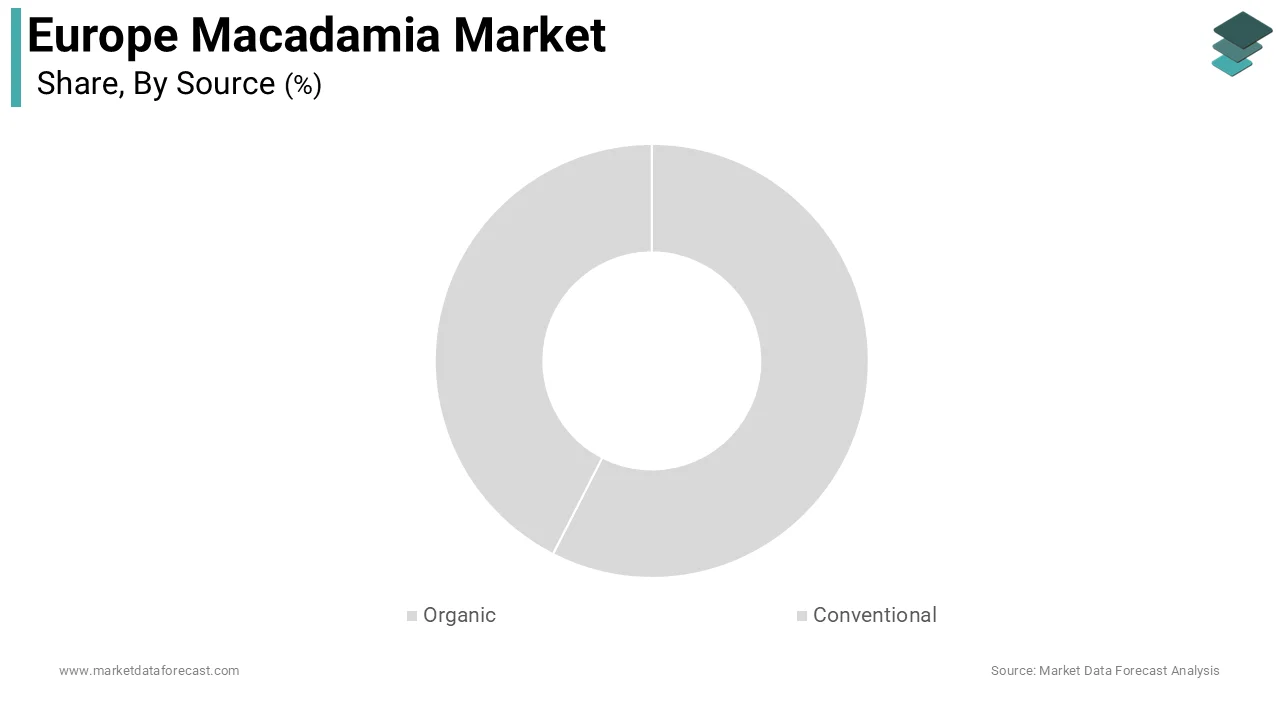
However, the organic source segment is projected to be the fastest‑growing category and is expected to record a CAGR of 12.2% over the forecast period, owing to the intensifying European consumer demand for clean‑label products, stringent pesticide regulations, and a growing willingness to pay a premium for sustainably sourced foods. The profound shift in European consumer preferences towards clean‑label products free from synthetic pesticides and chemical residues is further contributing to the expansion of the organic source segment in the European market. Modern shoppers are increasingly scrutinizing ingredient lists and actively avoiding foods associated with conventional agricultural chemicals, viewing organic certification as a guarantee of purity and safety. According to the Research Institute of Organic Agriculture, sales of organic food in Europe have been growing steadily, with nuts and seeds being a key growth category. As per surveys conducted by the European Consumer Organisation, a majority of respondents are willing to pay a premium for organic nuts, citing health concerns as the primary motivator. This sentiment is particularly strong in Northern and Western Europe, where awareness of the potential health risks of pesticide exposure is high. Furthermore, the "free‑from" trend has elevated organic macadamias to a status symbol of wellness, driving their inclusion in premium health food baskets and specialty diet plans. Retail analytics confirm that shelf space allocated to organic nuts in major European retailers has expanded significantly in recent years to meet this surging demand. This powerful consumer mandate forces manufacturers and retailers to prioritize organic sourcing, accelerating the segment's growth trajectory.
By Product Type Insights
The raw nuts segment led the market with 56.1% of the regional market share in 2025. The leading position of the raw nuts segment in the European market can be credited to the versatility of raw kernels as a fundamental ingredient for both industrial food manufacturing and the burgeoning home‑cooking and health‑snacking sectors. The critical role of raw macadamia nuts as a primary raw material for the European food manufacturing and confectionery industries, where they are processed into various finished goods, is further contributing to the expansion of the raw nuts segment in the European market. Chocolate makers, bakeries, and ice cream manufacturers prefer purchasing raw kernels to roast, flavor, or chop in‑house, which allows them to control the final taste profile, texture, and freshness of their premium products. According to the European Association of Craft Chocolatiers, a majority of macadamias used in the confectionery sector are purchased in raw form to ensure optimal integration into truffles, pralines, and bars. The ability to customize the roasting level and seasoning is crucial for brands seeking to differentiate their offerings in a crowded luxury market. Procurement reports indicate that bulk purchases of raw macadamias by food manufacturers account for a significant portion of total market volume, which indicates the scale of B2B demand. Furthermore, the rising trend of plant‑based dairy alternatives utilizes raw macadamias as a base for milks and creams, requiring unprocessed kernels to maintain a neutral flavor profile. For instance, the flexibility of raw nuts allows manufacturers to adapt quickly to changing consumer trends without being locked into pre‑flavored inventory. This indispensable function as a foundational ingredient secures the leading position of the raw segment.
On the other hand, the roasted nuts segment is emerging as the fastest‑growing product type and is anticipated to record a CAGR of 10.5% over the forecast period, owing to the rising demand for ready‑to‑eat convenience, enhanced flavor profiles, and the rise of gourmet snacking culture across Europe. The escalating consumer demand for convenient, ready‑to‑eat snacks that offer immediate sensory satisfaction without the need for preparation is further boosting the growth of the roasted nuts segment in the European market. Roasting unlocks the natural oils in macadamias, which is creating a richer, buttery flavor and a crunchier texture that many consumers find more appealing than the milder taste of raw nuts. According to Mintel, the ready‑to‑eat savory snack category in Europe is expanding rapidly, with roasted nuts being a top performer due to their perception as a healthy yet indulgent treat. For instance, single‑serve packs of roasted and lightly salted macadamias are among the fastest‑moving products in convenience stores and airport lounges, which is catering to busy professionals seeking quick energy boosts. The addition of simple seasonings like sea salt, rosemary, or chili during the roasting process creates diverse flavor profiles that appeal to adventurous palates, which is driving repeat purchases. For instance, a majority of snackers prefer flavored or roasted nuts over raw ones for immediate consumption, citing better taste and texture as the main reasons. This preference for hassle‑free and flavourful snacking experiences positions roasted macadamias as the most dynamic growth segment in the product landscape.
By Distribution Channel Insights
The supermarkets and hypermarkets segment held 46.4% of the regional market share in 2025. This dominance is anchored in their extensive physical presence, competitive pricing through economies of scale, and the ingrained consumer habit of purchasing nuts during weekly grocery runs. The widespread accessibility and convenienceares further boosting the expansion of the supermarkets and hypermarkets segment in the European market. With thousands of stores across Europe, these retailers ensure macadamias are available to the majority of consumers without requiring specialized trips. According to the European Retail Round Table, over 80% of food purchases in Europe still occur in physical stores, with hypermarkets preferred for bulk buying and family provisioning. Placement of macadamias alongside other premium nuts and dried fruits encourages impulse purchases. Footfall analytics show that well‑stocked nut sections increase basket sizes, as shoppers add high‑value items like macadamias while shopping for staples. In‑store promotions, tastings, and educational campaigns further drive trial and adoption. Weekly grocery shopping remains a deeply ingrained cultural habit, which is securing supermarkets as the default channel for macadamia distribution.
On the other hand, the e‑commerce segment is predicted to register a CAGR of 15.4% over the forecast period in the European market, owing to the digital transformation in grocery shopping, access to niche and bulk products, and the convenience of home delivery. The unlimited shelf space and product diversity it offers are further boosting the growth of the e-commerce segment in the European market. Online platforms can stock hundreds of SKUs without spatial constraints, catering to gourmet preferences and dietary needs. According to Digital Commerce 360, over 60% of online grocery shoppers cite “wider selection” as their main reason for choosing digital channels, particularly for specialty items like macadamias. For instance, exotic flavors and large bulk packs sell significantly better online than in supermarkets. Detailed product information, customer reviews, and transparent origin stories empower buyers to make informed decisions. Subscription models for regular deliveries of favourite nut blends create recurring revenue streams. This depth of assortment and informational transparency makes e‑commerce the preferred channel for discerning buyers, driving exceptional growth rates.
By End Use Insights
The retail segment captured the dominant share of 51.5% of the European market in 2025. The growth of the retail segment in the European market can be attributed to the direct consumer purchases for home snacking, cooking, and gifting, supported by rising disposable incomes and health consciousness. A healthy snacking culture across Europe is another primary driver. Consumers increasingly replace sugary treats with nutrient‑dense options like macadamias, which are rich in healthy fats and low in carbohydrates. According to the Global Wellness Institute, the healthy snacking market in Europe has grown by 15% annually, with nuts as key beneficiaries. For instance, nearly half of European families keep premium nuts in their pantries, with macadamias favoured for indulgent yet health‑aligned consumption. The rise of mindful eating and home entertainment has further boosted demand, with macadamias featured in elegant snack boards and gifting assortments. Retail sales data confirms the strong performance of single‑serve and family‑size packs, cementing retail as the largest end‑use category.
However, the cosmetics segment is projected to expand at a CAGR of 13.3% over the forecast period, owing to the booming natural beauty industry and recognition of macadamia oil as a superior ingredient for skin and hair care. The explosive growth of Europe’s natural and organic beauty market is the key catalyst. Macadamia oil, rich in palmitoleic acid and prized for its absorption properties, is valued for moisturizing and regenerating skin without greasiness. According to the European Cosmetic Toiletry and Perfumery Association, the natural cosmetics sector is growing at double‑digit rates, with oil‑based serums and creams leading the charge. Market research indicates a surge in product launches featuring macadamia oil, as brands differentiate with premium botanical actives. The clean beauty movement has elevated macadamia oil to a star ingredient, appealing to consumers who avoid synthetic emollients. Its versatility across face oils, body lotions, and hair masks broadens its application scope. Consumer surveys show a strong preference for recognizable natural ingredients, which is fuelling demand for macadamia‑derived formulations. This alignment with clean beauty trends positions cosmetics as the most dynamic growth area in the end‑use landscape.
REGIONAL ANALYSIS
Germany Macadamia Market Analysis
Germany dominated the macadamia market in Europe in 2025 by commanding a 24.4% share. Its dominance is supported by a robust economy, a strong health‑conscious consumer base, and a thriving confectionery industry that extensively uses macadamias in premium chocolate and bakery products. According to the Federal Statistical Office of Germany, sales of organic nuts have grown rapidly, with macadamias benefiting from their reputation as a superfood. Major chocolate manufacturers and artisanal confectioners in Cologne and Berlin drive significant industrial demand, while supermarkets offer the widest variety of macadamia products, catering to diverse preferences. Seasonal traditions like Christmas markets further boost sales of macadamia gift boxes. Germany’s strict food safety standards and preference for transparent, certified supply chains reinforce its position as the primary hub for macadamia consumption in Europe.
UK Macadamia Market Analysis
The UK accounted for a promising share of the European macadamia market in 2025. The UK market is defined by a dynamic retail landscape, strong global food trend adoption, and a growing plant‑based and keto diet movement that favours high‑fat nuts. British consumers are early adopters of innovative macadamia formats such as butter, milk, and flavored clusters. According to the Office for National Statistics, the UK has one of Europe’s highest per capita expenditures on premium snacks, with macadamias prominent in the “better‑for‑you” category. Major retail chains like Tesco and Sainsbury’s have expanded their organic and “free‑from” ranges, increasing accessibility. The UK also leads in macadamia‑based dairy alternatives for its growing vegan population. A strong e‑commerce sector supports niche and bulk distribution, while London’s multicultural foodie culture stimulates gourmet demand. This combination of trendsetting behavior, retail innovation, and dietary shifts positions the UK as a critical growth engine.
France Macadamia Market Analysis
France is predicted to account for a prominent share of the European macadamia market during the forecast period. The French market is distinguished by its world‑renowned patisserie and chocolate industries that prize macadamias for luxury desserts and confections. According to the French Ministry of Agriculture, artisanal chocolatiers in Paris and Lyon incorporate macadamias into signature pralines and truffles. The French “art de vivre” culture encourages premium food enjoyment, making macadamias popular for apéritifs and gourmet gift hampers. Consumer surveys reveal French shoppers are willing to pay premiums for origin‑specific and organic nuts. Tourism also plays a role, with visitors purchasing macadamia‑based souvenirs from luxury stores. Additionally, growing interest in natural cosmetics has spurred demand for macadamia oil. Culinary excellence, luxury appreciation, and beauty trends make France a sophisticated and valuable market.
Switzerland Macadamia Market Analysis
Switzerland is estimated to showcase a notable CAGR in the European macadamia market over the forecast period due to its global chocolate reputation and affluent consumer base. The Swiss market is defined by uncompromising demand for quality and sustainability, driving imports of the finest macadamias for its premium chocolate industry. According to the Swiss Federal Statistical Office, Switzerland has the world’s highest per capita chocolate consumption, creating massive demand for premium inclusions like macadamias. The “Swiss Made” label implies excellence, prompting manufacturers to source only top‑grade kernels. High purchasing power supports macadamias as both daily snacks and luxury gifts. Demand for organic and fair‑trade certified macadamias is particularly strong, aligning with ethical consumption values. The pharmaceutical and cosmetic sectors also utilize macadamia oil in high‑end formulations. Industrial necessity, wealth, and quality consciousness make Switzerland disproportionately influential relative to its population size.
Netherlands Macadamia Market Analysis
The Netherlands is expected to exhibit a healthy CAGR in the European macadamia market over the forecast period, owing to its strategic role as Europe’s primary logistics gateway for nut imports and a growing domestic base. The Port of Rotterdam handles significant macadamia shipments for redistribution across the continent, making the Netherlands a critical hub for trade. Domestically, health‑conscious consumers and openness to international cuisines drive demand for macadamias in snacks and baking. Retail scans show expanded ethnic and health food aisles offering diverse macadamia products. Strong food processing and ingredient distribution industries add industrial demand. The Dutch emphasis on sustainability and circular economy principles encourages certified sourcing. The synergy of logistical advantage, progressive consumer habits, and industrial activity makes the Netherlands a dynamic and strategically important market in Northern Europe.
COMPETITION OVERVIEW
The competition in the Europe macadamia market is characterized by a dynamic mix of global integrated suppliers and specialized regional distributors who vie for dominance in a high-value niche sector. Major players leverage their extensive supply chains and processing capabilities to ensure consistent quality and volume for large industrial clients, while smaller firms compete by offering unique artisanal products and personalized service. The market sees intense rivalry in the premium segment, where differentiation is achieved through organic certification, sustainable sourcing claims, and innovative flavor profiles. New entrants often focus on specific niches such as raw vegan snacks or luxury gift sets to carve out distinct positions against broader offerings. Established companies continuously invest in technology to improve sorting efficiency and food safety standards, which are critical for maintaining compliance with strict European regulations. The competitive landscape is further shaped by the growing influence of private label products from retailers who seek to offer high-quality nuts at competitive prices. Success in this environment requires a delicate balance between securing reliable supply sources, driving product innovation, and building strong brand equity through transparency and sustainability initiatives that resonate with European values.
KEY MARKET PLAYERS
A few major players of the Europe macadamia market include
- Marquis Macadamias
- Macadamia Processing Company (MPC)
- Green Farms Nut Company
- Golden Macadamias
- Ivory Macadamias
- Royal Macadamia Pty Ltd
- Kenya Nut Company
- Nambucca Macnuts Pty Ltd
- Eastern Produce Kenya Ltd
- South African Macadamia Growers’ Association
- Macadamias Australia Pty Ltd
- Nutworks Australia Pty Ltd
- Hamakua Macadamia Nut Company
- MacFarms LLC
- Buderim Group Limited
Top Strategies Used by Key Market Participants
Key players in the Europe macadamia market primarily employ strategies focused on vertical integration and sustainable sourcing to ensure supply chain stability and meet stringent environmental regulations. Companies are heavily investing in certification programs such as Organic and Fair Trade to appeal to eco-conscious European consumers and differentiate their products in a crowded marketplace. Another major strategy involves product innovation through the development of value-added items like flavored roasted nuts and macadamia-based dairy alternatives to capture emerging dietary trends. Market participants are also strengthening distribution networks by forming strategic alliances with local processors and retailers to improve market penetration and reduce logistics costs. Furthermore, firms are leveraging digital traceability technologies to provide transparency regarding origin and farming practices, which builds trust with brands and end users. These combined approaches allow companies to navigate regulatory challenges and capture growth in a competitive landscape.
Leading Players in the Market
- Olam Food Ingredients stands as a global leader in the tree nut sector with a substantial footprint in the Europe macadamia market through its extensive sourcing and processing networks. The company contributes significantly to the global supply chain by managing integrated operations from orchards in Africa and Australia to processing facilities that serve European manufacturers. In Europe, Olam focuses on providing high-quality kernels and custom ingredients to the confectionery and snack industries. Recent actions to strengthen their market position include investing in sustainable farming practices and traceability technologies to meet strict European deforestation regulations. They have also expanded their product portfolio to include organic and specially roasted macadamia variants tailored to premium European consumer preferences. By leveraging their global scale and commitment to sustainability, Olam ensures a reliable supply of premium nuts while enhancing their reputation as a responsible partner in the European food industry.
- BGF Industries operates as a major processor and distributor of macadamia nuts with a strong presence in the European market through strategic partnerships and localized distribution centers. The company contributes to the global market by specializing in value-added products such as flavored, coated, and chopped macadamias that cater to diverse culinary applications. In Europe, BGF Industries has strengthened its position by establishing direct relationships with artisanal chocolatiers and gourmet food manufacturers who demand consistent quality and unique flavor profiles. Recent actions involve the launch of new product lines featuring ethically sourced and organic macadamias to align with growing European demand for clean-label ingredients. They have also implemented advanced sorting and processing technologies to ensure superior kernel integrity and food safety standards. By focusing on innovation and customer-specific solutions, BGF Industries differentiates itself in the competitive landscape and secures long-term contracts with key European clients seeking premium nut ingredients for their luxury products.
- Hamama Pty Ltd is a prominent player known for its vertically integrated approach to macadamia production and its growing influence in the European market through direct exports and specialized branding. The company contributes to the global market by controlling every stage of the supply chain from cultivation to processing, ensuring exceptional quality and traceability for its customers. In Europe, Hamama has focused on building a reputation for supplying premium-grade kernels to high-end retailers and food service providers who prioritize origin and sustainability. Recent actions to strengthen their market position include obtaining key certifications, such as Organic and Rainforest Alliance, to access niche segments within the European Union. They have also engaged in targeted marketing campaigns to educate European consumers about the health benefits and culinary versatility of their macadamias. By emphasizing quality control and sustainable practices, Hamama effectively positions its products as a top choice for discerning European buyers seeking authentic and responsibly sourced nuts.
MARKET SEGMENTATION
This research report on the Europe macadamia market has been segmented and sub-segmented based on source, product type, distribution channel, end user & region.
By Source
- Organic
- Conventional
By Product Type
- Raw Nuts
- Roasted Nuts
- Coated Nuts
By Distribution Channel
- Supermarket and Hypermarket
- Health and Nutrition Store
- E‑Commerce
- Bulk Suppliers
- Others
By End User
- Retail
- Food Processing
- Food Manufacturing
- Health and Nutrition Products
- Cosmetics
- Others
By Region
- UK
- France
- Spain
- Germany
- Italy
- Russia
- Sweden
- Denmark
- Switzerland
- Netherlands
- Turkey
- Czech Republic
- Rest of Europe