Global Nuts And Seeds Market Size, Share, Trends & Growth Forecast Report – Segmented By Nuts (Cashew Nut, Peanut, Almond, Walnut, Macadamia Nut And Other Nuts), Seeds, and Region (North America, Europe, Asia Pacific, Latin America, and Middle East & Africa) - Industry Analysis (2026 to 2034)
Market Size, 2025
$1531 MnMarket Estimate, 2026
$1609 MnMarket Forecast, 2034
$2402 MnCAGR, 2026–2034
5.13%Global Nuts and Seeds Market Report Summary
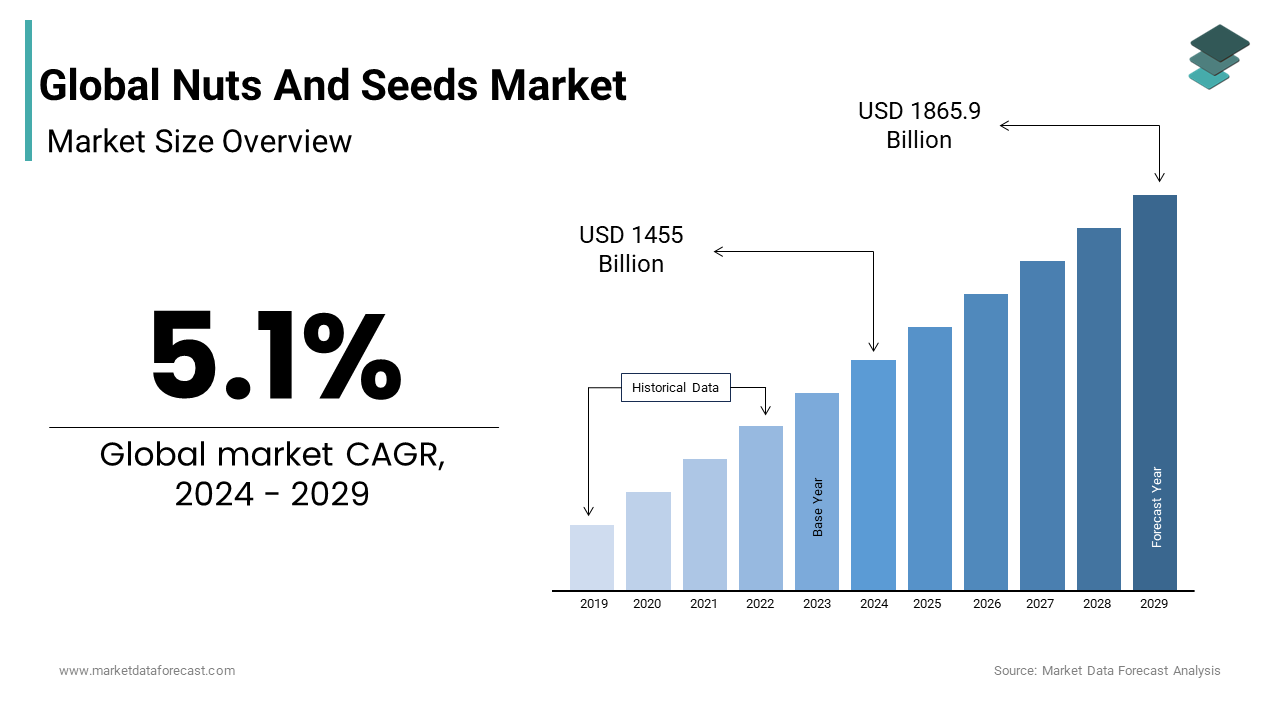
The global nuts and seeds market was valued at USD 1,531.16 billion in 2025, is estimated to reach USD 1,609.71 billion in 2026, and is projected to reach USD 2,401.93 billion by 2034, growing at a CAGR of 5.13% during the forecast period. Market growth is driven by increasing demand for healthy snack options, rising awareness of nutritional benefits, and growing adoption of plant based diets. Nuts and seeds are widely valued for their high protein content, healthy fats, and essential nutrients, making them popular across food, beverage, and health applications. The expansion of functional foods and clean label products is further supporting steady global market growth.
Key Market Trends
- Rising demand for healthy and nutrient rich snack products is driving market growth.
- Increasing adoption of plant based and protein rich diets is boosting consumption.
- Growing awareness of the health benefits of nuts and seeds is supporting market expansion.
- Expansion of functional foods and clean label products is enhancing demand.
- Rising use in food processing and packaged food products is influencing market growth.
Segmental Insights
- Based on nuts, the peanut segment held 35.4% of the global nuts and seeds market share in 2025. This dominance is attributed to its affordability, widespread consumption, and versatility in food applications.
- Based on seeds, the soybeans segment accounted for 40.3% of the global nuts and seeds market share in 2025. The segment’s growth is driven by high demand for protein rich ingredients and use in various food and industrial applications.
Regional Insights
The global nuts and seeds market is experiencing steady growth across regions, supported by rising consumption and agricultural production.
Asia Pacific was the largest contributor, accounting for 40.3% of the global nuts and seeds market share in 2025, driven by large population base, strong agricultural output, and increasing demand for healthy food products.
Competitive Landscape
The global nuts and seeds market is highly competitive, with key players focusing on product quality, innovation, and expansion of distribution networks to strengthen their market position. Companies are investing in sustainable sourcing, advanced processing technologies, and branding strategies. Prominent players in the global nuts and seeds market include Olam International, Bayer AG, McCormick and Company Inc, Select Harvests Limited, DuPont Pioneer Hi Bred, ITC Limited, Advanta Seeds Pty Ltd, Blue Diamond Growers, Syngenta, and SunOpta.
Global Nuts and Seeds Market Size
The global nuts and seeds market size was valued at USD 1,531.16 billion in 2025. The global market size is expected to reach USD 2,401.93 billion by 2034 from USD 1,609.71 billion in 2026. The market is growing at a CAGR of 5.13% during the forecast period.
The nuts and seeds are derived from various plant species, including almonds, walnuts, cashews, chia, flax, and sunflower seeds. These nutrient dense ingredients are integral to diverse culinary traditions and have gained prominence as essential components of health-conscious diets. The sector operates at the intersection of agriculture food manufacturing and nutritional science driven by increasing consumer awareness of dietary benefits. According to the Food and Agriculture Organization of the United Nations global production of primary nuts exceeded 14 million metric tons in 2023 with China the United States and Iran leading in output volumes. The cultivation of these crops requires specific agro climatic conditions often limiting geographic production zones and influencing trade dynamics. As per data from the World Health Organization, non-communicable diseases such as cardiovascular disorders and diabetes affect millions globally prompting a shift towards preventive nutrition. Nuts and seeds are rich in unsaturated fats fiber vitamins and minerals which support metabolic health and immune function. The rise of plant-based lifestyles has further elevated the status of these commodities as viable protein sources. Regulatory bodies in major economies enforce strict quality and safety standards to mitigate risks such as aflatoxin contamination.
MARKET DRIVERS
Rising Prevalence of Lifestyle Related Diseases Promotes Preventive Nutrition
The escalating incidence of chronic health conditions, such as heart disease diabetes and obesity serves is driving the growth of nuts and seeds market. Medical professionals and nutritionists increasingly recommend these foods due to their high content of monounsaturated fats antioxidants and essential minerals, which contribute to cardiovascular health and glycemic control. According to the World Health Organization, cardiovascular diseases remain the leading cause of death globally accounting for an estimated 17.9 million deaths annually. This alarming statistic drives public health initiatives that advocate for dietary modifications including the incorporation of nutrient dense snacks. The presence of omega 3 fatty acids in seeds, such as flax and chia further supports brain health and inflammation reduction. As consumers become more health literate, they actively seek functional foods that offer therapeutic benefits alongside basic nutrition. Retailers respond to this demand by expanding their offerings of raw roasted and flavored nut mixes in health focused aisles. The convenience of portable nut packs appeals to busy individuals seeking healthy snacking options.
Expansion of Plant Based Diets Increases Demand for Alternative Proteins
The rapid adoption of vegan vegetarian and flexitarian diets significantly boosts the demand for nuts and seeds, as primary sources of plant based protein and healthy fats, which is fuelling the growth of nuts and seeds market. Consumers are increasingly reducing their intake of animal products due to ethical environmental and health concerns leading them to seek nutritious alternatives. Nuts and seeds provide essential amino acids and satiety making them ideal substitutes for meat and dairy in various culinary applications. According to the study, sales of plant based foods in the United States reached 8 billion dollars in 2022 with nuts and seeds playing a crucial role in product formulation. Almonds, cashews, and hemp seeds are widely used to create milks yogurts cheeses and meat analogs due to their creamy textures and neutral flavors. The versatility of these ingredients allows food manufacturers to innovate and develop diverse product lines that cater to evolving consumer preferences. Social media and digital platforms amplify the visibility of plant-based recipes featuring nuts and seeds further influencing dietary choices. Additionally, the environmental footprint of nut cultivation is generally lower than that of livestock farming appealing to eco conscious consumers.
MARKET RESTRAINTS
High Susceptibility to Climate Change and Water Scarcity
The high sensitivity of nut crops to climatic variations and water availability is limiting the growth of nuts and seeds market. Many major nut producing regions, such as California in the United States and parts of Australia experience recurring droughts and extreme heat waves, which adversely affect yield and quality. Prolonged droughts have led to reduced aquifer levels forcing farmers to fallow fields or switch to less water intensive crops. The Intergovernmental Panel on Climate Change reports that rising temperatures and irregular precipitation patterns are expected to exacerbate these challenges in the coming decades. Heat stress during the flowering and pollination stages can result in poor kernel development and lower oil content diminishing the economic value of the harvest. Additionally, extreme weather events such as hailstorms and floods can cause immediate crop damage leading to supply shortages and price volatility. The lack of widespread adoption of drought resistant varieties further limits the resilience of the sector. Farmers face increasing costs for water management and insurance which erode profit margins.
Stringent Allergen Regulations and Labeling Requirements Limit Product Formulation
The presence of nuts and seeds as common allergens imposes strict regulatory burdens on manufacturers and retailers restricting product formulation and access, which is limiting the growth of nuts and seeds market. Food safety authorities in major regions, such as the European Union and the United States mandate rigorous labeling and handling protocols to prevent cross contamination and protect sensitive consumers. Tree nuts and peanuts are classified as major food allergens requiring clear declaration on packaging. Compliance with these regulations involves dedicated production facilities extensive testing and detailed documentation, which increase operational costs for food processors. Small and medium sized enterprises often struggle to meet these stringent standards limiting their ability to compete with larger corporations. Additionally, the risk of accidental exposure leads many schools airlines and public institutions to ban nut products entirely reducing potential consumption venues. Consumer anxiety regarding cross contamination also drives demand for nut free facilities which are scarce and expensive to maintain. These regulatory and safety concerns constrain the innovation of mixed ingredient products and limit the integration of nuts and seeds in certain food categories.
MARKET OPPORTUNITIES
Innovation in Value Added and Convenience Products Captures Urban Consumers
The development of innovative value-added nut and seed products, such as flavored snacks nut butters and ready to eat mixes is creating new opportunities for the growth of nuts and seeds market. Urban consumers with busy lifestyles seek convenient and healthy snacking options that align with their nutritional goals. Manufacturers are introducing exotic flavors, such as sriracha honey roasted and turmeric infused variants to attract adventurous palates and differentiate their offerings. The rise of single serve packaging enhances portability and portion control appealing to health-conscious individuals monitoring calorie intake. Additionally, the integration of nuts and seeds into functional foods such as protein bars energy balls and breakfast cereals expands their usage occasions beyond traditional snacking. The global wellness trend supports the positioning of these products as premium health items commanding higher price points. Data from Mintel indicates that consumers are willing to pay more for clean label and organic nut products that promise transparency and quality.
Growth in Cosmetic and Personal Care Applications Diversifies Revenue Streams
The utilization of nut and seed oils in the cosmetic and personal care industry is certainly creating new opportunities for the growth of nuts and seeds market. Oils derived from almonds argan jojoba and chia seeds are renowned for their moisturizing anti-aging and healing properties making them ideal ingredients for skincare and haircare formulations. Argan oil from Morocco and almond oil from the Mediterranean are particularly valued for their high vitamin E and fatty acid content, which nourish skin and hair. Cosmetic brands are leveraging the natural origin of these oils to develop premium product lines that appeal to environmentally conscious consumers. The trend towards clean beauty encourages the replacement of synthetic chemicals with plant based alternatives enhancing the demand for high quality nut and seed extracts. Additionally, the sustainability credentials of these crops align with the ethical values of modern buyers who prioritize eco friendly products. Partnerships between agricultural producers and cosmetic manufacturers can secure stable supply chains and open new revenue channels. This shift from food to non food applications reduces dependency on dietary trends and provides resilience against fluctuating food market conditions.
MARKET CHALLENGES
Volatility in Global Supply Chains and Logistics Costs
The disruptions in global supply chains and fluctuating logistics costs, which impact pricing and availability is one of the challenges for the growth of nuts and seeds market. Nuts and seeds are predominantly produced in specific geographic regions and transported globally creating vulnerability to transportation bottlenecks and geopolitical tensions. According to the research, the cost of international shipping increased significantly in recent years due to port congestions fuel price hikes and labor shortages. These logistical challenges delay shipments and increase the landed cost of imported nuts affecting retailer margins and consumer prices. The reliance on long distance trade means that any disruption in key transit routes, such as the Suez Canal or Panama Canal can have immediate repercussions on global supply. The United States Department of Agriculture notes that trade disputes can lead to sudden shifts in demand and supply imbalances affecting farmer incomes. Small scale exporters often lack the resources to navigate complex regulatory environments and manage logistics efficiently. The perishability of certain fresh nuts requires cold chain infrastructure which is not uniformly available in all regions.
Threat of Pests and Diseases Impacting Crop Yields
The prevalence of pests and diseases to the productivity and cultivation is also to limit the growth of nuts and seeds market. Crops, such as almonds, walnuts, and pistachios are susceptible to various pathogens and insects that can cause substantial yield losses. According to the study, the navel orange worm is a major pest affecting almond orchards in California causing millions of dollars in annual damages. Infestations can lead to rejected shipments due to quality standards and increased pesticide use which raises production costs and environmental concerns. Fungal infections, such as aflatoxin contamination are also an issue, particularly in peanuts and tree nuts grown in warm and humid conditions. The European Food Safety Authority strictly regulates aflatoxin levels in imported nuts leading to rejections of contaminated batches and financial losses for exporters. Climate change exacerbates these issues by creating favorable conditions for pest proliferation and disease spread. Farmers must invest in integrated pest management strategies and resistant crop varieties to mitigate these risks. However, the development and adoption of such technologies require time and capital which may be prohibitive for smallholder farmers.
REPORT COVERAGE
| REPORT METRIC | DETAILS |
| Market Size Available | 2025 to 2034 |
| Base Year | 2025 |
| Forecast Period | 2026 to 2034 |
| CAGR | 5.13% |
| Segments Covered | Based on Nuts, Seeds, and Region |
| Various Analyses Covered | Global, Regional & Country Level Analysis, Segment-Level Analysis, DROC, PESTLE Analysis, Porter’s Five Forces Analysis, Competitive Landscape, Analyst Overview on Investment Opportunities |
| Regions Covered | North America, Europe, APAC, Latin America, Middle East & Africa |
| Market Leaders Profiled | Olam International, Bayer AG, McCormick & Company, Inc, Select Harvests Limited, DuPont (Pioneer Hi-Bred), ITC Limited, Advanta Seeds Pty Ltd, Blue Diamond Growers, Syngenta and SunOpta. |
SEGMENTAL ANALYSIS
By Nuts Insights
The peanut segment was accounted in holding 35.4% of the Nuts And Seeds Market share in 2025 due to the crop's high yield efficiency low production costs and extensive use in both direct consumption and industrial applications. Peanuts are a staple in global diets appearing in forms such as peanut butter roasted snacks confectionery ingredients and cooking oils. According to the United States Department of Agriculture, global peanut production reached approximately 50 million metric tons in 2023 with China India and Nigeria serving as the largest producers. The affordability of peanuts compared to tree nuts like almonds and macadamias makes them accessible to a broader demographic including lower income households. The versatility of peanuts allows them to be integrated into diverse cuisines ranging from Asian stir fries to American sandwiches and African stews. Additionally, the high protein content of peanuts appeals to consumers seeking plant-based nutrition at a competitive price point. The established supply chains and processing infrastructure for peanuts ensure consistent availability in retail markets worldwide. Furthermore, the popularity of peanut butter as a convenient and shelf stable food item sustains steady demand across all age groups.
The macadamia nut segment is projected to register a CAGR of 6.8% during the forecast period with the increasing consumer preference for premium and exotic nuts that offer unique flavors and high nutritional value. Macadamia nuts are rich in monounsaturated fats antioxidants and minerals which align with the rising demand for heart healthy snacks. Australia and South Africa remain the primary producers but cultivation is expanding in Hawaii and Latin America to meet global needs. The creamy texture and mild flavor of macadamia nuts make them popular in gourmet confectionery baking and dairy alternatives. The positioning of macadamia nuts as a superfood in health and wellness circles further drives adoption among fitness enthusiasts.
By Seeds Insights
The soybeans segment was accounted in holding 40.3% of the nuts and seeds market share in 2025 with the dual utility of soybeans as a primary source of vegetable oil and high protein animal feed. The global livestock industry relies heavily on soybean meal to meet the protein requirements of poultry swine and cattle. The extraction of soybean oil provides a cost effective cooking oil widely used in food processing and household cooking. The scalability of soybean cultivation and the efficiency of modern agricultural practices ensure a stable and abundant supply. Additionally, the versatility of soy derivatives extends to industrial applications such as biodiesel lubricants and plastics. The integration of soybeans into global trade networks facilitates their distribution to major consuming regions in Asia and Europe. The continuous development of genetically modified varieties with higher yields and pest resistance further supports production growth.
The chia seeds segment is swiftly emerging at a fastest CAGR of 9.5% during the forecast period with the recognition of chia seeds, as a nutrient dense superfood rich in omega 3 fatty acids fiber and antioxidants. Health-conscious consumers are increasingly incorporating chia seeds into their diets to support digestive health weight management and cardiovascular wellness. According to study, sales of chia seeds and chia based products have grown by 15% annually in North America and Europe reflecting strong consumer interest. The versatility of chia seeds allows them to be easily added to smoothies, yogurts, salads, and baked goods, without altering flavor profiles significantly. The rise of vegan and gluten free diets has further boosted demand as chia seeds serve as an effective egg substitute in baking. Social media influencers and nutritionists frequently promote chia seeds for their hydration and energy boosting properties enhancing their visibility. Data from the Global Wellness Institute indicates that the functional food sector is expanding rapidly with chia seeds playing a key role. Major food manufacturers are launching chia enriched products, such as beverages, snacks, and cereals to capitalize on this trend.
REGIONAL ANALYSIS
Asia Pacific Nuts and Seeds Market Analysis
The Asia Pacific was the top performer in the global Nuts And Seeds Market by accounting for 40.3% of the share in 2025. Countries, such as China, India, and Vietnam, are major producers and consumers of peanuts cashews and sesame seeds. According to the Food and Agriculture Organization of the United Nations, Asia Pacific produces over 60% of the world's peanuts and a significant portion of tree nuts. The rising middle class in the region is driving demand for premium nuts such as almonds and walnuts as disposable incomes increase. Urbanization and changing lifestyles are leading to higher consumption of packaged and processed nut snacks. The presence of extensive agricultural land and favorable climatic conditions supports robust local production. Government initiatives promoting agricultural productivity and food security further support market growth.
North America Nuts and Seeds Market Analysis
North America nuts and seeds market was ranked second by holding 25.3% of share in 2025 with high per capita consumption and a strong focus on health and wellness. The United States is a leading producer of almonds walnuts and pecans, while Canada is a major supplier of flaxseeds and sunflower seeds. The prevalence of health conscious dietary trends, such as keto, paleo, and veganism drives demand for nutrient dense nuts and seeds. Retailers in North America, offer a wide variety of raw roasted and flavored nut products catering to diverse consumer preferences. Data from the Plant Based Foods Association shows that the demand for plant-based proteins including nuts and seeds is increasing steadily. The presence of major food processing companies and innovative startups fosters product development and market expansion. Additionally, the regulatory environment supports clear labeling and health claims which enhances consumer trust.
Europe Nuts and Seeds Market Analysis
Europe Nuts And Seeds Market growth is exhibit the fastest CAGR from 2026 to 2034 with the health awareness and sustainability concerns. According to Eurostat, the European Union is the largest importer of nuts globally with Germany, France, and the Netherlands being key entry points. Consumer preference for organic and non-genetically modified nuts and seeds is strong in Europe, influencing sourcing and production practices. Data from the International Nut and Dried Fruit Council indicates that nut consumption in Europe has risen due to their inclusion in Mediterranean and other healthy diets. The bakery and confectionery industries are major users of nuts and seeds contributing to stable demand. Additionally, the trend towards plant based diets is encouraging the use of nut milks and seed based spreads. Regulatory standards for food safety and quality are stringent ensuring high product standards.
Latin America Nuts and Seeds Market Analysis
Latin America nuts and seeds market growth is driven by the prominent opportunities in coming years. Brazil and Chile are key players in the production of Brazil nuts and walnuts respectively. According to the Economic Commission for Latin America and the Caribbean, the region's agricultural sector is expanding with increased investment in nut cultivation. Domestic consumption is growing as urban populations adopt healthier eating habits and seek alternative protein sources. The export of Brazil nuts and cashews to North America and Europe generates substantial revenue for local economies. Data from local agricultural ministries indicates that production volumes are increasing due to improved farming techniques and infrastructure. The integration of smallholder farmers into formal supply chains is improving product quality and consistency.
Middle East and Africa Nuts and Seeds Market Analysis
The Middle East and Africa nuts and seeds market growth is likely to grow with the traditional consumption patterns, where nuts such as pistachios almonds and sesame seeds are integral to local cuisines. Nuts and seeds are increasing in Gulf Cooperation Council countries due to rising incomes and urbanization. In Africa countries like Tanzania and Mozambique are significant producers of cashews and sesame seeds for export. Domestic consumption is limited by economic constraints but is gradually rising in urban areas. The region relies heavily on imports to meet the demand for varieties not locally produced. Government efforts to improve agricultural productivity and food security are supporting local production. The cultural significance of nuts in religious and social ceremonies ensures steady demand.
COMPETITIVE LANDSCAPE
The competition in the Nuts and Seeds Market is characterized by a mix of large multinational corporations regional cooperatives and specialized niche players vying for market dominance. Major companies leverage their extensive supply chains and branding power to maintain leadership in mainstream segments. Smaller firms compete by offering organic non GMO and ethically sourced products that appeal to health conscious consumers. The market sees intense rivalry in terms of product differentiation with companies introducing unique flavors and convenient packaging formats. Price volatility due to climatic conditions and supply chain disruptions influences competitive dynamics significantly. Strategic acquisitions and partnerships are common as firms seek to expand their product portfolios and geographic presence. Sustainability certifications and transparent sourcing practices serve as key differentiators in building consumer trust.
KEY MARKET PLAYERS
Companies playing a promising role in the global nuts and seeds market include
- Olam International
- Bayer AG
- McCormick & Company, Inc.
- Select Harvests Limited
- DuPont (Pioneer Hi-Bred)
- ITC Limited
- Advanta Seeds Pty Ltd
- Blue Diamond Growers
- Syngenta and SunOpta
Top Players in the Market
- Olam International is a leading global agribusiness with a significant presence in the nuts and seeds sector particularly in almonds cashews and cocoa. The company contributes to the global market by managing an integrated supply chain from farm to customer ensuring quality and sustainability. Its involvement includes sourcing processing and distributing nut products to food manufacturers and retailers worldwide. Recent actions to strengthen its market position include investing in sustainable farming initiatives and expanding processing capabilities in key producing regions. Olam has also focused on digital platforms to enhance traceability and transparency for consumers. These strategic efforts enable Olam to maintain a competitive edge and support long term growth in the dynamic global nuts and seeds industry.
- John B Sanfilippo and Son Inc is a prominent processor and distributor of nuts and related products in North America. The company contributes to the global market through its well known brands such as Fisher and Evol Foods which offer a wide range of snack and ingredient solutions. Its involvement spans sourcing roasting and packaging various nuts including peanuts walnuts and pecans. Recent actions to strengthen its market position include the acquisition of complementary brands to diversify its product portfolio. The company has also invested in modernizing its manufacturing facilities to improve efficiency and product quality. These initiatives help the company adapt to changing dietary preferences and maintain strong relationships with retail partners across multiple channels.
- Blue Diamond Growers is a global agricultural cooperative owned by almond growers in California. The company contributes to the global market by marketing and distributing almond products under its flagship brand and private labels. Its involvement includes processing raw almonds into various forms such as roasted salted and flavored snacks as well as almond milk. Recent actions to strengthen its market position include expanding international distribution networks and launching new product innovations. Blue Diamond has also emphasized sustainability in its farming practices to appeal to environmentally conscious consumers.
Top Strategies Used by the Key Market Participants
Key players in the Nuts And Seeds Market primarily employ strategies focused on vertical integration and product innovation to maintain competitive advantage. Companies are increasingly investing in sustainable sourcing practices to ensure supply chain resilience and appeal to eco conscious consumers. Expansion into emerging markets through strategic partnerships enhances global reach and diversifies revenue streams. Innovation in value added products such as flavored snacks and plant based alternatives caters to evolving dietary preferences. Additionally, firms are leveraging digital technologies for better traceability and consumer engagement. These combined strategies enable market participants to navigate regulatory challenges while driving growth and maintaining brand loyalty in the competitive global landscape.
MARKET SEGMENTATION
This research report on the global nuts and seeds market has been segmented and sub-segmented based on nuts, seeds and region.
By Nuts
- Cashew Nut
- Peanut
- Almond
- Walnut
- Macadamia Nut
- Other Nuts
By Seeds
- Sunflower Seeds
- Sesame Seeds
- Chia Seeds
- Corn
- Soybean
- Other Seeds
By Region
- North America
- Europe
- Asia-Pacific
- Latin America
- Middle East & Africa
Frequently Asked Questions
1.What is the global nuts and seeds market?
The global nuts and seeds market includes the production, processing, distribution, and consumption of edible nuts and seeds used as snacks, ingredients, and nutritional food products worldwide.
2.What factors are driving growth in the global nuts and seeds market?
Growth is driven by increasing health consciousness, rising demand for plant based protein, expanding vegan and vegetarian diets, and growing use of nuts and seeds in functional foods.
3.What types of products are included in the nuts and seeds market?
The market includes almonds, cashews, walnuts, peanuts, pistachios, sunflower seeds, pumpkin seeds, chia seeds, flax seeds, and other edible varieties.
4.What are the main applications of nuts and seeds?
Main applications include direct consumption as snacks, bakery and confectionery products, breakfast cereals, spreads, dairy alternatives, and use as ingredients in health foods.
5.Which regions dominate the global nuts and seeds market?
North America and Europe dominate the market due to high consumption levels, while Asia Pacific shows strong growth driven by population expansion and dietary diversification.
6.What nutritional benefits do nuts and seeds offer?
Nuts and seeds are rich in healthy fats, protein, fiber, vitamins, minerals, and antioxidants that support heart health, energy levels, and overall wellbeing.
7.What trends are shaping the global nuts and seeds market?
Key trends include organic and non GMO products, flavored and roasted snack innovations, clean label packaging, and growing demand for sustainably sourced products.
8.What challenges does the global nuts and seeds market face?
Challenges include price volatility, climate change impacts on crop yields, supply chain disruptions, allergen concerns, and fluctuating export and import regulations.
9.How do regulations affect the nuts and seeds market?
Regulations affect food safety standards, labeling requirements, allergen disclosures, quality control, and international trade compliance.
10.What distribution channels are commonly used in the market?
Distribution channels include supermarkets and hypermarkets, convenience stores, specialty health food shops, online retail platforms, and foodservice outlets.
Related Reports
Access the study in MULTIPLE FORMATS
Purchase options starting from
$ 2500
Didn’t find what you’re looking for?
TALK TO OUR ANALYST TEAM
Need something within your budget?
NO WORRIES! WE GOT YOU COVERED!
Call us on: +1 888 702 9696 (U.S Toll Free)
Write to us: sales@marketdataforecast.com