- Product Description Description
- Table of Contents TOC
- List of Table & Figure LOT
- Get Free Sample PDF Sample PDF
Market Size, 2025
$1.75 BnMarket Estimate, 2026
$1.93 BnMarket Forecast, 2034
$4.25 BnCAGR, 2026–2034
10.36%Executive Summary: Global Watermelon Seeds Market
- Market Scope: Comprehensive global watermelon seeds market analysis covering product types, distribution channels, regional growth patterns, and health-focused superfood trends.
- Market Valuation: Valued at USD 1.75 billion (2025), estimated at USD 1.93 billion (2026), and projected to reach USD 4.25 billion by 2034, registering a robust CAGR of 10.36% (2026–2034).
- Primary Growth Drivers: Rising health consciousness and demand for organic, gluten-free, and non-GMO superfood snacks; rich nutritional profile of watermelon seeds (high in protein, amino acids, magnesium, and omega-3/omega-6 fatty acids); and their widespread application as a low-calorie fat substitute in bars, juices, and dietary supplements. Restraints include strict safety/protection rules, high initial setup costs, and cheaper alternative superfood seeds.
Key Market Segment Metrics (2026–2034)
| Category | Leading Segment (2025 Position) | Fastest-Growing Segment |
|---|---|---|
| By Type | Raw and natural seeds (hold the largest share, heavily used as fat substitutes in snacks, cookies, and flours) | Roasted and flavored seed snack varieties driven by rising consumer health awareness |
| By Distribution Channel | Offline retail channels (supermarkets, hypermarkets, and local stores account for the largest global share) | Online e-commerce platforms fueled by smartphone adoption and internet penetration |
| By Region | North America (dominates global consumption due to a massive vegan population and established health food sectors) | Asia-Pacific (fastest-growing demand driven by rising disposable incomes, urbanization, and health trends) |
Major Market Players & Market Structure
Market Structure: Highly competitive agricultural seed breeding and snack food manufacturing landscape featuring global seed conglomerates and food processors competing on hybrid seed varieties, nutritional profile optimization, M&As, and strategic alliances.
Key Companies: Bayer AG (Germany), Esmeralda Seed (US), Vilmorin & Cie (France), Syngenta (Switzerland), Origene Seed (Israel), Rizhao Golden Nut Group (China), Qiaqia Food (China), Tokita Seed (Japan), and Hazera (Israel/Netherlands).
 Download Free Sample Report
Global Watermelon Seeds Market Size
The global watermelon seeds market size was valued at USD 1.75 billion in 2025 and is anticipated to reach a valuation of USD 1.93 billion in 2026 and USD 4.25 billion by 2034, growing at a CAGR of 10.36%, from 2026 to 2034.
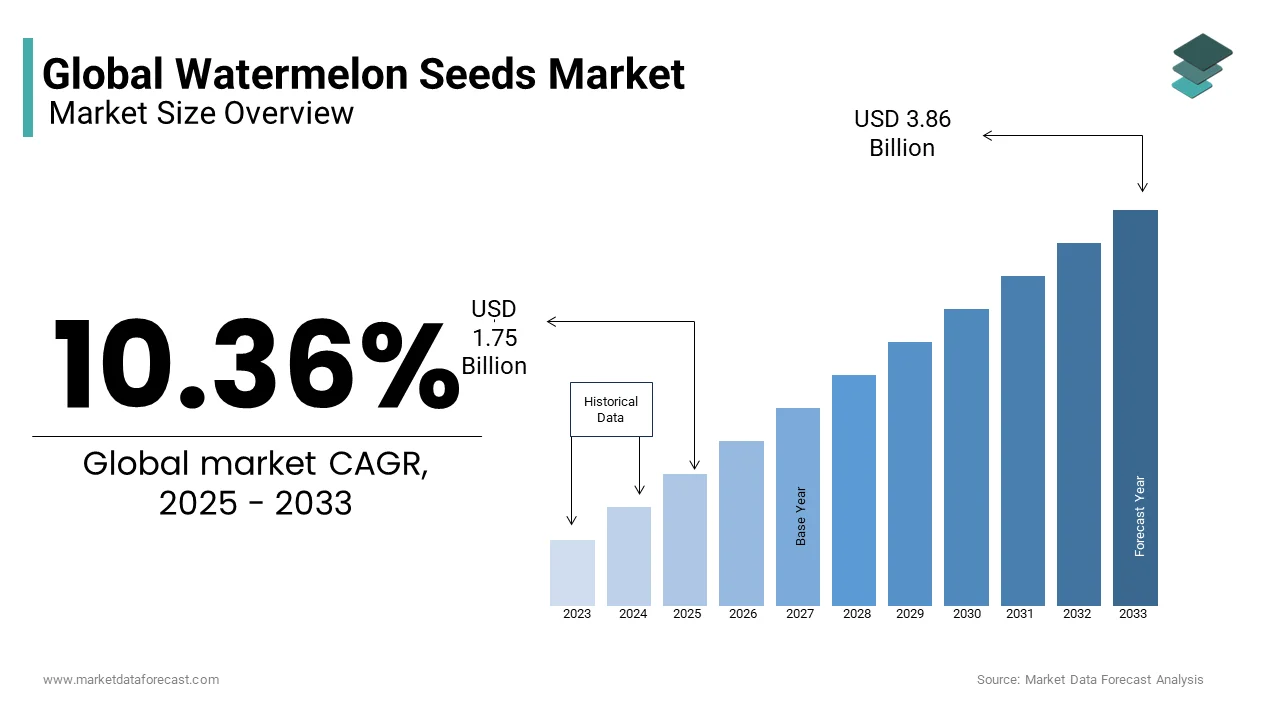
The watermelon seeds are the global trade, commercial processing, and agricultural distribution of specialized reproductive and edible kernels cultivated for high-yield crop production and nutrient-dense snack manufacturing. As per recent agricultural industry evaluations, the global valuation stands at 0.86 billion dollars, reflecting steady commercial expansion driven by the rapid transition from open-pollinated to hybrid cultivation varieties. According to the Food and Agriculture Organization, global vegetable crop cultivation areas have expanded significantly to satisfy escalating food security demands, directly increasing the planting density requirements for high-performance seed lines. This commercial momentum transforms standard agricultural commodities into highly engineered biological assets, integrating advanced seed treatments and genetic selections that maximize agricultural output and enrich human nutrition worldwide.
MARKET DRIVERS
Transition Toward High-Yield Hybrid Cultivars
The rapid adoption of F1 hybrid seeds transforming commercial agricultural productivity is driving the growth of the watermelon seeds market. The global shift from traditional open-pollinated varieties toward high-value F1 hybrid cultivars serves as a primary catalyst for the watermelon seeds market. This trend relates directly to the market because higher field yields compel commercial farmers to purchase premium certified seed stock repeatedly each planting season rather than retaining low-performing grain. According to the data, the global commercial seed R&D investments have risen by 12% by ensuring a continuous pipeline of disease-resistant, uniform germplasm that appeals directly to large-scale agricultural enterprises seeking maximized financial returns per hectare.
Surge in Consumer Demand for Plant-Based Functional Snacks
The rising popularity of nutrient-dense edible kernels expanding retail food processing channels is additionally promoting the growth of the watermelon seeds market. The burgeoning consumer shift toward plant-based diets and high-protein snacking options creates an unprecedented consumption boom for edible seed kernels. According to the United States Department of Agriculture, dried watermelon seed kernels contain approximately 28.3 grams of protein per 100 grams, positioning them favorably against traditional nuts and competing oilseeds. This nutritional profile connects directly to the watermelon seeds market by encouraging large food processing conglomerates to procure bulk quantities of shelled kernels for roasted snack lines, vegan protein powders, and bakery ingredient blends.
MARKET RESTRAINTS
High Production Costs and Handling Complexities of Triploid Varieties
The exorbitant seed acquisition expenses and strict germination sensitivity restricting smallholder adoption that is restricting the growth of the watermelon seeds market. The commercial cultivation of seedless triploid cultivars introduces severe financial and technical entry barriers that limit broader market penetration among budget-conscious farmers. This economic constraint relates directly to the watermelon seeds market because expensive seed investments raise upfront operational risks for small-scale growers, who lack crop insurance or specialized greenhouse infrastructure. Additionally, the smallholder farming communities in developing regions experience up to a 25% seedling failure rate when handling sensitive triploid genetics without precise temperature and moisture control, discouraging widespread commercial migration away from traditional diploid seeds.
Stringent Phytosanitary Regulations Impeding International Seed Logistics
The complex cross-border compliance barriers and rigorous quarantine protocols delaying global supply chains is additionally declining the growth of the watermelon seeds market. The international movement of agricultural reproductive material faces stringent regulatory scrutiny designed to prevent the global spread of seed-borne plant pathogens and invasive weeds. The complex phytosanitary certification procedures and border inspection delays increase compliance overheads for international seed exporters annually. This regulatory friction connects directly to the watermelon seeds market by restricting the seamless distribution of proprietary hybrid lines from primary breeding hubs in North America and Europe to emerging agricultural zones across Asia and Africa. Furthermore, the routine border rejections due to minor microbial threshold non-compliance have forced seed distributors to absorb significant inventory write-offs, dampening cross-border trade expansion.
MARKET OPPORTUNITIES
Commercial Expansion of Protected Greenhouse Cultivation
The advanced controlled environment agriculture opening lucrative off-season procurement channels for premium seed stocks is also to create new opportunities for the growth of the watermelon seeds market. The rapid proliferation of high-tech greenhouses and protected farming infrastructure presents a major growth vector for specialized seed developers targeting high-value horticultural markets. This agricultural evolution benefits the watermelon seeds market because controlled greenhouse environments allow year-round crop production, requiring continuous purchases of high-cost, disease-resistant hybrid seeds optimized for vertical training systems. According to the study, protected agricultural yields outperform open-field systems by up to 40%, giving commercial greenhouse operators the profit margins needed to invest in premium genetic varieties.
Integration of Marker-Assisted Breeding and Genomic Selection
The advanced molecular biotechnology accelerating breeding cycles and unlocking customized climate-resilient traits is also to elevate the growth of the watermelon seeds market. The integration of genomic selection and marker-assisted breeding techniques revolutionizes the development speed and environmental adaptability of commercial crop varieties. Enabling seed companies to rapidly engineer and commercialize drought-tolerant and heat-resistant germplasm tailored for arid agricultural regions is also boosting the growth of the market. Additionally, research published by the Consultative Group on International Agricultural Research notes that molecularly bred climate-resilient seeds maintain stable yields under extreme weather stress, driving robust procurement volumes across drought-prone farming belts in the Middle East and Africa.
MARKET CHALLENGES
Vulnerability to Climate-Induced Seed Crop Failures
The unpredictable weather volatility and extreme thermal stress threatening foundational seed multiplication fields is one of the major challenges for the growth of the watermelon seeds market. The heavy geographic concentration of commercial seed multiplication fields exposes global supply chains to severe production vulnerabilities driven by worsening climate anomalies. According to the study, extreme weather events and unseasonal precipitation anomalies have disrupted agricultural productivity in major seed-producing regions by 14% over recent cycles. Furthermore, the rising ambient temperatures in traditional seed-growing latitudes reduce pollen viability and seed set rates, forcing breeding companies to relocate production fields and incur heavy capital expenditures.
Rampant Counterfeiting and Intellectual Property Infringement
The illicit grain saving and unauthorized genetic duplication eroding proprietary research profit margins is to hinder the growth of the watermelon seeds market. The widespread illicit practice of saving grain from hybrid harvests for subsequent replanting undermines the commercial revenues of research-driven seed corporations. This intellectual property challenge relates directly to the watermelon seeds market by depriving original developers of the licensing fees necessary to fund expensive long-term biotechnology research. Additionally, the legal enforcement deficits in emerging economies cost legitimate seed manufacturers billions of dollars annually in lost sales, forcing companies to implement costly anti-counterfeiting packaging and cryptographic tagging technologies.
REPORT COVERAGE
| REPORT METRIC | DETAILS |
| Market Size Available | 2025 to 2034 |
| Base Year | 2025 |
| Forecast Period | 2026 to 2034 |
| CAGR | 10.36% |
| Segments Covered | By Type, Distribution Channel, and Region |
| Various Analyses Covered | Global, Regional & Country Level Analysis, Segment-Level Analysis, DROC, PESTLE Analysis, Porter’s Five Forces Analysis, Competitive Landscape, Analyst Overview of Investment Opportunities |
| Regions Covered | North America, Europe, APAC, Latin America, Middle East & Africa |
| Market Leaders Profiled | Bayers, Esmeralda Seed, Vilmorin & Cie, Syngenta, Origene Seed, Rizhao Golden Nut Group, QiaqiaFoodd, Tokita Seed, and Hazera are some of the leading players in this market. To expand their product portfolio and global reach, the majority of these businesses have adopted various business strategies such as M&A and alliances. Vilmorin & Cie, Inc. fused with Genica Research Corp in February 2016 with Instance. |
SEGMENTAL ANALYSIS
By Type Insights
The raw segment was the largest by accounting for 53.8% of the watermelon seeds market share in 2025. According to research, raw watermelon seeds excel due to rising consumer awareness regarding the preservation of natural nutrients, zero additive processing, and versatile utility across agricultural cultivation and culinary applications. The unroasted kernels retain complete enzymatic profiles and essential fatty acids. According to the United States Department of Agriculture, raw seed profiling indicates high concentrations of magnesium and iron, which appeal directly to clean-label health food manufacturers seeking pure ingredient inputs. Furthermore, data published by the Food and Agriculture Organization shows global vegetable crop processing requirements expanding steadily, providing a massive baseline supply of raw kernels for industrial oil extraction and direct agricultural planting needs.
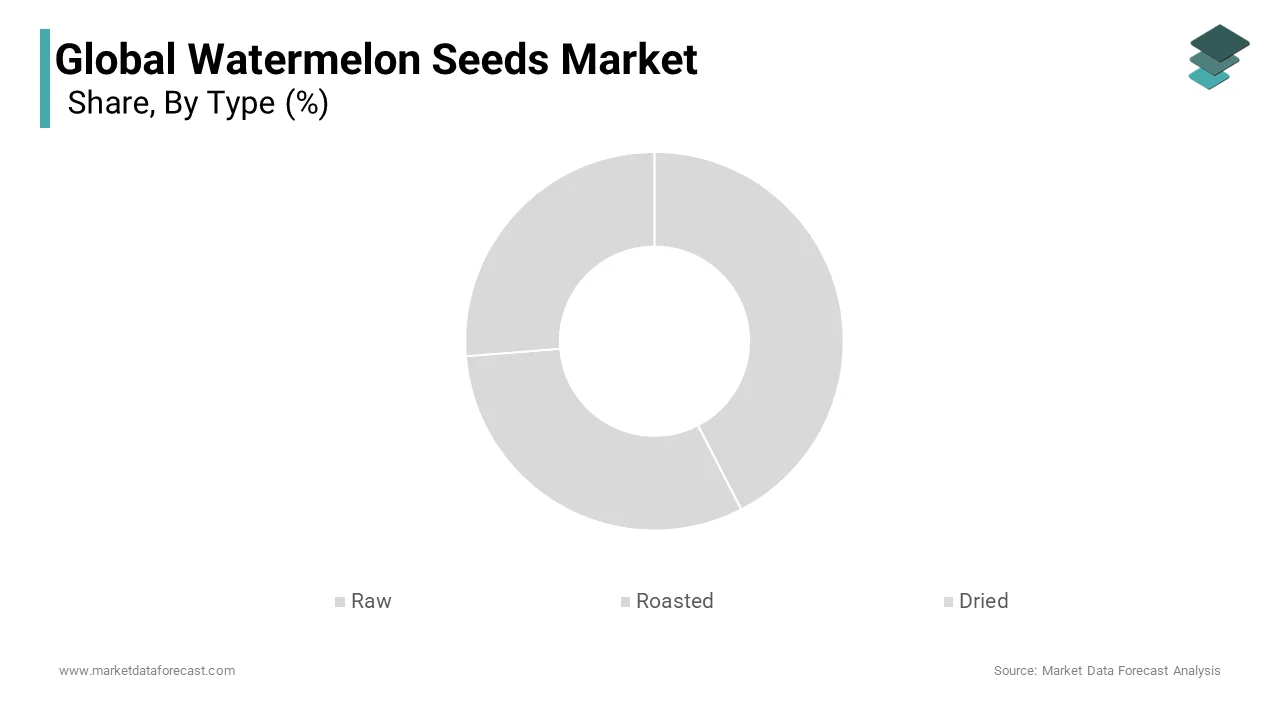
The roasted segment is deemed to exhibit a fastest CAGR of 6.6% from 2026 to 2034. According to the study, roasted watermelon seeds achieve rapid expansion because urban consumers increasingly prioritize ready-to-eat, flavorful snack alternatives infused with savory spices and sea salt. This rapid growth trajectory connects directly to changing lifestyle patterns favoring portable functional foods that combine indulgence with wellness. According to the International Nut and Dried Fruit Council, global retail sales of flavored snack kernels have surged by 15%, driving food brands to scale up thermal processing lines. Additionally, snack purchasers actively seek out roasted seed varieties for their enhanced crunch and palatability, accelerating category penetration across mainstream grocery chains.
By Distribution Channel Insights
The offline segment was accounted in holding a significant share of the watermelon seeds market in 2025 with the entrenched consumer preference for physical in-store grocery evaluations, tactile product verification, and immediate purchase gratification across supermarkets and hypermarkets. According to the study, physical retail footprints in developing and developed economies continue to record billions of footfalls annually, directly stimulating impulse purchases of packaged seed snacks. According to the data compiled by the World Retail Congress, food and beverage sales still originate from physical store checkouts, ensuring a continuous and high-volume revenue stream for established agricultural food brands.
The online segment is swiftly emerging at a fastest CAGR of 6.6% from 2026 to 2034. The digital retail platforms grow rapidly as consumers embrace direct-to-consumer brand sites, subscription snack boxes, and multi-vendor e-commerce marketplaces. This high-speed growth is directly driven by widespread internet accessibility and digital payment adoption. The active mobile broadband subscriptions are increasing by creating a massive digital audience capable of purchasing specialty gourmet food items instantly.
REGIONAL ANALYSIS
North America Market Analysis
North America was the top performer in the global watermelon seeds market by accounting for 31.2% of share in 2025. The high consumer purchasing power, widespread awareness of functional superfoods, and a mature health-conscious demographic. According to the study, over 45% of North American consumers actively seek out functional plant proteins, driving heavy retail procurement of nutrient-dense seed snacks. Furthermore, data from the United States Department of Agriculture demonstrates that domestic functional food retail sales have crossed major valuation milestones, cementing the region's structural control over premium-priced organic snack distribution and innovative packaging lines.
Europe watermelon seeds market was ranked second by holding 22.1% of the share in 2025 with the stringent clean-label food regulations and widespread vegan lifestyles. The aggressive European Union sustainability mandates and organic farming promotions. This high-growth status is intrinsically connected to shifting consumer dietary habits away from animal-based proteins. Additionally, European retail imports of specialty edible kernels have expanded significantly by forcing regional distributors to heavily procure certified non-GMO seed stocks to meet strict consumer transparency expectations.
Asia-Pacific watermelon seeds market growth is anticipated to have significant growth opportunities throughout the forecast period. According to the study, the Asia-Pacific market benefits from vast agrarian landscapes, favorable tropical climates, and deep-rooted culinary traditions that utilize melon seeds extensively. According to the study, Asia produces over 70% of the world's total watermelon crop, generating an abundant local supply of byproduct seeds for commercial kernel extraction.
Latin America Market Analysis
Latin America watermelon seeds market growth is driven by expanding horticultural exports and gradual modernization of local food supply chains. According to the study, Latin America relies heavily on favorable microclimates in Mexico and Brazil to supply seasonal fresh produce and specialized agricultural seeds to northern hemispheres. According to the study, regional agribusiness investments have increased by 10% as international conglomerates expand local processing plants. Furthermore, the regional adoption of hybrid seed technologies has grown by encouraging local farming cooperatives to upgrade their harvesting equipment and quality control protocols.
Middle East and Africa Market Analysis
The Middle East and Africa watermelon seeds market growth is likely to grow with the arid-agriculture technological investments and rising urban retail development in Gulf cooperation council states. The thrives on expanding health-food trends and high disposable incomes in metropolitan hubs. The agricultural water-saving and drip irrigation investments across Middle Eastern nations have grown by 14% by driving robust greenhouse production of specialty melon crops. Additionally, the drought-resilient seed adoption rates have risen by generating a stable framework for regional agricultural self-sufficiency and specialized snack distribution.
COMPETITIVE LANDSCAPE
Competition within the global watermelon seeds market remains intensely fierce, characterized by continuous biological innovation among established multinational life science corporations. Industry incumbents constantly vie for dominance by racing to commercialize advanced hybrid and triploid seeds that satisfy tightening agricultural productivity and consumer quality standards. While legacy breeders leverage their deep-rooted germplasm libraries and vast financial reserves to scale global operations, agile regional competitors frequently introduce localized varieties that challenge traditional market hierarchies. Price pressure remains a persistent competitive hurdle, forcing seed suppliers to balance expensive biotechnology research inputs and rigorous phytosanitary compliance standards against the tight cost sensitivities of commercial farming communities. Strategic consolidation, cross-border genetic acquisitions, and intensive collaborative ventures with agricultural technology developers further define the competitive battlefield as firms strive to secure exclusive access to next-generation genomic assets. Ultimately, long-term market survival demands continuous scientific innovation, stringent quality assurance, and the ability to adapt seed genetics to fast-changing climatic environments.
KEY MARKET PLAYERS
These are some of the leading players in this market
- Bayers
- Esmeralda Seed
- Vilmorin & Cie
- Syngenta
- Origene Seed
- Sakata Seed Corporation Contribution
- Rizhao Golden Nut Group
- Qiaqia Food
- Tokita Seed
- Hazera
Top Players In The Market
- Bayer AG stands as a foundational pillar within the global agricultural input sector, contributing extensively through the advanced breeding and commercial distribution of high-yield hybrid watermelon seed varieties. The company actively supplies disease-resistant germplasm to commercial farming enterprises across international agricultural zones. Furthermore, strategic agronomic partnerships allow Bayer AG to integrate comprehensive crop protection solutions directly with its premium seed offerings.
- Syngenta Group shapes contemporary agriculture by producing specialized seedless and diploid watermelon cultivars tailored for commercial growers and large-scale food processors worldwide. The enterprise contributes significantly to maximizing harvest profitability and fruit quality through rigorous multi-location field trials and innovative trait integration. Recent corporate actions involve heavy capital allocations toward digital agronomy platforms and global distribution networks designed to deliver high-performance seed lines that meet evolving market demands.
- Sakata Seed Corporation delivers exceptional value to the international vegetable sector by pioneering superior hybrid watermelon genetics characterized by exceptional sweetness, uniformity, and disease tolerance. The company contributes significantly to global food security by supplying dependable, high-germination seeds to professional growers across multiple continents. Strengthening its market presence, Sakata Seed Corporation continuously broadens its proprietary germplasm portfolio through targeted horticultural research and collaborative breeding stations situated in key agricultural regions.
Top Strategies Used By Key Market Participants
Key participants operating within the watermelon seeds market deploy aggressive biotechnological integration strategies to maintain competitive dominance amid rapid agricultural evolution. Leading seed developers prioritize heavy capital investments in research and development to engineer proprietary hybrid cultivars and marker-assisted traits that maximize field yields. Furthermore, major industry players aggressively forge strategic distribution agreements with regional agricultural cooperatives to secure long-term supply contracts across emerging farming belts. Companies also utilize active portfolio diversification by introducing disease-resistant seedless varieties, organic seed options, and specialized kernel-focused lines to capture niche revenue streams. Regional breeding localization serves as another prominent tactic, allowing top-tier corporations to mitigate complex supply chain vulnerabilities, avoid cross-border trade friction, and optimize operational cost structures across developing international markets.
MARKET SEGMENTATION
This research report on the global watermelon seeds market is segmented and sub-segmented into the following categories.
By Type
- Raw
- Roasted
- Dried
By Distribution Channel
- Offline
- Online
By Region
- North America
- Europe
- Asia-Pacific
- South America
- Middle East & Africa