Europe Maqui Berries Market Size, Share, Trends, & Growth Forecast Report By Nature (Organic Maqui Berries, Conventional Maqui Berries) , Form, End Use Industry, Distribution Channel and Country (UK, France, Spain, Germany, Italy, Russia, Sweden, Denmark, Switzerland, Netherlands, Turkey, Czech Republic and Rest of Europe), Industry Analysis From 2026 to 2034
Europe Maqui Berries Market Report Summary
The Europe maqui berries market was valued at USD 8.86 billion in 2025, is estimated to reach USD 9.72 billion in 2026, and is projected to reach USD 20.51 billion by 2034, growing at a CAGR of 9.78% during the forecast period from 2026 to 2034. The growth of the Europe maqui berries market is driven by increasing consumer preference for antioxidant-rich superfoods, rising awareness regarding preventive healthcare, and growing demand for natural dietary supplements. Expanding applications of maqui berries in functional foods, beverages, nutraceuticals, and cosmetics, along with rising demand for clean-label and organic ingredients, are further accelerating market growth. Moreover, increasing investments in sustainable sourcing, product innovation, and premium wellness products are supporting the expansion of the Europe maqui berries market.
Key Market Trends
-
Rising consumer demand for antioxidant-rich superfoods to support immunity, eye health, and overall wellness.
-
Increasing incorporation of maqui berry extracts into functional foods, beverages, dietary supplements, and skincare products.
-
Growing preference for organic, clean-label, and sustainably sourced botanical ingredients.
-
Rising adoption of digital traceability technologies to improve transparency across maqui berry supply chains.
-
Increasing development of personalized nutrition products and premium cosmetic formulations containing maqui berry extracts.
Segmental Insights
- Based on form, the processed segment dominated the Europe maqui berries market in 2025. The dominance of the segment is attributed to its longer shelf life, superior stability, ease of transportation, standardized anthocyanin content, broad compatibility with food and supplement manufacturing, and growing demand for freeze-dried powders and concentrated extracts across nutraceutical applications.
- The fresh maqui berries segment is projected to witness the fastest CAGR of 8.5% during the forecast period owing to increasing consumer preference for minimally processed superfoods, growing demand for premium fresh exotic fruits, expanding gourmet culinary applications, improving cold-chain logistics, and rising popularity of farm-to-table food trends.
- Based on nature, the organic segment dominated the Europe maqui berries market in 2025. The growth of the segment is driven by increasing consumer preference for certified organic products, expanding organic retail sales across Europe, growing awareness regarding sustainable agriculture, strong regulatory support for organic food production, and rising willingness among consumers to pay premium prices for certified botanical ingredients.
- The conventional segment is expected to register the fastest CAGR of 7.2% during the forecast period due to its affordability, increasing availability through mainstream retail channels, growing use in mass-market functional foods and beverages, expanding private-label offerings, and rising consumer adoption among price-sensitive buyers.
- Based on end-use industry, the dietary supplements segment dominated the Europe maqui berries market in 2025. The dominance of the segment is attributed to strong scientific evidence supporting maqui berry health benefits, increasing demand for antioxidant supplements, rising aging population, growing preventive healthcare awareness, and expanding physician recommendations for natural wellness products.
- The food and beverage segment is projected to witness the fastest CAGR of 9.1% during the forecast period owing to increasing innovation in functional beverages, healthy snacks, smoothies, dairy products, and fortified foods, along with growing consumer preference for natural ingredients with proven health benefits.
- Based on distribution channel, the B2B ingredient suppliers segment dominated the Europe maqui berries market in 2025. The segment’s leadership is supported by strong demand from nutraceutical manufacturers, food processors, cosmetic companies, standardized ingredient supply, long-term industrial partnerships, and efficient bulk distribution networks.
- The supermarkets and hypermarkets segment is anticipated to register the fastest CAGR of 8.8% during the forecast period due to increasing shelf availability of superfood products, expanding organized retail infrastructure, growing health-conscious consumer base, attractive promotional activities, and rising penetration of premium wellness products through mainstream retail outlets.
Regional Insights
- Germany dominated the Europe maqui berries market in 2025 owing to its large organic food industry, high consumer awareness regarding preventive health, strong demand for premium dietary supplements, expanding health food retail chains, and increasing incorporation of maqui berry extracts into nutraceutical formulations.
- France held a significant share of the Europe maqui berries market due to its growing functional food industry, strong demand for organic products, expanding premium cosmetics sector, increasing consumer preference for clean-label ingredients, and rising popularity of antioxidant-rich superfoods.
- The United Kingdom continues to represent a major market owing to increasing consumer adoption of functional foods, growing dietary supplement industry, expanding online health product retailing, rising awareness regarding eye health, and strong demand for plant-based wellness products.
- Italy is expected to witness steady growth during the forecast period due to rising interest in natural wellness products, growing use of maqui extracts in premium skincare formulations, expanding organic food consumption, and increasing demand for antioxidant-rich functional ingredients.
- Spain is projected to experience notable growth owing to expanding organic food retail, increasing health-conscious consumers, rising demand for dietary supplements, growing functional beverage innovations, and increasing integration of exotic superfoods into mainstream food products.
Competitive Landscape
The Europe maqui berries market is highly competitive and characterized by the presence of global botanical ingredient suppliers, nutraceutical companies, and specialty superfood manufacturers competing through product innovation, scientific validation, sustainable sourcing, and premium product positioning. Leading companies are focusing on developing standardized maqui berry extracts, expanding organic-certified product portfolios, strengthening partnerships with South American suppliers, investing in clinical research, improving ingredient traceability, and enhancing distribution networks across Europe. Continuous innovation in functional nutrition, personalized wellness solutions, and natural cosmetic ingredients continues to strengthen competitive positioning across the Europe maqui berries market. The prominent players operating in the Europe maqui berries market include Maqui New Life S.A., Bayas del Sur S.A., Symrise AG, Naturex S.A. (Givaudan), Artemis International, Inc., Indigo Herbs Ltd., Sevenhills Wholefoods Ltd., Bioglan, Navitas Organics, and NP Nutra.
Europe Maqui Berries Market Size
The Europe maqui berries market size was valued at USD 8.86 billion in 2025 and is anticipated to reach USD 9.72 billion in 2026 from USD 20.51 billion by 2034, growing at a CAGR of 9.78% during the forecast period from 2026 to 2034.
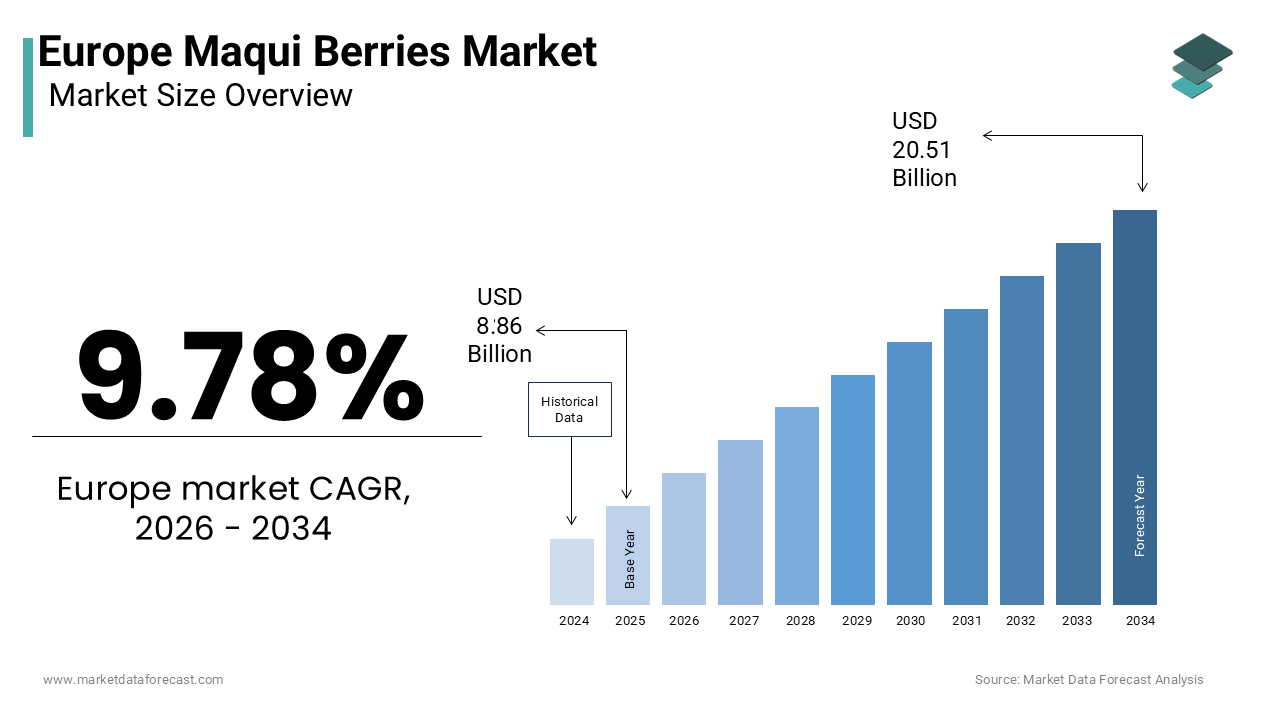
Maqui berries are small, dark-purple fruits native to the Patagonia region of South America, primarily harvested in Chile. Highly valued for their extraordinary antioxidant content, they are widely marketed as a "superfruit" and are commonly sold as dietary powders or extracts to boost immunity and promote overall cellular health. This small purple fruit has gained substantial recognition across European nations for its exceptional antioxidant profile, particularly its high concentration of delphinidin and cyanidin anthocyanins. Consumer awareness regarding preventive health measures has elevated the status of maqui berries from an exotic novelty to a staple ingredient in dietary supplements, functional beverages, and cosmetic formulations. According to the Research Institute of Organic Agriculture (FiBL), the European organic retail sector set a record high by reaching 58.7 billion euros in retail sales during 2024. As per Statista and FiBL, Germany and France represent the largest organic food markets in Europe, with 2024 retail sales volumes reaching 17.0 billion euros and 12.2 billion euros respectively. The integration of maqui berry extracts into mainstream wellness products reflects a shift toward evidence based nutritional solutions that address chronic inflammation and oxidative stress. Regulatory frameworks in countries such as the Netherlands and the United Kingdom support the incorporation of novel botanical ingredients provided they meet stringent safety and labeling requirements. The market thrives on the perception of maqui as a natural solution for eye health and metabolic balance which aligns with contemporary consumer preferences for clean label products. Supply chains have adapted to ensure consistent quality despite the geographical distance between South American harvesters and European processors. This ecosystem supports a growing network of distributors manufacturers and retailers who prioritize transparency and sustainability in their sourcing practices.
MARKET DRIVERS
Rising Prevalence of Chronic Diseases Drives Demand for Antioxidant Rich Superfoods
The escalating incidence of chronic conditions such as cardiovascular diseases, diabetes, and age-related macular degeneration drives the growth of the Europe maqui berries market. Health authorities report that noncommunicable diseases account for a significant proportion of mortality rates across the continent prompting individuals to seek dietary interventions that mitigate risk factors. Maqui berries contain potent anthocyanins that exhibit superior free radical scavenging activity compared to many other commonly consumed fruits. According to the Journal of Traditional and Complementary Medicine, daily oral supplementation of standardized maqui berry extract significantly increases tear fluid production and alleviates subjective symptoms of eye dryness and fatigue. The European population is experiencing a steady increase in life expectancy which correlates with a higher prevalence of age associated health issues that require long term management. Consumers are increasingly turning to functional foods that offer therapeutic benefits beyond basic nutrition. The antioxidant capacity of maqui berries helps combat oxidative stress which is a underlying mechanism in the development of chronic inflammatory conditions. Pharmaceutical and nutraceutical companies are leveraging this scientific backing to formulate products that target specific health concerns such as blood sugar regulation and cardiovascular protection. The demand is further amplified by medical professionals who recommend natural supplements as adjunct therapies for patients managing metabolic disorders. This medical endorsement enhances consumer trust and drives repeat purchases of maqui based products. The market responds to this health driven demand by offering standardized extracts with verified potency ensuring that consumers receive consistent therapeutic benefits. The alignment between scientific evidence and consumer health goals creates a sustainable growth trajectory for maqui berries in the European wellness sector.
Expanding Functional Food and Beverage Industry Creates Robust Application Avenues
The rapid expansion of the functional food and beverage sector in the region provides a substantial platform for the integration of these berries into diverse product formats, which further propels the expansion of the Europe maqui berries market. Manufacturers are innovating continuously to meet consumer expectations for convenient and tasty health solutions that fit seamlessly into daily routines. Maqui berry powder and extracts are being incorporated into smoothie mixes energy bars yogurt formulations and premium juices due to their vibrant color and mild flavor profile. As per the European Food Safety Authority (EFSA), consumer demands for nutrient-dense and functional food products continue to expand, heavily driving the commercial development of novel botanical formulations across European retail sectors. Beverage companies are launching ready to drink options infused with maqui extract targeting health conscious millennials and Gen Z consumers who actively seek immune supporting ingredients. The versatility of maqui allows it to complement other popular superfoods such as acai goji and blueberry creating synergistic blends that appeal to a broad audience. Retailers are dedicating more shelf space to functional categories reflecting the strong consumer interest in preventive health nutrition. The trend toward clean label products favors maqui berries as they are perceived as a natural and minimally processed ingredient. Food technologists are developing stable formulations that preserve the bioactive compounds of maqui during processing and storage ensuring efficacy until consumption. This innovation extends to cosmetic applications where maqui extract is used in anti aging creams and serums due to its ability to protect skin cells from environmental damage. The cross industry adoption of maqui berries demonstrates its value as a multifunctional ingredient that enhances product differentiation in a competitive marketplace. Brands that effectively communicate the unique benefits of maqui through transparent labeling and educational marketing campaigns gain a competitive advantage in capturing market share.
MARKET RESTRAINTS
High Dependency on Imported Raw Materials Creates Supply Chain Vulnerabilities
Its complete reliance on imports from South America, specifically Chile and Argentina, where the fruit grows wild in Patagonia, restrains the growth of the Europe maqui berries market. This geographical concentration exposes the supply chain to various risks including climatic fluctuations political instability and logistical disruptions that can affect availability and pricing. According to MDPI Foods, the commercial availability of maqui berry relies significantly on wild-crafting collection protocols in South America, rendering initial processing volumes vulnerable to year-to-year supply fluctuations. Weather patterns such as droughts or unseasonal rains in the Patagonia region can drastically reduce the volume of berries available for export impacting European manufacturers who depend on steady supplies. Transportation costs contribute substantially to the final price of maqui products making them less accessible to price sensitive consumers. The long distance shipping required to transport fresh or dried berries from South America to Europe increases the carbon footprint which contradicts the sustainability values of many environmentally conscious buyers. Delays at ports or changes in international trade policies can further disrupt the flow of raw materials causing production bottlenecks for European processors. The lack of domestic cultivation options in Europe due to unsuitable climatic conditions means that the market cannot buffer against external supply shocks. Quality control becomes challenging when dealing with multiple small scale collectors who may have varying standards for harvesting and initial processing. Contamination risks or improper drying techniques can compromise the integrity of the berries leading to rejections and financial losses. These supply chain complexities necessitate robust risk management strategies and long term contracts with suppliers which can be difficult to establish and maintain. The inherent volatility of the supply base limits the ability of manufacturers to scale up production rapidly in response to sudden spikes in demand.
Stringent Regulatory Compliance and Standardization Hurdles Impede Market Entry
Navigating the complex regulatory landscape of the European Union is a major restraint for new entrants and existing players in the Europe maqui berries market. The EU maintains rigorous standards for novel food ingredients requiring comprehensive safety assessments and scientific validation before products can be legally marketed. According to the European Food Safety Authority (EFSA), maqui berry (Aristotelia chilensis) powder and juice concentrates are denied authorization as general traditional foods due to safety gaps, remaining restricted strictly to the uniform EU Novel Food Status Catalogue allowance for designated food supplements. The process of obtaining approval for new health claims is time consuming and expensive requiring substantial investment in clinical trials and documentation. Inconsistent enforcement of regulations across different European countries can lead to confusion and uneven market access for suppliers. Organic certification adds another layer of complexity as producers must adhere to strict guidelines regarding pesticide use soil management and processing methods. The cost of maintaining multiple certifications for different markets reduces profit margins and discourages smaller businesses from entering the sector. Traceability requirements mandate detailed record keeping from harvest to final product which can be challenging when dealing with wild harvested ingredients from remote regions. Any deviation from regulatory standards can result in product recalls fines or bans which damage brand reputation and consumer trust. The need for continuous monitoring of regulatory updates requires dedicated compliance teams increasing operational costs. Furthermore, the lack of standardized testing methods for anthocyanin content leads to discrepancies in product quality assessments among different laboratories. This inconsistency makes it difficult for buyers to compare products objectively and can lead to disputes over quality specifications. The regulatory burden acts as a barrier to innovation slowing down the introduction of new maqui based formulations to the market.
MARKET OPPORTUNITIES
Integration Of Digital Traceability Technologies Enhances Consumer Trust and Transparency
The adoption of digital traceability solutions offers a significant opportunity for the Europe maqui berries market. This helps to address consumer demands for transparency and authenticity. Blockchain technology and Internet of Things devices enable end to end visibility of the supply chain allowing consumers to verify the origin and quality of maqui products through simple scans. This technological integration builds confidence among buyers who are increasingly skeptical of false claims regarding organic or sustainable sourcing. Companies that implement transparent tracking systems can differentiate themselves in a crowded marketplace by providing verifiable proof of ethical harvesting practices. Digital platforms facilitate direct communication between South American collectors and European consumers fostering a sense of connection and accountability. The data collected through these systems can also optimize inventory management and reduce waste by predicting demand more accurately. As per the Research Institute of Organic Agriculture (FiBL), premium global organic supply networks increasingly deploy digital ledger tools to preserve product authenticity from wild harvesting sites through to consumer delivery. This technological advancement supports premium pricing strategies as consumers are willing to pay more for products with verified provenance. Marketing campaigns that highlight the journey of the berry from Patagonia to the shelf resonate strongly with environmentally and socially conscious buyers. The use of QR codes on packaging provides instant access to detailed information about harvest dates processing methods and laboratory test results. This level of transparency mitigates concerns about adulteration or mislabeling which are common issues in the global superfood market. Retailers benefit from enhanced brand loyalty as customers appreciate the commitment to openness and quality assurance. The digital transformation of the supply chain also enables faster response to quality issues allowing for targeted recalls if necessary. This proactive approach protects brand integrity and maintains consumer confidence in the long term.
Expansion Into Personalized Nutrition and Premium Cosmetic Segments Offers Growth Potential
The growing trend toward personalized nutrition and high-end skincare creates a pathway for these berries in specialized segments of the Europe maqui berries market. Consumers are increasingly seeking tailored health solutions that address their individual genetic profiles and lifestyle needs driving demand for customized supplement formulations. Maqui berry extracts can be integrated into personalized vitamin packs and functional snacks that cater to specific health goals such as eye health or anti aging. According to MDPI, the high concentration of specific delphinidin anthocyanins in maqui berry extract drives its formulation into topical beauty applications aiming to mitigate oxidative skin degradation. The high antioxidant content of maqui protects skin from UV damage and pollution making it an attractive ingredient for urban consumers concerned about environmental stressors. Brands that position maqui as a luxury wellness ingredient can command higher price points and attract affluent demographics. Collaborations between nutraceutical companies and dermatologists can validate the efficacy of maqui based skincare products enhancing their credibility. The European beauty market values innovation and natural origins which aligns perfectly with the unique properties of maqui berries. Product developers are exploring synergistic combinations of maqui with other botanicals to create multi benefit formulations that appeal to discerning buyers. The rise of e commerce platforms facilitates the distribution of niche maqui products to targeted audiences across Europe bypassing traditional retail limitations. Social media influencers and health experts play a crucial role in educating consumers about the benefits of maqui in personalized care routines. This educational approach drives trial and adoption among consumers who are actively researching ingredients before making purchase decisions. The potential for subscription based models in personalized nutrition ensures recurring revenue streams for brands that successfully capture this segment.
MARKET CHALLENGES
Climate Change Impact on Wild Harvest Yields Poses Long Term Sustainability Risks
Climate shifts in Patagonia heavily threaten the Europe maqui berries market. This is due to its dependence on wild harvesting. Rising temperatures altered precipitation patterns and extreme weather events threaten the natural habitats where maqui bushes thrive. According to ScienceDirect, shifting rainfall patterns and microclimate disruptions alter wild plant flowering dynamics, establishing long-term volume risks for unmanaged botanical harvests. A poor harvest season in South America directly translates to shortages and price volatility in the European market disrupting business planning and consumer availability. The lack of commercial cultivation means that there is no controlled agricultural buffer to compensate for wild crop failures. Environmental degradation due to deforestation or land use changes in Chile and Argentina further reduces the available area for wild harvesting. Sustainable harvesting practices are essential to prevent overexploitation but enforcing these standards among dispersed wild collectors remains challenging. Climate induced stress on the plants may also affect the concentration of bioactive compounds potentially reducing the therapeutic efficacy of the berries. European consumers who prioritize environmental responsibility may hesitate to purchase products linked to ecological instability or unsustainable practices. Companies face pressure to invest in conservation initiatives or support reforestation projects to mitigate their environmental impact. The uncertainty surrounding future yields discourages long term investments in product development and marketing campaigns. Adaptation strategies such as exploring alternative sourcing regions or investing in domestication research are costly and time intensive. The market must balance immediate commercial interests with long term ecological preservation to ensure the continued availability of this valuable resource.
Price Volatility Aad High-Cost Limit Mass Market Penetration
The premium pricing of these berries restricts their accessibility to a narrow segment of affluent consumers, which limits broader penetration of the Europe maqui berries market. The costs associated with wild harvesting transportation import duties and processing contribute to the high final retail price of maqui products. Compared to more established berries such as blueberries or cranberries maqui remains a niche ingredient that is often perceived as a luxury item. Economic downturns or inflationary pressures reduce disposable income causing consumers to prioritize essential goods over premium superfoods. The price sensitivity of the mass market prevents maqui from achieving the same level of ubiquity as other functional ingredients. Manufacturers struggle to formulate cost effective products without compromising on the potency or quality of the maqui extract. Competing with lower priced alternatives that offer similar antioxidant benefits poses a significant challenge for maqui brands. Retailers may be reluctant to allocate prominent shelf space to high priced items that have slower turnover rates. The lack of economies of scale due to limited production volumes keeps prices elevated compared to domestically grown fruits. Consumers may perceive the high cost as unjustified if they are not fully educated about the unique benefits of maqui berries. Price fluctuations caused by supply chain disruptions further erode consumer trust and loyalty as buyers seek more stable and affordable options. The market needs to develop strategies to reduce costs through improved logistics or blended formulations that maintain efficacy while lowering the overall price point. Maqui berries will remain confined to a premium niche segment. They cannot become a mainstream health staple without addressing affordability.
REPORT COVERAGE
| REPORT METRIC | DETAILS |
| Market Size Available | 2025 to 2034 |
| Base Year | 2025 |
| Forecast Period | 2026 to 2034 |
| CAGR | 9.78% |
| Segments Analysed | By Form, Nature, End Use Industry, Distribution Channel, and Region |
| Various Analyses Covered | Global, Regional & Country Level Analysis, Segment-Level Analysis, Drivers, Restraints, Opportunities, Challenges, PESTLE Analysis, Porter’s Five Forces Analysis, Competitive Landscape, Analyst Overview on Investment Opportunities |
| Regions Analysed | UK, France, Spain, Germany, Italy, Russia, Sweden, Denmark, Switzerland, the Netherlands, Turkey, the Czech Republic, and the Rest of Europe |
| Market Leaders Profiled | Maqui New Life S.A., Bayas del Sur S.A., Symrise AG, Artemis International, Inc., Naturex S.A. (Givaudan), Indigo Herbs Ltd., Sevenhills Wholefoods Ltd., Bioglan, Navitas Organics, and NP Nutra, among others. |
SEGMENTAL ANALYSIS
By Form Insights
The processed segment was the largest in the Europe maqui berries market and occupied a commanding share in 2025. This supremacy of the segment was supported by its superior stability and ease of integration into various product formulations. Moreover, this segment including powders, extracts, and freeze-dried forms. Fresh maqui berries have a very short shelf life and are highly perishable making them impractical for long distance transportation from South America to Europe without significant quality degradation. Processing methods such as freeze drying preserve the delicate anthocyanins and other bioactive compounds ensuring that the nutritional value remains intact until consumption. According to Anklam Extrakt GmbH, processed and standardized botanical extracts ensure identical batches of active compounds, which is a key technical requirement for maintaining commercial product compliance. The European food processing industry requires ingredients that can withstand high temperature treatments and prolonged storage periods without losing their functional properties. Processed maqui berry powder can be easily incorporated into baked goods beverages and supplements without altering the texture or taste profile significantly. This versatility allows brands to innovate across multiple categories ranging from energy bars to premium skincare products. The convenience of using pre processed ingredients reduces production time and costs for manufacturers who do not need to invest in specialized handling equipment for fresh fruit. Consumers also favor processed forms for their convenience and longer usability at home. The ability to store maqui powder in pantries for months encourages regular consumption and repeat purchases. Supply chain efficiency is greatly enhanced when dealing with stable dry goods rather than temperature controlled fresh produce. This logistical advantage ensures consistent availability on retail shelves throughout the year regardless of seasonal harvest fluctuations in Chile.
The supremacy of the processed segment is further reinforced by the ability to standardize the concentration of key active ingredients such as delphinidin and cyanidin. As per NutraIngredients, precise daily administration of standardized maqui berry extract (specifically 30 mg or 60 mg doses) is scientifically proven to alleviate eye dryness and ocular fatigue. Processed extracts allow manufacturers to guarantee a minimum percentage of anthocyanins per serving which builds consumer confidence in the product effectiveness. Fresh berries vary widely in their nutrient content depending on soil conditions weather patterns and harvest timing making it difficult to ensure consistent therapeutic outcomes. Standardized extracts provide a reliable basis for scientific validation and marketing communications that resonate with health conscious Europeans. According to the European Food Safety Authority (EFSA), plant extract ingredients sold within food supplement formats must carry strict, traceable ingredient profiles verifying exact compositional data for consumer safety. The pharmaceutical and nutraceutical sectors heavily depend on this level of precision to formulate capsules tablets and liquid supplements that meet strict quality standards. Laboratories can conduct rigorous quality control tests on batches of powder or extract to verify purity and potency before release. This assurance of quality minimizes the risk of product recalls and legal liabilities for brands. Consumers are increasingly educated about the importance of bioavailability and dosage accuracy driving preference for products with verified specifications. The processed segment enables the creation of high potency supplements that appeal to individuals seeking targeted health solutions rather than general wellness. This scientific approach aligns with the European trend toward evidence based nutrition and personalized health management.
The fresh maqui berries segment is projected to grow at the fastest CAGR of 8.5% due to the increasing consumer preference for whole unprocessed foods and culinary experimentation. Health enthusiasts argue that whole fruits provide a synergistic matrix of fiber vitamins and minerals that cannot be fully replicated in isolated extracts. The farm to table movement in Europe emphasizes minimal processing and natural integrity which favors the inclusion of fresh exotic fruits in gourmet dishes and smoothie bowls. High end restaurants and cafes in major cities like Paris London and Berlin are incorporating fresh maqui berries into their menus to attract discerning diners seeking unique flavors and visual appeal. The vibrant purple color of fresh maqui adds aesthetic value to desserts salads and breakfast plates enhancing the dining experience. Social media platforms amplify this trend as influencers share visually striking recipes featuring fresh superfoods. Improved cold chain logistics and air freight capabilities have made it more feasible to import fresh berries with acceptable quality levels although volumes remain limited compared to processed forms. Consumers perceive fresh fruit as more authentic and premium justifying the higher price point associated with rapid transportation and careful handling. The novelty factor of fresh maqui berries drives trial among adventurous eaters who are eager to explore new tastes from Patagonia. As awareness grows regarding the sensory experience of eating fresh maqui demand is expected to rise in specialty grocery stores and farmers markets. This segment appeals to a niche but influential demographic that values freshness and culinary diversity over convenience and longevity.
The rapid growth of the fresh segment is supported by the premiumization of retail offerings and the emergence of direct to consumer distribution models that bypass traditional supply chain bottlenecks. Specialty online retailers and subscription boxes focused on exotic fruits are delivering fresh maqui berries directly to households ensuring maximum freshness and reducing handling time. These platforms educate consumers about the proper storage and consumption of fresh maqui creating a loyal customer base that appreciates the unique qualities of the fruit. Luxury supermarkets are dedicating prime shelf space to fresh exotic berries positioning them as status symbols and health essentials for affluent shoppers. The exclusivity of fresh maqui berries enhances their perceived value and encourages impulse purchases among high income consumers. Marketing campaigns highlight the journey of the berry from the wild forests of Chile to the European table emphasizing sustainability and ethical sourcing. This narrative resonates with environmentally conscious buyers who are willing to pay a premium for transparent and responsible supply chains. The limited availability of fresh maqui creates a sense of urgency and scarcity that drives sales during peak seasons. Collaborations between importers and local chefs promote the use of fresh maqui in seasonal menus further boosting visibility and demand. The direct feedback loop from consumers to suppliers allows for continuous improvement in quality and service. As logistics networks become more efficient and cost effective the accessibility of fresh maqui berries will expand beyond major metropolitan areas to broader regional markets.
By Nature Insights
The organic segment dominated the Europe maqui berries market and accounted for a substantial share in 2025. European consumers are exhibiting a strong preference for products free from synthetic pesticides, fertilizers, and genetically modified organisms. The perception of maqui berries as a pure natural superfood aligns perfectly with the values of the organic movement which prioritizes environmental health and personal well being. Wild harvested maqui berries are inherently organic since they grow in remote Patagonian regions without agricultural intervention but certification provides verifiable proof of this status. Organic certification assures buyers that the harvesting and processing methods adhere to strict ecological standards protecting biodiversity and soil health. The European Union has one of the most rigorous organic regulatory frameworks in the world requiring detailed documentation and regular inspections. Brands that obtain organic certification gain a competitive edge by accessing a dedicated customer base that actively seeks certified products. Retailers such as Alnatura in Germany and Biocoop in France prioritize organic inventory reflecting the high demand from their clientele. The willingness of consumers to pay a price premium for organic goods supports the economic viability of this segment. As per the Research Institute of Organic Agriculture (FiBL), the total value of the European organic market set record records in annual retail sales, solidifying a long-term consumer preference for premium, sustainable food sources. The trust associated with organic labels reduces consumer hesitation when trying new exotic ingredients like maqui. This segment also appeals to parents who are cautious about introducing potential contaminants into their children diets. The alignment of maqui berries with clean label trends reinforces their position as a wholesome and safe dietary addition.
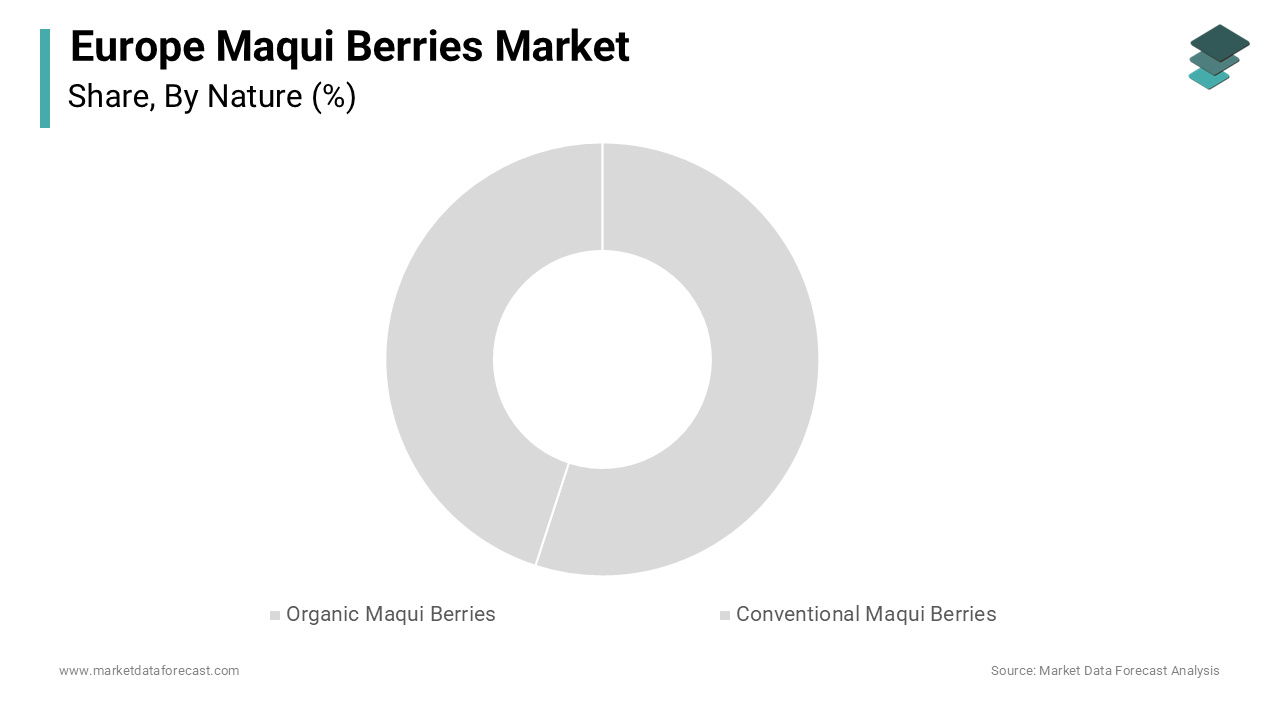
Government policies and retailer strategies in Europe strongly support the expansion of the organic maqui berries segment through incentives and dedicated shelf space. According to the European Commission's Farm to Fork Strategy, the European Union aims to transition at least 25% of its total agricultural land to organic farming by 2030, creating a supportive political environment for organic-certified supply chains. Major supermarket chains have set ambitious targets to expand their organic product ranges responding to consumer demand and regulatory pressure. This institutional support ensures that organic maqui berries receive prominent visibility in stores enhancing their accessibility to mainstream shoppers. Trade associations and non governmental organizations promote the benefits of organic agriculture raising awareness among consumers about the environmental impact of their choices. The credibility of organic certifications from recognized bodies such as Ecocert and Soil Association adds a layer of trust that conventional products lack. Manufacturers invest in maintaining organic integrity throughout the supply chain from collection in Chile to packaging in Europe to retain certification status. This commitment to quality distinguishes organic maqui brands in a crowded marketplace. The synergy between regulatory goals consumer values and retail execution creates a robust ecosystem for the organic segment. As sustainability becomes a central concern for European shoppers the organic nature of maqui berries serves as a key differentiator. The segment benefits from long term contracts between European importers and South American collectors who adhere to sustainable harvesting practices. This stability ensures a consistent supply of high-quality organic berries that meet the exacting standards of the European market.
The conventional segment is anticipated to witness the fastest CAGR of 7.2% from 2026 to 2034, as it offers a more affordable entry point for price-sensitive consumers who wish to incorporate maqui berries into their diets. While organic products command a premium many shoppers are deterred by the high cost and seek conventional alternatives that provide similar nutritional benefits at a lower price. Conventional maqui berries are often sourced from larger scale operations that may use some agricultural inputs to enhance yield although wild harvesting remains predominant. The lower price point makes conventional maqui accessible to a broader demographic including students young professionals and families on tight budgets. Retailers often promote conventional superfoods through discounts and bundle deals attracting impulse buyers who are curious about maqui but hesitant to invest in expensive organic versions. The availability of conventional maqui in mainstream supermarkets rather than specialty health stores increases its visibility and convenience for everyday shoppers. Marketing efforts focus on the general health benefits of maqui such as antioxidant support without emphasizing the organic certification which reduces complexity and cost. This approach appeals to casual health enthusiasts who prioritize functionality over ideological purity. The growth of private label brands offering conventional maqui products further drives volume sales by leveraging the trust and reach of established retail chains. As production efficiencies improve and supply chains optimize the cost gap between organic and conventional narrows slightly but remains significant enough to sustain demand for the latter. The conventional segment serves as a gateway for new users who may later transition to organic options as their familiarity and commitment to the ingredient grow.
The swift expansion of conventional maqui berries into mainstream food and beverage applications is a key driver of its fast growth trajectory. Large scale manufacturers of juices snacks and dairy products prefer conventional ingredients due to their lower cost and consistent availability in bulk quantities. These companies operate on thin margins and require cost effective raw materials to maintain profitability while offering competitive retail prices. Conventional maqui powder is increasingly used as a natural colorant and flavor enhancer in mass produced items such as yogurt drinks ice cream and breakfast cereals. The vibrant purple hue of maqui appeals to product developers looking to create visually appealing products without using artificial dyes. The mild taste of maqui blends well with other fruits allowing it to be included in multi fruit blends without overpowering the flavor profile. The scale of production in the mainstream sector demands large volumes of raw material which the conventional segment is better positioned to supply reliably. According to the EU Novel Food Status Catalogue, raw or processed maqui berry materials cannot be distributed to mainstream food brands for general grocery production in Europe due to its authorization being limited strictly to food supplements. The presence of maqui in familiar everyday products normalizes its consumption and introduces it to millions of consumers who might not actively seek out specialty superfoods. This exposure builds brand recognition and habitual usage leading to sustained demand. The conventional segment benefits from economies of scale in processing and distribution which further reduces costs and enhances competitiveness. As consumer acceptance grows the integration of conventional maqui into standard grocery items will continue to accelerate volume growth across Europe.
By End Use Industry Insights
In 2025, the dietary supplements segment held the majority share of the Europe maqui berries market because of the strong scientific evidence supporting its efficacy in addressing specific health concerns such as dry eye syndrome and oxidative stress. Consumers turn to supplements when they seek targeted therapeutic effects that go beyond general nutrition provided by food. Maqui berry extracts are formulated into capsules tablets and liquid drops that deliver concentrated doses of anthocyanins ensuring consistent and measurable health outcomes. According to the Journal of Traditional and Complementary Medicine, active oral intake of maqui berry extract systematically increases tear fluid production, validating its use as an effective intervention against computer-related dry eye strain. The ability to make specific health claims backed by research enhances the credibility of supplement brands and drives consumer confidence. Pharmacists and healthcare practitioners often recommend maqui supplements as part of holistic wellness plans for patients managing chronic conditions. The convenience of taking a daily pill fits seamlessly into busy lifestyles encouraging adherence and long term usage. The supplement industry in Europe is well established with robust distribution networks through pharmacies health stores and online platforms. Regulatory frameworks for supplements are clear allowing for efficient market entry and product innovation. Brands invest heavily in education and marketing to communicate the unique benefits of maqui compared to other antioxidants. The high margin potential in the supplement sector attracts numerous players fostering competition and innovation. Consumers perceive supplements as a proactive investment in their health justifying the premium pricing of high quality maqui extracts. This segment continues to lead as the population ages and the prevalence of lifestyle related health issues rises.
The prominence of the dietary supplements segment is sustained by the aging demographic in Europe and the growing emphasis on preventive healthcare. As life expectancy increases so does the incidence of age related conditions such as macular degeneration cardiovascular diseases and metabolic disorders. Older adults are more likely to consume supplements to maintain vitality and manage health risks proactively. Maqui berries are marketed specifically for eye health and anti aging benefits which resonate strongly with this demographic. The preventive health trend encourages younger consumers to start taking supplements early to protect against future health decline. This shift in mindset from treatment to prevention expands the customer base for maqui supplements beyond the elderly. Online health communities and social media influencers play a crucial role in educating consumers about the preventive benefits of antioxidants. The ease of purchasing supplements online allows consumers to access a wide variety of maqui products with detailed reviews and comparisons. Subscription services for supplements ensure regular delivery and consistent intake which is essential for achieving desired health outcomes. The trust in established supplement brands provides a safe entry point for consumers new to maqui berries. The segment benefits from continuous research and development that leads to improved formulations and delivery systems. Enhanced bioavailability technologies ensure that the body absorbs more of the active compounds increasing the perceived effectiveness of the supplements. This scientific advancement reinforces consumer loyalty and drives repeat purchases. The dietary supplements segment remains the cornerstone of the maqui market due to its alignment with medical needs and consumer health goals.
The food and beverage segment is likely to experience the fastest CAGR of 9.1% during the forecast period owing to intense innovation in functional beverages and convenient snack formats. Consumers are increasingly seeking health benefits from their everyday meals and drinks rather than relying solely on pills or powders. Maqui berry juice smoothies and infused waters are gaining popularity as refreshing ways to consume antioxidants without the hassle of supplementation. Beverage companies are launching ready to drink products that combine maqui with other superfoods like ginger turmeric and mint to create complex flavor profiles and enhanced health benefits. The visual appeal of the deep purple color makes maqui beverages attractive on social media driving viral marketing and consumer interest. Snack manufacturers are incorporating maqui powder into energy bars granola and dried fruit mixes to add nutritional value and distinctive taste. The convenience of consuming maqui through familiar food items lowers the barrier to entry for skeptical consumers. Retailers are expanding their functional food aisles to accommodate the growing variety of maqui infused products. The trend toward clean label and natural ingredients favors maqui as a recognizable and trustworthy additive. Food technologists are working to stabilize the color and flavor of maqui during processing ensuring that the final product retains its sensory qualities. The collaboration between food scientists and marketing teams results in products that are both scientifically sound and commercially appealing. This segment benefits from the broad appeal of food and beverage products which reach a wider audience than niche supplements. The frequent consumption of food and drinks ensures regular intake of maqui supporting long term health benefits.
The quick surge of the food and beverage segment is fueled by mainstream retail adoption and effective lifestyle branding that positions maqui as a trendy and desirable ingredient. Major supermarket chains are featuring maqui products in prominent displays and promotional campaigns increasing their visibility to everyday shoppers. Lifestyle brands leverage the exotic origin and health halo of maqui to create aspirational images that appeal to health conscious millennials and Gen Z consumers. Packaging design plays a crucial role in attracting attention with vibrant colors and clear messaging about the benefits of maqui. Collaborations with fitness influencers and nutritionists help validate the role of maqui in active and healthy lifestyles. The integration of maqui into popular food categories such as breakfast cereals and yogurt makes it a staple in household pantries. Consumers appreciate the versatility of maqui in cooking and baking leading to increased home usage and word of mouth recommendations. The availability of maqui in convenient formats such as single serve packets and portable bottles suits the on the go lifestyle of urban Europeans. Retailers benefit from the high turnover rates of food and beverage products which generate consistent revenue streams. The lower price point of food items compared to supplements encourages trial and repeat purchases. As consumer familiarity with maqui grows the demand for diverse food and beverage applications will continue to expand. This segment captures the imagination of consumers who view food as a source of joy and wellness simultaneously.
By Distribution Channel Insights
The B2B ingredient suppliers segment led the Europe maqui berries market and captured a significant share in 2025. These suppliers serve the foundational needs of manufacturers in the food, beverage, and supplement industries. Large scale producers require consistent volumes of high quality maqui powder and extract to maintain their production lines and meet consumer demand. B2B suppliers act as intermediaries who source process and distribute maqui ingredients to end product manufacturers ensuring reliability and quality control. This channel benefits from long term contracts and bulk orders which provide stable revenue streams and predictable demand. Industrial clients prioritize suppliers who can provide certified organic and standardized extracts with verified potency levels. The technical expertise of B2B suppliers in handling and storing sensitive botanical ingredients adds value to their service offerings. Manufacturers rely on these suppliers to navigate the complexities of international trade and regulatory compliance. The B2B channel enables economies of scale in processing and logistics reducing overall costs for the supply chain. Suppliers invest in advanced testing facilities to ensure that every batch meets strict quality standards before delivery. This assurance of quality is critical for brands that stake their reputation on the efficacy of their maqui products. The B2B segment supports innovation by providing custom formulations and blends tailored to specific client needs. The strong relationships between suppliers and manufacturers foster collaboration and joint development of new products. This channel remains dominant because it underpins the entire value chain enabling the widespread availability of maqui based consumer goods.
The leadership of the B2B ingredient suppliers segment is reinforced by their ability to manage supply chain risks and ensure efficient delivery of raw materials. Given the geographical distance between South America and Europe B2B suppliers play a crucial role in mitigating logistical challenges and ensuring timely availability. They maintain strategic stockpiles and diversified sourcing networks to buffer against harvest fluctuations and transportation delays. Advanced inventory management systems allow suppliers to predict demand and adjust procurement strategies accordingly. This proactive approach minimizes disruptions for manufacturers who depend on steady supplies to meet production schedules. B2B suppliers also provide valuable market intelligence and trend analysis to their clients helping them make informed decisions about product development. The financial stability of large B2B suppliers allows them to absorb short term price volatility and offer competitive pricing to their partners. Their expertise in customs clearance and regulatory documentation simplifies the import process for European manufacturers. The trust built through consistent performance and transparent communication strengthens long term partnerships. B2B suppliers often collaborate with South American cooperatives to support sustainable harvesting practices ensuring the long term viability of the resource. This ethical approach resonates with European brands that prioritize corporate social responsibility. The comprehensive service package offered by B2B suppliers including quality assurance logistics and regulatory support makes them indispensable partners in the maqui value chain.
The supermarkets and hypermarkets segment is on the rise and is expected to be the fastest-growing segment in the market, witnessing a CAGR of 8.8% between 2026 and 2034, as it offers unparalleled accessibility and convenience for mainstream consumers. Placing maqui products in high traffic retail environments increases their visibility and encourages impulse purchases among shoppers who are already buying groceries. The presence of maqui berries alongside familiar items such as blueberries and strawberries normalizes their consumption and reduces perceived risk for first time buyers. Supermarkets dedicate shelf space to health and wellness sections where maqui products are prominently displayed with educational signage. Promotional activities such as tastings and discounts attract curious shoppers and drive trial. The broad reach of supermarket chains ensures that maqui products are available in both urban and rural areas expanding the potential customer base. Consumers appreciate the convenience of purchasing maqui during their regular shopping trips eliminating the need for separate visits to specialty stores. The trust associated with established supermarket brands extends to the products they carry enhancing consumer confidence. Private label initiatives by major retailers introduce affordable maqui options that compete with branded products on price and quality. The data collected from supermarket sales helps manufacturers understand consumer preferences and adjust their strategies accordingly. The fast pace of retail turnover ensures that fresh and relevant products are always available on shelves. This segment benefits from the high footfall and frequent visits characteristic of supermarket shopping behavior.
The rapid growth of the supermarkets and hypermarkets segment is supported by strategic partnerships between maqui brands and retail chains that prioritize product placement and promotional support. Brands negotiate for prime shelf locations and end cap displays to maximize visibility and attract attention. Collaborative marketing campaigns featuring in store advertisements and digital promotions raise awareness among shoppers. Retailers provide valuable insights into consumer behavior and purchasing patterns allowing brands to tailor their offerings to local preferences. The integration of maqui products into loyalty programs and reward schemes encourages repeat purchases and customer retention. Supermarkets often feature maqui in seasonal promotions and health focused events driving spikes in sales during key periods. The ability to bundle maqui products with complementary items such as yogurt or cereal increases basket size and value. Retailers invest in training staff to educate customers about the benefits of maqui enhancing the shopping experience. The omnichannel approach combining physical stores with online grocery platforms extends the reach of maqui products to digital shoppers. Click and collect services allow consumers to order maqui online and pick it up in store combining convenience with immediacy. The dynamic nature of the retail environment allows for quick adjustments to pricing and promotion based on real time sales data. This agility ensures that maqui products remain competitive and relevant in a fast moving market.
COUNTRY ANALYSIS
Germany Maqui Berries Market Analysis
Germany was the top performer in the Europe maqui berries market and accounted for a substantial share in 2025. Its robust organic food sector and health-conscious consumer base have contributed to the dominance of the German market. According to data from the Research Institute of Organic Agriculture (FiBL), Germany maintains its position as Europe's largest national market for organic foods, reaching approximately 17 billion euros in annual retail sales. German consumers prioritize quality and sustainability making them receptive to premium superfoods like maqui berries. The strong presence of health food stores such as Alnatura and Denns Biomarkt provides dedicated channels for maqui distribution. Pharmaceutical companies in Germany are increasingly incorporating maqui extracts into dietary supplements targeting eye health and anti aging. The regulatory framework in Germany supports the introduction of novel food ingredients provided they meet safety standards. Consumer awareness campaigns by health organizations highlight the benefits of antioxidants further boosting demand. The aging population in Germany contributes to the high demand for preventive health solutions. Retailers in Germany are expanding their organic assortments to include exotic fruits like maqui. The country's strong economy supports higher spending on premium health products. German manufacturers are innovating with maqui infused beverages and snacks appealing to younger demographics. The emphasis on scientific validation in Germany drives the popularity of standardized maqui extracts. As per BIOFACH, global ingredient suppliers leverage this premier international trade platform to present organic plant-based innovations, including maqui berry raw materials, directly to European commercial buyers. The commitment to environmental protection aligns with the sustainable harvesting practices of maqui. Germany serves as a key entry point for maqui brands looking to establish a presence in Central Europe.
France Maqui Berries Market Analysis
France followed closely behind in the Europe maqui berries market because of its sophisticated culinary culture and growing interest in wellness. French consumers are increasingly integrating superfoods into their daily diets seeking both health benefits and gastronomic enjoyment. The popularity of smoothie bars and healthy cafes in Paris and other major cities has introduced maqui berries to a wider audience. French retailers such as Biocoop and La Vie Claire offer a wide range of organic maqui products catering to discerning shoppers. The French beauty industry utilizes maqui extract in premium skincare formulations leveraging its antioxidant properties for anti aging benefits. According to ResearchGate, primary drivers steering French consumer choices toward organic foods include health benefits and the absence of GMOs, while administrative institutions like Agence Bio oversee structural certification and farm transitions. French consumers value the origin and story behind their food making the Patagonian heritage of maqui appealing. The trend toward natural and clean label products favors maqui as a recognizable and trustworthy ingredient. Restaurants in France are experimenting with maqui in desserts and sauces adding a unique twist to traditional cuisine. The strong pharmaceutical sector in France drives demand for high quality maqui extracts for supplement production. Consumer education initiatives by health professionals enhance understanding of the benefits of anthocyanins. The luxury positioning of maqui in France allows for premium pricing strategies. The country's central location facilitates distribution to neighboring European markets. France continues to be a key driver of innovation in the maqui sector.
United Kingdom Maqui Berries Market Analysis
The United Kingdom occupies a significant share in the Europe maqui berries market due to a strong trend toward preventive health and functional foods. British consumers are actively seeking natural remedies to support immune health and manage stress leading to increased adoption of maqui berries. The UK has a well established supplement industry with major players incorporating maqui into their product lines. Online retail platforms such as Amazon UK and Holland and Barrett play a crucial role in distributing maqui products to a broad audience. As per Alifood, food and ingredient imports entering the United Kingdom navigate post-Brexit adjustments via the Border Target Operating Model (BTOM), which mandates precise risk classification and pre-notification for health-related commodities. British shoppers are influenced by social media trends and influencer recommendations which frequently feature maqui berries. The prevalence of dry eye syndrome among office workers drives demand for maqui supplements targeting eye health. Retailers in the UK are expanding their health food sections to include exotic superfoods. The multicultural population in the UK brings diverse dietary preferences that embrace global ingredients. The strong pound sterling historically facilitated imports although currency fluctuations impact pricing. UK manufacturers are focusing on clean label and vegan friendly maqui products to align with ethical consumer values. The country's advanced logistics infrastructure ensures efficient distribution of fresh and processed maqui. Consumer trust in British brands enhances the credibility of maqui products. The UK remains a key market for innovation and expansion in the maqui sector.
Italy Maqui Berries Market Analysis
Italy holds a notable position in the Europe maqui berries market owing to its strong appreciation for natural ingredients and traditional wellness practices. Italian consumers are increasingly open to incorporating superfoods into their Mediterranean diet seeking additional health benefits. The beauty and cosmetics industry in Italy utilizes maqui extract in high end skincare products capitalizing on its anti aging properties. Italian pharmacies and parapharmacies are key distribution channels for maqui supplements targeting health conscious individuals. The country's strong agricultural heritage fosters an appreciation for quality and origin making the wild harvested nature of maqui appealing. Italian retailers are gradually introducing maqui products in their organic sections responding to growing consumer interest. The trend toward functional foods is gaining momentum in Italy with maqui infused juices and snacks appearing in supermarkets. Consumer awareness of antioxidants and their role in preventing chronic diseases is rising. Italian manufacturers are exploring collaborations with South American suppliers to secure high quality raw materials. The vibrant food culture in Italy encourages experimentation with new flavors and ingredients. Maqui berries are being used in gourmet desserts and beverages adding a unique touch to traditional recipes. According to legislative reporting by Chambers and Partners, Italy enforces strict food compliance laws, exemplified by Law 172/2023, which prohibits the commerce, import, and export of synthetic nutrients, while the Italian Ministry of Health regulates standard plant extract imports through a rigorous pre-market notification procedure. The country's strategic location facilitates trade with other European nations. Italy continues to show steady growth in the maqui berries market.
Spain Maqui Berries Market Analysis
Spain is another key player in the Europe maqui berries market due to a growing health consciousness and an expanding organic sector. Spanish consumers are increasingly adopting healthier lifestyles driving demand for natural supplements and functional foods. The warm climate and outdoor lifestyle in Spain contribute to a focus on vitality and wellness. Retailers such as Veritas and Ametller Origen offer a variety of organic maqui products catering to eco conscious shoppers. The Spanish pharmaceutical industry is incorporating maqui extracts into supplements targeting eye health and inflammation. Consumer education campaigns by health authorities highlight the benefits of antioxidants further boosting interest. The tourism sector in Spain exposes visitors to international health trends including the use of superfoods. Spanish manufacturers are innovating with maqui infused beverages and snacks appealing to younger demographics. The country's strong agricultural base supports the integration of exotic fruits into local production. Online sales of maqui products are growing rapidly in Spain reaching consumers in remote areas. According to the Agroecology Coalition, Spain’s regional and national frameworks prioritize certified organic models and Integrated Production practices, aligning domestic supply targets with the standards needed for ethically sourced global superfoods. Spanish consumers value transparency and quality driving demand for certified organic products. The market in Spain is characterized by steady growth and increasing acceptance of maqui berries.
COMPETITIVE LANDSCAPE
The competition in the Europe maqui berries market is characterized by a mix of established international ingredient suppliers and specialized niche players who vie for dominance through differentiation and innovation. The market exhibits moderate fragmentation with no single entity holding overwhelming control allowing for dynamic competition and continuous evolution. Key competitors distinguish themselves through product quality scientific validation and sustainability credentials rather than price alone. The barrier to entry remains relatively high due to stringent regulatory requirements and the need for reliable supply chains from South America. Companies invest significantly in research and development to create proprietary extracts and formulations that offer superior bioavailability and efficacy. Brand reputation and trust are critical assets as consumers become more educated about the benefits and sources of their supplements. Strategic alliances with local distributors and retailers enhance market penetration and visibility. The competitive landscape is further shaped by the growing demand for organic and non GMO certified products which forces players to adhere to strict ethical standards. Innovation in packaging and delivery formats also serves as a key differentiator. The presence of private label offerings from major retailers adds pressure on branded manufacturers to justify premium pricing through added value. Overall the market rewards companies that can combine scientific rigor with transparent sourcing and effective consumer engagement.
KEY MARKET PLAYERS
Some of the companies that are playing a dominating role in the Europe Maqui Berries Market include
- Maqui New Life S.A.
- Bayas del Sur S.A.
- Symrise AG
- Naturex S.A. (Givaudan)
- Artemis International, Inc.
- Indigo Herbs Ltd.
- Sevenhills Wholefoods Ltd.
- Bioglan
- Navitas Organics
- NP Nutra
- Others
Top Players In The Europe Maqui Berries Market
Nutraceutics
Nutraceutics operates as a prominent supplier of high quality botanical extracts including maqui berry powder and standardized extracts for the European nutraceutical and food industries. The company focuses on providing scientifically validated ingredients that meet stringent regulatory requirements across the continent. Recent actions include expanding their production facilities in Spain to enhance processing capacity and ensure consistent supply chains for European clients. They have invested heavily in research and development to create novel delivery systems that improve the bioavailability of maqui anthocyanins. Nutraceutics actively collaborates with academic institutions to publish clinical studies supporting the health benefits of their products. This evidence based approach strengthens their reputation among pharmaceutical and supplement manufacturers. The company also emphasizes sustainable sourcing practices by partnering directly with Chilean cooperatives. Their commitment to transparency and quality control has made them a preferred partner for brands seeking premium raw materials. Nutraceutics continues to innovate by launching organic certified maqui extracts tailored to specific health applications such as eye health and metabolic support.
Futureceuticals
Futureceuticals is a leading ingredient solutions provider that supplies maqui berry extracts to the global food beverage and dietary supplement markets with a strong presence in Europe. The company leverages its extensive distribution network to deliver customized ingredient blends to major manufacturers across the region. Recent strategic initiatives include the launch of new water soluble maqui formulations designed for clear beverage applications which address technical challenges faced by product developers. Futureceuticals has strengthened its market position by obtaining additional organic certifications and non GMO verifications to meet evolving consumer preferences. They actively participate in industry trade shows to showcase their latest innovations and build relationships with key decision makers. The company invests in advanced analytical testing to ensure potency and purity of every batch. Their technical support team works closely with clients to optimize formulation processes and ensure stability of maqui compounds in final products. Futureceuticals emphasizes sustainability by supporting reforestation projects in South America. This holistic approach enhances brand loyalty and differentiates them from competitors. Their focus on customer centric innovation drives continuous growth in the European sector.
Vital Ingredients
Vital Ingredients specializes in distributing premium natural health ingredients including maqui berry powder and extracts to the European wellness and cosmetic industries. The company serves a diverse client base ranging from small artisanal brands to large multinational corporations. Recent actions to strengthen their market position include expanding their warehouse infrastructure in the Netherlands to improve logistics efficiency and reduce delivery times. Vital Ingredients has introduced a new line of cold processed maqui extracts that preserve maximum antioxidant activity appealing to health conscious consumers. They have formed strategic partnerships with local marketing agencies to educate end users about the unique benefits of maqui berries. The company prioritizes ethical sourcing by ensuring fair compensation for wild harvesters in Patagonia. Their quality assurance protocols exceed industry standards providing clients with confidence in product safety and efficacy. Vital Ingredients also offers private label services allowing brands to create customized maqui products under their own names. This flexibility attracts entrepreneurs and startups looking to enter the superfood market. Their dedication to service excellence and product integrity sustains their competitive edge in the dynamic European landscape.
Major Strategies Used By Key Market Participants
Key players in the Europe maqui berries market employ several strategic approaches to maintain competitiveness and drive growth. Product innovation remains a primary strategy with companies developing specialized extracts and formulations tailored to specific health needs such as eye care and anti aging. Strategic partnerships and collaborations with research institutions help validate health claims through clinical studies enhancing credibility and consumer trust. Expansion of distribution networks ensures broader market reach and improved accessibility for consumers across various European countries. Companies also focus on sustainable sourcing practices and ethical harvesting to align with environmental values and appeal to conscious buyers. Digital marketing and educational campaigns play a crucial role in raising awareness and driving demand among target demographics. Investment in advanced processing technologies helps preserve bioactive compounds and improve product quality. Diversification into adjacent sectors such as cosmetics and functional beverages allows companies to tap into new revenue streams. Regulatory compliance and certification acquisitions further strengthen market positioning by meeting stringent European standards. These combined strategies enable participants to navigate challenges and capitalize on emerging opportunities in the evolving superfood landscape.
MARKET SEGMENTATION
This research report on the Europe Maqui Berries Market has been segmented and sub-segmented based on the following categories.
By Nature
- Organic Maqui Berries
- Conventional Maqui Berries
By Form
- Processed
- fresh
By End Use Industry
- Dietary Supplements
- Food And Beverage
By Distribution Channel
- B2B Ingredient Suppliers
- Supermarkets and Hypermarkets
By Country
- UK
- France
- Spain
- Germany
- Italy
- Russia
- Sweden
- Denmark
- Switzerland
- Netherlands
- Turkey
- Czech Republic
- Rest of Europe
Frequently Asked Questions
What is driving the growth of the Europe maqui berries market?
The Europe maqui berries market is growing due to increasing consumer demand for antioxidant-rich superfoods, rising awareness of natural health supplements, and the expanding use of maqui berries in functional foods, beverages, dietary supplements, and cosmetics. Growing preference for clean-label and plant-based ingredients is also supporting market expansion.
Which form segment dominates the Europe maqui berries market?
The processed form segment holds the largest share of the Europe maqui berries market because processed maqui berry powders, extracts, and freeze-dried products offer longer shelf life, consistent anthocyanin content, easy transportation, and wider application across nutraceutical, food, beverage, and personal care industries.
Why are processed maqui berry products more popular than fresh maqui berries in Europe?
Processed maqui berry products are preferred because they provide better stability, standardized nutritional composition, extended shelf life, and greater convenience for manufacturers and consumers. They are widely used in dietary supplements, functional beverages, bakery products, and skincare formulations while maintaining high antioxidant levels.
Which countries are leading the Europe maqui berries market?
Germany, the United Kingdom, France, Italy, and Spain are among the leading markets for maqui berries in Europe. These countries are experiencing strong demand due to growing health consciousness, increasing consumption of superfoods, expanding nutraceutical industries, and the availability of premium functional food products.
What are the key opportunities in the Europe maqui berries market?
Key opportunities in the Europe maqui berries market include increasing demand for organic and clean-label products, innovation in functional beverages and dietary supplements, expansion of e-commerce distribution channels, rising applications in natural cosmetics, and growing consumer interest in antioxidant-rich superfoods that support overall wellness and healthy aging.
Related Reports
Access the study in MULTIPLE FORMATS
Purchase options starting from
$ 2000
Didn’t find what you’re looking for?
TALK TO OUR ANALYST TEAM
Need something within your budget?
NO WORRIES! WE GOT YOU COVERED!
Call us on: +1 888 702 9696 (U.S Toll Free)
Write to us: sales@marketdataforecast.com