- Product Description Description
- Table of Contents TOC
- List of Table & Figure LOT
- Get Free Sample PDF Sample PDF
Market Size, 2025
$0.19 BnMarket Estimate, 2026
$0.21 BnMarket Forecast, 2034
$0.48 BnCAGR, 2026–2034
10.47%Europe Mead Market Size, Growth, Trends & Forecast (2026–2034)
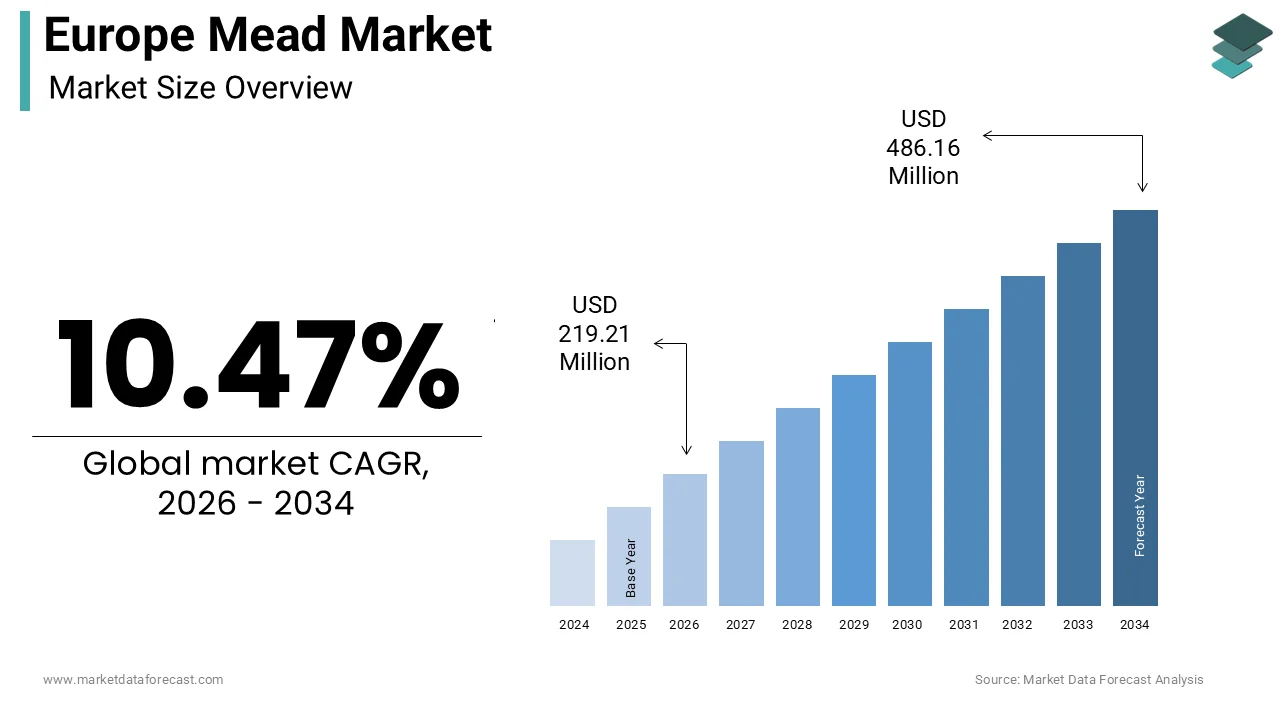
The Europe mead market size was calculated to be USD 198.43 million in 2025, is anticipated to be worth USD 219.21 million in 2026, and is projected to reach USD 486.16 million by 2034, growing at a compound annual growth rate (CAGR) of 10.47% during the forecast period from 2026 to 2034. Driven by a cultural shift toward authenticity and artisanal craftsmanship, surging consumer preference for natural and artisanal beverages, the revival of historical heritage and cultural tourism, and continuous innovation in flavor profiles and ready-to-drink formats, the regional market continues to expand dynamically.
Key Executive Metrics (At-a-Glance)
- 2025 Base Valuation: USD 198.43 Million
- 2026 Current Valuation: USD 219.21 Million
- 2034 Forecast Valuation: USD 486.16 Million
- Compound Annual Growth Rate (CAGR): 10.47% (2026–2034)
- Dominant Type Segment: Traditional Mead (holding 48.2% market share in 2025 anchored by historical heritage, pure honey fermentation, and PGI protection)
- Fastest-Growing Type Segment: Fruit Mead (projected at a 9.2% CAGR driven by approachable flavor profiles and Millennial/Gen-Z preferences)
- Dominant Packaging Segment: Bottles (holding the largest share in 2025 due to premium status, giftability, and aging capabilities)
- Fastest-Growing Packaging Segment: Cans (projected at a 12.1% CAGR driven by portability, outdoor socializing, and sustainability trends)
- Dominant Distribution Channel: Offline (maintaining dominance through physical retail touchpoints, expert staff guidance, and on-premise hospitality)
Core Market Drivers
- Natural & Artisanal Preferences: Rising consumer demand for clean-label, gluten-free, and additive-free alcoholic beverages made from recognizable ingredients.
- Cultural Heritage & Tourism: Strong revival of medieval history and folklore, bolstered by protected geographical indications (PGIs) and culinary tourism.
Primary Market Restraints & Challenges
- Raw Material Volatility: High and fluctuating costs of honey due to declining bee populations, adverse climate conditions, and imported adulterated honey.
- Regulatory Hurdles & Competition: Fragmented tax/classification frameworks across member states, alongside intense competition from well-established wine, beer, and cider categories.
Europe Mead Market Segmentation Breakdown
| Segment Category | Leading Sub-Segment (Base/Current) | Fastest-Growing Sub-Segment |
|---|---|---|
| By Type | Traditional Mead (48.2% share in 2025) | Fruit Mead (9.2% CAGR driven by approachable flavor profiles and seasonal innovations) |
| By Packaging Type | Bottles (dominant share in 2025) | Cans (12.1% CAGR driven by portability, eco-friendly aluminum, and casual consumption) |
| By Distribution Channel | Offline (dominant retail and on-premise share) | Online / E-commerce channels |
Major Industry Players Profiled
Key enterprises shaping the competitive European mead market include Lyme Bay Winery, Moniack Castle Winery, Gosnells of London, London Mead Company, Lurgashall Winery, Bunratty Mead and Liqueur Company, Dansk Mjød, Nidhoggr Mead Co., Stone Circle Mead Company, Lancaster Brewing Company, Wye Valley Meadery, BeeHype Meadery, Hive Mind Mead & Brew Co., Yorkshire Mead Company, and Oxford Artisan Distillery.
 Download Free Sample Report
Europe Mead Market Size
The Europe mead market size was calculated to be USD 198.43 million in 2025 and is anticipated to be worth USD 486.16 million by 2034, from USD 219.21 million in 2026, growing at a CAGR of 10.47% during the forecast period.
Mead is an alcoholic beverage made by fermenting honey with water, often called "honey wine." It is one of the world's oldest fermented drinks, with a history spanning thousands of years across Europe, Africa, and Asia. According to data from the European Commission, the European Union maintains its status as a leading global producer of honey, though annual yields fluctuate based on environmental conditions, serving as a key ingredient for various traditional beverages and food products. As per statistics from regional beekeeping organizations, major producing countries lead the bloc in hive density, supporting a significant population of bees that are essential for both agricultural pollination and the production of specialty beverages. The resurgence is deeply rooted in a cultural shift toward authenticity and artisanal craftsmanship, where consumers seek beverages with traceable origins and traditional production methods. Unlike mass-produced lagers or wines, mead offers immense versatility in flavor profiles, ranging from dry sparkling varieties to sweet fortified styles. This diversity allows it to penetrate various consumption occasions, from fine dining pairings to casual social gatherings. The regulatory framework within Europe also supports this growth, with specific geographical indications protecting traditional recipes in regions like Poland and Hungary. As the beverage sheds its medieval stereotypes, it positions itself as a sophisticated alternative in the premium alcohol sector, driven by a confluence of historical pride and modern gastronomic innovation.
MARKET DRIVERS
Surging Consumer Preference for Natural and Artisanal Beverages
The increasing consumer demand for natural, clean-label, and artisanal alcoholic beverages is among the key factors propelling the expansion of the Europe mead market. This demand reflects a preference for products that eschew industrial additives. Modern European drinkers are increasingly scrutinizing ingredient lists, favoring products made from simple, recognizable components like honey, water, and fruit, which aligns perfectly with the traditional formulation of mead. According to surveys conducted by international beverage research organizations, a significant majority of consumers in Western Europe now prioritize products made with natural ingredients and sustainable sourcing, reflecting a broader trend toward wellness and environmental responsibility. This trend benefits mead producers who can authentically market their products as gluten-free and free from artificial preservatives, appealing to health-conscious demographics that might avoid beer or certain wines. The craft movement has further amplified this driver, with small batch meaderies proliferating across the United Kingdom, Scandinavia, and Central Europe, offering unique flavor profiles that mass producers cannot replicate. In Germany, the number of registered craft breweries and meaderies has seen a steady increase, reflecting a broader societal shift toward supporting local artisans and consuming high-quality, distinctive drinks. The perception of mead as a premium, handcrafted product allows it to command higher price points, attracting enthusiasts willing to pay for exclusivity and quality. This deep-seated desire for authenticity transforms mead from a historical novelty into a contemporary lifestyle choice, driving sustained volume growth across the region.
Revival of Historical Heritage and Cultural Tourism
The robust revival of interest in historical heritage and the integration of mead into cultural tourism experiences also fuels the growth of the Europe mead market. The region's rich medieval history, where mead held a place of honor in royal courts and folklore, provides a compelling narrative that resonates with both locals and tourists seeking immersive cultural encounters. Countries like Poland and Hungary have successfully leveraged their cultural heritage by securing protected status for traditional mead varieties, such as specific Polish honey wines, which have increased their visibility among enthusiasts worldwide according to official European registers. Tourism boards in regions like the Czech Republic and Sweden actively promote mead tasting tours and historical festivals, creating direct sales channels and brand awareness that extend beyond local borders. The European Travel Commission indicates that culinary and beverage-focused travel has seen substantial growth in recent years, as visitors increasingly prioritize authentic local products and experiences that offer a unique cultural narrative. This cultural renaissance encourages younger generations to reconnect with their ancestral traditions, viewing mead consumption as an act of cultural preservation and pride. Furthermore, the inclusion of mead in high-profile historical reenactments and media productions has normalized its presence in modern social settings. Producers create an emotional connection with consumers that transcends mere taste by anchoring the product in a tangible historical context. In turn, this fosters loyalty and drives repeat purchases in a crowded alcoholic beverage landscape.
MARKET RESTRAINTS
Volatility and High Cost of Honey Raw Materials
The most significant restraint impeding the expansion of the Europe mead market is the inherent volatility and escalating cost of honey, the primary and indispensable raw material for production. Honey prices have surged dramatically in recent years due to a combination of declining bee populations, adverse climatic conditions affecting nectar flows, and rising global demand that outstrips supply. According to the Food and Agriculture Organization of the United Nations, global honey production has struggled to keep pace with consumption, leading to price increases in some European markets over the last five years. This cost pressure is exacerbated by the prevalence of adulterated honey imports from outside the EU, which undercut local beekeepers and create uncertainty regarding the quality and authenticity of available stock. For mead producers, who require large volumes of honey compared to other fermented beverages, these fluctuating input costs severely compress profit margins and force difficult pricing decisions that can alienate price-sensitive consumers. In countries like France and Spain, where domestic honey production has faced challenges from drought and pesticide use, reliance on expensive imports further strains the economic viability of small-scale meaderies. The inability to consistently secure affordable, high-quality honey limits the ability of producers to scale operations or invest in marketing, effectively capping market growth. Until the apiculture sector achieves greater stability and yield consistency, the high cost of entry and production will remain a formidable barrier to widespread mead adoption.
Complex Regulatory Hurdles and Classification Ambiguities
The complex and often fragmented regulatory landscape governing the classification, labeling, and taxation of fermented honey beverages impedes the growth of the Europe mead market. Unlike wine or beer, which benefit from well-established legal frameworks and tax categories across the European Union, mead frequently falls into regulatory gray areas that vary significantly from one member state to another. This lack of harmonization creates substantial administrative burdens for producers, particularly those seeking to export across borders, as they must navigate differing definitions of alcohol content, labeling requirements, and excise duty rates. According to research, the regulatory classification of mead sometimes results in it being subject to higher tax rates than traditional wine or beer, which can increase the cost for consumers and impact its ability to compete in the broader beverage market. In some jurisdictions, strict rules regarding the addition of fruits or spices can disqualify a product from favorable tax treatments available to traditional wines, discouraging innovation and variety development. Furthermore, the rigorous certification processes required to claim geographical indications or organic status involve significant time and financial investment, which can be prohibitive for small artisanal producers. These regulatory inconsistencies stifle market fluidity and create barriers to entry that prevent the category from achieving the same level of mainstream acceptance as other alcoholic beverages. Producers will continue to face operational inefficiencies that hinder market expansion. This is due to a lack of a unified European approach to mead regulation.
MARKET OPPORTUNITIES
Innovation in Flavor Profiles and Ready-to-Drink Formats
Aggressive innovation of flavor profiles exhibits a paramount opportunity for the European mead market. Furthermore, developing convenient ready-to-drink formats will help appeal to modern palates. Moving beyond traditional sweet and heavy styles, producers are increasingly experimenting with dry, sparkling, and hop-infused variations that mimic the crispness of cider or the complexity of craft beer. This diversification allows mead to penetrate new consumer segments, particularly millennials and Generation Z, who prioritize variety and refreshment in their beverage choices. By incorporating local fruits, botanicals, and even tea infusions, mead makers can create unique selling propositions that differentiate their products in a saturated market. Additionally, the introduction of canned mead and single-serve formats addresses the growing consumer preference for portability and convenience, making the beverage suitable for outdoor activities and casual social gatherings. Successful pilot launches in the United Kingdom and Scandinavia have demonstrated that lighter, fruit-forward meads can achieve rapid shelf turnover in retail environments. This strategic pivot toward modernization and accessibility transforms mead from a ceremonial drink into an everyday option, unlocking significant volume potential. Embracing these innovations enables producers to shed outdated perceptions and position mead as a versatile contender in the contemporary ready-to-drink sector.
Expansion into Premium Gastronomy and Sommelier Partnerships
The integration of mead into premium gastronomy and the cultivation of partnerships with sommeliers offer significant potential for the European mead market. These steps can elevate the market status and perceived value of European mead. As the culinary world increasingly embraces heritage ingredients and pairing complexity, mead offers a unique spectrum of flavors that complement a wide range of dishes, from spicy Asian cuisine to rich game meats and artisanal cheeses. Forward-thinking meaderies are actively collaborating with Michelin-starred chefs and wine experts to curate tasting menus and pairing guides that showcase the versatility of mead in fine dining settings. According to sources, there is a growing interest among hospitality professionals in expanding beverage lists to include obscure and historic categories that offer guests a distinctive experience. This trend is evident in major culinary hubs like Copenhagen and Paris, where mead is beginning to appear on prestigious wine lists alongside natural wines and craft spirits. By positioning mead as a sophisticated companion to gourmet food, producers can justify premium pricing and attract affluent consumers who value exclusivity and culinary exploration. Educational initiatives, such as masterclasses and certification courses for sommeliers, further legitimize mead within the professional community, creating a ripple effect that influences consumer perception. This strategic alignment with high-end gastronomy not only drives sales in the hospitality sector but also enhances the overall brand equity of European mead on the global stage.
MARKET CHALLENGES
Intense Competition from Established Alcoholic Categories
Intense competition is slowing down the expansion of the Europe mead market. Well-established alcoholic categories like wine, beer, and cider currently dominate both shelf space and consumer mindshare. These mature industries benefit from centuries of brand building, extensive distribution networks, and deep consumer loyalty, making it difficult for mead to secure visibility in retail outlets and hospitality venues. Retailers often hesitate to allocate prime shelf real estate to mead due to its lower turnover rates compared to familiar brands, forcing mead producers into less visible locations or specialty sections that limit impulse purchases. Furthermore, the marketing budgets of major brewing and winemaking conglomerates dwarf those of artisanal meaderies, allowing them to saturate media channels and sponsor high-profile events that reinforce their market dominance. This disparity in resources creates a high barrier to entry for new mead brands attempting to build awareness and trial among mainstream consumers. The challenge is compounded by consumer inertia, where shoppers default to known quantities rather than risking experimentation with an unfamiliar category. Overcoming this entrenched competition requires mead producers to execute highly targeted marketing strategies and forge strategic alliances with distributors who are willing to champion the category, a task that demands significant persistence and capital in a crowded marketplace.
Climate Change Impacts on Apiary Stability and Honey Quality
Climate change is a critical long-term obstacle to the European mead market. It does this by threatening the stability of apiaries and the consistent quality of honey supplies essential for production. Rising temperatures, shifting precipitation patterns, and the increased frequency of extreme weather events disrupt the blooming cycles of nectar-producing plants, leading to unpredictable honey yields and altered flavor profiles. These environmental stressors contribute to higher colony collapse rates, as evidenced by winter mortality surveys from the European Reference Laboratory for Bee Health, which show alarming declines in bee populations in several member states. For mead producers, this instability translates into supply chain vulnerabilities, where securing consistent batches of honey with specific sensory characteristics becomes increasingly difficult and costly. The variability in honey quality can compromise the standardization of mead products, leading to inconsistency in taste that may confuse or disappoint consumers expecting a reliable brand experience. Additionally, the need to source honey from increasingly distant regions to mitigate local shortfalls increases the carbon footprint of production, conflicting with the sustainability values of many target consumers. Addressing these climate-induced challenges requires significant investment in resilient apicultural practices and diversified sourcing strategies, placing additional strain on the economic viability of the mead industry.
REPORT COVERAGE
| REPORT METRIC | DETAILS |
| Market Size Available | 2025 to 2034 |
| Base Year | 2025 |
| Forecast Period | 2026 to 2034 |
| CAGR | 10.47% |
| Segments Covered | By Type, Packaging Type, Distribution Channel, And Region |
| Various Analyses Covered | Global, Regional & Country Level Analysis; Segment-Level Analysis; DROC, PESTLE Analysis; Porter’s Five Forces Analysis; Competitive Landscape; Analyst Overview of Investment Opportunities |
| Regions Covered | UK, France, Spain, Germany, Italy, Russia, Sweden, Denmark, Switzerland, Netherlands, Turkey, and the Czech Republic |
| Market Leaders Profiled | Lyme Bay Winery, Moniack Castle Winery, Gosnells of London, London Mead Company, Lurgashall Winery, Bunratty Mead and Liqueur Company, Dansk Mjød, Nidhoggr Mead Co., Stone Circle Mead Company, Lancaster Brewing Company, Wye Valley Meadery, BeeHype Meadery, Hive Mind Mead & Brew Co., Yorkshire Mead Company, Oxford Artisan Distillery |
SEGMENTAL ANALYSIS
By Type Insights
The Traditional Mead segment held the majority share of 48.2% of the Europe mead market in 2025 because of the deep historical roots of pure honey fermentation across the continent, where consumers and producers alike view the unadulterated expression of honey as the authentic definition of the category. The segment benefits from strong cultural preservation efforts in countries like Poland and Hungary, where traditional recipes are protected and celebrated as national heritage. Furthermore, the versatility of traditional mead allows it to span a wide spectrum from dry to sweet profiles, appealing to a broad demographic of wine and spirit enthusiasts who appreciate the nuanced terroir of different honey varietals. The main reason sustaining the dominance of traditional mead is the robust framework of Protected Geographical Indications (PGI) and cultural pride that elevates pure honey wine to a status of national importance in key European regions. Also, the legal protection fosters immense consumer trust and loyalty, ensuring that traditional mead remains the benchmark against which all other variations are measured. Similarly, in Hungary, the historic Tokaj region and other apicultural zones maintain rigorous standards for mead production that align with their renowned wine traditions. The narrative of heritage resonates strongly with European consumers who prioritize authenticity and origin, making traditional mead the preferred choice for gift-giving, ceremonial occasions, and high-end dining. This institutional and cultural backing creates a formidable barrier to entry for non-traditional variants, securing the segment's market leadership through a combination of legal safeguarding and deep-seated consumer reverence for history. A further reason for this growth is its remarkable ability to mimic the complexity and diversity of fine wines, attracting a sophisticated demographic of oenophiles and sommeliers. Unlike fruit or spice-infused variations, which can sometimes mask the character of the honey, traditional mead allows the specific floral, earthy, or fruity notes of the honey source to shine, offering a tasting experience comparable to vintage wines. Producers utilize diverse honey varietals such as acacia, chestnut, and heather to create distinct flavor profiles that range from bone-dry sparkling styles to rich fortified dessert wines. This versatility enables traditional mead to occupy multiple occasions on the dining table, serving as an aperitif, a main course pairing, or a digestif. The education of sommeliers through specialized courses, such as those offered by the Court of Master Sommeliers, has further legitimized traditional mead as a serious beverage category worthy of study and appreciation. As consumers become more adventurous and seek alternatives to grape-based wines that offer similar depth and aging potential, traditional mead stands out as the most viable and respected option, driving sustained volume growth and solidifying its position as the market leader.
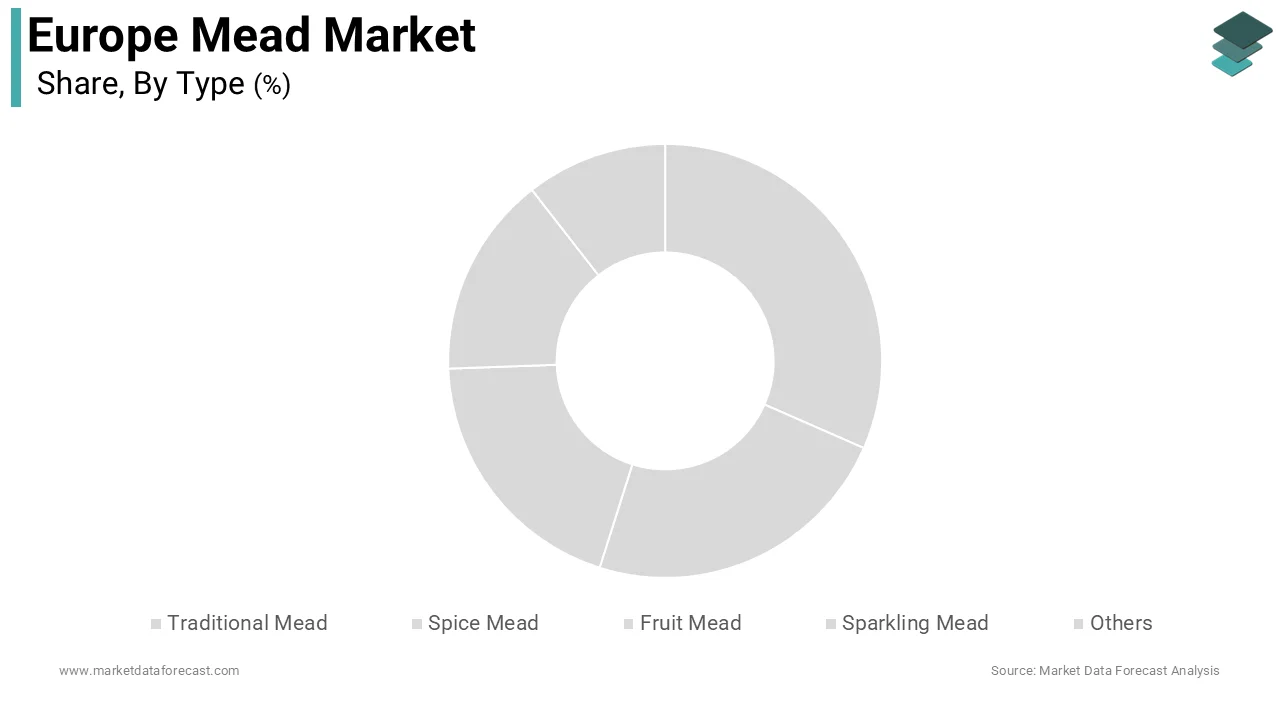
The Fruit Mead segment is expected to exhibit a noteworthy CAGR of 9.2% during the forecast period due to its approachable flavor profile that bridges the gap between familiar fruit wines and novel fermented beverages. The addition of berries, apples, cherries, and exotic fruits softens the intense sweetness or alcoholic heat often associated with pure mead, making it highly palatable to younger consumers and those new to the category. This segment benefits from the broader European trend toward fruit-forward alcoholic drinks and the perception of fruit ingredients as natural and healthy additives. A major factor that aids this segment is its strategic alignment with the taste preferences of Millennials and Generation Z consumers who favor familiar fruit flavors over obscure or heavy traditional profiles. Fruit meads leverage this preference by incorporating popular local fruits like strawberries, raspberries, and blackcurrants, which are already beloved in the cider and cooler categories. This familiarity lowers the barrier to trial, encouraging first-time buyers to explore mead without the fear of encountering an overly complex or unfamiliar taste. In countries like Sweden and the United Kingdom, craft meaderies have reported that their fruit-infused lines account for a significant share of sales to first-time customers, demonstrating the power of fruit as an entry point. The visual appeal of vibrant colors derived from natural fruit juices also enhances shelf presence in retail environments, catching the eye of impulsive shoppers. By positioning fruit mead as a fun, accessible, and social beverage, producers are successfully tapping into the youth market, driving volume growth that outpaces the more conservative traditional segment. In addition, this area is supported by the dynamic capability for innovation through seasonal and limited edition releases that create urgency and excitement among consumers. Unlike traditional mead, which relies on long aging processes and consistent recipes, fruit mead allows producers to experiment with harvest-specific fruits and unique blends that change throughout the year. According to research, limited edition fruit mead launches have increased annually, with producers capitalizing on short windows of fruit availability to create exclusive small-batch products. This strategy fosters a "fear of missing out" mentality among enthusiasts, prompting repeat purchases and brand loyalty as consumers seek to try every seasonal variation. The flexibility to incorporate trending superfruits like goji berry, elderflower, or sea buckthorn further keeps the category relevant and aligned with current health and wellness trends. Retailers appreciate this turnover as it drives foot traffic and encourages exploration, while producers benefit from the ability to test new flavor combinations with lower risk. The constant refreshment of the product portfolio ensures that fruit mead remains a vibrant and evolving category, attracting media attention and social media engagement that fuels its rapid ascent in the European market landscape.
By Packaging Type Insights
The bottles segment was the largest in the Europe mead market and captured a substantial share in 2025. This prominence of the segment is supported by the perception of mead as a premium, giftable, and age-worthy beverage, where glass packaging serves as a signal of quality and tradition. The heavyweight and aesthetic appeal of glass bottles align perfectly with the historical image of mead as a drink for royalty and celebration, making it the preferred choice for special occasions and high-end retail placement. Furthermore, the technical requirements for aging mead, which often benefits from micro-oxygenation through cork closures found in glass bottles, reinforce this packaging format as the industry standard for serious producers and connoisseurs. One more factor that adds strength is the strong association between glass packaging and premium quality, which is essential for mead's positioning as a luxury or specialty gift item in European culture. In markets like France, Germany, and Italy, the act of gifting alcohol is a significant social ritual, and consumers overwhelmingly choose bottled products that convey elegance and substance. Mead producers leverage this perception by investing in ornate bottle designs, wax seals, and elaborate labels that evoke medieval craftsmanship and exclusivity. This presentation justifies higher price points, with bottled meads often retailing at two to three times the price per liter compared to canned counterparts. The tactile experience of opening a bottle of mead, particularly those with cork stoppers, adds to the ceremonial aspect of consumption, enhancing the overall consumer experience. Retailers also favor bottles for mead as they fit seamlessly into existing wine and spirits aisles, benefiting from the established infrastructure for premium alcoholic beverages. As long as mead maintains its status as a special occasion drink and a symbol of heritage, the bottle will remain the indispensable vessel for its distribution and consumption. Also, this sector is boosted by the superior ability of glass to preserve the flavor integrity and facilitate the aging process of mead, which is crucial for wide traditional and high-quality varieties. Mead, much like wine, often undergoes long maturation periods where complex chemical reactions develop desirable aromas and smooth out harsh alcohol notes, a process that requires the stability and inertness of glass. According to research, glass provides an impermeable barrier against oxygen and light when paired with appropriate closures, ensuring that the delicate floral and honey notes do not degrade over time. This is particularly important for traditional and sparkling meads that are marketed as vintage products capable of improving with age. Consumers who collect or cellar mead rely on the durability and sealing properties of glass bottles to maintain the value and quality of their investments over years or even decades. The industry standard for high-end mead production dictates the use of glass to meet the expectations of discerning buyers who view the beverage as a fine art form. While other packaging types offer convenience, they cannot replicate the aging capabilities of glass, limiting their use to young, ready-to-drink styles. Consequently, the necessity of preserving the sophisticated flavor profiles of premium mead ensures that bottles remain the dominant packaging format across the European market.
The cans segment is predicted to witness the highest CAGR of 12.1% over the forecast period, owing to producers seeking to democratize mead and make it accessible for casual, on-the-go consumption. This shift is driven by the broader industry trend toward portability, sustainability, and single-serve formats that appeal to active lifestyles and outdoor socializing. The adoption of cans allows mead to break free from its formal image and enter the realm of everyday refreshment, competing directly with craft beers and hard seltzers in convenience stores and festivals. A key growth enabler for the explosive growth of the canned mead segment is the increasing demand for portable and durable packaging that suits the active and outdoor-oriented lifestyles of modern European consumers. Unlike fragile glass bottles, cans are lightweight, shatterproof, and easy to transport, making them ideal for picnics, hiking, beach outings, and music festivals where glass is often prohibited. Mead producers are capitalizing on this trend by launching single-serve canned versions of their fruit and sparkling varieties, positioning them as perfect companions for summer activities and travel. The convenience of pop-top cans eliminates the need for openers and reduces cleanup, appealing to younger demographics who prioritize ease and functionality. This portability opens up new consumption occasions that were previously inaccessible to bottled mead, significantly expanding the total addressable market. As the culture of outdoor dining and recreation continues to thrive post-pandemic, the practical advantages of cans are driving rapid adoption among both producers and consumers, establishing this format as the fastest-growing channel for mead distribution. An added support for this segment comes from the superior sustainability profile of aluminum cans, which resonates strongly with the environmentally conscious values of European shoppers. Consumers, particularly in Northern and Western Europe, are increasingly making purchasing decisions based on the environmental impact of packaging, favoring cans over glass due to their lower carbon footprint in transportation and higher circularity. Mead brands that switch to cans can effectively market their commitment to sustainability, appealing to a demographic that views eco-friendly choices as a moral imperative. The lightweight nature of cans also reduces fuel consumption during logistics, further enhancing their green credentials. This alignment with the European Green Deal and consumer demand for responsible production is accelerating the transition to cans, with many new craft meaderies launching exclusively in aluminum to capture this sentiment. As sustainability becomes a non-negotiable factor for brand loyalty, the canned segment is poised to continue its rapid expansion, reshaping the packaging landscape of the mead industry.
By Distribution Channel Insights
The offline distribution channel segment maintained dominance in the Europe mead market and accounted for a significant share in 2025. This dominance of the segment is driven by the traditional nature of alcohol retail in Europe, where physical interaction with the product, immediate availability, and the trust established through local merchants remain paramount. Supermarkets, hypermarkets, specialized liquor stores, and on-premise venues like restaurants and bars serve as the primary touchpoints where consumers discover, evaluate, and purchase mead. The tactile experience of examining the bottle, reading the label, and receiving recommendations from staff is crucial for a niche category like mead, making offline channels the indispensable engine of current market volume. A key contributor to the dominance of the offline segment is the extensive and deeply entrenched network of physical retail outlets across Europe that offer immediate product availability and broad consumer reach. Major supermarket chains like Carrefour, Tesco, and Edeka, along with specialized beverage retailers, have dedicated shelf space for alcoholic beverages where mead is increasingly being stocked alongside wine and cider. For mead, which often requires visual confirmation of color and label details to attract interest, the physical shelf provides a critical platform for discovery that online images cannot fully replicate. Furthermore, the presence of mead in on-premise establishments such as restaurants and pubs allows consumers to taste the product before buying, a vital step in converting curiosity into loyalty. The established logistics infrastructure supporting offline retail ensures consistent stock levels and efficient distribution to even remote regions, maintaining the category's visibility. As long as the majority of alcohol consumption occurs in social settings or is purchased for immediate use, the offline channel will remain the cornerstone of mead distribution in Europe. Along with this, the segment is driven by the invaluable role of sommeliers, bartenders, and knowledgeable retail staff in educating consumers and guiding them through the complexities of the mead category. Mead is often misunderstood or unfamiliar to the average shopper, making personal recommendations and expert guidance essential for driving sales. In high-end restaurants and specialized wine shops, trained professionals can explain the differences between traditional, fruit, and sparkling meads, suggesting food pairings that enhance the drinking experience. The educational aspect is particularly important for mead, where storytelling about origin, honey type, and production methods can significantly elevate perceived value and interest. Offline channels provide a unique environment for these interactions to occur, fostering trust and reducing the perceived risk of trying a new product. Producers actively invest in training programs for retail and hospitality staff to ensure accurate and enthusiastic representation of their brands. This human element of sales and education creates a barrier that pure e-commerce models struggle to overcome.
The online distribution channel segment is estimated to register the fastest CAGR of 15.9% between 2026 and 2034. This swift expansion of the segment is fuelled by the proliferation of e-commerce platforms, the rise of direct-to-consumer models, and the changing shopping habits of digital-native consumers. The ability of online channels to offer a vast selection of niche and artisanal meads that are unavailable in local stores is a key differentiator, attracting enthusiasts seeking variety and exclusivity. A primary factor for the rapid growth of the online segment is the empowerment of small-scale meaderies to bypass traditional distribution barriers and sell directly to consumers through dedicated e-commerce websites and marketplaces. For many artisanal producers, securing shelf space in major retail chains is prohibitively expensive or logistically challenging, making the online channel their primary route to market. Online platforms allow meaderies to showcase their full portfolio, including limited editions and experimental flavors that would never fit in a physical store's limited inventory. This access to variety attracts dedicated enthusiasts and collectors who are willing to pay shipping costs to obtain rare finds. Furthermore, direct sales enable producers to build stronger relationships with customers through newsletters, virtual tastings, and loyalty programs, fostering a community around the brand. The removal of geographical constraints means a meadery in rural Romania can easily reach a customer in urban London, expanding the market reach exponentially. As digital literacy increases and trust in online alcohol delivery grows, this model will continue to drive the fastest growth rates in the sector. An additional factor driving the high growth rate of the online mead segment is the effectiveness of digital marketing strategies and influencer partnerships in generating awareness and driving traffic to e-commerce sites. Social media platforms like Instagram, TikTok, and YouTube have become powerful tools for mead producers to visually showcase their products, share brewing stories, and engage with a global audience of potential buyers. Mead brands are leveraging these platforms to run targeted ad campaigns, host live virtual tastings, and collaborate with food and lifestyle influencers who can demonstrate the versatility of mead to their followers. This digital buzz translates directly into online sales, as consumers can click through from a post to a purchase page instantly, shortening the conversion funnel. The ability to track user behavior and retarget interested prospects allows for highly efficient marketing spend compared to traditional media. As the digital ecosystem evolves, the synergy between engaging content and seamless e-commerce functionality will continue to propel the online channel to the forefront of mead distribution growth.
REGIONAL ANALYSIS
Poland Mead Market Analysis
Poland led the European mead market and occupied a 26.8% share in 2025. The leading position of the segment is attributed to its deep-rooted cultural connection to the beverage. The country's market status is defined by the existence of centuries-old production traditions and strict legal regulations that protect the integrity of Polish mead, known locally as Miód Pitny. A key driving factor is the presence of Protected Geographical Indications for specific types of mead, such as Trójniak and Dwójniak, which ensures high quality and fosters national pride. The domestic consumption is robust, supported by the tradition of serving mead at weddings, holidays, and family gatherings, making it a staple rather than a novelty. Furthermore, Poland serves as a major export hub, shipping significant volumes to neighboring countries and the global diaspora. The government's active promotion of mead as a national heritage product through tourism and cultural festivals further cements its dominance. This unique combination of legal protection, cultural integration, and production scale ensures that Poland remains the central pillar of the European mead industry, setting the standards for quality and authenticity across the continent.
Germany Mead Market Analysis
Germany follows closely behind in the Europe mead market owing to its vibrant craft beverage scene and a rapidly growing number of innovative micro-meaderies. While lacking the singular historical monopoly of Poland, Germany's market status is characterized by a dynamic fusion of traditional brewing expertise and modern experimentation, resulting in a diverse array of mead styles. The driving force behind this growth is the country's massive craft beer culture, which has naturally extended into mead production, with many brewers applying their technical skills to ferment honey. German consumers are highly educated about fermentation and quality, driving demand for dry, sparkling, and hop-infused meads that deviate from the sweeter traditional norms. The strong retail infrastructure, including well-stocked specialty beverage stores and weekly farmers' markets, provides excellent distribution channels for these artisanal products. Additionally, the "Regional" trend in Germany, where consumers prefer locally sourced ingredients, benefits local apiaries and meaderies that can trace their honey origins. This environment of innovation and quality consciousness positions Germany as a key growth engine, pushing the boundaries of what mead can be and attracting a younger, adventurous demographic.
United Kingdom Mead Market Analysis
The United Kingdom plays a key role in the European mead market, which experiences a remarkable renaissance driven by a surge in artisanal startups and a renewed interest in Celtic and Anglo-Saxon heritage. The market status in the UK is defined by a fragmented but energetic landscape of small-batch producers who are revitalizing the image of mead from a medieval relic to a modern craft luxury. A primary driving factor is the strong "buy local" movement and the support for independent businesses, which has led to a proliferation of meaderies in regions like Cornwall, Wales, and Scotland. British consumers are increasingly seeking gluten-free and natural alcoholic alternatives, a niche that mead fits perfectly. The presence of mead in high-end gastropubs and specialist off-licenses has normalized its consumption among the middle and upper classes. Furthermore, the UK's robust tourism sector leverages historical sites and festivals to promote mead tasting experiences, linking the drink to the nation's storied past. This blend of heritage marketing and modern craft ethos is driving rapid expansion, making the UK a critical market for premium and innovative mead products in Europe.
Spain Mead Market Analysis
Spain is another major player in the Europe mead market. It emerges as a dynamic player fueled by its status as one of the largest honey producers in the European Union. The market status in Spain is transitioning from a niche curiosity to a growing commercial sector, leveraging the abundance of high-quality domestic honey from regions like Galicia and Andalusia. The driving force behind this expansion is the strategic alignment of mead with the country's strong gastronomic culture and wine tourism infrastructure. Winemakers and beekeepers are increasingly collaborating to create meads that complement the Spanish diet, often incorporating local fruits and herbs to create unique regional profiles. The growth of rural tourism and wine routes has opened new avenues for mead tasting and sales, introducing the beverage to international visitors. Additionally, the younger generation of Spanish entrepreneurs is launching modern mead brands that target the urban nightlife and cocktail scenes, breaking away from traditional stereotypes. This convergence of raw material advantage, culinary integration, and entrepreneurial energy is propelling Spain into the top tier of European mead markets, with significant potential for future scaling.
Sweden Mead Market Analysis
Sweden is likely to expand in the Europe mead market during the forecast period due to its pioneering role in the modern Nordic mead revival and its high per capita consumption of alternative fermented beverages. The market status in Sweden is characterized by a sophisticated consumer base that values sustainability, organic ingredients, and innovative flavor profiles, aligning perfectly with the ethos of contemporary mead production. A key driving factor is the influence of the "New Nordic" food movement, which celebrates local ingredients and ancient traditions, prompting a resurgence of interest in historical beverages like mjöd. Swedish meaderies are known for their experimentation with local berries such as lingonberry and cloudberry, creating distinct products that resonate with national identity. The state-owned retail monopoly, Systembolaget, plays a crucial role by providing a centralized platform where niche meads can gain nationwide visibility and credibility. This structured distribution system allows small producers to reach a broad audience efficiently. Furthermore, the high level of English proficiency and international outlook among Swedish consumers facilitates the import and acceptance of foreign meads, creating a diverse and competitive market. Sweden's commitment to quality and innovation makes it a bellwether for trends in the Northern European mead sector.
COMPETITION OVERVIEW
The competition in the Europe mead market is characterized by a dynamic interplay between historic traditional producers and agile modern craft entrants vying for shelf space and consumer attention. Large established meaderies in Poland and Hungary leverage their deep cultural roots and protected status to dominate the premium traditional segment with aged and complex offerings. Conversely, a burgeoning wave of small-scale craft producers in Western and Northern Europe drives innovation through experimental flavors and contemporary branding that appeals to younger drinkers. Competitive intensity is heightened by the fragmentation of the market, where no single entity holds absolute dominance, allowing for diverse regional specialties to thrive. Rivalry often centers on the quality and origin of honey sources as producers strive to differentiate their products through terroir and sustainability credentials. Marketing efforts focus heavily on education and experiential engagement to overcome consumer unfamiliarity and misconceptions about the category. The battle for visibility extends to online channels where direct sales and digital storytelling become crucial tools for building brand equity. This vibrant, competitive landscape fosters continuous improvement in production techniques and product diversity, ensuring the sector remains energetic and responsive to evolving consumer trends.
KEY MARKET PLAYERS
A few major players of the Europe mead market include
- Lyme Bay Winery
- Moniack Castle Winery
- Gosnells of London
- London Mead Company
- Lurgashall Winery
- Bunratty Mead and Liqueur Company
- Dansk Mjød
- Nidhoggr Mead Co
- Stone Circle Mead Company
- Lancaster Brewing Company
- Wye Valley Meadery
- BeeHype Meadery
- Hive Mind Mead & Brew Co
- Yorkshire Mead Company
- Oxford Artisan Distillery
Top Strategies Used by the Key Market Participants
Key players in the Europe mead market primarily employ strategies focused on product innovation to diversify flavor profiles and attract younger demographics. Companies invest in developing sparkling and fruit-infused variations that lower the entry barrier for new consumers unfamiliar with traditional sweet meads. Another major strategy involves leveraging geographical indications and heritage storytelling to authenticate products and justify premium pricing in competitive retail environments. Market participants actively pursue direct-to-consumer sales channels through e-commerce platforms to bypass traditional distribution bottlenecks and build loyal customer communities. Strategic partnerships with local beekeepers ensure a stable supply of high-quality honey while promoting sustainability narratives that resonate with modern shoppers. Expansion into hospitality sectors through sommelier collaborations and food pairing events helps educate consumers and integrate mead into fine dining experiences. Additionally, firms participate in international competitions to gain recognition and validate quality standards. These combined approaches enable key players to navigate regulatory complexities and cultivate a renaissance for mead across the continent.
Leading Players in the Europe Mead Market
- Lindemans operates as a prominent Belgian beverage producer with a significant footprint in the European mead sector through its innovative fruit-infused varieties. The company contributes to the global market by leveraging its century-old fermentation expertise to create accessible mead products that appeal to international palates accustomed to cider and beer. Recent actions to strengthen its position include the launch of new sparkling mead lines infused with local berries and the expansion of distribution networks into Scandinavian markets. Lindemans focuses on blending traditional honey fermentation with modern fruit brewing techniques to produce lighter and refreshing styles. By utilizing its established bottling infrastructure and strong retail relationships, the company ensures wide availability across major European supermarket chains. This strategic integration of mead into its broader portfolio allows Lindemans to reach casual drinkers who might otherwise overlook niche alcoholic categories, effectively democratizing access to mead while maintaining high-quality standards.
- Miód Pitny Stary Sącz stands as a historic Polish meadery renowned for producing authentic traditional meads that adhere to centuries-old recipes and strict regional regulations. The company contributes to the global market by exporting premium aged meads that serve as ambassadors for Polish apicultural heritage and craftsmanship. Recent actions to strengthen its position involve obtaining additional geographical indication certifications and launching educational tourism programs at its production facility to engage directly with consumers. The meadery invests heavily in long-term aging processes that enhance the complexity and value of its flagship products. By participating in international wine and spirit competitions, Miód Pitny Stary Sącz has garnered prestigious awards that validate its quality on the world stage. This commitment to authenticity and tradition allows the company to command premium prices and secure loyalty among connoisseurs who seek genuine historical beverages, reinforcing its status as a guardian of European mead culture.
- The English Mead Company functions as a leading artisanal producer in the United Kingdom dedicated to reviving ancient British mead-making traditions with a modern twist. The company contributes to the global market by showcasing the versatility of English honey through a diverse range of dry sparkling and fruit-forward mead styles. Recent actions to strengthen its position include partnering with local apiaries to secure sustainable honey supplies and introducing eco-friendly packaging solutions to appeal to environmentally conscious consumers. The producer actively engages in collaborative projects with chefs and sommeliers to promote mead as a sophisticated food pairing option in fine dining establishments. By focusing on small-batch production and transparent sourcing, The English Mead Company builds strong community connections and brand trust. This dedication to quality and sustainability enables the company to differentiate itself in a crowded craft beverage landscape and drive growth in both domestic and export markets.
MARKET SEGMENTATION
This research report on the Europe mead market has been segmented and sub-segmented based on type, packaging type, distribution channel & region.
By Type
- Traditional Mead
- Spice Mead
- Fruit Mead
- Sparkling Mead
- Others
By Packaging Type
- Bottles
- Can
- Others
By Distribution Channel
- Offline
- Online
By Region
- UK
- France
- Spain
- Germany
- Italy
- Russia
- Sweden
- Denmark
- Switzerland
- Netherlands
- Turkey
- Czech Republic
- Rest of Europe