- Product Description Description
- Table of Contents TOC
- List of Table & Figure LOT
- Get Free Sample PDF Sample PDF
Market Size, 2025
$0.19 BnMarket Estimate, 2026
$0.20 BnMarket Forecast, 2034
$0.26 BnCAGR, 2026–2034
4.01%Europe Methane Sulfonic Acid Market Size, Growth, Trends & Forecast (2026–2034)
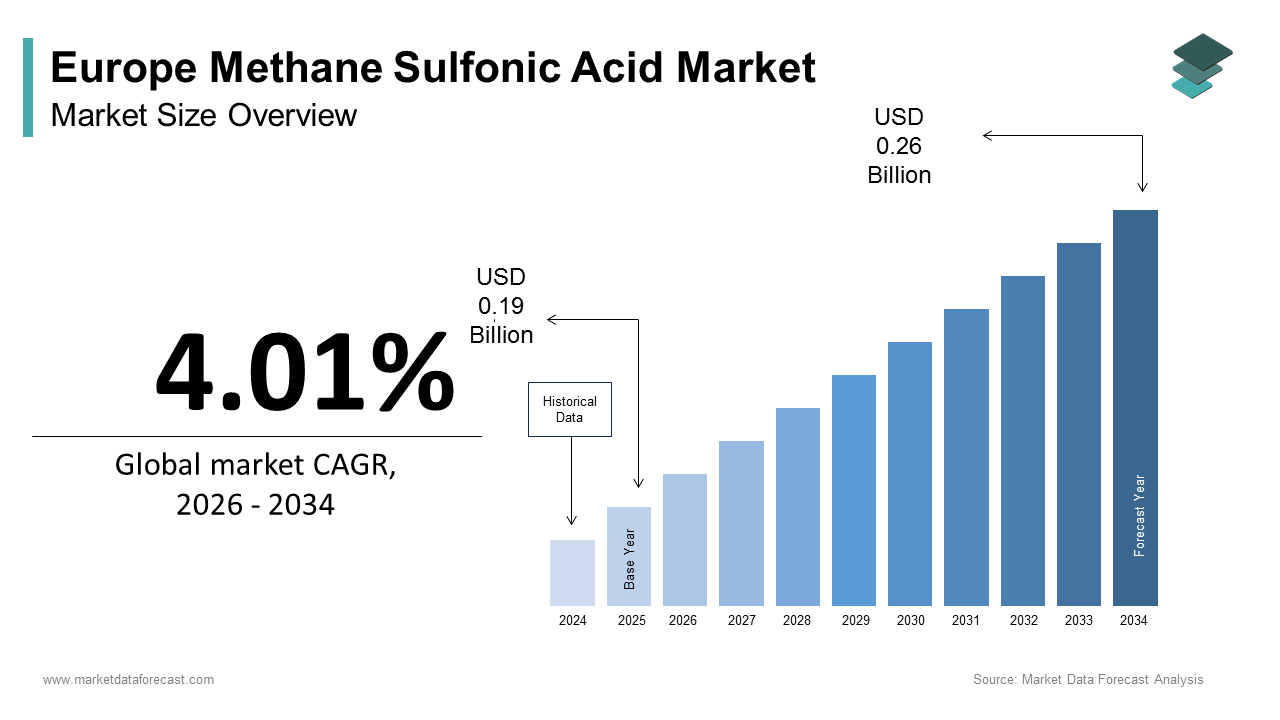
The Europe methane sulfonic acid (MSA) market size was valued at USD 0.19 billion in 2025, is anticipated to reach USD 0.20 billion in 2026, and is projected to scale up to USD 0.26 billion by 2034, registering a compound annual growth rate (CAGR) of 4.01% during the forecast period from 2026 to 2034. Driven by the shift toward lead-free electronics, expansion of advanced semiconductor packaging, and increasing applications in sustainable metal recovery and pharmaceutical synthesis, the market continues to expand steadily across Europe.
Key Executive Metrics (At-a-Glance)
- 2025 Base Valuation: USD 0.19 Billion
- 2026 Current Valuation: USD 0.20 Billion
- 2034 Forecast Valuation: USD 0.26 Billion
- Compound Annual Growth Rate (CAGR): 4.01% (2026–2034)
- Dominant Industrial Grade Segment: Industrial Grade (commanding a major share in 2025 for high-volume electrochemical and metal finishing)
- Fastest-Growing Industrial Grade Segment: Pharmaceutical-Grade (registering the highest CAGR of 6.9%)
- Dominant Application Segment: Electroplating (leading due to tin and tin alloy plating requirements in electronics)
- Fastest-Growing Application Segment: Pharmaceuticals (projected to grow at a CAGR of 7.1%)
- Dominant Region: Germany (holding a 28.3% market share in 2025, backed by dense electronics and chemical manufacturing)
Core Market Drivers
- Lead-Free Electronics Shift: EU RoHS and REACH regulations accelerating the phase-out of hazardous systems in favor of MSA-based electrolytes.
- Advanced Semiconductor Packaging: European Chips Act funding and miniaturized chip architectures boosting demand for precise electroplating.
- Sustainable Metal Recovery: Growing focus on urban mining, battery recycling, and strict EU raw material recovery targets.
Primary Market Restraints & Challenges
- High Production Costs: Premium pricing compared to conventional mineral acids and reliance on hazardous methanethiol feedstocks.
- Regulatory and Logistical Hurdles: Inconsistent regional interpretations regarding transport classification, storage codes, and safety compliance.
Europe Methane Sulfonic Acid Market Segmentation Breakdown
| Segment Category | Leading Sub-Segment (2025 Base) | Fastest-Growing Sub-Segment (2026–2034) |
|---|---|---|
| By Industrial Grade | Industrial Grade (dominant base share) | Pharmaceutical-Grade (fastest-growing at a 6.9% CAGR) |
| By Application | Electroplating (leading electronic component application) | Pharmaceuticals (fastest-growing at a 7.1% CAGR) |
| By Region | Germany (leading 28.3% market share in 2025) | Ireland & Netherlands (driven by life sciences and high-tech electronics clusters) |
Major Industry Players Profiled
Key enterprises shaping the competitive European methane sulfonic acid market include BASF SE, Arkema Group, Oxon Italia S.p.A., Ataman Kimya A.S., Sigma-Aldrich, Alfa Aesar, Chevron Phillips Chemical Company, Honeywell International Inc., Shandong Xingchi Chemical Co., Ltd., Zhejiang Kente Chemical Co., Ltd., and Merck KGaA.
 Download Free Sample Report
Europe Methane Sulfonic Acid Market Size
The Europe methane sulfonic acid market size was calculated to be USD 0.19 billion in 2025 and is anticipated to be worth USD 0.26 billion by 2034, from USD 0.20 billion in 2026, growing at a CAGR of 4.01% during the forecast period.
Methane sulfonic acid (MSA), a colorless, water-soluble organic sulfonic acid with the chemical formula CH₃SO₃H, is a versatile and environmentally favorable alternative to traditional mineral acids in numerous industrial processes. In Europe, MSA is primarily valued for its high biodegradability, low toxicity, and exceptional stability in electrochemical applications. Unlike hydrochloric or sulfuric acid, MSA does not generate halogenated byproducts or sulfate scaling, making it ideal for closed-loop systems in electronics and metal finishing. According to the European Chemicals Agency (ECHA) REACH registration data, methanesulfonic acid is recognized as a readily biodegradable substance with a rapid degradation rate in aquatic environments, supporting its profile as an environmentally compatible chemical. The European market for MSA is tightly integrated into advanced manufacturing sectors, particularly in tin and tin-lead plating for semiconductor packaging and printed circuit boards. As per industry perspectives provided by the International Tin Association and related research, MSA-based electrolytes have become a primary choice for lead-free solder plating in European electronics due to their enhanced throwing power, superior metal solubility, and reduced corrosion risks. Production is concentrated among a few specialty chemical producers in Germany, the UK, and Belgium, who supply high-purity grades under strict quality management systems. This niche yet critical role positions MSA as a silent enabler of Europe’s green electronics transition and circular metal recovery initiatives.
MARKET DRIVERS
Growth of Lead-Free Electronics and Advanced Semiconductor Packaging
The global shift toward lead-free electronics, accelerated by the EU’s Restriction of Hazardous Substances Directive, has made MSA indispensable in modern electroplating, driving the growth of the Europe methane sulfonic acid market. MSA-based electrolytes are the preferred medium for tin, tin-copper, and tin-silver alloy plating due to their excellent conductivity, stability, and ability to produce uniform, fine-grained deposits essential for miniaturized components. According to research, the transition to Methanesulfonic Acid (MSA) is driven by the phase-out of hazardous fluoboric and phenol-sulfonic systems to meet REACH and RoHS environmental standards in the EU. MSA is preferred for its stability, high current density, and superior performance in Wafer-Level Packaging (WLP) and Lead-frame plating. Each advanced packaging line consumes notable metric tons of high-purity MSA annually, with demand rising as chip complexity increases. The European Chips Act has already mobilized over €43 billion in public and private funding, specifically targeting the expansion of advanced assembly, testing, and packaging (ATP) capabilities to ensure supply chain resilience. Additionally, MSA’s compatibility with pulse reverse plating, a technique critical for through-silicon vias in 3D chips, cements its technical superiority. Technological necessity, not sheer volume, is driving the growth of eco-friendly MSA plating in Europe. As devices become faster and more compact, these high-performance chemistries are becoming essential for strategic digital networks.
Expansion of Sustainable Metal Recovery and Electrowinning Processes
MSA is gaining traction in hydrometallurgical applications as the region prioritizes urban mining and critical raw material recovery, which in turn contributes to the expansion of the Europe methane sulfonic acid market. Its ability to dissolve base and precious metals without generating persistent anions makes it ideal for recycling lithium-ion batteries, electronic waste, and spent catalysts. According to a study, Pilot-scale research supported by initiatives like EIT RawMaterials has demonstrated that organic acids like MSA can achieve high selectivity and purity (>99.9%) for precious metals like silver, though industrial application is still maturing compared to traditional inorganic acid leaching. Unlike sulfate or chloride systems, MSA does not form insoluble precipitates or corrosive gases, enabling cleaner metal deposition and easier electrolyte regeneration. Umicore's 2024 strategy has shifted toward efficiency measures and disciplined capital allocation, resulting in a 35% year-on-year reduction in CAPEX and a pause on new plant construction in Canada. Despite these delays, its existing Belgian and Korean facilities maintain recovery rates exceeding 95% for cobalt, nickel, and copper using its patented pyro-hydro technology. The European Raw Materials Alliance identifies MSA-based leaching as a key enabler for circularity in the battery value chain. EU Regulation (2023/1542) mandates strict material recovery targets by the end of 2031: 95% for cobalt, copper, lead, and nickel, and 80% for lithium. This regulatory pressure is a primary driver for the industry to explore sustainable lixiviants like MSA, though existing large-scale recyclers like Umicore continue to rely on proven hybrid pyrometallurgical-hydrometallurgical flowsheet.
MARKET RESTRAINTS
High Production Costs and Limited Manufacturing Capacity
MSA remains significantly more expensive than conventional mineral acids, which poses a major constraint on widespread adoption across price-sensitive industries and the Europe methane sulfonic acid market. The synthesis of MSA typically involves the oxidation of methanethiol or methyl mercaptan, a process requiring specialized corrosion-resistant reactors and stringent safety controls due to the toxicity of intermediates. Despite its premium price tag compared to sulfuric acid, Methanesulfonic Acid is becoming an industrial staple because it drives down total lifecycle costs. Its ability to dissolve metal salts effectively and biodegrade safely makes it a cost-efficient alternative for modern electroplating and cleaning processes. Europe's commercial-scale MSA production is dominated by BASF SE (Germany) and Arkema SA (France). Other notable players in the European market include Oxon Italia S.p.A. The European annual capacity for MSA is substantially higher than previously stated. BASF alone completed an expansion in May 2022 that raised its capacity at the Ludwigshafen Verbund site to 50,000 metric tons annually. This limited supply creates vulnerability to disruption. Price fluctuations in 2022-2023 were primarily driven by a surge in natural gas and raw material costs in Europe following the war in Ukraine, rather than isolated maintenance events in the UK. MSA is currently stuck in premium niches. To displace low-cost acids in bulk pH adjustment or pickling, the industry must achieve scale or find a catalytic breakthrough to lower prices and unlock market expansion.
Regulatory Ambiguity in Transport and Classification
MSA faces inconsistent regulatory treatment across the regional jurisdictions, despite its favourable environment profile, which complicates logistics and storage, and thereby affects the expansion of the Europe methane sulfonic acid market. Although classified as a severe skin corrosive under the EU’s CLP Regulation, MSA’s omission from the explicitly named list in the Seveso III Directive confuses its classification for major accident hazard management. Road carriers in Southern Europe often encounter shipment delays due to local interpretation, where MSA is mistakenly treated as a strong mineral acid requiring additional documentation. Furthermore, national fire codes vary. Storage of MSA requires more stringent secondary containment measures in Germany compared to the thresholds enforced in Spain. This patchwork of rules increases compliance costs for distributors and discourages small users from adopting MSA. The lack of harmonized guidance also hinders inclusion in green public procurement criteria, where clarity on hazard versus environmental impact is essential. MSA's potential as a sustainable industrial alternative is being restricted by administrative hurdles, pending the establishment of unified EU transport and storage protocols.
MARKET OPPORTUNITIES
Integration into Green Hydrogen and Fuel Cell Technologies
MSA is emerging as a promising proton conductor in next-generation electrochemical devices, which opens a growth opportunity in the region’s clean energy transition and the Europe methane sulfonic acid market. Researchers at the Technical University of Denmark have demonstrated that MSA-doped polymer membranes exhibit higher proton conductivity and thermal stability than traditional Nafion in intermediate-temperature fuel cells. Similarly, MSA-based electrolytes are being tested in alkaline and PEM water electrolyzers for green hydrogen production, where their low volatility and metal compatibility reduce system degradation. According to the European Hydrogen Backbone initiative and the REPowerEU plan, the EU aims to install at least 40 GW of renewable hydrogen electrolyzer capacity by 2030, with a further goal of importing 10 million tonnes of hydrogen, creating massive demand for advanced fuel cell materials and electrolytes. Despite being in the formative stages of research, this work is closely congruent with the objectives set out in the Horizon Europe framework for advanced materials. If scaled, MSA could transition from a metal finishing chemical to a core component of Europe’s hydrogen economy, leveraging its biodegradability and performance to support decarbonization beyond traditional sectors.
Development of Bio-Based and Circular MSA Production Routes
Innovation in sustainable synthesis is creating new pathways for MSA that align with the EU’s circular bioeconomy strategy, which is predicted to fuel the expansion of the Europe methane sulfonic acid market. Traditional petrochemical routes are being challenged by emerging methods using bio-methane or captured CO₂ as feedstocks. In 2024, Avantium successfully started up its FDCA Flagship Plant in Delfzijl, the Netherlands, focusing on producing FDCA (furandicarboxylic acid) from plant-based sugars for sustainable plastics (PEF), while continuing to develop "Volta" technology to convert CO2 into glycolic acid. According to life cycle assessment research on bio-based materials, shifting to renewable feedstocks (like biomass-derived methanol) can significantly reduce the carbon footprint of chemical production compared to fossil-based routes. Concurrently, companies like Umicore are developing closed-loop recycling systems that recover MSA from spent plating baths via nanofiltration and electrodialysis, achieving purity levels suitable for reuse. The European Commission’s Circular Plastics Alliance has identified MSA recovery as a priority for reducing chemical waste in electronics manufacturing. These developments position MSA not just as a greener aci, but as a product of circular chemistry itself, enhancing its appeal to ESG-focused buyers and opening access to green financing mechanisms under the EU Taxonomy.
MARKET CHALLENGES
Supply Chain Vulnerability to Methanethiol Feedstock Volatility
The production of MSA is critically dependent on methanethiol, a hazardous intermediate primarily sourced as a byproduct of methionine manufacturing for animal feed, which impedes the growth of the Europe methane sulfonic acid market. This narrow feedstock base creates systemic supply risks, as any disruption in the methionine market directly impacts MSA availability. According to a study, a large majority of Europe’s methanethiol production is concentrated between Evonik and Adisseo, both of whom prioritize internal methionine manufacturing over supplying external demand for derivative products. A temporary shutdown at an Evonik production facility in Belgium necessitated a rationing of product deliveries for several weeks due to reduced output. Unlike sulfuric acid, which can be produced from elemental sulfur, MSA lacks alternative large-scale synthesis routes, making it uniquely vulnerable to upstream shocks. This concentration of feedstock control limits negotiating power for MSA producers and discourages long-term capacity investments, perpetuating a fragile supply ecosystem that cannot reliably support expanding demand from electronics or recycling sectors.
Technical Barriers to Electrolyte Regeneration and Waste Management
Concentrated MSA waste is biodegradable, yet its treatment difficulties hinder its circular, closed-loop use and act as a serious obstacle for the European methane sulfonic acid market. Spent MSA plating baths contain dissolved metals such as tin, lead, and copper, which must be removed before biological treatment can occur. Conventional precipitation methods generate sludge that requires hazardous waste disposal, offsetting MSA’s environmental benefits. According to research from the Fraunhofer-Gesellschaft, only a small fraction of European electronics manufacturers currently operate comprehensive, in-house recycling or material recovery systems, with over 80 percent of e-waste ending up in external treatment facilities rather than on-site, due to high capital costs and technical complexity. Membrane-based separation technologies like electrodialysis show promise but remain cost-prohibitive for small and medium enterprises. Moreover, municipal wastewater plants often reject MSA-containing effluents due to uncertainty about metal speciation and biodegradation kinetics. The lack of affordable, standardized regeneration methods hinders MSA’s true lifecycle sustainability, which limits its appeal to regulated sectors seeking circular solutions.
REPORT COVERAGE
| REPORT METRIC | DETAILS |
| Market Size Available | 2025 to 2034 |
| Base Year | 2025 |
| Forecast Period | 2026 to 2034 |
| CAGR | 4% |
| Segments Covered | By Industrial Grade, Application, And Region |
| Various Analyses Covered | Global, Regional & Country Level Analysis; Segment-Level Analysis; DROC, PESTLE Analysis; Porter’s Five Forces Analysis; Competitive Landscape; Analyst Overview of Investment Opportunities |
| Regions Covered | UK, France, Spain, Germany, Italy, Russia, Sweden, Denmark, Switzerland, Netherlands, Turkey, and the Czech Republic |
| Market Leaders Profiled | BASF SE, Arkema Group, Oxon Italia S.p.A., Ataman Kimya A.S., Sigma-Aldrich, Alfa Aesar, Chevron Phillips Chemical Company, Honeywell International Inc., Shandong Xingchi Chemical Co., Ltd., Zhejiang Kente Chemical Co., Ltd. |
SEGMENTAL ANALYSIS
By Industrial Grade Insights
The industrial grade segment maintained dominance in the Europe methane sulfonic acid market and accounted for a substantial share in 2025. The leading position of the industrial grade segment is driven by its critical role in high-volume electrochemical and metal finishing applications, where purity requirements are stringent but not at pharmaceutical levels. Industrial-grade MSA is the electrolyte of choice for tin and tin alloy plating in electronics manufacturing, a sector that consumes thousands of metric tons annually across Germany, Ireland, and Eastern Europe. Industrial-grade MSA serves as the standard chemistry for lead-free solder plating across the European Union, preferred for its high-performance conductivity and compatibility with advanced packaging techniques. This widespread adoption is driven by the need for superior stability and efficiency in high-speed, pulsed plating processes. The segment’s dominance is further reinforced by its use in catalyst recovery, resin regeneration, and emerging urban mining operations for battery and e-waste recycling. Unlike pharmaceutical grade, which serves niche synthesis roles, industrial grade benefits from economies of scale, established supply chains, and integration into automated production systems. Its performance-to-cost ratio makes it irreplaceable in applications where halogen-free chemistry and minimal waste generation are regulatory and operational imperatives.
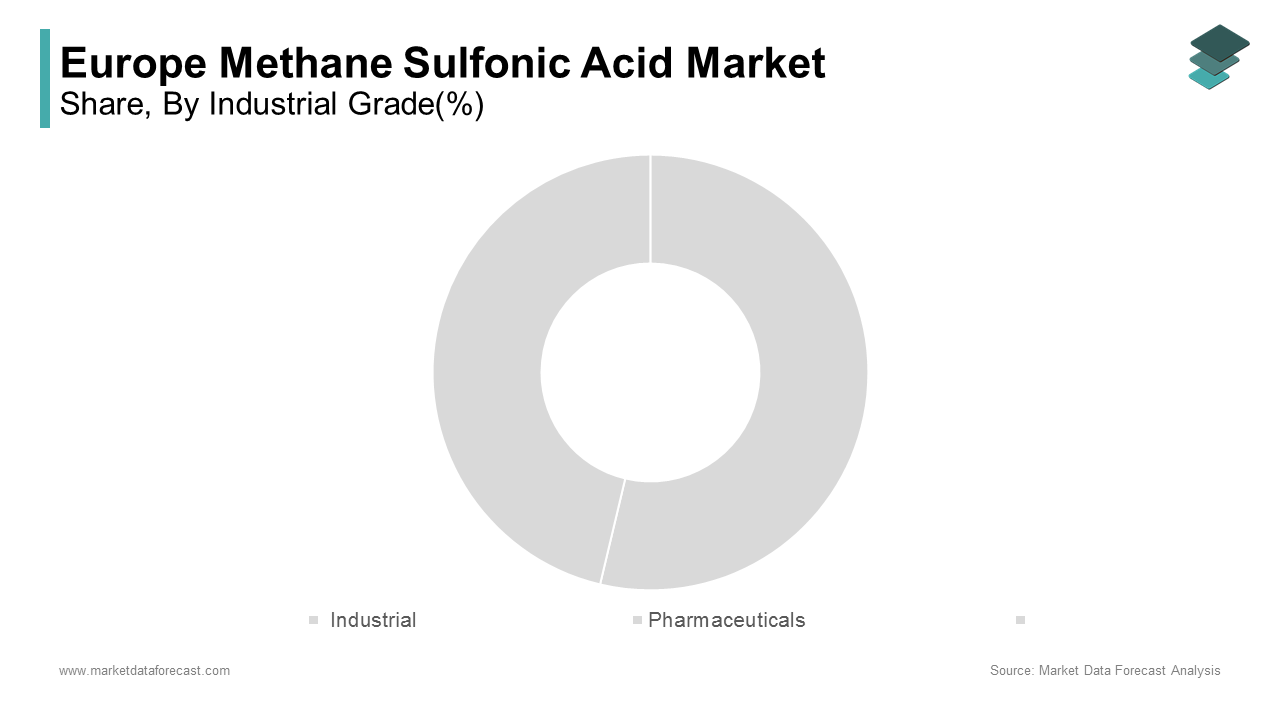
The pharmaceutical-grade MSA segment is predicted to witness the highest CAGR of 6.9% from 2026 to 2034 due to its increasing use as a counterion in active pharmaceutical ingredient salt formation, where it enhances solubility, stability, and bioavailability without introducing toxic residues. Unlike hydrochloride or sulfate salts, mesylate salts derived from MSA are highly crystalline and non-hygroscopic, making them ideal for solid-dose formulations. The European Medicines Agency (EMA) continued to see a high volume of novel drug approvals, with a strong focus on innovative pharmacological designs for addressing unmet needs in oncology and immunology, including the strategic selection of specific, specialized salt forms to ensure optimal, precise pharmacokinetic properties in new small-molecule therapies. Additionally, stringent ICH Q3 guidelines on elemental impurities favor MSA over mineral acids due to its low metal content and clean degradation profile. Leading contract development and manufacturing organizations in Switzerland and Ireland are investing in dedicated MSA handling suites to meet cGMP requirements. The increasing demand for high-purity excipients in personalized medicine is transforming pharmaceutical-grade MSA into a strategic enabler for advanced therapies.
By Application Insights
In 2025, the electroplating segment remained the leading segment in the Europe methane sulfonic acid market and captured a significant share. The supremacy of the electroplating segment is attributed to MSA’s unique electrochemical properties that make it the optimal medium for depositing uniform, fine-grained tin and tin-copper alloys onto electronic components. Unlike traditional fluoboric or phenol-sulfonic acid baths, MSA-based electrolytes offer high throwing power, low corrosivity, and excellent compatibility with lead-frame and wafer-level packaging processes. Driven by European environmental regulations prohibiting lead, the vast majority of electronic component plating now utilizes acid-based chemistries to achieve compliant lead-free finishes. Semiconductor manufacturing facilities require significant volumes of specialized acid solutions for plating, and this need is growing as the shift toward smaller, more complex chip architectures demands increasingly exact chemical processing. The segment’s dominance is further cemented by the rise of 3D integrated circuits and through-silicon vias, which rely on pulse reverse plating in MSA baths to achieve void-free fills. This technical indispensability ensures electroplating remains the anchor application for MSA across Europe’s strategic electronics supply chain.
The pharmaceuticals application segment is estimated to register the fastest CAGR of 7.1% over the forecast period. This rapid growth is propelled by the expanding use of methane sulfonic acid in the synthesis and salt formation of high-value active pharmaceutical ingredients, particularly in oncology, antivirals, and central nervous system drugs. Mesylate salts, formed by reacting APIs with MSA, offer superior crystallinity, thermal stability, and dissolution profiles compared to hydrochloride counterparts, critical attributes for modern drug delivery systems. According to sources, the utilization of specific, modified salt formulations, including those based on mesylate, has shown a significant, rising trend in new small-molecule drug approvals, representing a growing proportion of therapeutic innovations compared to earlier in the decade. Regulatory pressure under ICH Q3D guidelines to minimize elemental impurities has further accelerated adoption, as MSA introduces no persistent metals into final products. Contract manufacturers in Switzerland and Denmark are scaling cGMP-compliant MSA handling capabilities to serve global innovators. The strengthening of Europe's pharmaceutical supply chain, prompted by initiatives like the European Health Union, will ensure that demand for traceable, high-purity MSA continues to outpace other sectors.
REGIONAL ANALYSIS
Germany Methane Sulfonic Acid Market Analysis
Germany was the top performer in the Europe methane sulfonic acid market by holding a 28.3% share in 2025. The prominence of the German market is credited to its dense concentration of electronics manufacturers and chemical producers. The country’s market is also supported by its role as Europe’s semiconductor and automotive electronics hub, with facilities from Infineon, Bosch, and Siemens relying on MSA-based plating for sensor and power module production. According to the German Electrical and Electronic Manufacturers Association, the increasing reliance on advanced semiconductor packaging in Germany's automotive and electronics sectors is driving significant demand for high-purity materials in production lines. BASF, headquartered in Ludwigshafen, is a key domestic supplier, producing both industrial and pharmaceutical grades under strict REACH compliance. The nation’s stringent environmental regulations favor MSA over halogenated alternatives, while the Chips Act funding has spurred new fab construction, further anchoring demand. This blend of advanced manufacturing, chemical innovation, and regulatory alignment positions Germany as the undisputed leader in Europe’s MSA ecosystem.
Ireland Methane Sulfonic Acid Market Analysis
Ireland followed closely behind in the European methane sulfonic acid market and secured an 18.8% share in 2025. Demand for MSA in Ireland is fuelled by its status as a global pharmaceutical and medtech manufacturing hub, with many of the world’s top pharmaceutical companies, including Pfizer, Johnson & Johnson, and AbbVie, using pharmaceutical-grade MSA in API salt formation and intermediate synthesis. According to a study, the life sciences sector remains a major pillar of the national economy, with pharmaceutical and medical product exports reaching record highs in 2024, driven by the manufacturing of complex, high-value medicines for the global market. The country’s favorable regulatory environment and English-speaking cGMP infrastructure attract high-value production, driving consistent demand for ultra-pure MSA. Besides, several electronics assembly plants serving medical devices utilize MSA for biocompatible tin plating. This dual demand from pharma and precision electronics makes Ireland a high-intensity, quality-driven node in the European MSA landscape.
UK Methane Sulfonic Acid Market Analysis
The United Kingdom continues to maintain a significant share in the Europe methane sulfonic acid market, with growth centered on specialty chemicals and advanced electronics. The market is propelled by strong R&D activity and niche manufacturing. Johnson Matthey and Alfa Aesar produce high-purity MSA grades for global pharmaceutical and catalyst markets. The UK chemical sector continues to maintain a significant export presence through its strong scientific reputation, despite experiencing severe financial pressures, declining production, and increased competition. Post-Brexit, UK-based electronics assemblers have intensified local sourcing to avoid customs delays, boosting domestic consumption. The UK is focusing its long-term investment on R&D, design, and compound semiconductors to improve the nation’s technological position and secure supply chains. Despite falling outside the EU regulatory framework, the UK’s adherence to REACH standards guarantees continued, seamless integration with European supply chains. This combination of innovation, export orientation, and strategic reinvestment sustains the UK’s relevance in the regional MSA market.
Switzerland Methane Sulfonic Acid Market Analysis
Switzerland is moving ahead steadfastly in the European methane sulfonic acid market owing to its world-leading pharmaceutical sector. The market status is defined by the presence of Novartis and Roche, which extensively use pharmaceutical-grade MSA in the development and production of complex therapeutics, including kinase inhibitors and monoclonal antibody conjugates. Swissmedic continues to approve a growing number of innovative medicinal products, with a notable portion of these submissions utilizing specialized salt forms to enhance the solubility and stability of new active substances. Regulatory filings for new therapies frequently leverage methanesulfonic acid derivatives to optimize the delivery of basic chemical entities, reflecting a consistent industry reliance on these counterions for pharmaceutical development. Swiss regulations under the Therapeutic Products Act mandate extreme purity and traceability, driving adoption of certified MSA grades with full chain-of-custody documentation. Despite relying on imports for the majority of its MSA, the country maintains a strictly regulated pharmaceutical ecosystem, ensuring that only top-tier materials pass rigorous quality assurance. This focus on premium, high-value applications makes Switzerland a critical quality benchmark for the entire European market.
Netherlands Methane Sulfonic Acid Market Analysis
The Netherlands is predicted to grow notably in the European methane sulfonic acid market from 2026 to 2034 due to its advanced electronics cluster and circular economy initiatives. This market growth is also driven by the presence of ASML’s supply chain and NXP Semiconductors, which require MSA for precision tin plating in sensor and automotive chips. High-tech electronics manufacturers in the Eindhoven region rely heavily on a stable supply of materials, including methanesulfonic acid (MSA), to maintain sustainable lead-free soldering processes and adhere to strict environmental regulations. Additionally, the Port of Rotterdam hosts pilot projects for urban mining, where MSA is used to leach tin and silver from electronic waste. Companies like Umicore operate demonstration-scale electrowinning cells using MSA electrolytes, supported by EU Horizon funding. The Dutch government’s emphasis on circularity and digital sovereignty has created a fertile environment for MSA adoption beyond traditional plating, positioning the Netherlands as an innovation hub for sustainable electrochemical applications in Europe.
COMPETITION OVERVIEW
The Europe methane sulfonic acid market is characterized by a highly specialized competitive landscape dominated by a few multinational chemical companies with deep technical expertise and stringent quality control systems. Competition is not based on price but on purity grade, consistency, regulatory compliance, and application support. New entrants face significant barriers, including capital intensity, hazardous intermediate handling, and limited access to methanethiol feedstock. Incumbents like BASF, Merck, and Alfa Aesar leverage their integrated production and analytical capabilities and global distribution networks to serve high-value sectors such as semiconductors and pharmaceuticals. The market is bifurcated between industrial grade for electronics plating and pharmaceutical grade for API synthesis, with minimal overlap in customer requirements or logistics. Innovation focuses on circularity through electrolyte regeneration and sustainability via bio-based routes rather than product substitution. Collaboration with end users on process optimization is common, particularly in advanced packaging and drug development. This environment rewards technical excellence,e reliability, and regulatory alignment over volume, making it a niche yet strategically vital segment within Europe’s specialty chemicals ecosystem.
KEY MARKET PLAYERS
A few major players of the Europe methane sulfonic acid market include
- BASF SE
- Arkema Group
- Oxon Italia S.p.A
- Ataman Kimya A.S
- Sigma-Aldrich
- Alfa Aesar
- Chevron Phillips Chemical Company
- Honeywell International Inc
- Shandong Xingchi Chemical Co., Ltd
- Zhejiang Kente Chemical Co., Ltd
Top Strategies Used by the Key Market Participants
Key players in the Europe methane sulfonic acid market are investing in advanced purification technologies to achieve ultra-low metal impurity levels required for semiconductor and pharmaceutical applications. They are developing closed-loop recovery and regeneration systems to recycle spent MSA electrolytes from electroplating baths, reducing waste and raw material dependency. Companies are expanding cGMP-compliant packaging and documentation capabilities to serve the growing pharmaceutical salt formation market. Strategic partnerships with electronics manufacturers and biotech firms enable co-development of application-specific MSA formulations. Vertical integration from synthesis to quality control ensures batch-to-batch consistency and regulatory compliance. Digital platforms for real-time quality tracking and chain of custody enhance transparency for high-value customers. Participation inEU-fundedd circular economy projects focuses on MSA-based urban mining for critical metal recovery. Compliance with REACH and ICH guidelines is prioritized through rigorous impurity profiling and safety data management. Geographic diversification of supply chains mitigates feedstock volatility risks associated with methanethiol sourcing. Innovation inbio-basedd synthesis routes aims to reduce carbon footprint and align with EU green chemistry principles.
Leading Players in the Europe Methane Sulfonic Acid Market
- BASF SE is a leading European producer of methane sulfonic acid with integrated manufacturing capabilities at its Ludwigshafen site in Germany. The company supplies both industrial and pharmaceutical grades to electronics, pharmaceutical, and catalyst sectors across Europe and globally. BASF contributes to the worldwide market through its high-purity MSA formulations that meet stringent ICH and REACH standards, supporting lead-free electronics and advanced drug development. Recently, BASF enhanced its MSA production line with real-time impurity monitoring systems to ensure batch consistency for semiconductor customers. It also launched a closed-loop recovery pilot with a German automotive electronics supplier to regenerate spent MSA electrolytes, reinforcing its commitment to circular chemistry and strengthening its position as a solutions-oriented partner in sustainable manufacturing.
- Alfa Aesar, operating under Thermo Fisher Scientific, is a key supplier of high-purity methane sulfonic acid to research institutions and pharmaceutical developers across Europe. While not a bulk producer, the company plays a critical role in the specialty segment by offering certified pharmaceutical-grade MSA with full traceability and analytical documentation. Its global distribution network ensures rapid delivery of small to mid-scale quantities essential for API development and quality control. Its focus on quality assurance and regulatory compliance solidifies its niche as a trusted enabler of innovation in life sciences and advanced materials research throughout Europe.
- Merck KGaA is a major European player in the methane sulfonic acid market, specializing in ultra-high-purity grades for semiconductor and pharmaceutical applications. Headquartered in Darmstadt, Germany, the company integrates MSA into its broader portfolio of electronic chemicals and fine reagents. Merck supplies global chipmakers with MSA formulations tailored for advanced packaging and wafer-level plating processes. To strengthen its market position, Merck recently upgraded its purification technology to achieve parts-per-trillion metal impurity levels, meeting next-generation node requirements. It also partnered with a Swiss biotech firm to co-develop mesylate salt platforms for novel oncology drugs, demonstrating its dual expertise in electronics and life sciences and reinforcing its reputation for precision and reliability in high-stakes applications.
MARKET SEGMENTATION
This research report on the Europe methane sulfonic acid market has been segmented and sub-segmented based on industrial grade, application, and region.
By Industrial Grade
- Industrial
- Pharmaceuticals
By Application
- Esterification
- Electroplating
- Pharmaceuticals
By Region
- UK
- France
- Spain
- Germany
- Italy
- Russia
- Sweden
- Denmark
- Switzerland
- Netherlands
- Turkey
- Czech Republic
- Rest of Europe