- Product Description Description
- Table of Contents TOC
- List of Table & Figure LOT
- Get Free Sample PDF Sample PDF
Market Size, 2025
$536 MnMarket Estimate, 2026
$573 MnMarket Forecast, 2034
$983 MnCAGR, 2026–2034
6.97%Europe Mezcal Market Size
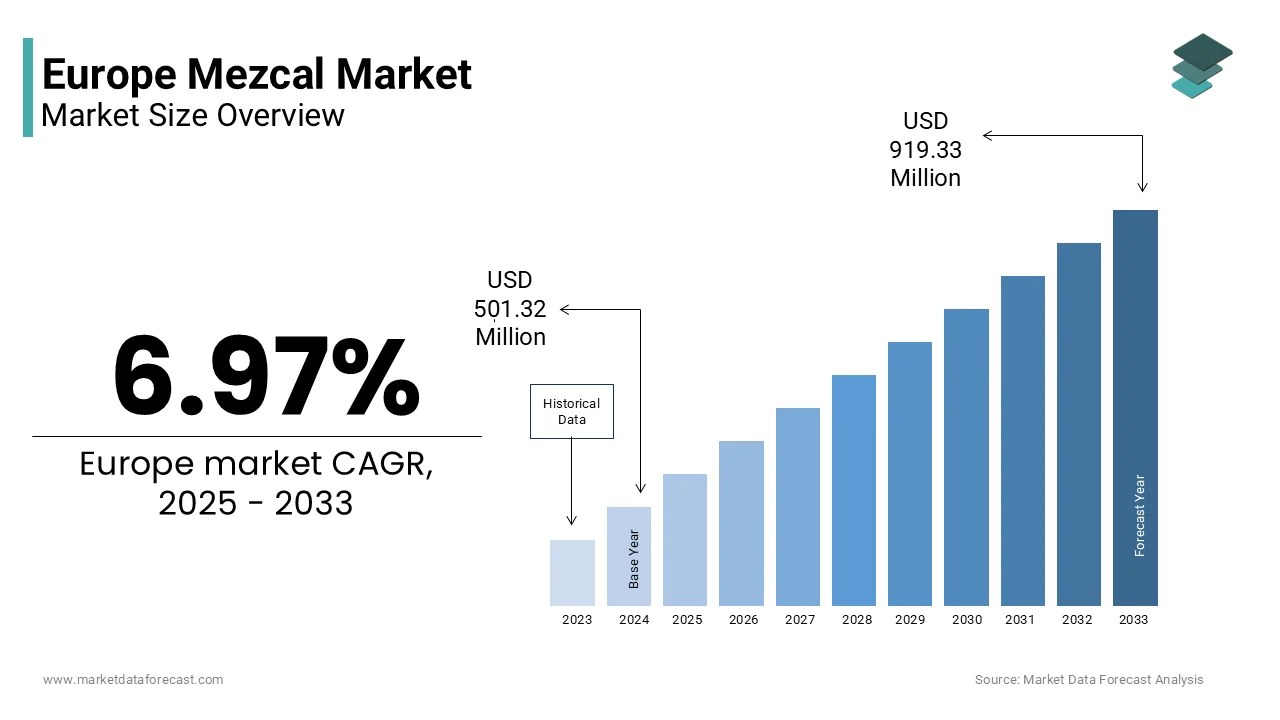
The Europe mezcal market size was valued at USD 536.26 million in 2025 and is projected to reach USD 983.41 million by 2034 from USD 573.64 million in 2026, growing at a CAGR of 6.97%.
Mezcal is a traditional Mexican distilled spirit derived from the agave plant and distinguished by its artisanal production methods, including pit roasting of agave hearts and small batch distillation. In Europe, its presence has evolved from a niche import to a culturally resonant premium spirit embraced by mixologists, sustainability advocates and gastronomic connoisseurs. The European Union and Mexico have established a formal framework to safeguard the authenticity of mezcal by granting it protected status under their mutual trade agreements. Official trade statistics show that the volume of agave-based spirits entering the European market continues to reach substantial levels as consumer demand for Mexican distillates grows. Tequila may still be the leading agave spirit imported to the region, but mezcal is establishing a clear and growing presence in the wider Mexican spirits market. Trade records reflect a dramatic surge in the arrival of mezcal to European shores, outpacing the growth of many traditional spirit categories over the last several years. This growth intersects with broader consumer shifts, including the rise of craft cocktails and demand for traceable heritage products. Leading cocktail destinations in major European capitals have widely adopted mezcal as a staple ingredient, reflecting its transition from a speciality product to a core component of premium bar offerings. Unlike tequila, which benefits from mass market recognition, mezcal’s appeal in Europe lies in its terroir-driven diversity, artisanal narrative and alignment with slow consumption values increasingly prioritised by post-pandemic drinkers seeking authenticity over volume.
MARKET DRIVERS
Rising Popularity of Craft Cocktails and Premium Mixology Culture
The expansion of the region’s craft cocktail scene is a pivotal driver of the European mezcal market. Bartenders seek complex and narrative-rich spirits to differentiate their offerings. Mezcal's popularity in Western Europe is experiencing a significant rise, particularly within the burgeoning craft and speakeasy bar scenes in major cities, where it has become a staple spirit in many signature cocktail offerings. The spirit’s smoky aromatic profile provides a distinctive base for innovative cocktails that cannot be replicated with neutral or mass-produced liquors. The presence of mezcal as an ingredient in cocktails at the United Kingdom's leading bars has expanded considerably in recent years, moving from an exotic or niche option to an established and increasingly prevalent spirit on menus. Similarly, Mezcal is gaining substantial ground in the Spanish market, with consumer interest and visibility increasing notably, driven by a growing number of specialised mezcal-focused venues and related cultural events in cities like Barcelona and Madrid. The European mixology community also leverages mezcal’s artisanal backstory highlighting specific agave varieties and village producers to create immersive storytelling experiences. This cultural capital transforms mezcal from a mere ingredient into a conversation piece, enhancing perceived value and justifying premium pricing in high-margin beverage programs.
Growing Consumer Preference for Artisanal and Ethically Sourced Spirits
European consumers are increasingly prioritising transparency, provenance, and ethical production in their spirits choice, directly benefiting mezcal’s artisanal identity, which in turn fuels the expansion of the European mezcal market. Consumers within the European Union, particularly younger adults, are increasingly factoring in sustainability and ethical producer welfare considerations when purchasing premium spirits and other alcoholic beverages. This reflects a broader shift in consumer values and purchasing motivations within this demographic. Mezcal’s traditional production, often involving hand-harvested wild agave, small copper stills, and family-run palenques, aligns with these values more authentically than industrial alternatives. Certifications such as Denomination of Origin and CRM (Mezcal Regulatory Council) compliance provide verifiable traceability that resonates with EU regulations on geographical indications. In France, a notable segment of premium spirit buyers shows an increased willingness to pay a premium price for products that can demonstrate a clear and documented positive social and environmental impact. This indicates a growing market for ethically sourced and transparently produced goods in the region. Additionally, NGOs like Fair Trade Spirits Europe have begun auditing mezcal supply chains, ensuring fair wages and agave reforestation, further reinforcing ethical credibility. This convergence of cultural authenticity and responsible consumption positions mezcal as a symbol of mindful indulgence in Europe’s evolving spirits landscape.
MARKET RESTRAINTS
Stringent EU Alcohol Import Regulations and Labelling Requirements
The European Union’s rigorous alcohol import framework demands extensive documentation and compositional compliance, which restricts the growth of the European mezcal market. Regulations for imported spirits have intensified, requiring detailed labelling and declarations. These requirements challenge small-scale producers with limited administrative capacity. Source country producers must adhere to geographical indication protocols verified by local authorities and re-validated by importers. Artisanal production variability triggers additional laboratory testing, causing clearance delays. Incomplete certification or inconsistent declarations are frequent reasons for shipment rejection. These regulatory hurdles disproportionately affect small Mexican palenques lacking resources for compliance, thereby limiting product diversity and inflating retail prices across Europe.
Limited Consumer Awareness and Confusion with Tequila
Mezcal remains poorly understood by the broader European consumer base, often conflated with tequila, which enjoys decades of market presence, which hampers the growth of the European mezcal market. Many consumers across European markets, including Germany, Italy, and Poland, demonstrate a limited understanding of mezcal, frequently confusing it with a flavoured or smoky type of tequila. This knowledge gap restricts mainstream adoption as retailers hesitate to allocate shelf space to a product requiring extensive consumer education. In contrast, tequila benefits from clear category cues such as 10 per cent agave labelling and celebrity endorsements that mezcal lacks. Additionally, the absence of large-scale marketing budgets—most mezcal brands are independent or cooperatively owned—limits brand building beyond urban cocktail enclaves. A substantial number of European wine and spirits retailers lack the specialised knowledge to differentiate effectively between distinct agave varieties used in mezcal production, such as espadín and tobaziche. Mezcal's market potential is capped by its niche perception, and will stay that way until educational efforts reach a wider audience beyond specialised channels.
MARKET OPPORTUNITIES
Expansion of Direct-to-Consumer E Commerce and Niche Retail Platforms
The rise of specialised online alcohol retailers and direct-to-consumer platforms offers a strategic opportunity for mezcal brands, which is anticipated to drive the growth of the European mezcal market. These platforms allow them to bypass traditional distribution bottlenecks and engage educated consumers. Higher-end spirit transactions are increasingly occurring through digital channels. Specialised online platforms are dedicating sections to agave spirits, enabling detailed narrative marketing that includes sharing origin stories and production methods. A notable growth in agave spirit sales has been observed, partly supported by retailers offering curated tasting experiences. The existing regulatory framework allows licensed retailers to ship across different jurisdictions, supporting a wide market reach for digitally native brands. Data analytics empower these platforms to offer instant insights into flavour preferences and price sensitivity, allowing Mexican producers to fine-tune their offerings for the European market without needing a costly physical presence.
Integration into Sustainable and Regenerative Tourism Initiatives
Mezcal’s deep cultural roots offer a unique opportunity for integration into the region’s growing regenerative tourism and culinary travel sector, which is expected to boost the expansion of the European mezcal market. Travellers are increasingly selecting international destinations to experience local culinary and beverage traditions. Exploring spirit-producing regions has become a significant consideration in travel planning. Importers are partnering with travel agencies to create specialised itineraries focusing on traditional production sites, and new programs are integrating educational experiences like environmental workshops and guided tastings. Tour operators are observing positive responses to packages that combine spirit education with indigenous food systems. These experiences not only deepen consumer appreciation but also generate pre-trip brand loyalty that translates into post-travel retail purchases. Furthermore, the EU’s Farm to Fork Strategy encourages such transparent supply chain narratives, positioning mezcal as a model for ethical global gastronomy. The market can cultivate lasting emotional connections that go beyond simple transactions by reframing consumption as a form of cultural immersion.
MARKET CHALLENGES
Vulnerability to Agave Supply Shortages and Climate Pressures
Mezcal production is acutely threatened by agave scarcity and climate volatility, ty which directly impact the region’s supply stability and pricing, which is among the major challenges to the European mezcal market. Certain agave species used in traditional spirit production require many years to mature, making large-scale farming difficult compared to more common varieties. Extended dry periods in a primary production region have significantly decreased the supply of the core ingredient. This reduction in yields has corresponded with a notable increase in the product's cost for buyers outside the country. Unlike industrial spirits that buffer volatility through large inventories, artisanal mezcal producers operate with minimal stock due to limited fermentation space and financial resources. Europe's mezcal market will likely see persistent disruptions, potentially jeopardising its premium standing, without unified reforestation and biodiversity programs.
Lack of Unified Branding and Fragmented Producer Representation
The absence of a cohesive international brand identity due to extreme producer fragmentation and inconsistent quality narratives is a major obstacle that obstructs the expansion of the European mezcal market. The number of certified mezcal producers in Mexico is steadily increasing, with a growing number of these brands expanding their presence in international markets. This diversity, while authentic, creates confusion for European retailers and consumers who struggle to navigate inconsistent ABV levels, bottle designs and flavour profiles. Unlike tequila, which benefits from a unified global campaign by the Tequila Regulatory Council, mezcal lacks a centralised European advocacy body to fund education, lobbying or promotional events. Many smaller, independent mezcal brands face challenges in establishing a comprehensive digital presence and navigating complex branding guidelines when expanding into the European Union market. Consequently, our premium positioning is diluted by the high-quality artisanal mezcal that competes directly with lower-tier industrial versions under the same category umbrella. Until stakeholders establish a coordinated European mezcal alliance with shared quality benchmarks and storytelling frameworks, the market will remain a fragmented niche rather than a unified premium category.
REPORT COVERAGE
| REPORT METRIC | DETAILS |
| Market Size Available | 2025 to 2034 |
| Base Year | 2025 |
| Forecast Period | 2026 to 2034 |
| CAGR | 6.97% |
| Segments Covered | By Age, Distribution Channel, and Region |
| Various Analyses Covered | Global, Regional, & Country Level Analysis; Segment-Level Analysis; DROC, PESTLE Analysis; Porter’s Five Forces Analysis; Competitive Landscape; Analyst Overview of Investment Opportunities |
| Regions Covered | UK, France, Spain, Germany, Italy, Russia, Sweden, Denmark, Switzerland, Netherlands, Turkey, and the Czech Republic |
| Market Leaders Profiled | Diageo plc, SU CASA MEZCAL, Mezcal Amaras, Pernod Ricard S.A., Xiaman Spirits GmbH, Casa Cortes, Wahaka Mezcal, Rey Campero, Bacardi Limited (Ilegal Mezcal),yd Mezcal Vago (Heaven Hill Sales Co.) |
SEGMENTAL ANALYSIS
By Age Insights
The mezcal joven (unaged) segment dominated the European mezcal market by accounting for a 58.6% share in 2025. The dominance of the mezcal joven segment is driven by its versatility in mixology and authenticity as a representation of raw agave terroir. Unlike aged variants, which mask vegetal and smoky notes through barrel influence, Joven mezcal preserves the distinct flavour profile of its agave species, particularly espadín, making it the preferred base for craft cocktails and high-end bars. The segment also benefits from faster production cycles as it requires no barrel ageing, gg allowing producers to respond quickly to European demand surges without inventory bottlenecks. Additionally, Joven mezcal aligns with the “less intervention” ethos valued by European consumers seeking unadulterated artisanal products. Regulatory labelling mandates clear age classification, ensuring transparency that reinforces consumer trust in Joven as the purest expression of traditional mezcal craftsmanship.
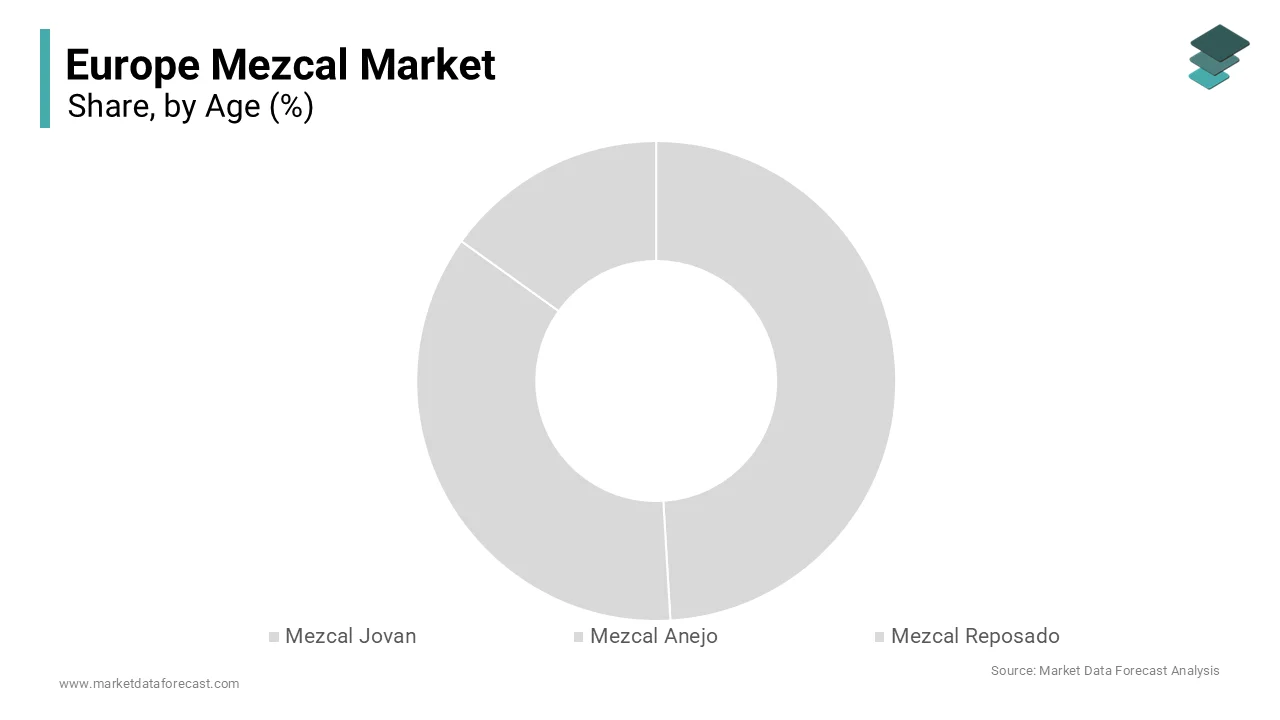
The mezcal añejo segment is on the rise and is expected to be the fastest growing segment in the market by witnessing a CAGR of 22 6% between 2026 and 2034 due to the rising demand among connoisseurs for sipping spirits with complexity, ty depth,, ageing heritage comparable to single malt whisky or aged rum. Añejo mezcals aged for a minimum of 12 months in oak develop rich notes of vanilla, caramel, and toasted wood that appeal to European palates accustomed to barrel-matured beveragesThere has been a substantial increase in demand for añejo products within certain key markets. Growth in this segment has been driven by the availability of more limited releases produced using specific, non-cultivated varieties of source plant material. Añejo now occupies a significantly larger share of dedicated retail shelf space compared to earlier periods. Educational institutions within the spirits industry have begun offering specialised training on the maturation and ageing processes associated with mezcal, suggesting an elevation of its status in professional circles. The shift in consumer preferences towards thoughtful sipping over casual cocktail consumption, coupled with Añejo's strong association with time, craftsmanship, and scarcity, is establishing it as the luxury benchmark for the European mezcal market's growth.
By Distribution Channel Insights
The on-premise segment led the European mezcal market by capturing a share of 63.6% in 2025. The supremacy of the on-premise segment is attributed to mezcal’s identity as a bartender-driven spirit whose adoption has been cultivated through cocktail innovation and experiential consumption. High-end establishments use mezcal not just as an ingredient but as a storytelling tool, with servers often explaining its origin, roasting method and agave type to guests. Mezcal-based drinks have become more prominent on craft cocktail menus in several major European cities. This trend indicates growing consumer interest and a shift in demand for mezcal within the bar scene. The bar channel facilitates premium pricing for mezcal cocktails compared to standard spirit mixes. The higher price points have the potential to increase venue profitability and support investment in mezcal inventory. Furthermore, sommelier and mixologist training programs across Europe now include dedicated mezcal modules endorsed by the EU-Mexico Trade Agreement’s cultural promotion clause. This professional endorsement transforms casual curiosity into sustained demand, ensuring mezcal remains embedded in Europe’s evolving liquid cuisine landscape.
off-premise segment is expected to exhibit a noteworthy CAGR of 27.3% during the forecast period, owing to a post-pandemic shift toward at-home premiumization as consumers replicate bar quality experiences in their living rooms. Consumers in specific European markets are increasingly favouring curated packages that combine agave-based spirits with educational materials and tasting accessories. The demand for comprehensive digital shopping experiences suggests a shift toward home-based exploration and connoisseurship of niche spirits. Recent legislative adjustments within the regional trade bloc have simplified the administrative processes associated with the distribution of alcoholic beveragesStandardiseded procedures for duty collection have contributed to more efficient logistics and reduced transit times for international shipments. The alignment of digital commerce regulations has encouraged retailers to expand their product offerings beyond traditional single-bottle sales. Additionally, speciality retailers like La Maison du Whisky in France and The Whisky Exchange in the UK now dedicate permanent mezcal sections with detailed producer bios and sustainability certifications, key purchase drivers for educated buyers. So, this channel is poised to democratize mezcal beyond urban nightlife into mainstream connoisseur culture.
REGIONAL ANALYSIS
United Kingdom Mezcal Market Analysis
The United Kingdom outperformed other regions in the European mezcal market by holding a 24.5% share in 2025. The supremacy of the UK market is driven by its globally influential cocktail culture, anchored in London’s world-ranked bars, where mezcal has become a staple of innovative mixology. The British palate’s growing appreciation for smoky, complex spirits, evident in the rise of Islay whisky, creates a natural affinity for mezcal’s flavour profile. Furthermore, the UK’post-Brexitit alcohol import framework allows streamlined customs clearance for geographical indication-protected spirits, including mezcal. With strong Spanish and Latin American diaspora communities and a media ecosystem that celebrates artisanal beverages, the UK serves as both a trendsetter and gateway for mezcal’s broader European expansion.
France Mezcal Market Analysis
France was the next prominent country in the European mezcal market by capturing a share of 19.3% in 2025. The nation’s deep-rooted appreciation for terroir-driven spirits, historically focused on wine and Armagnac, has created fertile ground for mezcal’s artisanal narrative. French consumers value provenance, authenticity, and small batch production, all of which align with mezcal’s traditional palenque model. Major metropolitan areas are experiencing an increase in curated events focused on pairing traditional spirits with diverse culinary offerings. Collaborations between specialised distributors and cultural organisations have expanded the visibility of regional artisanal products. Regulatory frameworks emphasise the importance of origin protections to maintain the integrity of imported goods. The implementation of strict certification standards influences how consumers perceive the quality of specialised beverages. Strategic partnerships are becoming a common method for introducing traditional craftsmanship to international audiences. Additionally, France’s luxury retail sector has begun featuring premium mezcal in concept stores like Merci and Le Bon Marché, framing it as a collector’s item rather than a mere spirit. Regulatory support from the EU-Mexico deal, coupled with France's rich gastronomic culture valuing deep stories, positions France as a high-value market for premium mezcal.
Spain Mezcal Market Analysis
Spain experienced a steady growth in the European mezcal market. The country’s proximity to Latin America's linguistic affinity and vibrant bars creates a unique resonance for mezcal. Spanish consumers readily embrace agave spirits due to familiarity with local distilled beverages like orujo and herbal liqueurs, which share artisanal production values. Spanish mixologists have pioneered Iberian-Mexican fusion cocktails using sherry and mezcal, al which have gained international acclaim. Furthermore, Spain’s extensive network of independent liquor stores offers deep mezcal selections often with bilingual labelling that enhances accessibility. The combination of cultural kinship, gastronomic curiosity, and regulatory ease under EU frameworks positions Spain as both a consumer hub and a creative laboratory for mezcal innovation in Europe.
Germany Mezcal Market Analysis
Germany is also a significant country in the European market, owing to disciplined consumerism, demand for sustainability and a growing interest in global craft spirits beyond beer and schnapps. German buyers prioritise certified organic production, transparent supply chains and environmental impact, criteria many artisanal mezcal producers now meet through CRM sustainability seals and agave reforestation programs. Major metropolitan areas have observed a rise in drinking establishments that specialise in mezcal. These venues frequently include educational tastings where patrons can learn about traditional production methods and ingredient sourcing. Retail standards for product information are rigorous, which helps to increase consumer confidence in the authenticity of products. Additionally, Germany’s strong e-commerce infrastructure enables direct access to curated mezcal boxes with detailed producer stories. Germany's methodical entry, despite slower adoption than Southern Europe, secures long-term loyalty and premium status for ethical mezcal brands.
Netherlands Mezcal Market Analysis
The Netherlands is likely to expand in the European mezcal market from 2026 to 2034 due to its role as a logistics and cultural gateway to Northern Europe, with Amsterdam serving as a hub for speciality importers and cocktail innovation. There is a noticeable degree of consumer receptivity to international food and beverage trends within the local market. A significant segment of the market for high-quality spirits, particularly among a specific demographic, shows a clear preference for products with compelling narratives or histories. The assortment of available spirits in the market has expanded significantly to include a wide array of options, often featuring products with detailed origin tracing, providing transparency to the consumer. Dedicated educational institutions have emerged, focusing on the appreciation and understanding of specific regional spirits, indicating growing professional and consumer interest. Furthermore, if re Dutch customs authorities apply efficient clearance for GI-protected spirits under EU EU-Mexico agreements, it will reduce import delays. The Netherlands is a strong potential test market for emerging mezcal brands aiming for broader European distribution, due to its compact geography, high English proficiency, and culture of sustainability.
COMPETITIVE LANDSCAPE
Competition in the European mezcal market is defined by a tension between authenticity and scalability as brands strive to honour artisanal roots while meeting growing commercial demand. The market features a mix of heritage-driven Mexican producers, premium importers, and global spirits conglomerates, each vying for position in a category where storytelling and ethics are as critical as flavour. Unlike commoditised spirits, mezcal’s value lies in its provenance, with consumers rewarding brands that demonstrate genuine partnerships with Oaxacan communities and sustainable agave practices. Competition is not primarily price-based but hinges on narrative depth, regulatory compliance, and channel expertise—particularly in high-end bars and spspecialityetail. New entrants face steep barriers, including CRMification and he need for cultural credibility. Meanwhile, established players differentiate through limited editions, terroir specificity and educational initiatives. As the market matures, the brands that balance scale with integrity will define mezcal’s evolution from niche curiosity to a respected European spirits category.
KEY MARKET PLAYERS
Some of the notable key players in the European mezcal market are
- Diageo plc
- SU CASA MEZCAL
- Mezcal Amaras
- Pernod Ricard S.A.
- Xiaman Spirits GmbH
- Casa Cortes
- Wahaka Mezcal
- Rey Campero
- Bacardi Limited (Ilegal Mezcal)
- Mezcal Vago (Heaven Hill Sales Co.)
Top Players in the Market
- Del Maguey Single Village Mezcal is a pioneering brand that introduced artisanal mezcal to European consumers through its focus on terroir-driven single village expressions. Founded in collaboration with Oaxacan maestros mezcaleros, the brand emphasises traditional production, including wild agave sourcing and clay pot distillation. Del Maguey contributes to the global market by setting benchmarks for authenticity and sustainability that influence regulatory and consumer expectations worldwide. In Europe, the brand maintains a strong presence in premium-premise accounts and speciality retailers across the UK, France and Spain. It also partnered with Slow Food Europe to support agave biodiversity and fair compensation for indigenous producers, reinforcing its position as a culturally responsible leader in the European mezcal landscape.
- Montelobos Mezcal is a premium brand developed in partnership with renowned Mexican chef Enrique Olvera and crafted using espadín agave roasted with sustainable forestry practices. The brand has established a distinctive foothold in Europe by aligning mezcal with high-end gastronomy and environmental stewardship. Montelobos supplies leading restaurants and cocktail bars in London, Pari, and Berlin, where its consistent quality and clean smoky profile make it ideal for both sipping and mixology. Montelobos transforms mezcal for European consumers by blending gastronomic appeal with green practices, shifting it from a novelty to a sophisticated, responsible spirit through culinary credibility and eco-conscious production, appealing to discerning tastes.
- El Silencio Mezcal heritage-driven brand that blends traditional Oaxacan craftsmanship with contemporary design and cultural storytelling. The company sources agave from high altitude estates and uses ancestral methods, including earthen pit roasting and copper pot distillation to p, pto produce expressions that resonate with European connoisseurs. El Silencio contributes to the global market by championing Mexican art and music through limited edition collaborations that enhance brand narrative without compromising authenticity. In Europe, the brand has cultivated a loyal following through immersive experiences and partnerships with cultural institutions such as the Barbican in London. These initiatives reinforce its reputation as an innovator that honours tradition while embracing modern sustainability values.
Top Strategies Used by the Key Market Participants
Key players in the European mezcal market are investing in transparent supply chains by implementing batch-level traceability and publishing producer stories to build consumer trust. Companies are obtaining sustainability certifications, such as organic and carbon-neutral labels, to align with European environmental regulations and buyer expectations. Strategic partnerships with high-end bars, restaurants, and cultural institutions are leveraged to create immersive brand experiences that educate consumers beyond traditional advertising. Brands are tailoring product portfolios for European palates by emphasising espadín-based Joven expressions while gradually introducing aged and wild agave variants to expand appreciation. Additionally, firmare optiis mising eco-friendly materials and multilingual labelling to meet EU compliance standards and enhance shelf appeal in both on-premise and off-premise channels.
MARKET SEGMENTATION
This research report on the European mezcal market has been segmented and sub-segmented based on categories.
By Age
- Mezcal Jovan
- Mezcal Anejo
- Mezcal Reposado
By Distribution Channel
- On-Premise
- Off-Premise
By Country
- UK
- France
- Spain
- Germany
- Italy
- Russia
- Sweden
- Denmark
- Switzerland
- Netherlands
- Turkey
- Czech Republic
- Rest of Europe