- Product Description Description
- Table of Contents TOC
- List of Table & Figure LOT
- Get Free Sample PDF Sample PDF
Market Size, 2025
$667 MnMarket Estimate, 2026
$702 MnMarket Forecast, 2034
$1,055 MnCAGR, 2026–2034
5.22%Europe Mice Model Market Report Summary
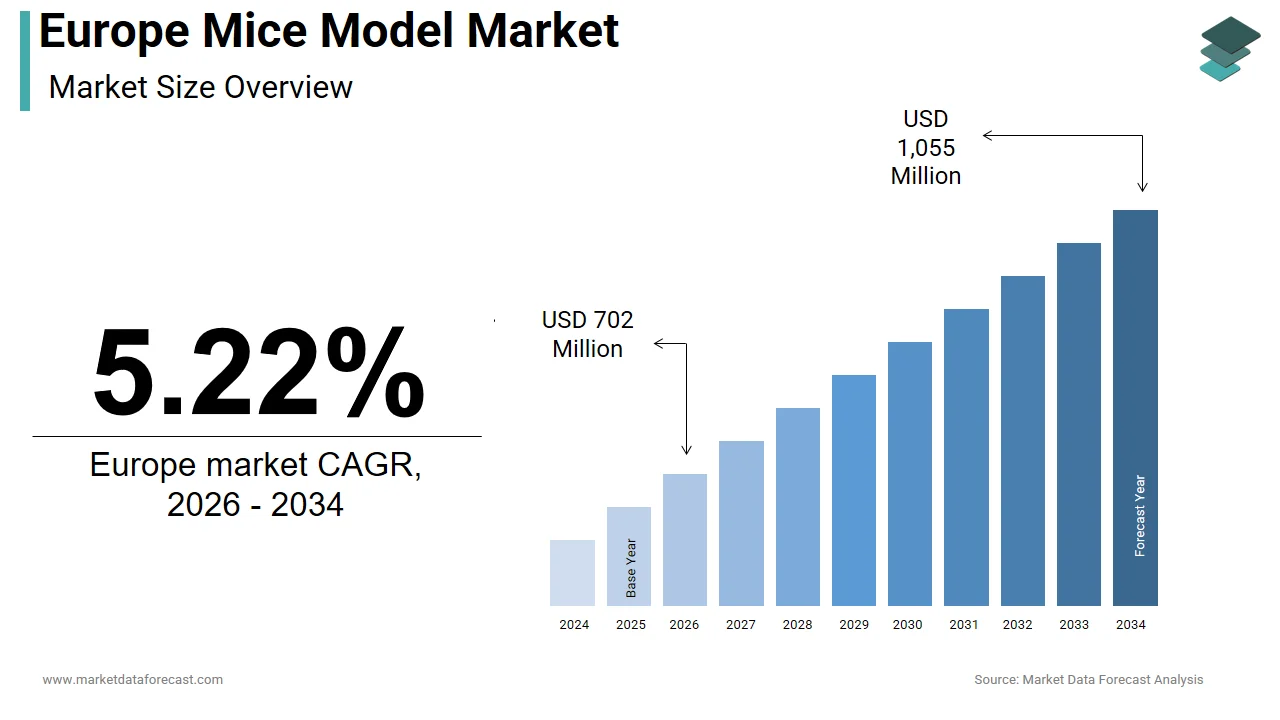
The Europe mice model market was valued at USD 667 million in 2025, is projected to reach USD 702 million in 2026, and is expected to reach USD 1,055 million by 2034, growing at a CAGR of 5.22% from 2026 to 2034. Growth is driven by intensifying oncology and immunology research, rising use of genetically engineered and humanized models, and strong public funding across European academic and translational research ecosystems under strict 3Rs-based animal welfare regulation.
Key Market Trends
- Increasing adoption of genetically engineered and precision models (knockouts, knock-ins, conditional and humanized strains) to study complex diseases such as cancer, neurodegeneration, and metabolic disorders.
- Growing use of humanized immune system mice in immuno-oncology and autoimmune disease research to better predict human responses to biologics and cell-based therapies.
- Shift toward outsourced breeding and colony management to specialized vendors and repositories to ensure SPF status, genetic stability, and regulatory compliance.
- Rising emphasis on cryopreservation and archiving of valuable strains to reduce live colony costs and support 3Rs principles through model reduction and long-term genetic safeguarding.
- Expanding use of CRISPR/Cas9 and other advanced genome engineering tools to rapidly create custom models tailored to specific patient mutations and disease mechanisms.
Segmental Insights
- Based on type, the genetically engineered mice segment held the largest share of the Europe mice model market in 2024, at 42.7%, reflecting their central role in mechanistic studies, target validation, and biomarker discovery. Knockout, knock-in, conditional, and humanized models enable high-fidelity replication of human genetic lesions and are heavily used in oncology and rare disease research. The humanized and immune system–engineered mice segment is expected to record the fastest CAGR of 12.4% from 2026 to 2034, driven by the surge in immuno-oncology, autoimmune, and advanced biologics development requiring models with functional human immune components.
- Based on service, the breeding segment led the Europe mice model market in 2024 with a 36.8% share, underpinned by continuous demand for pathogen-free, genetically stable colonies and the complexity of maintaining advanced strains in-house. Outsourcing to certified breeders and pan-European repositories ensures high health status, regulatory compliance, and scalability. The cryopreservation segment is projected to grow at the fastest CAGR of 11.8% during the forecast period, as institutions increasingly archive lines via embryo and sperm freezing to protect genetic assets, cut live colony overheads, and align with reduction targets under EU animal welfare directives.
- Based on end user, academic and research institutes accounted for the largest share of the Europe mice model market in 2024, at 48.8%, reflecting their central contribution to fundamental discovery science and disease modeling funded by European and national research councils. Large university and national institute facilities house extensive colonies across diverse disease areas. The contract research organizations (CROs) segment is anticipated to register the fastest CAGR of 13.1% from 2026 to 2034, fuelled by pharma and biotech outsourcing, the need for standardized GLP-compliant in vivo studies, and CRO expertise in complex models such as humanized and PDX mice.
Regional Insights
The Europe mice model market is anchored by countries with dense biomedical research ecosystems, advanced infrastructure, and strong public and private R&D investment.
- Germany led the regional market with 23.6% share in 2024, supported by world-class institutes (e.g., Max Planck Society), strict yet mature regulatory frameworks, and major SPF breeding hubs supplying models across the continent.
- The United Kingdom held 19.7% share, leveraging globally recognized universities, early CRISPR adoption, leadership in humanized models, and robust Home Office–regulated facilities, despite post-Brexit logistical frictions.
- France represents another key market, with centralized research governance, large national animal facilities focused on oncology and infectious disease, and vendors supplying SPF models across the EU.
- Switzerland punches above its size thanks to clustered big pharma HQs, elite academic centers, and high-standard animal facilities that support intensive use of advanced murine models in neuroscience and metabolic research.
- The Netherlands is expected to grow notably, acting as a strategic breeding and logistics hub for major suppliers and a frontrunner in 3Rs implementation, open science, and standardized murine data sharing.
Competitive Landscape
The Europe mice model market is highly specialized and capital-intensive, dominated by established global and regional players with SPF facilities, advanced genetic engineering capabilities, and strong regulatory and welfare compliance. Competition centers on model diversity (especially GEMMs and humanized lines), reliability, speed of delivery, biosecurity, and integrated services such as breeding, cryopreservation, and in vivo study support rather than pure price competition. Partnerships with academic consortia and participation in European repositories enhance scientific credibility and reach.
Major companies operating in the Europe mice model market include Charles River Laboratories, The Jackson Laboratory, Taconic Biosciences, Envigo, and Janvier Labs.
Europe Mice Model Market Size
The size of the Europe mice model market was valued at USD 667 million in 2025. This market is expected to grow at a CAGR of 5.22% from 2026 to 2034 and be worth USD 1,055 million by 2034 from USD 702 million in 2026.
Mice models refer to genetically engineered or selectively bred laboratory mice used extensively in biomedical research to mimic human diseases and biological processes. These models serve as indispensable tools in drug discovery, toxicology studies, and functional genomics across academic institutions, biotechnology firms, and pharmaceutical companies in Europe. The European Union maintains rigorous ethical and regulatory standards for animal research under Directive 2010 63 EU, which mandates the principles of replacement, reduction, and refinement known as the 3Rs. As per various sources, mice are the most frequently used animal in scientific procedures across the EU, which represents a significant majority of all animals utilized in research. This dominance stems from the species’ genetic similarity to humans, short reproductive cycle, and well-characterized genome. According to research, there is a high reliance on murine models for preclinical in vivo studies, particularly in fields like oncology and neurodegenerative disorders, which contributes to challenges in translating findings to human clinical success. Recent advances in CRISPR Cas9 gene editing have further accelerated the development of precision disease models, including patient-derived xenografts and humanized immune system mice. These scientific and regulatory dynamics define the operational landscape of the Europe Mice Model Market.
MARKET DRIVERS
Accelerated Adoption of Genetically Engineered Models in Oncology Research
The growing reliance on genetically engineered mice models in cancer research has emerged as a pivotal driver for the Europe mice model market. As per studies, the incidence of cancer in Europe continues to be a major health concern, driving ongoing efforts to enhance predictive preclinical tools for better outcomes. Humanized mice and knockout models, such as those lacking tumor suppressor genes like p53 or expressing oncogenic KRAS mutations, enable researchers to study tumor initiation, progression, and therapeutic response in a controlled physiological environment. Preclinical research, including the use of various in vivo models, remains a foundational step in the development of new cancer therapies prior to their progression into human clinical trials. Institutions have established dedicated repositories for conditional and inducible cancer models, accelerating collaborative drug screening. Moreover, the Horizon Europe program continues to provide substantial funding for a wide array of innovative cancer research projects and the development of new research platforms. This convergence of disease burden, scientific capability, and targeted public funding sustains robust demand for sophisticated murine models across the region.
Expansion of Immunology and Autoimmune Disease Modeling Platforms
The rising prevalence of immune-mediated disorders in the region has intensified demand for immunocompetent and humanized mouse models, which in turn accelerates the expansion of the Europe mice model market. These models are capable of recapitulating complex immune responses. According to research, millions of people in the EU suffer from at least one autoimmune condition, such as rheumatoid arthritis, multiple sclerosis, or inflammatory bowel disease. This epidemiological burden has driven research institutions to adopt next-generation models, including NSG mice engrafted with human hematopoietic stem cells, which support functional human immune system development. Also, the use of advanced animal models, including humanized mice, is a growing trend in academic and industry research for evaluating novel immunotherapies and biologics. Besides, the Innovative Medicines Initiative (IMI) and its successor, the Innovative Health Initiative (IHI), have actively supported collaborative projects that develop and validate advanced human and animal models for immunomodulatory drug assessment to enhance research standardization. These initiatives not only enhance translational relevance but also reduce late-stage clinical attrition by enabling earlier immunotoxicity and efficacy assessments. Consequently, the immunology segment continues to fuel innovation and procurement in the Europe Mice Model Market.
MARKET RESTRAINTS
Stringent Ethical Regulations and Animal Welfare Compliance Burdens
There are operational constraints due to the European Union’s comprehensive and enforceable animal welfare legislation, which imposes extensive administrative and procedural requirements on research institutions, and thereby obstructs the growth of the Europe mice model market. Directive 2010 63 EU mandates project authorization harm harm-benefit analysis, and mandatory ethical review before any murine study can commence. As per research, regulatory approval processes for animal research projects across various European Union Member States are noted for their variability and perceived length, which can impact the speed of scientific research timelines. Moreover, the directive requires continuous monitoring and reporting of animal distress with penalties for noncompliance, including funding suspension. The UK licensing authority emphasizes comprehensive adherence to the 3Rs principles during the project license application review, and inadequate justification of these principles frequently results in applications being challenged or delayed. These regulatory hurdles increase operational costs and deter smaller laboratories from pursuing complex in vivo work. Scalability and agility in European model deployment are intrinsically limited by these frameworks, despite their necessity for ethical integrity.
High Costs and Technical Complexity of Advanced Model Maintenance
The development and sustained use of sophisticated mice models entail substantial financial and infrastructural investments that constrain broader accessibility, particularly among academic and public sector laboratories. This constrains the expansion of the Europe mice model market. The maintenance of specialized animal models, such as humanized and conditional knockout strains, generally involves higher operational costs due to the need for specific environmental controls, sterile handling, and intensive monitoring, according to a study. Services such as cryopreservation, rederivation, and genotyping are significant recurring expenses for research institutions that maintain extensive model colonies. Moreover, breeding certain highly immunodeficient mouse strains presents unique challenges, and their reproductive efficiency can vary compared to general-purpose or wild-type strains, as per research. These biological and logistical inefficiencies amplify costs and reduce experimental throughput. As a result, many institutions rely on centralized repositories, which face their own capacity limitations, leading to waiting periods of several months for specific models. This economic and technical barrier impedes timely research progression and restricts model utilization to well-funded entities.
MARKET OPPORTUNITIES
Integration of Patient-Derived Xenograft Models in Precision Oncology
The incorporation of patient-derived xenograft mice models into precision medicine pipelines offers a potential opportunity for the Europe mice model market. These models involve implanting human tumor tissue into immunodeficient mice, preserving the original tumor’s genetic and histological characteristics. As per studies, the utilization of patient-derived xenograft models in European oncology research is increasing for preclinical testing and to explore personalized medicine approaches, especially for challenging cancers like pancreatic ductal adenocarcinoma and triple-negative breast cancer. Research, including initiatives by consortia, indicates promising results for PDX-guided treatment strategies in identifying effective therapies, though large-scale clinical validation remains ongoing. National cancer initiatives and international consortia in Europe are increasingly allocating resources for the development and biobanking of extensive patient-derived xenograft model libraries to support collaborative research. Furthermore, advances in co-clinical trial design allow parallel testing of drug candidates in PDX cohorts and human patients, accelerating biomarker discovery. This alignment between clinical unmet needs, regulatory support, and technical refinement positions PDX models as a cornerstone of Europe’s precision oncology strategy.
Advancements in CRISPR-Based Conditional and Inducible Systems
The refinement of CRISPR Cas9-mediated genome editing has unlocked unprecedented opportunities for spatiotemporal control of gene expression in murine models, enhancing their physiological relevance, which drives the expansion of the Europe mice model market. Unlike traditional knockouts, inducible systems such as Cre ERT2 allow gene deletion or activation in specific tissues at defined time points, mimicking adult-onset diseases like Alzheimer’s or type 2 diabetes. There is a pronounced and ongoing shift within the life sciences research community towards the use of more sophisticated murine models, particularly conditional and tissue-specific designs. The development of advanced genome engineering technologies, such as CRISPR/Cas9 systems, has substantially accelerated the generation of custom genetic murine models, including those with floxed alleles. Apart from these, the European Mouse Disease Clinic now offers phenotyping services tailored to inducible models, enabling comprehensive metabolic, neurological, and immunological profiling. These technical innovations not only improve disease mimicry but also align with 3Rs principles by reducing the number of animals needed per study through increased experimental precision. This evolution in genetic toolkit sophistication is expanding the scope and efficiency of preclinical research across Europe.
MARKET CHALLENGES
Limited Translational Predictability of Murine Immunological Responses
Mouse models often fail to accurately replicate human immune system complexity, which leads to high attrition rates in clinical development. Despite their widespread use, this situation challenges the growth of the Europe mice model market. As per sources, A significant challenge in oncology drug development is the substantial attrition rate of candidates as they move from preclinical studies to clinical trials and regulatory approval, often reflecting the limitations of traditional animal models in predicting human outcomes. Human immune cells exhibit distinct signaling pathways and receptor affinities that murine counterparts cannot fully emulate, even in humanized models. Humanized mouse models, while valuable, continue to present research challenges because they often exhibit suboptimal immune reconstitution, specifically regarding the development of functional mucosal immunity and proper lymph node structures. Consequently, many promising preclinical findings fail to translate, leading to costly late-stage failures and strategic reassessments. Emerging next-generation models that incorporate human cytokines and HLA molecules remain imperfect and lack consistent validation. This persistent translational gap challenges the reliability of murine data and necessitates complementary in vitro and computational approaches.
Supply Chain Vulnerabilities and Geopolitical Disruptions
It's increased exposure to logistical and geopolitical risks that threaten the continuity of model distribution and genetic integrity, and negatively impact the expansion of the Europe mice model market. Most specialized immunodeficient and transgenic strains are bred in centralized repositories such as the European Mouse Mutant Archive in Germany or Charles River Laboratories in France, making them susceptible to transport delays, disease outbreaks, or regulatory barriers. Occasional disease outbreaks in essential research animal breeding facilities can lead to supply chain disruptions and temporary halts in scientific projects across Europe. Following the UK's departure from the European Union, new regulatory burdens, including customs checks and veterinary certification requirements, have generally extended the time required for shipping research materials, including laboratory animals, between the UK and EU nations. This has created logistical challenges for the life sciences sector. These disruptions compromise experimental reproducibility and force researchers to maintain costly on-site breeding colonies. The vulnerability of the European biomedical research supply chain, specifically regarding murine models, is an urgent, unresolved problem, exacerbated by rising global instability and tightening biosecurity protocols.
REPORT COVERAGE
| REPORT METRIC | DETAILS |
| Market Size Available | 2025 to 2034 |
| Base Year | 2025 |
| Forecast Period | 2026 to 2034 |
| Segments Covered | By Type, Service, Technology, Indication, End User, Application, Mode, and Region. |
| Various Analyses Covered | Global, Regional, and Country-Level Analysis, Segment-Level Analysis, Drivers, Restraints, Opportunities, Challenges; PESTLE Analysis; Porter’s Five Forces Analysis, Competitive Landscape, Analyst Overview of Investment Opportunities |
| Countries Covered | UK, France, Spain, Germany, Italy, Russia, Sweden, Denmark, Switzerland, Netherlands, Turkey, Czech Republic, and the Rest of Europe |
| Market Leaders Profiled | Charles River Laboratories, The Jackson Laboratory, Taconic Biosciences, Envigo, and Janvier Labs. |
SEGMENTAL ANALYSIS
By Type Insights
The genetically engineered mice segment was the largest in the Europe Mice Model Market and captured a 42.7% share in 2024. Its unparalleled utility in modeling complex human diseases with high genetic fidelity has mainly contributed to the genetically engineered mice segment. These models include knockouts, knockins, conditional alleles, and humanized variants that enable precise interrogation of gene function and therapeutic response. The ability to mimic patient-specific mutations such as EGFR L858R in lung cancer or BRCA1 deletions in breast cancer has made these models indispensable in target validation and biomarker discovery. Academic hubs maintain large-scale repositories of standardized models, facilitating cross-institutional reproducibility. The convergence of advanced gene editing tools, regulatory reliance on genetically defined models, and strategic public funding solidifies this segment’s leadership.
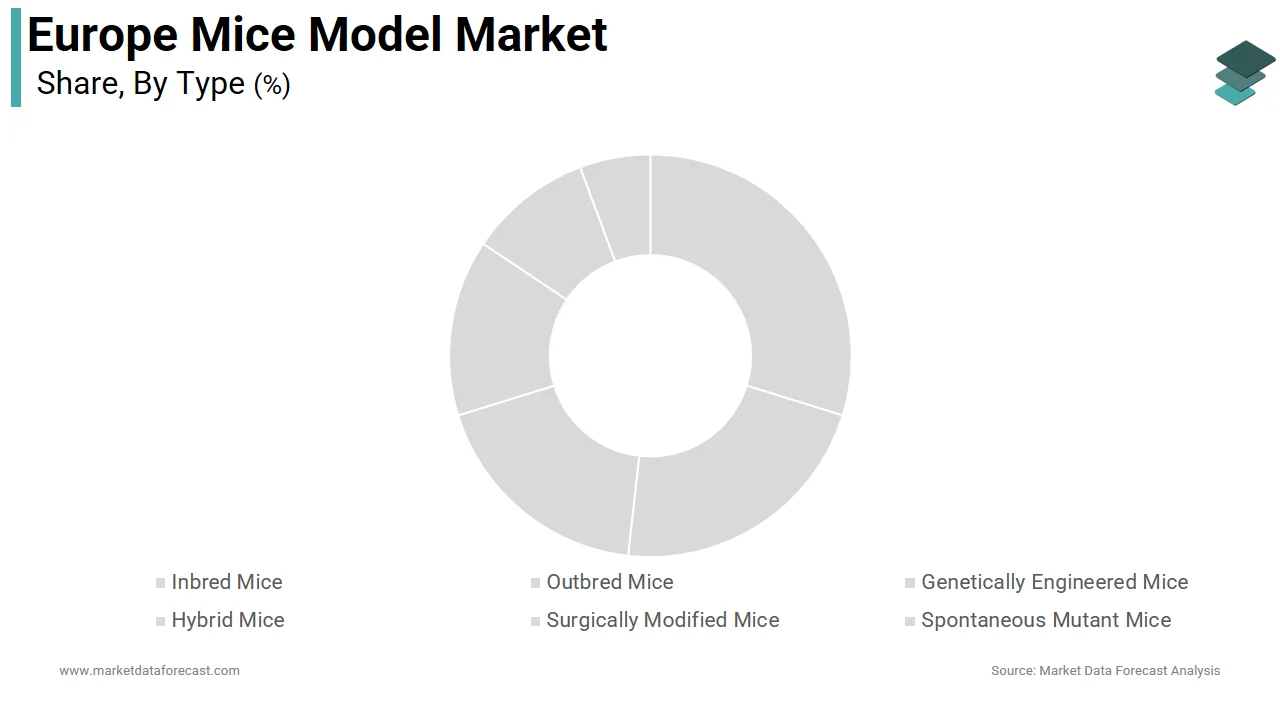
The humanized and immune system-engineered mice segment is anticipated to witness the fastest CAGR of 12.4% from 2025 to 2033 due to the surge in immuno-oncology and autoimmune disease research. These mice are engrafted with human hematopoietic stem cells or express human cytokines and HLA molecules to support functional human immune responses. The development of novel biologics in Europe increasingly focuses on advanced cancer immunotherapies, including immune checkpoint inhibitors. The field of predictive efficacy testing for new therapies is seeing growing demand for complex humanized animal models. Research initiatives in Europe are working towards standardizing platforms for humanized models to improve consistency across different research centers. The use of specialized humanized mouse models, such as those that express human cytokines for myeloid cell studies, is a significant and increasing trend in preclinical research at institutions like the Karolinska Institute. There is a general upward shift in the complexity and number of clinical trials involving immunotherapies and humanized models, underscoring the growing complexity of pharmaceutical research and development. These models bridge the translational gap between murine immunity and human clinical outcomes, making them critical for next-generation therapeutic development and accelerating their adoption across both industry and academia.
By Service Insights
In 2024, the breeding segment led the Europe mice model market and occupied a 36.8% share. The leading position of the breeding segment is credited to the continuous demand for genetically stable and pathogen-free colonies across research institutions and biopharma companies. Maintaining inbred and transgenic lines requires specialized expertise in timed mating, genotype monitoring, and colony expansion to meet experimental timelines. As per sources, outsourcing of animal breeding operations to certified vendors is a growing trend among research facilities in the EU, driven by the need to ensure high animal health standards, maintain genetic consistency, and meet the stringent regulatory requirements outlined in Directive 2010/63/EU. Academic consortia like INFRAFRONTIER coordinate the breeding and distribution of a vast and continually expanding collection of mutant animal lines through a network of European repositories, ensuring standardized access for the scientific community. Moreover, the rise of complex models like double knockouts necessitates sophisticated breeding schemes involving multiple generations, which internal facilities often lack the capacity to manage. Major commercial suppliers, including Janvier Labs and Envigo, operate large-scale SPF barrier facilities in various European locations, ensuring a consistent and high-health supply of research animal colonies to meet the biomedical community's needs. This operational dependency on external breeding expertise underpins the segment’s dominance.
The cryopreservation segment is likely to experience the fastest CAGR of 11.8% during the forecast period, owing to the need to safeguard genetic assets, reduce live colony costs, and comply with the 3Rs principle of reduction. Freezing embryos or sperm allows institutions to archive valuable models without maintaining expensive live breeding programs. A move towards mandatory archiving of research models to prevent their accidental loss. The implementation of new strategies designed to promote and financially support cryopreservation efforts. Recognition of cryopreservation's value in ethical research, specifically its role in minimizing the overall number of live animals used. Advances in vitrification and automated thawing have improved post-thaw viability. Rising complexity and expense are transforming cryopreservation from a contingency to a fundamental requirement in Europe.
By End User Insights
The academic and research institutes segment held the leading share of 48.8% of the Europe mice model market in 2024. The prominence of the academic and research institutes segment is because of its central role in fundamental biomedical discovery and public funding allocation. Universities and national laboratories across Europe operate extensive in vivo platforms supported by competitive grants from bodies like the European Research Council and national science foundations. As per research, A significant number of researchers within higher education institutions focus their work on life sciences, with many of those studies involving animal-based research. Flagship institutions such as the Max Planck Society in Germany and the Francis Crick Institute in the UK maintain dedicated mouse facilities housing tens of thousands of animals for projects ranging from neurodevelopment to metabolic disease. Moreover, Academic repositories facilitate the wide distribution of various mouse models to research communities spanning numerous countries. The emphasis on open-access preclinical data and the mandate to explore novel disease mechanisms ensure sustained and diversified demand from this segment.
The contract research organizations segment is on the rise and is expected to be the fastest-growing segment in the market by witnessing a CAGR of 13.1% from 2025 to 2033. The swift expansion of the contract research organizations segment is fueled by pharmaceutical outsourcing trends and the need for scalable, standardized in vivo testing. The European Medicines Agency’s push for harmonized study protocols has further elevated the role of CROs as regulatory intermediaries. Besides, the rise of small and mid-sized biotechs with limited in-house animal facilities has created a dependency on CRO expertise, particularly for complex models like humanized mice. With Horizon Europe increasingly funding public-private partnerships, CROs are also acting as execution partners in consortium-based research, amplifying their market relevance.
COUNTRY-LEVEL ANALYSIS
Germany Mice Model Market Analysis
Germany outperformed other countries in the Europe mice model market and captured a 23.6% share in 2024. Its world-class research infrastructure, robust public funding, and dense network of biopharmaceutical innovation hubs have contributed to the dominance of the German market. Germany adheres to strict national and European regulations for animal research, focusing on the principles of the 3Rs (Replacement, Reduction, and Refinement) to minimize animal use and suffering. Institutes like the Max Planck Society acknowledge the necessity of animal models for fundamental biomedical research while actively emphasizing the development and use of alternative methods, such as complex cell cultures and organoids. Major vendors operate SPF breeding facilities in Bavaria and Lower Saxony, serving both domestic and cross-border demand. Germany’s strict adherence to the 3Rs has also driven investment in cryopreservation and digital phenotyping, reducing per-study animal use while maintaining output. This combination of scientific excellence, regulatory rigor, and industrial collaboration cements Germany’s leadership.
United Kingdom Mice Model Market Analysis
The United Kingdom remained the second-largest player in the Europe mice model market and accounted for a 19.7% share in 2024. Factors such as globally recognized research institutions and a strong legacy in genetic engineering have propelled the growth of the UK market. Despite Brexit-related regulatory shifts, the UK continues to align with EU animal welfare standards while benefiting from autonomous research funding. Leading universities such as Oxford, Cambridge, and Imperial College maintain high containment animal facilities compliant with Home Office licensing requirements. The UK’s early adoption of CRISPR technology and leadership in humanized mouse development, particularly at the Francis Crick Institute, ensures sustained demand. Besides, the Medicines and Healthcare products Regulatory Agency actively references murine data in early drug assessment, reinforcing the model’s regulatory relevance.
France Mice Model Market Analysis
France is a lucrative region in the Europe mice model market, which is driven by centralized research governance, strong public investment, and a growing biotech ecosystem. Multiple research facilities operating within the same system utilize a substantial number of animals for their work, with the majority being mice. Major facilities specialize in oncology and infectious disease modeling using advanced genetically engineered strains. A national strategic plan for research and innovation has directed funding towards various platforms, which include the development and study of models such as those using rodents. National vendors supply pathogen-free models to a notable number of institutions across Europe from their breeding center. The country’s emphasis on ethical compliance and its role in EU-wide initiatives further enhance its regional influence and market stability.
Switzerland Mice Model Market Analysis
Switzerland is moving ahead steadfastly in the Europe mice model market because its size is due to its concentration of global pharmaceutical headquarters and elite academic research. Leading pharmaceutical organizations are conducting significant in vivo studies within the Basel and Zurich areas. These research initiatives rely substantially on the use of murine models. Funding bodies support numerous projects focused on murine models, particularly in the fields of neuroscience and metabolic disorders. Current research leverages the country’s existing capabilities in precision genetics. Institutions operate high containment animal facilities compliant with the stringent Swiss Animal Welfare Ordinance, which exceeds EU minimum standards. Switzerland’s non-EU status does not impede model access as bilateral agreements facilitate seamless import of genetically defined strains from European repositories. This unique blend of industrial demand, scientific excellence, and regulatory autonomy sustains Switzerland’s outsized market presence.
Netherlands Mice Model Market Analysis
The Netherlands is predicted to grow notably in the Europe mice model market from 2025 to 2033, owing to its advanced bioresearch infrastructure, strategic logistics position, and leadership in 3Rs implementation. The country hosts major breeding and distribution centers for Charles River Laboratories and Envigo, serving Northern and Western Europe with SPF-certified models. Furthermore, the Netherlands’ open science policy mandates data sharing from murine studies via platforms enhancing reproducibility and collaboration. This forward-looking regulatory and scientific ecosystem positions the Netherlands as a key enabler of efficient and ethical murine research in Europe.
COMPETITIVE LANDSCAPE
The Europe mice model market is characterized by a mix of global contract research organizations, specialized European breeders, and academic non-profit repositories, creating a multi-tiered competitive landscape. Leading commercial players differentiate through model customization, genetic validation, speed of delivery, and integrated in vivo services, while academic networks emphasize open access and standardization. Competition is not primarily price-driven but centers on scientific reliability, regulatory compliance, animal welfare adherence, and technical support. Barriers to entry remain high due to capital-intensive SPF facility requirements, stringent EU licensing, and the need for deep expertise in genetics and animal husbandry. However, demand for complex models such as patient-derived xenografts and immune humanized strains is intensifying collaboration between vendors and research institutions. This dynamic fosters innovation while reinforcing the dominance of established players with end-to-end capabilities and strong ethical governance frameworks across the European research value chain.
KEY MARKET PLAYERS
The leading companies operating in the Europe mice model market include:
- Charles River Laboratories
- The Jackson Laboratory
- Taconic Biosciences
- Envigo
- Janvier Labs
TOP PLAYERS IN THE MARKET
- Charles River Laboratories is a global leader in preclinical research services with a robust presence in the Europe Mice Model Market. The company provides a comprehensive portfolio of inbred immunodeficient and genetically engineered mouse models tailored for oncology, immunology, and neuroscience research. It operates state-of-the-art breeding and phenotyping facilities in France, Germany, and the United Kingdom, ensuring pathogen-free and genetically validated models. The company also enhanced its cryopreservation and rederivation services across the region to align with 3Rs compliance and client demand for genetic archiving. Its integrated model generation and in vivo testing capabilities reinforce its strategic role in Europe’s drug discovery ecosystem.
- Janvier Labs is a prominent European vendor specializing in high-quality mouse models for academic and industrial research. Headquartered in France, the company offers a diverse catalog, including standard inbred transgenic and humanized strains bred under strict SPF conditions. Janvier Labs plays a key role in supplying models to national research networks such as INFRAFRONTIER and collaborates with institutions across the EU on model standardization. It also launched a digital ordering and health monitoring platform to improve delivery transparency and colony management support. These innovations strengthen its position as a trusted regional partner for reproducible and ethically compliant murine research.
- Taconic Biosciences is an international provider of genetically engineered and microbiome-defined mouse models with significant operations in Europe. The company supplies customized models for complex therapeutic areas, including metabolic disease, neurology, and immuno-oncology, to both biopharmaceutical firms and academic centers. Taconic’s European breeding facility in Denmark maintains a broad repository of GEMMs and humanized strains with rapid global distribution capabilities. The company also enhanced its biosecurity protocols and expanded quarantine services in response to heightened regulatory scrutiny. These actions reinforce its commitment to scientific rigor and client support across the European research landscape.
TOP STRATEGIES USED BY THE KEY MARKET PARTICIPANTS
Key players in the Europe Mice Model Market focus on strategic expansion of genetically engineered and humanized model portfolios to meet demand from immuno-oncology and precision medicine research. They invest in advanced breeding and cryopreservation infrastructure to ensure genetic fidelity, pathogen-free status, and compliance with 3Rs principles. Companies strengthen partnerships with academic consortia and regulatory bodies to align model development with European research priorities and ethical standards. Digital transformation of ordering health monitoring and colony management services enhances client experience and operational transparency. Additionally, firms prioritize microbiome standardization and phenotypic characterization to improve data reproducibility and translational relevance. These integrated strategies enable sustained leadership in a highly specialized and ethically governed scientific market.
MARKET SEGMENTATION
This Europe mice model market research report is segmented and sub-segmented into the following categories.
By Type
- Inbred Mice
- Outbred Mice
- Genetically Engineered Mice
- Hybrid Mice
- Surgically Modified Mice
- Spontaneous Mutant Mice
By Service
- Breeding
- Cryopreservation
- Model-in Licensing
- Genetic Testing
- Quarantine
- Others
By Technology
- CRISPR
- Microinjection
- Embryonic Stem Cell Injection
- Nuclear Transfer
- Others
By Indication
- Oncology Studies
- Immunology & Inflammation Studies
- Endocrine Metabolic Studies
- Cardiovascular Studies
- Central Nervous System (CNS) Studies
- Genetic Studies
- Infectious Disease Studies
- Fibrosis
- Other Disease Studies
By End User
- Academic & Research Institutes
- Pharmaceutical & Biotechnology Companies
- Contract Research Organizations
- Others
By Application
- Preclinical Drug Development
- Biomarker Analysis
- Basic Cancer Research
By Mode
- In-House
- Outsourced
By Country
- UK
- France
- Spain
- Germany
- Italy
- Russia
- Sweden
- Denmark
- Switzerland
- Netherlands
- Turkey
- Czech Republic
- Rest of Europe