- Product Description Description
- Table of Contents TOC
- List of Table & Figure LOT
- Get Free Sample PDF Sample PDF
Market Size, 2025
$101.2 BnMarket Estimate, 2026
$105.3 BnMarket Forecast, 2034
$145.5 BnCAGR, 2026–2034
4.12%Europe Microwavable Foods Market Size, Trends, and Forecast (2026–2034)
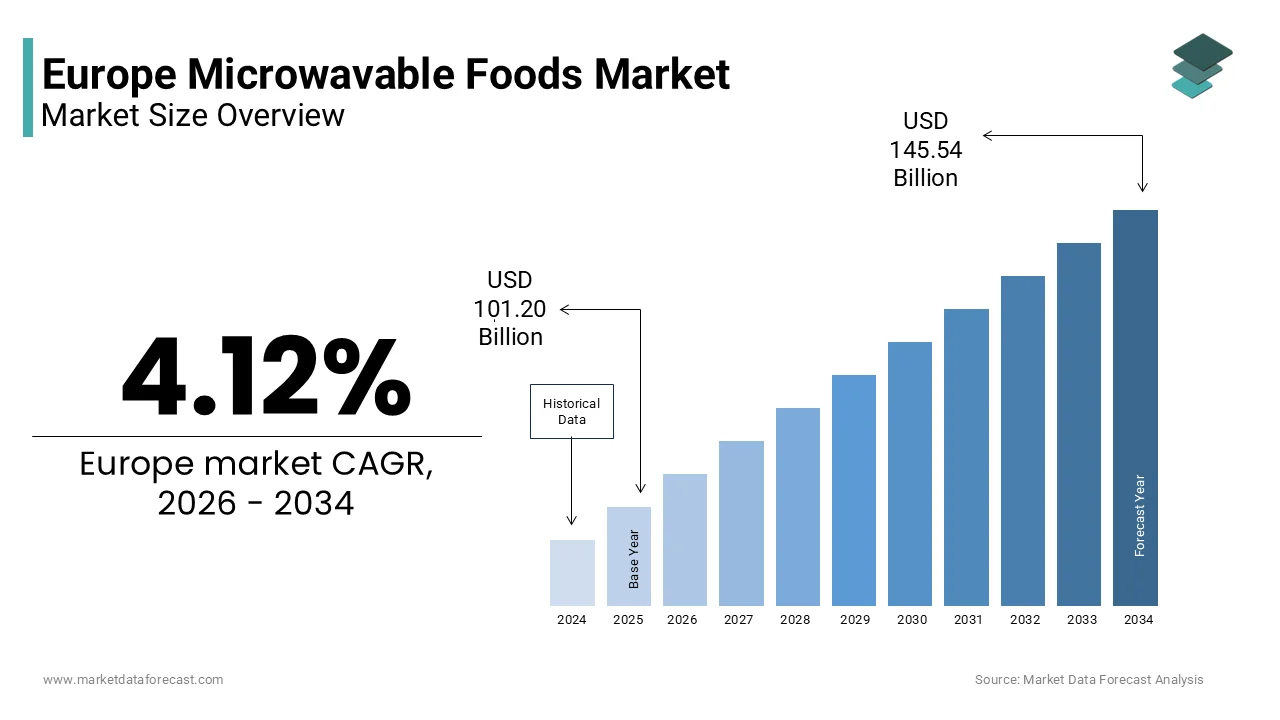
The Europe microwavable foods market size was valued at USD 101.20 billion in 2025, stands at USD 105.37 billion in 2026, and is anticipated to reach USD 145.54 billion by 2034, expanding at a compound annual growth rate (CAGR) of 4.12% during the forecast period from 2026 to 2034. Market expansion is propelled by rising urbanization rates, increasing labor force participation among women leading to dual-income households, and the proliferation of single-person households seeking convenient, portion-controlled meal solutions.
Key Executive Metrics (At-a-Glance)
- 2025 Base Valuation: USD 101.20 Billion
- 2026 Current Valuation: USD 105.37 Billion
- 2034 Forecast Valuation: USD 145.54 Billion
- Forecast Period: 2026–2034
- Compound Annual Growth Rate (CAGR): 4.12%
- Dominant Product Type Segment: Frozen Food (48.2% share in 2025)
- Fastest-Growing Product Type Segment: Chilled Food (7.5% CAGR)
- Dominant Distribution Channel: Retail Stores
- Fastest-Growing Distribution Channel: Online Retail (9.2% CAGR)
- Dominant Packaging Technology: Patterned Susceptors Technology
- Fastest-Growing Packaging Technology: New Tray Lidding Methods (8.0% CAGR)
- Leading Country Markets: United Kingdom (18.8%) and Germany (16.2%)
Core Market Drivers
- Time Scarcity & Dual-Income Homes: High labor force participation rates limit traditional meal prep time, accelerating demand for quick, under-five-minute hot meal solutions.
- Urban Living & Single Households: High urban concentration and single-person apartments encourage portion-controlled ready meals that minimize food waste and cooking effort.
Primary Market Restraints & Challenges
- Nutritional Stigma: Consumer perceptions of high sodium, heavy processing, and nutritional inferiority restricting trial among health-aware shoppers.
- Packaging Waste & Energy Costs: Strict environmental rules (Single-Use Plastics Directive) alongside inflationary energy and raw material cost pressures.
Europe Microwavable Foods Market Segmentation Breakdown
| Segment Category | Largest / Dominant Segment | Fastest-Growing / Key Highlight |
|---|---|---|
| By Product Type | Frozen Food (48.2% share) | Chilled Food (7.5% CAGR) |
| By Distribution Channel | Retail Stores | Online Retail (9.2% CAGR) |
| By Packaging Technology | Patterned Susceptors Technology | New Tray Lidding Methods (8.0% CAGR) |
| By Country | United Kingdom (18.8% share) | France (Fastest-Growing CAGR) |
Major Industry Players Profiled
Key corporations shaping the Europe microwavable foods market include McCain Foods, Agristo, Greenyard, Lamb Weston Holdings Inc., The Kraft Heinz Company, Pinnacle Foods, Nestlé, General Mills, ConAgra Foods, Unilever, Beech-Nut Nutrition, Bellisio Foods, and Hain Celestial Company.
 Download Free Sample Report
Europe Microwavable Foods Market Size
The Europe microwavable foods market size was valued at USD 101.20 billion in 2025 and is expected to reach USD 145.54 billion by 2034 from USD 105.37 billion in 2026. The market is projected to grow at a CAGR of 4.12%.
The microwavable foods are ready to eat and ready to heat meal solutions designed specifically for rapid preparation using microwave ovens. The strong emphasis on convenience without compromising nutritional value or culinary authenticity reflecting the region's sophisticated palate. As per the World Health Organization, urbanization rates in Europe exceed 75% leading to smaller household sizes and increased reliance on single serve meal options. The proliferation of dual income households further accelerates demand for quick meal solutions that minimize preparation and cleanup time. Regulatory frameworks, such as the European Food Safety Authority guidelines ensure strict safety standards for packaging materials used in microwave heating preventing chemical migration into food. Consumer awareness regarding food waste has also influenced market dynamics with microwavable portions helping to control serving sizes and reduce leftovers. The integration of smart packaging technologies allows for precise heating instructions enhancing user experience and food quality.
MARKET DRIVERS
Rising Prevalence Of Dual Income Households And Time Scarcity
The increasing number of dual income households, as families seek efficient solutions to balance professional responsibilities and domestic life is fuelling the growth of the Europe microwavable foods market. According to the study, the labor force participation rate for women in Europe reached 63% in 2024 by reducing the time available for traditional meal preparation. Data from the European Institute for Gender Equality indicates that despite progress in gender equality women still perform a disproportionate share of unpaid care work, including cooking making time saving appliances and foods essential. Microwavable meals offer a practical compromise allowing households to serve hot nutritious dinners in under five minutes. The rise of remote work has not necessarily reduced time pressure as blurred boundaries between work and home life often lead to fragmented schedules requiring flexible meal times. Urban professionals in cities like London Paris and Berlin prioritize efficiency viewing meal preparation as a task to be optimized rather than a leisure activity. This demographic shift creates sustained demand for high quality microwavable options that mimic home cooked tastes. Manufacturers respond by offering gourmet ranges featuring regional cuisines, which appeal to consumers seeking both convenience and culinary satisfaction.
Expansion Of Single Person Households And Urban Living
The single person households with the inherent inefficiency of cooking large portions for one individual is another factor accelerating the growth of the Europe microwavable foods market. Living alone often discourages elaborate cooking due to the effort required relative to the benefit leading individuals to prefer portion controlled ready meals. Urbanization concentrates these demographics in metropolitan areas where apartment living typically features compact kitchens equipped with microwaves but lacking extensive cooking facilities. The urban dwellers spend 20% less time on food preparation compared to rural residents further reinforcing the preference for quick meal solutions. Microwavable foods eliminate the issue of leftover waste, which is a common concern for single cooks who struggle to use entire ingredients. Retailers have responded by expanding their single serve sections with diverse microwavable options ranging from healthy grain bowls to indulgent pasta dishes. The social isolation associated with single living also influences eating habits with many individuals preferring low effort meals that allow more time for social activities or relaxation.
MARKET RESTRAINTS
Consumer Perception Of Nutritional Inferiority And Processing
A pervasive consumer perception that microwavable foods are nutritionally inferior and heavily processed is restricting the growth of the Europe microwavable foods market. Despite advancements in preservation technology, many consumers associate ready meals with high levels of sodium saturated fats and artificial additives. Europeans actively avoid processed foods due to concerns about long term health impacts such as obesity and cardiovascular disease. The clean label movement has gained substantial traction with shoppers scrutinizing ingredient lists for recognizable and natural components which many microwavable products fail to provide. Media coverage linking ultra processed foods to adverse health outcomes reinforces this awareness creating a barrier to trial among premium products. The recommendations emphasize limiting consumption of processed meats and high calorie ready meals, which constitute a significant portion of the microwavable category. Health aware consumers often perceive fresh or homemade alternatives, as superior in micronutrient content and freshness. This perception persists even when manufacturers reformulate products to reduce salt and sugar because the stigma of processing remains deeply ingrained. Retailers face pressure to promote healthier options leading to reduced shelf space for traditional microwavable meals.
Environmental Concerns Regarding Packaging Waste
The growing environmental awareness regarding single use packaging waste, as consumers and regulators increasingly criticize the ecological footprint of ready meals is hindering the growth of the Europe microwavable foods market. Most microwavable foods are packaged in multi-layer plastics or mixed materials that are difficult to recycle contributing to the continent’s waste management challenges. The visibility of food packaging in landfills and oceans has sparked public backlash against convenience foods perceived as environmentally irresponsible. The European Union’s Single Use Plastics Directive imposes stricter requirements on packaging design and recycling infrastructure increasing compliance costs for manufacturers. Consumers are shifting toward bulk buying and reusable containers to minimize waste viewing individual microwavable trays as symbolic of throwaway culture. The technical difficulty in creating microwave safe materials that are also fully compostable or easily recyclable limits innovation. Brands face reputational risks if they fail to address packaging sustainability leading to loss of loyalty among younger demographics.
MARKET OPPORTUNITIES
Innovation In Plant Based And Health Focused Formulations
The development of plant based and health focused microwavable meals to align with evolving dietary trends and sustainability goals is creating new opportunities for the growth of the Europe microwavable foods market. Microwavable formats are ideal for introducing innovative plant proteins such as lentils chickpeas and pea isolates to mainstream audiences, who may lack cooking skills for these ingredients. Manufacturers can leverage the convenience factor to overcome barriers to entry for vegetarian and vegan diets, which often require complex preparation. The introduction of functional ingredients like quinoa kale and turmeric appeals to health-conscious consumers seeking nutrient dense options. Collaborations with nutritionists allow brands to create balanced meals that meet specific dietary needs, such as low glycemic index or heart healthy profiles. Clear labeling of macronutrients and sourcing transparency builds trust and differentiates products in a crowded market. The premiumization of plant based microwavable meals allows for higher margins while attracting affluent demographics. This opportunity enables brands to reposition microwavable foods from indulgent treats to legitimate components of a healthy lifestyle.
Adoption Of Sustainable And Smart Packaging Technologies
The adoption of sustainable and smart packaging technologies to address environmental concerns and enhance user experience is also to fuel the expansion of the Europe microwavable foods market. Innovations in mono material plastics and paper-based trays that are microwave safe and fully recyclable allow brands to meet regulatory requirements and consumer expectations. Companies are investing in bio based films derived from corn starch or cellulose which decompose more easily than traditional petroleum based plastics. Smart packaging elements such as temperature sensitive labels and QR codes provide real time feedback on food safety and heating instructions reducing the risk of undercooking or overheating. The integration of digital tools increases consumer engagement and brand loyalty by offering traceability information about ingredient sourcing. These technologies also help retailers manage inventory and reduce spoilage through better shelf-life monitoring. Premium positioning of eco-friendly packaging allows manufacturers to justify higher price points and attract environmentally conscious shoppers. Partnerships with recycling firms ensure proper disposal pathways enhancing the credibility of sustainability claims.
MARKET CHALLENGES
Inconsistent Heating Quality And Texture Degradation
Inconsistent heating quality and texture degradation during microwave preparation pose a persistent technical challenge for the Europe Microwavable Foods Market affecting consumer satisfaction and repeat purchase rates. Microwave ovens heat food unevenly due to standing waves often resulting in cold spots and overheated edges which compromise safety and palatability. The moisture migration during reheating leads to soggy crusts and dried out proteins diminishing the sensory experience compared to freshly cooked meals. Consumers frequently report dissatisfaction with the texture of vegetables becoming mushy and meats turning tough after microwaving. This variability is exacerbated by differences in microwave wattage and turntable efficiency, across households making it difficult for manufacturers to optimize heating instructions for all users. The packaging designs often fail to account for steam distribution leading to explosive splattering or uneven thawing. The inability to replicate the Maillard reaction which creates desirable browning and flavor in conventional cooking limits the appeal of microwavable options for gourmet seekers. Manufacturers struggle to balance preservation methods with reheating performance often sacrificing initial quality for stability.
High Energy Costs And Economic Pressure On Consumers
The rising energy costs and broader economic pressures, as inflation erodes household purchasing power and alters spending priorities is also to limit the growth of the Europe microwavable foods market. The energy prices in the European Union increased by 25% in 2024 impacting both production costs for manufacturers and disposable income for consumers. While microwaves are energy efficient compared to ovens the overall cost of processed foods remains higher than raw ingredients due to processing and packaging expenses. Economic uncertainty leads consumers to trade down to private label brands or revert to home cooking to save money reducing demand for premium microwavable meals. The cost-of-living crisis has forced many households to prioritize essential goods over convenience premiums shrinking the addressable for higher priced ready meals. Manufacturers face margin compression as they absorb rising input costs for energy logistics and raw materials without passing them fully to price sensitive customers. Promotional discounting becomes necessary to maintain volume but erodes profitability.
REPORT COVERAGE
| REPORT METRIC | DETAILS |
| Market Size Available | 2025 to 2034 |
| Base Year | 2025 |
| Forecast Period | 2026 to 2034 |
| CAGR | 4.12% |
| Segments Covered | By Product Type, Distribution Channel, Packaging Technology, and Region |
| Various Analyses Covered | Global, Regional, & Country Level Analysis; Segment-Level Analysis; DROC, PESTLE Analysis; Porter’s Five Forces Analysis; Competitive Landscape; Analyst Overview of Investment Opportunities |
| Regions Covered | UK, France, Spain, Germany, Italy, Russia, Sweden, Denmark, Switzerland, Netherlands, Turkey, and the Czech Republic |
| Market Leaders Profiled | Mccain Foods, Agristo, Greenyar, Lamb Weston Holdings Inc., The Kraft Heinz Company, Pinnacle Foods, Nestle, General Mills, ConAgra Foods, Unilever, Beech-Nut Nutrition, Bellisio Foods, Hain Celestial Company |
SEGMENTAL ANALYSIS
By Product Type Insights
The frozen food segment was accounted in holding 48.2% of the Europe Microwavable Foods Market share in 2025 due to its superior ability to preserve nutritional value texture and flavor without the need for artificial preservatives. The advanced flash freezing technologies that lock in freshness at peak ripeness allowing consumers to enjoy high quality meals with minimal preparation. Frozen microwavable meals offer extended shelf life reducing food waste which aligns with sustainability goals promoted by the European Commission. The variety available in frozen formats ranges from individual portions to family sized trays catering to diverse household structures. Retailers dedicate significant shelf space to frozen aisles ensuring high visibility and availability. The perception that frozen vegetables and proteins retain more nutrients than chilled alternatives that may degrade over time further supports this segment. Manufacturers invest in innovative packaging that prevents freezer burn and ensures even microwave heating enhancing user experience.
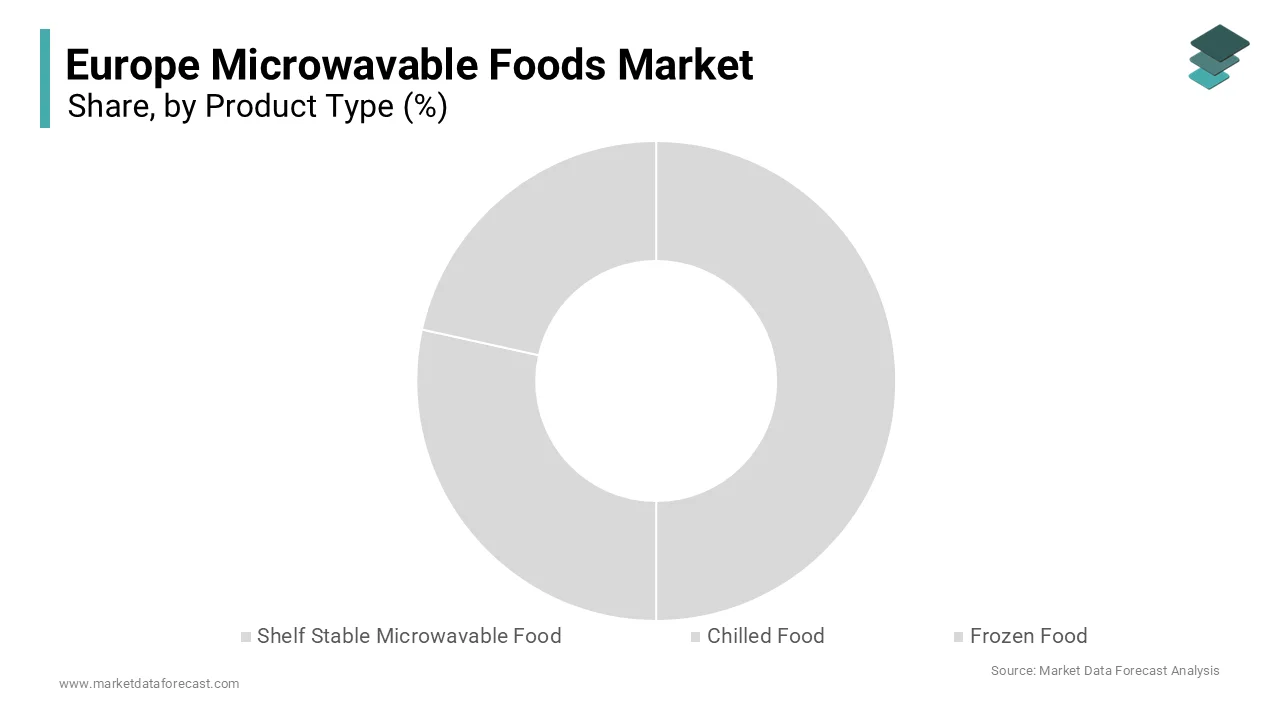
The chilled food segment is expected to grow at a fastest CAGR of 7.5% from 2026 to 2034 owing to the consumer preference for fresh tasting meals that perceive chilled products as healthier and less processed than frozen or shelf stable alternatives. The short shelf life of chilled foods necessitates efficient supply chains but offers superior texture and flavor profiles that appeal to discerning European palates. Urban consumers in major cities like London, Paris, and Berlin, prioritize convenience without sacrificing the sensory experience of freshly cooked food. Chilled microwavable options often feature premium ingredients, such as organic vegetables and free range meats commanding higher price points and margins. The rise of meal kit services has familiarized consumers with fresh ingredient preparation making the transition to chilled ready meals seamless. Retailers promote chilled sections as destinations for healthy quick dinners attracting health conscious shoppers. Technological advancements in pasteurization allow for safe extended shelf life up to 10 days providing flexibility for busy schedules.
By Distribution Channel Insights
The retail stores segment was the largest by accounting for a dominant share of the Europe Microwavable Foods Market in 2025. The immediate accessibility of products allowing consumers to inspect packaging check expiration dates and make impulse purchases during regular grocery shopping trips. Supermarkets and hypermarkets serve as primary touchpoints where manufacturers can utilize eye level shelf placement and promotional displays to drive volume. The tactile nature of shopping allows consumers to assess product quality and variety, which is for food items. Retailers offer loyalty programs and discounts that incentivize bulk buying of microwavable meals, particularly for families. The presence of dedicated frozen and chilled aisles ensures organized browsing experiences facilitating easy product discovery. Private label brands offered by major retailers provide affordable alternatives that capture price sensitive segments, while maintaining store traffic. Physical retail also supports new product launches through sampling and in store demonstrations which build consumer trust. The extensive network of local convenience stores ensures availability in urban and rural areas alike.
The online distribution channel segment is expected to grow at a fastest CAGR of 9.2% throughout the forecast period. The growth of the segment is majorly driven by the increasing penetration of e commerce platforms and the convenience of home delivery for bulky or heavy frozen items. Consumers appreciate the ability to browse extensive catalogs compare prices and read reviews before purchasing which enhances decision making confidence. Subscription models offered by online retailers allow for automated replenishment of favorite microwavable meals saving time and effort. The rise of quick commerce services promising delivery within hours caters to last minute meal needs in urban centers. Digital marketing enables targeted promotions based on purchase history increasing conversion rates for specific dietary preferences such as vegan or gluten free options. Online channels also provide access to niche and premium brands that may not be available in local supermarkets. Improved cold chain logistics for delivery ensure product integrity upon arrival building consumer trust.
By Packaging Technology Insights
The patterned susceptors technology segment was the largest by capturing Europe Microwavable Foods Market packaging segment due to its ability to mimic conventional cooking results such as browning and crisping. This technology uses thin metallic films integrated into packaging to concentrate microwave energy on specific areas of the food creating a Maillard reaction that enhances flavor and texture. Many premium microwavable pizza and pastry products in Europe utilize susceptor technology to achieve a crispy crust rather than a soggy base. Consumers perceive these products as higher quality and closer to oven baked equivalents driving repeat purchases. The technology allows for versatile applications, including chicken nuggets, pies, and quiches, which benefit from surface crisping. Manufacturers invest in this technology to differentiate their products in crowded retail environments where visual appeal and texture promises influence buying decisions. The ability to deliver restaurant quality results at home justifies premium pricing strategies. Regulatory compliance for food contact materials ensures safety while maintaining performance.
The new tray lidding methods segment is swiftly emerging at an anticipated CAGR of 8.0% from 2026 to 2034 owing to the demand for sustainable and convenient packaging solutions that reduce plastic usage and improve recyclability. Innovative lidding materials, such as paper based films and mono material plastics allow for easier separation and recycling compared to traditional multi layer laminates. These new methods also offer improved seal integrity preventing leaks and extending shelf life for chilled products. Easy peel features enhance user convenience reducing frustration during opening and improving the overall consumer experience. Manufacturers are developing lidding technologies that vent steam automatically preventing sogginess and ensuring even heating. The aesthetic appeal of printed paper lids allows for better branding and shelf impact compared to clear plastic films. Retailers favor these packages for their stackability and reduced weight which lowers transportation costs.
REGIONAL ANALYSIS
United Kingdom Microwavable Foods Market Analysis
The United Kingdom microwavable foods market held 18.8% of share in 2025 with the strong culture of convenience and high retail penetration. British consumers are among the highest per capita consumers of ready meals in Europe due to long working hours and a well-developed supermarket infrastructure. Major retailers like Tesco and Sainsbury’s offer extensive ranges of microwavable meals from budget to gourmet tiers catering to diverse income levels. The prevalence of single person households in urban centers like London drives demand for single serve portions. Innovations in plant based and healthy options resonate with health-conscious Britons seeking nutritious quick fixes. The cold climate also encourages consumption of hot ready meals particularly during winter months. Regulatory standards set by the Food Standards Agency ensure high safety and quality benchmarks fostering consumer trust.
Germany Microwavable Foods Market Analysis
Germany microwavable foods market was ranked second by holding 16.2% of the share in 2025 German consumers prioritize clean label ingredients and organic certifications driving demand for premium microwavable options that align with health values. Discount supermarkets like Aldi and Lidl play a crucial role in distributing affordable private label ready meals making them accessible to a broad demographic. There is growing interest in balanced microwavable meals that meet specific dietary requirements, such as low salt or high protein. The robust industrial base supports advanced manufacturing and packaging technologies ensuring high product consistency. Environmental awareness drives preference for recyclable packaging influencing manufacturer strategies. Urban professionals in cities like Berlin and Munich rely on microwavable foods for quick lunches and dinners amidst busy schedules.
France Microwavable Foods Market Analysis
France microwavable foods market is expected to grow at fastest CAGR in next coming years with the culinary heritage and evolving lifestyle patterns. The country contributes approximately 14% to regional market share according to the National Institute of Statistics and Economic Studies. French consumers traditionally value fresh home cooked meals but increasing time scarcity has led to greater acceptance of high quality microwavable options. Premium ready meals featuring gourmet ingredients and authentic recipes from regions like Provence and Alsace perform well in the market. As per the French Agency for Food Environmental and Occupational Health and Safety, there is heightened scrutiny on additive use prompting manufacturers to adopt natural preservation methods. Retailers like Carrefour and Leclerc offer sophisticated chilled ranges that appeal to discerning palates. The rise of dual income households and urbanization in Paris and Lyon accelerates demand for convenient dining solutions.
Spain Microwavable Foods Market Analysis
Spain microwavable foods market growth is likely to grow with the changing social habits and economic factors. Traditional late dinner times and social dining cultures are shifting towards quicker meal solutions among younger generations and urban workers. The economic recovery has boosted disposable income allowing for increased spending on premium convenience foods. There is rising demand for healthy and Mediterranean diet aligned microwavable meals featuring olive oil vegetables and fish. Retailers like Mercadona and El Corte Ingles expand their ready meal sections to cater to this trend. The tourism industry influences demand for diverse international cuisines available in microwavable formats. Warm climate reduces the appeal of heavy hot meals in summer but drives demand for light chilled options.
Italy Microwavable Foods Market Analysis
Italy Microwavable Foods Market growth is expected to grow with the strong culinary traditions and gradual adoption of convenience foods. While home cooking remains central to Italian culture busy lifestyles in northern industrial hubs like Milan and Turin are driving demand for quick meal solutions. Consumers prefer microwavable products that replicate traditional pasta risotto and pizza dishes with high quality ingredients. There is awareness towards heavily processed foods prompting brands to focus on fresh chilled ranges with simple ingredient lists. Retailers like Coop and Conad offer regional specialties in convenient formats appealing to local pride. The importance of family meals limits single serve demand but family sized trays are gaining traction.
COMPETITIVE LANDSCAPE
The competition in the Europe Microwavable Foods Market is characterized by a mix of multinational corporations and strong private label brands vying for consumer attention through quality innovation and price competitiveness. Large manufacturers leverage global resources and brand recognition to introduce premium and specialized meal variants while retailers capitalize on cost advantages to offer affordable alternatives. Price sensitivity remains a factor influencing consumer choices particularly in economically strained segments where value for money is paramount. Competitive dynamics are further shaped by regulatory compliance requirements which raise entry barriers for smaller artisans but ensure product safety and quality standards. Marketing efforts focus on educating consumers about the benefits of modern preservation methods versus fresh alternatives. Supply chain reliability and cold chain infrastructure capabilities distinguish leading brands from lesser competitors.
KEY MARKET PLAYERS
Some of the notable companies in the Europe microwavable foods market are
- McCain Foods
- Agristo
- Greenyard
- Lamb Weston Holdings Inc.
- The Kraft Heinz Company
- Pinnacle Foods
- Nestlé
- General Mills
- ConAgra Foods
- Unilever
- Beech-Nut Nutrition
- Bellisio Foods
- Hain Celestial Company
Top Players in the Market
- Nomad Foods operates as a leading European manufacturer of frozen foods with a strong focus on premium microwavable meals and snacks. The company owns iconic brands, such as Birds Eye and Iglo, which are household names. Recent actions include significant investments in sustainable packaging solutions to reduce plastic waste and meet regulatory requirements. Nomad Foods has expanded its product portfolio to include plant-based options catering to the growing demand for vegetarian and vegan convenience meals. The company leverages advanced freezing technologies to preserve nutritional value and texture ensuring high quality consumer experiences. Strategic partnerships with retailers ensure wide distribution and visibility in supermarkets across the continent.
- Dr. Oetker is a prominent family-owned company in Europe known for its diverse range of microwavable pizzas snacks and ready meals. The company combines traditional culinary expertise with modern convenience offering products that appeal to both families and young professionals. Recent initiatives involve launching new gourmet ranges featuring authentic regional recipes and high quality ingredients to differentiate from competitors. Dr. Oetker has invested heavily in digital marketing campaigns to engage younger consumers and promote quick meal solutions for busy lifestyles. The company focuses on clean label formulations reducing artificial additives to align with health-conscious trends. Expansion into emerging categories such as microwaveable breakfast items and healthy bowls demonstrates adaptability to changing consumer preferences.
- Findus Group is a major player in the European frozen food market specializing in microwavable fish poultry and vegetable based meals. The company operates in several key countries, including Sweden Norway Finland and Italy providing tailored products to local tastes. Recent actions include the development of eco-friendly packaging materials and the introduction of sustainably sourced seafood options to enhance brand credibility. Findus Group has streamlined its production processes to improve efficiency and reduce environmental impact aligning with corporate sustainability goals. The company actively collaborates with retailers to create exclusive product lines that drive foot traffic and loyalty. Innovation in recipe development focuses on balanced nutrition and ease of preparation appealing to health aware consumers.
Top Strategies Used by Key Market Participants
Key players in the Europe Microwavable Foods Market employ strategic approaches to maintain competitiveness and drive growth. Product innovation remains central as companies develop healthy plant based and gourmet options to meet evolving consumer preferences. Expansion of sustainable packaging solutions ensures compliance with environmental regulations and appeals to eco conscious buyers. Strategic partnerships with retailers facilitate prominent shelf placement and exclusive product launches that drive volume. Investment in digital marketing and e commerce platforms enhances brand visibility and reaches tech savvy demographics effectively. Focus on clean label formulations reduces artificial additives building trust among health aware consumers. Operational efficiency improvements through automation reduce costs and ensure consistent product quality.
MARKET SEGMENTATION
This research report on the Europe microwavable foods market has been segmented and sub-segmented into the following categories.
By Product Type
- Shelf Stable Microwavable Food
- Chilled Food
- Frozen Food
By Distribution Channel
- Retail
- Online
By Packaging Technology
- Patterned susceptors Technology
- New Tray Lidding Methods
- New Cook Bag Technique
By Country
- Germany
- UK
- France
- Spain
- Italy
- Russia
- Rest of Europe