- Product Description Description
- Table of Contents TOC
- List of Table & Figure LOT
- Get Free Sample PDF Sample PDF
Market Size, 2025
$5.13 BnMarket Estimate, 2026
$5.63 BnMarket Forecast, 2034
$11.89 BnCAGR, 2026–2034
9.80%Executive Summary: Europe Minimally Invasive Surgical Instruments Market
- Market Scope: Comprehensive European minimally invasive surgical instruments market analysis covering product types (handheld instruments, electrosurgical devices, inflation systems, guiding devices, cutter instruments, and auxiliary instruments), clinical applications, end-user settings, and country-level landscapes.
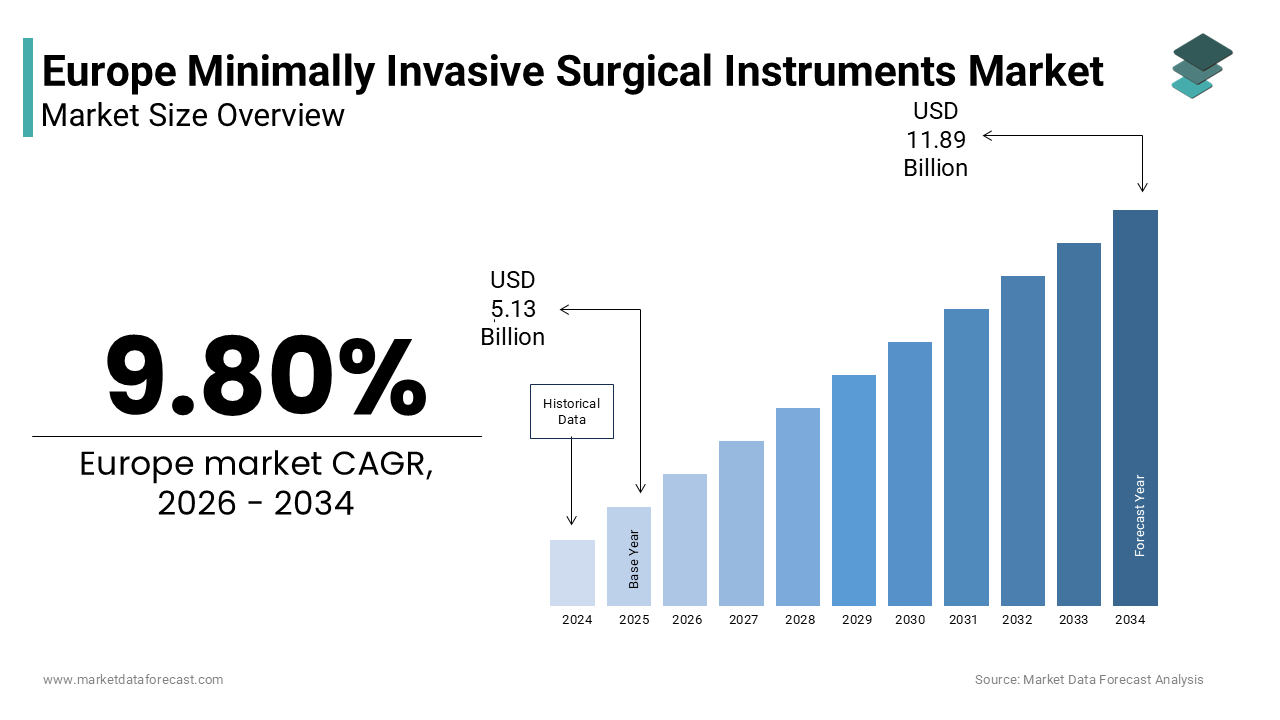
- Market Valuation: Valued at USD 5.13 billion in 2025, estimated at USD 5.63 billion in 2026, and projected to reach USD 11.89 billion by 2034, registering a compound annual growth rate (CAGR) of 9.80% from 2026 to 2034.
- Primary Growth Drivers: Rapidly aging European population, rising prevalence of chronic and lifestyle-related diseases (such as cardiovascular disorders and cancer), clinical preference for minimally invasive therapies offering shorter hospital stays and faster recovery, and increasing government healthcare investments. Key market restraints include concerns regarding surgical quality, improper sterilization processes, and a hazy regulatory environment.
Key Market Segment Metrics (2026–2034)
| Category | Leading Segment (2025 Position) | Fastest-Growing Segment |
|---|---|---|
| By Product | Handheld & Electrosurgical Devices (accounted for major revenue share due to routine procedural demand across general and specialized surgeries) | Guiding & Visualization Systems (expanding rapidly backed by technological advancements in imaging and catheter-based interventions) |
| By Application | Cardiothoracic & Orthopedic Surgery (held prominent market shares driven by high volumes of cardiovascular disorders and joint interventions) | Urological & Gynecological Surgery (gaining high momentum due to patient preference for scar-less, rapid-recovery procedures) |
| By End User | Private Hospitals and Surgical Clinics (dominated as the primary hubs for advanced minimally invasive operations) | Government Hospitals (growing steadily with upgrades in public healthcare infrastructure and surgical care access) |
| By Country / Region | United Kingdom & France (served as regional market leaders backed by high healthcare spending, chronic disease incidence, and key player presence) | Germany & Rest of Europe (experiencing steady adoption supported by advanced medical manufacturing and innovation ecosystems) |
Major Market Players & Market Structure
Market Structure: Highly competitive medical device landscape featuring major global multinational players and specialized European manufacturers focusing on continuous new product launches, strategic mergers, and technological innovations.
Key Companies: Medtronic plc (Ireland), Ethicon, Inc. (U.S.), Aesculap, Inc. (Germany), Stryker Corporation (U.S.), Smith & Nephew (U.K.), ConMed Corporation (U.S.), Abbott Laboratories (U.S.), Applied Biomedical Resources Corporation (U.S.), Microline Surgical (Japan), and Zimmer Biomet (U.S.).
Europe Minimally Invasive Surgical Instruments Market Size
The Europe minimally invasive surgical instruments market size was valued at USD 5.13 billion in 2025 and is anticipated to reach USD 5.63 billion in 2026 from USD 11.89 billion by 2034, growing at a CAGR of 9.80% during the forecast period from 2026 to 2034.
Minimally invasive surgical instruments are specialized, thin tools used to perform operations through tiny cuts instead of one large opening. This field includes endoscopes, laparoscopic tools, robotic systems and associated accessories that facilitate precision in complex interventions across various specialties. According to PubMed, minimally invasive surgery accounts for 70.6% of elective inguinal hernia repairs in Western Europe, though rates drop significantly to 15.4% in Southern Europe. As per PMC, patients undergoing minimally invasive surgery experience an average hospital length of stay of 3.0 days compared to 6.0 days for open surgical alternatives. The market is driven by the rising prevalence of chronic diseases such as obesity and cardiovascular conditions, which require frequent surgical intervention. Regulatory frameworks under the European Union Medical Device Regulation ensure high safety and performance standards while fostering innovation. Consequently, the Europe Minimally Invasive Surgical Instruments Market serves as a critical component of modern healthcare infrastructure supporting improved patient outcomes operational efficiency and cost containment across the continent.
MARKET DRIVERS
Rising Prevalence of Chronic Diseases and Ageing Population
The escalating burden of chronic diseases coupled with a rapidly ageing demographic is propelling the Europe minimally invasive surgical instruments market. According to the European Commission, the population aged 65 and older in the European Union is projected to reach nearly 30% of the total by 2050. As per the World Health Organisation Regional Office for Europe, noncommunicable diseases are linked to 90% of all deaths in the WHO European Region. The epidemiological reality directly drives market demand because older patients are frequently poor candidates for open surgery due to comorbidities and slower healing rates, making minimally invasive options clinically preferable. Hospitals and surgical centers are increasingly equipped with advanced laparoscopic and endoscopic tools to manage this growing patient volume efficiently. The ability to perform complex procedures with reduced physiological stress allows for safer treatment of elderly patients. Thus, the demographic shift ensures sustained growth in the market as healthcare providers prioritize instruments that enable safer and more effective interventions for an aging population.
Government Initiatives Promoting Healthcare Efficiency and Cost Containment
Strategic government policies aimed at optimizing healthcare expenditure and improving hospital throughput significantly fuel the expansion of the Europe minimally invasive surgical instruments market. According to Eurostat, current healthcare expenditure across the European Union is equivalent to 10% of gross domestic product. As per PMC, minimally invasive approaches improve patient outcomes by decreasing hospital length of stay and minimizing postoperative pain compared to open alternatives. These economic benefits directly influence market dynamics as public healthcare systems prioritise technologies that enhance operational efficiency and free up bed capacity. Reimbursement schemes in countries like Germany and France increasingly favour procedures that demonstrate superior cost-effectiveness and faster patient return to the workforce. The reduction in nursing care requirements and medication usage further lowers the total cost of care. Hence, policy-driven incentives ensure that hospitals invest in minimally invasive instruments to meet performance targets and financial constraints, driving consistent procurement and adoption of advanced surgical technologies throughout the region.
MARKET RESTRAINTS
High Initial Capital Investment and Maintenance Costs
The high cost of acquiring and maintaining advanced minimally invasive surgical systems is a significant hindrance to the European market. This substantial financial investment particularly limits market penetration for smaller healthcare facilities. According to PMC, the initial capital investment for a single surgical robot can exceed 2 million dollars, with ongoing maintenance contracts adding substantial yearly costs. As per PMC, hospitals adopting robotic-assisted surgical devices fund these expensive procurement and maintenance costs directly from their activity-based diagnosis-related group revenues. The financial barrier directly impacts market dynamics as only large tertiary centres and private clinics can afford the latest technologies, creating disparities in access to advanced care. The rapid pace of technological obsolescence further complicates investment decisions as newer models render existing equipment less competitive. Additionally, the cost of disposable instruments and accessories adds to the recurring expense burden. Therefore, these economic constraints limit the widespread adoption of sophisticated minimally invasive tools, restricting market growth to well-funded institutions and slowing down the democratization of advanced surgical care across the continent.
Steep Learning Curve and Shortage of Skilled Surgeons
The complexity of minimally invasive surgical techniques and the shortage of adequately trained professionals hamper the effective utilization of these instruments, which slows down the growth of the Europe minimally invasive surgical instruments market. According to the European Union of Medical Specialists working group published in Surgical Endoscopy, a standardised board fellowship exam has been established to rigorously validate independent clinical proficiency in minimally invasive surgery. As per Surgical Endoscopy, face-to-face practical methods remain the preferred mechanism for training candidates to meet specialized logbook documentation requirements. The skills deficit directly affects market dynamics because hospitals hesitate to invest in expensive equipment if they lack staff proficient in its use. The steep learning curve requires extensive simulation training and proctoring, which consumes time and resources. High turnover rates among skilled surgical staff further exacerbate the problem. Consequently, the lack of a robust workforce pipeline constrains the full potential of the market as the availability of instruments outpaces the availability of qualified operators limiting the volume of procedures that can be safely and effectively performed.
MARKET OPPORTUNITIES
Integration of Artificial Intelligence and Robotic Assistance
The convergence of artificial intelligence and robotics with minimally invasive surgical platforms offers transformative opportunities for enhancing precision and expanding the scope of treatable conditions, an evolution expected to drive the growth of the Europe minimally invasive surgical instruments market. According to European Urology Oncology, single-port robotic radical prostatectomy is increasingly utilised via extraperitoneal and transvesical approaches to optimise patient recovery timelines. As per The Lancet Digital Health, robotic-assisted surgical systems achieve a 30% reduction in postoperative complication rates for specific clinical procedures compared to traditional manual open operations. The technological synergy directly benefits the market by creating demand for next-generation instruments that integrate smart sensors and automated features. Manufacturers are developing haptic feedback systems and augmented reality overlays that improve spatial awareness during surgery. Regulatory pathways for software as a medical device are becoming clearer, facilitating faster approval of these innovations. Hence, this integration opens new revenue streams for companies offering integrated hardware and software solutions positioning them as leaders in the digital surgery ecosystem and driving upgrades in existing installed bases.
Expansion into Emerging Specialities and Single Port Procedures
The application of minimally invasive techniques to previously untapped surgical specialties and the development of single-port access systems provide significant growth avenues for manufacturers in the Europe minimally invasive surgical instruments market. According to a European expert opinion survey published in European Urology Open Science, the perceived benefits of single-port robotic surgery include simplified anatomical access to retroperitoneal or extraperitoneal spaces along with lower postoperative pain. As per the Euro-NOTES Foundation, collaborative guidelines emphasize balancing patient demand for scarless outcomes with clinical safety protocols in transluminal procedures. The expansion directly drives market growth as companies develop specialised flexible instruments and articulating tools designed for these novel approaches. In addition, the versatility of single-port platforms allows for multi-quadrant access through a single incision, enhancing cosmetic results and recovery speed. Training programs are increasingly focusing on these advanced techniques, creating a new generation of surgeons proficient in their use. Thus, the diversification of applications ensures that the market will continue to expand beyond traditional laparoscopy into niche but high-value segments driven by patient preference for minimal invasiveness.
MARKET CHALLENGES
Stringent Regulatory Compliance Under MDR
The implementation of the European Union Medical Device Regulation imposes rigorous compliance requirements that challenge manufacturers, delay product launches, and ultimately impede the expansion of the Europe minimally invasive surgical instruments market. According to the European Commission, up to 60% of medical device regulatory submissions require between 13 and 18 months for an MDR certificate to be issued. As per MedTech Europe, approximately 54% of manufacturers state that they do not intend to transition some portion of their legacy device portfolios to the new Medical Device Regulation. The regulatory burden directly impacts market dynamics by increasing costs and creating uncertainty for innovation pipelines. Manufacturers must invest heavily in regulatory affairs teams and clinical trials to maintain compliance, diverting resources from research and development. The lack of harmonized interpretation among notified bodies further complicates the approval process. Therefore, these administrative hurdles slow the introduction of new technologies and limit the diversity of available instruments, affecting the pace of clinical advancement and market growth in the region.
Reprocessing and Sterilisation Complexities
The intricate design of minimally invasive instruments complicates cleaning, disinfection, and sterilization, which limits the expansion of the Europe minimally invasive surgical instruments market. This difficulty raises serious concerns regarding infection control and device longevity. According to medical device contamination literature published in PMC, flexible endoscopes get highly contaminated with secretions during clinical use and represent a leading vector for device-related healthcare-associated infections. As per PMC, robotic surgical instruments demonstrate a lower cleaning efficacy of 97.6% compared to ordinary instruments due to their complex articulated joints. This risk directly affects market dynamics as hospitals face increased pressure to adopt single-use disposable instruments, which are more expensive but eliminate reprocessing risks. The shift toward disposables increases waste management costs and environmental impact, creating a dilemma for sustainability-focused institutions. Manufacturers must balance durability with cleanability, often requiring costly redesigns. Thus, the challenge of ensuring absolute sterility drives up operational costs and influences purchasing decisions between reusable and disposable options, complicating supply chain strategies and budget planning for healthcare providers.
REPORT COVERAGE
| REPORT METRIC | DETAILS |
| Market Size Available | 2025 to 2034 |
| Base Year | 2025 |
| Forecast Period | 2026 to 2034 |
| CAGR | 9.80% |
| Segments Covered | By Product, Application, End Users and Region |
| Various Analyses Covered | Global, Regional and Country Level Analysis, Segment-Level Analysis, DROC, PESTLE Analysis, Porter’s Five Forces Analysis, Competitive Landscape, Analyst Overview of Investment Opportunities |
| Regions Covered | UK, France, Spain, Germany, Italy, Russia, Sweden, Denmark, Switzerland, the Netherlands, Turkey, the Czech Republic, and the Rest of Europe. |
| Market Leaders Profiled | Medtronic plc (Ireland), Ethicon, Inc. (U.S.), Aesculap, Inc. (Germany), Stryker Corporation (U.S.), Smith & Nephew (U.K.), ConMed Corporation (U.S.), Abbott Laboratories (U.S.), Applied Biomedical Resources Corporation (U.S.), Microline Surgical (Japan) and Zimmer Biomet (U.S.). |
SEGMENTAL ANALYSIS
By Product Insights
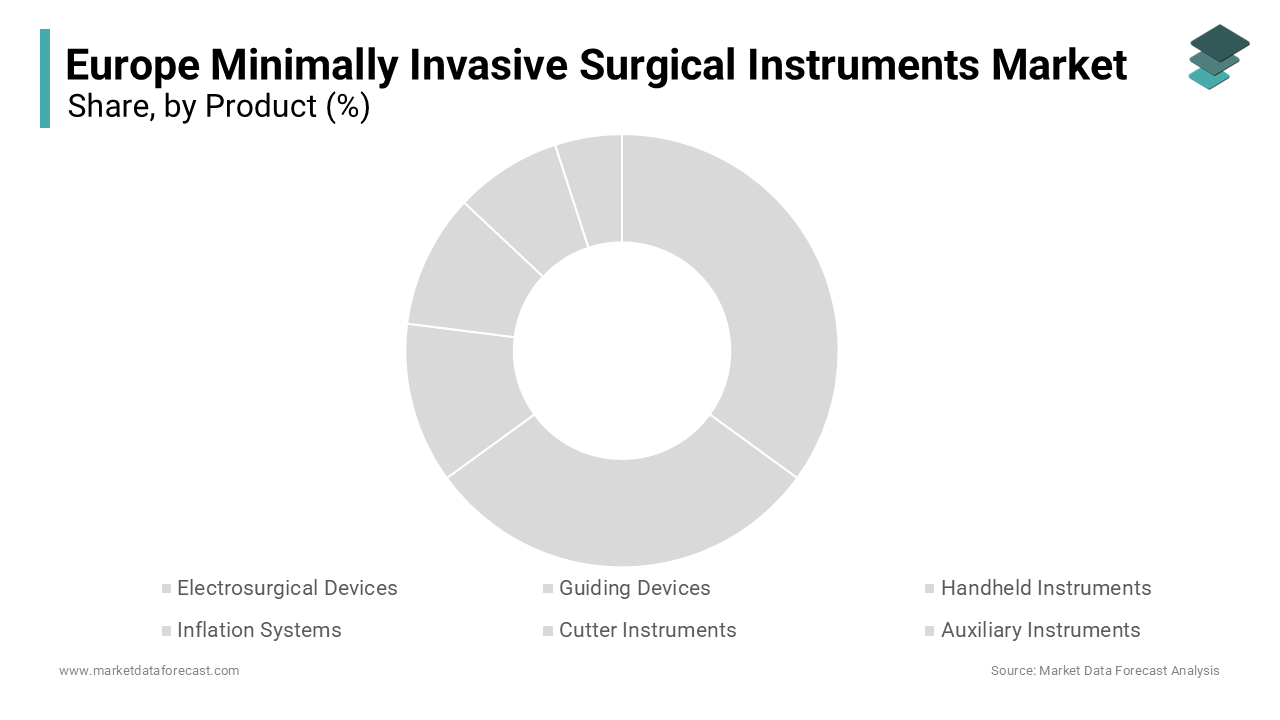
In 2025, the electrosurgical devices segment held the majority share in the Europe minimally invasive surgical instruments market because of its indispensable role in cutting, coagulating, and sealing tissue during laparoscopic and endoscopic procedures. According to PMC, electrosurgical instruments remain a primary modality for delivering high-frequency alternating electrical current to execute targeted cutting and tissue coagulation in laparoscopic workflows. As per the Journal of Minimally Invasive Gynecology, investigators find a high incidence and prevalence of electrical insulation failures after consecutive clinical uses in both laparoscopic and robotic instruments. The clinical preference directly drives market dominance because electrosurgical tools are versatile enough to be used across various specialities, including gynaecology, urology and general surgery. Moreover, the ability to switch between cutting and coagulation modes seamlessly enhances procedural efficiency, reducing operative time. Manufacturers continuously innovate with smart energy platforms that adjust output based on tissue impedance, further improving safety. Consequently, this segment remains the largest revenue generator as electrosurgical devices are considered standard equipment in every operating room equipped for minimally invasive interventions.
The integration of electrosurgical devices with sophisticated energy management systems significantly reinforces their market leadership by enhancing precision and safety profiles. According to research, the rising preference for minimally invasive interventions drives active product sales in the advanced energy systems sector. As per PMC, advanced bipolar vascular sealing devices effectively minimize lateral thermal damage margins and enhance localized structural safety during specialized surgical operations. The technological advancement directly influences market dynamics as hospitals invest in premium devices that improve patient outcomes and reduce postoperative care costs. The development of vessel sealing systems that can handle larger vessels without clips or sutures streamlines complex procedures. Regulatory approvals for new energy modalities facilitate faster adoption of these innovative tools. Consequently, electrosurgical devices maintain their dominant position by evolving from simple cutting tools to intelligent surgical partners that enhance surgeon capability and patient safety.
The guiding devices segment is projected to be the fastest-growing category in the market, registering a CAGR of 9.5% from 2026 to 2034. This growth is driven by the rapid expansion of robotic-assisted minimally invasive surgeries. This segment includes trocars, ports, and robotic arms. According to the European Association of Urology, robotic-assisted radical prostatectomy functions as a primary preferred surgical approach across Western European countries for managing localised disease. As per commercial technology disclosures from Intuitive Surgical, the corporate system portfolio expands its global installed base of multi-port and single-port robotic surgical setups to meet ascending care demands. The technological shift directly benefits the market because robotic procedures rely heavily on high precision guiding mechanisms to translate surgeon movements into micro actions inside the body. The need for multi-port and single-port access systems that accommodate robotic arms creates a niche but rapidly expanding product category. Manufacturers are developing articulating trocars and flexible guides that enhance reach and dexterity in confined anatomical spaces. Consequently, this segment grows rapidly as the adoption of robotics transforms surgical workflows and necessitates specialised guiding infrastructure.
The increasing use of image guided techniques such as fluoroscopy and ultrasound integration with guiding devices is accelerating their adoption in complex minimally invasive procedures. According to the European Society of Radiology and the Cardiovascular and Interventional Radiological Society of Europe, approximately 65.3% of participating European health centres maintain a dedicated, separate interventional radiology service. As per the Cardiovascular and Interventional Radiological Society of Europe, nearly 19.2% of surveyed interventional medical experts indicate a direct shift in device availability within their local treatment centers. The clinical benefit directly drives market expansion as surgeons seek tools that enhance visibility and control during delicate manoeuvres. The development of smart trocars with integrated sensors provides feedback on insertion depth and angle, further improving safety. Regulatory support for navigation technologies encourages innovation in this segment. Consequently, guiding devices expand rapidly as they become essential components of modern image-guided surgical suites, enabling safer and more effective treatments for complex conditions.
By Application Insights
The gastrointestinal surgery segment was the largest in 2025 and occupied a commanding share of the Europe Minimally Invasive Surgical Instruments Market. This prominence of the segment was credited to the high incidence of digestive disorders, colorectal cancer, and gallbladder diseases requiring surgical intervention. According to PMC, colorectal cancer stands as one of the most frequently diagnosed malignant conditions in Europe, accounting for approximately 520,000 recorded new cases. As per regional elective surgical audits published in PMC, laparoscopic approaches remain the predominant modality for managing gallbladder disease to optimize care workflows. The high volume of procedures directly drives market dominance as gastrointestinal surgeries require a wide array of instruments including staplers graspers and dissectors. In addition, the ageing population is particularly susceptible to gastrointestinal issues, ensuring a steady patient flow. Hospitals prioritise equipping operating rooms with specialised GI instruments to handle this caseload efficiently. Therefore, this segment remains the largest application area supported by the critical need to manage prevalent digestive health issues through effective surgical solutions.
The widespread standardization of laparoscopic techniques for gastrointestinal procedures significantly contributes to its market leadership. According to the World Society of Emergency Surgery, a laparoscopy-first intervention pattern is recommended for hemodynamically stable patients presenting with general surgical emergencies. As per Surgical Endoscopy, the adoption of laparoscopic colon resections historically yielded substantial cumulative hospital cost reductions across the National Health Service. The standardization directly influences market dynamics as it creates consistent demand for specific instrument sets across hospitals. Surgeons are trained extensively in laparoscopic GI techniques, ensuring proficiency and confidence in using these tools. The availability of standardised kits simplifies procurement and inventory management for healthcare facilities. Consequently, gastrointestinal surgery maintains its leading position as the primary driver of minimally invasive instrument consumption due to established clinical protocols and high procedural volumes.
The cosmetic and bariatric surgery segment is likely to experience the fastest CAGR of 10.2% during the forecast period, owing to the escalating obesity epidemic and increasing social acceptance of weight loss procedures. According to the World Health Organisation, the overall prevalence of adult obesity across the WHO European Region has risen continuously, with recent findings indicating that 59% of adults are living with overweight or obesity. As per the International Federation for the Surgery of Obesity and Metabolic Disorders, Roux-en-Y gastric bypass and sleeve gastrectomy procedures account for the vast majority of globally documented bariatric interventions. The epidemiological trend directly drives market growth as these complex surgeries require specialised long instruments, staplers and retractors designed for deep abdominal access. The effectiveness of minimally invasive bariatric surgery in achieving significant weight loss and resolving comorbidities like diabetes further fuels demand. Hence, this segment expands rapidly as healthcare systems prioritize obesity management and patients seek effective surgical solutions.
The increasing popularity of cosmetic procedures such as liposuction, abdominoplasty, and breast augmentation using minimally invasive techniques is fueling rapid growth in this segment. According to the International Society of Aesthetic Plastic Surgery, surgical interventions such as eyelid surgery and liposuction comprise the leading categories of aesthetic treatments performed globally. As per PMC, consumer preferences drive extensive volume expansion in non-surgical facial treatments, with botulinum toxin injections maintaining the highest annual ranking among cosmetic procedures. Consumer preferences directly benefit the market as surgeons adopt specialised cannulas, lasers and endoscopic tools for aesthetic enhancements. Moreover, the private pay nature of cosmetic surgery allows for quicker adoption of new technologies without reimbursement barriers. Clinics invest in advanced instruments to differentiate their services and attract clients. So, the cosmetic and bariatric segment grows rapidly as it combines medical necessity with lifestyle choices, driving innovation and volume in the minimally invasive sector.
By End Users Insights
The government hospitals segment dominated the European minimally invasive surgical instruments market and accounted for a substantial share in 2025. This dominance was driven by the segment's role as a primary provider of healthcare for the majority of the population under public insurance schemes. According to the Organisation for Economic Co-operation and Development, curative and rehabilitative hospital care accounts for approximately 37% of national health spending. As per the Organisation for Economic Co-operation and Development, public capital infrastructure budgets and social health insurance frameworks shape the financing of hospital operations across mixed public-private systems like Germany and France. The operational mandate directly drives market dominance as government hospitals procure large volumes of instruments to handle high throughput. Centralised purchasing agreements allow for bulk buying of standardised instrument sets, ensuring consistent supply. The focus on equity ensures that advanced surgical technologies are distributed across public facilities to provide equal access to care. Consequently, this segment remains the largest consumer of minimally invasive instruments, supported by substantial public funding and high procedural volumes.
Ongoing government initiatives to modernise healthcare infrastructure and upgrade surgical capabilities significantly reinforce the leadership of government hospitals. According to the European Investment Bank, a 30 million euro loan facility was extended to Quantum Surgical to accelerate the commercial scale-up of its medical robot designed for minimally invasive abdominal and lung interventions. As per PMC, specialized operating theaters integrate controlled gas insufflation and filtered smoke evacuation systems to maximize workflow safety during aerosol-generating laparoscopic procedures. The investment directly influences market dynamics as public institutions replace outdated equipment with modern instruments that improve efficiency and patient outcomes. Training programs for public sector surgeons are also expanded to ensure proper utilization of new tools. Regulatory standards mandate minimum equipment requirements for accredited hospitals, driving procurement. Thus, government hospitals maintain their leading position through continuous infrastructure improvement and strategic investments in surgical technology.
The private hospitals and surgical clinics segment is expected to exhibit a noteworthy CAGR of 8.8% between 2026 and 2034. This surge is fuelled by the demand for premium healthcare services and enhanced patient experiences. According to the Organisation for Economic Co-operation and Development, outpatient ambulatory care settings comprise roughly 25% of total healthcare investments across European economies. The competitive strategy directly drives market growth as private facilities invest in cutting-edge instruments to demonstrate clinical excellence. The ability to charge premium prices for advanced procedures allows for faster return on investment for expensive equipment. Marketing efforts highlight the benefits of minimally invasive surgery, such as minimal scarring and quick recovery, appealing to affluent consumers. Hence, this segment expands rapidly as the private healthcare sector capitalises on consumer preferences for high-quality and convenient surgical solutions.
The rise of ambulatory surgical centres specialising in outpatient minimally invasive procedures is accelerating growth in the private sector. According to the Organisation for Economic Co-operation and Development, ambulatory surgery tracks at 90% or higher for specific high-volume operations like cataract removals across three-quarters of tracked nations. As per the Federal Institute for Drugs and Medical Devices by the German Society for General and Visceral Surgery, clinical code modifications seek to improve performance-adequate tracking of specialized inpatient and ambulatory procedures within the DRG framework. The shift directly benefits the market as these centers require compact and efficient instrument sets tailored for high turnover environments. Also, the cost-effectiveness of outpatient care encourages insurance providers to direct patients to these facilities. Private investors are funding the establishment of new ambulatory centres equipped with modern minimally invasive tools. Therefore, the private hospital and clinic segment grows rapidly as it adapts to the trend toward decentralized and efficient surgical care delivery.
COUNTRY ANALYSIS
Germany Minimally Invasive Surgical Instruments Market Analysis
Germany led the European minimally invasive surgical instruments market and accounted for a substantial share in 2025. This leading position was attributed to the country's advanced healthcare infrastructure and high adoption of robotic surgery. According to the Federal Joint Committee in Germany, the minimum annual required volume per hospital for complex oesophageal surgeries has been increased from 10 to 26 cases to ensure treatment outcomes. As per PMC, European hospitals increasingly implement hybrid operating rooms that blend high-end intraoperative imaging with standard surgical capabilities to optimize structural care delivery. The strong regulatory framework ensures high-quality standards for instruments. Reimbursement policies favour efficient surgical techniques, encouraging adoption. The presence of major medical device manufacturers fosters innovation and local supply. This robust ecosystem ensures Germany remains the market leader with sustained demand for advanced surgical tools.
France Minimally Invasive Surgical Instruments Market Analysis
France was positioned second in the Europe market and accounted for a major share in 2025. This market position was propelled by the country's centralised healthcare system and an emphasis on equitable access to advanced surgical care. According to PubMed, the national proportion of laparoscopic cholecystectomy procedures in France significantly expanded from 90% to 94%. As per PMC, French healthcare facilities utilize standardized Enhanced Recovery After Surgery protocols to effectively minimize post-operative hospital length of stay. The government supports training initiatives for surgeons to enhance skills in minimally invasive techniques. High patient satisfaction with reduced recovery times drives continued adoption. This supportive policy environment ensures France remains a key market with steady growth in instrument procurement.
United Kingdom Minimally Invasive Surgical Instruments Market Analysis
The United Kingdom maintains a strong presence in the European minimally invasive surgical instruments market due to the National Health Service commitment to efficiency and waiting list reduction. According to the National Health Service, select orthopedic departments deploy specialized minimally invasive surgical cuts for total hip arthroplasty depending entirely on unique patient anatomical profiles. As per PMC, the National Health Service utilizes structured clinical simulation labs to expand technical skills training for rising registrar cohorts. Private healthcare providers also contribute significantly by offering rapid access to advanced surgical options. Brexit has introduced some supply chain complexities, but local distribution networks remain resilient. This focus on operational efficiency ensures the UK remains a vital market for minimally invasive instruments.
Italy Minimally Invasive Surgical Instruments Market Analysis
Italy is a growing player in the European market, owing to its ageing population and increasing prevalence of chronic diseases requiring surgical intervention. According to the Italian Ministry of Health, standardised basic clinical criteria help healthcare networks systematically manage outpatient referral backlogs for surgical workflows. As per clinical safety recommendations co-published by the Italian Society of Minimally Invasive Surgery, healthcare providers implement dedicated surgical smoke scavenging infrastructure to prevent intraoperative exposure risks. The private sector is also expanding, offering premium minimally invasive options. Cultural preference for high-quality medical care drives demand for advanced instruments. This demographic and structural trend ensures Italy continues to grow as an important market in Southern Europe.
Spain Minimally Invasive Surgical Instruments Market Analysis
Spain exhibits steady expansion in the regional market, supported by its universal healthcare system and modernisation efforts. According to Cirugía Española, the official journal of the Spanish Association of Surgeons, minimally invasive approaches for complex abdominal wall repairs rely on specialised laparoscopic and robotic workflows. As per PMC, the official resident curriculum outlined by the Ministry of Health in Spain does not mandate a standardized independent practical certification for specialized urological laparoscopy. The tourism medical sector also contributes by attracting patients seeking high-quality, affordable surgery. Training programs for young surgeons emphasise minimally invasive skills, ensuring future demand. This combination of public investment and private opportunity ensures Spain remains a dynamic market.
COMPETITIVE LANDSCAPE
The competition in the Europe Minimally Invasive Surgical Instruments Market is characterized by intense rivalry among global medical device giants and specialized regional manufacturers who strive to differentiate through technological innovation and clinical efficacy. Major competitors focus on developing integrated surgical ecosystems that combine hardware software and data analytics to provide comprehensive solutions for operating rooms. Product differentiation is achieved through advancements in robotic assistance single port access and smart energy devices that offer superior precision and safety profiles. Price competition is moderate in the premium segment where clinical outcomes and brand reputation drive purchasing decisions but remains significant for standard disposable instruments. Regulatory compliance with the European Union Medical Device Regulation serves as a critical barrier to entry favoring established players with robust quality management systems. Strategic collaborations with surgeons and key opinion leaders help build trust and influence adoption rates in hospitals. The market sees frequent launches of next generation instruments that reduce procedure times and improve patient recovery. Customer service and technical support including maintenance and training are key differentiators that impact long term contracts. This dynamic environment requires continuous investment in research and development to stay ahead of technological curves and meet the evolving needs of modern surgical practices across diverse European healthcare systems.
KEY MARKET PLAYERS
A few of the noteworthy companies operating in Europe minimally invasive surgical instruments market include
- Medtronic plc (Ireland)
- Ethicon, Inc. (U.S.)
- Aesculap, Inc. (Germany)
- Stryker Corporation (U.S.)
- Smith & Nephew (U.K.)
- ConMed Corporation (U.S.)
- Abbott Laboratories (U.S.)
- Applied Biomedical Resources Corporation (U.S.)
- Microline Surgical (Japan)
- Zimmer Biomet (U.S.)
Top Players in the Europe Minimally Invasive Surgical Instruments Market
Medtronic plc
Medtronic plc maintains a dominant presence in the Europe Minimally Invasive Surgical Instruments Market through its comprehensive portfolio of surgical staplers energy devices and robotic platforms. The company leverages its extensive distribution network to supply advanced tools for general thoracic and gynecological procedures across major European healthcare systems. Recent actions include the expansion of its Hugo robotic assisted surgery system in multiple European countries enhancing surgeon access to precision technology. Medtronic actively invests in digital surgery ecosystems that integrate data analytics with instrument usage to improve clinical outcomes. Their strategic focus on training programs for surgeons strengthens customer loyalty and ensures proper utilization of complex devices. By prioritizing innovation and clinical evidence Medtronic reinforces its position as a trusted partner for hospitals seeking to enhance operational efficiency and patient safety in minimally invasive interventions.
Johnson & Johnson (Ethicon)
Johnson & Johnson through its Ethicon subsidiary contributes significantly to the market by offering a wide range of sutures staplers and energy based surgical instruments. The company focuses on developing smart technologies such as sensor enabled staplers that provide real time feedback to surgeons during procedures. Recent initiatives involve the launch of advanced harmonic scalpels that reduce thermal damage and improve healing times for patients. Ethicon collaborates closely with academic institutions to validate new techniques and instruments ensuring high clinical standards. They have also expanded their manufacturing capabilities in Europe to mitigate supply chain risks and ensure consistent product availability. By combining product excellence with strong educational support Johnson & Johnson strengthens its market position and drives the adoption of innovative minimally invasive solutions that improve surgical precision and recovery rates.
Karl Storz SE & Co. KG
Karl Storz SE & Co. KG plays a pivotal role in the market as a leading provider of endoscopic equipment and integrated operating room solutions. The company specializes in high quality visualization systems and instruments for urology gynecology and general surgery applications. Recent actions include the introduction of advanced 4K and 3D imaging technologies that enhance depth perception and detail for surgeons performing complex minimally invasive procedures. Karl Storz actively partners with hospitals to design customized operating room layouts that optimize workflow and instrument accessibility. They invest heavily in research and development to create ergonomic instruments that reduce surgeon fatigue during long operations. By focusing on visual clarity and system integration Karl Storz strengthens its position as a preferred supplier for European clinics seeking superior endoscopic performance and seamless surgical environments.
Top Strategies Used by Key Market Participants
Key players in the Europe Minimally Invasive Surgical Instruments Market primarily employ product innovation strategies by integrating artificial intelligence and robotics into surgical tools to enhance precision and ease of use. Companies focus on strategic partnerships with hospitals and academic centers to conduct clinical trials and validate new technologies ensuring regulatory compliance and market acceptance. Expansion of training and education programs helps surgeons master complex minimally invasive techniques fostering brand loyalty and proper device utilization. Manufacturers invest in localizing production facilities within Europe to mitigate supply chain disruptions and meet regional regulatory requirements efficiently. Mergers and acquisitions are utilized to acquire specialized technologies and broaden product portfolios in niche surgical specialties. These multifaceted approaches enable companies to maintain competitive advantages and drive sustainable growth in a highly regulated and technologically advanced market landscape.
MARKET SEGMENTATION
This research report on the European minimally invasive surgical instruments market has been segmented and sub-segmented into the following categories.
By Product
- Electrosurgical Devices
- Electrosurgical Generators
- Electrosurgical Instruments
- Electrocautery Devices
- Guiding Devices
- Guiding Catheters
- Guidewires
- Handheld Instruments
- Stents
- Visualizing Scopes
- Graspers
- Retractors/Elevators
- Sutures
- Dilators
- Forceps and Spatulas
- Other Handheld Instruments
- Inflation Systems
- Balloons
- Balloon Inflation Devices
- Other Inflation Systems
- Cutter Instruments
- Trocars
- Rasps
- Other Cutter Instruments
- Auxiliary Instruments
- Cannulas
- Staplers
- Clamps
- Closures
By Application
- Orthopedic Surgery
- Gastrointestinal Surgery
- Cardiothoracic Surgery
- Urological Surgery
- Cosmetic/Bariatric Surgery
- Gynecological Surgery
- Vascular Surgery
- Other Applications
By End Users
- Private Hospitals and Surgical Clinics
- Government Hospitals
- Academic & Research Institutes
By Country
- UK
- France
- Spain
- Germany
- Italy
- Russia
- Sweden
- Denmark
- Switzerland
- Netherlands
- Turkey
- Czech Republic
- Rest of Europe