- Product Description Description
- Table of Contents TOC
- List of Table & Figure LOT
- Get Free Sample PDF Sample PDF
Market Size, 2025
$32.29 BnMarket Estimate, 2026
$35.58 BnMarket Forecast, 2034
$77.33 BnCAGR, 2026–2034
10.19%Executive Summary: Global Minimally Invasive Surgical Instruments Market
- Market Scope: Comprehensive global minimally invasive surgical (MIS) instruments market analysis covering product categories, clinical applications, end-user settings, regional landscapes, and technology adoption metrics.
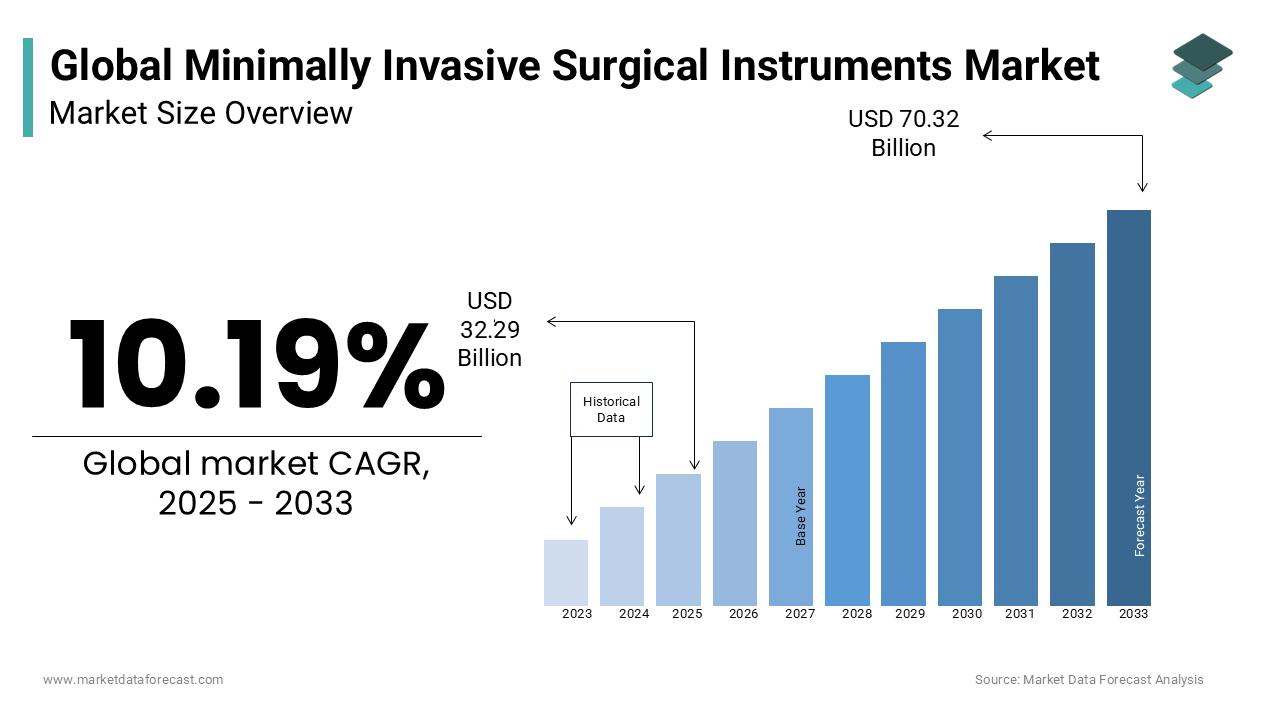
- Market Valuation: Valued at USD 32.29 billion (2025), estimated at USD 35.58 billion (2026), and projected to reach USD 77.33 billion by 2034, registering a strong compound annual growth rate (CAGR) of 10.19% from 2026 to 2034.
- Primary Growth Drivers: Proliferation of the global senior population, rising demand for cost-effective and trauma-minimizing surgical interventions, constant technological advancements (such as virtual reality imaging and real integrated solutions), and growing medical tourism in developing nations. Key market restraints include procedural quality concerns, improper sterilization practices, poor quality assurance standards, and uncertain regulatory frameworks within the medical device sector.
Key Market Segment Metrics (2026–2034)
| Category | Leading Segment (2025 Position) | Fastest-Growing Segment |
|---|---|---|
| By Product | Handheld Instruments (reported the market's highest share supported by widespread use in general laparoscopic and procedural tasks) | Electrosurgical Devices (projected to record the highest CAGR throughout the forecast period) |
| By Application | Orthopedic Surgery (estimated to hold the largest share of the global MIS instruments market) | Gastrointestinal & Cardiothoracic Surgery (expanding rapidly via advanced visualization scopes and robotic assistance) |
| By End User | Private Hospitals and Surgical Clinics (projected to account for the largest proportion of end-user demand) | Government Hospitals & Outpatient Surgical Centers (scaling up through healthcare modernization initiatives) |
| By Region | North America (held the most considerable regional share backed by robust healthcare spending and advanced infrastructure) | Asia-Pacific (fastest-growing regional market, projected to rise at a significant CAGR of 12.20%) |
Major Market Players & Market Structure
Market Structure: Highly competitive medical technology ecosystem featuring prominent multinational corporations focusing on product innovations, strategic mergers and acquisitions, and expanding global distribution footprints.
Key Companies: Medtronic plc, Ethicon, Inc., Aesculap, Inc., Stryker Corporation, Smith & Nephew, ConMed Corporation, Abbott Laboratories, Applied Biomedical Resources Corporation, Microline Surgical, and Zimmer Biomet.
Global Minimally Invasive Surgical Instruments Market Size
The global minimally invasive surgical instruments market was valued at USD 32.29 billion in 2025. As per our report, the global minimally invasive surgical instruments market size is expected to reach USD 77.33 billion by 2034 from USD 35.58 billion in 2026, growing at a CAGR of 10.19% during the forecast period.
The minimally invasive surgical instruments are specialized array of medical devices designed to facilitate surgical procedures through small incisions or natural body openings, thereby reducing patient trauma and accelerating recovery timelines. These instruments include trocars graspers scissors and energy devices that enable surgeons to perform complex operations with enhanced precision and reduced blood loss. The global healthcare sector is witnessing a paradigm shift toward outpatient care settings where minimally invasive techniques are increasingly preferred due to their cost effectiveness and superior clinical outcomes. According to the World Health Organization, approximately 310 million surgical procedures are performed globally each year with a significant portion transitioning from open surgeries to minimally invasive approaches. This transition is driven by patient demand for less painful interventions and shorter hospital stays which directly influences the procurement strategies of healthcare institutions worldwide. The integration of advanced visualization technologies and robotic assistance further amplifies the capabilities of these instruments making them indispensable in modern operating rooms across Europe and beyond.
MARKET DRIVERS
Rising Prevalence of Chronic Diseases Driving Surgical Interventions
The escalating burden of chronic diseases such as cardiovascular disorders, cancer, and obesity for the adoption of minimally invasive surgical instruments globally is escalating the growth of the minimally invasive surgical instruments market. According to the World Health Organization, noncommunicable diseases account for 74% of all deaths worldwide necessitating frequent surgical interventions that benefit from minimally invasive approaches. As per statistics from the International Agency for Research on Cancer, there were an estimated 19.3 million new cancer cases in 2020 many of which require precise surgical removal of tumors through laparoscopic or endoscopic methods. The relation between these health statistics and the market is direct because chronic conditions often demand repeated or complex surgeries where minimally invasive tools offer superior precision and reduced complication rates. Healthcare providers increasingly prefer these instruments to manage the growing patient volume efficiently, while maintaining high standards of care. The aging population in Europe exacerbates this trend as older adults are more susceptible to chronic ailments requiring surgical management. Consequently, hospitals and ambulatory surgical centers are investing heavily in advanced minimally invasive equipment to handle the rising caseload.
Technological Advancements Enhancing Surgical Precision and Safety
The rapid technological innovations in surgical instrumentation, which is significantly propelling the growth of the Minimally Invasive Surgical Instruments Market. These advancements directly influence market dynamics as healthcare institutions seek to upgrade their infrastructure to remain competitive and offer state of the art care. The development of smart instruments equipped with sensors provides real time feedback to surgeons enhancing decision making during critical moments of surgery. Furthermore, the miniaturization of devices allows access to previously unreachable anatomical regions expanding the scope of minimally invasive techniques. Hospitals in Germany, France, and the United Kingdom are leading this technological adoption driven by favorable reimbursement policies and strong healthcare budgets. The continuous evolution of materials science also contributes to durability and performance of these instruments, making them more reliable for repeated use. This relentless pursuit of innovation ensures that the market remains dynamic with constant introductions of next generation tools that redefine surgical possibilities and improve overall patient outcomes.
MARKET RESTRAINTS
High Initial Investment Costs Limiting Market Penetration
The substantial capital expenditure required for acquiring advanced minimally invasive surgical systems, particularly for smaller healthcare facilities and developing regions that is hindering a growth of the minimally invasive surgical instruments market. According to the Health Care Cost Institute, the average cost of a robotic assisted surgical system ranges from 1 million to 2.5 million dollars excluding annual maintenance fees which can exceed 150000 dollars per year. This financial barrier directly impacts market expansion, as a large segment of potential customers cannot afford the upfront costs associated with these sophisticated instruments. The high price point extends beyond the initial purchase to include specialized training for surgical teams and ongoing software updates which further strain limited budgets. Healthcare administrators often face difficult decisions when allocating funds between essential services and advanced surgical technologies leading to delayed adoption cycles. In countries with fragmented healthcare systems the disparity in access to modern surgical tools becomes pronounced creating uneven market growth. Additionally, the rapid obsolescence of technology means that investments may become outdated within a few years discouraging long term commitments. This economic constraint limits the widespread dissemination of minimally invasive techniques, particularly in rural or underfunded medical centers thereby restraining the overall market potential despite clear clinical benefits.
Stringent Regulatory Approval Processes Delaying Product Launches
The rigorous regulatory frameworks governing medical device approvals create substantial delays is additionally impeding the growth of the minimally invasive surgical instruments market. According to the European Medicines Agency, the average time required for obtaining CE marking for Class III medical devices including complex surgical instruments has extended to 18 to 24 months due to enhanced scrutiny following the implementation of the Medical Device Regulation. These regulatory hurdles directly affect dynamics by prolonging the return on investment for manufacturers and delaying patient access to cutting edge technologies. Companies must navigate complex documentation requirements clinical trial mandates and post market surveillance obligations which increase development costs and operational burdens. The uncertainty surrounding approval outcomes discourages smaller enterprises from entering the market limiting competition and innovation diversity. In Europe the transition to stricter regulatory standards has caused several manufacturers to withdraw certain products or delay launches until compliance is fully achieved. This regulatory environment creates a barrier to entry that favors established players with extensive resources while marginalizing emerging innovators. The pace of technological advancement in the minimally invasive surgical instruments sector is slowed as companies prioritize regulatory compliance over rapid product development cycles impacting overall market growth.
MARKET OPPORTUNITIES
Integration of Artificial Intelligence and Robotics Creating New Avenues
The emergence of artificial intelligence and robotics with minimally invasive surgical instruments for enhancing procedural capabilities and expanding clinical applications is ascribed to foster new opportunities for the growth of the minimally invasive surgical instruments market. According to the International Federation of Robotics, the global installation base of surgical robots reached 7000 units in 2023 with Europe accounting for 25% of this total indicating robust adoption potential. This technological synergy opens new market segments as manufacturers develop intelligent instruments capable of autonomous tasks and predictive analytics during surgery. Hospitals are increasingly interested in platforms that combine robotic precision with data driven insights to optimize surgical workflows and improve patient outcomes. The opportunity lies in creating integrated ecosystems where instruments communicate with hospital information systems enabling seamless data exchange and continuous improvement. Manufacturers who invest in AI enabled devices can differentiate themselves in a crowded marketplace by offering solutions that enhance surgeon performance and reduce variability in surgical results. Furthermore, the ability to collect and analyze intraoperative data provides valuable insights for training and quality assurance purposes.
Expansion into Emerging Markets with Growing Healthcare Infrastructure
The untapped potential in emerging economies offers significant growth opportunities for the growth of the minimally invasive surgical instruments market. As per data, Southeast Asian nations are projected to add 5000 new operating rooms equipped with advanced surgical technologies by 2030, creating substantial demand for minimally invasive instruments. This infrastructure development directly correlates with market expansion as newly built hospitals and upgraded facilities require comprehensive suites of surgical equipment to meet international standards. Governments in countries such as India, Brazil, and Poland are implementing national health programs that prioritize access to modern surgical care driving procurement of minimally invasive tools. The rising middle class in these regions increases demand for high quality healthcare services including elective procedures that benefit from minimally invasive techniques. Manufacturers can capitalize on this trend by establishing local distribution networks and offering tailored financing solutions to overcome budget constraints. Additionally, partnerships with local healthcare providers facilitate knowledge transfer and training ensuring proper utilization of advanced instruments. The demographic dividend in emerging markets means a large young population will require surgical interventions throughout their lives providing sustained demand.
MARKET CHALLENGES
Shortage of Skilled Surgeons Trained in Minimally Invasive Techniques
The shortage of surgeons proficient in minimally invasive procedures with the widespread adoption and optimal utilization of advanced surgical instruments is to pose as a major challenge for the growth of the minimally invasive surgical instruments market. As per statistics from the Association of American Medical Colleges, the number of surgical residents completing fellowships in minimally invasive techniques has grown by only 3% annually, despite increasing demand for such expertise. The steep learning curve associated with minimally invasive surgery requires extensive training and mentorship, which many healthcare institutions struggle to provide due to resource limitations. Consequently, some facilities revert to traditional open surgery methods despite having access to advanced equipment leading to underutilization of purchased instruments. The challenge is compounded by the rapid evolution of technology which requires continuous education and skill updates to maintain proficiency. Addressing this workforce shortage requires collaborative efforts between educational institutions healthcare providers and manufacturers to develop comprehensive training programs.
Risk of Surgical Complications and Instrument Malfunctions
The inherent risk of surgical complications and potential instrument malfunctions during minimally invasive procedures creates liability concerns that is also to impede the growth of the minimally invasive surgical instruments market. According to the study, adverse events related to surgical instrument failures account for 12% of all reported medical device incidents in hospital settings. These safety concerns directly affect perception, as healthcare providers become cautious about adopting new technologies without proven reliability records. Instrument failures during critical phases of surgery can lead to severe patient harm prolonged operative times and increased healthcare costs undermining the perceived benefits of minimally invasive approaches. Manufacturers face intense pressure to ensure absolute quality control and rigorous testing protocols to prevent such occurrences, which increases production costs and time. The fear of litigation drives hospitals to prefer established brands with long track records limiting opportunities for innovative newcomers. Additionally, negative publicity from high profile complications can damage brand reputation and erode trust among surgical communities.
REPORT COVERAGE
| REPORT METRIC | DETAILS |
| Market Size Available | 2025 to 2034 |
| Base Year | 2025 |
| Forecast Period | 2026 to 2034 |
| Segments Covered | By Product, Application, End-User, and Region |
| Various Analyses Covered | Global, Regional & Country Level Analysis, Segment-Level Analysis, DROC, PESTLE Analysis, Porter’s Five Forces Analysis, Competitive Landscape, Analyst Overview on Investment Opportunities |
| Regions Covered | North America, Europe, APAC, Latin America, Middle East & Africa |
| Market Leaders Profiled | Medtronic plc, Ethicon, Inc., Aesculap, Inc., Stryker Corporation, Smith & Nephew, ConMed Corporation, Abbott Laboratories, Applied Biomedical Resources Corporation, Microline Surgical, and Zimmer Biomet. |
SEGMENTAL ANALYSIS
By Product Insights
The electrosurgical devices segment was the largest by holding 32.8% of the minimally invasive surgical instruments market share in 2025 with their unparalleled ability to provide precise tissue cutting and simultaneous hemostasis which significantly reduces intraoperative blood loss. As per data from the Journal of Clinical Medicine, minimally invasive procedures in Europe now utilize some form of electrosurgical energy device due to its versatility and safety profile. This statistical evidence highlights a direct correlation between clinical efficacy and market preference as surgeons prioritize tools that enhance patient safety and procedural efficiency. The integration of smart feedback systems in modern generators further minimizes thermal spread protecting surrounding healthy tissues and reducing postoperative complications. Healthcare institutions recognize these clinical benefits as critical for maintaining high quality standards and reducing length of stay. The procurement strategies heavily favor electrosurgical platforms that offer consistent performance across various surgical specialties. The widespread adoption is also supported by robust training programs that ensure surgeons can maximize the potential of these devices. This clinical reliance on electrosurgical precision ensures that this segment remains the largest contributor to market revenue as it becomes an indispensable component of standard operating room setups globally.
The visualizing scopes within the handheld instruments category are experiencing the fastest growth due to rapid advancements in high definition and three dimensional imaging technologies that significantly enhance surgical visibility. According to the Society of American Gastrointestinal and Endoscopic Surgeons, the adoption of four kilowatt resolution endoscopes has increased by 45% in academic medical centers over the past three years. As per research published by the British Journal of Surgery, three dimensional visualization improves depth perception by 30% leading to faster suturing times and reduced error rates in complex minimally invasive procedures. This technological leap directly drives market expansion as surgeons demand superior visual clarity to navigate intricate anatomical structures safely. The transition from standard definition to ultra high definition systems represents a significant upgrade cycle for hospitals seeking to maintain competitive edges in surgical care. Improved image quality facilitates earlier detection of pathological conditions during diagnostic procedures increasing the volume of interventions performed. Furthermore, the miniaturization of camera sensors allows for smaller incisions aligning with patient preferences for less invasive options. Manufacturers are investing heavily in optical innovations including fluorescence imaging and augmented reality overlays, which add functional value beyond basic visualization.
By Application Insights
The gastrointestinal surgery segment held a significant share of the Minimally Invasive Surgical Instruments Market in 2025 due to the escalating global burden of digestive disorders and gastrointestinal cancers that require surgical intervention. According to the World Health Organization, colorectal cancer is the third most commonly diagnosed cancer worldwide with over 1.9 million new cases reported annually. As per statistics from the American Gastroenterological Association, approximately 60 to 70 million Americans suffer from digestive diseases each year many of whom eventually require minimally invasive surgical procedures such as colectomies or gastrectomies. The direct relationship between these high prevalence rates and market demand is evident as hospitals must equip their operating rooms with specialized instruments tailored for abdominal and pelvic surgeries. The complexity of gastrointestinal anatomy necessitates precise tools for dissection and reconstruction, which minimally invasive instruments provide with superior outcomes compared to open surgery. The aging population in developed regions further exacerbates this trend as older adults are more prone to diverticular disease and malignancies. Consequently, healthcare systems are prioritizing investments in laparoscopic and robotic platforms specifically designed for gastrointestinal applications.
The cosmetic and bariatric surgery segment is likely to grow at a fastest CAGR of 12.3% from 2026 to 2034 due to the global obesity epidemic, which is driving unprecedented demand for weight loss surgeries. According to the World Health Organization, worldwide obesity has nearly tripled since 1975 with over 650 million adults classified as obese in recent estimates. This surge in procedure volume directly translates to increased demand for specialized minimally invasive instruments such as staplers and trocars designed for bariatric applications. The clinical efficacy of laparoscopic sleeve gastrectomy and gastric bypass in achieving significant weight loss and resolving comorbidities like diabetes makes these procedures highly attractive to patients and providers. Insurance coverage for bariatric surgery is expanding in many regions reducing financial barriers and further stimulating market growth. Additionally, the rise of medical tourism for cosmetic and bariatric procedures in countries with lower costs creates additional demand channels. Manufacturers are responding by developing instruments specifically engineered for the thicker abdominal walls and larger anatomical structures encountered in obese patients.
By End Users Insights
The private hospitals and surgical clinics segment was the largest by holding 34.2% of the Minimally Invasive Surgical Instruments Market share in 2025 due to their superior financial capacity to invest in advanced surgical technologies and their strategic focus on delivering premium patient care. As per data from the Healthcare Financial Management Association, private hospitals are 30% more likely to adopt new surgical technologies within the first two years of launch compared to public institutions due to flexible budgeting processes. This financial agility allows private facilities to differentiate themselves by offering state of the art minimally invasive procedures that attract patients willing to pay for superior outcomes and comfort. The competitive nature of the private healthcare sector drives continuous upgrades to surgical suites to maintain market share and reputation. Additionally, private clinics often specialize in specific high-volume procedures such as orthopedics or cosmetics, allowing them to optimize their instrument inventory for maximum efficiency. The ability to offer shorter wait times and personalized care further enhances patient preference for private facilities increasing their procedural volumes.
The academic and research institutes segment is anticipated to witness a fastest CAGR of 9.4% from 2026 to 2034 due to the need for advanced training facilities and simulation programs that prepare future surgeons in minimally invasive techniques. According to the study, over 90% of surgical residency programs in North America now mandate formal training in laparoscopic and robotic skills requiring access to specialized instruments and simulators. This educational mandate creates a steady and growing demand for instruments that are used exclusively for training purposes rather than clinical care. Academic centers serve as testing grounds for new technologies where manufacturers collaborate with researchers to validate device performance and safety before commercial release. This partnership model ensures that universities receive early access to innovative instruments fostering a culture of continuous learning and adaptation. Furthermore, the emphasis on evidence-based practice in academic settings leads to rigorous evaluation of instrument efficacy influencing broader adoption patterns. The expansion of medical schools in emerging economies further amplifies this trend as these institutions build modern surgical curricula from the ground up.
REGIONAL ANALYSIS
North America Minimally Invasive Surgical Instruments Market Analysis
North America was the top performer in the global minimally invasive surgical instruments market by capturing 39.1% of share in 2025 with the advanced healthcare infrastructure and high adoption rates of innovative surgical technologies. As per data from the Canadian Institute for Health Information, over 75% of surgical procedures in Canada are now performed using minimally invasive techniques reflecting a mature market with high penetration levels. The aging population in the United States increases the prevalence of chronic conditions requiring surgical intervention, while patients demand less invasive options with quicker recovery times. Strong regulatory frameworks ensure high safety standards, which builds trust in advanced instruments among healthcare providers. Additionally, the robust network of academic medical centers fosters innovation and early adoption of new technologies.
Europe Minimally Invasive Surgical Instruments Market Analysis
Europe minimally invasive surgical instruments market was ranked second with 19.2% of share in 2025 with the universal healthcare coverage and a strong emphasis on cost effective surgical solutions. As per statistics from the European Commission, the implementation of the Medical Device Regulation has standardized quality requirements across member states ensuring consistent safety and performance of surgical instruments. The region benefits from a high concentration of skilled surgeons and well established training programs in minimally invasive techniques particularly in Germany France and the United Kingdom. Government initiatives aimed at reducing hospital stays and healthcare costs favor the adoption of minimally invasive procedures which offer economic advantages through shorter recovery periods. The growing elderly population in Europe increases the demand for surgical interventions for age related conditions driving steady market growth. However varying reimbursement policies across different countries create some fragmentation in adoption rates.
Asia Pacific Minimally Invasive Surgical Instruments Market Analysis
Asia Pacific Minimally Invasive Surgical Instruments Market growth is swiftly growing at a fastest CAGR from 2026 to 2034 with the rapid economic development and expanding healthcare access. According to the World Bank, healthcare expenditure in China and India has grown by over 10% annually in the last decade by enabling significant upgrades in hospital infrastructure. The rising middle class in countries such as Japan, South Korea, and Australia increases demand for high quality healthcare services including elective minimally invasive procedures. Government initiatives in China and India aim to improve rural healthcare access leading to the construction of new medical facilities that require comprehensive surgical equipment. The large population base provides a vast pool of patients requiring surgical interventions for various conditions. Additionally medical tourism is booming in countries like Thailand and Singapore attracting international patients seeking affordable yet high quality minimally invasive surgeries. Local manufacturing capabilities are also improving reducing costs and increasing availability of instruments. These dynamic factors combine to drive exceptional growth rates in the Asia Pacific region making it a critical focus area for global market players seeking expansion opportunities.
Latin America Minimally Invasive Surgical Instruments Market Analysis
Latin America presents a growing opportunity for the Minimally Invasive Surgical Instruments Market as healthcare systems undergo modernization and expansion efforts. According to the Pan American Health Organization public health spending in the region has increased by 5% annually aiming to reduce disparities in access to surgical care. As per statistics from the Brazilian Ministry of Health over 200 new specialized surgical centers have been established in Brazil alone in the past five years many of which are equipped for minimally invasive procedures. The rising prevalence of chronic diseases such as diabetes and obesity in countries like Mexico and Argentina drives demand for surgical interventions that offer better outcomes. Economic stabilization in several Latin American countries has improved purchasing power allowing private hospitals to invest in advanced surgical technologies. However challenges such as uneven distribution of resources and limited reimbursement coverage in some areas hinder uniform market growth. Despite these obstacles the increasing awareness of minimally invasive benefits among patients and physicians is driving gradual adoption. International collaborations and partnerships with global manufacturers are helping to introduce affordable instruments tailored to local needs. This trajectory of improvement suggests that Latin America will experience steady growth as healthcare infrastructure continues to develop and access to modern surgical care expands across the region.
Middle East and Africa Minimally Invasive Surgical Instruments Market Analysis
The Middle East and Africa region is witnessing gradual growth in the Minimally Invasive Surgical Instruments Market driven by government investments in healthcare infrastructure and medical tourism initiatives. According to the World Health Organization several Gulf Cooperation Council countries have increased their health budgets by over 8% annually to support vision plans aimed at transforming healthcare services. As per data from the Saudi Ministry of Health the kingdom has launched multiple mega projects including new medical cities that prioritize advanced surgical capabilities including robotic and minimally invasive systems. The high prevalence of lifestyle related diseases such as obesity and cardiovascular conditions in the Middle East creates a strong clinical need for effective surgical interventions. Medical tourism hubs in Dubai and Abu Dhabi attract patients from across the region seeking world class minimally invasive procedures driving demand for premium instruments. In Africa growth is slower but steady with South Africa and Kenya leading in the adoption of modern surgical technologies. Challenges such as limited skilled workforce and infrastructure gaps persist but international aid and public private partnerships are helping to bridge these deficits. The focus on improving maternal and child health also drives adoption of minimally invasive gynecological instruments. As economic conditions improve and healthcare priorities shift toward specialized care the Middle East and Africa region will see increasing uptake of minimally invasive surgical instruments.
COMPETITIVE LANDSCAPE
The competition in the Minimally Invasive Surgical Instruments Market is characterized by intense rivalry among established multinational corporations and emerging niche players who strive to differentiate through technological innovation and clinical efficacy. Major competitors focus on developing integrated ecosystems that combine hardware software and services to offer comprehensive solutions rather than standalone products. Price competition remains moderate as healthcare providers prioritize quality and reliability over cost savings due to the critical nature of surgical interventions. Regulatory compliance serves as a significant barrier to entry ensuring that only companies with rigorous quality control measures can participate effectively in the market. Intellectual property protection plays a crucial role as firms patent unique designs and mechanisms to secure exclusive rights and prevent imitation. Collaborative efforts between manufacturers and healthcare institutions are increasingly common to co develop customized instruments that address specific surgical challenges. Companies must continuously innovate to stay relevant as surgeon preferences evolve toward more intuitive and efficient tools. Customer service and post sales support including maintenance and training have become key differentiators that influence purchasing decisions.
KEY MARKET PLAYERS
Some of the companies that are playing a dominating role in the Global Minimally Invasive Surgical Instruments Market include
- Medtronic plc
- Ethicon, Inc.
- Aesculap, Inc.
- Stryker Corporation
- Smith & Nephew
- ConMed Corporation
- Abbott Laboratories
- Applied Biomedical Resources Corporation
- Microline Surgical
- Zimmer Biomet.
Top Players in the Minimally Invasive Surgical Instruments Market
Medtronic plc
Medtronic plc stands as a global leader by offering a comprehensive portfolio of minimally invasive surgical instruments that cater to diverse clinical needs across multiple specialties. The company consistently invests in research and development to introduce advanced energy devices and robotic assisted platforms that enhance surgical precision and patient safety. Recent actions include the launch of next generation stapling technologies designed to reduce tissue trauma and improve operative efficiency. Medtronic actively collaborates with healthcare providers to implement training programs that ensure optimal utilization of their sophisticated instrument suites. Their strategic focus on digital integration allows surgeons to access real time data during procedures thereby improving decision making capabilities.
Johnson & Johnson (Ethicon)
Johnson & Johnson through its Ethicon subsidiary plays a pivotal role in advancing minimally invasive surgery by delivering innovative suturing stapling and energy based instruments. The company leverages its extensive global distribution network to ensure widespread availability of high quality surgical tools that meet stringent regulatory standards. Recent initiatives involve the expansion of their robotic surgery ecosystem which integrates seamlessly with existing laparoscopic instruments to provide enhanced dexterity and visualization. Ethicon focuses heavily on surgeon education and simulation training to build proficiency in complex minimally invasive techniques. They have introduced biodegradable materials and smart sensors into their product lines to address sustainability and safety concerns.
Stryker Corporation
Stryker Corporation contributes significantly to the minimally invasive surgical instruments market by specializing in endoscopic and powered surgical instruments that offer superior durability and ergonomic design for minimally invasive procedures. The company emphasizes technological integration by combining visualization systems with precise cutting and grasping tools to create cohesive surgical workflows. Recent actions include the acquisition of specialized technology firms to bolster their capabilities in digital surgery and image guided interventions. Stryker invests heavily in manufacturing excellence to ensure consistent quality and reliability of their instruments under demanding surgical conditions. They actively engage with key opinion leaders to validate clinical performance and gather feedback for product improvements. Their commitment to innovation and customer support solidifies their reputation as a preferred provider of high performance minimally invasive surgical instruments that empower surgeons to achieve optimal clinical results.
Top Strategies Used by Key Market Participants
Key players in the Minimally Invasive Surgical Instruments Market primarily employ strategic mergers and acquisitions to expand their product portfolios and gain access to innovative technologies. Companies actively invest in robust research and development initiatives to create next generation instruments with enhanced precision and safety features. Strategic partnerships with academic institutions and healthcare providers facilitate clinical trials and validation studies that support regulatory approvals and market acceptance. Manufacturers focus on expanding their geographic footprint by establishing local manufacturing facilities and distribution networks in emerging countries to reduce costs and improve accessibility. Digital transformation strategies involve integrating artificial intelligence and data analytics into surgical platforms to provide real time insights and improve procedural outcomes. Continuous investment in surgeon training and education programs ensures proper utilization of advanced instruments and builds brand loyalty among medical professionals.
MARKET SEGMENTATION
This research report on the global minimally invasive surgical instruments market has been segmented and sub-segmented based on the product, application, end-user, and region.
By Product
- Electrosurgical Devices
- Electrosurgical Generator
- Electrosurgical Instruments
- Electrocautery Devices
- Handheld Instruments
- Stents
- Visualizing Scopes
- Graspers
- Retractors/Elevators
- Sutures
- Dilators
- Forceps and Spatulas
- Other Handheld Instruments
- Inflation Systems
- Balloons
- Balloon Inflation Devices
- Other Inflation Systems
- Guiding Devices
- Guiding Catheters
- Guidewires
- Cutter Instruments
- Trocars
- Rasps
- Other Cutter Instruments
- Auxiliary Instruments
- Cannulas
- Staplers
- Clamps
- Closures
By Application
- Gastrointestinal Surgery
- Orthopedic Surgery
- Cardiothoracic Surgery
- Urological Surgery
- Cosmetic/Bariatric Surgery
- Gynecological Surgery
- Vascular Surgery
- Other Applications
By End Users
- Private Hospitals and Surgical Clinics
- Government Hospitals
- Academic and Research Institutes
By Region
- North America
- Europe
- Asia-Pacific
- Latin America
- Middle East and Africa