- Product Description Description
- Table of Contents TOC
- List of Table & Figure LOT
- Get Free Sample PDF Sample PDF
Market Size, 2025
$1.68 BnMarket Estimate, 2026
$1.76 BnMarket Forecast, 2034
$2.56 BnCAGR, 2026–2034
4.78%Europe Miso Market Size, Growth, Trends & Forecast (2026–2034)
The Europe Miso Market size was calculated to be USD 1.68 billion in 2025, is anticipated to be worth USD 1.76 billion in 2026, and is projected to expand to USD 2.56 billion by 2034, registering a compound annual growth rate (CAGR) of 4.78% during the forecast period from 2026 to 2034. Driven by the rising popularity of umami-rich flavors, gut health awareness, and the integration of miso into plant-based and functional food innovations, the market is transitioning from an ethnic niche into a mainstream European pantry staple.
Key Executive Metrics (At-a-Glance)
- 2025 Base Valuation: USD 1.68 Billion
- 2026 Current Valuation: USD 1.76 Billion
- 2034 Forecast Valuation: USD 2.56 Billion
- Compound Annual Growth Rate (CAGR): 4.78% (2026–2034)
- Leading Regional Markets: United Kingdom (23.6% share in 2025) and Germany
- Key Growth Drivers: Plant-based diets, umami gastronomy, and gut health trends
Core Market Drivers
- Rise of Umami Gastronomy: European chefs and consumers embracing fermented ingredients for depth, natural flavor enhancement, and culinary innovation.
- Plant-Based & Functional Foods: Miso serving as a clean-label alternative to yeast extracts or MSG while delivering probiotic and nutritional benefits.
- Local Artisanal Production: Emergence of regional European producers crafting sustainable miso using locally sourced non-GMO soybeans and heritage grains.
Primary Market Restraints & Challenges
- Regulatory Compliance: Stringent EU standards on ethyl carbamate fermentation byproducts, maximum sodium levels, and allergen disclosure (soy and gluten).
- Consumer Unfamiliarity: Widespread lack of consumer knowledge regarding storage, preparation types, and flavor profiles, constraining impulse purchases.
Market Segmentation: Largest and Fastest-Growing Segments
| Segment Category | Largest Segment | Fastest-Growing Segment |
|---|---|---|
| By Product | White Miso (51.6% share in 2025) | Red Miso (13.2% CAGR) |
| By Region | United Kingdom (23.6% share) | Netherlands & France (Driven by local craft production and haute cuisine) |
Major Industry Players Profiled
Key market participants shaping the Europe miso landscape include Marukome Co., Ltd., Hikari Miso Co., Ltd., Miyasaka Jozo Co., Ltd., Hanamaruki Foods Inc., Clearspring Ltd., Eden Foods Inc., Organic Miso Company, South River Miso Company, Lima Food, and Muso Co., Ltd.
Europe Miso Market Size
The Europe miso market size was calculated to be USD 1.68 billion in 2025 and is anticipated to be worth USD 2.56 billion by 2034, from USD 1.76 billion in 2026, growing at a CAGR of 4.78% during the forecast period.
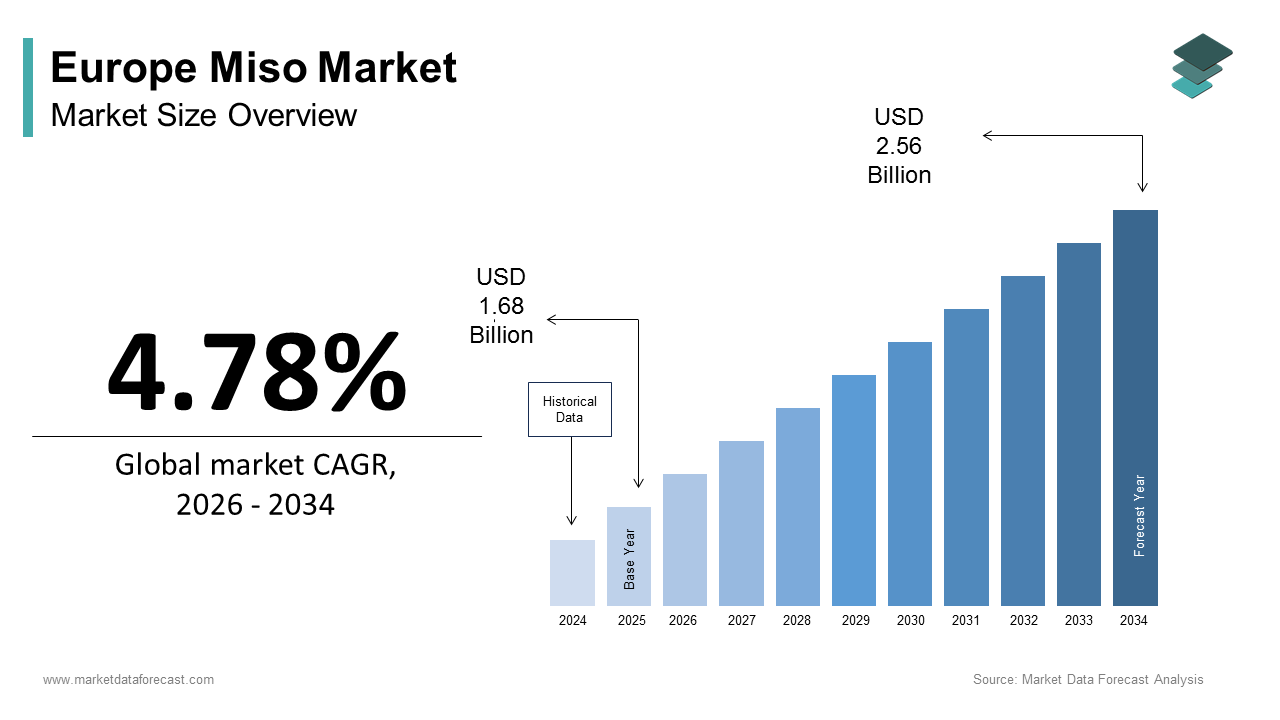
Miso is primarily derived from koji-inoculated soybeans, rice, or barley and used as a seasoning, soup base, and functional ingredient across culinary, food service, and wellness sectors. In 2025, this niche yet rapidly evolving segment is defined by its intersection with plant-based eating, umami-driven gastronomy, and gut health awareness. Unlike self-sufficient agricultural markets, Europe relies almost entirely on imports from Japan, Korea, and increasingly artisanal producers in France and the Netherlands, as traditional miso fermentation requires specific climate-controlled conditions and expertise. As per Eurostat, the European Union imports miso, with Germany, the UK, and France serving as primary entry points. The European Food Safety Authority recognizes fermented soy products as safe for consumption and highlights their nutritional value. According to the European Commission, all miso must comply with labeling requirements for allergens such as soy and gluten, as well as regulations on maximum levels of fermentation byproducts. This regulatory and cultural framework positions miso not merely as an ethnic condiment but as a bridge between Asian culinary tradition and Europe’s growing demand for natural, functional, and flavor-enhancing ingredients.
MARKET DRIVERS
Rising Popularity of Umami and Fermented Foods in European Gastronomy
European chefs and consumers are increasingly embracing umami-rich and fermented ingredients as tools for depth, complexity, and natural flavor enhancement, which is driving demand for miso beyond Japanese cuisine and is driving the miso market growth in Europe. As per the European Flavour Association, umami has been one of the fastest-growing taste profiles in new product launches, appearing in a wide range of items from plant-based broths to artisanal cheeses. Michelin-starred restaurants in Paris, Copenhagen, and Barcelona now use white miso to enrich vegetable sauces, glaze root vegetables, and balance acidity in vinaigrettes. According to the European Institute for Food and Nutrition, fermented foods like miso are perceived by many health-conscious consumers as beneficial for gut microbiome diversity. Culinary schools across Italy and Spain have integrated miso into modernist curricula, teaching its use in non-traditional applications such as miso caramel and miso-marinated fish. This professional endorsement, combined with media exposure through cooking shows and food blogs, transforms miso from an exotic import into a versatile pantry staple in Europe’s evolving flavor lexicon.
Integration of Miso into Plant-Based and Functional Food Innovation
Miso’s natural glutamates, protein content, and probiotic properties make it a strategic ingredient in Europe’s booming plant-based and functional food sectors, which is further contributing to the European miso market expansion. As per the European Plant-Based Foods Association, sales of savory plant-based products have been growing, with miso increasingly used as a clean-label alternative to yeast extract or monosodium glutamate for umami depth. Companies such as Nestlé and Oatly incorporate miso into ready meals and dairy alternatives to enhance savouriness without artificial additives. In the wellness segment, miso’s live cultures and enzymatic activity align with gut health trends, with new functional food launches featuring miso as a probiotic source. Artisanal producers in the Netherlands and Germany now craft organic, low-sodium miso specifically for European palates, often using locally grown soybeans. Supermarkets like Edeka and Carrefour stock miso in refrigerated sections alongside kimchi and kombucha, which is signalling mainstream acceptance. This functional reframing elevates miso from condiment to nutrient-dense ingredient, positioning it at the forefront of Europe’s clean-label and microbiome-conscious food revolution.
MARKET RESTRAINTS
Stringent EU Regulations on Ethyl Carbamate and Allergen Labeling
The Europe miso market faces significant compliance hurdles due to rigorous food safety standards that restrict naturally occurring fermentation byproducts and mandate clear allergen disclosure. Ethyl carbamate, a compound formed during soy fermentation, is classified as a potential carcinogen by the International Agency for Research on Cancer, prompting the European Commission to set guidance levels for fermented soy products. As per the European Food Safety Authority, some miso consignments have exceeded these thresholds, leading to border rejections and costly reformulations. Additionally, Regulation (EU) No 1169/2011 requires prominent labeling of soy and gluten, necessitating segregated production lines for gluten-free variants. These rules disproportionately impact small, traditional producers who lack resources for advanced testing and facility upgrades. While protective of public health, these regulations fragment supply chains, increase costs, and create barriers to entry for authentic, small-batch miso, forcing European importers to prioritize large, certified suppliers over artisanal diversity.
Limited Consumer Awareness and Perceived Complexity of Use
Despite growing culinary interest, the Europe miso market contends with widespread consumer unfamiliarity and hesitation regarding preparation, storage, and flavor profiles, which is further hampering the growth of the European miso market. As per a Kantar survey, many Europeans are unable to correctly identify miso or describe its use, with some confusing it with soy sauce or paste. Retail placement exacerbates the issue, as miso is often buried in ethnic aisles or refrigerated sections without usage guidance, limiting impulse purchases. Even among health-conscious shoppers, misconceptions persist about high sodium content. Cooking shows and recipe blogs help, but inconsistent messaging creates confusion, as white miso’s sweetness versus red miso’s pungency is rarely explained at the point of sale. Without accessible education on types, storage, and simple applications like dressings or marinades, miso risks remaining a niche ingredient rather than achieving mainstream adoption, constraining its path to household pantry status.
MARKET OPPORTUNITIES
Expansion of Local Artisanal Miso Production in Europe
The emergence of local and small-scale producers crafting regionally adapted miso using European-grown soybeans and heritage grains is a big opportunity in the Europe miso market. Driven by demand for shorter supply chains and terroir-driven fermentation, artisanal makers in France, the Netherlands, and Germany are developing miso with lower salt content, unique substrates like spelt or lentils, and shorter aging periods suited to Western palates. As per the European Fermentation Guild, the number of registered miso producers in the EU has been increasing. These producers collaborate with local farmers to source non-GMO soybeans, which enhances traceability and sustainability. French brand Miso de France, for example, uses Burgundy-grown soy and ages miso in oak barrels, creating a product with distinct regional character. By localizing production, these artisans reduce import dependency, ensure freshness, and foster cultural resonance, transforming miso from an imported curiosity into a European-crafted functional food aligned with the continent’s slow food and circular economy values.
Adoption of Miso in Premium Ready Meals and Food Service Menus
The integration of miso into premium convenience foods and restaurant offerings presents a high growth opportunity for the Europe miso market. As per the European Ready Meals Association, sales of gourmet chilled soups and broths featuring miso have been growing, particularly in Germany and the UK. Brands now include miso broth bowls in their subscription boxes, offering restaurant-quality meals with minimal preparation. In food service, miso has moved beyond sushi bars as Scandinavian seafood restaurants use it in cod glazes, Italian chefs fold it into risotto, and vegan cafés serve miso-tahini dressings. The rise of “better for you” fast casual concepts further amplifies usage, with chains featuring miso-based bowls as core menu items. These applications provide consistent, approachable introductions to miso’s flavor, building familiarity and reducing intimidation. As convenience and wellness converge, miso’s role in premium ready-to-eat formats becomes a critical gateway to broader household adoption.
MARKET CHALLENGES
Dependence on Japanese Imports and Supply Chain Fragility
Europe’s miso market remains critically exposed to logistical and geopolitical risks tied to its heavy reliance on Japanese imports. Traditional Japanese miso, particularly artisanal varieties, is produced in small batches using time-honored methods that resist industrial scaling. As per the Japan External Trade Organization, export volumes fluctuate due to domestic demand spikes, weather disruptions, and shipping bottlenecks. Port congestion has previously delayed shipments to Europe, triggering stockouts in specialty stores. Currency volatility further impacts pricing, complicating budgeting for importers. Unlike soy sauce, miso lacks diversified global production, and alternatives such as Korean doenjang differ in flavor and texture, limiting substitution. This geographic concentration creates systemic vulnerability, undermining supply reliability for retailers, chefs, and wellness brands that depend on consistent access to authentic and high-quality miso.
Lack of Standardized Quality and Flavor Classification in the EU
The absence of standardized terminology and quality benchmarks that lead to consumer confusion and inconsistent culinary outcomes is further challenging the expansion of the Europe miso market. Unlike Japan, where miso is classified by grain base, color, and aging duration, the EU lacks regulatory or industry-wide definitions. As per the European Food Information Council, many consumers report difficulty distinguishing between miso types when shopping, often resulting in mismatched expectations. This ambiguity also affects food service, as chefs may receive batches with varying salt levels or fermentation intensity, compromising recipe consistency. Without harmonized labeling guidelines or protected terms, the market risks commoditization and quality dilution, eroding trust in miso as a premium, authentic ingredient. Establishing EU-specific classification standards would enhance transparency, support artisanal producers, and empower informed consumer choice.
REPORT COVERAGE
| REPORT METRIC | DETAILS |
| Market Size Available | 2025 to 2034 |
| Base Year | 2025 |
| Forecast Period | 2026 to 2034 |
| CAGR | 4.78% |
| Segments Covered | By Product, And Region |
| Various Analyses Covered | Global, Regional & Country Level Analysis; Segment-Level Analysis; DROC, PESTLE Analysis; Porter’s Five Forces Analysis; Competitive Landscape; Analyst Overview of Investment Opportunities |
| Regions Covered | UK, France, Spain, Germany, Italy, Russia, Sweden, Denmark, Switzerland, Netherlands, Turkey, and the Czech Republic |
| Market Leaders Profiled | Marukome Co., Ltd., Hikari Miso Co., Ltd., Miyasaka Jozo Co., Ltd., Hanamaruki Foods Inc., Clearspring Ltd., Eden Foods Inc., Organic Miso Company, South River Miso Company, Lima Food, Muso Co., Ltd. |
SEGMENTAL ANALYSIS
By Product Insights
The white miso segment led the market in 2025 by holding 51.6% of the regional market share. The leading position of white miso segment in the European market is driven by its mild, slightly sweet flavor profile and versatility in Western culinary applications, making it the most accessible entry point for European consumers unfamiliar with fermented soy pastes. As per the European Fermentation Guild, white miso is preferred by a majority of first-time miso buyers due to its approachable taste. It is widely used in salad dressings, light soups, marinades for fish and vegetables, and even dessert applications like miso caramel, aligning with Europe’s preference for subtle umami over pungency. Major retailers in France and Germany stock white miso prominently in refrigerated sections alongside plant-based products, often featuring usage instructions on packaging. Culinary schools across Italy and the Netherlands include white miso in foundational courses on global flavors, reinforcing its role as a gateway ingredient. This combination of sensory accessibility, functional adaptability, and strategic retail placement ensures white miso remains the cornerstone of miso adoption in Europe.
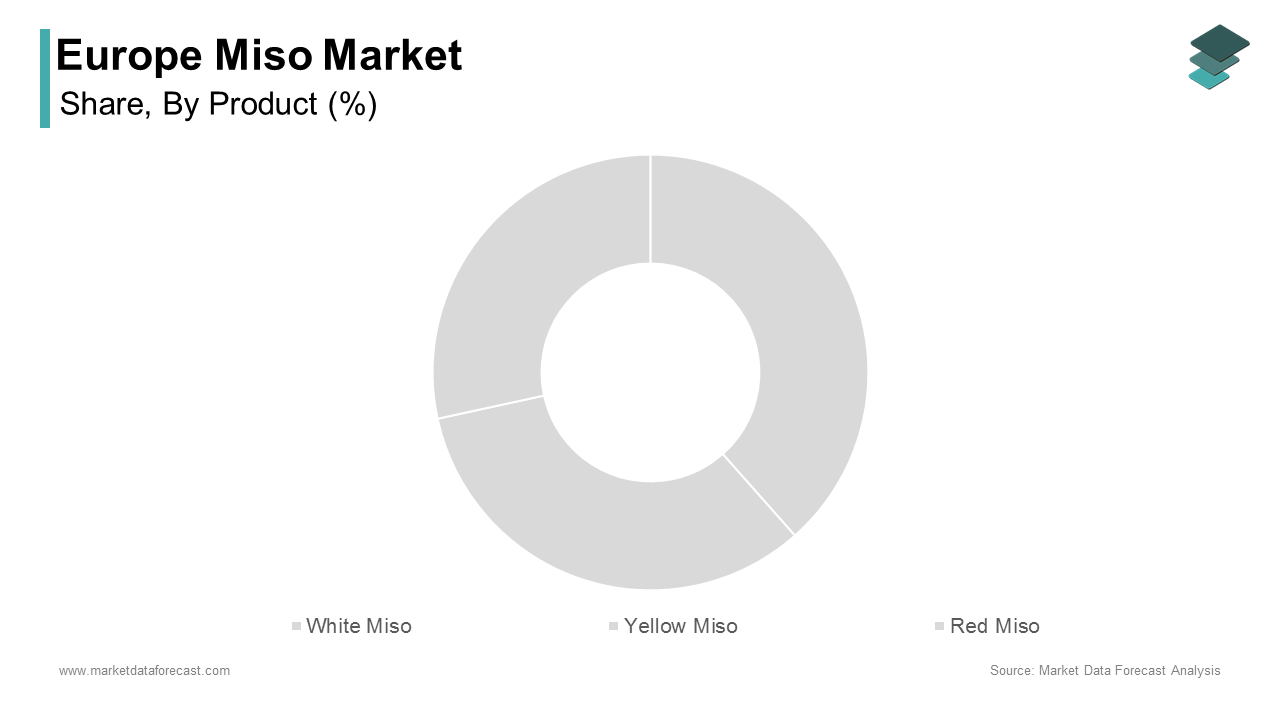
The red miso segment is estimated to witness the fastest CAGR of 13.2% over the forecast period. The growing demand among professional chefs and advanced home cooks seeking deeper, more complex umami notes for robust dishes is propelling the expansion of the ed miso segment in the European market. Unlike white miso, red miso undergoes prolonged fermentation with a higher soybean-to-koji ratio, resulting in a bold, savory, and slightly salty profile ideal for hearty stews, braised meats, and rich broths. As per the European Culinary Association, many Michelin-listed restaurants in Paris, Copenhagen, and Berlin now incorporate red miso into signature dishes such as miso-glazed lamb or mushroom dashi. The rise of fermentation-focused gastronomy has elevated red miso’s status as a craft ingredient, with sommeliers even pairing it with natural wines. Artisanal producers in the Netherlands and Germany have begun crafting European-style red miso using local soybeans and extended aging, catering to this premium segment. As European palates evolve beyond mild flavors and embrace complexity, red miso transitions from niche specialty to essential tool in the modern chef’s pantry.
REGIONAL ANALYSIS
United Kingdom Miso Market Analysis
The United Kingdom held a major share of 23.6% of the regional market in 2025. The dominance of the UK in the European market is attributed to its cosmopolitan food culture and strong uptake of Asian-inspired cuisine. The country’s market status is defined by high urban density, diverse demographics, and a thriving fast casual dining scene that embraces umami-rich ingredients. As per the UK Food and Drink Federation, miso imports have been increasing, with London accounting for a significant portion of national consumption. Chains like Itsu and Wasabi feature miso soup and miso-glazed proteins as core menu items, normalizing the ingredient for mainstream audiences. Supermarkets such as Waitrose and Sainsbury’s stock multiple miso varieties in refrigerated sections, often with recipe cards to reduce usage barriers. The rise of plant-based eating further amplifies demand, with miso serving as a key umami booster in vegan broths and sauces. This blend of ethnic diversity, culinary innovation, and retail education ensures the UK remains the continent’s most dynamic and volume-driven miso market.
Germany Miso Market Analysis
Germany captured the second leading share of the European miso market in 2025. The growth of Germany in the European market can be credited to its strong wellness orientation and artisanal food movement. The country’s market status reflects high consumer interest in fermented foods for gut health, supported by scientific literacy and organic consumption trends. As per the German Nutrition Society, health-conscious Germans actively seek probiotic-rich foods, positioning miso as a functional staple. Cities like Berlin and Munich host local miso producers who craft small-batch, organic variants using European-grown soybeans and heritage grains. Retailers such as Alnatura and Denn’s Biomarkt dedicate prominent shelf space to both imported and domestic miso, emphasizing transparency and low sodium content. The government’s National Strategy for Bioeconomy further supports local fermentation initiatives. This fusion of preventive health culture, craft production, and regulatory alignment makes Germany a leader in Europe’s premium and sustainable miso segment.
France Miso Market Analysis
France is estimated to command a promising share of the European miso market during the forecast period. The integration of miso into haute cuisine and gourmet retail, and traditional French culinary precision with openness to global umami sources are driving the French miso market growth. As per FranceAgriMer, miso imports have been rising, driven by demand from Michelin-starred chefs who use white miso to enhance vegetable consommés and red miso to deepen sauce reductions. Parisian epiceries and specialty stores offer curated selections of Japanese and French-made miso, often paired with tasting notes and pairing suggestions. The rise of umami as a recognized fifth taste in French culinary academies has legitimized miso’s role in professional kitchens. Additionally, organic and low-salt versions are gaining traction in wellness circles in Lyon and Bordeaux. This balance of gastronomic prestige, sensory education, and emerging health awareness sustains France’s influential position in Europe’s premium miso landscape.
Netherlands Miso Market Analysis
The Netherlands is expected to witness a healthy CAGR in the European miso market over the forecast period, owing to its pioneering role in local miso production and sustainability-focused consumption and the popularity of Amsterdam and Utrecht for artisanal fermenterwho s produce miso using Dutch-grown soybeans and circular economy principles. As per Statistics Netherlands, domestic miso production has been increasing, reducing reliance on imports. Consumers prioritize short supply chains and eco labeling, with Wageningen University noting that local origin is a key purchase factor for Dutch miso buyers. Zero-waste stores like Marqt offer package-free miso refills, while supermarkets such as Albert Heijn feature both Japanese and Dutch brands side by side. The government’s Protein Transition Program actively supports plant-based fermentation, including miso, as a sustainable protein source. This combination of local innovation, environmental consciousness, and policy support positions the Netherlands as a model for Europe’s future micro ecosystem.
Italy Miso Market Analysis
Italy is predicted to hold a notable share of the European miso market during the forecast period, owing to its evolving culinary landscape and growing interest in non-traditional umami sources and a shift from strict adherence to Mediterranean flavors toward experimental fusion, particularly in northern urban centers. As per ISMEA, Italy’s agricultural economics institute, miso imports have been rising, with Milan and Turin leading adoption. Chefs use white miso to enrich risotto and red miso to add depth to tomato-based sauces, blending Japanese fermentation with Italian technique. Specialty stores like Eataly now stock miso alongside balsamic vinegar and aged cheeses, which signals its elevation to gourmet status. The rise of plant-based dining in Rome and Florence further fuels demand for miso as a natural flavor enhancer in vegan dishes. Though historically peripheral, Italy’s creative reinterpretation of miso within its rich culinary tradition positions it as a high-potential growth market in Southern Europe.
COMPETITION OVERVIEW
Competition in the Europe miso market is characterized by a dual dynamic: established Japanese brands compete on authenticity and consistency, while European artisanal producers differentiate through local sourcing, sustainability, and culinary adaptation. Unlike mass market condiments, success hinges on education—bridging the gap between unfamiliarity and daily use through clear labeling, usage guidance, and chef endorsements. Retailers play a pivotal role, with placement in refrigerated wellness or ethnic aisles significantly influencing trial rates. Regulatory pressures around sodium, ethyl carbamate, and allergens create barriers that favor well-capitalized players with robust quality control. The market remains fragmented but is consolidating around two poles: accessible, health-optimized mainstream products and premium, terroir-driven craft miso. Ultimately, the most resilient players harmonize Japanese tradition with European values of transparency, locality, and functional nutrition, transforming miso from an exotic import into a trusted, everyday ingredient in Europe’s evolving plant-based and umami-rich culinary narrative.
KEY MARKET PLAYERS
A Few Major Players of The Europe Miso Market Include
- Marukome Co., Ltd
- Hikari Miso Co., Ltd
- Miyasaka Jozo Co., Ltd
- Hanamaruki Foods Inc
- Clearspring Ltd
- Eden Foods Inc
- Organic Miso Company
- South River Miso Company
- Lima Food
- Muso Co., Ltd
Top Strategies Used by the Key Market Participants
Key players in the Europe miso market invest in local production using European-grown soybeans to shorten supply chains and appeal to sustainability-conscious consumers. They reformulate products to reduce sodium and ensure gluten-free options to comply with EU health and allergen regulations. Companies prioritize transparent packaging with QR codes that display fermentation duration, ingredient origins, and usage suggestions to educate consumers. Strategic partnerships with retailers and chefs enhance visibility through in-store demonstrations and menu integration. Additionally, firms develop ready-to-use formats and subscription boxes to lower usage barriers and foster habitual consumption among new adopters in a niche but growing market.
Leading Players in the Market
- Miso Master B V is a Netherlands-based pioneer in European miso production, crafting organic, small-batch miso using locally grown soybeans and traditional Japanese fermentation techniques. The company supplies retailers, restaurants, and food manufacturers across Germany, France, and the Benelux region with white, red, and specialty grain-based miso varieties. Miso Master contributes to global fermentation innovation by adapting koji cultivation to European climates and promoting circular agriculture through partnerships with regional soybean farmers. In recent years, it strengthened its market position by launching low-sodium and gluten-free miso lines compliant with EU allergen regulations. It also introduced compostable packaging and QR code traceability, showing fermentation duration and ingredient origins. These initiatives position Miso Master as a leader in sustainable, transparent, and locally rooted miso production in Europe.
- Marukome Co Ltd, a Japanese heritage brand with over 130 years of history, maintains a significant presence in the Europe miso market through its imported ready-to-use miso soup sachets and paste varieties distributed across the UK, Germany, and France. The company leverages its global expertise in koji fermentation to offer consistent, high-quality products that meet European food safety standards. Marukome has strengthened its European footprint by reformulating its pastes to reduce sodium content by 25 percent while preserving umami depth, aligning with EU health guidelines. It also partnered with major retailers like Carrefour and Tesco to create in-store educational displays on miso usage in Western cooking. These actions demonstrate Marukome’s commitment to accessibility, health consciousness, and cultural bridging in a rapidly evolving market.
- Kioko SAS is a French specialty importer and distributor focused exclusively on premium Japanese fermented foods, with miso as its flagship category. Based in Paris, the company curates artisanal miso from small Japanese producers and supplies high-end grocers, Michelin-starred restaurants, and online platforms across France, Belgium, and Switzerland. Kioko contributes to market education by publishing bilingual brewing guides and hosting chef workshops on miso applications beyond soup. Recently, it launched a “Miso Discovery Box” subscription service featuring seasonal varieties with tasting notes and recipe cards. It also achieved full compliance with EU ethyl carbamate limits through pre-shipment testing and cold chain logistics. By emphasizing authenticity, craftsmanship, and culinary versatility, Kioko elevates miso from commodity to curated cultural experience in Europe’s gourmet landscape.
MARKET SEGMENTATION
This research report on the Europe miso market has been segmented and sub-segmented based on product & region.
By Product
- White Miso
- Yellow Miso
- Red Miso
By Region
- UK
- France
- Spain
- Germany
- Italy
- Russia
- Sweden
- Denmark
- Switzerland
- Netherlands
- Turkey
- Czech Republic
- Rest of Europe