- Product Description Description
- Table of Contents TOC
- List of Table & Figure LOT
- Get Free Sample PDF Sample PDF
Market Size, 2025
$2.59 BnMarket Estimate, 2026
$2.74 BnMarket Forecast, 2034
$4.25 BnCAGR, 2026–2034
5.66%Europe Mouthwash Market Report Summary
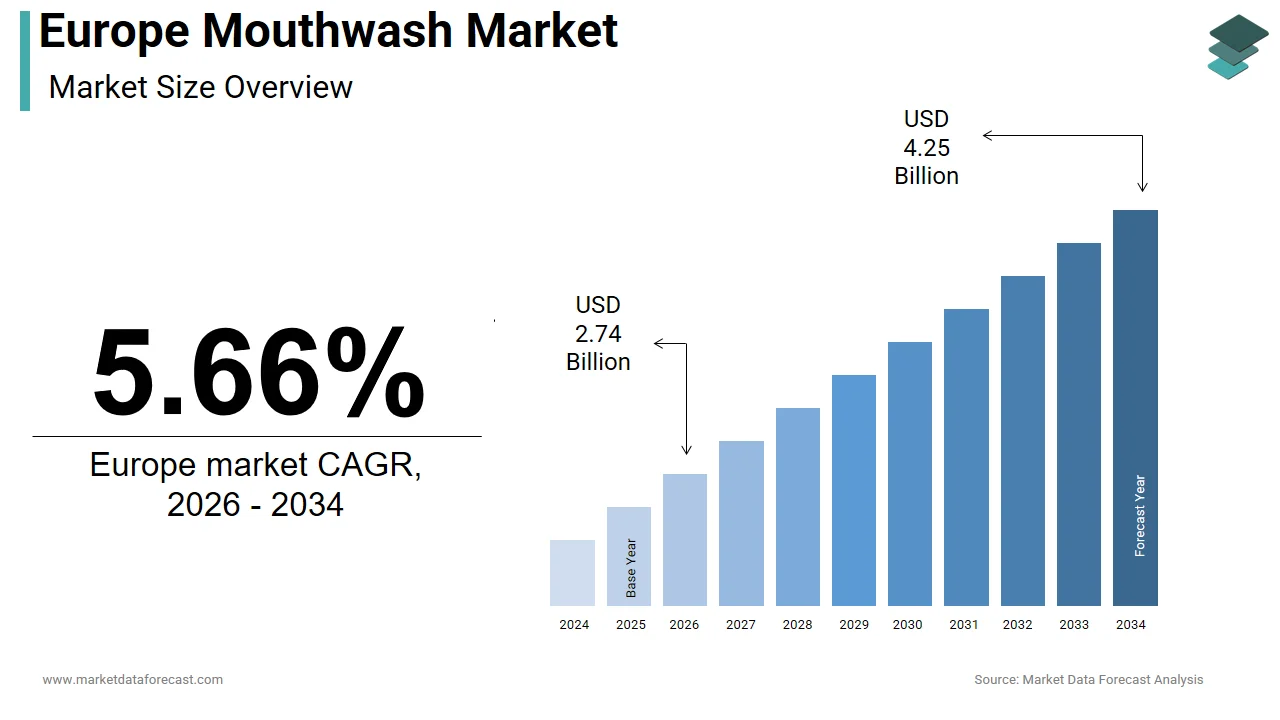
The Europe mouthwash market was valued at USD 2.59 billion in 2025, is anticipated to reach USD 2.74 billion in 2026, and is projected to reach USD 4.25 billion by 2034, growing at a CAGR of 5.66% from 2026 to 2034. Market growth is driven by increasing awareness of oral hygiene, rising prevalence of dental disorders, and growing adoption of preventive healthcare practices. Mouthwash plays a crucial role in maintaining oral health by reducing plaque, preventing gum disease, and controlling bad breath. Additionally, increasing consumer demand for therapeutic oral care products, expansion of retail distribution channels, and growing influence of dental health awareness campaigns are supporting steady market growth across Europe.
Key Market Trends
- Rising demand for therapeutic and medicated oral care products.
- Increasing awareness of preventive dental hygiene and oral health maintenance.
- Growing adoption of daily oral care routines among consumers.
- Expansion of retail pharmacies, supermarkets, and e-commerce distribution channels.
- Increasing innovation in natural, alcohol-free, and specialized mouthwash formulations.
Segmental Insights
- Based on product type, the therapeutic mouthwash segment dominated the Europe mouthwash market in 2025, driven by increasing demand for products that offer clinical benefits such as antibacterial protection, gum disease prevention, and plaque control.
- Based on end user, the household segment held the largest share during the forecast period, supported by widespread consumer adoption of mouthwash as a regular oral hygiene product and increasing awareness of preventive oral care practices.
Regional Insights
The Europe mouthwash market is experiencing steady growth across major countries, supported by rising oral healthcare awareness, strong dental care infrastructure, and growing consumer demand for preventive oral care products.
- Germany led the market by capturing 23.6% share in 2025, driven by high consumer awareness, strong healthcare infrastructure, and widespread adoption of premium oral care products.
- The United Kingdom held the second-largest share, supported by strong retail availability, growing dental hygiene awareness, and increasing adoption of therapeutic mouthwash products.
- France is expected to register a promising CAGR during the forecast period, driven by increasing oral health awareness, expanding preventive dental care initiatives, and growing demand for specialized oral hygiene products.
Competitive Landscape
The Europe mouthwash market is highly competitive, with global consumer healthcare companies and oral care product manufacturers focusing on product innovation, brand expansion, and development of specialized formulations. Companies are investing in alcohol-free, herbal, and therapeutic mouthwash solutions to meet evolving consumer preferences. Strategic marketing, partnerships with dental professionals, and expansion of retail and online distribution channels are key competitive strategies.
Leading companies operating in the Europe mouthwash market include Colgate-Palmolive, Unilever, Procter & Gamble, Johnson & Johnson, GlaxoSmithKline, Reckitt Benckiser, Sunstar Group, and Church & Dwight.
Europe Mouthwash Market Size
The size of the Europe mouthwash market was valued at USD 2.59 billion in 2025. This market is expected to grow at a CAGR of 5.66% from 2026 to 2034 and be worth USD 4.25 billion by 2034 from USD 2.74 billion in 2026.
Mouthwash comprises a diverse range of liquid oral hygiene products designed to complement brushing and flossing by reducing plaque, preventing gingivitis, freshening breath, and delivering therapeutic actives such as fluoride or antimicrobials. These formulations are categorized into cosmetic mouthwashes for temporary breath freshening and therapeutic variants regulated as medical devices or biocides under EU frameworks. The market reflects evolving consumer awareness of oral-systemic health links and rising demand for preventive dental care outside clinical settings. Europe’s regulatory environment, governed by the Biocidal Products Regulation (BPR) and Medical Devices Regulation (MDR), ensures stringent safety and efficacy standards, particularly for products containing chlorhexidine, cetylpyridinium chloride, or essential oils. According to the European Federation of Periodontology, adults in the EU suffer from periodontal disease, which creates a strong public health rationale for daily adjunctive use of antiseptic mouth rinses. This clinical need, combined with cultural emphasis on personal grooming and fresh breath etiquette, sustains consistent demand across retail, pharmacy, and professional dental channels.
MARKET DRIVERS
Rising Awareness of Oral-Systemic Health Connections
The growing scientific and public recognition of the link between oral health and systemic conditions such as cardiovascular disease, diabetes, and respiratory infections is primarily driving the growth of the Europe mouthwash market. According to the European Federation of Periodontology, campaigns have promoted awareness that chronic periodontitis increases the risk of heart disease. As per Eurobarometer, Europeans increasingly consider mouthwash an essential part of daily hygiene. National dental associations in Germany, France, and Sweden routinely recommend therapeutic mouthwashes as adjuncts to mechanical cleaning for high-risk patients.
Strong Cultural Emphasis on Personal Grooming and Social Etiquette
The Europe mouthwash market is significantly propelled by deeply ingrained cultural norms around personal presentation and social acceptability, where fresh breath is considered a non-negotiable aspect of daily etiquette. In professional and social settings across Western and Northern Europe, bad breath is widely perceived as a sign of poor hygiene or unprofessionalism. According to Ipsos, many respondents across EU countries reported using mouthwash regularly, primarily for confidence in interpersonal interactions. This behavioral norm is reinforced by media, advertising, and workplace culture, particularly in service-oriented economies like the UK and the Netherlands, where face-to-face communication is frequent. Retailers capitalize on this by placing mouthwash prominently near checkout counters and grooming aisles, which is positioning it alongside deodorants and skincare.
MARKET RESTRAINTS
Regulatory Restrictions on Key Antimicrobial Ingredients
A major restraint on the Europe mouthwash market stems from the European Union’s stringent regulatory scrutiny of common antimicrobial agents under the Biocidal Products Regulation. Ingredients such as triclosan have been banned entirely, while others like chlorhexidine face restricted use due to environmental and resistance concerns. As per the European Chemicals Agency, mouthwash formulations have been reformulated or withdrawn to comply with updated BPR guidelines limiting biocidal concentrations. This forces manufacturers to either reduce efficacy, increase costs by sourcing approved alternatives, or reposition products as cosmetic rather than therapeutic. The regulatory uncertainty discourages innovation in new antimicrobial systems and creates formulation challenges in maintaining sensory appeal without alcohol or synthetic preservatives.
Consumer Concerns Over Alcohol Content and Harsh Formulations
Persistent consumer apprehension regarding alcohol-based mouthwashes acts as a significant restraint on market growth, particularly among younger and health-conscious demographics. Many traditional therapeutic rinses contain ethanol, which users report causes burning sensations, dry mouth, and mucosal irritation. According to the European Journal of Dentistry, regular mouthwash users in Spain and Italy expressed a preference for alcohol free alternatives, citing discomfort and fear of long-term tissue damage. Although scientific consensus does not support a causal link between alcohol containing mouthwash and oral cancer, public perception remains negative, amplified by social media and wellness influencers. This sentiment pressures brands to reformulate, yet alcohol free versions often struggle with flavor stability and antimicrobial potency. The resulting trade-off between gentleness and efficacy limits adoption and fragments the market.
MARKET OPPORTUNITIES
Expansion of Natural and Sensitive Formula Segments
A significant opportunity for the Europe mouthwash market lies in the rapid growth of natural, organic, and sensitive formula variants that align with clean label and wellness trends. Consumers increasingly seek products free from artificial colors, sulfates, parabens, and synthetic antimicrobials, favoring plant-derived alternatives like aloe vera, tea tree oil, and xylitol. According to the European Natural Cosmetics Association, sales of certified natural oral care products have grown, outpacing the overall market. Brands like Weleda, Logona, and Marvis have capitalized on this by offering alcohol free, vegan, and eco-packaged rinses with transparent ingredient sourcing. Regulatory bodies such as COSMOS and Ecocert provide trusted certification, enhancing credibility. This segment appeals to environmentally conscious millennials and Gen Z consumers who prioritize sustainability and holistic health, enabling premium pricing and strong brand loyalty.
Integration with Professional Dental Care and Preventive Protocols
The Europe mouthwash market holds untapped potential through deeper integration into professional dental care pathways and national preventive health programs. Dentists and hygienists are increasingly prescribing specific therapeutic mouthwashes as part of post-operative care, orthodontic treatment, and periodontal maintenance. In Sweden and the Netherlands, public dental services include mouthwash recommendations in standardized preventive protocols for adolescents and elderly patients. According to the European Organisation for Caries Research, supervised use of fluoride or chlorhexidine rinses in school programs has reduced caries incidence in pilot regions. Expanding such initiatives through national health systems could institutionalize mouthwash as a public health tool. Additionally, partnerships between dental associations and manufacturers for co-branded educational campaigns can enhance compliance and trust.
MARKET CHALLENGES
Intense Competition from Private Label and Price Sensitivity
The aggressive expansion of private label offerings from major retailers like Aldi, Lidl, and Carrefour that erode brand loyalty through price parity and perceived quality equivalence is one of the significant challenges to the growth of the Europe mouthwash market. According to Euromonitor, private label has captured a significant share of mouthwash sales in Germany and France. This pressurees multinational brands to either discount or justify premium pricing through innovation. However, formulation complexity and regulatory compliance limit cost reduction, squeezing margins. Simultaneously, economic headwinds, including food inflation and energy costs, have heightened consumer price sensitivity, leading households to trade down to economy options. This dynamic stifles investment in R&D and marketing, particularly for mid-tier brands, and risks commoditizing the category.
Fragmented Consumer Preferences Across European Regions
The Europe mouthwash market faces a structural challenge due to pronounced regional differences in oral care habits, flavor preferences, and regulatory interpretations. Southern Europeans favor strong mint and medicinal tastes, while Nordic consumers prefer mild, herbal notes. Germans prioritize clinical efficacy and ingredient transparency, whereas Southern Europeans emphasize freshness and social confidence. Furthermore, national competent authorities interpret EU biocide regulations differently. This fragmentation forces manufacturers to maintain multiple formulations, packaging designs, and marketing strategies across markets, increasing operational complexity and costs. Unlike unified markets such as the US, Europe’s cultural and regulatory diversity prevents economies of scale, making pan-European launches risky and inefficient.
REPORT COVERAGE
| REPORT METRIC | DETAILS |
| Market Size Available | 2025 to 2034 |
| Base Year | 2025 |
| Forecast Period | 2026 to 2034 |
| Segments Covered | By Product Type, End-user, and Country. |
| Various Analyses Covered | Global, Regional, and Country-Level Analysis, Segment-Level Analysis, Drivers, Restraints, Opportunities, Challenges; PESTLE Analysis; Porter’s Five Forces Analysis, Competitive Landscape, Analyst Overview of Investment Opportunities |
| Countries Covered | UK, France, Spain, Germany, Italy, Russia, Sweden, Denmark, Switzerland, Netherlands, Turkey, Czech Republic, and the Rest of Europe. |
| Market Leaders Profiled | Church & Dwight Co. Inc., Colgate-Palmolive Company, Royal Philips N.V., Henkel AG & Co. KGaA, Kao Corporation, Johnson & Johnson, GlaxoSmithKline Plc., Reckitt Benckiser Group Plc., Amway, Caldwell Consumer Health, Dr. Harold Katz, Sunstar Group, Dentyl Active, Procter & Gamble Company, 3M Company, Pierre Fabre Oral Care, Unilever Plc., Hawley & Hazel, Jason Natural Care, Lotus Brands Inc., and Rowpar Pharmaceuticals Inc. |
SEGMENTAL ANALYSIS
By Product Type Insights
The therapeutic mouthwash segment accounted for the major share of the Europe mouthwash market in 2025. The dominance of the therapeutic mouthwash segment in the European market is driven by its clinically validated role in preventing and managing oral diseases such as gingivitis, plaque, and dental caries. Unlike cosmetic variants that offer only temporary breath freshening, therapeutic formulations contain active ingredients like chlorhexidine, cetylpyridinium chloride, or essential oils approved under the EU Biocidal Products Regulation for antimicrobial efficacy. This regulatory recognition enhances consumer trust and professional endorsement. According to the European Federation of Periodontology, dentists in Germany, France, and Sweden routinely recommend therapeutic mouthwashes as part of daily oral hygiene regimens, particularly for patients with orthodontic appliances or periodontal risk. Public health initiatives further amplify demand, as per the Public Health Agency of Sweden, national caries prevention programs include fluoride mouth rinses for schoolchildren. This integration into clinical practice and preventive care ensures consistent, non-discretionary demand that transcends aesthetic preferences.
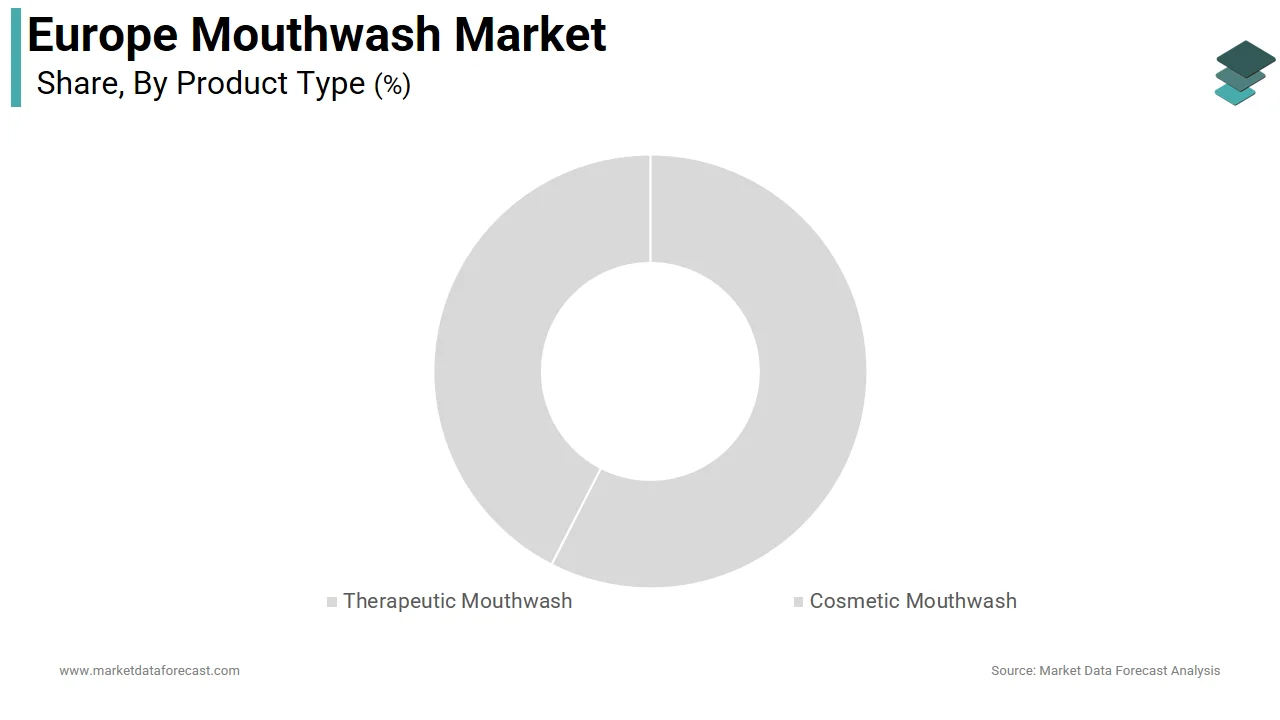
The cosmetic mouthwash segment is estimated to record a CAGR of 9.14% over the forecast period. The rising consumer interest in sensory experience, natural ingredients, and social grooming rituals among younger demographics is propelling the cosmetic mouthwash segment in the regional market. Free from regulated biocides, these formulations prioritize mildness, flavor innovation, and clean label attributes such as alcohol free, vegan, and recyclable packaging. As per Euromonitor, younger European consumers prefer cosmetic mouthwashes for daily use due to perceived gentleness and alignment with wellness lifestyles. Brands like Marvis and Signal Nature Elements have capitalized on this trend with premium, aesthetically designed bottles sold in pharmacies and lifestyle stores. The segment also benefits from e-commerce growth, where visual appeal and ingredient transparency drive online purchases.
By End User Insights
The household segment dominated the Europe mouthwash market by capturing the largest share of the European mouthwash market during the forecast period. Factors such as the vast majority of consumption through daily personal and family use and cultural norms that position oral hygiene as a fundamental aspect of personal grooming and social etiquette are contributing to the dominance of the household segment in the European market. In countries like the UK, Germany, and Italy, mouthwash is commonly stored alongside toothbrushes and used morning and night as part of established routines. According to Eurostat, households across Europe purchase mouthwash regularly, with average annual expenditure per household remaining steady. Supermarkets and pharmacies ensure wide accessibility, while marketing campaigns emphasize freshness, confidence, and family health. The habitual nature of use, often initiated in adolescence and maintained throughout life, creates a stable, recurring demand that is resilient to economic fluctuations.
The hospital and dental clinics segment is estimated to register a CAGR of 10.5% over the forecast period. The growing integration of therapeutic mouthwashes into clinical protocols for infection control, post-operative care, and chronic disease management is majorly propelling the growth of the hospital and dental clinics segment in the regional market. Dentists routinely prescribe chlorhexidine rinses after scaling, implant placement, or periodontal surgery to reduce bacterial load and support healing. Hospitals, particularly in intensive care units, use antiseptic mouthwashes to prevent ventilator-associated pneumonia, a practice endorsed by the European Centre for Disease Prevention and Control. As per the European Journal of Clinical Microbiology, multicenter studies have reported reductions in nosocomial respiratory infections in ICUs using standardized oral care bundles including therapeutic mouthwash. National health systems in the Netherlands and Denmark now reimburse prescribed mouthwashes for high-risk patients, institutionalizing their use. This clinical validation transforms mouthwash from a retail commodity into a critical component of evidence-based healthcare delivery.
COUNTRY-LEVEL ANALYSIS
Germany Mouthwash Market Analysis
Germany led the mouthwash market in Europe in 2025 by capturing 23.6% of the regional market share. The growth of Germany in the European market is driven by its strong emphasis on preventive healthcare, scientific consumerism, and robust pharmacy distribution. Germans prioritize efficacy and ingredient transparency, which is driving demand for therapeutic mouthwashes with proven actives like chlorhexidine and amine fluoride. According to the German Dental Association, adults in Germany regularly use mouthwash, often on dentist's recommendation. The country’s dense network of pharmacies serves as the primary channel for premium and medicated variants, while discounters like dm and Rossmann offer private label options. Regulatory compliance is stringent, with the Federal Institute for Drugs and Medical Devices ensuring rigorous product safety. This combination of health consciousness, professional guidance, and structured retail channels establishes Germany as the most mature and scientifically driven market in Europe.
United Kingdom Mouthwash Market Analysis
The United Kingdom had the second largest share of the Europe mouthwash market in 2025. The growth of the UK in the European market is attributed to the high daily usage and strong brand loyalty rooted in social grooming culture. Mouthwash is deeply embedded in British hygiene routines. According to the Oral Health Foundation, adults in the UK frequently use mouthwash as part of daily oral care. Supermarkets dominate distribution, with Tesco and Boots offering extensive ranges from economy to premium. The NHS promotes mouthwash as part of its Brush Smart campaign, particularly for adolescents with braces. Recently, demand has surged for alcohol free and natural variants, driven by wellness trends and influencer marketing. The UK’s departure from the EU has not disrupted supply but has prompted local manufacturers to reformulate to meet retained EU biocide standards.
France Mouthwash Market Analysis
France is expected to exhibit a promising CAGR in the European mouthwash market during the forecast period. The rising preference for premium, sensorially refined products that align with national aesthetics is contributing to the French market growth. French consumers favor elegant packaging, subtle flavors, and formulations that combine efficacy with gentleness. According to Santé Publique France, mouthwash usage has increased in recent years, particularly among urban professionals. Pharmacies are the dominant channel, where brands like Eluday and Parodontax are recommended by pharmacists as health products rather than cosmetics. The French Agency for Food, Environmental and Occupational Health & Safety enforces strict labeling rules, reinforcing trust in therapeutic claims. This fusion of beauty, science, and professional endorsement creates a sophisticated market where mouthwash is viewed as an essential element of daily self-care and social presentation.
Italy Mouthwash Market Analysis
Italy is anticipated to secure a considerable share of the Europe mouthwash market during the forecast period, owing to the high awareness of oral health and strong family hygiene traditions. Mouthwash is commonly used across generations, with parents introducing it to children at an early age. According to ISTAT, Italian households regularly include mouthwash in their shopping baskets. Supermarkets and parapharmacies serve as key distribution points, offering both international brands and local favorites like Gengigel. Italians show a marked preference for strong mint and medicinal tastes, associating intensity with effectiveness. The Italian Society of Oral Hygiene actively promotes mouthwash in school programs, reaching students annually. This early education and familial habituation ensure consistent baseline demand, while rising interest in natural formulations adds growth momentum in urban centers like Milan and Rome.
Spain Mouthwash Market Analysis
Spain is predicted to witness a healthy CAGR in the Europe mouthwash market over the forecast period due to the rapid adoption of therapeutic variants and growing professional endorsement. Historically focused on cosmetic fresheners, the market has shifted toward clinically backed products due to public health campaigns addressing high rates of periodontal disease. According to the Spanish Society of Periodontology, adults in Spain are significantly affected by gum health issues, prompting increased use of antiseptic rinses. Pharmacies are the primary channel where pharmacists actively recommend therapeutic mouthwashes. In 2024, the Ministry of Health included chlorhexidine mouthwash in its national protocol for post-dental surgery care, boosting clinical usage. Urbanization and rising disposable income have also increased demand for premium brands in cities like Madrid and Barcelona. This transition from aesthetic to therapeutic use positions Spain as a high-growth market with significant untapped potential in preventive oral care.
COMPETITIVE LANDSCAPE
The competition in the Europe mouthwash market is intense and multifaceted, shaped by the dual dynamics of therapeutic efficacy and cosmetic appeal. Multinational giants like Colgate and Haleon dominate through extensive distribution, clinical validation, and brand recognition, while regional specialists such as Pierre Fabre thrive in pharmacy channels with high potency, medically oriented products. Private label offerings from retailers like Aldi and Carrefour exert significant pricing pressure, forcing branded players to justify premiums through innovation in ingredients, sustainability, or sensory experience. Regulatory complexity under the EU Biocidal Products Regulation creates high barriers to entry but also limits formulation flexibility, constraining differentiation. Meanwhile, rising consumer interest in natural, alcohol free, and eco-friendly options has opened avenues for agile niche brands. Success in this environment requires balancing scientific credibility with emotional branding, navigating fragmented regional preferences, and aligning with both public health priorities and personal wellness trends across diverse European markets.
KEY MARKET PLAYERS
The leading companies operating in the Europe mouthwash market include:
- Church & Dwight Co. Inc.
- Colgate-Palmolive Company
- Royal Philips N.V.
- Henkel AG & Co. KGaA
- Kao Corporation
- Johnson & Johnson
- GlaxoSmithKline Plc.
- Reckitt Benckiser Group Plc.
- Amway
- Caldwell Consumer Health
- Harold Katz
- Sunstar Group
- Dentyl Active
- Procter & Gamble Company
- 3M Company
- Pierre Fabre Oral Care
- Unilever Plc.
- Hawley & Hazel
- Jason Natural Care
- Lotus Brands Inc.
- Rowpar Pharmaceuticals Inc.
TOP PLAYERS IN THE MARKET
- Colgate-Palmolive is a dominant force in the Europe mouthwash market through its globally recognized Elmex and Meridol brands, which emphasize therapeutic benefits like enamel protection and gum health. The company leverages extensive clinical research and partnerships with European dental associations to reinforce product credibility. To strengthen its position, Colgate has recently reformulated its key mouthwashes to be alcohol free and introduced recyclable packaging across EU markets. It has also launched digital oral care platforms offering personalized rinsing recommendations based on user habits. These initiatives align with European consumer demands for gentler, sustainable, and science backed oral hygiene solutions while reinforcing Colgate’s role as a trusted global leader in preventive dental care.
- Haleon, formerly GSK Consumer Healthcare, maintains a strong presence in Europe with its Sensodyne and Parodontax mouthwash lines, targeting sensitivity and gingivitis, respectively. The company capitalizes on decades of clinical validation and pharmacist endorsements, particularly in pharmacy-dominant markets like Germany and France. Recently, Haleon has invested in natural ingredient innovation, introducing Parodontax variants with herbal extracts and reduced synthetic additives. It has also expanded its professional sampling program, providing dentists with trial kits to drive patient adoption. These strategies enhance brand trust and bridge the gap between medical recommendations and consumer self-care, solidifying Haleon’s influence in both retail and clinical channels across Europe and globally.
- Pierre Fabre Oral Care, a French dermo-cosmetic specialist, holds a distinctive position in the Europe mouthwash market with its Eludril and Arthrodont brands, known for high chlorhexidine concentrations and pharmaceutical-grade formulations. The company excels in the pharmacy channel, where its products are recommended for post-surgical and periodontal care. To reinforce its scientific reputation, Pierre Fabre has partnered with European dental schools to fund research on antimicrobial efficacy and launched eco-designed bottles made from 100% recycled plastic. Its focus on therapeutic precision, regulatory compliance, and sustainability resonates strongly with health-conscious European consumers, enabling it to compete effectively against multinational giants through niche expertise and local credibility.
TOP STRATEGIES USED BY THE KEY MARKET PARTICIPANTS
Key players in the Europe mouthwash market are prioritizing alcohol free and natural formulations to meet growing consumer demand for gentler and cleaner oral care products. They are investing in sustainable packaging innovations, including recyclable and bio-based materials, to comply with EU environmental directives. Companies are strengthening professional endorsement through partnerships with dentists and pharmacists to enhance clinical credibility and drive prescriptions. Strategic expansion of e-commerce and direct-to-consumer channels is being leveraged to reach younger demographics and offer personalized oral care solutions. Additionally, firms are diversifying flavor profiles and sensory experiences to transform mouthwash from a functional necessity into an enjoyable daily ritual aligned with wellness lifestyles.
MARKET SEGMENTATION
This Europe mouthwash market research report is segmented and sub-segmented into the following categories.
By Product Type
- Therapeutic Mouthwash
- Cosmetic Mouthwash
By End-user
- Household
- Hospital and Dental Clinics
By Country
- UK
- France
- Spain
- Germany
- Italy
- Russia
- Sweden
- Denmark
- Switzerland
- Netherlands
- Turkey
- Czech Republic
- Rest of Europe