- Product Description Description
- Table of Contents TOC
- List of Table & Figure LOT
- Get Free Sample PDF Sample PDF
Market Size, 2025
$1.70 BnMarket Estimate, 2026
$1.79 BnMarket Forecast, 2034
$2.71 BnCAGR, 2026–2034
5.30%Europe Musculoskeletal Diseases Market Report Summary
The Europe musculoskeletal diseases market was valued at USD 1.70 billion in 2025, is projected to reach USD 1.79 billion in 2026, and is expected to reach USD 2.71 billion by 2034, exhibiting a CAGR of 5.30% from 2026 to 2034. Growth is driven by a rapidly aging population, rising prevalence of degenerative bone and joint disorders, expansion of biologic therapies, and increasing adoption of digital rehabilitation and minimally invasive treatment pathways across Europe.
Key Market Trends
- Increasing burden of osteoarthritis, osteoporosis, lower back pain, and inflammatory arthritides among aging and overweight demographics.
- Rising preference toward biologic and biosimilar therapies as first-line treatment for progressive inflammatory conditions.
- Strengthening adoption of digital physiotherapy, tele-rheumatology, and remote monitoring platforms to compensate specialist shortages.
- Expanding utilization of regenerative musculoskeletal solutions, PRP, stem cell therapies, BMP-based bone repair, and synthetic graft materials.
- Growing healthcare focus on fracture prevention strategies, early diagnosis of bone loss, and integrated musculoskeletal disease management models.
Segmental Insights
- Based on type, the osteoarthritis segment held the largest share in 2024, supported by rising age-related joint degeneration, strong reliance on pharmacologic and intra-articular interventions, and mounting need for joint preservation and replacement therapies across clinical settings.
- Based on molecule type, small molecules dominated the Europe musculoskeletal diseases market in 2024 owing to long-established usage of NSAIDs and conventional DMARDs, cost-effective generic availability, and broad reimbursement coverage across European health systems.
- Based on treatment, biologics constituted the leading segment in 2024 as monoclonal antibodies and targeted disease-modifying agents increasingly enabled structural protection and superior remission outcomes in rheumatoid arthritis, psoriatic arthritis, and spondyloarthropathies.
Regional Insights
The Europe musculoskeletal diseases market continues to expand across countries with developed healthcare systems, strong clinical networks, and aging populations.
- Germany led the market in 2024 driven by a large elderly base, strong rheumatology networks, broad reimbursement for advanced therapies, and structured musculoskeletal care pathways.
- France ranked second due to centralized guideline implementation, national focus on bone density screening, and widespread surgical infrastructure supporting joint restoration therapies.
- The United Kingdom continues to show strong demand for musculoskeletal treatments due to high disability incidence and rising adoption of early biologic intervention through nationally updated treatment access frameworks.
- Italy is witnessing steady expansion with growing biologic accessibility, increasing elderly orthopedic burden, and advancements in regenerative musculoskeletal research.
- Spain remains a promising market where rising disease prevalence and expanding biosimilar utilization enable cost-efficient treatment penetration.
Competitive Landscape
The market remains competitive with major pharmaceutical companies offering biologics, biosimilars, small molecule therapies, and regenerative solutions. Players increasingly focus on health-system-aligned treatment models, outcomes-based reimbursement, and integrated musculoskeletal programs supporting earlier intervention and continuity of care.
Major Companies Operating in the Europe Musculoskeletal Diseases Market Include, AbGenomics International, AB Sciences, Ablynx, Akron Molecules, Johnson & Johnson, F. Hoffmann-La Roche, Pfizer, Amgen, Eli Lilly, Adheron, Alder BioPharmaceuticals, Bioiberica, Bone Therapeutics, Edding Pharm, Boehringer Ingelheim, Can-Fite BioPharma, Celltrion, Celgene Corp., Novartis, Cellular Biomedicine, ChemoCentryx, Cerapedics, Eupraxia Pharmaceuticals, and GlaxoSmithKline.
Europe Musculoskeletal Diseases Market Size
The size of the Europe musculoskeletal diseases market was valued at USD 1.70 billion in 2025. This market is expected to grow at a CAGR of 5.30% from 2026 to 2034 and be worth USD 2.71 billion by 2034 from USD 1.79 billion in 2026.

Musculoskeletal diseases are a broad spectrum of disorders affecting bones, joints, muscles, ligaments, tendons, and nerves, including osteoarthritis, rheumatoid arthritis, osteoporosis, and low back pain. These conditions are among the leading causes of chronic pain disability and reduced quality of life across Europe. Musculoskeletal disorders contribute significantly to years lived with disability, representing a major portion of all long-term functional impacts. Persistent back or neck pain is commonly reported among a substantial percentage of older adults, with the prevalence of these conditions rising. Millions of individuals live with some form of musculoskeletal impairment that can limit daily activities and workforce participation. These conditions also account for a notable percentage of total hospital bed days in various regions. This immense clinical and societal burden defines the urgency and scope of the Europe Musculoskeletal Diseases Market, which integrates diagnostics, therapeutics, rehabilitation technologies, and digital health solutions aimed at mitigating disease progression and restoring mobility.
MARKET DRIVERS
Accelerated Population Aging Across Europe
The progressive demographic shift toward older age structures is a principal driver of the Europe musculoskeletal diseases market. According to sources, the proportion of individuals aged 65 and above is increasing across Europe. Age-related degeneration of cartilage, bone density, and muscle mass directly elevates the incidence of osteoarthritis, osteoporosis, and sarcopenia. As per research, A significant number of men and women over the age of 50 in Europe are likely to experience bone fractures related to osteoporosis. Moreover, aging populations exhibit higher comorbidity rates, which complicate treatment pathways and increase reliance on long-term musculoskeletal care. Mobility limitations due to joint and spine disorders reduce independent living by several years in elderly Europeans. This demographic reality intensifies demand for early diagnostics, regenerative therapies, and assistive technologies, which creates sustained pressure on health systems to scale musculoskeletal interventions. The structural inevitability of aging thus ensures enduring and expanding clinical need, anchoring the market’s foundational growth trajectory.
Rising Prevalence of Sedentary Lifestyles and Occupational Strain
Contemporary work and lifestyle patterns in the region have boosted the expansion of the Europe musculoskeletal diseases market. These have significantly amplified the incidence of musculoskeletal disorders among both working-age and younger populations. A significant number of workers report experiencing work-related pain in the neck, shoulders, or back. Occupations that involve prolonged sitting, repetitive motions, or manual handling tasks are at a higher potential risk for these issues. Adults tend to spend many hours each day engaging in sedentary behaviors. This sedentary lifestyle may contribute to the weakening of core muscles. Extended periods of inactivity may also accelerate spinal degeneration. This trend is particularly acute among digital sector employees, where screen-based tasks contribute to poor posture and cervical strain. The normalization of remote and hybrid work since 2020 has further exacerbated ergonomic deficiencies in home office setups, as noted by the European Institute of Innovation and Technology. These behavioral and occupational shifts expand the patient pool beyond the elderly, generating demand for preventive ergonomics, workplace rehabilitation, and early intervention services that sustain market activity across multiple demographic segments.
MARKET RESTRAINTS
Fragmented Reimbursement Policies and Cost Containment Measures
Healthcare financing disparities across European countries create significant barriers to consistent access and adoption of advanced musculoskeletal therapies, which in turn restrain the growth of the Europe musculoskeletal diseases market. Healthcare access varies significantly across Europe: Germany and Sweden provide generous coverage for biologics and joint replacements, while Southern and Eastern European nations often face tighter budgets and more limited access to expensive, newer therapies. Patients in several European nations often face significant personal financial contributions for treatments related to bone and muscle conditions, which can impact their ability to access newer, potentially more effective medications. Besides, national health technology assessment bodies increasingly demand real-world evidence of long-term efficacy before granting reimbursement, delaying market entry. Also, the average time from regulatory approval to reimbursement decision for musculoskeletal biologics has increased in Italy. These fiscal constraints not only suppress treatment volumes but also discourage investment in innovative pipeline assets tailored to European subpopulations. The resulting access inequity fragments the market landscape and hampers the scalability of next-generation solutions despite clear clinical need.
Stigma and Underdiagnosis of Chronic Musculoskeletal Conditions
A persistent cultural and clinical tendency to normalize joint pain and mobility limitations as inevitable consequences of aging or overexertion leads to widespread underdiagnosis and delayed intervention across the region. This constrains the expansion of the Musculoskeletal market. Many individuals experiencing initial symptoms of early rheumatoid arthritis tend to associate them with general fatigue or minor injuries, which often leads to delays in consulting a specialist. This delay increases the risk of irreversible joint damage and reduces therapeutic efficacy. In primary care settings, time constraints and limited musculoskeletal training further impede accurate screening. A minority of general practitioners consistently incorporate validated assessment tools for evaluating arthritis during routine patient visits. Moreover, public health campaigns remain underfunded compared to those for cardiovascular or oncological diseases, despite musculoskeletal disorders causing greater long-term disability. The diagnostic inertia not only compromises individual outcomes but also inflates long-term care costs, while simultaneously masking true disease prevalence and constraining market responsiveness to unmet needs.
MARKET OPPORTUNITIES
Integration of Digital Therapeutics and Remote Monitoring Platforms
The rapid adoption of digital health tools offers a potential opportunity for the Europe musculoskeletal diseases market. This provides a pathway to enhance musculoskeletal disease management through personalized and continuous care delivery. Wearable sensors, mobile applications, and tele-rehabilitation platforms now enable real-time monitoring of joint mobility, pain levels, and exercise adherence, facilitating proactive interventions. A growing number of people in Europe use connected devices to help manage ongoing health conditions, especially those affecting muscles and bones. Programs in certain regions have shown that using AI-powered physiotherapy apps may lead to better functional improvements for patients dealing with conditions like knee osteoarthritis, potentially more effectively than standard treatment methods. Furthermore, national health systems are increasingly reimbursing digital therapeutics. These technologies also support value-based care by generating real-world evidence on treatment effectiveness across diverse populations. Digital musculoskeletal (MSK) solutions are a key driver of scalable, sustainable growth in Europe's digital health sector. They bridge the gap between limited specialist access and strong patient engagement.
Expansion of Regenerative Medicine and Personalized Orthobiologics
Advancements in cell-based therapies, tissue engineering, and biomarker-driven treatment selection are opening new prospects for the Europe musculoskeletal diseases market. Autologous therapies such as platelet-rich plasma and mesenchymal stem cell injections are gaining clinical traction for early-stage osteoarthritis and tendon injuries, offering alternatives to surgery and long-term pharmaceutical use. A notable number of advanced therapies aimed at musculoskeletal conditions have recently progressed into clinical development phases. A portion of these therapies has received specific designations intended to facilitate an accelerated evaluation process. In one study, patients who underwent image-guided stem cell therapy for hip osteoarthritis reported a significant reduction in pain within six months, and no serious adverse effects were noted. There is substantial financial support dedicated to fostering cooperative, cross-border research and innovation in the field of musculoskeletal regeneration. Personalization is further enabled by genetic and proteomic profiling, which helps predict disease progression and therapy response. This shift toward biologically active and individualized interventions aligns with Europe’s emphasis on precision medicine and sustainable healthcare, which positions regenerative orthobiologics as a high-potential opportunity to modify disease trajectories rather than merely alleviate symptoms.
MARKET CHALLENGES
Workforce Shortages in Rheumatology and Orthopedic Specialties
A critical deficit in musculoskeletal care specialists across the region impedes timely diagnosis and optimal disease management, particularly in rural and underserved regions, and thereby hampers the growth of the Europe musculoskeletal diseases market. The current ratio of rheumatologists to the general population in the EU falls below suggested levels. Certain member states experience a particularly significant disparity between the number of available specialists and residents needing care. This imbalance contributes to extended wait times for patient consultations in some regions. A majority of EU member states report having an inadequate number of training positions available in related fields like orthopedics and physical medicine. These training shortfalls may lead to future shortages as current practitioners near retirement age. This scarcity forces primary care providers to manage complex cases without specialist support, increasing misdiagnosis and suboptimal treatment. Systemic workforce shortages act as a structural bottleneck, limiting the potential gains from task shifting to physiotherapists and digital triage, thus hindering clinical capacity and market growth for new treatments and diagnostics.
Complexity of Comorbidities and Polypharmacy Management
The high prevalence of comorbid conditions among musculoskeletal patients in the region complicates treatment decisions and elevates risks of adverse drug interactions, which is among the main challenges to the Europe musculoskeletal diseases market. As per sources, Adults experiencing rheumatoid arthritis often manage additional health challenges like cardiovascular issues, diabetes, or depression, highlighting a need for integrated care approaches. This clinical complexity limits the use of potent anti-inflammatory agents due to contraindications. For older adults managing osteoarthritis who have kidney or stomach sensitivities, certain nonsteroidal anti-inflammatory medications are frequently not the preferred treatment option. Many Europeans over the age of 65 with musculoskeletal conditions are managing their health with five or more concurrent medications. These interdependencies demand integrated care models that most fragmented national health systems are ill-equipped to deliver. Consequently, both clinicians and patients often opt for conservative or non-pharmacological approaches, slowing the adoption of newer pharmacotherapies despite their efficacy. This therapeutic caution, driven by legitimate safety concerns, creates a persistent barrier to optimal disease control and market penetration of innovative agents requiring careful comorbidity management.
REPORT COVERAGE
| REPORT METRIC | DETAILS |
| Market Size Available | 2025 to 2034 |
| Base Year | 2025 |
| Forecast Period | 2026 to 2034 |
| Segments Covered | By Type, Type of Molecules, Treatment, and Region. |
| Various Analyses Covered | Global, Regional, and Country-Level Analysis, Segment-Level Analysis, Drivers, Restraints, Opportunities, Challenges; PESTLE Analysis; Porter’s Five Forces Analysis, Competitive Landscape, Analyst Overview of Investment Opportunities |
| Countries Covered | UK, France, Spain, Germany, Italy, Russia, Sweden, Denmark, Switzerland, Netherlands, Turkey, Czech Republic, and the Rest of Europe |
| Market Leaders Profiled | AbGenomics International, AB Sciences, Ablynx, Akron Molecules, Johnson & Johnson, F. Hoffmann-La Roche, Pfizer, Amgen, Eli Lilly, Adheron, Alder BioPharmaceuticals, Bioiberica, Bone Therapeutics, Edding Pharm, Boehringer Ingelheim, Can-Fite BioPharma, Celltrion, Celgene Corp., Novartis, Cellular Biomedicine, ChemoCentryx, Cerapedics, Eupraxia Pharmaceuticals, and GlaxoSmithKline. |
SEGMENTAL ANALYSIS
By Type Insights
The osteoarthritis segment held the largest share of 42.6% of the Europe musculoskeletal diseases market in 2024. The dominance of the osteoarthritis segment is primarily driven by its high prevalence among aging populations and its association with obesity and joint overuse. As per sources, a portion of Europeans aged 65 and above have been diagnosed with osteoarthritis, with knee and hip involvement being most common. The condition’s chronic and progressive nature necessitates long-term management, including pharmacotherapy, physical rehabilitation, and joint replacement, sustaining continuous healthcare utilization. Furthermore, rising body mass indices across Europe exacerbate joint degeneration. National health strategies in countries like Germany and Sweden increasingly emphasize early intervention through exercise referral schemes and weight management programs, which indirectly reinforce diagnostic and therapeutic demand. The sheer scale of affected individuals, combined with limited disease-modifying treatments, ensures osteoarthritis remains the cornerstone of clinical and commercial activity in the European musculoskeletal landscape.
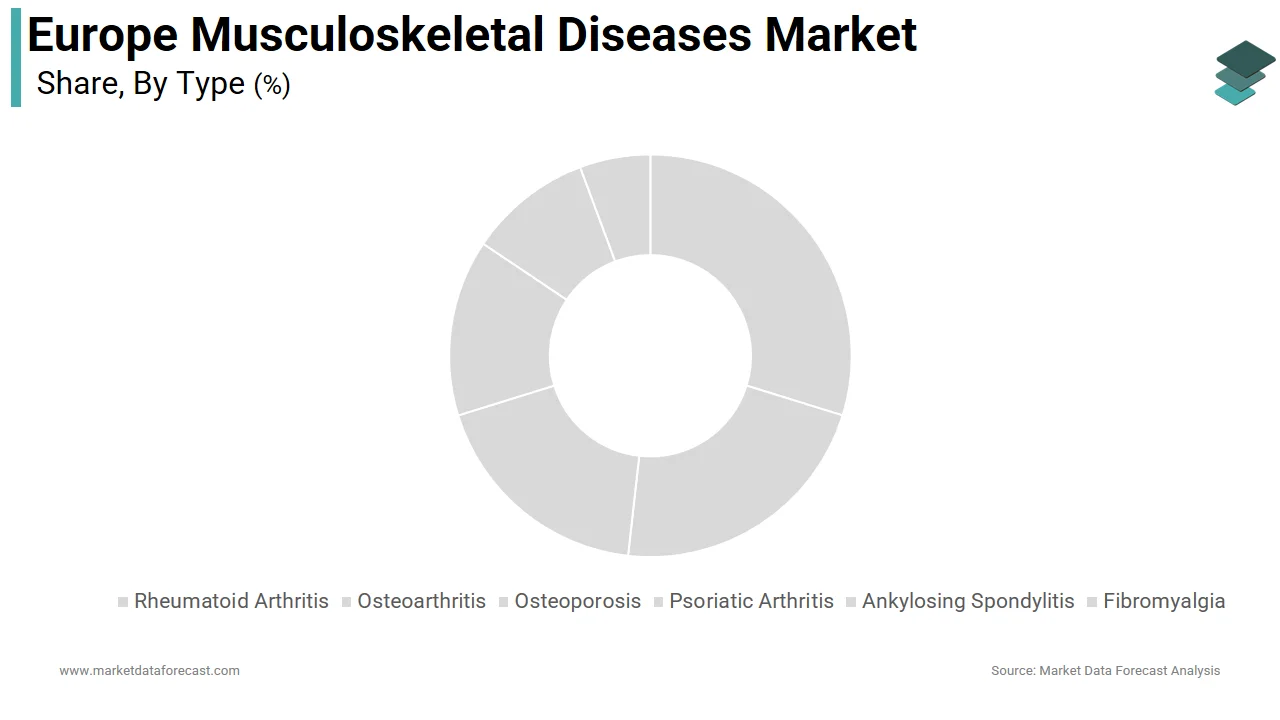
The psoriatic arthritis segment is on the rise and is expected to be the fastest-growing segment in the market by witnessing a CAGR of 8.4% between 2025 and 2033. The rapid expansion of the psoriatic arthritis segment is propelled by improved diagnostic awareness concurrent with rising psoriasis prevalence and the expanding use of biologic therapies that enable earlier and more accurate identification. Historically underdiagnosed due to overlapping symptoms with rheumatoid arthritis or mechanical back pain, psoriatic arthritis is now increasingly recognized through validated screening tools like the PEST questionnaire implemented in dermatology clinics across Western Europe. Moreover, the approval of interleukin 17 and 23 inhibitors has transformed treatment paradigms, offering superior skin and joint outcomes compared to traditional DMARDs. National dermatology rheumatology collaboration initiatives in the Netherlands and Denmark have reduced diagnostic delays to a few months, accelerating treatment initiation and market uptake. These converging clinical and therapeutic advances position psoriatic arthritis as the most dynamically expanding segment in the European musculoskeletal domain.
By Type of Molecules Insights
The small molecules segment led the Europe musculoskeletal diseases market and captured a 58.5% share in 2024. The prominence of the small molecules segment is credited to broad accessibility, oral administration convenience, established safety profiles, and favorable reimbursement status across public health systems. Conventional disease-modifying antirheumatic drugs like methotrexate remain first-line therapy for rheumatoid arthritis in a notable share of treatment protocols, according to sources. Additionally, nonsteroidal anti-inflammatory drugs continue to serve as the primary analgesic for osteoarthritis due to immediate symptom relief and low cost. Generic availability further reinforces affordability, with prices for common small molecule agents falling post patent expiry across Southern Europe. National treatment guidelines in countries like Italy and Spain explicitly prioritize small molecules before escalating to biologics, which aligns with cost containment policies. This entrenched clinical integration, widespread prescriber familiarity, and systemic affordability collectively sustain small molecules as the backbone of pharmacological management despite the rise of advanced biologics.
The biologics segment is expected to exhibit a noteworthy CAGR of 9.1% from 2025 to 2033 due to its superior efficacy in halting disease progression, particularly in refractory autoimmune conditions like rheumatoid arthritis, psoriatic arthritis, and ankylosing spondylitis. The introduction of biosimilars has dramatically improved affordability. Countries like Sweden and the Netherlands have integrated biosimilars into national treatment algorithms as first-line biologic options, thereby accelerating volume uptake. Furthermore, advances in subcutaneous delivery and extended half-life formulations enhance patient adherence and quality of life. Biologic therapies for early rheumatoid arthritis are associated with better functional remission outcomes compared to small-molecule monotherapies. A range of new advanced therapies (both biologic and targeted synthetic agents) are in late-stage clinical trials for musculoskeletal conditions. The development pipeline suggests continued expansion in treatment options, focusing on targeted approaches and the potential for improved structural protection.
By Treatment Modality Insights
The biologics segment was the largest in the Europe musculoskeletal diseases market by capturing a 34.7% share in 2024. The supremacy of the biologics segment is attributed to its pivotal role in managing moderate to severe inflammatory arthropathies where conventional therapies fail to prevent joint erosion or disability. Tumor necrosis factor inhibitors, interleukin 6 antagonists, and JAK pathway modulators are now the standard of care in specialized rheumatology centers across Western and Northern Europe. National health systems have progressively expanded access following positive health technology assessments. The clinical value proposition justifies premium pricing within value-based frameworks. Additionally, the maturation of biosimilar competition has reduced per-patient costs, enabling treatment scale-up even in cost-sensitive markets like Spain and Portugal. This combination of proven efficacy, structural benefit, and improved affordability solidifies biologics as the dominant therapeutic pillar.
The Bone Morphogenetic Proteins (BMPs) segment is predicted to witness the highest CAGR of 10.3% during the forecast period, owing to rising demand for biologically active solutions in complex spinal fusion and nonunion fracture repair, where autograft harvesting poses morbidity risks. Recombinant human BMP 2 and BMP 7 stimulate osteogenesis without requiring donor site surgery, reducing operative time and hospital stays. As per sources, BMP use in multilevel lumbar fusions increased due to superior fusion rates and faster recovery. Regulatory advancements have also played a role. Furthermore, aging populations increase the burden of osteoporotic vertebral fractures. According to sources, a large number of such fractures occur annually in the EU, creating a large patient pool for biologic bone regeneration. Reimbursement expansions in France and Switzerland for BMPs in revision arthroplasty and spinal applications have further caused clinical adoption. These clinical, surgical, and policy tailwinds position BMPs as the most rapidly advancing regenerative treatment modality in European musculoskeletal care.
COUNTRY-LEVEL ANALYSIS
Germany Musculoskeletal Diseases Market Analysis
Germany dominated the Europe musculoskeletal diseases market by accounting for an 18.7% share in 2024. The domination of the German market is because of its aging demographic, a portion of the population is over 65, as per Eurostat, and a high prevalence of osteoarthritis and osteoporosis. Germany maintains one of Europe’s most advanced rheumatology and orthopedic care infrastructures with certified centers of excellence. The statutory health insurance system provides comprehensive coverage for both small-molecule and biologic therapies, with biosimilars widely adopted under national substitution policies. Additionally, Germany is a hub for clinical research. The national Disease Management Programs for osteoporosis and rheumatoid arthritis ensure standardized early diagnosis and treatment pathways, further driving consistent therapeutic utilization. This confluence of demographic pressure, clinical sophistication, and robust reimbursement sustains Germany’s preeminent market status.
France Musculoskeletal Diseases Market Analysis
France was the second largest region in the Europe musculoskeletal diseases market and captured a 14.5% share in 2024. The country exhibits a high burden from both degenerative and inflammatory conditions. France’s centralized healthcare system enables rapid nationwide implementation of treatment guidelines. Furthermore, France leads in hospital-based musculoskeletal surgery. The national osteoporosis screening program targeting women over 65 has increased diagnosis rates, thereby expanding preventive therapy demand. Coupled with strong public funding for digital rehabilitation platforms and robust pharmacovigilance ensuring treatment safety, France maintains a dynamic and responsive musculoskeletal care ecosystem that fuels sustained market activity.
United Kingdom Musculoskeletal Diseases Market Analysis
The United Kingdom is another key player in the Europe musculoskeletal diseases market. Despite post-Brexit resource constraints, musculoskeletal disorders remain a top clinical priority due to their impact on workforce productivity and social care demand. Musculoskeletal conditions affect a large number of people annually, and osteoarthritis is a significant cause of long-term disability. Guidance has been updated to support earlier access to biologics for axial spondyloarthritis and psoriatic arthritis, which has resulted in a reduction in the average time it takes to begin treatment. Moreover, the UK leads in real-world evidence generation through national registries. Recent policy shifts under the NHS Long Term Plan emphasize integrated musculoskeletal hubs combining diagnostics, physiotherapy, and pharmacotherapy to reduce referral delays. These structural innovations, patient volume, and data-driven care models reinforce the UK’s position as a high-impact market despite fiscal pressures.
Italy Musculoskeletal Diseases Market Analysis
Italy grew steadily in the Europe musculoskeletal diseases market. The country faces a pronounced burden from age-related degenerative conditions driven by one of Europe’s oldest populations, a portion aged 65 or older, as per ISTAT. Osteoporosis alone affects millions of women and men, with hip fracture incidence rising annually, according to studies. Italy’s regional healthcare model creates variability in access, yet Lombardy and Emilia Romagna have pioneered integrated musculoskeletal pathways that combine DXA screening, fracture liaison services, and rapid rheumatology access. Biologic uptake has accelerated since the national pricing authority approved a centralized procurement framework, reducing costs. Additionally, Italy is a leader in orthobiologic research with institutions advancing stem cell and BMP applications in nonunion repair. The convergence of demographic pressure, regional innovation, and growing biologic affordability positions Italy as a strategically significant market with high unmet need and evolving care delivery models.
Spain Musculoskeletal Diseases Market Analysis
Spain is predicted to expand in the Europe musculoskeletal diseases market from 2025 to 2033 due to the high prevalence of both osteoarthritis and inflammatory arthritis, with millions of adults affected by musculoskeletal pain. Spain’s universal healthcare system provides broad access to diagnostics and treatment, yet faces delays due to specialist shortages, particularly in rural areas. Recent initiatives have addressed this through tele-rheumatology pilots in some Spanish regions, which have successfully reduced consultation wait times. A national strategy and related initiatives have aimed to increase vertebral fracture identification through methods such as opportunistic screening in primary care. Furthermore, Spain has become a key market for biosimilars. These policy-driven efficiency measures, combined with a large aging population and rising obesity rates, ensure Spain remains a critical and growing market for musculoskeletal diagnostics therapeutics and digital care solutions.
COMPETITIVE LANDSCAPE
Competition in the Europe Musculoskeletal Diseases Market is characterized by intense innovation, differentiation, and strategic payer engagement among global pharmaceutical leaders. The landscape is dominated by companies offering biologics, small molecules, and emerging regenerative therapies with competition extending beyond product efficacy to include delivery models, pricing structures, and digital support services. Key players actively pursue biosimilar development to capture volume in cost-constrained markets while simultaneously advancing next-generation agents with improved safety and dosing profiles. Differentiation is increasingly achieved through integrated solutions that combine diagnostics, digital monitoring, and multidisciplinary care coordination. Regulatory harmonization through the European Medicines Agency facilitates pan-European launches, yet national reimbursement decisions create market fragmentation requiring tailored market access strategies. Emerging entrants face high barriers due to the need for extensive clinical validation and established relationships with rheumatology and orthopedic care networks. Overall, the competitive environment drives continuous therapeutic advancement while emphasizing value-based care and health system alignment.
KEY MARKET PLAYERS
The leading companies operating in the Europe musculoskeletal diseases market include:
- AbGenomics International
- AB Sciences
- Ablynx
- Akron Molecules
- Johnson & Johnson
- Hoffmann-La Roche
- Pfizer
- Amgen
- Eli Lilly
- Adheron
- Alder BioPharmaceuticals
- Bioiberica
- Bone Therapeutics
- Edding Pharm
- Boehringer Ingelheim
- Can-Fite BioPharma
- Celltrion
- Celgene Corp.
- Novartis
- Cellular Biomedicine
- ChemoCentryx
- Cerapedics
- Eupraxia Pharmaceuticals
- GlaxoSmithKline
TOP PLAYERS IN THE MARKET
- Novartis maintains a significant presence in the Europe musculoskeletal diseases market through its immunology and specialty care portfolio. The company offers innovative small molecule and biologic therapies targeting rheumatoid arthritis, psoriatic arthritis, and ankylosing spondylitis. In recent years, Novartis has reinforced its position by expanding access to its JAK inhibitor across Southern and Eastern Europe through risk-sharing agreements with national payers. It also launched a digital patient support program in Germany and France that integrates medication adherence tracking with telehealth consultations. These initiatives enhance treatment continuity and real-world evidence generation. Globally, Novartis contributes to advancing precision medicine in autoimmune musculoskeletal disorders through its extensive clinical trial network and partnerships with European academic centers focused on biomarker-driven therapy selection.
- Pfizer plays a pivotal role in the Europe musculoskeletal diseases market with a diversified portfolio spanning biosimilars, small molecules, and emerging gene-based therapies for bone health. The company’s biosimilar versions of infliximab and etanercept are widely used across EU healthcare systems due to favorable pricing and proven interchangeability. It also partnered with national osteoporosis societies in the UK and Italy to support fracture prevention campaigns and clinician education. Globally, Pfizer leverages its manufacturing scale and regulatory expertise to accelerate biosimilar availability while investing in next-generation oral therapies aimed at improving safety profiles in elderly populations with multiple comorbidities.
- Amgen is a key contributor to the Europe musculoskeletal diseases market, particularly in the fields of osteoporosis and inflammatory arthritis. Its monoclonal antibody targeting RANK ligand is a cornerstone therapy for high-risk osteoporosis patients across Western Europe. Amgen has deepened its market engagement by collaborating with hospital networks in Sweden and the Netherlands to implement fracture liaison services that integrate diagnostics, treatment, and follow-up care. Globally, Amgen advances musculoskeletal innovation through its biologics pipeline, including next-generation molecules with extended dosing intervals. Its commitment to health system sustainability is demonstrated through outcomes-based contracts that link reimbursement to fracture reduction metrics in several European countries.
TOP STRATEGIES USED BY THE KEY MARKET PARTICIPANTS
Leading companies in the Europe Musculoskeletal Diseases Market deploy multifaceted strategies to enhance competitiveness and expand access. They prioritize strategic partnerships with national health authorities to implement integrated care pathways that improve early diagnosis and treatment adherence. Companies also invest heavily in biosimilar development to broaden affordability while maintaining clinical efficacy. Real-world evidence generation through national registries and digital health platforms is another critical tactic enabling demonstration of long-term value to payers. Additionally, firms engage in extensive physician and patient education initiatives to address underdiagnosis and treatment gaps, especially in underserved regions. Geographic expansion into Central and Eastern Europe through tailored pricing models further strengthens market penetration. These approaches collectively reinforce therapeutic relevance, sustainability, and patient centricity across diverse European healthcare ecosystems.
MARKET SEGMENTATION
This Europe musculoskeletal diseases market research report is segmented and sub-segmented into the following categories.
By Type
- Rheumatoid Arthritis
- Osteoarthritis
- Osteoporosis
- Psoriatic Arthritis
- Ankylosing Spondylitis
- Fibromyalgia
- Others
By Type of Molecules
- Biologics
- Small Molecules
By Treatment
- Biologics
- Corticosteroids
- Parathyroid Hormone
- Protein Therapy
- Selective Estrogen Receptor Modulators
- Synthetic Bone Graft
- Composite Grafts
- Demineralized Bone Matrix
- BMPS
By Country
- UK
- France
- Spain
- Germany
- Italy
- Russia
- Sweden
- Denmark
- Switzerland
- Netherlands
- Turkey
- Czech Republic
- Rest of Europe