- Product Description Description
- Table of Contents TOC
- List of Table & Figure LOT
- Get Free Sample PDF Sample PDF
Market Size, 2025
$0.30 BnMarket Estimate, 2026
$0.31 BnMarket Forecast, 2034
$0.44 BnCAGR, 2026–2034
4.43%Executive Summary: Middle East and Africa Musculoskeletal Diseases Market
- Market Scope: Comprehensive regional market evaluation of musculoskeletal diseases across the Middle East and Africa covering condition types, molecule types, and country-level distribution frameworks.
- Market Valuation: Valued at USD 0.30 billion in 2025, estimated at USD 0.31 billion in 2026, and projected to reach USD 0.44 billion by 2034, registering a steady CAGR of 4.43% from 2026 to 2034.
- Primary Growth Drivers: Rising incidence of musculoskeletal disorders fueled by an aging population, increasing prevalence of obesity, unmet medical needs in developing areas, and surging demand for advanced bone-related therapies and drugs.
Key Market Segment Metrics (2026–2034)
| Category | Leading Segment (2025 Position) | Segment Framework |
|---|---|---|
| By Type | Rheumatoid Arthritis & Osteoarthritis (major disease burden driving clinical demand) | Rheumatoid Arthritis, Osteoarthritis, Osteoporosis, Psoriatic Arthritis, Ankylosing Spondylitis, Fibromyalgia, and Others |
| By Type of Molecules | Small Molecules & Biologics | Biologics and Small Molecules |
| By Country / Region | KSA, UAE, Israel, South Africa, Egypt, and Rest of MEA (driven by healthcare infrastructure expansion across GCC and key African economies). | |
Major Market Players & Market Structure
Market Structure: Highly competitive pharmaceutical and biopharmaceutical landscape featuring major global healthcare leaders and specialized biotechnology firms competing on targeted therapeutics for chronic joint and bone conditions.
Key Companies: AbGenomics International, AB Sciences, Ablynx, Akron Molecules, Johnson & Johnson, F. Hoffmann-La Roche, Pfizer, Eli Lilly, Adheron, Alder BioPharmaceuticals, Bioiberica, Bone Therapeutics, Edding Pharm, Boehringer Ingelheim, Can-Fite BioPharma, Celltrion, Celgene Corp., Cellular Biomedicine, ChemoCentryx, Cerapedics, Eupraxia Pharmaceuticals, and GlaxoSmithKline.
 Download Free Sample Report
Middle East and Africa Musculoskeletal Diseases Market Size
The Middle East and Africa musculoskeletal diseases market was valued at USD 0.30 billion in 2025, is estimated to reach USD 0.31 billion in 2026, and is projected to reach USD 0.44 billion by 2034, growing at a CAGR of 4.43% from 2026 to 2034.
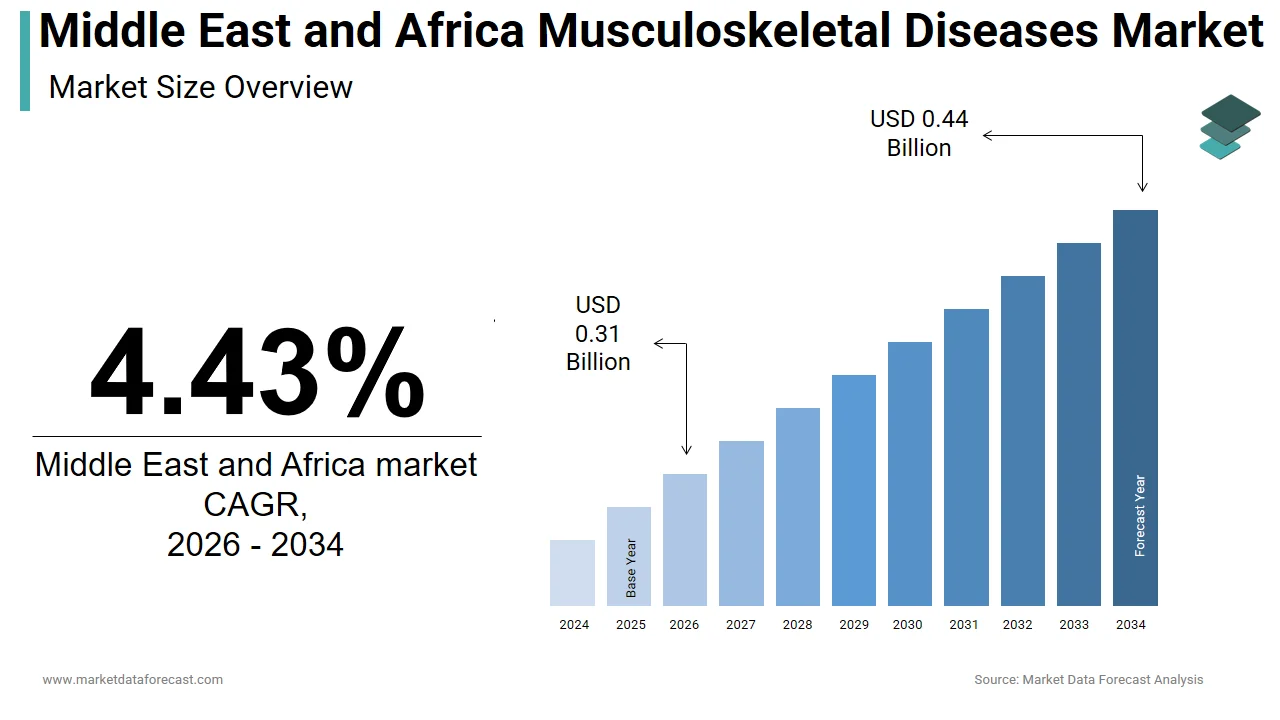
Musculoskeletal diseases are the diagnosis, treatment, and management of conditions affecting bones, joints, muscles, and connective tissues across these diverse regions. The burden of these conditions is escalating due to demographic shifts and lifestyle changes prevalent in urban centers. According to the World Health Organization, musculoskeletal conditions are the leading contributor to disability globally, with approximately 1.71 billion people affected. In the Middle East and Africa region, the prevalence is particularly concerning as aging populations and rising obesity rates converge. As per the Global Burden of Disease Study, low back pain remains the single leading cause of years lived with disability in many countries within this region. Increasing awareness about early diagnosis and the adoption of minimally invasive surgical techniques are shaping the therapeutic landscape. Furthermore, the integration of digital health solutions for remote monitoring and rehabilitation is gaining traction.
MARKET DRIVERS
Rising Prevalence of Obesity and Sedentary Lifestyles Driving Demand
The escalating rates of obesity and sedentary behavior, as excess body weight places significant mechanical stress on joints and spinal structures, are positively on the growth of the Middle East and Africa musculoskeletal diseases market. According to the World Obesity Federation, the prevalence of obesity in the Middle East and North Africa region has reached alarming levels, with approximately 35% of adults classified as obese in several Gulf countries. This high prevalence directly correlates with increased incidence of osteoarthritis, particularly in weight-bearing joints such as the knees and hips. In African urban centers, rapid urbanization has led to decreased physical activity levels, with studies indicating that over 60% of adults in cities like Lagos and Nairobi engage in insufficient physical activity. This lifestyle shift contributes to muscle weakness and poor posture, exacerbating back pain and other musculoskeletal disorders. The direct relationship between these lifestyle factors and disease incidence creates a sustained demand for diagnostic services, pharmaceutical interventions, and orthopedic procedures. Healthcare providers are witnessing a surge in patients seeking treatment for joint pain and mobility issues, necessitating expanded market offerings.
Aging Population Demographics Amplifying Disease Burden
The demographic transition toward an older population structure, as age is the most significant risk factor for degenerative joint diseases and bone density loss that is also fuelling the growth of the Middle East and Africa musculoskeletal diseases market. According to the United Nations Department of Economic and Social Affairs, the number of people aged 60 years and older in Africa is projected to triple from 50 million in 2015 to 157 million by 2050. Similarly, in the Middle East, the proportion of elderly citizens is increasing rapidly due to improved healthcare access and declining fertility rates. As per the World Health Organization, the prevalence of osteoarthritis rises sharply after age 50, with approximately 80% of individuals over 75 years experiencing some form of joint pathology. This demographic shift results in a higher concentration of individuals susceptible to fractures, osteoporosis, and chronic pain conditions. In countries like Saudi Arabia and South Africa, the aging cohort is driving demand for bone density screening tests and fracture prevention programs. The correlation between advancing age and musculoskeletal deterioration necessitates continuous medical attention and therapeutic intervention. Healthcare systems are adapting by expanding geriatric care services and orthopedic specialties to manage this growing burden. The increasing longevity of the population ensures a steady stream of patients requiring joint replacements, spinal surgeries, and rehabilitative care.
MARKET RESTRAINTS
Limited Healthcare Infrastructure in Rural Areas Restraining Access
The inadequacy of healthcare infrastructure in rural and remote areas limits patient access to specialized diagnostic and treatment facilities, which is hindering the growth of the Middle East and Africa musculoskeletal diseases market. According to the World Bank, approximately 40% of the population in sub-Saharan Africa lives more than two hours' travel time from a hospital capable of performing major surgical procedures. This geographical barrier prevents timely diagnosis and intervention for musculoskeletal conditions, which often require specialized imaging equipment such as MRI and CT scanners. In rural parts of the Middle East such as Yemen and Sudan, the scarcity of orthopedic surgeons and physiotherapists further exacerbates the treatment gap. Patients in these areas often rely on traditional healers or delayed care, leading to worsening conditions and permanent disability. The lack of specialized facilities means that even when patients seek help, they may not receive appropriate care, resulting in poor outcomes and reduced market penetration for advanced therapies. This infrastructure deficit restricts the adoption of innovative treatments and surgical technologies that are concentrated in urban centers.
High Out-of-Pocket Healthcare Expenditures Limiting Treatment Affordability
The substantial burden of out-of-pocket healthcare expenditures, by making advanced treatments unaffordable for a large segment of the population, is slowing the growth of the Middle East and Africa musculoskeletal diseases market. According to the World Health Organization, out-of-pocket spending accounts for more than 50% of total health expenditure in many low-income African countries such as Nigeria and Ethiopia. This financial barrier prevents patients from accessing expensive orthopedic surgeries, joint replacements, and prolonged physiotherapy sessions, which are often not covered by basic insurance schemes. In the Middle East, while Gulf countries have robust insurance systems, migrants and lower-income groups often face significant copayments for elective procedures. The high cost of imported medical devices and implants further inflates treatment expenses, making them prohibitive for average earners. Patients frequently delay or forego necessary treatments due to financial constraints, leading to progression of diseases and increased long-term disability. This economic reality limits the volume of procedures performed and reduces the adoption rate of premium therapeutic options. Healthcare providers struggle to balance cost-effectiveness with quality care, resulting in constrained market expansion.
MARKET OPPORTUNITIES
Expansion of Telemedicine and Digital Health Platforms Creating Opportunities
The rapid expansion of telemedicine and digital health platforms, enabling remote consultation, monitoring, and rehabilitation services, is anticipated to boost the growth of the Middle East and Africa musculoskeletal diseases market. According to the International Telecommunication Union, mobile cellular subscriptions in Africa reached 500 million in 2022, providing a vast network for digital health delivery. This connectivity allows healthcare providers to reach patients in remote areas where physical infrastructure is lacking. As per data, the adoption of mobile health applications in the Middle East grew by 35% annually between 2020 and 2023. These digital tools facilitate virtual physiotherapy sessions, postoperative monitoring, and chronic pain management through wearable devices and smartphone applications. Patients can receive personalized exercise programs and real-time feedback from specialists without traveling to urban centers. This model reduces the burden on overcrowded hospitals and lowers transportation costs for patients. The integration of artificial intelligence in diagnostic apps enables early detection of musculoskeletal issues through image analysis of user-submitted photos. Healthcare startups in countries like Kenya and the UAE are pioneering these solutions, creating new revenue streams for providers. The scalability of digital health solutions allows for cost-effective management of large patient populations.
Growing Investment in Local Manufacturing of Orthopedic Implants
The increasing investment in local manufacturing of orthopedic implants and devices, by reducing dependency on imports and lowering treatment costs, is additionally to escalate the growth of the Middle East and Africa musculoskeletal diseases market. According to the African Union Agenda 2063, strategic initiatives are promoting industrialization in the healthcare sector to enhance self-sufficiency and reduce foreign exchange expenditure. Several countries, including Egypt and South Africa are establishing production facilities for basic orthopedic hardware such as plates, screws, and prosthetics. As per data from the Egyptian Ministry of Health, local production of medical devices increased by 20% in 2023, aiming to cover 40% of domestic demand by 2030. Local manufacturing reduces the cost of implants by eliminating import duties and logistics expenses, making surgeries more affordable for patients. It also ensures quicker availability of supplies, reducing waiting times for elective procedures. Governments are providing incentives such as tax breaks and subsidies to attract investors in this sector. This shift supports the development of a skilled workforce in biomedical engineering and precision manufacturing. The availability of cost-effective locally produced devices encourages higher utilization rates of orthopedic services. Healthcare providers can offer competitive pricing while maintaining quality standards. This trend aligns with national health goals to improve access to essential surgical care.
MARKET CHALLENGES
Shortage of Specialized Orthopedic Surgeons and Physiotherapists
The acute shortage of specialized orthopedic surgeons and physiotherapists, by limiting the capacity to deliver adequate care to the growing patient population, is a huge challenge for the growth of the Middle East and Africa musculoskeletal diseases market. According to the World Federation of Neurological Societies, many African countries have fewer than one neurosurgeon or orthopedic specialist per million inhabitants compared to the global average of 10 per million. This severe workforce deficit results in long waiting lists for surgical interventions and inadequate postoperative rehabilitation. In rural areas of the Middle East such as Iraq and Syria, the emigration of medical professionals due to conflict and economic instability has further depleted the workforce. The lack of trained personnel hinders the adoption of advanced surgical techniques and comprehensive rehabilitation programs. Patients often receive suboptimal care from general practitioners who lack specialized expertise in musculoskeletal disorders. This gap in human resources affects the quality of outcomes and patient satisfaction. Training institutions are unable to produce enough specialists to meet the rising demand. The brain drain of skilled professionals to Western countries exacerbates the problem. Addressing this challenge requires substantial investment in medical education and retention strategies.
Inconsistent Regulatory Frameworks for Medical Devices
The inconsistency in regulatory frameworks for medical devices, by complicating entry and product approval processes is also degrades the growth of the Middle East and Africa musculoskeletal diseases market. According to the World Health Organization, only 15% of African countries have fully functional regulatory authorities for medical devices, leading to fragmented approval timelines and standards. This lack of harmonization forces manufacturers to navigate diverse and often opaque registration requirements in each country. As per data from the African Medicines Agency, the average time for medical device registration varies from 6 months in South Africa to over 24 months in some West African nations. In the Middle East, while Gulf Cooperation Council countries have made progress in harmonizing regulations, other nations maintain distinct and frequently changing guidelines. This regulatory uncertainty increases compliance costs and delays the launch of innovative products. Companies face difficulties in predicting market access timelines, which discourages investment in smaller markets. The absence of standardized quality control measures also raises concerns about the safety and efficacy of imported devices. Counterfeit and substandard products may enter markets with weak oversight, posing risks to patients. Manufacturers must allocate significant resources to navigate these bureaucratic hurdles, which reduces profitability.
REPORT COVERAGE
| REPORT METRIC | DETAILS |
| Market Size Available | 2025 to 2034 |
| Base Year | 2025 |
| Forecast Period | 2026 to 2034 |
| Segments Covered | By Type, Type of Molecules, and Country. |
| Various Analyses Covered | Global, Regional, and Country-Level Analysis, Segment-Level Analysis, Drivers, Restraints, Opportunities, Challenges; PESTLE Analysis; Porter’s Five Forces Analysis, Competitive Landscape, Analyst Overview of Investment Opportunities |
| Countries Covered |
|
| Market Leaders Profiled | AbGenomics International, AB Sciences, Ablynx, Akron Molecules, Johnson & Johnson, F. Hoffmann-La Roche, Pfizer Inc, Eli Lilly, Adheron, Alder BioPharmaceuticals, Bioiberica, Bone Therapeutics, Novartis AG, Edding Pharm, Boehringer Ingelheim, Can-Fite BioPharma, Celltrion, Celgene Corp., Cellular Biomedicine, ChemoCentryx, Cerapedics, Eupraxia Pharmaceuticals, and GlaxoSmithKline. |
SEGMENTAL ANALYSIS
By Type Insights
The osteoarthritis segment held a significant share of the Middle East and Africa musculoskeletal diseases market in 2025 due to its high prevalence among aging populations and individuals with obesity related joint stress. The strong correlation between rising obesity rates and osteoarthritis incidence drives the dominance of this segment, as excess weight accelerates cartilage wear in weight-bearing joints. According to the World Health Organization, the prevalence of obesity in the Gulf Cooperation Council countries exceeds 30%, which is significantly higher than the global average. This elevated body mass index places excessive mechanical load on knee and hip joints, leading to premature onset of osteoarthritis. As per data, individuals who are obese have a four times higher risk of developing knee osteoarthritis compared to those with normal weight. In urban centers like Cairo and Johannesburg, where sedentary lifestyles are common, the incidence of symptomatic osteoarthritis has increased by 25% over the past decade. This statistical relationship directly fuels market growth as patients require long term pharmacological treatment, physiotherapy, and eventually joint replacement surgeries. The sheer volume of affected individuals ensures that osteoarthritis remains the largest revenue generator within the musculoskeletal diseases category. Healthcare systems are prioritizing resources for osteoarthritis management due to its widespread impact on workforce productivity and quality of life.
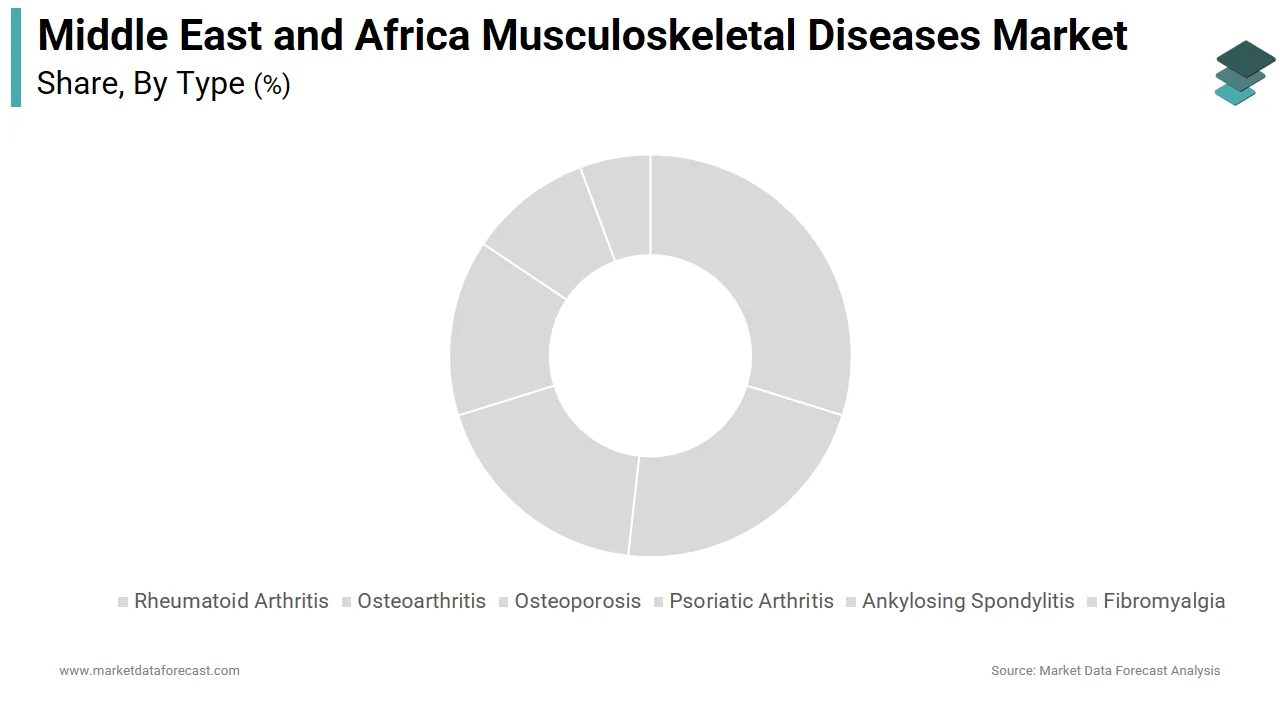
The psoriatic arthritis segment is likely to register the fastest CAGR of 8.5% during the forecast period. The rapid growth of the psoriatic arthritis segment is fueled by increasing awareness among dermatologists and rheumatologists, leading to earlier and more accurate diagnosis of this condition. According to the International Federation of Psoriasis Associations, individuals with psoriasis develop psoriatic arthritis, yet many cases remain undiagnosed in developing regions. Recent initiatives by health ministries in countries like Israel and the UAE have integrated screening protocols for joint symptoms in psoriasis patients, resulting in a 40% increase in diagnosed cases over the last five years. This shift in clinical practice has expanded the patient pool eligible for specialized treatment, thereby driving market expansion. Previously, many patients were misdiagnosed with rheumatoid arthritis or osteoarthritis, leading to inappropriate treatment. The identification of previously hidden cases creates new demand for targeted medications and monitoring services.
By Type of Molecules Insights
The small molecules segment was the largest, accounting for 34.8% of the Middle East and Africa musculoskeletal diseases market share in 2025. The lower cost compared to biologics makes them accessible to a broader population in price-sensitive areas across the Middle East and Africa. This significant price disparity ensures that small molecules remain the preferred choice for public healthcare systems and out-of-pocket payers. As per data from the International Generic and Biosimilar Medicines Association, small molecule generics account for over 70% of all musculoskeletal prescriptions in sub-Saharan Africa due to their affordability. In countries like Egypt and Kenya, where insurance coverage is limited, patients rely heavily on inexpensive oral medications for managing chronic pain. The widespread availability of these drugs in local pharmacies further reinforces their market leadership. Manufacturers benefit from economies of scale in producing these compounds at low costs, which sustains their competitive pricing. Healthcare providers frequently prescribe small molecules as initial therapy before considering more expensive options. This stepwise approach ensures that small molecules maintain high volume sales.
The biologics segment is anticipated to grow at the fastest CAGR of 9.2% from 2026 to 2034 with the launch of biosimilars and increasing adoption in severe cases. The entry of biosimilars, which offer similar efficacy to originator drugs at a fraction of the cost, is boosting the growth of the Middle East and Africa musculoskeletal diseases market. In the Middle East, countries like Saudi Arabia and the UAE have expedited the approval of biosimilars for rheumatoid arthritis and ankylosing spondylitis, leading to a surge in prescriptions. The cost reduction enables public healthcare systems to include biologics in their reimbursement lists, expanding patient access. Physicians are more willing to prescribe biologics when affordable alternatives are available, knowing that financial barriers are lowered. The competition among biosimilar manufacturers further drives down prices, enhancing affordability. This trend is particularly evident in Turkey and South Africa, where local production of biosimilars is emerging.
COUNTRY LEVEL ANALYSIS
Saudi Arabia Musculoskeletal Diseases Market Analysis
Saudi Arabia was the largest contributor to the Middle East and Africa musculoskeletal diseases market by holding 23.4% of the share in 2025 due to its advanced healthcare infrastructure, high prevalence of lifestyle-related disorders, and substantial government investment in medical services. The kingdom has one of the highest rates of obesity and diabetes in the world, which are key risk factors for musculoskeletal conditions. The government's Vision 2030 initiative includes significant funding for healthcare modernization, which supports the adoption of advanced orthopedic technologies and biologic therapies. Private hospitals in Riyadh and Jeddah are equipped with state-of-the-art imaging and surgical facilities, attracting patients from neighboring countries. The presence of multinational pharmaceutical companies ensures easy access to innovative treatments. Insurance coverage is expanding under mandatory health insurance schemes, enabling more citizens to afford specialized care. The aging population further amplifies demand for joint replacements and fracture management.
United Arab Emirates Musculoskeletal Diseases Market Analysis
The United Arab Emirates musculoskeletal diseases market was ranked second, occupying a 14.3% share in 2025, with high per capita healthcare spending and a strong focus on medical tourism for orthopedic care. The country boasts world-class hospitals in Dubai and Abu Dhabi that attract international patients seeking complex musculoskeletal treatments. As per data from the Emirates Medical Association, the prevalence of vitamin D deficiency affects over 80% of the population, leading to increased risks of osteoporosis and bone fractures. This widespread nutritional deficit drives demand for bone health supplements and diagnostic screenings. The government actively promotes preventive care programs targeting lifestyle diseases, which indirectly supports the musculoskeletal market. High disposable income allows residents to access premium biologics and minimally invasive surgeries. The regulatory environment is favorable for quick approval of new drugs and devices, encouraging innovation. Partnerships with global healthcare providers enhance the quality of service delivery. The expatriate population contributes to diverse disease patterns requiring comprehensive care solutions.
South Africa Musculoskeletal Diseases Market Analysis
South Africa musculoskeletal diseases market growth is likely to have significant growth opportunities throughout the forecast period with the developed private healthcare sector and established pharmaceutical manufacturing base. The country faces a dual burden of infectious diseases and rising non communicable conditions, including musculoskeletal disorders. As per data from the Arthritis Foundation of South Africa, approximately 1 million people suffer from rheumatoid arthritis requiring long-term management and specialized care. The private healthcare sector caters to the affluent population, offering access to advanced biologics and surgical interventions. However, the public sector struggles with resource constraints, limiting access for the majority. Local manufacturing of generic small molecules helps keep costs manageable for basic care. The government is implementing national health insurance reforms, which may improve access to essential musculoskeletal treatments. Urbanization and lifestyle changes are contributing to higher obesity rates, further driving demand.
Egypt Musculoskeletal Diseases Market Analysis
Egypt musculoskeletal diseases market growth is propelled by the large population and increasing awareness of musculoskeletal health issues among the middle class. The country has a high prevalence of hepatitis C, which was historically linked to certain rheumatic conditions, but now the focus has shifted to lifestyle-related disorders. The government is investing in local pharmaceutical production to reduce dependency on imports and lower costs. Public hospitals provide basic care, while private clinics offer advanced treatments for those who can afford them. The expansion of health insurance coverage aims to include more citizens in the formal healthcare system. Cultural factors often lead to delayed presentation, resulting in severe joint damage requiring surgery.
COMPETITIVE LANDSCAPE
The competition in the Middle East and Africa Musculoskeletal Diseases Market is characterized by a mix of global pharmaceutical giants and emerging local manufacturers striving to capture value in a fragmented landscape. Multinational corporations dominate the premium segment with innovative biologics and advanced orthopedic devices, leveraging their strong research and development capabilities. Local players compete aggressively in the generic small molecule segment by offering cost-effective alternatives that align with the economic realities of many countries in the region. The competitive intensity is heightened by varying regulatory standards across nations, which require companies to adapt their market entry strategies frequently. Companies differentiate themselves through superior after-sales service, comprehensive training programs for clinicians, and robust patient support initiatives. The entry of biosimilars has further intensified competition by providing affordable options for advanced therapies.
KEY MARKET PLAYERS
The leading companies operating in the Middle East and Africa musculoskeletal diseases market include:
- AbGenomics International
- AB Sciences
- Ablynx
- Akron Molecules
- Johnson & Johnson
- Hoffmann-La Roche
- Pfizer Inc.
- Eli Lilly
- Adheron
- Alder BioPharmaceuticals
- Bioiberica
- Bone Therapeutics
- Novartis AG
- Edding Pharm
- Boehringer Ingelheim
- Can-Fite BioPharma
- Celltrion
- Celgene Corp.
- Cellular Biomedicine
- ChemoCentryx
- Cerapedics
- Eupraxia Pharmaceuticals
- GlaxoSmithKline
TOP PLAYERS IN THE MARKET
- Pfizer Inc maintains a robust presence in the Middle East and Africa Musculoskeletal Diseases Market through its extensive portfolio of anti-inflammatory drugs and biologics. The company actively engages in educational programs for rheumatologists to enhance disease awareness and early diagnosis capabilities across the region. Recently, Pfizer launched several patient support initiatives in Saudi Arabia and South Africa to improve adherence to treatment protocols for rheumatoid arthritis. These efforts include digital monitoring tools and nursing support services that help patients manage chronic conditions effectively. The company collaborates with local healthcare providers to ensure consistent supply of essential medications despite logistical challenges. Pfizer also invests in clinical trials within the region to generate real world evidence, supporting the efficacy of its therapies in diverse populations. This strategic focus on comprehensive care solutions strengthens its reputation as a trusted partner in musculoskeletal health management.
- Novartis AG contributes significantly to the Middle East and Africa musculoskeletal diseases market by offering innovative biologic therapies targeting specific inflammatory pathways in musculoskeletal disorders. The company has established strong distribution networks in key markets such as the United Arab Emirates and Egypt to ensure timely access to advanced treatments. Novartis recently expanded its manufacturing partnerships in North Africa to reduce costs and improve availability of critical medicines for osteoporosis and arthritis. The firm supports regional healthcare infrastructure development by providing training for medical professionals on the latest therapeutic guidelines. Novartis also engages in public health campaigns aimed at reducing the stigma associated with chronic joint diseases. Its commitment to sustainability and affordable pricing models helps broaden patient access in resource-limited settings.
- Johnson and Johnson plays a pivotal role in the market through its orthopedic division, which supplies advanced surgical implants and instruments for joint replacement procedures. The company focuses on innovation in minimally invasive surgical techniques that reduce recovery time and improve patient outcomes. Recently, Johnson and Johnson introduced new digital surgery platforms in major hospitals across Gulf Cooperation Council countries to enhance precision in orthopedic operations. The firm collaborates with surgical societies to provide hands-on training for surgeons on using these advanced technologies. Johnson and Johnson also supports post-operative rehabilitation programs to ensure optimal functional recovery for patients. Its investment in local service centers ensures rapid response to technical needs and maintenance requirements.
TOP STRATEGIES USED BY KEY MARKET PARTICIPANTS
Key players in the Middle East and Africa Musculoskeletal Diseases Market primarily employ strategies such as strategic partnerships with local distributors to navigate complex regulatory environments and ensure efficient product availability. Companies increasingly invest in localized manufacturing facilities to reduce import dependencies and lower costs for price-sensitive populations. Educational initiatives targeting healthcare professionals are widely used to enhance diagnostic accuracy and promote early intervention for musculoskeletal disorders. Digital health integration is another major strategy where firms deploy telemedicine platforms and mobile applications to reach remote patients and monitor treatment adherence. Pricing adaptations, including tiered pricing models and patient assistance programs, help improve affordability and expand market access. Mergers and acquisitions allow companies to broaden their product portfolios and gain immediate entry into new geographic segments.
MARKET SEGMENTATION
This research report has been segmented and sub-segmented into the following categories:
By Type
- Rheumatoid Arthritis
- Osteoarthritis
- Osteoporosis
- Psoriatic Arthritis
- Ankylosing Spondylitis
- Fibromyalgia
- Others
By Type of Molecules
- Biologics
- Small Molecules
By Country
- KSA
- UAE
- Israel
- Rest of GCC countries
- South Africa
- Ethiopia
- Kenya
- Egypt
- Sudan
- Rest of Middle East and Africa