- Product Description Description
- Table of Contents TOC
- List of Table & Figure LOT
- Get Free Sample PDF Sample PDF
Market Size, 2025
$0.92 BnMarket Estimate, 2026
$0.99 BnMarket Forecast, 2034
$1.70 BnCAGR, 2026–2034
7.07%Executive Summary: Europe Omega-3 Market
- Market Scope: Comprehensive regional analysis of Europe's omega-3 sector, detailing dietary supplements, functional foods, infant formula, marine and algal sources, EFSA regulatory compliance, and country-level profiles.
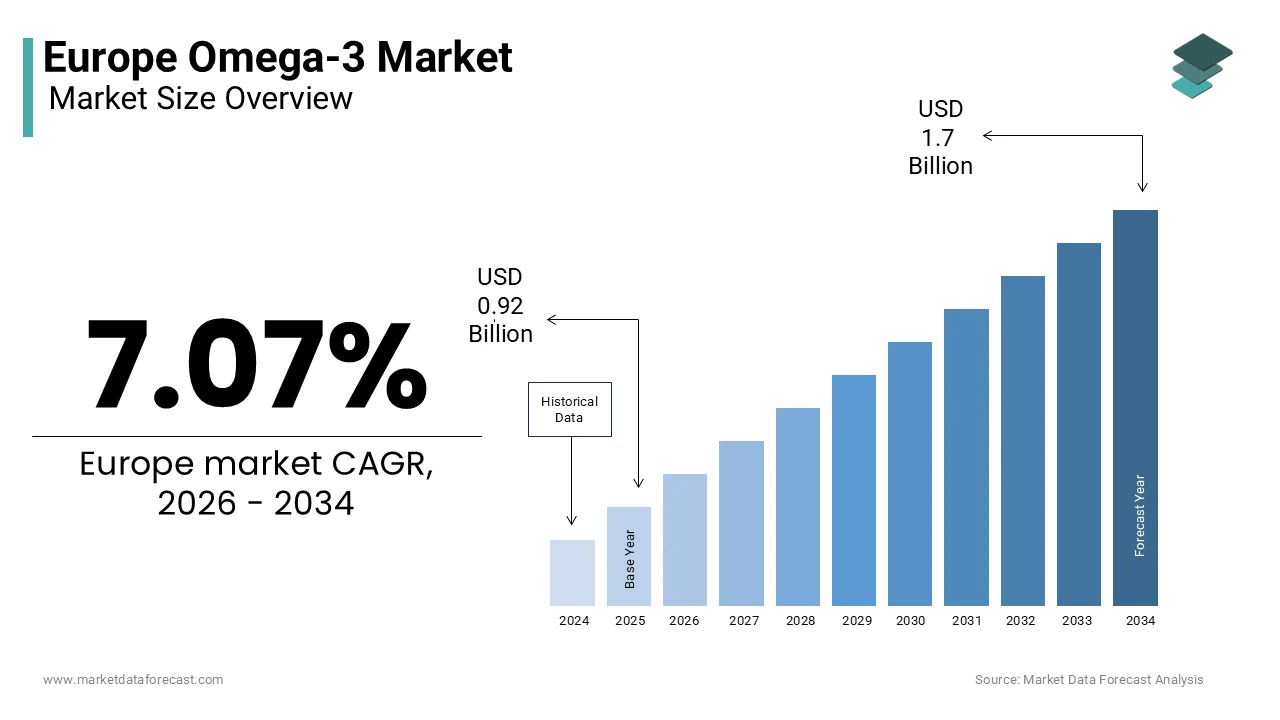
- Market Valuation: Valued at USD 0.92 billion in 2025, reaching USD 0.99 billion in 2026, and projected to expand to USD 1.7 billion by 2034, growing at a robust CAGR of 7.07% from 2026 to 2034.
- Primary Growth Drivers: EFSA authorized health claims for cardiovascular and brain function, aging population demographics tackling chronic diseases, and the expansion of plant-based algal alternatives.
Key Market Segment Metrics
| Category | Leading Segment (Base Position) | Fastest-Growing / High-Growth Segment |
|---|---|---|
| By Type | DHA (held a majority share of 46.1% in 2025, driven by critical roles in neurological development, cognitive maintenance, and mandatory infant formula fortification) | EPA (projected at an 8.7% CAGR, fueled by mounting clinical evidence for cardiovascular and anti-inflammatory benefits and prescription high-purity use) |
| By Source | Marine (led with a substantial share in 2025, anchored by decades of consumer familiarity, high bioavailability, and established North Atlantic fishery supply chains) | Plant-Based Sources (expected to be the fastest-growing segment with a 12.4% CAGR, propelled by veganism, sustainability mandates, and algal DHA adoption) |
| By Application | Supplements (dominated with a 61.1% share in 2025, credited to high consumer self-care trends, pharmacy retail availability, and preventive health insurance plans) | Functional Foods (exhibiting a 9.8% CAGR, driven by consumer preference for food-first nutrition, dairy fortification, and enriched everyday staples) |
| By Country | Germany (market leader with a 22.1% share in 2025, backed by a pharmacy-dominated model, science-driven culture, and strict infant nutrition regulations) | United Kingdom & France (key regional hubs driven by post-Brexit fortified food innovation, early life nutrition mandates, and structured clinical care integration) |
Major Market Players & Industry Landscape
Market Structure: Highly regulated and competitive landscape characterized by global nutrition giants, specialized marine extractors, and biotech algal innovators competing on purity, EFSA compliance, and sustainability certifications.
Key Companies: BASF SE, Aker BioMarine Antarctic AS, Corbion N.V. (DSM), Orkla Health, Croda International Plc, and EPAX.
 Download Free Sample Report
Europe Omega-3 Market Size
The europe omega-3 market was valued at USD 0.92 billion in 2025 and increased to USD 0.99 billion in 2026. The market is projected to reach USD 1.7 billion by 2034, growing at a CAGR of 7.07% during the forecast period from 2026 to 2034.
Omega 3 fatty acids, primarily eicosapentaenoic acid (EPA) and docosahexaenoic acid (DHA), are essential polyunsaturated fats with scientifically validated roles in cardiovascular health, cognitive function,n and inflammatory regulation. In Europe, pe the omega 3 market encompasses dietary supplements, functional foods, infant formula, and fortified beverages sourced from marine fish, algal biomass, and emerging plant-based alternatives. The European Food Safety Authority has issued authorized health claims for DHA’s contribution to normal brain function and EPA and DHA’s support of heart health, providing a regulatory foundation for product labeling. A high portion of European adults use dietary supplements regularly, with fish oil-derived Omega-3 ranking among the most frequently chosen ingredients for maintaining overall wellness. Public health initiatives further amplify demand. The European Commission highlights that fish consumption across the EU is generally low, with a significant portion of the population failing to meet the suggested weekly intake of oily fish necessary for optimal Omega-3 levels. Concurrently, the rise of plant-based diets has accelerated innovation in algal omega-3 sources. These intersecting nutritional, behavioral,l and policy dynamics positioomega-3 3 not merely as a supplement but as a public health enabler in Europe’s preventive plant-basedstrategy.
MARKET DRIVERS
EU Health Claims aomega-3ntific Endorsement Driving Consumer Trust
Legally sanctioned health claims that enhance product credibility and consumer adoption are propelling the Europe omega 3 market forward. Regulatory bodies have validated specific health claims for DHA and EPA regarding their roles in maintaining normal brain and heart function, provided a minimum daily intake is achieved. Authorized claims for these nutrients appear on numerous omega-3 products throughout the region, offering a clear distinction from products without verified health claims. A significant portion of supplement buyers, particularly among older adults, view verified approval as a major factor in their purchasing decisions. National health guidelines often incorporate advice on omega-3 fatty acids, recommending the consumption of fatty fish for cardiovascular health. Professional cardiovascular societies have supported the use of omega-3 supplementation for specific high-risk populations, based on analysis of major cardiovascular events. This convergence of regulatory validation, scientific consensus, and public health messaging establishes a durable demand foundation rooted in evidence-based nutrition.
Aging Population and Rising Prevalence of Chronic Non-communicable Diseases
The region’s demographic transition toward an old, er population is another key accelerator of the Europe omega 3 market. This trend is largely due to the nutrient’s role in mitigating age-related cognitive decline and cardiovascular risks. The proportion of the EU population aged 65 or older has been steadily increasing and is projected to continue its upward trend significantly in the coming decades. Concurrently, cardiovascular diseases pose a significant health burden across the EU, while neurodegenerative disorders like dementia affect a large number of Europeans. Omega-3 supplementation is increasingly integrated into preventive care protocols. National health authorities issue various recommendations regarding nutritional interventions, although specific guidance on the use of particular fatty acid-enriched formulas for elderly patients with mild cognitive impairment varies. In Sweden, the Public Health Agency includes omega-3 in its national dietary advice for seniors to support neuronal membrane integrity. Additionallyacid-enrichednt policies for dietary supplements, including omega-3s for conditions such as hypertriglyceridemia, vary among private insurers and across different national healthcare systems. The expanding demand for omega-3 is driven by its therapeutic role in mitigating Europe’s growing number of chronic illnesses, a trend accelerated by a shift toward preventive health strategies.
MARKET RESTRAINTS
Stringent EFSA Regulations on Novel Sources and Health Claim Substantiation
The European Food Safety Authority’s rigorous evaluation process for novel sources and health claim approvals delays product innovation and increases compliance costs, which restricts the growth of the European omega-3 market. Unlike other regions, EFSA requires extensive clinical dossier submissions, including human intervention trials, to substantiate any functional benefit beyond the two authorized heart and brain claims. The European omega-3 has rejected a high volume of omega-3 health claim applications due to a lack of sufficient evidence, with most approved claims focusing solely on heart health rather than secondary benefits. This regulatory gatekeeping particularly impacts algal and genetically modified plant-based omega-3 sources, which must undergo full novel food authorization before commercialization. The authorization process for novel algal and genetically modified plant-based omega-3 sources in Europe is a lengthy, high-cosplant-based omega-3 by strict safety, technological, and regulatory standards. Consequently, many startups abandon EU market entry in favor of faster approving jurisdictions like the United States or Canada. Even established players must limit marketing language to avoid enforcement actions. Italian competition regulators continue to impose significant fines on supplement companies that violate advertising laws by promoting unsubstantiated, implied health, or disease-prevention benefits without proper EFSA validation. These barriers stifle diversification and keep the market concentrated in traditional fish oil formats.
Vulnerability of Marine Sourcing to Overfishing and Supply Chain Volatility
Omega 3 production in the region remains heavily dependent on marine fish oil derived from anchovy, sardine, and mackerel stocks, which are increasingly subject to ecological and geopolitical pressures, and therefore limit the expansion of the European omega 3 market. Observations indicate a downward trend in Northeast Atlantic mackerel abundance, which is attributed to changing marine environmental conditions and challenges in international management agreements. Disagreements regarding fishing quotas among various jurisdictions have resulted in reduced legal catch allocations for processors. The decreased availability of raw material has contributed to rising prices for fish oil. Increased costs for fish oil are affecting the operational expenses of supplement manufacturers. Moreover, the EU’s Common Fisheries Policy mandates that only certified sustainable sources qualify for public procurement, including school nutrition and hospital programs, excluding many small-scale fisheries lacking Marine Stewardship Council certification. This supply fragility undermines long-term planning and incentivizes a slow shift to alternatives, but algal DHA remains more expensive per gram of EPA+DHA as per sources. Europe’s omega-3 supply is bound to volatile marine ecosystems until alternative sources realong-termrial scale.
MARKET OPPORTUNITIES
Expansion of Omega-3 F, fortification in Mainstream Food and Beverage Categories
The integration of EPA and DHA into everyday food and beverage products beyond traditional supplement formats opens a significant growth opportunity for the Europe omega 3 market. Driven by consumer preference for “food first” nutrition over pill brands, companiesare fortifying dairy alternatives, plant-based milks, bread, and even bottled water with algal or fish-derived omega-3. Premium yogurt selections in certain European markets are increasingly being formulated with omega-3 fatty acids to attract consumers focused on wellness. Updated regional regulatory frameworks have clarified the requirements for adding specific nutrients to food products, simplifying the process for manufacturers to introduce fortified items. This shift toward clearer guidelines has encouraged the development of diverse dairy products containing nutritional additives. Household adoption of fortified dairy staples has demonstrated a growing consumer interest in products that offer supplemental health benefits. Educational meal initiatives in various countries have begun integrating fortified baked goods to support dietary goals for younger populations. Omega-3 is transforming from a niche supplement into a staple in the European diet, driven by normalized fortification.
Growth of Medical Nutrition and Prescription Omega-3 Formulations
The emergence of high-purity prescription omega-3 products for therapeutic use offers strong potential for the Europe omega 3 market. This is driven by clinical evidence and healthcare integration. Regulatory bodies in the European Union have granhigh-purityl for specific high-purity eicosapentaenoic acid formulations aimed at reducing cardiovascular risk in patients with elevated triglycerides. National health systems are broadening coverage for these formulations for secondary prevention after cardiovascular events, while there is emerging interest in high-dose docosahexaenoic acid for early cognitive decline protocols. This coincides with a sustained market growth for prescription omega-3s, significantly distributed through hospital channels. These developments validate omega-3 not just as a supplement but as a clinically recognized intervention, shifting perception from wellness to therapeutics and opening access to institutional healthcare channels with higher reimbursement potential and professional endorsement.
MARKET CHALLENGES
Consumer Confusion Over Source Efficacy and Sustainability Claims
European consumers exhibit significant confusion regarding the differences between fish, algal, and plant-based omega-3 sources, despite strong demand. This confusion challenges the growth of the European omega-3 market and leads to mistrust and suboptimal purchasing decisions. Many consumers incorrectly assume plant-based seeds like flax and chia offer the same omega-3 benefits as marine sources, overlooking the low conversion efficiency of plant-based fatty acids into usable EPA and DHA in the body. This misconception is exacerbated by vague labeling such as “omega-3 rich” without specification of fatty acid type or concentration. Additionally, sustainability claims are poorly understood. A significant majority of European shoppers prioritize environmentally friendly omega-3 products, yet only a small segment can accurately identify certified sustainable fish oil or alg,ae-based alternatives. This knowledge gap allows misleading marketing and erodes confidence in premium products. Brands investing in traceability and third-party verification, such as Friend of the Sea or EU Organic certification, struggle to communicate value amid information noise. Standardized EPA and DHA labeling is necessary to prevent market commoditization and encourage quality-based competition.
Limited Scalability and High Cost of Algal Omega-3 Production
Scaling sustainable algal DHA production is limited by high capital intensity and biological yield issues, which pose a major barrier to the European omega-3 market. Algal oil provides a vegetarian-friendly alternative to fish oil; however, the downstream processes of cultivation, harvesting, and extraction are heavily energy-intensive and more reliant. The European Algae Platform indicates that high processing costs for producing algal DHA prevent it from being cost-competitive with refined fish oil, although it remains a sustainable alternative. This price differential restricts algal omega-3 to premium infant formula and specialty supplements, limiting mass market penetration. Furthermore, EU regulations classify most algal strains as novel foods requiring extensive safety dossiers that deter a small biotech limited number of major industry players dominate th,e EU approved market for algal DHA, which is subject to strict novel food regulations, resulting in a high market concentration. European financial institutions indicate that algae biorefinery projects face significant financing chalEU-approvEU-approvedto risks associated with long-term yield consistency and scaling. Algal omega-3 will remain a niche product until improvements in photobioreactor efficiency and genetic strain optimization lower production costs to a level that can compete with marine sources.
REPORT COVERAGE
| REPORT METRIC | DETAILS |
| Market Size Available | 2025 to 2034 |
| Base Year | 2025 |
| Forecast Period | 2026 to 2034 |
| Segments Covered | By Type, Source, Application and Region. |
| Various Analyses Covered | Global, Regional, and Country-Level Analysis, Segment-Level Analysis, Drivers, Restraints, Opportunities, Challenges; PESTLE Analysis; Porter’s Five Forces Analysis, Competitive Landscape, Analyst Overview of Investment Opportunities |
| Countries Covered | UK, France, Spain, Germany, Italy, Russia, Sweden, Denmark, Switzerland, Netherlands, Turkey, Czech Republic, Rest of Europe |
| Market Leaders Profiled | Aker Biomarine Antarctic AS, Orkla Health, BASF SE, Omega Protein Corp., GC Reiber Oils, Lonza, Croda International Plc, EPAX, BioProcess Algae, LLC, Koninklijke DSM N.V. |
SEGMENTAL ANALYSIS
By Type Insights
The DHA segment held the majority share of 46.1% of the Europe omega 3 market in 2025. The supremacy of the DHA segment is driven by its critical role in neurological development and cognitive maintenance across the human lifecycle. Regulatory bodies recognize specific daily intake levels of this fatty acid for supporting normal brain function, leading to its widespread inclusion in infant formula and various food products. The fortification of infant formula with this nutrient is a standard practice aimed at assisting with early neural development. Efforts to support cognitive health in older individuals often involve the use of this nutrient. Guidelines for managing mild cognitive impairment in older adults sometimes incorporate supplementation with this nutrient. Research emphasizes the high concentration of this fatty acid in retinal and cerebral tissue, underlining its importance for visual and neurological health. This scientific and regulatory validation across life stages ensures DHA’s dominance in both preventive and therapeutic nutrition contexts.
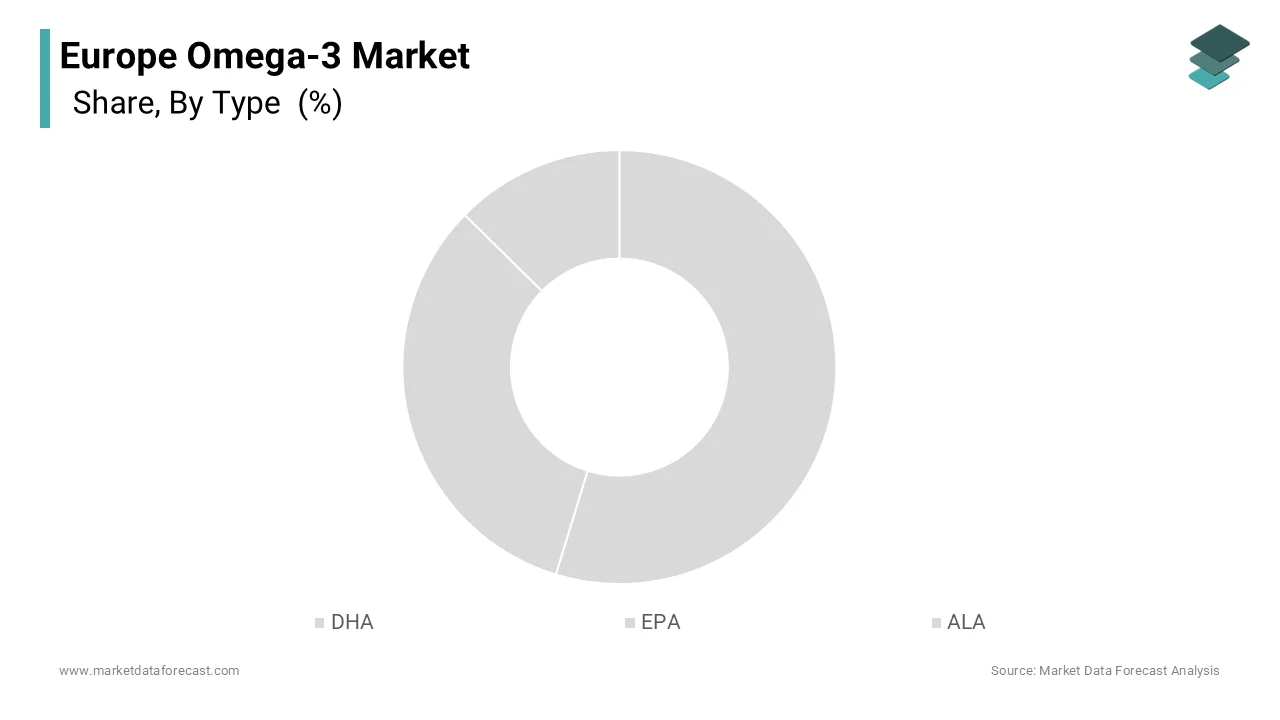
The EPA segment is likely to experience the fastest CAGR of 8.7% from 2026 to 2034 due to mounting clinical evidence of EPA’s cardiovascular and anti-inflammatory benefits distinct from DHA. The European Atherosclerosis Society has continued to emphasize that high-purity EPA, such as icosapent ethyl, significantly reduces triglyceride levels and the risk of major cardiovascular events in high-risk patients, shaping modern clinical practice. In Germany, the Federal Joint Committee provides reimbursement for this prescription EPA, enabling its use for secondary cardiovascular prevention. Similarly, French health authorities include high-quality EPA formulations within their drug formularies for metabolic syndrome management. Following the European Medicines Agency's approval, concentrated EPA has solidified its therapeutic standing. Consequently, the nutritional and sports industries are increasingly promoting EPA-based supplements to manage exercise-induced inflammation. The rising prominence of tailored dietary approaches, combined with EPA's unique molecular actions, is accelerating its adoption over generic omega-3 formulations.
By Source Insights
The marine segment led the Europe omega 3 market by accounting for a substantial share in 2025. The leading position of the marine segment is attributed to decades of consumer familiarity, high bioavailability, and established supply chains from North Atlantic and Southeast Pacific fisheries. Fish oil remains the primary vehicle for delivering EPA and DHA due to its naturally balanced profile and cost efficiency. EU fish oil processing facilities are increasingly relying on salmon and pelagic by-products and trimmings for raw materials to satisfy demand, rather than relying on direct, whole-fish imports from South America. National dietary guidelines reinforce this dominance. UK health authorities recommend regular consumption of oily fish, such as mackerel or salmon, to ensure adequate intake of essential omega-3 fatty acids for cardiovascular health. Moreover, marinomega-3 3 enjoys strong trust due to third-party certifications. A large majority of fish oil available in Western European markets carries recognized sustainability and traceability labels, reflecting a high industry standard for responsible sourcing. Despite environmental concerns, marine sources remain the default for mass market supplements,s functional foods,, ds and infant nutrition due to their proven efficacy,cacy regulatory acceptance,tance and economies of scale.
The plant-based sources segment is on the rise and is expected to be the fastest growing segment in the market by witnessing a CAGR of 12.4% during the forecast period, owing to the convergence of veganism, sustainability mandates, and infant nutrition regulations that favor non-animal derived DHA. The European Vegetarian Union reports a significant rise in consumers across Europe adopting vegan and vegetarian diets, which is fueling a robust demand for alternative, plant-derived omega-3 sources. Driven by superior purity and the absence of ocean-borne contaminants, Algal DHA is becoming a preferred ingredient in organic infant formula within Germany and the Netherlands, replacing traditional fish oil. Regulatory support is accelerating adoption. The European Commission updated its guidance on novel foods to classify more algal-based products as non-novel, reducing regulatory hurdles for market entry. Major biotech companies are expanding their European algal fermentation capacity to meet demand for sustainable DHA, aligning with stricter, updated European organic production standards. To provide essential nutrients while avoiding seafood allergies, there is a growing trend toward using microalgae-derived omega-3 in plant-based beverages and school nutritional programs. Integrating circular economy principles into food policy has accelerated the evolution of plant-based omega-3 from a niche offering to a standard dietary option.
By Application Insights
The supplements segment dominated the Europe omega 3 market by capturing a 61.1% share in 2025. The dominance of the supplements segment is credited to high consumer autonomy, self-care trends, and widespread retail availability. Many adults in Europe regularly use dietary supplements, and omega-3 products are among the most popular choices. Pharmacies remain the main point of sale for these supplements in several major European countries, likely due to consumers seeking professional advice from pharmacists. The segment is further reinforced by private health initiatives. Dutch and Swiss insurers reimburseomega-33 supplements for cardiovascular and cognitive health under preventive care plans. Product innovation also drives loyalty. The European Commission’s positive EFSA health claims on heart and brain function provide legally compliant messaging that enhances consumer confidence. With low regulatory barriers to entry and strong brand loyalty, the supplement segment remains the commercial backbone of Europe’somega-33 ecosystem.
The functional foods segment is expected to exhibit a noteworthy CAGR of 9.8% over the forecast period. The rapid expansion of the functional foods segment is propelled by consumer preference for “food first” nutrition over pills and the integration of omega-3 into everyday staples. Premium yogurts across European markets increasingly incorporate added DHA. Regulatory clarity has enabled this expansion. European Union regulations permit the addition of approved omega-3 sources to certain food categories, provided they comply with established rules on health claims. Major brands are leading the shift. New omega-3-enriched dairy products, such as cheese, have demonstrated rapid consumer acceptance and significant market penetration in key regions like Denmark. School nutrition programs are also contributors. Some national nutrition bodies in Nordic countries recommend the inclusion of specific fortified foods, like milk with DHA, in children's diets. Additionally, bakery chains like Le Pain Quotidien in Belgium now offer omega-3-enriched bread made with algal oil. The unobtrusive yet effective fortification of foods is transforming omega-3 from a consumer-driven purchase into an embedded public health intervention.
COUNTRY LEVEL ANALYSIS
Germany Omega-3 Market Analysis
Germany outperformed the Europe omega 3 market by accounting for a 22.1% share in 2025. The prominence of the German market is fuelled by its pharmacy-dominated distribution model and science-driven consumer culture. Sales of nutritional oils are concentrated in professional settings where expert advice helps build consumer trust. A large amount of retail space in speciapharmacy-dominatededicated to products witscience-drivenunctional health benefits. Research suggests that a minority of adults consume recommended amounts of certain essential food sources, increasing reliance on supplements to bridge the nutritional gap. This indicates a shift toward using supplements to address this nutritional deficit. Additionally, Germany leads in infant nutrition regulation, requiring all infant formulas to contain DHA at a minimum share of total fatty acids. Germany leads the European omega-3 landscape in quality and regulatory standards, supported by a population highly receptive to preventive healthcare and robust private insurance coverage for heart-healthy supplements.
United Kingdom Omega-3 Market Analysis
The United Kingdom followed closely in the Europe omega 3 market by capturing a 17.7% share in 2025. The growth of the UK market is driven by its early adoption of fortified foods and an agile regulatory environment post Brexit. Despite leaving the EU, the UK retained EFSA-style health claim approvals through the Food Standards Agency, which has authorized over 1 200 omega 3 product labels. Households in the United Kingdom frequently purchase food products enhanced with omega-3 fatty acids at a higher rate than in other countries in the region. Supermarket chains are introducing their own product lines containing plant-based DHA to satisfy the increasing demand for vegan-friendly options. Health advisory organizations are emphasizing the possible mental health advantages of omega-3, observing a lower chance of depression among individuals who consume it regularly. Additionally, the National Health Service includes omega-3 supplements in cardiovascular risk reduction pathways for patients with elevated triglycerides. This blend of retail innovation, public health guidance,e and scientific endorsement positions the UK as Europe’s functional food laboratory for omega-3 3 integration.
France Omega-3 Market Analysis
France is also a key player in the Europe omega 3 market due to its strong emphasis on early life nutrition and medicalized dietary supplementation. The French Agency for Food, Environmental,l and Occupational Health mandates DHA fortification in all infant formulas at levels between 0.3 and 0.6 percent of total fatty acids, ds ensuring universal access from birth. In France, a significant majority of infants consume formula supplemented with specific fatty acids during their first year. Beyond pediatrics, clinical care integrates omega-3 fatty acids, and the national health insurance provides partial reimbursement for high-dose EPA prescriptions for metabolic syndrome patients in structured care plans. The national nutrition program promotes regular fatty fish intake and recommends supplements for pregnant women and seniors. France maintains a leading position in European per capita omega-3 consumption, driven by a deep-seated cultural respect for nutritional science and a centralized healthcare framework that actively shapes dietary habits.
Netherlands Omega-3 Market Analysis
The Netherlands grew steadily in the Europe omega 3 market and served as the continent’s primary hub for algal DHA production and distribution. Home to global players like Corbion and DSM, the country hosts Europe’s largest algal fermentation facilities, producing significant tons of algal oil annually. Progressive regulatory frameworks in certain European regions are facilitating the introduction of plant-based,omega-3 alternatives, supporting their distribution to international markets. Algal DHA is increasingly incorporated into plant-based milk alternatives, which are targeted toward consumers aiming to reduce their intake of animal products. The integration of fortified foods into school programs demonstrates an alignment with national dietary guidelines that promote nutritional enhancements. The Netherlands acts as a key logistical hub for the sustainable production and distribution of algae-based alternatives, leveraging its biotech infrastructure and maritime access. Marine-derived omega-3 sources are facing competition from scalable, plant-based alternatives produced through advanced agricultural and technological methods.
Sweden Omega-3 Market Analysis
Sweden is predicted to expand in the Europe omega 3 market from 2026 to 2034 and exemplifies a public health-driven omega-3 ecosystem where supplementation is embedded in national wellness policy. Public health guidelines in Sweden incorporate recommended daily intake levels of specific omega-3 fatty acids for various age groups, which includes the integration of fortified products. A significant portion of the older population utilizes omega-3 supplements, with some municipal initiatives supporting access to these products for seniors. The healthcare system provides options for testing to help guide personalized supplementation for individuals with cardiovascular risk factors. A high percentage of fish oil products available in the market carry certifications related to sustainable sourcing practices. The approach to omega-3 consumption in Sweden reflects a combination of high health awareness, environmental considerations, and institutional support, integrating it into broader public health approaches.
COMPETITIVE LANDSCAPE
Competition in the Europe omega 3 market is characterized by a triad of global nutrition giants, specialized marine extractors, and biotech-driven algal innovators, each competing on purity,y sustainability, and scientific validation. BASF, DS, M, and Aker BioMarine dominate the high-end fish and krill oil segments with investments in molecular concentration and traceability systems that satisfy EU pharmacopeia and food safety standards. Meanwhile, Corbion and Algaia lead the plant-based frontier with algal DHA tailored for vegan and allergen-free applications. The market is further segmented by application, with infant formula producers demandingultra-loww contaminant profiles and supplement brands prioritizing taste-masking delivery formats. Regulatory pressure from EFSA and national food safety authorities creates high barriers to entry,y favoring companies with in-house regulatory expertise. At the same time, consumer demand for transparency is driving ingredient storytelling around ocean stewardship,p carbon footprint, and clinical proof. The multi-dimensional rivalry rewards both technical excellence and ethical sourcing as Europe’somega-33 market evolves beyond commodity status into a science-backed sustainable nutrition pillar.
KEY MARKET PLAYERS
Some of the companies that are playing a dominating role in europe omega 3 Market include
- Aker Biomarine Antarctic AS
- Orkla Health
- BASF SE
- Omega Protein Corp.
- GC Reiber Oils
- Lonza
- Croda International Plc
- EPAX
- BioProcess Algae, LLC
- Koninklijke DSM N.V.
TOP LEADING PLAYERS IN THE MARKET
- BASF SE is a global leader in nutritional ingredients with a significant presence in the European omega-3 market through its high-purity fish oil and algal DHA offerings under the brand names Vectomega and Life’s DHA. The company contributes globally by pioneering molecular distillation and enzymatic concentration technologies that achieve EPA and DHA levels exceeding 90 percent purity. In Europe, BASF has strengthened its position by obtaining EU Novel Food approval for its algal strains and achieving Organic certification for select DHA oils. The company recently expanded itsomega-33 production capacity at its facility in Ludwigshafen, Germany,y to meet rising demand for the infant formula and medical nutrition sectors. BASF also collaborates with European research institutions to validate the clinical efficacy of its omega-3 formulations in cardiovascular and cognitive health applications.
- Aker BioMarine AS is a Norwegian biotech company specializing in sustainable krill oil-based omega-3 products rich in phospholipid-bound EPA and DHA. The company contributes globally by advancing krill as a premium marine source with superior bioavailability and natural astaxanthin content for oxidative stability. In Europe, Aker BioMarine has reinforced its market presence by securing Marine Stewardship Council certification for its Antarctic krill fishery and achieving Friend of the Sea accreditation. The company recently launched QRILL Aqua and QRILL Nutrients lines tailored for European supplement and functional food manufacturers seeking clean-label ingredients. Aker BioMarine also partners with European universities to publish clinical studies demonstrating the unique metabolic benefits of krill-derived omega-3 compared to triglyceride or ethyl ester forms.
- Corbion N.V. is a Dutch leader in algal-based omega-3 solutions, offering vegan DHA oil under the AlgaPrime brand for infant nutrition, plant-based foods, and dietary supplements. The company contributes globally by operating one of the world’s largest algal fermentation facilities in Thailand with dedicatedEU-compliantt production streams. In Europe, Corbion has deepened its footprint by achieving EU Organic certification and Novel Food approval for multiple algal strains. The company recently expanded its European technical service center in Amsterdam to support customers with fortification trials and regulatory dossier preparation. Corbion also collaborates with major dairy and bakery brands across Germany,y France, and the Netherlands to develop palatable DHA-enriched products that meet clean label and sustainability criteria demanded by European consumers.
TOP STRATEGIES USED BY THE KEY MARKET PARTICIPANTS
Key players in the Europe omega 3 market prioritize regulatory compliance by securing EFSA health claim alignment thet EU Novel Food approval, and organic or sustainable certifications for their ingredients. They invest in high-purity concentration technologies to differentiate products through superior EPA and DHA potency and stability. Companies should expand production capacity in Europe to ensure supply chain resilience and reduce import dependency for high-purity algal and krill sources. Strategic partnerships with infant formula, functional food, and pharmaceutical manufacturers enable the co-development of tailored omega-3 solutions for specific health indications. Additionally, they conduct clinical research in collaboration with European academic institution,s to generate localized evidence supporting cardiovascular, cognitive, and anti-inflammatory benefits, thereby reinforcing scientific credibility and market access.
MARKET SEGMENTATION
This research report on the europe omega-3 market is segmented and sub-segmented into the following categories.
By Type
- DHA
- EPA
- ALA
By Source
- Marine
- Plant-Based
By Application
- Supplements
- Functional Foods
- Infant Formula
- Pharmaceuticals
By Country
- Germany
- United Kingdom
- France
- Netherlands
- Sweden
- Rest of Europe