- Product Description Description
- Table of Contents TOC
- List of Table & Figure LOT
- Get Free Sample PDF Sample PDF
Market Size, 2025
$7.86 BnMarket Estimate, 2026
$8.4 BnMarket Forecast, 2034
$14.32 BnCAGR, 2026–2034
6.9%Europe Ophthalmology Therapeutics Market Summary
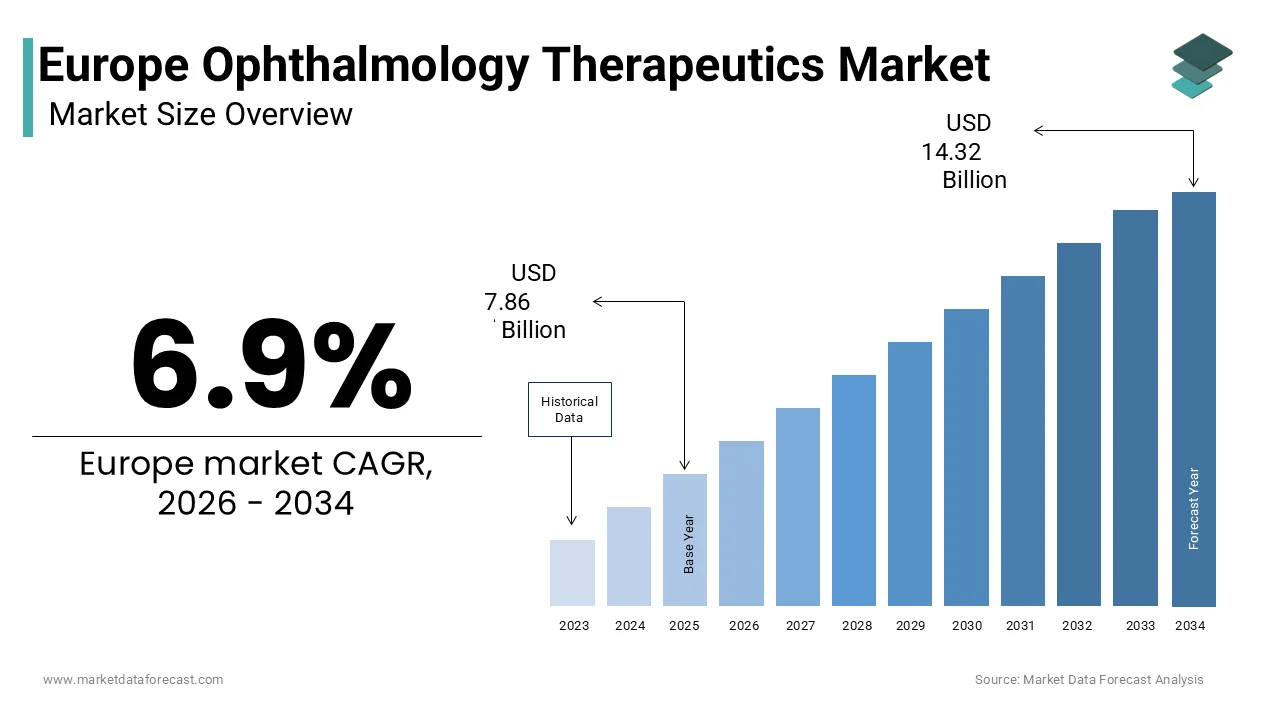
The Europe ophthalmology therapeutics market was valued at USD 7.86 billion in 2025, reached USD 8.40 billion in 2026, and is projected to grow at a CAGR of 6.9% from 2026 to 2034, reaching USD 14.32 billion by 2034, driven by population ageing, the rising burden of retinal disorders, and sustained public reimbursement for vision-preserving therapies.
Key Market Highlights
- 2025 Market Size: USD 7.86 billion
- 2026 Estimate: USD 8.40 billion
- 2034 Forecast: USD 14.32 billion
- CAGR (2026–2034): 6.9%
Quick Growth Drivers
- Rapid growth in the elderly population across Europe
- Rising prevalence of age-related macular degeneration and diabetic retinopathy
- Strong clinical adoption of intravitreal anti-VEGF therapies
- Integration of ophthalmic drugs into standard care pathways and reimbursement systems
- EMA support for innovative biologics, sustained-release platforms, and gene therapies
Principal Restraints
- High treatment burden due to frequent intravitreal injections
- Clinic capacity constraints and patient non-adherence
- Fragmented national HTA and reimbursement processes
- Budget impact concerns for high-cost gene and cell therapies
High-Value Opportunities
- Sustained-release ocular drug-delivery implants reducing injection frequency
- Expansion of gene and cell-based therapies for inherited retinal disorders
- Longer-acting anti-VEGF and bispecific antibodies improving durability
- Public funding under Horizon Europe for dry AMD and rare eye diseases
Key Market Challenges
- Shortage of ophthalmologists and retinal specialists in several regions
- Unequal access to advanced care between Western and Eastern Europe
- Limited incorporation of patient-reported outcomes in HTA decisions
- Restricted number of certified centres for gene-therapy administration
Fastest-Growing Segments
- Diabetic Retinopathy: CAGR 11.2% — rising diabetes prevalence and screening
- Eye Clinics (End User): CAGR 10.3% — decentralised injection and shared-care models
- Sustained-Release Therapies: Strong pipeline momentum
Regional Leadership & Dynamics
- Germany (22.5%) — high intravitreal volumes, strong reimbursement, gene-therapy hubs
- United Kingdom — NHS-led retinal care, large-scale diabetic eye screening
- France — centralised retinal networks and rapid reimbursement uptake
- Italy — ageing population and fast-track adoption of longer-acting agents
- Switzerland — high per-capita utilisation and strong clinical-trial density
What Wins Commercially
- Therapies that reduce injection frequency and clinic visits
- Strong real-world evidence supporting durability and adherence
- Rapid alignment with national reimbursement and HTA timelines
- Delivery platforms that integrate smoothly into hospital and clinic workflows
Top Strategic Ask for Executives
- Prioritise sustained-release and long-duration therapies to ease system burden
- Expand real-world evidence generation to support reimbursement negotiations
- Invest in workforce-efficient delivery models and shared-care networks
- Align innovation strategies with Europe’s ageing-population vision needs
Leading Players
Some of the companies that are playing a dominating role in the Europe ophthalmology therapeutics market include:
- Novartis AG
- Roche Holding AG
- Regeneron Pharmaceuticals
- Bayer AG
- Bausch + Lomb
- Santen Pharmaceutical
- Pfizer Inc.
Europe Ophthalmology Therapeutics Market Size
The europe ophthalmology therapeutics market was valued at USD 7.86 billion in 2025, is expected to reach USD 8.40 billion in 2026, and is projected to grow at a CAGR of 6.9% from 2026 to 2034 and reach USD 14.32 billion by 2034.
Ophthalmology therapeutics include a specialised class of pharmaceutical and biologic agents designed to diagnose, treat, and manage diseases of the eye,e ranging from chronic degenerative conditions to acute inflammatory and infectious disorders. In Europe, these include anti-vascular endothelial growth factor injections, corticosteroids,s antibiotics, antivirals and emerging gene and cell-based therapies targeting the retina, cornea and anterior segment. The European Medicines Agency lists dozens oauthoriseded ophthalmic medicinal products in the EU, with a substantial subset indicated for retinal diseases. The clinical landscape is driven by Europe’s ageing population, a rising burden of diabetic eye disease, and stringent regulatory pathways under the EU Clinical Trials Regulation and the Medical Devices Regulation for combination products. The European Commission’s Horizon Europe programme has provided targeted funding for research into inherited retinal disorders and dry age‑related macular degeneration, reflecting sustained public investment in vision science. Unlike systemic therapies, ophthalmic drugs must overcome unique anatomical barriers such as the blood–retinal barrier, necessitating advanced delivery platforms including sustained‑release implants and nanoparticle systems. This convergence of unmet medical need, regulatory sophistication, and scientific innovation defines the contemporary European ophthalmology therapeutics market.
MARKET DRIVERS
Ageing Population and Escalating Burden of Retinal Disorders
Europe’s demographic ageing is a primary driver of demand for ophthalmic therapeutics because age strongly correlates with vision‑threatening retinal disease. In 2023, 21.3% of the EU population was aged 65 or older, a share projected to reach 28% by 2040. This older cohort facesan elevated incidence of age‑related macular degeneration, which affects roughly 17 million Europeans, and diabetes‑related eye disease is also rising: about 60 million adults in Europe live with diabetes, with an estimated 35% developing diabetic retinopathy within two decades of diagnosis. Clinical practice reflects this burden: intravitreal anti‑VEGF injections now exceed 5 million annually across the EU, with ranibizumab, aflibercept and brolucizumab forming the backbone of treatment for neovascular complications. Public payers in major systems reimburse these therapies in full, reinforcing sustained demand across Europe’s health infrastructure.
Integration of Ophthalmic Therapeutics into Clinical Pathways
Ophthalmic drugs and devices are now embedded in standard European care pathways, which is shifting them from optional interventions to essential components of vision preservation and is majorly driving the expansion of the European ophthalmology therapeutics market. Contemporary guidelines position prostaglandin analogues and rho‑kinase inhibitors as first‑line agents for intraocular pressure control, while anti‑VEGF therapy is mandated for centre‑involving diabetic macular oedema. Reimbursement frameworks mirror these clinical standards, as some HTA bodies require diagnostic confirmation by OCT and fund up to a year’s worth of injections. Regulatory pathways accept visual acuity and retinal thickness as surrogate endpoints, accelerating approvals for agents that extend dosing intervals. Hospital formularies in several countries routinely add newly authorised ophthalmic biologics within months of EMA approval, ensuring rapid clinical uptake and predictable utilisation.
MARKET RESTRAINTS
High Treatment Burden and Injection Frequency Limiting Adherence
The intensive administration schedule for current intravitreal therapies imposes substantial strain on patients and health systems, which is undermining real‑world outcomes and hampering the growth of the European ophthalmology therapeutics market. Standard regimens for neovascular AMD typically require 8–12 clinic visits in the first year. Audits show that a significant share of patients miss multiple appointments annually due to transport barriers, caregiver dependence or injection anxiety, and missed care is associated with markedly higher rates of severe vision loss. Clinics are operating beyond capacity in major centres, and although longer‑acting agents reduce injection frequency for some patients, monitoring visits remain necessary. Until sustained‑release implants or durable gene therapies are widely available, the high treatment burden will continue to limit adherence and effectiveness across diverse populations.
Stringent Regulatory Requirements and Complex Reimbursement Landscapes
Market access for ophthalmology therapeutics is constrained by fragmented national HTA processes and evolving regulatory expectations for advanced therapies, which further hinder the growth of the European ophthalmology therapeutics market. Time from EMA approval to national reimbursement varies widely, delaying patient access in some markets. High‑cost modalities such as gene therapies face restrictive budget‑impact assessments that can prevent adoption. Intravitreal products are subject to rigorous clinical‑trial safety monitoring and post‑market pharmacovigilance for intraocular inflammation and endophthalmitis. During price negotiations, many new biologics encounter discounts or volume caps driven by QALY thresholds that may not fully capture vision‑specific benefits. These systemic barriers slow uptake and reduce commercial incentives to invest in novel ophthalmic modalities despite clear unmet need driven by Europe’s ageing population.
MARKET OPPORTUNITIES
Advancement of Sustained‑Release Delivery Platforms
The development of sustained‑release ocular drug‑delivery systems offers a transformative route to reduce the frequency of intravitreal injections and improve long‑term adherence, which is a promising opportunity in the European ophthalmology therapeutics market. The European Commission’s Innovative Health Initiative allocated over €30 million in 2023 to clinical validation of biodegradable and refillable ocular implants across eight member states. The Port Delivery System with ranibizumab received EMA approval in 2022 and is now deployed in more than 50 centres in Germany and the UK, providing continuous anti‑VEGF release for up to six months. Dexycu, a dexamethasone intraocular suspension, reduces post‑cataract inflammation with a single administration and eliminates the need for topical steroid drops. Industry leaders are advancing refillable reservoir technologies that can be topped up ina clinic without surgical replacement. Patient preference is strong. A majority indicate they favour sustained‑release options even when accepting minor surgical risk. Given Europe’s ageing population and constrained ophthalmology workforce, these platforms offer a viable path to lower clinic burden while preserving visual outcomes.
Expansion of Gene and Cell‑Based Therapies for Inherited Retinal Diseases
Gene and cell therapies are shifting the treatment paradigm for inherited retinal disorders from chronic management toward potential one‑time corrective interventions, which is another major opportunity in the European ophthalmology therapeutics market. Voretigene neparvovec for RPE65‑mediated Leber congenital amaurosis became the first ophthalmic gene therapy approved by the EMA in 2018 and has since been administered at specialised centres in France, Germany and the UK. Horizon Europe is funding additional gene‑therapy trials targeting Stargardt disease, choroideremia and X‑linked retinitis pigmentosa, with readouts expected by 2026. Stem‑cell‑derived retinal pigment epithelium patches are in phase II trials at leading centres and show early signs of structural integration and visual improvement in dry AMD. The European Reference Network for Rare Eye Diseases coordinates referrals across 28 countries to improve equitable access. Although cost and delivery complexity remain high, these modalities represent a fundamental shift in therapeutic intent for genetic blindness.
MARKET CHALLENGES
Workforce Shortages and Unequal Access to Specialised Care
A shortage of ophthalmologists and retinal specialists across Europe produces marked disparities in timely diagnosis and treatment, especially in rural and Eastern regions, which is challenging the growth of the European ophthalmology therapeutics market. Significant deficits in specialist density translate into long waits for retinal consultation in some countries versus rapid access in others, and treatment delays materially worsen outcomes: each month without therapy for neovascular AMD increases the risk of permanent vision loss. Only a limited number of centres are certified to deliver gene therapies, forcing cross‑border travel that many elderly or low‑income patients cannot undertake. Telemedicine programmes exist but are rarely integrated with injection services, limiting their practical benefit. Until workforce distribution is addressed and access protocols standardised, many patients will remain unable to benefit from advanced ophthalmic therapeutics.
Limited Patient‑Reported Outcome Measures in Regulatory and Reimbursement Decisions
Despite vision’s central role in quality of life, HTA and reimbursement processes in Europe often underweight patient‑centred outcomes, which further challenges the expansion of the European ophthalmology therapeutics market. Evaluations typically prioritise ETDRS visual‑acuity letter gains, which do not capture functional vision aspects such as reading, mobility or night driving. Many patients with early disease retain 20/20 acuity yet experience meaningful disability in contrast sensitivity and daily tasks. Regulatory frameworks have only recently begun to accept validated vision‑related quality‑of‑life instruments as supportive endpoints. As a result, high‑cost therapies for conditions like geographic atrophy may be rejected obased onmodest acuity changes despite demonstrable patient‑reported benefits. Advocates call for mandatory inclusion of patient experience data in ophthalmic HTAs; until outcome measures reflect lived experience, access to innovations will be constrained by narrow valuation metrics.
REPORT COVERAGE
| REPORT METRIC | DETAILS |
| Market Size Available | 2025 to 2034 |
| Base Year | 2025 |
| Forecast Period | 2026 to 2034 |
| Segments Covered | By Indication, End User, and Region. |
| Various Analyses Covered | Global, Regional, and Country-Level Analysis, Segment-Level Analysis, Drivers, Restraints, Opportunities, Challenges; PESTLE Analysis; Porter’s Five Forces Analysis, Competitive Landscape, Analyst Overview of Investment Opportunities |
| Countries Covered | UK, France, Spain, Germany, Italy, Russia, Sweden, Denmark, Switzerland, Netherlands, Turkey, Czech Republic, Rest of Europe |
| Market Leaders Profiled | Pfizer Inc., Allergan Inc., Alcon Inc., Merck & co. Inc., Roche Valeant, Regeneron, Santen, Bayer, Senju, Lpath, and Eye Gate Pharmaceuticals. |
SEGMENTAL ANALYSIS
By Indication Insights
The age‑related macular degeneration (AMD) segment led the market by holding the highest share of the European ophthalmology therapeutics market in 2025. The dominance of the AMD segment in this regional market is primarily due to its high prevalence among older adults and the critical dependence on chronic intravitreal anti‑VEGF therapy for vision preservation. Clinical epidemiology consortia and retina societies report that AMD affects millions across Europe and that the neovascular form requires ongoing pharmacologic intervention for many patients. Professional bodies and national payers document that anti‑VEGF injections for AMD represent a substantial proportion of intravitreal administrations, and treatment protocols in major health systems provide for repeated dosing regimens and reimbursement of licensed agents. The European Medicines Agency has approved multiple anti‑VEGF agents for AMD in recent years, and the introduction of longer‑acting molecules that permit extended dosing intervals is improving adherence and reducing clinic burden. This combination of demographic pressure, clinical necessity and policy support ensures AMD remains the dominant therapeutic indication in Europe’s ophthalmic landscape.
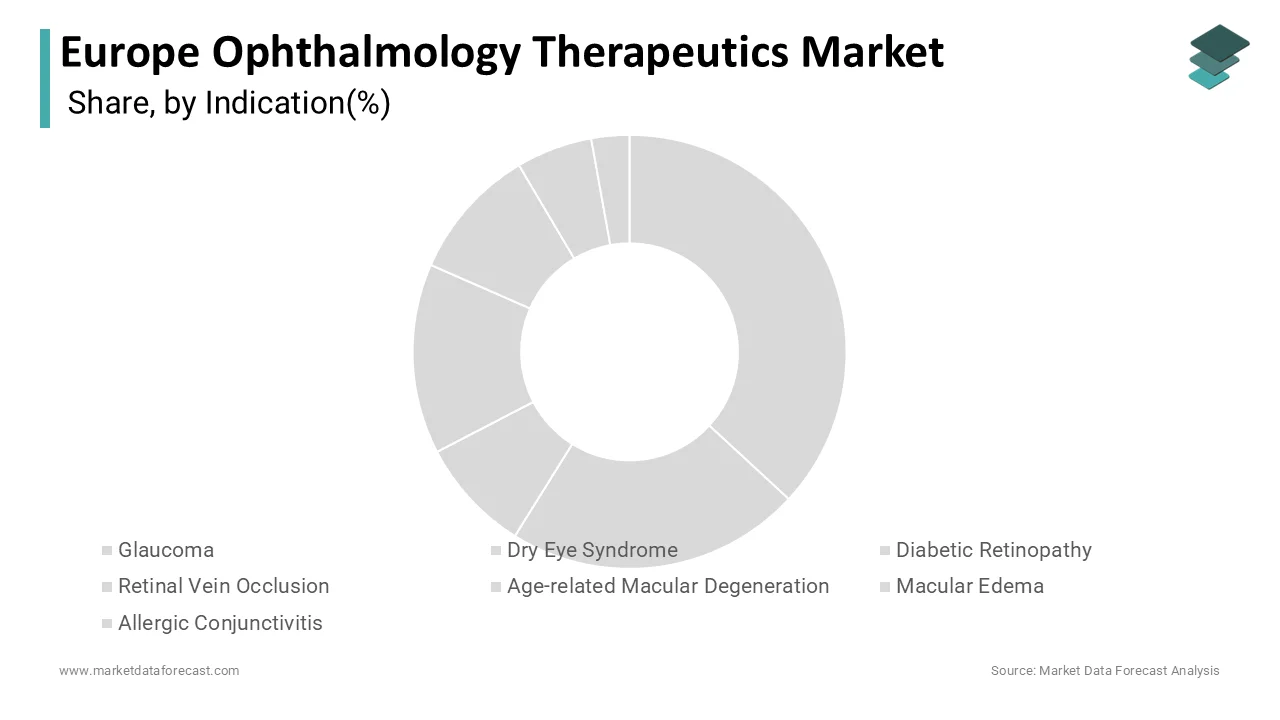
The diabetic retinopathy segment is the fastest‑growing indication and is projected to grow at a CAGR of 11.2% over the forecast period, owing to the rising diabetes prevalence, expanded screening programs that detect disease earlier, and broader adoption of advanced therapeutics for sight‑threatening complications. Population health data and diabetes registries indicate a large and growing pool of adults at risk of retinopathy and diabetic maculopathy, and regulatory approvals and guideline updates have broadened therapeutic options for these patients. National screening and referral programs in several Member States accelerate diagnosis and treatment initiation, whispeciality-societyety guidance suppothe rts use of intravitreal steroids and anti‑VEGF agents in defined patient groups. With demographic and lifestyle trends pointing to continued increases in diabetes burden, diabetic retinopathy is positioned for sustained therapeutic expansion across Europe.
By End User Insights
The hospitals segment commanded the major share of the European ophthalmology therapeutics market in 2025 because they centralise complex intravitreal procedures, high‑risk case management and specialised retinal and glaucoma services. Health‑system reporting and professional guidance show that a large majority of intravitreal injections and all advanced gene‑therapy administrations occur in hospital ophthalmology departments or accredited reference centres that provide surgical backup and pharmacovigilance. National systems designate university and tertiary hospitals as referral hubs for advanced care, and hospital‑based injection clinics integrate diagnostics (OCT, angiography) with therapeutics to enable real‑time treatment decisions. These institutional, regulatory and clinical factors consolidate hospitals as the primary end user for ophthalmology therapeutics across Europe.
The eye clinics segment is a prominent segment and is the fastest‑growing end‑user segment, and is predicted to register a CAGR of 10.3% over the forecast period, due to thdecentralisationon of routine ophthalmic care, delegation protocols that permit trained clinicians to administer maintenance anti‑VEGF regimens outside hospitals, and accreditation frameworks that enable clinic‑based delivery. Professional boards and regulator guidance now support outpatient intravitreal administration in accredited clinics for stable patients, and several national reimbursement schemes treat clinic‑based injections on parity with hospital care. Shared‑care and delegation models are being implemented across multiple Member States, making eye clinics essential nodes in sustainable retinal‑care networks and relieving pressure on hospital systems.
COUNTRY LEVEL ANALYSIS
Germany Ophthalmology Therapeutics Market Size
Germany dominated the ophthalmology therapeutics market in Europe in 2025 by holding 22.5% of the regional market share. An ageing population and a comprehensive statutory health insurance system drive high demand for retinal care, which is reflected in more than 1.2 million intravitreal injections administered annually. Reimbursement pathways through the GKV Spitzenverband cover EMA‑approved ophthalmic biologics without prior authorisation, while a dense network of certified gene‑therapy centres (notably in Tübingen and Bonn) delivers advanced treatments such as voretigene neparvovec. Standardised diagnostic protocols, including mandatory OCT for anti‑VEGF decisions, and strong clinical infrastructure sustain Germany’s central role in the European ophthalmology therapeutics market.
United Kingdom Ophthalmology Therapeutics Market
The United Kingdom held the second-largest share of the European ophthalmology therapeutics market in 2025. The NHS delivers over 900,000 intravitreal injections each year through hospital eye services and community diagnostic hubs established under the Elective Recovery Plan, and NICE guidance ensures anti‑VEGF therapy is routinely used for centre-involving DME and neovascular AMD with no patient cost sharing. Moorfields Eye Hospital functions as a continental reference centre for gene‑therapy trials, and the NHS Diabetic Eye Screening Programme identifies more than 200,000 new retinopathy cases annually, supporting early intervention and sustained market demand.
France Ophthalmology Therapeutics Market
France is estimated to witness a prominent CAGR in the European ophthalmology therapeutics market over the forecast period, owing to the centralised healthcare coordination and national ophthalmology networks. More than 150 certified retinal centres provide advanced anti‑VEGF and steroid‑implant therapies, while the National Health Insurance Fund typically implements rapid reimbursement for new ophthalmic agents. The Plan Santé Vision 2023 allocated €120 million to expand intravitreal access in rural areas, and the FRB registry tracks over 100,000 patients on anti‑VEGF therapy to inform real‑world outcomes and policy.
Italy Ophthalmology Therapeutics Market
Italy is predicted to account for a notable share of the European ophthalmology therapeutics market during the forecast period due to a high prevalence of age‑related eye disease and a large ophthalmology workforce. With over 24% of the population aged 65+, the country performs roughly 750,000 intravitreal injections annually and has introduced fast‑track reimbursement pathways for longer‑acting agents such as faricimab to reduce regional access disparities. Leading academic centres, including San Raffaele, participate in trials of next‑generation therapies, while regional health authorities in Lombardy and Tuscany provide full coverage for EMA‑approved ophthalmic biologics without patient co‑payments.
Switzerland Ophthalmology Therapeutics Market
Switzerland is anticipated to exhibit a healthy CAGR in the European ophthalmology therapeutics market during the forecast period and exerts an outsized influence through world‑class academic hospitals and universal health coverage. Centres such as University Hospital Zurich and Jules Gonin Eye Hospital run advanced programs for inherited retinal diseases and geographic atrophy, and the country hosts more than 30 active clinical studies on novel anti‑VEGF and complement inhibitors. With mandatory insurance reimbursement and over 300,000 intravitreal injections administered annually, Switzerland combines high per‑capita utilisation with strong clinical trial activity and regulatory alignment.
COMPETITIVE LANDSCAPE
Competition in the European Ophthalmology Therapeutics Market is characterised by scientific differentiation, regulatory agility, and strategic alignment with public health priorities among a few global pharmaceutical leaders. The landscape is dominated by Novartis Roche and Bausch + Lomb,b each offering distinct therapeutic approaches across posterior and anterior segment diseases. Rivalrcentresrs on dosing interval efficacy, durability,y and real-world usability rather than price alone due to the high unmet need and protected reimbursement status of most agents. Unlike a generic market, the value of a product is determined by innovation in the delivery mechanism of action and integration into clinical workflows. Entry barriers remain high due to the need for large ophthalmic trial networks, EMA certification for advanced therapies,s and long-term pharmacovigilance infrastructure. Innovation cycles are accelerating with bispecific antibodies, gene therapy,s and sustained release implants becoming key differentiators. National health systems strongly influence adoption through reimbursement speed and treatment guidelines. Success in this environment demands deep clinical collaboration, regulatory expertise,ise and a commitment to reducing the systemic burden of vision care across Europe.
KEY MARKET PLAYERS
Companies playing a leading role in the europe ophthalmology therapeutics market are
- Pfizer Inc.
- Allergan Inc.
- Alcon Inc.
- Merck & Co. Inc.
- Roche
- Valeant
- Regeneron
- Santen
- Bayer
- Senju
- Lpath
- Eye Gate Pharmaceuticals
TOP LEADING PLAYERS IN THE MARKET
- Novartis AG is a global leader in ophthalmology therapeutics and a cornerstone of the European Ophthalmology Therapeutics Market with its portfolio spanning anti-VEGF agents, corticosteroid implants,s and emerging gene therapies. The company’s aflibercept biosimilar and faricimab are widely used across European retinal clinics. In 2024, Novartis expanded access to its Port Delivery System with ranibizumab in ten EU countries,s enabling continuous drug release for up to six months. It also partnered with the European Reference Network for Rare Eye Diseases to facilitate patient identification and treatment for inherited retinal disorders. Through sustained innovation in delivery technology and disease coverage,ge Novartis reinforces its commitment to reducing treatment burden and improving visual outcomes across Europe.
- Roche Holding AG exerts significant influence in tEuropeanope Ophthalmology Therapeutics Market through its pioneering bispecific antibody faricimab, which targets both VEGF A and angiopoietin 2 to extend dosing intervals in retinal diseases. Approved by the European Medicines Agency in 2022 for AMD and diabetic macular edema faricimab is now integrated into national treatment protocols in Germany, France,e and the UK. In early 202, Roche launched a real-world evidence program across 25 European rretinacentresto evaluate faricimab’s impact on clinic capacity and patient adherence. It also enhanced its ophthalmology pipeline with RG6405, a next generation anti VEGF molecule in phase II trials for geographic atrophy. By aligning its science with Europe’s need for a sustainable and efficient vision car,e Roche strengthens its role as a forward-looking therapeutic partner.
- Bausch + Lomb Corporation plays a pivotal role in the European Ophthalmology Therapeutics Market with a diversified portfolio covering dry eye, glaucomaa and post-surgical inflammation. Its loteprednol etabonate suspension andcyclosporin nanoemulsionn are first-line treatments for ocular surface diseases across European eye clinics. In 2024, Bausch + Lomb received European Medicines Agency approval for a novel rho kinase inhibitor for glaucoma, offering an alternative mechanism of action for patients intolerant to prostaglandins. It also expanded its dry eye disease awareness campaign in collaboration with the European Society of Ophthalmology to improve diagnosis and early intervention. Through therapeutic breadth and focus on under-addressed anterior segment conditions, Bausch + Lomb ensures comprehensive eye health support across the European care continuum.
TOP STRATEGIES USED BY THE KEY MARKET PARTICIPANTS
Key players in thEuropeanpe Ophthalmology Therapeutics Market employ four principal strategies to sustain competitive advantage. First, they develop extended duration and sustained release formulations to reduce treatment frequency and alleviate the burden on patients and clinics. Second, they pursue dual or multi-target mechanisms like bispecific antibodies to enhance the efficacy and durability of response. Third, they generate robust real-world evidence through large-scale registries and multicenter studies to demonstrate value to payers and clinicians beyond clinical trials. Fourth, they align market access strategies with national health technology assessment timelines to accelerate reimbursement across diverse EU member states. Additionally, companies invest in patient support programs and ophthalmologist training to ensure proper administration and adherence. These strategies collectively address Europe’s dual imperatives of clinical excellence and healthcare system sustainability in ophthalmic care.
MARKET SEGMENTATION
This research report on the europe ophthalmology therapeutics market has been segmented and sub-segmented into the following categories.
By Indication
- Glaucoma
- Dry Eye Syndrome
- Diabetic Retinopathy
- Retinal Vein Occlusion
- Age-related Macular Degeneration
- Macular Edema
- Allergic Conjunctivitis
By End User
- Hospitals
- Eye Clinics
- Diagnostic Centres
- Patients
By Country
- UK
- France
- Spain
- Germany
- Italy
- Russia
- Sweden
- Denmark
- Switzerland
- Netherlands
- Turkey
- Czech Republic
- Rest of Europe