- Product Description Description
- Table of Contents TOC
- List of Table & Figure LOT
- Get Free Sample PDF Sample PDF
Market Size, 2025
$33.23 MnMarket Estimate, 2026
$44.98 MnMarket Forecast, 2034
$506.62 MnCAGR, 2026–2034
35.35$Europe Organ-on-Chip Market Report Summary
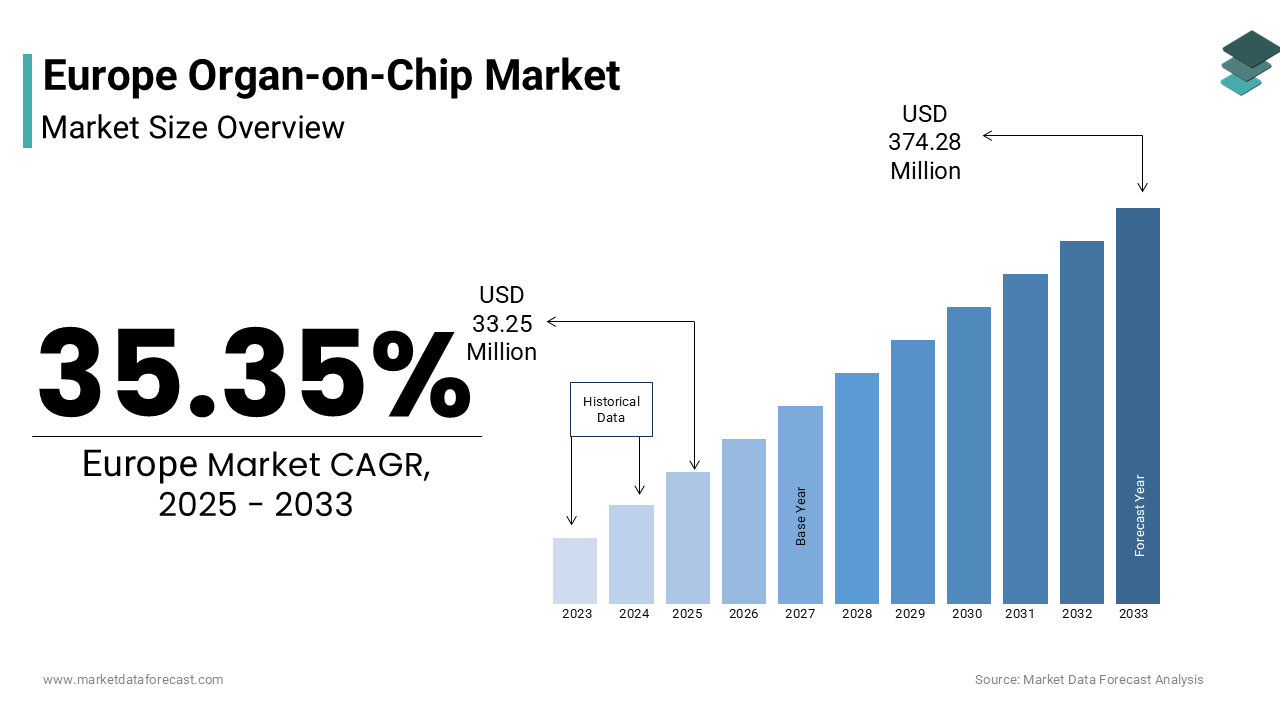
The Europe organ-on-chip market was valued at USD 33.23 million in 2025 and is projected to reach USD 506.62 million by 2034, growing at a CAGR of 35.35% from 2026 to 2034. The growth of the Europe organ-on-chip market is driven by the EU-wide shift toward human-relevant non-animal testing models, rising pharmaceutical R&D investments in predictive microphysiological systems, and strong Horizon Europe funding aimed at advancing next-generation health technologies. Increasing emphasis on reducing drug development failure rates, growing demand for personalized disease models, and expanding adoption across academic research centers and biotechnology companies are further fueling market expansion. Moreover, regulatory momentum supporting alternative methods, coupled with the integration of organ-on-chip systems into precision medicine and toxicology workflows, is strengthening market uptake across Europe.
Key Market Trends
- Strengthening EU regulatory focus on non-animal methods (NAMs), driving demand for human-relevant microphysiological systems.
- Growing integration of multi-organ chips to improve translational predictability in early drug discovery.
- Expansion of patient-derived organ-on-chip models for precision oncology and personalized treatment selection.
- Rising adoption of outsourced organ-on-chip services by SMEs and biotech firms lacking in-house infrastructure.
- Increasing collaboration between academic institutions, industry players, and EU-funded consortia to develop standardized protocols and accelerate regulatory acceptance.
Segmental Insights
- Based on products & services, the products segment held the largest share of the Europe organ-on-chip market in 2024, driven by strong adoption of microfluidic instruments and organ-specific chip platforms across pharmaceutical companies, CROs, and academic laboratories. High demand for modular, customizable devices supporting multi-organ integration and long-term experimentation reinforces segment dominance.
- Based on application, the drug discovery segment was the largest in 2024, owing to rising pressure on pharmaceutical developers to reduce late-stage clinical failures and enhance human-relevant screening accuracy through dynamic microphysiological platforms.
Regional Insights
The European organ-on-chip market is witnessing accelerated adoption across research-intensive economies driven by regulatory alignment, public funding, and strong academic-industry collaborations.
- Germany leads the region, supported by advanced microfabrication expertise, high R&D funding, and active participation in EU validation consortia.
- United Kingdom maintains strong market presence through early adoption by pharmaceutical companies, translational research institutes, and technology-driven CROs.
- France continues to expand through national investment in alternative testing strategies and oncology research infrastructure.
- Netherlands, Switzerland, and Sweden serve as innovation hubs, hosting key SMEs and academic centers specializing in microphysiological engineering.
Competitive Landscape
The Europe organ-on-chip market is characterized by a mix of global leaders and specialized regional innovators with strong emphasis on biological fidelity, platform modularity, and regulatory-ready validation. Companies increasingly collaborate with academic institutions and EU-funded consortia to standardize methodologies and accelerate acceptance by regulatory agencies such as EMA and ECHA. The market is highly innovation-driven, with players focusing on multi-organ integration, disease-specific models, automation, and cloud-based analytics to enhance usability and scalability. Key companies operating in the European organ-on-chip space include Emulate, CN Bio Innovations, TissUse, Mimetas, Tara Biosystems, Hesperos, Nortis, Micronit Microtechnologies, Kirkstall, Cherry Biotech, and Else Kooi Laboratory, among others.
 Download Free Sample Report
Europe Organ-on-Chip Market Size
The Europe organ-on-chip market size was valued at USD 33.23 billion in 2025 and is anticipated to reach USD 44.98 billion in 2026 from USD 506.62 billion by 2034, growing at a CAGR of 35.35% during the forecast period from 2026 to 2034.
Organ on a chip refers to the microfluidic cell culture devices that emulate the physiological functions of human organs on a miniature scale. These platforms integrate living human cells within engineered microenvironments to replicate organ level responses, serving as advanced alternatives to conventional in vitro models and animal testing. In Europe, this technology has gained strategic relevance within pharmaceutical research, toxicology screening, and personalized medicine frameworks. Regulatory and ethical discussions within the European Union highlight the need to move towards human-relevant models in scientific procedures, as the use of animals in research remains a significant concern. The high rate of failure for drug candidates in human clinical trials, particularly after promising preclinical animal studies, underscores the challenge of species differences and reinforces the push for more predictive human-based research systems. Regulatory agencies and the scientific community are actively exploring non-animal methods (NAMs) to address the limitations of traditional animal models in predicting human safety and efficacy outcomes for new medicines. The European Union’s Horizon Europe program has allocated significant funding to support next generation health technologies, including organ on a chip platforms, as part of its commitment to the 3R principles of replacement reduction and refinement in animal experimentation. While market metrics are intentionally excluded per the instruction, these contextual parameters illustrate the scientific regulatory and ethical ecosystem shaping the Europe organ on a chip landscape.
MARKET DRIVERS
Accelerated Regulatory Shift Toward Human Relevant Testing Models
Regulatory evolution in Europe is a pivotal driver propelling the Europe organ on a chip market. The European Union’s legislation aims to reduce reliance on animal testing and promotes the application of non-animal testing principles across member states. There has been a push to develop a comprehensive plan to phase out animal experimentation, focusing on human biology-based innovations. This legislative momentum has catalyzed investment in alternative methods with organ on a chip technologies recognized as a central pillar. Many substances undergo safety evaluation, and traditional animal models often struggle to provide accurate toxicological information for these evaluations. Advanced testing methods, including organ-on-a-chip platforms, have been a strategic focus area and received collaborative funding. Furthermore, pharmaceutical developers operating in Europe face increasing pressure from the European Medicines Agency to demonstrate human relevance in preclinical data. The limited success rate of potential medicines during development indicates a strong incentive to use more predictive testing models earlier in the process. Consequently, regulatory clarity combined with financial support and ethical mandates creates a fertile demand environment for organ on achip solutions across academic biotech and industrial sectors in Europe.
Intensifying Pharmaceutical R&D Investment in Predictive Human Models
Pharmaceutical innovation in the region is increasingly anchored in technologies that enhance clinical translatability and reduce late stage attrition, and thereby fueling the expansion of the Europe organ on a chip market. Organ-on-a-chip systems are emerging as a cornerstone of this transformation. The biopharmaceutical industry in Europe maintains a consistent focus on the development of future drug discovery methods. A significant portion of this investment targets human relevant platforms that can model complex disease pathophysiology more accurately than conventional cell cultures or animal models. Organ on a chip technology enables dynamic co culture of multiple human cell types under physiological flow conditions thereby better mimicking tissue interfaces such as the lung alveolus or gut barrier. This capability is particularly critical in oncology and immunology where interspecies differences severely limit animal model utility. Projects in drug development currently incorporate advanced biological systems to improve preclinical safety and effectiveness evaluations. Additionally, the rise of personalized medicine in Europe has amplified demand for patient derived organ on achip models capable of predicting individual therapeutic responses. A collaborative research project integrates specific cell cultures into microfluidic platforms, allowing for the simulation of disease environments and aiding the screening of potential therapies This convergence of strategic R&D priorities regulatory demands and precision medicine trends creates a robust and expanding demand base for organ on a chip technologies across the European pharmaceutical ecosystem.
MARKET RESTRAINTS
High Cost and Technical Complexity of Platform Standardization
The substantial cost and technical intricacy associated with platform standardization is a major restraint to the Europe organ on a chip market. Unlike conventional cell culture systems which follow well established protocols organ on a chip devices require specialized microfabrication expertise precise fluidic control and stringent quality assurance measures to ensure reproducibility across laboratories. Moreover, the absence of universally accepted performance benchmarks complicates cross study validation. As per research, inconsistent data output from non standardized platforms remains a key barrier to regulatory acceptance of organ on a chip derived evidence. Even among industry leaders variability in chip design cell sourcing and media composition leads to divergent biological responses limiting comparability. As per sources, fewer number of European research institutions possess the integrated technical infrastructure required for robust organ on a chip experimentation. Additionally scaling these systems for high throughput screening typical in pharmaceutical pipelines introduces further engineering hurdles related to parallelization automation and data integration. The persistent risk of fragmented methodologies, which undermines both the scientific credibility and the commercial scalability of organ-on-a-chip applications across Europe, stems from a lack of coordinated standardization efforts among academic consortia, regulatory authorities, and industrial players.
Limited Integration with Existing Drug Development Workflows
Persistent obstacles are hindering the seamless integration of promising organ-on-a-chip platforms into established pharmaceutical development workflows throughout the region, which negatively impacts the expansion of the Europe organ on a chip market. Most pharmaceutical companies operate on legacy infrastructure optimized for static cell cultures and animal models with deeply embedded data management systems validation protocols and regulatory submission templates. Introducing organ on a chip technology necessitates not only hardware adaptation but also extensive retraining of personnel revision of standard operating procedures and generation of comparative validation datasets. According to a study, Some pharmaceutical firms have shown hesitation in incorporating organ-on-a-chip data into formal regulatory submissions, citing concerns about validation and acceptance criteria. The European Medicines Agency has acknowledged the technology’s potential but emphasizes that current guidelines do not yet accommodate dynamic microphysiological data in lieu of traditional toxicology endpoints. Furthermore, Operational difficulties can arise from the difference in timelines between organ-on-a-chip assays, which may require days or weeks for tissue maturation, and the faster timelines of early drug screening. Harmonizing outputs from organ-on-a-chip technology with existing computational toxicology models is a notable challenge. The implementation of new drugs across European development ecosystems remains slow and fragmented because there are no standardized data formats, interoperable software interfaces, or clear regulatory pathways.
MARKET OPPORTUNITIES
Expanding Public Private Collaborative Frameworks Under Horizon Europe
The Horizon Europe program offers a major opportunity for the Europe organ on a chip market. This is done by fostering deep public private integration and strategic co-funding of advanced health technologies. As the European Union’s flagship research and innovation initiative Horizon Europe has designated organ on a chip and related microphysiological systems as critical components of its health cluster particularly under the Pharmaceutical Strategy for Europe and the Chemicals Strategy for Sustainability. According to sources, Financial support has been directed toward collaborative initiatives to advance human-relevant testing platforms, with specific backing for multi-organ chip integration, disease modeling, and a path toward official recognition. A collaborative effort involves numerous institutions, including academic groups, research organizations, and small and medium enterprises, working to develop widely accepted protocols for organ-on-a-chip technologies. These consortia not only de risk technological development but also create pre competitive data sharing environments that accelerate adoption. Additionally, Horizon Europe mandates cross border participation ensuring that innovations developed in one member state benefit from broader validation and scalability across the continent. Such structured collaboration has facilitated the progression of several organ-on-a-chip derived platforms into formal testing programs designed to validate their use. The program’s emphasis on translating research into market ready solutions combined with its robust governance mechanisms provides a unique ecosystem for scaling organ on a chip technologies from academic prototypes to industrially validated tools thereby unlocking substantial commercial and scientific potential across Europe.
Rising Demand for Disease Specific Organ Models in Personalized Oncology
The growing emphasis on precision oncology in theregion is creating a high-value opportunity for specialized organ on a chip platforms tailored to individual patient profiles and tumor types, which is predicted to propel the growth of the Europe organ on a chip market. There is a clear demand for predictive models in cancer treatment that can more accurately reflect individual patient differences and the complexities of the tumor microenvironment. Organ on a chip technology enables the co culture of patient derived tumor cells stromal components and immune cells under controlled perfusion mimicking in vivo conditions more faithfully than static cultures. This capability supports therapy response testing ex vivo allowing clinicians to identify optimal treatment regimens before systemic administration. Europe is showing leadership in personalized medicine investments, with several national health systems implementing specific mechanisms to support advanced tumor profiling. Building on this foundation several EU funded initiatives including the PRECISE project are integrating organ on a chip platforms into clinical decision support workflows. Initial findings suggest that patient-specific tumor on a chip models may offer improved accuracy in predicting a patient's response to immunotherapy when compared to conventional laboratory testing methods. Furthermore the European Society for Medical Oncology has endorsed the inclusion of microphysiological systems in next generation clinical trial designs to enrich patient selection and reduce trial failure rates. European healthcare systems are focusing more on value-based care and effective treatments. Advanced models provide a scalable way to enhance oncology outcomes and make better use of resources.
MARKET CHALLENGES
Persistent Gaps in Interdisciplinary Talent and Training Infrastructure
The acute shortage of interdisciplinary professionals capable of bridging biology microengineering data science and regulatory science is a serious impediment to the Europe organ on a chip market. The successful design operation and interpretation of organ on a chip experiments demand a rare fusion of skills that traditional academic curricula rarely cultivate in an integrated manner. There appears to be a limited number of researchers within the European Union who currently have the complete set of skills necessary to independently create and assess organ-on-a-chip platforms. This scarcity impedes both academic progress and industrial translation. According to research, a portion of biotech startups working on microphysiological systems cite talent acquisition as their primary operational bottleneck. Moreover, existing training programs remain fragmented with biology students receiving minimal exposure to microfluidics and engineering students lacking depth in human physiology or pharmacokinetics. Even large pharmaceutical companies struggle to assemble cross functional teams. Without coordinated education initiatives such as EU level graduate schools or industry certified certification programs the talent gap will continue to constrain innovation scalability and regulatory readiness. This human capital deficit represents a systemic bottleneck that cannot be resolved by capital investment alone but requires long term policy level intervention in science education and professional development across Europe.
Regulatory Ambiguity in Qualifying Organ on a Chip Data for Submissions
The lack of clear regulatory pathways for qualifying data generated from these platforms for formal submissions to European health authorities slows down the Europe organ on a chip market. The European Medicines Agency has acknowledged the promise of microphysiological systems but has yet to issue definitive guidelines on validation criteria data standards or acceptance thresholds for replacing or supplementing traditional preclinical studies. Unlike established assays such as Ames testing or rodent carcinogenicity studies organ on a chip outputs involve dynamic multi parameter readouts including barrier integrity cytokine flux and metabolic activity that do not map neatly onto current regulatory endpoints. The European Chemicals Agency faces similar challenges under REACH where organ on a chip data cannot yet fulfill mandatory testing requirements without extensive bridging studies. Developers operate in a fragmented EU market due to inconsistent qualification procedures, which delays products and discourages massive rollouts. This regulatory limbo inhibits the full realization of organ on a chip potential despite its scientific maturity and underscores the urgent need for structured dialogue between innovators regulators and standards bodies.
REPORT COVERAGE
| REPORT METRIC | DETAILS |
| Market Size Available | 2026 to 2034 |
| Base Year | 2025 |
| Forecast Period | 2026 to 2034 |
| Segments Covered | By Products & Services, Application & Region. |
| Various Analyses Covered | Global, Regional & Country Level Analysis, Segment-Level Analysis, DROC, PESTLE Analysis, Porter’s Five Forces Analysis, Competitive Landscape, Analyst Overview on Investment Opportunities |
| Regions Covered | United Kingdom, France, Spain, Germany, Italy, Russia, Sweden, Denmark, Switzerland, the Netherlands, Turkey, and the Czech Republic. |
| Key Market Players | Emulate, C.N. Bio Innovations, Tara Biosystems, Draper Laboratory, Mimetas, TissUse, Hesperos, Nortis, Micronit Microtechnologies B.V., Kirkstall, Cherry Biotech SAS, and Else Kooi Laboratory. |
SEGMENTAL ANALYSIS
By Products & Services Insights
The products segment held the majority share of the Europe organ on a chip market in 2024. The leading position of the products segment is attributed to the strategic preference of academic laboratories pharmaceutical companies and contract research organizations to own and customize organ on a chip hardware for long term research programs. It reflects strong institutional procurement of physical microfluidic platforms over outsourced services. Additionally, the modular nature of modern chip systems allows labs to integrate multiple organ models onto a single device a feature that enhances experimental flexibility and reduces per assay costs over time. The European Commission’s funding through Horizon Europe has further accelerated hardware acquisition with millions allocated to equip public research centers with standardized microphysiological platforms. Crucially product ownership facilitates compliance with stringent EU data sovereignty and biosafety regulations which restrict outsourcing of human cell-based research to third party vendors in certain jurisdictions. Consequently, the combination of scientific autonomy funding incentives and regulatory alignment solidifies the products segment as the structural backbone of the European organ on a chip ecosystem.
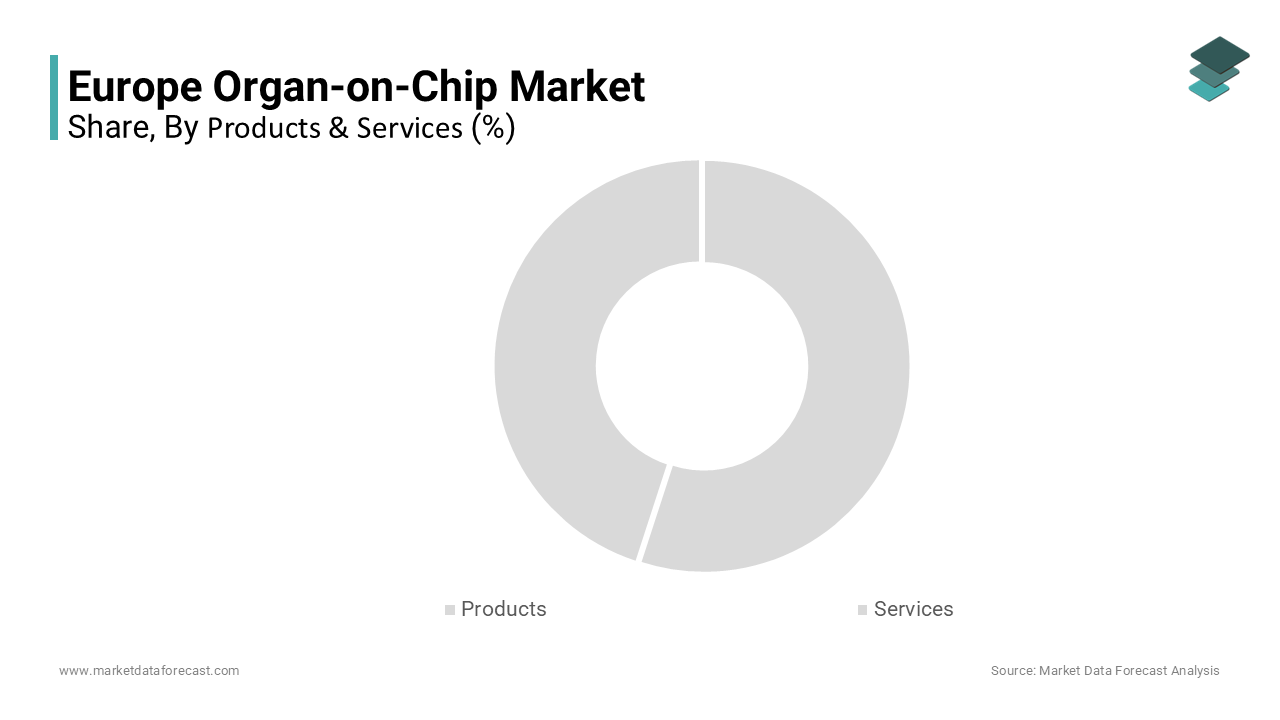
The services segment is expected to exhibit a noteworthy CAGR of 24.3% between 2025 and 2033. The rapid expansion of the services segment is driven by rising demand from small and medium sized biotech firms that lack capital for full infrastructure setup. Emerging biotechnology companies in Europe frequently operate with constrained research and development budgets, which increases reliance on external services. Contract research organizations such as Charles River Laboratories and Evotec have launched specialized microphysiological system offerings tailored to EU regulatory frameworks enabling clients to generate GLP compliant data without internal platform development. Furthermore, the complexity of multi organ integration and data interpretation has spurred demand for expert managed services particularly in therapeutic areas like immuno oncology where dynamic immune cell trafficking must be accurately modeled. As per sources, the number of EU funded consortia outsourcing organ on a chip validation to core service facilities increased. This trend is further amplified by the European Medicines Agency’s encouragement of third party qualified testing centers to support SMEs in regulatory submission preparation. The convergence of financial constraints scientific complexity and regulatory guidance positions the services segment as the highest growth vector in the European landscape.
By Application Insights
The drug discovery segment led the Europe organ on a chip market by capturing a share of 65.1% in 2024. The prominence of the drug discovery segment is propelled by the urgent need to improve clinical translatability and reduce late stage attrition in pharmaceutical pipelines. European pharmaceutical companies face mounting pressure to optimize R&D efficiency as drug development costs substantial amount per approved molecule. Organ on a chip platforms address this by enabling human relevant pharmacokinetic and pharmacodynamic profiling early in discovery allowing researchers to prioritize candidates with higher clinical success probability. Integrating organ-on-a-chip technology, such as those combining liver, heart, and gut chips, has the potential to significantly improve the accuracy of early-stage drug discovery screenings compared to conventional 2D cell cultures. Regulatory programs are increasingly supporting the adoption of these novel methodologies, with several drug discovery-focused organ-on-a-chip platforms gaining initial qualification status. Moreover the shift toward complex modalities such as bispecific antibodies and cell therapies demands models that replicate human tissue interfaces which animal models fail to mimic accurately. These scientific and economic imperatives cement drug discovery as the primary application pillar in Europe.
The toxicology research segment is predicted to witness the highest CAGR of 26.1% from 2025 to 2033 due to regulatory mandates to replace animal testing and enhance chemical safety assessment. The European Chemicals Agency requires comprehensive toxicity data for all new industrial and consumer substances under the REACH regulation which affects over 4 500 chemical dossiers annually. Traditional rodent studies often fail to predict human specific toxicities such as drug induced liver injury which accounts for a portion of drug withdrawals in the EU. Organ on a chip models replicate human metabolic pathways and barrier functions with high fidelity enabling detection of organ specific adverse effects that static cultures miss. Furthermore the 2023 EU Chemicals Strategy for Sustainability explicitly endorses microphysiological systems as key tools for next generation risk assessment. Leading institutions such as the Fraunhofer Institute have demonstrated that multi organ chips can predict systemic toxicity. This regulatory alignment scientific validation and policy momentum position toxicology research as the highest growth application in Europe.
COMPETITIVE LANDSCAPE
The Europe organ on a chip market features a dynamic and evolving competitive landscape characterized by technology driven innovation and deep regulatory engagement. While global players such as Emulate Inc maintain influence through standardized platforms regional specialists like TissUse GmbH and CN Bio Innovations leverage localized scientific networks and EU project participation to establish niche leadership. Competition centers less on price and more on biological fidelity platform flexibility and alignment with European regulatory expectations. Academic spin offs and small and medium enterprises frequently introduce novel chip architectures but face scalability challenges without industry partnerships. The absence of dominant monopolies fosters collaborative competition where data sharing validation consortia and joint method development are common. Regulatory bodies including the European Medicines Agency and the European Chemicals Agency act as indirect arbiters shaping competitive positioning through qualification pathways. Overall the market rewards technical accuracy scientific collaboration and proactive regulatory dialogue over rapid commercialization.
KEY MARKET PLAYERS
Some of the Companies playing a promising role in the European organ-on-chip market include
- Emulate
- C.N. Bio Innovations
- Tara Biosystems
- Draper Laboratory
- Mimetas
- TissUse
- Hesperos
- Nortis
- Micronit Microtechnologies B.V.
- Kirkstall
- Cherry Biotech SAS
- Else Kooi Laboratory
Top Players in the Europe Organ on a Chip Market
Emulate Inc
Emulate Inc maintains a strong presence in the Europe organ on a chip market through its Human Emulation System which enables pharmaceutical and academic institutions to conduct human relevant testing. The company has deepened its European footprint by collaborating with regulatory bodies including the European Medicines Agency to qualify its organ chip platforms for preclinical use. It also expanded its service offerings through the launch of a dedicated European support center in Basel Switzerland providing on site training and technical assistance. These initiatives reflect Emulate’s commitment to integrating its technology into European drug development workflows while advancing regulatory acceptance across the region.
TissUse GmbH
TissUse GmbH a German based pioneer in multi organ on a chip technology plays a critical role in advancing human relevant testing in Europe. The company specializes in its proprietary HUMIMIC platform which connects up to ten organ models on a single microfluidic circuit enabling systemic pharmacokinetic studies. TissUse has actively engaged in EU funded consortia including the ORCHID and EU ToxRisk projects to validate its platforms for regulatory submission. It also strengthened its academic partnerships through joint research agreements with Charité Berlin and the University of Heidelberg. These efforts underscore TissUse’s strategy to position its technology as a gold standard for human biology based safety and efficacy assessment in the European research ecosystem.
CN Bio Innovations
CN Bio Innovations contributes significantly to the Europe organ on a chip market through its PhysioMimix platform which supports single and multi organ modeling with a focus on liver and gut applications. Headquartered in the UK the company has intensified its engagement with European pharmaceutical companies by offering customized organ chip solutions for drug induced liver injury and inflammatory disease modeling. It also introduced cloud based data analytics integration to enhance interpretation of complex physiological outputs. These actions demonstrate CN Bio’s focus on combining biological relevance with digital innovation to meet the evolving demands of European researchers and regulators.
Top Strategies Used by the Key Market Participants
Key players in the Europe organ on a chip market prioritize strategic collaborations with academic and regulatory institutions to validate their platforms for human relevant testing. They invest heavily in platform standardization to ensure reproducibility and regulatory acceptance across diverse laboratories. Companies actively participate in EU funded research consortia to co develop protocols and share pre competitive data. Expansion of in region technical support and training centers enhances user adoption and platform reliability. Additionally firms increasingly integrate digital analytics and automation to align organ on a chip outputs with pharmaceutical data workflows. These strategies collectively strengthen scientific credibility commercial scalability and regulatory alignment within the European ecosystem.
MARKET SEGMENTATION
This research report on the European organ-on-chip market has been segmented and sub-segmented into the following categories.
By Products & Services
-
Products
-
Instrument
-
Devices
-
Liver-on-a-Chip
-
Lung-on-a-Chip
-
Intestine-on-a-Chip
-
Kidney-on-a-Chip
-
Heart-on-a-Chip
-
Others
-
-
-
Services
By Application
- Drug Discovery
- Toxicology Research
- Other Applications
By Country
- UK
- France
- Spain
- Germany
- Italy
- Russia
- Sweden
- Denmark
- Switzerland
- Netherlands
- Turkey
- Czech Republic
- Rest of Europe