- Product Description Description
- Table of Contents TOC
- List of Table & Figure LOT
- Get Free Sample PDF Sample PDF
Market Size, 2025
$12.46 BnMarket Estimate, 2026
$13.42 BnMarket Forecast, 2034
$24.23 BnCAGR, 2026–2034
7.67%Europe Organic Vegetables Market Report Summary
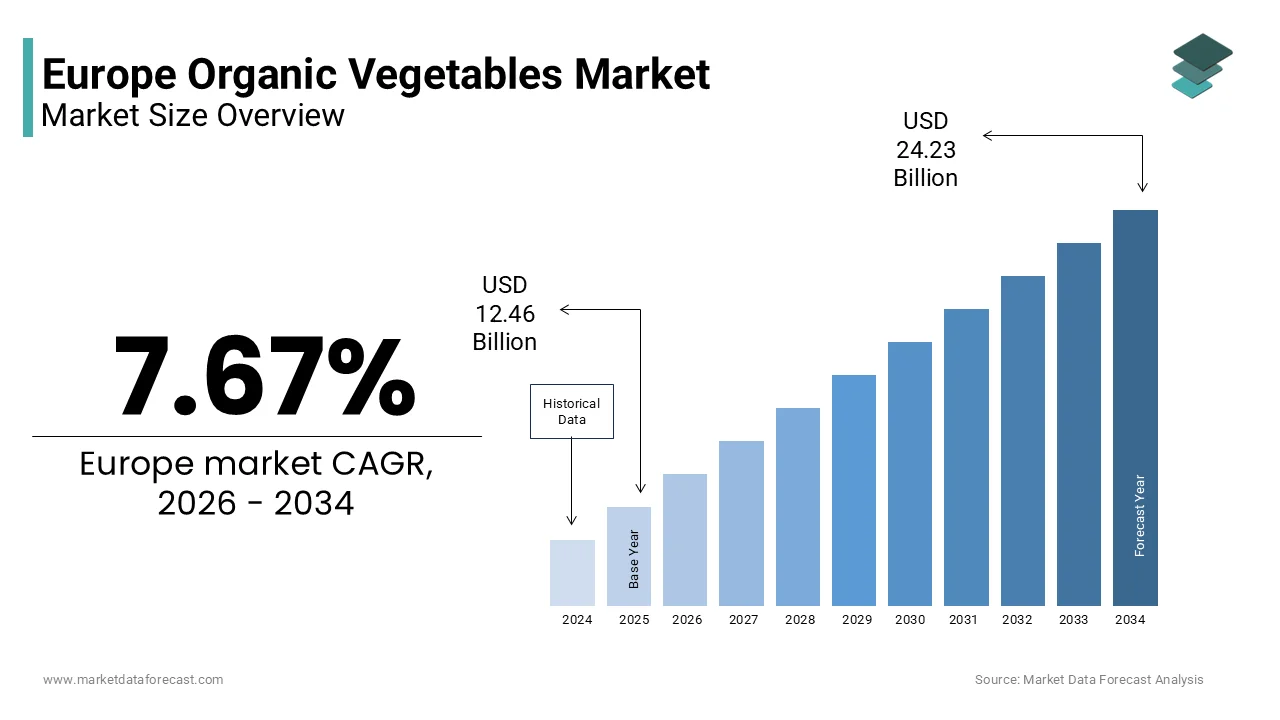
The Europe organic vegetables market was valued at USD 12.46 billion in 2025, is estimated to reach USD 13.42 billion in 2026, and is projected to reach USD 24.23 billion by 2034, growing at a CAGR of 7.67% during the forecast period. The growth of the European organic vegetables market is driven by increasing consumer preference for chemical free and pesticide free food products, rising health awareness, and growing demand for clean label and sustainable food options. The expansion of organic farming practices, supportive government policies, and rising availability of organic produce through modern retail channels are further accelerating market growth. Additionally, increasing adoption of plant based diets and eco conscious consumption patterns are creating new growth opportunities across Europe.
Key Market Trends
- Rising demand for fresh organic vegetables driven by increasing health consciousness and preference for natural food products
- Growing adoption of plant based and sustainable diets supported by environmental and ethical concerns
- Increasing availability of organic vegetables through supermarkets and large retail chains improving accessibility
- Strong focus on sustainable agriculture and organic certification standards across European countries
- Emergence of premium organic product offerings targeting urban and high income consumers
Segmental Insights
- Based on product type, the fresh vegetables segment was the largest and held a significant share of the Europe organic vegetables market in 2025 due to high consumer preference for fresh and minimally processed produce
- Based on end use, the residential segment dominated the market in 2025 driven by increasing household consumption of organic food products
- Based on distribution channel, the supermarkets and hypermarkets segment accounted for 57.5% of the market share in 2025, supported by wide product availability, convenience, and strong retail networks
Regional Insights
- The Europe organic vegetables market is experiencing steady growth across major countries supported by rising organic food consumption and strong regulatory frameworks
- Germany was the largest contributor, accounting for 27.5% of the market share in 2025 due to high consumer awareness, well established organic farming sector, and strong retail infrastructure
- Other countries across Western and Northern Europe are also witnessing notable growth driven by increasing demand for sustainable and organic food products
Competitive Landscape
The Europe organic vegetables market is characterized by the presence of established food and organic product companies focusing on product innovation, sustainable sourcing, and expansion of organic portfolios. Companies are investing in strengthening supply chains, enhancing organic certifications, and expanding their presence through retail partnerships and digital channels. Strategic acquisitions, partnerships, and new product launches are key strategies adopted to gain competitive advantage. Prominent players in the Europe organic vegetables market include Danone S.A., Nestlé S.A., General Mills, Inc., The Hain Celestial Group, Inc., Amy’s Kitchen, Inc., Eosta BV, Organic Valley, Bonduelle SCA, Hipp GmbH & Co. Vertrieb KG, Alnatura Produktions und Handels GmbH, Greenyard, Lima NV, Iceland Foods Ltd., The Whitewave Foods Company, and Campbell Soup Company.
Europe Organic Vegetables Market Size
The Europe organic vegetables market size was valued at USD 12.46 billion in 2025 and is projected to reach USD 24.23 billion by 2034 from USD 13.42 billion in 2026, growing at a CAGR of 7.67%.
Organic vegetables are produce grown through a certified farming system that emphasizes ecological balance and limits the use of synthetic materials. This market operates under the stringent regulatory framework of the European Union Organic Regulation, which mandates rigorous certification processes to ensure soil health and biodiversity preservation. The region stands as a global pioneer in sustainable agriculture, with the European Union accounting for nearly 18 million hectares of organic farmland (17.7 million ha in 2023) according to the latest data from FiBL and Eurostat. Spain, France, and Germany drive this expansion, with Spain and France each hosting approximately 3 million hectares, while Germany remains the largest consumer market, collectively anchoring the region's organic infrastructure as per statistics from the Research Institute of Organic Agriculture (FiBL). The market definition extends beyond fresh produce to include processed frozen and canned organic vegetables, reflecting a shift toward convenience without compromising ecological standards. Consumer behavior in the region is increasingly driven by a desire for transparency and environmental stewardship, with a clear majority of Europeans expressing willingness to pay a premium for food produced through sustainable and environmentally friendly methods, as per the European Commission. The sector is characterized by short supply chains and a growing emphasis on local sourcing to reduce carbon footprints. Data from major agricultural bodies indicates that the conversion of conventional land to organic status in Europe continues to grow steadily, signaling a persistent structural shift in farming methodologies. This market serves as a critical barometer for the success of the European Green Deal and its Farm to Fork strategy aiming for climate neutrality.
MARKET DRIVERS
Stringent Regulatory Support and the Farm to Fork Strategy
Robust political and regulatory backing from the European Union is propelling the European organic vegetables market. Specifically, this is driven by the landmark Farm to Fork Strategy. This comprehensive policy framework explicitly targets increasing the share of agricultural land under organic management by 2030, creating a favorable environment for farmers to transition away from conventional methods. According to research, the European Commission encourages Member States to design strategies that support organic farming, leading many nations to voluntarily adopt plans that offer funding and technical support through their agricultural policies. This framework has supported organic agriculture, with substantial multi-year funding allocated through the Common Agricultural Policy to assist farmers in converting to and maintaining organic practices. The regulatory certainty provided by these long-term commitments reduces the financial risk for farmers, encouraging widespread adoption of organic vegetable cultivation. Furthermore, strict labeling laws and the mandatory EU organic logo build consumer trust, ensuring that products meeting these standards command higher market value. Reviews by European auditors indicate that while the land area dedicated to organic farming has expanded under these policies, the actual impact on specific crop outputs remains difficult to quantify due to insufficient monitoring data. The alignment of government policy with consumer demand creates a powerful synergy that drives market expansion, making regulatory support the most potent driver for sustained growth in the sector.
Escalating Consumer Health Consciousness and Chemical Avoidance
The intensifying consumer awareness regarding the health risks associated with pesticide residues and synthetic chemicals in conventional produce also acts as a growth enabler for the Europe organic vegetables market. European shoppers are increasingly scrutinizing food labels and actively seeking options that guarantee the absence of harmful agrochemicals to protect their families and long-term well-being. Consumer surveys conducted by the European Union indicate that pesticide residues remain a notable concern for shoppers, a factor that continues to drive demand for organic products despite high safety compliance rates in conventional food. This health-centric mindset is particularly prevalent among parents and younger demographics who view organic vegetables as a preventive measure against chronic diseases and hormonal disruptions. Scientific studies cited by the World Health Organization linking certain pesticides to adverse health outcomes have further amplified this demand, prompting retailers to expand their organic offerings. In Nordic nations such as Sweden and Denmark, established government certification labels and strong promotion by major retailers have helped organic produce secure a significant portion of the overall food landscape. The perception of organic produce as cleaner, safer, and more nutritious drives consistent purchasing behavior, even during periods of economic uncertainty. This deep-seated desire for chemical-free nutrition ensures a resilient and growing demand base that fuels the expansion of the organic vegetable sector across the continent.
MARKET RESTRAINTS
High Production Costs and Premium Pricing Barriers
Organic farming practices involve significantly higher production costs, which serve as the most formidable restraint in the Europe organic vegetables market. As a result, retail prices remain inaccessible to a large segment of the population. Organic cultivation requires more labor-intensive weed and pest management, expensive organic fertilizers, and often yields lower volumes per hectare compared to conventional methods due to the prohibition of synthetic inputs. According to multiple studies, production costs for organic vegetables can be higher than conventional counterparts, forcing retailers to charge premium prices that deter price-sensitive consumers. During periods of high inflation and economic downturns, households prioritize affordability over organic certification, leading to a contraction in demand or a switch to private label conventional options. The cost disparity limits market penetration to affluent demographics and urban centers, preventing mass adoption across broader socioeconomic groups. Furthermore, the lack of economies of scale in certain regions exacerbates these costs, making it difficult for smaller producers to compete. Technological advancements or policy interventions are needed to lower the cost gap. Until then, the premium pricing structure will continue to act as a significant brake on market growth and inclusivity.
Complex Certification Processes and Administrative Burdens
The intricate and costly certification process required to verify compliance with organic standards poses a significant hurdle for small-scale farmers, new entrants, and the Europe organic vegetables market. The pathway to obtaining and maintaining organic certification involves rigorous documentation, regular inspections, and strict adherence to evolving regulatory requirements that can be overwhelming for individual growers. The complexity of navigating different national interpretations of EU regulations adds another layer of difficulty, particularly for producers operating across borders or selling to multiple markets. Delays in certification approval can prevent farmers from marketing their produce as organic during the critical transition period, leading to financial losses as they incur organic costs without receiving organic prices. Furthermore, the fear of accidental contamination from neighboring conventional farms resulting in decertification creates a climate of risk aversion. These bureaucratic and financial obstacles limit the supply of organic vegetables, constraining market growth and preventing the sector from scaling up to meet rising consumer demand. The rigidity of the current system acts as a structural barrier that stifles innovation and participation in the organic value chain.
MARKET OPPORTUNITIES
Expansion of Local Supply Chains and Short Food Distribution Networks
The strategic development of local supply chains and short food distribution networks that connect producers directly with consumers is a paramount opportunity for the Europe organic vegetables market. The growing consumer preference for locally sourced food, driven by desires for freshness and reduced carbon footprints, aligns perfectly with the capabilities of regional organic farmers. According to studies, short supply chains can increase farmer income while offering consumers fresher produce at competitive prices by eliminating intermediaries. The rise of community-supported agriculture schemes, farmers' markets, and box delivery services provides a viable alternative to traditional retail channels, allowing organic growers to retain more value and build loyal customer bases. Governments across Europe are increasingly supporting these initiatives through grants and infrastructure investments to strengthen rural economies and enhance food security. The success of "farm to table" movements in countries like Italy and France demonstrates the potential for scaling these models to serve urban populations effectively. By leveraging digital platforms to coordinate logistics and manage subscriptions, local organic networks can achieve greater efficiency and reach. This shift toward localization not only addresses consumer demands for transparency but also enhances the resilience of the food system against global supply chain disruptions, presenting a lucrative avenue for market expansion.
Technological Integration in Precision Organic Farming
The integration of advanced technologies such as robotics, artificial intelligence, and precision agriculture tools offers a substantial growth possibility for the Europe organic vegetables market. This integration helps to overcome yield gaps and efficiency challenges in organic vegetable production. Innovations in autonomous weeding robots, drone-based monitoring, and AI-driven pest prediction systems enable organic farmers to manage crops more effectively without relying on prohibited synthetic chemicals. According to research, the adoption of robotic weeding technology can reduce labor costs while improving crop yields in organic systems, making them more economically viable. These technologies allow for precise application of organic inputs and real-time disease detection, optimizing resource use and minimizing crop losses. The European Union's Horizon Europe program is actively funding projects that develop smart farming solutions tailored for organic agriculture, accelerating the deployment of these tools across the continent. Startups in the Netherlands and Germany are already pioneering automated harvesting systems that handle delicate organic vegetables with care, addressing labor shortages and reducing waste. By embracing digital transformation, the organic sector can enhance productivity, consistency, and scalability, thereby lowering production costs and final retail prices. This technological evolution positions organic farming as a modern, high-tech industry capable of meeting future food demands sustainably and profitably.
MARKET CHALLENGES
Vulnerability to Climate Change and Extreme Weather Events
The increasing frequency and severity of climate change-induced extreme weather events, which disproportionately affect organic crops due to limited mitigation tools, remain a challenge to the European organic vegetables market. Unlike conventional farming, organic agriculture cannot rely on synthetic drought-resistant treatments or rapid-acting chemical fungicides to combat stress caused by heatwaves, floods, or unseasonal frosts. The reliance on natural soil health and biodiversity for resilience means that recovery from climatic shocks can be slower and more uncertain for organic farms. Unpredictable weather patterns disrupt planting schedules and harvest windows, causing supply inconsistencies that frustrate retailers and consumers alike. Furthermore, the spread of new pests and diseases into previously unaffected regions due to warming temperatures poses a severe threat to organic yields, as approved biological controls may not be immediately effective against novel invaders. This environmental instability threatens the economic viability of organic farming, forcing producers to invest heavily in adaptive infrastructure like irrigation systems and protective covers, which further increases operational costs and complicates long-term planning.
Intense Competition from Conventional Private Label Brands
The aggressive expansion of high-quality conventional private label brands by major retail chains is a major obstacle for the European organic vegetables market. These brands offer similar perceived quality at lower price points. Supermarkets across Europe have significantly upgraded their conventional produce lines, emphasizing sustainability credentials, reduced pesticide use, and local sourcing without the full cost burden of organic certification. Retailers often promote these "sustainable but not organic" alternatives as a pragmatic choice for budget-conscious shoppers, eroding the unique selling proposition of certified organic produce. The marketing narratives around these conventional brands frequently highlight responsible farming practices, confusing consumers about the distinct benefits of organic certification. This blurring of lines makes it difficult for organic producers to justify the price premium, especially when visual differences between the products are minimal. The dominance of retailer-owned brands gives supermarkets significant leverage to dictate terms and pricing, squeezing margins for independent organic suppliers. Retailers are prioritizing their own profitable private labels. Consequently, organic brands face an uphill battle to maintain visibility and market share in an increasingly crowded and competitive landscape.
REPORT COVERAGE
| REPORT METRIC | DETAILS |
| Market Size Available | 2025 to 2034 |
| Base Year | 2025 |
| Forecast Period | 2026 to 2034 |
| CAGR | 7.67% |
| Segments Covered | By Product Type, End Use, Distribution Channel, and Region |
| Various Analyses Covered | Global, Regional, & Country Level Analysis; Segment-Level Analysis; DROC, PESTLE Analysis; Porter’s Five Forces Analysis; Competitive Landscape; Analyst Overview of Investment Opportunities |
| Regions Covered | UK, France, Spain, Germany, Italy, Russia, Sweden, Denmark, Switzerland, Netherlands, Turkey, and the Czech Republic |
| Market Leaders Profiled | Danone S.A., Nestlé S.A., General Mills, Inc., The Hain Celestial Group, Inc., Amy’s Kitchen, Inc., Eosta BV, Organic Valley, Bonduelle SCA, Hipp GmbH & Co. Vertrieb KG, Alnatura Produktions und Handels GmbH, Greenyard, Lima NV, Iceland Foods Ltd., The Whitewave Foods Company, and Campbell Soup Company |
SEGMENTAL ANALYSIS
By Product Type Insights
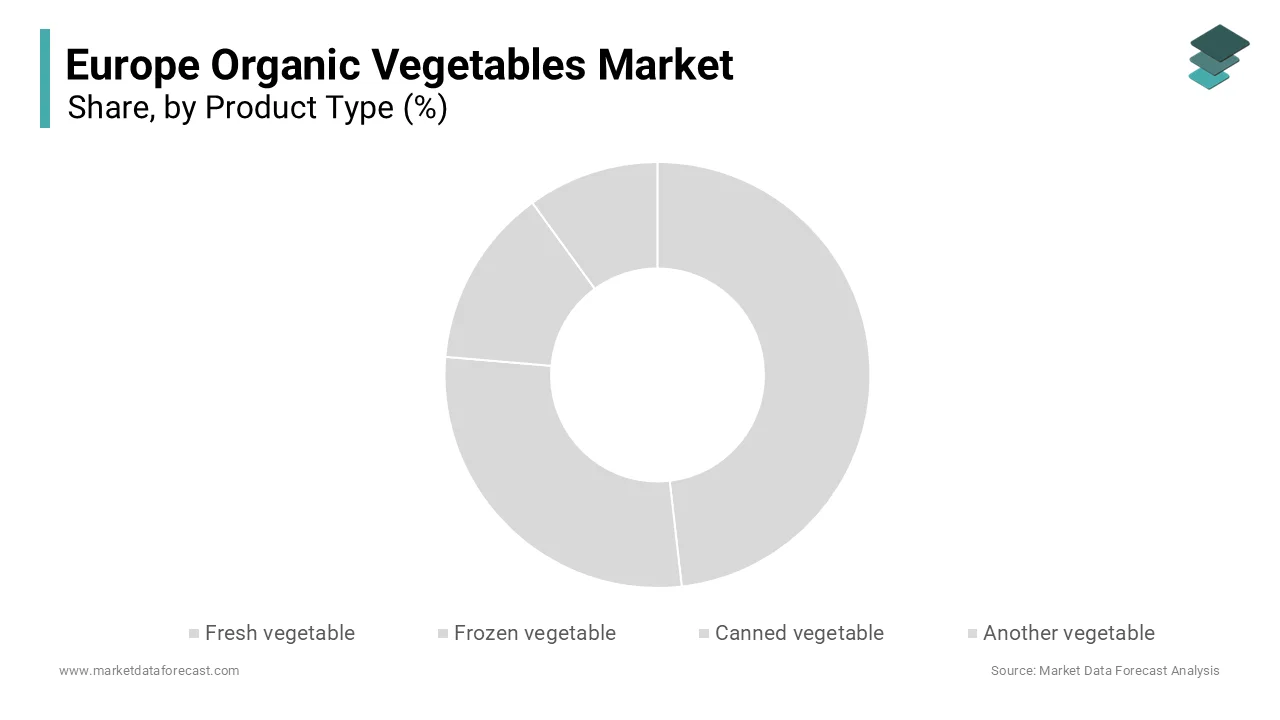
The Fresh Vegetables segment held the majority share of the Europe organic vegetables market in 2025. This supremacy of the segment is attributed to the strong European consumer preference for minimally processed foods that retain their natural nutritional profile, texture, and flavor. The cultural emphasis on cooking with raw ingredients and the perception that fresh produce offers superior health benefits compared to preserved alternatives drive this segment. The availability of diverse seasonal and year-round varieties through advanced logistics further sustains this dominance.
The primary factor driving the domination of the fresh vegetables segment is the widespread consumer belief that fresh organic produce delivers the highest levels of vitamins, minerals, and antioxidants without the nutrient degradation associated with thermal processing. General food science principles indicate that the heat treatment required for canning or the blanching process before freezing reduces heat-sensitive nutrients such as Vitamin C and certain B vitamins.
Sensory evaluations and consumer research indicate that while shoppers psychologically perceive fresh organic vegetables as having superior taste and texture due to a "halo effect" associating the label with purity, blind taste tests reveal that flavor is primarily determined by harvest maturity and time since picking, rather than the farming method. Research consistently shows that frozen vegetables, processed at peak ripeness, often match or exceed the sensory quality of fresh counterparts that have degraded during transit and storage. This preference is particularly strong among parents seeking the best nutrition for children and among older demographics focused on preventive health. The ability to visually inspect fresh produce for quality and ripeness before purchase also builds trust and encourages selection.
Retailers respond to this demand by dedicating significant shelf space to fresh organic lines and promoting local sourcing to ensure maximum freshness. The deep-seated conviction that fresh is best ensures that this segment remains the cornerstone of the organic vegetable market. A further reason for this growth is the entrenched culinary tradition across Europe that emphasizes the use of raw, seasonal ingredients in daily meal preparation, a trend further amplified by the recent surge in home cooking. European cuisines, from Mediterranean salads to Northern European stews, rely heavily on the distinct flavors and textures that only fresh vegetables can provide.
The popularity of cooking shows, food blogs, and social media platforms featuring fresh ingredient recipes has revitalized interest in preparing meals from scratch, driving sales of fresh organic carrots, leafy greens, and tomatoes. Farmers' markets and community-supported agriculture schemes have also gained traction, connecting consumers directly with growers and reinforcing the value of fresh, locally harvested crops. The flexibility of fresh vegetables allows for versatile culinary applications that processed forms cannot match, making them indispensable in modern kitchens. This cultural and behavioral alignment with fresh ingredients secures the segment's leading position in the market.
The Frozen Vegetables segment is predicted to witness the highest CAGR of 10.1% from 2026 to 2034 due to advancements in flash-freezing technologies that preserve nutrients and the increasing demand for convenient, waste-reducing food solutions. The shift toward busy lifestyles and the need for year-round availability of specific varieties drive this robust growth trajectory.
A key growth enabler for the rapid expansion of the frozen vegetables segment is the widespread recognition that modern flash-freezing techniques, such as Individual Quick Freezing (IQF), lock in nutrients and flavor at the peak of ripeness, often resulting in products with higher nutritional value than fresh produce that has traveled long distances. The scientific validation has shifted consumer perception, with many viewing frozen organic vegetables as a smart, healthy alternative rather than a compromise.
The ability to offer out-of-season varieties like organic peas, corn, and berries year-round without compromising quality appeals to consumers seeking dietary diversity. Manufacturers are investing heavily in state-of-the-art freezing facilities to ensure optimal texture and taste, addressing previous concerns about mushiness. As awareness of these technological benefits spreads through educational campaigns and labeling, the demand for frozen organic options continues to surge, driving double-digit growth rates.
In addition, this area is supported by the increasing consumer demand for convenience and the desire to minimize household food waste, both of which are inherent advantages of frozen products. In an era of busy schedules and rising food costs, frozen organic vegetables offer pre-washed, pre-cut, and portion-controlled solutions that significantly reduce preparation time and eliminate spoilage. The ability to use only what is needed and return the rest to the freezer appeals to cost-conscious and environmentally aware consumers.
Furthermore, the integration of frozen organic vegetables into ready-to-eat meals and smoothie blends has expanded their usage occasions beyond traditional side dishes. Retailers are expanding their frozen organic aisles to include innovative mixes and global cuisine inspirations, attracting younger demographics who prioritize efficiency. This alignment with modern lifestyle needs and sustainability goals positions the frozen segment for sustained rapid growth.
 By End Use Insights
The Residential segment led the Europe organic vegetables market and captured a substantial share in 2025. This leading position of the segment is supported by the habitual purchasing behaviors of households who view organic vegetables as a staple for family meals and personal health. The direct control over ingredient quality and the desire to provide safe, chemical-free food for children drive the majority of consumption within the home environment. The extensive availability of organic options in retail channels accessible to consumers further reinforces this segment's leadership.
A main factor pushing the residential segment forward is the intense focus of parents and households on safeguarding family health by eliminating exposure to pesticide residues and synthetic chemicals found in conventional produce. The protective instinct drives consistent purchasing patterns, with organic vegetables becoming a non-negotiable item in weekly grocery lists for millions of European families. Also, the perception that organic farming practices result in cleaner, safer food resonates deeply with household decision-makers who prioritize well-being over cost savings.
Public health campaigns and media coverage regarding food safety scandals involving conventional produce have further intensified this trend, prompting a permanent shift in buying habits. The willingness to pay a premium for peace of mind ensures that residential consumption remains the primary driver of market volume. As health literacy increases and awareness of environmental toxins grows, the residential segment continues to expand, solidifying its position as the core of the organic vegetables market. Also, this segment is boosted by the dramatic increase in the accessibility of organic vegetables through mainstream retail channels and the proliferation of affordable private label brands.
Major supermarket chains across Europe have significantly expanded their organic offerings, placing them alongside conventional products to normalize their purchase and make them available to a broader demographic. Moreover, the democratization of access has removed previous barriers related to availability and cost, encouraging trial and repeat purchases among middle-income households. The strategic placement of organic sections, loyalty program incentives, and promotional campaigns by retailers have further integrated organic vegetables into everyday shopping routines. The convenience of one-stop shopping for all household needs, including organic produce, ensures that residential consumers remain the primary customer base. The continuous effort by retailers to improve supply chain efficiency and lower costs for private labels sustains this high level of accessibility, driving sustained volume growth in the residential sector.
The Commercial segment is estimated to register the fastest CAGR of 11.3% during the forecast period owing to the rising demand for sustainable dining experiences, stricter public procurement policies, and the competitive advantage offered by organic menus in the hospitality industry. One more point that adds strength is the surging consumer demand for sustainable and ethically sourced dining experiences, which has prompted restaurants and hotels to integrate organic vegetables into their menus as a key differentiator.
Modern diners, particularly millennials and Gen Z, actively seek establishments that align with their environmental values, often choosing venues based on their commitment to organic and local sourcing. Chefs are increasingly highlighting organic vegetables on menus to showcase quality and support local farmers, turning sustainability into a marketing asset. The trend toward "farm-to-table" concepts has further amplified this demand, with fine dining and casual eateries alike building their reputations on transparent, organic supply chains. As the competitive landscape shifts toward sustainability, the adoption of organic vegetables in the commercial sector becomes essential for business success, fueling rapid growth in this segment.
Added support for this segment comes from the implementation of stringent public procurement policies and government mandates requiring state-funded institutions such as schools, hospitals, and government canteens to source a significant percentage of their food organically. Countries like Denmark, Austria, and Germany have set ambitious targets for organic food in public catering, with some regions mandating a notable portion organic sourcing in school meals. The "Green Public Procurement" framework across the EU encourages member states to prioritize organic options, providing a reliable revenue stream for producers. This top-down approach not only guarantees volume but also educates future generations about organic food, creating a long-term cultural shift. The combination of regulatory pressure and the moral imperative to provide healthy meals in public institutions ensures that the commercial segment will continue to grow at an exceptional pace.
By Distribution Channel Insights
The Supermarkets and Hypermarkets channel segment was the largest segment in the Europe organic vegetables market and accounted for a 57.5% share in 2025. This dominance of the segment is driven by the habitual shopping behaviors of European consumers who prefer to purchase their weekly groceries, including organic produce, in large format stores. The extensive shelf space dedicated to organic sections, combined with the ability of these retailers to offer competitive pricing through private label brands, makes them the primary touchpoint for mass market consumption. The visibility of organic vegetables in prominent produce aisles encourages impulse buys and reinforces brand recognition.
A top factor behind the dominance of supermarkets and hypermarkets is the unparalleled convenience they offer for one stop shopping, which aligns perfectly with the busy lifestyles of modern European families. Consumers appreciate the ability to purchase organic vegetables alongside other household essentials, dairy, meat, and pantry staples in a single trip, saving significant time and transportation costs. The economies of scale achieved by these giants allow them to negotiate favorable terms with suppliers, passing savings on to consumers through lower prices and frequent promotions. The presence of extensive private label organic ranges enables retailers to offer high-quality produce at price points that are accessible to a wider demographic, breaking down the cost barrier often associated with organic food. The trust associated with major supermarket chains also reassures consumers about the authenticity and safety of the organic certification.
As long as the weekly grocery run remains the primary method of food provisioning, supermarkets will retain their position in the distribution of organic vegetables. This segment is also shaped by the strategic use of shelf placement and integrated marketing campaigns that highlight organic vegetables as a premium yet accessible choice. Retailers invest heavily in creating dedicated "organic zones" within their produce departments, using signage, lighting, and layout to differentiate these products and educate shoppers about their benefits. Supermarkets leverage their loyalty programs and digital apps to send targeted offers and recipes featuring organic vegetables, driving engagement and repeat purchases.
The ability to bundle organic vegetables with other complementary products, such as organic meats or sauces, creates cross-selling opportunities that boost overall basket size. Furthermore, the aggressive promotion of "local organic" initiatives by supermarket chains resonates with consumers' desire to support regional farmers, enhancing brand loyalty. The combination of visual prominence, targeted marketing, and strategic merchandising ensures that supermarkets remain the most effective channel for reaching the mass market and driving volume sales of organic vegetables.
The Online Sale Channel segment is anticipated to witness the fastest CAGR of 15.2% over the forecast period. Moreover, the digital channel is experiencing rapid acceleration due to the proliferation of e-commerce platforms, subscription box services, and the changing shopping habits of digital-native consumers. The ability of online channels to offer a vast selection of niche, seasonal, and hard-to-find organic varieties that are unavailable in local stores is a key differentiator. One of the main segment drivers is the empowerment of direct-to-consumer models and subscription services that deliver curated boxes of fresh organic vegetables directly to households on a regular basis.
These services, often operated by specialized startups or farmer cooperatives, offer convenience, customization, and a direct connection to the source, appealing to consumers who value transparency and flexibility. These models allow consumers to select portion sizes, frequency, and specific vegetable types, creating a personalized shopping experience that traditional retail cannot match. The elimination of intermediaries ensures that farmers receive a fairer share of the revenue while consumers get fresher products. The ability to provide detailed information about the farm, farming practices, and harvest dates through digital platforms builds strong trust and loyalty. As digital literacy increases and the convenience of home delivery becomes a standard expectation, this model continues to drive the fastest growth rates in the sector.
Along with this, the segment is driven by the ability of e-commerce platforms to offer an infinite aisle of organic vegetable varieties, including rare heirlooms, exotic imports, and specific dietary options that are often absent from physical supermarket shelves. Online retailers are not constrained by limited shelf space, allowing them to stock a diverse range of products that cater to niche dietary needs such as keto, paleo, or specific allergy-friendly requirements. The access to variety attracts food enthusiasts and adventurous cooks who seek unique ingredients for their culinary creations. Furthermore, online channels facilitate the sale of bulk quantities and specialized packs that are impractical for physical stores to handle. The integration of AI-driven recommendations and seamless checkout processes enhances the user experience, encouraging repeat purchases. As consumers increasingly seek diversity and specialization in their diets, the online channel's capacity to meet these demands ensures its continued rapid expansion.
REGIONAL ANALYSIS
Germany Organic Vegetables Market Analysis
Germany dominated the European organic vegetables market and occupied a 27.5% share in 2025. The prominence of the German market is driven by a deeply ingrained culture of environmental consciousness and a highly developed retail infrastructure that prioritizes organic offerings. A key driving factor is the presence of specialized organic supermarket chains like Alnatura and Denns, alongside conventional giants like Edeka and Rewe that have aggressively expanded their organic private labels. The German government's active support for organic farming through subsidies and the "Federal Organic Farming Programme" has stimulated domestic production, although imports remain high to meet demand. Consumer trust in strict certification standards and the widespread availability of organic options in every neighborhood ensure high penetration rates. The strong emphasis on sustainability and animal welfare in German society further reinforces the preference for organic vegetables, making Germany the anchor of the European market and a trendsetter for the rest of the continent.
France Organic Vegetables Market Analysis
France was the second largest player in the Europe organic vegetables market because of its dual role as a major producer and a rapidly growing consumer market driven by ambitious government policies. The country's market position shows a strong agricultural base capable of supplying a wide variety of organic vegetables, supported by the largest area of organic farmland in the European Union. The driving force behind France's prominence is the "Ambition Bio 2022" and subsequent strategies which aim to double the share of organic land and increase public procurement of organic food. French consumers are increasingly shifting towards short supply chains, with AMAP (community-supported agriculture) schemes flourishing across the country. The cultural importance of fresh, high-quality food in French gastronomy translates seamlessly into the organic sector, where provenance and taste are paramount. The government's mandate for organic food in public canteens has created a stable institutional demand, further boosting the market. This combination of productive capacity, policy support, and culinary tradition solidifies France's position as a key growth engine in Europe.
Italy Organic Vegetables Market Analysis
Italy plays a major role in the Europe organic vegetables market. It is known for its rich tradition of high-quality agriculture and a consumer base that deeply values local and seasonal produce. The market in Italy has a fragmented but vibrant landscape of small-scale organic farms that supply fresh vegetables to local markets and export premium products. A primary driver of this position is the strong "Km 0" (zero kilometers) movement, which encourages the consumption of locally grown food to support rural economies and reduce carbon footprints. The Italian diet's reliance on fresh vegetables as a staple component of daily meals ensures a consistent baseline demand. Furthermore, the tourism sector plays a significant role, with visitors seeking authentic organic experiences in agritourism farms. The government's support for organic conversion and the protection of geographical indications (PDO/PGI) for specific vegetable varieties enhance the value proposition of Italian organic produce. This blend of tradition, quality focus, and local pride ensures Italy remains a pivotal player in the European organic landscape.
United Kingdom Organic Vegetables Market Analysis
The United Kingdom witnessed steady growth in the European organic vegetables market by emerging as a dynamic player fueled by a mature retail sector and high consumer awareness of health and environmental issues. The market status in the UK is characterized by the dominance of major supermarket chains that have pioneered the integration of organic vegetables into their mainstream offerings, making them accessible to a broad audience. The driving force behind this market is the strong influence of retailer-led initiatives and private label innovations that have normalized organic consumption. The prevalence of online grocery shopping in the UK has further accelerated the sales of organic vegetables, with delivery services offering extensive organic ranges. The "Food Standards Agency" and various NGOs actively campaign for healthier eating, reinforcing the demand for organic options. Despite Brexit-related challenges in supply chains, the domestic commitment to organic standards remains high, and the rise of discount retailers entering the organic space has expanded access. This retail-led innovation and sustained consumer interest keep the UK as a crucial market for organic vegetables in Northern Europe.
Denmark Organic Vegetables Market Analysis
Denmark is likely to expand notably in the Europe organic vegetables market during the forecast period due to being the highest per capita consumption of organic food in the world and a unique model of public-sector driven demand. The market status in Denmark is defined by an extraordinary level of integration between government policy, public procurement, and consumer behavior, creating a seamless ecosystem for organic vegetables. A key driving factor is the government's successful strategy to convert public kitchens, including schools and hospitals, to high percentages of organic sourcing, which has educated the population and stabilized demand. The "Organic Action Plan" has set even higher targets, fostering a culture where choosing organic is the default rather than the exception. Danish consumers exhibit high trust in the state-controlled organic label, reducing the need for extensive marketing by individual brands. The compact geography and efficient logistics further facilitate the distribution of fresh organic produce. This holistic approach, combining top-down policy with bottom-up consumer acceptance, makes Denmark a global benchmark and a vital, albeit smaller, high-value market in Europe.
COMPETITIVE LANDSCAPE
The competition in the Europe organic vegetables market is characterized by a fierce rivalry between large multinational corporations specialized organic distributors and powerful retailer private labels vying for dominance in a rapidly expanding sector. Major global players leverage their extensive logistics networks and brand equity to secure shelf space in supermarkets while niche specialists differentiate themselves through unique heirloom varieties and direct-to-consumer models. Competitive dynamics are heavily influenced by the race for sustainability credentials with companies competing to demonstrate superior environmental stewardship and social responsibility. Price volatility due to seasonal yield fluctuations and climate change impacts creates a challenging environment where supply chain resilience becomes a critical differentiator. The rise of high-quality private label organic ranges from major retail chains exerts significant pressure on branded suppliers by offering comparable quality at lower price points. Furthermore, the battle for transparency drives innovation in tracking technologies as consumers demand full visibility into sourcing and farming practices. This multifaceted competitive landscape fosters continuous improvement in product quality operational efficiency and ethical standards ensuring the market remains vibrant and responsive to evolving consumer values.
KEY MARKET PLAYERS
Some of the notable key players in the Europe organic vegetables market are
- Danone S.A.
- Nestlé S.A.
- General Mills, Inc.
- The Hain Celestial Group, Inc.
- Amy’s Kitchen, Inc.
- Eosta BV
- Organic Valley
- Bonduelle SCA
- Hipp GmbH & Co. Vertrieb KG
- Alnatura Produktions und Handels GmbH
- Greenyard
- Lima NV
- Iceland Foods Ltd.
- The Whitewave Foods Company
- Campbell Soup Company
Top Players in the Market
- Eosta BV operates as a leading international distributor of organic fruits and vegetables with a profound impact on the European market through its commitment to sustainability and traceability. The company contributes to the global market by pioneering the Nature & More transparency system which allows consumers to track the origin and environmental impact of their produce. Recent actions to strengthen its position include expanding its True Cost Accounting initiatives to highlight the hidden environmental costs of conventional farming and partnering with major European retailers to increase organic shelf space. Eosta actively invests in soil health projects and biodiversity programs across its supply chain to ensure long-term viability. By focusing on direct relationships with growers and promoting the story behind every vegetable, the company builds strong consumer trust. This strategic emphasis on transparency and ecological responsibility enables Eosta to differentiate itself in a crowded marketplace and drive the adoption of organic vegetables across the continent.
- Bonduelle SCA functions as a global giant in the vegetable processing sector with a significant and growing presence in the European organic vegetables market through its extensive range of frozen and canned products. The corporation contributes to the global market by leveraging its vast agricultural network to source high-quality organic raw materials and deliver convenient nutritious options year-round. Recent actions to strengthen its market position involve acquiring specialized organic producers to broaden its portfolio and investing heavily in sustainable packaging solutions to reduce plastic waste. Bonduelle actively promotes regenerative agriculture practices among its contract farmers to enhance soil carbon sequestration and biodiversity. The company also launches innovative ready-to-eat organic meal kits tailored to busy urban lifestyles. By combining industrial scale with a deep commitment to sustainability and health, Bonduelle ensures consistent supply and quality. This dual focus on operational excellence and environmental stewardship allows the company to meet rising consumer demand and solidify its leadership in the European organic vegetable sector.
- Lima NV stands as a prominent European family-owned company specializing in the distribution of organic and natural food products with a strong foothold in the organic vegetables segment. The firm contributes to the global market by offering a diverse array of fresh frozen and dried organic vegetables that cater to health-conscious consumers and specialty retailers. Recent actions to strengthen its position include expanding its logistics infrastructure to improve cold chain efficiency and launching new product lines featuring rare and heirloom vegetable varieties. Lima actively collaborates with local farmers to secure sustainable supplies and ensure fair trade practices throughout its value chain. The company also invests in educational campaigns to raise awareness about the benefits of organic farming and plant-based diets. By maintaining strict quality standards and fostering long-term partnerships with growers, Lima delivers superior products. This dedication to quality sustainability and innovation enables the company to capture niche markets and drive growth in the competitive European organic landscape.
Top Strategies Used by the Key Market Participants
Key players in the Europe organic vegetables market primarily employ strategies focused on vertical integration to control supply chains from farm to fork ensuring consistent quality and availability. Companies invest heavily in sustainable farming practices and regenerative agriculture initiatives to meet stringent environmental standards and appeal to eco-conscious consumers. Another major strategy involves expanding product portfolios through the development of convenient ready-to-eat and frozen organic options that cater to busy modern lifestyles. Market participants actively pursue transparency by implementing blockchain and digital tracking systems that allow consumers to verify the origin and ethical credentials of their food. Firms also engage in strategic partnerships with local growers and cooperatives to secure reliable raw material sources and support rural economies. Additionally, companies leverage aggressive marketing campaigns to educate the public on the health and environmental benefits of organic consumption. These combined approaches enable key players to navigate regulatory complexities and build strong brand loyalty in a dynamic market.
MARKET SEGMENTATION
This research report on the European organic vegetables market has been segmented and sub-segmented based on categories.
By Product Type
- Fresh vegetable
- Frozen vegetable
- Canned vegetable
- Another vegetable
By End Use
- Residential
- Commercial
By Distribution Channel
- Supermarkets
- Hypermarkets
- Convenience store
- Online sale channel and Others
By Country
- UK
- France
- Spain
- Germany
- Italy
- Russia
- Sweden
- Denmark
- Switzerland
- Netherlands
- Turkey
- Czech Republic
- Rest of Europe