- Product Description Description
- Table of Contents TOC
- List of Table & Figure LOT
- Get Free Sample PDF Sample PDF
Market Size, 2025
$13.93 BnMarket Estimate, 2026
$14.54 BnMarket Forecast, 2034
$20.52 BnCAGR, 2026–2034
4.40%Europe Oriental Rug Market Size, Growth, Trends & Forecast (2026–2034)
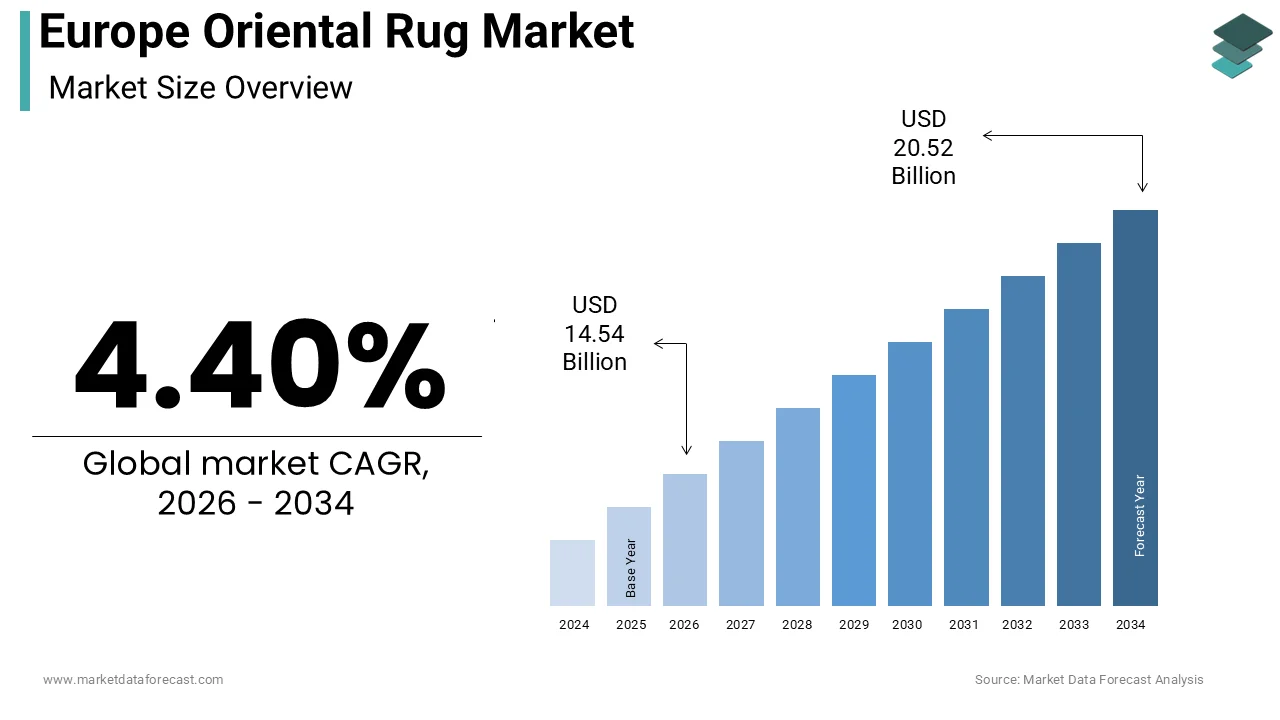
The Europe oriental rug market size was calculated to be USD 13.93 billion in 2025, is anticipated to be worth USD 14.54 billion in 2026, and is projected to reach USD 20.52 billion by 2034, growing at a compound annual growth rate (CAGR) of 4.40% during the forecast period from 2026 to 2034. Driven by rising affluence, luxury home renovation trends, and a design philosophy favoring maximalism and heritage aesthetics, the regional market continues to expand steadily.
Key Executive Metrics (At-a-Glance)
- 2025 Base Valuation: USD 13.93 Billion
- 2026 Current Valuation: USD 14.54 Billion
- 2034 Forecast Valuation: USD 20.52 Billion
- Compound Annual Growth Rate (CAGR): 4.40% (2026–2034)
- Dominant Type Segment: Woven Segment (holding 58.5% market share in 2025 due to heritage craftsmanship and investment value)
- Fastest-Growing Type Segment: Tufted Segment (projected to register a 6.8% CAGR driven by affordability and design versatility)
- Dominant Distribution Channel Segment: Specialty Retailers and Boutiques (holding 45.4% share in 2025)
- Fastest-Growing Distribution Channel Segment: Online Retail (anticipated to expand at a 9.2% CAGR fueled by digital visualization tools)
- Dominant End User Segment: Residential Segment (largest share in 2025)
- Fastest-Growing End User Segment: Commercial Offices Segment (projected to experience a 7.5% CAGR)
- Dominant Country Market: Germany (holding a 22.8% market share in 2025)
Core Market Drivers
- Rising Affluence: Increased disposable incomes among European households fueling luxury home renovation and investment in premium flooring.
- Design Shift to Maximalism: Contemporary interior design preferences favoring bold colors, layered textures, and heritage patterns.
Primary Market Restraints & Challenges
- Geopolitical Instability: Conflicts and trade sanctions in major producing regions (Middle East and Central Asia) disrupting supply chains.
- Escalating Production Costs: Global inflation, rising raw material expenses, and higher wages in producing nations impacting retail accessibility.
Europe Oriental Rug Market Segmentation Breakdown
| Segment Category | Largest (Dominant) Segment | Fastest-Growing Segment |
|---|---|---|
| By Type | Woven Segment (58.5% share) | Tufted Segment (6.8% CAGR) |
| By Distribution Channel | Specialty Retailers & Boutiques (45.4% share) | Online Retail (9.2% CAGR) |
| By End User | Residential Segment | Commercial Offices Segment (7.5% CAGR) |
| By Region / Country | Germany (22.8% share) | Pan-European Digital Markets |
Major Industry Players Profiled
Key enterprises shaping the Europe oriental rug market include Nourison Industries, Jaipur Rugs, The Rug Company, Orian Rugs, Safavieh, Loloi Rugs, Karastan, Mohawk Industries, Bentley Mills, and Tufenkian Artisan Carpets.
Europe Oriental Rug Market Size
The Europe oriental rug market size was calculated to be USD 13.93 billion in 2025 and is anticipated to be worth USD 20.52 billion by 2034, from USD 14.54 billion in 2026, growing at a CAGR of 4.40% during the forecast period.
An Oriental rug is a heavy textile characterized by a hand-knotted pile or a flat-woven surface, traditionally produced in a geographic region known as the "Rug Belt". These textiles serve as pivotal elements in luxury interior design, blending traditional artistry with contemporary European aesthetics. Germany stands as the leading importer within the region, accounting for 15 percent of all handmade rug imports into Europe in 2024, followed closely by Denmark and the United Kingdom. The broader European carpet and rug industry generated revenue of 18.9 billion USD in 2025, indicating a robust foundation for niche segments like oriental rugs. Consumer preference has shifted towards authentic pieces that offer longevity and unique design narratives, moving away from mass-produced alternatives. According to the Centre for the Promotion of Imports from developing countries, approximately two-thirds of handwoven rug imports into Europe come directly from developing nations, highlighting the region's reliance on international artisanal supply chains. This market is characterized by a discerning clientele that prioritizes provenance and material quality, often viewing these rugs as investment assets rather than mere floor coverings. The integration of these items into modern living spaces reflects a growing trend where historical artifacts complement minimalist or maximalist interior themes alike.
MARKET DRIVERS
Rising Affluence and Luxury Home Renovation Trends
The surge in disposable income among European households, coupled with an intensified focus on luxury home renovation, acts as a primary growth enabler for the Europe oriental rug market. As consumers allocate larger portions of their budget to interior enhancements, the demand for premium flooring solutions such as oriental rugs has escalated significantly. The financial upturn encourages homeowners to invest in statement pieces that elevate the aesthetic value of their residences. Interior design trends in 2026 emphasize warm, lived-in luxury and the celebration of craft, driving preference for hand-knotted items over synthetic options. Multiple studies indicate that hand-knotted rugs constituted a portion of total rug sales in Italy alone during 2022, showcasing the enduring appeal of traditional weaving techniques among affluent buyers. High net worth individuals increasingly view these rugs as tangible assets that appreciate over time, further fueling acquisition rates. The correlation between real estate values and interior investment suggests that as property markets stabilize, expenditure on decorative arts, including oriental rugs, will continue its upward trajectory.
Shift Towards Maximalism and Heritage Aesthetics in Interior Design
A distinct transformation in the region’s interior design philosophy towards maximalism and heritage appreciation has greatly propelled the expansion of the Europe oriental rug market. Contemporary design narratives in 2026 favor bold colors, layered texture,s and eclectic mixes that rely heavily on the visual weight and intricate patterns of oriental rugs to anchor a room. The stylistic shift moves away from the stark minimalism of the previous decade, inviting complex geometric and floral motifs typical of Persian and Turkish weaves into mainstream living spaces. Designers are increasingly specifying curved and organic rug shapes to soften angular architectural features, a trend that aligns perfectly with the custom nature of many oriental pieces. The demand for untreated woods and heavy linens in 2026 further complements the earthy tones and natural fibers found in authentic oriental rugs. Retailers note that consumers are seeking pieces with visible imperfections that signal human craftsmanship, a sentiment that directly benefits the handmade rug segment. As per sources, the theatrical nature of modern interiors requires rich fabrics and layered color palettes, conditions under which oriental rugs excel as central design elements. This cultural pivot ensures that the market remains vibrant as designers and homeowners alike seek to infuse spaces with historical depth and artistic complexity.
MARKET RESTRAINTS
Geopolitical Instability Disrupting Supply Chains from Key Producing Regions
Geopolitical tensions in major rug-producing regions are severely restraining the European oriental rug market. These conflicts have disrupted established supply chains and inflated logistics costs. A significant portion of Europe's supply originates from countries in the Middle East and Central Asia, areas frequently affected by political unrest and trade sanctions. The ongoing conflict in the Middle East has raised substantial risks for prices and supply continuity in Europe, with longer durations of instability threatening to sever critical trade routes. Sanctions imposed on specific nations have historically caused difficulties in obtaining raw materials and finished goods, leading to erratic availability in European markets. For instance, disruptions in Ukraine halted certain textile exports, creating supply gaps that Asian markets struggled to fill, thereby affecting dye and auxiliary chemical costs essential for rug production. These logistical hurdles force importers to seek alternative sources, often at higher price points or lower quality standards. The reliance on developing countries for two-thirds of handwoven imports makes the European market particularly vulnerable to such external shocks. Small artisan workshops lacking diversified distribution networks face existential threats when borders close or shipping lanes become unsafe. Consequently, retailers face increased lead times and inventory shortages, which dampen consumer confidence and slow down sales velocity. The fragility of these international connections underscores the market's exposure to global political dynamics beyond the control of European stakeholders.
Escalating Production Costs and Inflationary Pressures on Luxury Goods
Soaring production costs driven by global inflation and rising raw material prices represent a critical factor limiting accessibility and volume growth in the Europe oriental rug market. The cost of producing high-quality hand-knotted rugs has risen significantly due to increasing labor and raw material expenses, placing substantial pressure on profit margins and making final retail pricing less accessible for many consumers. Economic headwinds and reduced consumer confidence across major markets have led to a projected decline in the global personal luxury goods market for the first time in over a decade, according to studies. This market softening is driven by a combination of steep price increases implemented by major brands, global geopolitical instability, and a broader shift in consumer spending toward experiential luxury rather than physical goods, as per sources. High energy costs and increased wages in producing nations further exacerbate the financial burden on manufacturers who must pass these expenses to the end consumer. Fluctuations in the prices of wool, silk, and cotton directly impact the viability of producing high-quality oriental rugs at competitive rates. As per research, rising costs for luxury items are making them less accessible to the middle-class segment that previously drove volume sales. This economic environment forces many potential buyers to defer purchases or opt for cheaper machine-made alternatives that mimic the oriental style. The cumulative effect of these financial pressures results in a contraction of the addressable market size despite steady demand from the ultra-wealthy. Manufacturers report that maintaining traditional quality standards while absorbing these cost increases is becoming increasingly unsustainable without significant price hikes that risk alienating customers.
MARKET OPPORTUNITIES
Expansion of E-Commerce Platforms Specializing in Artisanal Home Decor
The rapid proliferation of specialized e-commerce platforms dedicated to artisanal and luxury home decor offers a significant opportunity for the Europe oriental rug market. Digital channels allow retailers to bypass traditional geographic limitations and connect directly with niche audiences across the continent who seek authentic handmade products. Online sales of handmade rugs have seen consistent growth as consumers become more comfortable purchasing high-value items digitally, aided by high-resolution imagery and virtual room visualization tools. E-commerce enables smaller artisans from developing nations to access the lucrative European market without the need for expensive physical storefronts or intermediaries. According to sources, hundreds of shipments of hand-tufted and hand-knotted carpets are processed monthly through digital trade channels, indicating a robust online transaction volume. This digital shift also facilitates greater transparency regarding provenance and weaving techniques, attributes highly valued by the European consumer base. Platforms that offer curated collections and detailed storytelling about the rugs' origins are seeing higher engagement and conversion rates. The ability to reach a pan-European audience allows sellers to diversify their customer base and reduce dependency on local economic conditions. As internet penetration and digital literacy continue to rise, the online channel will likely become the dominant mode of discovery and purchase for oriental rugs in the region.
Growing Consumer Preference for Sustainable and Ethically Sourced Products
An increasing consumer inclination towards sustainability and ethical sourcing provides a major avenue for growth within the Europe oriental rug market. Modern European buyers are progressively demanding transparency regarding the environmental impact and labor conditions associated with the products they purchase. The circular economy initiative within the carpet industry emphasizes waste reduction and resource conservation, principles that align naturally with the durable and long-lasting nature of handmade oriental rugs. Consumers are willing to pay a premium for rugs certified as ethically produced, knowing that their purchase supports fair wages for artisans and sustainable farming practices for natural fibers. Brands that can verify the organic origin of their wool or the use of natural dyes gain a competitive edge in a crowded marketplace. As per research, the narrative of sustainability is becoming a decisive factor in purchasing decisions, particularly among younger demographics who prioritize ecological responsibility. This demand encourages producers to adopt greener manufacturing processes and obtain relevant certifications that validate their claims. The market opportunity lies in positioning oriental rugs not just as decorative items but as sustainable investments that contribute to a circular economy. Retailers leveraging this angle can tap into a growing segment of eco-conscious consumers who view their buying power as a tool for positive global change.
MARKET CHALLENGES
Prevalence of Counterfeit Products Undermining Brand Integrity
The widespread presence of counterfeit and machine-made rugs, mislabeled as authentic hand-knotted oriental pieces, is an obstacle to market integrity and consumer trust within the European oriental rug market. Fraudulent products flood the market at significantly lower price points, confusing buyers and devaluing the reputation of genuine artisans. Studies emphasize that counterfeit products remain a persistent risk, complicating the landscape for legitimate businesses striving to maintain quality standards. Distinguishing between a true hand-knotted rug and a high-quality machine imitation requires expertise that the average consumer often lacks, leading to inadvertent purchases of inferior goods. This saturation of fake products dilutes the perceived value of authentic oriental rugs and discourages investment in the category. The lack of stringent regulatory oversight in some import channels allows these counterfeit items to enter the European market with relative ease. Authentic producers struggle to compete on price while maintaining the labor-intensive processes that define their craft. As per sources, the difficulty in verifying authenticity remotely, especially in online transactions, exacerbates this issue. The resulting erosion of trust can lead to long-term damage, where consumers hesitate to engage with the market entirely due to fear of deception. Combating this challenge requires enhanced certification protocols and consumer education initiatives to differentiate true heritage pieces from mass-produced imitations.
Complex Regulatory Compliance and Import Tariff Barriers
Navigating the complex web of regulatory compliance and fluctuating import tariffs constitutes a hurdle for stakeholders in the Europe oriental rug market. The European Union maintains strict standards regarding textile imports, including requirements for chemical safety labeling and proof of origin, which can be burdensome for small-scale exporters. Geopolitical tensions often result in sudden changes to trade policies or the imposition of punitive tariffs that disrupt established pricing structures and supply flows. The Middle East conflict has been noted to raise risks for prices and supply chains, illustrating how political events can swiftly alter the regulatory landscape. Importers must constantly adapt to new documentation requirements and inspection protocols, which increase administrative costs and delay market entry. Variations in national regulations across different European countries further complicate the distribution process for pan-regional sellers. The cost of ensuring compliance with evolving sustainability and labor laws adds another layer of financial pressure on businesses. As per research, these barriers can effectively price out smaller players who lack the resources to manage complex logistics and legal frameworks. The uncertainty surrounding future trade agreements creates a hesitant investment climate where long-term planning becomes difficult. Overcoming these regulatory hurdles demands significant expertise and capital, limiting market participation to larger entities with robust compliance departments.
REPORT COVERAGE
| REPORT METRIC | DETAILS |
| Market Size Available | 2025 to 2034 |
| Base Year | 2025 |
| Forecast Period | 2026 to 2034 |
| CAGR | 4.40% |
| Segments Covered | By Type, Distribution Channel, End User, And Region |
| Various Analyses Covered | Global, Regional & Country Level Analysis; Segment-Level Analysis; DROC, PESTLE Analysis; Porter’s Five Forces Analysis; Competitive Landscape; Analyst Overview of Investment Opportunities |
| Regions Covered | UK, France, Spain, Germany, Italy, Russia, Sweden, Denmark, Switzerland, Netherlands, Turkey, and the Czech Republic |
| Market Leaders Profiled | Nourison Industries, Jaipur Rugs, The Rug Company, Orian Rugs, Safavieh, Loloi Rugs, Karastan, Mohawk Industries, Bentley Mills, Tufenkian Artisan Carpets |
SEGMENTAL ANALYSIS
By Type Insights
The woven segment dominated the Europe oriental rug market and accounted for a 58.5% share in 2025. This dominance of the segment is driven by the intrinsic value European consumers place on authenticity, durability, and the heritage associated with hand-knotted and hand-woven techniques. Unlike tufted alternatives, woven rugs represent a tangible investment that often appreciates over time, aligning with the region's strong culture of collecting artisanal home decor. European consumers' dedication to heritage craftsmanship and lasting beauty is the main reason woven rugs dominate the market. Hand-woven oriental rugs are constructed by tying individual knots to a warp foundation, a labor-intensive process that results in a dense pile capable of withstanding decades of foot traffic without significant wear. According to the Carpet and Rug Institute, a high-quality hand-knotted rug can remain in use for over a century with proper maintenance, whereas machine-made or tufted alternatives have a significantly shorter lifespan due to their construction methods. This disparity in durability resonates deeply with European buyers who view flooring as a long-term asset rather than a disposable commodity. In markets like Germany and Italy, where interior design traditions emphasize classicism and quality, woven rugs account for a notable share of high-end residential sales. The intricate patterns achievable through weaving, such as the complex medallions of Persian designs or the geometric precision of Turkish motifs, cannot be fully replicated by tufting machines. Major auction houses across Europe show that woven pieces represent the vast majority of floor covering sales, emphasizing their status as collectible art rather than mere household furnishings. This perception of woven rugs as heirloom items drives consistent demand despite higher price points, securing the segment's leading market position. A critical factor behind the leadership of the woven segment is the recognized investment value and robust resale potential of authentic hand-woven oriental rugs. Unlike mass-produced floor coverings that depreciate immediately upon purchase, premium woven rugs often retain or increase their value, functioning as alternative assets within diversified investment portfolios. Auction houses in London and Paris frequently record sale prices for rare woven specimens that reach levels comparable to fine art, attracting wealthy individuals looking for tangible assets that hold value over time. According to research, demand for fine oriental carpets has remained remarkably steady even during broader economic volatility, showing more resilience than many other luxury consumer categories. This financial resilience is attributed to the finite supply of skilled weavers and the increasing scarcity of high-quality raw materials like silk and hand-spun wool. Collectors in Switzerland and the Netherlands specifically target woven rugs from specific regions such as Tabriz or Kashan, driving up prices for authenticated pieces. The ability to liquidate these assets easily through established dealer networks provides a safety net for buyers, making the initial high expenditure justifiable. Sources note that top-tier woven rugs have historically shown steady appreciation, often providing better long-term returns than conventional savings options and solidifying their position in the luxury collectibles landscape.
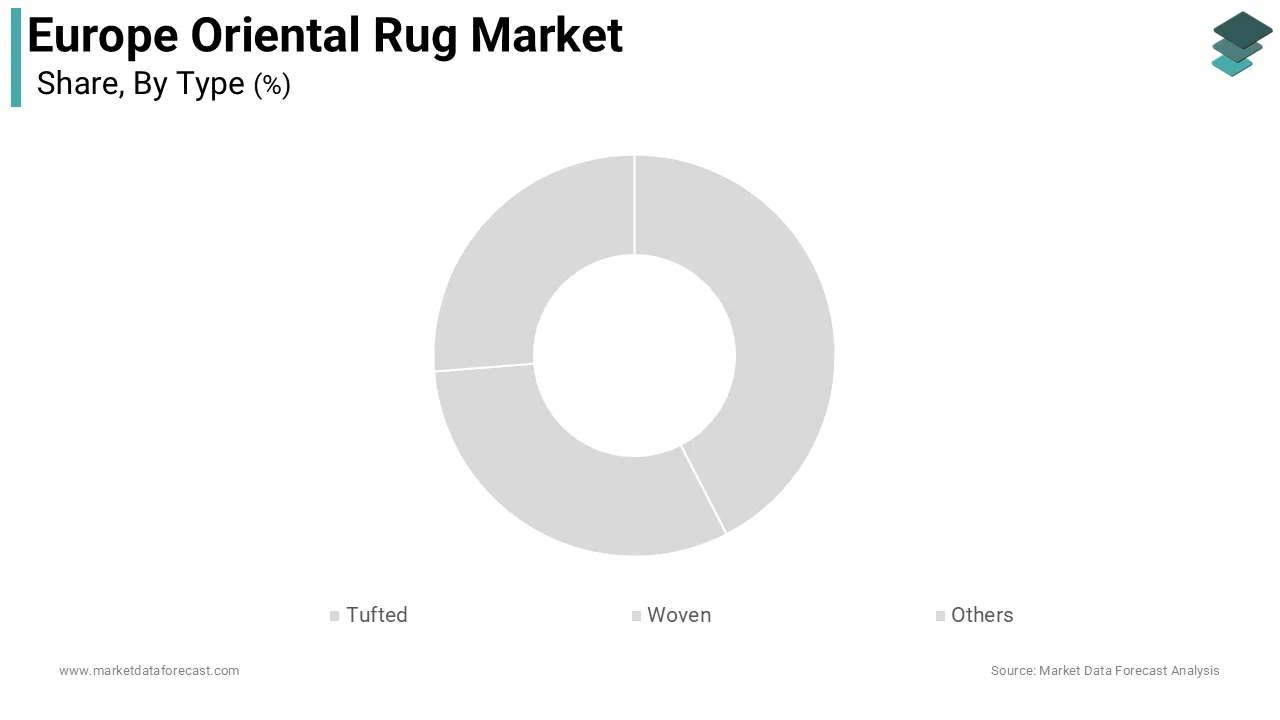
The tufted segment is estimated to register the fastest CAGR of 6.8% from 2026 to 2034 due to its ability to offer the aesthetic appeal of oriental designs at a significantly lower price point and with faster production times, catering to the budget-conscious and trend-driven demographics of modern Europe. A key force behind the rapid growth of the tufted segment is its exceptional affordability, which democratizes access to oriental style aesthetics for the expanding middle-income demographic across Europe. Tufting involves punching yarn into a backing material using a handheld or machine-operated tool, a process that is significantly faster and less labor-intensive than hand knotting, resulting in production costs that are substantially lower. This cost efficiency allows retailers to price tufted oriental-style rugs at a level that is accessible to a much broader consumer base compared to the significantly higher price tags of woven counterparts. According to Eurostat data, the median disposable income in the European Union saw a nominal increase, yet persistent inflationary pressures on essential goods have constrained spending on luxury items, driving consumers toward cost-effective alternatives. In countries like Spain and Portugal, where economic recovery has been gradual, sales of tufted rugs have shown steady, positive growth as homeowners seek to refresh interiors without the substantial capital outlay required for hand-knotted pieces. The availability of tufted rugs in major mass merchandisers and online platforms further enhances accessibility, removing the barrier of specialized boutique visits. Also, the volume-driven growth is sustained by the segment's ability to mimic popular traditional patterns while adhering to modern budget constraints, making it the preferred choice for first-time buyers and renters. The tufted segment is experiencing accelerated growth due to its superior adaptability to fast-changing interior design trends and the demand for customizable aesthetic solutions. The tufting process allows for rapid prototyping and production of new designs, enabling manufacturers to respond swiftly to emerging color palettes and pattern preferences dictated by social media and design influencers. Unlike the months required to weave a complex oriental rug, a tufted design can be conceptualized and brought to market within weeks, ensuring that retailers always stock the latest styles. In 2026, the trend towards bold maximalism and eclectic mixes has led to a spike in demand for oversized and uniquely shaped oriental inspired rugs, a niche where tufting excels due to its flexibility in cutting and finishing. The ability to experiment with diverse fiber blends, including synthetic materials that offer stain resistance and vibrant dye retention, further appeals to households with children and pets. This agility in production and design versatility ensures that the tufted segment remains at the forefront of market innovation, capturing the attention of style-conscious consumers who prioritize visual impact and immediacy over traditional longevity.
By Distribution Channel Insights
The specialty retailers and boutiques segment held the majority share of the Europe oriental rug market and captured a 45.4% share in 2025. This supremacy of the segment is mainly supported by the critical need for tactile inspection and expert curation that high-value oriental rugs demand. Despite the rise of online shopping, the high value and tactile nature of oriental rugs necessitate a physical inspection of texture, knot density, and color accuracy, which specialty stores are uniquely positioned to provide. Purchasing an oriental rug is a sensory experience where the buyer must assess the softness of the wool, the tightness of the knots, and the subtle variations in dye that photographs often fail to capture accurately. Specialty boutiques employ knowledgeable staff who can guide customers through the nuances of different weaving regions, age verification, and maintenance requirements, adding a layer of trust that mass channels cannot replicate. These retailers often curate exclusive collections sourced directly from artisans in Iran, Turkey, and India, offering unique pieces that are not available in generic home centers. The ambiance of a boutique, designed to showcase rugs in realistic room settings, enhances the perceived value and helps customers visualize the item in their own homes. The hands-on approach mitigates the risk of buyer remorse and fosters long-term relationships, solidifying the segment's leadership in revenue generation. A further point supporting this is its ability to provide guaranteed authenticity and comprehensive provenance documentation, which are paramount for serious collectors and investors. The market is saturated with machine-made imitations, making the certification of a rug's origin and weaving method a crucial differentiator. Reputable boutiques issue certificates of authenticity that detail the rug's region of origin, materials used, approximate age, and weaving technique, often backed by third-party appraisals. In markets like Switzerland and Germany, where regulatory scrutiny on textile labeling is strict, specialty retailers ensure full compliance with EU standards regarding fiber content and chemical safety, providing peace of mind to consumers. The expertise of these retailers also extends to after-sales services such as professional cleaning, repair, and restoration, which are essential for maintaining the value of woven oriental rugs. This commitment to integrity and service creates a loyal customer base that prioritizes quality assurance over price convenience, reinforcing the segment's market dominance.
The online retail segment is anticipated to witness the fastest CAGR of 9.2% during the forecast period, owing to advancements in digital visualization technologies, improved logistics for large items, and the shifting purchasing habits of younger demographics who prioritize convenience and variety. The swift expansion of this segment is largely attributed to the integration of advanced augmented reality (AR) and virtual visualization tools that effectively bridge the gap between digital browsing and physical inspection. Modern e-commerce platforms now allow users to upload photos of their rooms and superimpose high-resolution images of rugs to see how they fit in terms of size, color, and style before making a purchase. These technologies enable consumers to experiment with different patterns and scales instantly, fostering confidence in their selection process. The ability to access a global inventory from the comfort of home, combined with these immersive viewing experiences, has transformed online channels into a viable and preferred option for purchasing high-value textiles. This technological leap has democratized access to diverse oriental styles, driving substantial growth in the digital segment. Key to this segment is also the unparalleled product variety and competitive pricing dynamics that digital platforms offer compared to physical stores. Online marketplaces are not constrained by physical shelf space, allowing them to list thousands of SKUs ranging from vintage antiques to contemporary interpretations of oriental designs, catering to niche tastes that local boutiques might overlook. The direct-to-consumer model adopted by many online retailers eliminates intermediate markups, enabling them to offer prices that are lower than those of traditional brick-and-mortar stores. The transparency of online reviews and rating systems further empowers buyers to make informed decisions, building trust in lesser-known brands. The ability to filter search results by size, color, price, and origin streamlines the shopping experience, making it highly efficient for time-constrained professionals. This combination of extensive choice and cost-effectiveness positions the online channel as the fastest-growing distribution avenue in the market.
By End User Insights
The residential segment was the largest in the Europe oriental rug market and occupied a significant share in 2025. This prominence of the segment is credited to the deep cultural integration of rugs into European home life, where they serve not only as functional floor coverings but also as central elements of interior decor and family heritage. The preeminence of the residential segment is deeply rooted in the cultural significance of oriental rugs as symbols of warmth, status, and aesthetic refinement within European homes. For centuries, these textiles have been integral to European interior design, used to define spaces, add acoustic comfort, and introduce rich textures and colors to living areas. In countries like France and Italy, the tradition of displaying fine rugs in salons and dining rooms persists, with homeowners viewing them as essential components of a well-appointed house. The emotional connection consumers feel towards these items, often passed down through generations or acquired during travels, drives consistent demand regardless of economic fluctuations. The trend towards "nesting" and creating cozy, personalized sanctuaries post-pandemic has further amplified this desire, with residents investing heavily in decor that enhances comfort and visual appeal. Moreover, the enduring cultural affinity ensures that the residential sector remains the primary engine of market growth. A major factor propelling the residential segment is the steady rise in homeownership rates and the corresponding surge in renovation and remodeling activities across Europe. As more individuals acquire properties, there is an immediate need to furnish and personalize these spaces, with oriental rugs often being among the first decorative investments made. Government initiatives in countries like Germany and Sweden aimed at stimulating the housing market have led to increased transaction volumes, directly boosting demand for home decor items. New homeowners frequently seek to upgrade existing interiors by replacing worn-out carpets with durable and stylish oriental rugs that add character and value to the property. Real estate agents often recommend staging homes with high-quality rugs to enhance appeal to potential buyers, further driving procurement. The correlation between property investment and interior enhancement ensures a steady flow of demand from the residential sector, cementing its position as the market leader.
The commercial offices segment is likely to experience the fastest CAGR of 7.5% between 2026 and 2034. This acceleration of the segment is driven by the evolving concept of workplace design, where companies are increasingly utilizing oriental rugs to create sophisticated, comfortable, and brand-aligned environments that attract and retain talent. The boom in commercial offices is also fueled by a move away from traditional office setups toward sophisticated, wellness-focused spaces. Modern corporations recognize that the physical environment significantly impacts productivity, creativity, and job satisfaction, leading to increased investment in high-quality furnishings that mimic residential comfort. Oriental rugs are being strategically deployed in executive suites, conference rooms, and breakout areas to soften acoustics, define zones, and inject a sense of luxury and history into corporate settings. The use of natural fiber rugs aligns with sustainability goals, as they are biodegradable and free from volatile organic compounds often found in synthetic carpeting. In 2026, tech giants and financial institutions in London and Frankfurt have notably upgraded their headquarters with bespoke oriental rugs to project an image of stability and prestige. The focus on creating inviting and inspiring workspaces drives the adoption of oriental rugs in the commercial sector at an unprecedented rate. Also supporting this segment is the strategic use of oriental rugs to project a strong brand image and manage client impressions effectively. In competitive business landscapes, the office environment serves as a tangible representation of a company's values, success, and attention to detail. High-end oriental rugs convey a message of tradition, quality, and financial strength, making a powerful statement to visiting clients and partners. Law firms, consultancies, and private equity groups in particular leverage these textiles to cultivate an atmosphere of trust and professionalism. The uniqueness of each handmade rug allows companies to curate distinct spaces that reflect their specific brand identity, avoiding the generic look of standard commercial carpeting. This trend towards using interior design as a branding tool ensures that the commercial offices segment continues to grow rapidly as businesses strive to differentiate themselves in a crowded marketplace.
REGIONAL ANALYSIS
Germany Oriental Rug Market Analysis
Germany led the Europe oriental rug market and accounted for a 22.8% share in 2025. The country's robust economy and deep-seated appreciation for quality craftsmanship create a fertile ground for the trade of high-end floor coverings. German consumers are renowned for their discerning taste and willingness to invest in durable, authentic products that stand the test of time. The nation's strong import infrastructure facilitates the seamless entry of rugs from key producing regions, with Hamburg and Bremen serving as major logistical hubs. The prevalence of owner-occupied housing and a culture that values interior aesthetics drives consistent demand in the residential sector. Furthermore, Germany hosts several prominent trade fairs dedicated to home textiles, such as Heimtextil, which act as vital platforms for connecting international suppliers with European buyers. The rigorous quality standards enforced by German retailers ensure that only premium-grade rugs reach the market, reinforcing the country's reputation as a hub for luxury floor coverings.
United Kingdom Oriental Rug Market Analysis
The United Kingdom was the second largest country in the regional market and captured a 18.8% share in 2025. This position of the UK market is attributed to a rich historical affinity for oriental textiles and a vibrant luxury retail sector. London serves as a global epicenter for the antique and fine rug trade, hosting prestigious auction houses and galleries that attract collectors from around the world. The British market is characterized by a blend of traditional appreciation for Persian and Turkish weaves and a modern inclination towards contemporary interpretations of oriental designs. The presence of a wealthy demographic in cities like London, Manchester, and Edinburgh sustains high demand for exclusive and bespoke pieces. Additionally, the UK's strong interior design industry, influenced by royal heritage and aristocratic aesthetics, perpetuates the use of oriental rugs in both stately homes and modern apartments. Post Brexit trade adjustments have been navigated successfully by major importers who have diversified their supply chains to maintain stock levels. As per studies, the renovation boom following the pandemic has led to a resurgence in demand for statement flooring, with oriental rugs being a top choice for adding character to renovated period properties.
France Oriental Rug Market Analysis
France continues to be a major player in the Europe oriental rug market owing to its status as a global capital of art, fashion, and interior design. The French consumer possesses a refined sensitivity to aesthetics, viewing oriental rugs as indispensable elements of elegant living spaces that complement classical and modern decor alike. Paris is home to numerous high-end boutiques and decorators who specialize in sourcing rare and exquisite rugs for discerning clientele. The country's strong tourism industry also indirectly boosts the market, as visitors often purchase rugs as souvenirs or for export, while the hospitality sector utilizes them to enhance the ambiance of luxury hotels and restaurants. The French government's support for artisanal trades and cultural heritage aligns well with the promotion of hand-woven textiles. Furthermore, the trend of "art de vivre" emphasizes the importance of creating beautiful and comfortable home environments, driving residential sales. As per research, there is a growing interest among younger French buyers in sustainable and ethically sourced rugs, prompting retailers to expand their eco-friendly collections. This blend of tradition and modern consciousness ensures France remains a key pillar of the regional market.
Italy Oriental Rug Market Analysis
Italy grew steadily in the European market due to its profound design heritage and manufacturing excellence that complements the import of oriental rugs. Moreover, Italian interiors are synonymous with style and sophistication, and oriental rugs are frequently used to anchor spaces filled with designer furniture and artistic artifacts. Cities like Milan and Florence act as trendsetters, where the fusion of local design prowess with imported exotic textiles creates unique aesthetic narratives. The Italian consumer's preference for natural materials and artisanal quality makes them ideal buyers for hand-knotted wool and silk rugs. The country's strong real estate market, particularly in the luxury segment, fuels demand for high-value decor items that enhance property values. Moreover, Italy's strategic location in the Mediterranean facilitates efficient logistics for imports from Turkey and North Africa. This integration of global supply with local design sensibilities keeps Italy at the forefront of the oriental rug trade in Southern Europe.
Switzerland Oriental Rug Market Analysis
Switzerland is anticipated to expand significantly in the Europe oriental rug market from 2026 to 2034, owing to its exceptionally high purchasing power and concentration of ultra-high net worth individuals. Although smaller in population, the Swiss market punches above its weight in terms of value, with consumers willing to pay premium prices for the finest quality and rarest specimens of oriental rugs. Zurich and Geneva are key centers for luxury consumption, where privacy and exclusivity are paramount. The banking and finance sectors contribute to a stable economic environment that supports discretionary spending on high-end home decor. Swiss buyers often view oriental rugs as investment assets, leading to a robust secondary market and active participation in international auctions. The country's neutrality and stable political climate also make it a haven for storing valuable collections. The emphasis on discretion and personalized service in Swiss retail further enhances the appeal of specialty rug dealers, solidifying the country's position as a lucrative niche market within Europe.
COMPETITION OVERVIEW
The competition in the Europe oriental rug market is characterized by a fragmented landscape where specialized boutiques compete with large-scale distributors and emerging online platforms. Traditional family-owned dealers maintain a strong hold on the high-end segment by offering personalized service and guaranteed authenticity that mass merchants cannot replicate. However, the rise of digital native brands has intensified price competition and forced established players to innovate their customer engagement models. Large manufacturing entities from Turkey and India are increasingly entering the European space with aggressive pricing strategies targeting the mid-market segment. The battle for market share is also fought through exclusivity agreements with top interior designers and participation in prestigious art fairs. Despite the presence of counterfeit products creating noise in the lower-tier market, reputable firms differentiate themselves through rigorous certification and after-sales support services. The competitive dynamic is shifting towards a hybrid model where physical showrooms serve as experience centers while online channels drive volume sales. This evolution requires companies to balance operational efficiency with the preservation of artisanal value propositions to survive in a maturing market.
KEY MARKET PLAYERS
A few major players of the Europe oriental rug market include
- Nourison Industries
- Jaipur Rugs
- The Rug Company
- Orian Rugs
- Safavieh
- Loloi Rugs
- Karastan
- Mohawk Industries
- Bentley Mills
- Tufenkian Artisan Carpets
Top Strategies Used by Key Market Participants
Key players in the Europe oriental rug market predominantly employ strategies centered on digital transformation and experiential retail to capture diverse consumer segments. Companies are increasingly investing in augmented reality tools that allow customers to visualize rugs in their own spaces, thereby reducing purchase hesitation and return rates. Another critical strategy involves vertical integration, where retailers establish direct relationships with artisans in producing countries to ensure supply chain transparency and ethical sourcing. Brand storytelling is utilized extensively to highlight the cultural heritage and craftsmanship behind each pie,ce which adds emotional value and justifies premium pricing. Furthermore, participants are expanding their presence at international trade fairs like Heimtextil to network with designers and secure bulk contracts for commercial projects. Sustainability certification has also become a vital strategic pillar as firms seek to appeal to eco-conscious buyers by verifying the organic nature of their materials and production processes.
Leading Players in the Europe Oriental Rug Market
- Nain Trading GmbH operates as a premier family-owned enterprise based in Hamburg that specializes exclusively in high-quality hand-knotted oriental carpets. The company has established a robust direct-to-consumer model that bypasses intermediaries to ensure authentic provenance and competitive pricing for European clients. In recent developments, the firm has expanded its digital footprint by enhancing its online showroom capabilities to reach a broader audience across Germany and neighboring nations. Their commitment to transparency is evident in their detailed product documentation, which educates buyers on weaving techniques and regional origins. By maintaining a physical presence in the historic Speicherstadt district while simultaneously optimizing e-commerce logistics, they have strengthened their market position as a trusted authority in fine rugs. This dual-channel approach allows them to cater to both traditional collectors who value tactile inspection and modern consumers seeking convenience without compromising on quality standards.
- Ferreira de Sá stands as one of the oldest and most respected handmade rug manufacturers in Europe, with roots tracing back to 1946 in Espinho, Portugal. The company distinguishes itself by blending traditional Portuguese craftsmanship with contemporary design innovations to create unique collections that appeal to modern interior aesthetics. Recent actions include the launch of the Além Tejo collection, which applies ancient hand knotting techniques to shape modern rug designs that resonate with current trends. They have actively participated in major international design events to showcase their latest innovations to a global audience. Their strategy focuses on sustainability and the use of natural fibers, which aligns with the growing European demand for eco-friendly home decor solutions. They leverage their heritage while embracing modern design tools and color palettes. In doing so, they continue to solidify their reputation as a leader in the luxury rug sector.
- The Claremont Rug Company has cemented its status as a leading dealer in antique and fine oriental rugs with a significant impact on the global collector market. Specializing in museum-level acquisitions, the firm provides an unparalleled selection of historical pieces that serve as both decorative elements and investment assets. This strategic move allowed them to offer rare specimens that attracted record levels of engagement from serious collectors across Europe and North America. Their focus on education and provenance verification helps build trust among high-net-worth individuals seeking authentic art-level carpets. By curating exclusive exhibitions and providing expert consultation, they have reinforced their position at the pinnacle of the luxury rug trade.
MARKET SEGMENTATION
This research report on the Europe oriental rug market has been segmented and sub-segmented based on type, distribution channel, end user & region.
By Type
- Tufted
- Woven
- Others
By Distribution Channel
- Mass Merchandisers
- Home Centers
- Others
By End User
- Industry
- Residential
- Commercial Offices
By Region
- UK
- France
- Spain
- Germany
- Italy
- Russia
- Sweden
- Denmark
- Switzerland
- Netherlands
- Turkey
- Czech Republic
- Rest of Europe