- Product Description Description
- Table of Contents TOC
- List of Table & Figure LOT
- Get Free Sample PDF Sample PDF
Market Size, 2025
$1.05 BnMarket Estimate, 2026
$1.08 BnMarket Forecast, 2034
$1.39 BnCAGR, 2026–2034
3.2%Europe Overactive Bladder Treatment Market Report Summary
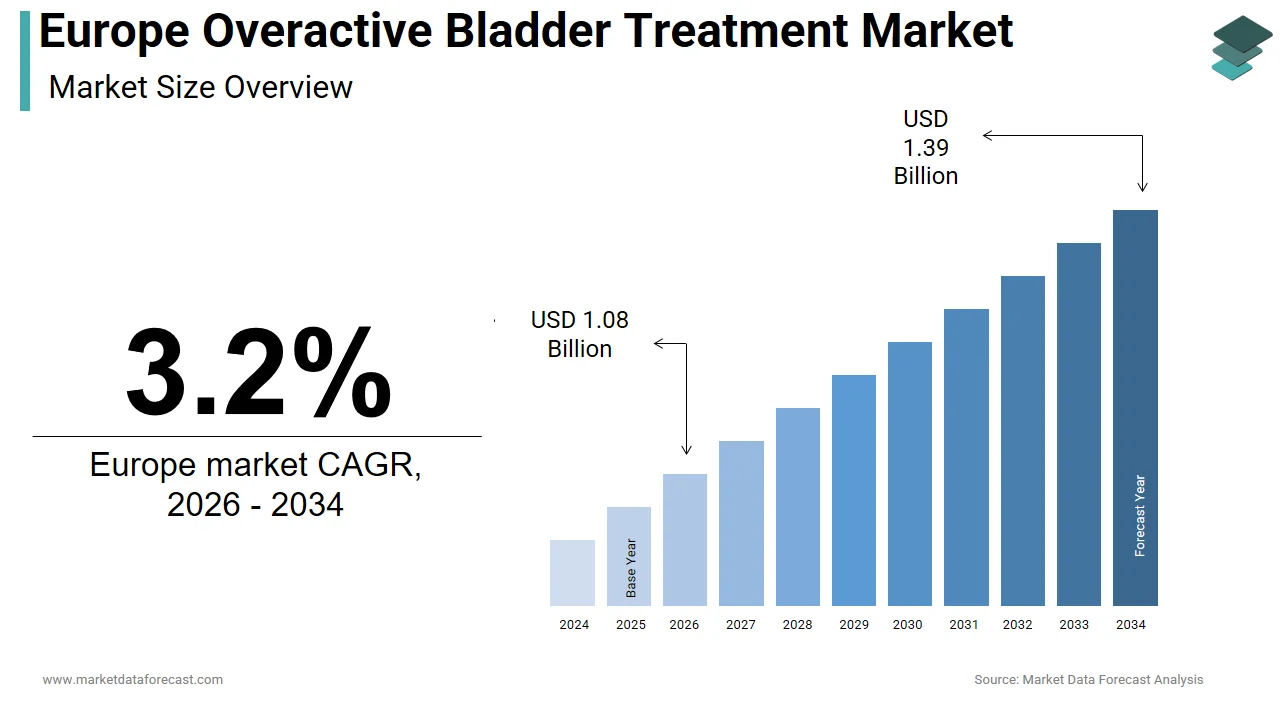
The Europe overactive bladder treatment market was valued at USD 1.05 billion in 2025, is estimated to reach USD 1.08 billion in 2026, and is projected to reach USD 1.39 billion by 2034, growing at a CAGR of 3.2% from 2026 to 2034. The growth of the market is driven by Europe’s aging population, rising prevalence of urological disorders, and increasing awareness of bladder health among both men and women. Overactive bladder affects nearly 13.9% of the adult EU population, with a higher incidence among elderly individuals and women. Expanding access to pharmacological therapies, growing adoption of minimally invasive neuromodulation procedures, and the integration of digital health tools are further strengthening treatment uptake across European healthcare systems.
Key Market Trends
- Rising demand for urological care among the elderly due to age-related bladder dysfunction.
- Increasing female health awareness and gender-focused continence initiatives across Europe.
- Growing adoption of beta-3 agonists and better-tolerated therapies for long-term use.
- Expansion of neuromodulation therapies in outpatient and ambulatory care settings.
- Integration of digital therapeutics and remote monitoring tools for symptom tracking and behavioral therapy.
Segmental Insights
- Based on treatment, the anticholinergics segment held 48.3% of the Europe overactive bladder treatment market share in 2024. This dominance is driven by their long-standing role as first-line therapy, widespread reimbursement coverage, and strong integration into primary care pathways across countries such as Germany, France, and the UK. Generic availability and low treatment costs continue to support high prescription volumes despite tolerability concerns.
- Based on disease type, the idiopathic overactive bladder segment held a prominent market share in 2024. Its dominance reflects Europe’s aging population, hormonal changes in women, and lifestyle factors such as obesity. Most approved and reimbursed therapies are indicated for idiopathic cases, ensuring consistent treatment access.
Regional Insights
The Europe overactive bladder treatment market is witnessing steady growth across major economies, supported by strong healthcare infrastructure, aging demographics, and rising awareness of bladder health.
- Germany was the largest contributor, capturing 23.3% of the market share in 2024, driven by high diagnosis rates, broad reimbursement coverage, and strong specialist density.
- France ranked second with 18.2% share, supported by proactive primary care screening, pelvic floor rehabilitation programs, and streamlined urology referrals.
- The United Kingdom is experiencing evolving growth through NHS pathway reforms emphasizing conservative therapies and digital health trials.
Competitive Landscape
The Europe overactive bladder treatment market features a tiered competitive structure, with established pharmaceutical companies dominating drug-based therapies and specialized medical technology firms advancing neuromodulation solutions. Competition is driven by clinical efficacy, tolerability profiles, and inclusion in national treatment guidelines rather than pricing alone. Major players continue to invest in physician education, real-world evidence generation, and reimbursement engagement to strengthen market presence. Innovation is increasingly focused on combining pharmacological treatments with digital therapeutics and patient-centric care models to improve adherence and long-term outcomes across diverse European healthcare systems.
Prominent companies in the Europe overactive bladder treatment market include Pfizer, Allergan Plc, Hisamitsu Pharmaceutical, Johnson & Johnson, Astellas Pharma Inc., Teva Pharmaceutical Industries, Mylan N.V., Sanofi, Aurobindo Pharma Ltd, and Endo International.
Europe Overactive Bladder Treatment Market Size
The size of the Europe overactive bladder treatment market was valued at USD 1.05 billion in 2025. This market is expected to grow at a CAGR of 3.2% from 2026 to 2034 and be worth USD 1.39 billion by 2034 from USD 1.08 billion in 2026.
Overactive bladder is a chronic urological condition characterized by urinary urgency, frequency, and nocturia, with or without incontinence, significantly impairing quality of life. In Europe, this syndrome affects millions across all age groups but shows pronounced prevalence among the elderly and women. As per the European Association of Urology, overactive bladder impacts approximately 13.9% of the adult population in the European Union, translating to more than 55 million individuals. The condition remains underdiagnosed due to patient embarrassment and fragmented primary care pathways, yet awareness is gradually improving through national continence initiatives. According to Eurostat, the share of Europeans aged 65 and above reached 21.3% in 2023, a demographic shift that intensifies clinical burden given the strong correlation between aging and bladder dysfunction. National health systems increasingly recognize overactive bladder not merely as a nuisance but as a comorbidity linked to falls, depression, and sleep disruption. The European Medicines Agency has approved multiple antimuscarinic and beta 3 agonist therapies, while non-pharmacological options such as percutaneous tibial nerve stimulation gain traction. These intersecting epidemiological, demographic, and therapeutic developments define a complex yet increasingly addressed landscape for overactive bladder management in Europe.
MARKET DRIVERS
Aging Population and Rising Prevalence of Age-Related Urological Dysfunction
The progressive aging of the population for increased demand in overactive bladder treatments is accelerating the growth of Europe overactive bladder treatment market. As per Eurostat, 21.3% of the European Union’s population was aged sixty-five or older in 2023, and this figure is projected to exceed 25% by 2030. Advanced age correlates strongly with detrusor muscle instability and neurological changes that disrupt bladder control. The European Urology Observatory reports that overactive bladder prevalence rises to 27% among adults over 75, compared to just 7% in those under 45. In Germany alone, national health surveys indicate that more than 8 million individuals over sixty experience daily urinary urgency, yet fewer than half seek medical care due to stigma. However, integrated geriatric care models in countries like Sweden and the Netherlands now routinely screen for lower urinary tract symptoms during annual assessments, driving earlier diagnosis and intervention. Furthermore, long-term care facilities increasingly adopt continence management protocols that include pharmacotherapy and behavioral therapy, expanding treatment access.
Increasing Female Health Awareness and Gender Specific Urological Care Initiatives
Women constitute the majority of overactive bladder cases, and rising health literacy is transforming passive suffering into active care seeking. The increasing female health awareness and gender specific urological care initiatives are expected to fuel the growth of Europe overactive bladder treatment market. According to the European Institute for Gender Equality, national campaigns in France, Italy, and the United Kingdom have significantly reduced stigma around pelvic floor disorders since 2020. The European Society of Gynaecological Endoscopy notes that overactive bladder affects up to 17% of women in Europe, often exacerbated by childbirth, menopause, and hormonal changes. Similarly, Sweden’s national women’s health strategy integrates urological assessments into routine gynecological visits, normalizing early intervention. Digital health platforms offering discreet symptom tracking and teleconsultations have further lowered barriers to care. As gender sensitive urology gains institutional support and public discourse, more women are accessing tailored treatments, from antimuscarinics to neuromodulation, thereby expanding the therapeutic market beyond traditional pharmacological boundaries.
MARKET RESTRAINTS
Persistent Side Effects of First-Line Pharmacotherapies Limiting Long Term Adherence
The antimuscarinic medications are the most commonly prescribed first-line treatment for overactive bladder due to systemic side effects, which is hampering the growth of Europe overactive bladder treatment market. As per the European Medicines Agency, dry mouth, constipation, cognitive impairment, and blurred vision are reported in over 40% of patients using drugs like oxybutynin and tolterodine, particularly among the elderly. A 2023 multicenter study published by the European Association of Urology found that 58% of patients discontinued antimuscarinic therapy within six months due to intolerability, with discontinuation rates exceeding 70% in those over 75. These adverse effects not only reduce treatment efficacy but also increase healthcare utilization through emergency visits for constipation or falls related to dizziness. Although newer beta 3 agonists like mirabegron offer improved tolerability, their higher cost and limited inclusion in national formularies restrict access in cost-conscious systems, such as Spain and Italy. Consequently, many patients cycle through ineffective or poorly tolerated regimens, delaying progression to advanced therapies. This therapeutic gap underscores a critical unmet need for better-tolerated pharmacological options and contributes to the underutilization of the available treatment continuum.
Fragmented Diagnostic Pathways and Low Referral Rates to Urological Specialists
Overactive bladder remains significantly underdiagnosed due to inconsistent screening protocols and low referral rates from primary care to urology specialists, which is significantly impeding the growth of the Europe overactive bladder treatment market. According to the European Primary Care Urology Network, fewer than 30% of general practitioners routinely use validated assessment tools like the Overactive Bladder Symptom Score during consultations. In Eastern European countries, such as Poland and Romania, national health surveys indicate that less than 20% of symptomatic individuals receive a formal diagnosis, often due to limited specialist availability and patient reluctance. Even in high-income systems like Germany and the UK, average diagnostic delays exceed 18 months, as reported by the European Continence Society in 2023. This fragmentation stems from overactive bladder being perceived as a benign or inevitable part of aging rather than a treatable medical condition. Without timely diagnosis, patients do not access second or third line therapies such as botulinum toxin injections or sacral neuromodulation. The absence of standardized care pathways across member states thus constrains both clinical outcomes and market potential for advanced treatment modalities, reinforcing a cycle of underrecognition and undertreatment.
MARKET OPPORTUNITIES
Expansion of Minimally Invasive Neuromodulation Therapies in Ambulatory Settings
The percutaneous tibial nerve stimulation and other outpatient neuromodulation techniques are expected to leverage the growth of Europe overactive bladder treatment market. As per the European Society of Urology, office-based neuromodulation procedures increased by 24% annually between 2021 and 2023, driven by favorable risk-benefit profiles and patient preference for non-pharmacological options. Unlike implantable sacral nerve stimulators, percutaneous tibial nerve stimulation requires no surgery, uses standard electrophysiology equipment, and is reimbursed in over 15 EU countries, including the Netherlands, Denmark, and Austria. The UK’s National Institute for Health and Care Excellence updated its 2023 guidance to recommend neuromodulation after failure of one antimuscarinic, accelerating adoption in NHS urology clinics. Furthermore, portable home-based devices are now undergoing clinical validation in multicenter trials across Germany and Sweden, promising to shift care into patient-controlled environments. As healthcare systems prioritize cost-effective, low-complication interventions, neuromodulation is poised to become a standard second-line pillar in the European overactive bladder treatment algorithm.
Integration of Digital Therapeutics and Remote Patient Monitoring Platforms
Digital health innovations are emerging as a transformative opportunity in the management of overactive bladder, aligning with Europe’s broader digital health transformation agenda. The integration of digital therapeutics and remote patient monitoring platforms is also expected to promote new opportunities for the growth of the Europe overactive bladder treatment market. According to the European Commission’s 2023 Digital Health Action Plan, over 500 digital therapeutics were under evaluation for chronic disease management, including several bladder training and pelvic floor exercise apps with CE certification. Platforms like MyBladder and Pelviva use smartphone sensors and AI-driven feedback to guide behavioral modification, with clinical trials in France and Belgium showing 35% improvement in symptom scores after eight weeks. These tools enhance adherence to first-line conservative therapies, which are often underutilized due to a lack of supervision. Moreover, remote monitoring enables urologists to track fluid intake, voiding frequency, and urgency episodes in real time, facilitating personalized treatment adjustments. Reimbursement pilots are underway in Germany and the Netherlands under new digital health billing codes introduced in 2024.
MARKET CHALLENGES
High Cost and Limited Reimbursement for Advanced Therapies Across Member States
Access to third-line treatments such as botulinum toxin injections and sacral neuromodulation due to divergent reimbursement policies and budget constraints is one of the challenges for the growth of Europe overactive bladder treatment market. In Italy and Spain, national health services cover botulinum toxin for overactive bladder only after documented failure of two oral medications and neuromodulation, creating significant treatment delays. The average out-of-pocket cost for an implanted neurostimulator exceeds 15 000 euros in non-reimbursed settings, as noted by the European Continence Society in 2023, placing it beyond reach for most patients. Even in countries with coverage, lengthy approval processes deter clinicians from initiating referrals. This financial fragmentation not only limits patient access but also discourages investment in training and infrastructure for advanced therapies.
Lack of Standardized Clinical Guidelines and Outcome Measurement Tools
The absence of unified European clinical protocols for overactive bladder management leads to inconsistent care quality and impedes comparative effectiveness research, which is also a challenge for the growth of the Europe overactive bladder treatment market. As per the European Association of Urology Section on Urological Research, fewer than half of EU countries have national guidelines that specify clear treatment escalation steps or define success metrics. This variability results in wide disparities, while Dutch urologists routinely offer percutaneous tibial nerve stimulation after six weeks of failed pharmacotherapy, Romanian clinicians may wait over a year before considering any advanced modality. Furthermore, outcome assessment lacks standardization, where some centers use the International Consultation on Incontinence Questionnaire, while others rely on the physicians global impression, complicating data aggregation and therapy evaluation. A 2024 audit by the European Urology Registry found that only 38% of participating clinics consistently documented baseline and follow-up symptom scores. This methodological fragmentation ultimately slows evidence generation and delays the integration of innovations into routine practice across the region.
REPORT COVERAGE
| REPORT METRIC | DETAILS |
| Market Size Available | 2025 to 2034 |
| Base Year | 2025 |
| Forecast Period | 2026 to 2034 |
| Segments Covered | By Treatment, Disease, and Region. |
| Various Analyses Covered | Global, Regional, and Country-Level Analysis, Segment-Level Analysis, Drivers, Restraints, Opportunities, Challenges; PESTLE Analysis; Porter’s Five Forces Analysis, Competitive Landscape, Analyst Overview of Investment Opportunities |
| Countries Covered | UK, France, Spain, Germany, Italy, Russia, Sweden, Denmark, Switzerland, Netherlands, Turkey, Czech Republic, and Rest of Europe |
| Market Leaders Profiled | Pfizer, Allergan Plc, Hisamitsu Pharmaceutical, Johnson & Johnson, Astellas Pharma Inc, Teva Pharmaceutical Industries, Mylan N.V, Sanofi, Aurobindo Pharma Ltd, and Endo International |
SEGMENTAL ANALYSIS
By Treatment Insights
The anticholinergics segment held 48.3% of the Europe overactive bladder market share in 2024 due to their long-standing role as first-line pharmacotherapy, broad insurance coverage, and deep integration into primary care pathways. Drugs such as tolterodine, solifenacin, and oxybutynin are listed in national formularies across Germany, France, and the United Kingdom by ensuring widespread accessibility. According to the European Medicines Agency, over 12 million anticholinergic prescriptions for overactive bladder were dispensed in the EU in 2023, reflecting entrenched clinical practice despite known tolerability issues. General practitioners, who manage the majority of initial cases, rely on these agents due to familiarity and clear dosing guidelines issued by national urological societies. In Italy, the National Institute of Health reported that anticholinergics constitute 85% of all first prescriptions for urinary urgency in patients under seventy. Furthermore, generic availability has drastically reduced out-of-pocket costs average monthly expense in Spain is less than five euros, as per the Spanish Agency of Medicines. While adherence remains suboptimal, the segment’s scale, affordability, and referral inertia sustain its leadership position across diverse European healthcare systems.
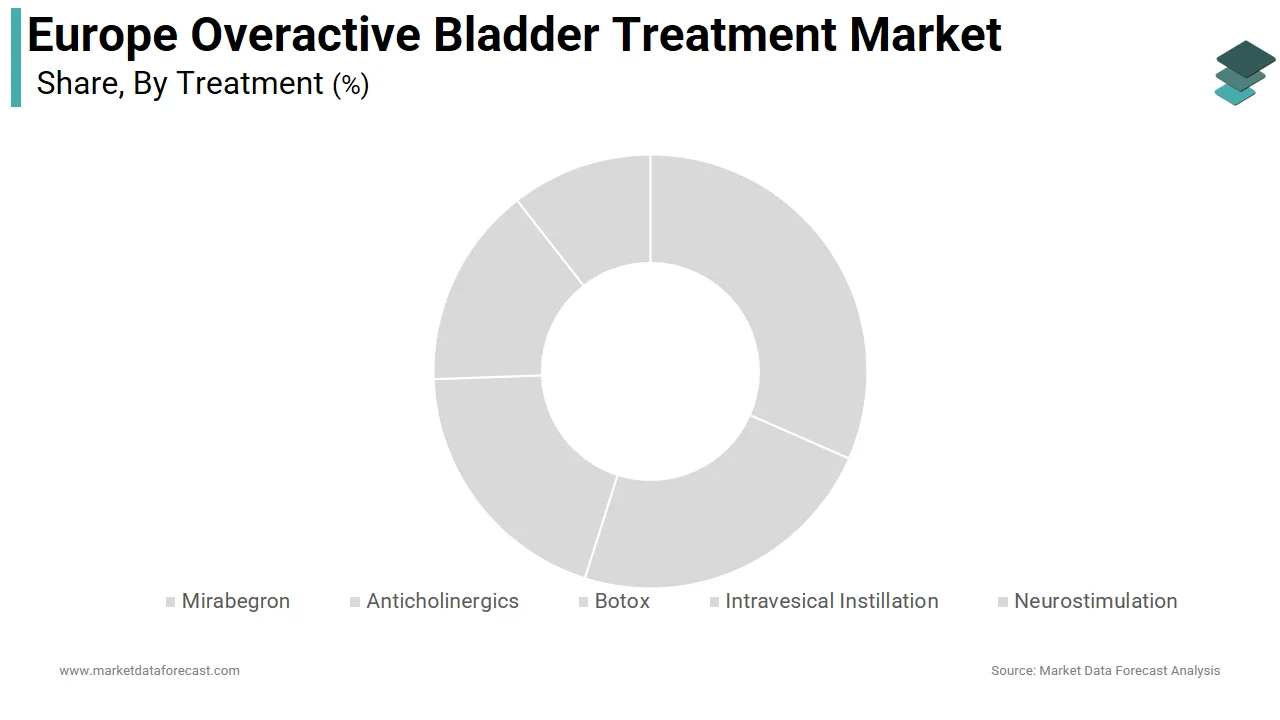
The neurostimulation segment is projected to expand at a CAGR of 9.4% from 2025 to 2033, owing to the increasing adoption of percutaneous tibial nerve stimulation and sacral neuromodulation as second and third-line therapies for patients refractory to oral medications. As per the European Society of Urology, the number of neuromodulation procedures performed in EU hospitals rose by 26% in 2023 compared to 2021, with Denmark and the Netherlands leading reimbursement integration. The UK’s National Institute for Health and Care Excellence updated its 2023 clinical pathway to recommend neuromodulation after failure of one anticholinergic, significantly shortening treatment escalation timelines. Additionally, portable home-based tibial nerve stimulators received CE certification in early 2024, enabling decentralized care and improving compliance. A multicenter trial conducted across German urology clinics demonstrated that 68% of patients achieved a 50% reduction in urgency episodes after 12 weeks of percutaneous stimulation, reinforcing clinical confidence.
By Disease Insights
The idiopathic overactive bladder segment held a prominent share of the Europe overactive bladder treatment market in 2024. This form, which arises without an identifiable neurological or structural cause, primarily affects women and older adults and aligns closely with Europe’s demographic and epidemiological profile. As per the European Association of Urology, idiopathic cases account for over 9 million annual consultations across EU member states, driven by aging, obesity, and hormonal changes. France’s National Health Data Institute reported that 76% of overactive bladder patients in primary care had no underlying neurological diagnosis, reinforcing the idiopathic classification. National continence strategies in Sweden and Germany specifically target this population through public awareness campaigns and pelvic health screening in gynecological and geriatric settings. Furthermore, most first-line treatments, including anticholinergics and mirabegron, are approved and reimbursed specifically for idiopathic overactive bladder, which is creating a clear therapeutic pathway absent in neurogenic cases. The segment’s sheer prevalence, coupled with standardized diagnostic criteria and accessible treatment protocols, ensures its continued dominance in both clinical practice and market volume.
The neurogenic overactive bladder segment is anticipated to witness the fastest CAGR of 7.8% from 2025 to 2033, with the rise reflecting improved diagnosis and management of bladder dysfunction in patients with underlying neurological conditions such as multiple sclerosis, spinal cord injury, and Parkinson’s disease. According to the European Multiple Sclerosis Platform, over 1.2 million people in Europe live with MS, and up to 80% develop lower urinary tract symptoms within five years of diagnosis. Similarly, the European Academy of Neurology reports that 65% of Parkinson’s patients experience overactive bladder, yet historically fewer than 30% received urological evaluation. Recent integration of urodynamic screening into neurology care pathways in countries like the Netherlands and Sweden has dramatically increased case identification. In 2023, Germany’s statutory health insurers expanded coverage for intravesical Botox in neurogenic cases following positive outcomes in the Neuro-Urology Registry. These systemic shifts, combined with longer survival rates among neurologically impaired populations, are transforming neurogenic overactive bladder from a neglected complication into a defined therapeutic indication with growing clinical and commercial relevance.
COUNTRY-LEVEL ANALYSIS
Germany Overactive Bladder Treatment Market Analysis
Germany was the top performer of the Europe overactive bladder treatment market by capturing 23.3% of the market share in 2024, owing to the robust healthcare infrastructure, high diagnosis rates, and comprehensive reimbursement. The country’s statutory health insurance covers all major treatment modalities, including anticholinergics, mirabegron, Botox injections, and neuromodulation, subject to documented treatment failure. According to the German Urological Association, over 2.1 million individuals received a formal overactive bladder diagnosis in 2023, with 68% initiating pharmacotherapy within three months. Germany also leads in specialist density; there is one urologist per 12,500 residents, ensuring timely access to advanced care. The Federal Joint Committee’s 2022 directive mandates multidisciplinary continence assessment in long-term care facilities, capturing elderly and underdiagnosed populations. Furthermore, German university hospitals are pivotal in clinical trials for next-generation therapies, including gene-based interventions and wearable stimulators. These structural advantages, universal coverage, specialist access, and research integration position Germany as the benchmark for overactive bladder management in Europe.
France Overactive Bladder Treatment Market Analysis
France overactive bladder treatment market was positioned next by holding 18.2% of the share in 2024 with its proactive primary care model and national continence initiatives. The French National Authority for Health mandates annual urinary symptom screening for women over 55 and men over 65 during routine consultations. As per the French Health Insurance Fund, over 1.7 million prescriptions for overactive bladder medications were reimbursed in 2023, with mirabegron accounting for 35% of new starts due to its favorable side effect profile. France also pioneered reimbursement for pelvic floor rehabilitation, with over 400,000 sessions covered annually, creating a strong conservative therapy foundation before pharmacological escalation. Urology referral pathways are streamlined through digital platforms like Mon Docteur, thereby reducing diagnostic delays. Additionally, the French Medicines Agency actively monitors real-world drug safety, publishing quarterly adherence and discontinuation reports that inform clinical decision-making. This combination of prevention, accessibility, and data-driven care ensures France maintains high treatment engagement across diverse patient groups.
United Kingdom Overactive Bladder Treatment Market Analysis
The United Kingdom overactive bladder treatment market growth is likely to grow with navigating dynamic changes within the National Health Service that both challenge and reshape care delivery. NHS England’s 2023 update to the Urinary Incontinence Pathway now requires integrated bladder diaries and physiotherapy before prescribing anticholinergics, promoting conservative first approaches. Scotland and Wales have implemented regional continence hubs that coordinate diagnosis and treatment, reducing variation. The National Institute for Health and Care Research funds ongoing trials on home-based digital therapeutics, reflecting a shift toward scalable solutions.
Italy Overactive Bladder Treatment Market Analysis
Italy overactive bladder treatment market growth is anticipated to grow steadily with the rising awareness, but persistent North-South healthcare disparities. The Italian National Institute of Health estimates that over 4.5 million adults suffer from overactive bladder, yet diagnosis rates in Southern regions like Sicily and Calabria remain below 30% due to limited urology access. In contrast, Lombardy and Emilia Romagna report diagnosis rates exceeding 60%, supported by integrated continence clinics. Botox injections are covered nationally but require prior authorization, causing delays averaging 14 weeks. Recent initiatives under the National Recovery Plan allocated 85 million euros to modernize urology services, with pilot teleurology programs launched in 2024 to bridge geographic gaps.
Netherlands Overactive Bladder Treatment Market Analysis
The Netherlands overactive bladder treatment market growth is likely to grow with early adoption and full reimbursement of advanced therapies. The Dutch Healthcare Authority includes sacral neuromodulation and intravesical Botox in its basic insurance package without prior step therapy requirements for refractory cases. As per the Netherlands Urological Society, over 5,200 neuromodulation procedures were performed in 2023, the highest per capita rate in Europe. The country also integrates urodynamic testing into standard diagnostic workflows, ensuring accurate phenotyping between idiopathic and neurogenic forms. Academic medical centers in Amsterdam and Utrecht lead European trials on next-generation bioelectronic devices, fostering close industry collaboration. Public awareness is reinforced through national campaigns like “Bladder Health Week,” supported by patient advocacy groups.
COMPETITIVE LANDSCAPE
The Europe overactive bladder treatment market features a tiered competitive structure with established pharmaceutical companies dominating pharmacological segments and specialized medtech firms advancing device-based solutions. Competition is primarily driven by clinical differentiation, tolerability profiles, and integration into national treatment guidelines rather than pricing alone. Astellas, Pfizer, and Allergan maintain strong positions through decades of clinical validation, physician familiarity, and broad reimbursement. Meanwhile, emerging players in neuromodulation, such as BlueWind Medical and Axonics, are gaining traction with minimally invasive implantable and percutaneous systems. Geographic disparities in diagnosis rates, specialist access, and reimbursement create fragmented demand requiring localized commercial strategies. Innovation is increasingly focused on combination approaches of digital therapeutics and patient-centric delivery models to overcome adherence barriers and expand treatment penetration beyond traditional urology settings.
KEY MARKET PLAYERS
The leading companies operating in the Europe application lifecycle management market include:
- Pfizer
- Allergan Plc
- Hisamitsu Pharmaceutical
- Johnson & Johnson
- Astellas Pharma Inc.
- Teva Pharmaceutical Industries
- Mylan N.V.
- Sanofi
- Aurobindo Pharma Ltd
- Endo International
TOP PLAYERS IN THE MARKET
- Astellas Pharma is a global leader in urology therapeutics with a strong presence in the Europe overactive bladder treatment market through its flagship beta 3 agonist mirabegron. The company pioneered a mechanism of action that offers an alternative to traditional anticholinergics, particularly for elderly patients concerned about cognitive side effects. Astellas actively collaborates with European urological societies to promote guideline-aligned treatment pathways and real-world evidence generation. The company launched a pan-European educational initiative targeting primary care physicians to improve early recognition and appropriate escalation of therapy. It also partnered with digital health platforms in Germany and Sweden to integrate bladder symptom tracking into routine patient monitoring. These efforts reinforce Astellas’s commitment to advancing comprehensive, patient-centric overactive bladder management across diverse European healthcare settings.
- Allergan, now operating under AbbVie, plays a pivotal role in the Europe overactive bladder treatment market through its onabotulinumtoxinA therapy approved for refractory cases. The company has established a robust training and certification program for urologists across the region to ensure safe and effective intravesical injection techniques. Allergan’s clinical evidence base includes long-term European registry data demonstrating sustained efficacy and quality of life improvements over multiple treatment cycles. In 2023, the company expanded its reimbursement support services in Southern Europe to accelerate access in countries with complex prior authorization processes. It also initiated a multicenter study in France and Italy evaluating combination therapy with mirabegron to prolong intervals between injections. These strategic actions solidify Allergan’s position as the standard bearer for advanced, minimally invasive overactive bladder intervention in Europe.
- Pfizer contributes significantly to the Europe overactive bladder treatment landscape through its anticholinergic agent tolterodine, one of the most widely prescribed first-line therapies across the region. The company maintains extensive generic and branded formulations that ensure accessibility in both public and private healthcare systems. Pfizer supports national continence programs in the United Kingdom and Spain by providing educational resources for nurses and general practitioners on behavioral and pharmacological management. The company enhanced its patient support platform with multilingual digital tools for bladder diary tracking and medication adherence reminders. It also collaborated with academic centers in the Netherlands to study real-world discontinuation patterns and develop interventions to improve persistence. These initiatives reflect Pfizer’s ongoing engagement in optimizing foundational overactive bladder care through education, accessibility, and patient empowerment.
TOP STRATEGIES USED BY THE KEY MARKET PARTICIPANTS
Key players in the Europe overactive bladder treatment market focus on generating real-world evidence to demonstrate long term efficacy and safety of their therapies across diverse patient populations. They invest in physician and nurse training programs to standardize injection techniques and treatment protocols, especially for advanced modalities like Botox and neuromodulation. Companies actively engage with national health technology assessment bodies to secure and maintain reimbursement for their products. They also develop digital health tools to support patient adherence, symptom tracking, and telemedicine integration. Additionally, they pursue label expansions and combination therapy studies to extend product life cycles and address unmet needs in refractory populations.
MARKET SEGMENTATION
This Europe overactive bladder treatment market research report is segmented and sub-segmented into the following categories.
By Treatment
- Mirabegron
- Anticholinergics
- Botox
- Intravesical Instillation
- Neurostimulation
By Disease
- Neurogenic Overactive Bladder
- Idiopathic Overactive Bladder
By Country
- UK
- France
- Spain
- Germany
- Italy
- Russia
- Sweden
- Denmark
- Switzerland
- Netherlands
- Turkey
- Czech Republic
- Rest of Europe