- Product Description Description
- Table of Contents TOC
- List of Table & Figure LOT
- Get Free Sample PDF Sample PDF
Market Size, 2025
$4.35 BnMarket Estimate, 2026
$4.5 BnMarket Forecast, 2034
$5.88 BnCAGR, 2026–2034
3.4%Global Overactive Bladder Treatment Market Report Summary
The global overactive bladder treatment market was valued at USD 4.35 billion in 2025 and is projected to grow from USD 4.50 billion in 2026 to USD 5.88 billion by 2034, registering a CAGR of 3.4% from 2026 to 2034. Market growth is driven by the increasing prevalence of overactive bladder (OAB), rising awareness regarding urinary health disorders, and growing demand for effective pharmacological and minimally invasive treatment options. The aging global population, advancements in neuromodulation therapies, and expanding access to urological care are further supporting market expansion. Additionally, ongoing research into novel therapeutic approaches and patient-centered treatment strategies continues to enhance the management of overactive bladder symptoms worldwide.
Key Market Trends
- Increasing prevalence of overactive bladder and urinary incontinence disorders among aging populations.
- Growing adoption of beta-3 adrenergic agonists and advanced neuromodulation therapies.
- Rising demand for minimally invasive treatment options for refractory overactive bladder cases.
- Expansion of digital health tools and remote patient monitoring solutions in urology care.
- Increasing focus on patient awareness, early diagnosis, and long-term symptom management.
Segmental Insights
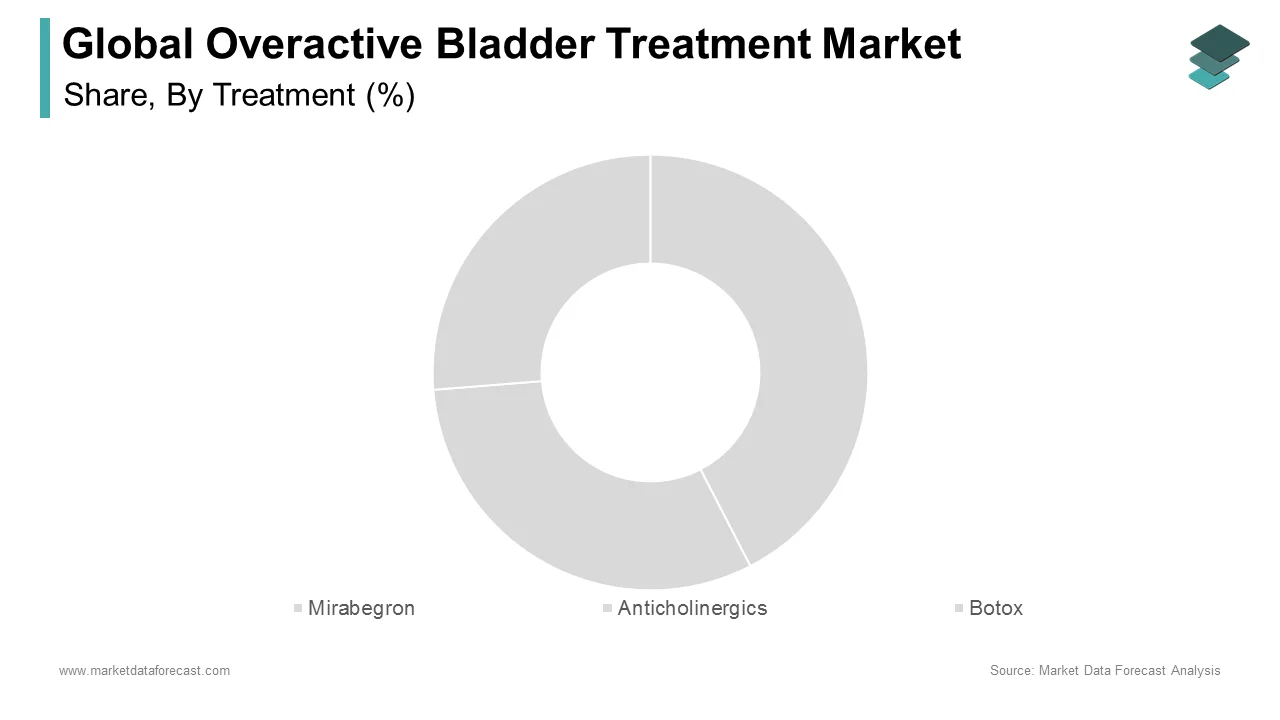
- Based on treatment, the anticholinergics segment dominated the global overactive bladder treatment market in 2025, driven by their long-standing role as first-line pharmacological therapies for reducing bladder muscle overactivity and urinary urgency symptoms.
- Based on disease type, the idiopathic overactive bladder segment held the largest share of the market in 2025, supported by the high prevalence of cases without an identifiable neurological or structural cause.
Regional Insights
The global overactive bladder treatment market is witnessing steady growth across major regions, supported by increasing healthcare expenditure, rising disease awareness, and advancements in urological care.
- North America held the dominant position in the global market in 2025, driven by advanced clinical infrastructure, high diagnosis rates, favorable reimbursement systems, and strong adoption of innovative treatment options.
- Europe remains the second-largest regional market and is expected to witness steady expansion due to its aging population, evolving healthcare regulatory landscape, and increasing focus on improving quality of life for patients with urinary disorders.
- Asia-Pacific is projected to register the fastest growth during the forecast period, supported by expanding healthcare infrastructure, increasing healthcare investments, and rising awareness of bladder health across emerging economies.
Competitive Landscape
The global overactive bladder treatment market is characterized by the presence of pharmaceutical companies and medical device manufacturers focusing on innovative therapies, improved patient outcomes, and long-term symptom management. Market participants are investing heavily in clinical research, expanding indications for existing therapies, and developing next-generation treatment solutions with enhanced efficacy and safety profiles. Strategic partnerships, mergers and acquisitions, digital health integration, and expansion into emerging markets are shaping competitive dynamics across the industry.
Prominent companies operating in the global overactive bladder treatment market include Pfizer, Allergan Plc (AbbVie Inc.), Hisamitsu Pharmaceutical, Johnson & Johnson, Medtronic plc, Astellas Pharma Inc., Teva Pharmaceutical Industries, Mylan N.V., Sanofi, Aurobindo Pharma Ltd., and Endo International.
Global Overactive Bladder Treatment Market Size
The size of the global overactive bladder treatment market was worth USD 4.35 billion in 2025. The global market is anticipated to grow at a CAGR of 3.4% from 2026 to 2034 and be worth USD 5.88 billion by 2034 from USD 4.50 billion in 2026.
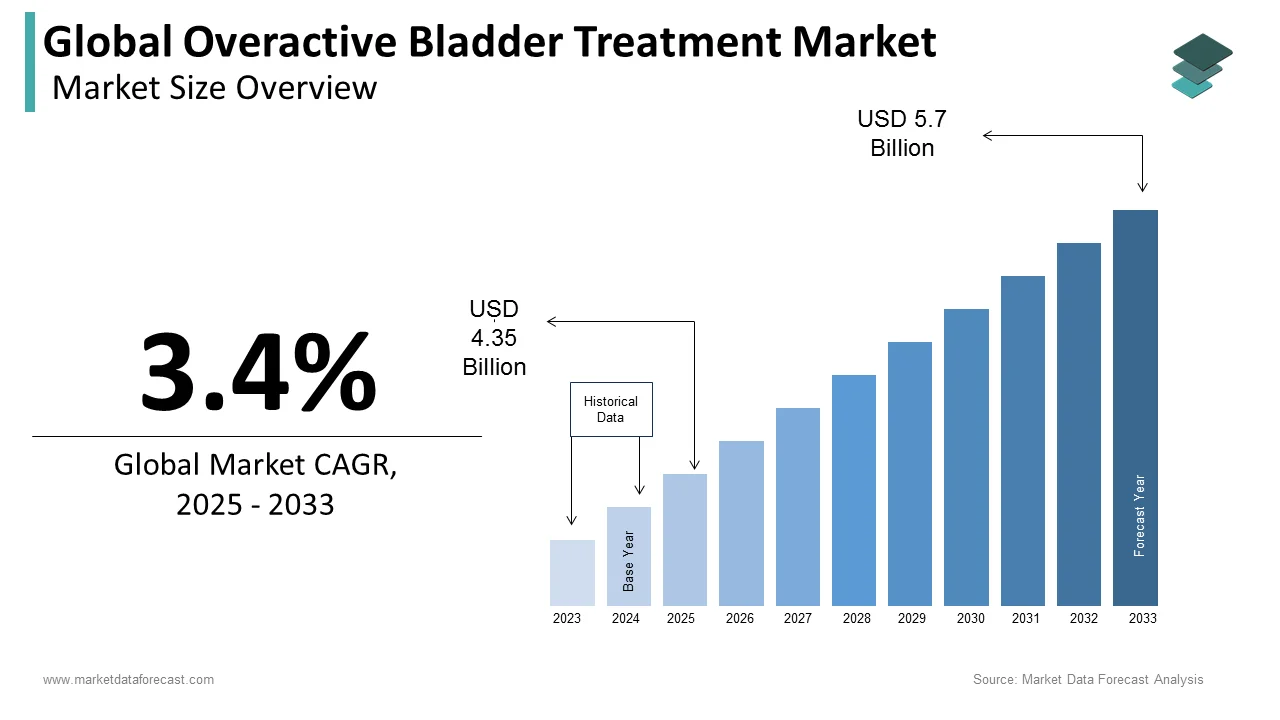
Overactive bladder treatment includes a diverse range of therapeutic interventions, including pharmacological agents, behavioral therapies, neuromodulation devices, and surgical procedures designed to manage urinary urgency, frequency, and incontinence. This condition significantly impairs quality of life, affecting sleep, social interactions, and mental health across various demographics. In Europe, the prevalence of this urological disorder is closely linked to aging populations and lifestyle factors, such as obesity and diabetes. According to the European Association of Urology, approximately 17 percent of adults in Europe suffer from overactive bladder symptoms, with prevalence rates increasing sharply after the age of 40. As per the International Continence Society, between 40% and 60% of affected individuals seek medical help due to embarrassment or lack of awareness, highlighting a significant gap between disease burden and clinical engagement. Regulatory bodies, like the European Medicines Agency, enforce strict guidelines for drug approval and device safety, ensuring high standards of care. Recent advancements in minimally invasive therapies and personalized medicine are reshaping treatment paradigms, moving away from solely anticholinergic medications toward beta 3 agonists and nerve stimulation techniques. The integration of digital health tools for monitoring and behavioral modification further expands the therapeutic landscape. As healthcare systems prioritize cost-effective management of chronic conditions, the demand for efficient and tolerable treatments continues to rise, driving innovation and competition within this specialized medical sector.
MARKET DRIVERS
Aging Global Population and Increased Prevalence of Comorbidities
The rapidly aging global population is primarily driving the growth of the overactive bladder treatment market, as physiological changes associated with aging directly impact bladder function. Older adults experience reduced bladder capacity, increased involuntary contractions, and weakened pelvic floor muscles, leading to a higher incidence of urgency and incontinence. According to the World Health Organization, the number of people aged 60 years and older is expected to double to 2.1 billion by 2050, creating a vast demographic prone to urological disorders. Additionally, the rising prevalence of comorbidities, such as type 2 diabetes and neurological conditions like Parkinson’s disease, exacerbates bladder dysfunction. According to the International Diabetes Federation, approximately 537 million adults were living with diabetes globally in 2021, a condition that often causes polyuria and nerve damage affecting bladder control. These interconnected health issues necessitate comprehensive management strategies, including pharmacological and device-based treatments. Healthcare providers are increasingly recognizing the need for early intervention to prevent complications, such as falls and skin infections associated with incontinence. The growing geriatric population in developed regions, like Europe and North America, ensures a steady and expanding patient base. This demographic shift drives consistent demand for both first-line medications and advanced therapies. Pharmaceutical companies and device manufacturers are tailoring products to meet the specific needs of elderly patients, focusing on ease of use and minimal side effects. This sustained demographic trend underpins long-term market growth and encourages continuous investment in research and development.
Advancements in Minimally Invasive Therapies and Neuromodulation Devices
Technological advancements in minimally invasive therapies and neuromodulation devices are further fuelling the global market expansion, by offering effective alternatives for patients who do not respond to medication. Sacral neuromodulation and percutaneous tibial nerve stimulation have gained traction due to their ability to modulate neural pathways controlling bladder function, with fewer systemic side effects than oral drugs. According to the American Urological Association guidelines, neuromodulation is recommended as a third-line therapy for refractory cases, providing relief for up to 80 percent of treated patients. The development of smaller implantable devices and wireless stimulation systems has improved patient comfort and reduced surgical risks. Recent innovations include closed-loop systems that adjust stimulation parameters in real time based on bladder activity, enhancing efficacy. These technologies appeal to patients seeking long-term solutions without the cognitive side effects associated with anticholinergic medications. The expansion of outpatient procedures allows for quicker recovery times and lower healthcare costs, compared to traditional surgeries. Regulatory approvals for new devices in major markets have accelerated their adoption in clinical practice. Hospitals and clinics are investing in specialized training for urologists to perform these procedures, widening access to care. The proven clinical benefits and improved technology profiles drive physician confidence and patient acceptance. This technological evolution diversifies the treatment landscape and captures a growing segment of the market seeking advanced therapeutic options.
MARKET RESTRAINTS
Patient Underreporting and Social Stigma Restraining Diagnosis Rates
Patient underreporting and pervasive social stigma are major restraints on the overactive bladder treatment market, by limiting diagnosis rates and delaying access to care. Many individuals view bladder symptoms as a normal part of aging or a personal failing, rather than a treatable medical condition. According to the National Association for Continence, nearly 50 percent of people with overactive bladder symptoms do not discuss their condition with a healthcare provider due to embarrassment or shame. This silence prevents early intervention and allows symptoms to worsen, leading to more complex and costly treatments later. Cultural attitudes in certain regions further discourage open discussion about urinary issues, particularly among men and younger women. Lack of public awareness campaigns means many potential patients remain uninformed about available treatments and management strategies. Primary care physicians may also overlook screening for overactive bladder during routine visits, focusing instead on more acute complaints. This diagnostic gap results in underestimated prevalence data and reduced demand for therapeutic products. Pharmaceutical companies face challenges in reaching undiagnosed populations through traditional marketing channels. The reluctance to seek help limits the total addressable market and slows the adoption of new therapies. Addressing this restraint requires sustained educational efforts and destigmatization initiatives, which are resource-intensive and slow to yield results. Until societal attitudes shift, a significant portion of the affected population will remain outside the formal healthcare system.
Side Effects of Pharmacological Treatments Leading to Discontinuation
The adverse side effects associated with common pharmacological treatments for overactive bladder significantly restrain market growth, by causing high discontinuation rates among patients. Anticholinergic medications, the traditional first-line therapy, are frequently linked to dry mouth, constipation, blurred vision, and cognitive impairment. According to a study published in the Journal of the American Geriatrics Society, long-term use of anticholinergics is associated with an increased risk of dementia in older adults, raising serious safety concerns. These side effects often outweigh the benefits for many patients, leading them to stop treatment prematurely. Beta 3 agonists, while having a better safety profile, can cause hypertension and urinary retention, limiting their use in patients with cardiovascular conditions. The trial-and-error process of finding a tolerable medication frustrates patients and erodes trust in pharmacological solutions. High dropout rates reduce the lifetime value of each patient and hinder the establishment of long-term treatment routines. Physicians are becoming more cautious in prescribing these drugs, particularly for elderly patients with multiple comorbidities. This caution shifts preference toward non-pharmacological options, which may have higher upfront costs or limited accessibility. The negative perception of drug safety dampens enthusiasm for new pharmaceutical launches. Manufacturers must invest heavily in developing compounds with improved safety profiles to overcome this barrier. Until safer and more tolerable drugs are widely available, side effects will continue to limit the penetration of pharmacological treatments in the market.
MARKET OPPORTUNITIES
Integration of Digital Health and Remote Patient Monitoring Solutions
The integration of digital health technologies and remote patient monitoring solutions is a significant opportunity for the overactive bladder treatment market, by enhancing patient engagement and treatment adherence. Mobile applications and wearable devices allow patients to track fluid intake, voiding patterns, and symptom severity in real time, providing valuable data for clinicians. According to the European Digital Health Alliance, the use of digital therapeutics can improve treatment outcomes by up to 30 percent through personalized feedback and behavioral coaching. These tools facilitate telemedicine consultations, reducing the need for frequent clinic visits and making care more accessible for rural or mobility-impaired patients. Digital platforms can deliver cognitive behavioral therapy modules, helping patients manage urgency through bladder training exercises. The data collected enables physicians to adjust treatment plans more precisely, improving efficacy and reducing trial-and-error. Insurance providers are increasingly recognizing the cost-saving potential of digital interventions, leading to broader reimbursement coverage. Partnerships between technology firms and pharmaceutical companies create integrated care ecosystems that support holistic management. The growing smartphone penetration among older adults facilitates wider adoption of these tools. Digital health solutions also offer opportunities for continuous patient education and support groups, reducing isolation. By leveraging technology, healthcare providers can offer more proactive and personalized care. This digital transformation opens new revenue streams and strengthens patient loyalty, driving growth in the overall treatment market.
Expansion into Emerging Markets with Improving Healthcare Infrastructure
Expanding into emerging markets with improving healthcare infrastructure is another prominent opportunity for the overactive bladder treatment market. Countries in Asia Pacific, Latin America, and the Middle East are experiencing rising disposable incomes and increased health awareness, leading to greater demand for specialized care. According to the World Bank, healthcare expenditure in lower-middle-income countries has grown by an average of 6% annually over the past decade, enabling better access to diagnostics and treatments. Urbanization in these regions brings lifestyle changes, such as sedentary habits and dietary shifts, that increase the prevalence of overactive bladder. Local governments are investing in urology departments and training specialists to address the growing burden of chronic diseases. International pharmaceutical companies are launching affordable generic versions of established drugs to capture price-sensitive segments. Collaborations with local distributors and healthcare providers facilitate market entry and regulatory navigation. The untapped patient pool in these regions represents a vast potential customer base, compared to saturated Western markets. Public health initiatives focusing on women’s health and aging populations further drive awareness and diagnosis. As insurance coverage expands in these economies, out-of-pocket expenses decrease, making treatments more accessible. Early entry into these markets allows companies to establish brand loyalty and secure distribution networks. This geographic diversification mitigates risks in mature markets and ensures sustainable long-term growth for industry players.
MARKET CHALLENGES
High Cost of Advanced Therapies and Limited Reimbursement Coverage
The high cost of advanced therapies, such as neuromodulation devices and botulinum toxin injections is primarily challenging the overactive bladder treatment market expansion due to limited reimbursement coverage. These treatments are often reserved for severe cases, but their expense restricts access for many patients. According to the Kaiser Family Foundation, out-of-pocket costs for specialized urological procedures can exceed several thousand dollars, depending on insurance plans and deductibles. Many public and private insurers classify these therapies as experimental or elective, leading to claim denials or partial coverage. This financial barrier forces patients to rely on cheaper but less effective medications, or to forego treatment entirely. The administrative burden of obtaining prior authorization for these devices delays care and frustrates both providers and patients. Healthcare systems in cost-constrained environments may limit the availability of these technologies to control budgets. The lack of standardized reimbursement policies across different regions creates uncertainty for manufacturers and providers. High upfront costs for hospitals to purchase equipment further limit adoption in smaller clinics. Patients from lower socioeconomic backgrounds are disproportionately affected, exacerbating health disparities. Advocacy groups are pushing for broader coverage, but progress is slow due to budgetary pressures. Until reimbursement landscapes improve, the full potential of advanced therapies will remain unrealized. This economic constraint hinders market expansion and limits patient access to optimal care solutions.
Complexity of Personalized Treatment Protocols and Clinical Variability
The complexity of developing personalized treatment protocols and managing clinical variability are further challenging the expansion of the overactive bladder treatment market. Overactive bladder is a heterogeneous condition with diverse underlying causes, including neurological, muscular, and idiopathic factors, making a one-size-fits-all approach ineffective. According to the International Urogynecological Association, response rates to standard treatments vary widely among individuals, requiring tailored therapeutic strategies. Identifying the most effective treatment for each patient involves a lengthy process of trial-and-error, which can be frustrating and costly. Biomarkers for predicting treatment response are currently limited, forcing clinicians to rely on subjective symptom assessments. This variability complicates clinical trials and regulatory approvals for new drugs, as endpoints may differ across patient subgroups. Physicians require extensive training to navigate the array of available options, from behavioral therapies to surgery. The lack of clear clinical guidelines for second and third-line treatments leads to inconsistent care practices. Patients may undergo multiple ineffective treatments before finding relief, leading to dissatisfaction and dropout. Standardizing care pathways while allowing for personalization is a delicate balance that healthcare systems struggle to achieve. Research into precision medicine is ongoing but not yet widely applicable in clinical settings. This clinical complexity slows the adoption of new therapies and increases the burden on healthcare providers. Addressing this challenge requires robust diagnostic tools and evidence-based guidelines to streamline decision-making.
REPORT COVERAGE
| REPORT METRIC | DETAILS |
| Market Size Available | 2025 to 2034 |
| Base Year | 2025 |
| Forecast Period | 2026 to 2034 |
| Segments Covered | By Treatment, Disease, and Region. |
| Various Analyses Covered | Global, Regional and Country-Level Analysis, Segment-Level Analysis, Drivers, Restraints, Opportunities, Challenges; PESTLE Analysis; Porter’s Five Forces Analysis, Competitive Landscape, Analyst Overview of Investment Opportunities |
| Regions Covered | North America, Europe, Asia Pacific, Latin America, the Middle East, and Africa |
| Market Leaders Profiled | Pfizer, Allergan Plc, Hisamitsu Pharmaceutical, Johnson & Johnson, Astellas Pharma Inc, Teva Pharmaceutical Industries, Mylan N.V, Sanofi, Aurobindo Pharma Ltd, and Endo International. |
SEGMENTAL ANALYSIS
By Treatment Insights
The anticholinergics segment dominated the market by capturing the leading share of the global market in 2025 due to their long-standing position as the first-line pharmacological therapy in clinical guidelines globally. Drugs such as oxybutynin, tolterodine, and solifenacin have been used for decades to provide a wealth of real-world evidence regarding their efficacy and safety profiles. According to the American Urological Association, anticholinergics remain the initial standard of care for most patients diagnosed with idiopathic overactive bladder, before progressing to more invasive options. The widespread availability of generic versions has significantly reduced the cost burden for patients and healthcare systems, making these medications accessible to a broader demographic. In many European and Asian countries, national health services prioritize generic anticholinergics due to budget constraints, ensuring high prescription volumes. The familiarity of primary care physicians with these drugs simplifies the prescribing process, reducing hesitation in initiating treatment. Furthermore, the oral administration route is preferred by patients who wish to avoid injections or surgical procedures. The extensive formulary inclusion in insurance plans across North America and Europe further cements their dominance. Despite emerging concerns about side effects, the sheer volume of existing prescriptions and the lack of immediate alternatives for all patient types sustain their market leadership. This entrenched position ensures that anticholinergics continue to generate the highest revenue within the treatment segment.
On the other hand, the neurostimulation segment is estimated to grow at a CAGR of 10.4% during the forecast period in the global market owing to the significant technological advancements in minimally invasive devices. Innovations such as wireless sacral neuromodulation systems and percutaneous tibial nerve stimulation devices have transformed the treatment landscape for refractory cases. According to the International Continence Society, these advanced devices offer superior patient comfort and easier implantation procedures, compared to earlier generations. The development of smaller rechargeable implants reduces the need for frequent replacement surgeries, enhancing long-term convenience for patients. Closed-loop systems that automatically adjust stimulation parameters based on bladder activity are improving therapeutic outcomes and reducing side effects. These technological improvements are expanding the eligibility criteria, allowing more patients to benefit from neuromodulation. The shift towards outpatient procedures lowers hospitalization costs and recovery times, making these treatments more attractive to both providers and payers. Manufacturers are investing heavily in research to further miniaturize components and extend battery life. Regulatory approvals for next-generation devices in key markets, like the United States and Europe, are accelerating market entry. The proven efficacy of these devices in patients who have failed medication therapy creates a strong value proposition. As awareness of these advanced options grows among urologists and patients, the adoption rate is increasing rapidly. This technological momentum positions neurostimulation as the fastest-growing segment in the overactive bladder treatment market.
By Disease Insights
The idiopathic overactive bladder segment led the market with the highest share of the global market in 2025 due to its high prevalence among the aging global population and association with common lifestyle factors. Unlike neurogenic causes, which are linked to specific neurological conditions, idiopathic OAB occurs without a clear underlying neurological disease. According to the World Health Organization, the global population aged 60 and older is expected to reach 2.1 billion by 2050, creating a massive base of individuals at risk for age-related bladder dysfunction. Factors such as obesity, smoking, and caffeine consumption further exacerbate symptoms in this group. As per the National Institutes of Health, the prevalence of idiopathic OAB increases significantly with age, affecting approximately 11% to 16% of adults overall, with rates climbing higher over the age of 65. The absence of a distinct neurological diagnosis makes this category a catch-all for the majority of cases seen in primary care and urology clinics. The chronic nature of the condition requires long-term management, driving consistent demand for treatments. Public health campaigns focusing on healthy aging and bladder health are increasing diagnosis rates in this segment. The sheer volume of patients with idiopathic symptoms ensures that this segment remains the primary driver of market revenue. Pharmaceutical and device companies primarily target this large population in their marketing and clinical development efforts.
However, the neurogenic overactive bladder segment is the fastest growing segment and is predicted to witness a CAGR of 9.5% during the forecast period, owing to the rising incidence of neurological disorders and spinal cord injuries. Conditions such as multiple sclerosis, Parkinson’s disease, and stroke directly affect the neural pathways controlling bladder function, leading to severe symptoms. According to the Multiple Sclerosis International Federation, the number of people living with multiple sclerosis has increased to approximately 2.9 million globally, due to better diagnostics and survival rates. Similarly, the World Health Organization reports that spinal cord injuries affect millions worldwide, with a significant proportion developing bladder dysfunction. As survival rates for these neurological conditions improve due to advances in acute care, the prevalence of associated complications, like neurogenic OAB, rises. These patients often require more complex and aggressive treatments, including botulinum toxin injections and neuromodulation. The severity of symptoms in neurogenic cases necessitates specialized care, driving higher spending per patient. Increased awareness among neurologists and urologists about the importance of bladder management in neurological care is leading to earlier referrals. This multidisciplinary approach is expanding the treated population. The complex needs of these patients create opportunities for advanced therapies and specialized devices. As the global burden of neurological diseases grows, the neurogenic segment is expanding rapidly.
REGIONAL ANALYSIS
North America Overactive Bladder Treatment Market Analysis
North America had the major share of the overactive bladder treatment market in 2025 and is expected to sustain its dominant position over the next few years, due to its highly advanced clinical frameworks and substantial diagnostic adoption rates. The United States is the primary contributor, with a robust presence of leading pharmaceutical and medical device companies. According to the Centers for Disease Control and Prevention, the prevalence of overactive bladder in the US is high, particularly among the aging population and those with chronic conditions like diabetes. The region benefits from favorable reimbursement policies for both pharmacological and device-based treatments. High awareness levels and active patient advocacy groups encourage early diagnosis and treatment. The presence of key opinion leaders and research institutions drives innovation and clinical trials. Insurance coverage for neuromodulation devices is more comprehensive in North America, compared to other regions. The market is characterized by a high adoption rate of newer therapies, such as beta 3 agonists and botox injections. Regulatory approvals by the Food and Drug Administration are swift, facilitating quick market entry for new products. The competitive landscape is intense, with major players investing heavily in marketing and education. The aging baby boomer generation ensures sustained demand. However, high drug prices remain a concern, prompting some patients to seek alternatives. Overall, the region’s economic strength and healthcare sophistication maintain its leadership position.

Europe Overactive Bladder Treatment Market Analysis
Europe is expected to exhibit steady volume expansion over the next few years, supported by its evolving healthcare regulatory landscape and aging demographic profile. Countries like Germany, France, and the United Kingdom are major contributors, with well-established urology departments. According to the European Association of Urology, the prevalence of OAB in Europe is significant, with varying treatment preferences across countries. Public healthcare systems prioritize cost-effective treatments, leading to high usage of generic anticholinergics. Reimbursement for advanced devices, like neuromodulators, is subject to rigorous health technology assessments, which can delay adoption. However, the emphasis on quality of life and patient-centered care is driving interest in newer therapies. The aging population in Southern and Western Europe fuels demand. Regulatory harmonization through the European Medicines Agency facilitates market access. There is a growing trend towards non-pharmacological interventions due to safety concerns with long-term drug use. Clinical guidelines are regularly updated to reflect new evidence. The market is fragmented by national regulations, but overall growth is steady. Sustainability and environmental impact of medical waste are becoming important considerations. The region balances innovation with fiscal responsibility, maintaining a stable but slower growing market compared to North America.
Asia Pacific Overactive Bladder Treatment Market Analysis
The Asia Pacific region is expected to lead global market growth over the next few years, driven by aggressive investments in medical infrastructure and shifting demographic trends. China, Japan, and India are key markets, with increasing awareness of urological health. According to the World Health Organization, the aging population in Asia is growing faster than in any other region, creating a large potential patient base. In Japan, a super-aged society, the demand for OAB treatments is particularly high and well supported by national insurance. China is seeing a rise in diagnosis rates, as healthcare infrastructure expands in tier 2 and tier 3 cities. Local manufacturers are producing affordable generic medications, increasing accessibility. Cultural stigma around urinary issues is gradually decreasing due to public health campaigns. The market is shifting from traditional remedies to evidence-based medical treatments. Government initiatives to improve chronic disease management are supporting market growth. Out-of-pocket expenditure remains high in some countries, limiting access to premium therapies. However, the rising middle class is able to afford better care. International companies are entering the market through partnerships with local distributors. The region offers significant untapped potential and is expected to witness the highest growth rates in the coming years.
Latin America Overactive Bladder Treatment Market Analysis
Latin America is projected to expand its market penetration over the next few years, as public health networks expand access to essential diagnostics. The region faces challenges related to healthcare inequality and limited access to specialized care in rural areas. According to the Pan American Health Organization, urban centers have better access to urological services, while rural populations rely on primary care. Economic volatility affects purchasing power and import costs for medications and devices. Public healthcare systems provide basic treatments, but access to advanced therapies is limited. Private insurance sectors in major cities drive demand for premium products. Awareness of overactive bladder is lower compared to North America and Europe, leading to underdiagnosis. Local manufacturers produce generic anticholinergics, which are widely used. International companies are focusing on educating physicians and patients to expand the market. Regulatory frameworks vary by country, creating complexity for market entry. The growing elderly population and rising prevalence of diabetes are key drivers. Efforts to improve healthcare infrastructure are ongoing, but progress is slow. The market is price sensitive, favoring cost-effective solutions. Despite challenges, the region offers growth opportunities as healthcare systems mature and awareness increases.
Middle East and Africa Overactive Bladder Treatment Market Analysis
The Middle East and Africa region is anticipated to showcase selective growth over the next few years, centered primarily around key urban healthcare hubs and high-income territories. Gulf Cooperation Council countries, like Saudi Arabia and the United Arab Emirates, have advanced healthcare facilities and high spending power. According to the World Bank, healthcare investment in the GCC is increasing to meet the needs of expatriate and local populations. In Africa, access to specialized urological care is limited mostly to urban centers in South Africa and Egypt. Infectious diseases and limited resources often take precedence over chronic conditions like OAB. However, rising awareness of non-communicable diseases is changing priorities. The market is dominated by basic pharmacological treatments due to cost constraints. Import dependence for medications and devices makes prices high. Cultural factors influence help-seeking behavior, with many patients delaying treatment. Government initiatives to improve healthcare access are slowly expanding the market. International aid and partnerships support capacity building in some African nations. The region is fragmented, with significant disparities between wealthy and low-income countries. Growth is driven by urbanization and lifestyle changes in the Middle East. Long-term potential exists as healthcare systems develop and economic conditions improve.
COMPETITIVE LANDSCAPE
The competition in the overactive bladder treatment market is characterized by intense rivalry among pharmaceutical giants and medical device manufacturers vying for dominance in both pharmacological and interventional segments. Established players leverage their extensive distribution networks and strong brand recognition to maintain loyalty among physicians and patients. Innovation serves as a key differentiator with companies striving to introduce therapies that offer superior safety profiles and convenience. The shift towards personalized medicine drives competition in developing targeted treatments for specific patient subgroups. Pricing pressure from generic entrants challenges branded drug manufacturers forcing them to demonstrate added value through clinical outcomes. Device makers compete on technological advancements such as miniaturization and wireless capabilities to attract patients seeking minimally invasive options. Regulatory hurdles and reimbursement policies significantly influence competitive dynamics, requiring strategic navigation. Collaborations with healthcare providers and patient advocacy groups are essential for building trust and educating the market. The landscape is dynamic with continuous entry of novel biologics and digital solutions reshaping standard care practices. Companies must balance cost efficiency with high-quality innovation to sustain their market positions effectively.
KEY MARKET PLAYERS
Some of the companies that are playing a dominating role in the global overactive bladder treatment market include
- Pfizer
- Allergan Plc
- Hisamitsu Pharmaceutical
- Johnson & Johnson
- Medtronic plc
- Astellas Pharma Inc
- Teva Pharmaceutical Industries
- Mylan N.V
- Sanofi
- Aurobindo Pharma Ltd
- Endo International
TOP PLAYERS IN THE MARKET
- Astellas Pharma Inc. is a global leader in urology with a strong portfolio, including mirabegron a beta 3 adrenergic agonist. The company focuses on innovative therapies that offer improved safety profiles compared to traditional anticholinergics. Recent actions include expanding clinical trials for combination therapies and investing in digital health tools for patient monitoring. Astellas actively collaborates with healthcare providers to enhance disease awareness and early diagnosis. The firm strengthens its market position through strategic partnerships aimed at improving access to treatments in emerging markets. By prioritizing patient-centric innovation and robust educational initiatives Astellas maintains its reputation as a key contributor to advancing care standards for individuals suffering from overactive bladder symptoms worldwide.
- Allergan plc now part of AbbVie Inc., holds a prominent position in the overactive bladder market with its widely recognized brand Botox for intradetrusor injections. The company leverages its extensive sales network and clinical expertise to promote neuromodulation and injectable therapies. Recent efforts focus on expanding indications and simplifying administration protocols to improve patient adherence. Allergan invests heavily in physician training programs to ensure proper delivery of advanced treatments. The integration with AbbVie has enhanced research capabilities and financial resources for developing next-generation solutions. By emphasizing clinical efficacy and long term management strategies, Allergan continues to strengthen its leadership in providing effective relief for patients with refractory overactive bladder conditions globally.
- Medtronic plc is a major player in the device segment specializing in sacral neuromodulation systems such as the InterStim therapy. The company provides innovative implantable devices that regulate nerve signals controlling bladder function. Recent actions include launching smaller rechargeable implants and wireless technologies to enhance patient comfort and convenience. Medtronic actively engages in real world evidence studies to demonstrate long-term benefits and cost-effectiveness. The firm expands its global footprint by securing regulatory approvals in new regions and partnering with specialized urology centers. By focusing on technological advancement and comprehensive patient support Medtronic solidifies its role as a critical provider of advanced therapeutic options for individuals who do not respond to medication alone.
TOP STRATEGIES USED BY KEY MARKET PARTICIPANTS
Key players in the overactive bladder treatment market primarily focus on product innovation to develop therapies with fewer side effects and better efficacy profiles. Companies invest heavily in clinical research to expand indications for existing drugs and devices. Strategic mergers and acquisitions allow firms to diversify portfolios and access new technologies. Partnerships with digital health companies enable the integration of remote monitoring and patient engagement tools. Marketing efforts emphasize disease awareness and destigmatization to encourage early diagnosis and treatment adoption. Expanding into emerging markets through local collaborations helps capture growing patient populations. Regulatory advocacy ensures favorable reimbursement policies for advanced therapies. These strategies collectively drive growth and improve patient outcomes in the competitive global landscape.
MARKET SEGMENTATION
This research report on the global overactive bladder treatment market has been segmented and sub-segmented into the following categories.
By Treatment
- Mirabegron
- Anticholinergics
- Solifenacin
- Fesoterodine
- Tolterodine
- Oxybutynin
- Darifenacin
- Trospium
- Other Anticholinergics
- Botox
- Intravesical Instillation
- Neurostimulation
By Disease
- Neurogenic
- Spinal Cord Injury
- Parkinson's disease
- Multiple Sclerosis
- Other Disorders
- Idiopathic
By Region
- North America
- The United States
- Canada
- Rest of North America
- Europe
- UK
- Germany
- Italy
- Spain
- France
- Rest of E.U.
- Asia-Pacific
- India
- China
- Japan
- Australia
- New Zealand
- South Korea
- Rest of APAC
- Latin America
- Mexico
- Brazil
- Argentina
- Chile
- Rest of Latin America
- Middle East
- Africa