- Product Description Description
- Table of Contents TOC
- List of Table & Figure LOT
- Get Free Sample PDF Sample PDF
Market Size, 2025
$1.31 BnMarket Estimate, 2026
$1.36 BnMarket Forecast, 2034
$1.78 BnCAGR, 2026–2034
3.45%Executive Summary: North America Overactive Bladder Treatment Market
- Market Scope: Comprehensive North American overactive bladder (OAB) treatment market analysis covering disease/condition types, technological testing methods, end-user settings, and country-level landscapes across the United States, Canada, and Mexico.
- Market Valuation: Valued at USD 1.31 billion in 2025, estimated at USD 1.36 billion in 2026, and projected to reach USD 1.78 billion by 2034, registering a compound annual growth rate (CAGR) of 3.45% from 2026 to 2034.
- Primary Growth Drivers: Expanding aging demographics prone to age-related bladder changes, heightened public awareness campaigns by pharmaceutical firms and patient advocacy groups, and improved access to early diagnosis and advanced therapies. Key market restraints include high ongoing treatment costs and financial barriers for patients lacking comprehensive health insurance coverage.
Key Market Segment Metrics (2026–2034)
| Category | Leading Segment (2025 Position) | Fastest-Growing Segment |
|---|---|---|
| By Disease Type | Neurological & General OAB Disorders (dominated clinical diagnosis and pharmaceutical consumption) | Neurological Disorder-Associated OAB (expanding alongside advanced diagnostic tools) |
| By Technology | Polymerase Chain Reaction (PCR) & Immunohistochemistry (held prominent shares in pathology labs) | Sequencing & Advanced Biomarker Technologies (growing steadily with precision medicine initiatives) |
| By End User | Hospitals (captured the largest share as primary centers for surgical interventions and specialist consultations) | Diagnostics Laboratories (growing rapidly due to increased screening and testing requirements) |
| By Country / Region | United States (rules the regional market with a dominant share backed by robust healthcare infrastructure and major drug makers) | Canada (projected to hit the highest CAGR during the forecast period driven by an aging demographic and robust public systems) |
Major Market Players & Market Structure
Market Structure: Highly competitive pharmaceutical and medical device landscape featuring global life sciences giants investing heavily in R&D, advanced drug formulations, and specialized neuromodulation tech.
Key Companies: Pfizer, Allergan Plc, Hisamitsu Pharmaceutical, Johnson & Johnson, Astellas Pharma Inc., Teva Pharmaceutical Industries, Mylan N.V., Sanofi, Aurobindo Pharma Ltd., and Endo International.
 Download Free Sample Report
North America Overactive Bladder Treatment Market Size
The size of the North America overactive bladder treatment market was worth USD 1.31 billion in 2025. The North America market is anticipated to grow at a CAGR of 3.45% from 2026 to 2034 and be worth USD 1.78 billion by 2034 from USD 1.36 billion in 2026.

The overactive bladder treatment is a suite of therapeutic interventions, including pharmacological agents, neuromodulation devices, and behavioral therapies designed to manage urinary urgency, frequency, and incontinence. This clinical domain addresses a prevalent urological condition that significantly impairs quality of life and imposes substantial economic burdens on healthcare systems. According to the Urology Care Foundation, over 33 million Americans suffer from overactive bladder symptoms, with prevalence rates increasing sharply among individuals aged 65 and older. The Centers for Disease Control and Prevention indicates that urinary incontinence affects approximately 25% of young women and up to 75% of older women, highlighting the demographic skew toward female patients. These statistics underscore the vast patient pool requiring effective management strategies beyond simple lifestyle modifications. The aging population in North America further amplifies demand as physiological changes associated with aging exacerbate bladder dysfunction. Regulatory approvals for novel drug formulations and minimally invasive devices continue to expand the treatment arsenal available to clinicians. Reimbursement policies play a critical role in determining patient access to advanced therapies such as sacral neuromodulation.
MARKET DRIVERS
Aging Population and Increasing Prevalence
The rapidly aging population, by expanding the base of individuals susceptible to bladder dysfunction and related urological disorders, is propelling the growth of the North America overactive bladder treatment market. Age-related physiological changes such as decreased bladder capacity and weakened pelvic floor muscles significantly increase the risk of developing overactive bladder symptoms. According to the United States Census Bureau, the number of individuals aged 65 and older is projected to reach 95 million by 2060, representing nearly 22% of the total population. This demographic shift creates a sustained and growing demand for effective treatment options as older adults seek to maintain independence and quality of life. Healthcare providers are increasingly prioritizing geriatric care, which includes comprehensive assessment and treatment of lower urinary tract symptoms. The chronic nature of the condition requires long term management strategies, driving recurring revenue for pharmaceutical and device manufacturers. Public health initiatives aimed at improving senior health outcomes further support early diagnosis and treatment adoption.
Enhanced Awareness and Reduced Stigma
The enhanced public awareness and reduced social stigma surrounding urinary issues, by encouraging more patients to seek professional medical help, are greatly influencing the growth of the North America overactive bladder treatment market. Historically, many individuals suffered in silence due to embarrassment, but widespread educational campaigns have normalized discussions about bladder health. According to the Society of Urodynamics, Female Pelvic Medicine and Urogenital Reconstruction, patient inquiries regarding overactive bladder treatments have increased by 40% in recent years following targeted awareness initiatives. Major healthcare organizations and patient advocacy groups actively disseminate information about available treatments, reducing misconceptions and fear associated with procedural interventions. As per the American Urological Association, early intervention can prevent complications such as skin infections and falls, thereby improving overall health outcomes. Digital health platforms and telemedicine services have made it easier for patients to consult specialists discreetly, further lowering barriers to care. Pharmaceutical companies invest heavily in direct-to-consumer advertising to educate potential patients about symptom recognition and management options. This cultural shift transforms overactive bladder from a hidden burden into a treatable medical condition. Increased diagnosis rates directly translate to higher prescription volumes and procedure counts.
MARKET RESTRAINTS
High Cost of Advanced Therapies
The high cost of advanced therapies for patients without comprehensive insurance coverage is limiting the growth of the North America overactive bladder treatment market. Procedures such as sacral neuromodulation and percutaneous tibial nerve stimulation involve expensive devices and surgical fees that can exceed several thousand dollars. Many insurance plans impose high deductibles and co-payments for specialized urological procedures, discouraging patients from pursuing second- or third-line treatments. The financial toxicity is a major barrier to adherence for chronic disease management, leading many patients to discontinue therapy prematurely. Even with insurance approval prior authorization processes can be lengthy and complex, causing delays in treatment initiation. Patients often opt for cheaper generic medications despite lower efficacy due to budget constraints. This economic barrier restricts the adoption of innovative technologies that offer superior long-term benefits. Healthcare providers face challenges in convincing patients to invest in costly interventions when immediate relief is not guaranteed.
Side Effects and Patient Discontinuation
The significant side effects associated with pharmacological treatments lead to high discontinuation rates, which is restraining the growth of the North America Overactive Bladder Treatment Market. Anticholinergic drugs commonly prescribed for overactive bladder often cause dry mouth, constipation, blurred vision, and cognitive impairment, particularly in elderly patients. According to the Journal of the American Geriatrics Society, up to 60% of patients discontinue anticholinergic therapy within the first year due to intolerable side effects. Beta-3 adrenergic agonists, while having a better safety profile, still report adverse events such as hypertension and nasopharyngitis that affect patient compliance. The Food and Drug Administration has issued warnings regarding the potential link between long term anticholinergic use and increased risk of dementia, further dampening patient confidence. Clinicians must spend considerable time managing side effects and switching medications, which increases healthcare utilization costs. High dropout rates reduce the effectiveness of treatment protocols and necessitate frequent follow-up visits. Patients who experience adverse effects are less likely to try alternative pharmacological options, preferring non-drug interventions instead. This reluctance limits the market potential for new drug launches.
MARKET OPPORTUNITIES
Advancements in Neuromodulation Technologies
The advancements in neuromodulation technologies, by offering minimally invasive alternatives for patients refractory to conservative therapies, are certainly going to create new opportunities for the growth of the North America overactive bladder treatment market. Newer devices feature smaller implants, wireless connectivity, and longer battery lives, making them more attractive to both physicians and patients. According to the International Continence Society, recent clinical trials demonstrate that next-generation sacral neuromodulation systems achieve success rates exceeding 80% in reducing urinary frequency and urgency episodes. These technological improvements reduce the need for frequent surgical replacements and allow for remote programming adjustments, enhancing patient convenience. The FDA approval of novel tibial nerve stimulation devices expands the range of office-based procedures that do not require anesthesia or incisions. Hospitals and clinics are investing in these technologies to differentiate their urology departments and attract patients seeking cutting-edge care. Reimbursement codes for neuromodulation procedures have become more favorable, encouraging wider adoption among healthcare providers. The ability to tailor stimulation parameters to individual patient needs improves therapeutic outcomes and satisfaction.
Expansion of Telemedicine and Digital Health Solutions
The expansion of telemedicine and digital health solutions by improving access to care and monitoring patient progress remotely is likely to bolster the growth of the North America overactive bladder treatment market. Digital platforms enable patients to track bladder habits, fluid intake, and symptom severity, providing valuable data for personalized treatment plans. Mobile applications integrated with wearable sensors can alert patients to voiding schedules and provide behavioral coaching, enhancing adherence to lifestyle modifications. Healthcare providers can monitor real-time data to adjust medications or recommend interventions without requiring in-person visits. This efficiency reduces clinic overcrowding and allows specialists to manage larger patient panels effectively. Insurance providers are increasingly covering digital therapeutic tools, recognizing their potential to reduce overall healthcare costs. Pharmaceutical companies are partnering with tech firms to develop companion apps that support medication adherence and education. The integration of artificial intelligence in diagnostic tools helps identify patterns and predict treatment responses.
MARKET CHALLENGES
Complex Reimbursement Landscape
The complex reimbursement for providers and financial barriers are major challenges for the growth of the North America overactive bladder treatment market. Coverage policies vary significantly between private insurers, Medicare, and Medicaid, leading to inconsistent access to treatments across different regions. According to the American Medical Association, prior authorization requirements for neuromodulation devices can take weeks to process, delaying critical interventions for suffering patients. Denial rates for certain procedures remain high, forcing clinics to employ dedicated staff to handle appeals and documentation. The lack of standardized coding for newer digital therapeutics complicates billing and reimbursement processes. Providers often hesitate to adopt innovative technologies due to fears of non-payment or delayed compensation. Patients face confusion about their coverage benefits, leading to unexpected bills and dissatisfaction. Administrative burdens increase operational costs for healthcare facilities, reducing profitability. Policy changes at the federal and state levels can abruptly alter coverage criteria, disrupting established treatment pathways. Navigating this intricate system requires significant resources and expertise.
Limited Specialist Availability in Rural Areas
The limited specialist availability in rural areas restricts access to advanced diagnostic and treatment services for a substantial portion of the population. This factor is also to decline the growth of the North America overactive bladder treatment market. Urologists and urogynecologists are predominantly concentrated in urban centers, leaving rural communities underserved. This geographic barrier discourages timely consultation and leads to delayed diagnosis and management of overactive bladder symptoms. Primary care providers in rural areas may lack the training or resources to manage complex cases effectively. Telemedicine helps bridge this gap but cannot fully replace physical examinations and procedural interventions required for certain treatments. Infrastructure limitations such as poor internet connectivity further hinder the adoption of digital health solutions in remote areas. Economic disparities in rural regions also limit patients' ability to afford travel and out-of-pocket costs. The shortage of specialists creates bottlenecks in the healthcare system. Addressing this workforce distribution issue is critical for equitable market access.
REPORT COVERAGE
| REPORT METRIC | DETAILS |
| Market Size Available | 2025 to 2034 |
| Base Year | 2025 |
| Forecast Period | 2026 to 2034 |
| Segments Covered | By Disease Type, Technology, End-user, and Region. |
| Various Analyses Covered | Global, Regional, and Country-Level Analysis, Segment-Level Analysis, Drivers, Restraints, Opportunities, Challenges; PESTLE Analysis; Porter’s Five Forces Analysis, Competitive Landscape, Analyst Overview of Investment Opportunities |
| Countries Covered | United States, Canada, Mexico, and the Rest of North America. |
| Market Leaders Profiled | Pfizer, Allergan Plc, Hisamitsu Pharmaceutical, Johnson & Johnson, Astellas Pharma Inc., Teva Pharmaceutical Industries, Medtronic plc, Mylan N.V., Sanofi, Aurobindo Pharma Ltd, and Endo International. |
SEGMENTAL ANALYSIS
By Disease Type Insights
The neurological disorders segment held a significant share of the North America overactive bladder treatment market by holding 21.2% of the share in 2025, with multiple sclerosis, Parkinson’s disease, and spinal cord injuries frequently resulting in neurogenic bladder dysfunction requiring specialized management. The disruption of neural pathways controlling bladder storage and voiding leads to severe urgency and incontinence that standard therapies often fail to address adequately. According to the Centers for Disease Control and Prevention, over 1 million Americans live with Parkinson’s disease, where autonomic nervous system involvement commonly causes urinary urgency and frequency. The chronic and progressive nature of these neurological conditions ensures long-term treatment adherence and recurring healthcare utilization. Clinicians prioritize early intervention to prevent upper urinary tract damage and improve quality of life for these vulnerable patients. The complexity of neurogenic bladder requires multidisciplinary care involving urologists, neurologists, and rehabilitation specialists.
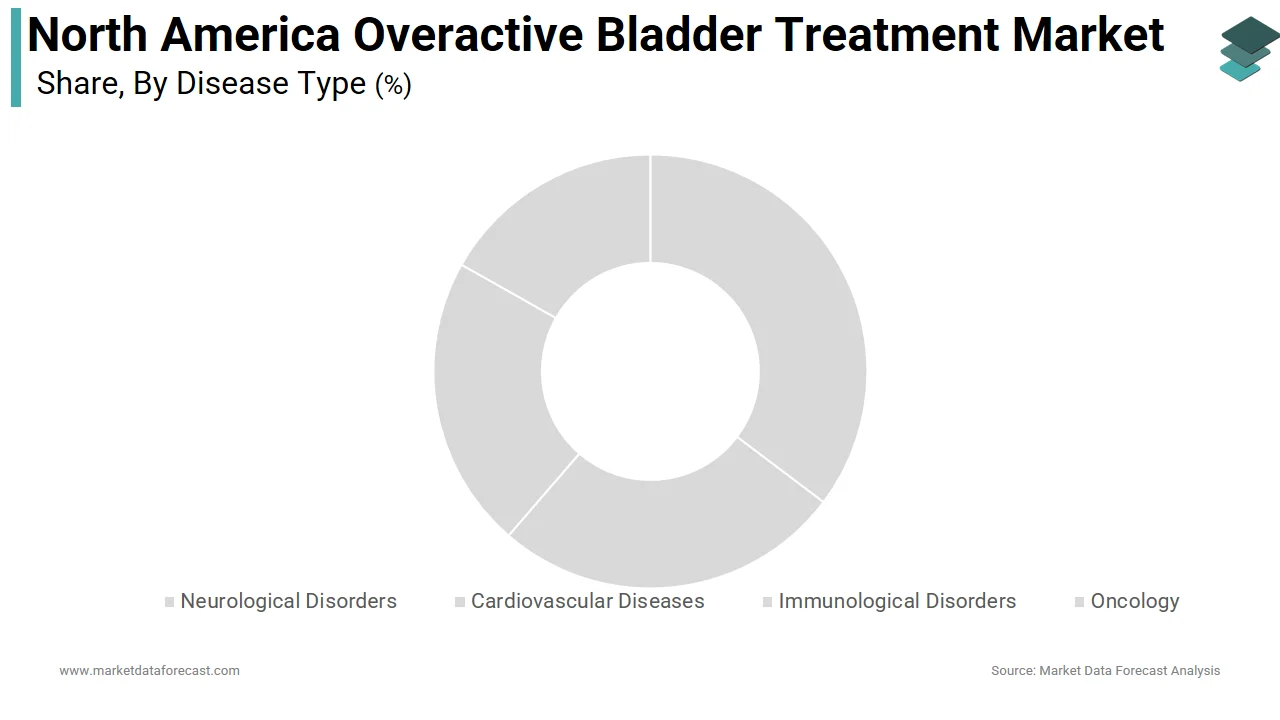
The oncology segment is projected to witness the fastest CAGR of 7.8% from 2026 to 2034 with the rising incidence of pelvic cancers such as prostate, bladder, and cervical cancer, which directly impact urinary function. Treatments for these cancers, including surgery, radiation, and chemotherapy, often damage bladder nerves and tissues, leading to secondary overactive bladder symptoms. According to the American Cancer Society, over 240000 new cases of prostate cancer are diagnosed annually in the United States, with many survivors experiencing post-treatment urinary dysfunction requiring management. The bladder cancer survival rates have improved significantly, leading to a growing population of long term survivors who suffer from chronic urinary irritation and urgency. This expanding survivorship cohort creates increasing demand for symptomatic relief and functional restoration therapies. Oncologists and urologists collaborate more closely to address these quality of life issues as part of survivorship care plans. The shift toward preserving organ function during cancer treatment has increased the prevalence of manageable but persistent bladder symptoms. Patients are more vocal about seeking help for these side effects, improving diagnosis rates. The focus on survivorship quality drives adoption of both pharmacological and device-based solutions. This demographic trend ensures rapid expansion of the oncology-related treatment market.
The rapid growth of the oncology segment is also fueled by advancements in survivorship care protocols that prioritize the management of treatment-related side effects, including overactive bladder. Modern oncology practices incorporate routine screening for urinary symptoms, allowing for earlier identification and intervention. According to the Commission on Cancer, accreditation standards now require cancer centers to provide survivorship care plans that address physical and psychosocial needs, including bladder health. Addressing these issues through specialized treatments improves patient satisfaction and adherence to follow-up care. Pharmaceutical companies are developing targeted therapies with fewer interactions with cancer medications, making them safer for this population. The introduction of minimally invasive devices offers alternatives for patients who cannot tolerate additional medications. Insurance coverage for survivorship services is expanding, recognizing the long term economic benefits of managing chronic symptoms.
By Technology Insights
The polymerase chain reaction technology segment was the largest by holding a prominent share of the North America overactive bladder treatment market in 2025 due to its role in identifying infectious causes that mimic or exacerbate overactive bladder symptoms. Urinary tract infections are a common differential diagnosis for OAB, and PCR offers superior sensitivity and speed compared to traditional culture methods. According to the Infectious Diseases Society of America, PCR-based diagnostics can detect urinary pathogens with 95% accuracy within hours whereas traditional cultures take 24 to 48 hours. This rapid identification allows clinicians to rule out infection quickly and initiate appropriate OAB therapy without delay. The Centers for Disease Control and Prevention notes that misdiagnosis of UTIs leads to unnecessary antibiotic use and delayed treatment for underlying bladder dysfunction. PCR helps distinguish between true infection and sterile inflammation, guiding precise treatment decisions. The widespread availability of PCR platforms in clinical laboratories ensures easy access for healthcare providers. The technology’s ability to detect low-level bacterial presence supports research into the urinary microbiome’s role in OAB. This diagnostic precision enhances the effectiveness of subsequent treatment strategies. The reliability of PCR makes it the gold standard for ruling out infectious etiologies.
The sequencing technology segment is likely to grow at an anticipated CAGR of 12.5% from 2026 to 2034, with the emerging research into the urinary microbiome and its potential role in the pathophysiology of overactive bladder. Next-generation sequencing allows for detailed characterization of bacterial communities in the bladder, revealing patterns associated with symptom severity and treatment response. The distinct microbial signatures exist in patients with overactive bladder compared to healthy controls, suggesting a potential biomarker for diagnosis. This scientific breakthrough is driving investment in sequencing-based diagnostic tools that could personalize therapy selection. The American Urological Association is increasingly interested in microbiome data to refine understanding of idiopathic overactive bladder. Pharmaceutical companies are exploring how microbiome composition affects drug metabolism and efficacy. The ability to identify specific bacterial strains may lead to probiotic or targeted antibiotic interventions. The technology’s potential to uncover new therapeutic targets makes it highly attractive to researchers and clinicians.
By End User Insights
The hospitals segment was the largest by holding 34.6% of the North America overactive bladder treatment market share in 2025. These interventions require specialized equipment, sterile environments, and multidisciplinary teams that are typically available only in hospital settings. According to the American Hospital Association, all sacral neuromodulation implant procedures in the United States due to the need for operating room resources and postoperative monitoring. This centralization of diagnostic and therapeutic capabilities ensures that hospitals capture the highest value segment of the market. Academic medical centers within hospital systems also drive innovation and adoption of new technologies through clinical trials and training programs. Patients with comorbidities often prefer hospital-based care for safety and coordination. Insurance reimbursement rates for hospital-based procedures are well established, facilitating financial viability.
The diagnostics laboratories segment is likely to grow at the fastest CAGR of 6.5% from 2026 to 2034 with the rise of independent testing facilities that offer specialized urinary assays and microbiome analysis outside of hospital settings. These laboratories provide faster turnaround times and competitive pricing for PCR and sequencing tests used to rule out infections and characterize bladder health. The independent reference laboratories have expanded their menus to include comprehensive urinary pathogen panels catering to the needs of urology clinics and primary care providers. The convenience of sample collection kits mailed to patients' homes further drives adoption of lab-based diagnostics. The Centers for Medicare and Medicaid Services has expanded coverage for certain molecular diagnostic tests, enabling broader access. Physicians appreciate the detailed reports provided by specialized labs, which aid in clinical decision-making. The decentralization of diagnostics reduces the burden on hospital laboratories. Partnerships between labs and telemedicine platforms facilitate remote diagnosis and treatment initiation.
COUNTRY-LEVEL ANALYSIS
U.S. Overactive Bladder Treatment Market Analysis
The U.S. overactive bladder treatment market is ruling with the largest share. In the United States, the OAB treatment market is significantly driven by a large aging population, increased healthcare infrastructure, and a strong focus on research and development. The presence of major pharmaceutical companies and healthcare providers contributes to the market's growth.

Canada Overactive Bladder Treatment Market Analysis
Canada's overactive bladder treatment market is likely to hit the highest CAGR during the forecast period. In Canada, a similarly aging demographic, along with a robust healthcare system, propels the demand for OAB treatments. However, the Canadian market may face challenges related to healthcare funding and access disparities across its provinces. Both countries have seen an uptick in awareness campaigns about OAB's impact on quality of life, driving patients to seek treatment.
COMPETITIVE LANDSCAPE
The competitive landscape of the North America overactive bladder treatment market is characterized by intense rivalry between established pharmaceutical giants and specialized medical device manufacturers vying for dominance through innovation and patient support. Pharmaceutical companies leverage broad distribution networks and extensive marketing budgets to promote oral medications as first-line therapies for millions of patients. These firms benefit from established brand recognition and long-term clinical data that support physician confidence in prescribing patterns. Device manufacturers focus on niche segments of patients with refractory symptoms, offering high-value neuromodulation and injection therapies that command premium pricing. The market exhibits moderate consolidation as larger entities acquire innovative startups with proprietary technologies or promising drug candidates. Price competition is mitigated by patent protections and the clinical differentiation of advanced therapies. Reimbursement policies play a critical role in shaping competitive dynamics as companies vie for favorable formulary placement. Patient assistance programs and adherence support services serve as key differentiators in retaining long-term users. Collaboration with telemedicine providers enhances access to specialists and facilitates remote management.
KEY MARKET PLAYERS
The leading companies operating in the North America overactive bladder treatment market include:
- Pfizer
- Allergan Plc
- Hisamitsu Pharmaceutical
- Johnson & Johnson
- Astellas Pharma Inc.
- Teva Pharmaceutical Industries
- Medtronic plc
- Mylan N.V.
- Sanofi
- Aurobindo Pharma Ltd.
- Endo International
TOP PLAYERS IN THE MARKET
- Astellas Pharma Inc. stands as a pivotal leader in the pharmacological management of overactive bladder with its portfolio of antimuscarinic and beta-3 adrenergic agonist therapies. The company leverages extensive clinical data to demonstrate the efficacy and safety of its medications for diverse patient populations across North America. Recent initiatives focus on expanding patient support programs that enhance medication adherence and provide educational resources for both patients and healthcare providers. Astellas actively collaborates with urological associations to promote early diagnosis and reduce the stigma associated with urinary symptoms. The company prioritizes research into novel delivery mechanisms that improve tolerability and convenience for long-term users.
- Allergan plc, now part of AbbVie, contributes significantly to the market through its advanced neuromodulation devices and botulinum toxin injections for refractory overactive bladder cases. The company emphasizes minimally invasive solutions that offer durable relief for patients who do not respond to oral medications. Allergan has recently expanded its training programs for urologists and nurses to ensure proper administration techniques and optimal patient outcomes. Their development of next-generation sacral neuromodulation systems features improved battery life and smaller implant sizes, enhancing patient comfort and acceptance. The company invests heavily in real-world evidence studies to demonstrate the long-term cost-effectiveness of device therapies compared to continuous pharmacological treatment. Allergan also focuses on streamlining prior authorization processes to reduce administrative barriers for healthcare providers.
- Medtronic plc plays a crucial role in the market by providing comprehensive neuromodulation platforms that address severe overactive bladder symptoms through targeted nerve stimulation. The company excels in designing implantable devices with wireless connectivity and magnetic resonance imaging compatibility, which simplifies post operative care and diagnostics. Medtronic has recently intensified its focus on patient-centric innovation by developing user-friendly programmers that allow individuals to manage their therapy settings at home. Their acquisition of specialized technology firms enhances their capabilities in data analytics and predictive modeling for treatment optimization. The company works closely with clinical experts to refine implantation techniques and reduce procedural complications. Medtronic also advocates for favorable reimbursement policies that recognize the value of neuromodulation in improving quality of life.
TOP STRATEGIES USED BY KEY MARKET PARTICIPANTS
Key players in the North America overactive bladder treatment market employ several strategic approaches to maintain competitive advantage and drive growth. Product innovation remains central as companies develop new drug formulations with fewer side effects and advanced neuromodulation devices with longer battery lives. Strategic partnerships with patient advocacy groups help reduce stigma and encourage early diagnosis among underserved populations. Expansion of digital health platforms enables remote monitoring and personalized therapy adjustments, improving patient adherence and outcomes. Investment in real-world evidence studies demonstrates the long-term cost-effectiveness of treatments to payers and healthcare systems. Companies also pursue streamlined prior authorization processes to reduce administrative burdens for providers and accelerate patient access. Educational initiatives for clinicians ensure proper use of complex devices and optimal patient selection. Sustainability efforts focus on reducing the environmental impact of manufacturing and packaging.
MARKET SEGMENTATION
This research report on the North America overactive bladder treatment market is segmented and sub-segmented into the following categories.
By Disease Type
- Neurological Disorders
- Cardiovascular Diseases
- Immunological Disorders
- Oncology
- Others
By Technology
- Polymerase Chain Reaction (PCR)
- Immunohistochemistry
- In Situ Hybridization
- Sequencing
- Others
By End-User
- Hospitals
- Diagnostics Laboratories
- Others
By Country
- United States
- Canada
- Mexico
- Rest of North America