- Product Description Description
- Table of Contents TOC
- List of Table & Figure LOT
- Get Free Sample PDF Sample PDF
Market Size, 2025
$0.37 BnMarket Estimate, 2026
$0.40 BnMarket Forecast, 2034
$0.75 BnCAGR, 2026–2034
8.17%Europe Personal Watercraft Market Size, Growth, Trends & Forecast (2026–2034)
The Europe personal watercraft market size was calculated to be USD 0.37 billion in 2025, is anticipated to be worth USD 0.40 billion in 2026, and is projected to scale up to USD 0.75 billion by 2034, registering a compound annual growth rate (CAGR) of 8.17% during the forecast period from 2026 to 2034. Growth is primarily propelled by rising disposable incomes, expanding marine tourism infrastructure, and the growing popularity of water sports and active outdoor leisure activities.
Key Executive Metrics (At-a-Glance)
- 2025 Base Valuation: USD 0.37 Billion
- 2026 Current Valuation: USD 0.40 Billion
- 2034 Forecast Valuation: USD 0.75 Billion
- Compound Annual Growth Rate (CAGR): 8.17% (2026–2034)
- Dominant Product Type Segment: Recreation Segment (45.8% share in 2025)
- Fastest-Growing Product Type Segment: Luxury and Touring Segment (7.2% CAGR)
- Dominant Distribution Channel: Indirect Channel (65.7% share in 2025)
- Fastest-Growing Distribution Channel: Direct-to-Consumer Segment (9.5% CAGR)
- Dominant End User Segment: Individual User Segment (55.6% share in 2025)
- Dominant Country: Germany (18.5% share in 2025)
Core Market Drivers & Restraints
- Key Drivers: Increase in household disposable incomes, upgraded coastal marinas and tourism hubs, and digital social media promotion of outdoor water sports.
- Market Restraints: Stringent environmental/noise regulations (Recreational Craft Directive), high maintenance expenses, and short seasonal usage windows.
Europe Personal Watercraft Market Segmentation Breakdown
| Segment Category | Leading Sub-Segment | Fastest-Growing Sub-Segment |
|---|---|---|
| By Product Type | Recreation Segment (45.8% share in 2025) | Luxury and Touring Segment (7.2% CAGR) |
| By Distribution Channel | Indirect Channel Segment (65.7% share in 2025) | Direct-to-Consumer Segment (9.5% CAGR) |
| By End User | Individual User Segment (55.6% share in 2025) | Rental Operator Segment (8.1% CAGR) |
| By Region/Country | Germany (18.5% share in 2025) | United Kingdom, France, Italy, and others |
Major Industry Players Profiled
Key manufacturing and recreational leaders driving the European market include BRP Inc., Yamaha Motor Co., Ltd., Kawasaki Heavy Industries, Ltd., Textron Inc., and Krash Industries.
 Download Free Sample Report
Europe Personal Watercraft Market Size
The Europe personal watercraft market size was calculated to be USD 0.37 billion in 2025 and is anticipated to be worth USD 0.75 billion by 2034, from USD 0.40 billion in 2026, growing at a CAGR of 8.17% during the forecast period.
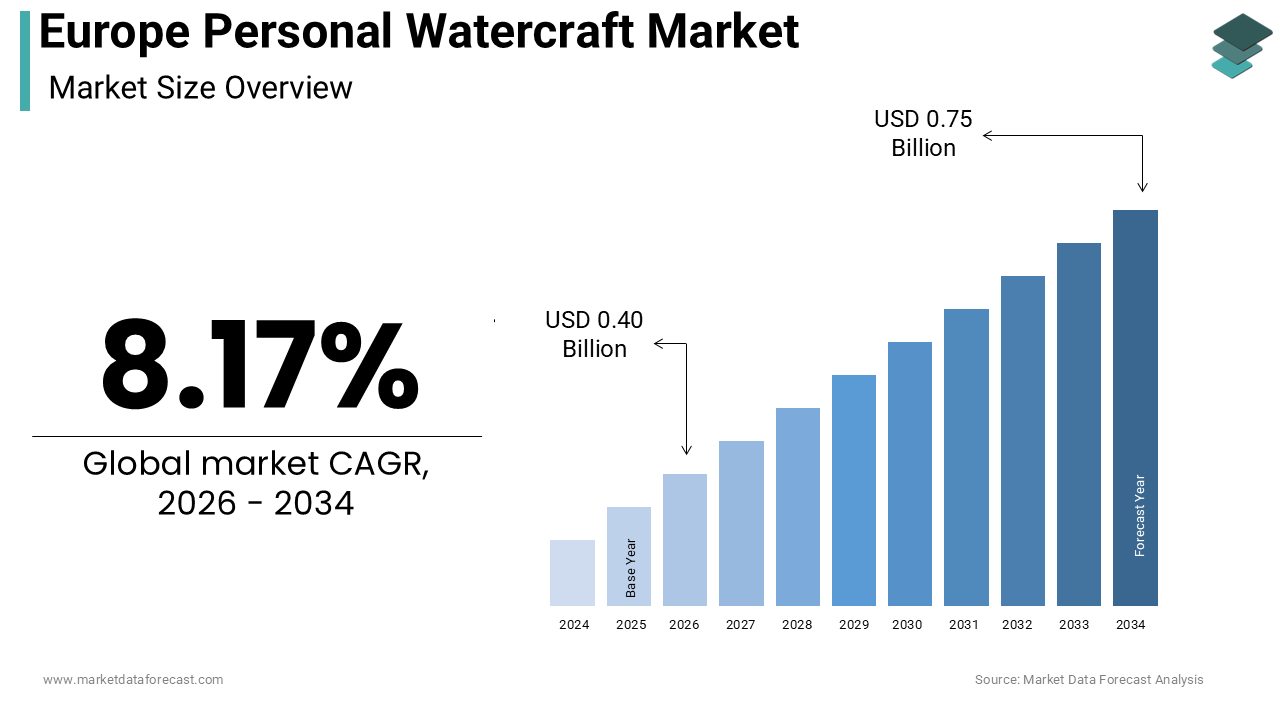
A personal watercraft (PWC) is a small, motorized recreational vessel that the operator sits, stands, or kneels on top of, rather than sitting inside like a traditional boat. These vehicles, commonly known as jet skis, are engineered for high maneuverability and speed, catering to individual riders or small groups. The market is intrinsically linked to the broader marine tourism and recreational boating sectors, reflecting consumer preferences for active outdoor experiences. According to Eurostat, coastal tourism accounts for a significant portion of the European Union’s tourism economy, with roughly 40% to 45% of tourists choosing coastal regions for their holidays. This strong affinity for maritime environments provides a fertile ground for personal watercraft adoption. Furthermore, as per the European Boating Industry, there are approximately 6 million pleasure boats in Europe, indicating a robust infrastructure and cultural acceptance of water-based leisure activities. The regulatory framework governing these vessels varies across member states, with strict adherence to safety standards and environmental regulations such as the Recreational Craft Directive. The market is characterized by a mix of standalone sales and rental operations, particularly in popular tourist destinations like the Mediterranean and Adriatic coasts. Seasonal fluctuations significantly influence demand, with peak activity occurring during the summer months. The integration of advanced technologies, including electronic fuel injection and digital displays, has enhanced the appeal of modern personal watercraft. Environmental consciousness is growing, placing increasing pressure on the industry to adopt cleaner technologies. This shift is shaping the future trajectory of product development and market dynamics in the region.
MARKET DRIVERS
Rising Disposable Income and Expansion of Marine Tourism Infrastructure
The increase in disposable income among the regional consumers, coupled with the expansion of marine tourism infrastructure, serves as a primary driver for the Europe personal watercraft market. Economic conditions are stabilizing in key markets such as Germany, France, and the United Kingdom. Consequently, households have more financial flexibility to invest in leisure activities and recreational assets. Household expenditure on recreation and culture in the EU continues to recover, showing a 3.0% volume increase in 2024. While spending is rising, it remains sensitive to price fluctuations in essential categories like housing and energy. This financial capacity enables individuals to purchase high-value items like personal watercraft or engage in premium rental experiences. The development of marinas and water sports facilities across Southern Europe further supports this growth. Demand for marina berths remains extremely high, with occupancy rates in popular coastal destinations like Italy reaching 90% to 100%. However, growth is currently limited by existing infrastructure constraints rather than a steady expansion of new berths. Popular destinations in Spain, Italy, and Greece have invested heavily in upgrading their coastal infrastructure to attract international tourists seeking diverse water-based activities. The availability of well-maintained facilities encourages both locals and visitors to participate in jet skiing and other water sports. Additionally, the rise of experience-based tourism means that travelers are increasingly willing to spend on unique adventures rather than traditional sightseeing. Personal watercraft rentals offer an accessible entry point for tourists who do not wish to own a vessel, thereby expanding the customer base. The synergy between improved infrastructure and higher spending power creates a conducive environment for market expansion.
Growing Popularity of Water Sports and Active Leisure Activities
The growing popularity of water sports and active leisure activities greatly fuels demand in the Europe personal watercraft market. Consumers are increasingly prioritizing health and wellness, leading to a surge in participation in physical outdoor activities. Jet skiing is perceived as an exhilarating and engaging sport that combines adventure with physical coordination. Participation in outdoor and water-based activities is a major pillar of the European recreation market. While interest is high, organizations are increasingly focusing on "water resilience" and sustainability to manage the environmental impact of this increased human activity. Social media platforms play a crucial role in promoting these activities, with influencers showcasing thrilling water sports experiences to millions of followers. This digital exposure inspires younger demographics to try personal watercraft, boosting rental and sales figures. European water bodies are under significant pressure from human activity. Future regulations are expected to focus heavily on "zero pollution" ambitions, which may include stricter requirements for vessel emissions and underwater noise to protect aquatic biodiversity. The organization of competitive events and festivals also contributes to market visibility and interest. Major European countries host annual jet ski championships and water sports festivals that attract participants and spectators from across the continent. These events foster a community of enthusiasts and normalize the use of personal watercraft as a legitimate sporting pursuit. Furthermore, manufacturers are introducing models tailored for specific skill levels, making the sport more accessible to beginners. The combination of social influence, event-driven engagement, and health consciousness sustains the momentum of this driver, ensuring continued interest in personal watercraft across various age groups.
MARKET RESTRAINTS
Stringent Environmental Regulations and Noise Pollution Concerns
Stringent environmental regulations and concerns regarding noise pollution act as significant barriers to the Europe personal watercraft market. Personal watercraft are often criticized for their environmental impact, including emissions of unburned hydrocarbons and noise disturbance to marine life and coastal residents. The European Union has implemented rigorous standards under the Recreational Craft Directive to limit noise and exhaust emissions from watercraft. According to the European Environment Agency, noise pollution in coastal areas is a growing concern, with specific limits imposed on recreational vessels in protected zones. Compliance with these regulations requires manufacturers to invest in advanced engine technologies and sound-dampening systems, which increase production costs. As per the International Council for the Exploration of the Sea, excessive noise from watercraft can disrupt the behavior of marine mammals, leading to stricter zoning laws in sensitive habitats. Many popular tourist destinations have designated no-wake zones or banned personal watercraft entirely in certain areas to protect ecological balance and ensure public tranquility. For instance, several lakes in Switzerland and Austria have restricted jet ski usage to preserve water quality and wildlife. These restrictions limit the operational areas for personal watercraft, reducing their appeal to potential buyers who seek unrestricted access to waterways. The complexity of navigating varying national and local regulations also poses challenges for rental operators and manufacturers. The need for continuous adaptation to evolving environmental standards creates uncertainty and potentially stifles market growth in highly regulated regions.
High Maintenance Costs and Seasonal Usage Limitations
High maintenance costs and seasonal usage limitations further hinder the growth of the Europe personal watercraft market. Owning a personal watercraft involves significant ongoing expenses, including storage, insurance, fuel, and regular servicing. According to the European Boating Industry, the annual cost of maintaining a recreational vessel can range from 10 to 20 percent of its initial purchase price. For personal watercraft, frequent exposure to saltwater accelerates corrosion and wear, necessitating diligent upkeep to ensure longevity and safety. These recurring costs deter potential buyers, particularly in uncertain economic times when discretionary spending is scrutinized. As per sources, inflation rates in Europe have impacted consumer confidence, leading to cautious spending habits regarding non-essential luxury items. Furthermore, the seasonal nature of the market limits the utility of personal watercraft to the warmer months, typically from May to September in most European regions. This limited usage window reduces the perceived value proposition for owners who must bear year-round storage and insurance costs for only a few months of activity. In Northern European countries, the season is even shorter, further restricting market potential. Rental operators also face challenges in maximizing asset utilization due to weather dependencies and off-season downtime. The inability to generate revenue during colder months affects profitability and discourages new entrants into the rental market. These financial and temporal constraints hinder widespread adoption and limit the market’s growth potential.
MARKET OPPORTUNITIES
Adoption of Electric and Hybrid Propulsion Technologies
The adoption of electric and hybrid propulsion technologies offers a substantial opportunity for the Europe personal watercraft market. As environmental concerns intensify, there is a growing demand for cleaner and quieter watercraft solutions. Electric personal watercraft produce zero emissions and operate with significantly reduced noise levels, addressing key regulatory and social concerns. According to the European Commission’s Green Deal initiatives, there is strong political support for the transition to sustainable mobility solutions, including in the marine sector. Several manufacturers are investing in research and development to create high-performance electric jet skis that offer comparable power and range to traditional internal combustion engine models. As per BloombergNEF, the market for electric marine vessels is expected to grow rapidly, driven by technological advancements in battery energy density and charging infrastructure. The introduction of electric models opens up new usage possibilities in previously restricted areas such as freshwater lakes and protected coastal zones, where noise and emissions are prohibited. This expansion of operational boundaries can attract a broader customer base, including eco-conscious consumers and municipalities looking to promote sustainable tourism. Additionally, electric watercraft offer lower operating costs due to reduced maintenance requirements and cheaper electricity compared to fossil fuels. The first-mover advantage in this segment allows companies to establish brand leadership in the emerging green marine market. Partnerships with battery technology firms and charging station providers can further enhance the viability of electric personal watercraft, creating a comprehensive ecosystem that supports widespread adoption.
Expansion of Rental and Sharing Economy Models
The expansion of rental and sharing economy models provides a major possibility for growth in the Europe personal watercraft market. Many consumers prefer accessing experiences without the burden of ownership, particularly for occasional-use items like personal watercraft. Rental services provide an affordable and convenient way for tourists and locals to enjoy jet skiing without dealing with storage, maintenance, or insurance issues. According to the European Travel Commission, short-term rentals and experience-based tourism are among the fastest-growing segments in the travel industry. Platforms that facilitate peer-to-peer rentals or organized group tours can capitalize on this trend by offering flexible and diverse options. As per Airbnb Experiences, water sports activities have seen a surge in bookings, indicating strong consumer interest in guided and equipment-provided adventures. Establishing rental hubs in popular tourist destinations allows operators to capture high volumes of transient customers during peak seasons. Collaborations with hotels, resorts, and tour operators can further integrate personal watercraft experiences into broader vacation packages. The sharing economy model also enables better asset utilization, as professional operators can maintain fleets more efficiently than individual owners. Additionally, guided tours enhance safety and provide educational value, appealing to families and novice riders. By focusing on service-oriented business models, companies can reduce barriers to entry for customers and generate recurring revenue streams. This approach aligns with changing consumer preferences for access over ownership, driving market expansion through increased accessibility.
MARKET CHALLENGES
Safety Concerns and Accident Rates Among Inexperienced Riders
Safety concerns and high accident rates among inexperienced riders pose a critical challenge to the Europe personal watercraft market. Personal watercraft are powerful machines that require skill and awareness to operate safely, yet they are often rented to tourists with little to no prior experience. According to the Royal National Lifeboat Institution, personal watercraft are involved in a disproportionate number of rescue incidents compared to other recreational vessels, often due to collisions or capsizing. These accidents can result in serious injuries or fatalities, leading to negative public perception and increased scrutiny from regulatory bodies. As per the European Water Sports Safety Alliance, lack of proper training and disregard for safety guidelines are primary contributors to accidents. Incidents involving reckless behavior, such as speeding near swimmers or ignoring no-wake zones, further exacerbate the problem. Negative media coverage of accidents can lead to stricter regulations or bans in popular areas, limiting market opportunities. Insurance premiums for operators and owners also rise in response to high-risk profiles, increasing operational costs. The challenge lies in balancing accessibility with safety assurance. Manufacturers and operators must invest in comprehensive training programs and safety briefings to mitigate risks. However, enforcing compliance among transient renters remains difficult. The industry faces the ongoing task of improving safety standards and promoting responsible riding practices to maintain social license to operate and ensure sustainable growth.
Supply Chain Disruptions and Raw Material Volatility
Supply chain disruptions and volatility in raw material prices are also limiting the expansion of the Europe personal watercraft market. The manufacturing of personal watercraft relies on a complex global supply chain for components such as engines, electronics, and hull materials. Recent geopolitical tensions and logistical bottlenecks have led to delays and increased costs for critical inputs. According to the European Central Bank, supply chain constraints have contributed to higher producer prices in the manufacturing sector, affecting profit margins for original equipment manufacturers. As per the International Monetary Fund, fluctuations in the prices of aluminum and composite materials, which are essential for hull construction, have added uncertainty to production planning. Semiconductor shortages have also impacted the availability of electronic control units and digital displays, delaying the delivery of new models. These disruptions force manufacturers to adjust production schedules and potentially pass increased costs onto consumers, which can dampen demand. For smaller manufacturers and rental operators, the inability to secure timely deliveries of inventory can result in lost sales opportunities during peak seasons. The reliance on single-source suppliers for specialized components further exacerbates vulnerability to disruptions. Diversifying supply chains and establishing local sourcing alternatives are strategic responses, but these transitions require time and investment. The ongoing instability in global trade networks means that market participants must remain agile and resilient to navigate these challenges effectively while maintaining competitive pricing and product availability.
REPORT COVERAGE
| REPORT METRIC | DETAILS |
| Market Size Available | 2025 to 2034 |
| Base Year | 2025 |
| Forecast Period | 2026 to 2034 |
| CAGR | 8.17% |
| Segments Covered | By Product Type, Distribution Channel, End User, And Region |
| Various Analyses Covered | Global, Regional & Country Level Analysis; Segment-Level Analysis; DROC, PESTLE Analysis; Porter’s Five Forces Analysis; Competitive Landscape; Analyst Overview of Investment Opportunities |
| Regions Covered | UK, France, Spain, Germany, Italy, Russia, Sweden, Denmark, Switzerland, Netherlands, Turkey, and the Czech Republic |
| Market Leaders Profiled | BRP Inc., Yamaha Motor Co., Ltd., Kawasaki Heavy Industries, Ltd., Textron Inc., Krash Industries |
SEGMENTAL ANALYSIS
By Product Type Insights
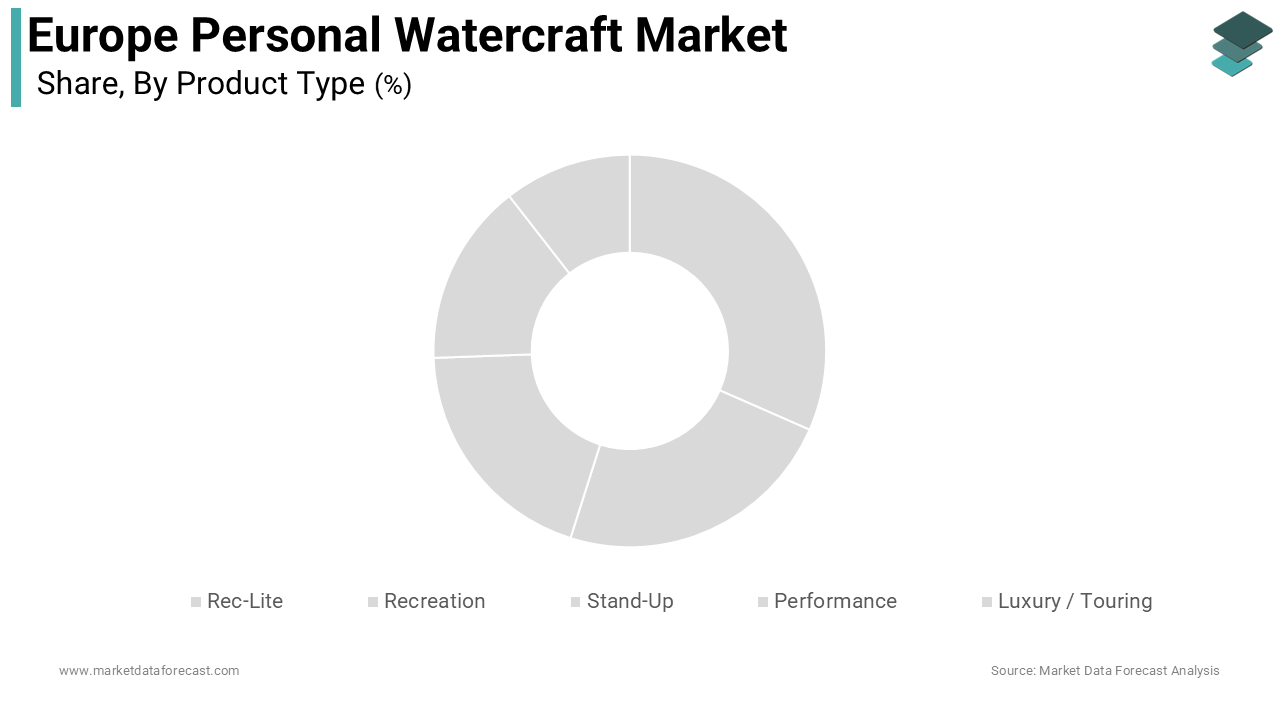
In 2025, the recreation segment maintained dominance in the Europe personal watercraft market and accounted for a 45.8% share. This dominance of the segment is driven by the versatility and accessibility of these models, which are designed for general leisure activities such as cruising, towing, and light sports. These watercraft offer a balanced combination of performance, comfort, and ease of use, making them suitable for families and casual riders. According to research, millions of Europeans participate in water-based recreation through a combination of private ownership and club memberships. This broad engagement supports a diverse ecosystem ranging from small-scale rentals to high-capacity marinas. The broad appeal of recreation models stems from their ability to accommodate multiple riders and provide stable handling, which is crucial for novice users. As per studies, demand for recreational watercraft has shifted toward products that offer clear value and versatility. While economic pressures have impacted some segments, the entry-level market continues to attract new participants looking for accessible outdoor activities. Manufacturers focus on enhancing features such as storage capacity, seating comfort, and fuel efficiency to attract this large customer base. The availability of various engine options allows buyers to choose models that fit their specific budget and performance needs. Furthermore, the widespread availability of rental units in tourist hotspots often introduces consumers to recreation models, leading to subsequent private purchases. The segment benefits from extensive marketing campaigns that highlight lifestyle and family bonding aspects, reinforcing its position as the primary choice for European consumers seeking enjoyable and safe water experiences.
 y
y
On the other hand, the luxury and touring segment is likely to experience the fastest CAGR of 7.2% over the forecast period, owing to the increasing affluence of consumers who seek premium experiences and advanced technological features in their recreational assets. Luxury models are equipped with high-performance engines, sophisticated navigation systems, and enhanced comfort amenities such as adjustable seating and premium audio systems. According to research, the growth of the affluent population in Europe continues to drive the market for high-end leisure goods. These buyers are increasingly seeking products that align with their lifestyle goals, focusing on exclusivity and superior performance. As per the European Travel Commission, there is a rising trend towards experiential luxury travel, where consumers prioritize unique and exclusive activities. Personal watercraft in this segment offer the capability for long-distance touring and superior handling, appealing to enthusiasts who desire more than just basic recreation. Manufacturers are introducing innovative technologies such as ride control systems and smart connectivity features that enhance the riding experience and safety. The integration of eco-friendly technologies in premium models also attracts environmentally conscious affluent buyers. Additionally, the development of specialized touring accessories and gear supports this growth by enabling extended trips along coastal routes. The exclusivity and status associated with owning a luxury personal watercraft further drive demand among elite consumer groups. This segment’s growth is sustained by continuous innovation and the alignment with broader trends in luxury consumption and active lifestyles.
By Distribution Channel Insights
The indirect channel segment remained in the lead in the Europe personal watercraft market and captured a share of 65.7% in 2025. This leading position of the segment is attributed to the extensive network of authorized dealers, marine retailers, and online platforms that facilitate widespread access to products for consumers. Indirect channels provide valuable services such as product demonstration, financing options, and after-sales support, which are critical for high-value purchases like personal watercraft. As per the Federation of European Sporting Goods Industries, partnerships between manufacturers and local dealers enhance brand visibility and trust in regional markets. Dealerships often serve as hubs for community engagement, organizing events and maintenance workshops that foster customer loyalty. The ability to physically inspect the watercraft before purchase reduces perceived risk for buyers, particularly first-time owners. Furthermore, indirect channels enable manufacturers to reach remote areas and diverse customer segments without establishing direct operational presence. The integration of digital tools within dealer networks, such as virtual showrooms and online booking systems, has further strengthened their competitiveness. These channels also handle regulatory compliance and registration processes, simplifying the buying journey for customers. The established infrastructure and comprehensive service offerings of indirect distributors ensure their continued leadership in the market, providing a seamless and supported purchasing experience for European consumers.
On the contrary, the direct-to-consumer segment is on the rise and is expected to be the fastest-growing segment in the market by witnessing a CAGR of 9.5% from 2026 to 2034 due to the digital transformation of retail and the increasing preference for online shopping convenience among younger demographics. Manufacturers are leveraging e-commerce platforms to sell directly to customers, offering competitive pricing and customized configurations without intermediary markups. As per McKinsey and Company, direct digital channels allow brands to gather valuable customer data and personalize marketing efforts, enhancing engagement and conversion rates. The rise of social media marketing and influencer collaborations enables manufacturers to reach targeted audiences effectively and drive traffic to their online stores. Direct sales also facilitate the introduction of new models and limited editions exclusively through brand websites, creating a sense of urgency and exclusivity. Improved logistics and delivery networks ensure that large items like personal watercraft can be transported efficiently to customers' homes or nearby marinas. Additionally, virtual reality tools allow potential buyers to explore features and customize their vessels online, bridging the gap between physical and digital shopping experiences. The ability to offer transparent pricing and streamlined purchasing processes appeals to tech-savvy consumers who value efficiency and control. This channel’s growth is supported by ongoing investments in digital infrastructure and customer service capabilities by leading manufacturers.
By End User Insights
The individual user segment held the majority share of the Europe personal watercraft market and occupied a 55.6% share in 2025. This supremacy of the segment is credited to the strong culture of private ownership and recreational boating across European coastal regions. Individuals purchase personal watercraft for personal leisure, family outings, and water sports activities, reflecting a desire for autonomy and flexibility in their leisure time. According to sources, private ownership of recreational vessels remains high, with millions of households possessing some form of watercraft. The availability of financing options and insurance packages tailored for individual owners further facilitates purchases. Individual users often invest in accessories and maintenance services, contributing to the broader ecosystem of the market. The social aspect of jet skiing, including group rides and clubs, encourages private ownership as a means of participating in community events. Moreover, the increasing availability of storage solutions such as dry stack marinas and home trailers makes ownership more manageable for urban residents. The desire for personalized experiences and the ability to use the watercraft at will without rental restrictions drives this segment. Manufacturers cater to this group by offering a wide range of models with varying features and price points, ensuring accessibility for different income levels. The sustained interest in active lifestyles and outdoor adventures among European consumers ensures the continued predominance of individual users in the market.
But the rental operator segment is expected to exhibit a noteworthy CAGR of 8.1% during the forecast period. This swift expansion of the segment is propelled by the expanding tourism industry and the increasing popularity of experience-based travel among Europeans and international visitors. Rental operators provide access to personal watercraft for tourists who do not own vessels, capturing a large market of occasional users. Coastal destinations in Spain, Italy, and Greece are investing in modernizing their rental fleets to attract more tourists, offering newer and safer models. The rise of digital booking platforms allows operators to reach a wider audience and manage reservations efficiently, enhancing occupancy rates during peak seasons. Guided tours and instructional packages add value to the rental experience, appealing to families and novice riders who prioritize safety and enjoyment. The lower barrier to entry for consumers, who avoid the costs of ownership and maintenance, drives high volume usage. Operators are also adopting sustainable practices, such as introducing electric models, to comply with local regulations and appeal to eco-conscious travelers. This segment’s growth is supported by the continuous influx of tourists seeking unique and memorable water-based experiences, making rental operations a dynamic and expanding part of the market.
REGIONAL ANALYSIS
Germany Personal Watercraft Market Analysis
Germany was the top performer in the Europe personal watercraft market and accounted for a 18.5% share in 2025. This growth of the German market is driven by the country’s strong economic foundation, while high disposable income levels support robust demand for recreational vehicles. Although Germany has a limited coastline compared to Southern European countries, it possesses numerous lakes and rivers that facilitate water sports activities. The presence of indoor water parks and artificial wave pools also sustains year-round interest in personal watercraft. German consumers prioritize quality and safety, driving demand for premium and well-engineered models. The country’s strict environmental regulations encourage the adoption of cleaner and quieter technologies, influencing manufacturer offerings. Major distribution networks and marine dealerships are well established, providing easy access to products and services. The cultural emphasis on outdoor activities and health consciousness further boosts market participation. Government initiatives to improve waterway infrastructure and promote tourism along inland waters support market growth. Germany’s role as a hub for automotive and engineering excellence also fosters innovation in personal watercraft technology, with local companies contributing to advancements in engine efficiency and design.
United Kingdom Personal Watercraft Market Analysis
The United Kingdom followed closely behind in the Europe personal watercraft market and captured a 15.4% share in 2025. The country’s extensive coastline and numerous inland waterways provide ample opportunities for water-based recreation. The popularity of coastal holidays and the rise of staycations have increased domestic demand for rental and private ownership. The UK has a vibrant community of water sports enthusiasts, supported by numerous clubs and organizations that promote safe and responsible riding. Regulatory frameworks managed by the Royal Yachting Association ensure high standards of safety and training, enhancing consumer confidence. The presence of major international manufacturers and distributors in the UK facilitates access to the latest models and technologies. Weather conditions, while variable, do not deter dedicated enthusiasts, and the summer season sees peak activity. Investment in marina facilities and water sports centers continues to expand, improving accessibility for users. The government’s support for blue economy initiatives also encourages sustainable development in the marine leisure sector. The combination of natural assets, strong industry infrastructure, and active consumer participation solidifies the UK’s prominent position in the European market.
France Personal Watercraft Market Analysis
France occupies a significant position in the Europe personal watercraft market. Diverse water environments, including Mediterranean and Atlantic coasts, along with many lakes, make the country ideal for personal watercraft. In addition, the French Riviera and other coastal regions are hotspots for luxury personal watercraft rentals and sales, catering to affluent visitors. Domestic participation in water sports is also strong, supported by a culture that values leisure and outdoor life. The government has implemented measures to balance tourism growth with environmental protection, encouraging the use of eco-friendly vessels. Training and certification programs for jet ski operators are well established, ensuring safety and compliance with regulations. The presence of major marine exhibitions and events in France raises awareness and stimulates interest in personal watercraft. Local manufacturers and dealers collaborate to offer tailored solutions for different water conditions. The integration of personal watercraft into broader tourism packages enhances their appeal to a wider audience. France’s commitment to maintaining its status as a top global tourist destination drives continuous improvement in marine leisure offerings, supporting market growth.
Italy Personal Watercraft Market Analysis
Italy grew steadily in the Europe personal watercraft market. The country’s vibrant coastal culture and renowned tourism industry create a favorable environment for personal watercraft activities. Besides, the Mediterranean climate allows for a longer operating season compared to Northern European countries, boosting rental and usage rates. Italy is known for its luxury marine market, with high demand for premium personal watercraft models among both locals and tourists. The aesthetic appeal and performance of Italian-designed watercraft also contribute to market interest. Coastal municipalities invest in marina infrastructure and water sports facilities to enhance visitor experiences. Regulatory frameworks are in place to manage traffic and protect sensitive marine areas, ensuring sustainable usage. The presence of international brands and local distributors ensures a wide variety of choices for consumers. Cultural events and regattas often include personal watercraft demonstrations, raising profile and interest. The combination of natural beauty, economic strength, and cultural affinity for sea life sustains Italy’s strong position in the market.
Spain Personal Watercraft Market Analysis
Spain is predicted to expand significantly in the Europe personal watercraft market from 2026 to 2034. The country is a leading global tourism destination, with its extensive coastline and favorable weather conditions attracting millions of visitors each year. Moreover, the Balearic and Canary Islands are particularly popular for personal watercraft rentals, offering ideal conditions for year-round operation. The rental market is highly developed, with numerous operators providing guided tours and lessons to tourists. Domestic interest in water sports is also growing, supported by improved infrastructure and accessibility. The government promotes sustainable tourism practices, encouraging the adoption of cleaner technologies in the marine sector. Safety regulations are strictly enforced to protect users and the environment. The presence of major marine trade fairs in Spain highlights the industry’s importance and fosters innovation. Collaborations between tourism boards and marine operators help promote personal watercraft as a key attraction. Spain’s strategic focus on leveraging its natural assets for tourism ensures continued demand and growth in the personal watercraft market.
COMPETITION OVERVIEW
The competition in the Europe personal watercraft market is characterized by the presence of established global brands striving for technological superiority and brand loyalty. Leading companies differentiate themselves through innovation in engine efficiency, hull design, and digital connectivity features. The market exhibits a high degree of consolidation among top-tier players who possess extensive distribution networks and strong brand recognition. Intense rivalry exists in the recreational segment where manufacturers compete to offer the best balance of performance, comfort, and price. Environmental regulations play a critical role in shaping competitive dynamics, prompting companies to invest in cleaner technologies and sustainable practices. Price competition remains significant in the entry-level segments, prompting firms to optimize production costs and offer financing options. Strategic alliances with tourism boards and rental agencies help expand market reach and increase visibility. The ability to offer customized solutions and superior after-sales service distinguishes successful players. Continuous adaptation to consumer trends such as electrification and smart connectivity is essential for maintaining competitiveness. The market maturity in Europe requires companies to focus on value addition and customer experience to drive growth and retain market share in this dynamic and regulated environment.
KEY MARKET PLAYERS
A few major players of the Europe personal watercraft market include
- BRP Inc
- Yamaha Motor Co., Ltd
- Kawasaki Heavy Industries, Ltd
- Textron Inc
- Krash Industries
Top Strategies Used by the Key Market Participants
Key players in the Europe personal watercraft market primarily employ strategies such as product innovation, strategic partnerships, and sustainability initiatives to strengthen their competitive positions. Companies invest heavily in research and development to create high-performance and eco-friendly watercraft that meet stringent environmental regulations. Collaborations with local dealers and rental operators enable broader market reach and enhanced customer service. Firms also focus on digital transformation by integrating smart connectivity features into their products for improved user experience. Marketing campaigns emphasizing lifestyle and adventure help attract younger demographics and first-time buyers. Manufacturers increasingly prioritize sustainability by adopting cleaner technologies and promoting responsible boating practices. Expanding production capabilities and optimizing supply chains help companies respond quickly to changing demand patterns. Additionally, providing comprehensive training and safety programs builds trust and loyalty among consumers. These strategic initiatives allow market participants to adapt to regulatory changes and consumer preferences while maintaining leadership in the evolving European landscape.
Leading Players in the Market
- BRP Inc is a global leader in powersports and recreational products with a strong presence in the Europe personal watercraft market through its Sea Doo brand. The company designs and manufactures innovative jet-powered watercraft that cater to various consumer segments from entry-level riders to performance enthusiasts. BRP recently launched new models featuring advanced hull designs and efficient engine technologies to enhance ride quality and fuel economy. The company focuses on sustainability by integrating eco-friendly materials and promoting responsible boating practices. BRP strengthens its market position through strategic partnerships with local dealers and rental operators across European coastal regions. Its investment in digital connectivity allows users to monitor vehicle performance via smartphone applications. BRP maintains a competitive edge and drives European growth through continuous innovation and portfolio expansion. Simultaneously, they leverage robust distribution networks and marketing to support global expansion efforts.
- Kawasaki Heavy Industries Ltd is a prominent player in the Europe personal watercraft market, known for its Jet Ski brand, which has become synonymous with the category. The company offers a diverse range of watercraft, including stand-up and sit-down models that appeal to both recreational users and professional racers. Kawasaki recently introduced updated versions of its flagship models with improved horsepower and handling characteristics. The company emphasizes durability and performance, leveraging its extensive engineering expertise in marine propulsion systems. Kawasaki strengthens its position by sponsoring international racing events and collaborating with elite athletes to showcase product capabilities. It also enhances customer engagement through dedicated training programs and safety workshops. By maintaining a reputation for reliability and high performance, Kawasaki continues to attract loyal customers in Europe. The company’s commitment to innovation and quality ensures its sustained relevance and competitiveness in the dynamic global personal watercraft industry.
- Yamaha Motor Co., Ltd. is a key competitor in the Europe personal watercraft market, offering a wide array of WaveRunner models known for their reliability and technological sophistication. The company integrates advanced features such as electronic throttle control and navigation systems into its watercraft to provide superior user experiences. Yamaha recently expanded its lineup with eco-conscious models that reduce emissions and noise pollution, aligning with European environmental regulations. The company strengthens its market presence by enhancing its dealer network and providing comprehensive after-sales support services. Yamaha also invests in research and development to improve battery technology for potential electric watercraft applications. Its focus on safety and innovation resonates well with European consumers who prioritize quality and sustainability. Yamaha continues to drive growth and maintain a strong foothold in the competitive European personal watercraft sector. It achieves this by leveraging its global manufacturing capabilities and brand reputation.
MARKET SEGMENTATION
This research report on the Europe personal watercraft market has been segmented and sub-segmented based on product type, distribution channel, end user & region.
By Product Type
- Rec-Lite
- Recreation
- Stand-Up
- Performance
- Luxury / Touring
By Distribution Channel
- Direct
- Indirect Channel
By End User
- Individual User
- Rental Operator
- Military/ Law Enforcements
By Region
- UK
- France
- Spain
- Germany
- Italy
- Russia
- Sweden
- Denmark
- Switzerland
- Netherlands
- Turkey
- Czech Republic
- Rest of Europe