- Product Description Description
- Table of Contents TOC
- List of Table & Figure LOT
- Get Free Sample PDF Sample PDF
Market Size, 2025
$0.43 BnMarket Estimate, 2026
$0.47 BnMarket Forecast, 2034
$0.86 BnCAGR, 2026–2034
7.9%Executive Summary: Europe Portable Oxygen Concentrators Market Analysis & Growth Forecast (2026-2034)
- Market Scope: Comprehensive European industry analysis covering product categories, technologies, end-user settings, country-level adoption frameworks, and core regional growth drivers.
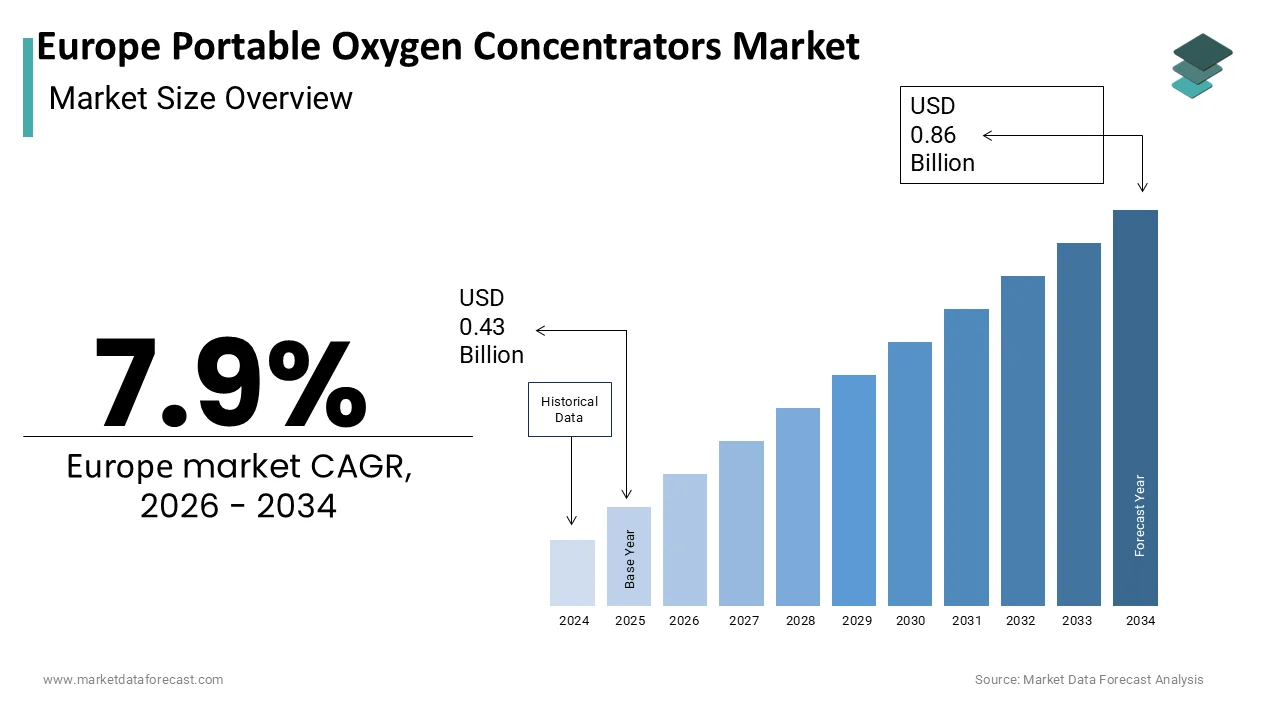
- Market Valuation: Valued at USD 0.43 billion in 2025, estimated at USD 0.47 billion in 2026, and projected to reach USD 0.86 billion by 2034, registering a steady CAGR of 7.9% from 2026 to 2034.
- Primary Growth Drivers: Escalating prevalence of chronic respiratory diseases among an aging population, policy-driven shifts toward home-based and ambulatory care models, and technological advancements enhancing device battery life and patient mobility.
Key Europe Portable Oxygen Concentrators Market Segment Metrics (2026-2034)
| Category | Leading Segment (2025 Position) | Fastest-Growing Segment |
|---|---|---|
| By Product | Portable Oxygen Concentrator & Cylinders (held 58.3% share due to mobility alignment) | Portable Oxygen Concentrator & Cylinders (projected at an 8.7% CAGR driven by medical tourism) |
| By Technology | Pulse Flow (held 63.8% share due to energy efficiency and suitability for ambulatory patients) | Continuous Flow (witnessing a 9.2% CAGR from expanding use in nocturnal oxygen therapy) |
| By End User | Homecare (dominated market share due to decentralized care delivery and patient autonomy) | Travel Agents (expanding at a 12.4% CAGR through medical travel and oxygen rental partnerships) |
| By Country | Germany (top performer with a 24.1% share backed by a robust reimbursement framework) | Netherlands & United Kingdom (growing rapidly via digital health integration and NHS remote pilots) |
Major Europe Portable Oxygen Concentrators Market Players & Industry Structure
Market Structure: Highly competitive European market characterized by strict MDR compliance standards, intense innovation in battery life and smart connectivity, and strategic partnerships with home care networks and travel agencies.
Key Companies: Koninklijke Philips N.V., Inogen Inc., Chart Industries Inc., ResMed Inc., Invacare Corporation, Drive DeVilbiss Healthcare, Precision Medical Inc., Foshan Keyhub Electronic Industries Co., Ltd., O2 Concepts LLC, and GCE Group.
Europe Portable Oxygen Concentrators Market Size
The europe portable oxygen concentrators market was valued at USD 0.43 billion in 2025, is expected to have a 7.9% CAGR from 2026 to 2034, and be worth USD 0.86 billion by 2034 from USD 0.47 billion in 2026.
Portable Oxygen Concentrators refer to the lightweight and battery-powered medical devices that extract oxygen from ambient air and deliver therapeutic concentrations to patients with chronic respiratory insufficiency. Unlike stationary concentrators or oxygen cylinders, these units enable ambulatory oxygen therapy, supporting patient mobility and independence. They operate through pressure swing adsorption technology, selectively filtering nitrogen to provide continuous or pulse dose oxygen flow tailored to individual clinical needs.
According to the European Respiratory Society, over twelve million people in the European Union live with chronic obstructive pulmonary disease, a condition often necessitating long-term oxygen therapy. As per Eurostat, the population aged sixty-five and above reached notable millions in 2025, representing 21.6% of the total EU population and driving demand for home-based respiratory care solutions. The World Health Organization’s European Office, in collaboration with the European Respiratory Society (ERS), has highlighted significant burdens and inequities related to chronic respiratory diseases (CRDs). Furthermore, the European Commission's Medical Devices Regulation (MDR), which came into full force in May 2021, mandated stringent performance and safety standards for all medical devices, including portable oxygen concentrators, to improve patient safety. This evolving ecosystem reflects a convergence of demographic pressure, clinical protocol shifts, and regulatory harmonization, positioning portable oxygen concentrators as essential tools in Europe’s integrated respiratory care strategy.
MARKET DRIVERS
Accelerating Prevalence of Chronic Respiratory Diseases Across Aging Populations
Rising chronic respiratory conditions, particularly chronic obstructive pulmonary disease and interstitial lung disease, are driving the growth of the Europe portable oxygen concentrators market. This rise is due to aging demographics and persistent environmental risk factors. As per studies, chronic obstructive pulmonary disease remains a major public health concern across the European Union, with particularly high prevalence observed in Southern and Eastern European countries such as Portugal and Hungary. Long-term oxygen therapy is increasingly recommended for individuals with advanced stages of the disease who experience critically low oxygen levels, reflecting rising clinical reliance on home-based respiratory support. This creates sustained demand for portable oxygen delivery systems that support daily activities while maintaining therapeutic oxygen levels. Apart from these, as per sources, Europe is witnessing a steady increase in home oxygen prescriptions as healthcare systems promote out-of-hospital management models to reduce hospital dependence and improve patient quality of life. The prioritization of portable concentrators within value-based care models helps respiratory patients by improving their quality of life and lowering acute care usage.
Policy Shift Toward Home-Based and Ambulatory Care Models
European healthcare systems are systematically transitioning from institutional to community-based care to manage rising costs and improve patient outcomes, which boosts the expansion of the Europe portable oxygen concentrators market. According to sources, home-based oxygen therapy reduces per-patient annual respiratory care expenditures compared to hospital or clinic-administered alternatives. In response, countries like Germany and the Netherlands have revised reimbursement frameworks to favor portable over stationary oxygen devices for eligible patients. These policy shifts, supported by clinical evidence showing improved adherence and functional capacity with ambulatory devices, are fundamentally reshaping procurement patterns and accelerating market adoption across Western and Northern Europe.
MARKET RESTRAINTS
Stringent and Fragmented Regulatory Approval Pathways Across EU Member States
Significant variation persists in national implementation and conformity assessment, which impedes the growth of the Europe portable oxygen concentrators market. According to studies, manufacturers face several months of additional review time when seeking national reimbursement or hospital procurement approval beyond CE marking. For market access, France's Haute Autorité de Santé (HAS) assesses medical devices by category for reimbursement, while Italy requires separate regional or local assessments for medical devices, sometimes including requirements for local data even after receiving CE certification. This fragmentation increases time to market by several months and raises compliance costs, as per sources. Smaller innovators are disproportionately affected, limiting competitive diversity and slowing the introduction of next-generation technologies such as ultra-lightweight or smart connected concentrators. Until regulatory harmonization extends to post-market access and reimbursement, market entry will remain complex and resource-intensive.
Limited Reimbursement Coverage for Advanced or High-Flow Portable Units
European reimbursement for advanced portable oxygen concentrators is uneven, in stark contrast to the consistent coverage for basic models, which hinders the expansion of the Europe portable oxygen concentrators market. According to research, only a few EU countries provide full reimbursement for high-flow portable concentrators, leaving patients in Southern and Eastern Europe to bear significant out-of-pocket costs. The coverage gap forces clinicians to prescribe suboptimal solutions or delay therapy initiation, eroding treatment efficacy. A failure to better align reimbursement policy with the realities of clinical need will leave many respiratory patients without adequate care, which will, in turn, hinder market expansion and worsen regional health disparities.
MARKET OPPORTUNITIES
Integration of Smart Connectivity and Remote Patient Monitoring Capabilities
The convergence of portable oxygen concentrators with digital health technologies offers an opportunity for the Europe portable oxygen concentrators market growth. Modern devices now incorporate Bluetooth and cellular connectivity to transmit real-time data on usage patterns, oxygen saturation trends, and device performance to healthcare providers. According to studies, remote monitoring of oxygen therapy patients reduced emergency department visits. Furthermore, the European Commission allocated funds to support the integration of medical devices into national electronic health record systems, which is creating infrastructure for scalable deployment. Companies have already launched concentrators with embedded sensors that alert clinicians to non-adherence or declining respiratory status. The expansion of telehealth reimbursement is positioning smart concentrators as central nodes for proactive and data-driven chronic disease management throughout Europe.
Expansion of Oxygen Therapy Indications Beyond Traditional Respiratory Conditions
Emerging clinical evidence is broadening the therapeutic scope of these concentrators to include non-traditional indications, such as palliative care, neuromuscular disorders, and high altitude travel support, which is creating potential opportunities for the Europe portable oxygen concentrators market. According to sources, a portion of end-of-life patients in hospice settings experience dyspnea, with oxygen therapy providing symptomatic relief in some cases. Besides, there is an increase in medical travel consultations for high altitude destinations, where travelers with pre-existing cardiopulmonary conditions seek portable oxygen support. These expanding use cases diversify the patient base and open new distribution channels through hospice networks, neurology clinics, and travel medicine centers, which reduces reliance on traditional respiratory care pathways.
MARKET CHALLENGES
Persistent Gaps in Patient and Caregiver Training on Device Utilization
Inconsistent training on portable oxygen concentrator operation remains a barrier to the Europe portable oxygen concentrators market. As per studies, patient education on the use and maintenance of portable oxygen concentrators remains inconsistent across Southern and Eastern Europe, with many users receiving limited guidance on device handling and operational best practices. This knowledge deficit leads to high rates of misuse. Caregiver preparedness is equally concerning. Elderly and rural patients, who often have limited access to respiratory educators, face increased risks of treatment failure, hospital readmission, and device abandonment due to suboptimal device utilization, which will persist without integrated, mandated training requirements.
Supply Chain Vulnerabilities for Critical Components and Battery Systems
Heavy reliance on specialized components, such as molecular sieve beds, miniature compressors, and lithium-ion battery packs, many of which are sourced from limited global suppliers, is obstructing the expansion of the Europe portable oxygen concentrators market. According to sources, the majority of high-performance sieve materials used in oxygen concentrators manufactured within Europe are sourced from a limited number of Asian suppliers, highlighting supply chain concentration risks. These vulnerabilities are exacerbated by just-in-time manufacturing practices, which leave minimal inventory buffers. The market's vulnerability to disruptions, which impact patient and device access, will persist unless manufacturers diversify their sourcing, invest in regional component production, or adopt modular, interchangeable battery designs.
REPORT COVERAGE
| REPORT METRIC | DETAILS |
| Market Size Available | 2025 to 2034 |
| Base Year | 2025 |
| Forecast Period | 2026 to 2034 |
| Segments Covered | By Product, Technology, End User and Region. |
| Various Analyses Covered | Global, Regional and Country-Level Analysis, Segment-Level Analysis, Drivers, Restraints, Opportunities, Challenges; PESTLE Analysis; Porter’s Five Forces Analysis, Competitive Landscape, Analyst Overview of Investment Opportunities |
| Countries Covered | UK, France, Spain, Germany, Italy, Russia, Sweden, Denmark, Switzerland, Netherlands, Turkey, Czech Republic, and Rest of Europe. |
| Market Leaders Profiled | Koninklijke Philips N.V., Inogen Inc., Chart Industries Inc., ResMed Inc., Invacare Corporation, Drive DeVilbiss Healthcare, Precision Medical Inc., Foshan Keyhub Electronic Industries Co., Ltd., O2 Concepts LLC, GCE Group. |
SEGMENTAL ANALYSIS
By Product Insights
In 2025, the portable oxygen concentrator & cylinders segment held the largest share of 58.3% of the Europe portable oxygen concentrators market. The dominance of the portable oxygen concentrator & cylinders segment is because of their alignment with patient mobility needs, policy-driven shifts toward home care, and technological advancements that enhance usability and battery life. European healthcare systems are increasingly mandating mobility as a criterion for long-term oxygen therapy eligibility, directly boosting demand for portable solutions. According to research, a portion of new oxygen therapy prescriptions issued in 2025 specified portable concentrators for patients capable of independent movement. As per sources, countries with portable oxygen reimbursement incentives saw a reduction in respiratory-related hospital readmissions within months. These policy shifts reflect a broader value-based care strategy that emphasizes patient autonomy and cost efficiency, cementing portable concentrators as the standard of care for moderate to mild chronic respiratory insufficiency across Western and Northern Europe. Recent innovations have significantly improved the weight, noise levels, and operational duration of portable oxygen concentrators by addressing historical adoption barriers. Furthermore, advancements in lithium-ion battery chemistry have enabled faster charging and greater cycle stability, reducing downtime. These engineering improvements, combined with quieter compressor technology, have elevated patient compliance and satisfaction, which makes portable concentrators the preferred choice for both clinicians and users across urban and rural settings.
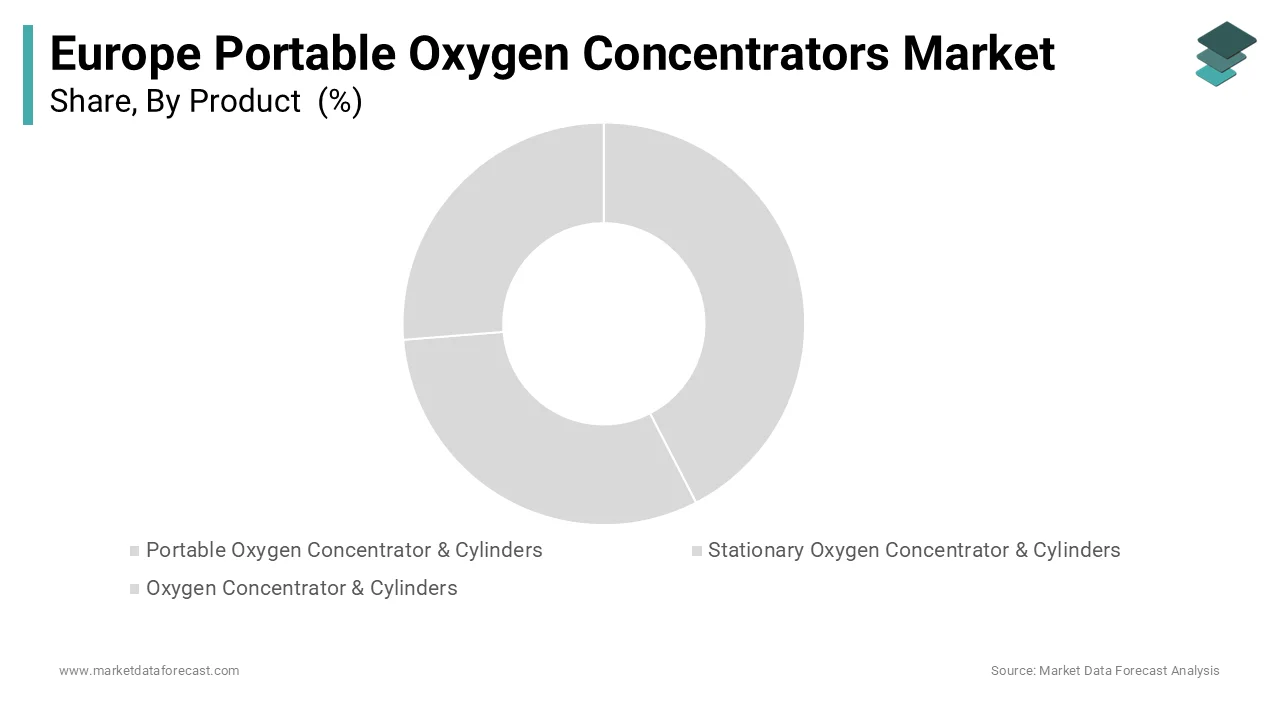
The Portable Oxygen Concentrator & Cylinders segment is not only dominant but also the fastest growing and is projected to expand at a CAGR of 8.7 percent from 2025 to 2033 due to rising demand for medical tourism and high altitude travel support. Portable oxygen concentrators are increasingly adopted by travelers with pre-existing cardiopulmonary conditions visiting high altitude destinations in the Alps, Pyrenees, and Carpathians. According to studies, medical travel consultations involving oxygen needs rose, with a portion of patients opting to rent or purchase portable units for trips exceeding a day. Airlines across Europe now permit FAA and EASA-compliant concentrators onboard, with some reporting an increase in passenger notifications for oxygen device use. This trend is amplified by aging populations engaging in active retirement travel. A new high-growth segment is emerging for portable oxygen concentrators, as partnerships between travel agencies and home care providers create oxygen rental packages for non-clinical use. The European Commission allocated funds to support such integrations, which recognizes their role in reducing acute care episodes. This digital transformation is redefining portable concentrators from passive delivery tools to active components of predictive respiratory care ecosystems.
By Technology Insights
The pulse flow technology segment led the Europe Portable Oxygen Concentrators Market and held a 63.8% share in 2025. Its energy efficiency, extended battery life, and suitability for ambulatory patients with stable oxygen saturation levels have significantly contributed to the expansion of the pulse flow technology segment. Pulse flow concentrators deliver oxygen only during inhalation, which significantly reduces power consumption compared to continuous flow systems. According to sources, pulse flow devices consume less energy by enabling battery durations of several hours on a single charge, vital for patient independence. Apart from these, the absence of a constant gas flow allows for lighter internal components. National reimbursement frameworks across Europe increasingly favor pulse flow technology due to its cost-effectiveness and clinical appropriateness for mobile patients. Also, the policy decisions, grounded in health technology assessments that demonstrate equivalent outcomes at lower system cost, have institutionalized pulse flow as the primary technology for outpatient oxygen therapy across high-income EU member states.
The continuous flow segment is anticipated to witness the fastest CAGR of 9.2% from 2025 to 2033, owing to expanding use in sleep and nocturnal oxygen therapy. Continuous flow is essential for patients experiencing nocturnal hypoxemia, particularly those with obesity hypoventilation syndrome or advanced neuromuscular disorders. According to studies, a portion of chronic obstructive pulmonary disease patients in Europe exhibit significant oxygen desaturation during sleep, necessitating uninterrupted oxygen delivery. Moreover, the clinical developments are driving demand for hybrid devices that offer both pulse and continuous flow modes, with manufacturers launching dual-mode units specifically for European markets. Historically limited by weight and battery constraints, continuous flow technology is undergoing a renaissance through engineering breakthroughs. Furthermore, the European Commission’s Horizon Europe program funded to development of solid state oxygen concentrators that eliminate moving parts, which potentially enables even lighter continuous flow devices. These innovations are dismantling historical barriers and unlocking access for patients previously restricted to homebound oxygen therapy.
By End User Insights
The home care segment dominated the Europe Portable Oxygen Concentrators Market by accounting for aa substantial share in 2025. Systemic shift toward decentralized respiratory care delivery, and high patient preference for home-based therapy and autonomy are fuelling the growth of the home care segment. European healthcare systems are actively migrating chronic respiratory care from hospitals to home settings to reduce costs and improve patients ' quality of life. According to researchhome-baseded oxygen therapy reduces annual per-patient respiratory care expenditures compared to institutional models. The structural realignment is supported by a robust home care infrastructure. Patient-reported outcomes consistently favor home care for oxygen therapy due to enhanced dignity, routine preservation, and reduced infection risk. Elderly patients, who constitute the majority of oxygen therapy users, particularly value avoiding hospital visits. Homecare providers have responded by offering comprehensive support packages including 24/7 technical assistance, scheduled maintenance, and telehealtcheck-insns. This patient-centered model not only improves adherence but also aligns with broader European health policy goals of person-centered care.
The travel agents segment is likely to experience the fastest CAGR of 12.4% from 2025 to 2033. The rapid expansion of the travel agents segment is attributed to an urge in medical travel and oxygen rental partnerships, and an aging population engaging in active leisure travel. Travel agencies across Europe are increasingly integrating oxygen concentrator rental services into packages for senior and medically vulnerable travelers. According to sources, a share of travel agencies offer certified portable oxygen units as add-on services for alpine or high altitude itineraries. In addition, major tour operators partnered with home care providers to launch oxygen-ready travel bundles, which include pre-trip consultations, device delivery to departure airports, and return logistics. Europe’s expanding elderly population is driving demand for accessible travel solutions that accommodate chronic health conditions. As per sources, in 2025, individuals aged sixty-five and above accounted for a portion of leisure trips within the EU. Many of these travelers manage chronic obstructive pulmonary disease or heart failure and require supplemental oxygen during flights or mountain excursions. In addition, specialized travel agencies have developed oxygen-inclusive itineraries with pre-vetted accommodations and ground transport. This niche market, though small in absolute share, is growing rapidly as travel becomes a key component of active aging strategies across Northern and Western Europe.
COUNTRY LEVEL ANALYSIS
Germany Portable Oxygen Concentrators Market Analysis
Germany was the top performer in the Europe Portable Oxygen Concentrators Market in 2025 and occupied 24.1% share. The domination of Germany is primarily driven by its comprehensive reimbursement system and evidence-based clinical protocols. The country’s statutory health insurance covers portable oxygen therapy for all eligible patients with chronic respiratory insufficiency, with no co-payment required for devices meeting Federal Joint Committee standards. According to research, a significant number of patients received long-term oxygen therapy in 2025, with a portion using portable concentrators. A key enabler is the nation’s dense network of home care providers; many accredited oxygen therapy services operate nationwide, ensuring rapid device delivery and maintenance. Furthermore, Germany leads in clinical research. These factors position Germany as both a consumption leader and an innovation hub for respiratory care technology in Europe.
United Kingdom Portable Oxygen Concentrators Market Analysis
The United Kingdom is the next prominent region in the Europe portable oxygen concentrators market and captured 19.6% share in 2025. The growth of the United Kingdom is propelled by the centralized procurement and distribution framework of the National Health Service Home Oxygen Programme. The NHS mandates mobility assessments as part of oxygen therapy eligibility, effectively prioritizing ambulatory devices for suitable patients. Furthermore, the UK’s post-Brexit regulatory autonomy has enabled faster adoption of innovative concentrators. The Medicines and Healthcare products Regulatory Agency cleared many portable models, including integrated telehealth features. Patient satisfaction is high. The UK is a high-volume, policy-led market for new oxygen delivery systems, driven by the NHS's ongoing expansion of remote monitoring pilots in England and Scotland.
France Portable Oxygen Concentrators Market Analysis
France continues to be a major region in the Europe portable oxygen concentrators market, with universal healthcare coverage and a robust public hospital homecare linkage. The French National Health Insurance Fund reimburses portable oxygen concentrators at one hundred percent for patients with documented hypoxemia, with no income or age restrictions. A distinguishing feature is the integration of oxygen therapy into a coordinated care model, where pulmonologists, home care nurses, and pharmacists collaborate on device management. Besides, France hosts Europe’s largest oxygen cylinder recycling program, which promotes environmental sustainability alongside therapeutic access.
Italy Portable Oxygen Concentrators Market Analysis
Italy is gradually moving ahead in the Europe portable concentrators market, with growth fueled by one of Europe’s oldest populations and decentralized regional health policies that increasingly support home oxygen therapy. As per studies, a share of Italy’s population was aged sixty-five or above, with chronic obstructive pulmonary disease prevalence exceeding that in central and southern regions. The Lombardy and Emilia Romagna regions pioneered initiatives that provide free portable concentrators to eligible patients and reduce hospital bed occupancy by eighteen percent. According to sources, home oxygen prescriptions rose, driven by these local programs. Despite national reimbursement caps, regional innovation and high disease burden sustain strong market activity, particularly in urban centers with advanced home care networks.
Netherlands Portable Oxygen Concentrators Market Analysis
The Netherlands is likely to grow in the Europe portable oxygen concentrators market from 2025 to 2033 due to its prominence in digital health integration and sustainable medical device policies. The Dutch Healthcare Institute includes remote monitoring capability as a criterion for premium reimbursement, accelerating the adoption of smart concentrators. The country also mandates environmental impact assessments for all reimbursed medical devices. This regulatory foresight, combined with a high density of respiratory specialists, creates a sophisticated market that prioritizes both clinical efficacy and sustainability, which positions the Netherlands as a bellwether for future European trends.
COMPETITIVE LANDSCAPE
The Europe portable Oxygen Concentrators Market features intense competition among global medical technology leaders and specialized respiratory device manufacturers. Companies differentiate through clinical validation, engineering excellence, and digital health integration. Innovation in weight reduction, on battery longevity, and dual flow functionality is important to capturing market share. Regulatory compliance with the European Union Medical Devices Regulation serves as a key entry barrier, favoring established players with robust quality management systems. Reimbursement alignment across diverse national health systems further shapes competitive dynamics as companies tailor product specifications to local coverage policies. The rise of telehealth and remote patient monitoring has intensified focus on smart device capabilities, creating a new dimension of competition. Smaller firms often target niche segments such as travel oxygen or pediatric applications to establish footholds. Overall, the market rewards companies that combine clinical credibility user user-centric design, and strategic partnerships with healthcare ecosystems across Europe.
KEY MARKET PLAYERS
Some of the promising leading the europe portable oxygen concentrators market profiled in the report are
- Koninklijke Philips N.V.
- Inogen Inc.
- Chart Industries Inc.
- ResMed Inc.
- Invacare Corporation
- Drive DeVilbiss Healthcare
- Precision Medical Inc.
- Foshan Keyhub Electronic Industries Co., Ltd.
- O2 Concepts LLC
- GCE Group.
TOP LEADING PLAYERS IN THE MARKET
- Philips Respironics is a leading innovator in the Europe Portable Oxygen Concentrators Market with a strong global footprint in respiratory care solutions. The company offers a portfolio of lightweight portable concentrators featuring advanced pulse dose technology and integrated connectivity for remote patient monitoring. Philips has prioritized user-centric design, focusing on noise reduction, extended battery life, and intuitive interfaces. These initiatives reinforce Philips’ commitment to digital health-enabled respiratory therapy across Europe.
- Inogen Inc. has established a significant presence in the Europe Portable Oxygen Concentrators Market through its focus on ultra-lightweight and high-efficiency portable systems. The company’s devices are engineered for maximum mobility, with some models weighing under two kilograms while delivering reliable pulse dose oxygen. Inogen emphasizes direct-to-consumer and home care distribution channels across Western Europe. Furthermore, Inogen partnered with several European travel health agencies to offer rental programs for tourists requiring oxygen support during alpine or long-haul travel. These actions strengthen its position as a mobility-focused oxygen therapy provider in the region.
- Invacare Corporation plays a pivotal role in the Europe Portable Oxygen Concentrators Market by offering clinically validated and cost-effective oxygen delivery solutions tailored to European reimbursement frameworks. The company’s portable concentrators are widely used in home care settings across Southern and Central Europe due to their durability and ease of maintenance. Invacare collaborates closely with national health systems to ensure compliance with local regulatory and procurement standards. The company also enhanced its training programs for home care providers through virtual certification modules developed with European respiratory nursing associations. These efforts solidify its reputation as a reliable partner in decentralized respiratory care.
TOP STRATEGIES USED BY THE KEY MARKET PARTICIPANTS
Key players in the Europe Portable Oxygen Concentrators Market focus on developing lightweight and energy-efficient devices that enhance patient mobility and compliance. They invest in smart connectivity features to enable remote monitoring and integration with national telehealth platforms. Strategic partnerships with home care providers, travel agencies, and national health services expand access and distribution. Companies prioritize compliance with the European Union Medical Devices Regulation and national reimbursement criteria to ensure market entry. Continuous innovation in battery technology reduction, and dual floffers ow capabilities that address diverse clinical needs. Training programs for patients and caregivers improve device utilization and therapy outcomes. Sustainability initiatives, including battery recycling and modular design, align with European environmental policies and strengthen brand credibility across the region.
MARKET SEGMENTATION
This research report on the europe portable oxygen concentrators market has been segmented and sub-segmented into the following categories.
By Product
- Portable Oxygen Concentrator & Cylinders
- Stationary Oxygen Concentrator & Cylinders
- Oxygen Concentrator & Cylinders
By Technology
- Continuous Flow
- Pulse Flow
By End User
- Hospitals
- Homecare
- Ambulatory Surgical Centres
- Travel Agents
By Country
- UK
- France
- Spain
- Germany
- Italy
- Russia
- Sweden
- Denmark
- Switzerland
- Netherlands
- Turkey
- Czech Republic
- Rest of Europe