- Product Description Description
- Table of Contents TOC
- List of Table & Figure LOT
- Get Free Sample PDF Sample PDF
Market Size, 2025
$1.84 BnMarket Estimate, 2026
$1.98 BnMarket Forecast, 2034
$3.49 BnCAGR, 2026–2034
7.34%Executive Summary: Europe Portable Ultrasound Market
- Market Scope: Comprehensive Europe portable ultrasound market analysis covering chronic disease diagnostic monitoring, point-of-care testing in emergency/prehospital settings, decentralized healthcare models, and AI image interpretation integration.
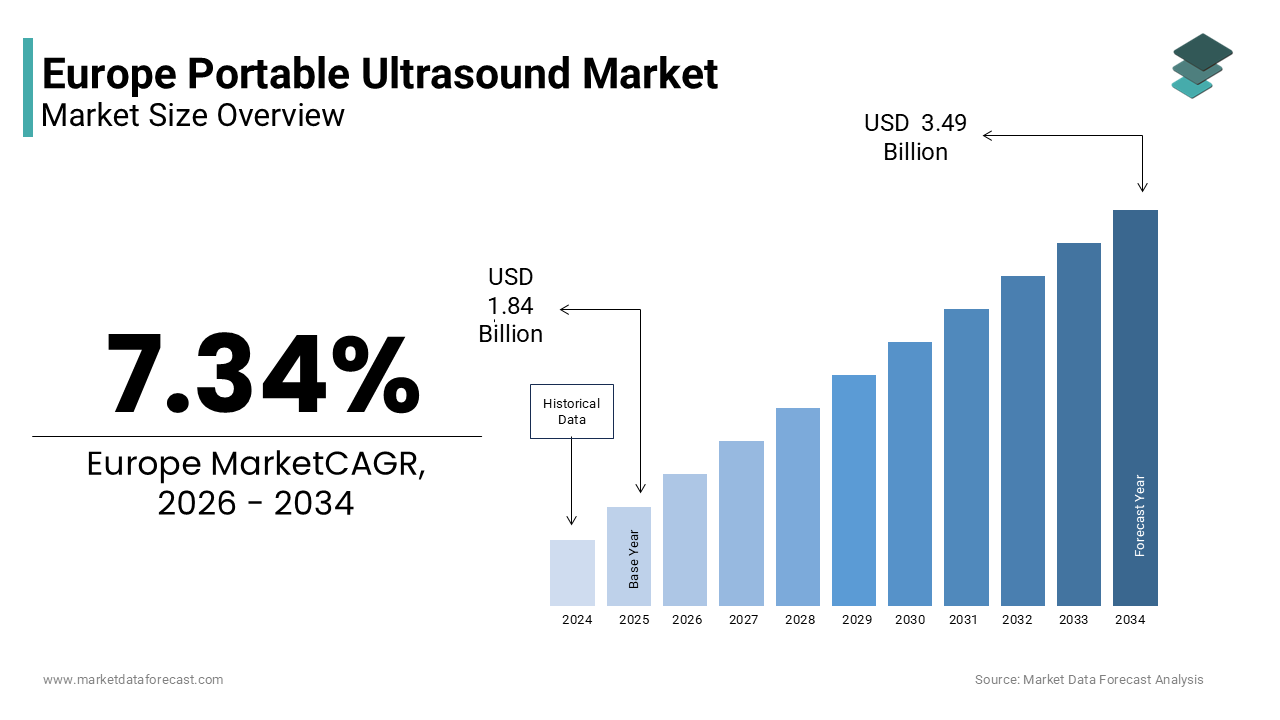
- Market Valuation: Valued at USD 1.84 billion (2025), estimated at USD 1.98 billion (2026), and projected to reach USD 3.49 billion by 2034, registering a steady CAGR of 7.34% (2026–2034).
- Primary Growth Drivers: Chronic disease prevalence, point-of-care testing adoption, decentralized healthcare and home-based monitoring, and AI/ML image automation. Key challenges include stringent EU MDR compliance, high capital expenditure, and trained personnel shortages.
Key Market Segment Metrics (2026–2034)
| Category | Leading Segment (Position) | Fastest-Growing Segment |
|---|---|---|
| By Device, Application, End-User & Country | Mobile ultrasound devices (dominated with 58.4% share in 2025) & Cardiovascular applications (accounted for 42.3% of market in 2025) & Hospitals (largest end-user share) & Germany (led regionally with 32.2% share in 2025) | Handheld devices (projected to witness fastest CAGR of 12.4%) & Musculoskeletal imaging (growing at 14.2% CAGR) & Diagnostics centers (anticipating 10.8% CAGR) |
| By Regional Leadership | Germany (32.2% share supported by advanced healthcare infrastructure) and the United Kingdom (18.4% share via community diagnostic center initiatives) | European ambulatory and decentralized community diagnostic networks |
Major Market Players & Market Structure
Market Structure: Highly competitive European medical imaging and ultrasound technology landscape featuring leading global medtech enterprises driving wireless hardware innovations, AI clinical integration, and real-world evidence partnerships.
Key Companies: GE HealthCare, Siemens Healthineers, Philips Healthcare, Canon Medical Systems Corporation, Samsung Medison, Mindray Medical International Limited, Esaote S.p.A., FUJIFILM Sonosite Inc., Butterfly Network Inc., Clarius Mobile Health, Konica Minolta Healthcare, Shenzhen WELLD Medical Electronics Co. Ltd., Healcerion Co. Ltd., Telemed Medical Systems, and EchoNous Inc.
Europe Portable Ultrasound Market Size
The Europe portable ultrasound market size was valued at USD 1.84 billion in 2025 and is anticipated to reach USD 1.98 billion in 2026 from USD 3.49 billion by 2034, growing at a CAGR of 7.34% during the forecast period from 2026 to 2034.
The portable ultrasound is a pivotal shift in diagnostic imaging characterized by the transition from bulky stationary systems to compact handheld and laptop sized devices. This transformation is fundamentally altering patient care delivery across diverse clinical settings ranging from intensive care units to remote rural clinics. The definition of this sector encompasses battery operated imaging solutions that offer real time visualization without the infrastructure constraints of traditional radiology departments. The European region faces a significant burden of non-communicable diseases, which account for more than 80% of all deaths in the region. This epidemiological reality necessitates frequent and accessible diagnostic monitoring which portable devices facilitate effectively. Furthermore, data from Eurostat indicates that approximately 20% of the EU population was aged 65 or older in recent years highlighting the demographic pressure on healthcare systems. The aging populace requires regular cardiovascular and musculoskeletal assessments where portability enhances compliance and frequency of checks. The integration of these devices into emergency medical services is also critical as immediate diagnostic capability at the point of injury significantly improves survival rates.
MARKET DRIVERS
Chronic Disease Epidemic Fuels Demand for Portable Ultrasound in Routine Cardiac and Diabetic Care
The rising prevalence of chronic diseases for frequent diagnostic monitoring is leveraging the growth of the Europe portable ultrasound market. The urgent need for regular cardiac monitoring and early detection of abnormalities, such as heart failure or valvular defects. Portable ultrasound devices enable cardiologists and primary care physicians to perform rapid echocardiograms at the point of care thereby reducing wait times associated with traditional imaging departments. As per the International Diabetes Federation, around 61 million adults in the Europe and Middle East region were living with diabetes in 2021. Diabetic patients often require frequent assessments for complications including renal issues and vascular health, which can be efficiently monitored using portable renal and vascular ultrasound modules. The ability to conduct these examinations in outpatient clinics or even at home reduces the logistical burden on patients who are often elderly or have limited mobility. This shift towards decentralized care models is supported by national health strategies aiming to reduce hospital readmissions. Consequently, the high prevalence of these chronic ailments creates a sustained and growing demand for accessible and efficient diagnostic tools that can integrate seamlessly into routine chronic disease management protocols across various healthcare settings.
Expansion of point of care testing in emergency and prehospital settings
The integration of ultrasound into emergency medicine and prehospital care is escalating the growth of the Europe portable ultrasound market. Emergency physicians increasingly rely on focused assessment with sonography for trauma protocols to rapidly identify life threatening conditions, such as internal bleeding or pneumothorax. This clinical endorsement has accelerated the procurement of rugged and battery powered devices by ambulance services and emergency departments across the continent. Data from the European Ambulance Users Alliance suggests that there are over 25000 emergency medical service vehicles by operating in the EU many of which are being equipped with advanced diagnostic tools to enhance prehospital triage capabilities. The ability to visualize internal injuries before reaching the hospital allows for better preparation of surgical teams and potentially saves crucial minutes in the golden hour of trauma care. Furthermore, the rise in road traffic accidents and sports injuries across urban centers necessitates rapid musculoskeletal assessments. Portable devices enable orthopedic specialists and emergency medics to diagnose fractures and soft tissue damage instantly without transporting unstable patients to radiology suites. This operational efficiency not only improves patient outcomes but also optimizes hospital workflow by reducing bottlenecks in emergency departments.
MARKET RESTRAINTS
Stringent regulatory compliance and certification requirements
The medical device is governed by rigorous regulatory frameworks for manufacturers is hampering the growth of the Europe portable ultrasound market. The implementation of the Medical Device Regulation by the European Union has intensified the scrutiny applied to diagnostic equipment requiring comprehensive clinical evidence and post market surveillance. The transition to this new regulatory framework has resulted in longer approval timelines and increased costs for manufacturers seeking CE marking. Small and medium sized enterprises often struggle to meet these heightened documentation and quality management standards, which can delay product launches and limit competition. The complexity of demonstrating substantial equivalence for software driven diagnostic tools further complicates the certification process. Additionally, each member state may have specific national reimbursement policies and health technology assessment criteria that vary significantly. This fragmentation means that a device approved in one country may face additional hurdles in another creating a disjointed market entry strategy. Manufacturers must invest heavily in regulatory affairs expertise and clinical trials to ensure compliance which increases the overall cost of development. These financial and temporal burdens can discourage innovation and slow the introduction of novel technologies such as artificial intelligence enhanced imaging features. The stringent regulatory environment acts as a substantial restraint particularly for newer entrants who lack the resources of established multinational corporations.
High initial investment and maintenance costs limit adoption in resource constrained settings
Despite the long term cost benefits of portable ultrasound, the upfront capital expenditure for many healthcare facilities is another factor hindering the growth of the Europe portable ultrasound market. High end portable systems equipped with advanced Doppler and 3D imaging capabilities can cost tens of thousands of euros, which strains the budgets of smaller clinics and rural health centers. The health spending per capita varies widely with some countries facing tight fiscal constraints on medical equipment procurement. In addition, the initial purchase price ongoing maintenance contracts software updates and probe replacements add to the total cost of ownership. Public hospitals in countries undergoing economic austerity measures often prioritize essential staffing and pharmaceuticals over new diagnostic equipment upgrades. This financial pressure is exacerbated by the rapid technological obsolescence of electronic components which necessitates frequent reinvestment to maintain diagnostic accuracy. Furthermore, the lack of standardized reimbursement codes for point of care ultrasound procedures in several European jurisdictions means that healthcare providers may not recover the costs associated with these examinations. Without clear financial incentives hospitals and private practices are hesitant to replace existing stationary systems with portable alternatives. The economic disparity between Western and Eastern European nations also plays a role as healthcare budgets in the latter are generally lower limiting the penetration of premium portable devices.
MARKET OPPORTUNITIES
Integration of artificial intelligence and machine learning algorithms offers growth potential
The emergence of artificial intelligence with advanced technology is additionally to new opportunities for the growth of the Europe portable ultrasound market. AI driven software can automate image optimization measurement and interpretation thereby reducing the dependency on highly specialized sonographers. The artificial intelligence applications in ultrasound have demonstrated high accuracy in detecting common pathologies such as gallstones and thyroid nodules. This technological advancement enables general practitioners and nurses with limited training to perform reliable diagnostic scans broadening the user base beyond radiologists. The European healthcare system faces a shortage of skilled imaging professionals and AI assisted devices can help mitigate this gap by providing real time guidance and quality assurance during scans. Furthermore, the ability to store and transmit digital images securely facilitates telemedicine consultations allowing experts to review cases remotely. This capability is particularly valuable in rural areas where access to specialist care is limited. The adoption of teleradiology and remote diagnostic support is expected to grow significantly in the coming years. Manufacturers that invest in developing intuitive AI interfaces and cloud-based platforms will gain a competitive edge. The potential for continuous learning algorithms that improve diagnostic accuracy over time also adds value to these systems.
Growing emphasis on decentralized healthcare and home based monitoring solutions
The strategic shift towards decentralized healthcare models is another attribute to level up the growth of the Europe portable ultrasound market. National health systems are increasingly prioritizing home-based care to alleviate pressure on overcrowded hospitals and improve patient comfort. The number of patients receiving medical care at home has risen steadily with chronic disease management being a key component of this trend. Portable ultrasound devices enable healthcare providers to conduct diagnostic evaluations during home visits ensuring that immobile or critically ill patients receive timely assessments. This approach is particularly beneficial for prenatal care where regular monitoring of fetal health is required but travel to hospitals poses logistical challenges. Additionally, the rise of private concierge medicine and specialized outpatient clinics in urban centers drives demand for compact and aesthetically pleasing imaging solutions that fit seamlessly into non-clinical settings. The ability to perform immediate diagnostics in these alternative care environments enhances patient satisfaction and streamlines the care pathway. Government initiatives promoting integrated care systems further support this transition by encouraging collaboration between hospitals and community health providers.
MARKET CHALLENGES
Shortage of trained personnel limits effective utilization of advanced features
The scarcity of healthcare professionals proficient in operating these sophisticated devices is one of the major challenges for the growth of the Europe portable ultrasound market. While portability simplifies physical access to imaging the interpretation of ultrasound images requires specialized training and clinical experience. Many general practitioners and emergency physicians lack formal accreditation in sonography, which can lead to misdiagnosis or incomplete examinations. This skills gap restricts the full utilization of advanced features, such as spectral Doppler or elastography, which are often included in modern portable systems. Educational institutions and professional bodies are struggling to keep pace with the rapid adoption of point of care ultrasound resulting in a workforce that is not fully prepared for this technological shift. The time required for comprehensive training competes with already demanding clinical schedules making it difficult for staff to achieve competency. Furthermore, the lack of standardized certification programs across Europe creates confusion regarding qualification requirements. This human resource constraint poses a significant barrier to the effective deployment of portable ultrasound technology, as the risk of diagnostic errors remains a concern.
Data security and interoperability concerns in connected healthcare ecosystems
The data security and interoperability as portable ultrasound devices become increasingly connected to hospital information systems and cloud platforms is also to decline the growth of the Europe portable ultrasound market. The transmission of sensitive patient images over wireless networks exposes healthcare facilities to cyber threats and data breaches. The healthcare sector is one of the most targeted industries for ransomware attacks due to the nature of its operations and the value of personal health data. Portable devices that lack robust encryption and secure authentication mechanisms can serve, as entry points for malicious actors compromising entire hospital networks. Additionally, the lack of standardized data formats among different manufacturers hinders seamless integration with electronic health records. This interoperability issue forces healthcare providers to manage multiple proprietary software platforms leading to inefficiencies and potential data loss. The General Data Protection Regulation imposes strict penalties for non-compliance with data protection standards requiring manufacturers to implement rigorous security protocols. However balancing strong security measures with user friendly operation remains a technical challenge. Healthcare IT departments often face difficulties in managing and updating a diverse fleet of connected portable devices ensuring that all units comply with the latest security patches. These cybersecurity and integration complexities deter some institutions from adopting networked portable ultrasound solutions.
REPORT COVERAGE
| REPORT METRIC | DETAILS |
| Market Size Available | 2025 to 2034 |
| Base Year | 2025 |
| Forecast Period | 2026 to 2034 |
| CAGR | 7.34% |
| Segments Covered | By Application, End-User and Region. |
| Various Analyses Covered | Global, Regional and Country-Level Analysis, Segment-Level Analysis, Drivers, Restraints, Opportunities, Challenges; PESTLE Analysis; Porter’s Five Forces Analysis, Competitive Landscape, Analyst Overview of Investment Opportunities |
| Countries Covered | United Kingdom, France, Spain, Germany, Italy, Russia, Sweden, Denmark, Switzerland, the Netherlands, and the Rest of Europe. |
| Market Leaders Profiled | GE HealthCare, Siemens Healthineers, Philips Healthcare, Canon Medical Systems Corporation, Samsung Medison, Mindray Medical International Limited, Esaote S.p.A., FUJIFILM Sonosite, Inc., Butterfly Network, Inc., Clarius Mobile Health, Konica Minolta Healthcare, Shenzhen WELLD Medical Electronics Co., Ltd., Healcerion Co., Ltd., Telemed Medical Systems, and EchoNous, Inc. |
SEGMENTAL ANALYSIS
By Device Type Insights
The mobile ultrasound device segment was the largest by holding 58.4% of the Europe Portable Ultrasound Market share in 2025. Mobile devices offer advanced features, including multi-probe compatibility and enhanced processing power that support complex diagnostic workflows. These systems integrate seamlessly with hospital information systems enabling efficient data management and reporting. The ability to perform comprehensive examinations across cardiology obstetrics and abdominal applications makes mobile devices indispensable in tertiary care centers. Furthermore, the European Society of Radiology notes that high end portable units facilitate contrast enhanced ultrasound and elastography procedures which are increasingly standard in oncology and hepatology pathways. The robust build quality and extended battery life of mobile units also support deployment in emergency departments and intensive care settings where reliability is paramount. Healthcare institutions prioritize these systems for their versatility and long term value despite higher initial investment.
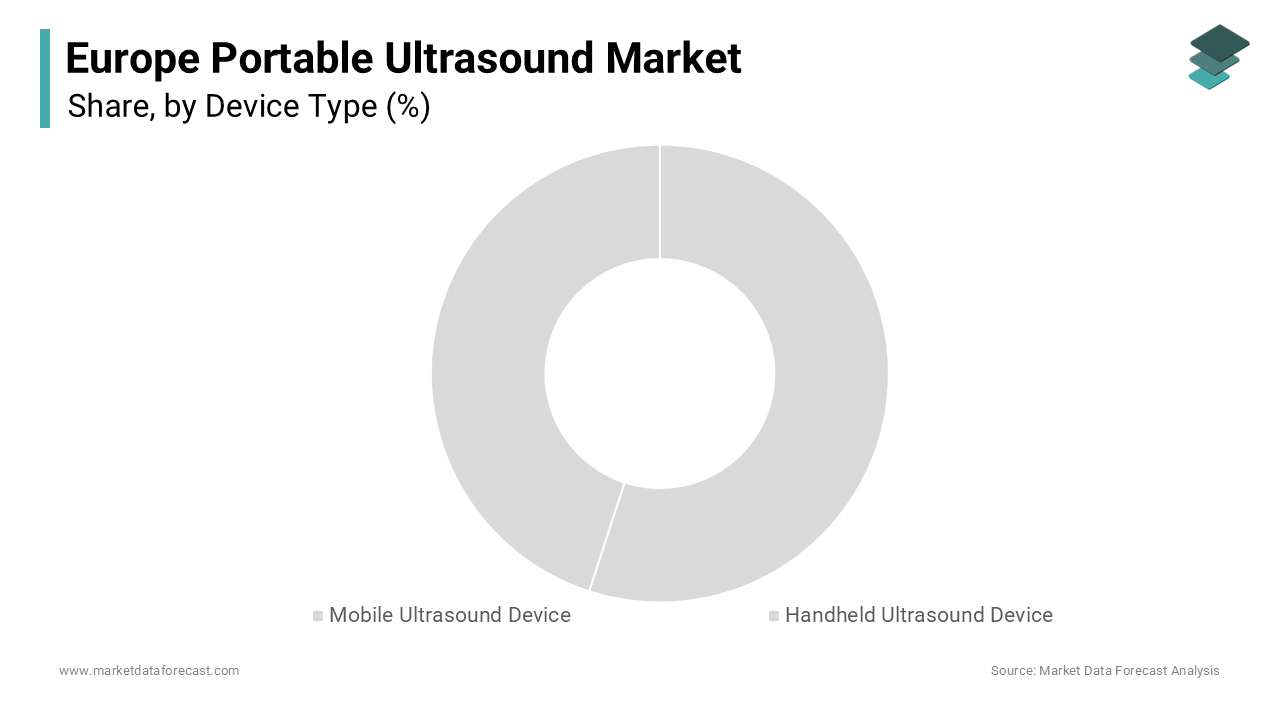
The handheld ultrasound device segment is likely to witness a fastest CAGR of 12.4% throughout the forecast period. The compact form factor and affordable pricing of handheld devices enable widespread adoption among general practitioners and emergency responders. The handheld ultrasound devices are gaining traction due to their smartphone connectivity and AI assisted imaging features that lower the skill barrier for non radiologists. Handheld units facilitate rapid assessment in prehospital settings, where immediate visualization of internal injuries can guide life-saving interventions. Additionally, the European Resuscitation Council endorses the use of portable ultrasound during cardiac arrest scenarios which has driven procurement by ambulance services across the region. Cloud based image sharing capabilities allow remote specialist consultation enhancing diagnostic confidence in resource limited settings. Manufacturers are investing in subscription-based software models that include continuous algorithm updates making handheld systems increasingly sophisticated over time.
By Application Insights
The cardiovascular segment was the largest by accounting for 42.3% of the Europe Portable Ultrasound Market share in 2025. Cardiovascular applications drive sustained demand due to the escalating burden of heart disease across European populations. According to the European Heart Network, cardiovascular diseases account for approximately 35% of all deaths in the European Union necessitating frequent cardiac monitoring. Portable ultrasound systems enable serial echocardiograms in outpatient settings reducing hospital congestion and improving patient compliance. The European Society of Cardiology recommends point of care echocardiography for heart failure assessment which has standardized its use in primary care clinics. Furthermore, the aging demographic profile of Europe means a growing cohort requires regular evaluation of valvular function and ventricular performance. Portable devices with Doppler capabilities facilitate non-invasive hemodynamic assessment supporting timely therapeutic adjustments. The integration of artificial intelligence for automated ejection fraction measurement enhances diagnostic consistency and reduces operator dependency. National health systems are increasingly funding cardiovascular screening programs that leverage portable ultrasound for early detection of asymptomatic disease. This application segment benefits from strong clinical evidence supporting its impact on patient outcomes and healthcare efficiency.
The musculoskeletal segment is swiftly emerging at an anticipated CAGR of 14.2% from 2026 to 2034. Musculoskeletal applications benefit from the increasing prevalence of sports injuries and degenerative joint conditions, across active European populations. According to the European Federation of National Associations of Orthopaedics and Traumatology, over 30 million Europeans suffer from musculoskeletal disorders annually creating substantial diagnostic demand. Portable ultrasound enables real time visualization of tendons ligaments and soft tissue structures at the point of injury facilitating immediate treatment decisions. The technology supports guided injections and minimally invasive procedures which reduce recovery times and healthcare costs. Furthermore, the European League Against Rheumatism endorses ultrasound for early detection of inflammatory arthritis which has accelerated adoption in rheumatology clinics. Portable systems with high frequency transducers deliver exceptional resolution for superficial structures outperforming MRI in dynamic assessment of moving joints. The ability to perform bilateral comparisons during a single examination enhances diagnostic accuracy for asymmetric conditions. Telemedicine integration allows remote specialist review of musculoskeletal scans expanding access in rural areas.
By End User Insights
The hospitals segment held a prominent share of the Europe Portable Ultrasound Market in 2025. Hospitals drive procurement due to their need for versatile imaging solutions across multiple departments. Emergency departments utilize portable ultrasound for rapid trauma assessment following established FAST protocols, which has become standard of care. Intensive care units leverage bedside imaging for hemodynamic monitoring and procedural guidance reducing patient transport risks. Furthermore, the European Society of Emergency Medicine recommends point of care ultrasound for undifferentiated shock evaluation which has institutionalized its use in acute care pathways. Hospitals benefit from economies of scale that justify investment in premium portable systems with comprehensive probe portfolios. The integration of portable devices with hospital information systems enables seamless documentation and billing supporting operational efficiency. Additionally, teaching hospitals utilize portable ultrasound for clinical training enhancing workforce competency in point of care imaging.
The diagnostics center segment is likely to grow at a fastest CAGR of 10.8% from 2026 to 2034. Diagnostics centers benefit from increasing patient preference for convenient accessible imaging services outside hospital environments. Portable ultrasound enables these centers to offer comprehensive services with lower capital expenditure compared to stationary systems. The flexibility to deploy devices across multiple examination rooms optimizes space utilization and patient flow. Furthermore, national health systems are contracting diagnostic centers for screening programs that leverage portable ultrasound for cost effective population health management. The ability to perform same day consultations with imaging results enhances patient satisfaction and referral retention. Portable systems with cloud connectivity facilitate teleradiology workflows allowing remote specialist interpretation which expands service capacity. Additionally, diagnostics centers serve as training sites for clinicians adopting point of care ultrasound creating a feedback loop that drives equipment demand.
REGIONAL ANALYSIS
Germany was the top performer in the Europe Portable Ultrasound Market by capturing 32.2% of share in 2025 with the robust healthcare infrastructure and early adoption of point of care imaging technologies. Germany multi payer universal healthcare system ensures broad patient access to diagnostic services, while supporting continuous equipment upgrades. The Federal Joint Committee has integrated portable ultrasound into national screening guidelines for cardiovascular and abdominal conditions which drives institutional procurement. Furthermore, Germany strong manufacturing base in medical technology fosters collaboration between clinicians and engineers accelerating innovation cycles. The country stringent quality standards and reimbursement frameworks create a stable environment for long term investment in diagnostic equipment. Additionally, Germany leadership in artificial intelligence research enables advanced software integration with portable ultrasound platforms enhancing diagnostic capabilities. As the European Medical Device Regulation implementation progresses, Germany proactive regulatory approach positions domestic manufacturers favorably for market expansion.
United Kingdom portable ultrasound market held second position with 18.4% of share in 2025. The United Kingdom Integrated Care Systems framework actively promotes portable ultrasound deployment in community settings to reduce hospital referrals and waiting times. According to NHS, England over 150 Community Diagnostic Centres established since 2021 incorporate portable ultrasound as a core service offering. The Greener NHS initiative favors ultrasound over higher emission modalities aligning procurement with sustainability goals. Furthermore, the United Kingdom strong research ecosystem, including institutions like Imperial College London and the University of Oxford drives clinical innovation in portable ultrasound applications. The Medicines and Healthcare products Regulatory Agency streamlined approval pathways for digital health technologies accelerate market entry for novel portable systems. Additionally, the United Kingdom leadership in artificial intelligence and machine learning fosters development of intelligent ultrasound software that enhances diagnostic accuracy.
France portable ultrasound market is likely to grow with the national health strategy emphasizes territorial equity in healthcare access, which drives portable ultrasound deployment in rural and underserved areas. According to the French Ministry of Health, over 200 new diagnostic hubs established since 2022 prioritize portable imaging technologies to extend specialist services beyond urban centers. Furthermore, France robust biomedical engineering sector, including companies like Esaote and Supersonic Imagine fosters domestic innovation in portable ultrasound design. The country strong academic medical centers in Paris, Lyon, and Marseille, serve as clinical validation sites for emerging portable ultrasound applications. Additionally, France dominance in European regulatory affairs influences Medical Device Regulation implementation benefiting domestic manufacturers. As the French healthcare system, transitions toward value based care models portable ultrasound aligns with efficiency objectives by enabling earlier diagnosis and reduced hospital utilization.
Italy portable ultrasound market growth is esteemed to grow with the chronic disease management and outpatient care expansion, following pandemic recovery efforts.
According to the Italian Ministry of Health, over 76 million euros earmarked for outpatient imaging centers prioritize portable ultrasound technologies to enhance community care capacity. The Italian Society of Ultrasound in Medicine and Biology has developed national training standards for point of care ultrasound which accelerates clinician adoption across specialties. Furthermore, Italy high prevalence of cardiovascular and metabolic diseases creates sustained demand for portable diagnostic solutions in primary care settings. The country strong manufacturing tradition in medical devices supports domestic production of portable ultrasound components reducing supply chain vulnerabilities. As the Italian healthcare system decentralizes services to reduce hospital congestion, portable ultrasound aligns with strategic objectives for accessible efficient care.
Spain portable ultrasound market growth is likely to grow with the country proactive approach to healthcare innovation and diagnostic service expansion, across autonomous regions. Spain Ministry of Health has prioritized portable ultrasound deployment in primary care centers, as part of its digital health transformation strategy. According to the Spanish Society of Radiology, over 150 new diagnostic sites planned through 2026 incorporate portable ultrasound as a foundational technology. The country high burden of cardiovascular disease and aging population creates sustained clinical demand for accessible cardiac and abdominal imaging. Furthermore, Spain strong research institutions, including the Barcelona Supercomputing Center contribute to artificial intelligence applications in portable ultrasound enhancing diagnostic capabilities. The Spanish Agency of Medicines and Medical Devices has streamlined approval pathways for innovative portable imaging technologies accelerating market access.
COMPETITIVE LANDSCAPE
The Europe Portable Ultrasound Market features moderate concentration with established multinational corporations and emerging innovators competing across technology and price segments. Leading players leverage extensive distribution networks and service infrastructure to maintain customer loyalty while investing in artificial intelligence and connectivity features to differentiate offerings. New entrants challenge incumbents through disruptive pricing models and smartphone integrated designs that appeal to primary care and emergency settings. Regulatory compliance with European Medical Device Regulation creates barriers to entry favoring organizations with substantial regulatory affairs capabilities. Clinical validation and real world evidence generation become critical differentiators as healthcare providers prioritize demonstrated outcomes over technical specifications. Price competition intensifies in the handheld segment while premium mobile systems compete on advanced imaging capabilities and workflow integration.
KEY MARKET PLAYERS
Some of the promising companies that are playing a dominating role in the Europe Portable Ultrasound Market include
- GE HealthCare
- Siemens Healthineers
- Philips Healthcare
- Canon Medical Systems Corporation
- Samsung Medison
- Mindray Medical International Limited
- Esaote S.p.A.
- FUJIFILM Sonosite, Inc.
- Butterfly Network, Inc.
- Clarius Mobile Health
- Konica Minolta Healthcare
- Shenzhen WELLD Medical Electronics Co., Ltd.
- Healcerion Co., Ltd.
- Telemed Medical Systems
- EchoNous, Inc.
Top Players in the Market
GE Healthcare maintains a prominent position in the Europe Portable Ultrasound Market through its comprehensive Vscan and LOGIQ product portfolios. The company recent launch of the Vscan Air SL wireless handheld device demonstrates commitment to point of care innovation. GE Healthcare collaboration with European academic institutions facilitates clinical validation of artificial intelligence features that enhance diagnostic accuracy. The company robust service network across Europe ensures rapid technical support and equipment maintenance strengthening customer relationships. Furthermore, GE Healthcare investment in cloud-based imaging platforms enables seamless data sharing and remote consultation capabilities.
Philips Healthcare contributes significantly to the Europe Portable Ultrasound Market through its Lumify and EPIQ portable systems. The company focus on artificial intelligence integration enables automated measurements and workflow optimization that reduce clinician burden. Philips Healthcare partnership with European hospital networks facilitates real world evidence generation supporting clinical adoption of portable ultrasound applications. The company commitment to sustainability aligns with European environmental regulations through energy efficient device design and recyclable components. Furthermore, Philips Healthcare training programs enhance clinician proficiency in point of care ultrasound expanding the addressable market.
Siemens Healthineers plays a vital role in the Europe Portable Ultrasound Market through its ACUSON portable platforms. The company emphasis on deep learning algorithms enables advanced tissue characterization and automated quantification that enhance diagnostic confidence. Siemens Healthineers collaboration with European regulatory bodies facilitates efficient Medical Device Regulation compliance accelerating product availability. The company integrated care solutions connect portable ultrasound devices with hospital information systems supporting seamless clinical workflows. Furthermore, Siemens Healthineers investment in European manufacturing ensures supply chain resilience and rapid response to market demands. These strategic initiatives reinforce the company reputation for innovation and reliability while addressing the evolving needs of European healthcare providers.
Top Strategies Used by Key Market Participants
Key players in the Europe Portable Ultrasound Market prioritize artificial intelligence integration to enhance diagnostic capabilities and workflow efficiency. Companies invest in cloud-based platforms enabling remote consultation and data sharing across healthcare networks. Strategic partnerships with academic institutions facilitate clinical validation of novel applications and generate real world evidence. Manufacturers focus on regulatory compliance with European Medical Device Regulation to ensure timely market access and maintain quality standards. Product portfolio diversification across price segments addresses varying procurement budgets among European healthcare institutions. Training and education programs expand clinician proficiency in point of care ultrasound driving adoption beyond radiology specialties.
MARKET SEGMENTATION
This research report segmented and sub-segmented into the following categories
By Device Type
- Mobile Ultrasound Device
- Handheld Ultrasound Device
By Application
- Cardiovascular Portable Ultrasound Device
- Obstetrics and Gynecology Portable Ultrasound Device
- Gastric Portable Ultrasound Device
- Musculoskeletal Portable Ultrasound Device
By End User:
- Hospitals
- Diagnostics Center
By Country:
- UK
- France
- Spain
- Germany
- Italy
- Russia
- Sweden
- Denmark
- Switzerland
- Netherlands
- Turkey
- Czech Republic
- Rest of Europe