- Product Description Description
- Table of Contents TOC
- List of Table & Figure LOT
- Get Free Sample PDF Sample PDF
Market Size, 2025
$7.95 BnMarket Estimate, 2026
$9.01 BnMarket Forecast, 2034
$24.63 BnCAGR, 2026–2034
13.39%Europe POS Software Market Size, Growth, Trends & Forecast (2026–2034)
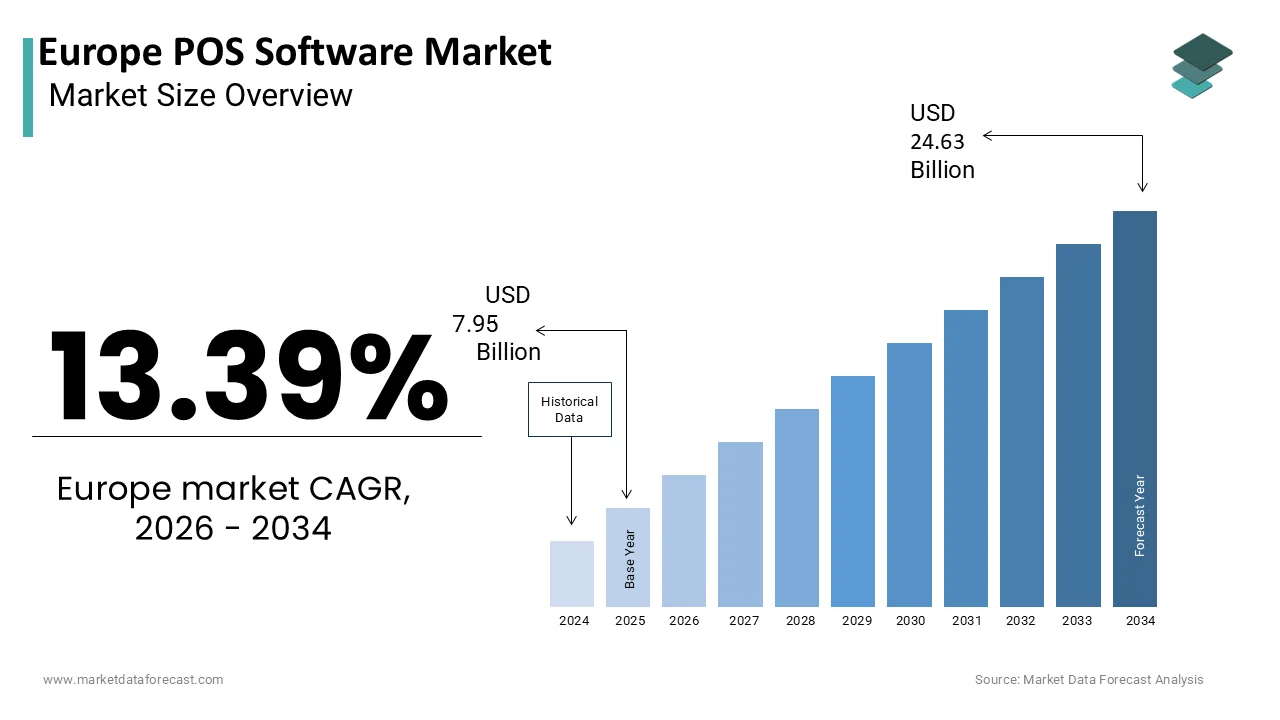
The Europe POS software market was valued at USD 7.95 billion in 2025, is estimated to reach USD 9.01 billion in 2026, and is projected to reach USD 24.63 billion by 2034, growing at a compound annual growth rate (CAGR) of 13.39% from 2026 to 2034. Driven by the rapid shift toward contactless and digital payments, the integration of omnichannel retail strategies, and the widespread adoption of cloud-based SaaS models, the POS software industry continues to expand steadily across Europe.
Key Executive Metrics (At-a-Glance)
- 2025 Base Valuation: USD 7.95 Billion
- 2026 Current Valuation: USD 9.01 Billion
- 2034 Forecast Valuation: USD 24.63 Billion
- Compound Annual Growth Rate (CAGR): 13.39% (2026–2034)
- Dominant Product / Component Segment: Software (holding 65.1% share, driven by the fundamental necessity of digital platforms to process transactions and manage retail operations efficiently)
- Dominant Application Segment: Inventory Tracking (holding 35.7% major market share supported by real-time stock synchronization and multi-channel management)
- Fastest-Growing Application Segment: Customer Engagement (registering a CAGR of 14.8%, fueled by personalized marketing, loyalty programs, and data-driven retention)
- Dominant Region: Germany (occupying a 22.5% market share, supported by a strong industrial base, stringent fiscalization laws, and high digital adoption)
Core Market Drivers
- Adoption of Contactless Payments: Surge in consumer preference for quick, secure, and hygienic digital payment options, including near field communication and mobile wallets.
- Omnichannel Retail Integration: Growing consumer expectations for seamless shopping experiences across physical stores, online platforms, and mobile applications requiring real-time inventory synchronization.
- Cloud-Based SaaS Models: Increasing preference for subscription-based cloud solutions that lower upfront costs, ensure scalability, and deliver automatic updates.
Primary Market Restraints & Challenges
- Implementation Costs & Legacy Systems: High initial implementation, migration, and training expenses, alongside integration complexities with older proprietary infrastructure.
- Data Privacy & Fragmented Regulation: Stringent compliance requirements under GDPR, coupled with diverse and complex fiscalization laws across European member states.
Europe POS Software Market Segmentation Breakdown
| Segment Category | Leading Sub-Segment (2025 Base) | Fastest-Growing Sub-Segment (2026–2034) |
|---|---|---|
| By Component | Software (holding 65.1% share due to essential digital transaction and retail platform needs) | Services (exhibiting a 12.5% CAGR driven by implementation complexity and support needs) |
| By Deployment | On Cloud (dominant due to lower upfront costs, scalability, and remote management) | On-Premises (witnessing a 3.2% CAGR driven by niche data sovereignty and offline security needs) |
| By Application | Inventory Tracking (holding 35.7% majority share for accurate stock management) | Customer Engagement (fastest-growing category registered at a 14.8% CAGR) |
| By Region | Germany (leading with a 22.5% market share backed by strong compliance and retail base) | Germany & United Kingdom (expanding rapidly through digital tech and omnichannel adoption) |
Major Industry Players Profiled
Key enterprises shaping the competitive Europe POS software market include Ingenico Group, Verifone Systems, Inc., NCR Corporation, NEC Corporation, PAX Technology Limited, Oracle Corporation, Shopify Inc., Lightspeed Commerce Inc., Square, Inc., SumUp Limited, Clover Network, LLC, and Toast, Inc..
 Download Free Sample Report
Europe POS Software Market Size
The Europe POS software market was valued at USD 7.95 billion in 2025, is estimated to reach USD 9.01 billion in 2026, and is projected to reach USD 24.63 billion by 2034, growing at a CAGR of 13.39% from 2026 to 2034.
POS (Point of Sale) software is a digital application that acts as the central hub for completing sales transactions, processing payments, and managing inventory in real-time. These systems have evolved from simple cash registers into comprehensive cloud-based platforms that integrate with e-commerce channels, payment gateways, and analytics tools. The modern POS ecosystem enables real-time data synchronization, allowing merchants to manage operations across multiple locations seamlessly. In the European context, the shift towards digital payments and contactless transactions has accelerated the adoption of advanced POS technologies. As per Eurostat, 67.2% of individuals in the European Union used the internet for banking activities in 2024 (rising to 73 percent among young people in 2025), reflecting a steady increase in the adoption of digital financial interactions. Furthermore, the European Central Bank reported that card payments accounted for 57 percent of all non-cash transactions in the euro area in the second half of 2024, underscoring the necessity for robust POS infrastructure capable of handling diverse payment methods. The market is characterized by a growing preference for software as a service models, which offer scalability and reduced upfront costs for small and medium-sized enterprises. Regulatory frameworks such as the Payment Services Directive 2 also influence the landscape by mandating strong customer authentication and secure communication standards. Consequently, POS providers are increasingly focusing on security features and compliance capabilities to meet these regulatory requirements while enhancing user experience. This dynamic environment drives continuous innovation in the sector, positioning POS software as a critical component of modern retail and hospitality operations.
MARKET DRIVERS
Rapid Adoption of Contactless and Digital Payment Methods
The widespread adoption of contactless and digital payment methods is the main reason for the growth of the Europe POS software market. Consumers across Europe increasingly prefer quick, secure, and hygienic payment options, prompting merchants to upgrade their POS systems to support near field communication and mobile wallet technologies. As per the European Central Bank, the number of contactless card payments in the euro area reached 55.4 billion in 2024 (25.8 billion in H1 and 29.6 billion in H2), representing a significant increase from previous years. This trend necessitates POS software that can seamlessly integrate with various digital payment processors and ensure transaction security. Retailers and hospitality businesses are investing in modern POS solutions to reduce checkout times and improve customer satisfaction. The ability to process multiple payment types, including cryptocurrencies and buy now pay later services, further enhances the appeal of advanced POS systems. Additionally, the integration of loyalty programs and digital receipts within POS platforms aligns with consumer expectations for personalized and eco-friendly experiences. Merchants recognize that outdated systems cannot support these evolving payment landscapes, leading to a surge in replacements and upgrades. The convenience offered by contactless payments also encourages higher transaction volumes, particularly in high-traffic urban areas. Thus, the demand for POS software that supports diverse and rapid payment methods continues to grow, driven by both consumer preference and operational efficiency goals.
Integration of Omnichannel Retail Strategies
The integration of omnichannel retail strategies significantly drives the demand for sophisticated POS software in the region, and thereby is also a key support for the expansion of the Europe POS software market. Modern consumers expect a seamless shopping experience across physical stores, online platforms, and mobile applications, requiring retailers to synchronize inventory and customer data in real time. As per sources, revenue in the e-commerce landscape in Europe is projected to reach US$701.7 billion (approx. €660 billion) by 2026, highlighting the importance of integrating online and offline operations. Advanced POS systems enable retailers to manage stock levels across multiple channels, preventing overselling and ensuring product availability. Features such as click and collect, where customers order online and pick up in store, rely heavily on robust POS infrastructure to coordinate logistics efficiently. Furthermore, unified customer profiles allow businesses to track purchasing behavior across channels, enabling targeted marketing and personalized recommendations. Small and medium-sized enterprises are increasingly adopting cloud-based POS solutions to achieve this level of integration without substantial IT investments. The ability to analyze sales data from all touchpoints provides valuable insights for strategic decision-making and inventory optimization. Retailers who fail to adopt omnichannel-capable POS systems risk losing customers to competitors who offer greater convenience and flexibility. Therefore, the need for cohesive retail operations acts as a powerful catalyst for the adoption of advanced POS software across the European market.
MARKET RESTRAINTS
High Initial Implementation and Migration Costs
The high initial implementation and migration costs associated with upgrading to modern POS software are a significant obstacle for the Europe POS software market. This poses a significant barrier for small and medium-sized enterprises. Many businesses operate on legacy systems that, while outdated, are fully depreciated and familiar to staff. Transitioning to new cloud-based POS solutions requires investment in hardware, software licenses, and training, which can be prohibitive for budget-constrained organizations. As per the European Commission, approximately 99 percent of businesses in the EU are small and medium-sized enterprises, many of which face financial barriers to digital transformation. The cost of migrating historical data, configuring integrations with existing accounting or inventory systems, and ensuring minimal downtime during the transition adds to the financial burden. Additionally, ongoing subscription fees for software as a service models may be perceived as higher than the one-time costs of traditional systems over the long term. Businesses must also consider the potential loss of productivity during the learning curve associated with new interfaces. For retailers with thin margins, these upfront and recurring costs can deter adoption despite the long-term benefits. The complexity of customizing POS systems to specific business needs further increases expenses. So, price sensitivity remains a critical factor limiting the rapid uptake of advanced POS solutions among smaller players in the European market.
Data Privacy and Security Concerns
Data privacy and security concerns pose a substantial restraint on the Europe POS software market. This is driven by a stringent regulatory environment and increasing cyber threats. POS systems handle sensitive customer information, including payment details and personal data, making them attractive targets for cybercriminals. As per the European Union Agency for Cybersecurity (ENISA) Threat Landscape 2025 report, ransomware remains the most disruptive threat, accounting for 81.1% of cybercrime incidents targeting EU organizations, highlighting the vulnerability of these systems. Compliance with the General Data Protection Regulation requires businesses to implement robust security measures, such as encryption and access controls, which can be complex and costly to maintain. Any data breach can result in severe financial penalties and reputational damage, causing hesitation among merchants to adopt cloud-based solutions that store data off-site. Smaller businesses often lack the expertise to manage cybersecurity effectively, relying on POS providers to ensure compliance. However, trust in third-party vendors varies, and concerns about data sovereignty and storage locations persist. The need for regular security updates and audits adds to the operational burden. Furthermore, high-profile security incidents in the industry can erode confidence in digital POS systems. These factors compel businesses to conduct thorough due diligence before adopting new solutions, slowing down the decision-making process and restraining market growth.
MARKET OPPORTUNITIES
Expansion of Artificial Intelligence and Predictive Analytics
The expansion of artificial intelligence and predictive analytics within POS software offers a significant opportunity for the POS software market growth. AI-driven features enable businesses to forecast demand, optimize inventory levels, and personalize customer interactions based on historical data. POS systems equipped with machine learning algorithms can identify sales trends, recommend replenishment schedules, and detect anomalies in transaction patterns that may indicate fraud. These capabilities help retailers reduce waste, improve stock turnover, and enhance profitability. Additionally, AI-powered chatbots and virtual assistants integrated into POS platforms can provide real-time support to customers and staff, improving service quality. Personalized marketing campaigns generated from POS data allow businesses to target specific customer segments with relevant offers, increasing conversion rates. The ability to automate routine tasks, such as reporting and reconciliation, frees up staff to focus on customer engagement. As European businesses seek to compete in an increasingly digital landscape, the demand for intelligent POS solutions that offer actionable insights is rising. Providers who innovate in this space can differentiate themselves and capture value from businesses seeking to leverage data for strategic advantage.
Growth of Cloud-Based SaaS Models
The growth of cloud-based software as a service models paves the way for the expansion of the Europe POS software market. This trend drives value by lowering barriers to entry and enhancing scalability. Cloud-based POS systems eliminate the need for on-premises servers and reduce maintenance costs, making them attractive to small and medium-sized enterprises. As per research, global end-user spending on public cloud services is projected to reach $723 billion in 2025 and is forecast to grow by approximately 21.3 percent in 2026 (reaching an estimated $877 billion), reflecting a massive, accelerated shift towards cloud adoption. These systems allow businesses to access real-time data from any location, facilitating remote management and multi-store operations. Subscription-based pricing models provide predictable costs and flexibility, enabling merchants to scale their operations up or down based on seasonal demand. Regular automatic updates ensure that users always have access to the latest features and security patches without additional effort. The integration capabilities of cloud POS with other business tools, such as e-commerce platforms and accounting software, create a cohesive ecosystem that enhances operational efficiency. Furthermore, the resilience of cloud infrastructure ensures business continuity in the event of local hardware failures. European retailers are increasingly prioritizing agility and cost-effectiveness. As a result, the adoption of cloud-based POS solutions is expected to accelerate, driving market expansion.
MARKET CHALLENGES
Fragmented Regulatory Landscape Across Member States
The fragmented regulatory landscape across European member states is a major constraint for POS software providers operating in the Europe POS software market. While the European Union provides overarching frameworks such as the GDPR, individual countries enforce specific "fiscalization" laws regarding tax reporting and electronic invoicing. As per the European Commission, there are still discrepancies in the implementation of digital tax rules across member states, requiring POS systems to be customized for each market. For instance, countries like Germany and France have strict requirements for certified cash register systems to prevent tax evasion, necessitating specialized hardware and software configurations. Providers must navigate these varying compliance requirements, which increases development costs and complexity. Failure to comply with local regulations can result in fines and legal issues for both vendors and merchants. Additionally, changes in tax laws or reporting standards require frequent updates to POS software, demanding continuous monitoring and adaptation. This regulatory heterogeneity hinders the standardization of products and slows down market entry for new players. Small software vendors may struggle to resource the necessary legal and technical expertise to operate across multiple jurisdictions. So, the complexity of maintaining compliance in a diverse regulatory environment acts as a persistent challenge for the Europe POS software market.
Integration Complexity with Legacy Systems
Integration complexity with legacy systems is a major challenge for the adoption of modern POS software in the region and the growth of the Europe POS software market. Many established retailers and hospitality businesses rely on older infrastructure, including proprietary hardware and outdated database systems, which are difficult to connect with new cloud-based POS solutions. As per McKinsey and Company, legacy IT systems remain a critical impediment to digitalization, cited by up to 85 percent of executives in complex sectors (such as risk management) as a key barrier. Furthermore, European organizations currently lag 45 to 70 percent behind their US counterparts in AI adoption rates. Migrating data from these legacy systems to new platforms often requires extensive customization and manual intervention, increasing the risk of errors and data loss. Incompatibility issues can lead to operational disruptions, affecting sales and customer service. Furthermore, staff trained on old systems may resist changing to new interfaces, requiring comprehensive training programs that consume time and resources. The lack of standardized application programming interfaces in older systems complicates the integration process, forcing providers to develop bespoke solutions for each client. This increases implementation timelines and costs, discouraging some businesses from upgrading. Additionally, ensuring seamless connectivity between new POS software and existing supply chain or enterprise resource planning systems is technically challenging. These integration hurdles slow down the replacement cycle of POS systems and limit the speed at which advanced features can be deployed across the market.
REPORT COVERAGE
| REPORT METRIC | DETAILS |
| Market Size Available | 2025 to 2034 |
| Base Year | 2025 |
| Forecast Period | 2026 to 2034 |
| Segments Covered | By Component, Deployment, Application, and Region. |
| Various Analyses Covered | Global, Regional and Country-Level Analysis, Segment-Level Analysis, Drivers, Restraints, Opportunities, Challenges; PESTLE Analysis; Porter’s Five Forces Analysis, Competitive Landscape, Analyst Overview of Investment Opportunities |
| Countries Covered | UK, France, Spain, Germany, Italy, Russia, Sweden, Denmark, Switzerland, Netherlands, Turkey, Czech Republic, Rest of Europe |
| Market Leaders Profiled | Ingenico Group, Verifone Systems, Inc., NCR Corporation, NEC Corporation, PAX Technology Limited, Oracle Corporation, Shopify Inc., Lightspeed Commerce Inc., Square, Inc., SumUp Limited, Clover Network, LLC, Toast, Inc. |
SEGMENTAL ANALYSIS
By Component Insights
In 2025, the software segment maintained dominance in the Europe POS software market and accounted for a 65.1% share because of the fundamental necessity of digital platforms to process transactions and manage retail operations efficiently. Businesses are transitioning from legacy cash registers to intelligent systems. During this shift, the core software license or subscription becomes the primary investment. Apart from these, a key driver for this segment is the increasing complexity of retail operations, which requires robust computational capabilities. Modern POS software integrates inventory management, customer relationship management, and analytics into a single interface, reducing the need for multiple disparate systems. Various sources indicate that enterprise software spending in Europe is experiencing an accelerated growth phase as businesses aggressively integrate advanced digital tools into their core operations. Retailers prioritize software that offers scalability and flexibility, allowing them to adapt to changing consumer demands without significant hardware overhauls. The shift towards modular software architectures enables businesses to select specific features that align with their operational needs, further driving adoption. Additionally, the continuous evolution of software features, such as artificial intelligence-driven insights and automated reporting, provides tangible value that justifies the investment. Companies are willing to pay premium prices for software that enhances decision-making and operational efficiency. The recurring revenue model associated with software subscriptions also ensures steady growth for vendors, reinforcing the segment's market leadership.
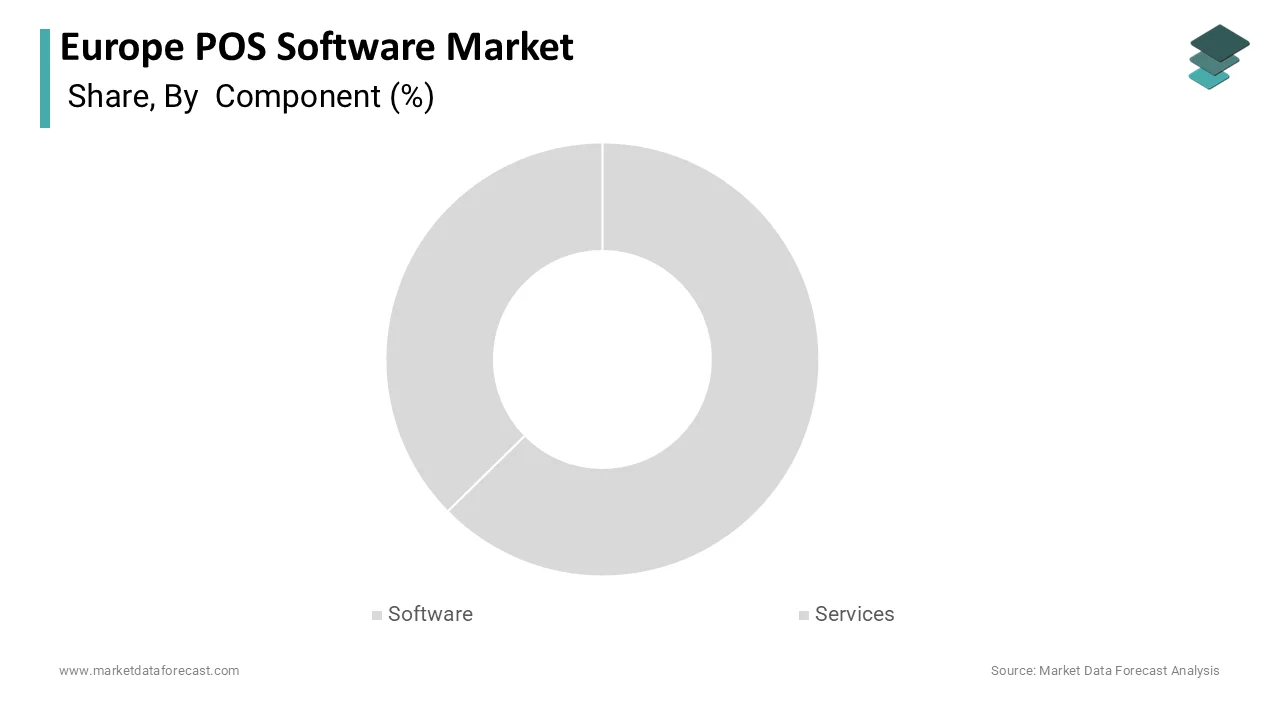
The services segment is expected to exhibit a noteworthy CAGR of 12.5% over the forecast period. This quick surge of the segment is propelled by the increasing complexity of POS implementations and the need for ongoing technical support. POS systems are increasingly integrated with cloud platforms and third-party apps. Therefore, businesses need specialized expertise for installation, configuration, and maintenance. Research emphasizes a surge in demand for specialized technological support in the retail sector, driven by a strategic shift toward intelligent systems and automated customer support. The primary driver is the shortage of in-house technical skills among small and medium-sized enterprises. Many retailers lack the resources to manage complex software updates and security patches, leading them to outsource these tasks to specialized service providers. Managed services, including remote monitoring and proactive maintenance, offer peace of mind and ensure minimal downtime. Additionally, training services are essential for staff to effectively utilize new POS features, particularly those involving advanced analytics and customer engagement tools. The rise of hybrid work models has also increased the demand for remote support services, enabling technicians to resolve issues without onsite visits. Furthermore, customization services allow businesses to tailor POS solutions to their specific workflows, enhancing usability and productivity. These factors collectively drive the rapid growth of the services segment, as retailers increasingly recognize the value of expert support in maximizing the return on their technology investments.
By Deployment Insights
The On Cloud deployment segment remained in the lead in the Europe POS software market and captured a substantial share in 2025. This leading position of the segment is attributed to the numerous advantages cloud-based solutions offer over traditional on-premises systems, including lower upfront costs, scalability, and accessibility. Cloud POS systems allow retailers to access real-time data from any location, facilitating remote management and multi-store operations. A key booster of this segment is the cost-effectiveness of the software as a service model, which eliminates the need for expensive server infrastructure and reduces maintenance burdens. Small and medium-sized enterprises, in particular, benefit from the predictable monthly subscription fees and the ability to scale resources up or down based on demand. Additionally, cloud-based systems offer automatic updates and enhanced security features, ensuring that businesses always have access to the latest functionalities and protection against cyber threats. The integration capabilities of cloud POS with e-commerce platforms and other business tools create a seamless omnichannel experience, which is crucial for modern retail success. Furthermore, the resilience of cloud infrastructure ensures business continuity in the event of local hardware failures or natural disasters. These benefits make cloud deployment the preferred choice for retailers seeking agility, efficiency, and competitive advantage in the European market.
The on-premises segment is predicted to witness the highest CAGR of 3.2% between 2026 and 2034. Despite a shrinking market share, this solution remains vital for niches valuing data sovereignty and offline capabilities. It serves as a secure alternative in industries requiring strict, localized control over data, ensuring operational continuity without relying on constant internet connectivity. Large enterprises and organizations in highly regulated industries, such as healthcare and government retail outlets, often prefer on-premises solutions to maintain full control over their data and infrastructure. As per the European Union Agency for Cybersecurity, concerns about data privacy and security continue to influence deployment choices, with some entities opting for on-premises systems to mitigate risks associated with cloud storage. The main accelerator for this segment is the need for customized security protocols and compliance with strict local regulations. On-premises systems allow organizations to implement tailored security measures and avoid dependency on internet connectivity, ensuring uninterrupted operations in areas with poor network coverage. Additionally, businesses with existing IT infrastructure may find it cost-effective to utilize their current servers rather than migrating to the cloud. However, the high initial capital expenditure and ongoing maintenance requirements limit the appeal of on-premises solutions for most retailers. The lack of flexibility and scalability compared to cloud options further restrains growth. Despite these challenges, the on-premises segment persists in niche markets where control and security are paramount, maintaining a stable but limited presence in the overall market.
By Application Insights
The Inventory Tracking application segment held the majority share of 35.7% of the Europe POS software market in 2025 because of the critical importance of accurate stock management in retail operations. Efficient inventory tracking prevents stockouts and overstocking, optimizing cash flow and improving customer satisfaction. As per the European Logistics Association, poor inventory management costs retailers in Europe approximately 5 percent of their annual revenue, highlighting the financial imperative for precise tracking solutions. A key support for this segment is the integration of real-time data synchronization across multiple sales channels. Modern POS systems enable retailers to monitor stock levels instantly, ensuring that online and offline inventories are aligned. This capability is essential for omnichannel strategies, such as click and collect, where accurate stock information is crucial for fulfilling orders promptly. Additionally, advanced inventory tracking features, such as automated replenishment alerts and demand forecasting, help businesses optimize their supply chains and reduce waste. The ability to track product movement from warehouse to shelf provides valuable insights into sales trends and consumer preferences. Retailers leverage this data to make informed purchasing decisions and improve turnover rates. Furthermore, the reduction of manual errors through automated scanning and tracking processes enhances operational efficiency. These factors collectively establish inventory tracking as the most vital application within the POS software ecosystem, driving its widespread adoption across the European retail sector.
The Customer Engagement application segment is estimated to register the fastest CAGR of 14.8% from 2026 to 2034 due to the increasing recognition of customer retention as a key driver of profitability in a competitive retail landscape. POS systems equipped with customer engagement tools enable businesses to collect and analyze customer data, facilitating personalized marketing and loyalty programs. As per McKinsey and Company, personalized experiences can increase customer satisfaction by 20 percent and drive sales growth by 10 percent, underscoring the value of engagement features. The primary driver is the integration of loyalty programs and reward systems directly into the POS interface, allowing staff to identify customers and apply discounts seamlessly at the point of sale. This real-time interaction enhances the shopping experience and encourages repeat purchases. Additionally, the ability to capture contact information and purchase history enables targeted email and SMS campaigns, driving traffic and sales. Social media integration allows retailers to connect with customers on platforms they frequent, fostering community and brand advocacy. The use of artificial intelligence to predict customer preferences and recommend products further enhances engagement efforts. As European consumers increasingly expect personalized and interactive shopping experiences, retailers are investing heavily in POS applications that facilitate these interactions. This focus on building long-term customer relationships drives the rapid adoption of customer engagement tools within the POS software market.
COUNTRY LEVEL ANALYSIS
Germany Pos Software Market Analysis
Germany outperformed other countries in the Europe POS software market and occupied a 22.5% share in 2025. This growth of the German market is fuelled by a strong industrial base and a high adoption of digital technologies in the retail and hospitality sectors. German businesses prioritize efficiency, precision, and compliance, driving the demand for robust and secure POS solutions. As per the Federal Statistical Office of Germany, the retail sector contributes significantly to the national economy, with digital transformation initiatives gaining momentum. The primary driver for the market in Germany is the stringent regulatory framework regarding fiscalization and tax compliance. Under updated fiscal ordinances, retailers in Germany must not only utilize certified security modules to prevent record tampering but are also now required to formally register their digital recording systems with national tax authorities to ensure full transparency. This legislative push has accelerated the replacement of legacy systems with modern, certified solutions. Additionally, the strong presence of small and medium-sized enterprises, known as the Mittelstand, drives demand for scalable and cost-effective cloud-based POS systems. These businesses seek solutions that offer ease of use and integration with existing accounting software. The emphasis on data privacy and security, aligned with GDPR requirements, further influences purchasing decisions. German retailers are also increasingly adopting omnichannel strategies, necessitating POS systems that synchronize online and offline operations. The combination of regulatory compliance, operational efficiency, and digital innovation sustains Germany’s position as the largest market for POS software in Europe.
United Kingdom Pos Software Market Analysis
The United Kingdom followed closely behind in the Europe POS software market and captured a 18.4% share in 2025 because of a mature retail landscape with high competition and rapid technological adoption. British retailers are early adopters of cloud-based technologies and omnichannel strategies, driven by the need to enhance customer experience and operational efficiency. Moreover, the Office for National Statistics underscores that the high level of digital maturity in the British retail sector continues to drive the necessity for software that unifies online and in-store operations into a single management platform. The primary driver for the market is the widespread adoption of contactless and mobile payments, which require POS systems capable of processing diverse transaction types quickly and securely. The UK’s vibrant hospitality sector, including pubs, restaurants, and cafes, also contributes significantly to market growth, demanding specialized POS features for table management and order tracking. Additionally, the post Brexit regulatory environment has prompted businesses to seek flexible and scalable solutions to navigate changing trade dynamics. Cloud-based POS systems offer the agility needed to adapt to these changes, driving their popularity. The presence of numerous local and international POS vendors fosters innovation and competitive pricing. Furthermore, the focus on customer loyalty and personalized marketing drives the adoption of advanced engagement features within POS platforms. These factors collectively maintain the UK’s status as a key market for POS software innovation and adoption.
France Pos Software Market Analysis
France continues to be a key player in the Europe POS software market due to strict anti-fraud legislation and a growing emphasis on digital transformation in the retail sector. Following recent legislative updates, the French Government allows retailers to ensure data integrity through either third-party certification or an official attestation from the software provider, maintaining strict anti-fraud standards while providing more flexibility for businesses. As per the National Institute of Statistics and Economic Studies, the digital economy in France is expanding, with retailers investing in technologies to improve efficiency and compliance. The primary driver for the market is the mandatory certification of POS systems, which has led to a widespread upgrade cycle among retailers and hospitality businesses. Companies are seeking solutions that not only meet legal requirements but also offer advanced features such as inventory management and customer analytics. The popularity of cloud-based POS systems is rising, driven by the need for remote access and real-time data synchronization. French retailers are also increasingly focused on sustainability and corporate social responsibility, prompting the adoption of eco-friendly practices supported by digital tools. The integration of POS systems with e-commerce platforms is another key trend, enabling seamless omnichannel experiences. Additionally, the strong tourism industry drives demand for multilingual and multi-currency POS solutions. These factors contribute to the steady growth and sophistication of the POS software market in France.
Italy Pos Software Market Analysis
Italy grew steadily in the Europe POS software market owing to a gradual but steady increase in digital adoption among small and medium-sized enterprises. Historically reliant on cash transactions, Italian retailers are increasingly embracing digital payment methods and modern POS systems to improve efficiency and transparency. As per the Italian National Institute of Statistics, the use of electronic payments has grown significantly, driven by government incentives and changing consumer preferences. The primary driver for the market is the introduction of electronic invoicing mandates and fiscal memory requirements, which compel businesses to upgrade to compliant POS solutions. The tourism and hospitality sectors, which are vital to the Italian economy, are leading the adoption of cloud-based POS systems to manage seasonal fluctuations and diverse customer needs. These systems offer flexibility and ease of use, appealing to small business owners who lack extensive IT resources. Additionally, the rise of omnichannel retailing is prompting Italian brands to integrate their online and offline operations, driving demand for sophisticated POS software. The government’s support for digitalization through initiatives like Industry 4.0 further encourages investment in technology. Furthermore, the increasing awareness of cybersecurity risks is prompting businesses to choose secure and reliable POS providers. These elements foster the continued expansion of the POS software market in Italy.
Spain Pos Software Market Analysis
Spain is likely to expand significantly in the Europe POS software market from 2026 to 2034 due to rapid modernization and a strong uptake of cloud-based technologies in the retail and hospitality sectors. Spanish businesses are increasingly recognizing the benefits of digital transformation, driven by the need to compete in a globalized market. In line with the VeriFactu mandate, the National Statistics Institute of Spain highlights that businesses are transitioning to advanced software capable of real-time data transmission to tax authorities, which simultaneously supports more effective omnichannel retail strategies. The main growth enabler for the market is the vibrant tourism industry, which demands efficient and versatile POS systems to handle high volumes of transactions and diverse customer preferences. Hotels, restaurants, and retail stores are investing in cloud-based POS platforms to streamline operations and enhance customer service. The availability of affordable and user-friendly solutions has accelerated adoption among small and medium-sized enterprises. Additionally, the government’s push for digitalization and cashless transactions is encouraging businesses to upgrade their infrastructure. Spanish retailers are also focusing on customer engagement and loyalty programs, driving the demand for POS systems with advanced CRM features. The integration of mobile POS devices is gaining traction, allowing staff to assist customers anywhere in the store. Furthermore, the improvement in internet connectivity across the country supports the reliable operation of cloud-based systems. These factors support the dynamic growth of the POS software market in Spain.
COMPETITIVE LANDSCAPE
The competition in the Europe POS software market is intense and fragmented, characterized by the presence of global technology giants alongside agile regional specialists. Major corporations leverage their extensive resources to offer comprehensive ecosystems that integrate payments, inventory, and customer relationship management. Meanwhile, niche players differentiate themselves through industry-specific features and superior customer service. The market sees frequent mergers and acquisitions as companies strive to consolidate their positions and expand their technological capabilities. Price competition is significant, particularly in the small business segment, where low cost and ease of use are primary decision factors. Innovation in cloud computing and mobile technology drives continuous improvement in user experience and functionality. Regulatory compliance serves as a critical differentiator, with providers who navigate local fiscal laws effectively gaining a competitive edge. The shift towards software as a service models has lowered barriers to entry, increasing the number of competitors. Customer loyalty is increasingly tied to the quality of integration with third-party applications and the reliability of support services. Digital transformation is accelerating, making the ability to provide secure and scalable solutions the key to success. In this dynamic landscape, delivering these solutions is crucial.
KEY MARKET PLAYERS
Some of the companies that are playing a dominating role in the global Europe POS Software Market include
- Ingenico Group (Worldline)
- Verifone Systems, Inc.
- NCR Corporation
- NEC Corporation
- PAX Technology Limited
- Oracle Corporation
- Shopify Inc.
- Lightspeed Commerce Inc.
- Square, Inc. (Block, Inc.)
- SumUp Limited
- Clover Network, LLC
- Toast, Inc.
TOP LEADING PLAYERS IN THE MARKET
- Oracle Corporation maintains a strong presence in the Europe POS software market through its comprehensive Micros suite, which is widely adopted in the hospitality and retail sectors. The company contributes significantly to the global market by providing robust cloud-based infrastructure that supports high-volume transaction processing. Oracle has recently strengthened its position by integrating advanced artificial intelligence capabilities into its POS platforms to enhance predictive analytics and customer personalization. These innovations allow businesses to optimize inventory and improve service delivery efficiently. The company also focuses on seamless integration with enterprise resource planning systems, enabling unified data management across organizations. By prioritizing security and compliance with European regulations, Oracle ensures trust among enterprise clients. Its continuous investment in research and development drives technological advancements that keep it at the forefront of the industry. Oracle’s strategic partnerships with hardware providers further expand its ecosystem, offering end-to-end solutions that meet diverse operational needs in the dynamic European market landscape.
- Square Inc., now known as Block Inc., has revolutionized the Europe POS software market by offering accessible and user-friendly solutions for small and medium-sized enterprises. The company’s contribution to the global market lies in democratizing payment processing and business management tools for merchants of all sizes. Square has recently expanded its footprint in Europe by launching tailored features for specific industries such as retail and hospitality. These updates include enhanced inventory tracking and employee management tools that streamline daily operations. The company strengthens its market position through aggressive expansion of its ecosystem, integrating banking services and lending options directly into the POS interface. This holistic approach provides merchants with financial flexibility and operational efficiency. Square’s focus on mobile-first experiences aligns with the growing trend of flexible commerce, allowing businesses to sell anywhere. Square maintains low barriers to entry and transparent pricing. This strategy helps them attract new users and foster loyalty in the competitive European landscape.
- Lightspeed Commerce Inc. is a key player in the Europe POS software market, specializing in cloud-based solutions for retail and hospitality businesses. The company contributes to the global market by delivering powerful omnichannel capabilities that unify online and offline sales channels. Lightspeed has recently strengthened its position through strategic acquisitions of complementary software providers, enhancing its feature set and market reach. These integrations allow merchants to manage complex operations from a single dashboard, improving efficiency and data visibility. The company focuses heavily on customer success, offering dedicated support and training resources to ensure smooth adoption. Lightspeed’s platform is designed for scalability, enabling businesses to grow without changing systems. By leveraging data analytics, Lightspeed provides actionable insights that help merchants make informed decisions. The company’s commitment to innovation is evident in its regular feature updates and API expansions. This proactive approach ensures that Lightspeed remains a preferred choice for modern retailers and restaurateurs seeking flexible and powerful POS solutions in Europe.
TOP STRATEGIES USED BY THE KEY MARKET PARTICIPANTS
Key players in the Europe POS software market predominantly employ strategies focused on cloud migration and omnichannel integration to enhance operational efficiency for merchants. Companies are increasingly investing in artificial intelligence and machine learning to provide predictive analytics and personalized customer experiences. Strategic acquisitions are common as firms seek to expand their feature sets and enter new verticals quickly. Partnerships with payment processors and hardware manufacturers enable seamless end-to-end solutions that simplify adoption for small businesses. Providers also prioritize regulatory compliance, particularly regarding data privacy and fiscal laws, to build trust with European clients. Subscription-based pricing models are widely used to ensure recurring revenue and lower entry barriers. Continuous product innovation through regular updates keeps offerings competitive and relevant. Customer retention is driven by superior support services and educational resources. These strategies collectively aim to create sticky ecosystems where merchants rely on the POS provider for multiple aspects of their business operations, thereby increasing switching costs and ensuring long-term profitability in a crowded market.
MARKET SEGMENTATION
This research report on the europe pos software market is segmented and sub-segmented into the following categories.
By Component
- Software
- Services
By Deployment
- Cloud-Based (On-Cloud)
- On-Premise
By Application
- Inventory Tracking
- Customer Engagement
By Country
- Germany
- United Kingdom
- France
- Italy
- Spain
- Rest of Europe